


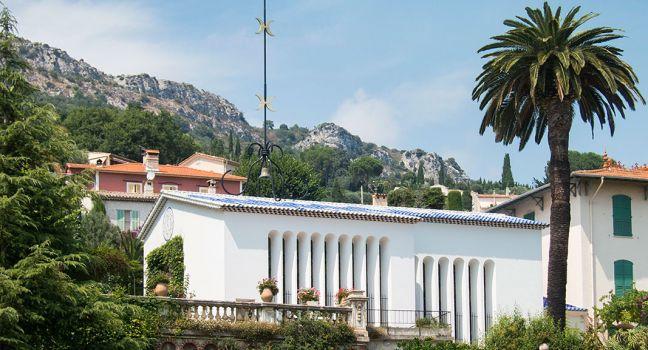
Chapelle du Rosaire
Get FREE email communications from Fodor's Travel, covering must-see travel destinations, expert trip planning advice, and travel inspiration to fuel your passion.

We've compiled the best of the best in Nice and the Eastern Cote d'Azur - browse our top choices for the top things to see or do during your stay.

A few blocks south of the Château Grimaldi, aka the Picasso Museum, is the Commune Libre du Safranier, a magical little neighborhood with a character (and mayor) all its own since 1966 (it's not technically a part of Antibes). The commune even holds its own festivals throughout the year, celebrating a variety of things like chestnuts, grape harvests, and the Christmas Yule log. Not far off the seaside promenade, Rue de la Touraque is the main street to get here, and you can amble around Place du Safranier, where tiny houses hang heavy with flowers and vines, and neighbors carry on conversations from window to window across the stone-stepped Rue du Bas-Castelet.

Bordering over-the-top hotels and estates, this spectacular footpath is nicknamed the Sentier Tirepoil, as the wind along it "ruffles the hair." It stretches about 5 km (3 miles) along the outermost tip of the peninsula, coming full circle around the gardens at Villa Eilenroc over to l'Anse de l'Argent Faux.
Book a guided nature walk through the tourist office, or tackle the route on your own via Plage de la Garoupe, where Cole Porter and Gerald Murphy once hung out and where a paved promenade affords dazzling views over the Baie de la Garoupe and the distant Alps. At the far end of the cape, however, the pavement gives way to a boulder-studded path along 50-foot cliffs, dizzying switchbacks, and thundering breakers. Continue along the path's newer portion to the cove l'Anse de l'Argent Faux, where you can catch your breath before heading up to the entrance of Villa Eilenroc. Then follow Avenue Beaumont to the cape's main road, RD2559.
The walk takes about two hours, and they might be two of the most memorable of your trip, particularly if you tackle it at sunset. Except for fellow walkers on sunny days and, perhaps, a yacht out on the water, civilization disappears along most stretches. Note that signs reading Attention Mort (Beware: Death) are reminders that this path can be very dangerous, especially in stormy weather. Indeed, when storm warnings are issued, locked gates might block the route. From the station in town take Bus 2 to the Fontaine stop. To return, follow Plage de la Garoupe to Boulevard de la Garoupe, and make a left to reconnect with the bus.
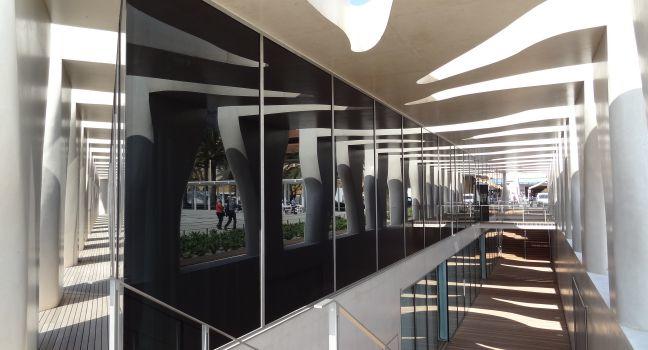
On the waterfront opposite the market, a squat medieval bastion crowned with four tiny watchtowers houses this extraordinary museum, France's memorial to the eponymous artist-poet-filmmaker (1889–1963). Cocteau spotted the fortress, built in 1636 to defend the port, as the perfect site for a group of his works. The museum has nearly 1,800 oeuvres graphiques, and about 990 are original Cocteaus, a donation from the late California businessman and Holocaust survivor Severin Wunderman's personal collection. This is a must-see.
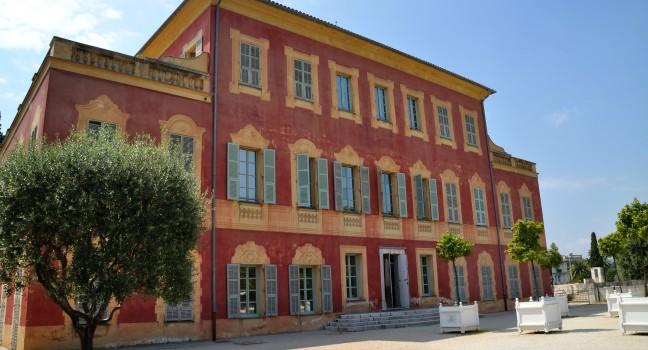
The museum's collection includes several pieces the artist donated to the city before his death; the rest were donated by his family. In every medium and context—paintings, gouache cutouts, engravings, and book illustrations—the collection represents the evolution of his art, from Cézanne-like still lifes to exuberant dancing paper dolls. Even the furniture and accessories speak of Matisse, from the Chinese vases to the bold-printed fabrics with which he surrounded himself. A series of telling black-and-white photographs captures the artist at work. You can't enter the museum with a backpack or travel bag, so have a €1 coin handy for a locker.
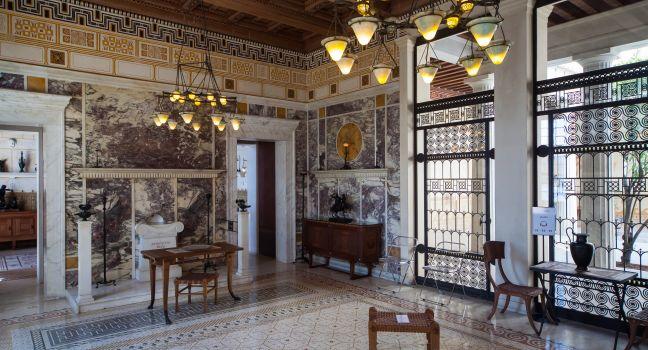
One manifestation of Beaulieu's Belle Époque excess is this eye-popping 1902 mansion built in the style of classical Greece (to be exact, of the villas that existed on the island of Delos in the 2nd century BC). It was the dream house of amateur archaeologist Théodore Reinach, who hailed from a wealthy German family, helped the French in their excavations at Delphi, and became an authority on ancient Greek music. He commissioned an Italian architect from Nice, Emmanuel Pontremoli, to surround him with cool Carrara marble, rare fruitwoods, and a dining salon where guests reclined to eat à la grecque. It's one of the most unusual houses in the south of France.
Inaugurated in 1913, the Carlton was the first of the grand hotels to stake a claim on a superb stretch of beach and greenery along La Croisette, and, thus, is the best positioned, which explains its fashionable see-and-be-seen terrace and Bar 58. The film festival's grand banquets have returned to this iconic hot spot, which reopened in 2023 after a multiyear restoration.
This long pedestrian thoroughfare—half street, half square—is the nerve center of Old Nice, the heart of the Vieille Ville, and the stage for the city's marketplace and café life. Shoppers come to smell the roses (and mimosas and orange blossoms) before browsing at stalls selling local produce, spices, olives, and little gift soaps in the single row setup, the overflow of which sprawls into leafy Place Pierre Gautier. Market days are Tuesday through Saturday, 6 am to 5:30 pm and Sunday 6 am to 1:30 pm. Arrive early, especially in summer, to avoid being at the mercy of the crowd (and a target for the rampant pickpockets).
On Monday morning, antiques and brocantes (collectibles) draw avid vintage hounds, and, from June to September, there's also an artisanal craft market selling jewelry, pottery, purses, and paintings. At Place Charles Félix on the east end of Cours Saleya is the imposing yellow stone building where Matisse lived on the third and then fourth floor from 1921 to 1938. Today, there’s no plaque that bears his name, only a broken shutter of his workshop to serve as a commemoration. Its future remains uncertain, but for many Niçois, this building is a part of Nice’s heritage.
This museum, which replaced the Mougins Museum of Classic Art, has heralded a female-forward artistic focus. Around a hundred works created by nearly 90 female artists from around the world are on display. The four floors house paintings, sculptures, and photographs by major artists—Barbara Hepworth, Frida Kahlo, Berthe Morisot, Blanche Hoschedé-Monet, and Tracey Emin—who have shaped key artistic movements from Impressionism to 21st-century contemporary art.
Many people come to St-Paul-de-Vence just to visit France’s most important private art foundation, founded in 1964 by art dealer Aimé Maeght. High above the medieval town, the small modern art museum attracts 200,000 visitors a year. It's an extraordinary marriage of the arc-and-plane architecture of Josep Sert; the looming sculptures of Miró, Moore, and Giacometti; the mural mosaics of Chagall; and the humbling hilltop setting, complete with pines, vines, and flowing planes of water.
On display is an intriguing and ever-varying parade of important works by modern masters, including Chagall's wise and funny late-life masterpiece La Vie (Life). Two newer extensions provide additional exhibition, performance, and conference space, as well as panoramic windows opening to the extensive grounds. The impressive vistas help to beguile even those who aren't into modern art. Café F, should you need time to reflect, is open year-round. Contact the tourist office for a private guided visit in English (€11 plus discounted admission rate of €14).
From the drop-off point on Île Ste-Marguerite, walk left for 10 minutes to see the Fort Royal. Built by Richelieu and improved by Vauban, the fort offers views over the ramparts to the rocky island coast and the open sea. On the southern side of the island, you'll have to get wet to see the underwater eco-museum: its six statues are submerged 92 to 144 yards from the shore at a depth of 10 to 16 feet. The island's two restaurants—L'Escale and La Guérite (a favorite of Sir Elton John's, who has given an impromptu performance here)—are both closed from mid-October to spring. They're also rather pricey; you are paying for food with a view. Public toilets are accessible.
Set 1,310 feet above sea level, this is one of the Riviera's most visited sites. Full of rare succulents and Jean-Philippe Richard sculptures, the botanical garden is also blessed with superlative views: from this crest-top locale you can pan all the way from Italy to St-Tropez—on a clear day, you can even see Corsica. Just a few feet from the entrance, take a timeout lunch at Le Nid d'Aigle, an inexpensive eatery that features focaccias and salads and is quaintly set on stone levels rising up around a tall tree.
Head to this famous waterfront promenade—which runs for 2 km from its western terminus by the Palais des Festivals—and stroll beside the palm trees and flowers and amid the crowds of poseurs (fur coats in tropical weather, mobile phones on Rollerblades, and sunglasses at night). Continue east past the broad expanse of private beaches, glamorous shops, and luxurious hotels—but make sure you are not walking in the bike path or a construction site. “La Croisette Reinvents its Legend” is the city’s slogan for a project to renovate this iconic seaside strip. The multimillion-euro face-lift (due for completion in 2027) will include red pavement—an homage to the red carpet of the Palais des Festivals—as well as new facilities and amenities.
Rising high over the water, this museum is set in the stunning medieval Château Grimaldi. As rulers of Monaco, the Grimaldi family lived here until the revolution; this fine old castle, however, was little more than a monument until its curator offered use of its chambers to Picasso in 1946, when that extraordinary genius was enjoying a period of intense creative energy. The result was a bounty of exhilarating paintings, ceramics, and lithographs inspired by the sea and by Greek mythology—all very Mediterranean. The château, which became the museum in 1966, houses some 245 works by the artist (but not all are on display), as well as pieces by Miró, Calder, and Léger. The first floor displays more than 100 paintings by Russian-born artist Nicolas de Staël. Download the Picasso Antibes app before your visit.
The entirely public Plage de la Buse is a wonderfully small, fine-pebble strand, with zero star-chasers and strutting high heels. It's protected from the elements by the curved south-facing wall of a huge villa (whose gardens add a lovely tropical feel), making it ideal for novice swimmers. Access is down 50 steps from the Cap-Martin train station (where there are a few parking places) or Le Corbusier trail, but it’s completely BYO: towel, umbrella, and drinks or snacks. There's no bathroom, but the tiny and wonderful Le Cabanon restaurant serves lunch and dinner. Amenities: showers. Best for: solitude; swimming.
Antibes locals love this beach for its soft sand, beautiful views back onto the Old Town and the Alps, and lively atmosphere. Although it's mostly public, it's also home to the Royal Beach club (open late April–September). Summer brings crowds, so arrive early to claim a spot. Accessible for all, it provides ramps, a water mat for wheelchair users, showers, and toilets. Shaded benches along the promenade make it a perfect year-round spot for seaside walks and people-watching. Amenities: food and drink; lifeguards (in summer); showers; toilets; parking (fee); water sports. Best for: swimming; walking.
Le Sentier du Littoral passes along the beach at the Villa Eilenroc (designed by Charles Garnier, who created the Paris Opéra), which commands the tip of the peninsula from a grand garden. The site has a café and an eco-museum, as well as a scented garden at the entrance to La Rosaerie (Rose Garden). You can also catch glimpses of the distant Château de la Cröe, another legendary villa. On Wednesdays, September through June, you can wander through the villa's reception salons. Highlights include the Winter Salon's 1,001 Nights ceiling mural painted by famed Art Deco designer Jean Dunand, display cases filled with memorabilia donated by Caroline Groult-Flaubert (Antibes resident and goddaughter of the great author), and a boudoir with boiseries (decorative wooden features) from the Marquis de Sévigné's Paris mansion. Note that the villa is sometimes closed for private events; check the Antibes tourist office's website before you visit.
Between the port and the mainland, the floridly beautiful Villa Ephrussi de Rothschild attests to the wealth and worldly flair of the baroness who had it built. Constructed in 1905 in neo-Venetian style (its flamingo-pink facade was thought not to be in the best of taste by the local gentry), the house was baptized "Île-de-France" in homage to the Baroness Béatrice de Rothschild's favorite ocean liner. In keeping with that theme, her staff wore sailing costumes, and her ship travel kit is on display in her bedroom. Precious artworks, tapestries, and furniture adorn the salons—in typical Rothschildian fashion, each is given over to a different "époque."
The grounds are landscaped with no fewer than nine gardens and topped off with a Temple of Diana. Spectacular fountain displays set to music spring up like a grand aquatic ballet. Be sure to allow yourself time to wander here, as this is one of the few places on the coast where you'll be allowed to experience the lavish pleasures characteristic of the Belle Époque Côte d'Azur. Tea and light lunches, served in a glassed-in porch overlooking the grounds and spectacular coastline, encourage you to linger.
Shaded by plane trees and sheltering a sandy pétanque field, this is a little piece of Provence in a big, glitzy resort town. Every morning except Monday, a flower market paints the square in vivid colors, and, during the weekend arts-and-crafts market (10–6), you can find paintings of flowers. The antiques market shares the space on Saturday and the first Sunday of every month.
This majestic basilica dominates the skyline of Menton. Beyond the beautifully proportioned facade—a 19th-century addition—the richly frescoed nave and chapels contain several works by Genovese artists plus a splendid 17th-century organ. Volunteers man the doors here, so you may have to wait for the church to open (usually from 3 pm to 5 pm) before visiting. The parvis is the site of concerts during the August Menton music festival.
On your way from the overpriced parking garages, you'll pass a Provençal scene played out with cinematic flair yet still authentic: the perpetual game of pétanque outside the Café de la Place. A sun-weathered pack of men (and it is overwhelmingly men) in caps, cardigans, and workers' blues—occasionally joined by a passing professional with tie and rolled-up sleeves—gathers under the massive plane trees and stands serene, silent, and intent to toss metal balls across the dusty square. Until his death, Yves Montand made regular appearances here, participating in this ultimate southern scenario. Note that although the café is the perfect place to people-watch, don't expect much in terms of food and service.
The famous Casino Barrière on La Croisette—open 10 am to 3 am (until 4 am on weekends and until 5 am during summer)—is said to draw more crowds to its slot machines than any other casino in France.
At this modern downtown recreation complex, the sea views through huge bay windows may distract you from the slot machines. The casino is open daily from 11 am to 2 am (4 am Friday and Saturday).
In the 1920s and '30s, the swanky Palais de la Méditerranée drew performers like Charlie Chaplin and Edith Piaf. The establishment, however, lost its glory and, in 1990, everything but its swanky facades was demolished to accommodate new construction that included hotel rooms and restaurants as well the casino. Choose from 170 slot machines, 38 electric roulette tables, three blackjack tables, two English roulette tables, and an Ultimate Poker and Texas Hold'em table.
This glassed-in complex houses 75 slot machines, English roulette, and blackjack, which are played every night: the casino is open until 3 am (4 am on Saturday). There's also a panoramic beach restaurant.
At the east end of the promenade, near Hotel Suisse, there is both a large public beach and a private one, where the water is calm and clear (you can rent a lounger at the latter for about €25, with umbrella). The public beach is composed of large stones, which are more comfortable to walk on than pebbles. Jellyfish are also less of a problem in this corner due to the currents. Amenities: lifeguards (private beach, seasonal); showers. Best for: snorkeling; sunrise; sunset; swimming.


 Sign up for Travel Tips & News
 Thank you for your interest!