209 Best Sights in Czech Republic

Background Illustration for Sights

We've compiled the best of the best in Czech Republic - browse our top choices for the top things to see or do during your stay.

Charles Bridge

Malá Strana Fodor's Choice
sunrise over Prague - look from Charles (Karluv) bridge
Vitaly Titov & Maria Sidelnikova / Shutterstock

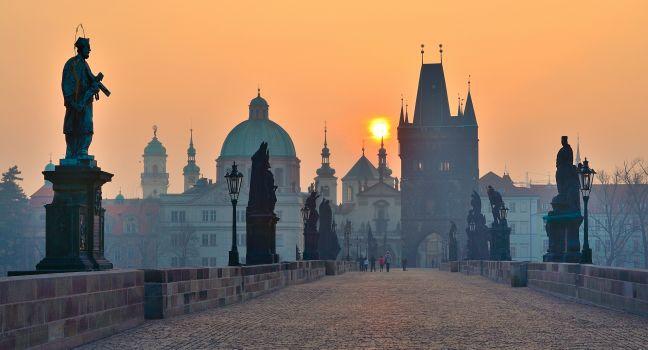
This is Prague's signature monument, and quite rightly so. The view from the foot of the bridge on the Staré Mĕsto side, encompassing the towers and domes of Malá Strana and the soaring spires of St. Vitus Cathedral, is nothing short of breathtaking. This heavenly vista subtly changes in perspective as you walk across the bridge, attended by a host of Baroque saints that decorate the bridge's peaceful Gothic stones. At night its drama is spellbinding: St. Vitus Cathedral lit in a ghostly green, Prague Castle in monumental yellow, and the Church of St. Nicholas in a voluptuous pink, all viewed through the menacing silhouettes of the bowed statues and the Gothic towers. Night is the best time to visit the bridge, which is choked with visitors, vendors, and beggars by day. The later the hour, the thinner the crowds—though the bridge is never truly empty, even at daybreak. Tourists with flash cameras are there all hours of the night, and as dawn is breaking, revelers from the dance clubs at the east end of the bridge weave their way homeward, singing loudly and debating where to go for breakfast. When the Přemyslid princes set up residence in Prague during the 10th century, there was a ford across the Vltava here—a vital link along one of Europe's major trading routes. After several wooden bridges and the first stone bridge washed away in floods, Charles IV appointed the 27-year-old German Peter Parler, the architect of St. Vitus Cathedral, to build a new structure in 1357. It became one of the wonders of the world in the Middle Ages. After 1620, following the disastrous defeat of Czech Protestants by Catholic Habsburgs at the Battle of White Mountain, the bridge became a symbol of the Counter-Reformation's vigorous re-Catholicization efforts. The many Baroque statues that appeared in the late 17th century, commissioned by Catholics, came to symbolize the totality of the Austrian (hence Catholic) triumph. The Czech writer Milan Kundera sees the statues from this perspective: "The thousands of saints looking out from all sides, threatening you, following you, hypnotizing you, are the raging hordes of occupiers who invaded Bohemia 350 years ago to tear the people's faith and language from their hearts." The religious conflict is less obvious nowadays, leaving behind an artistic tension between Baroque and Gothic that gives the bridge its allure. Staroměstská mostecká věž (Old Town Bridge Tower), at the bridge entrance on the Staré Mĕsto side, is where Peter Parler, the architect of the Charles Bridge, began his bridge building. The carved facades he designed for the sides of the tower were destroyed by Swedish soldiers in 1648, at the end of the Thirty Years' War. The sculptures facing Staré Mĕsto, however, are still intact (although some are recent copies). They depict an old and gout-ridden Charles IV with his son, who became Wenceslas IV. Above them are two of Bohemia's patron saints, Adalbert of Prague and Sigismund. The top of the tower offers a spectacular view of the city for 100 Kč; it's open daily year-round from 10 am to between 6 and 10 pm. Take a closer look at some of the statues while walking toward Malá Strana. The third one on the right, a bronze crucifix from the mid-17th century, is the oldest of all. It's mounted on the location of a wooden cross destroyed in a battle with the Swedes (the golden Hebrew inscription was reputedly financed by a Jew accused of defiling the cross). The fifth on the left, which shows St. Francis Xavier carrying four pagan princes (an Indian, Moor, Chinese, and Tartar) ready for conversion, represents an outstanding piece of baroque sculpture. Eighth on the right is the statue of St. John of Nepomuk, who according to legend was wrapped in chains and thrown to his death from this bridge. Touching the statue is supposed to bring good luck or, according to some versions of the story, a return visit to Prague. On the left-hand side, sticking out from the bridge between the 9th and 10th statues (the latter has a wonderfully expressive vanquished Satan), stands a Roland (Bruncvík) statue. This knightly figure, bearing the coat of arms of Staré Mĕsto, was once a reminder that this part of the bridge belonged to Staré Mĕsto before Prague became a unified city in 1784. For many art historians the most valuable statue is the 12th on the left, near the Malá Strana end. Mathias Braun's statue of St. Luitgarde depicts the blind saint kissing Christ's wounds. The most compelling grouping, however, is the second from the end on the left, a work of Ferdinand Maxmilian Brokoff (son of Johann) from 1714. Here the saints are incidental; the main attraction is the Turk, his face expressing extreme boredom at guarding the Christians imprisoned in the cage at his side. When the statue was erected, just 31 years after the second Turkish siege of Vienna, it scandalized the Prague public, who smeared it with mud. During communist rule, Prague suffered from bad air pollution, which damaged some of the Baroque statues. In more recent years, the increasing number of visitors on the bridge has added a new threat. To preserve the value of the statues, most of the originals were removed from the bridge and replaced with detailed copies. Several of the originals can be viewed in the Lapidárium museum. A few more can be found within the casements at the Vyšehrad citadel.
Prague, Czech Republic

Something incorrect in this review?

Katedrála sv. Víta

Hradcany Fodor's Choice
Peter Guttman/Peterguttman.com

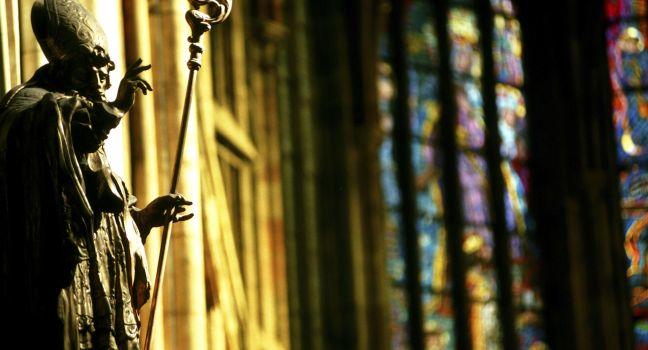
With its graceful, soaring towers, this Gothic cathedral—among the most beautiful in Europe—is the spiritual heart of Prague Castle and of the Czech Republic itself. The cathedral has a long and complicated history, beginning in the 10th century and continuing to its completion in 1929. Inside, the six stained-glass windows to your left and right and the large rose window behind are modern masterpieces; see if you can spot the contributions of Art Nouveau master Alfons Mucha. Other highlights include the Svatováclavská kaple (Chapel of St. Wenceslas); the Kralovské oratorium (Royal Oratory), a perfect example of late Gothic architecture; the ornate silver sarcophagus of St. John of Nepomuk; and the eight chapels around the back of the cathedral. Don’t miss the Last Judgment mosaic on the south side of the cathedral’s exterior, constructed from a million glass and stone tesserae and dating from the 1370s. It's possible to enter the cathedral for free to take in the splendor from the back, but for the full experience, buy a ticket and walk around. Cathedral entry is included in the combined ticket to see the main castle sights; an audio guide is highly recommended.

Hrad III. nádvoří 2, Prague, 119 01, Czech Republic
224--372–434
Sight Details
Included in 2-day castle ticket (from 250 Kč)

Something incorrect in this review?

Staroměstská radnice

Staré Mesto Fodor's Choice
PRAGUE,CZECH REPUBLIC - MAY 6: Old Town May 6,2013 in Prague, Czech Republic. People spending time in one of the landmark of Prague's old town hall close to astronomical clock and tower. ; Shutterstock ID 160630967; Project/Title: Top 100; Downloader: Fodo
saaton / Shutterstock

Hundreds of visitors gravitate here throughout the day to see the hour struck by the mechanical figures of the astronomical clock (although it's absolutely worth a look, don't be disappointed by the lack of drama. Focus on its astonishing age instead: it was first installed on the tower in 1410). At the top of the hour, look to the upper part of the clock, where a skeleton begins by tolling a death knell and turning an hourglass upside down. The 12 apostles promenade by, and then a cockerel flaps its wings and screeches as the hour finally strikes. This theatrical spectacle doesn't reveal the way this 15th-century marvel indicates the time—by the season, the zodiac sign, and the positions of the sun and moon. The calendar under the clock dates to the mid-19th century, although it's a replica rather than the original.

Old Town Hall served as the center of administration for Staré Mĕsto from 1338 when King John of Luxembourg first granted the city council the right to a permanent location. The impressive 200-foot Town Hall Tower, where the clock is mounted, was built in the 14th century. For a rare view of Staré Mĕsto and its maze of crooked streets and alleyways, climb the ramp or ride the elevator to the top of the tower.

Walking around the hall to the left, you can see it's actually a series of houses jutting into the square; they were purchased over the years and successively added to the complex. On the other side, jagged stonework reveals where a large, neo-Gothic wing once adjoined the tower until it was destroyed by fleeing Nazi troops in May 1945.

Tours of the interiors depart from the main desk inside (most guides speak English, and English brochures are on hand). There's also a branch of the tourist information office here. Previously unseen parts of the tower have now been opened to the public, and you can now see the inside of the famous clock.

Recommended Fodor's Video

Staroměstské náměstí

Staré Mesto Fodor's Choice
Public square in Prague by nigth.
DANIELA WEINSTEIN / Shutterstock

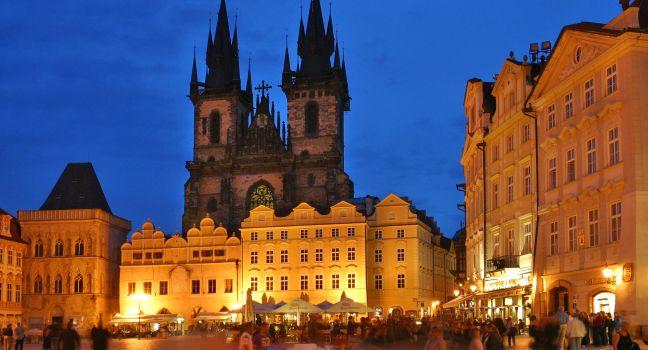
The hype about Old Town Square is completely justified. Picture a perimeter of colorful Baroque houses contrasting with the sweeping old-Gothic style of the Týn Church in the background. The unexpectedly large size gives it a majestic presence as it opens up from feeder alleyways. As the heart of Staré Mĕsto, the square grew to its present proportions when Prague's original marketplace moved away from the river in the 12th century. Its shape and appearance have changed little since that time (the monument to religious reformer Jan Hus, at the center of the square, was erected in the early 20th century). During the day the square pulses with activity, as musicians vie for the attention of visitors milling about. In summer, the square's south end is dominated by sprawling (pricey!) outdoor restaurants. During the Easter and Christmas seasons it fills with wooden booths of vendors selling everything from simple wooden toys to fine glassware and mulled wine. At night, the brightly lit towers of the Týn Church rise gloriously over the glowing Baroque facades. But the square's history is not all wine and music: during the 15th century the square was the focal point of conflict between Czech Hussites and the mainly Catholic Austrians and Germans. In 1422 the radical Hussite preacher Jan Želivský was executed here for his part in storming the Nové Mĕsto (New Town) town hall three years earlier. In the 1419 uprising a judge, a mayor, and seven city council members were thrown out a window—the first of Prague's many famous defenestrations. Within a few years the Hussites had taken over the town, expelled many of the Catholics, and set up their own administration. Embedded in the square's paving stones, at the base of Old Town Hall, are 27 white crosses marking the spot where 27 Bohemian noblemen were killed by the Austrian Habsburgs in 1621 during the dark days following the defeat of the Czechs at the Battle of White Mountain. The grotesque spectacle, designed to quash any further national or religious opposition, took about five hours to complete, as the men were put to the sword or hanged one by one.

Starý židovský hřbitov

Josefov Fodor's Choice
Prague Jewish Cemetery; Shutterstock ID 1875750; Project/Title: Photo Database top 200
Aron Brand / Shutterstock

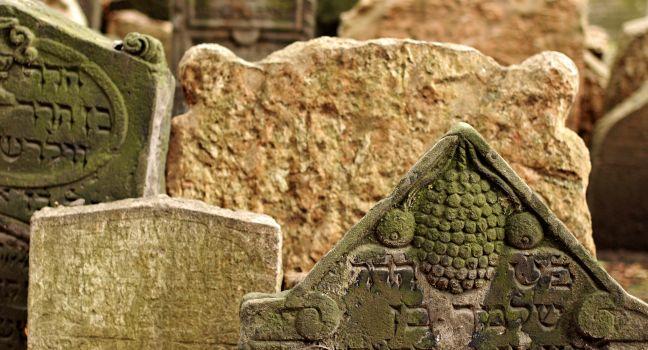
An unforgettable sight, this cemetery is where all Jews living in Prague from the 15th century to 1787 were laid to rest. The lack of any space in the tiny ghetto forced graves to be piled on top of one another. Tilted at crazy angles, the 12,000 visible tombstones are but a fraction of countless thousands more buried below. Walk the path amid the gravestones; the relief symbols you see represent the names and professions of the deceased. The oldest marked grave belongs to the poet Avigdor Kara, who died in 1439; the grave is not accessible from the pathway, but the original tombstone can be seen in the Maisel Synagogue. The best-known marker belongs to Jehuda ben Bezalel, the famed Rabbi Loew (died 1609), a chief rabbi of Prague and a profound scholar, credited with creating the mythical golem. Even today, small scraps of paper bearing wishes are stuffed into the cracks of the rabbi's tomb with the hope that he will grant them. Loew's grave lies near the exit.

Široká 3, Prague, 110 00, Czech Republic
222–749–211
Sight Details
Jewish Museum combination ticket 350 Kč (excluding Old-New Synagogue) or 500 Kč (including Old-New Synagogue)
Closed Sat. and Jewish holidays

Something incorrect in this review?

Tančící dům

Nové Mesto Fodor's Choice
PRAGUE - JULY 24: view of the Dancing House, designed by Vlado Milunic and Frank Gehry on July 24, 2013 in Prague. The building has become an important tourist site since it's completion in 1996.
Hung Chung Chih / Shutterstock

This whimsical building, one of Prague's most popular modern structures, came to life in 1996 as a team effort from architect Frank Gehry (of Guggenheim Bilbao fame) and his Croatian-Czech collaborator Vlado Milunic. A wasp-waisted glass-and-steel tower sways into the main columned structure as though they were a couple on the dance floor—the "Fred and Ginger" effect gave the building its nickname, the Dancing Building. It's notable for a Gehry piece, as it's more grounded in the surrounding area than his larger projects. It now houses a hotel and top-floor restaurant, but even if you aren't staying or eating there, it's worth marveling at the building itself, either from the near side of the river or the far.

Rašínovo nábř. 80, Prague, 180 00, Czech Republic

Something incorrect in this review?

Chrám svaté Barbory

Fodor's Choice

Getting to this beautiful cathedral is nearly as pleasurable as a visit to the Gothic church itself. It's about a 10-minute walk from the main Palackého náměstí along a road lined with Baroque statues, from which you can gaze at the surrounding countryside and watch the massive shape of the cathedral come closer. From afar, the church resembles a grand circus tent more than a religious center. As the jewel in Kutná Hora's crown, it's a high point of Gothic style, although through the centuries there have been alterations and improvements. St. Barbara's was started in the late 1300s; it drew on the talents of the Peter Parler workshop as well as two luminaries of the late 15th century, Matyáš Rejsek and Benedikt Ried.

Upon entering, look up. The soaring ceiling is one of the church's most impressive features. It was added in 1558 and replaced and restored in the late 1800s. At the western end of the church, take the stairs up to the elevated section for closer views of the ceiling and the lavish organ, decorated with golden angels and cherubs. There are also some interesting casts of reliefs and other decorative church elements here, including a gargoyle of a cat with a fish in its paws, a sculpture of angels carrying the miners' guild coat of arms, and a small statue of an oddly fed-up-looking Jesus. Head out to the balcony for views over the garden; lean out a little and you can see the town center, including the visibly leaning tower of the Kostel sv. Jakuba (Church of St. James).

Once outside, take a stroll through the gardens and courtyard and venture down into the ancient Kaple Božího těla (Corpus Christi Chapel). This free-to-enter, 14th-century cemetery chapel, with its beautiful vaulted ceiling, is used today mainly as an exhibition and concert space.

Avoid purchasing the opera glasses on sale at the front desk (50 Kč); the cathedral's elevated sections mean that all but the most short-sighted won't need them to get a good view of the ceiling.

Barborská, Kutná Hora, 284 01, Czech Republic
327–515–796
Sight Details
160 Kč, combo ticket 300 Kč (incl. Sedlec Ossuary and Church of the Assumption)

Something incorrect in this review?

DOX

Holešovice Fodor's Choice

This giant modern art hub makes up the trio of big-beast artistic institutions in Prague 7 that have seen the district christened the city's most creative, alongside the Trade Fair Palace and the Academy of Fine Arts college next to Stromovka Park. This one is arguably the most fun, from its witty slogans (emblazoned on the building and sold as postcards) to its often flamboyant modern art collection, via a discussion space located in a life-size suspended airship. Housed in a former factory, DOX is more than just a brilliant modern art gallery, though; it is also a cultural center aiming to put art at the forefront of modern ways of thinking about the world.

Poupětova 1, Prague, 170 00, Czech Republic
295--568--123
Sight Details
Free
Closed Mon. and Tues.

Something incorrect in this review?

Hrad Bouzov

Fodor's Choice

One of Moravia's most impressive castles, 30 km (18 miles) west of Olomouc, has been featured in several fairy-tale films. Its present romanticized exterior comes from a remodeling at the turn of the 20th century, but the basic structure dates back to the 1300s. Owned by the Order of Teutonic Knights from the late 1600s up to the end of World War II, it was later confiscated by the state. Inside, the knights' hall has extensive carved-wood decorations and wall paintings that look old, even if many are reconstructions. Other rooms have collections of period furniture. The castle kitchen, which was used until 1945, is one of the best-preserved examples. The castle offers several tours, some aimed at children and one that shows off the wedding hall and knights' hall. You can easily arrange a tour from the tourist information office in Olomouc; the castle is included in the Olomouc Region Card.

Bouzov 8, Olomouc, 783 25, Czech Republic
775–888–960
Sight Details
Classic tours from 230 Kč; moat 80 Kč
Closed Nov.–Mar.

Something incorrect in this review?

Hrad Karlštejn

Fodor's Choice

If it's a picture-book European castle you're after, look no further. Perched atop a wooded hillside, Karlštejn comes complete with battlements, turrets, and towers. Once Charles IV's summer palace, Karlštejn was originally built to hold and guard the crown jewels (which were moved to Prague Castle's Katedrála sv. Víta, or St. Vitus Cathedral, in 1619). There is a fairly strenuous hike up to the castle—lined with souvenir stands and overpriced snack bars—but it's worth the journey. Once you've reached the top, take time to walk the ramparts and drink in the panorama of the village and countryside below. There's a slightly bewildering list of different interior tours, but the pick of the bunch is Tour 2, which includes the castle's greatest treasure, the Chapel of the Holy Cross, which once held the crown jewels. Tours of the chapel are limited (and more expensive than the other tour route), so you must book in advance. On sunny days, there's also an exterior tour, or you can simply take a stroll around the courtyards at no cost. Because of its proximity to Prague, it is the most-visited site outside of the Czech capital, so be prepared for crowds, especially in the high summer months.

Karlštejn 18, Karlštejn, 267 18, Czech Republic
311–681–617
Sight Details
Tours from 190 Kč
Closed Mon. Tower closed Oct.--Apr., chapel closed Nov.--Apr.

Something incorrect in this review?

Hrad Český Krumlov

Fodor's Choice

Like any good protective fortress, the castle is visible from a distance, but you may wonder how to get there. From the main square, take Radniční ulice across the river and head up the staircase on your left from Latrán ulice. (Alternatively, you can continue on Latrán and enter via the main gateway, also on your left.) You'll first come across the oldest part of the castle, a round 13th-century tower renovated in the 16th century to look something like a minaret, with its delicately arcaded Renaissance balcony. Part of the old border fortifications, the tower guarded Bohemian frontiers from the threat of Austrian incursion. It's now repainted with an educated guess of its Renaissance appearance, since the original designs have long been lost. From dungeon to bells, its inner secrets can be seen climbing the interior staircase. Go ahead and climb to the top; you'll be rewarded with a view of the castle grounds and across the countryside.

Next up is the moat, fearlessly protected by a pair of brown bears—truthfully not really much help in defending the castle; their moods range from playful to lethargic. But bears have been residents of this moat since 1707. In season, the castle rooms are open to the public. Crossing the bridge, you enter the second courtyard, which contains the ticket office. The Route 1 tour will parade you past the castle chapel, baroque suite, and Renaissance rooms. The highlights here are the 18th-century frescoes in the delightful Maškarní sál (Masquerade Hall). Route 2 takes you through the portrait gallery and the seigneurial apartments of the Schwarzenbergs, who owned the castle until the Gestapo seized it in 1940. (The castle became state property in 1947.) In summer you can visit the Lapidarium, which includes statues removed from the castle for protection, and the dungeon.

A succession of owners all had the same thing in mind: upgrade the castle a bit more opulently than before. Vilém von Rožmberk oversaw a major refurbishment of the castle, adding buildings, heightening the tower, and adding rich decorations—generally making the place suitable for one of the grandest Bohemians of the day. The castle passed out of the Rožmberks' hands, however, when Vilém's brother and last of the line, the dissolute Petr Vok, sold both castle and town to Emperor Rudolf II in 1602 to pay off his debts. Under the succeeding Eggenbergs and Schwarzenbergs the castle continued to be transformed into an opulent palace. The Eggenbergs' prime addition was a theater, which was begun in the 1680s and completed in 1766 by Josef Adam of Schwarzenberg. Much of the theater and its accoutrements—sets, props, costumes, stage machinery—survive intact as a rare working display of period stagecraft. Theater buffs will appreciate a tour, and tickets should be reserved in advance.

Continuing along outside, the third courtyard bears some beautiful Renaissance frescoes, while the fourth contains the Upper Castle, whose rooms can be visited on the tours. From here you'll arrive at a wonderfully romantic elevated passageway with spectacular views of the huddled houses of the Old Town. The Austrian expressionist painter Egon Schiele often stayed in Český Krumlov in the early 1900s and liked to paint this particular view over the river; he titled his Krumlov series Dead City. The middle level here is the most Na plášti (Cloaked Bridge), a massive construction spanning a deep ravine. Below the passageway are three levels of high arches, looking like a particularly elaborate Roman viaduct. At the end of the passageway you come to the theater, then to the nicely appointed castle garden dating from the 17th century. A cascade fountain, groomed walking paths, flower beds, and manicured lawns are a restful delight. The famed open-air Revolving Theater is here, as is the Musical Pavilion. If you continue walking away from the castle, the park grows a bit wilder and quieter. Unlike the castle, the courtyards and passageways are open to the public year-round.

If visiting between October and April, check the website for detailed opening hours, as these vary for different parts of the castle and for different tours.

Zámek 59, Ceský Krumlov, 381 01, Czech Republic
380–704–721
Sight Details
Castle tours (in English) from 210 Kč, theater tour (in English) 280 Kč, castle museum and tower 180 Kč (discount only on museum and tower with Český Krumlov Card), garden free
Garden closed and no tours Nov.–Mar.

Something incorrect in this review?

Židovský hřbitov

Fodor's Choice

Mikulov's massive cemetery with 4,000 tombs is not far from Husova ulice, just off Brněnská. The cemetery dates to shortly after 1421 when Jews were forced to leave Vienna and Lower Austria. The oldest legible stone is from 1605 and the most recent are from the 19th century, giving a wide range of stylistic flourishes. Step into the ceremonial hall to view an exhibit of the cemetery's history. Visits outside of opening hours and guided tours can be arranged at least two days in advance.

Off Brněnská ul., Mikulov, 692 01, Czech Republic
Sight Details
40 Kč
Closed Nov.–May; Sat. in Jun.–Sept.; and Mon.–Sat. in Oct.

Something incorrect in this review?

Žižkovská televizní věž

Žižkov Fodor's Choice

Looking like a freakish, futuristic rocket ready to blast off, the Žižkov TV Tower is easily visible from around the city and commonly makes it onto Top 10 World's Ugliest Buildings lists. The upper-floor observatory platform, reached by a high-speed elevator and open until midnight, gives a bird's-eye view of the numerous courtyards and apartment blocks that make up the city and has a selection of exhibits on the history and architecture of the building. There's also a bar, restaurant, and luxury one-room hotel up there. Once back down on the ground, look up its 709-foot gray steel legs at the bronze statues of babies crawling on the structure, which were created by local provocateur artist David Černý.

Jelení skok

Fodor's Choice

From Kostel svatého Lukáše, take a sharp right uphill on a redbrick road, then turn left onto a footpath through the woods, following signs to Jelení skok (Stag's Leap). After a while, steps lead up to a bronze statue of a deer looking over the cliffs, the symbol of Karlovy Vary. From here a winding path threads toward a little red gazebo opening onto a mythical panorama that's worth the strenuous hike to the top.

Karlovy Vary, 360 01, Czech Republic

Something incorrect in this review?

Klementinum

Staré Mesto Fodor's Choice

It's advertised as the most beautiful library in the world and delivers on the hype. The origins of this massive, ancient complex date back to the 12th and 13th centuries, but it's best known as the stronghold of the Jesuits, who occupied it for more than 200 years beginning in the early 1600s. Though many buildings are closed to the public, the resplendent Baroque Library is a hidden gem featuring fabulous ceiling murals that portray the three levels of knowledge, with the "Dome of Wisdom" as a centerpiece. Next door, the Mirror Chapel is a symphony of surfaces, with acoustics to match. Mozart played here, and the space still hosts chamber music concerts, as does the library itself if you're lucky. The Astronomical Tower in the middle of the complex offers stunning 360-degree views of Staré Mĕsto and was once used by game-changing astronomer Johannes Kepler and afterward functioned as the "Prague Meridian," where the time was set each day. Nowadays, you can visit the complex and glimpse the beauty, as well as some historic astronomical instruments, only on guided tours, which run every half hour. There is no elevator to the Astronomical Tower rooftop and the steps are steep, so you may want to avoid this section if you have walking difficulties.

Mariánské nám. 5, Prague, 110 00, Czech Republic
222–220–879
Sight Details
300 Kč (incl. tour)

Something incorrect in this review?

Kostel Nejsvětějšího Srdce Páně

Fodor's Choice

If you've had your fill of Romanesque, Gothic, and baroque, this church offers a startlingly modernist alternative. Designed in 1927 by Slovenian architect Jože Plečnik—the same architect who updated Prague Castle and who almost single-handedly designed the modern city of Ljubljana—the art deco edifice of this church resembles a luxury ocean liner more than a place of worship, topped by a tower with an enormous glazed clock. The effect was purposeful, as during the 1920s and 1930s the avant-garde imitated mammoth objects of modern technology. The interior decor is equally striking, particularly the altar, overlooked by a 10-foot-high gilded figure of Christ, flanked by six Czech patron saints. It's hard to miss the structure, which looms as you exit the Metro.

While the front door (with a view of the interior) is open 9 to 5 every day, entrance is allowed only 45 minutes before and after mass.

Nám. Jiřího z Poděbrad, 120 00, Czech Republic
222–727–713
Sight Details
Free

Something incorrect in this review?

Kostnice Sedlec

Fodor's Choice

This is the reason many people outside the Czech Republic have heard of, and make the trip to, Kutná Hora. Forget all that beautiful Baroque architecture and descend into the darkness with some bones. The skeletal remains of around 40,000 people have been lovingly arranged in the Kaple Všech svatých (All Saints Chapel), more commonly called the Bone Church. Built in the 16th century, this church forced the movement of a nearby graveyard, so monks from the nearby Sedlec Monastery decided to use the displaced cemetery bones to decorate the church with beautiful, weird, and haunting results. Look out for the chandelier, which is made with every bone in the human body, as well as the Schwarzenberg coat of arms, which includes a raven (assembled from various small bones) pecking the eye of a Turkish warrior.

Zámecká, Kutná Hora, 284 03, Czech Republic
326–551–049
Sight Details
160 Kč (including Church of the Assumption); 300 Kč (also including St. Barbara's Cathedral)
Closed Mon. Nov.–Jan.

Something incorrect in this review?

Křivoklát

Fodor's Choice

A man dressed as a monk asleep in the corner; children practicing archery; traditional craftsmen offering their wares—close your eyes in Křivoklát's strangely atmospheric courtyard and you can easily imagine the scene with hunters clattering back atop their horses. Because the castle is a little farther from Prague, it's much less crowded and more authentic, so you can let your imagination run wild as you wander the walls and gaze out on the surrounding forest and the Berounka river winding lazily by below. The evocative name helps as well, even if it's a little hard to pronounce (it means "twisted branches" in Czech). There also aren't many signs, which helps with the feeling that you are having an adventure. You'll meet a lot of locals, rather than tourists, enjoying the castle, mainly because it's a national favorite thanks to its many romantic references in Czech literature. The river area is also popular with hikers and cyclists.

Křivoklát began life as a humble hunting lodge back in the 12th century. Greater things were to come, thanks to King Wenceslas I, who commissioned the first castle here. Future inhabitants expanded and beautified the place, including Charles IV and his son, Wenceslas IV. A number of fires significantly damaged the buildings, and toward the end of the 16th century it lost its importance and fell into disrepair. Following the Thirty Years' War, the Schwarzenbergs took over and revived it. It's been in state hands since 1929.

Today, Křivoklát offers some of the more interesting castle tours around. There are five to choose from, with Tour 3 ("The Grand Tour"; 390 Kč in English) the most comprehensive. Over the course of 1 hour and 40 minutes, visitors will see the Great Hall, one of the largest Gothic halls in Central Europe (second only to the one at Prague Castle), the beautiful chapel, the castle library, a prison complete with torture instruments, and lots of hunting trophies. Tours of the castle are offered regularly in Czech and less regularly in English (check the website for times), but you can always join a Czech tour and purchase a pamphlet with information in English.

Even without a tour, the castle is well worth a visit. You can walk along the castle ramparts, climb the tower (for great views of the surrounding countryside), or simply sit and nurse a beer in the beautiful courtyard. There's also a lovely 2-km (1-mile) woodland walk from the castle to a viewpoint above the river; follow the path marked with yellow paint, which starts across the road from the castle entrance.

Křivoklát 47, Krivoklát, 270 23, Czech Republic
313–558–440
Sight Details
Tours from 240 Kč
Closed Mon. Closed weekdays Nov.–Mar. (except festivals; check website for details)

Something incorrect in this review?

Letenské sady

Letná Fodor's Choice

This large, shady park offers a pretty view of Prague's bridges. From the enormous concrete pedestal at the center of the park—now occupied by a giant working metronome, which some say is marking time since the 1989 Velvet Revolution—the world's largest statue of Stalin once beckoned to citizens on Staroměstské náměstí (Old Town Square) below. The statue was blown up in 1962, just seven years after it was completed. In nice weather, there's a large and popular beer garden at the park's eastern end and Czechs and expats playing games on the grass. Walk east along Milady Horákové ulice after exiting the Metro or take the tram, or head up the hill from Staré Mĕsto if you want some exercise. At the back of the park, toward the home of the football club Sparta at the Generali Arena, there's a huge open space that is often used for the Czech Republic's largest protests (it's even bigger than famous Wenceslas Square), including those heralding the end of communism in 1989.

Prague, 170 00, Czech Republic

Something incorrect in this review?

Lilit

Karlín Fodor's Choice

Located at the eastern edge of Karlín, this giant metallic female figure is the latest creation from Prague's master of modern sculpture David Černý, perhaps best known for the faceless babies climbing Žižkov TV Tower. Standing more than 24 meters high and weighing 35 tons, the figure is hugging—or seemingly holding up—the side of a modern apartment block. Take a stroll around to see other Černý artworks in a similar style, including giant arms and legs "propping up" elements of the building. For a uniquely strange experience, come at midnight to see Lilit's head rotate 180 degrees.

Rohanské nábř., Prague, 186 00, Czech Republic

Something incorrect in this review?

Loreta

Hradcany Fodor's Choice

Sitting outside the castle complex, the sometimes-overlooked Loreta is home to one of Prague's greatest architectural treasures: a replica of the original Santa Casa, said to be the house in Nazareth where the Archangel Gabriel first appeared to the Virgin Mary. Constructed in the early 1620s and a place of pilgrimage for 400 years, the building is covered in spectacular stucco figures of Old Testament prophets and scenes from the life of the Virgin Mary. The cloisters surrounding the casa are also home to treasures of their own, including beautiful frescoes, sculpted fountains, and soaring bell towers. Look out for the Prague Sun monstrance, an incredibly valuable golden vessel encrusted with thousands of diamonds.

Loretánské nám. 7, Prague, 118 00, Czech Republic
220--516--740
Sight Details
180 Kč

Something incorrect in this review?

Morový sloup

Fodor's Choice

In the northwest corner of Horní náměstí, the eccentric Trinity Column is one of the best surviving examples of the Olomouc baroque style, which was prevalent in this region of Moravia after the Thirty Years' War in the 17th century. At 115 feet, it's the tallest column devoted to victims of the plague in the Czech Republic. The column alone (not the rest of the square) is a UNESCO World Heritage Site. Its construction began in 1717, but it was not completed until 1754, long after the death of its principal designer, Václav Render, who left all his wealth to the city of Olomouc so that the column could be finished. Inside is a small chapel that, unfortunately, is never open.

Mělnické podzemí

Fodor's Choice

Under the historic center of Mělník lies a secret: a network of underground passages leading to a medieval well. Half-hour guided tours from the Tourist Information Center take you down into the tunnels, which were dug out of the sandstone rock in the 13th and 14th centuries and used as storage rooms, wine cellars, and shelters during times of war. After a short walk, you'll come to the beautiful and unique medieval well. At 184 feet deep and 15 feet wide, it's the largest well in the Czech Republic—yet from above ground in the main square, you wouldn't even know it exists.

Náměstí Zachariáše z Hradce

Fodor's Choice

This main square is so perfect you feel like you've stepped into a painting, not a living town. Zacharias of Neuhaus, the square's namesake, allegedly created the architectural unity. During the 16th century, so the story goes, the wealthy Zacharias had the castle—originally a small fort—rebuilt into a Renaissance château. But the town's dull buildings clashed so badly that Zacharias had the square rebuilt to match the castle's splendor.

From the south side of town, walk through the Great Gate, part of the original fortifications dating to the 13th century. As you approach on Palackého ulice, the square unfolds in front of you, graced with the château at the northern end and beautiful houses bathed in pastel ice-cream shades. Fans of Renaissance reliefs should note the sgraffito corner house at No. 15. The house at No. 61, across from the Černý Orel Hotel, also bears intricate details.

Národní hřebčín Kladruby nad Labem

Fodor's Choice

Located 15 miles northeast of Kutná Hora, this national stud farm was established in the 16th century to breed and train ceremonial horses for the Habsburg court. In 2019, it was named a UNESCO World Heritage Sitethe first stud farm anywhere to be listedin recognition of its vital role in protecting and promoting the rare but ancient Kladruber breed. Covering 1,310 hectares (3,240 acres) of flat, sandy land and fenced pastures near the Elbe, the site includes fields and forests along with its horse breeding and training grounds. Visitors can take a guided tour of the stables, home to a mix of gray and black horsesin the past, the former were used for royal ceremonies and the latter for high-ranking clergyas well as explore the coach room, the château, the forester’s lodge, and the observation tower.

Kladruby nad Labem 1, Kutná Hora, 533 14, Czech Republic
601–191–580
Sight Details
Tours from 180 Kč
Closed Mon. and Oct.–Mar.

Something incorrect in this review?

Národní muzeum

Nové Mesto Fodor's Choice

Housed in a grandiose neo-Renaissance structure that dominates the top of Wenceslas Square, the National Museum was built between 1885 and 1890 as a symbol of the Czech national revival. Indeed, the building's exterior is so impressive that invading Soviet soldiers in 1968 mistook it for parliament. The holdings are a cross between natural history and ethnography and include dinosaur bones, minerals, textiles, coins, and many, many other things. There are rotating exhibitions too, and the building itself remains a pretty spectacular draw in its own right. The gift shop has lots of treasures, too, including brooches made of the museum's original parquet flooring.

Václavské nám. 68, Prague, 110 00, Czech Republic
224–497–111
Sight Details
250 Kč

Something incorrect in this review?

Národní památník hrdinů heydrichiády

Nové Mesto Fodor's Choice

This incredibly moving monument to the seven Czech and Slovak parachutists who assassinated the Nazi "Butcher of Prague," Reinhard Heydrich, in 1942, tells their astonishing story—the movie Anthropoid is based on what took place—and takes visitors into the crypt where they made their last, doomed stand against the occupying authorities, underneath the Church of Sts. Cyril and Methodius.

Resslova 9A, Prague, 120 00, Czech Republic
222--540--718
Sight Details
Free
Closed Mon.

Something incorrect in this review?

Nový Svět

Hradcany Fodor's Choice
This picturesque street may only be a short walk from Hradčanské náměstí, but it feels like a whole world away. Nový Svět was developed in the 1300s as a residential district for the castle's workers, and later became home to famous names including 16th-century court astronomer Tycho Brahe. Today, visitors can take a stroll along the (relatively) quiet cobbled street and admire its colorful 17th-century cottages; look out for house signs depicting everything from a golden pear to a human foot. There are a handful of restaurants and cafés along the way, as well as a small children's play park, if you want to extend your visit.
Nový Svět, Prague, Czech Republic

Something incorrect in this review?

Palác Lucerna

Nové Mesto Fodor's Choice

This art nouveau palace houses one of the city's many elegant pasáže, in this case a hallway studded with shops, restaurants, a beautiful grand hall, and a music club. It is also home to a gorgeous cinema and a cheeky David Černý sculpture referencing the statue of St. Wenceslas in the square outside (to give you a hint, it's often described as the hanging horse). Even better, in summer you can go onto the roof of the palace, which is a treat for two reasons: one, the makeshift bar at the top, with great views and a good vibe, and two, the chance to ride in an old-school, slightly terrifying paternoster lift to get up there.

Památník Lidice

Fodor's Choice

There is an eerie silence at Lidice. The lovely green rolling hills, small pond, babbling brook, and groves of trees are typical of the Czech countryside, but somehow the events that happened here remain in the air. It's incredibly moving to walk around the empty area, constantly reminding yourself that this was a thriving village before the Nazis effectively erased it from the map.

You'll first enter the colonnade that houses a small museum. Inside you're introduced, through a series of films and photographs, to the original inhabitants of the city. German documentation from the time describes the horror of the mass murder in a disturbingly straightforward fashion. From here, the grounds of the memorial are free to wander, or you can secure an English-speaking guide to escort you around the entire area for 500 Kč (book in advance through the website).

The most visited and evocative sight in Lidice is the Monument to Child Victims of War. This life-size sculpture of the 82 children gassed by the Nazis is haunting in its detail, particularly the delicate facial expressions. Sculptor Marie Uchytilová dedicated two decades of her life to the project. On the opposite side of the path is a stark cross, which marks the place where the men were executed.

Walk to the end of the field to see the former location of the town's cemetery, or head back toward the entrance to a vast rose garden; the west portion of the garden is planted with light-colored roses to honor the children.

The museum entrance fee also includes access to Lidická galerie, home to a permanent exhibition of contemporary art donated by artists from around the world, and Rodinný dům č. 116, an example of the typical 1950s houses that make up the new, thriving village of Lidice. Both are around a 10-minute walk west of the rose garden.