



Kristin Vuković is the author of the forthcoming novel The Cheesemaker’s Daughter, which is set on the island of Pag in Croatia.
P
aški sir was sold out in the United States. This is an award-winning, limited-production sheep’s milk cheese crafted on Croatia’s island of Pag, and known as Pag cheese. Since I was already going to a conference in Italy, it made perfect sense to hop over the Adriatic to get some cheese.
Why would I travel thousands of miles for a piece of dairy heaven? I’ve been obsessed with this moonscape island and its cheese since I covered a cheese festival on Pag in 2011. The singular herbaceous flavor comes from the sheep’s diet of endemic herbs dusted with sea salt, which is spread onto pastures by a hurricane-strength northern wind called the bura. The island’s 35,000 sheep are a local breed, pramenka, and they’re hand-milked during the milking season, which only lasts half the year. All this to say, it’s a pretty special cheese.
But production is diminishing, explains Šime Gligora, CEO of Sirana Gligora, one of the largest creameries on Pag. Sirana Gligora currently produces 22 tons of Paški sir annually, which sounds like a lot—but 15 years ago, they produced nearly triple that amount.
“Every year, the quantity is going down,” Gligora says. There aren’t as many young people interested in shepherding now–many would rather rent apartments or sell their land. “[Shepherding] is not an easy job to do, especially when you’re dealing with livestock. [The sheep] don’t know when it’s Christmas, Easter, or Sunday—you need to be all the year around them, especially during milking season.”


Recommended Fodor’s Video
Sirana Gligora ages their cheese for a minimum of six months—much longer than the standard, which is a minimum of 60 days for young Paški sir. The extra time clearly pays off: Sirana Gligora’s Paški sir won gold at the 2022 World Cheese Awards in Wales, and they’ve racked up many international awards in the years prior. Paški sir’s limited production makes it a coveted commodity.
“It’s like when you’re ordering [a] Ferrari—we’re not selling it to anyone, just the one[s] we want to sell it to,” Gligora says. “It’s hard to get. Now, it’s the most expensive Croatian cheese—retail price is around €70 per kilo.”

In 2019, the famed cheese earned a Protected Designation of Origin status (PDO), which delineates the geographic production area and the quality and characteristics of the final product (you cannot, for example, make Paški sir in other parts of Croatia, and the milk must be from Pag sheep). Because Pag cheese exclusively originates from the island of Pag, and the limited production is defined by the number of sheep, seasonal milk yield, and the production period, it’s becoming increasingly rare. When I discovered Paška Sirana—the largest creamery on the island—had run out of Pag cheese, and the new season’s cheese wouldn’t be available in the United States until summer, I vowed to consume as much Paški sir as possible during my weeklong sojourn in March.
The Pag cheese production season runs from January through early July. Spring was a bonus season because of fresh skuta, a delectable sheep’s milk ricotta made from the remaining whey during the process of making Paški sir. Skuta is delicious on its own, but as part of my week-long quest, I wanted to find local restaurants that were creating innovative dishes with this particular cheese.
My first stop was Na Katine in Pag Town. Along with 10 other restaurants on the island, Na Katine participates in “Pag na Meniju” (“Pag on the Menu”), a program highlighting dishes that parents and grandparents used to make.
“I respect tradition, and it’s the base from which we can take the knowledge to create something new,” says Branka Sabalić, who owns Na Katine with her husband, Frane.
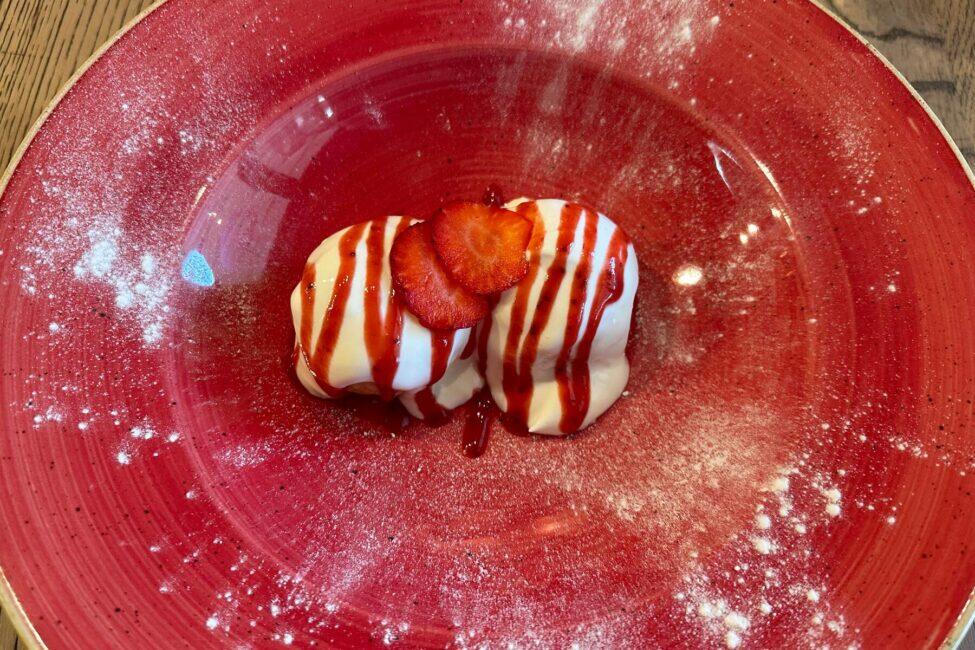
Sabalić’s godmother was the inspiration behind a new dessert on the menu called šantulice, made of a warm gnocchi-like pastry stuffed with skuta and topped with a sour cream sauce and seasonal fruit compote. It’s a chewy, savory-sweet delight. Since skuta is only made during the six-month production season, Sabalić takes advantage of this seasonal delicacy.
“Everywhere I can, I throw in skuta,” she says, noting that she often substitutes skuta for mascarpone. “Skuta is my inspiration.”
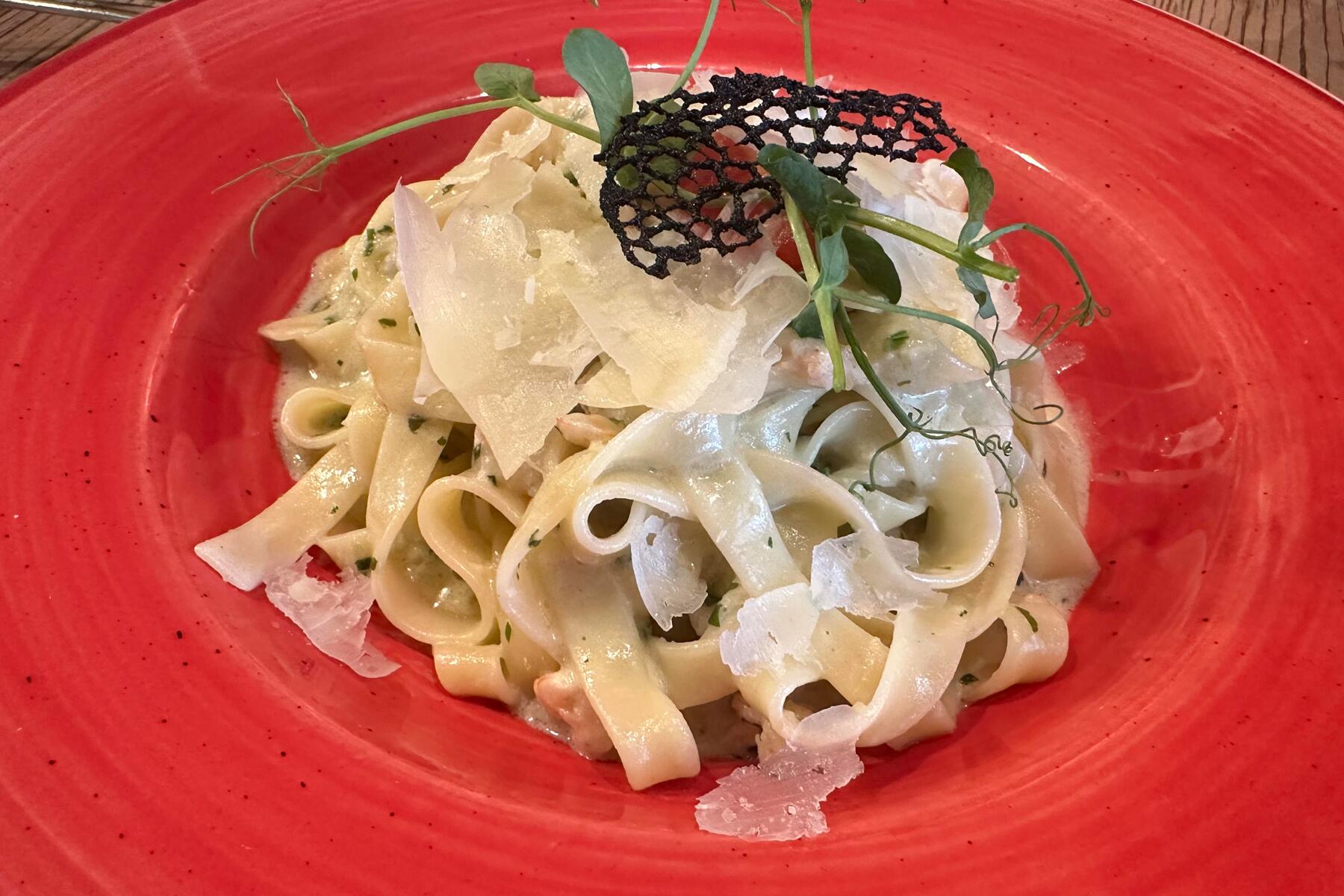
Sabalić’s riff on tiramisu featured skuta and baškotini, a toast-like bread made from a secret recipe by nuns on the island—an homage to native products. She also harkens back to history, researching centuries-old Pag Island dishes and giving them a new twist: A 16th-century Pag Island recipe originally made with pastry and topped with a scampi and Pag cheese sauce transformed into a modern prawn pasta dish with a rich, creamy Pag cheese sauce blanketed with shaved Pag cheese.
“Italians would kill me because they don’t put cheese in seafood pasta,” she laughs.
For people on Pag, cheese is a way of life, and there are no rules about which dishes you can or can’t use it.
“Cheese has this magical formula to get every meal upgraded,” says Martina Pernar Škunca, who heads marketing at Paška Sirana, which has picked up accolades for its Pag cheese over the years such as Best in Category at the 2017 World Cheese Awards.
Since many of the restaurants on the island were closed during the off-season—including Pag’s Michelin-starred restaurant, Boškinac—she directed me to Zadar, a nearby northern Dalmatian city. Pag is Croatia’s only divided island, split between two counties, and the southern part of the island belongs to Zadar County. There, I discovered a few restaurants that served dishes with skuta.
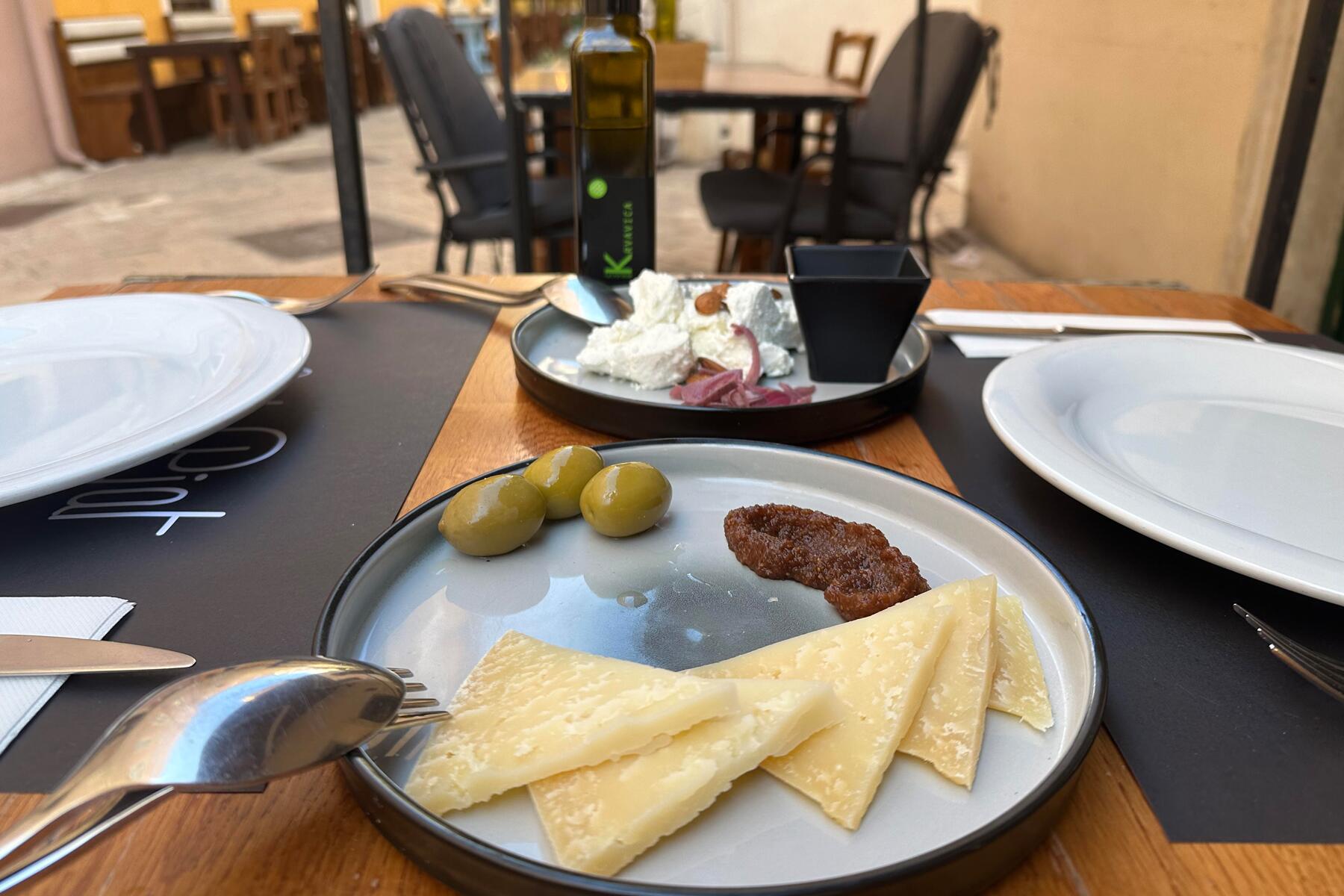
At Bistro Pjat, dishes rotate daily depending on seasonal fare. I started with skuta, which was sprinkled with almonds and served with olive oil and a side of pickled onions and honey—an unusual combination that screamed umami. I happily gobbled up slices of Pag cheese prior to a course of homemade tortellini stuffed with young asparagus and apple; depending on the chef’s whims, it’s often stuffed with skuta.
I ended the meal with a type of skuta strudel called Paška savijača, with swirls of skuta tucked into pastry layers. Art Kavana, a café just outside of the Old Town, further satisfied my sweet tooth: I indulged in Paška Rapsodija (Rhapsody of Pag Island), a light layer cake with apricot, white chocolate mousse, and skuta, and Paška Pita (Pag Island Pie), a dome-shaped shortcrust pastry with skuta and lemon and orange filling sprinkled with powdered sugar that reminded me of my Croatian grandmother’s cookies.
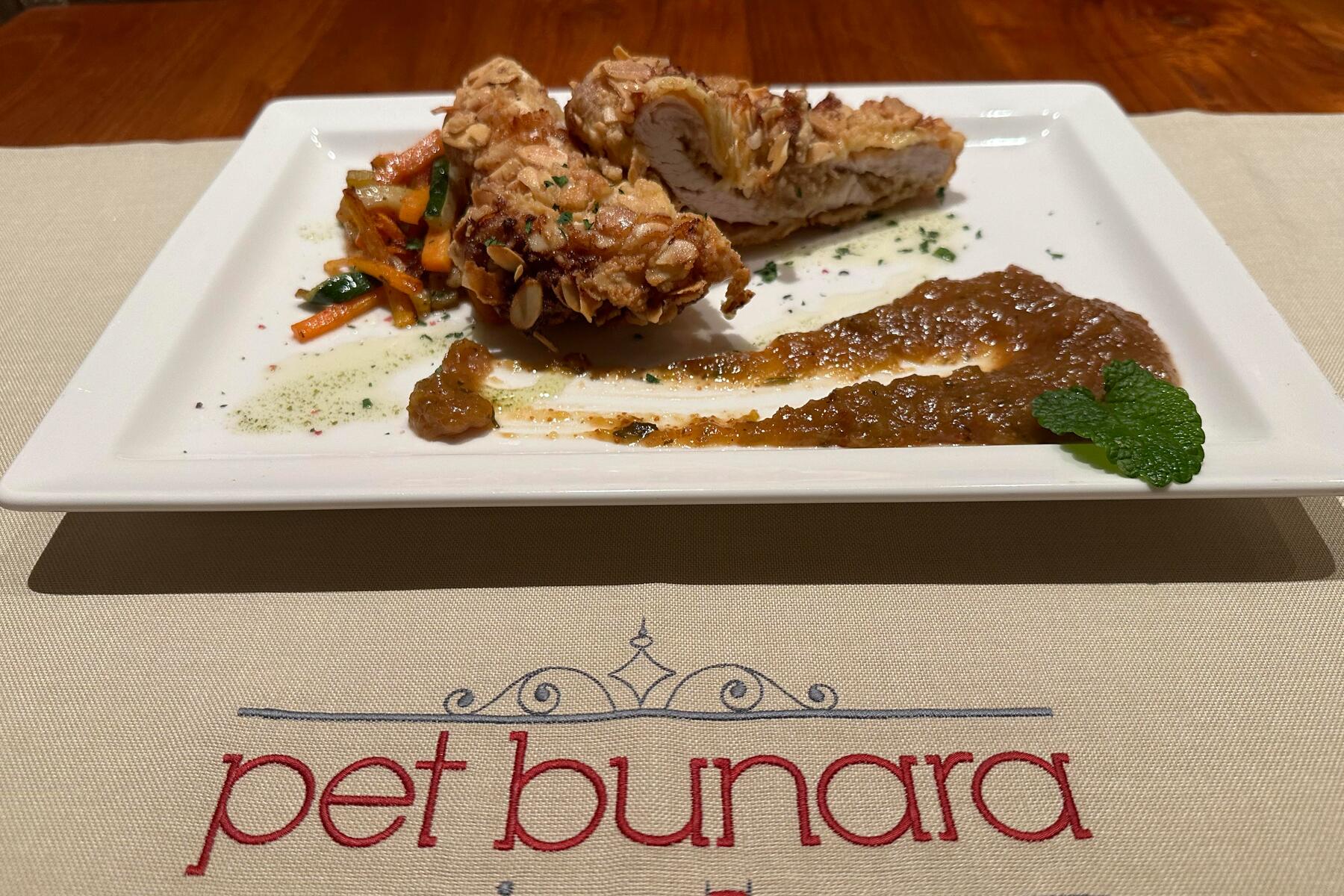
Before departing, I had a Proustian moment at Pet Bunara Restaurant. I ordered the turkey steak Pet Bunara, and it brought me back to more than a decade prior, when I first fell in love with this part of Croatia. It was deeply gratifying, like Dalmatian-style Thanksgiving on a plate. The turkey was breaded and crusted with slivered almonds and stuffed with skuta and organic fig jam. The jam comes from the Babac-Damjanic family farm in the village of Poljica near Zadar, where organic ripe figs are processed into Šinjorina Smokva jam following a traditional recipe. If there is one thing I love almost as much as cheese, it’s figs.
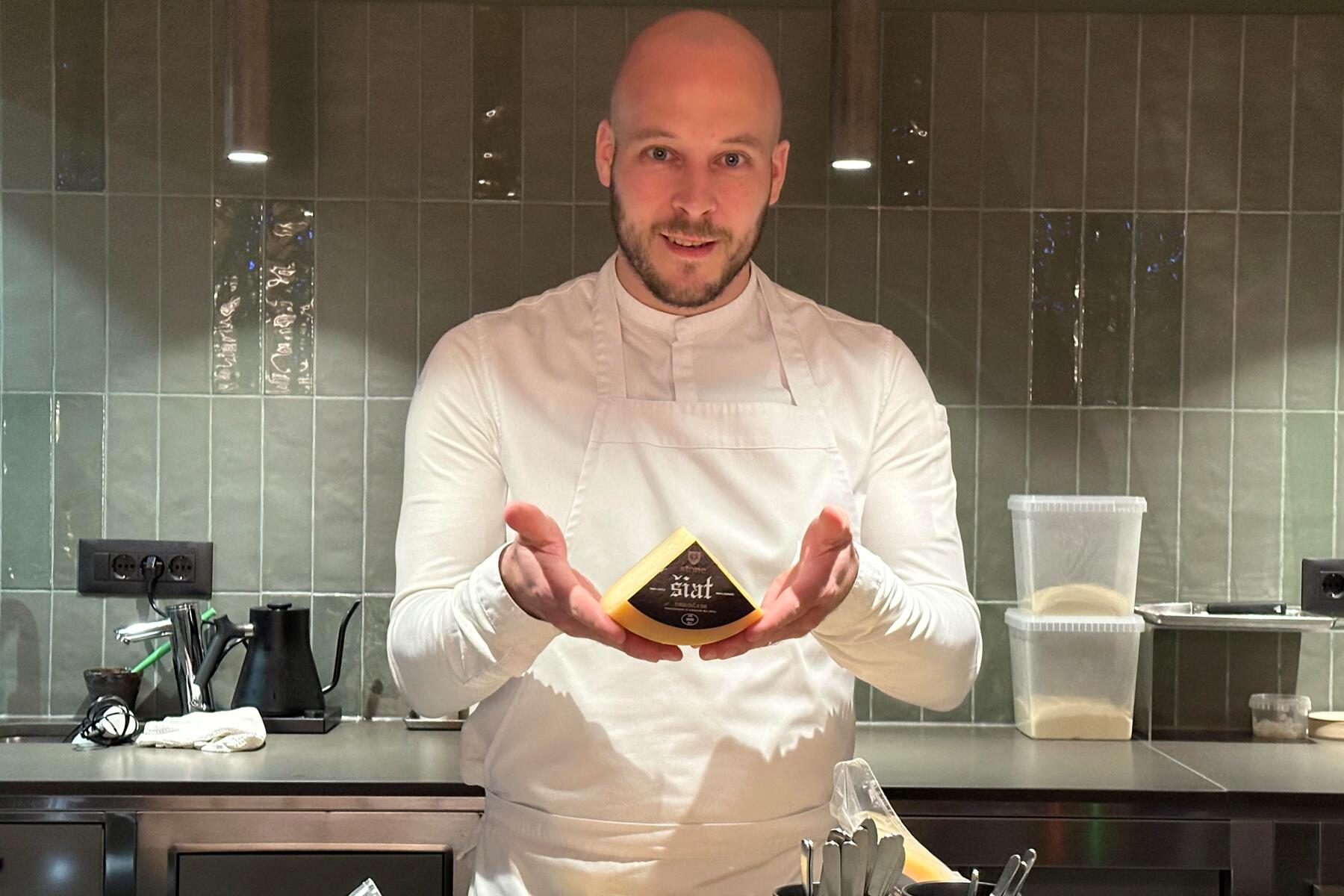
By this point, you might think that I’d had my fill of cheese, but I was still on a dairy mission. Further down the coast in Split, I stopped for a meal at a new restaurant, Krug, where chef and owner Karlo Kaleb introduced me to a local sheep’s milk cheese, šiat. I sampled three different versions—cheese aged 70 days, one year, and three years—and I wouldn’t be surprised if this is Croatia’s next award winner.
The delectable 10-course meal that followed featured a number of standout dishes with cheese, including a course of shrimp marinated in a Maraschino solution with fermented cherries and homemade mascarpone, housed in a pastry shell and topped with pickled kohlrabi and trout roe; and a crispy celeriac juice shell filled with beef tartare, chili oil, pickled mustard seeds and one-year-old cheese cream, topped with salted, smoked, dried and grated veal heart. And for pre-dessert: sheep yogurt sorbet with varenik cream, made from slowly reduced plavac mali wine grape juice, which was a truly satisfying treat—and end to the trip.