31 Best Sights in Bangkok, Thailand

Background Illustration for Sights

We've compiled the best of the best in Bangkok - browse our top choices for the top things to see or do during your stay.

Flower Market

Phra Nakhon Fodor's choice
Peter Guttman/Peterguttman.com

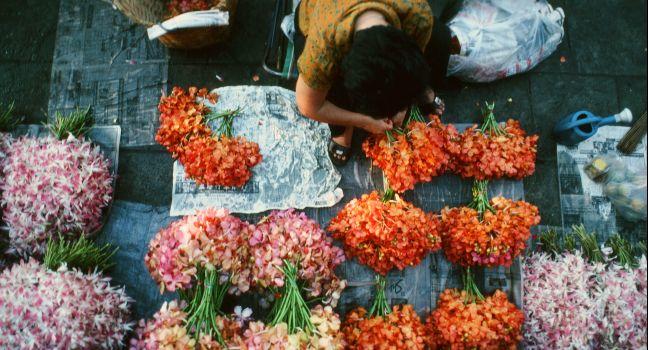
Also known as Pak Khlong Talat, the Flower Market covers several city blocks near the river and is filled with flower vendors busy around the clock. Although it's open 24 hours, the early morning, when trucks arrive with fresh blooms from nearby provincial farms, is the best time to visit; otherwise, it's most interesting at night when more deliveries are heading in and out. This is where individuals and buyers for restaurants, hotels, and other businesses purchase their flowers and bargain prices. Just stroll into the warehouse areas and watch the action. Many vendors only sell flowers in bulk, but others sell small bundles or even individual flowers. As everywhere else where Thais do business, there are plenty of street stalls selling food. This very photogenic area that sees few tourists is well worth a visit.
Chakraphet Rd., Bangkok, 10200, Thailand

Something incorrect in this review?

Grand Palace

Old City Fodor's choice
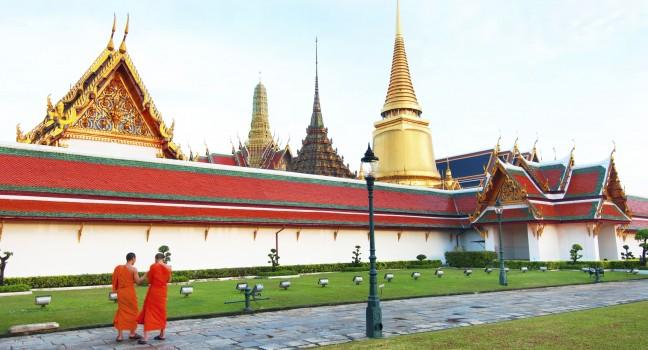
The Beautiful Temple.;
Yentafern/Shutterstock

This is one of Bangkok's most revered spots and one of its most visited. King Rama I built this walled city in 1782, when he moved the capital across the river from Thonburi. The palace and adjoining structures only got more opulent as subsequent monarchs added their own touches. The grounds are open to visitors, but the buildings are not. They're used only for state occasions and royal ceremonies. On rare occasions, rooms in the Chakri Maha Prasat Palace—considered the official residence of the king, even though he does not live there—are sometimes open to visitors. Admission to the complex includes entrance to Dusit Palace Park. Note, proper attire (no flip flops, shorts, or bare shoulders or midriffs) is required; if you forget, you will be loaned unflattering but more demure shirts and shoes at the entrance (deposit required). You can buy tickets online.

Thanon Sanam Chai and Na Phra Lan Rd., Bangkok, 10200, Thailand
02–623–5500
Sight Details
B500 (includes admission to Wat Phra Kaew and Queen Sirikit Museum of Textile, which are within the Grand Palace compound)

Something incorrect in this review?

Jim Thompson House Museum

Pathumwan Fodor's choice
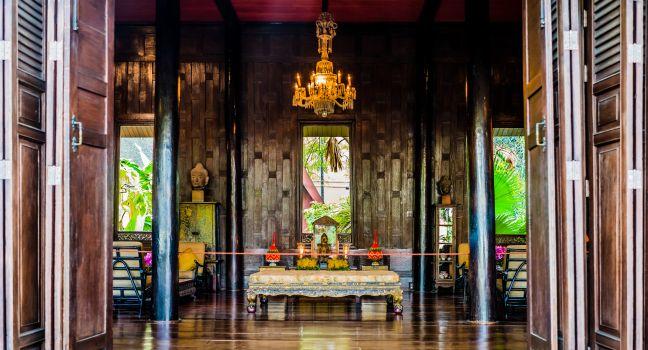
Buddha altar at Jim Thompson House museum bangkok thailand
(c) Pixattitude | Dreamstime.com

After starting his career as an architect in New York City, Jim Thompson ended up in Thailand at the end of World War II after a stint at the Office of Strategic Services, the predecessor to the CIA. He eventually moved into the silk business and is credited with revitalizing the industry in Thailand. This alone would have made him a legend, but his former home is also a national treasure. Thompson imported parts of several up-country buildings, some over a century old, to construct his compound. Three of six are still exactly the same as their originals, including details of the interior layout. With true appreciation and a connoisseur's eye, Thompson furnished the homes with what are now priceless pieces of Southeast Asian art. Adding to Thompson's notoriety is his disappearance: in 1967 he went to the Malaysian Cameron Highlands for a quiet holiday and was never heard from again.

The entrance to the compound is easy to miss—it's at the end of an unprepossessing lane, leading north off Rama I Road, west of Phayathai Road (the house is on your left). A good landmark is the BTS National Stadium station—the house is north of the station, just down the street from it. An informative 30-minute guided tour starts every 15 minutes and is included in the admission fee.

The grounds also include a silk and souvenir shop and a restaurant that's great for a coffee or cold-drink break.

Recommended Fodor's Video

Queen Saovabha Memorial Institute

Pathumwan Fodor's choice
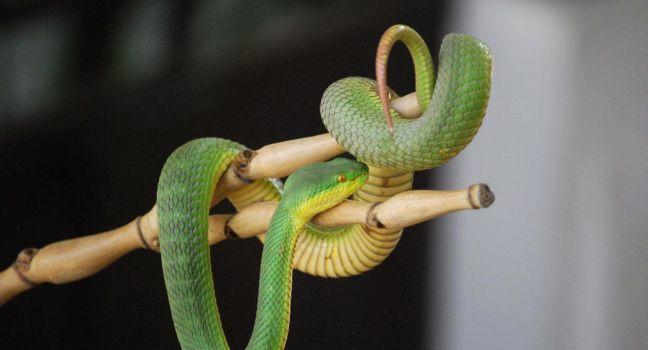
Green Pit Viper
Green Pit Viper by Chrissy H

The Thai Red Cross established this unusual and fascinating snake farm and toxicology research institute in 1923, and it is well worth a visit. Venom from cobras, pit vipers, and some of the other 56 types of deadly snakes found in Thailand is collected and used to make antidotes for snakebite victims. Venom extraction takes place on weekday mornings at 11. The snake handling show and photo op is at 2:30 on weekdays and 11 on weekends and holidays.

Wat Arun

Thonburi Fodor's choice
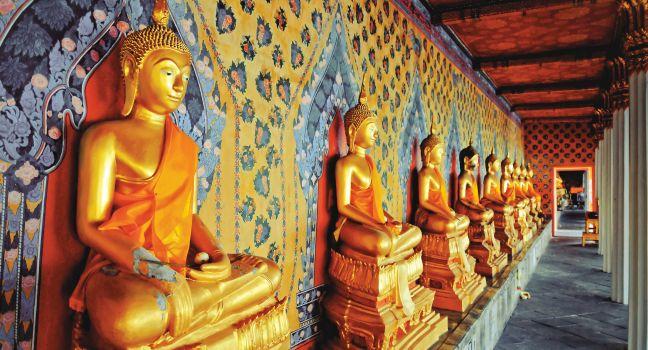
BANGKOK, THAILAND - AUGUST 11: golden Buddha statues in Wat Arun temple, Bangkok - Thailand on August 11,2012. Buddhism is Thailand official religion and is the religion of more than 90% of its people; Shutterstock ID 131225321; Project/Title: Bangkok App;
Eddy Galeotti / Shutterstock

This riverside Buddhist monastery is inspiring at sunrise, but it's even more marvelous toward dusk, when the setting sun throws amber tones over the entire area. In front of the monastery facing the river is a square courtyard containing an impressive 270-foot-tall prang (Khmer-style tower) surrounded by four smaller ones. All five prangs are covered in mosaics assembled from broken Chinese porcelain originally used as ballast on ships coming from China. Away from the river, among the monastic residences, is a respected meditation center open to the public and overseen by English-speaking instructor Hartanto Gunawan.

Wat Pho

Old City Fodor's choice
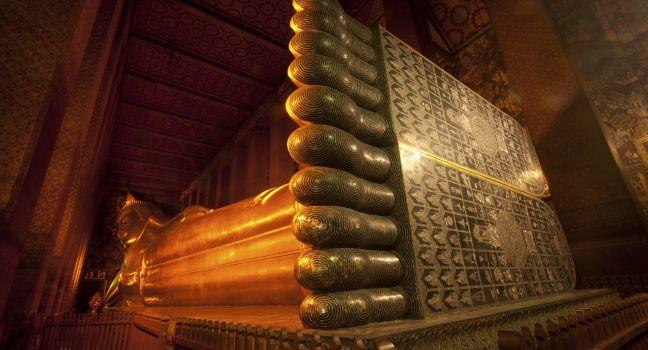
The Big golden Reclining Buddha within Wat Pho is the important temple in Bangkok, Thailand.; Shutterstock ID 91978364; Project/Title: Photo Database Top 200
topten22photo/Shutterstock

The city's largest wat has what is perhaps the most majestic representation of the Buddha in Bangkok. The 150-foot reclining Buddha---carved from brick and stucco, then covered with black lacquer and a final layer of gold---is so large it fills an entire viharn. Especially noteworthy are the mammoth statue's 10-foot feet, with the 108 auspicious signs of the Buddha inlaid in mother-of-pearl. Behind the viharn holding the Reclining Buddha is Bangkok's oldest open university. A century before Bangkok was established as the capital, a monastery was founded here to teach traditional medicine. Around the walls are marble plaques inscribed with formulas for herbal cures, and stone sculptures squat in various postures demonstrating techniques for relieving pain. The monks still practice ancient cures, and the massage school (now outside the temple grounds on a nearby street, though massages are still available in the temple) is world-famous. Thai massages (which can actually be painful, though therapeutic) cost around B400 for 1 hour. Appointments aren't necessary—you usually won't have to wait long if you just show up. Massage therapy courses of up to 200 hours are also available at the school.

Chetuphon Rd., Bangkok, 10200, Thailand
83–057--7100
Sight Details
B300

Something incorrect in this review?

Wat Phra Kaew

Old City Fodor's choice
Loyal palace (Wat Phra Kaew) in Bangkok, Thailand;
MJ Prototype/Shutterstock

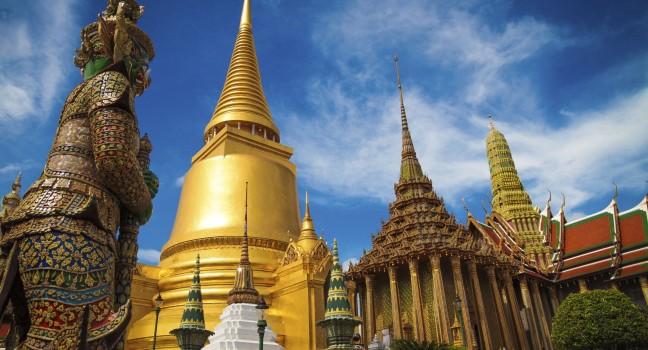
This is the most sacred temple in the kingdom, and no other wat in Thailand is so ornate or so embellished with glittering gold. As you enter the compound, take note of the 20-foot-tall statues of fearsome creatures in traditional battle attire standing guard. Turn right as you enter the compound, where the inner walls are covered with colorful murals depicting Thailand's national epic the Ramakien, a Thai version of India's Ramayana. Several kinnaree (half-woman, half-lion creatures) stand guard outside the main chapel, which has a gilded three-tier roof. Inside sits the Emerald Buddha. This most venerated image of Lord Buddha is carved from a single piece of green jasper 26 inches high.

Sanam Chai and Na Phra Lan Rds., Bangkok, 10200, Thailand
02–623--5500
Sight Details
B500 (includes admission to Grand Palace and Queen Sirikit Museum of Textile, which are within the Grand Palace compound)

Something incorrect in this review?

Wat Traimit

Samphanthawong Fodor's choice
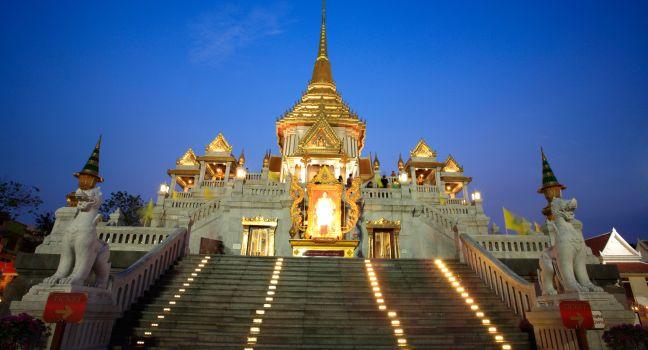
Wat Traimit entrance at dusk in Bangkok, Thailand.  Traimit temple, located near China town, is built in 1832 by three Chinese donors.;
Blanscape / Shutterstock

While this temple isn't especially notable for its architecture, off to its side is a small chapel containing the world's largest solid-gold Buddha, cast about nine centuries ago in the Sukhothai style. Weighing 5½ tons and standing 10 feet high, the statue is considered a symbol of strength and power. It's believed that the statue was brought first to Ayutthaya. When the Burmese were about to sack the city, it was covered in plaster. Two centuries later, still in plaster, it was thought to be worth very little; when it was being moved to a new Bangkok temple in the 1950s, it slipped from a crane and was left in the mud by the workmen. In the morning a temple monk, who had dreamed that the statue was divinely inspired, went to see it. Through a crack in the plaster, he saw a glint of yellow. In addition to the Buddha, Wat Traimit's museum devoted to Thai-Chinese history is worth checking out.

National Museum

Phra Nakhon Fodor's choice

Established in a former royal palace built in 1887, the National Museum is the best place to acquaint yourself with Thai history. It holds one of the world's best collections of Southeast Asian art and artifacts, beginning with ceramic utensils and bronzeware from northeastern Thailand's Ban Chiang culture (2000–900 BC). Most of the masterpieces from the northern provinces are displayed here, not in museums there.

Free guided tours in English take place on Wednesday and Thursday, usually at 9:30 am.

Erawan Shrine

Pathumwan
Hindu God Brahma at the Erawan Shrine in Bangkok;
PAUL ATKINSON / Shutterstock

Completed in 1956 to accompany the opening of the Erawan Hotel (now the Grand Hyatt Erawan), this shrine is one of the more active and highly revered ones, with many people stopping by on their way home to pray to a gleaming image of Brahma, the Hindu creator god. Thai dancers in traditional dress and a small orchestra perform for a fee to increase the likelihood that your wish will be granted. Even with a traffic jam right outside the gates, the mix of rhinestone-costumed dancers and fervent worshippers is an intoxicating sight. Entry is free, but many leave a small donation. There are also fantastic views of the shrine from the Rajaprasong Skywalk up above, from where many visitors take pictures.

Ratchadamri and Ploenchit Rds., Bangkok, 10330, Thailand
02–252--8750
Sight Details
Free (small donation customary)

Something incorrect in this review?

Lumphini Park

Pathumwan
View across the lake in Lumpini Park in Bangkok, Thailand;
Alistair Michael Thomas/Shutterstock

Two lakes enhance this popular park, the oldest and largest in the center of the city. Expect to see children feeding bread to the turtles, aerobics and tai chi classes, and teenagers paddling boats. During the dry season (from December to February), the Bangkok Symphony Orchestra usually runs the free Concert in the Park series, which starts at 5:30 pm each Sunday.

Rama IV Rd., Bangkok, 10330, Thailand
02–252--7006

Something incorrect in this review?

Baan Suan Phlu

Sathorn

Former Prime Minister Kukrit Pramoj's house reflects his long influential life. After founding Siam Rath newspaper in 1950 and writing several novels, he served as prime minister in 1975 and 1976. (Perhaps he practiced for that role 12 years earlier, when he appeared with Marlon Brando as a fictional Southeast Asian prime minister in The Ugly American.) He died in 1995, and much of his living quarters—five interconnected teak houses—has been preserved. Throughout his life, Kukrit was dedicated to preserving Thai culture, and his house and grounds are monuments to a bygone era; the place is full of Thai and Khmer art and period furniture. The landscaped garden, with its Khmer stonework, is also a highlight. It took Pramoj 30 years to build the house, so it's no wonder that you can spend the better part of a day wandering around.

19 S. Sathorn Rd., Bangkok, 10120, Thailand
02–286--8185
Sight Details
B50

Something incorrect in this review?

Bangkok Art and Culture Centre

Pathumwan

The large, striking white building opened in 2008 and is the main showcase for cutting-edge contemporary art, music, theater, and film in Bangkok. Frequent exhibitions include works by Thai and international artists. Inside, the curving stairway of the central atrium is reminiscent of the Guggenheim in New York City.

939 Rama I Rd., Bangkok, 10330, Thailand
02–214--6630
Sight Details
Free
Closed Mon.

Something incorrect in this review?

Carpediem Galleries

A vivacious, charismatic Singaporean woman owns this gallery that often exhibits oversize artworks. Though based in Sukhumvit, her gallery displays works south of Silom in Vino di Zanotti, a wine restaurant.

399 Nanglinchee Soi 9, Bangkok, 10120, Thailand
08-1618–2890
Sight Details
By appointment only

Something incorrect in this review?

Chitralada Palace

Dusit

All Thai kings since Rama V have resided at this sprawling palace compound, where the residential part of the property is sometimes referred to as Chitralada Royal Villa. Although it's closed to the public, the surrounding walls and moat are a lovely sight, especially when lighted to celebrate royal-related holidays. The extensive grounds shelter a small herd of royal white elephants and a farm established by the late Rama IX, although these can't be seen from outside. A small, beautifully designed train station reserved for royal use can be seen along the rail line parallel to Kamphaeng Phet 5 Road.

Ratchawithi Rd. and Rama V Rd., Bangkok, 10300, Thailand

Something incorrect in this review?

City Pillar Shrine

Phra Nakhon

Somewhat in the shadow of grander nearby attractions like the Grand Palace and Wat Phra Kaew, this shrine is one of the most historically and culturally significant sites in the city. Just east of the Grand Palace compound, the City Pillar Shrine contains the foundation stone (Lak Muang) from which all distances in Thailand are measured. The stone is believed to be inhabited by a spirit that guards the well-being of Bangkok. The shrine is free to enter and frequented by locals who come here to pray, so behave and dress respectfully (knees and shoulders should be covered).

2 Lak Muang Rd., Bangkok, 10200, Thailand

Something incorrect in this review?

Democracy Monument

Old City

One of Bangkok's biggest and best-known landmarks, this monument anchors a large traffic circle three blocks from the eastern end of Khao San Road. Not frequented much by tourists, it commemorates the establishment of a constitutional monarchy in Thailand in 1932.

Ratchadamnoen Rd., Bangkok, 10200, Thailand
Sight Details
Free

Something incorrect in this review?

The Giant Swing

Phra Nakhon

Originally built by King Rama I in 1784, this towering 27-meter (88-foot) wood structure has a great backstory but today it is just a random photo op. If you find yourself posing in front of it, or just walking by, know that it was once used in Hindu ceremonies where teams of men would launch themselves into the air and catch gold coins with their teeth, slingshotting them to good fortunes on heaven and Earth. The competitions were banned in 1935 after several fell to untimely deaths.

Bamrung Muang Rd., Bangkok, 10200, Thailand

Something incorrect in this review?

Khao San Road

Banglamphu

This thoroughfare dates back to a time when it was primarily occupied by rice vendors, hence the name Khao San, which means "milled rice." Since the mid-1980s the road and surrounding neighborhood have become the world's most well-known backpacking scene. Over the last decade, Thais have made it a trendy destination, adding more upscale accommodation amid the ubiquitous low-budget guesthouses and turning Khao San Road itself into a pedestrian-only street. There's a plethora of Western and Thai restaurants in the area, most of which are rather mediocre. On weekends the bars here are packed with locals as well as tourists.

Early evening is the best time to stroll or sit back and people-watch. The frenetic activity can, depending on your perspective, be infectious or overwhelming. During Songkran, the Thai New Year in mid-April, Khao San turns into one huge wet-and-wild water fight. Join in the fun only if you don't mind being completely soaked.

Khao San Rd., Bangkok, 10200, Thailand

Something incorrect in this review?

National Gallery

Phra Nakhon

Although it doesn't get nearly as much attention as the National Museum, the National Gallery has a permanent collection of modern and traditional Thai art that is worth seeking out. There are also frequent temporary shows from around the country and abroad. To get to the gallery, walk down Na Phra That Road, past the National Theater and toward the river. Go under the bridge, then turn right and walk about 200 meters (650 feet); the gallery is on your left. The building used to house the royal mint.

National Museum of Royal Barges

Thonburi

Splendid ceremonial barges are berthed on the Thonburi side of the Chao Phraya River. The boats, carved in the early part of the 19th century, take the form of mythical creatures from the Ramakien. The most impressive is the red-and-gold royal vessel called Suphannahongse (Golden Swan), used by the king on special occasions. Carved from a single piece of teak, it measures about 150 feet and weighs more than 15 tons. Fifty oarsmen propel it along the river, accompanied by flag wavers, two coxswains, and a rhythm-keeper. The museum is challenging to find, so you may want to join a tour or find a taxi driver who knows the area.

Steer clear of scam artists offering tours or claiming that the museum is closed.

October 14 Memorial

Phra Nakhon
The memorial honors Thais killed during a student-led uprising against military rule. That revolt began on October 14, 1973, and tributes to people killed in October 1976 and May 1992 in similar protests have also been incorporated. Although most of the inscriptions are written in Thai, the memorial is a sobering sight, especially being so close to the Democracy Monument, which acknowledges the establishment of the constitutional monarchy. Traffic is always whizzing about, the gate is often closed, and there seem to be no regular hours, though there are painting exhibitions at times.

Phra Athit Road

Banglamphu

Chao Phraya breezes cool the short path that leads from the Phra Athit Ferry Pier to Santichaiprakarn Park, a tree-lined spot at the northern end of Phra Athit Road. The park, a delightful place to sit and watch the river, contains Phra Sumen Fort, one of the two remaining forts of the original 14 built under King Rama I. Some of the buildings along Phra Athit Road itself date back more than 100 years. At night the modest bars and restaurants along the street, a favorite of university students, come alive.

Phra Athit Rd., Bangkok, Thailand

Something incorrect in this review?

Queen Sirikit Museum of Textiles

Old City

Within the Grand Palace complex, in the old Ministry of Finance building, this interesting little museum tells the story of Thai silk through a lovely display of Queen Sirikit's most celebrated outfits. There are daily silk-making demonstrations and a particularly good gift shop with other handicrafts as well as textiles.

Na Phra Lan Rd., Bangkok, Thailand
02–259430
Sight Details
B150; included in Grand Palace ticket

Something incorrect in this review?

Siam Square

Pathumwan

Fashion, education, and diverse shopping converge in a dense network of streets and alleys called Siam Square in the heart of downtown. Thailand's most prestigious college, Chulalongkorn University, is next door, along with neon-splashed malls, designer boutiques, trendy restaurants, and street food. At night along the sidewalk, a bohemian and latest-fashions outdoor market scene unfolds.

Suan Pakkad Palace

Ratchathewi

Eight antique teak houses built high on columns sit amid the undulating lawns and shimmering lotus pools of this lush complex. The houses, which exhibit porcelain, stone heads, traditional paintings, and Buddha statues, were dismantled at their original sites and reassembled here. At the back of the garden is the serene Lacquer Pavilion, worth a look for its gold-covered paneling with scenes from the life of the Buddha. Academics and historians debate how old the murals are—whether they're from the reign of King Narai (1656–88) or from the first reign of the current Chakri Dynasty, founded by King Rama I (1782–1809).

Wat Benchamabophit

Dusit

Built in 1899, this wat is a favorite with photographers because of its open spaces and bright shining marble. Fifty-two Buddha statues of various styles surround the courtyard, the magnificent interior has crossbeams of lacquer and gold, and an exquisite bronze seated Buddha is the focal point of the ordination hall's main altar. But Wat Benchamabophit is more than just a glorious structure. The monastery here is a seat of learning that appeals to Buddhist monks with intellectual yearnings.

69 Rama V Rd., Bangkok, 10300, Thailand
098–395--4289
Sight Details
B100

Something incorrect in this review?

Wat Mangkhon Kamalawat

Pom Prap Sattru Phai

In classic Chinese style, this 150-year-old temple has a glazed ceramic roof topped with fearsome dragons. Known in Chinese as Leng Noi Yee, the central shrines contain not only statues of Buddha but other art that incorporate Confucian and Taoist elements. The wat is especially colorful during Chinese New Year, when thousands of Thais visit the temple to burn incense to pay respect and make merit.

Wat Saket

Old City

A well-known landmark, the towering gold stupa of Wat Saket, also known as the Golden Mount, was once the highest point in the city. King Rama III began construction of this temple, but it wasn't completed until the reign of Rama V. On a clear day the view from the top is magnificent. Every November, during the Loy Kratong festival, the temple hosts a popular fair with food stalls and performances.

To reach the gilded chedi you must ascend an exhausting 318 steps, so don't attempt the climb on a hot afternoon.

Chakkaphatdiphong Rd., Bangkok, 10100, Thailand
93–529--5599
Sight Details
B50

Something incorrect in this review?

Wat Suthat

Old City

Built between the reigns of kings Rama I and Rama III, this highly venerated royal temple houses Thailand's largest surviving Sukhothai-period bronze Buddha, along with intensely colored murals depicting scenes from Buddhist mythology. The ashes of Rama VIII (Ananda Mahidol) are interred in the base of the huge Buddha.