



There is no wrong time to visit Bangkok.
Whenever you go, the delights remain abundant, from spicy pork noodles pulled from curbside woks to serene mornings, watching the laundry flutter on the canal tributaries.
There’s incredible shopping at every price point (and incredible spa treatments at the same) as well as historic nostalgia around every turn, whether you tour the famous palaces or wander the back streets of Talat Noi, visiting petite ancestor shrines with smoldering incense.
Yet, weather can make (or frustrate) any trip, and if you arrive unprepared and unaware, Bangkok can be one of the more frustrating cities to visit. It’s crucial to consider when you are going and what you’d love to see.
Temperatures to Expect in Bangkok
The Facts: The World Meteorological Association lists Bangkok as one of the world’s hottest capital cities. The mean average temperature is around 83 degrees, but in the hottest months (March/April), just before the rains arrive, it is consistently above 95 degrees. In 2023 and early 2024, Bangkok also suffered extreme heat waves, with temperatures clocking in at 104 degrees. December and January get the nicest temperatures, upper 70s to low 80s in the daytime and even dipping into the very high 60s some evenings.
The Twist: The months of March, April, and May are going to be the hottest, but if you arrive in April, you can enjoy Songkran, the Thai New Year. It occurs on April 13th, but for the surrounding days, there are festivals, rituals, and entire city-wide water fights in the streets. In these hottest months of the year, you can also save. Hotel and flight rates are generally lower.
Top Picks for You


Recommended Fodor’s Video
A Travel Hack: Many hotels in Thailand offer swimming pools, but you don’t necessarily need to stay in one. Pool passes are easily purchased for day visitors at many of the hotels around town, too. Daily Pass is a great website for finding pool passes, but you can also call each hotel and ask.
Bangkok’s Seasons
The Facts: It’s always muggy. There are two distinct seasons in Southeast Asia. The Monsoon, or Wet, Season runs from May to October. The Dry Season is from November until April. These can vary, and climate change has certainly affected everything, from the amount of rain to the amount of heat.
The Twist: The highest tourist traffic in Bangkok will be in December and January. The nights can even dip into the high 60s and you’re unlikely to have your plans rained out.
However, don’t immediately dismiss visiting in the Wet Season. There’s nothing more beautiful than a cup of tea and an open window during a thunderstorm. The malls and museums are very waterproof. Some, like Siam Paragon Mall, even boast more than shopping. Inside this mall, there is a movie theater, a massive aquarium experience, and a spa.
The Travel Hack: November and May are really great times to travel to Bangkok, as the crowds haven’t quite swelled to peak, and you get a bit of both climates. November also celebrates Loy Krathong––Thailand’s Festival of Lights. Millions of faithful across the country release small, floating candle vessels into the waterways, paying respect to the goddess of water. In May, they celebrate Visakha Bucha Day, one of the holiest holidays in Buddhism.
How to Pack For Bangkok
The Facts: Sleeveless shirts and shorts are entirely appropriate, in terms of respectful dressing in Bangkok. You should pack a few, lightweight, breezy longer, full-coverage options, for temple visits and fine-dining establishments. At any temple or holy site––or in any conservative area or situation––it’s customary to cover one’s knees and shoulders, at minimum.
The Twist: As a frequent traveler to Thailand, I see many of my friends arrive carrying sunscreen, mosquito repellent, aloe vera gel, and umbrellas. These are all for sale in Thailand at a fraction of American prices. It’s best to buy these items once you arrive, as needed.
The Travel Hack: If you are traveling in the monsoon season, dry sacks are great for cameras laptops, and/or wet clothing. When not in use, they pack down flat. You will also find laundry centers around Bangkok’s most touristed areas. Instead of paying high hotel laundry prices, drop off and pick up at a local spot.
How to Plan Your Bangkok Visit
The Facts: In the Dry Season, you can be looser with your itinerary, as street flooding and rainstorms are nearly non-existent. If you are traveling in Monsoon Season, it’s best to make a plan for each day, but have an alternate, if it’s raining heavily. The rains in Thailand can be all day, but often, there will be spurts of heavy showers, and then a break in the storm. If you stay flexible, you can take advantage of the ebbs and flows.
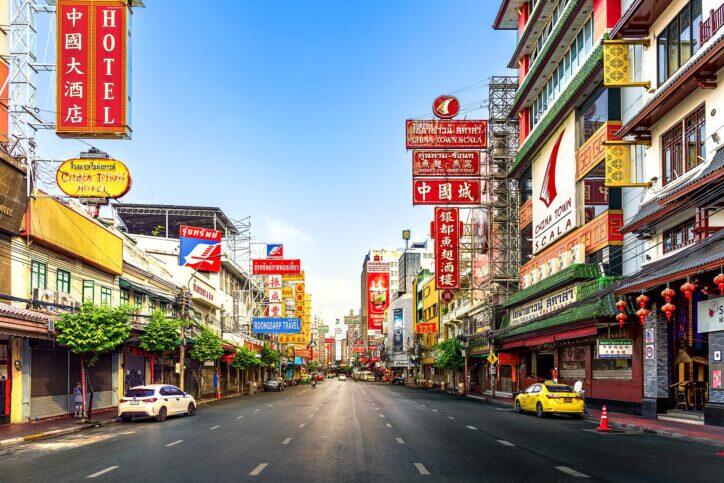
The Twist: Even amateur photographers will delight in the reflections. Yoawarat Road––the main artery through Chinatown––is a riot of color, especially in the rain, when the streets are wet and the neon lights reflect on the pavement.
The Travel Hack: Peak Dry Season flights from the United States are some of the highest prices to Thailand. Book flights as early as possible. If you can’t take advantage of booking your flight early, try searching from major South American cities. Mexico and Bogota, for example, usually have more affordable flights to Asia. Or consider a very long layover. Allowing for a stopover in Europe, in a city like Frankfurt or Istanbul, for 24 to 48 hours can reduce the price.