592 Best Sights in China

Background Illustration for Sights

We've compiled the best of the best in China - browse our top choices for the top things to see or do during your stay.

Tianyi Pavilion

Fodor's Choice

Down a peaceful alley off Changchun Lu, the Tianyi Pavilion is the oldest private library in China. Built in 1596 and founded by politician Fan Qin, this spiritual place features gold-plated, wood-paneled buildings, bamboo groves, pools, and a rockery. The scholarly setting, worth a visit for the architecture alone, preserves an atmosphere of seclusion and contemplation.

Tibetan Quarter

Fodor's Choice

Chengdu's tiny Tibetan Quarter is a fascinating place to explore. Shop for colorful Tibetan clothing and art, including religious objects such wooden beads, Buddhist prayer flags, and Tibetan scrolls. Make sure to bargain hard. If you can't make it to Tibet, stop for a cup of salty butter yak milk tea at one of the many restaurants lining the main drag.

Wuhuoci Heng St., Chengdu, 610041, China

Something incorrect in this review?

Tiger Leaping Gorge

Fodor's Choice

The deepest gorge in the world is hard to forget once you've seen it in person, and it makes an excellent trekking destination. If you're hiking along the upper trail, the 40-km (25-mile) route can be finished in a day or two. The upper trail connects the towns of Qiaotou in the west and Daju in the east, and there is a ferry across the river near Daju. The easiest way to tackle the walk from Lijiang is to take the 8:30 am or 9 am bus on Xianggelila Ave to Qiaotou and hike toward Daju.

There are several guesthouses in the gorge, scattered at distances to accommodate hikers at any stage of their trek. All offer food, hot showers, and beds for Y20 to more than Y100, depending on season and weather. Many of the guesthouses have expanded and upgraded accommodations in the past couple of years, so there is more selection and even some higher-end rooms for Y150. The guesthouses have put up signs and arrows to let hikers know how much farther until the next lodging. If you don't mind not hiking the whole gorge, stop in Walnut Garden, where you can take one of the regular buses back to Lijiang. If you continue to Daju, there are only two buses a day to Lijiang, at 8:30 am and 1 pm. Also remember that the road connecting Daju to Lijiang goes through the Jade Dragon Park and tickets cost around Y220 per person just to go through. Daju is a very pleasant—though quiet, because of the road fee—town that offers basic rooms for around Y50 a night.

For those only interested in seeing the point that gives the gorge its name, the river's narrowest point, which a tiger is supposed to have leaped across to evade a hunter, there are two options: the prettier one is on the Lijiang side of the gorge, includes a nice 4-km (3-mile) walk along a path cut out of the cliffside, and costs Y50 to enter; the Shangri-La side can be reached directly by minivan but will include a few hundred steps down to where the water rages most fiercely. The entrance fee costs Y70, which also includes the rest of the gorge. Most hotels will also gladly arrange tours in minivans—expect to pay more than Y140 per person each way.

Recommended Fodor's Video

Tomb of Abakh Hoja

Fodor's Choice

About 5 km (3 miles) northeast of the city lies one of the most sacred sites in Xinjiang. The sea-green tiled hall that houses the tomb—actually about two dozen tombs—is part of a massive complex of sacred Islamic structures built around 1640. Uyghurs named the tomb and surrounding complex after Abakh Hoja, an Islamic missionary believed to be a descendant of Mohammed, who ruled Kashgar and outlying regions in the 17th century. Excavations of the glazed-brick tombs indicate that the first occupant was Abakh Hoja's father, who is buried here along with Abakh Hoja and many of their descendants.

The Han, who prefer to emphasize the site's historical connection to their dynastic empire, call it the Tomb of the Fragrant Concubine. When the grandniece of Abakh Hoja was chosen as concubine by the Qing ruler Qianlong in Beijing, Uyghur legend holds that she committed suicide rather than submit to the emperor. In the Han story, she dutifully went to Beijing and spent 30 years in the emperor's palace, then asked to be buried in her homeland. Either way, her alleged tomb was excavated in the 1980s and found to be empty. The tomb is a bit difficult to navigate via bus, so take a taxi.

Aizirete Lu, Kashgar, 844000, China
No phone
Sight Details
Y30
Daily 8–5

Something incorrect in this review?

Wang's Residence

Fodor's Choice

This was once one among dozens of private mansions belonging to Yangzhou's prosperous merchant class, but it alone made it through the ravages of the Cultural Revolution largely intact, thanks to its conversion into a factory. Keep an eye out for the exquisite wood carving, especially the crisscrossing bamboo design carved in layers out of nanmu, a glimmering wood now extinct in this area of China. There's even a bomb shelter in the small inner garden—a reminder of the Japanese invasion.

14 Di Gong Di, Yangzhou, 225111, China
0514-8732–8869
Sight Details
Y25
Daily 8–5:30

Something incorrect in this review?

Wangjianglou Pavilion Park (Bamboo Park)

Fodor's Choice

The four-story wooden pavilion in Wangjianglou Pavilion Park, dating from the Qing Dynasty, offers splendid views of the Fu River. The poet Xue Tao, who lived in Chengdu during the Tang Dynasty, was said to have spent time near the river, from which she apparently drew water to make paper for her poems. The pavilion stands amid more than 200 species of bamboo, a plant revered by the poet.

A perfect place to stroll early mornings while the older population practice tai chi and the "Chinese yo-yo."

Don't rush out before enjoying a cup of inexpensive, Y10, Mao Feng green tea (a local specialty grown in the nearby mountains). It is the perfect escape to the messy city!

Wenshu Monastery

Fodor's Choice

Named after Manjusri, the bodhisattva of transcendent wisdom, Wenshu Monastery is one of the most important (and well-preserved) Zen Buddhist monasteries in China, and has been around almost as long as the religion itself. It was originally constructed during the Sui Dynasty, around the same time as Zen Buddhism's emergence in China. The monastery and accompanying temples have since been destroyed several times, most notably during the Ming Dynasty, after which the monks are said to have continued sitting among the ruins chanting sutras. It is notable for hundreds of antique statues crafted from a variety of materials that have survived upheavals of times past better than the actual buildings. The attractive 11-tiered Thousand Buddha Peace Pagoda is actually a rather late addition—it was built in 1988 based off an original Sui Dynasty pagoda. The on-site tea garden is a great place to relax in the afternoon.

15 Wenshu Yuan St., Chengdu, 610017, China
Sight Details
Free
Daily 8:30–6

Something incorrect in this review?

Wynn Macau

Downtown Fodor's Choice

Every 30 minutes, from noon until 10 pm, punters and passersby flock to the Wynn to witness flames and fountain jets flicker to tracks like “Diamonds Are Forever” at Performance Lake outside Macau’s first Vegas-style casino-hotel. Inside, they crowd around the rotunda to watch the “Tree of Prosperity” unfold with feng shui glitz, every hour on the dot from noon until 10 pm. Elaborate shows aside, the Wynn’s expansive, brightly lit gaming floor, exquisite fine dining options, luxury boutiques, deluxe spa, and trendy suites make this one of the finer resorts in Macau. Its 1,000 rooms span the glamorous suites in the Encore Tower, all offering views of Nam Van Lake and no less than 1,100 square feet, and the Wynn Tower’s luxurious suites and guestrooms, clad with marble-floored bathrooms, subdued cream-and-gold palettes, and Chinese artwork.

Xinjiang Autonomous Region Museum

Fodor's Choice

Don't miss the perfectly preserved mummies at this superb museum, located 4 km (2½ miles) northwest of the city center. The mummies—including the 4,000-year-old Beauty of Loulan—were excavated from tombs in various parts of Xinjiang. In addition, the museum has a well-executed exhibition on the region's ethnic minorities. If you are lucky, one of the museum's English-speaking guides will accompany you. There's no extra charge, and it's well worth asking.

585 Xibei Lu, Ürümqi, 830000, China
0991-453–4453
Sight Details
Free
Tues.–Sun. 10–6
Closed Mon.

Something incorrect in this review?

Xintiandi

Xintiandi Fodor's Choice

By World War II, more than two-thirds of Shanghai's residents lived in a shikumen (stone gatehouse). Most have been razed in the name of progress, but this 8-acre collection of them has been transformed into an upscale shopping-and-dining complex called Xintiandi, or "New Heaven on Earth." The restaurants are busy from lunch until past midnight, especially those with patios—perfect places from which to watch the passing parade of shoppers.

Yangtze River Cable Car

YuZhong District Fodor's Choice

Get a bird's-eye view of Chongqing, one of the world's biggest cities. Ideal for taking photos of the city and the two rivers, it's a good opportunity to rise above it all and get a grip on the massive scale of the metropolis.

151 Xinhua Rd., Chongqing, 400010, China
Sight Details
Y20
Daily 7 am–10 pm

Something incorrect in this review?

Yu Garden

Old City Fodor's Choice

Since the 18th century, this complex, with its traditional red walls and upturned tile roofs, has been a marketplace and social center where local residents gather, shop, and practice qi gong in the evenings. It is overrun by tourists and not as impressive as the ancient palace gardens of Beijing, but Yu Garden is a piece of Shanghai's rapidly disappearing past, and one of the few old sights left in the city.

To get to the garden itself, you must wind your way through the crowded bazaar. The garden was commissioned by the Ming Dynasty official Pan Yunduan in 1559 and built by the renowned architect Zhang Nanyang over 19 years. When it was finally finished it won international praise as "the best garden in southeastern China." In the mid-1800s, the Society of Small Swords used the garden as a gathering place for meetings. It was here that they planned their uprising with the Taiping rebels against the French colonists. The French destroyed the garden during the first Opium War, but the area was later rebuilt.

Winding walkways and corridors bring you over stone bridges and carp-filled ponds and through bamboo stands and rock gardens. Within the park are an old opera stage, a museum dedicated to the Society of Small Swords rebellion, and an exhibition hall of Chinese calligraphy and paintings.

218 Anren Lu, Shanghai, 200010, China
021-6328–2465
Sight Details
Y40 (Apr. 1–June 30; Sept. 1–Nov. 30); Y30 (July 1–Aug. 31; Dec. 1–Mar. 31)
Daily 8:30–5

Something incorrect in this review?

Yuling

Fodor's Choice

Of the nine tombs open to the public, Yuling is not to be missed. This is the resting place of the Qing Dynasty's most powerful sovereign, Emperor Qianlong (1711–99), who ruled China for 59 years. Beyond the outer courtyards, Qianlong's burial chamber is accessible from inside Stela Hall, where an entry tunnel descends some 65 feet (20 meters) into the ground and ends at the first of three elaborately carved marble gates. Beyond, exquisite carvings of Buddhist images and sutras rendered in Tibetan adorn the tomb's walls and ceiling. Qianlong was laid to rest, along with his empress and two concubines, in the third and final marble vault, amid priceless offerings looted by warlords early in the 20th century.

Malanguan, 064206, China
0315-694–0888
Sight Details
Y152 (with rest of tombs)
Daily 8:30–5

Something incorrect in this review?

Yuz Museum

Old City Fodor's Choice

In a former airport hangar and within walking distance of the Long Museum, the Yuz Museum is the brainchild of Chinese-Indonesian art collector Budi Tek. The massive, light-flooded space is perfect for showcasing installations like Maurizio Cattelan's Untitled, an olive tree planted in a cube of dirt, which was featured in his retrospective at New York's Guggenheim. Chinese artists get plenty of showtime, too; in the same exhibition, you will find Ren Jian's painting Stamp Collection, six acrylic-on-canvas versions of stamps from African nations. The museum has Wi-Fi throughout, a small gift shop, and a café where you can watch the sun set. Its cement courtyard, with several sets of stairs, ramps, and a few sculptures, is a good place for kids to roam. Note that, like the Long Museum, the Yuz is in the emerging West Bund arts area, readily reached from the Former French Concession by taxi or metro Line 11.

Nathan Road

Tsim Sha Tsui
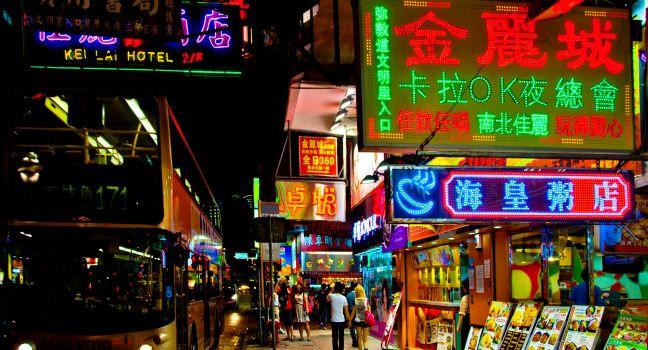
HONG KONG - AUGUST 01: signs, people and bus at night on Nathan Road in Kowloon, Hong Kong on August 02, 2012. Nathan Road is the main street in Kowloon and is lined with shops and restaurants; Shutterstock ID 114047152; Project/Title: Hong Kong city app;
Eddy Galeotti / Shutterstock

Running for several miles, this street is filled with hotels, restaurants, malls, and boutiques—retail space is so costly that the southern end is dubbed the Golden Mile. The mile's most famous tower block is ramshackle Chungking Mansions, packed with cheap hotels and Indian restaurants. The building was a setting for local director Wong Kar-Wai's film Chungking Express. To the left and right are mazes of narrow streets with even more shops selling jewelry, electronics, clothes, souvenirs, and cosmetics.

Nathan Rd., Kowloon, Hong Kong

Something incorrect in this review?

University Museum and Art Gallery

Western
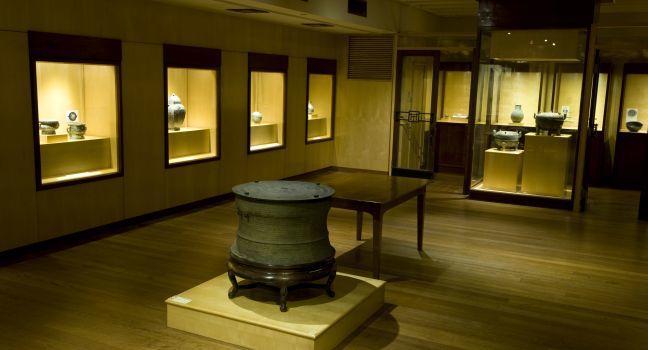
Annie Wong Gallery in the Fung Ping Shan Building (Bronx Room)
By University Museum and Art Gallery (The University of Hong Kong) [CC-BY-SA-3.0], via Wikimedia Commons

Set inside a heritage building, this museum and gallery is filled with a small but excellent collection of Chinese antiquities. On view are ceramics and bronzes, some dating from 3,000 BC, as well as paintings, lacquerware, and carvings in jade, stone, and wood. The museum also has the world's largest collection of Nestorian crosses, dating from the Mongol Period (1280–1368). There are usually two or three well-curated temporary exhibitions on view; contemporary artists who work in traditional media are often featured. The museum is a seven-minute walk from Sai Ying Pun MTR station.

90 Bonham Rd., Hong Kong, Hong Kong
2241–5500
Sight Details
Free
Closed Mon.

Something incorrect in this review?

18 Steps

18 Steps is one of the coolest places in the city, literally and figuratively. The neighborhood is just south of the Liberation Monument, and hasn't changed since the early 20th century. The name refers to the steps leading from the upper level of Jie Fang Bei down to the slums below. The infamous 18 Steps tunnel, the scene of horrible carnage during WWII, serves as a congregation point for the whole neighborhood. Find the tunnel, pull up a mat, and sip tea while the locals stare at you incredulously. At the top of the steps is a teahouse with a treasure trove of WWII memorabilia.

Jie Fang Bei District, Chongqing, 400010, China

Something incorrect in this review?

A-Ma Cultural Village

Coloane Island South

This huge complex built in a traditional Qing Dynasty style pays homage to Macau’s namesake, A-Ma. The vibrancy and color of the details in the bell and drum towers, the tiled roofs, and the carved marble altars are awe-inspiring. It’s as if you’ve been transported back centuries and can see temples in their true greatness. Other remarkable details include the striking rows of stairs leading to Tin Hau Palace at the entrance. Each row features painstakingly detailed marble and stone carvings of auspicious Chinese symbols: a roaring tiger, double lions, five cranes, the double phoenix, and a splendid imperial dragon.

\n

Behind A-Ma Cultural Village, Coloane Hill rises 170 meters (560 feet) above the sea and is crowned by a 65-foot, white-marble statue of A-Ma lording over Coloane. You can make the short hike up to the top or take one of the shuttle buses that leave from the base of the hill every 30 minutes.

A-Ma Cultural Village, Estrada de Seac Pai Van, Macau, Macau

Something incorrect in this review?

Aberdeen Harbour

Southside

Until the 1970s, Aberdeen's harbor was home to a flotilla of junks, sampans, and houseboats sheltering a community of thousands of water-dwelling fisherfolk. You'll still see a handful of houseboats moored along Aberdeen Promenade, some selling locally caught fish. Head to Pier 6 on the promenade to visit a houseboat turned harbor history museum and gift shop. Sign up for a sampan tour of the harbor inside the museum, or eat a tasty bowl of \"sampan noodles\" served by a roving kitchen boat. You can also take a ferry from Aberdeen Harbour to Lamma and Cheung Chau islands.

Hong Kong, Hong Kong

Something incorrect in this review?

Ancient Observatory

Chaoyang

This squat tower of primitive stargazing equipment peeks out next to the elevated highways of the Second Ring Road. It dates to the time of Genghis Khan, who believed that his fortunes could be read in the stars. To China's imperial rulers, interpreting the heavens was key to holding onto power; a ruler knew when, say, an eclipse would occur, or he could predict the best time to plant crops. Celestial phenomena like eclipses and comets were believed to portend change; if left unheeded they might cost an emperor his legitimacy—his mandate of heaven. Records of celestial observations at or near this site go back more than 500 years, making this the longest documented astronomical viewing site in the world.

The main astronomical devices are arranged on the roof. Writhing bronze dragon sculptures adorn some of the astronomy pieces at Jianguo Tower, the main building that houses the observatory. Among the sculptures are an armillary sphere to pinpoint the position of heavenly bodies and a sextant to measure angular distances between stars, along with a celestial globe. Inside, the dusty exhibition rooms shelter ancient star maps with information dating back to the Tang Dynasty. Most of the ancient instruments were looted by the Allied Forces in 1900, during the Boxer Rebellion, only to be returned to China at the end of World War I.

2 Dongbiaobei Hutong, Beijing, 100005, China
010-6524–2202
Sight Details
Y20
Tues.-Sun. 9–4

Something incorrect in this review?

Ani Tsangkung Nunnery

This small, colorful convent has a livelier atmosphere than what you'll find at Lhasa's monasteries. Beaming nuns encourage you to wander through the courtyards, listen to their chanting, and watch them make ornamental butter flowers. There's a simple outdoor restaurant—popular at lunchtime—where nuns serve up inexpensive bowls of noodles and momos (dumplings). The chief pilgrimage site is the meditation hollow where Songtsen Gampo concentrated his spiritual focus on preventing the flood of the Kyi River in the 7th century. You're free to take photos here without charge—an option not available at many monasteries.

Linkuo S Alley, Lhasa, 850000, China
0891-665–0832
Sight Details
Y40
Daily 8–5:30

Something incorrect in this review?

Ap Lei Chau Island

Southside

A road bridge connects Aberdeen with Ap Lei Chau (Duck's Tongue Island), a residential area where many of the former boat-dwellers have been rehoused. You can also cross by sampan from Aberdeen Promenade. A small Tin Hau temple and the Ap Lei Chau Cooked Food Market, known for its seafood feasts, are the main reasons to visit. On the south side of the island, Horizon Plaza is an outlet mall selling cut-price designer homewares and fashion.

Hong Kong, Hong Kong

Something incorrect in this review?

Asia Society Hong Kong Center

Central

Nestled in a pocket of lush hillside, this heritage site was once a store for British Army explosives, and now hosts exhibitions, film screenings, and lectures pertaining to Asian countries and cultures. The complex, designed by acclaimed NYC architects Tod Williams and Billie Tsien, adds contemporary design to the 19th-century compound, incorporating sleek glass-and-metal structures with green terraces. Views from the lush roof garden are spectacular; a walk on the grounds is a must. The Center's AMMO (Asia, Modern, Museum, Original) restaurant and bar is a lovely spot for lunch or a drink. Check the website for heritage tours in English.

Badong

At the city of Badong, just outside the eastern end of Wu Gorge, boats leave for Shennongjia on the Shennong River, where you can take in the costumes and traditions of Tujia and Miao ethnic minorities.

China

Something incorrect in this review?

Baiyun Mountain

Also known as White Cloud Mountain, Baiyun Mountain gets its name from the halo of clouds that, in the days before Guangzhou was shrouded in heavy pollution, appeared around the peak following a rainstorm. The mountain is part of a 28-square-km (11-square-mile) resort area, and consists of seven parks and scenic areas, about 30 peaks, and myriad gullies. Santailing Park is home to the enormous Yuntai Garden, of interest to anybody with a thing for botany. Fei'eling Park has a nice sculpture garden, and Luhu Park is home to Jinye Pond, as pure and azure a body of water as you're likely to find within 100 miles. All in all, a trip to Baiyun Mountain is a good way to get out of the city center—maybe for a day of hiking—without traveling too far. The cable car is an excellent way to get an expansive view of the cityscape and take photos with the backdrop of Guangzhou's skyline.

Guangzhou, China
Sight Details
Y5
Daily 9–5

Something incorrect in this review?

Bank of China

The Bund

British art deco and Chinese elements combine in this 1937 building, which was designed to be the tallest in the city. However, opium magnate Victor Sassoon insisted that no building surpass his Cathay Hotel (now the Peace Hotel). Were it not for the Cathay Hotel's copper-faced pyramid roof, the bank would indeed be taller.

23 Zhongshan Dong Yi Lu, Shanghai, 200002, China
021-6329–1979

Something incorrect in this review?

Bank of China Building

Central

The Art Deco building at the southern end of Statue Square (beside the HSBC Building) is the former headquarters of the Bank of China built in the 1950s. The building now houses offices, as well as the members-only, colonial-chic China Club restaurant. Don't confuse it with the newer Bank of China Tower, one of the most iconic skyscrapers in the city, just down the street on Garden Road. Completed in 1990 and designed by I.M. Pei, this imposing structure is said to resemble bamboo—a symbol of the city's strength, growth, and enterprising nature.

2A Des Voeux Rd. Central, Hong Kong, Hong Kong

Something incorrect in this review?

Banpo Matriarchal Clan Village

About 5 km (3 miles) east of the city are the remains of a 6,000-year-old Yangshao village, including living quarters, a pottery-making center, and a graveyard. The residents of this matriarchal community of 200 to 300 people survived mainly by fishing, hunting, and gathering, although there is ample evidence of attempts at animal domestication and organized agriculture. The small museum contains stone farming and hunting implements, domestic objects, and pottery inscribed with ancient Chinese characters. The archaeological site has captions in English. Unless you're interested in documenting one of China's great tourist oddities, avoid the awful model village that sits in a state of semi-disrepair toward the rear of the property.

155 Banpo Lu, Xian, 710038, China
Sight Details
Mar.–Nov. Y65; Dec.–Feb. Y45
Daily: Mar.–Nov. 8–5:30, Dec.–Feb. 8–4

Something incorrect in this review?

Baomo Garden

Panyu District

Much more than your everyday nursery, Baomo Garden stretches across 25 acres (10 hectares) and dates back to the Qing Dynasty (1644–1911), though it was reconstructed in the late 1950s after being destroyed in the Cultural Revolution. The garden is home to more than 30 picturesque stone archways, several carp-filled lakes, and even a rose garden, but it's also known for its galleries, particularly the Treasure Hall, with its impressive collection of preserved pottery, bronze, and jade from ancient China. About an hour away from central Guangzhou by bus, or 40 minutes by taxi, Baomo Garden is a nice break from the downtown crowds. To get here, take a direct bus from the Passenger Transport Station: there are six buses a day, leaving at 8 am, 9:10 am, 10:20 am, 11:50 am, 2:20 pm, and 3:40 pm.

No need to pack a lunch, several restaurants and teahouses on the grounds serve authentic Panyu and Cantonese cuisine.

Zini Village, Guangzhou, China
020-8474–6666
Sight Details
Y30
Daily 8–6

Something incorrect in this review?

Baotu Spring Park

Qing Dynasty Emperor Qianlong proclaimed this the finest of Ji'nan's many natural springs gurgling north from the foothills of Mount Tai. The spring is most active after the summer rains, when crowds gather under pavilions to watch it frothing and gushing. The pure water is said to be ideal for making tea; try it out at the Wangheting Teahouse, just east of the spring. A small museum in the park recounts the life of Jinan's most prized poetess Li Qingzhao, who lived near here in the 11th century.

91 Luoyuan, Ji'nan, 250011, China
No phone
Sight Details
Y40
Daily 7 am–9 pm

Something incorrect in this review?