592 Best Sights in China

Background Illustration for Sights

We've compiled the best of the best in China - browse our top choices for the top things to see or do during your stay.

Hong Kong UNESCO Global Geopark

Fodor's Choice

Spanning across 150 square km of the New Territories, the Geopark consists of two geological regions: the Sai Kung Volcanic Rock Region and the Northeast New Territories Sedimentary Rock Region. The sites comprise islets, sea caves, and villages, but the star may be on the honeycomb-shape columns formed by volcanic eruptions 140 million years ago, the most dramatic of which can be witnessed on the coast of High Island. The Volcanic Discovery Centre located in downtown Sai Kung provides helpful information about the area and serves as the gateway to the Geopark. Tours by Recommended Geopark Guides (R2G)---a number of which are available through the Volcanic Discovery Centre---is the best way to experience the park.

M+

Tsim Sha Tsui Fodor's Choice

Located in the West Kowloon Cultural District, M+ is Hong Kong's first global art museum. With 17,000 square meters of exhibition space across 33 galleries, three cinema houses, a roof garden, and other state-of-the-art facilities, M+ has undoubtedly been the most highly anticipated art addition of this decade. There are four permanent collections, as well as an ongoing roster of special exhibits spanning Chinese, Asian, and international art across different media and genres. There are multiple onsite dining options, including Mosu Hong Kong, a sophisticated Korean restaurant. The M+ Shop is an excellent place to pick up an artsy souvenir.

Avenue of Stars

Tsim Sha Tsui

You have to look down to appreciate the city's walk of fame. Countless local film stars have pawed the wet concrete—you may not recognize many names unless you're a fan of Hong Kong films, but the homage shows how big the local film industry is.  Visit the avenue at 8 pm for the Symphony of Lights, a quirky show in which more than 40 skyscrapers light up on cue as a commentator introduces them in time to a musical accompaniment.

Recommended Fodor's Video

West Kowloon Promenade

Tsim Sha Tsui

This spacious promenade overlooks Victoria Harbour and offers a dazzling view of Hong Kong Island's skyline. The promenade is grass-lined—a rare sight in the city—and has ample space for walking, jogging, biking, and picnicking. Though it's a lot quieter than the Avenue of Stars and the TST East Promenade, it does get crowded on the weekends.

Chi Lin Nunnery

Fodor's Choice
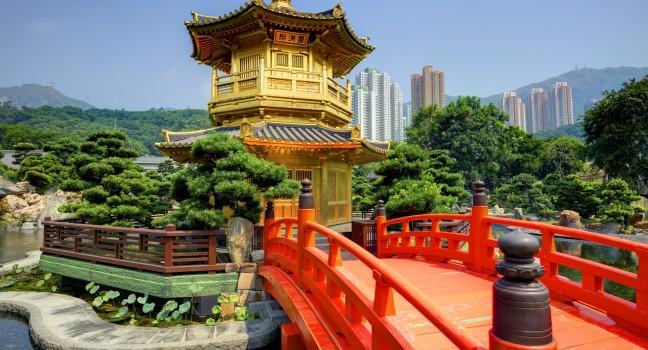
Golden Pavilion of Chi Lin Nunnery in Hong Kong, S.A.R.
SeanPavonePhoto / Shutterstock

This nunnery was founded in 1934 as a retreat for Buddhist nuns. In the 1990s, the complex was rebuilt with traditional Tang Dynasty architectural techniques involving wooden dowels and brackets, which work to hold everything together without a single nail. Most of the 15 cedar halls house altars to bodhisattvas (those who have reached enlightenment)—bronze plaques explain each one. The Main Hall is the most imposing—and inspiring—part of the monastery. Overlooking the smaller second courtyard, it honors the first Buddha, known as Sakyamuni. The soaring ceilings are held up by cedar columns that support the roof. The principles of feng shui governed all construction: buildings face south toward the sea, to bring abundance; they're backed by the mountain, a provider of strength and good energy. The temple's clean lines are a vast departure from most of Hong Kong's colorful religious buildings. If there's time, take a stroll around nearby Nan Lian Garden.

5 Chi Lin Dr., Kowloon, Hong Kong
Sight Details
Free

Something incorrect in this review?

Happy Valley Racecourse

Causeway Bay Fodor's Choice
Happy Valley night view
(c) Nohead | Dreamstime.com

The biggest attraction east of Causeway Bay for locals and visitors alike is this local legend, where millions of Hong Kong dollars make their way each year. The exhilarating blur of galloping hooves under jockeys dressed in bright silk jerseys is a must-see. The races make great Wednesday nights out on the town. Aside from the excitement of the races, there are restaurants, bars, and even a racing museum to keep you amused. The public entrance to the track is a 20-minute walk from Causeway Bay MTR Exit A (Times Square), or simply hop on the Happy Valley tram, which terminates right in front.

\n

Every Wednesday night during race season (September to mid-July), the first of about eight races kicks off at 7:15.

Sports Rd. at Wong Nai Chung Rd., Hong Kong, Hong Kong
Sight Details
HK$10

Something incorrect in this review?

Hong Kong Heritage Museum

Fodor's Choice
Models of old grocery store in Hong Kong Heritage Museum.
(c) Au_yeung225 | Dreamstime.com

This history-meets-culture museum is Hong Kong's largest, yet it still seems a well-kept secret: chances are you won't have much company throughout its 11 massive galleries. The galleries ring an inner courtyard, which are benefitted by exquisite natural light flowing into the entry hall. Although many of the galleries focus on ancient Chinese art and heritage, the museum recently energized its offerings with an exhibition that displays changing exhibits of Hong Kong's pop culture. The T.T. Tsui Gallery of Chinese Art, exquisite antique Chinese glass, ceramics, and bronzes, fill hushed second-floor rooms. In spite of the museum's imposing size, the curators have gone for quality over quantity. Look for the 3½-foot-tall terra-cotta Horse and Rider, a beautiful example of the figures enclosed in tombs in the Han Dynasty (206 BC–AD 220). The Cantonese Opera Heritage Hall is all singing and dancing, and it's utterly hands-on. The symbolic costumes, tradition-bound stories, and stylized acting of Cantonese opera can be impenetrable; fortunately, there are well-done descriptions for even the most esoteric works.

1 Man Lam Rd., New Territories, Hong Kong
2180–8188
Sight Details
Permanent exhibitions, free; special exhibitions, admission varies
Closed Tues.

Something incorrect in this review?

Hong Kong Museum of Art

Tsim Sha Tsui Fodor's Choice
Tourists visit the Museum of Art in Kowloon. Established in 1962, the art collections now are in excess of 15,800 objects. May 29, 2007 in Hong Kong, China.
claudio zaccherini / Shutterstock

An extensive collection of Chinese art is packed inside this landmark art museum, which emerged from a years-long face-lift with new exhibitions and experiences. The collections include a heady mix of Qing ceramics, ancient calligraphic scrolls, bronze, jade, lacquerware, textiles, and contemporary canvases. It's all well organized into thematic galleries. The museum sits on the Tsim Sha Tsui waterfront in Kowloon, a few minutes from the Star Ferry and Tsim Sha Tsui MTR stop.

10 Salisbury Rd., Kowloon, Hong Kong
2721–0116
Sight Details
Free (except special exhibitions)
Closed on Thurs. (except public holidays) and the first 2 days of the Lunar New Year

Something incorrect in this review?

Hong Kong Park

Central Fodor's Choice
Hong Kong Park in Hong Kong, China.
Sean Pavone / Shutterstock

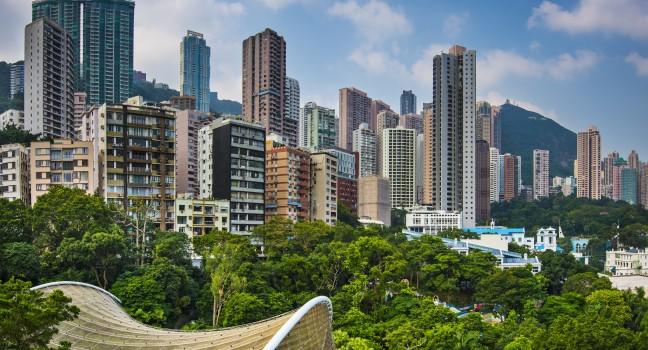
One of the prettiest parks in the city proper is a sloping arrangement of rock gardens, water features, and leafy pathways. It's common to stumble on locals practicing tai chi or reading in a secluded spot. This welcome respite from the surrounding skyscrapers occupies the site of a former garrison called the Victoria Barracks, and some buildings from 1842 and 1910 are still standing.

\n

The park is home to the Flagstaff House Museum of Tea Ware. With its simple white facade, wooden monsoon shutters, and colonnaded verandas, the house is the earliest surviving example of colonial Greek revival architecture in Hong Kong. Built in 1846 as the office and residence of the Commander of the British forces, it now serves as a museum dedicated to the art of tea, exhibiting hundreds of delicate tea sets from the Tang (618–907) through the Qing (1644–1911) dynasties. Look out for the understated beauty of Yixing teapots, crafted from unadorned brownish-purple zisha clay, where perfection lies in their flawless form and the subtle, tactile texture of the clay. You will also be able to find the Edward Youde Aviary, containing hundreds of tropical birds. A raised boardwalk gets you close to the ornithological action.

\n

The Peak Tram has its lower terminus just beyond the park's northwest exit.

Sik Sik Yuen Wong Tai Sin Temple

Fodor's Choice
Sik Sik Yeun Wong Tai Sin Temple, Hong Kong.
stunnedmullet / Shutterstock

There's a practical approach to prayer at one of Hong Kong's most exuberant places of worship. Here the territory's three major religions—Taoism, Confucianism, and Buddhism—are all celebrated under the same roof. You'd think that ornamental religious buildings would look strange with highly visible vending machines and LCD displays in front of them, but Wong Tai Sin pulls it off in cacophonous style. The temple was established in the early 20th century, on a different site on Hong Kong Island, when two Taoist masters arrived from Guangzhou with the portrait of Wong Tai Sin—a famous monk who was born around AD 328—that still graces the main altar. In the '20s the shrine was moved here and expanded over the years.

\n

Start at the incense-wreathed main courtyard, where the noise of many people shaking out chim (sticks with fortunes written on them) forms a constant rhythm. After wandering the halls, take time out in the Good Wish Garden—a peaceful riot of rockery—at the back of the complex. At the base of the complex is a small arcade where soothsayers and palm readers are happy to interpret Wong Tai Sin's predictions for a small fee. At the base of the ramp to the Confucian Hall, look up behind the temple for a view of Lion Rock, a mountain in the shape of a sleeping lion.

\n

If you feel like acquiring a household altar of your own, head for Shanghai Street in Yau Ma Tei, the Kowloon district north of Tsim Sha Tsui, where religious shops abound.

Tian Tan Buddha

Fodor's Choice
Tian Tan Giant Buddha
alkkdsg / Shutterstock

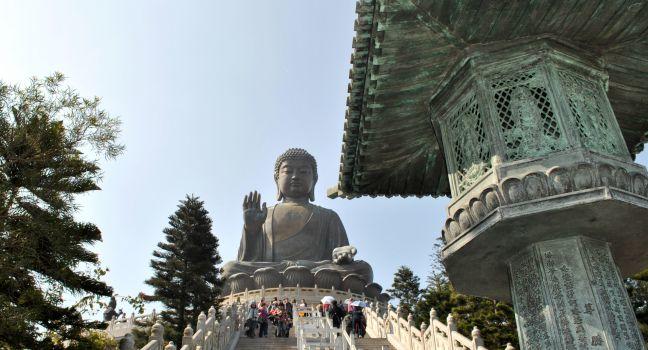
The Tian Tan Buddha, also known as the Big Buddha, is the world's largest seated, outdoors bronze Buddha. It's fair to say that the vast silhouette is impressive. Its 268 steep steps lead to the lower podium, allowing you to stare up at all 202 tons of Buddha as you ascend. At the summit, cool breezes and fantastic views over Lantau Island await. Nearby, the Wisdom Path runs beside 38 halved tree trunks arranged in a hillside infinity loop. Each trunk is carved with Chinese characters that make up the Heart Sutra, a 5th-century Buddhist prayer that expresses the doctrine of emptiness. The idea is to walk around the path—which takes five minutes—and reflect. Follow the signposted trail to the left of the Big Buddha.

Victoria Peak

Central Fodor's Choice
Tourist tram at the Peak, Hong Kong.
leungchopan / Shutterstock

Whatever the time, whatever the weather, be it your first visit or your 50th, Victoria Peak is Hong Kong's one unmissable sight. Soaring just over 1,805 feet above sea level, Hong Kong Island’s highest hill looks out over a forest of skyscrapers, the glittering harbor beyond and—on a clear day—Kowloon's eight mountains. On rainy days wisps of clouds catch on the buildings' pointy tops, and at night both sides of the harbor burst into color. The best views are to be had from Sky Terrace 428, a ticketed attraction on top of the Peak Tower (the anvil-shape building, which also serves as the upper terminus of the Peak Tram). But you get almost as good a view for free from Lion Pavilion outside, a short walk along Findlay Path.

\n

Well-signed nature walks around Victoria Peak offer wonderful respites. You'll be treated to spectacular views in all directions on the Peak Circle Walk, an easygoing 40- to 60-minute paved path that begins and ends at the Peak Tram Upper Terminus. Before buying a return ticket on the tram or on a bus, consider walking back downhill to Central, either along the tree-shared Morning Trail or via the short and steep Old Peak Road.

\n

The Peak Tram, Asia’s first funicular railway, has been rumbling up the steep inclines of Victoria Peak since it opened in 1888; before that, the only way up was to walk or take a bumpy ride in a sedan chair. The Lower Terminus starts just up past St. John's Cathedral on the opposite side of Garden Road. Sit on the right hand side of the tram carriage for the best views. Several buses go direct from the Central Bus Terminal near the Star Ferry Pier to the Peak Tram Lower Terminus. Bus 15 goes all the way to the top of the Peak, and is a good option on busy weekends when wait times for the Peak Tram can be over an hour.

798 Art District

Chaoyang Fodor's Choice

Chinese contemporary art has exploded in the past decade, and to see some of the finest examples of the scene look no further than 798 Art District, located in the northeast corner of the city. This was once the site of several state-owned factories, including Factory 798, that produced electronics. Beginning in 2002, artists and cultural organizations began to move into the area, gradually developing the old buildings into galleries, art centers, artists' studios, design companies, restaurants, and bars. Note that most if not all of the galleries here are closed on Mondays.

Experimenting with classical mediums such as paint and printmaking as well as forays into new and digital media, installation, and performance art, young Chinese artists are caught between old and new, Communism and capitalism, urban and rural, rich and poor, and East and West. These conflicts set the stage and color their artistic output, with varying results. Although more and more Chinese artists are achieving international recognition, 798 still abounds with knockoffs of bad Western art. Nevertheless the area remains the hub of contemporary creative arts in Beijing and is definitely worth a visit if you're at all interested in the state of the arts in China.

Although the scene was at first a completely DIY affair, the quality of art produced and international media attention starting from the early 2000s meant that the district government took notice. Eventually the area was declared a protected arts district, paving the way for commercial galleries, cafés, and souvenir shops. Priced out of their original studios, many working artists have decamped further afield to the Caochangdi and Songzhuang neighborhoods. Both of these smaller areas are worth visiting, though neither is easily accessible except via taxi. Ask your hotel concierge for a detailed map or, better yet, call ahead to the galleries you're interested in visiting and get driving instructions.

798 is more accessible, however, and eminently walkable. Keep in mind that cabs are prohibited from driving into the complex, and much of the area is pedestrianized. Though it's also open Tuesday through Friday, most people visit on the weekend.

Many of the galleries there now are hit or miss, but establishments such as the Ullens Center for Contemporary Arts (UCCA) put on informative, challenging exhibitions.

Ancient City of Jiaohe

Fodor's Choice

On a plateau at the confluence of two rivers, these impressive ruins lie in the Yarnaz Valley west of Turpan. The city, established as a garrison during the Han Dynasty, was built on the natural fortification of cliffs rising 100 feet above the rivers. Jiaohe was governed from the 2nd to the 7th century by the kingdom of Gaochang, and occupied later by Tibetans. Despite destruction in the 14th century by Mongol hordes, large fragments of actual streets and buildings remain, including a Buddhist monastery and Buddhist statues, a row of bleached pagodas, a 29-foot observation tower, and government offices. Guards and cameras will make sure you stay on the designated boardwalk. As at the Ruins of Gaochang, there's almost no shade, so arrive early with an umbrella and plenty of water in tow.

8 km (5 miles) west of Turpan, Turpan, 838000, China
Sight Details
Y70
Dawn–dusk

Something incorrect in this review?

Baoding Shan

Fodor's Choice

A UNESCO World Heritage site, these Buddhist caves rival those at Datong, Dunhuang, and Luoyang. The sculptures, ranging from teeny-tiny to gigantic, contain unusual domestic details, as well as purely religious works. There are two major sites at Dazu—Bei Shan and Baoding Shan. Work at the caves began in the 9th century during the Song and Tang Dynasties, and continued for more than 250 years.

Baoding Shan is the more impressive of the two sites, where the carvings were completed according to a plan. Here you will find visions of hell reminiscent of similar scenes from medieval Europe; the Wheel of Life; a magnificent 100-foot reclining Buddha; and a gold statue of the 1,000-armed goddess of mercy.

The best way to reach Dazu is to book a tour from Chongqing.

Dazu, China
Sight Details
Y130
Daily 8–6

Something incorrect in this review?

Bazi Bridge

Fodor's Choice

In a city of bridges, the Bazi Bridge is the finest and best known. Its long, sloping sides rise to a flat crest that looks like the character for eight, an auspicious number. The bridge is more than 800 years old, built in the Southern Song Dynasty, and is draped with a thick beard of ivy and vines. It sits in a quiet area of old stone houses with canal-side terraces where people wash clothes and chat with neighbors.

Bazi Qiao Zhi Jie, Shaoxing, 312035, China

Something incorrect in this review?

Bird Island

Fodor's Choice

Bird Island is the main draw at Qinghai Hu, China's largest inland saltwater lake. The name Bird Island is a misnomer: it was an island until the lake receded, connecting it to the shore. The electric-blue lake is surrounded by rolling hills covered with yellow rapeseed flowers. Tibetan shepherds graze their flocks here as wild yaks roam nearby. Beyond the hills are snowcapped mountains. An estimated nearly 100,000 birds breed at Bird Island, including egrets, speckle-headed geese, and black-neck cranes; sadly, the numbers have been much depleted because of the country's efforts to suppress the spread of avian flu. There are two viewing sites: spend as little time as possible at Egg Island in favor of the much better Common Cormorant Island, where you can see birds flying at eye-level from the top of a cliff. The best months to see birds are May and June.

To get to Bird Island, either contact a tour agency or catch a tourist bus from Xining Railway Station for Y35 each way. If you opt for a tour, make sure that you're not headed to the much closer tourist trap known as Qinghai Hu 151.

350 km (215 miles) northwest of Xining, Xining, 810150, China
Sight Details
Mid-Apr.–mid-Aug. Y100; mid-Aug.–mid-Apr. Y60; Y15 for eco-sightseeing bus
7:10 am– 6 pm

Something incorrect in this review?

The Bund

The Bund Fodor's Choice

Shanghai's waterfront boulevard best shows both the city's pre-1949 past and its focus on the future. Both the northern and southern ends of Bund are constantly changing, with hotels and restaurants popping up amid scooter repair shops and hardware stores.

On the riverfront side of the Bund, Shanghai's street life is in full force. You'll find Chinese tourists as well as foreigners here, ogling the Pudong skyline. If you have blonde hair, prepare to be stopped for photos. In the morning, just after dawn, the Bund is full of people ballroom dancing, doing aerobics, and practicing kung fu, qi gong, and tai chi. The rest of the day, people walk the embankment, snapping photos of the Oriental Pearl Tower, the Huangpu River, and each other. In the evenings, lovers come out for romantic walks amid the floodlit buildings and tower.

Be prepared for the aggressive souvenir hawkers; while you can't completely avoid them, just ignore them—and watch your pockets and bags.

Cangshan

Fodor's Choice

With a peak that rises to more than 4,500 meters (14,765 feet), "Green Mountain" can be seen from just about anywhere in Dali. A 16-km (10-mile) path carved into the side of the mountain offers spectacular views of Dali and the surrounding villages. There are also several temples, grottoes, and waterfalls just off the main trail. To get to the footpath, follow Yu'er Lu to the foot of the mountain. If you don't want to climb, there are two cable cars to take you up the mountain.

Casa do Mandarim

Downtown Fodor's Choice

Macau’s largest representation of Guangdong residential architecture spans 43,055 square feet and has more than 60 lovingly restored rooms. Built in 1869 and refurbished in 2010, the compound blends Chinese and Western architectural elements. It was the home of Zheng Guanying, a late Qing Dynasty literary figure, who completed his influential Words of Warning in Times of Prosperity here. Just steps away, Lilau Square, a banyan-shaded plaza near one of Macau’s first Portuguese residential quarters, reflects the city’s deep cultural ties.

China Art Museum

Pudong Fodor's Choice

Housed inside the China Pavilion at the 2010 Shanghai World Expo (which had sites on both sides of the river in Pudong and Puxi), this gleaming homage to contemporary art has a whopping 27 exhibition halls. Much of the work is underwhelming, but be sure to stop by the animation hall, where you can catch shorts and feature-length films from the '50s to the '90s. The touring exhibits are often a real treat; besides a huge Picasso retrospective, the museum has hosted works from New York's Whitney Museum, London's British Museum, and Paris's Maisons de Victor Hugo. Look for works from David Hockney, Jasper Johns, and Rodin.

205 Shangnan Lu, Shanghai, 200120, China
400-921–9021
Sight Details
Free, special exhibits Y20; audio guides Y20 (with Y200 deposit and ID)
Tues.–Sun. 9–5; last entry at 4
Closed Mon.

Something incorrect in this review?

China Tea Museum

Fodor's Choice

Surrounded by tranquil tea plant fields, this engaging museum explores all facets of China's tea culture. Galleries contain fascinating information about the varieties and quality of leaves, brewing techniques, and gathering methods, all with good English explanations. A shop offers a wide range of teas, without the bargaining you'll encounter at Dragon Well Tea Park.

88 Longjing Lu, Hangzhou, 310003, China
0571-8796–4221
Sight Details
Free
Tues.–Sun., 8:30–4:30

Something incorrect in this review?

Coloane Village

Coloane Island West Fodor's Choice

Quiet, relaxed Coloane Village is home to traditional Portuguese-style houses painted in pastels, as well as the baroque-style Chapel of St. Francis Xavier and the Taoist Tam Kung Temple, dedicated to the god of seafarers. The narrow alleys reveal surprises at every turn; you may well encounter fishermen repairing their junks or a baptism at the chapel. At the village’s heart is a small square adorned with a fountain with a bronze Cupid. The slow-moving pace picks up a bit on weekends, when travelers swarm the streets seeking for the perfect photo op beside wall murals and the Portuguese and Chinese restaurants fill up.

Confucius Temple

Dongcheng District Fodor's Choice

This tranquil temple to China's great sage has endured close to eight centuries of additions and restorations. The Hall of Great Accomplishment in the temple houses Confucius's funeral tablet and shrine, flanked by copper-colored statues depicting China's wisest Confucian scholars. As in Buddhist and Taoist temples, worshippers can offer sacrifices (in this case to a mortal, not a deity). The 198 tablets lining the courtyard outside the Hall of Great Accomplishment contain 51,624 names belonging to advanced Confucian scholars from the Yuan, Ming, and Qing dynasties. Flanking the Gate of Great Accomplishment are two carved stone drums dating to the Qianlong period (1735–96). In the Hall of Great Perfection you'll find the central shrine to Confucius. Check out the huge collection of ancient musical instruments.

In the front and main courtyards of the temple you'll find a cemetery of stone tablets. These tablets, or stelae, stand like rows of crypts. On the front stelae you can barely make out the names of thousands of scholars who passed imperial exams. Another batch of stelae, carved in the mid-1700s to record the Thirteen Classics, which are philosophical works attributed to Confucius, line the west side of the grounds.

We recommend combining a tour of the Confucius Temple with the nearby Lama Temple. Access to both is convenient from the Yonghegong subway stop at the intersection of Line 2 and Line 5. You can also easily get to the Temple of Heaven by taking Line 5 south to Tiantandongmen.

The complex is now combined with the Imperial Academy next door, once the highest educational institution in the country. Established in 1306 as a rigorous training ground for high-level government officials, the academy was notorious, especially during the early Ming Dynasty era, for the harsh discipline imposed on scholars perfecting their knowledge of the Confucian classics. The Riyong Emperors Lecture Hall is surrounded by a circular moat (although the building is rectangular in shape). Emperors would come here to lecture on the classics. This ancient campus would be a glorious place to study today with its washed red walls, gold-tiled roofs, and towering cypresses (some as old as 700 years).

15 Guozijian Jie, Beijing, 100007, China
010-6405–7214
Sight Details
Y30
Daily 8:30–5

Something incorrect in this review?

Dafen Oil Painting Village

Longgang District Fodor's Choice

If you're interested in watching art in the making, spend an afternoon at the Dafen Oil Painting Village, a small town 20 minutes by taxi from Luohu, which employs thousands of artists painting everything from originals to copies of classics. Where do all those oil paintings you find in motels come from? Visit Dafen and you'll know. It's open most days from about 10 am to 8 pm.

Dialogue in the Dark Exhibition

Mei Foo Fodor's Choice

A truly unique way to experience Hong Kong, the Dialogue in the Dark Ehibition is a simulated tour of the city from the perspective of the visually impaired. The walk covers five iconic scenes of the city, including a ride on the Star Ferry and a trip to the market. The whole tour is conducted in pitch-black darkness, allowing visitors to experience their surroundings through their other senses.

Dragon's Back

Southside Fodor's Choice

The eighth, final, and most famous stage of the 50-km (31-mile) Hong Kong Trail is known as the Dragon's Back, and is easily done as a day hike, taking around three hours to cover the 7.5-km (4.7-mile) route, which climbs over a mountain ridge with glorious sea views on both sides. The trail starts at the Tei Wan bus stop on SheK O Road (take Bus 9 from Shau Kei Wan MTR station) and finishes at Big Wave Bay, where you can grab refreshments then hire a bodyboard and hit the waves.

SheK O Rd., Hong Kong, Hong Kong
Sight Details
Free

Something incorrect in this review?

Evening Sunlight at Thunder Peak Pagoda

Fodor's Choice

On the southeastern shore of West Lake is the Evening Sunlight at Thunder Peak Pagoda. Local legend says that the original Thunder Peak Pagoda was constructed to imprison a snake-turned-human who lost her mortal love on West Lake. The pagoda collapsed in 1924, perhaps finally freeing the White Snake. A new tower, completed in 2002, sits beside the remains of its predecessor. There's a sculpture on each level, including one that depicts the tragic story of the White Snake. The foundation dates from AD 976 and is an active archaeological site, where scientists uncovered a miniature silver pagoda containing what is said to be a lock of the Buddha's hair; it's on display in a separate hall. The view of the lake is breathtaking, particularly at sunset.

15 Nanshan Lu, Hangzhou, 310000, China
0571-8798–2111
Sight Details
Y40
Daily 8 am–8:30 pm

Something incorrect in this review?

Fengdu Ghost City

Fodor's Choice

Also known as Guicheng or the "city of devils," this city on the banks of the Yangtze is filled with temples, buildings, and statues depicting demons and devils. During the Tang Dynasty, the names of two local princely families, Yin (meaning "hell") and Wang (meaning "king"), were linked through marriage, making them known as Yinwang, or the "king of hell." Part of the old city has been submerged in the Three Gorges Dam project. You can take a series of staircases or a cable car to the top of the mountain.

China
Sight Details
Y80
Daily 6–6

Something incorrect in this review?

Five Celestials Shrine

Yuexiu Fodor's Choice

According to local legend, a quintet of gods in the form of goats blessed the city with rice and bountiful harvest. This temple was built to celebrate the origin of Guangzhou's name, which means "City of Goats." Bring your passport to gain admission.

Huifu Xi Lu, Guangzhou, 510000, China
020-8332–3508
Sight Details
Free
Tues.–Fri. 9–5; weekends 8:30–5:30

Something incorrect in this review?