2 Best Sights in Northern Kowloon, Hong Kong

Background Illustration for Sights

We've compiled the best of the best in Northern Kowloon - browse our top choices for the top things to see or do during your stay.
Chi Lin Nunnery

Fodor's Choice
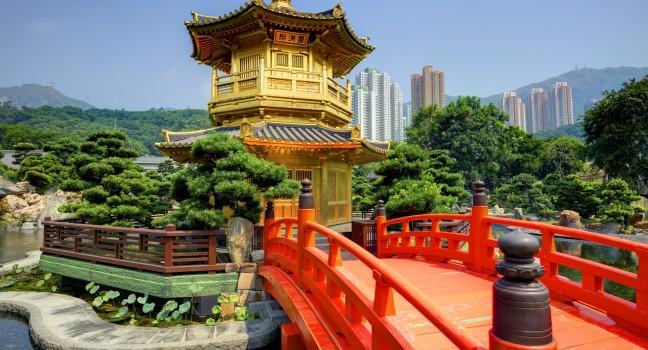
Golden Pavilion of Chi Lin Nunnery in Hong Kong, S.A.R.
SeanPavonePhoto / Shutterstock

This nunnery was founded in 1934 as a retreat for Buddhist nuns. In the 1990s, the complex was rebuilt with traditional Tang Dynasty architectural techniques involving wooden dowels and brackets, which work to hold everything together without a single nail. Most of the 15 cedar halls house altars to bodhisattvas (those who have reached enlightenment)—bronze plaques explain each one. The Main Hall is the most imposing—and inspiring—part of the monastery. Overlooking the smaller second courtyard, it honors the first Buddha, known as Sakyamuni. The soaring ceilings are held up by cedar columns that support the roof. The principles of feng shui governed all construction: buildings face south toward the sea, to bring abundance; they're backed by the mountain, a provider of strength and good energy. The temple's clean lines are a vast departure from most of Hong Kong's colorful religious buildings. If there's time, take a stroll around nearby Nan Lian Garden.

5 Chi Lin Dr., Kowloon, Hong Kong
Sight Details
Free

Something incorrect in this review?

Sik Sik Yuen Wong Tai Sin Temple

Fodor's Choice
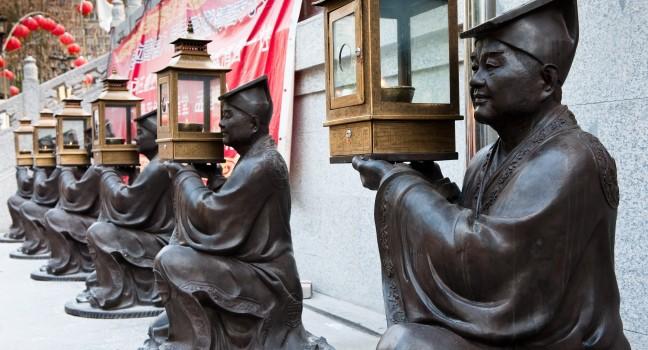
Sik Sik Yeun Wong Tai Sin Temple, Hong Kong.
stunnedmullet / Shutterstock

There's a practical approach to prayer at one of Hong Kong's most exuberant places of worship. Here the territory's three major religions—Taoism, Confucianism, and Buddhism—are all celebrated under the same roof. You'd think that ornamental religious buildings would look strange with highly visible vending machines and LCD displays in front of them, but Wong Tai Sin pulls it off in cacophonous style. The temple was established in the early 20th century, on a different site on Hong Kong Island, when two Taoist masters arrived from Guangzhou with the portrait of Wong Tai Sin—a famous monk who was born around AD 328—that still graces the main altar. In the '20s the shrine was moved here and expanded over the years.

Start at the incense-wreathed main courtyard, where the noise of many people shaking out chim (sticks with fortunes written on them) forms a constant rhythm. After wandering the halls, take time out in the Good Wish Garden—a peaceful riot of rockery—at the back of the complex. At the base of the complex is a small arcade where soothsayers and palm readers are happy to interpret Wong Tai Sin's predictions for a small fee. At the base of the ramp to the Confucian Hall, look up behind the temple for a view of Lion Rock, a mountain in the shape of a sleeping lion.

If you feel like acquiring a household altar of your own, head for Shanghai Street in Yau Ma Tei, the Kowloon district north of Tsim Sha Tsui, where religious shops abound.