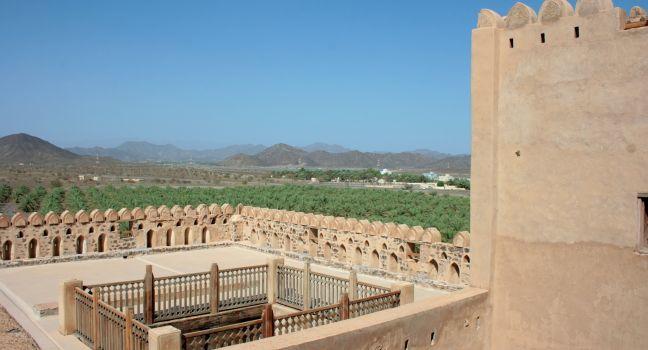
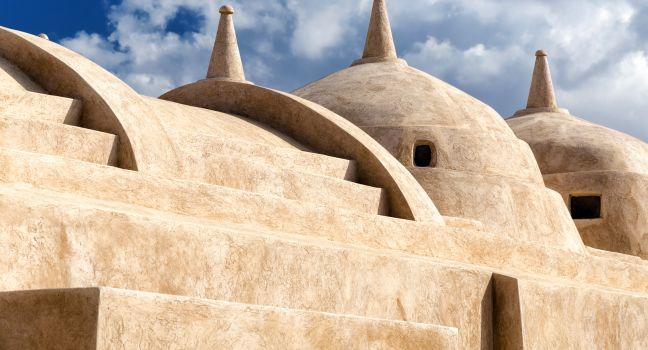
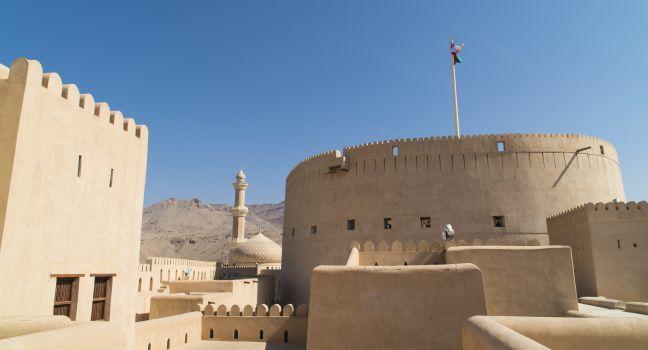
Jibreen (Jabrin) Castle
We've compiled the best of the best in Oman - browse our top choices for the top things to see or do during your stay.
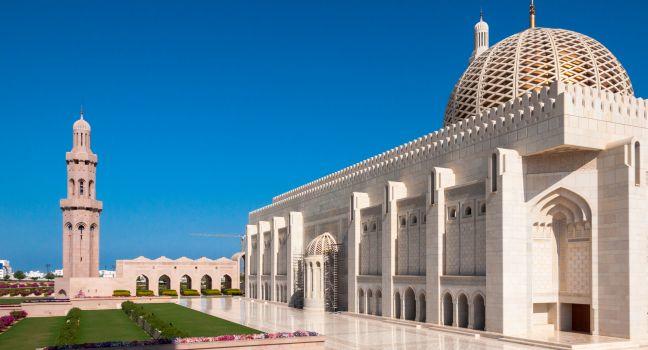
Completed in 2001, Muscat's Grand Mosque took six years to build, not to mention 300,000 tons of Indian sandstone and an army of Persian weavers to assemble the 1.7 million–knot Persian rug that adorns the main prayer hall, the second-largest Persian rug in the world behind the one at the Grand Mosque in Abu Dhabi. Covering more than 430,000 square feet, the complex can welcome up to 20,000 worshipers under its central dome and in adjacent chambers and courtyards. Though the exterior is subdued, with sandstone arches and no more sparkle than the subtle gold beneath the latticed stone of the dome, once inside, the spotlessly buffed white marble, intricate, colorful tilework, and eight-ton, gold-plated Swarovski crystal chandelier, provide immense drama. The manicured gardens surrounding the prayer halls are a wonderful, serene place to spend a few reflective hours. Non-Muslims can visit every morning but Friday. All visitors are asked to dress modestly, covered to ankles and wrists, and women must cover their hair with a scarf. There are abayas available to rent at the visitor center for those who forget the dress code.
One of the best museums in Oman, Bait al Zubair was formerly the home of the Zubair family, as the name would suggest. It houses a fascinating collection of traditional Omani weaponry, jewelry, and costumes, as well as contemporary Omani artwork. There is a hall for special collections, which change regularly, and outside there is a tiny replica of Muscat, complete with a falaj (irrigation system) and wadi (dry riverbed). The gift shop has a nice coffee shop and a seating area to relax in after strolling through the museum halls.
The main corridor of the Mutrah souq, the oldest marketplace in Muscat, is lined with shops selling mussars (the local turban wraps), pashmina shawls, "I Love Oman" T-shirts, frankincense, and other souvenirs. Turning up the first alleyways off of the souk takes you to the more subdued gold souk, wonderful small perfumeries, and the tailoring shops and spice grinders beyond that. The covered souq opens up onto the labyrinth of shop-lined streets that make up the old Mutrah neighborhood, an especially good place to find cooking gadgets, spices, and custom-tailored clothing. Walking down the main hall, you will be pestered with offers to look and try and buy, so feel free to negotiate hard, especially considering that a few shops down, you are likely to find the same goods. In the evening the souq is full of local Omani customers who still patronize the old market for everything from traditional clothing to incense and jewelry. Thursday nights are an especially interesting time to go.
Sitting on the eastern side of Muscat's old harbour, this fort dates from 1587. It was subsequently captured by Omani forces and gradually expanded and strengthened. There are two watchtowers and a long cannon wall. It can be viewed and photographed, but visits are not allowed.
About an hour's drive west of the city center, this long, white-sand beach is in a beautiful location. Although a long stretch of the beach backs up to a main road, there are rarely many people, and you can walk a long distance without seeing a soul. Waves are generally quite strong, depending on the season, and swimming is not advisable. The old-fashioned fishing village located nearby almost makes you feel as if you have stepped back in time. Seawater gushes out in powerful geysers through the blowholes dotting the shore. Amenities: none. Best for: solitude; walking.
Next to the Bin Ali Mosque is the purportedly miraculous Ain Hamran. Legend has it that this is the tomb of a magician who some claim was an uncle of the Virgin Mary (others say he was her father). Locals also believe that the tomb has been growing in length over the years.
The ceremonial palace of His Majesty Sultan Qaboos was built in 1972, just after his ascension to the throne in 1971. The iconic structure, with its vibrant gold and blue pillars, is right in center of Old Muscat, in the shadows of the 16th-century Portuguese forts Al Mirani and Al Jalali. Entrance is forbidden, but you can take photographs from the sprawling pedestrian boulevard out front.
The largest park in Oman, Qurum Natural Park is a lush, green oasis that provides a cool refuge even from the summer heat thanks to its tall shade trees and large lake. The park's 400 acres offer ample space to wander, with rose gardens, dancing fountains, a boating lake, playgrounds, picnic areas, and even a small amusement park that opens daily after 4:30 pm. Small coffee shops and restaurants are open all day, and there are restroom facilities throughout the park, making it a great place to spend an afternoon and evening. It is most popular in the late afternoons and into the night, when the weather is cool and the fountains are lit. In addition to families and children playing, as the night falls many couples, strolling hand-in-hand, join the lively scene.
Oman is rich with luxurious scents, from frankincense smoke to the woodsy aroma of bakhoor incense to spicy, exotic perfumes. In the early 1980s, Amouage perfume, the most costly perfume in the world, was added to the Sultanate's roster of signature smells. The headquarters and factory are outside Muscat, just past the airport going towards Barka. Producing 25,000 bottles per week, the two-story facility doubles as a museum where guests can see demonstrations of the various stages of perfume production, from macerating the raw ingredients to final packaging. Naturally, you can purchase your own bottle directly from the source here as well.
An engaging privately run museum in Qurm, Bait Adam has a collection of currency, art, postal records, and libraries of books and treaties narrating Omani history, dating to pre-Islamic times.