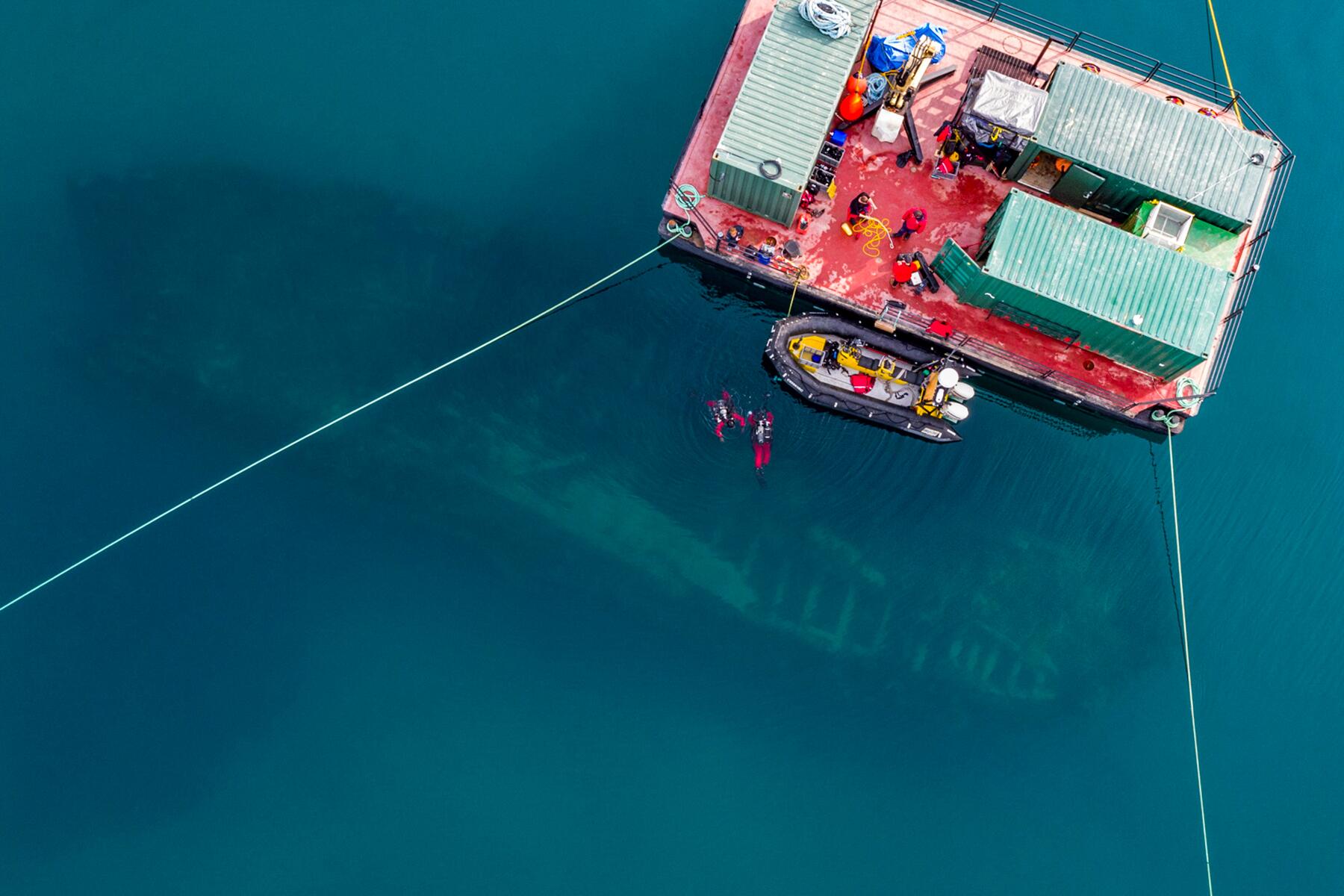
The crème de la crème of mysterious shipwrecks are without a doubt HMS Terror and its sister ship HMS Erebus. In 1845, Captain Sir John Franklin led an Arctic expedition in search of a Northwest Passage. Unfortunately, the ships were trapped in ice off the coast of King William Island in what is now the Canadian territory of Nunavut. After two years of hoping for the ice to break, the crew abandoned both ships with the intent of making their way out of the Arctic on foot. None of them survived.
The mystery of both the crew and the ships’ exact fate would serve as a point of fascination for 150 years. Subsequent expeditions were launched. Songs were written. Dan Simmon’s novel The Terror (and its television adaptation) tells a fictionalized account wherein the icebound crew are attacked by a supernatural creature. It was theorized that some of the crew may have died—or even been driven mad—by lead poisoning due to being exposed to lead in tin cans and the ships’ water filtration system. (Though this theory was debunked in 2018. Turns out, having sustained lead poisoning was pretty standard if you were a Victorian.)
Over the decades, various graves and human remains were discovered. One of the earliest accounts of the failed expedition found that “based on the mutilated state of many of the bodies” that the men, in their desperation, had resorted to cannibalism. Via modern forensic testing, scientists would determine that the men variously died of malnutrition, disease, and the cold.
Yet the ultimate resting place of the ships remained a mystery until 2014 when a Parks Canada team found the Erebus in relatively shallow water off of King William Island. The Terror was found two years later in the body of water that bears its name—Terror Bay. Their locations, as it would turn out, were consistent with generations’ worth of Inuit oral history which had been largely discounted or ignored by Europeans.