



Discover and different side of India at these museums that focus on black magic, folklore, dolls, brains, and even toilets.
The Indian aesthetic is not just about rich colors and decadent flavors. Beyond the tigers, yoga, and Kamasutra-posing structures, museums in the country tell stories of courage, culture, and sometimes, a passion for the extraordinary. Many of these surprising and shocking museums have been started with the aim of preserving the country’s history, but be warned that some of these are not for the squeamish or easily spooked.
Top Picks for You


Sulabh International Museum of Toilets
WHERE: New Delhi
There’s no crap at India’s only toilet museum, located in the capital New Delhi. Established in 1992 by sociologist Dr. Bindeshwar Pathak, it showcases the evolution of the history of toilets from 2500 BC to the 20th century. Arranged in chronological order, there is information on technological developments, sanitary conditions, legislative efforts, social customs, and toilet etiquette. The exhibits include chamber pots, painted urinals, carved commodes, privies, toilet furniture, bidets, and water closets, dating back to 1145 AD. The highlights include a French toilet shaped like a bookshelf, an English mobile commode shaped like a treasure chest, gold and silver pots used by Roman emperors, a stone studded bidet of Queen Victoria, and a toy commode from China. If the exhibits aren’t interesting enough, there are anecdotes, toilet humor, cartoons, and a collection of poetry dedicated to the toilets.
Human Brain Museum
WHERE: Bengaluru
This museum, located in the basement of the National Institute of Mental Health and Neuro Sciences (Nimhans), contains brain specimens of humans and a few animals. Each specimen, collected over the course of 30 years, gives insight into the workings of the brain. Some show the effects of diseases and psychological conditions. There’s the brain of a 21-week fetus, one eaten by an amoeba, and brains showing cerebral venous thrombosis (blood clot), a postpartum phenomenon prevalent among women in South India. At the end of the tour, visitors get to hold a real brain in their hands.
INSIDER TIPIt is best to tour the place with Dr. SK Shankar, who created the museum in 2011. Guided tours are available on Wednesday and Saturday.
Recommended Fodor’s Video
Mayong Central Museum and Emporium
WHERE: Guwahati
Mayong is a small village that, historically, was a community of magicians. Although not many exist today, a glimpse of that magical heritage is on display at the Mayong Museum. It contains relics and artifacts related to black magic, witchcraft, and sorcery, dating back to over a century. Many of these exhibits come from personal collections and include coins, bamboo and wooden combs, terracotta and bronze idols, utensils, a palanquin, jewelry made of bones and seashells, and swords. The museum was inaugurated in 2002 and also offers demonstrations of ancient black magic rituals.
Shankar’s International Dolls Museum
WHERE: New Delhi
The gift of a Hungarian doll led cartoonist K Shankar Pillai on the path of collecting dolls from every country he visited. In 1965, he opened the Shankar’s International Dolls Museum with 50 dolls; today there are 6,700 dolls from 85 countries. A few of the dolls were presented by visiting first ladies, including one from Madam Tito of Yugoslavia. Each doll is a work of art, showcasing the culture, fashion, traditions, religious customs, and costumes of their host country. There are dolls with intricate beadwork from Greenland, tribal dolls from New Zealand, Maypole dance dolls from Hungary, Kabuki and Samurai dolls from Japan, and Indian dolls dressed in different wedding attire. The dolls are made with everything from silk, cotton, and canvas to paper, bark, human hair, or roots. The museum has a doll-making workshop, which creates new dolls that are then exchanged for foreign ones with visiting collectors.
INSIDER TIPThe Delhi Metro is the quickest way to reach the museum. Get off at ITO, gate number 4.
INS Kurusura Submarine Museum
WHERE: Visakhapatnam
At first glance, the 15-year-old Kurusura Submarine Museum with its gleaming black skull towering over the RK beach looks like a fish out of water. India’s fifth submarine (now decommissioned) is a unique museum showcasing what life was like under the sea. On display are tracking and attacking devices, torpedoes, information about how submarines work, and the history and statistics of this machine; puppets are used to showcase the work of the crew. The cramped quarters make it hard to believe that seven men lived and shared two toilets and a tiny kitchen for months on end. There are retired submarine veterans on hand who guide people through the place, talking about their experiences on the “boat.”
Kite Museum
WHERE: Ahmedabad
At the Le Corbusier-designed Sanskar Kendra is the country’s only Kite Museum. Started in 1986, it houses the personal collection of Bhanubhai Shah. The kites on display are made from paper, nylon, cotton, and bamboo, and include miniatures and a massive (22X16 feet) piece. There are geometric designs, block prints, motifs of nature and wildlife, and kites that depict garba dances, hand painted mythological and religious figures, and even historical figures like Mahatma Gandhi. Look out for the kite made from 400 paper scraps and the hexagonal Japanese kites, Rokkaku. The history of kites is also on display, from 200 BC when Huien Tsang flew a kite at night to how kite flying eventually influenced the Wright brothers to develop the airplane in 1902.
INSIDER TIPPlan your visit in January. It will give you the chance to explore the kite festival or Makar Sankranti, which is celebrated with much fanfare in Gujarat.
Losel Doll Museum
WHERE: Dharamsala
The world’s largest collection of Losel Dolls lies in a Tibetan monastery at the Norbulingka Institute in Dharamsala. It’s fitting, given that these dolls have been handcrafted by monks of the Drepung Loseling monastery. The Losel Doll project was started in 1983 as a way of preserving Tibetan regional, official, and monastic costumes. The dolls are made using a mixture of wire, clay, and papier-mâché and dressed in costumes made from cotton, wool, and silk. These are placed in dioramas that showcase the richness of life in the Tibetan region. Among the more fascinating doll exhibits are the Cham dancers–a Tantric ritual dance with monks wearing brocade costumes and masks of deities; a Tibetan opera, which was started by 11th-century saint Tangton Gyalpo; and the Throwing of Tormas–a ritual that involves burning a cake as a way of expelling evil forces.
Desert Museum
WHERE: Jodhpur
It’s all about the desert at the Arna Jharna (Desert Museum). Instead of keeping the exhibits boxed in, here, they celebrate open spaces. Established in 2003 by folklorist and oral historian Komal Kothari on an abandoned sandstone mine, this museum showcases the diversity of desert life, including traditional art, musical instruments, indigenous plants, and herbs. The main exhibit at the museum is devoted to the broom, and features a variety of brooms from different rural communities in Rajasthan. These throw the spotlight on the lives of broom-making communities and how they use available resources–leaves, shrubs, and waste material–to make improvised brooms. There’s also mention of the myths and beliefs surrounding this object of daily use.
INSIDER TIPThe crater of the mine has been transformed into a lake, which sees a lot of birds. Bird lovers, bring your binoculars.
Urusvati Museum of Folklore
WHERE: Gurgaon
The Indian version of Romeo and Juliet, Heer Ranjha, finds a platform at the Urusvati Museum of Folklore. Located in the middle of cultivated farmland, this museum looks like a farmhouse built in a Rajasthani haveli-style. Inside, the space is dedicated to folklore, myths, and stories from seven northern and central states. Set up in 1999, there is special emphasis on tales of love and courage. The stories are handwritten in calligraphy and use dioramas, paintings, and prints as illustrations. The second floor has a small library and reading room holding books on Indian folklore. There are also ornaments, crafts, tribal costumes, and musical instruments from other states.
INSIDER TIPThe museum organizes cultural programs and folk dance performances on certain culturally significant days and festival. Check the calendar for upcoming events.
Utensils Museum
WHERE: Ahmedabad
Those humble kitchen staples, utensils, are the focus of this museum located in a hut with mud walls. Built in 1981, the VECHAAR (Vishalla Environmental Centre for Heritage of Art, Architecture and Research) Utensils Museum was conceptualized by architect Surender C Patel. An extensive study into the history of utensils, it showcases how changing times and requirements have impacted their designs. There are gourd jugs, casserole pans, woks, kettles, spice-boxes, tiffin-boxes, infants’ feeding cups, rolling pins, vessels for churning buttermilk, and travel-friendly utensils. Interesting exhibits include a three-legged dowry box from Saurashtra, a bowl with a snake head that was used to crush opium, and a range of “naughty” nutcrackers.
Sudha Cars Museum
WHERE: Bengaluru
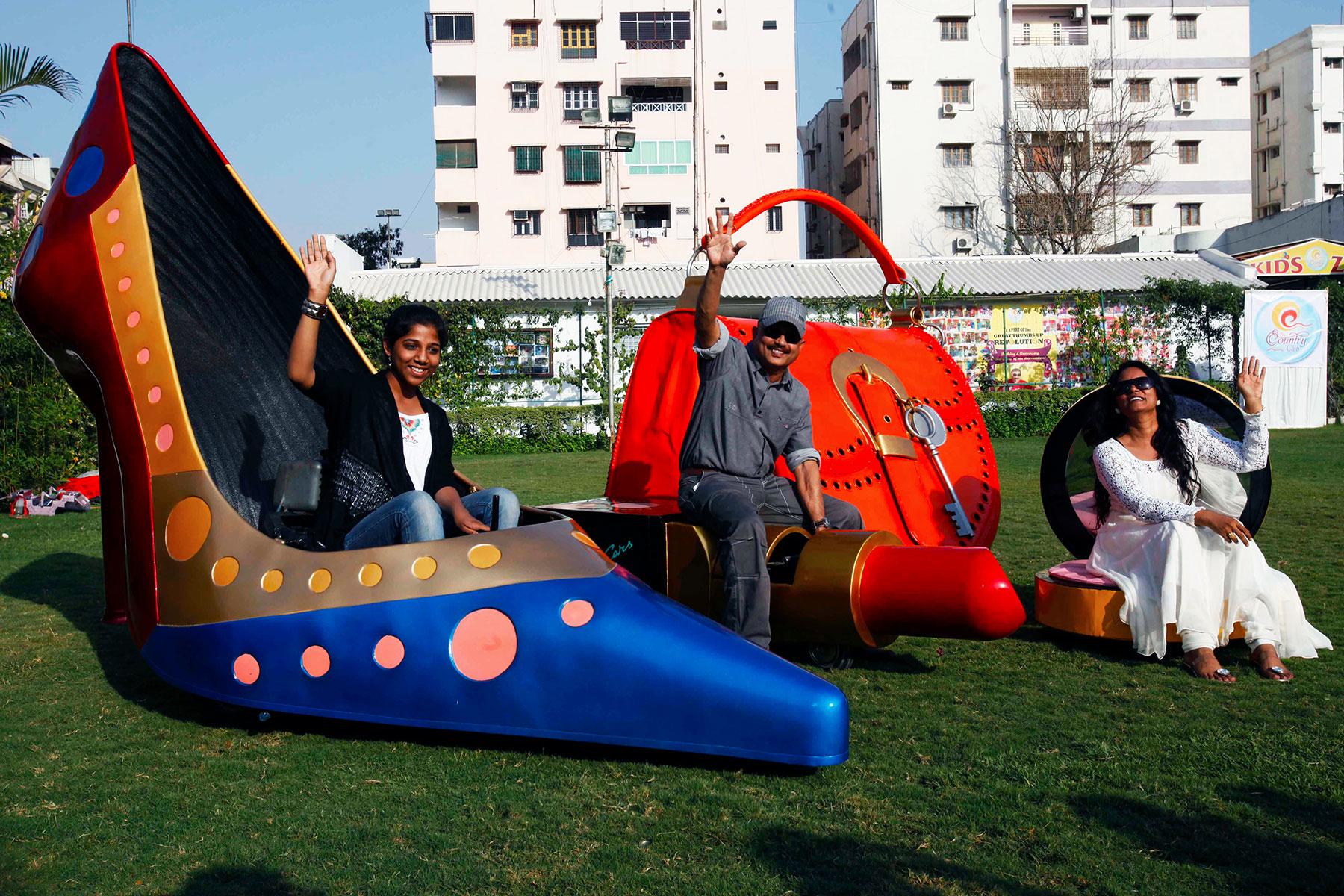
A childhood fascination for mechanics led Sudhakar Yadav to create his own cars. Now, his work is on display at the Sudha Cars Museum. It is here that cars shaped as sofas, high heels, compact powder, cigarettes, and burgers jostle with those shaped like a pool table, a camera, a birdcage and a condom. The exhibits display information on the make (most of them are made from scrap), the manufacturing time, and speed. All the cars are functional, but Sudhakar brings them out only on special occasions. Some of the cars are linked to special occasions–like a condom-shaped car for World AIDS Day.