


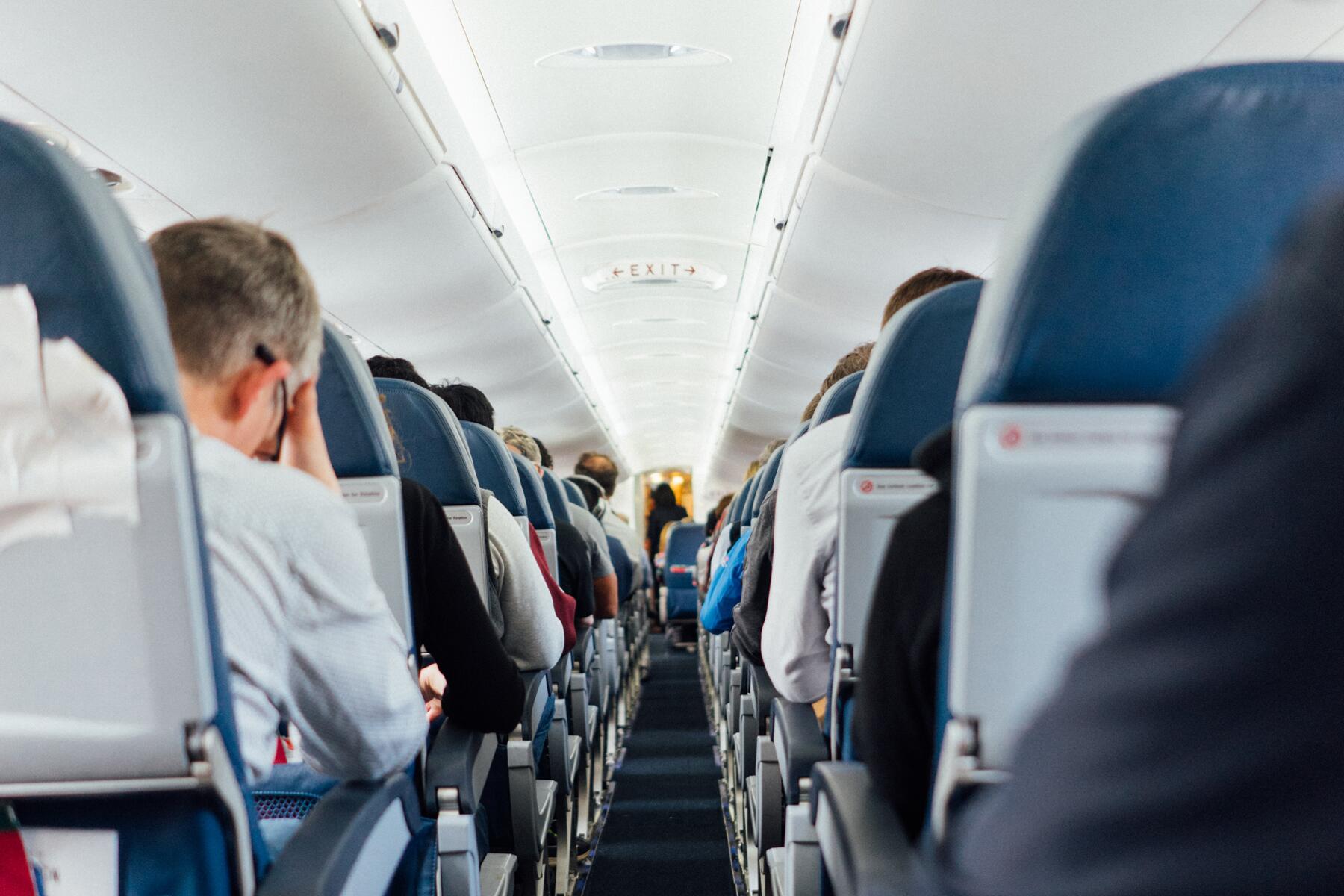

What’s the definition of 'unruly behavior'?
This week, another flight incident has raised eyebrows. An American Airlines plane en route to Guyana returned to New York’s JFK airport after a flight attendant and a business-class passenger had an altercation.
According to the passenger, Joel Ghansham, he asked the flight attendant to help him stow his baggage in the overhead compartment. He explained that he had undergone surgery and couldn’t do it. The flight attendant refused saying, “I don’t get paid to do that.” Another attendant helped him instead. But that wasn’t the end of it. Later when the same flight attendant came around with the cart, the passenger said, “No, thank you, waiter,” which offended the attendant.
The passenger said on a YouTube video that the flight attendant told him he wasn’t a waiter and he had the power to turn the plane around. Which is exactly what ended up happening when the passenger egged him to do it. The plane was redirected to JFK, the passenger was escorted out, and later released by the police and the TSA.
The airline maintains that the passenger was disruptive, but Ghansham said in an interview, “There was not a disruption. I never got up. There was not an argument, there was not a confrontation, nobody touched each other. He [the flight attendant] was wearing a mask. He wasn’t even loud. It was just his pride.”
Which brings us to this: What can be considered unreasonable and unsafe behavior from passengers on a flight?


Recommended Fodor’s Video
Related: Can You Be Kicked off a Plane if the Flight Is Too Heavy?
Determining Unruliness
The Federal Aviation Administration is clear that interfering with the duties of crew is a federal offense. Any behavior that risks the safety of the aircraft, other passengers, and crew falls into this bucket. Definite markers of unruly behavior include smoking on board, talking on the phone while take-off/landing, not wearing a seat belt when advised, aggressive behavior with crew or passengers, physical or verbal spats, or disturbances that require a captain’s interference.
We’ve come a long way from the barrage of news stories about passengers punching flight attendants and trying to open emergency exits due to mask mandates. In 2021, there was a 492% increase in such incidents—5,973 reports were filed with the FAA. It has now dropped more than 80%, but so far in 2023, over 1,000 cases still made it to the books. The FAA has promised zero tolerance for unruly behavior and fines can reach $37,000; it may also lead to jail time.
Related: Finally! Some Good News About Flying
You can check an airline’s contract of carriage to deep-dive into what they think are safety issues. For example, United specifies refusal of transport terms very clearly, and safety has a long list of don’ts, including intoxication, indecent behavior, assault, or interference with crew.
However, a lot depends on the crew’s discretion. In 2018, a passenger got into an argument with a flight attendant regarding airplane mode, and the passenger was removed from the plane, along with a group of others who defended her.
Airline crew are advised to de-escalate situations with disrespectful or aggressive passengers—they are trained for it. But they do ultimately decide when it’s getting out of control. The captain can restrain passengers or turn the plane around if a threat is perceived.
Not to say these decisions can’t be wrong. There have been many cases of racial profiling, discrimination, and abuse of power, and the case of Dr. David Dao, who was dragged off a United flight in 2017, is a reminder that airlines also make horrible decisions. Phone cameras offer enough proof to refute airline claims, which happened in Dr. Dao’s case, who later sued United and reached a settlement.
The FAA investigates reported incidents, but you can also file a complaint with the U.S. Department of Transportation if you feel you’ve been mistreated or discriminated against by the airline. Passengers can also go to the FBI for crimes onboard flights.
Related: The FBI Wants You to Report These Crimes if They Occur on Your Flight
Big Losses
Disruption for any reason can cause delays, cancellations, or flight diversions. But as much as passengers hate diversions, airlines pay the ultimate price.
A diversion—for any reason—costs thousands of dollars, borne by the airline. It can range from $10,000 to $200,000 depending on the severity of the incident, passengers on board, and operational consequences (like hotel rooms for crew and passengers and new flights), according to a spokesperson for the International Air Transport Association (IATA).
If a plane dumps fuel mid-air in order to make a landing quickly, that’s a sunk cost to the airline. This happened recently on a United flight from Houston to Amsterdam. It was diverted to Chicago after a business class passenger threw a tantrum about his meal. The plane jettisoned fuel because it would have been too heavy to land two hours into the journey. Then the passenger was escorted out and the flight made it to the Dutch capital three hours later than its scheduled arrival.
#UA20 from Houston to Amsterdam jettisoning fuel prior to diversion to Chicago due to an unruly passenger. https://t.co/aAyj03wnLY pic.twitter.com/FzGN6090MC
— Flightradar24 (@flightradar24) July 10, 2023
In 2019, British low-cost airline Jet2 billed a passenger $105,000 for causing a diversion that received military involvement. The passenger was also arrested and banned by the airline.
There are other reasons why flights are diverted, including weather conditions, technical issues, and medical emergencies onboard. In June, an Air India flight bound for the U.S. made an emergency landing in Russia due to an engine snag. A ferry plane was later sent to fetch passengers, but the U.S. kept an eye on the situation as Russian airspace is a no-go for airlines in America.
Then there are unexpected reasons, like a bizarre incident this February when an Air New Zealand flight from Auckland flew for 16 hours and landed in Auckland! It was diverted due to an electric outage at JFK and turned around midway.
So whatever you do, don’t be THAT person who misbehaves on a flight for any reason because it will have an impact. Even if you’re right in the situation, there is nothing to be gained fighting with anyone 30,000 feet in the sky. Let the bird land and then take it up with the airline or the authorities.
Related: Can You Sue Your Airline?
When we landed, the plane was surrounded by airport authority police cars that accompanied the plane to the gate. I expected to be hauled off in handcuffs, thinking I was going get rich suing the airline. There were other passengers who watched it unfold and were outraged at the flight crew. Police came on, didn't actually even talk to me, but one woman went off on the pilot over the flight attendants behavior. I used to think the crew was always right, no more.