


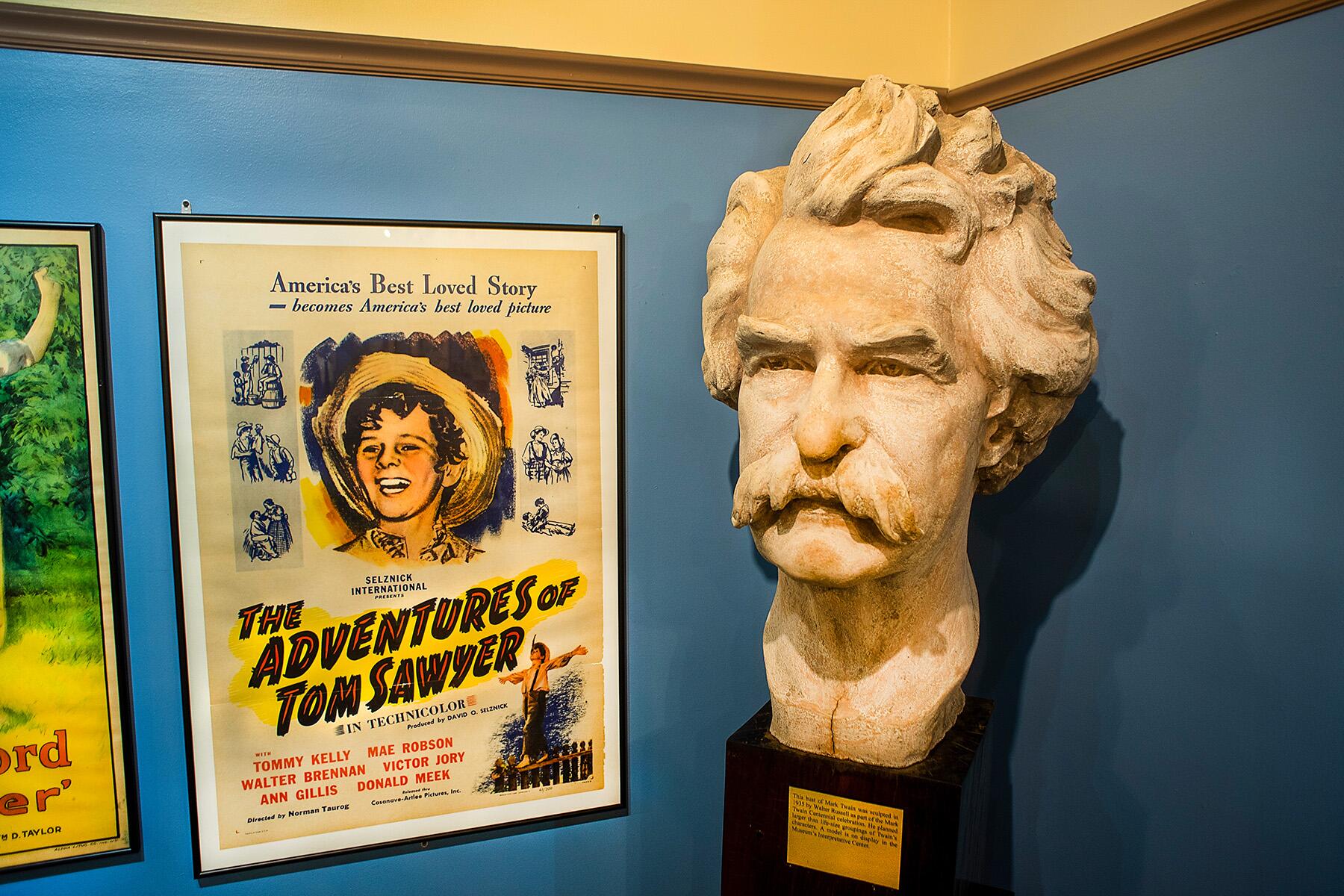

Mark Twain thought travel was "fatal to prejudice," but the empirical evidence—and common experiences of travel—complicate things.
You may have heard this famous Mark Twain quote: “Travel is fatal to prejudice, bigotry, and narrow-mindedness, and many of our people need it sorely on these accounts. Broad, wholesome, charitable views of men and things cannot be acquired by vegetating in one little corner of the earth all one’s lifetime.” Is this true? I’m not so sure.
First, what kind of prejudice are we talking about? Let’s define it like this: prejudice is a negative attitude or belief system about a culture, society, or group, based on inaccurate or ill-formed assumptions or generalizations about that group. Travel, in other words, helps to alleviate a certain kind of ignorance about other people—or so the thought goes.
Is this claim something we could prove or disprove? Tourism scholars have long studied the educational effects of travel, and yes, some studies suggest that travel does have educational value.



Recommended Fodor’s Video
But here’s the problem: a lot of this supposed “educational value” isn’t really about the other culture at all! Travelers generally reported a perceived increase in certain interpersonal skills arising from the many social interactions they encounter when traveling. But this has nothing to do with prejudice or knowledge of other cultures; it’s just self-knowledge.
Think of a time when you had a challenging social exchange while traveling. Maybe you didn’t speak the local language and struggled to explain to the cab driver where you wanted to go. People who often have these experiences in their travels are probably much better at communicating across language or cultural barriers. But this doesn’t mean they’re less prejudiced as a result. Skills-building isn’t prejudice-quashing.
Also, most of these studies are based on travelers’ own reports of their personal transformations. But why should we trust travelers to be able to accurately assess their own level of prejudice? It’s no surprise that someone could travel to some faraway place and come home believing they better understand that culture. We’ve probably all met someone who goes away on a holiday for a few days and comes back talking all about how much they learned or how their eyes are so open now. But did anything really change for them? Did they really learn anything that disrupted their biases? Are they less prejudiced, or did they just have some interesting cultural experiences?
Here’s another problem with the idea that travel is fatal to prejudice: most people pick where they travel to and what their itineraries are. But I don’t know of very many people who think to themselves: “I’m pretty prejudiced about this country. Maybe I should travel there, fill my itinerary with activities that will challenge these preconceived notions of mine, and eliminate that prejudice once and for all!”
For one thing, this would require acknowledging that one has a prejudice in the first place. Imagine an American who is prejudiced against, say, sub-Saharan Africa—probably from the distorted and reductive representation the region receives through news media and popular culture. Do we really think it’s likely that this person will identify that they are prejudiced against this region in some way, cultivate a serious desire to fundamentally change those beliefs, and then spend thousands of dollars (and whatever vacation time they have) on traveling there in an effort to eliminate this prejudice? Have you ever met anyone like this? I sure haven’t—and if such a person does exist, they are probably not the kind of person who needs—much less seeks out—travel to overcome those prejudices. Much of this could be achieved with a simple library card.
Travel also gives rise to new prejudices and further entrenches existing ones, complicating Twain’s idea. Ironically, this seems especially true of travelers who seek to learn from or interact closely with residents of the host country while traveling. For example, some studies focusing on study abroad programs and voluntourism have suggested that these experiences often tend to confirm their prejudices rather than challenge them.
But this problem extends well beyond these particular groups. And in some ways, it might be worse than not traveling at all. Imagine someone traveling to France who harbors prejudice against, say, the Romani people. Will interactions with them be fatal to that prejudice? Maybe—but it seems more likely that their prejudice will provide a negative lens through which they interpret their experiences, and their prejudice will not just remain but be taken as “supported” by that experience, which in turn will affect future interactions of this sort. Their belief will seem less like a prejudice, and more like a “fact” rooted in “evidence.”
Humans are susceptible to drawing sweeping conclusions from small data sets, and the experiences of our travels are a ripe opportunity for this. We think we know something significant about “the Japanese people” after our three-night stay in Tokyo. The safari you took left you confident that you knew what life was really like for the people of Namibia. “It turns out French people really are rude,” your friend tells you, upon returning from their weekend in Paris. It’s not just the short duration of these trips that matters; it’s also that so many of them take place primarily in highly curated environments designed for tourists’ experiences. The dataset isn’t just small, it’s also unrepresentative. This doesn’t offer a good opportunity to eliminate prejudice—and, again, it might make it worse.
Of course, no one is suggesting that travel is the exclusive means of eliminating prejudice. Maybe Twain should be taken as suggesting that travel has the potential to eliminate or reduce prejudice. This is certainly less quotable, and it borders on triviality. Lots of things might eliminate prejudice: watch foreign films, read literature from other cultures, eat international cuisine, talk to people with different backgrounds.
Relatedly, we would do right to center the value of challenging prejudices more local to us—namely, about those in our communities who appear to some as “outsiders,” such as immigrants and refugees. Our current political moment has made abundantly clear that many of us have recalcitrant beliefs about those in our communities with different political affiliations or socio-economic backgrounds. Whatever the status of travel with respect to prejudice, perhaps it is worth remembering that some of the prejudices that affect our day-to-day lives can be challenged effectively by venturing much closer to home, as I mentioned above.
Of course, this is not “either-or”—it’s “both-and.” Travel is no doubt valuable for a host of reasons, ranging from the purely personal to the relationships it fosters across our global community. But we should reconsider our emphasis on travel as a corrective for biased beliefs. Unfortunately, for many, travel is yet another laboratory in which human prejudice can grow.
None of this is to say that travel doesn’t offer the sort of moral or educational value suggested by Twain’s quote. Travel opens our eyes in ways we cannot always predict. It connects us with people and places that would otherwise remain unfamiliar, and it helps us to better understand our place in the world. Maybe this makes us ultimately less susceptible to certain prejudices. But either way, travel is itself a possibility for personal and communal growth that we would all do right to keep exploring.