


Quote:
Thanks for your kind words and encouragement. I truly appreciate your support and motivation for me to carry on writing the report.Originally Posted by Faedus
Well, two stunning things about this most recent installment: first, those remarkable photos from the Culebrillas and Chiguata areas (what nature-lover could resist wanting to visit, after seeing them?); and second, your assertion farther above that English is not your native language, for you write as well as if it were.
i hope you will enjoy the rest of my traveled journey.
Day 9--The beautiful Monastery of Saint Catherine.
Santa Catalina Monastery, is part of the UNESCO World Heritage Site, built in the Historical Centre of the City of Arequipa.
Story about the monastery:
“Nuns lived as novices for four years, during which time their wealthy families were expected to pay a dowry of 100 gold coins per year. At the end of the four years they could choose between taking their vows and entering into religious service, or leaving the convent – the latter would most likely have brought shame upon their family.”
During our stay in the hotel, we had a very nice housekeeping lady who kept showing us the best of the hotel as well as the city. Her English was limited, but she would keep telling me the name of the beautiful Santa Catalina Monastery. We took her suggestions and visited the monastery on our final day stay in Arequipa. We enjoyed the history as well as the tour of the monastery. It is something that one should never miss when he or she is in Arequipa.
The following history texts are taken from its website:
“Santa Catalina Monastery Arequipa is one of Peru’s most beautiful colonial sites, a walled “city within a city” built from white and red volcanic stone in the historic center of the White City.
Behind its thick walls you’ll find narrow streets, painted courtyards and cloisters that still house a small community of Dominican nuns today.
Santa Catalina Monastery was founded in 1579 after Viceroy Francisco de Toledo granted permission to create a convent for Dominican nuns in the growing city of Arequipa.
A wealthy widow, Doña María de Guzmán, donated her fortune and entered the new monastery herself, becoming the first resident and prioress. Life here was reserved for women from Spanish upper-class families who paid large dowries to enter and then lived under strict cloistered rules.
Over the centuries, earthquakes damaged various parts of the complex, but each time it was rebuilt using the same volcanic stone that defines Arequipa’s architecture. The monastery remained completely closed to the public until the 20th century, when most of the complex opened as a museum while a small community of nuns stayed in a restricted area.
Today, Santa Catalina is both an active religious site and a living museum that shows how these women lived, prayed and worked over 400 years.”
We visited the monastery when it opened in the morning at 9am. We chose to pay for an English guide for our tour. We learned about the history of the monastery as well as the stories of the nuns. We thoroughly enjoyed the tour and the premises of the monastery are exceptional pretty and calm.
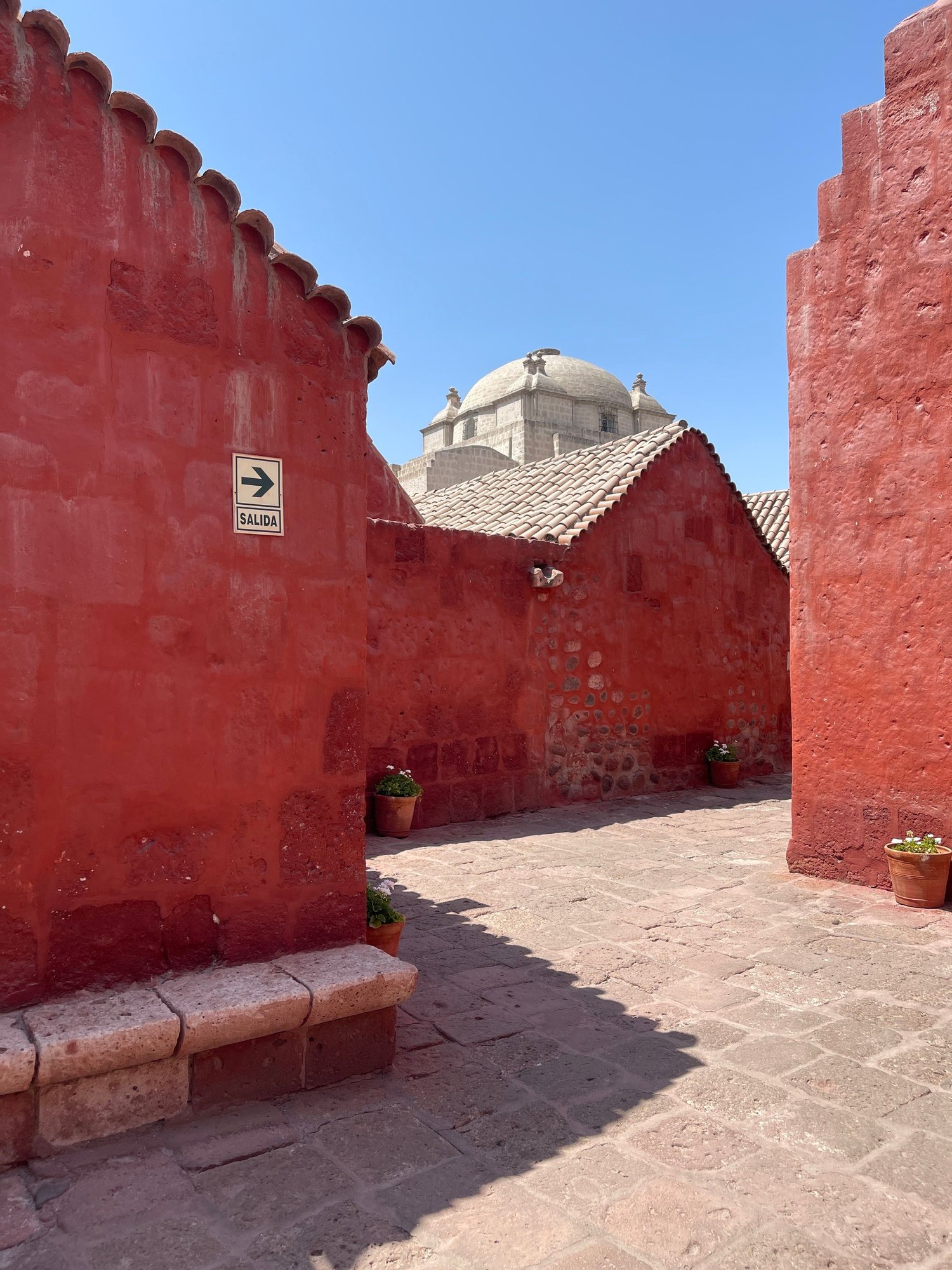
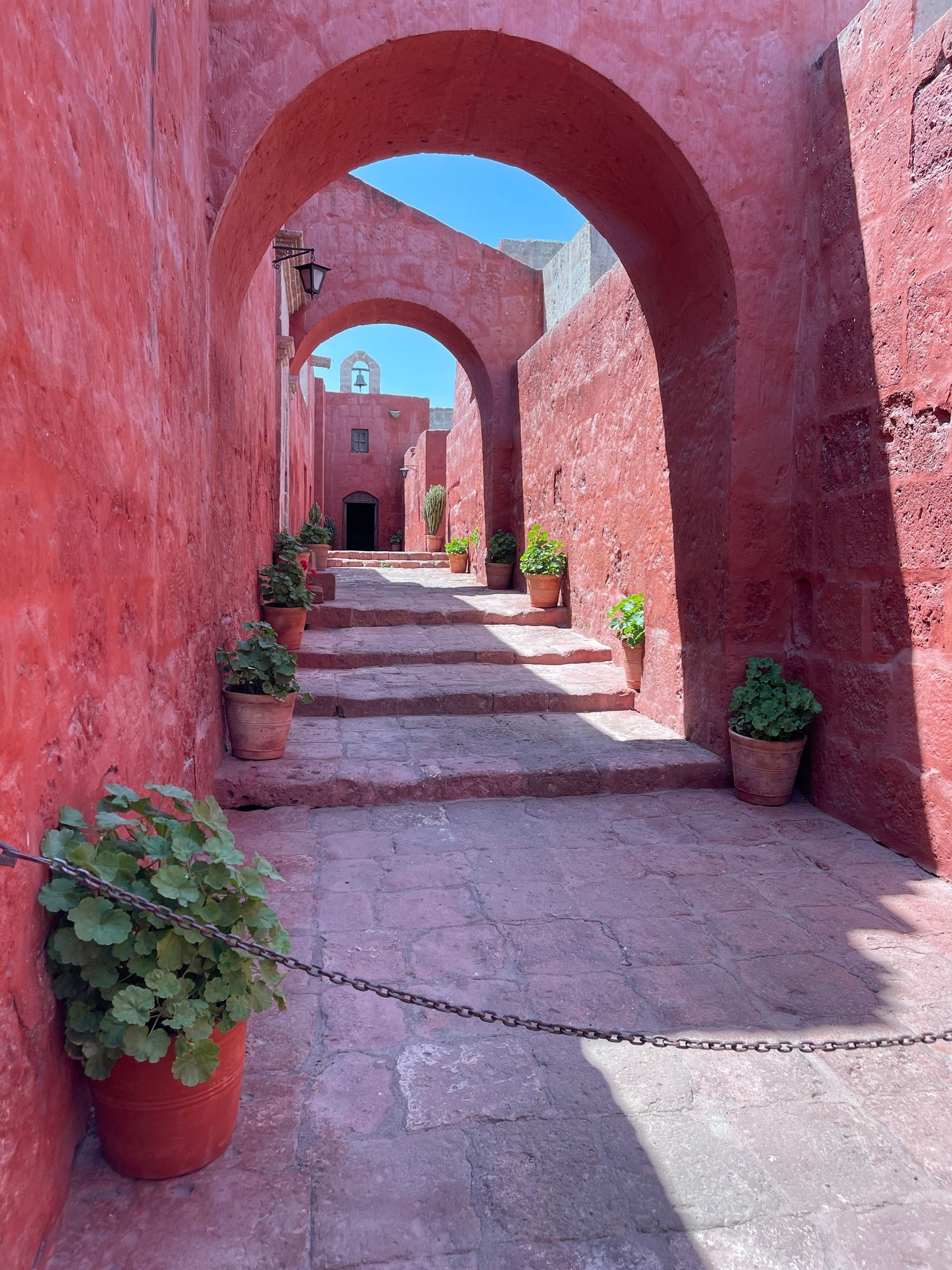
Let the following pictures hopefully enough to depict its beauty.
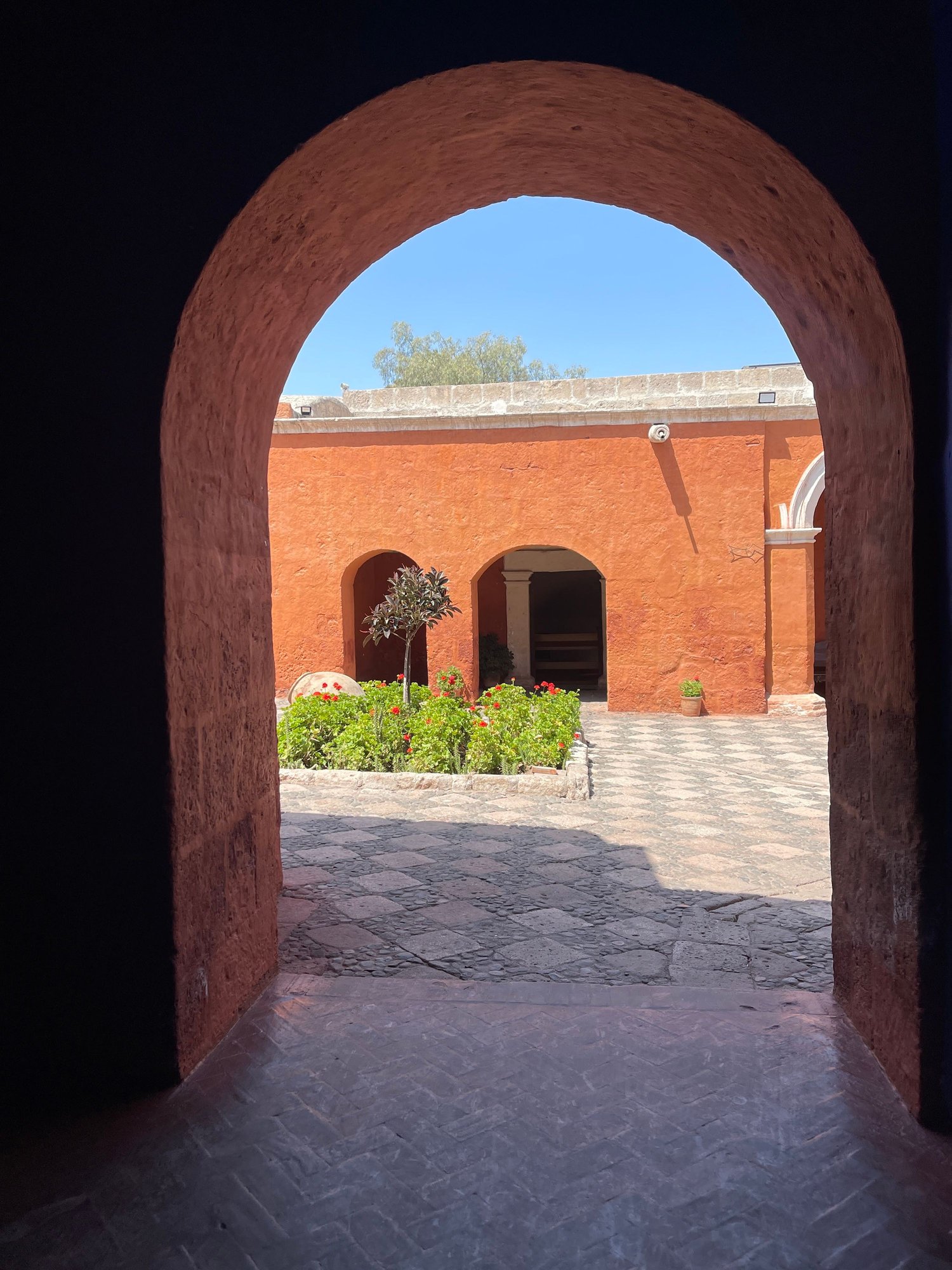
Arch door entry to the monastery
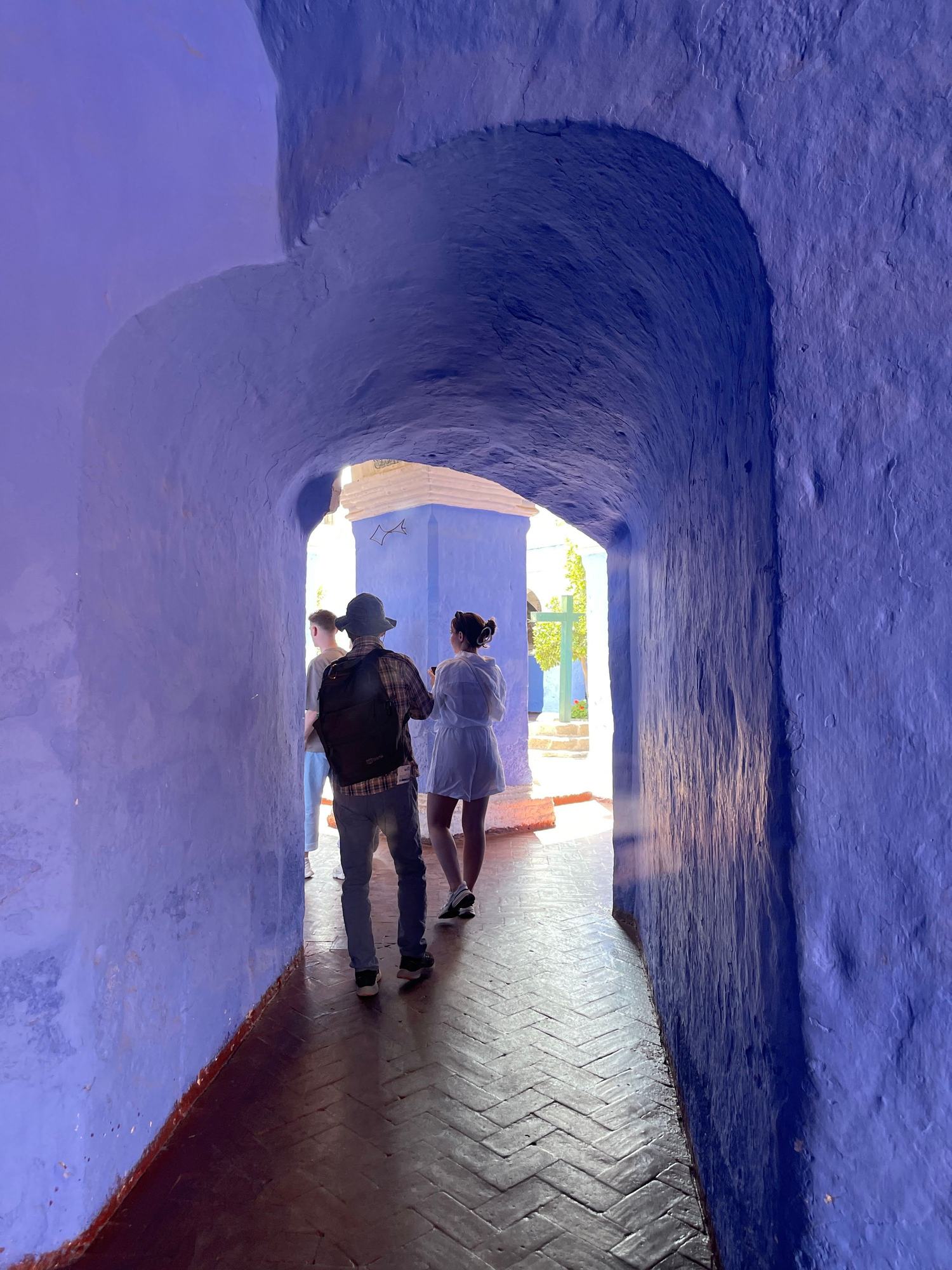
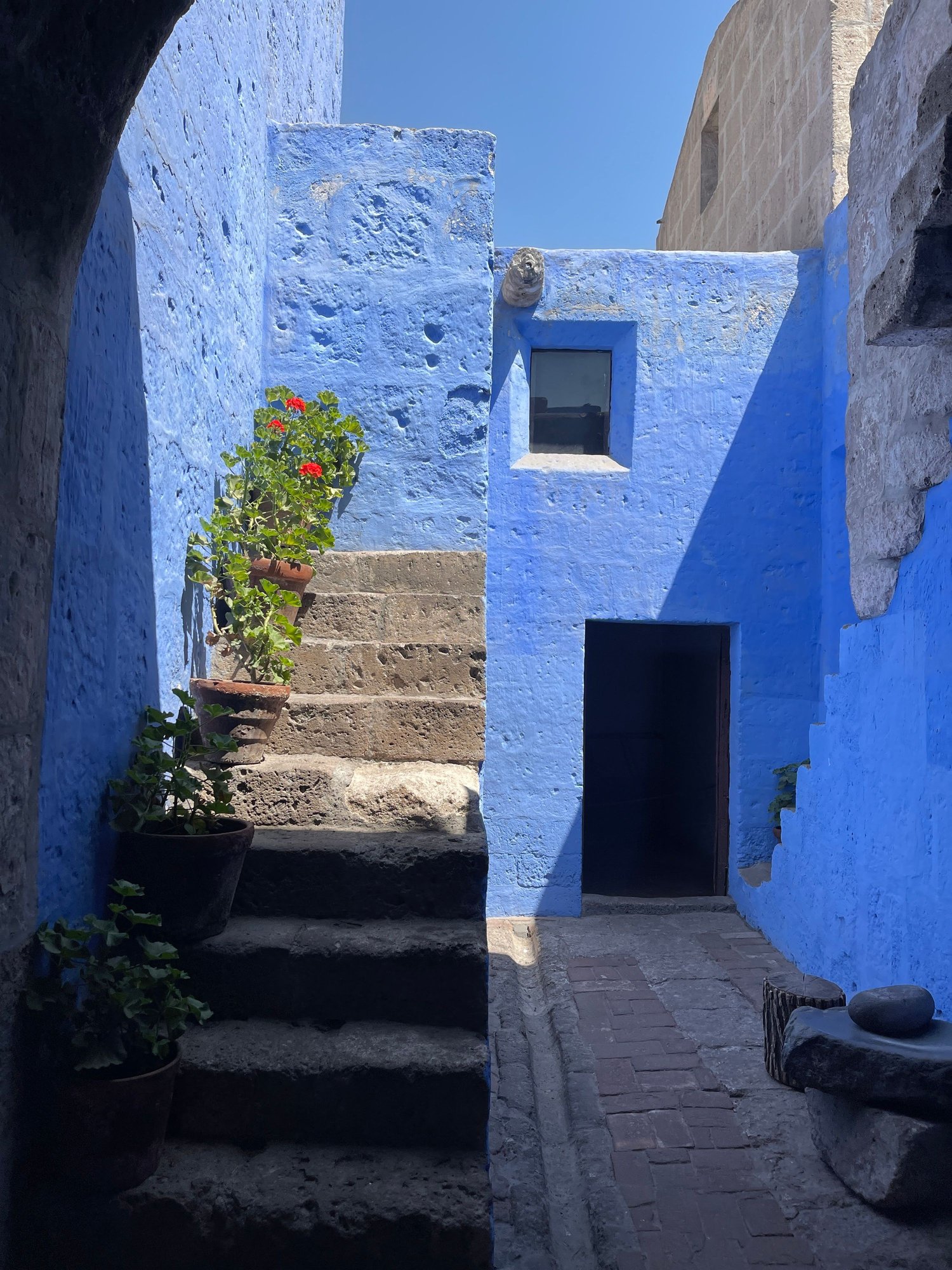
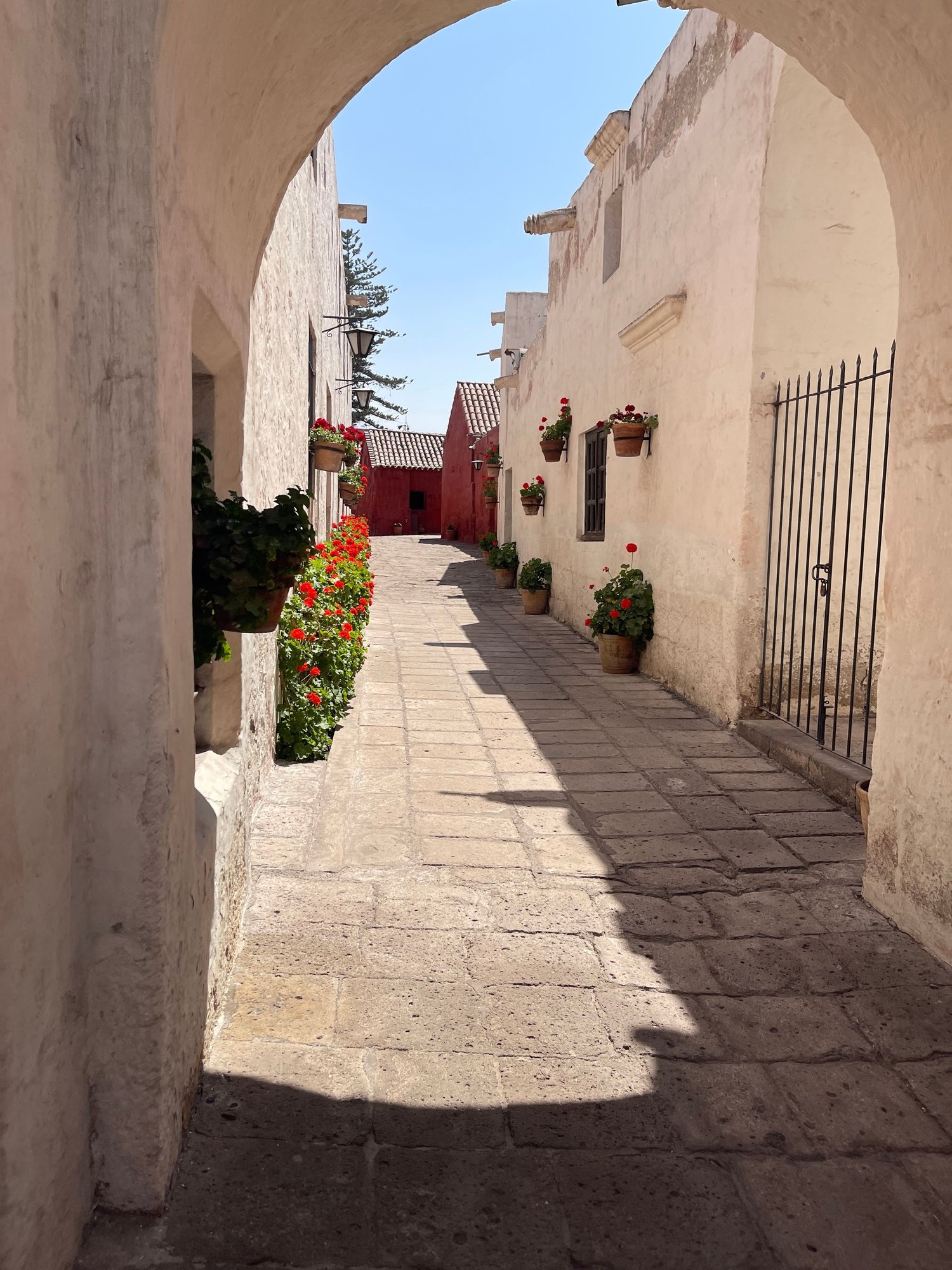
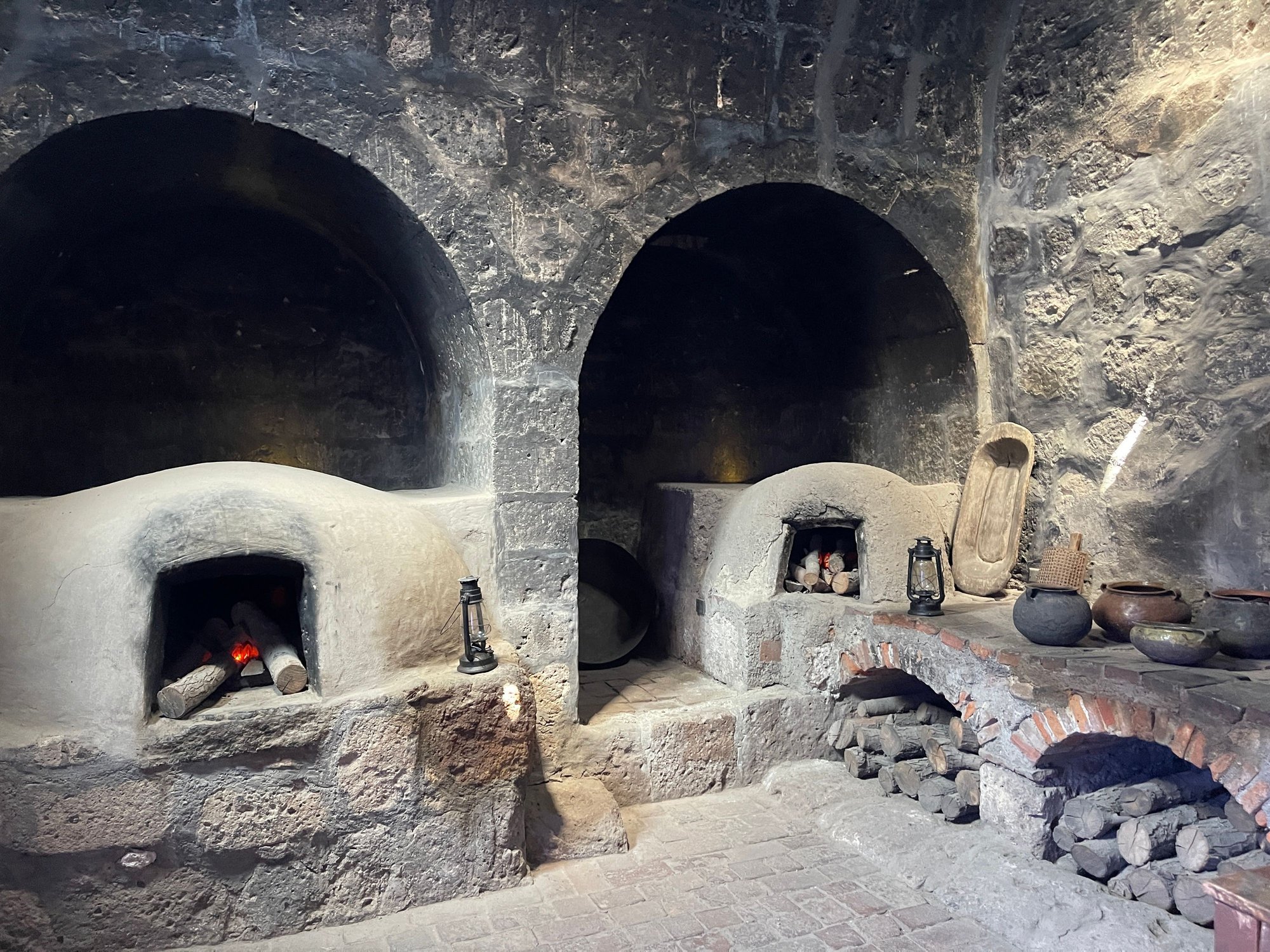
Stoves in the kitchen
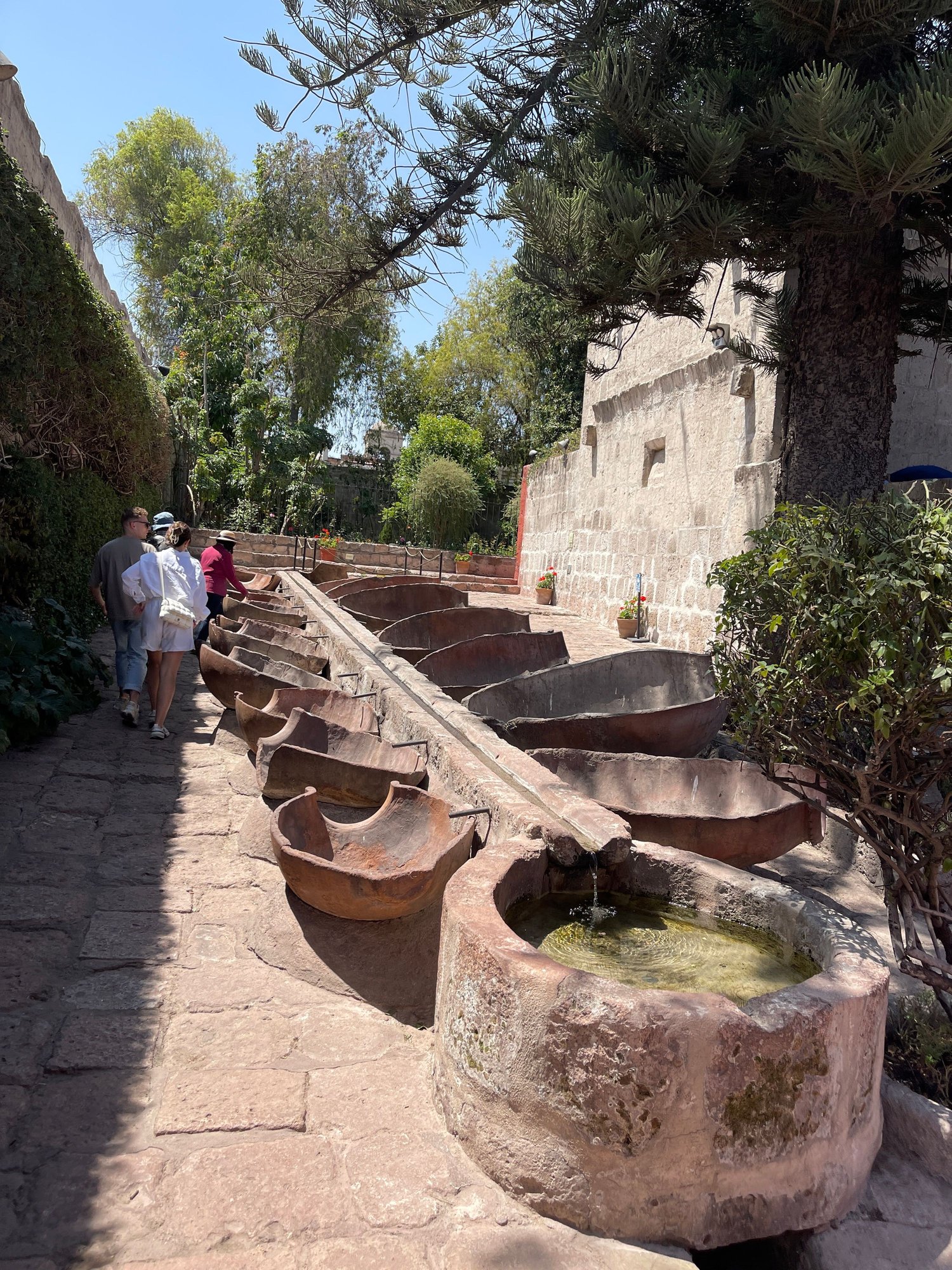
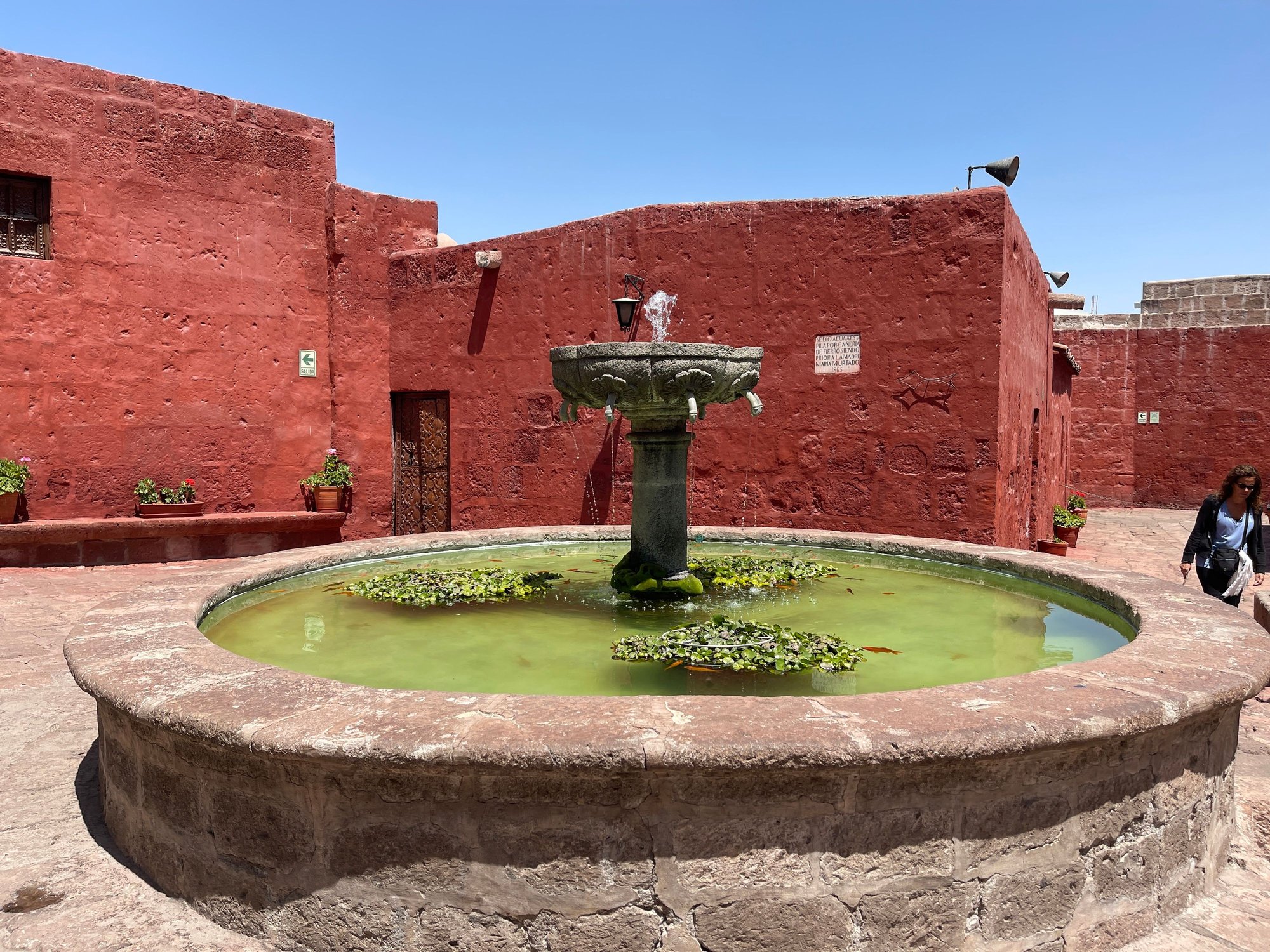
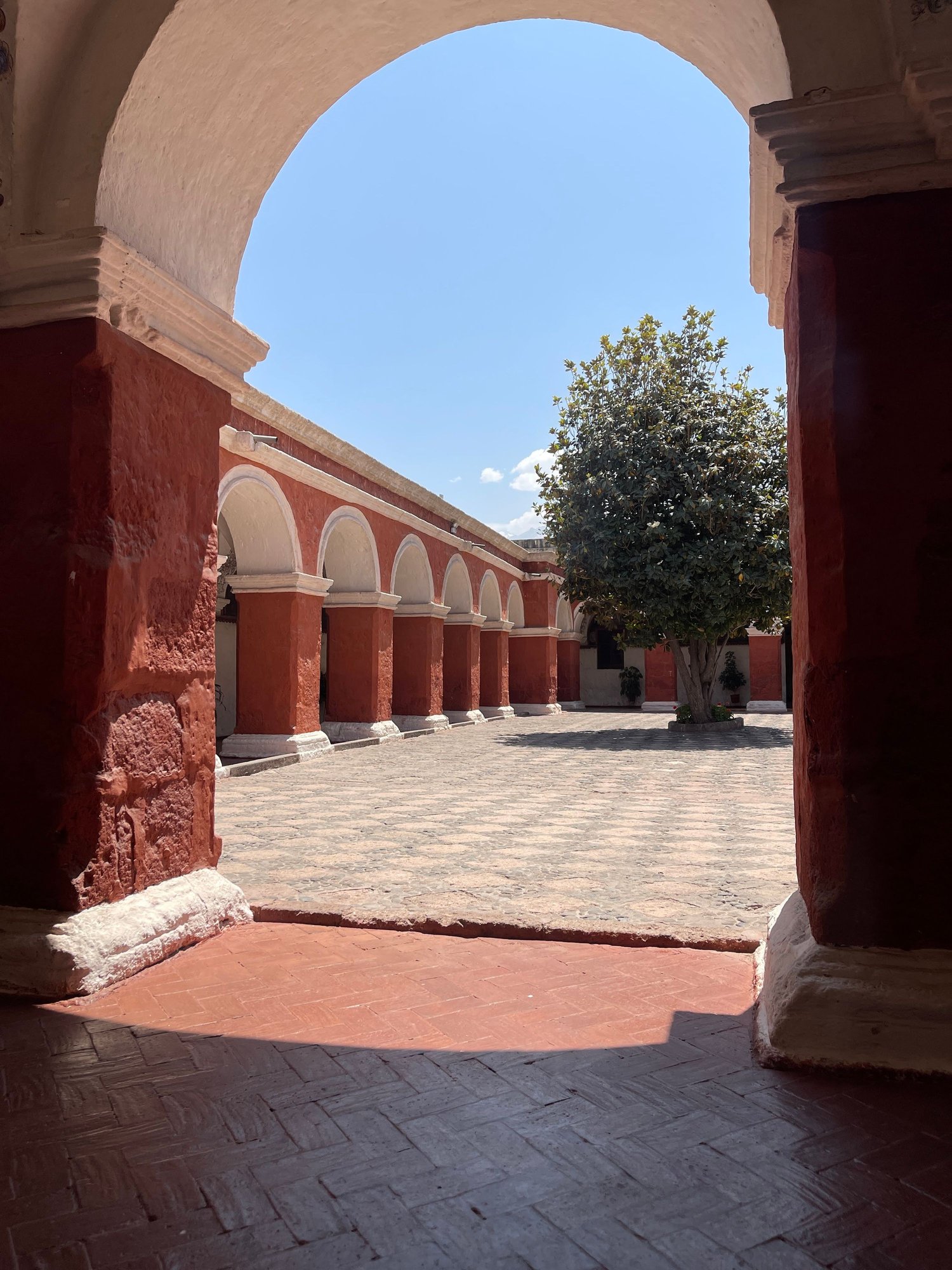
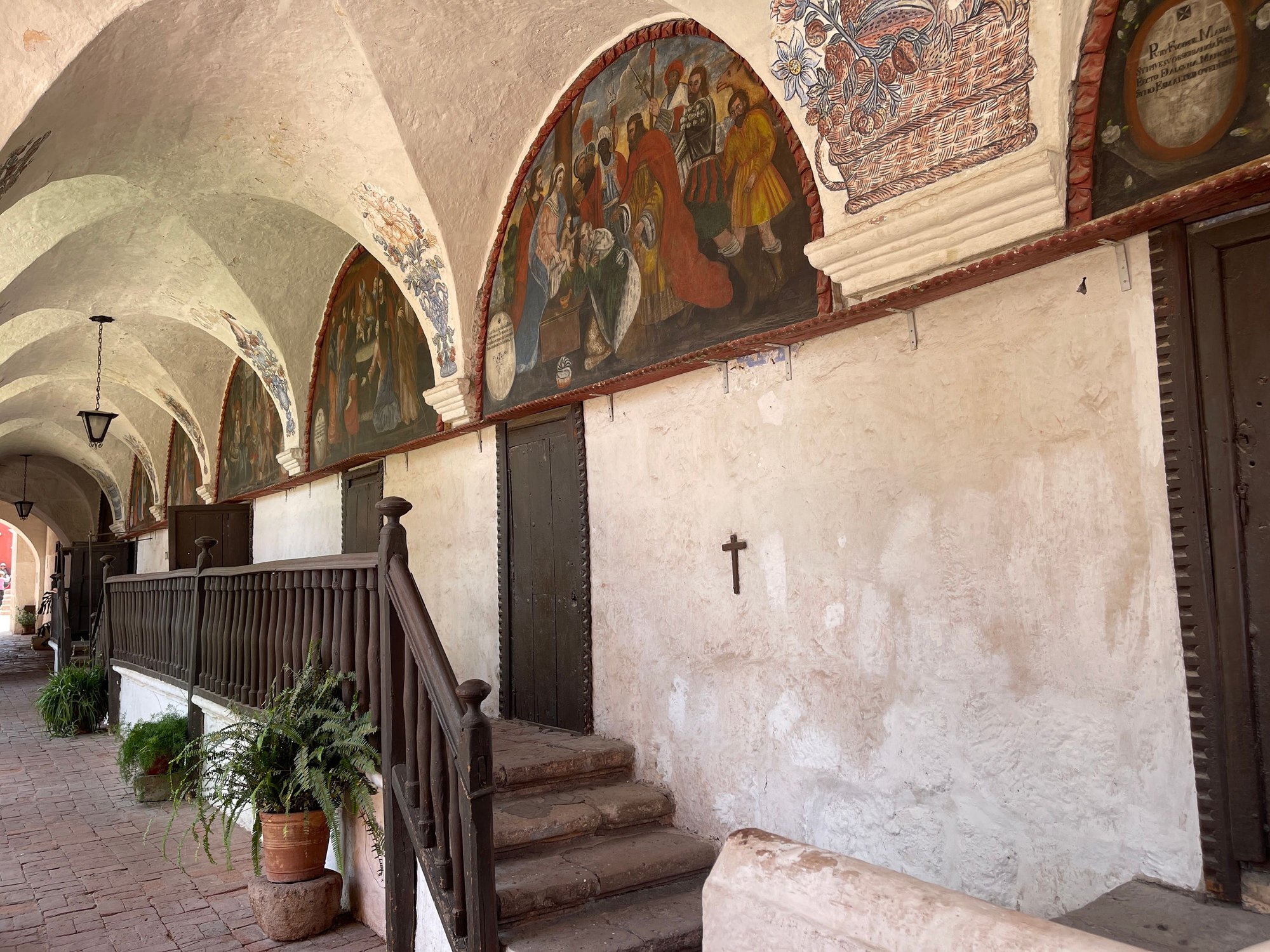
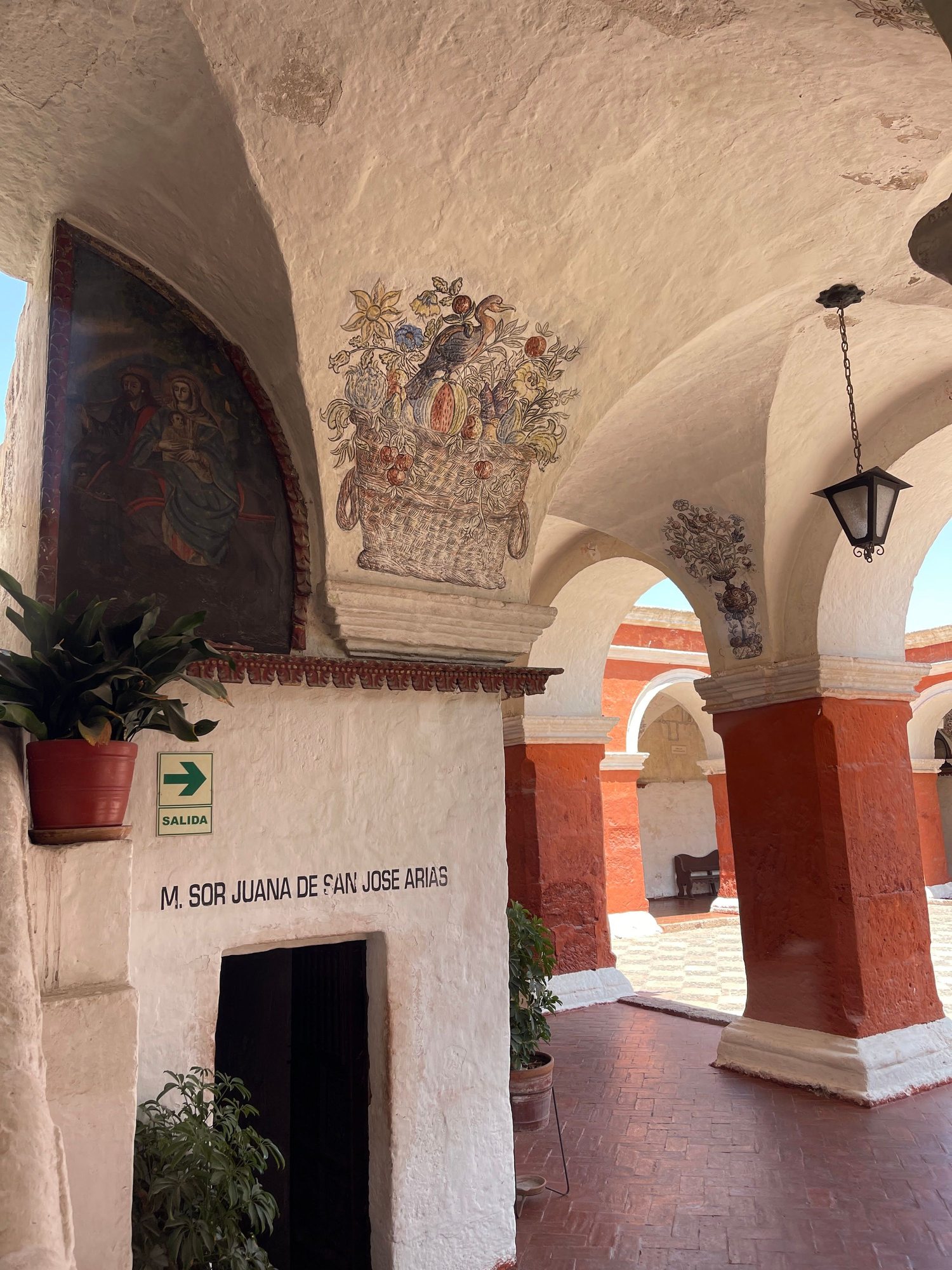
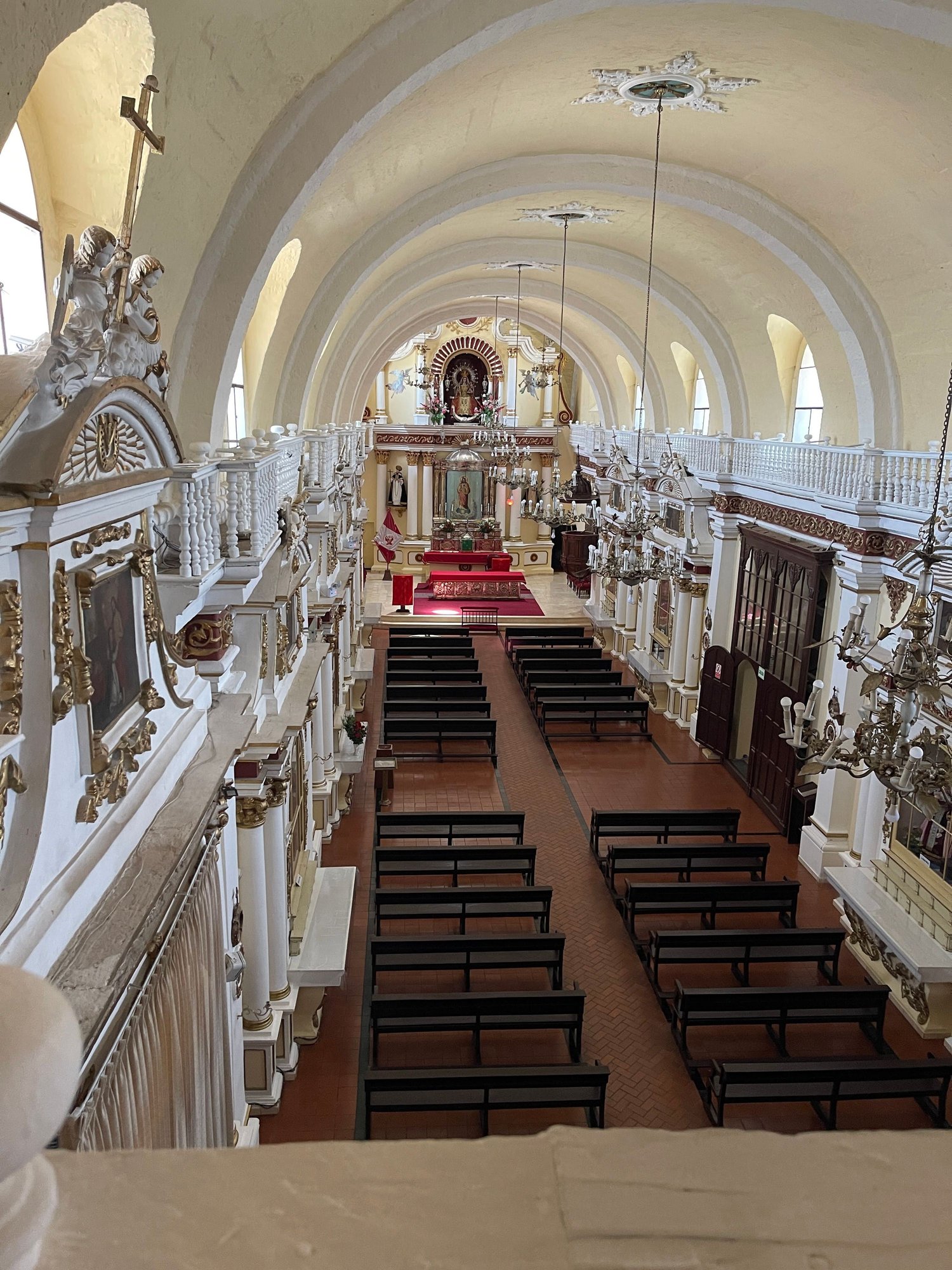
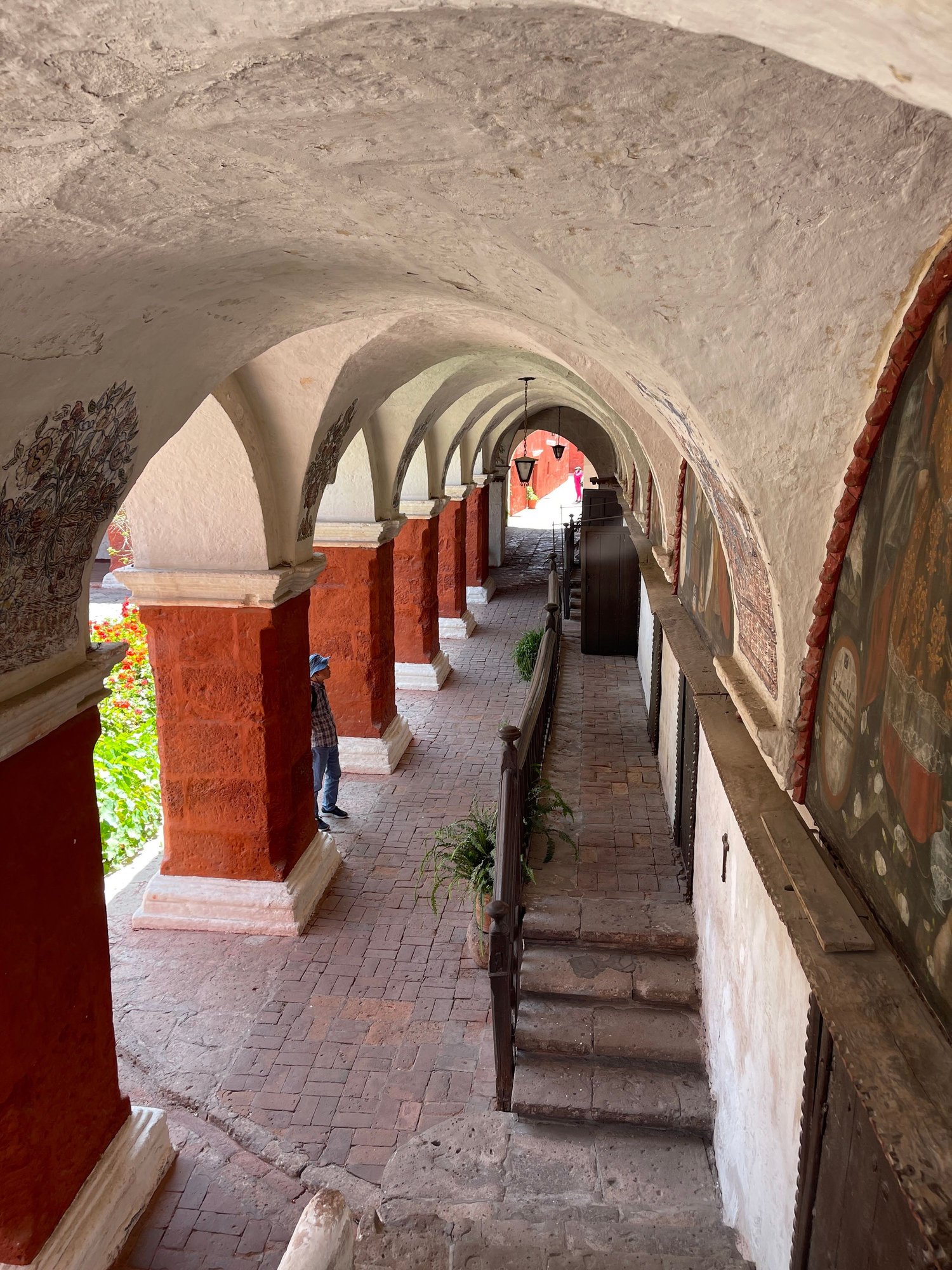
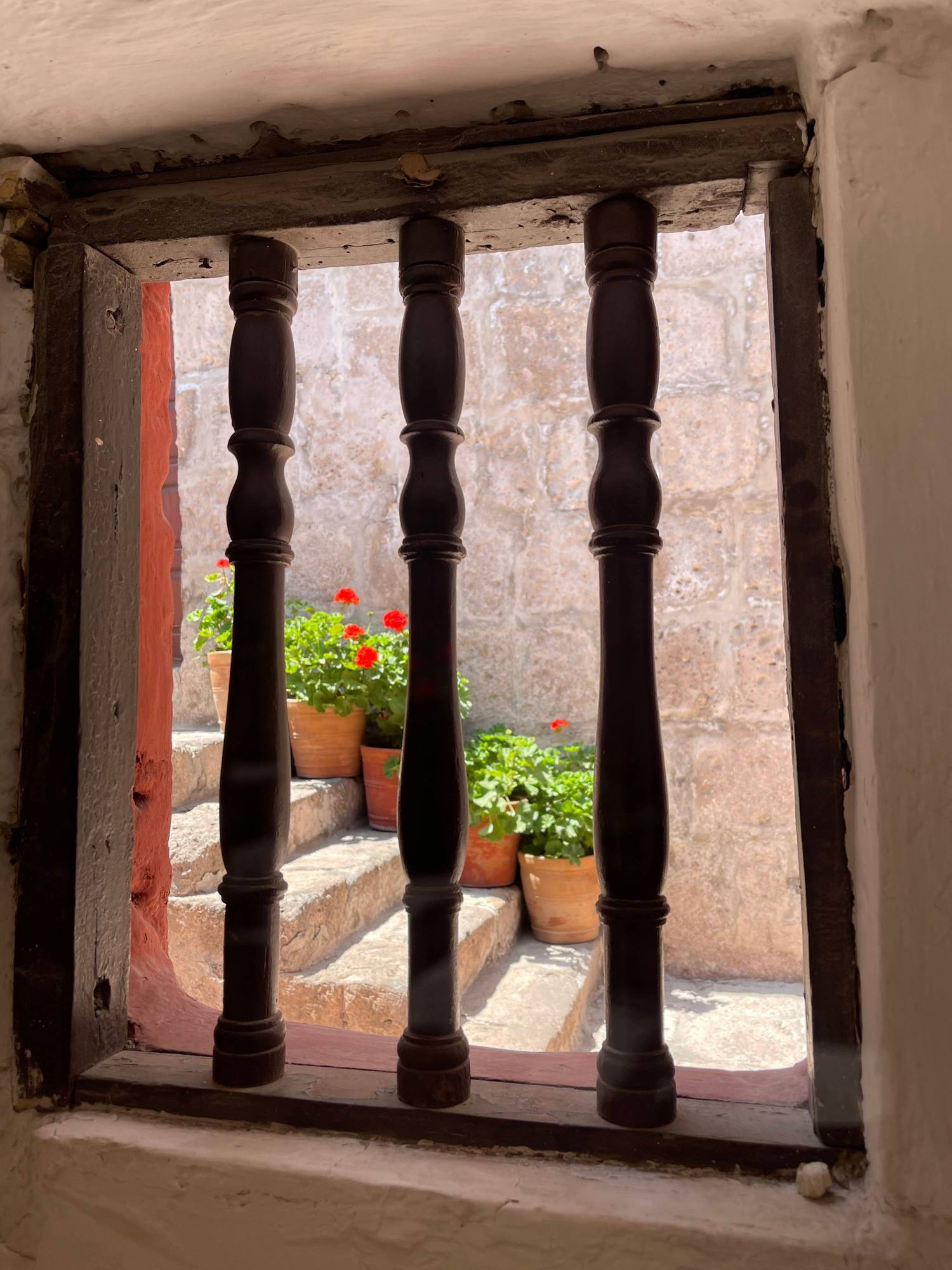
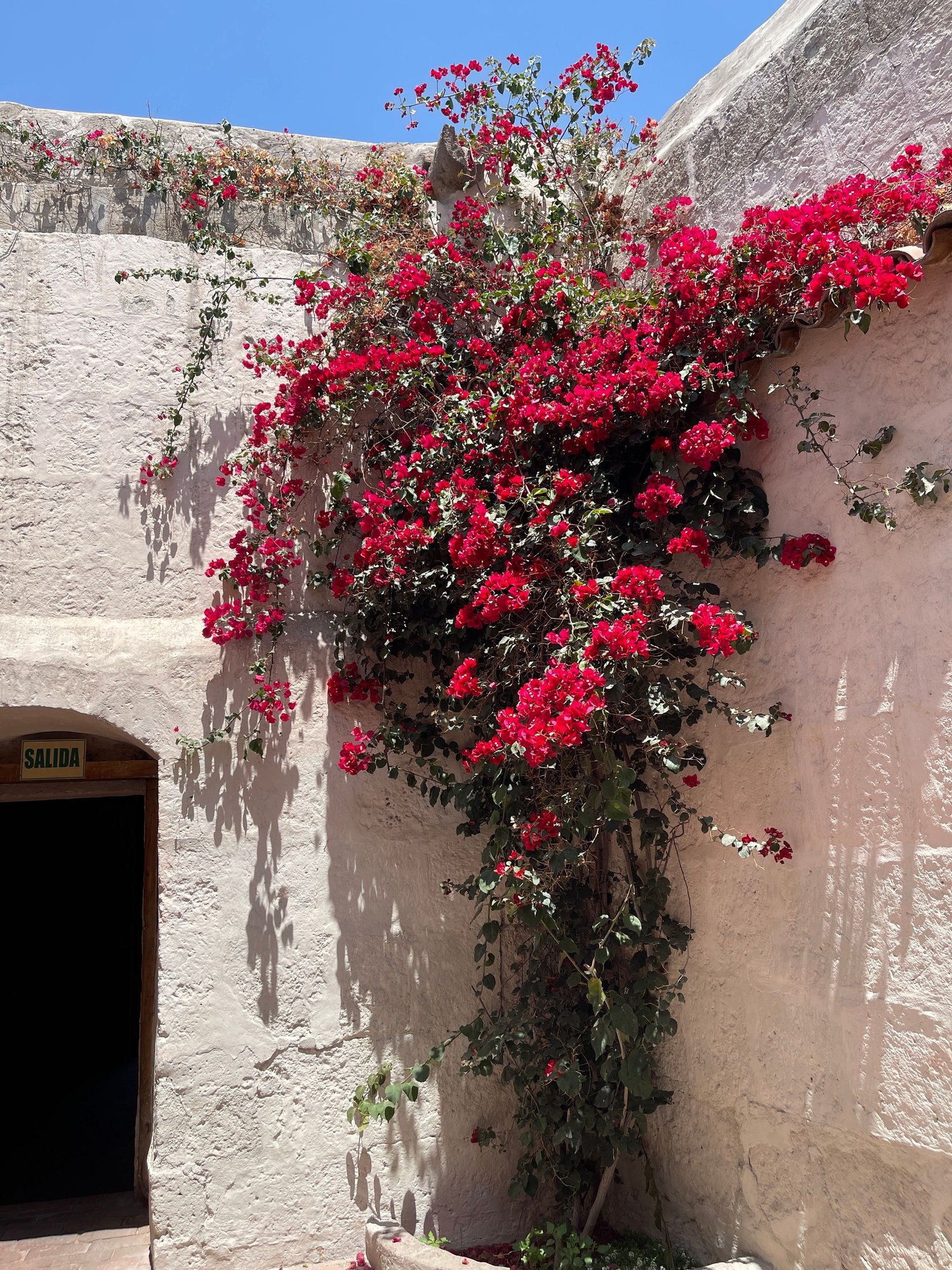
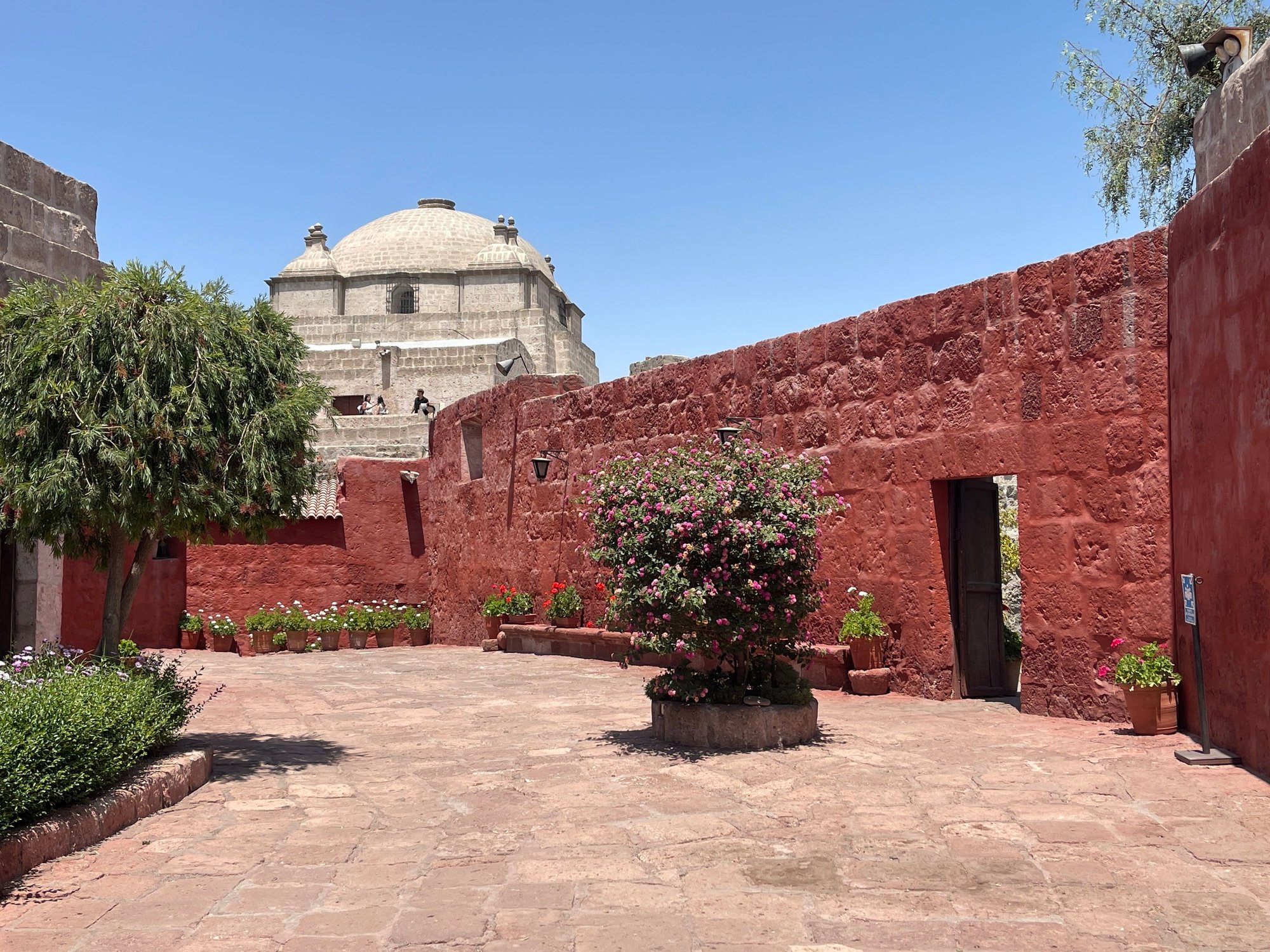
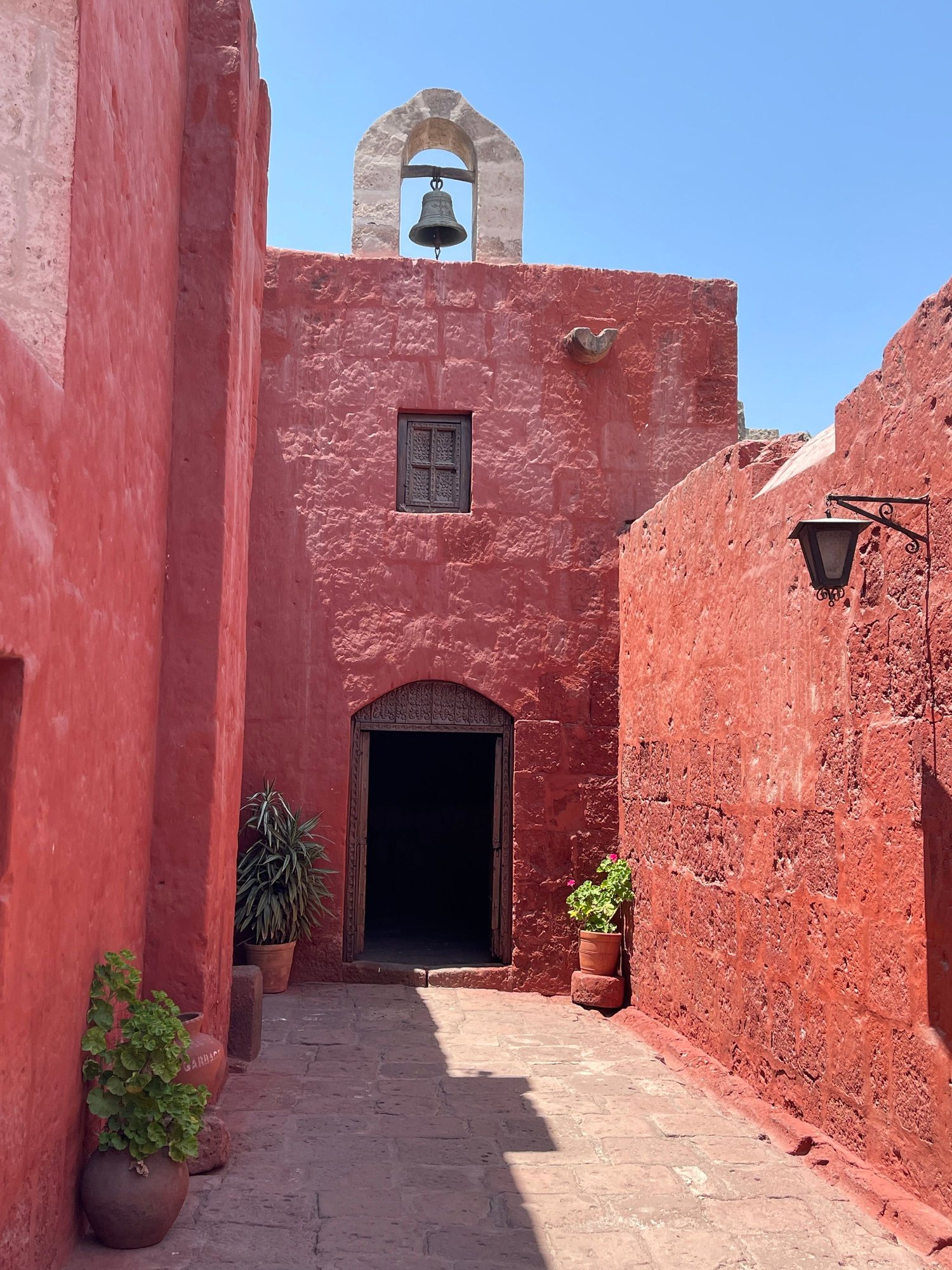
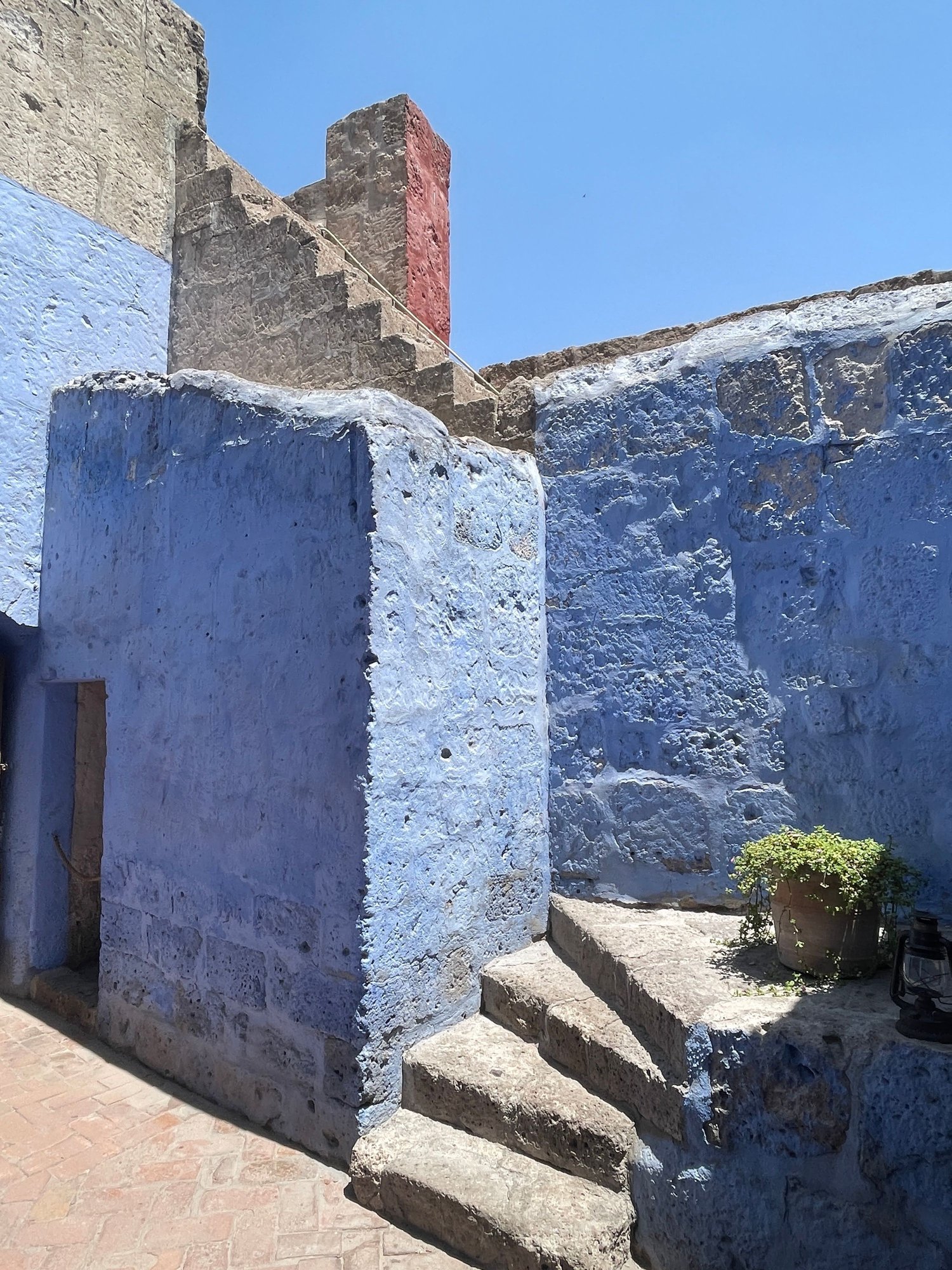
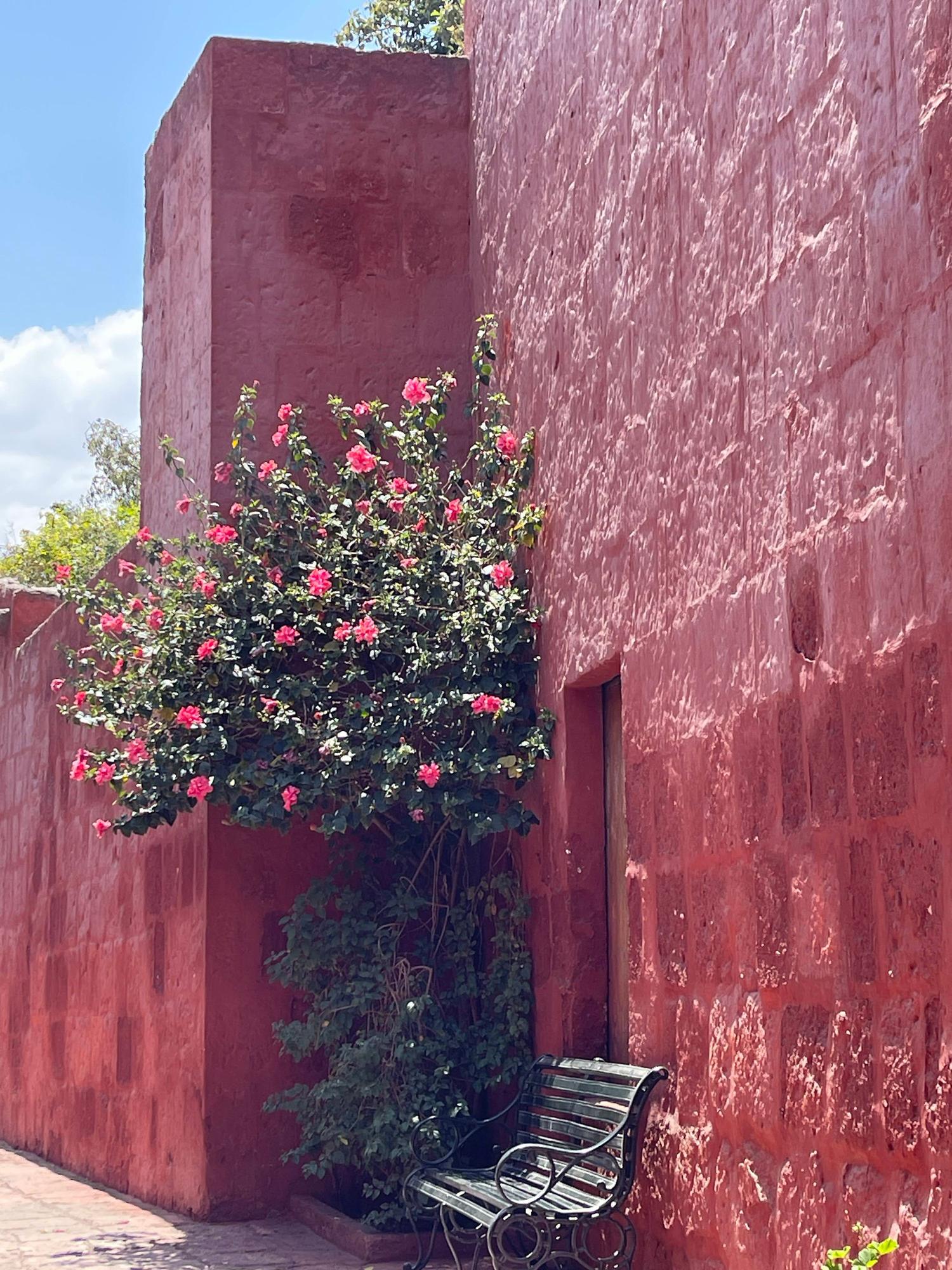
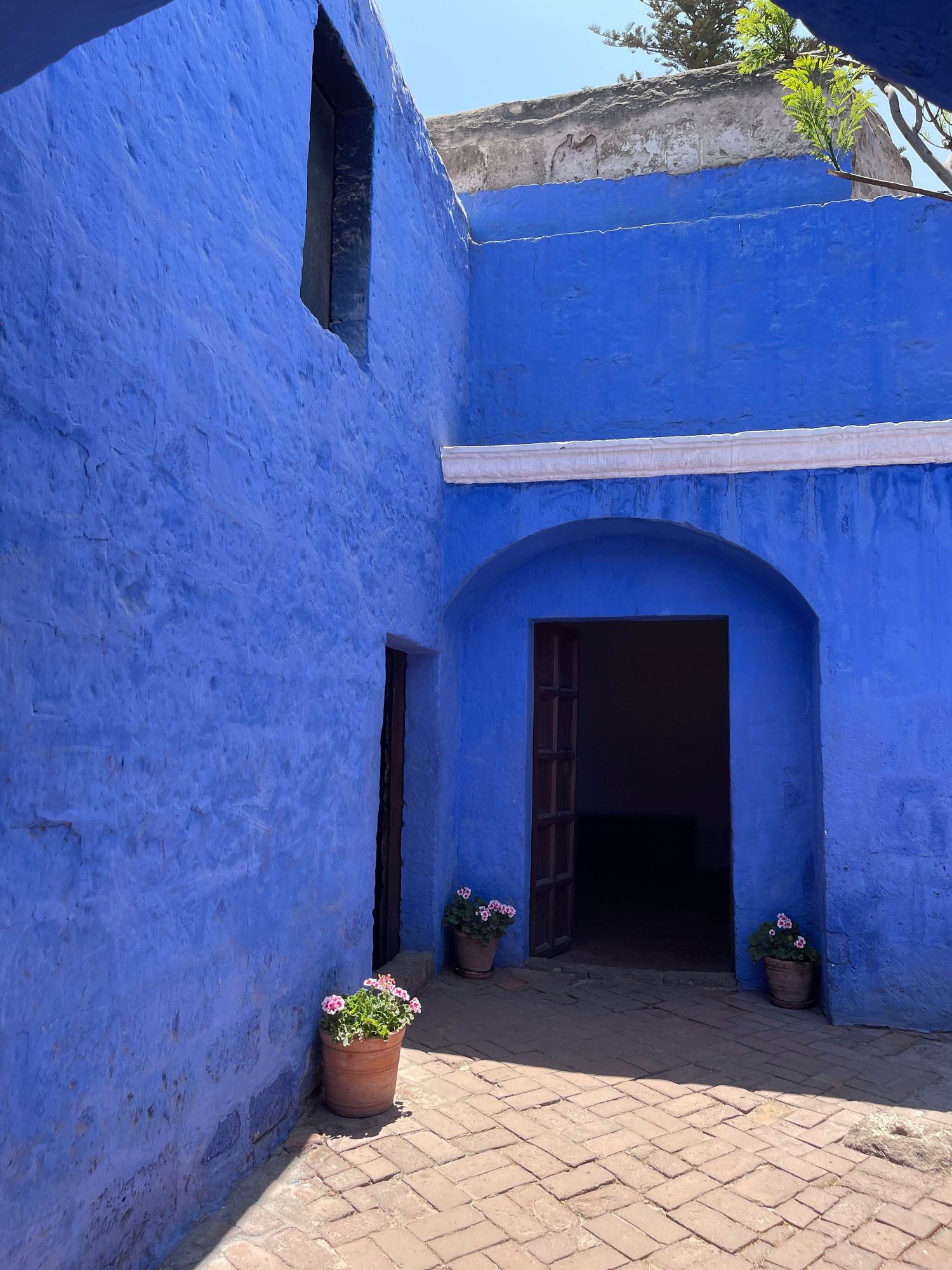
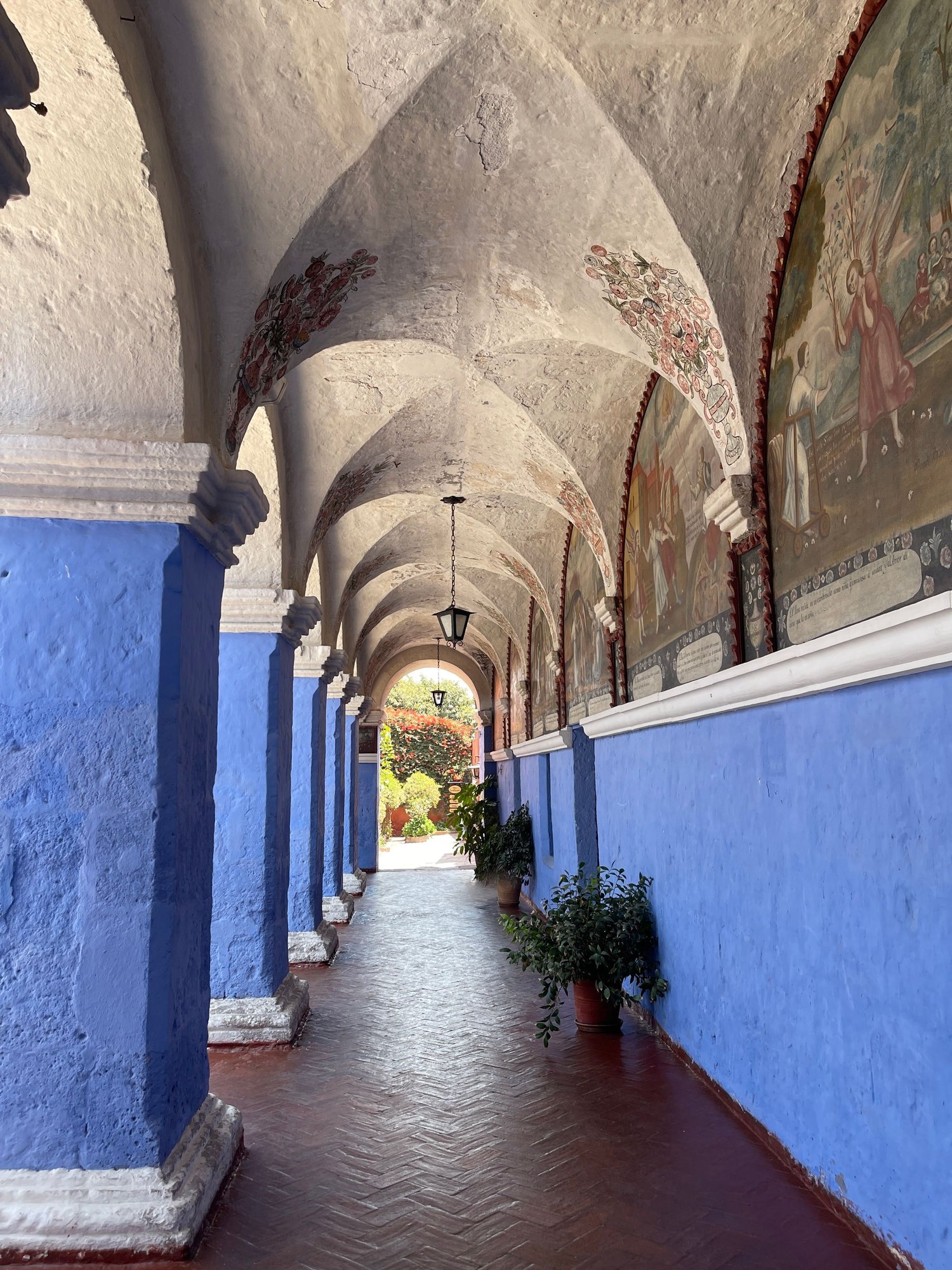
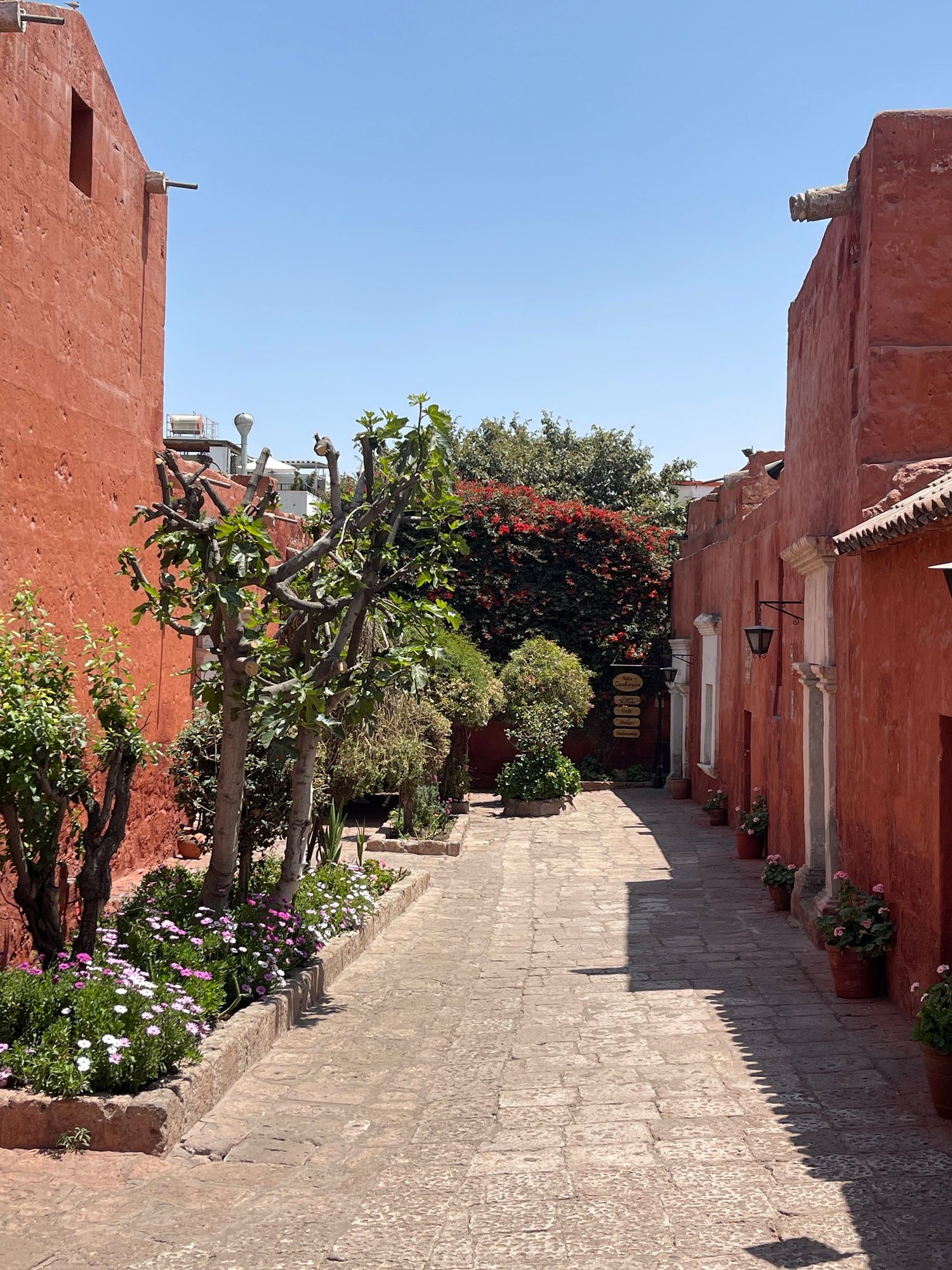
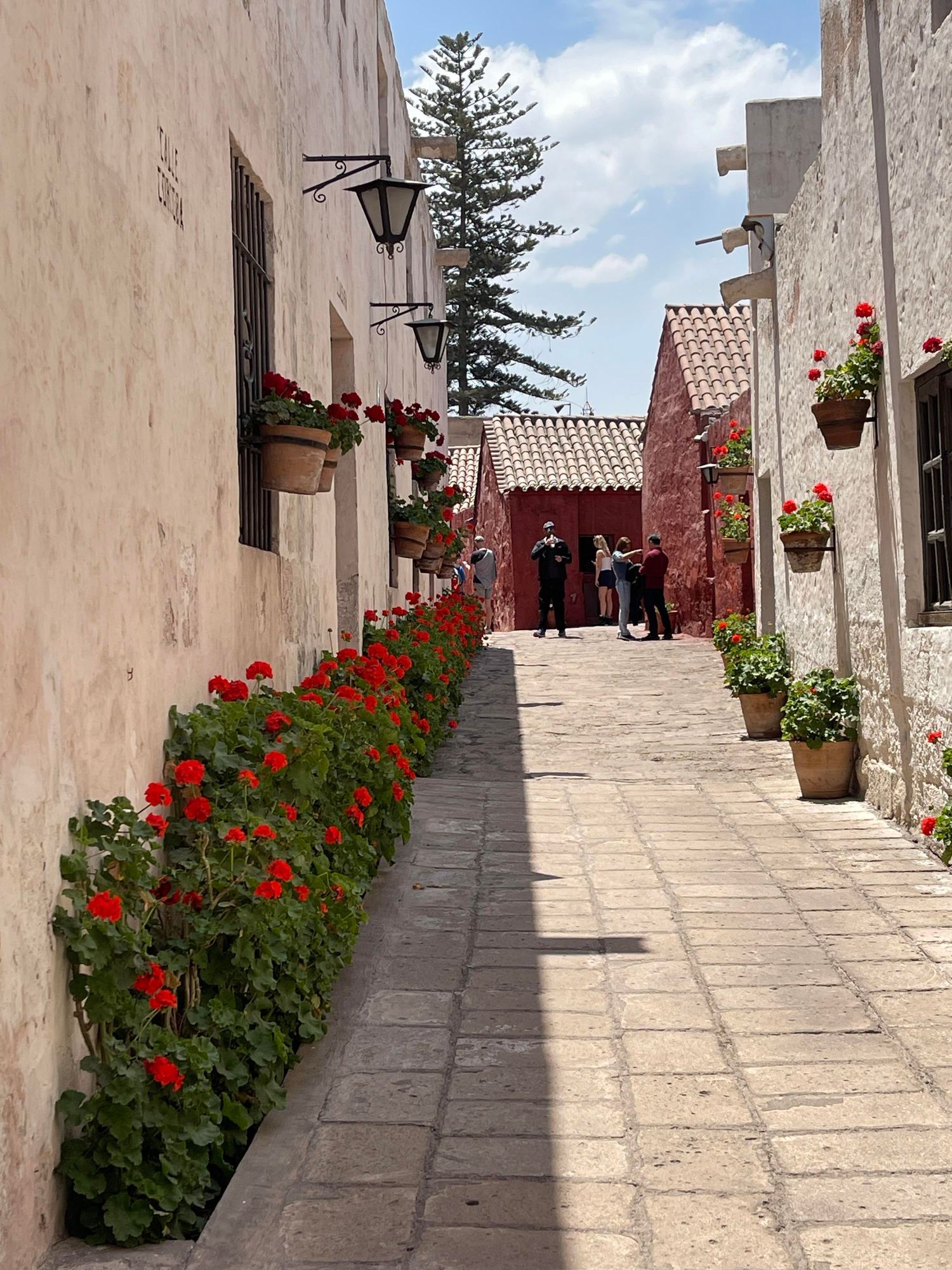
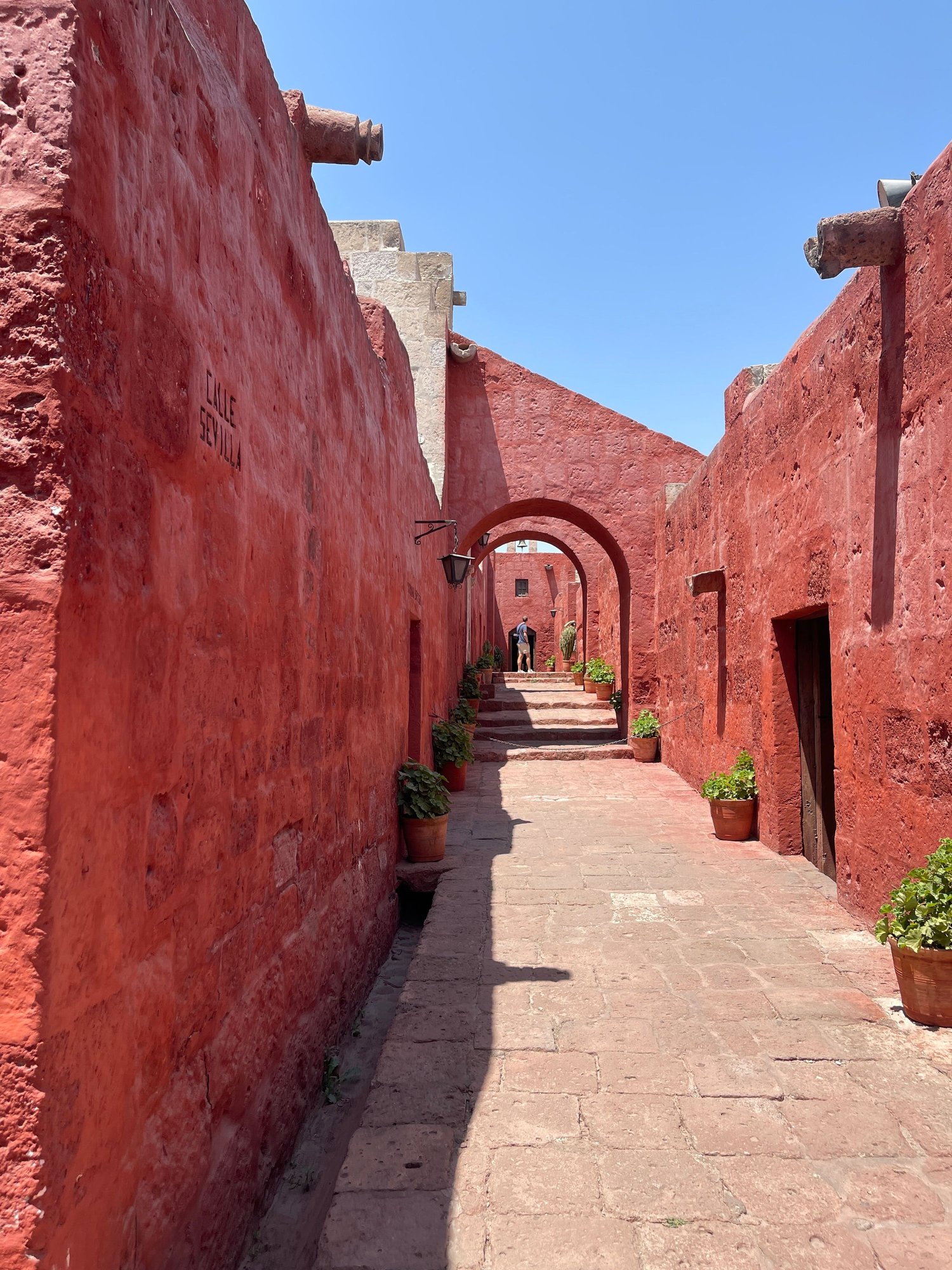
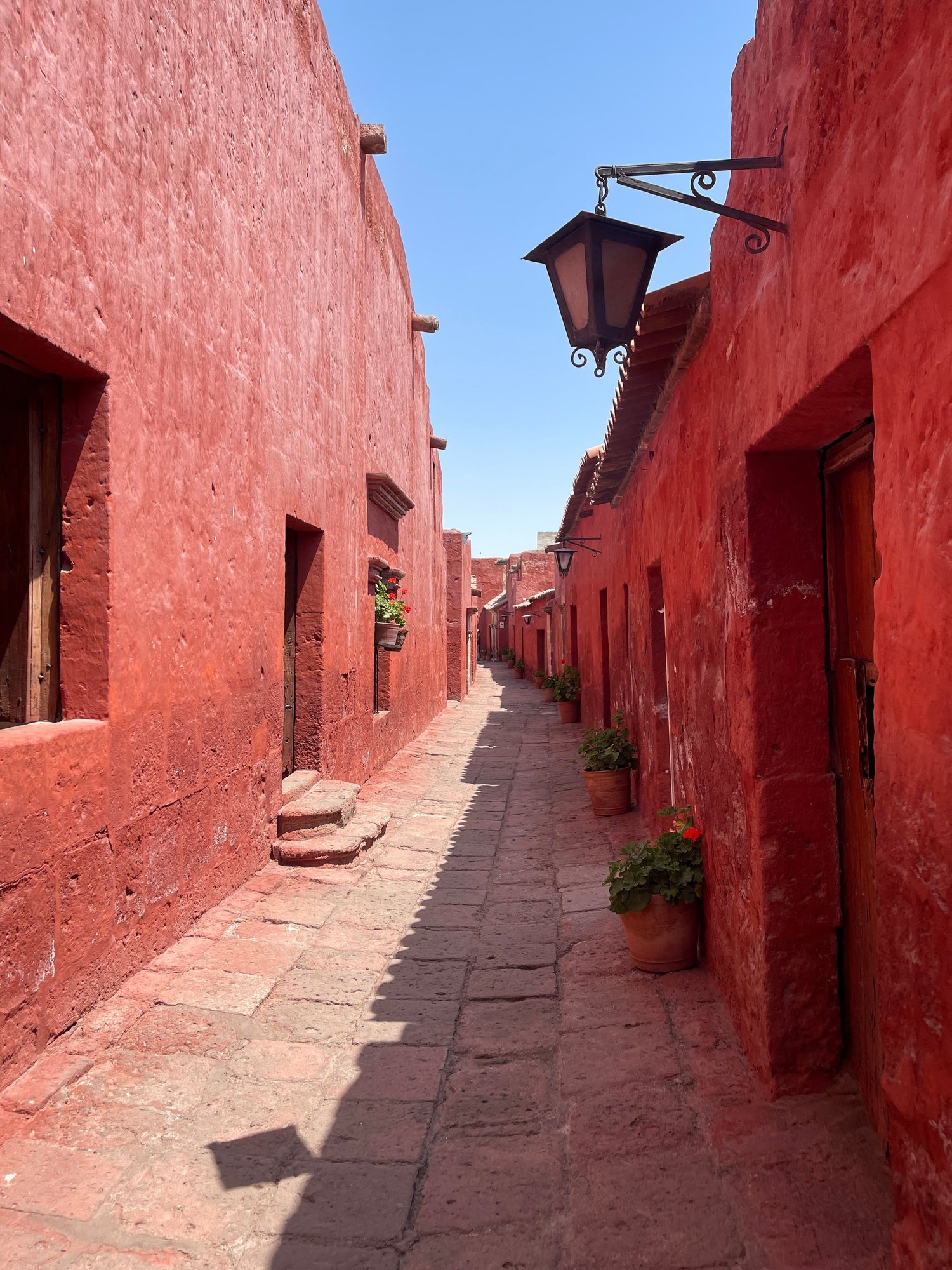
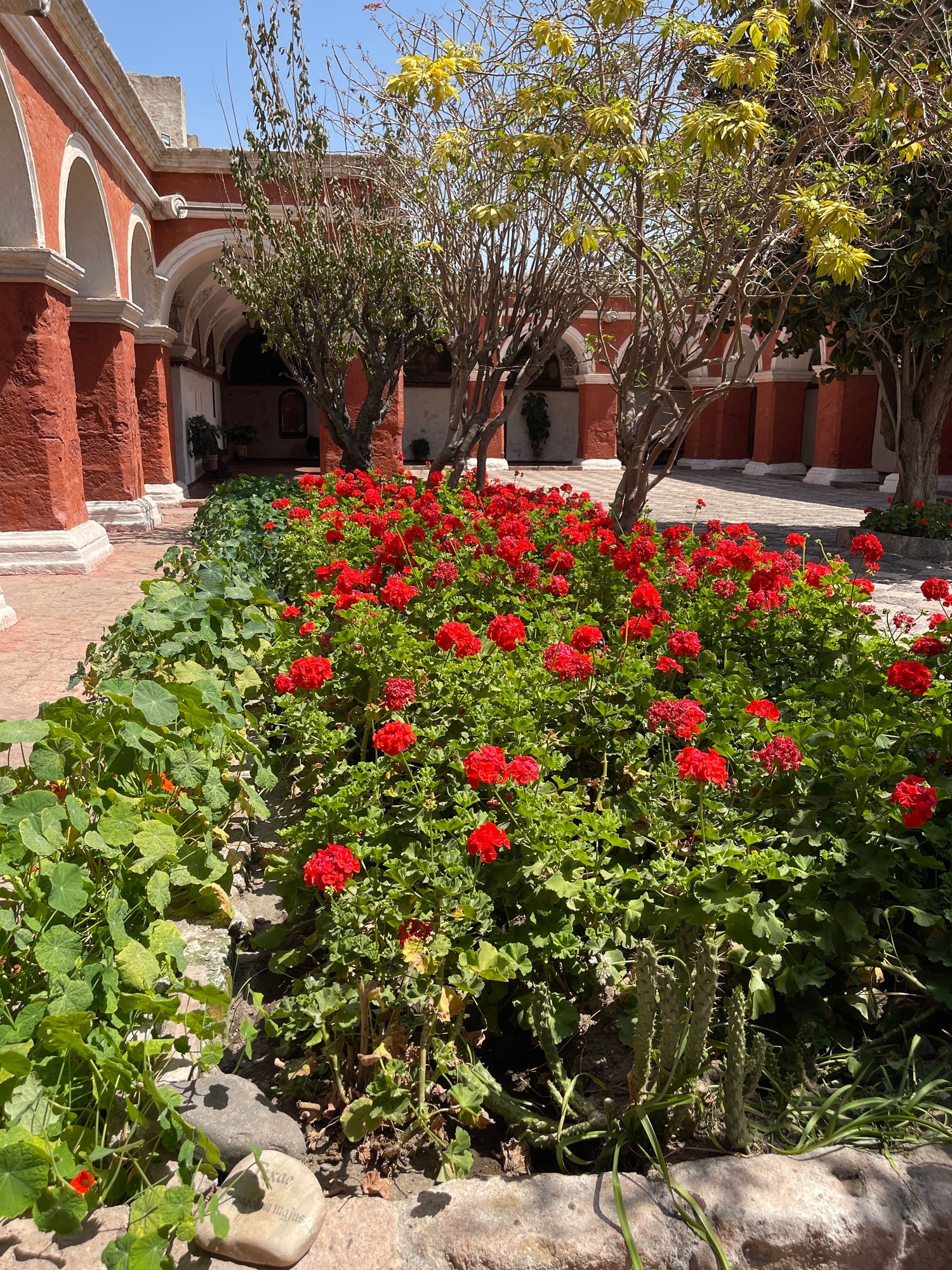
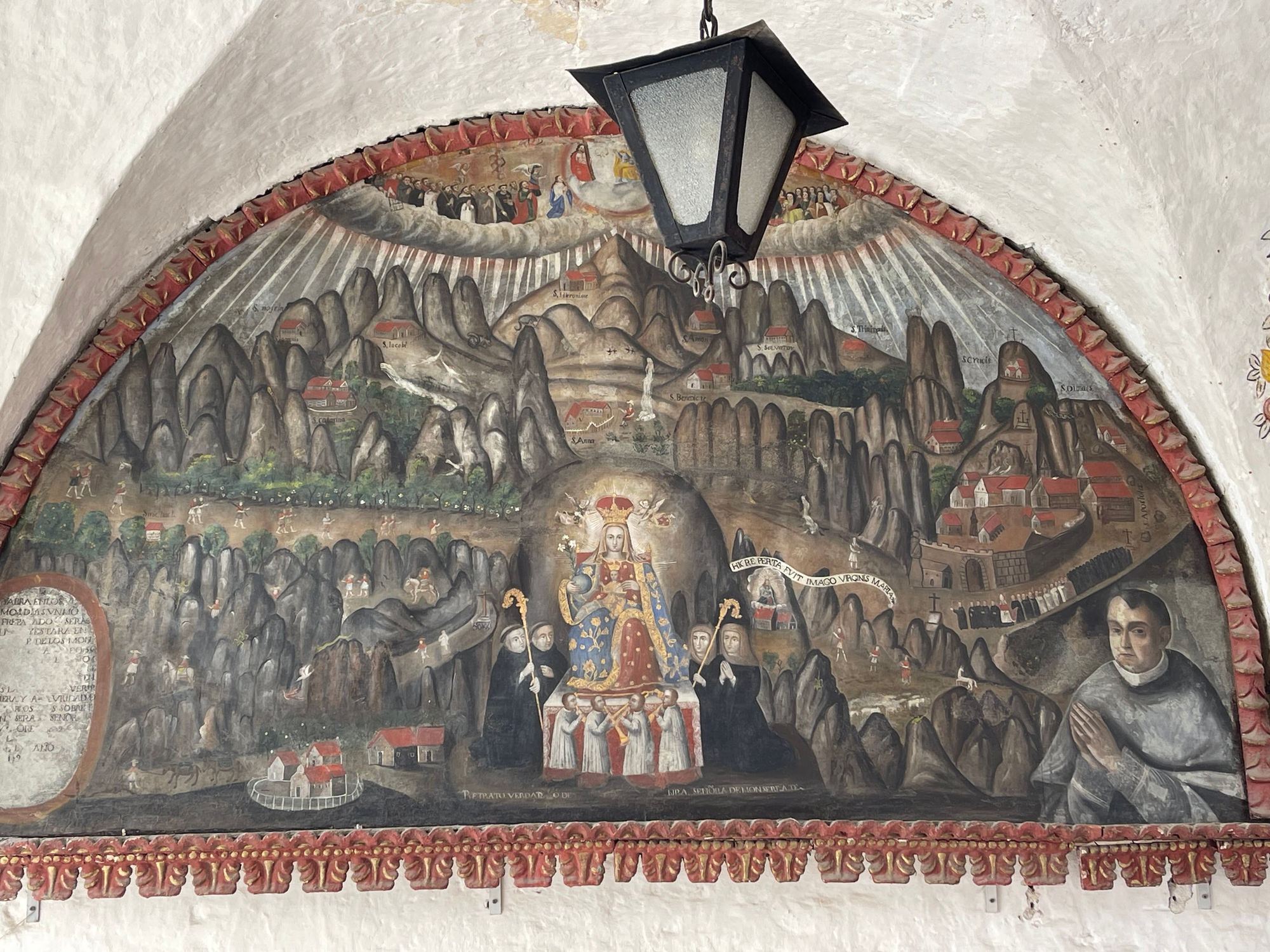
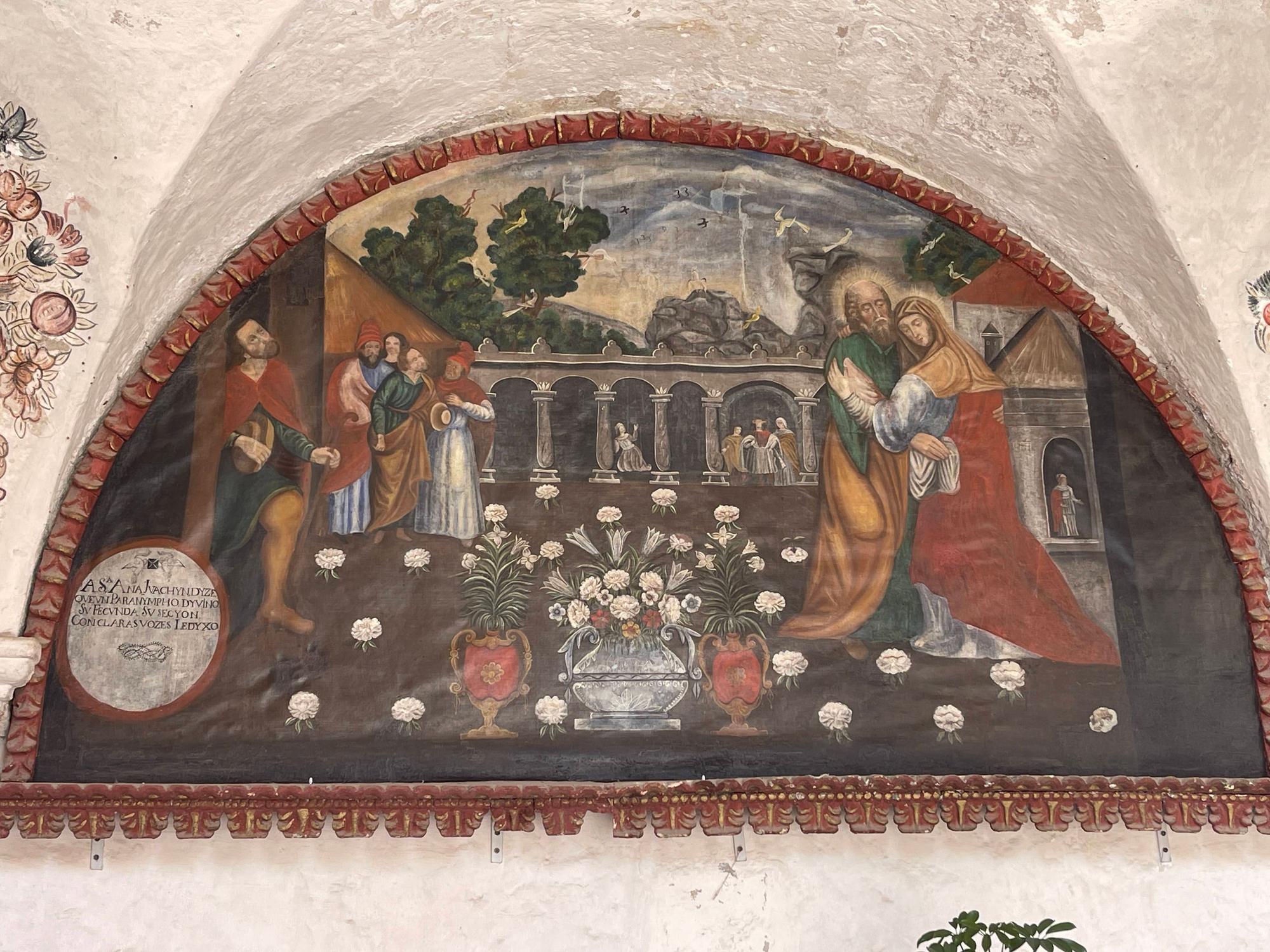
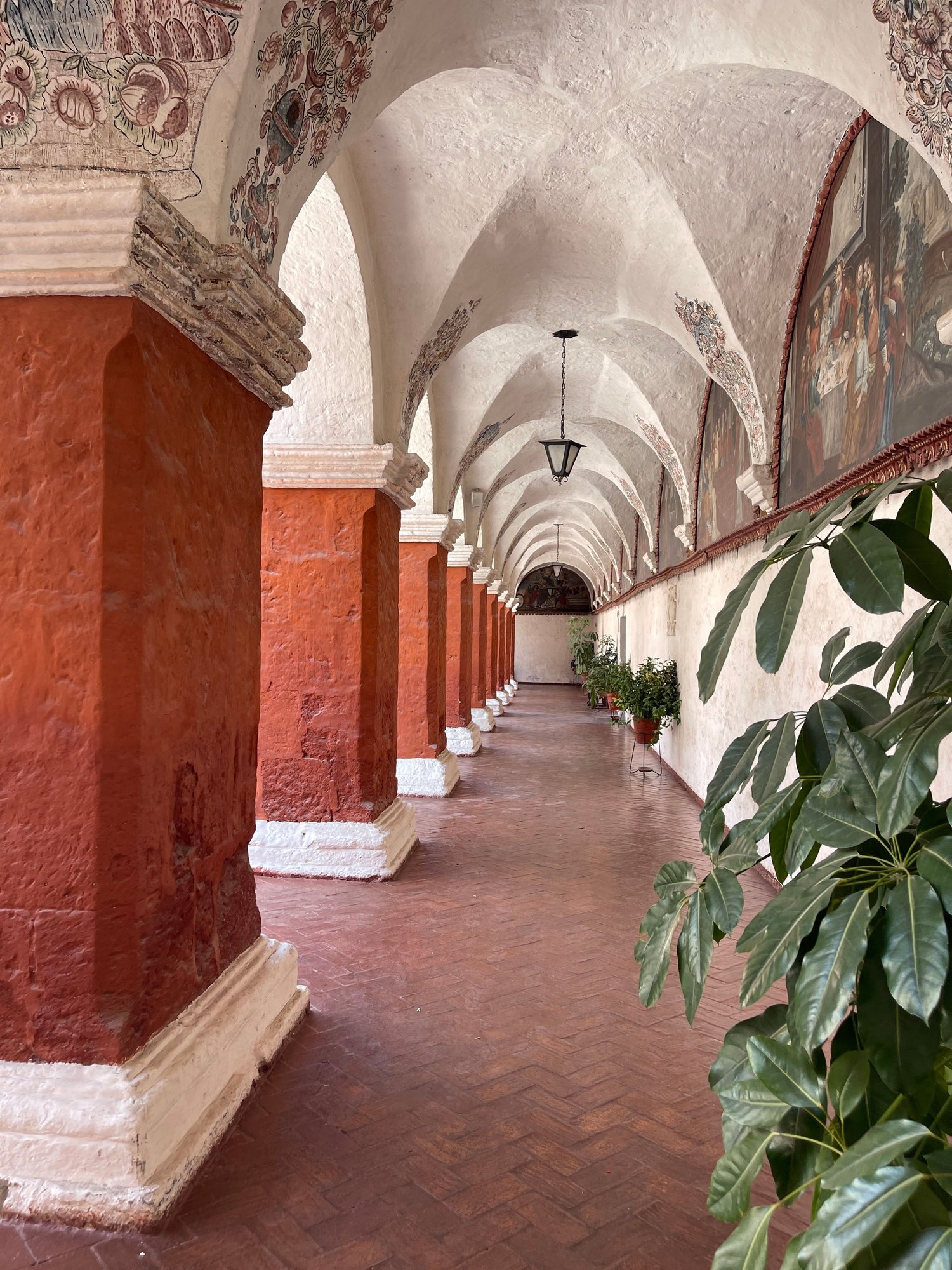
We took our leisure time walking around the monastery after the tour. We also went to the cafe for tasty snacks. It has a beautiful outdoor courtyard and we just sat there soaking in the beauty around us. It was really a special moment when you just relax and soaking in the atmosphere.
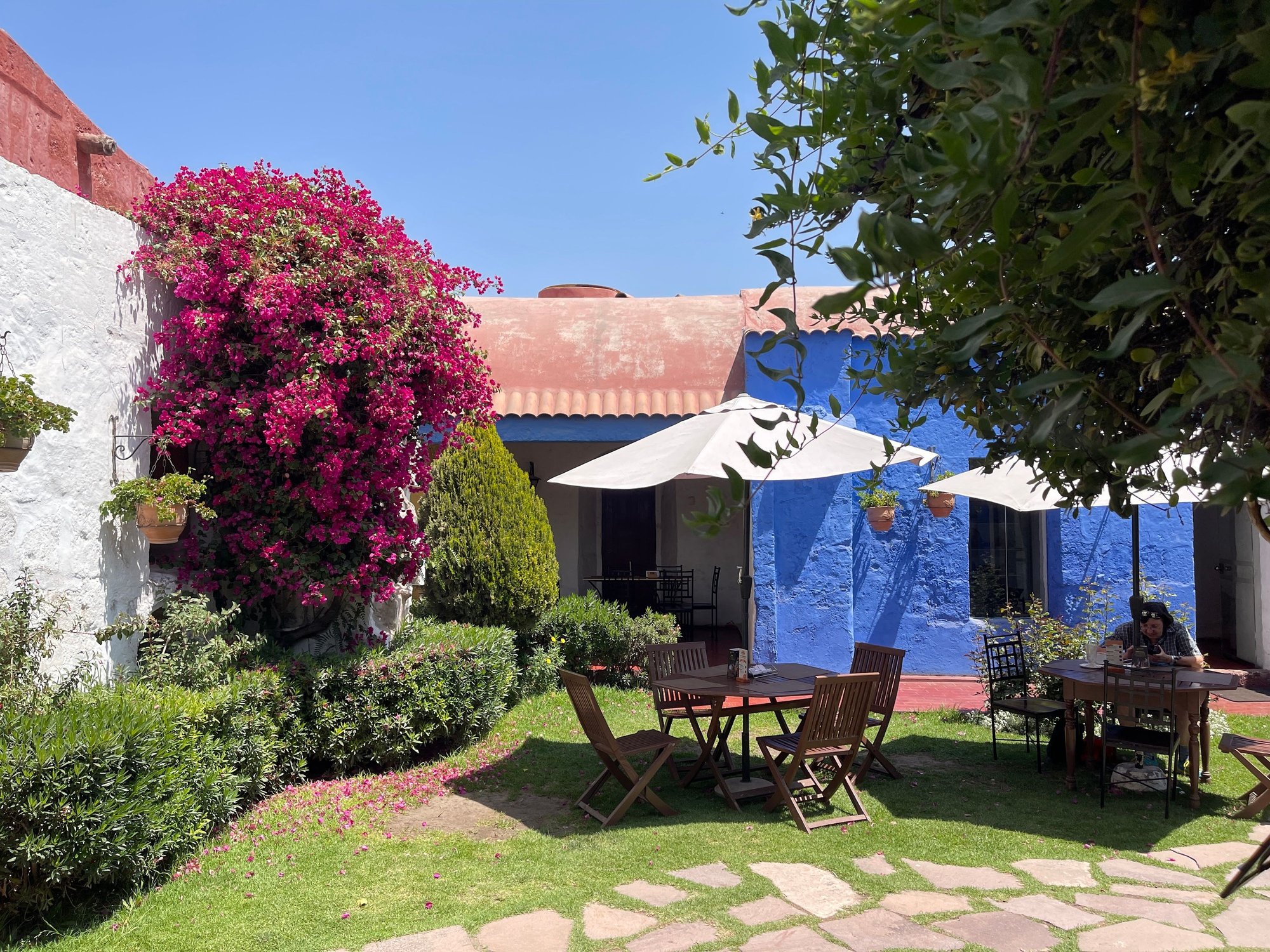
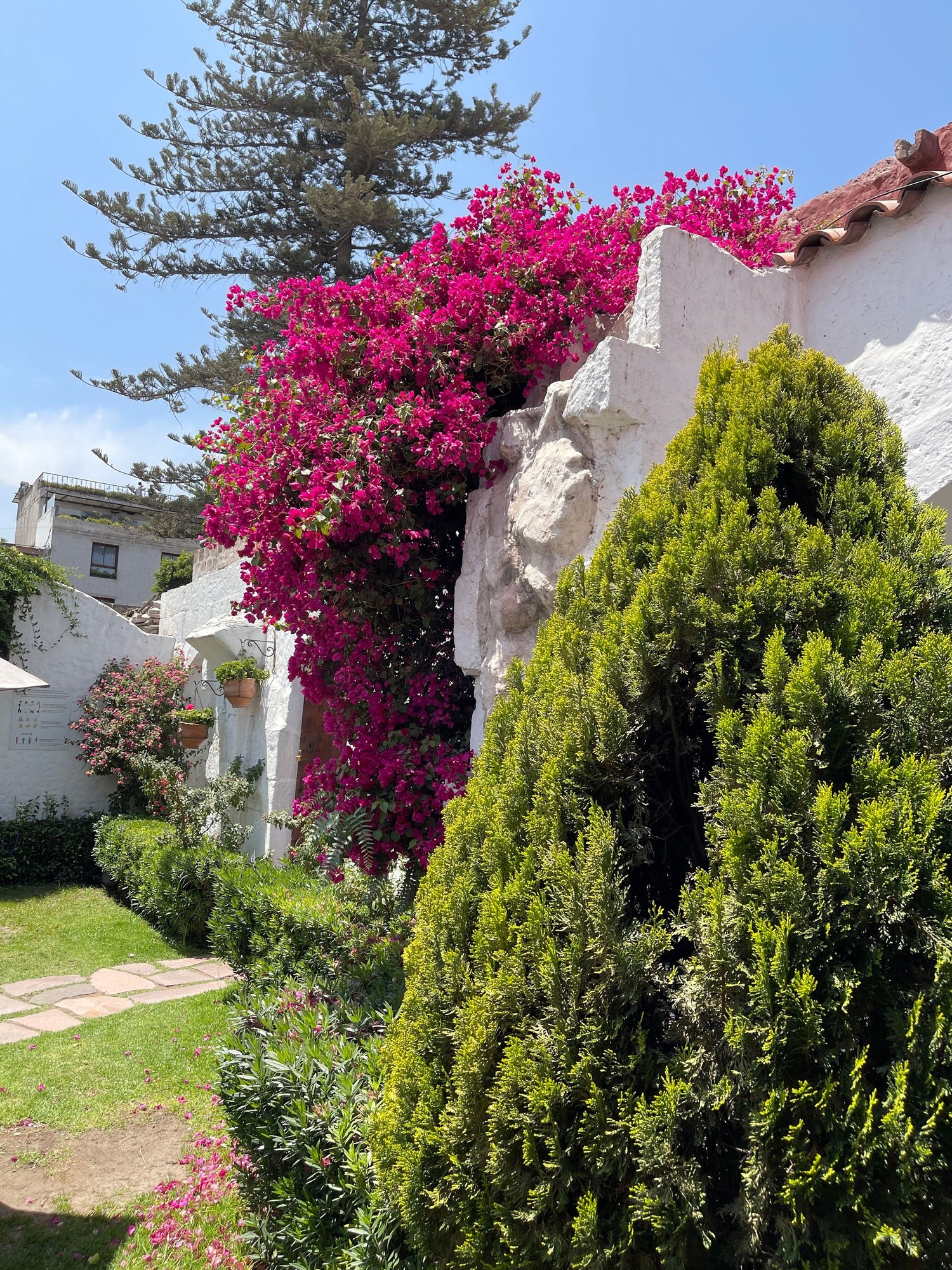
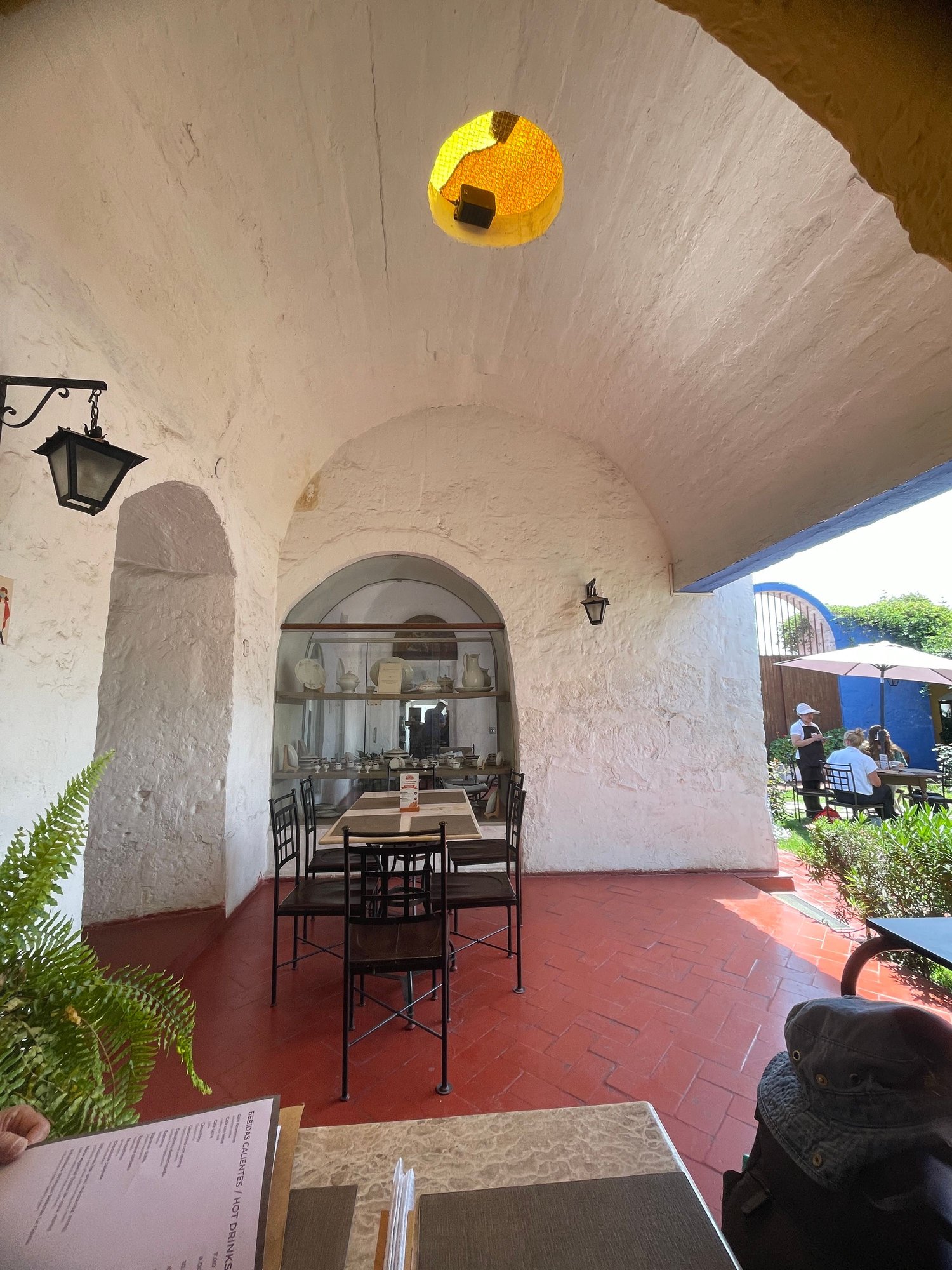
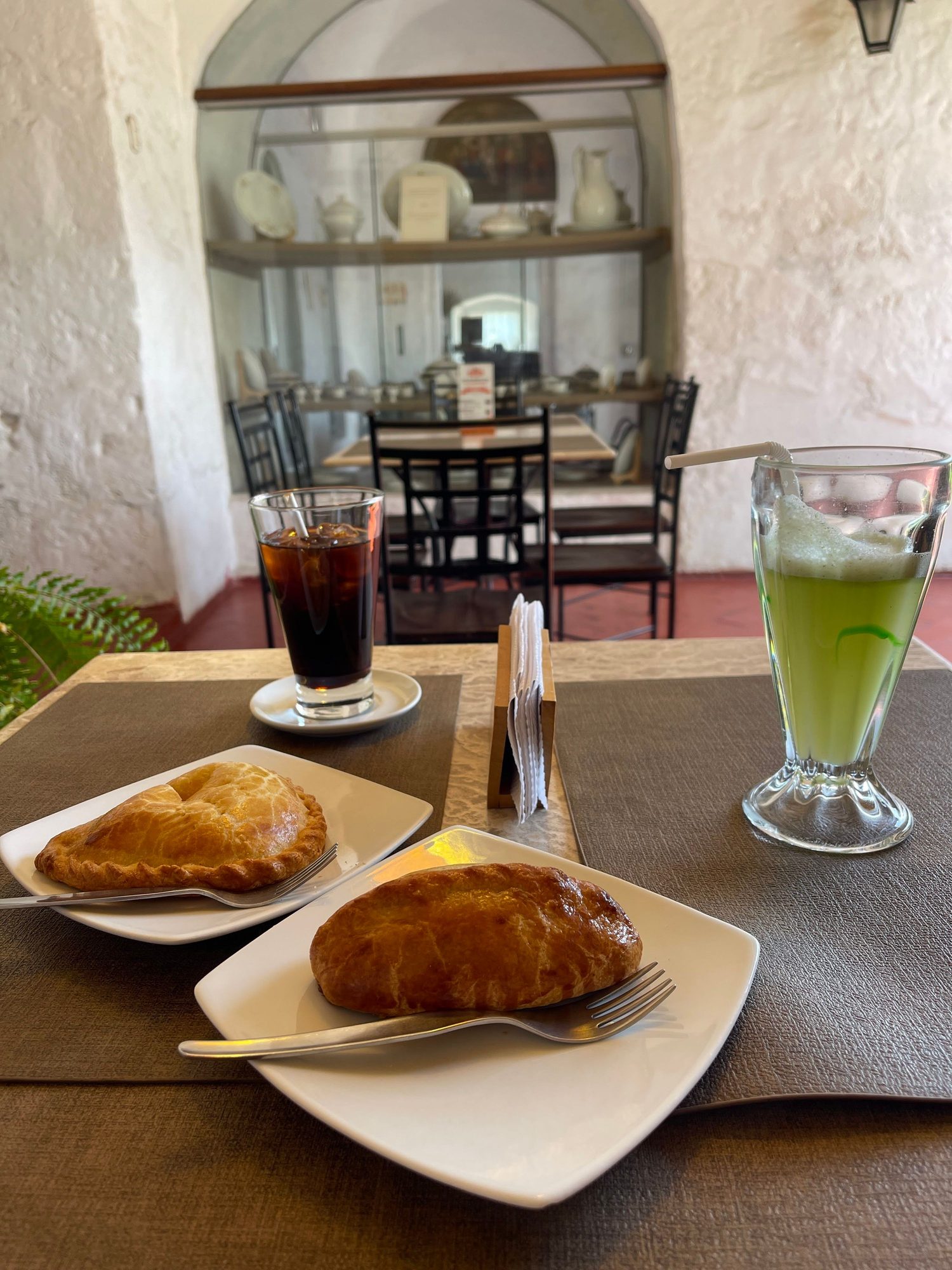
I just do not have enough words to depict the beauty and peace inside this monastery. The nuns would never want to get out of this monastery! It is definitely a small city inside the White city.
Santa Catalina Monastery, is part of the UNESCO World Heritage Site, built in the Historical Centre of the City of Arequipa.
Story about the monastery:
“Nuns lived as novices for four years, during which time their wealthy families were expected to pay a dowry of 100 gold coins per year. At the end of the four years they could choose between taking their vows and entering into religious service, or leaving the convent – the latter would most likely have brought shame upon their family.”
During our stay in the hotel, we had a very nice housekeeping lady who kept showing us the best of the hotel as well as the city. Her English was limited, but she would keep telling me the name of the beautiful Santa Catalina Monastery. We took her suggestions and visited the monastery on our final day stay in Arequipa. We enjoyed the history as well as the tour of the monastery. It is something that one should never miss when he or she is in Arequipa.
The following history texts are taken from its website:
“Santa Catalina Monastery Arequipa is one of Peru’s most beautiful colonial sites, a walled “city within a city” built from white and red volcanic stone in the historic center of the White City.
Behind its thick walls you’ll find narrow streets, painted courtyards and cloisters that still house a small community of Dominican nuns today.
Santa Catalina Monastery was founded in 1579 after Viceroy Francisco de Toledo granted permission to create a convent for Dominican nuns in the growing city of Arequipa.
A wealthy widow, Doña María de Guzmán, donated her fortune and entered the new monastery herself, becoming the first resident and prioress. Life here was reserved for women from Spanish upper-class families who paid large dowries to enter and then lived under strict cloistered rules.
Over the centuries, earthquakes damaged various parts of the complex, but each time it was rebuilt using the same volcanic stone that defines Arequipa’s architecture. The monastery remained completely closed to the public until the 20th century, when most of the complex opened as a museum while a small community of nuns stayed in a restricted area.
Today, Santa Catalina is both an active religious site and a living museum that shows how these women lived, prayed and worked over 400 years.”
We visited the monastery when it opened in the morning at 9am. We chose to pay for an English guide for our tour. We learned about the history of the monastery as well as the stories of the nuns. We thoroughly enjoyed the tour and the premises of the monastery are exceptional pretty and calm.
Let the following pictures hopefully enough to depict its beauty.
Arch door entry to the monastery
Stoves in the kitchen
We took our leisure time walking around the monastery after the tour. We also went to the cafe for tasty snacks. It has a beautiful outdoor courtyard and we just sat there soaking in the beauty around us. It was really a special moment when you just relax and soaking in the atmosphere.
I just do not have enough words to depict the beauty and peace inside this monastery. The nuns would never want to get out of this monastery! It is definitely a small city inside the White city.
After the visit to the Santa Catalina Monastery, we went around the UNESCO historic center, exploring every corner of the buildings on the street of Santa Catalina, looking for all the hidden treasures of Arequipa. The results were astonishing, rewarding and our moods were delightful and satisfying.
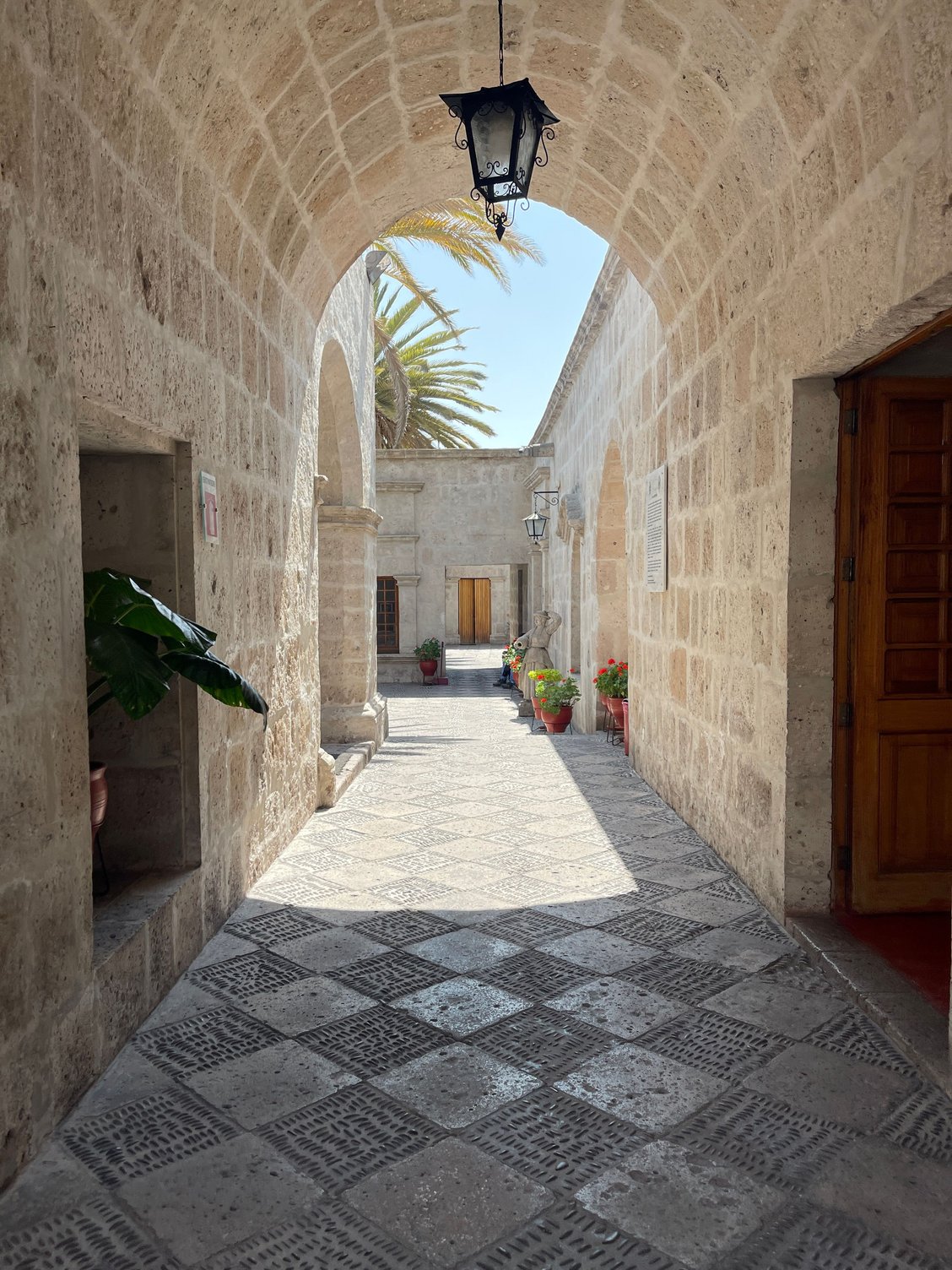
Beautiful entrance leading to the courtyard
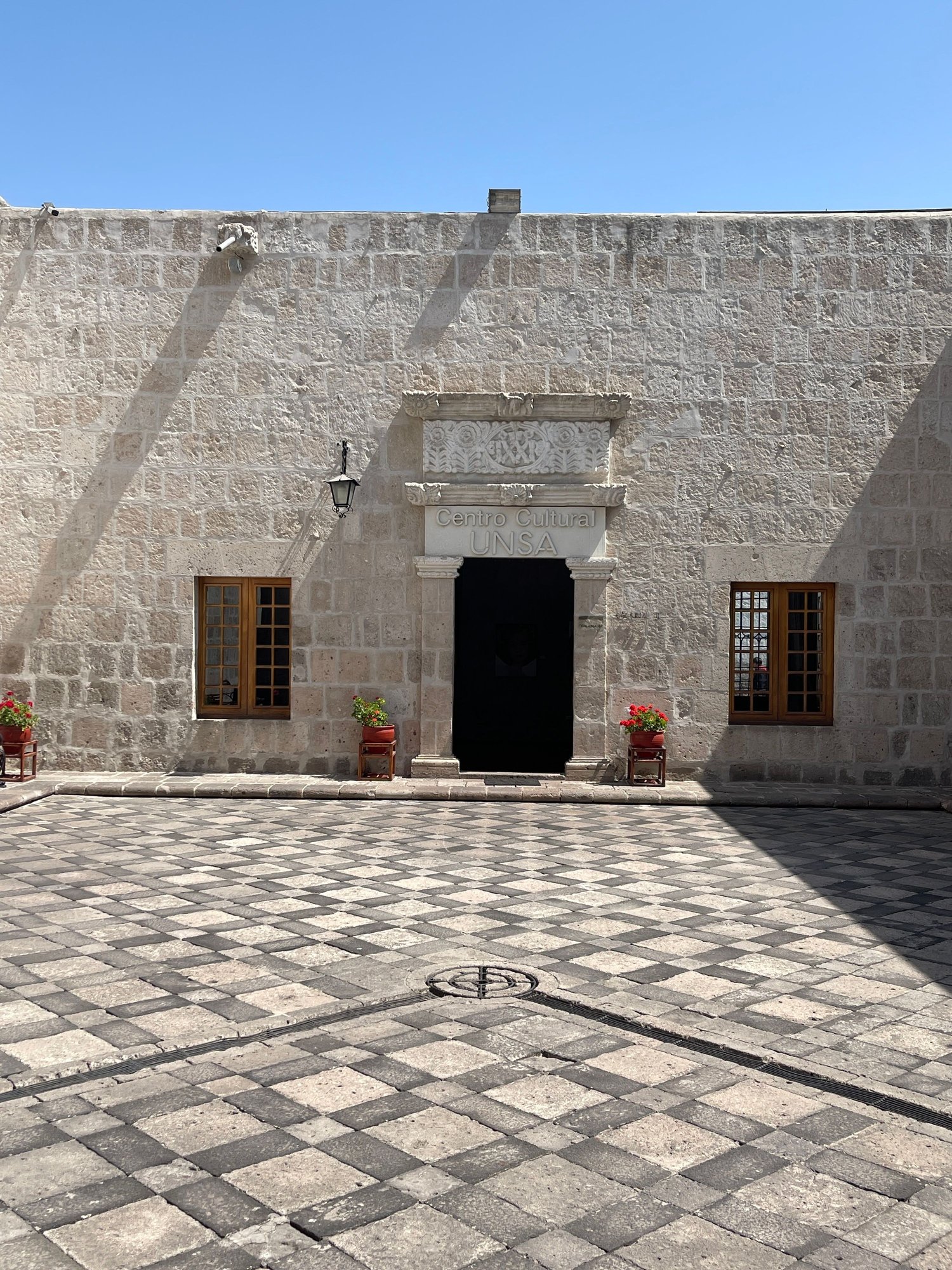
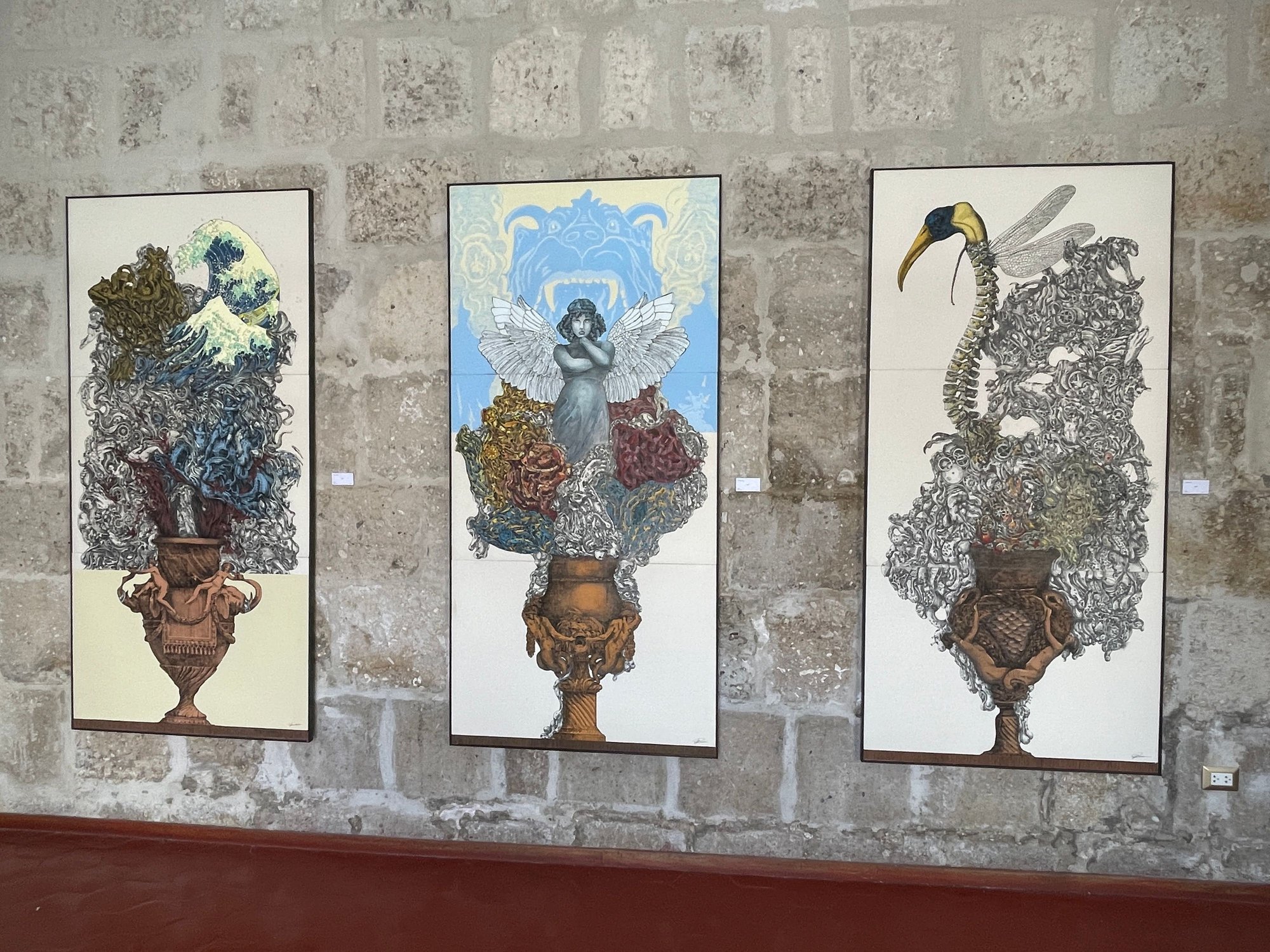
Beautiful art gallery
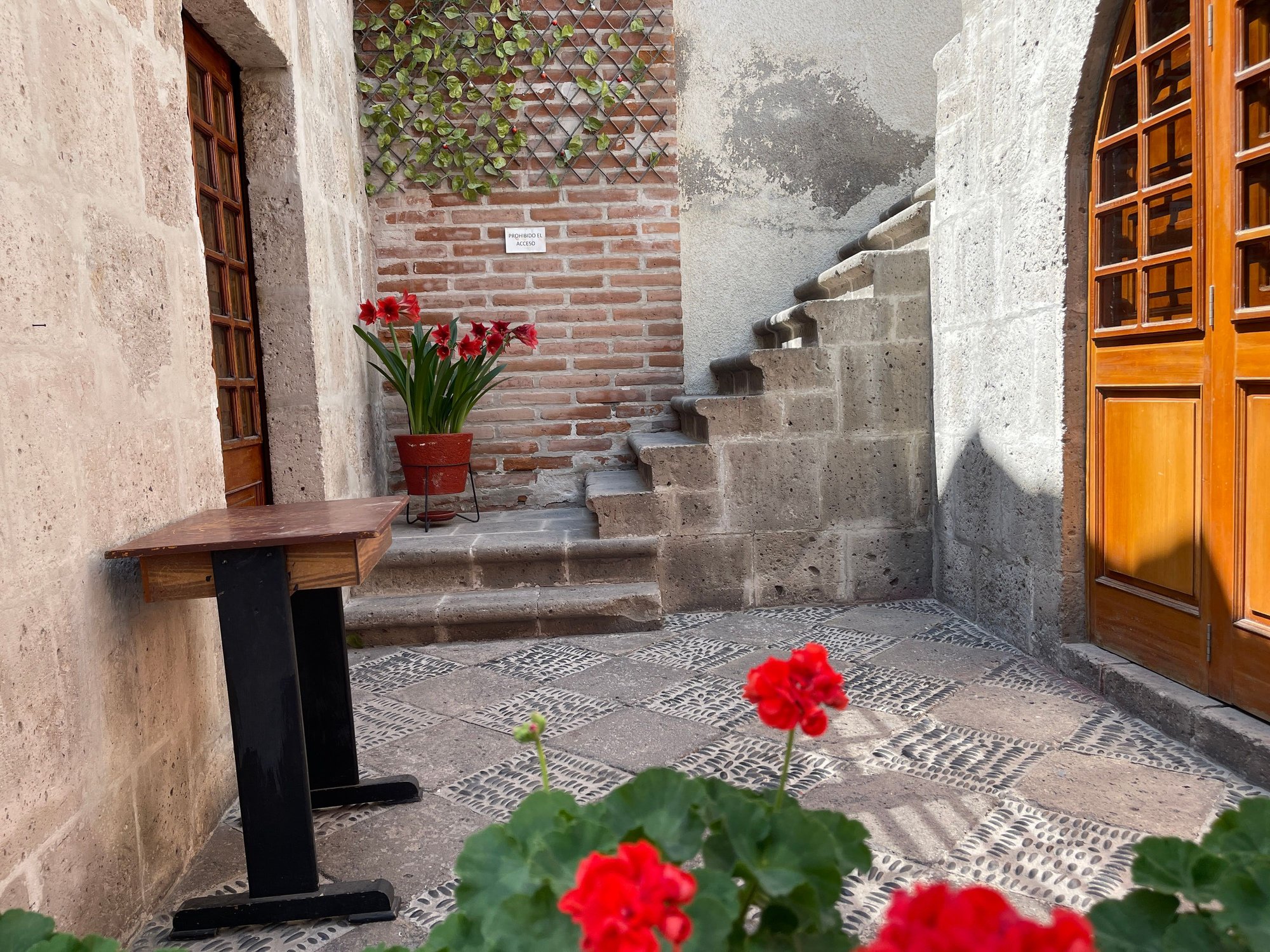
Another treasure corner
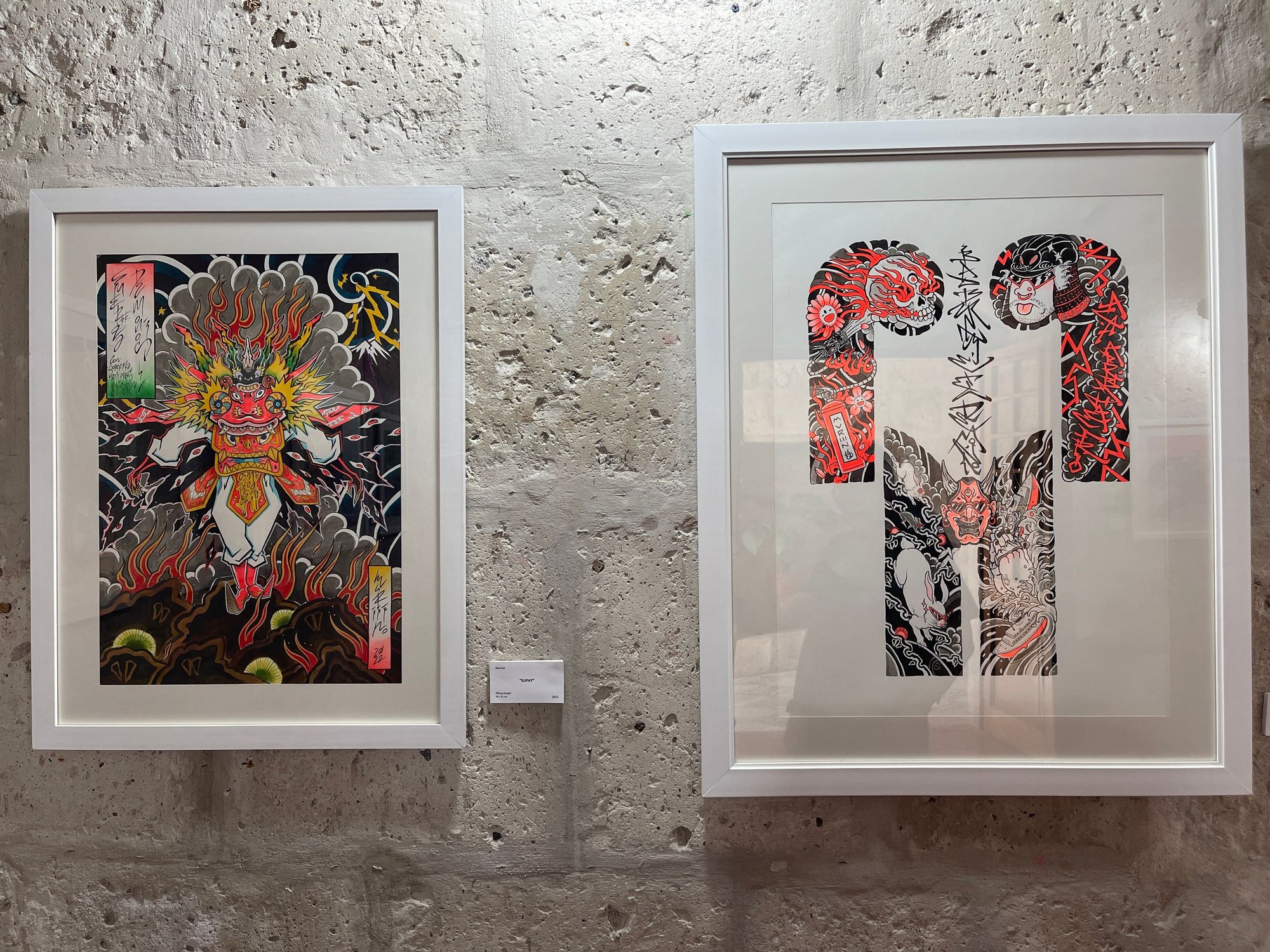
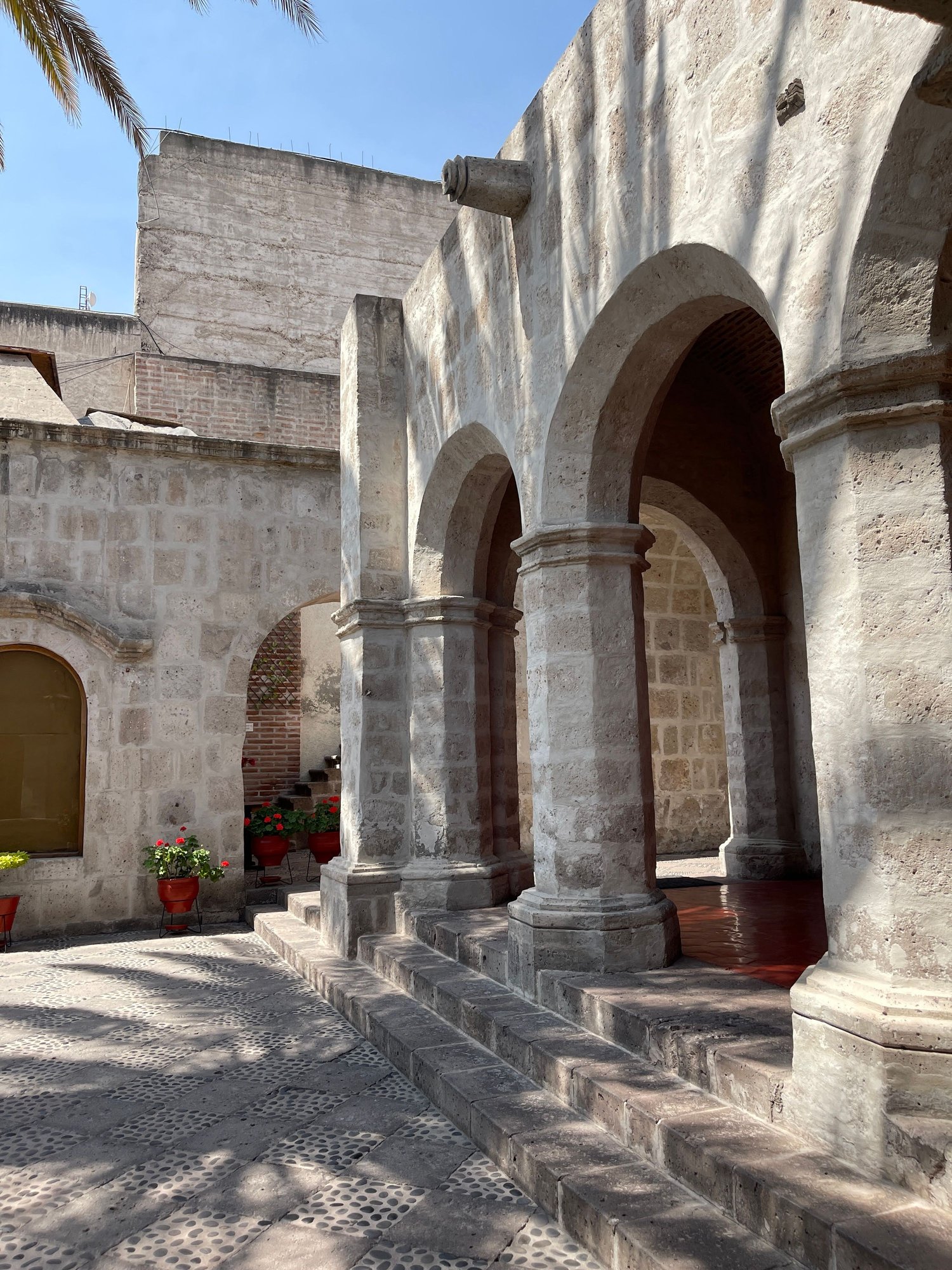
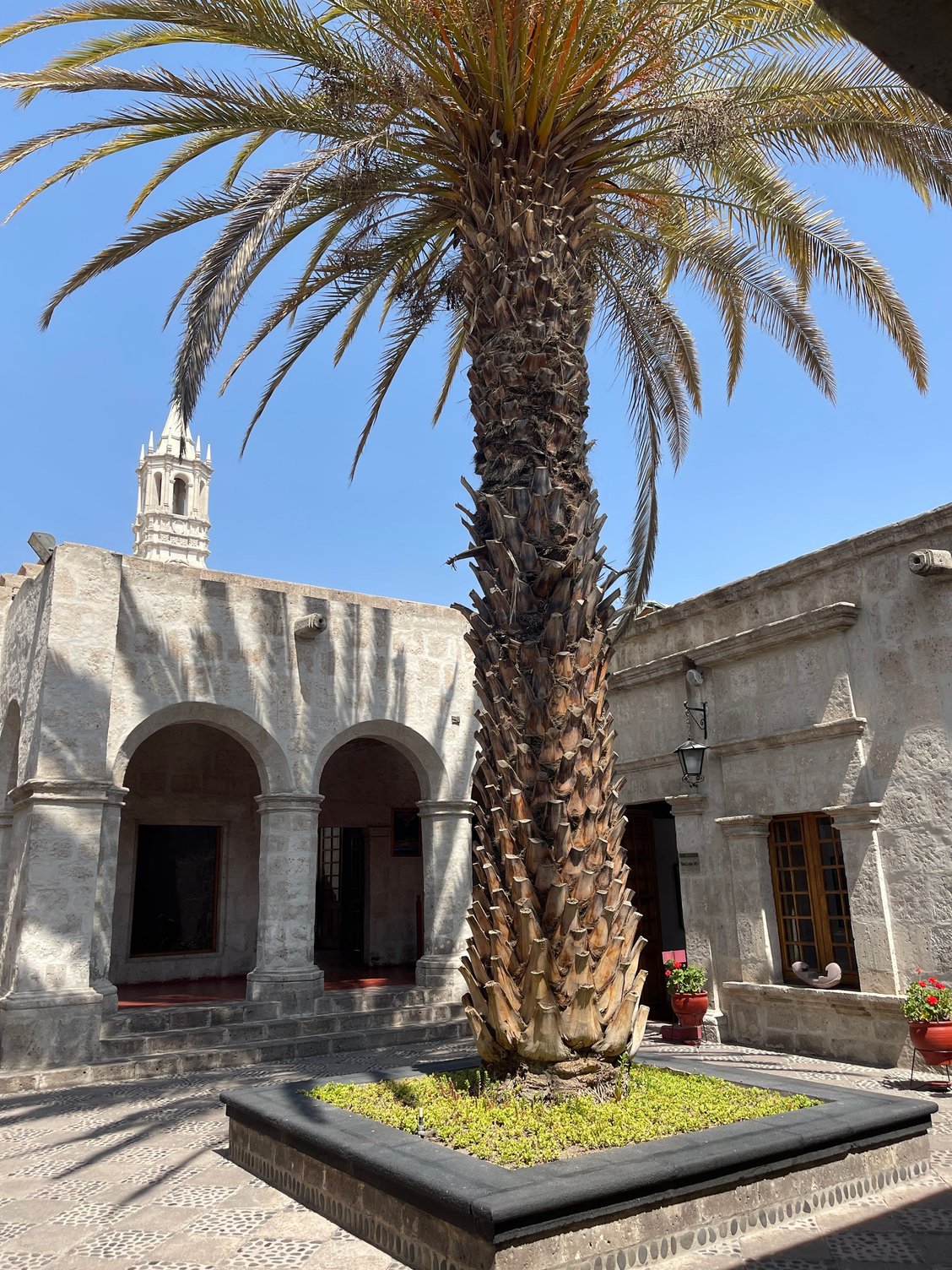
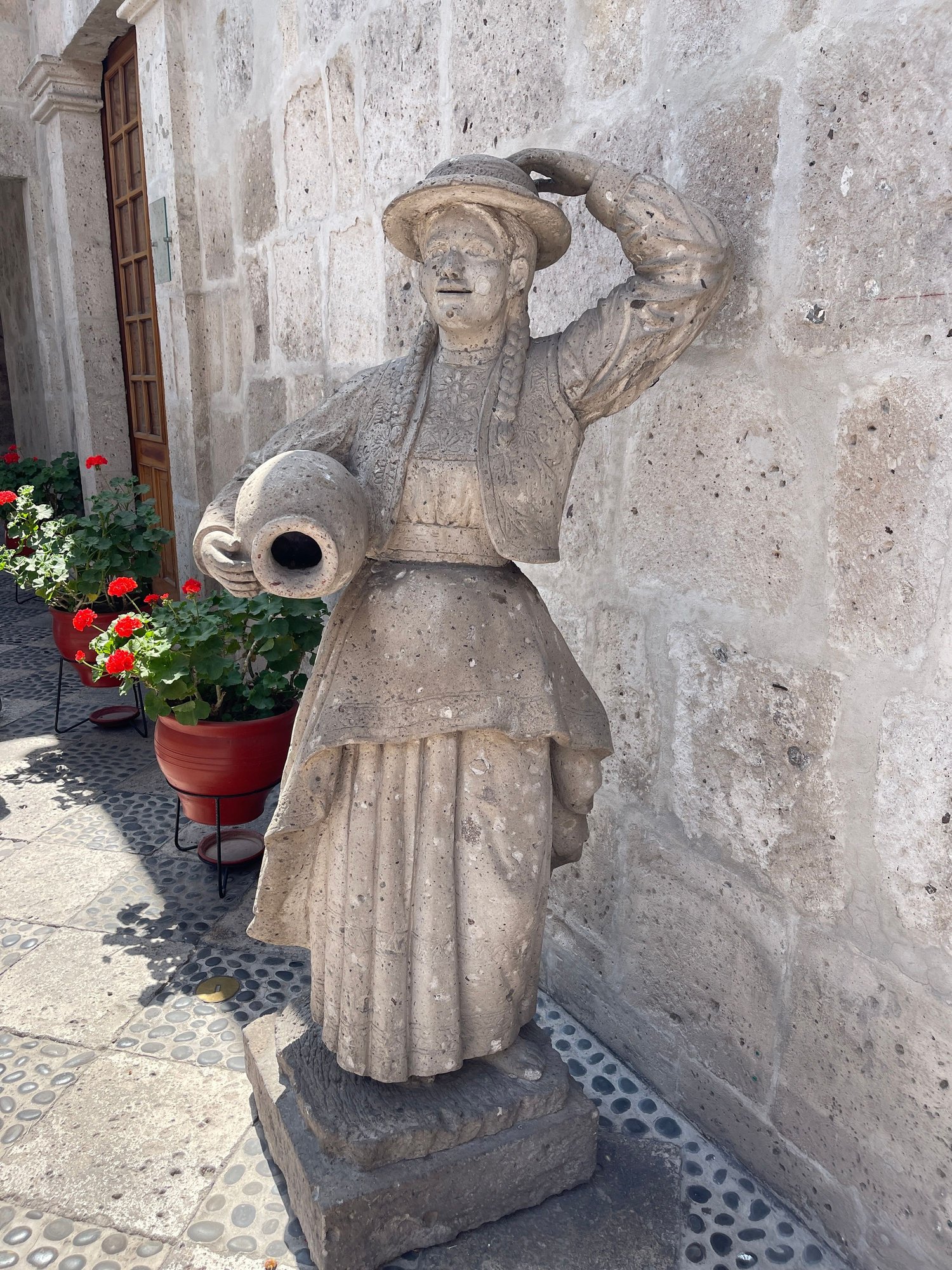
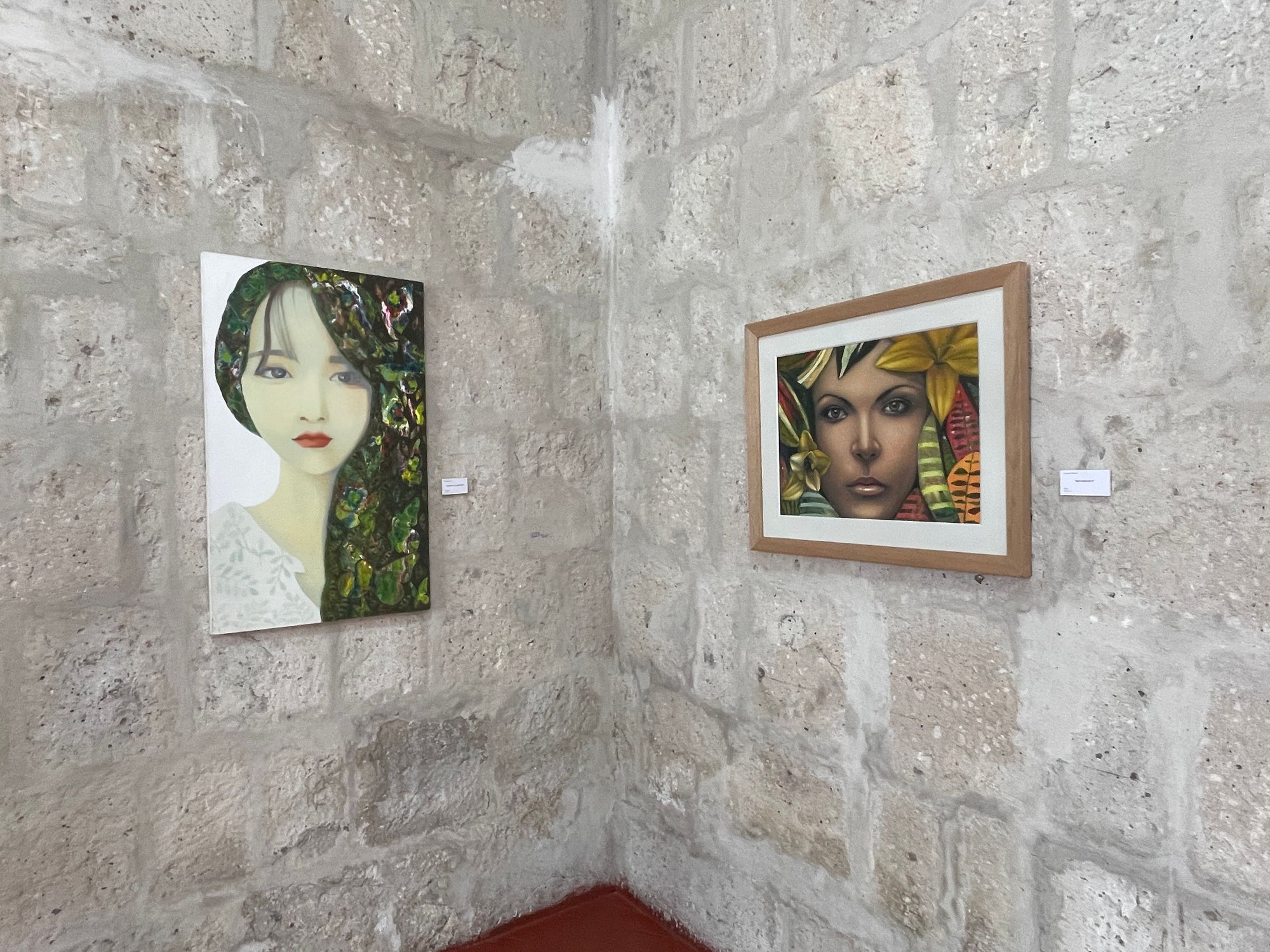
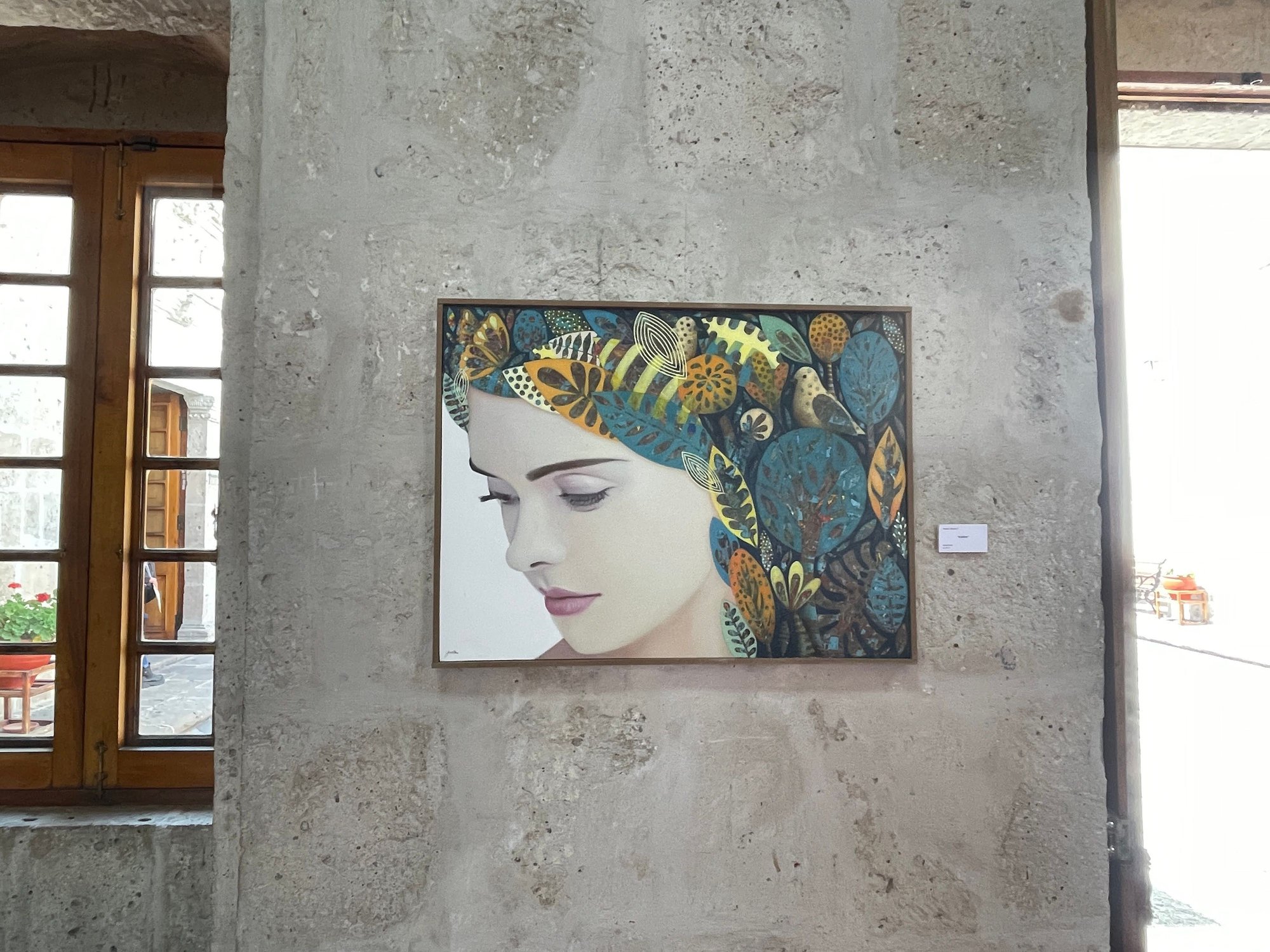
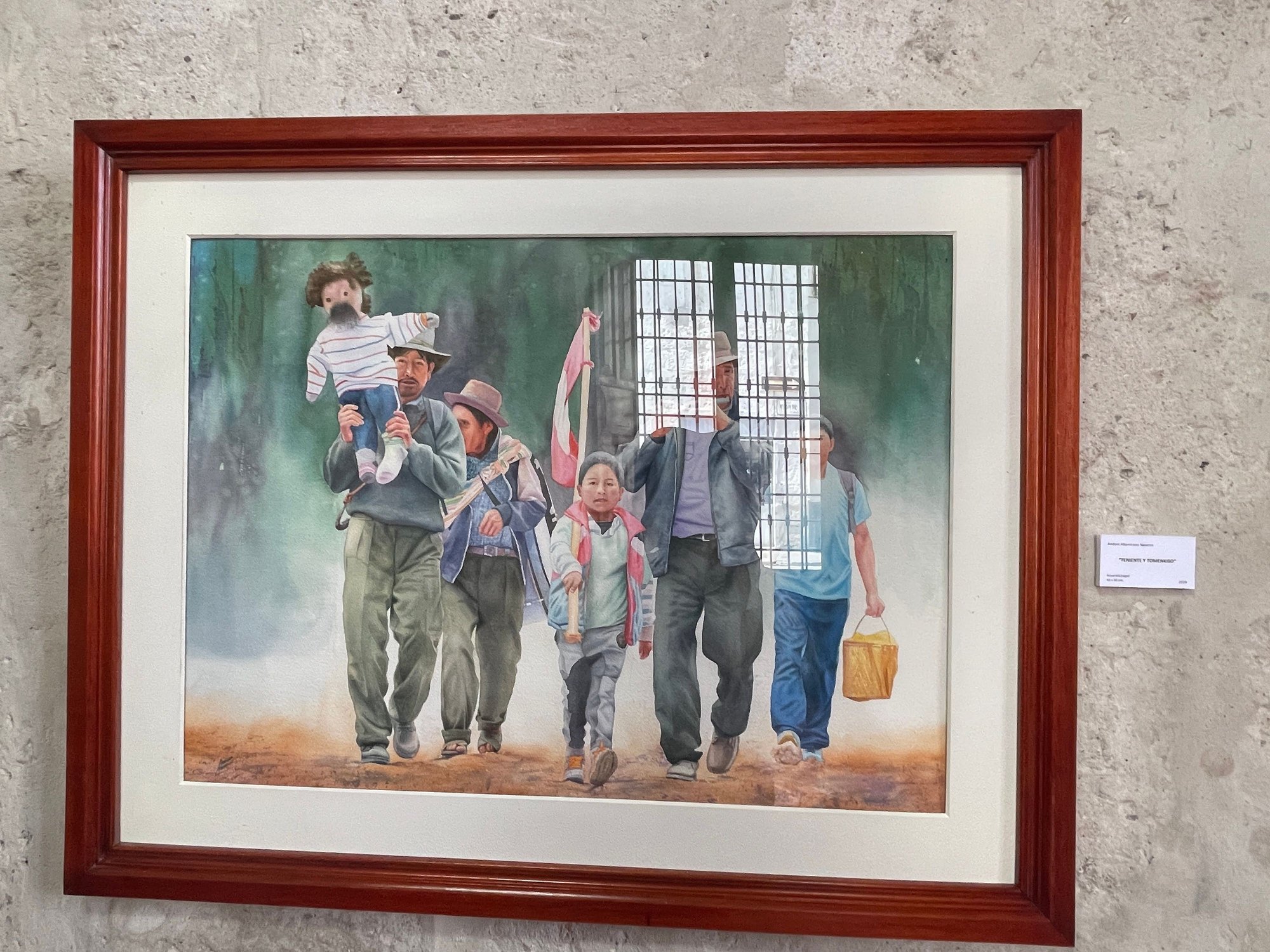
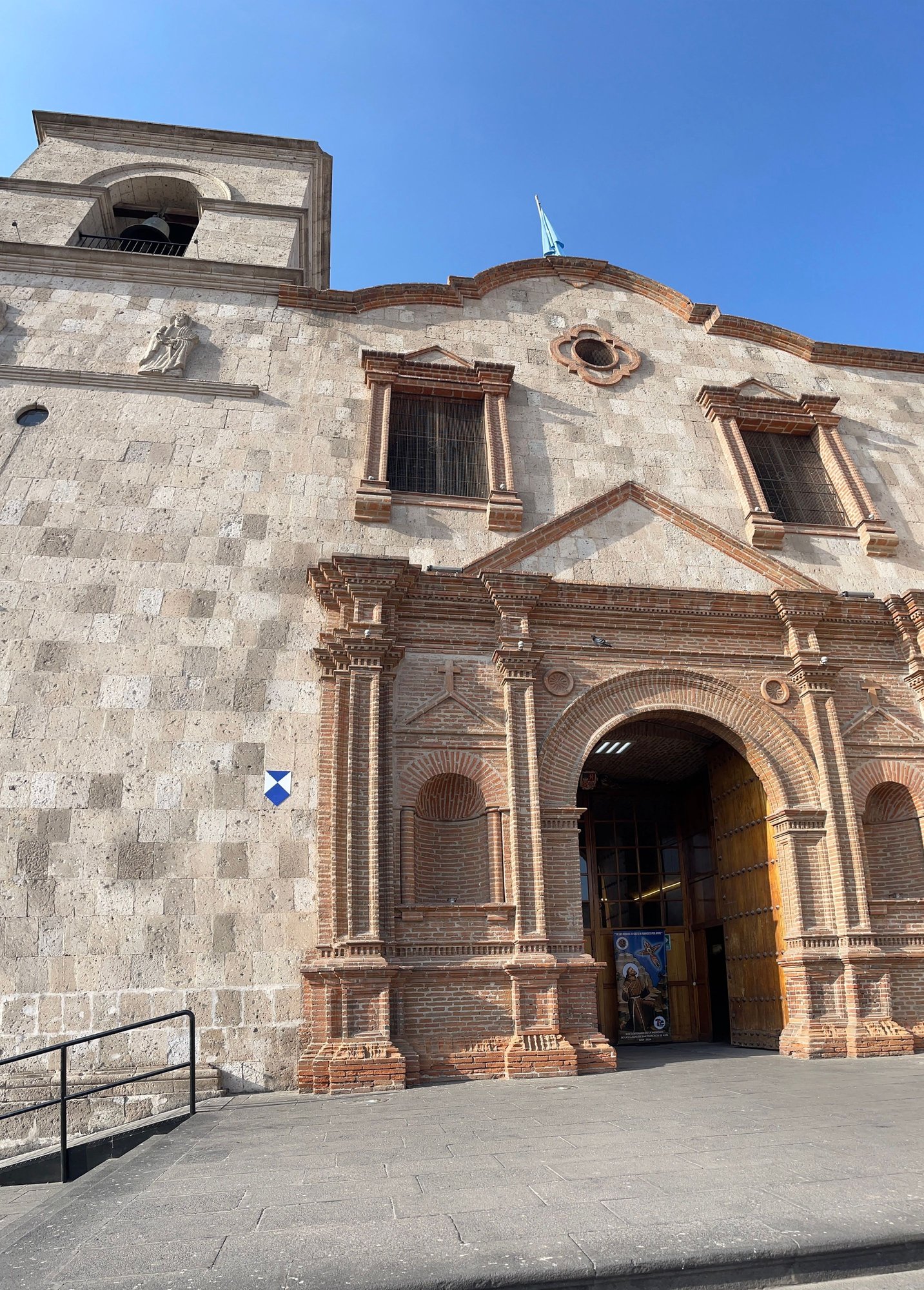
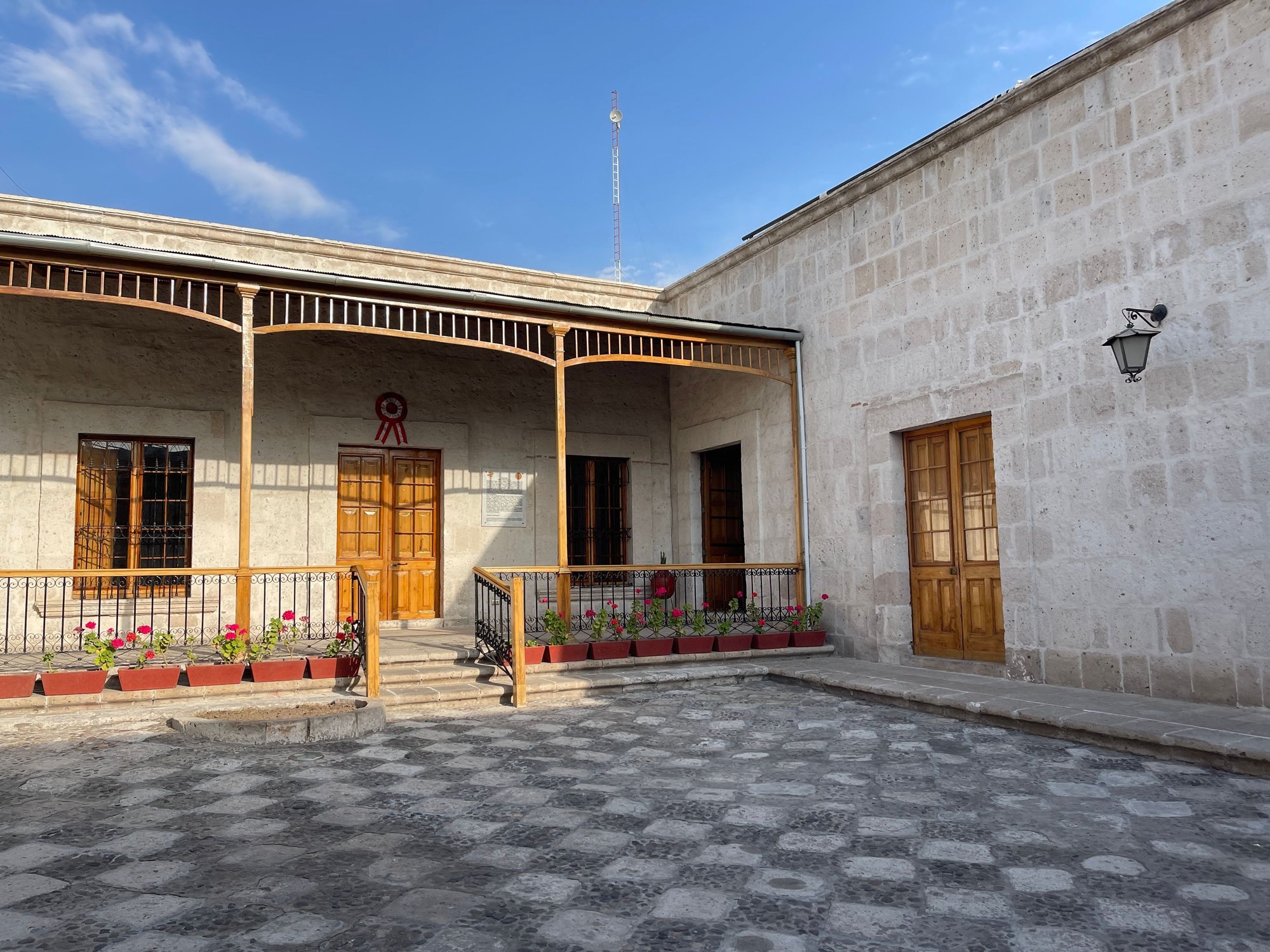
Another beautiful Spain style courtyard l
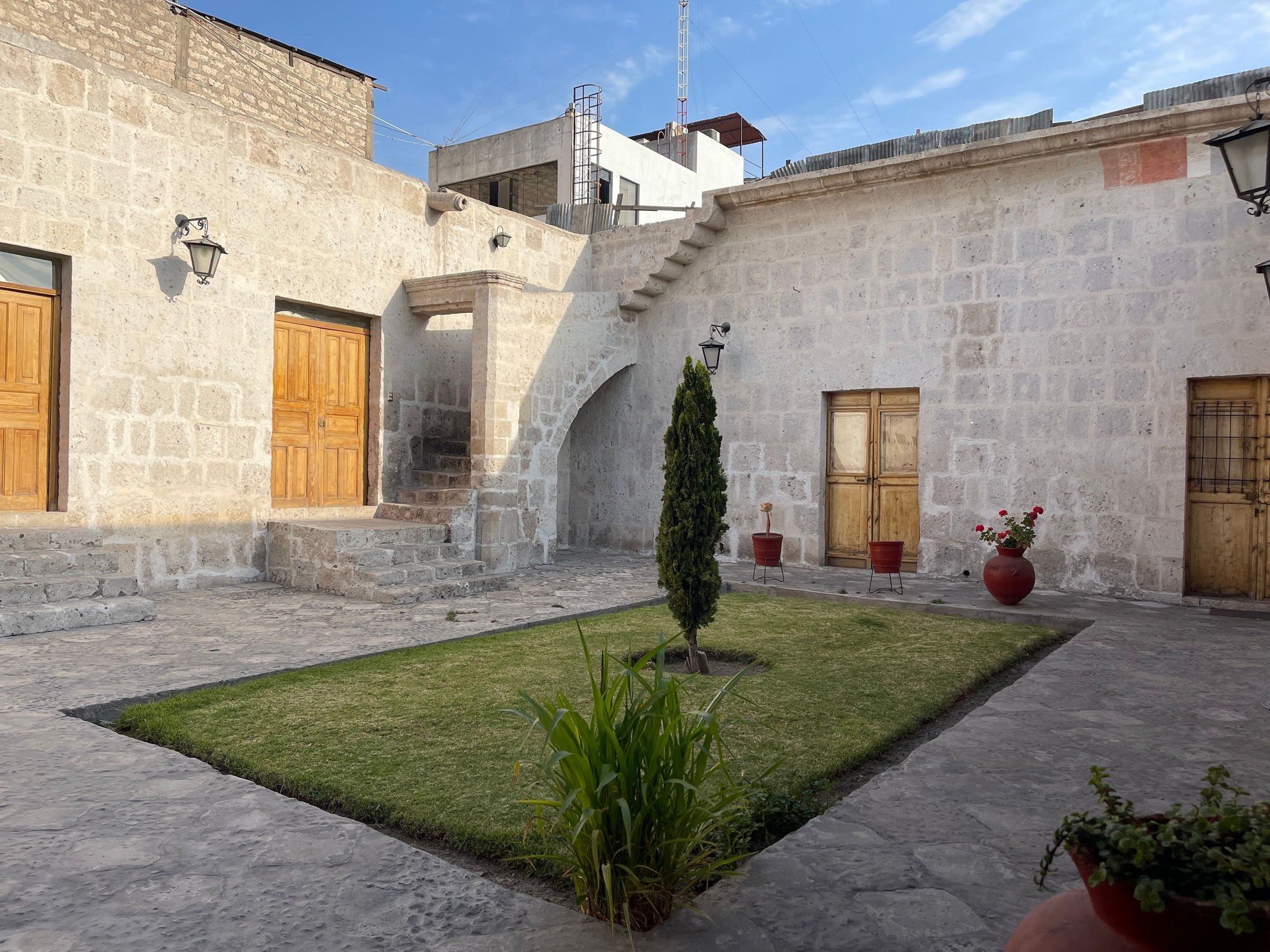
Love the courtyard
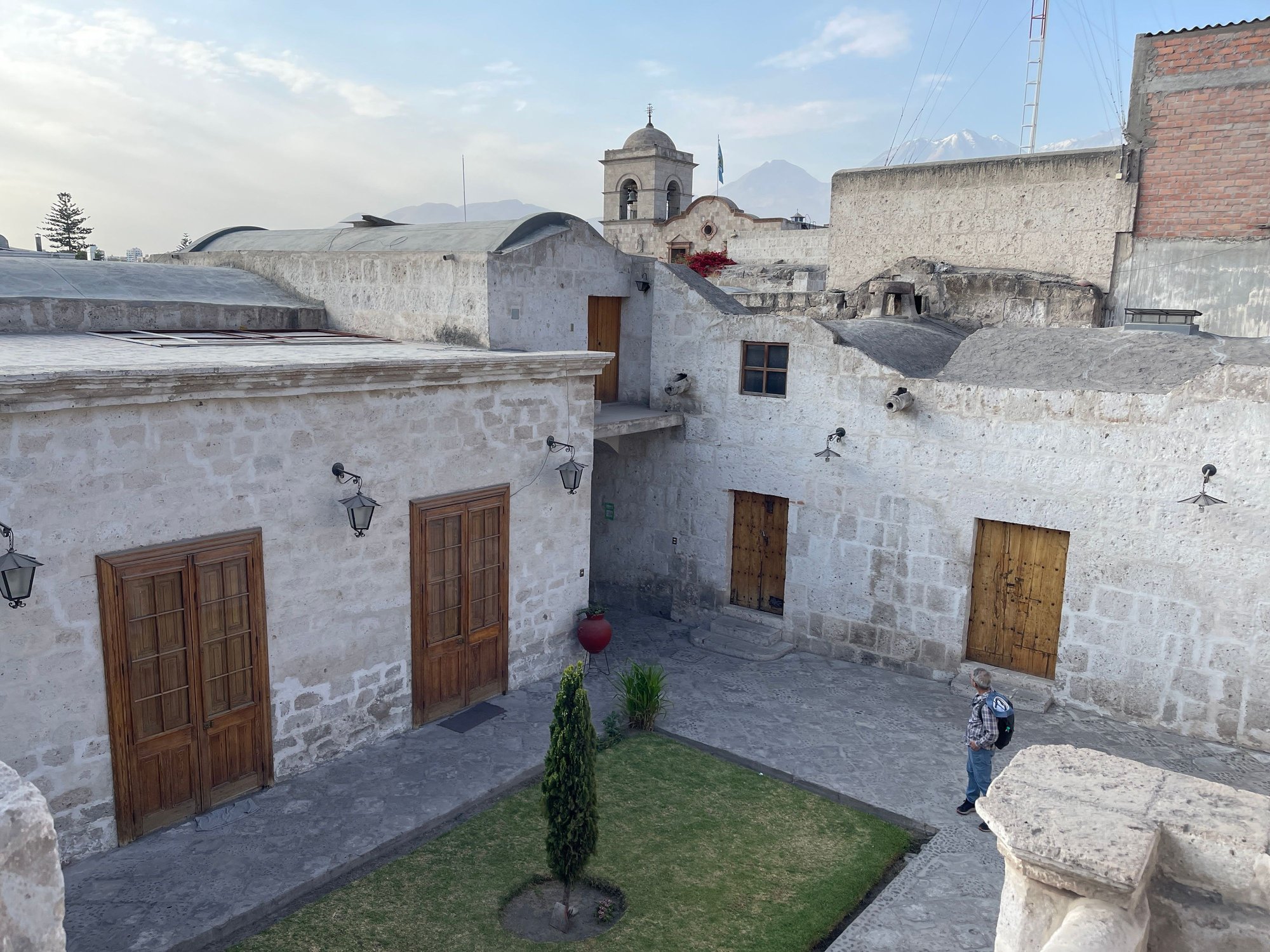
On top of the courtyard view
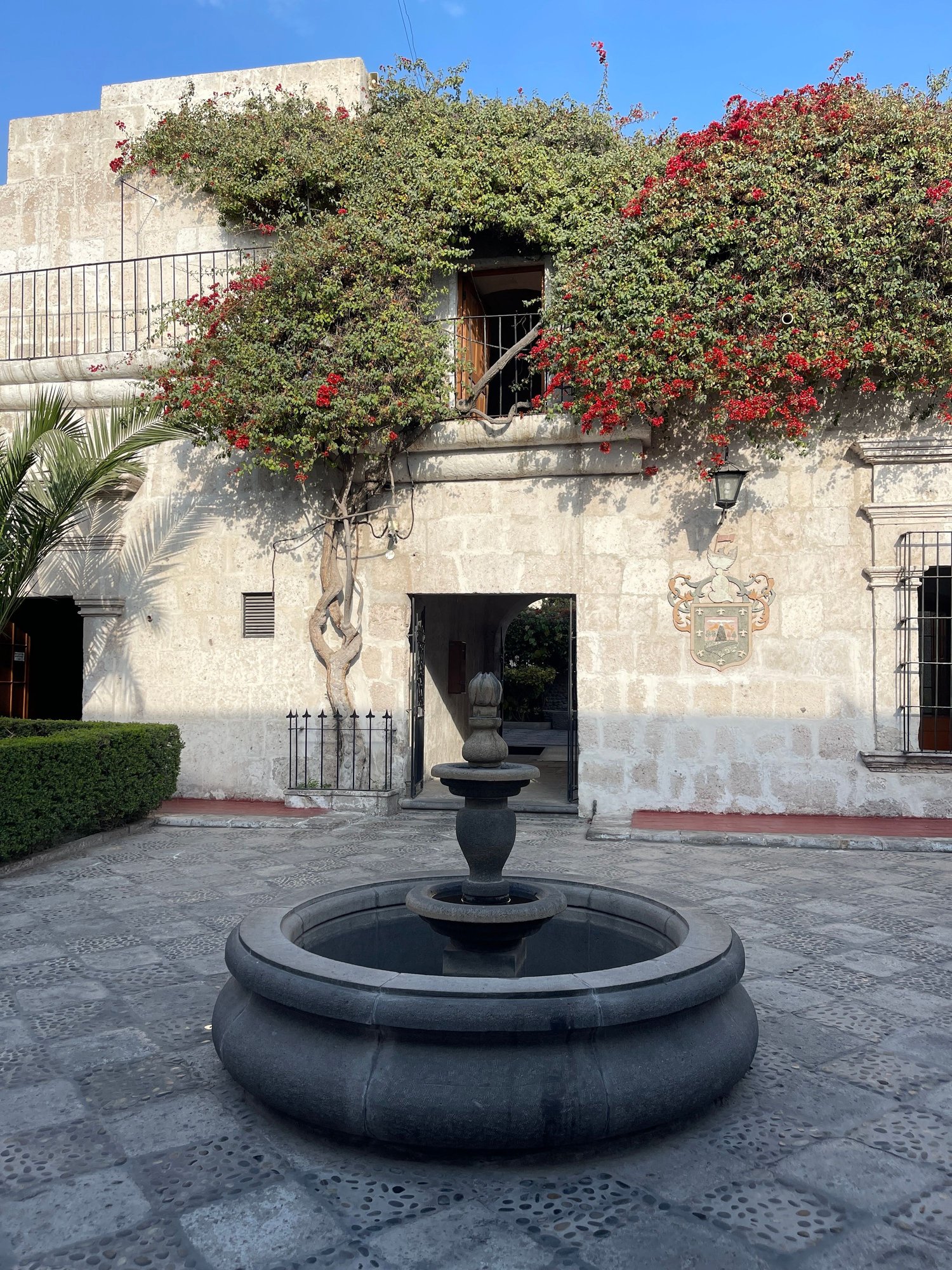
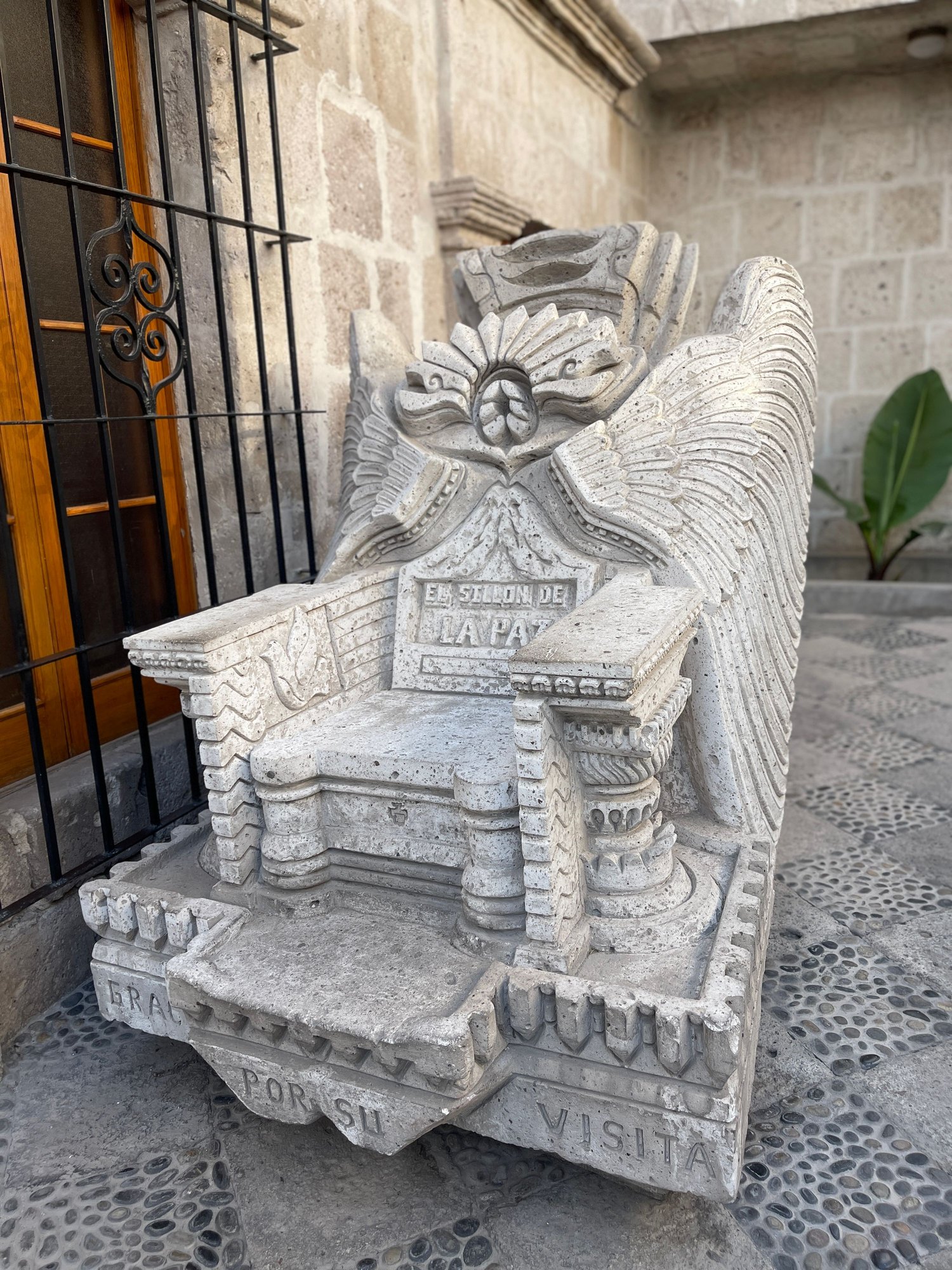
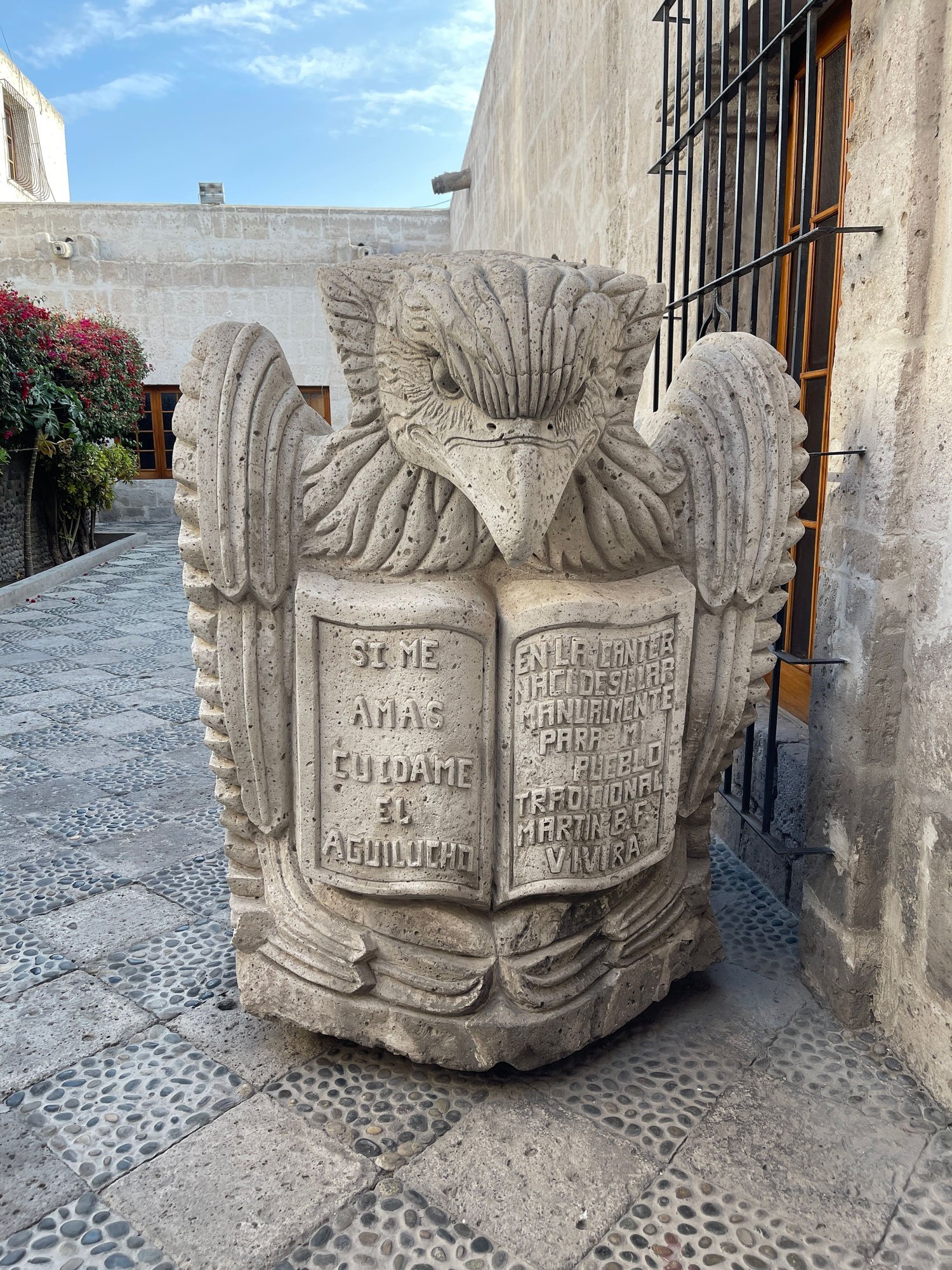
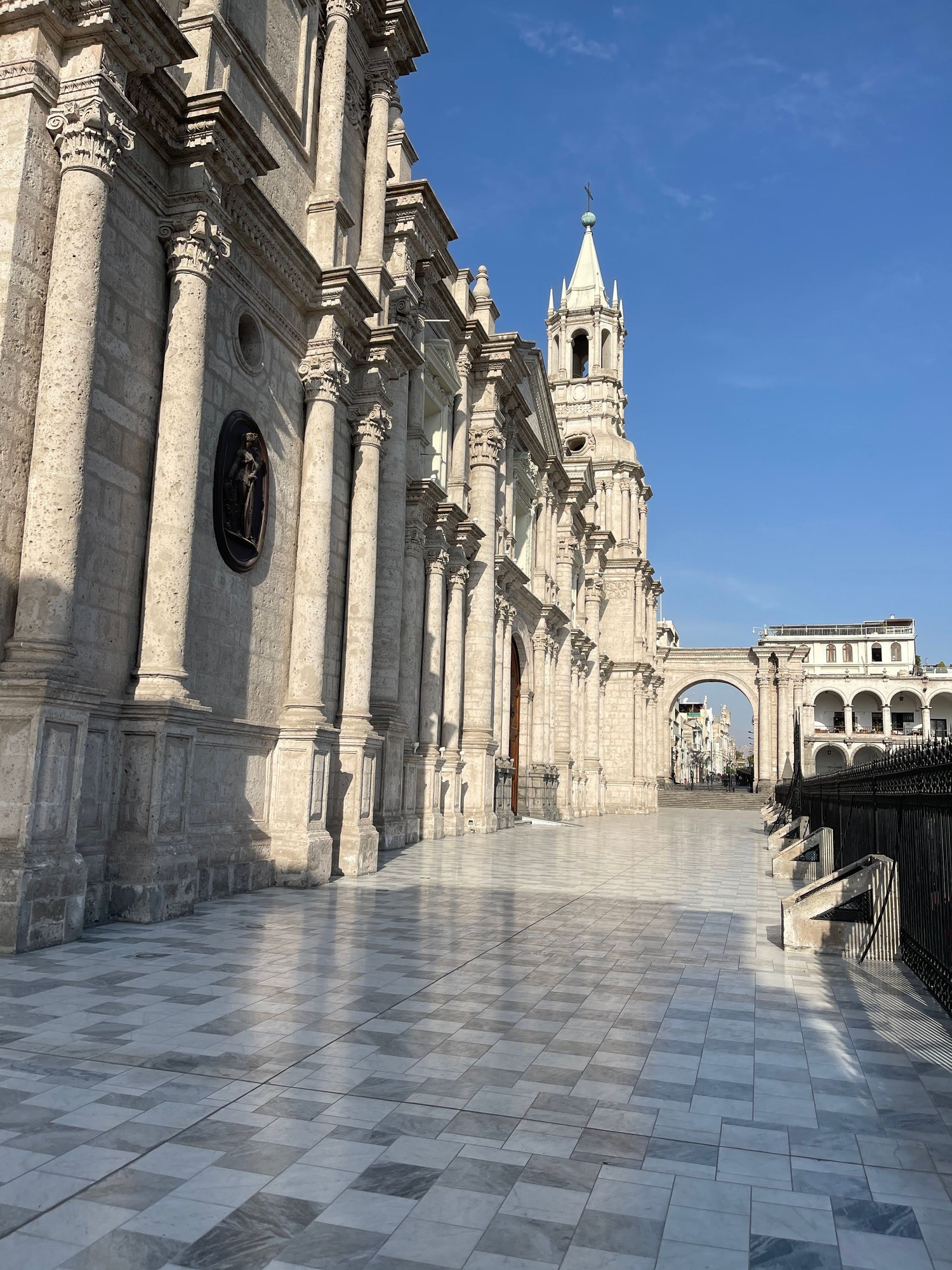
Arequipa cathedral
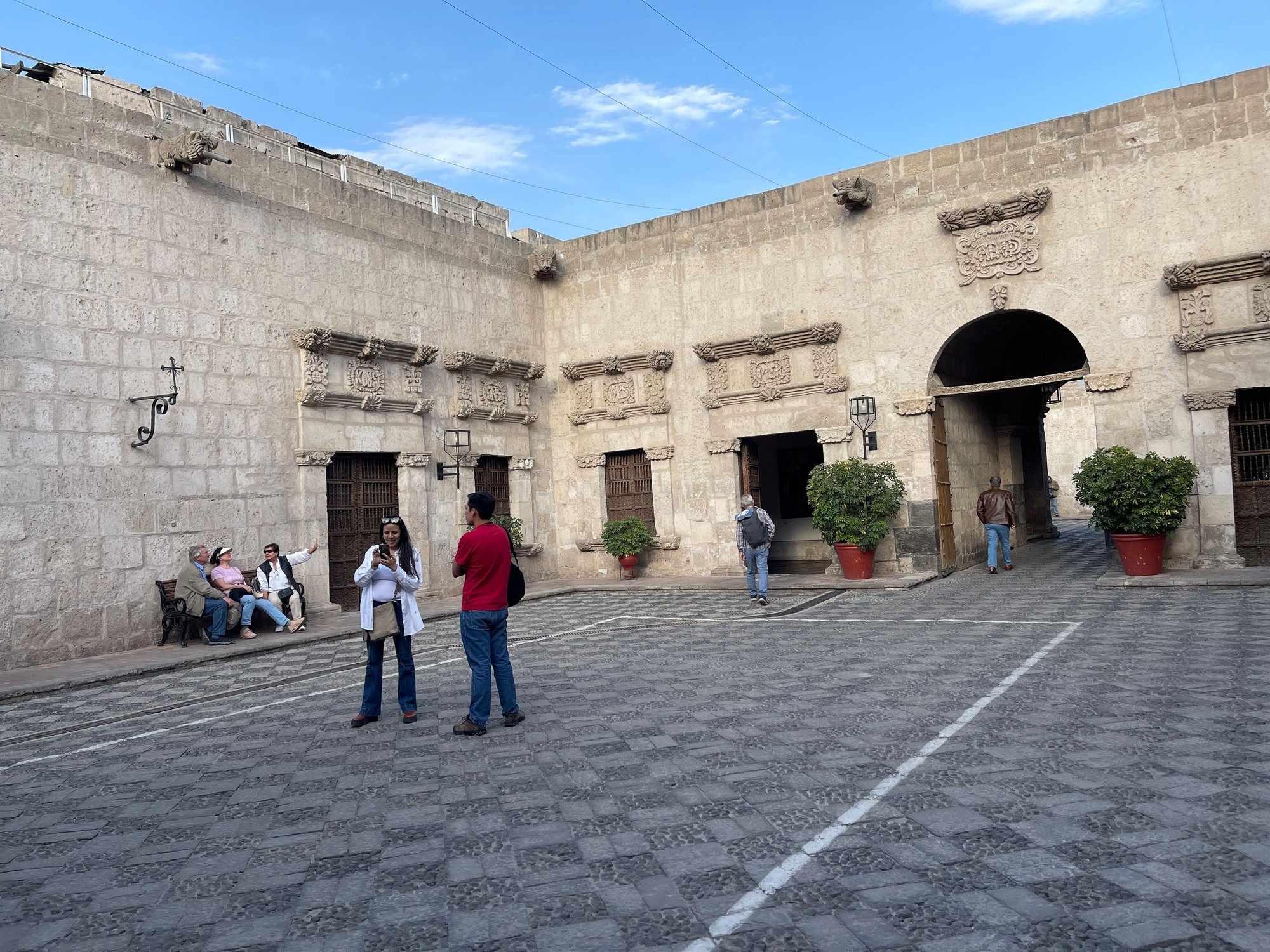
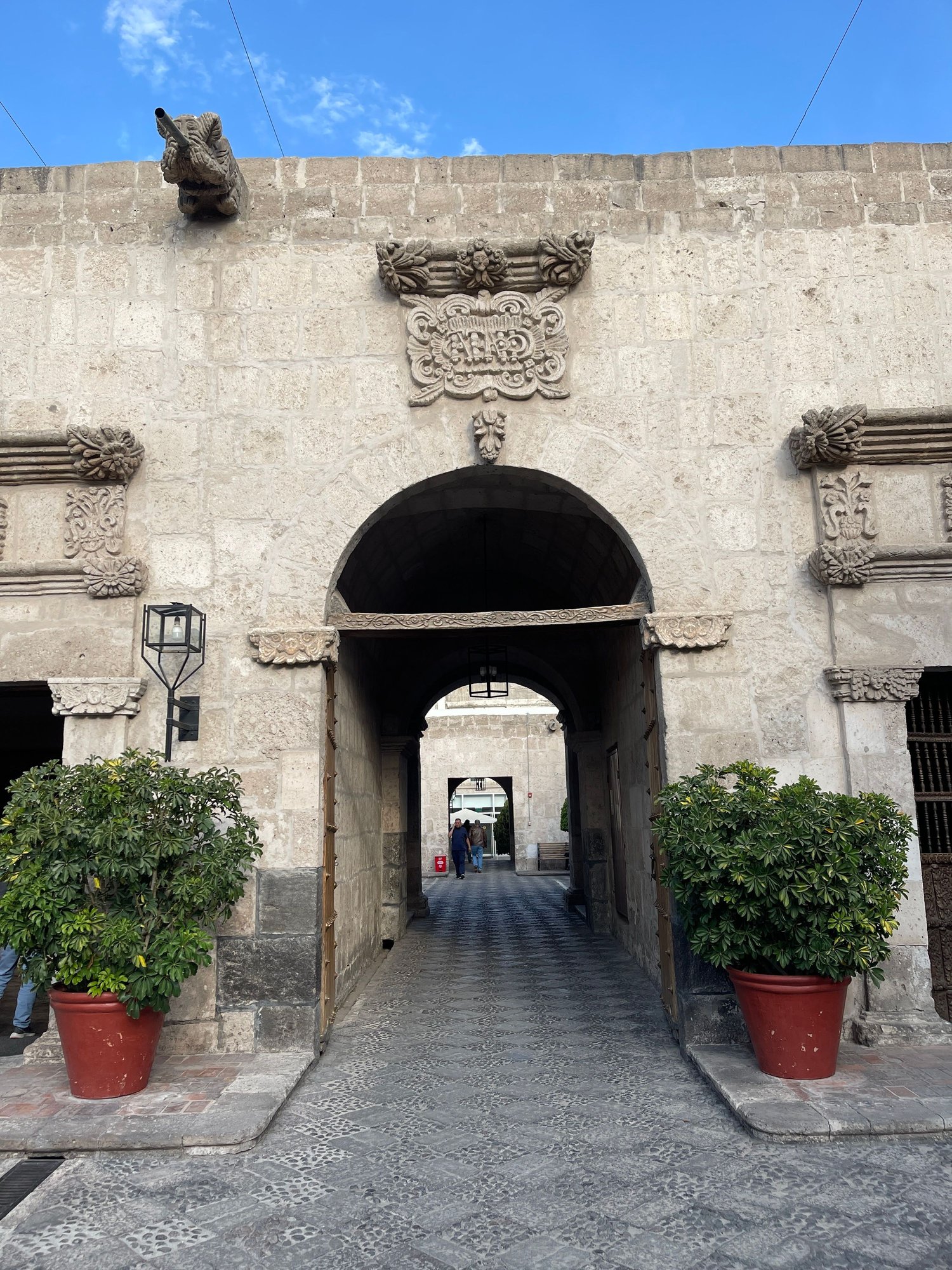
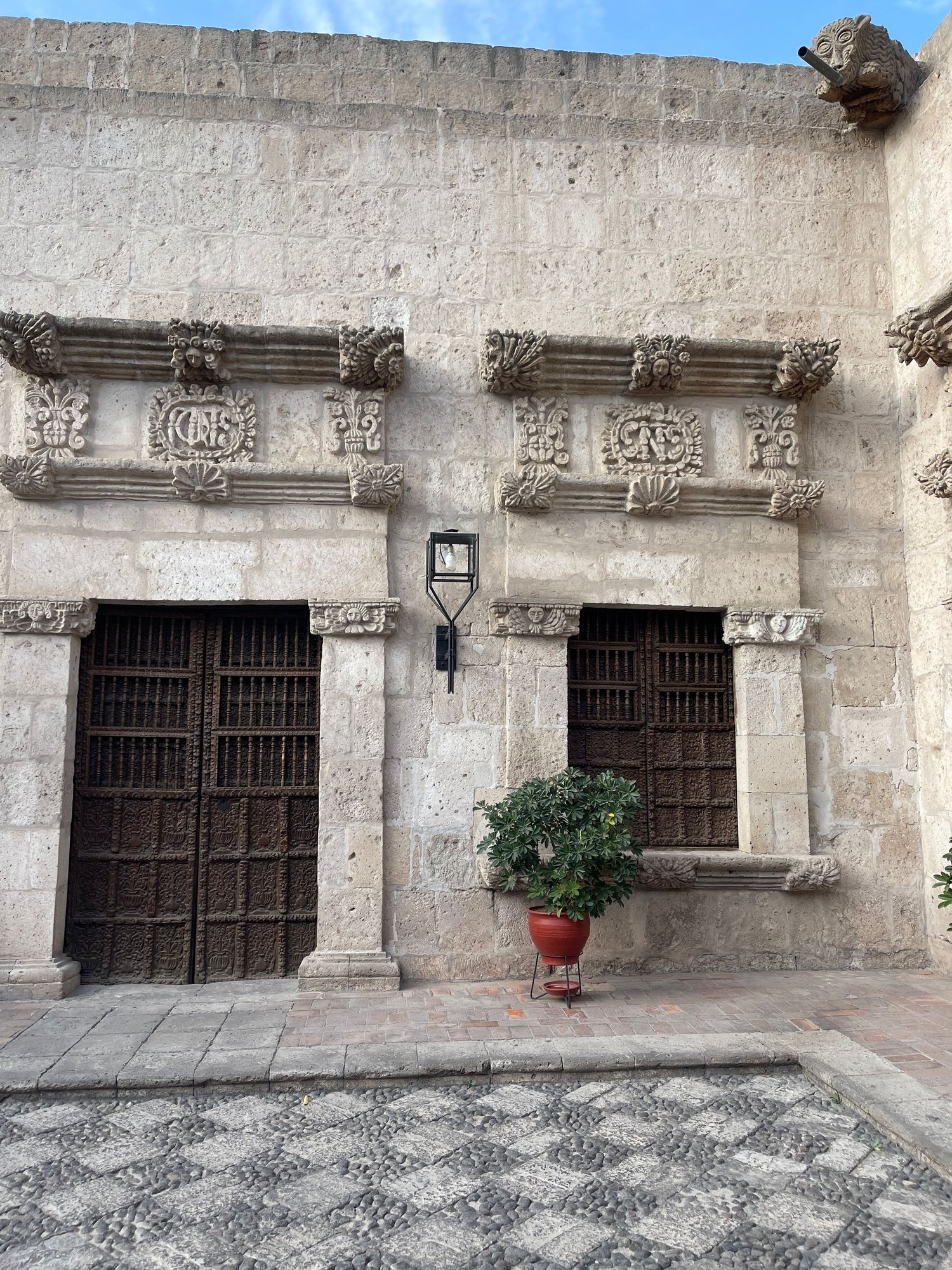
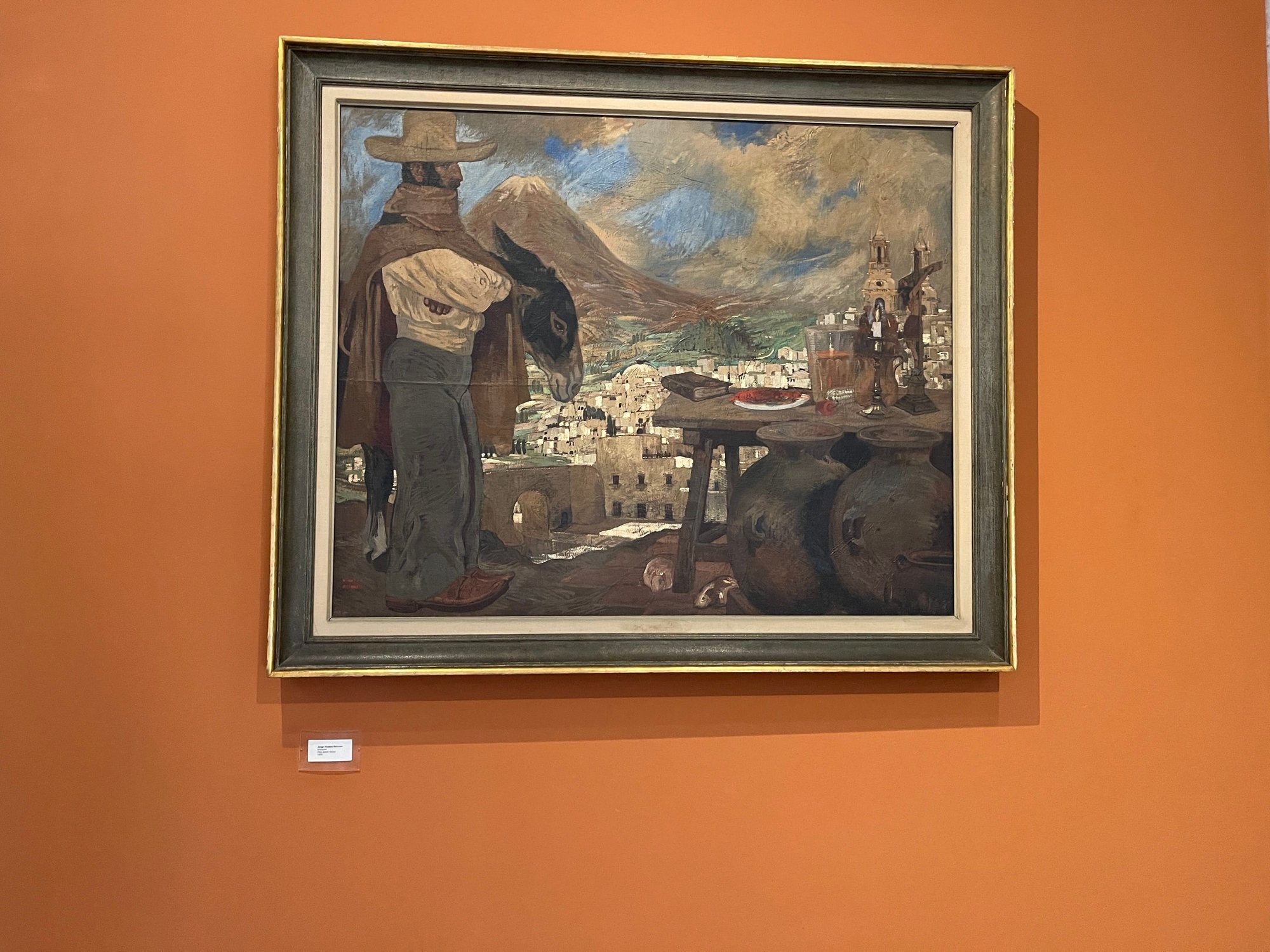
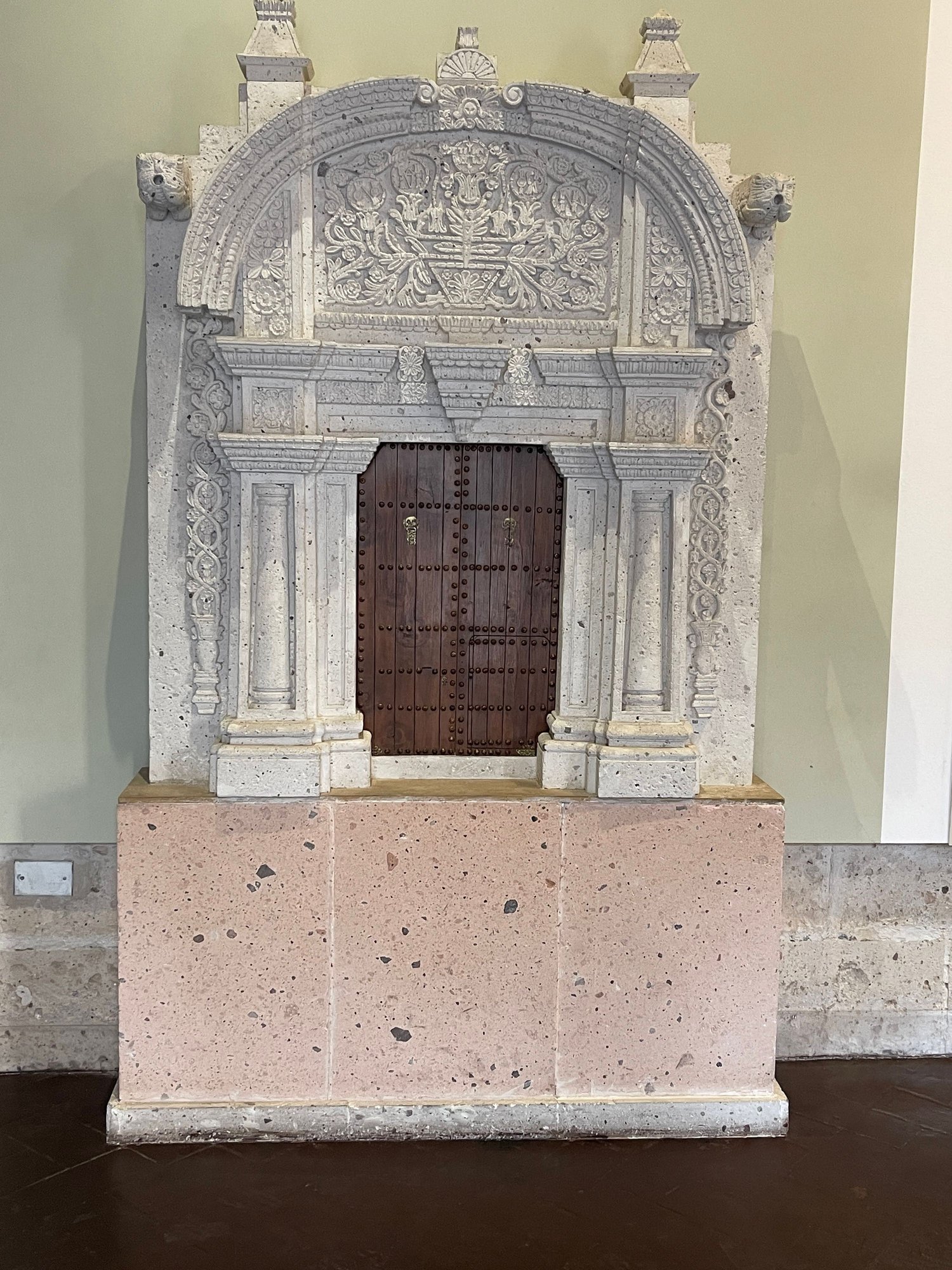
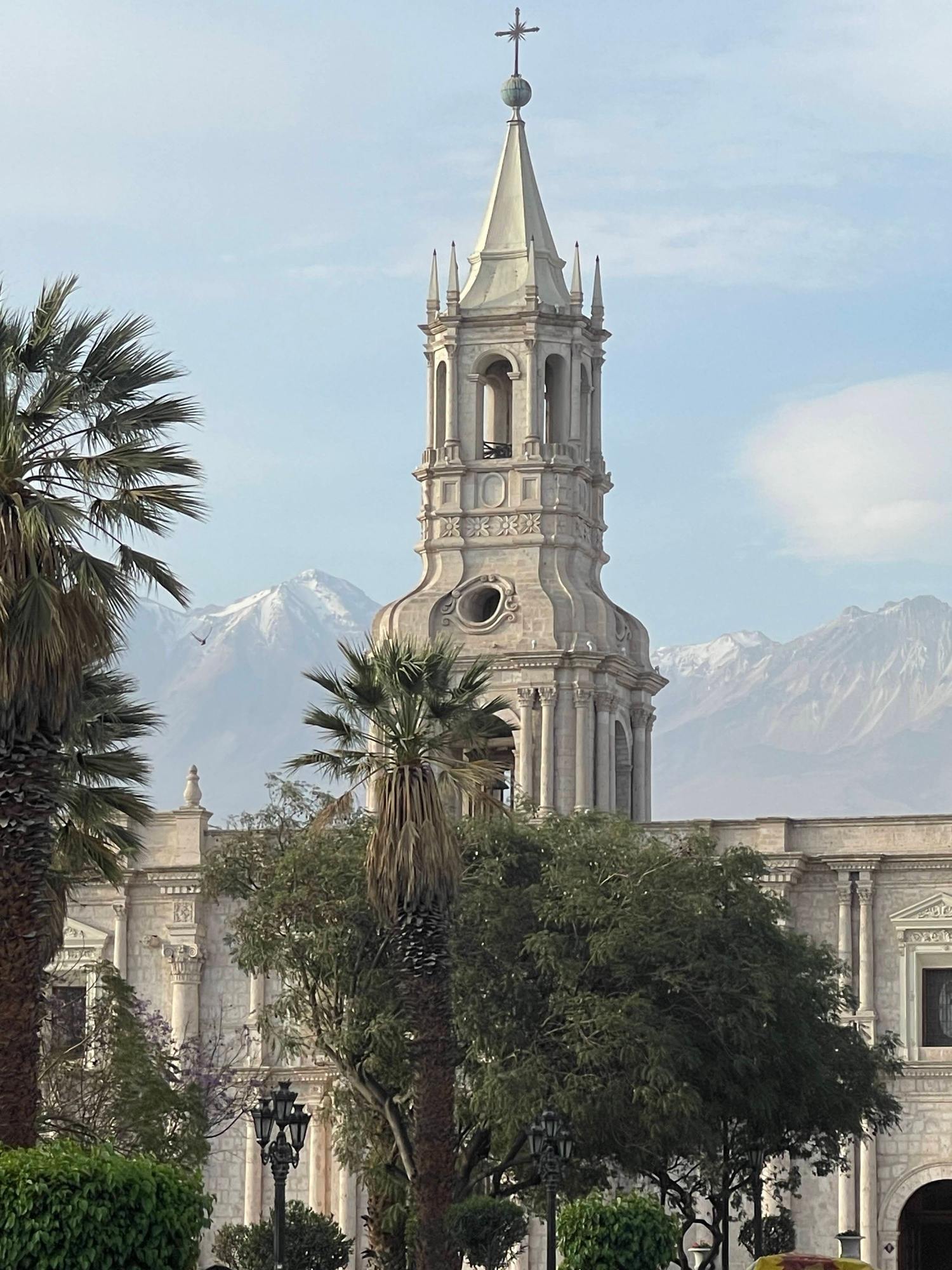
Fall in love with Arequipa, just beautiful!
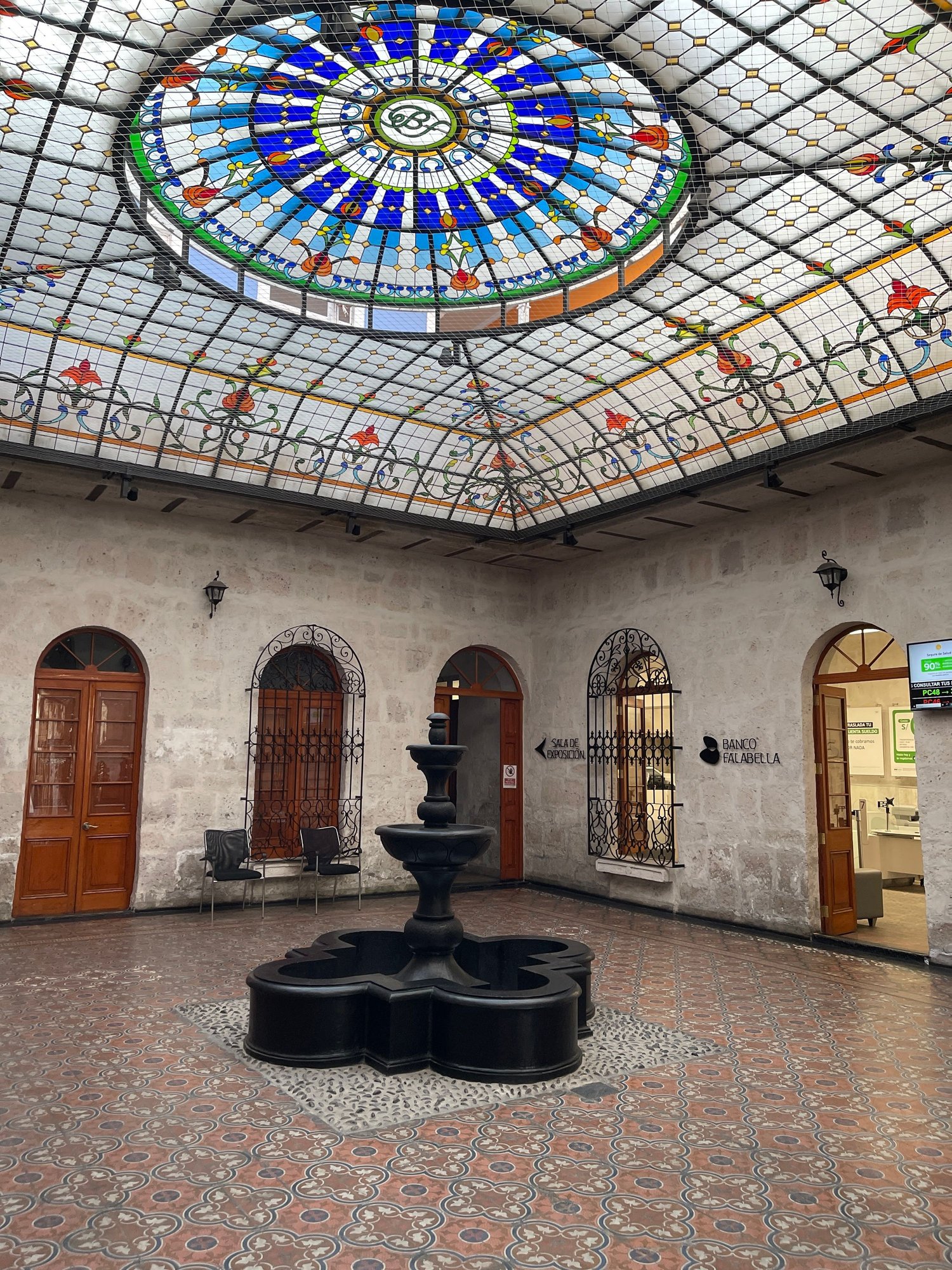
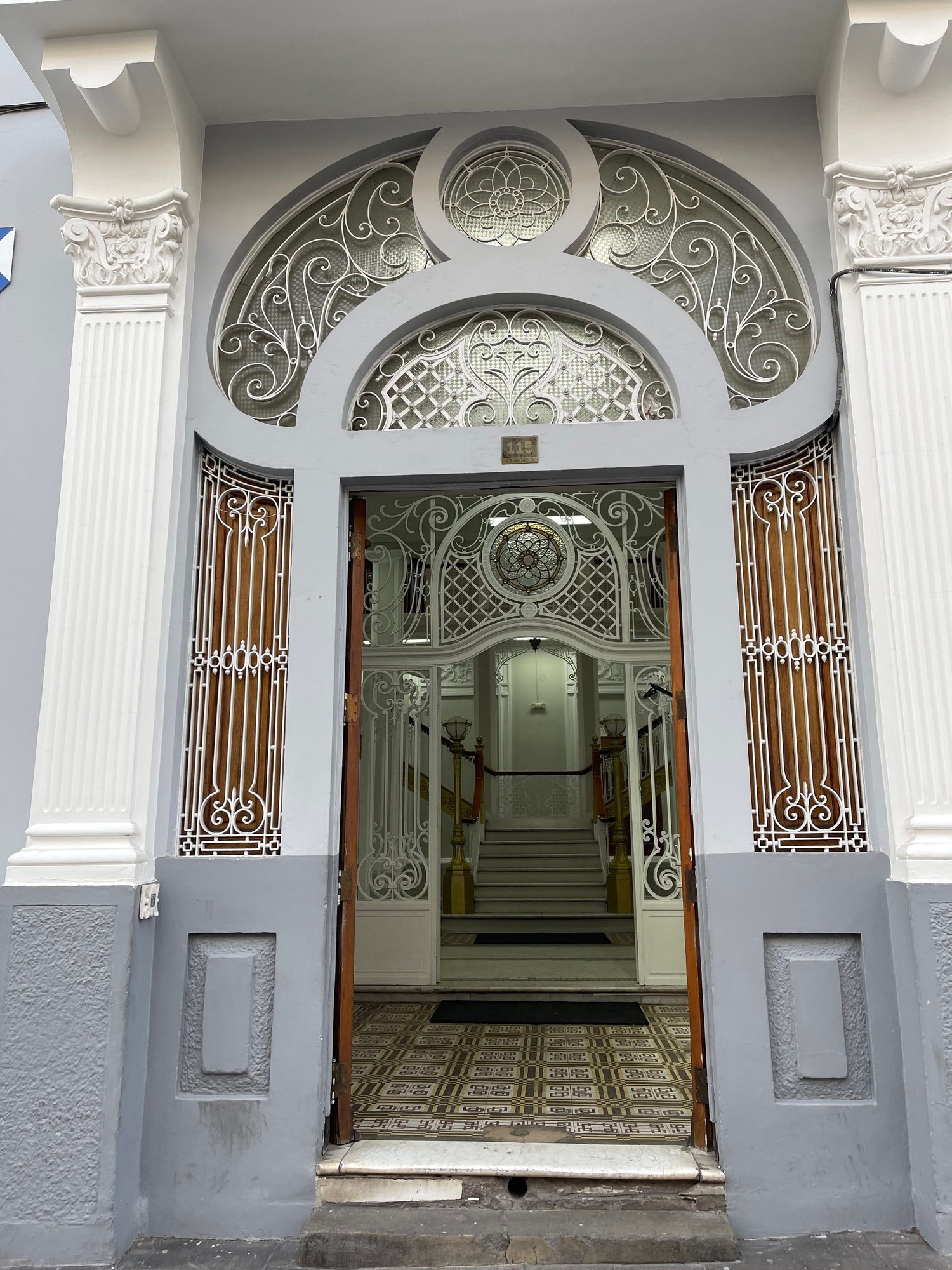
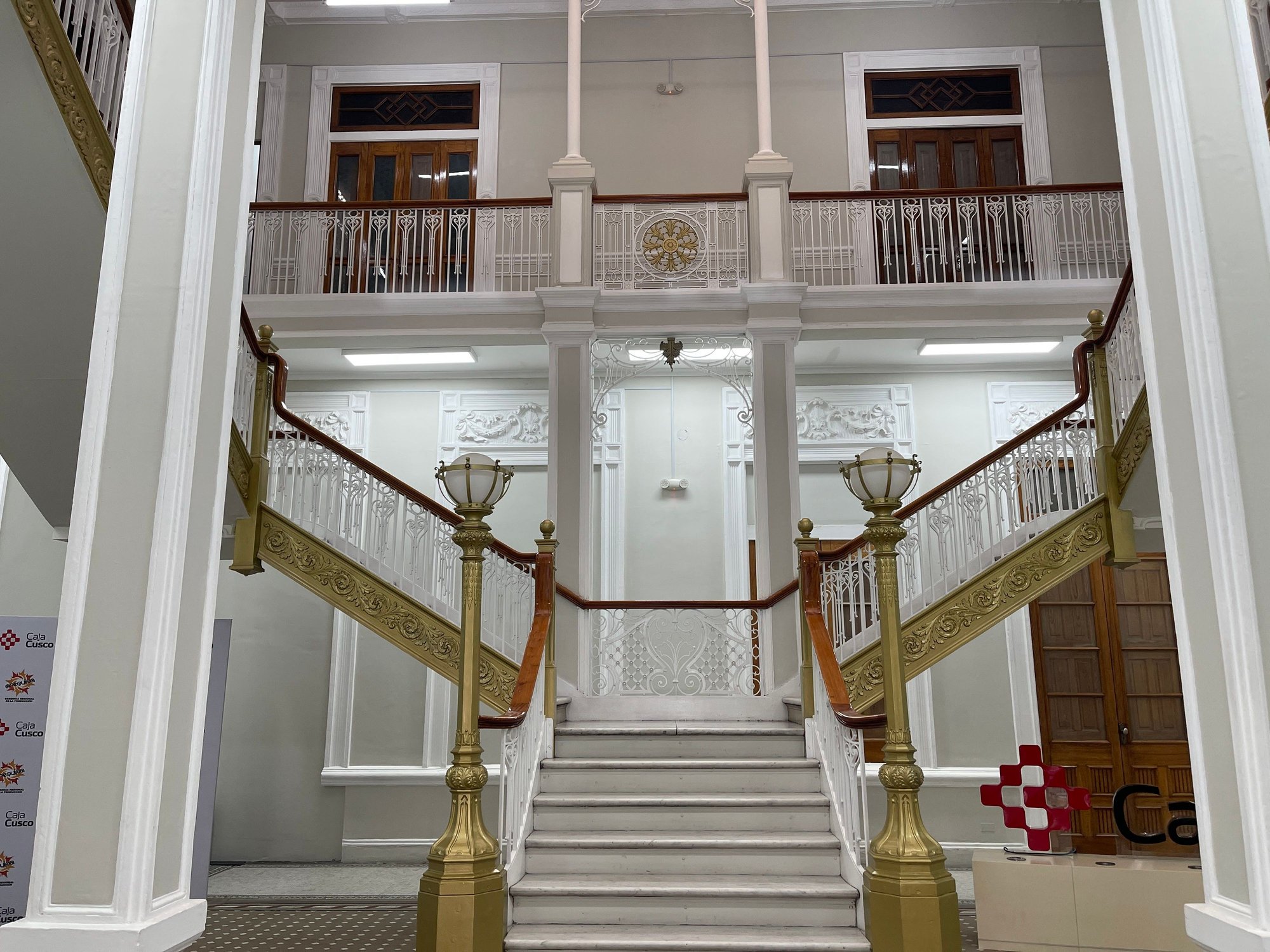
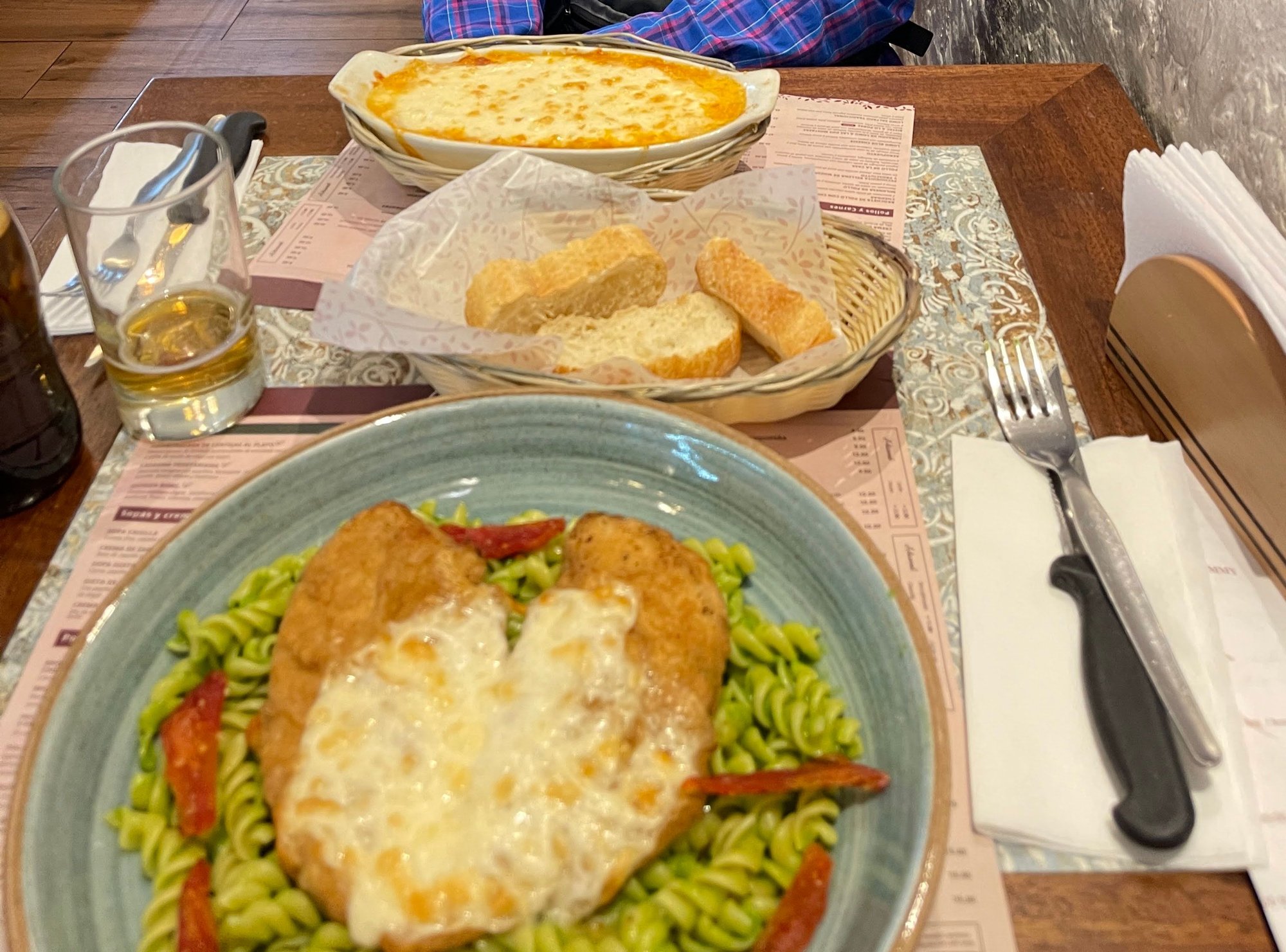
Arequipa sure has a lot to offer. There is so much to see and do inside as well as outside the city. We were sad that it was our last day rooming the city.
After dinner, we went back to the hotel’s roof top and a beautiful sunset was there waiting for us.
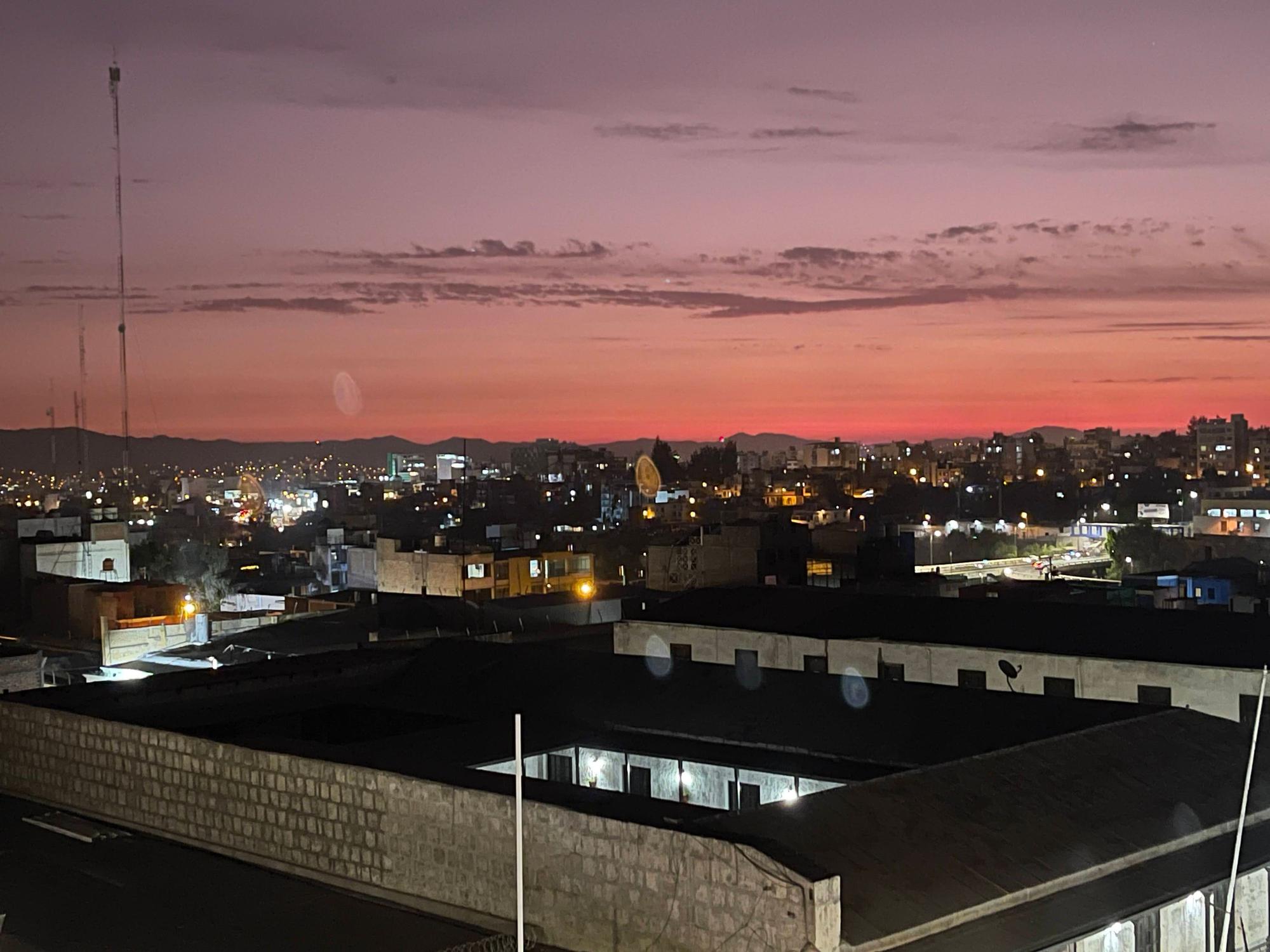
The next day, we were leaving Arequipa for our tour to Colca Canyon.
Beautiful entrance leading to the courtyard
Beautiful art gallery
Another treasure corner
Another beautiful Spain style courtyard l
Love the courtyard
On top of the courtyard view
Arequipa cathedral
Fall in love with Arequipa, just beautiful!
Arequipa sure has a lot to offer. There is so much to see and do inside as well as outside the city. We were sad that it was our last day rooming the city.
After dinner, we went back to the hotel’s roof top and a beautiful sunset was there waiting for us.
The next day, we were leaving Arequipa for our tour to Colca Canyon.
I'm with Leely, Cher': it is sooooo good to read such an extensive and well-presented South American TR. Your fine imagery also makes a huge difference. Imagine a writer trying to describe Sta. Catalina without photos!
May your future voyages be as successful.
I am done. The great TR by Cherthor
May your future voyages be as successful.
I am done. The great TR by Cherthor
Leely2,
Thanks for following my report. I totally agreed that Peru is a lot more than just Machu Picchu. Greatly appreciate your support.
zebec,
Wow!!! I am speechless. It is such a compliment coming from a master of photography. I just like to take pictures of the best moments and kept frozen them in time so that I can remember and relive the moments.
I am glad others are enjoying them too.
🙏🙏🙏🙏
Thanks for following my report. I totally agreed that Peru is a lot more than just Machu Picchu. Greatly appreciate your support.
zebec,
Wow!!! I am speechless. It is such a compliment coming from a master of photography. I just like to take pictures of the best moments and kept frozen them in time so that I can remember and relive the moments.
I am glad others are enjoying them too.
🙏🙏🙏🙏
Day 10– COLCA CANYON TOUR FROM AREQUIPA TO PUNO 2 DAYS 1 NIGHT
We joined the above journey with the Inka Express bus tour. At this point, we knew we would be fine with altitude over 13,000 ft. This journey has a stop that is over 16,000 ft, Chivay is12,000 ft, Colca Canyon around 13,000 ft, and Puno is situated over 12,000 ft. This would be our highest altitude test in our planned trip.
We left the beautiful city of Arequipa around 7:30am. We were picked up from the hotel and then transferred to the tour bus. We chose this service because all the pickups and drop offs from the hotel were included. The small bus we had for this part of the journey was quite new and comfortable.
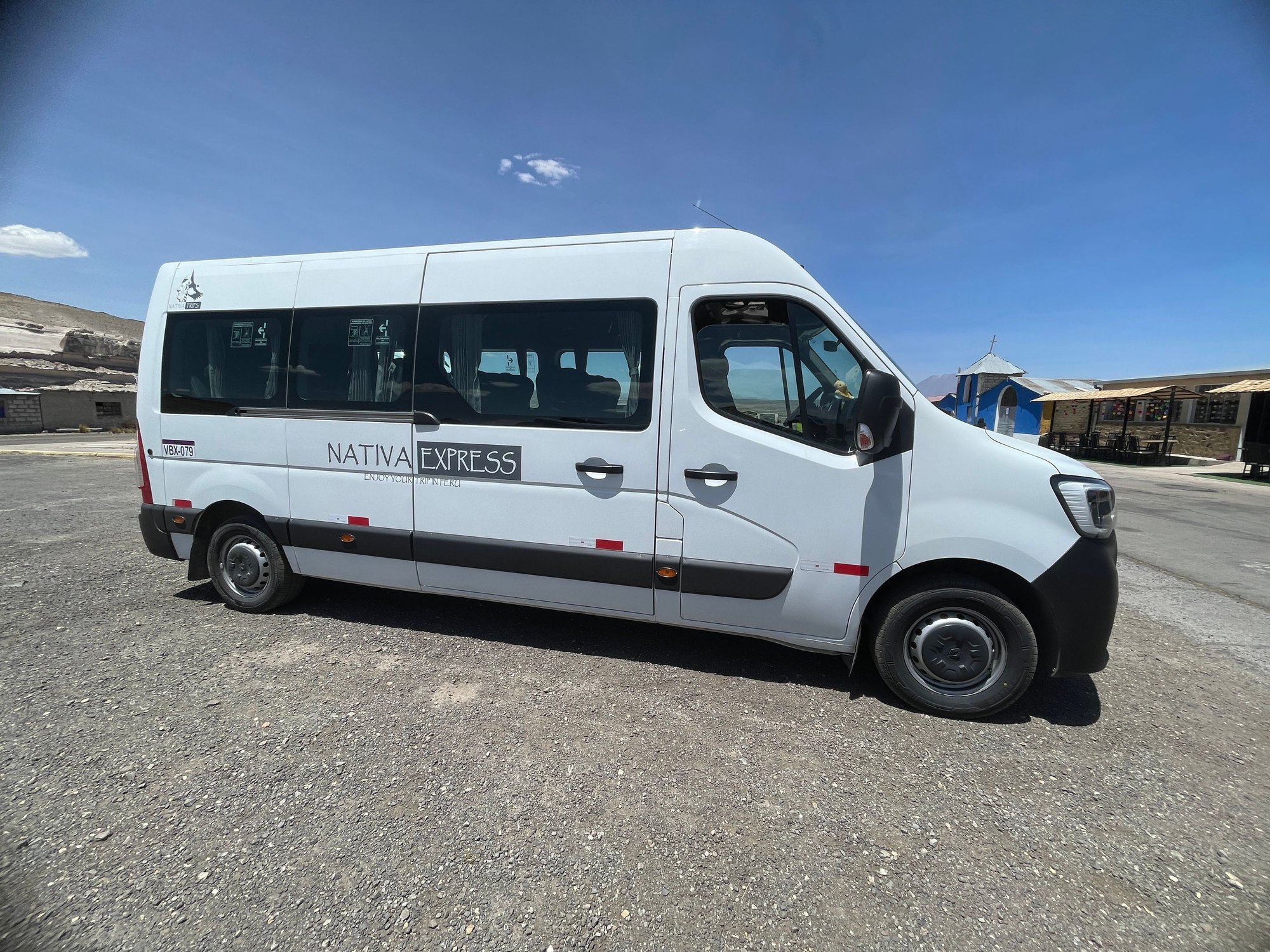
We passed the big Yura cement plant after we left Arequipa. After that, we steadily ascended towards the plain of the Salinas y Aguada Blanca National Reserve. Once again, we saw the herd of vicuñas glazing freely on the plain. The scenery was beautiful and had a vast open atmosphere.
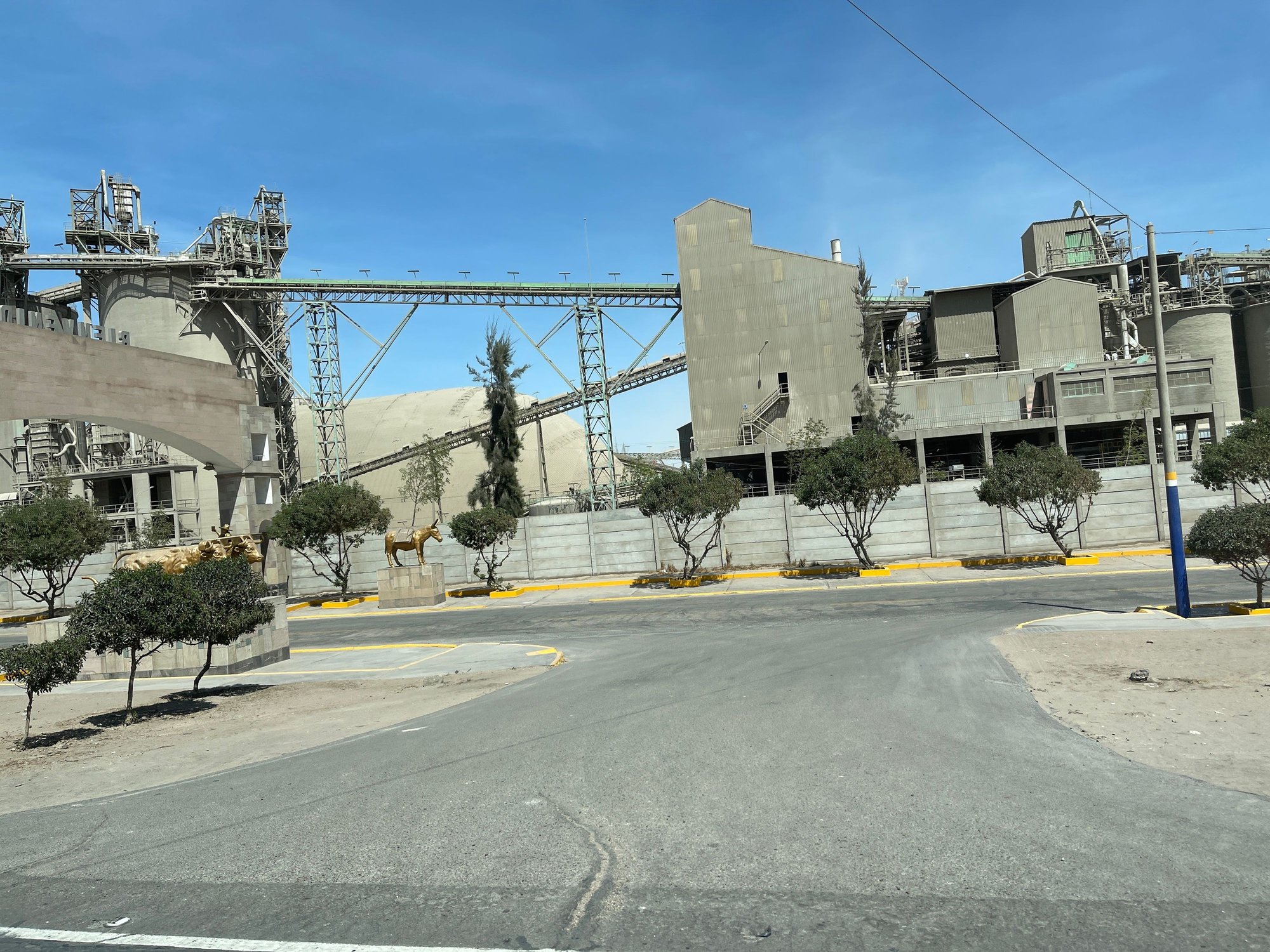
Yura cement plant
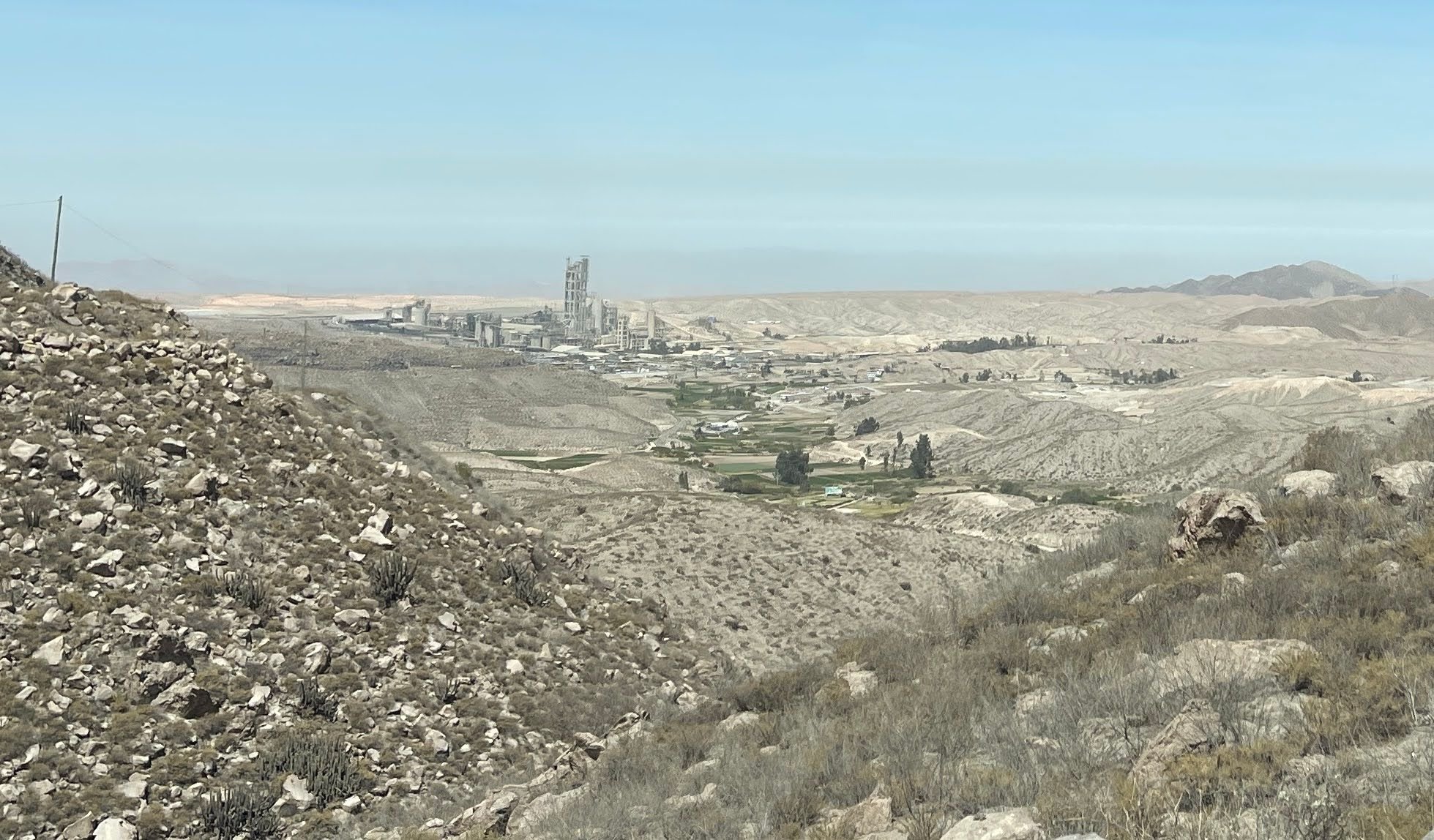
View of the cement plant from further up the mountain
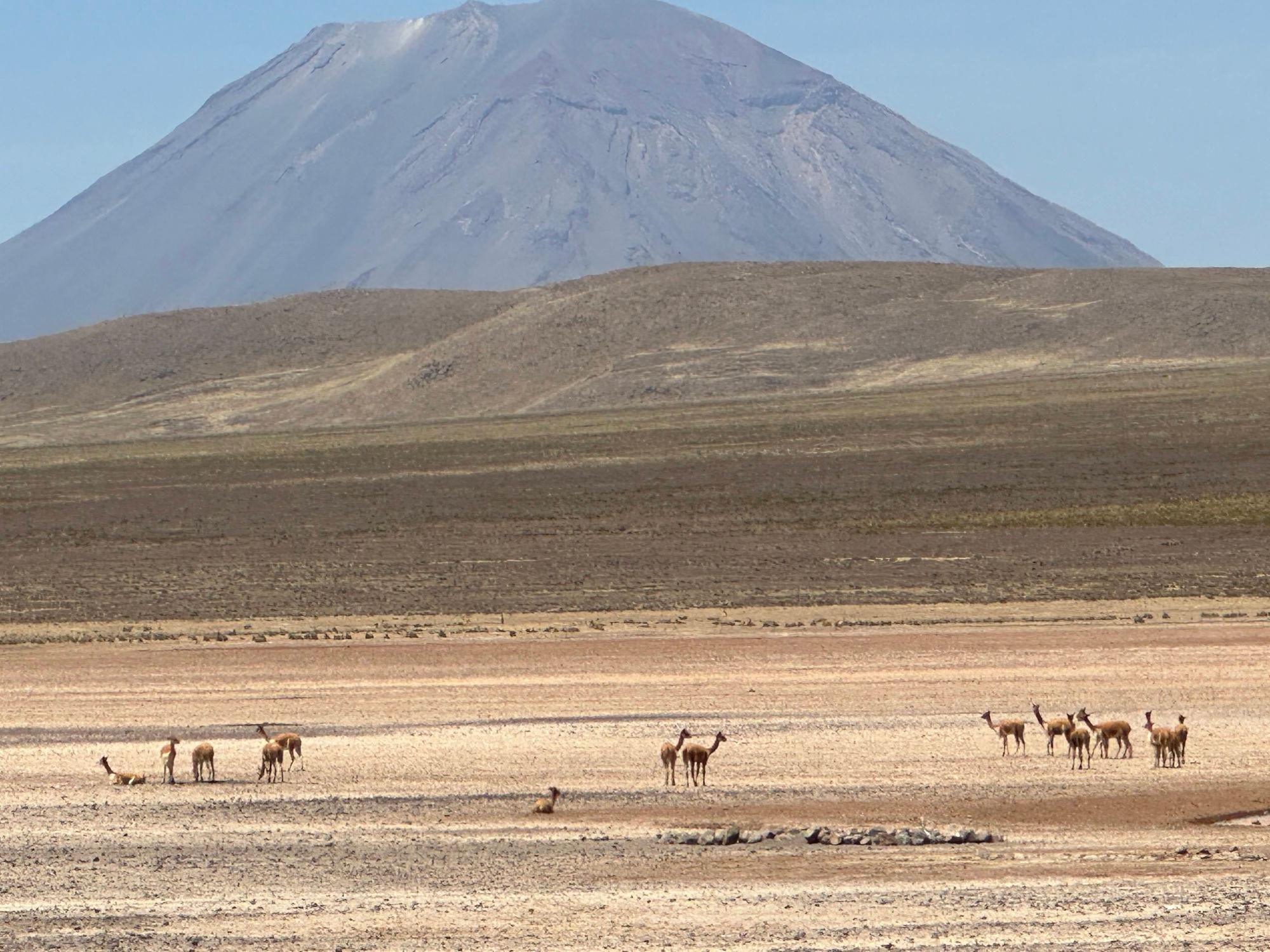
vicuñas glazing freely, and the backdrop is Chachani
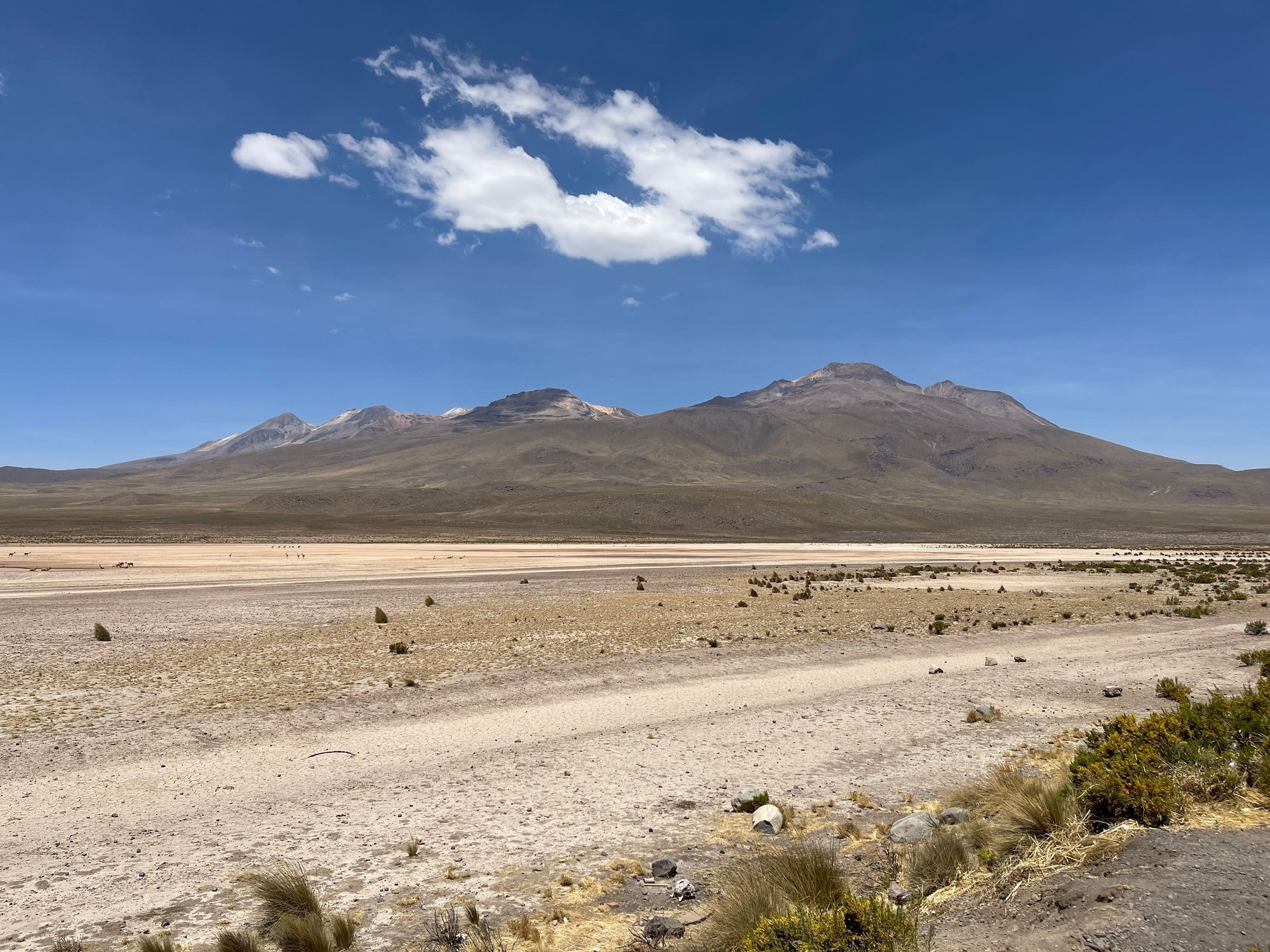
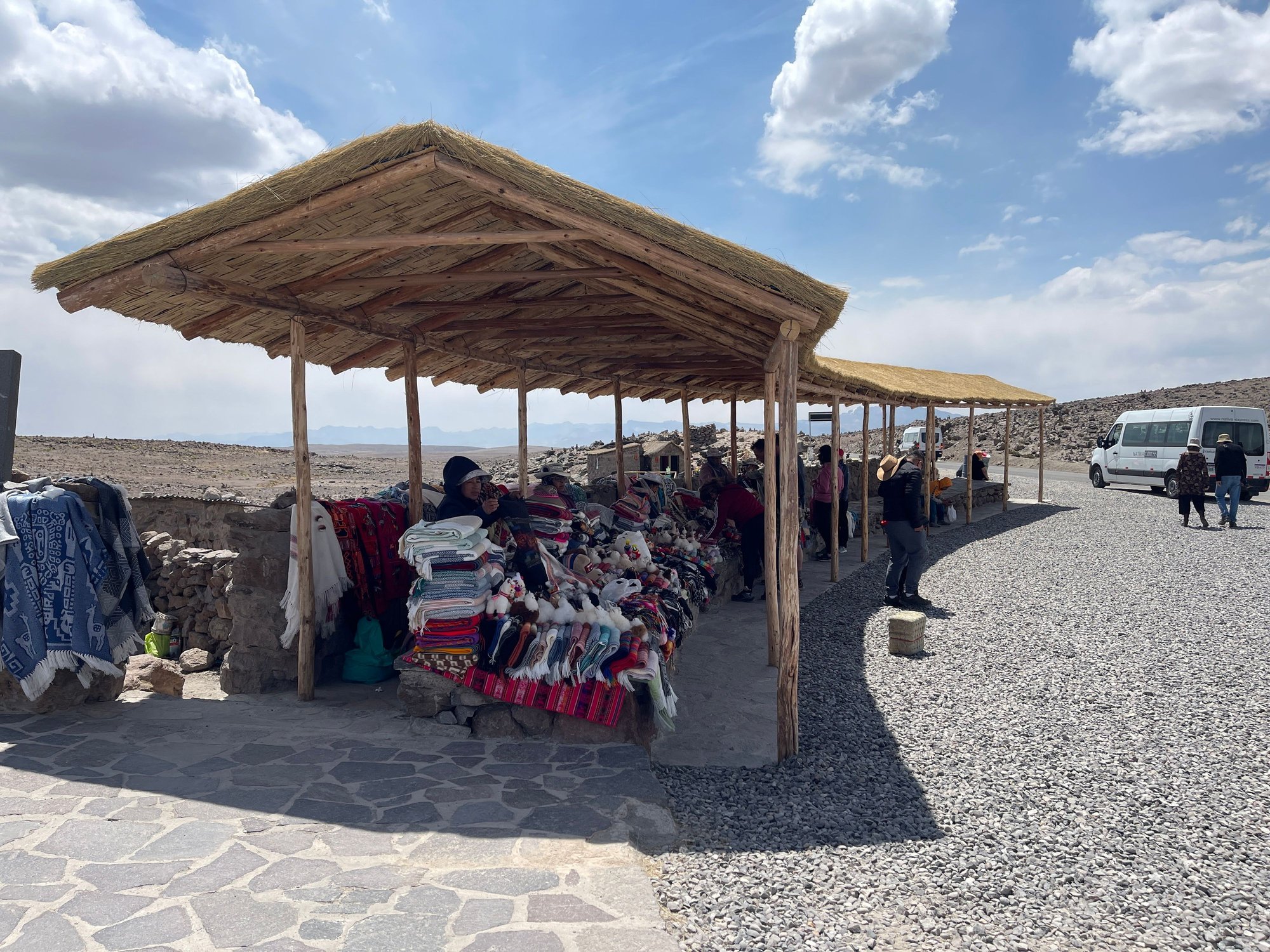
We stopped at the RESTAURANTE SUMAQ MATE INKA for a toilet break. It has a cafe, and a market that sells all sorts of the alpaca products.
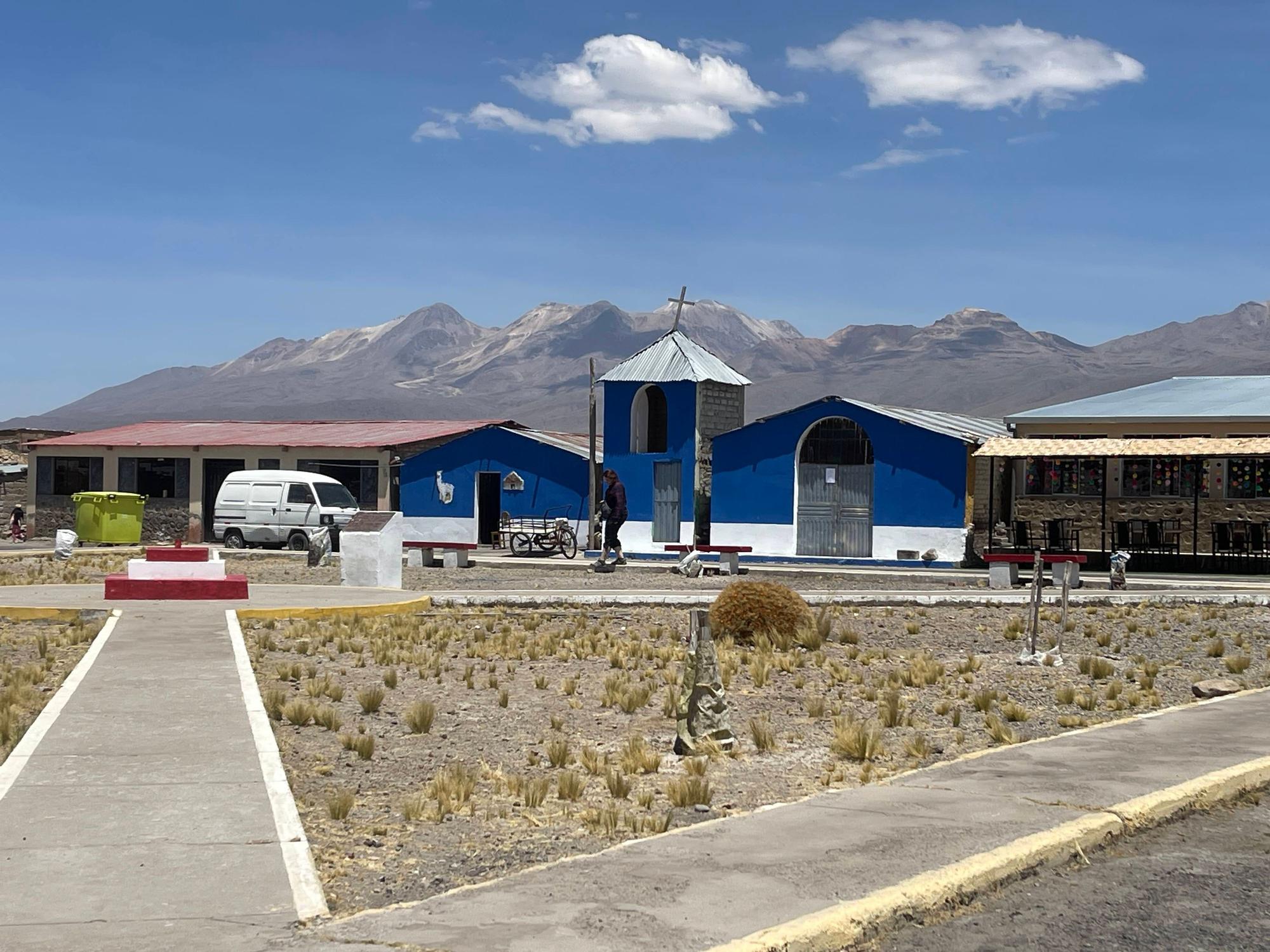
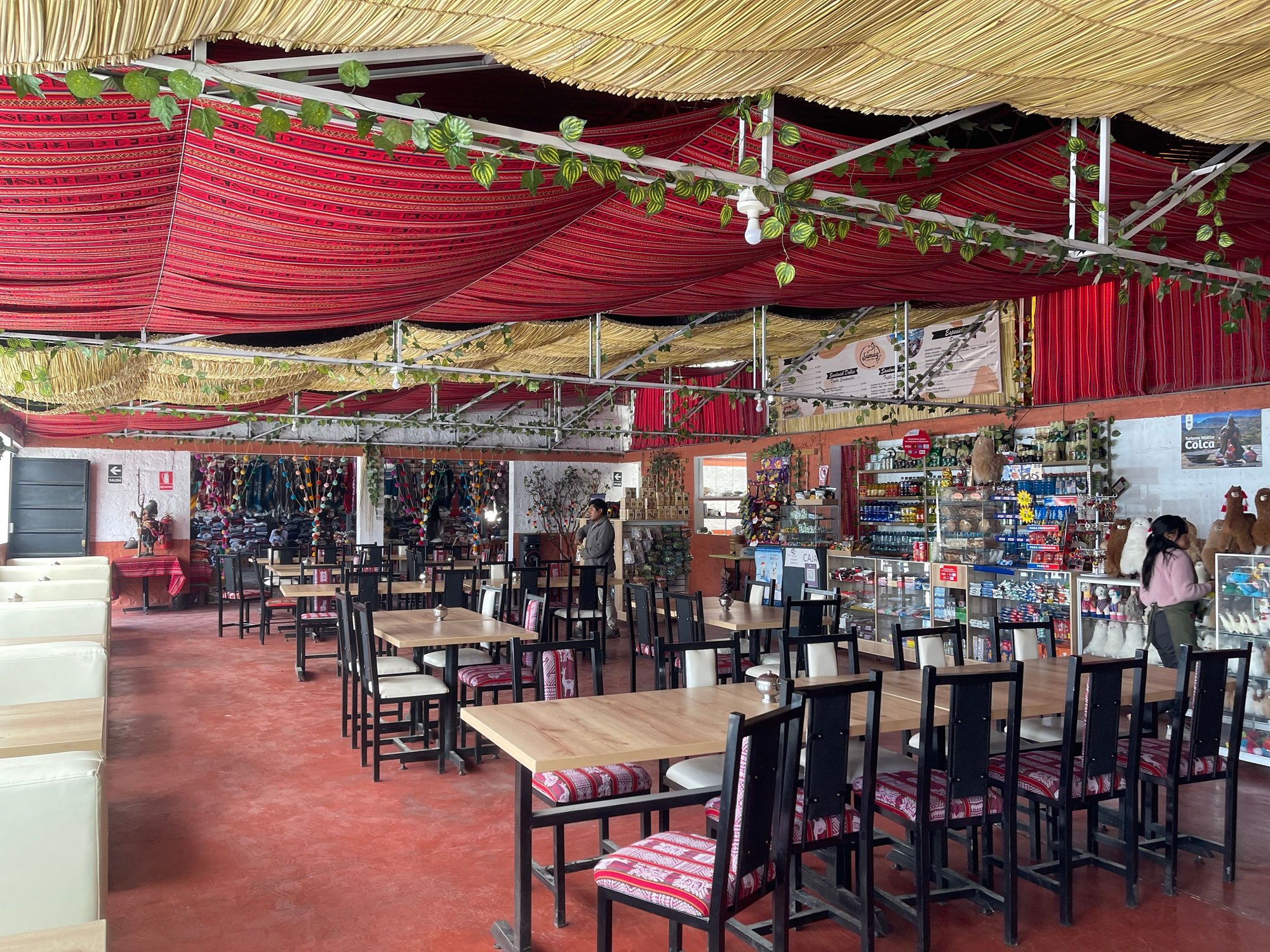
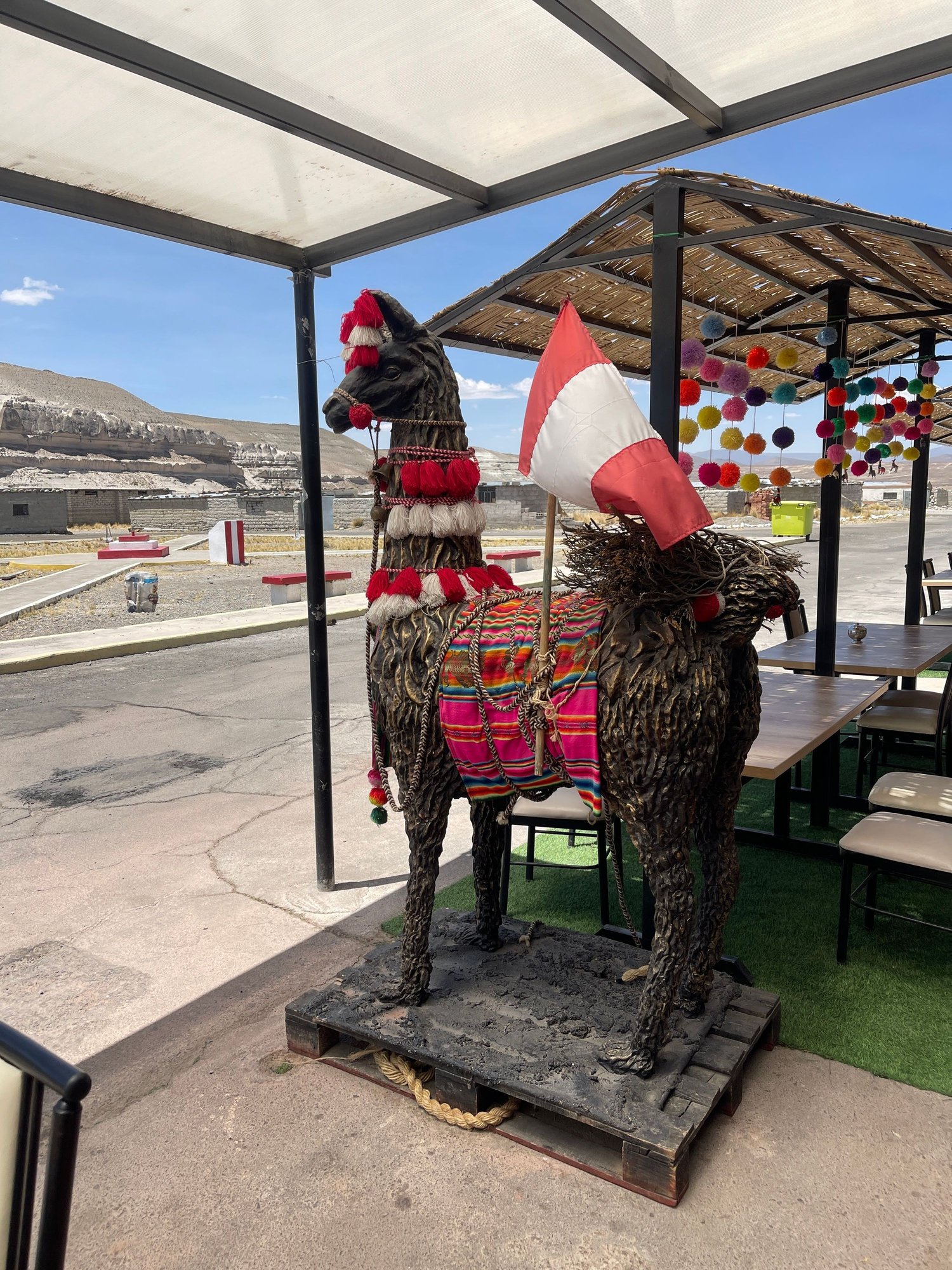
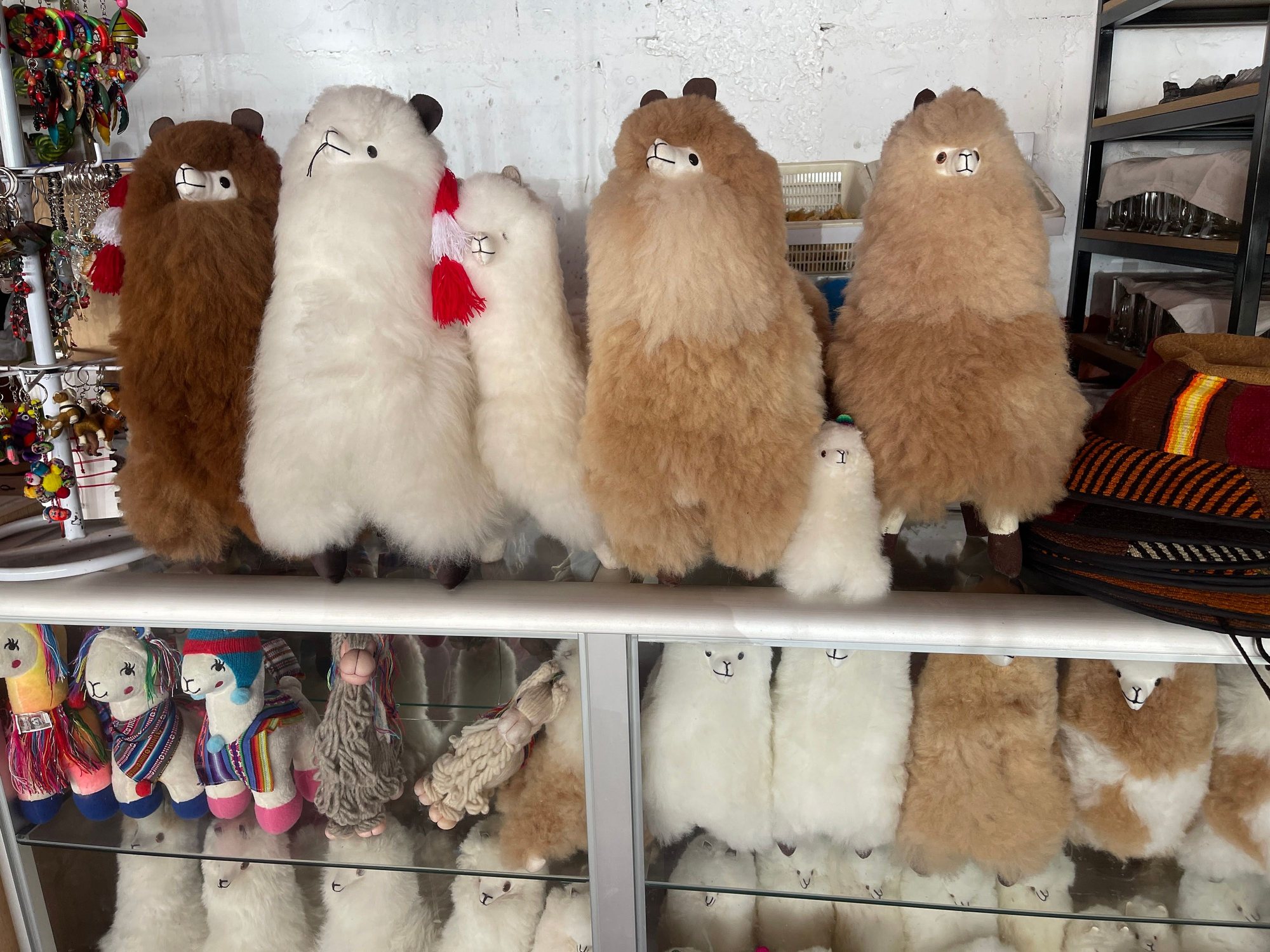
We then continued on our journey, very often now and then, the guide would stop and let us down to admire the scenery.
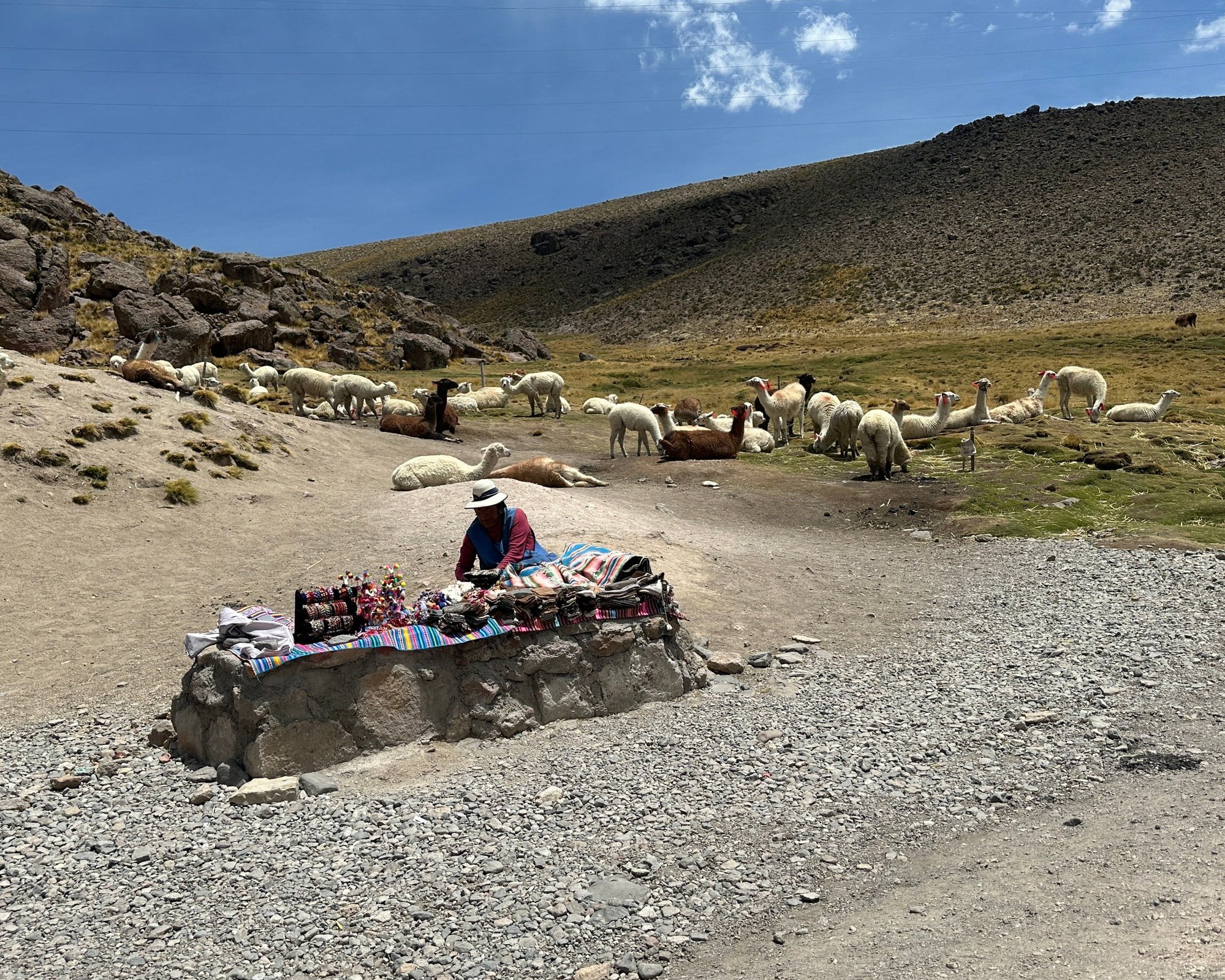
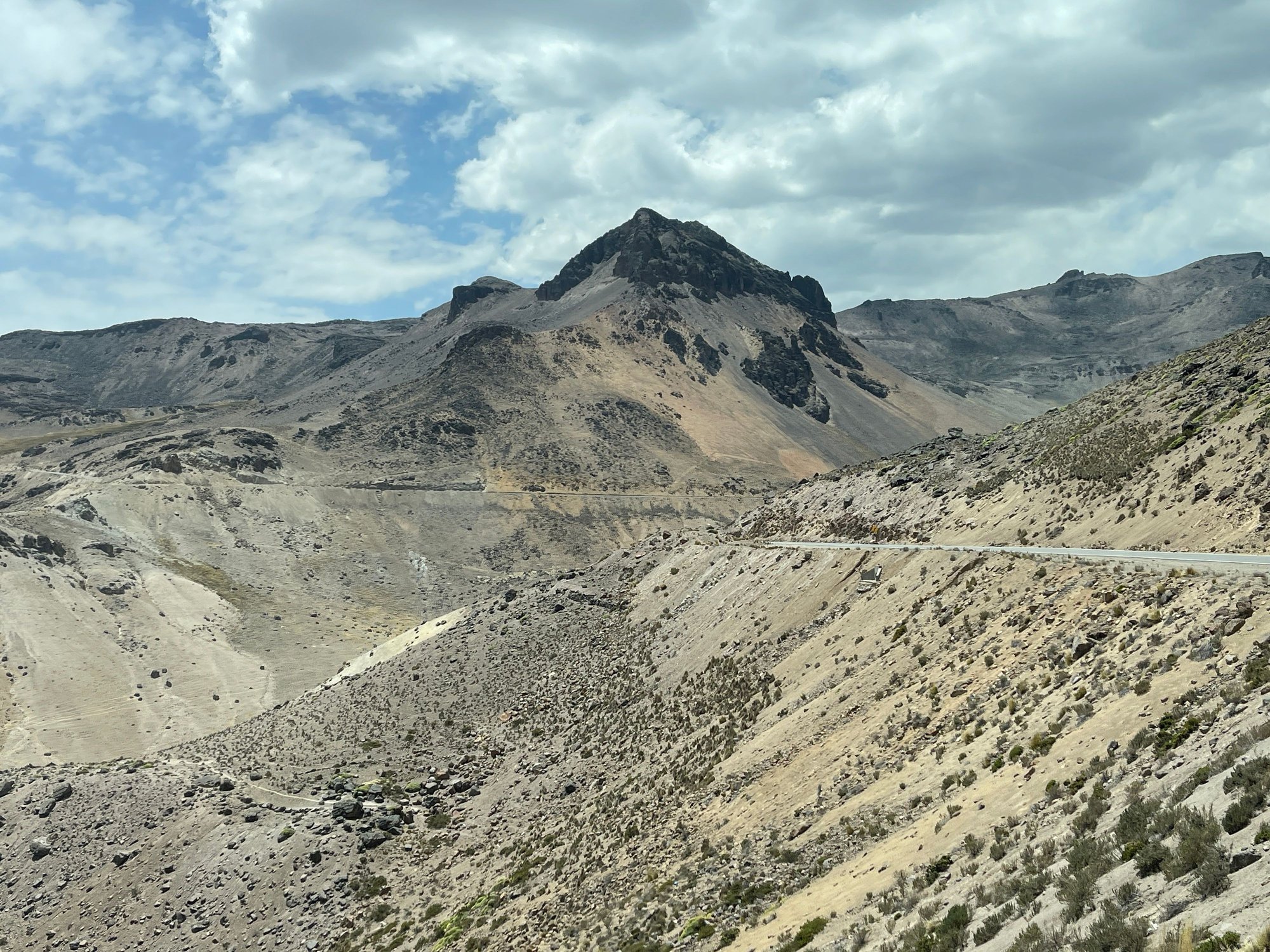
Up higher to the mountain
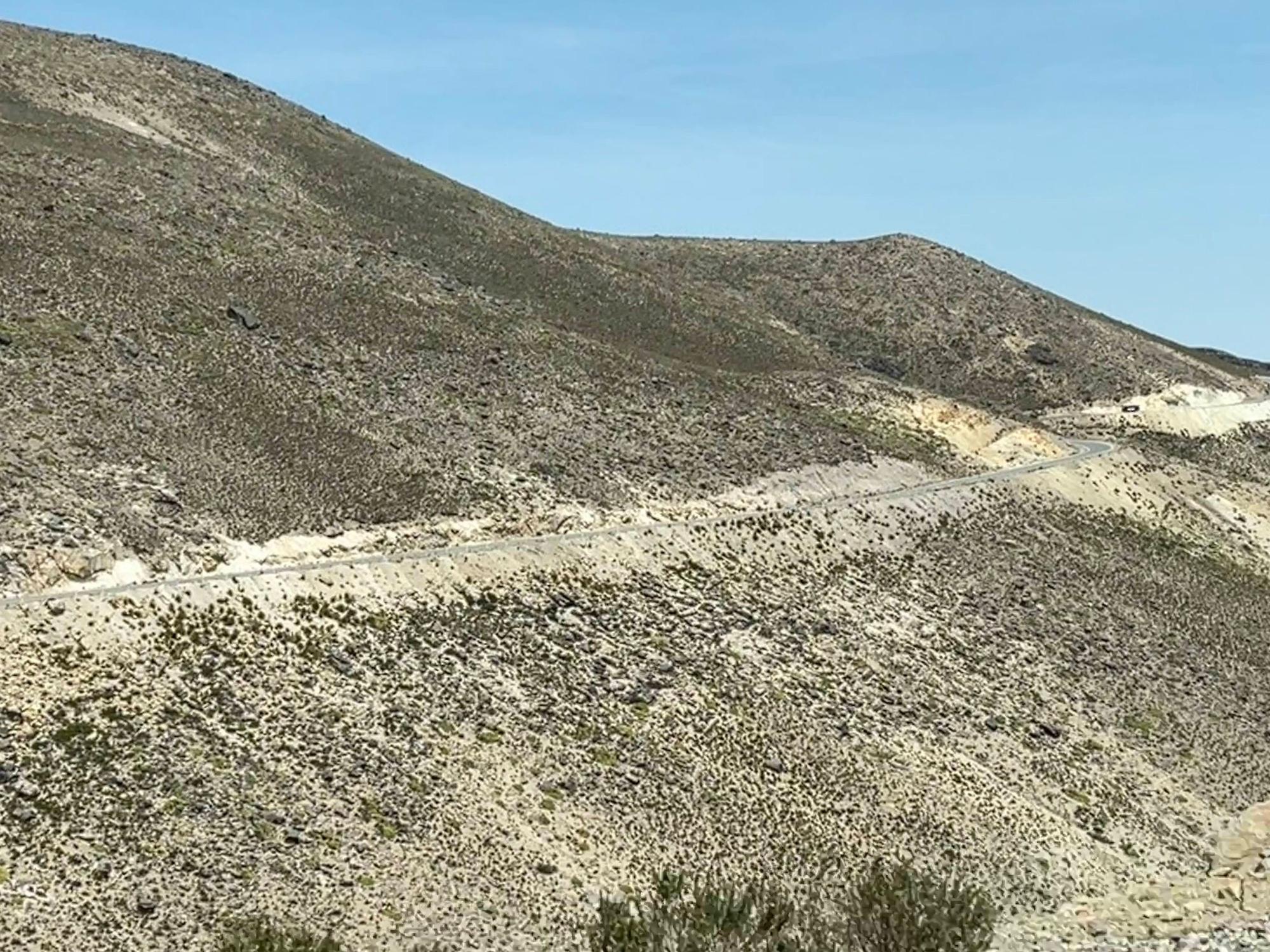
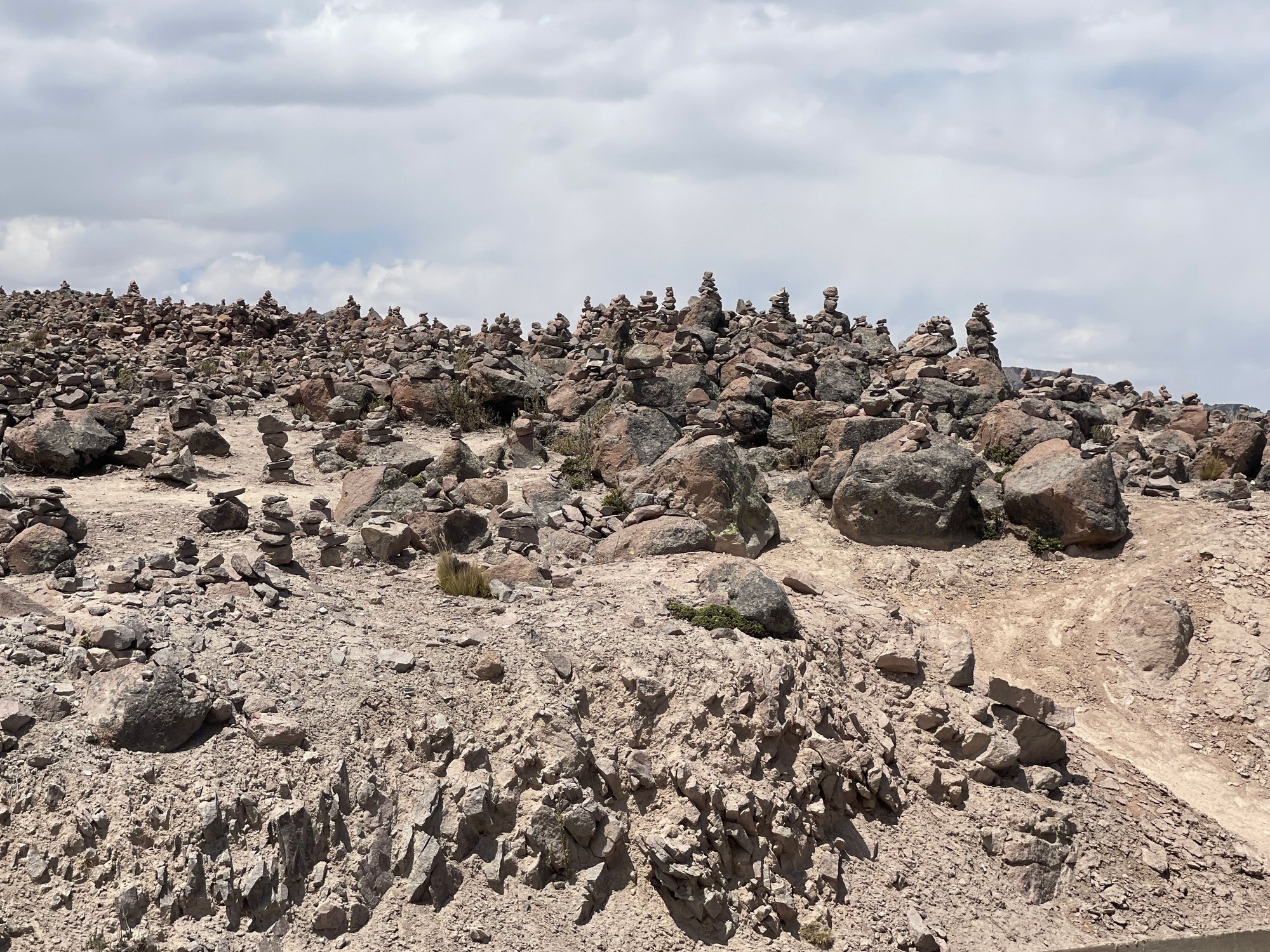
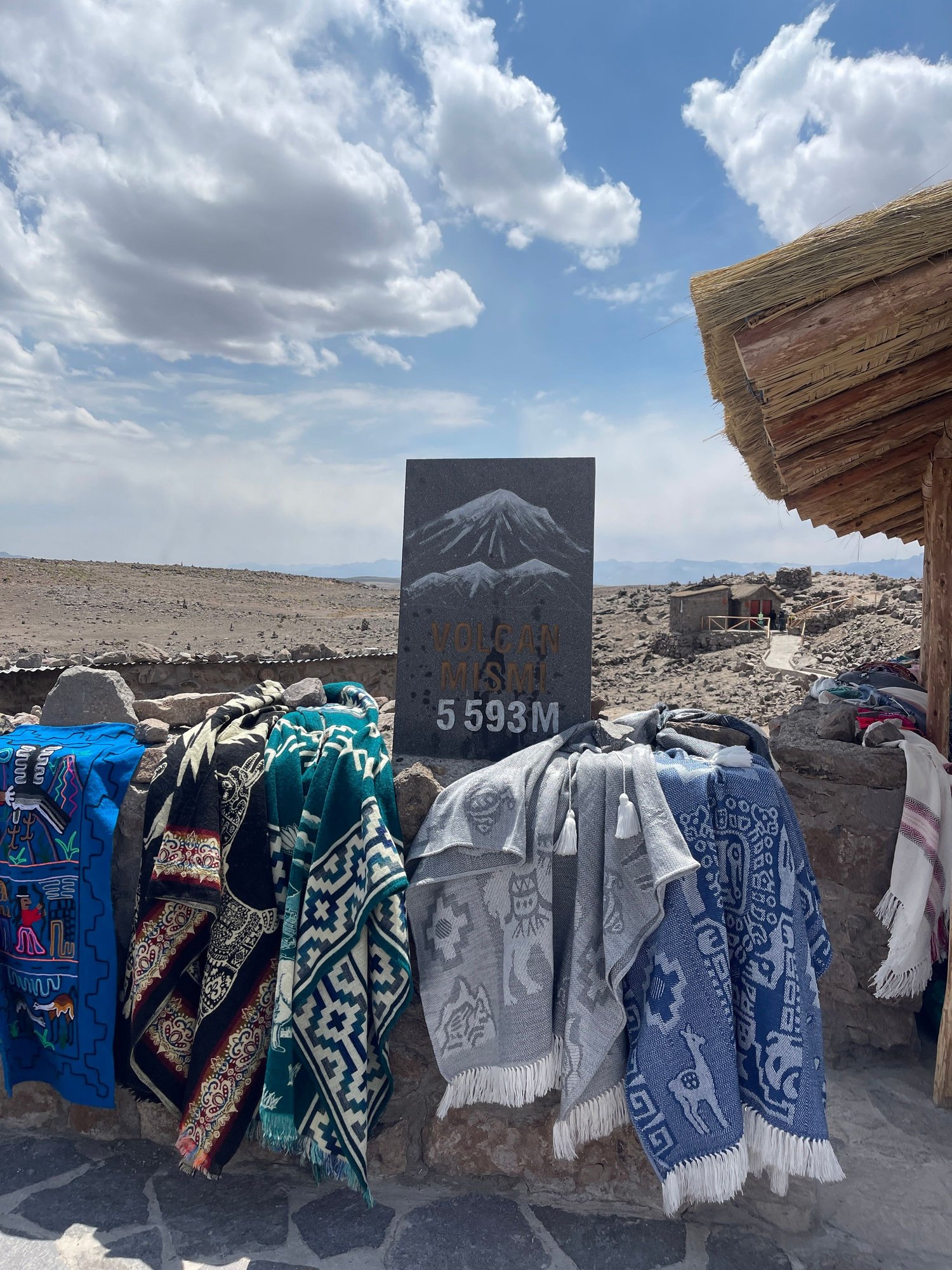
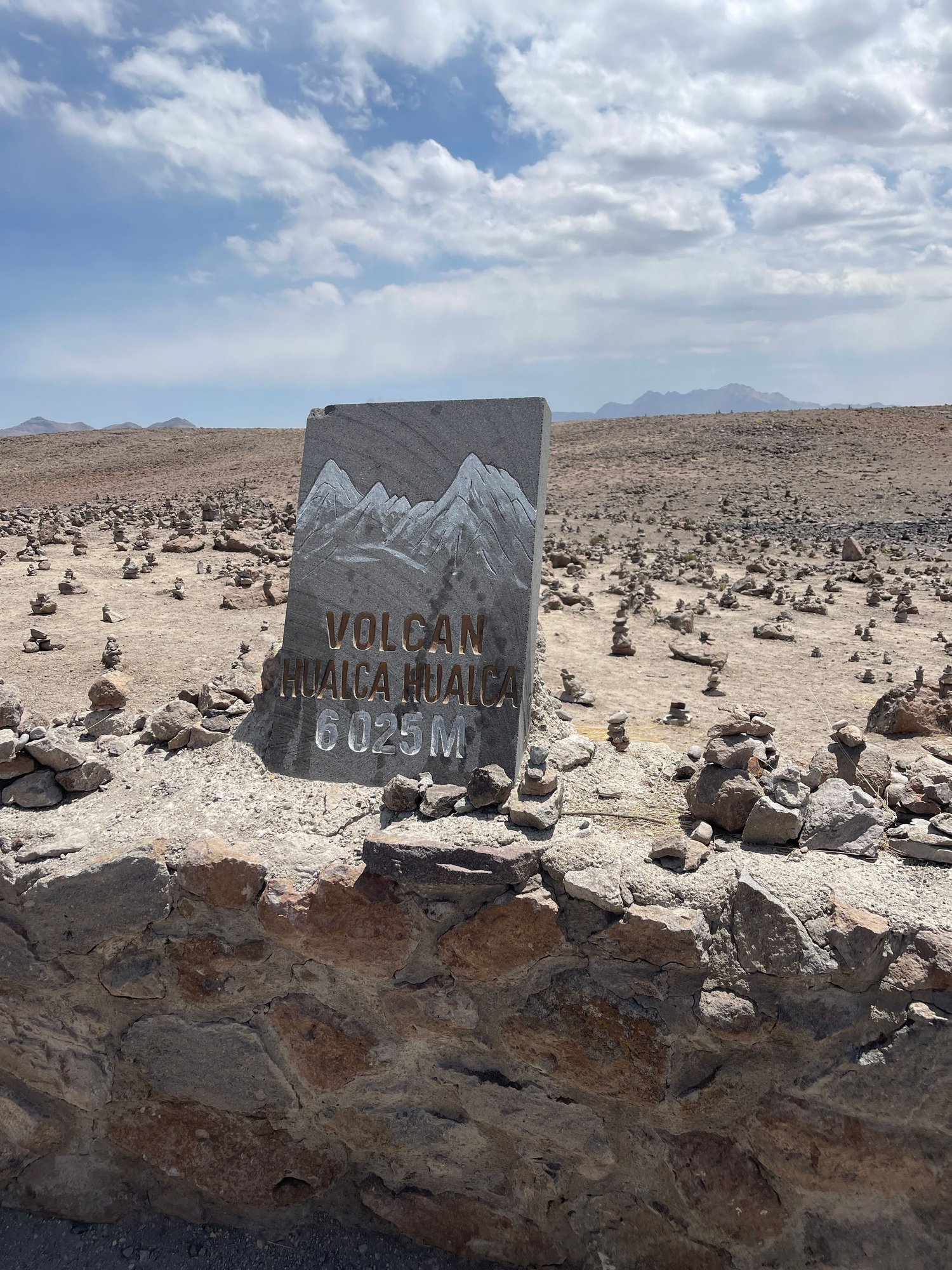
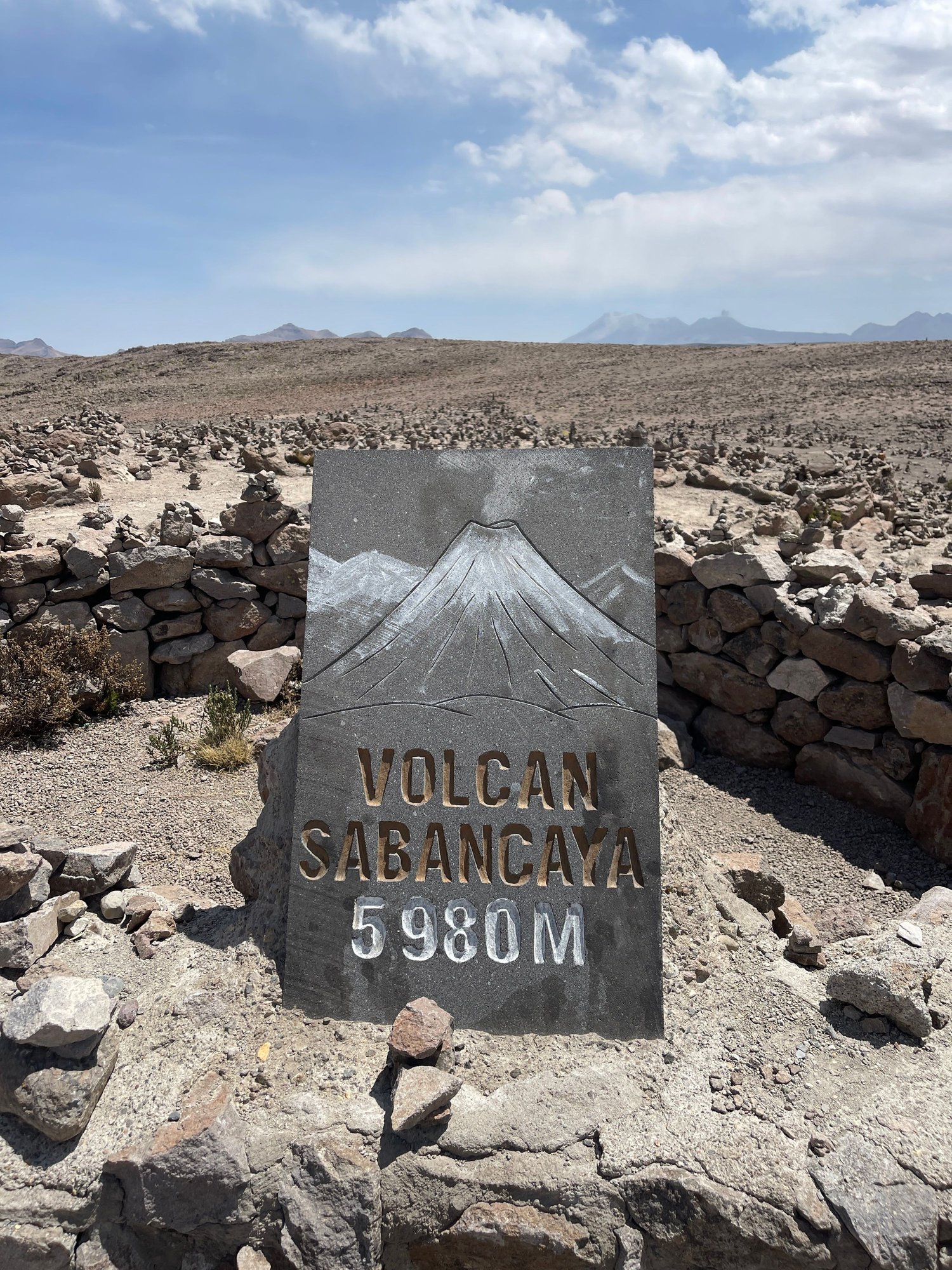
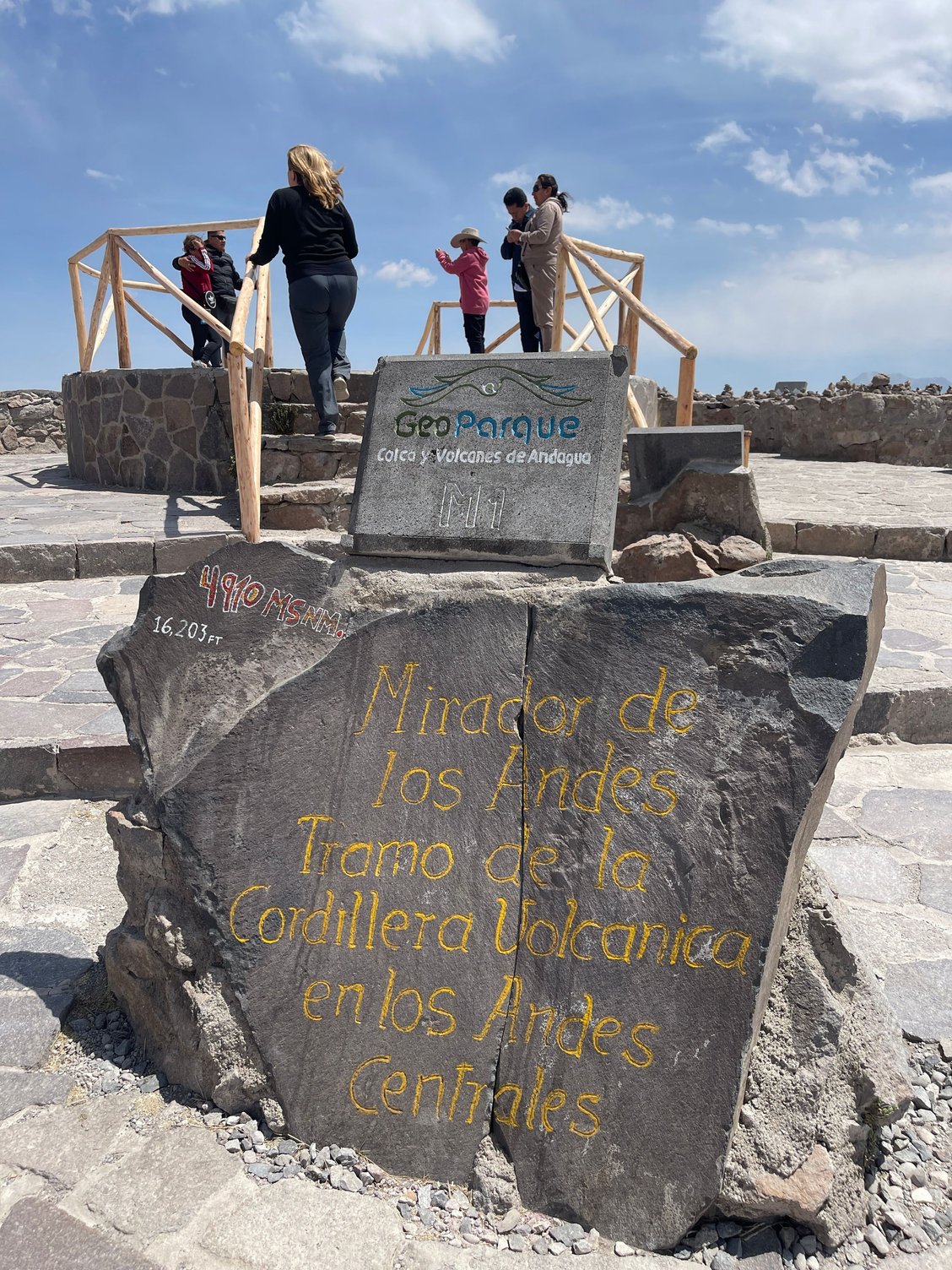
We then continued on our journey, very often now and then, the guide would stop and let us down to admire the scenery. We went higher and higher until we reached Mirado de Los Andes, 16,000 ft above sea level.
This is the highest point of the road between Colca Canyon and Arequipa at 4910m/16109ft above sea level. There is an overlook offering a panorama of five volcanoes.
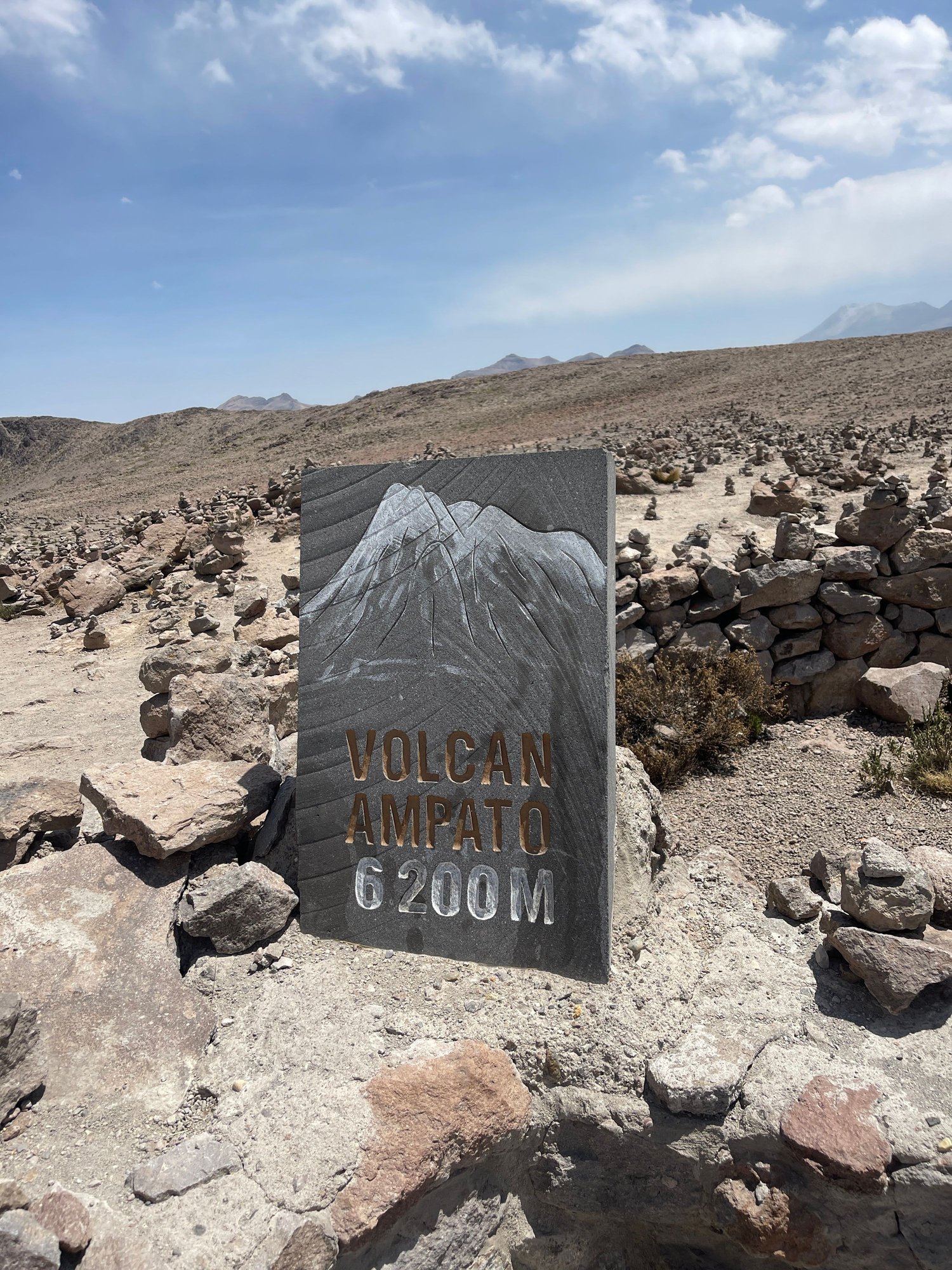
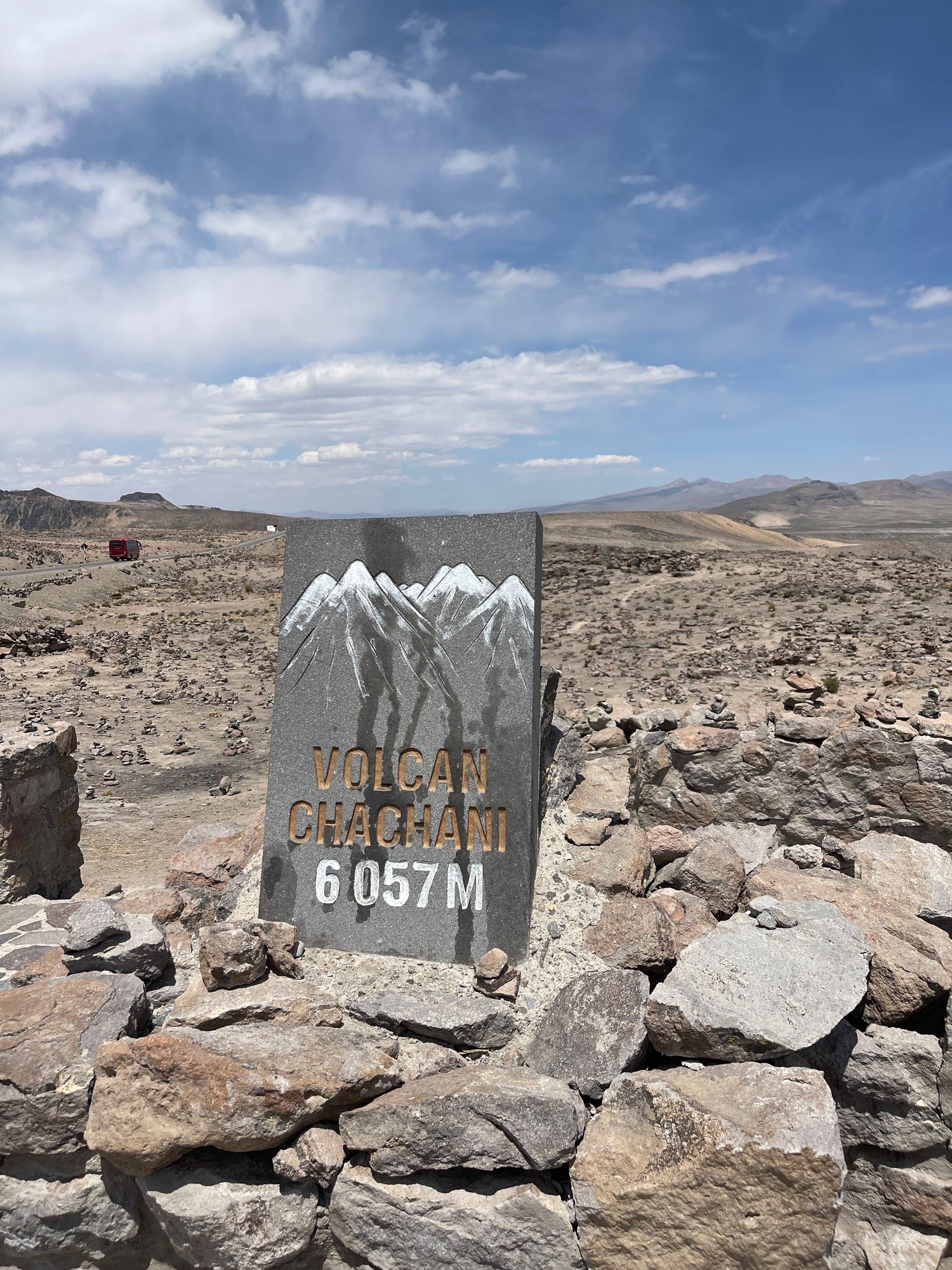
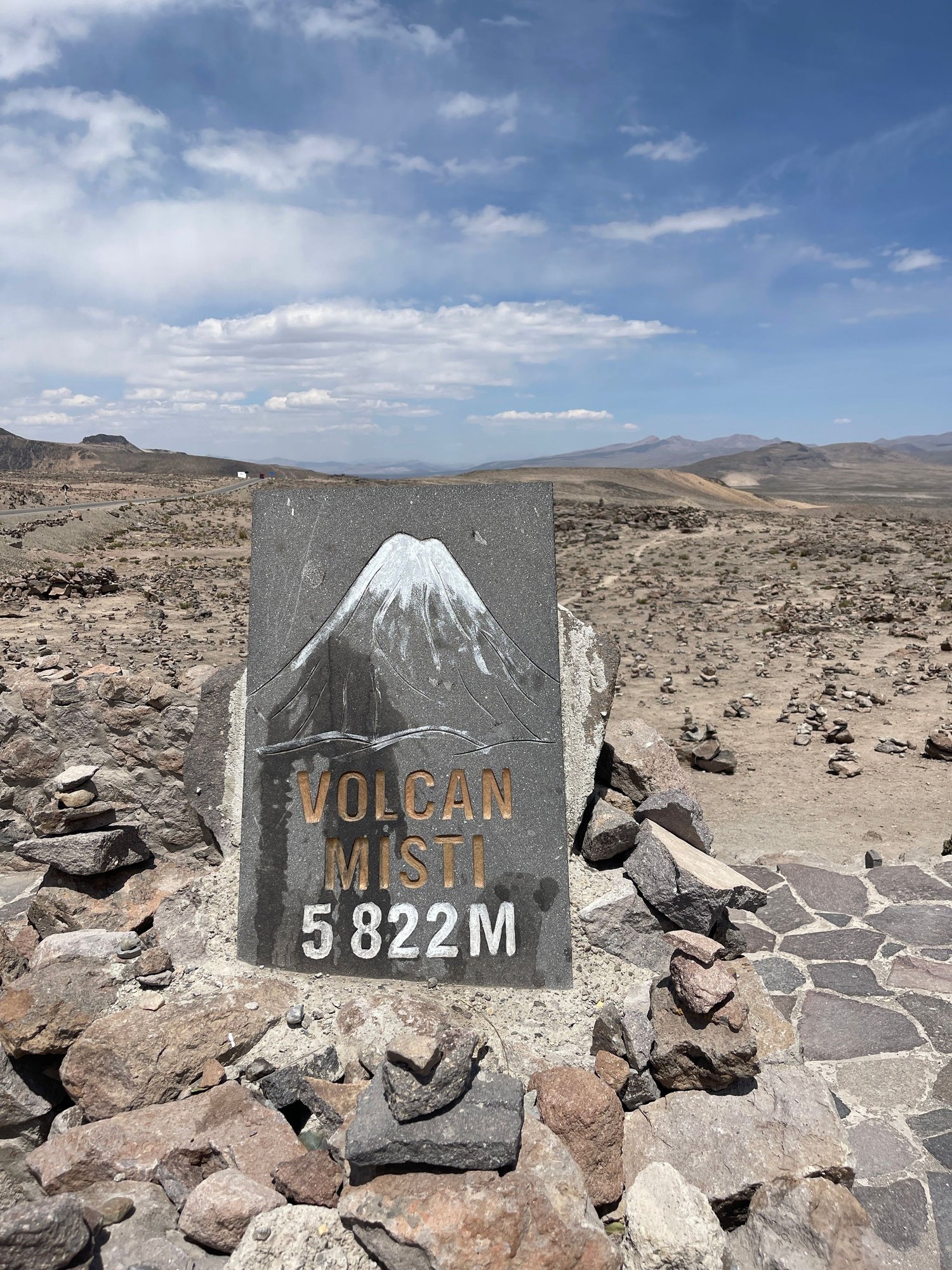
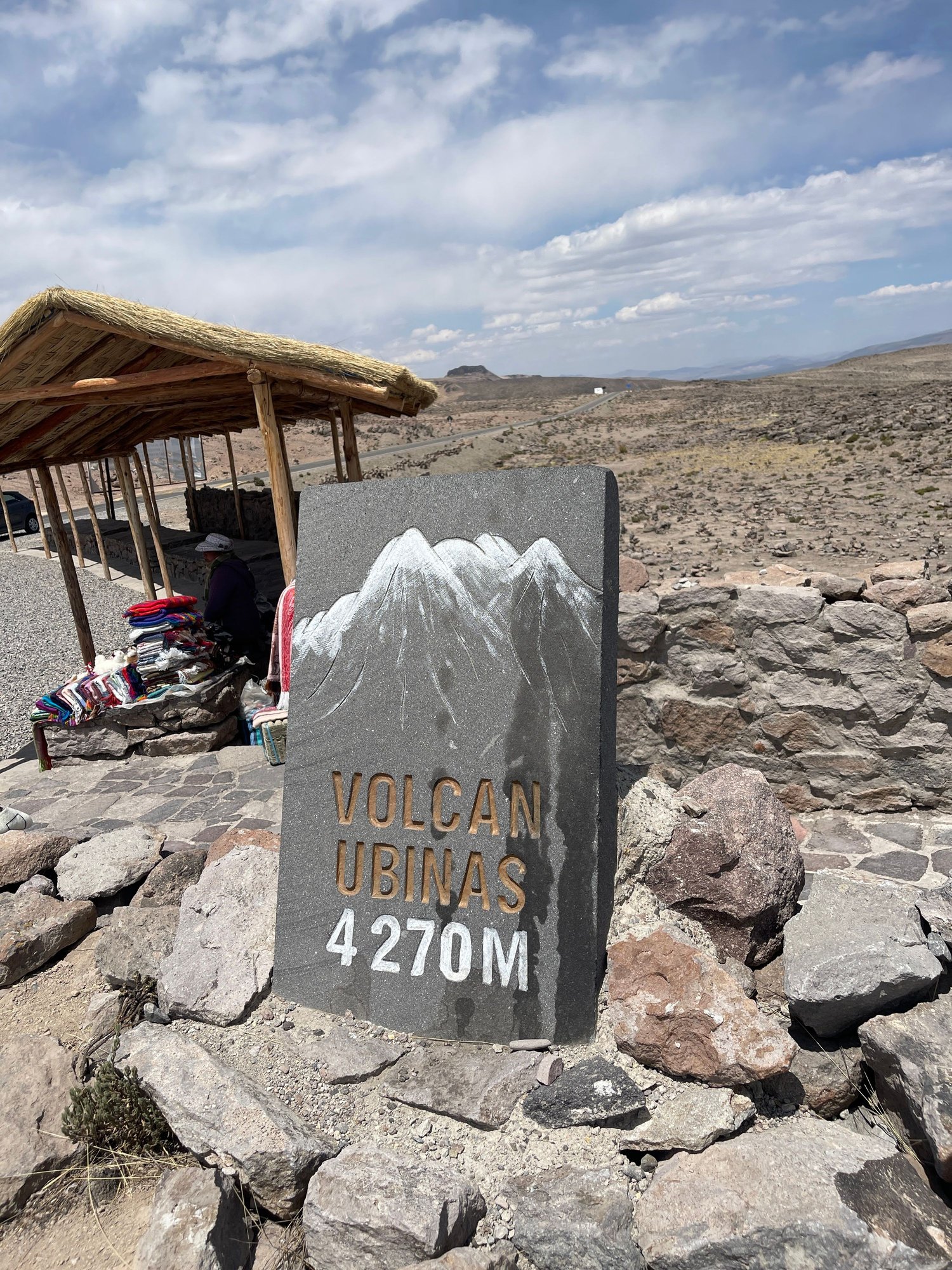
We joined the above journey with the Inka Express bus tour. At this point, we knew we would be fine with altitude over 13,000 ft. This journey has a stop that is over 16,000 ft, Chivay is12,000 ft, Colca Canyon around 13,000 ft, and Puno is situated over 12,000 ft. This would be our highest altitude test in our planned trip.
We left the beautiful city of Arequipa around 7:30am. We were picked up from the hotel and then transferred to the tour bus. We chose this service because all the pickups and drop offs from the hotel were included. The small bus we had for this part of the journey was quite new and comfortable.
We passed the big Yura cement plant after we left Arequipa. After that, we steadily ascended towards the plain of the Salinas y Aguada Blanca National Reserve. Once again, we saw the herd of vicuñas glazing freely on the plain. The scenery was beautiful and had a vast open atmosphere.
Yura cement plant
View of the cement plant from further up the mountain
vicuñas glazing freely, and the backdrop is Chachani
We stopped at the RESTAURANTE SUMAQ MATE INKA for a toilet break. It has a cafe, and a market that sells all sorts of the alpaca products.
We then continued on our journey, very often now and then, the guide would stop and let us down to admire the scenery.
Up higher to the mountain
We then continued on our journey, very often now and then, the guide would stop and let us down to admire the scenery. We went higher and higher until we reached Mirado de Los Andes, 16,000 ft above sea level.
This is the highest point of the road between Colca Canyon and Arequipa at 4910m/16109ft above sea level. There is an overlook offering a panorama of five volcanoes.
From this point, we continued the journey descending to the valley of Chivay. It was great scenery all the way to Chivay where it was our stop for lunch and overnight stay.
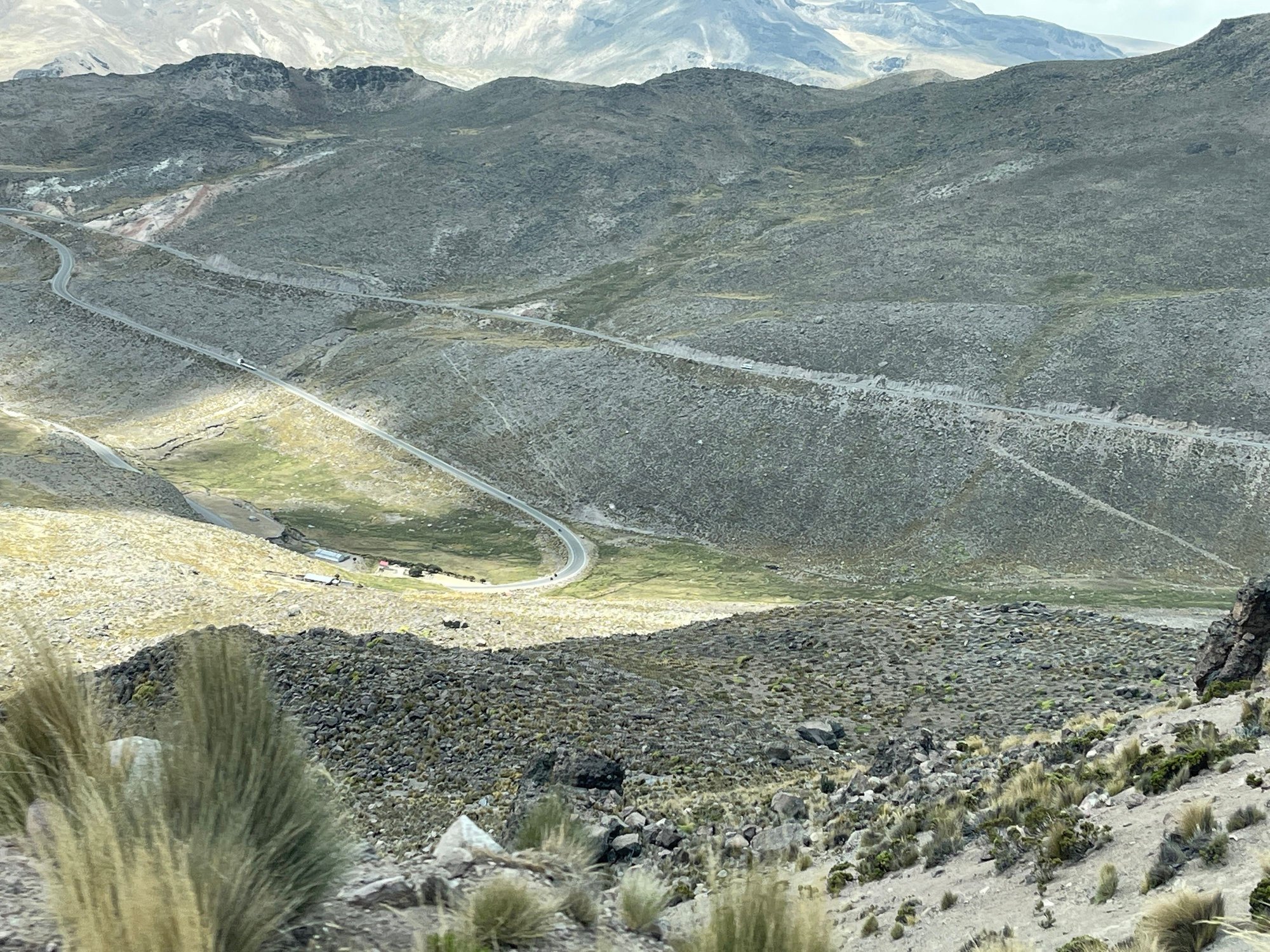
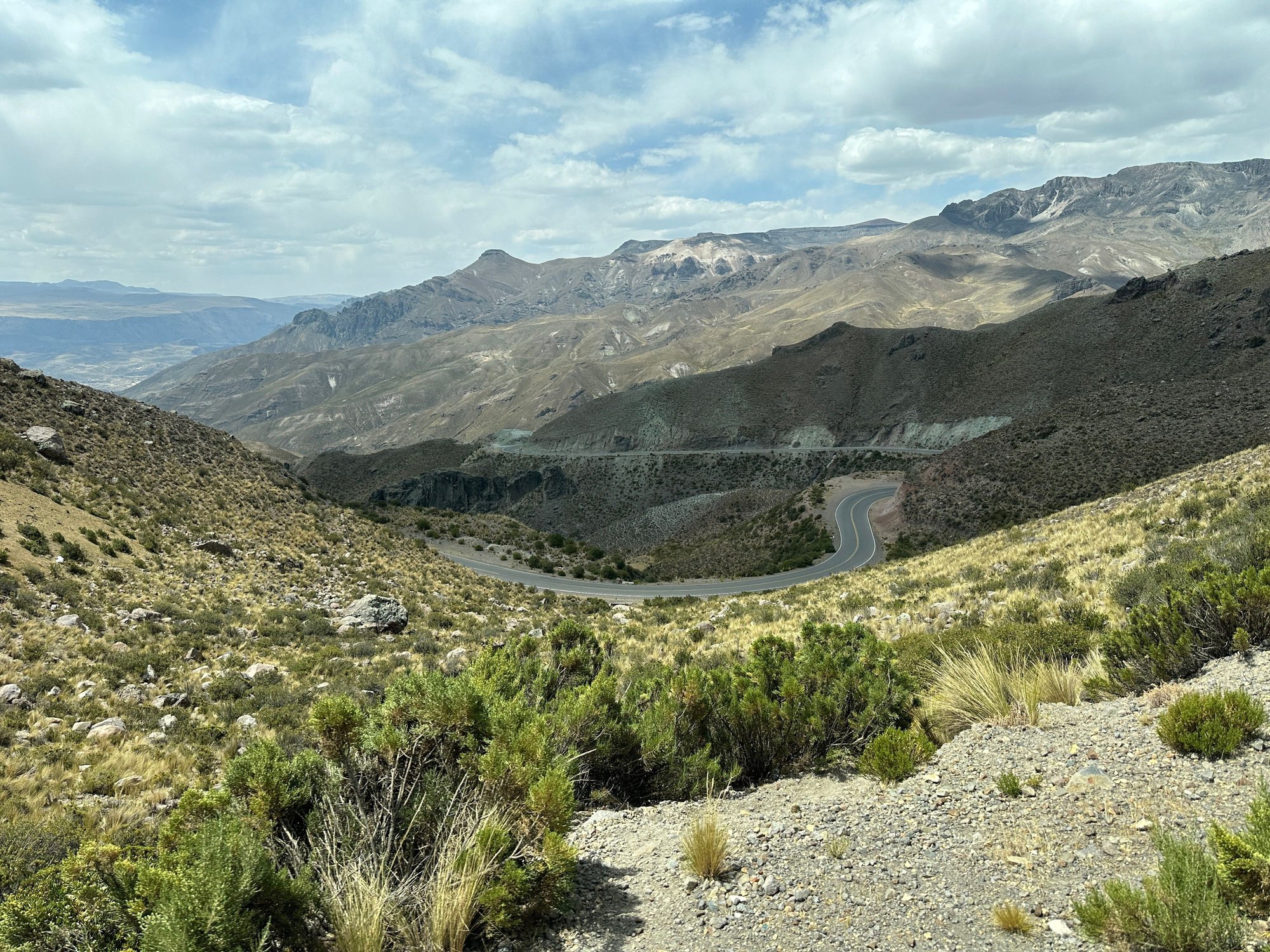
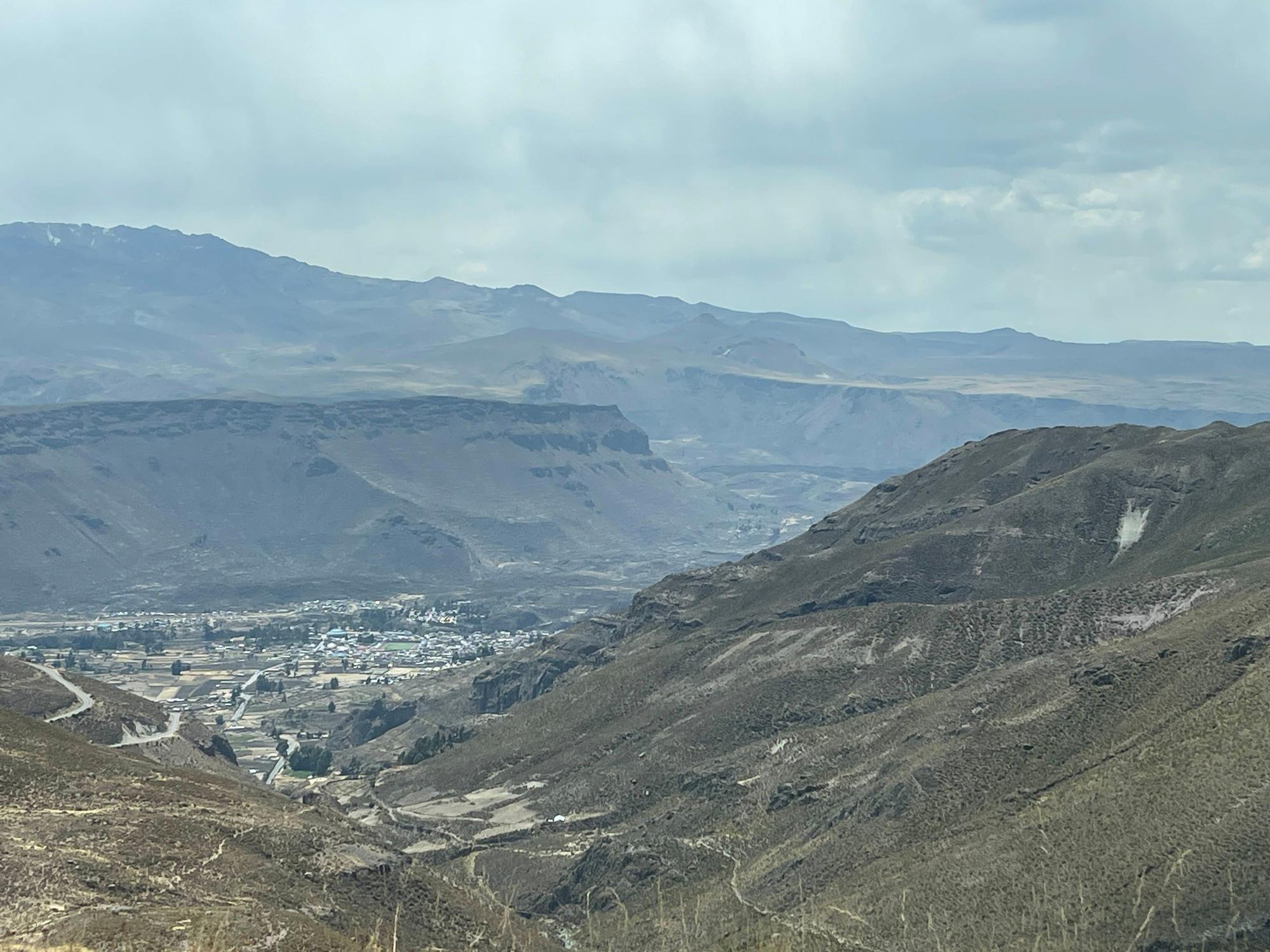
The valley where Chivay is situated
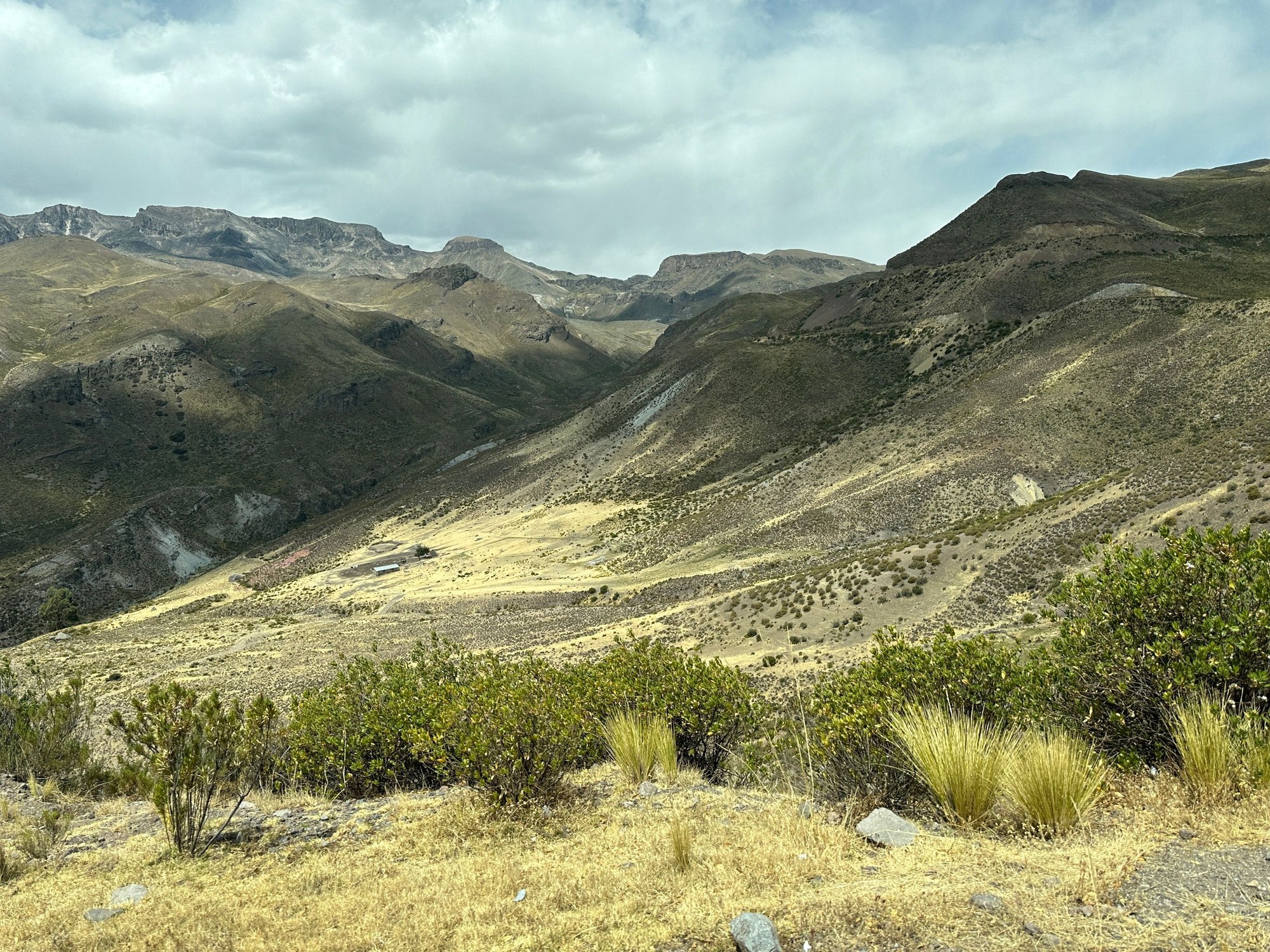
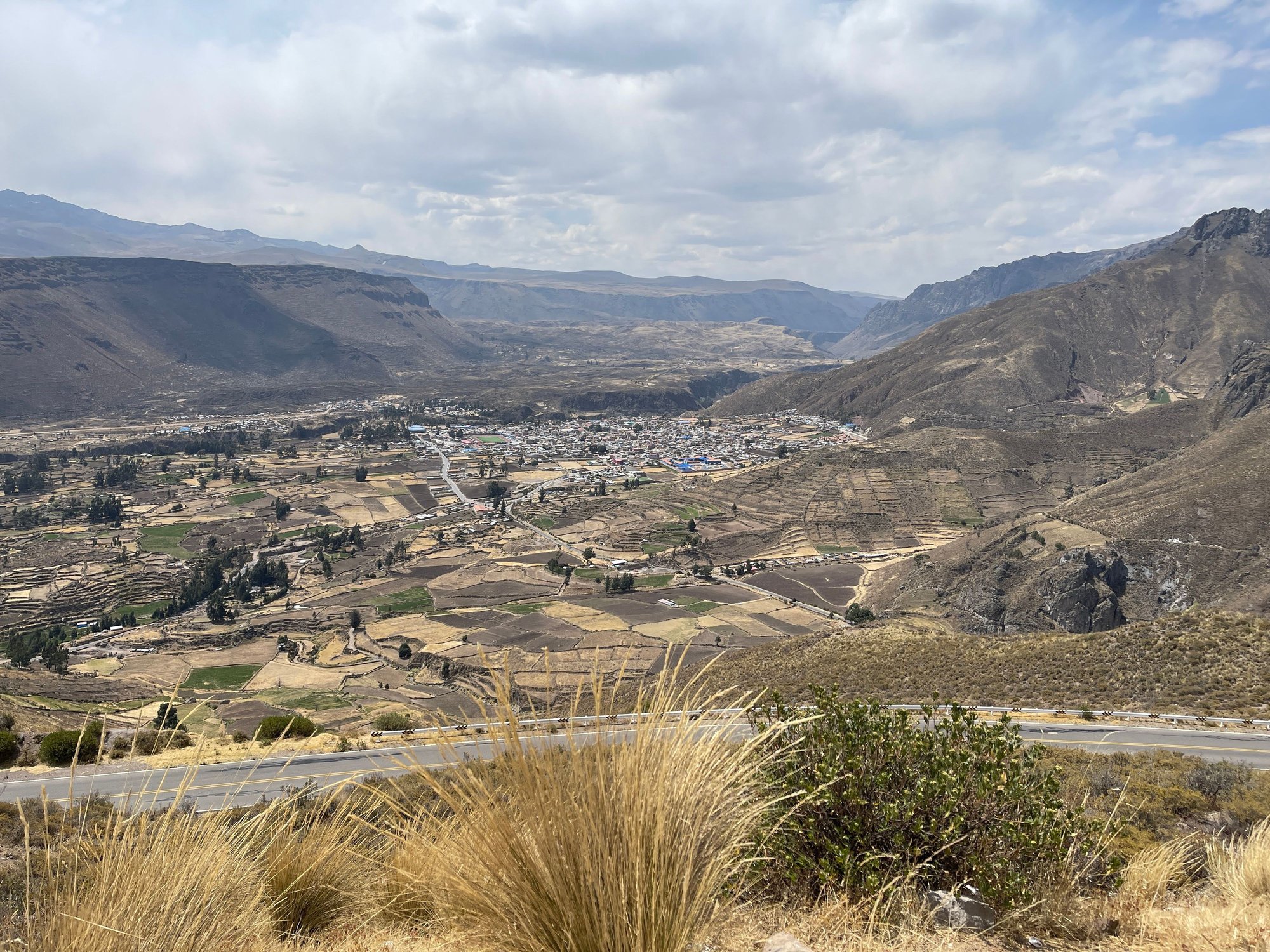
Approaching Chivay
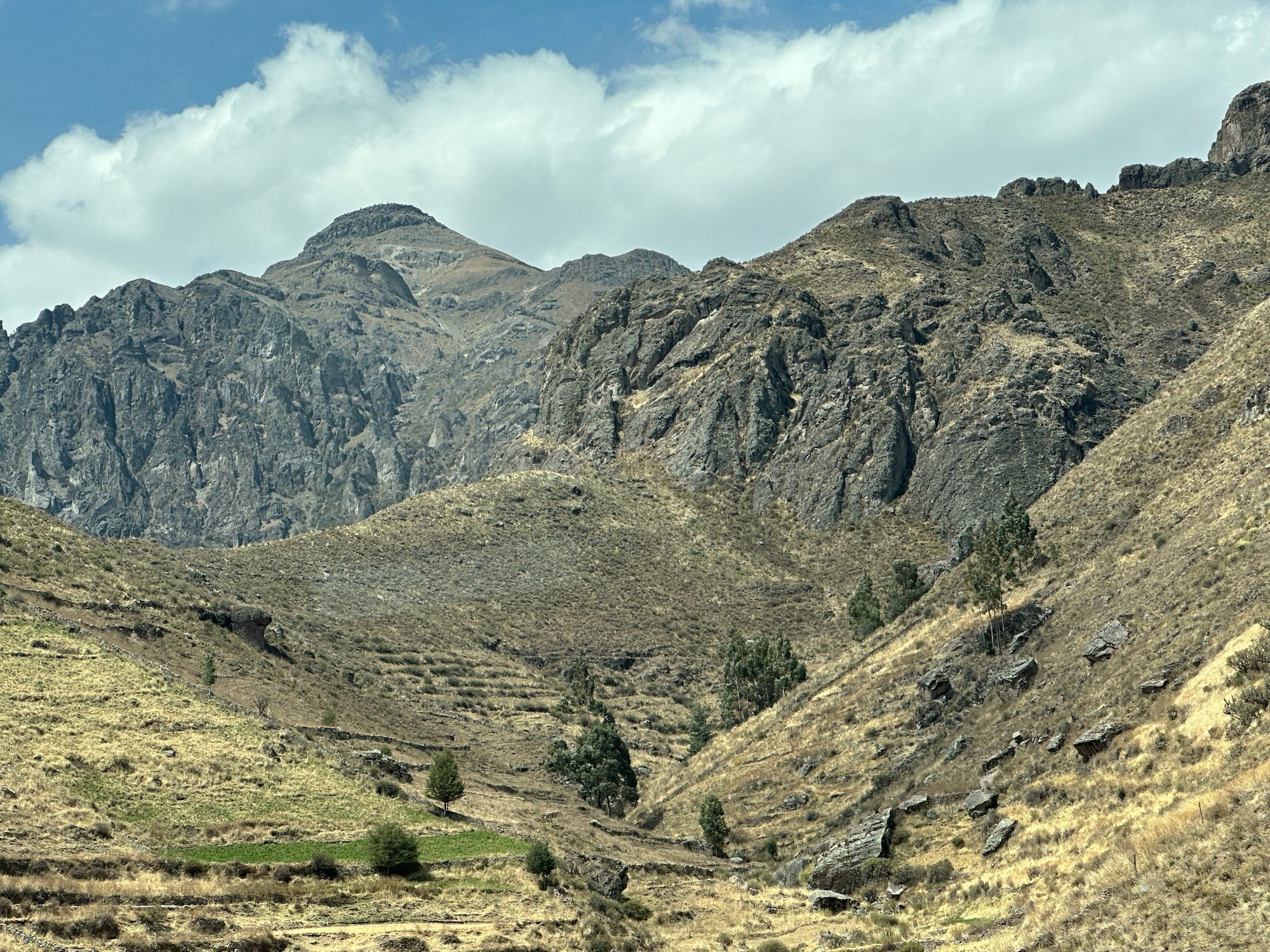
Upon arrival in the town of Chivay, we had a buffet lunch which was included in our package. After lunch, we were transported to our Hotel Colca Del Llqata. We were informed by the guide that we could choose to rest or go to the Chacapi thermo bath. We chose to rest as we did not want to push ourselves too much over the high altitude. It does wear you out easily when you are in a high altitude area.
We joined the tour group later at the dinner with an Inca performance in the evening. The dinner was at our own expense, and tips for the performance were voluntary. Most people chipped in tips at the end of the performance as it was quite an experience to see the performance of the Inca culture. It was a great way to experience Inca food, drinks, and performances of the Inca culture. There was quite a huge turnout as other tour groups were there too. We enjoyed the experience and had a good evening, especially like the Peruvian traditional music of “El Condo Pasa” was played.
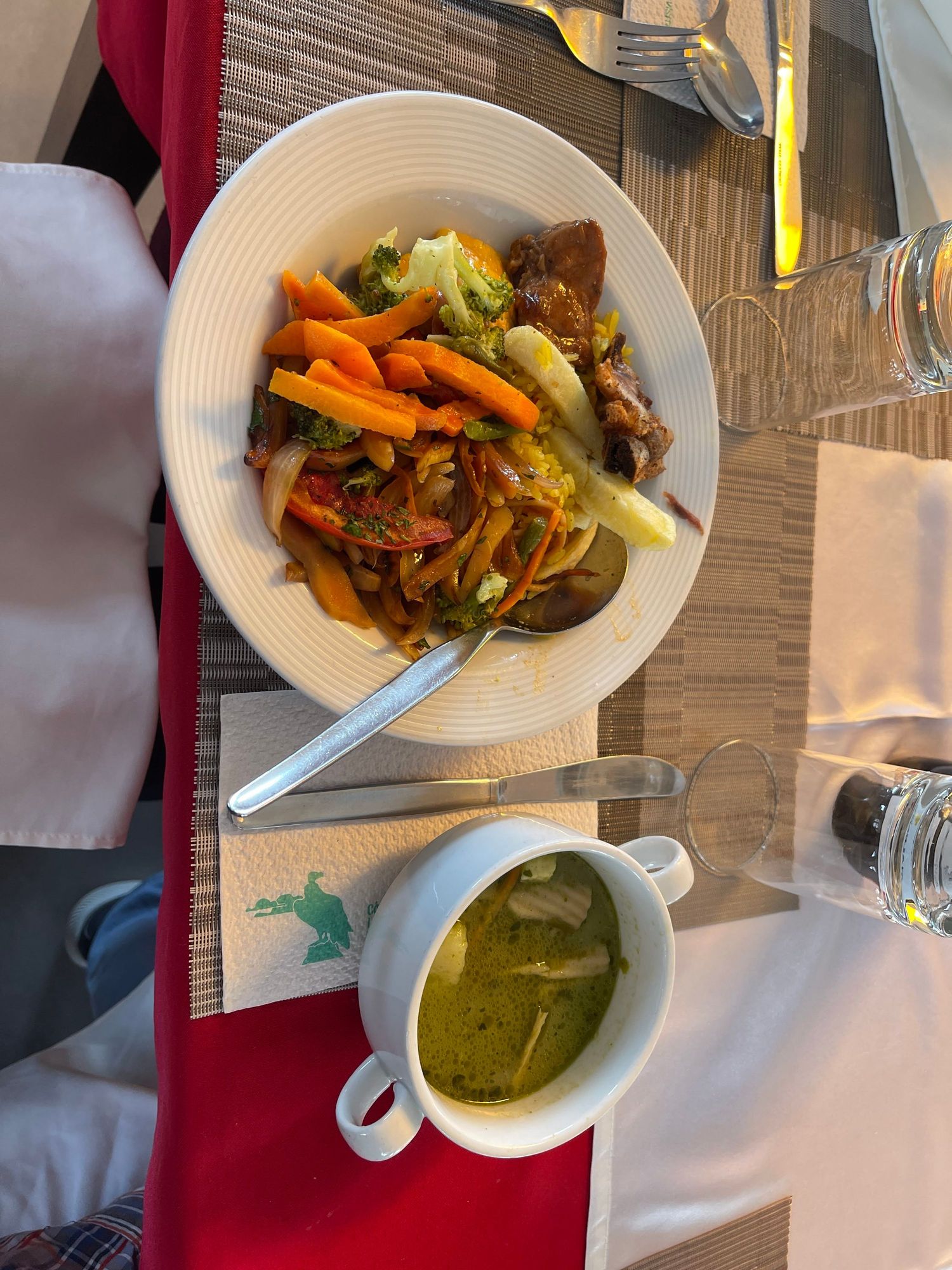
Our buffet lunch
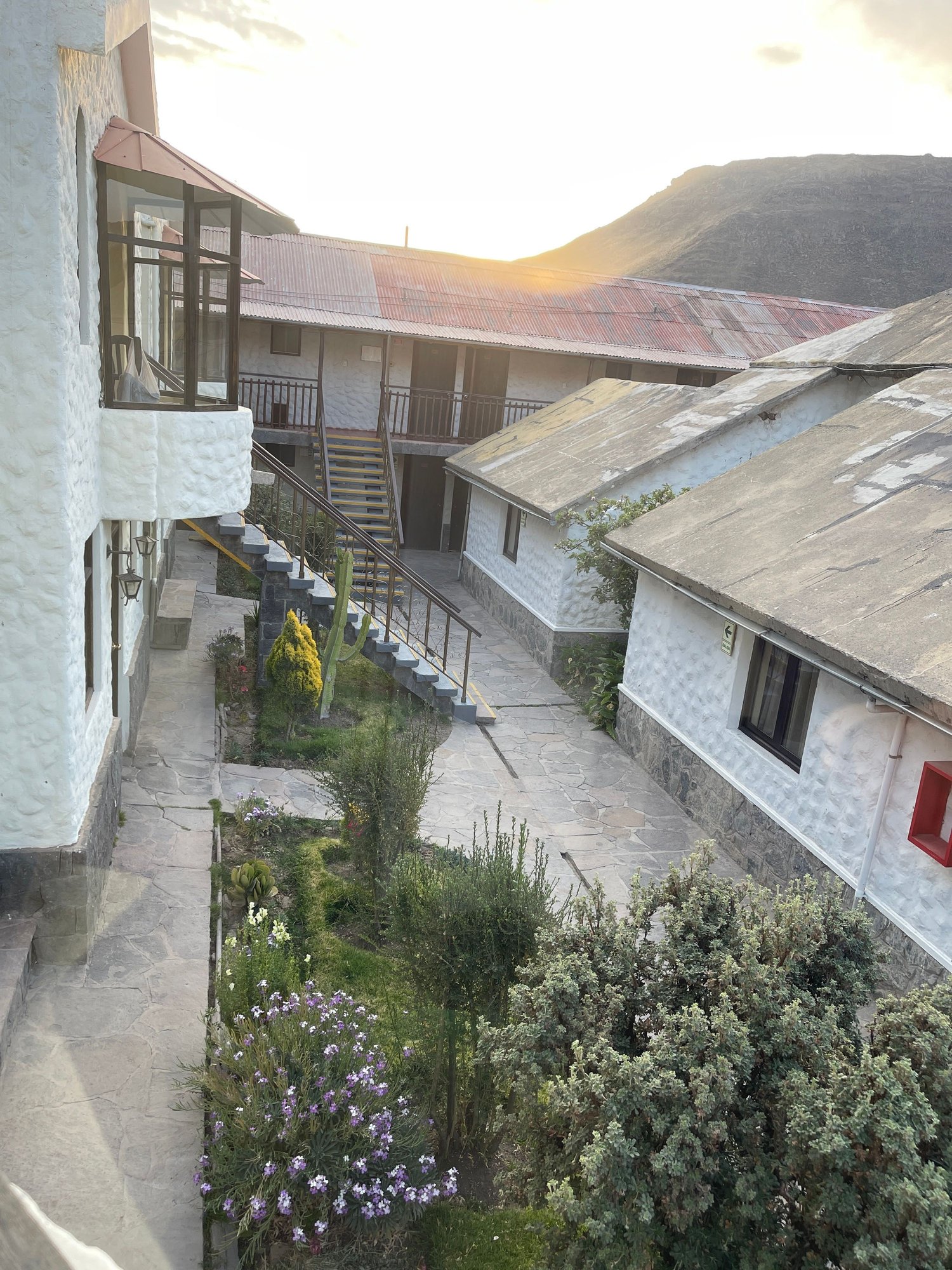
Our hotel
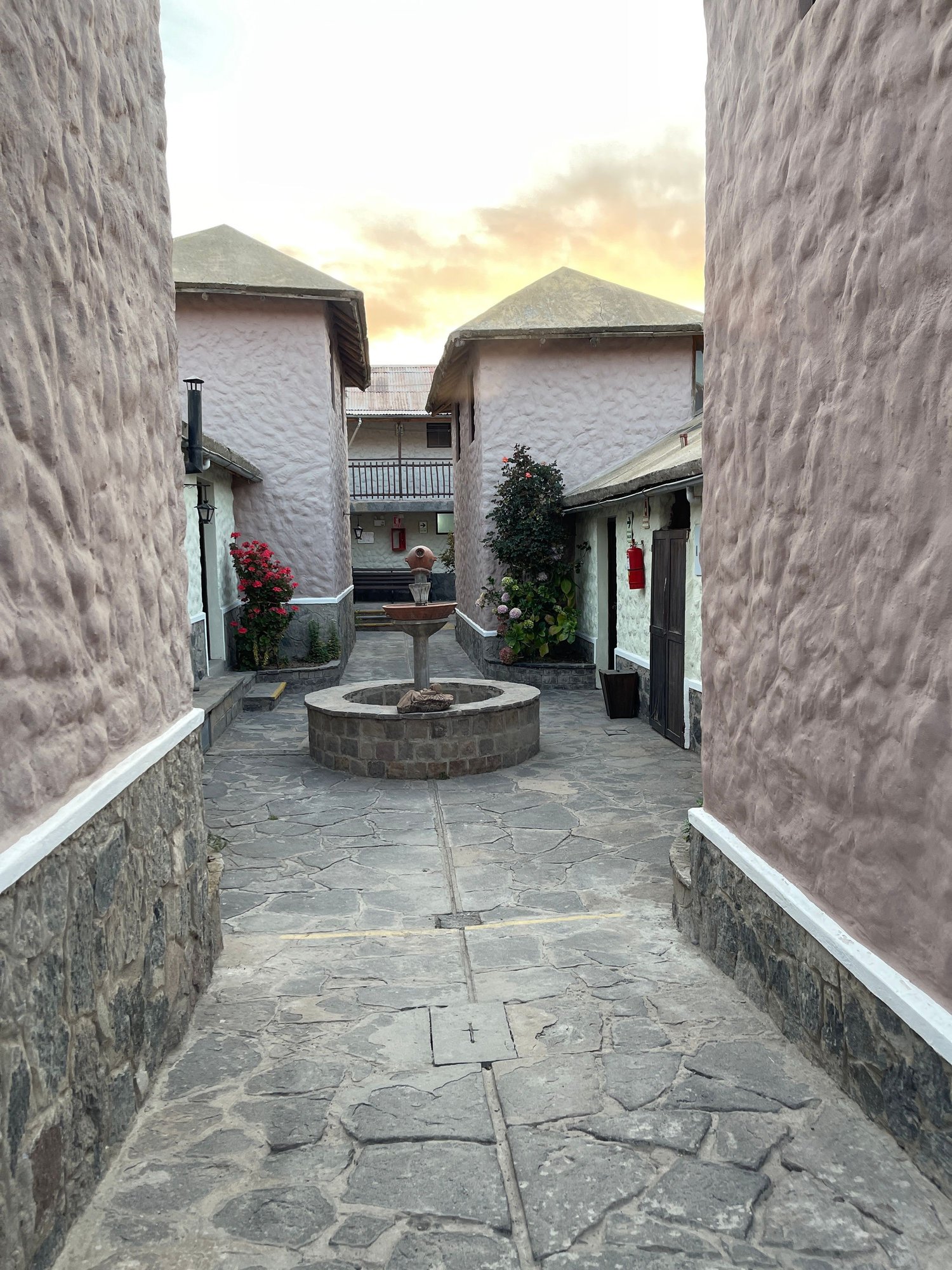
Our hotel premises
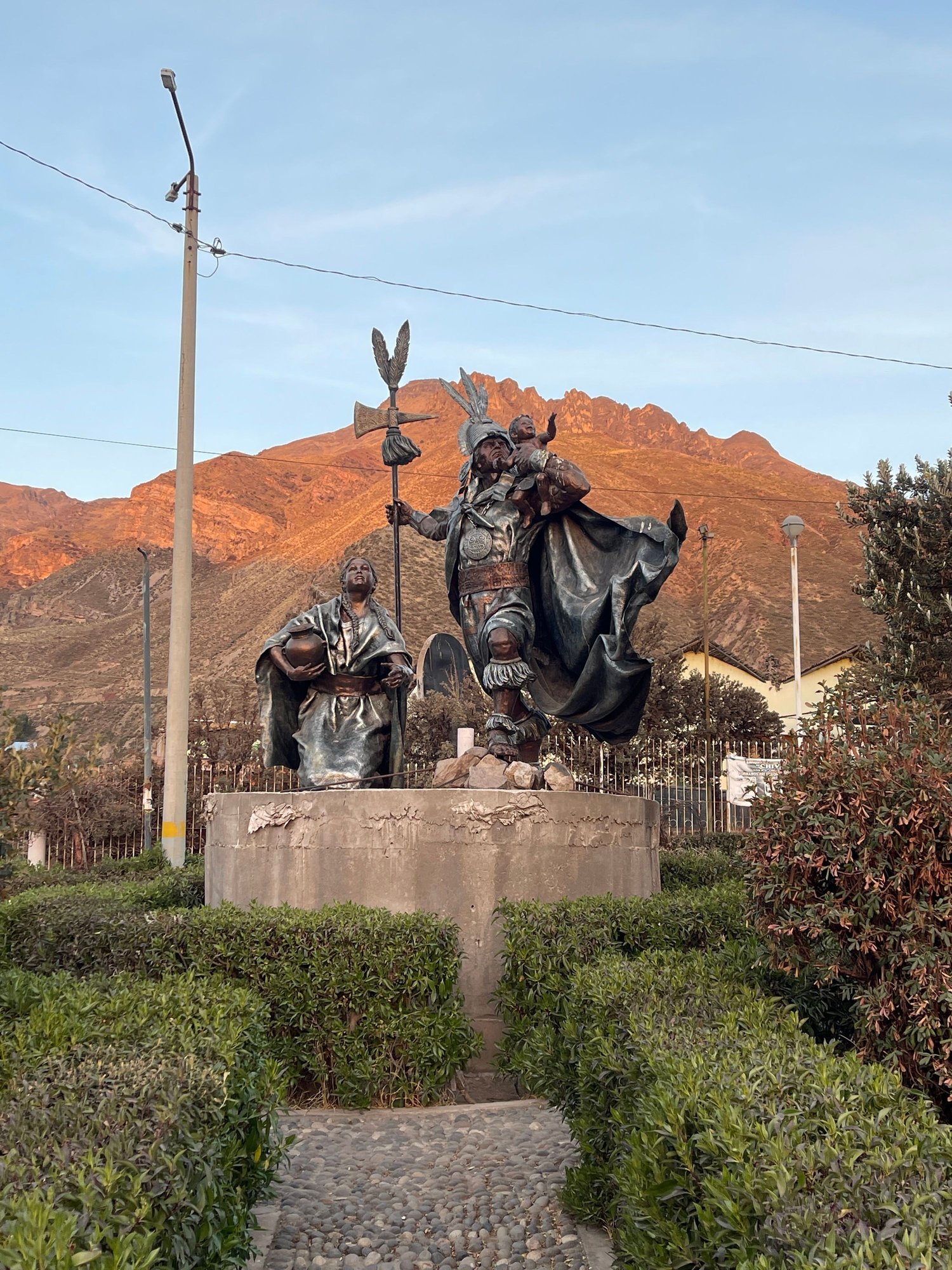
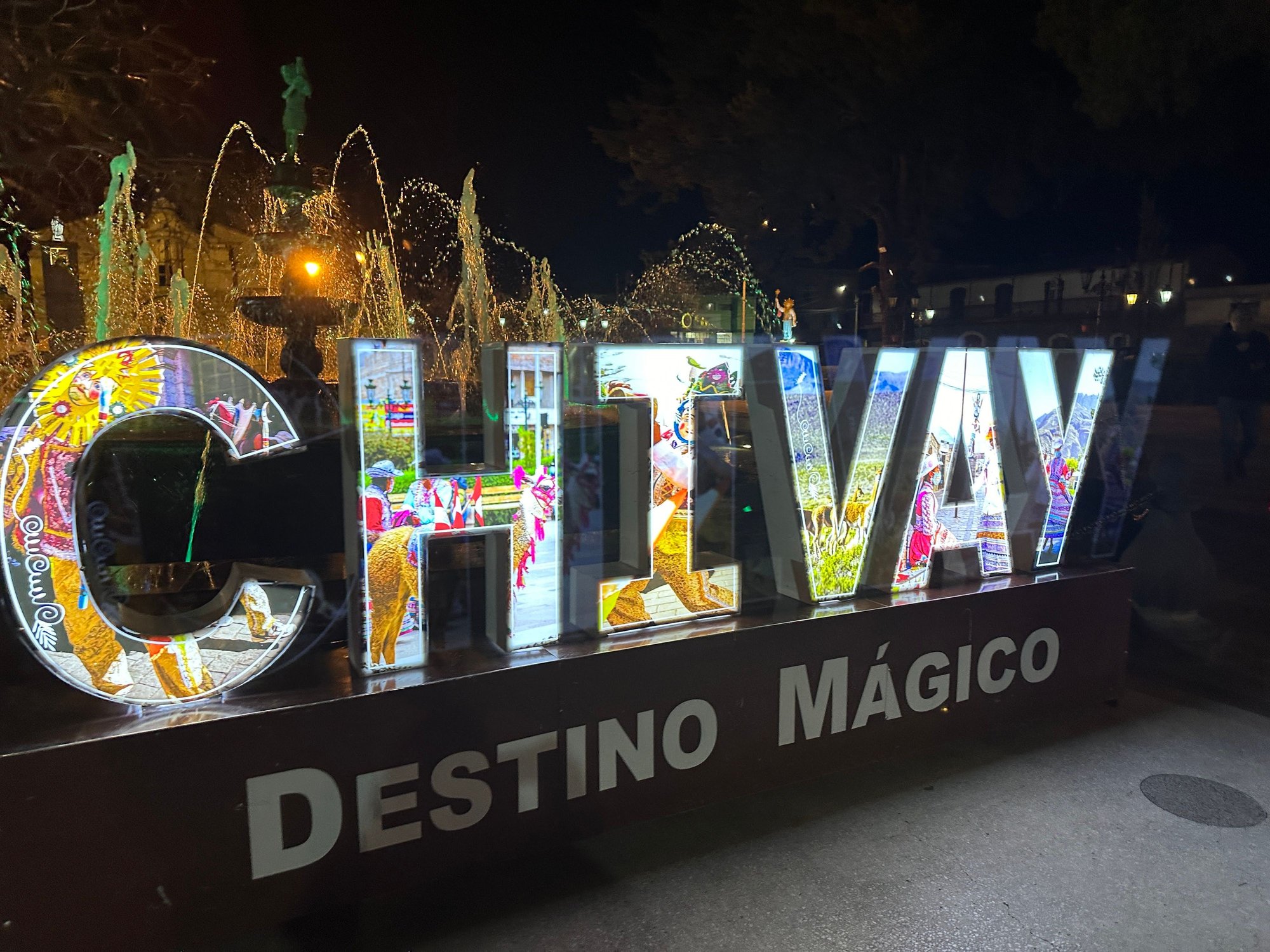
Chivay town
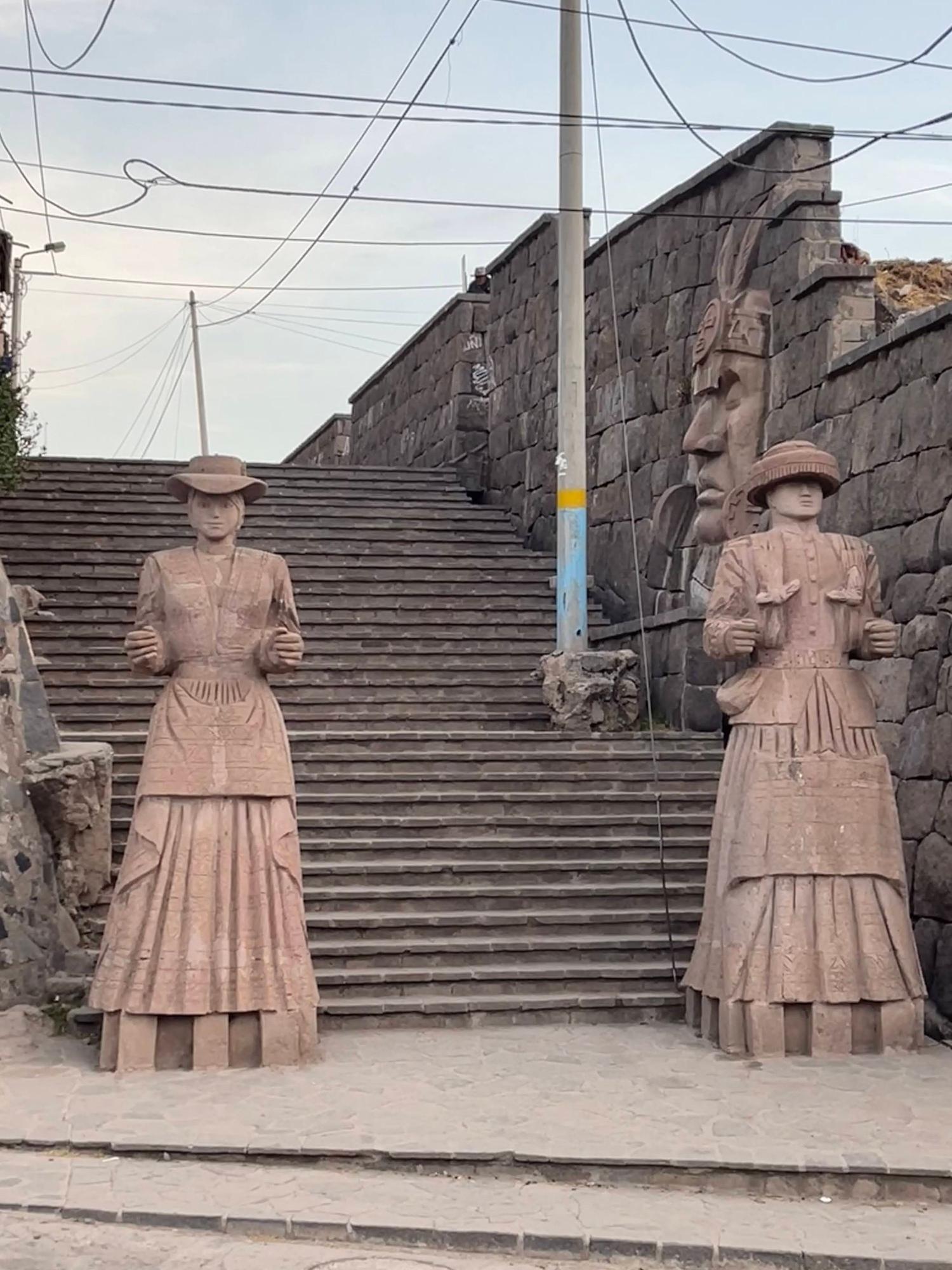
Chivay town
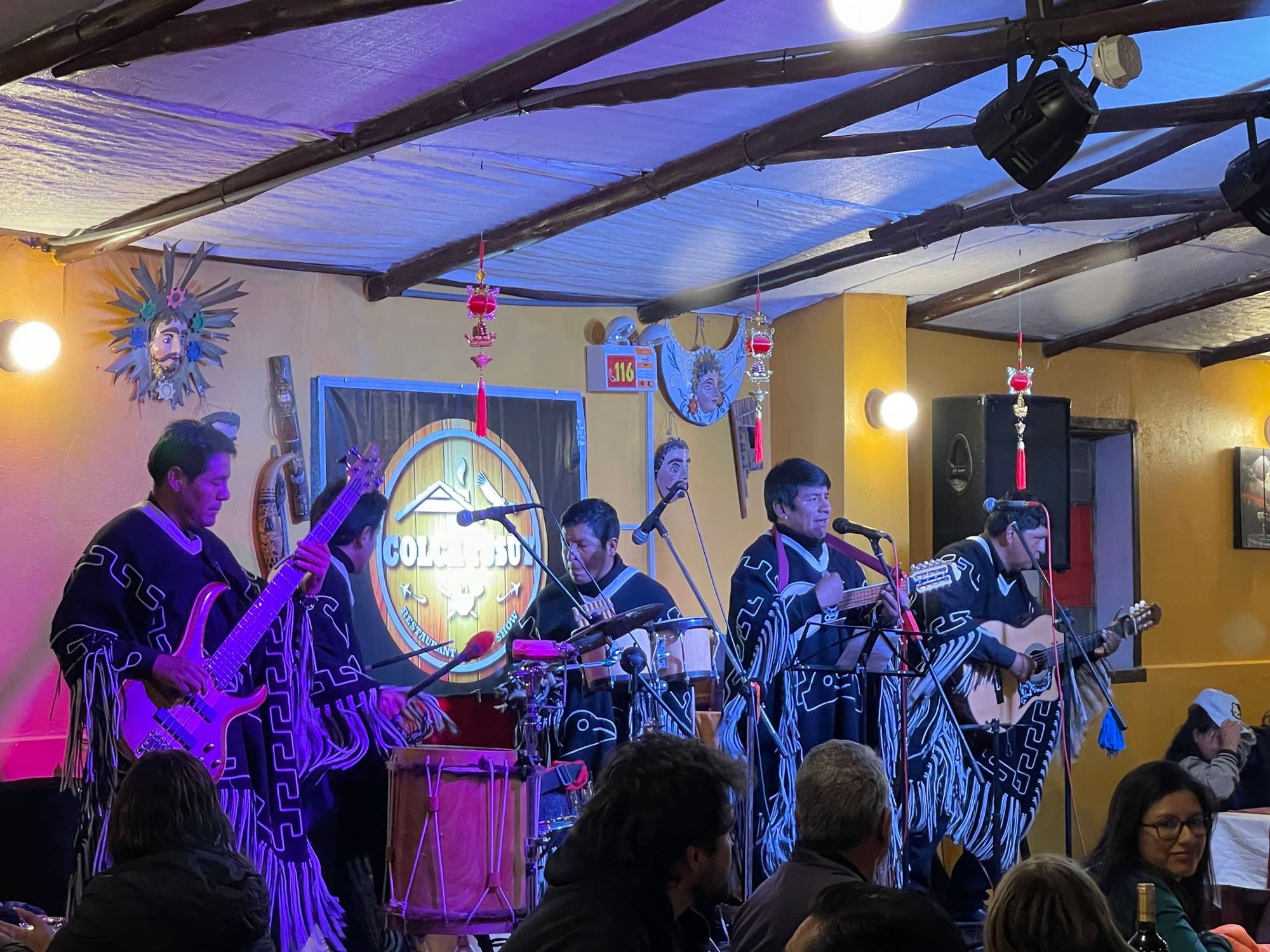
Performances at dinner
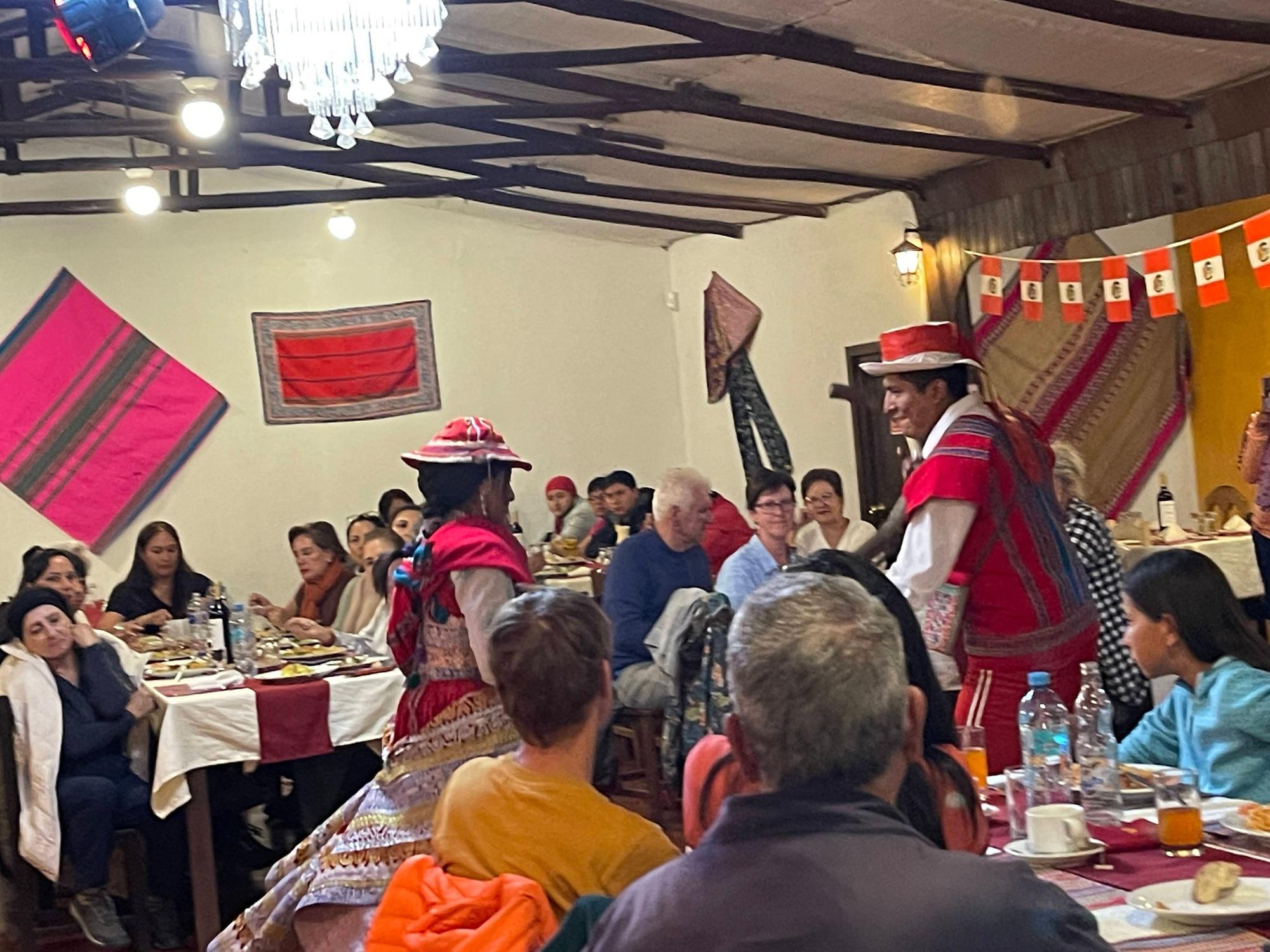
Inca culture dances at dinner restaurant
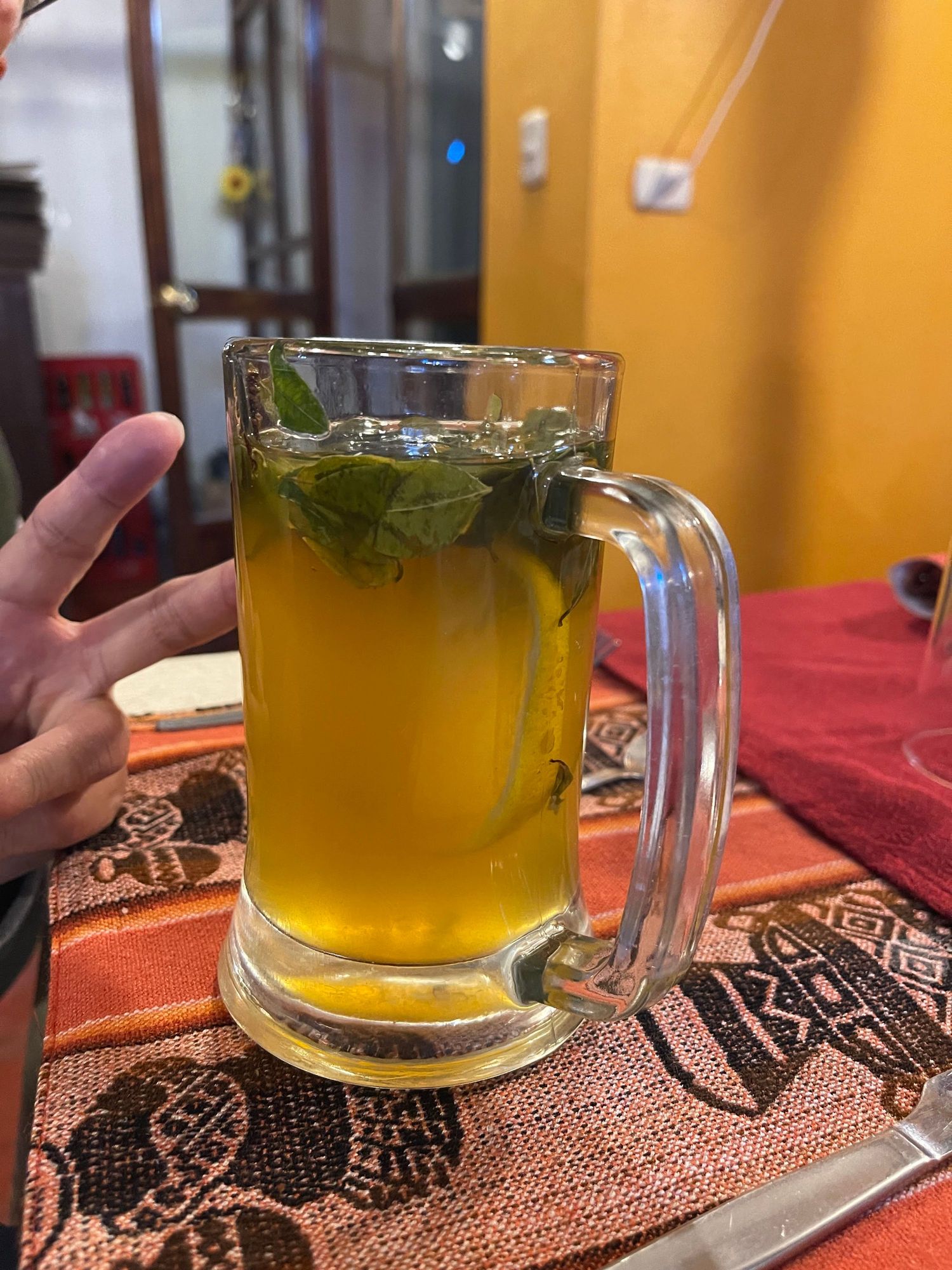
Very good Inca coca leaves drink
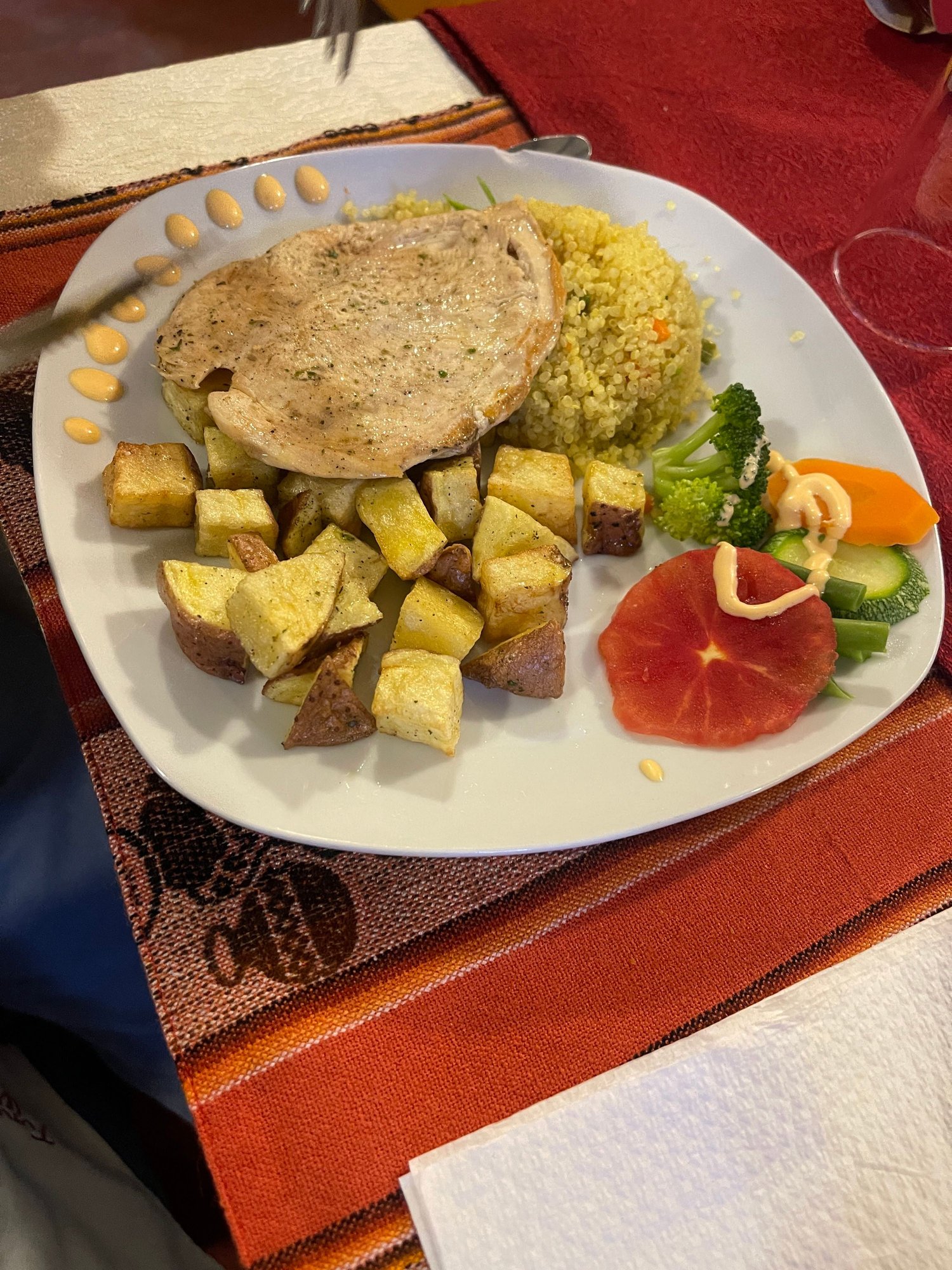
Our dinner
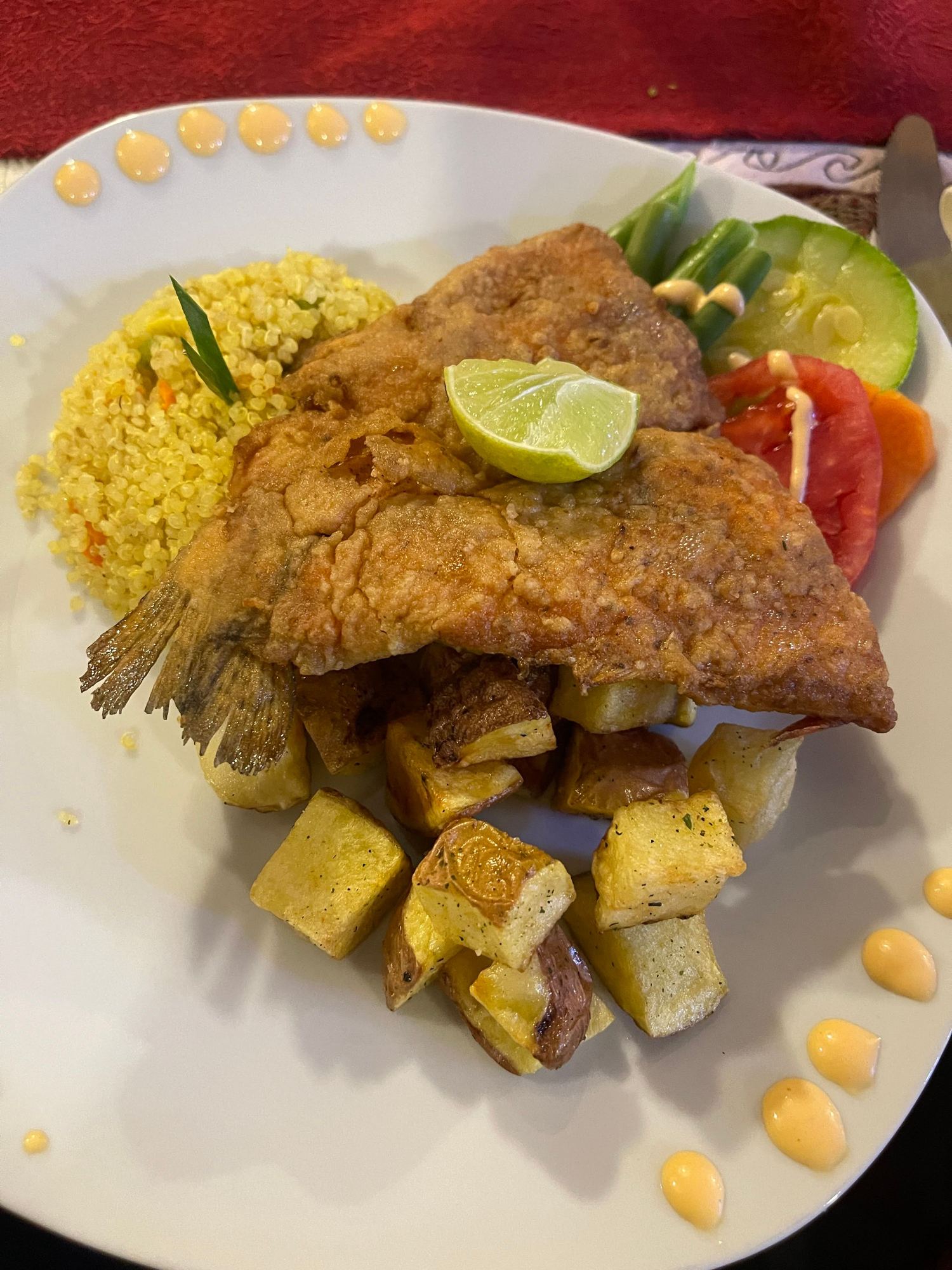
Our dinner
The valley where Chivay is situated
Approaching Chivay
Upon arrival in the town of Chivay, we had a buffet lunch which was included in our package. After lunch, we were transported to our Hotel Colca Del Llqata. We were informed by the guide that we could choose to rest or go to the Chacapi thermo bath. We chose to rest as we did not want to push ourselves too much over the high altitude. It does wear you out easily when you are in a high altitude area.
We joined the tour group later at the dinner with an Inca performance in the evening. The dinner was at our own expense, and tips for the performance were voluntary. Most people chipped in tips at the end of the performance as it was quite an experience to see the performance of the Inca culture. It was a great way to experience Inca food, drinks, and performances of the Inca culture. There was quite a huge turnout as other tour groups were there too. We enjoyed the experience and had a good evening, especially like the Peruvian traditional music of “El Condo Pasa” was played.
Our buffet lunch
Our hotel
Our hotel premises
Chivay town
Chivay town
Performances at dinner
Inca culture dances at dinner restaurant
Very good Inca coca leaves drink
Our dinner
Our dinner

Cherthor, Wow!!! Your photos of the Santa Catalina Monastery are stunning! I love those bold reds and brilliant blues. Gorgeous!
Arequipa looks beautiful!
So, it seems like on this trip, sometimes you traveled on your own, and sometimes you joined tours. Such as to Colca Canyon and Chivay. Am I right?
I never would have guessed English is not your native language. You are writing an excellent and easy to understand report.
Arequipa looks beautiful!
So, it seems like on this trip, sometimes you traveled on your own, and sometimes you joined tours. Such as to Colca Canyon and Chivay. Am I right?
I never would have guessed English is not your native language. You are writing an excellent and easy to understand report.
Quote:
Arequipa looks beautiful!
So, it seems like on this trip, sometimes you traveled on your own, and sometimes you joined tours. Such as to Colca Canyon and Chivay. Am I right?
I never would have guessed English is not your native language. You are writing an excellent and easy to understand report.
Karen,Originally Posted by KarenWoo
Cherthor, Wow!!! Your photos of the Santa Catalina Monastery are stunning! I love those bold reds and brilliant blues. Gorgeous!Arequipa looks beautiful!
So, it seems like on this trip, sometimes you traveled on your own, and sometimes you joined tours. Such as to Colca Canyon and Chivay. Am I right?
I never would have guessed English is not your native language. You are writing an excellent and easy to understand report.
For our Peru trip, we planned the trip ourselves, but use the local tours and guides to take us from more remote places. We went to the local tourist information center and find out more information before booking the tours.
For Colca canyon, Chivay, and Puno, we booked the Inka Express bus tour through online service because it provides all the pick ups and drop offs from the hotels. We had good experiences with the Colca canyon, Chivay and Puno bus tour, but for another long bus tour later from Puno to Cusco (also known as The Sun Road), we did encounter some hiccups on the way. To avoid any mishaps, driving in high altitudes is not advisable.
Day 11–Colca Canyon, then Chivay to Puno
We had an early breakfast provided by the hotel before the bus trip from Chivay to the Colca Canyon. We were picked up by our guide and continued on our journey to Colca Canyon.
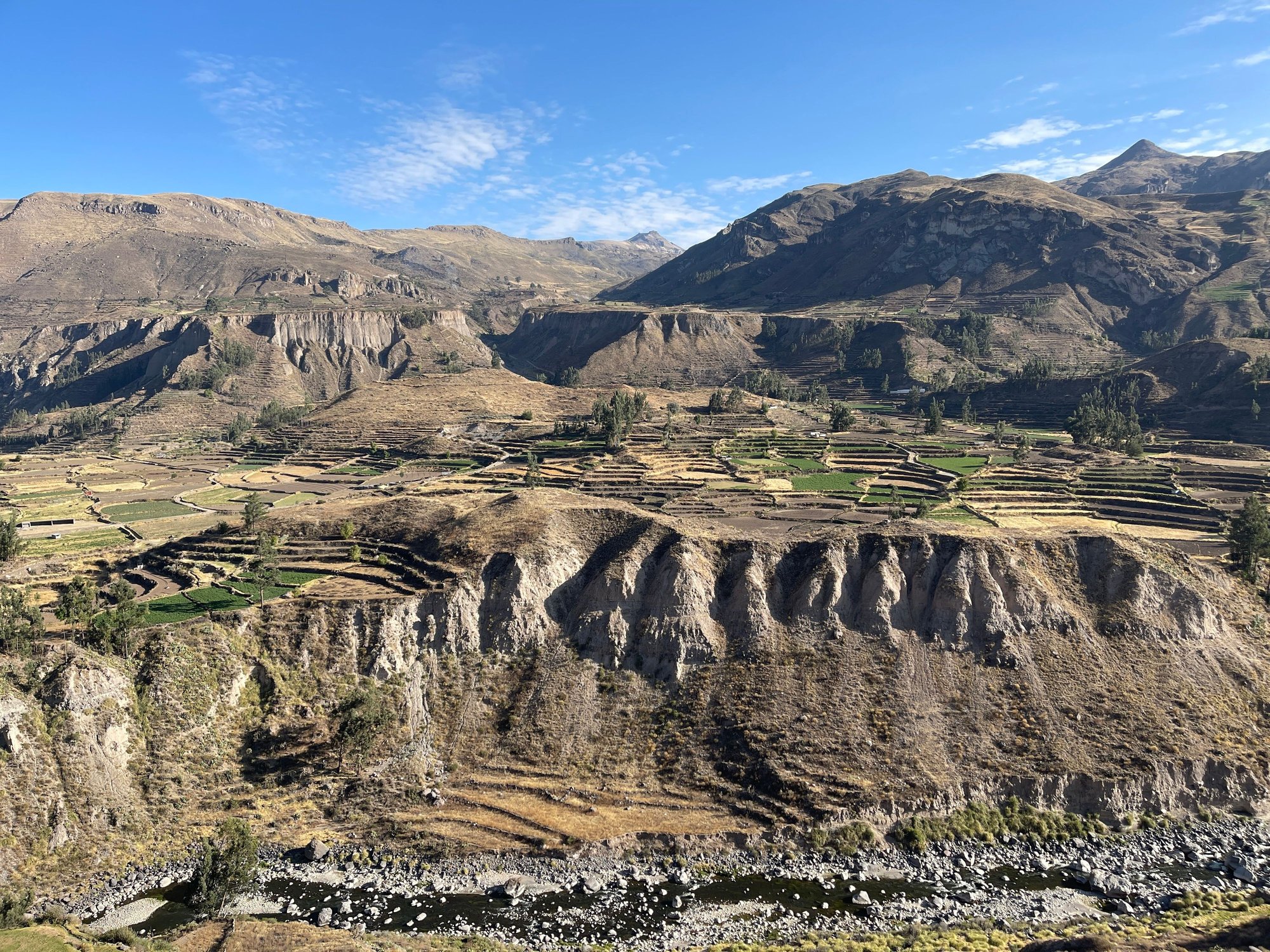
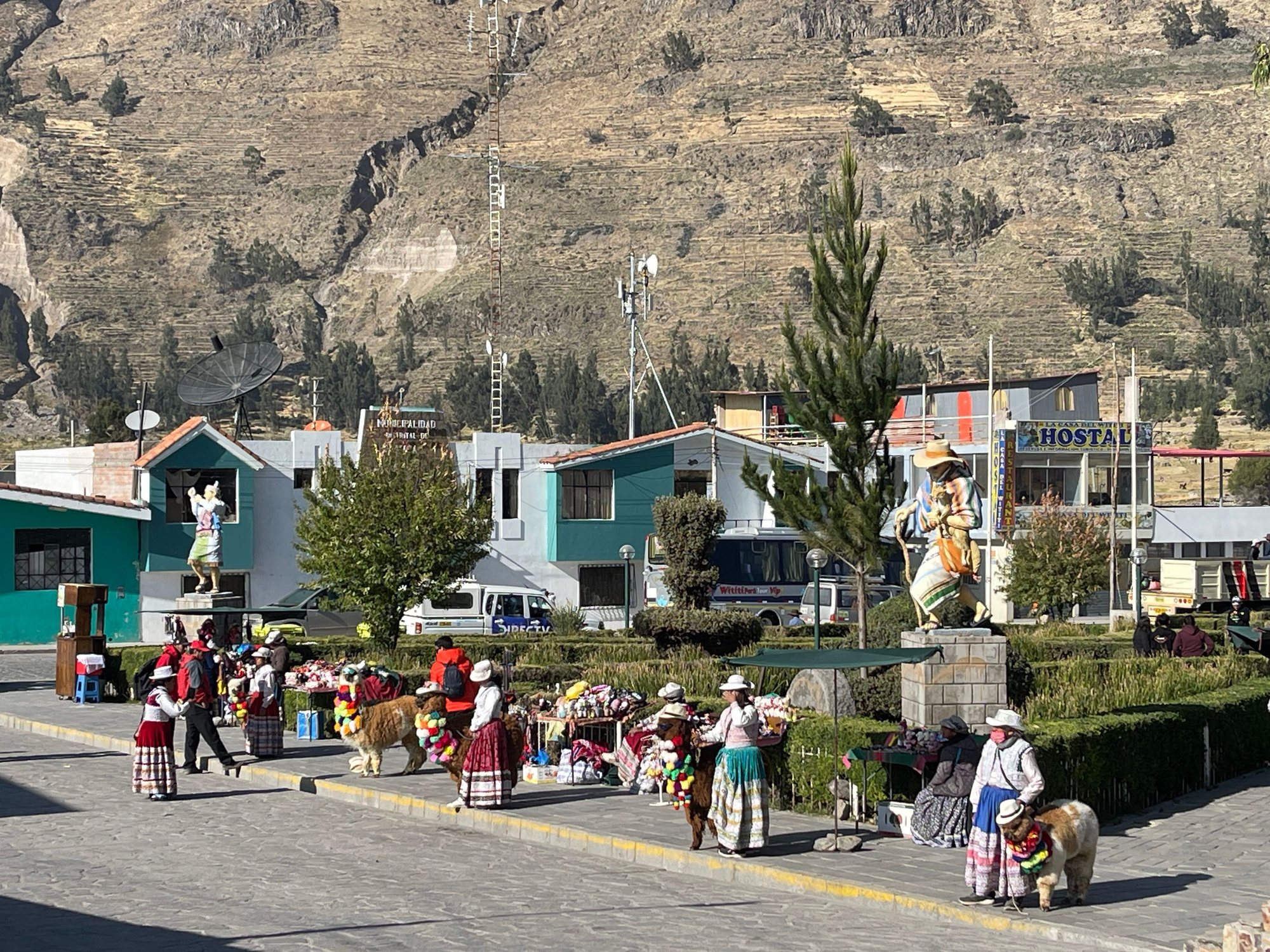
On the way, we visited the viewpoint of Mirador Achoma and the village Maca that still keep their traditions alive. There is a small pretty church in Maca- IglesiaSanta Ana, and this was also our toilet stop before Colca Canyon. The journey was indeed beautiful and breathtaking. At each stop, we had time to take pictures and check out the souvenir stands.
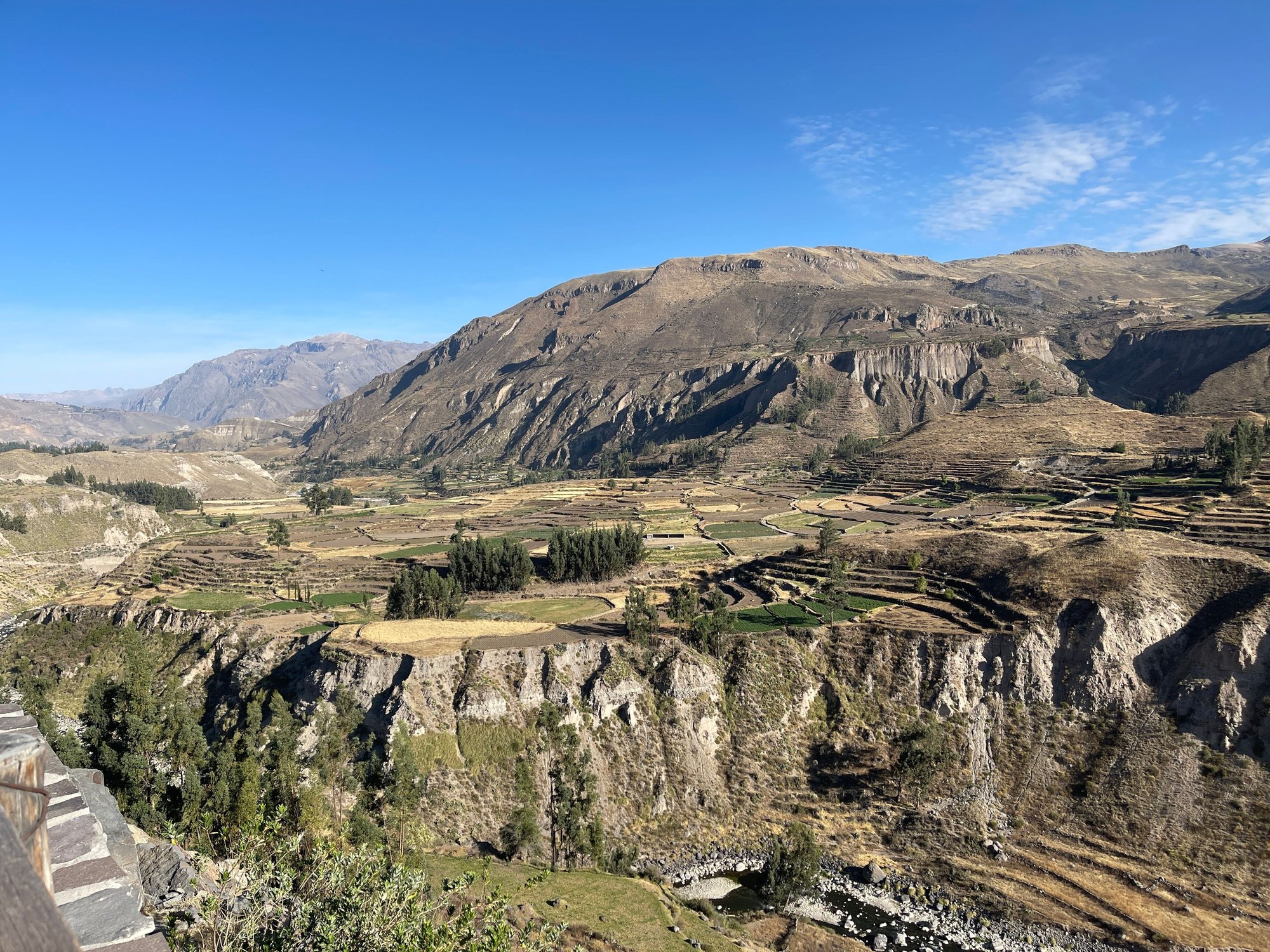
Beautiful landscape
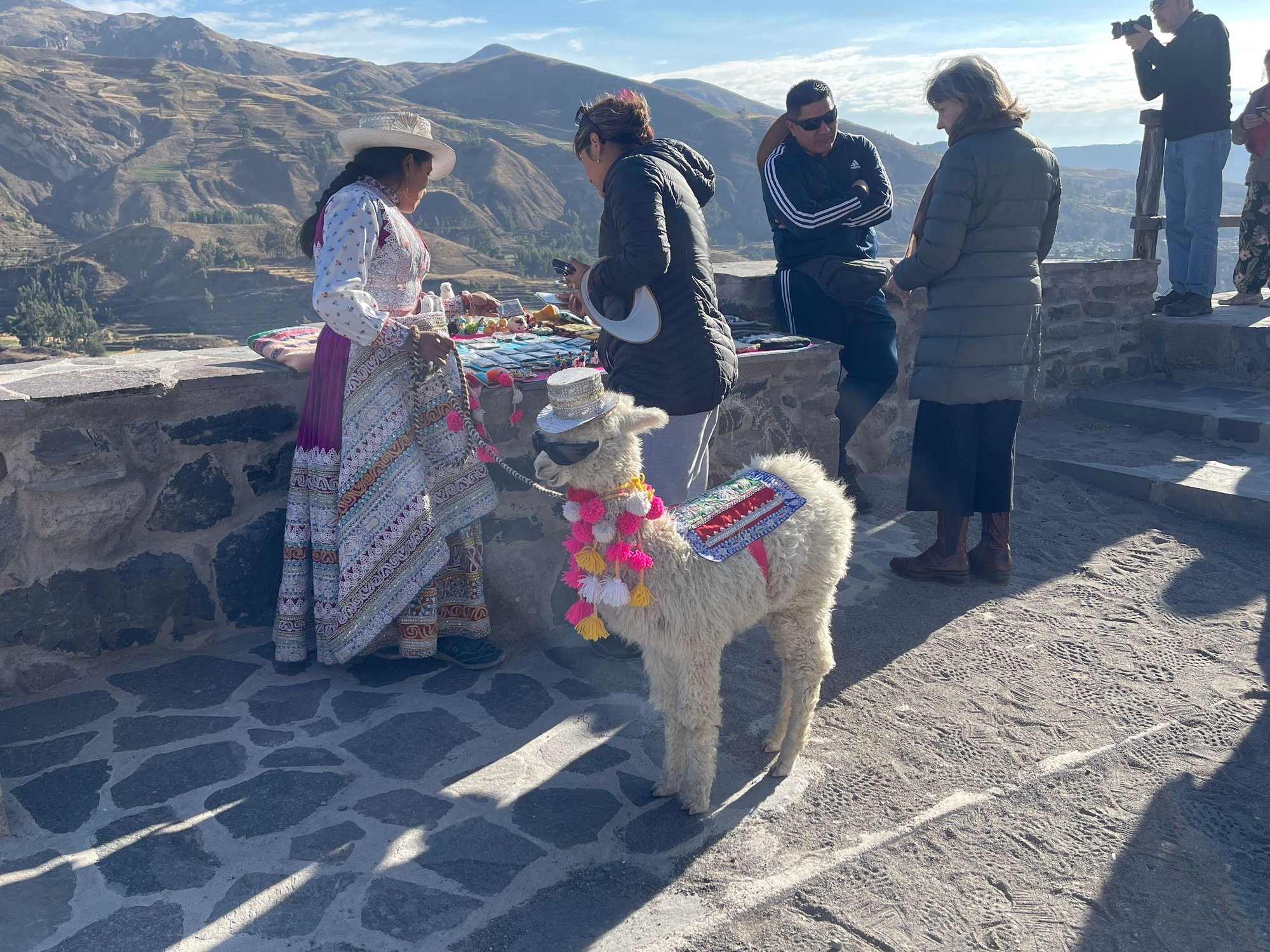
Souvenirs stand and cute baby alpaca
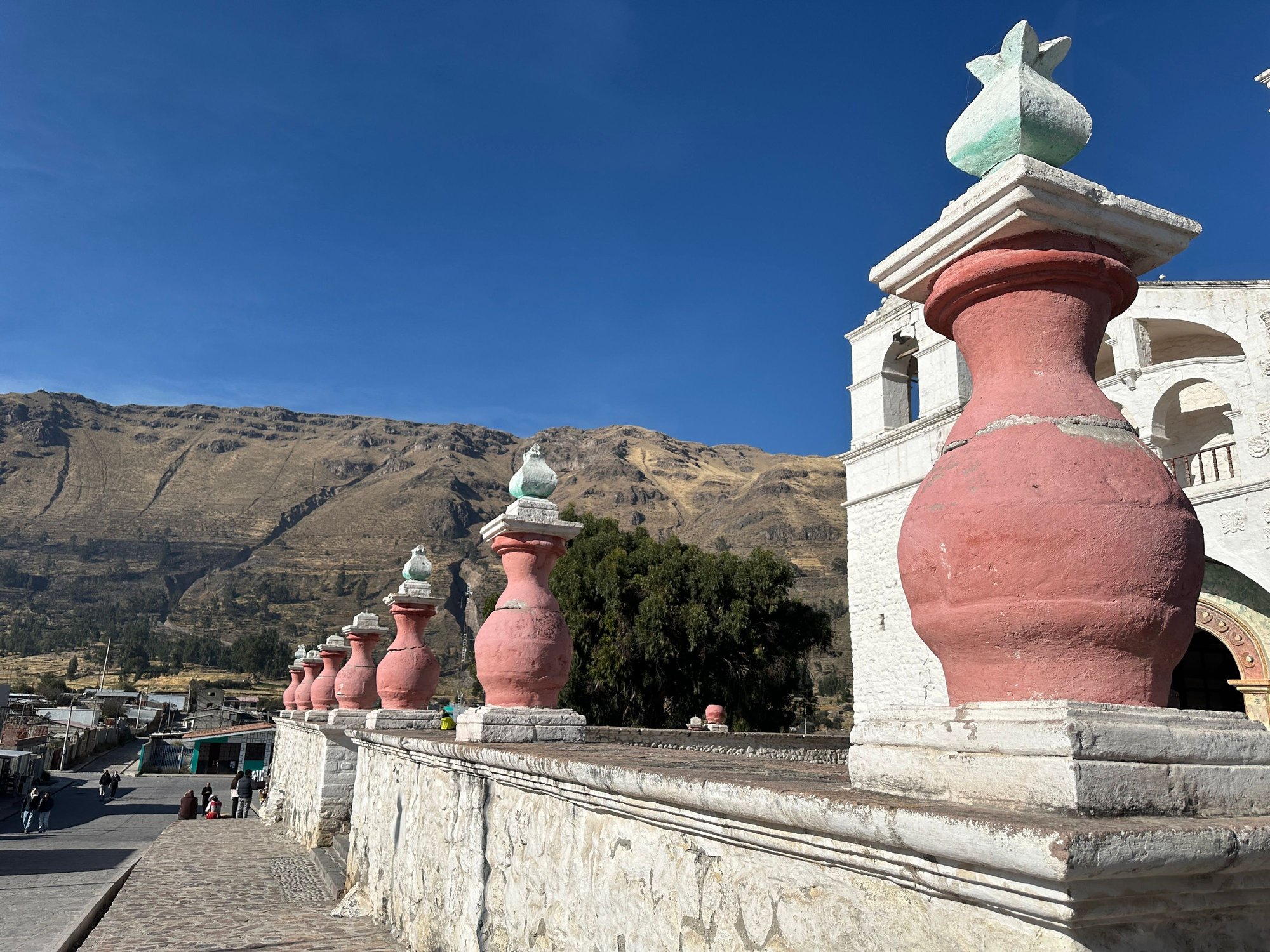
Church of Maca
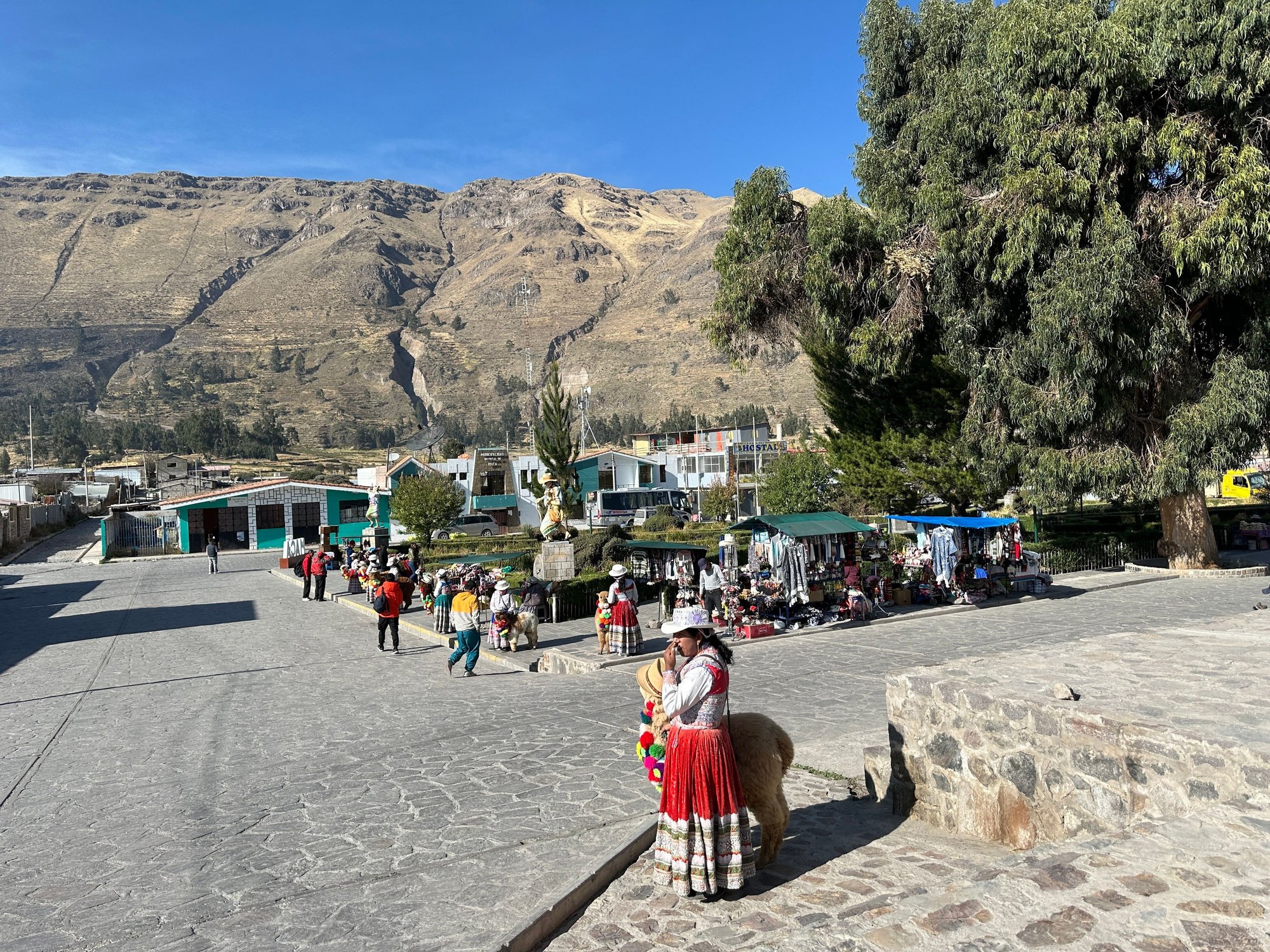
Maca village
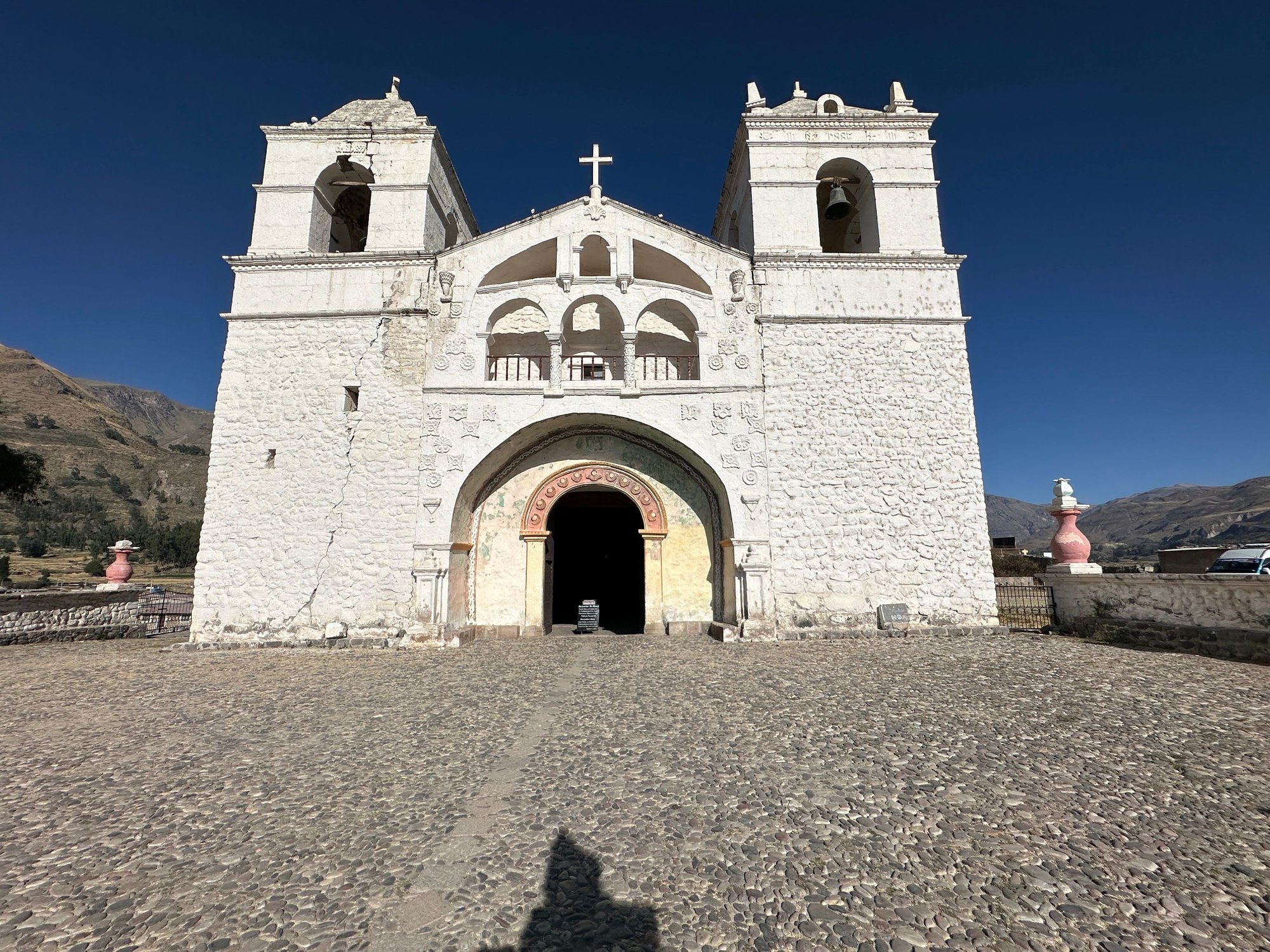
Church of Maca
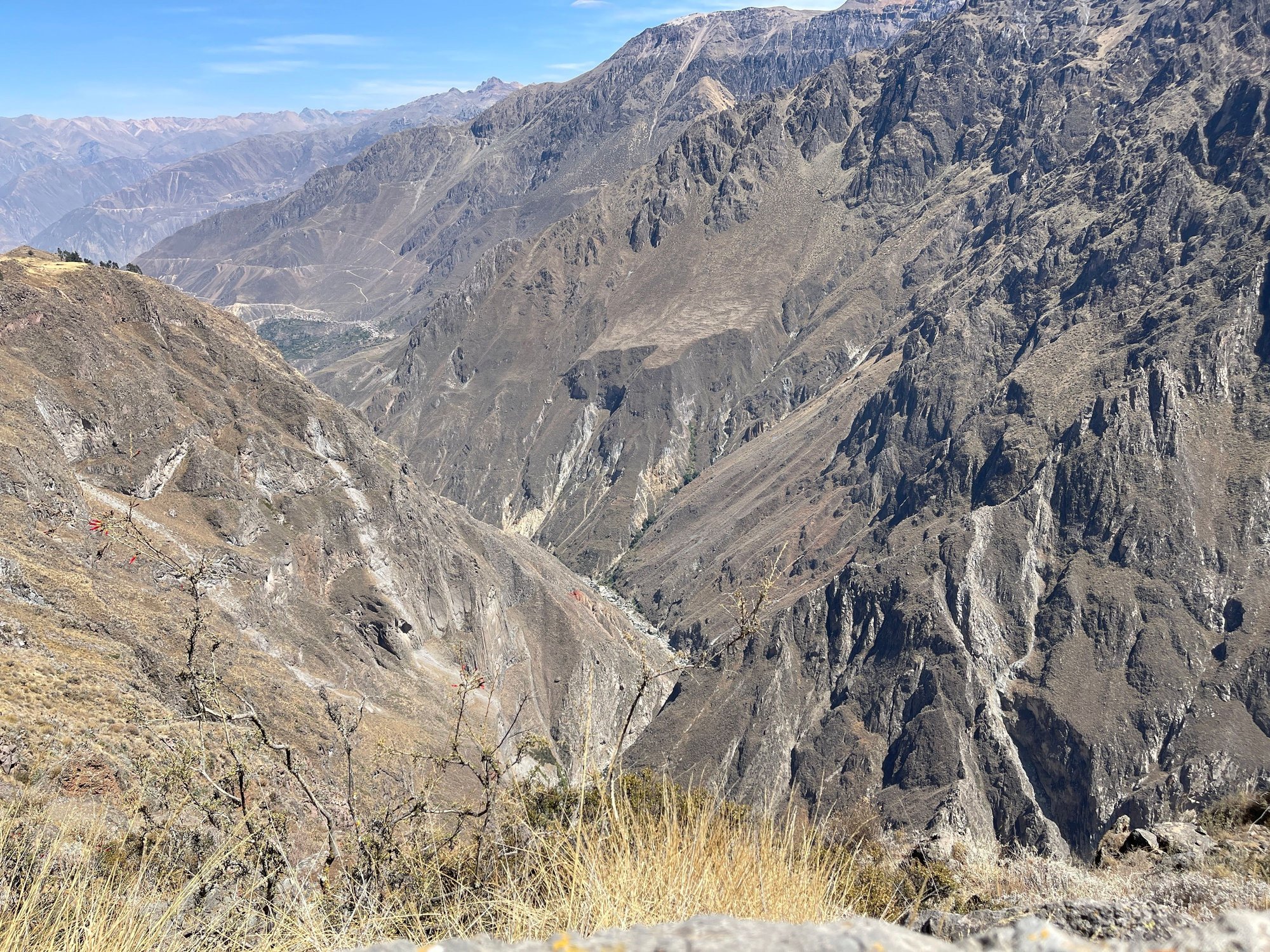
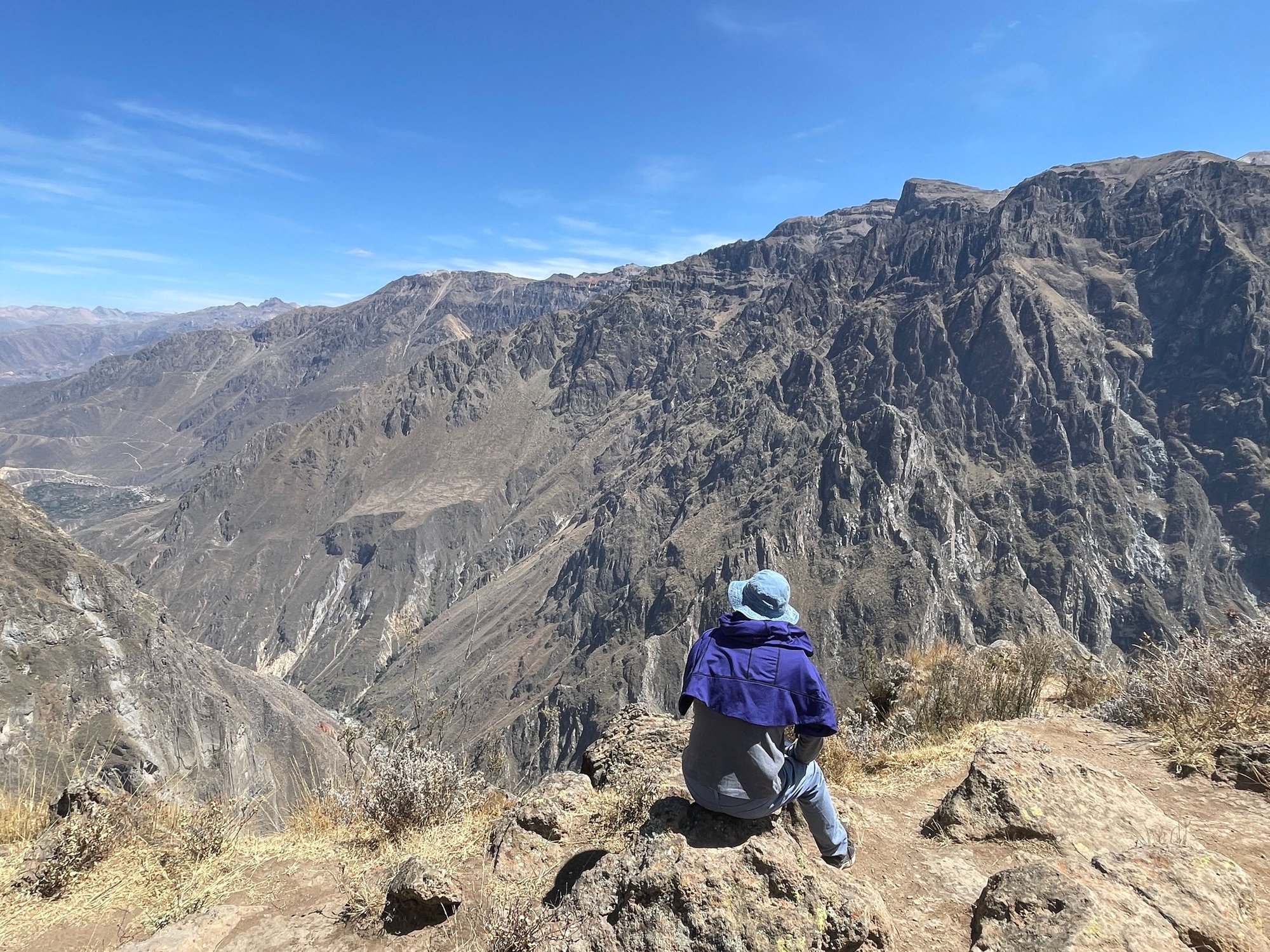
Upon arrival at the viewpoint of the Cruz Del Condor, we could see the extensive depth of the canyon, one of the deepest in the world. It is deeper than the Grand Canyon but a lot smaller in area covered. It is also at a high altitude of 12,000 ft to 13,000 ft, trekking to the canyon floor needs a lot more caution and preparation.
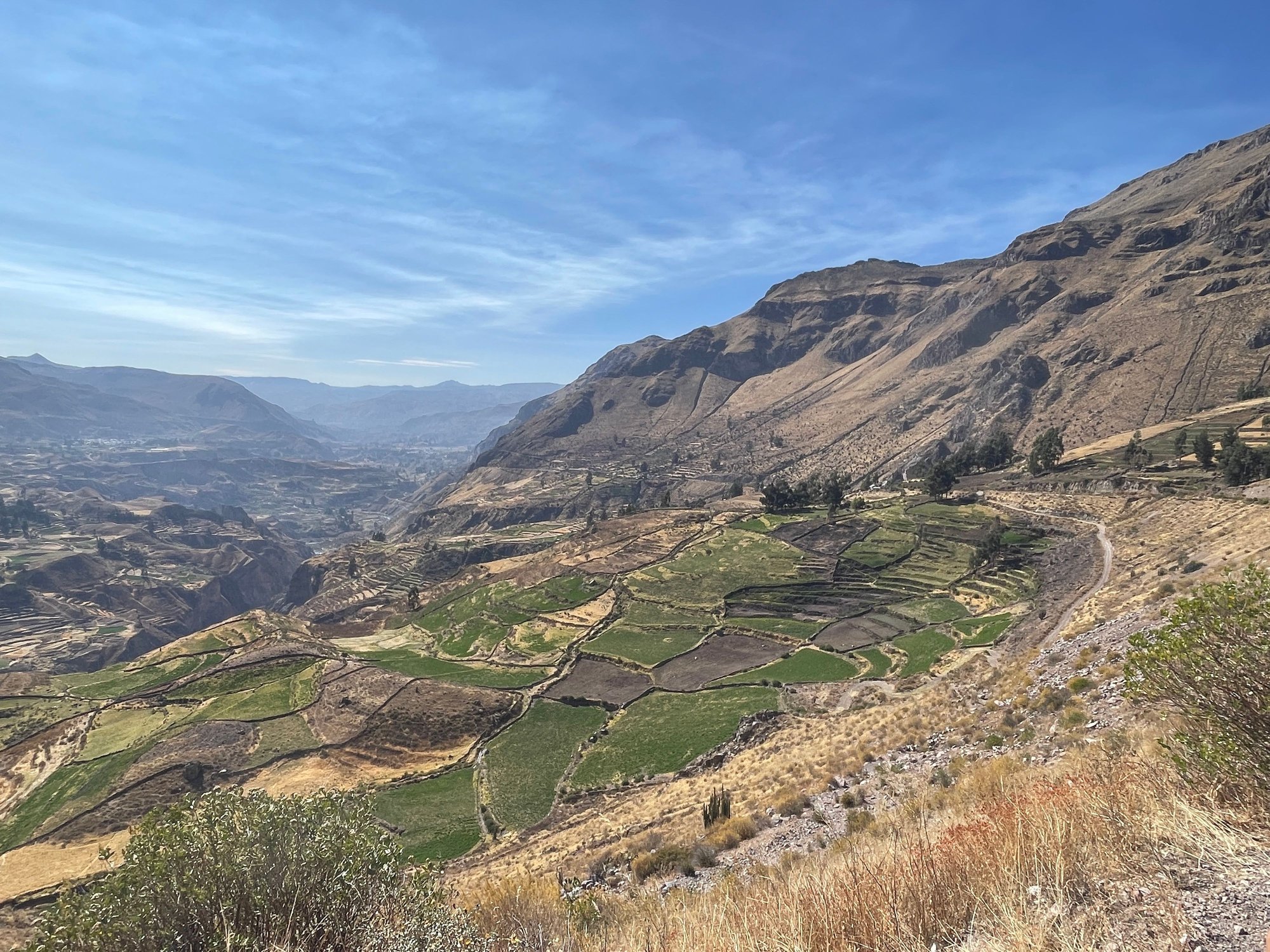
Beautiful vista
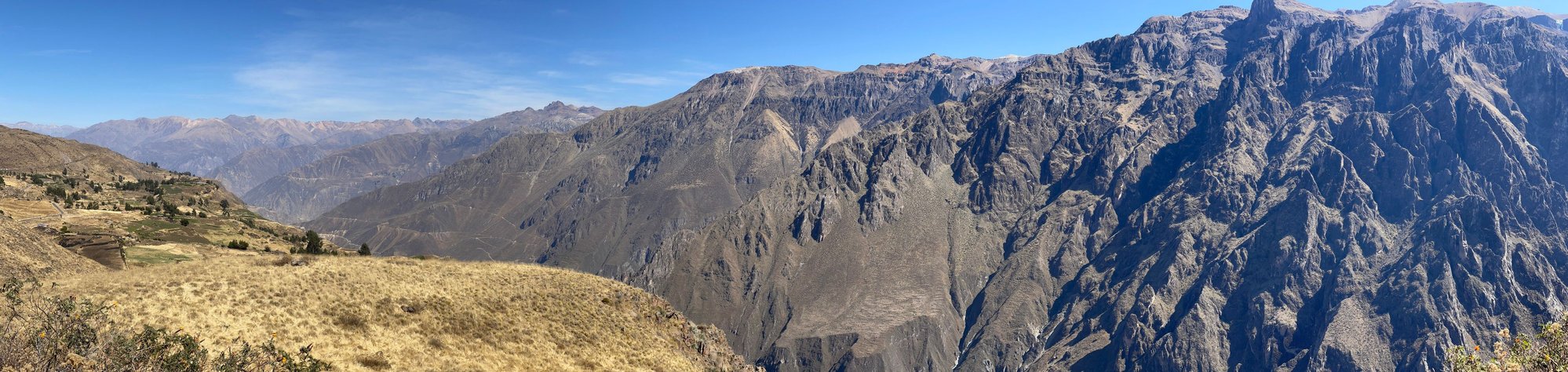
Colca Canyon
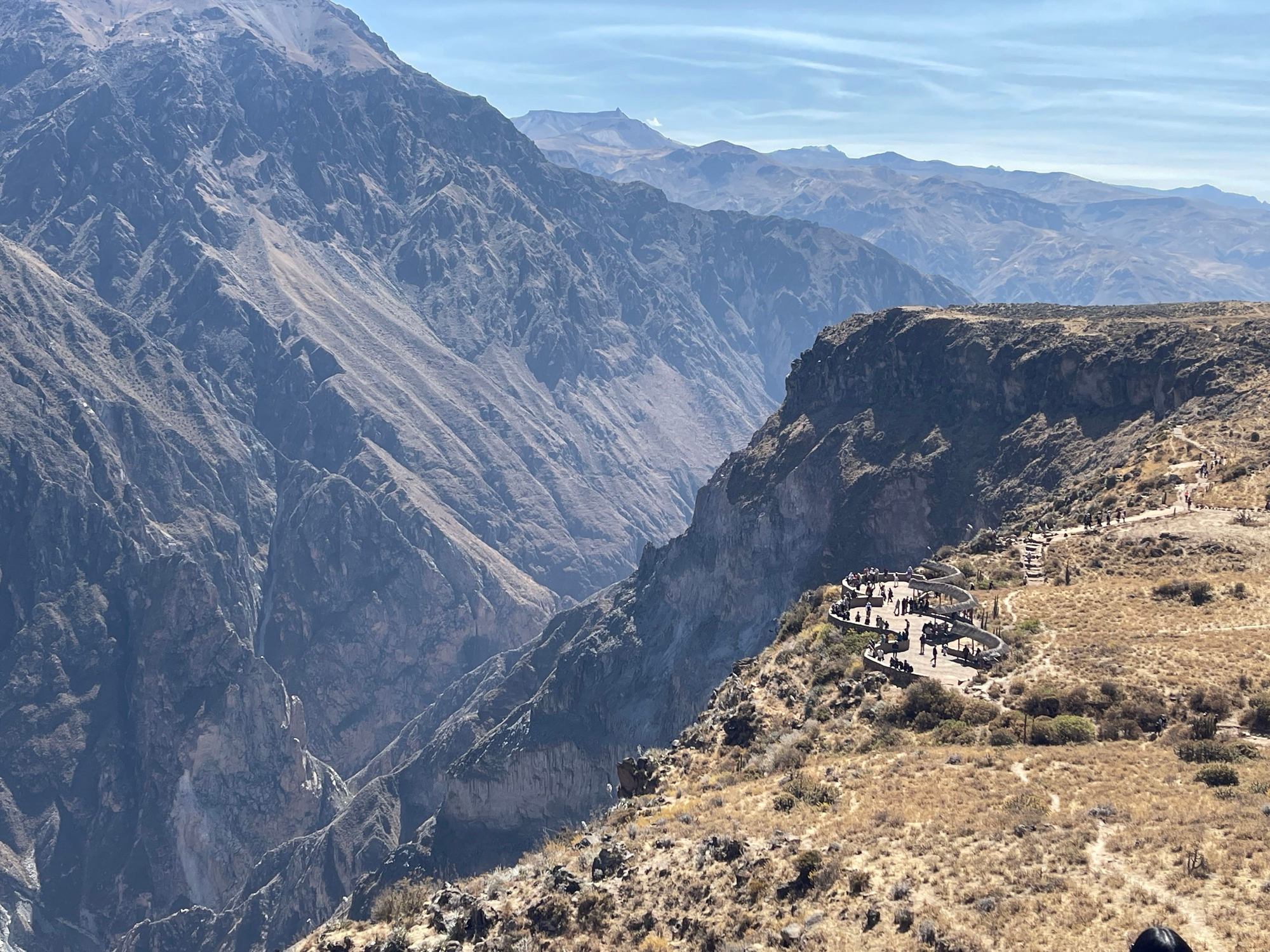
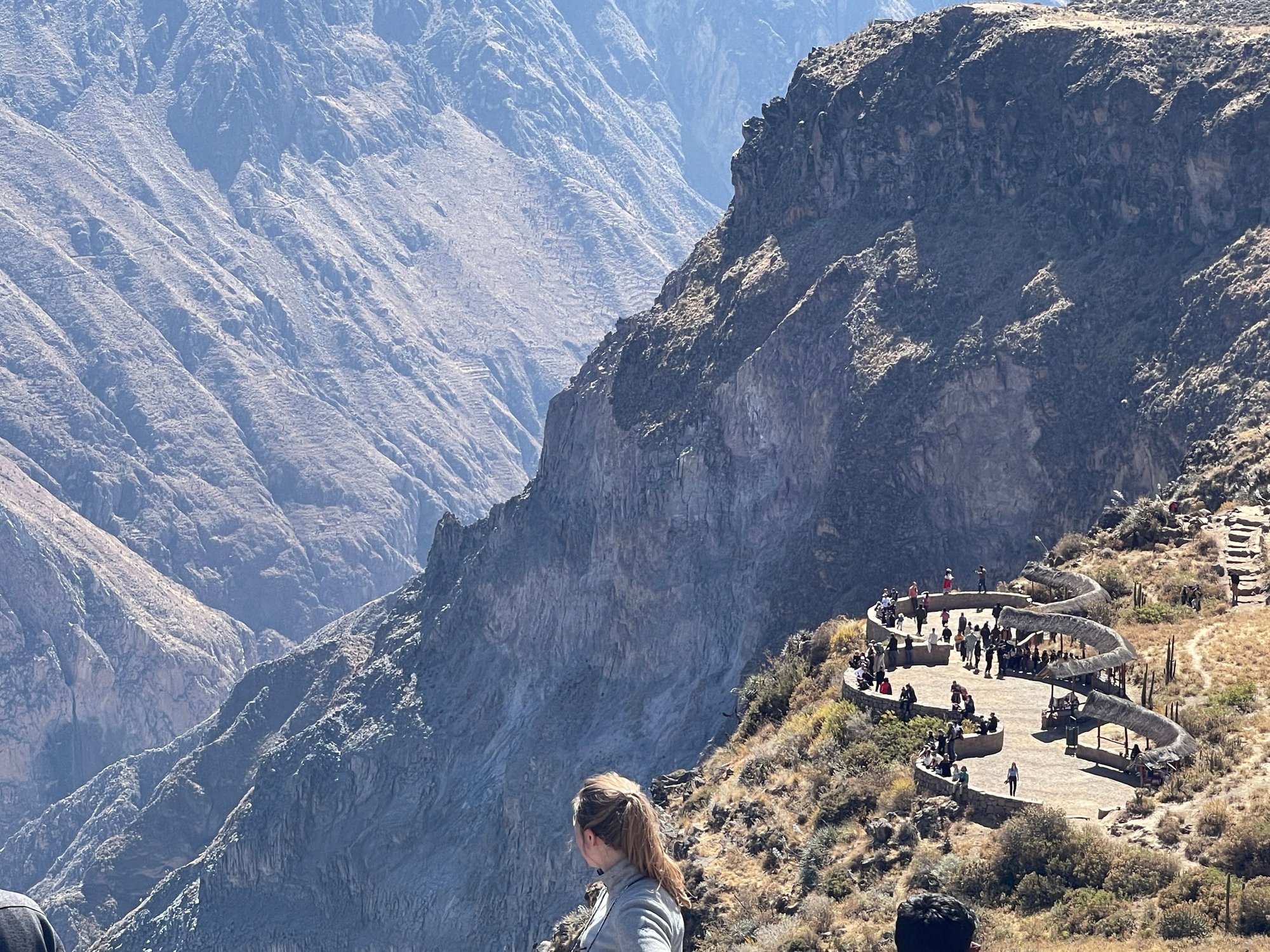
Canyon viewpoint
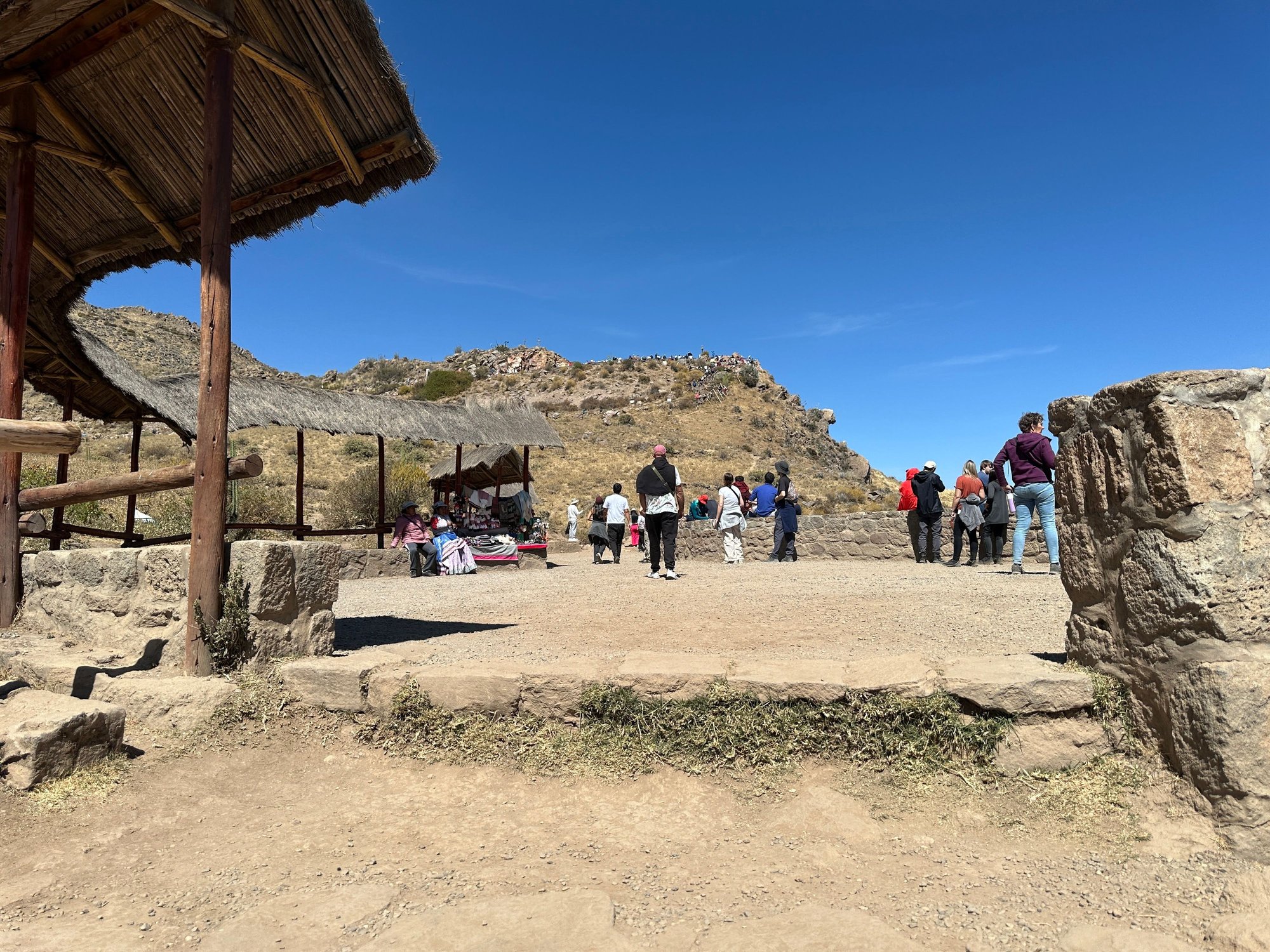
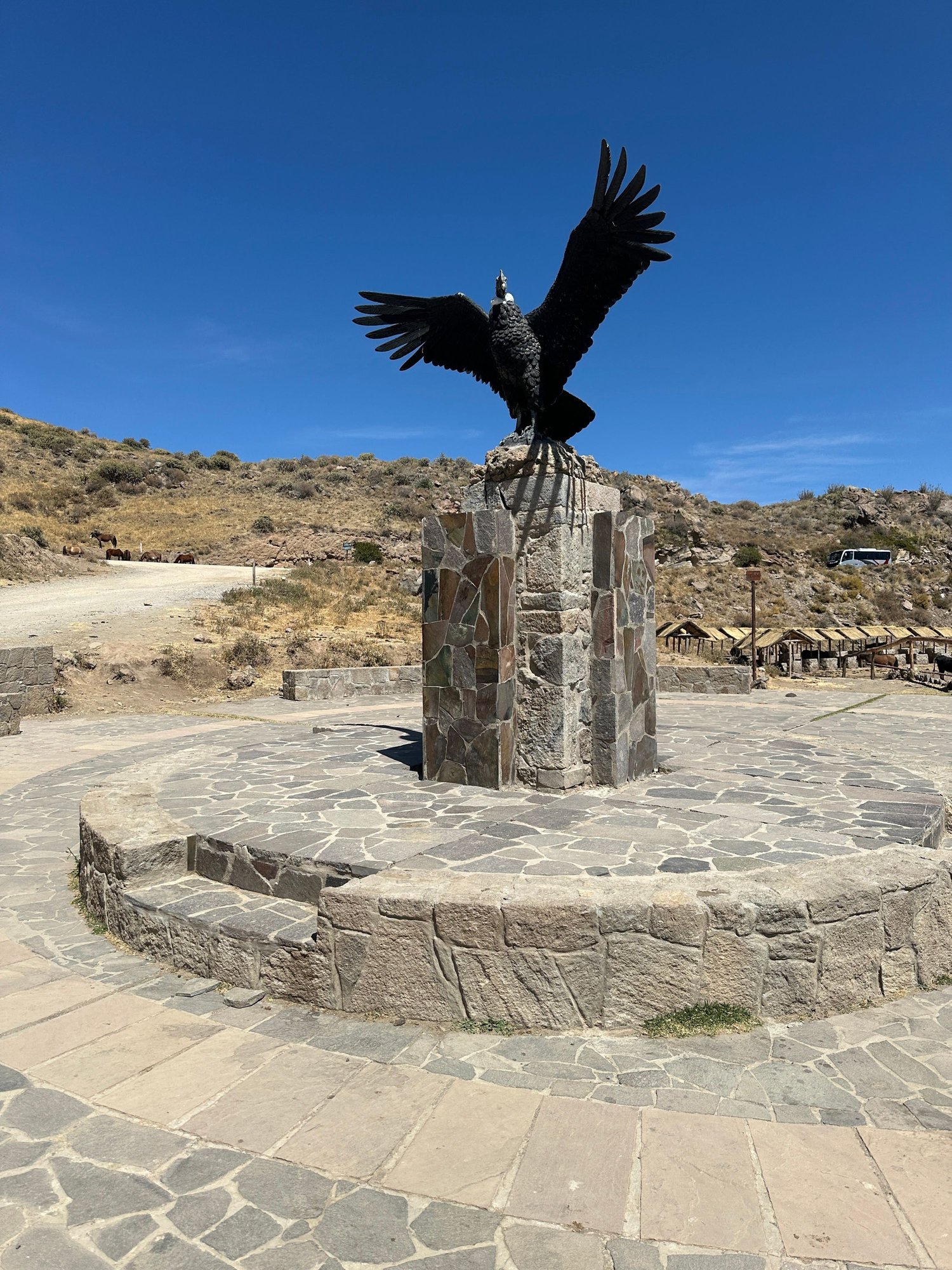
After giving us instructions, the guide dropped us off to explore on our own to find the best spot to view the flights of the mighty Andean Condor. We had a good time exploring the vicinity in search of the Andean Condor. We had good luck in searching for the flights, we saw quite a number of magnificent flights of the big birds.
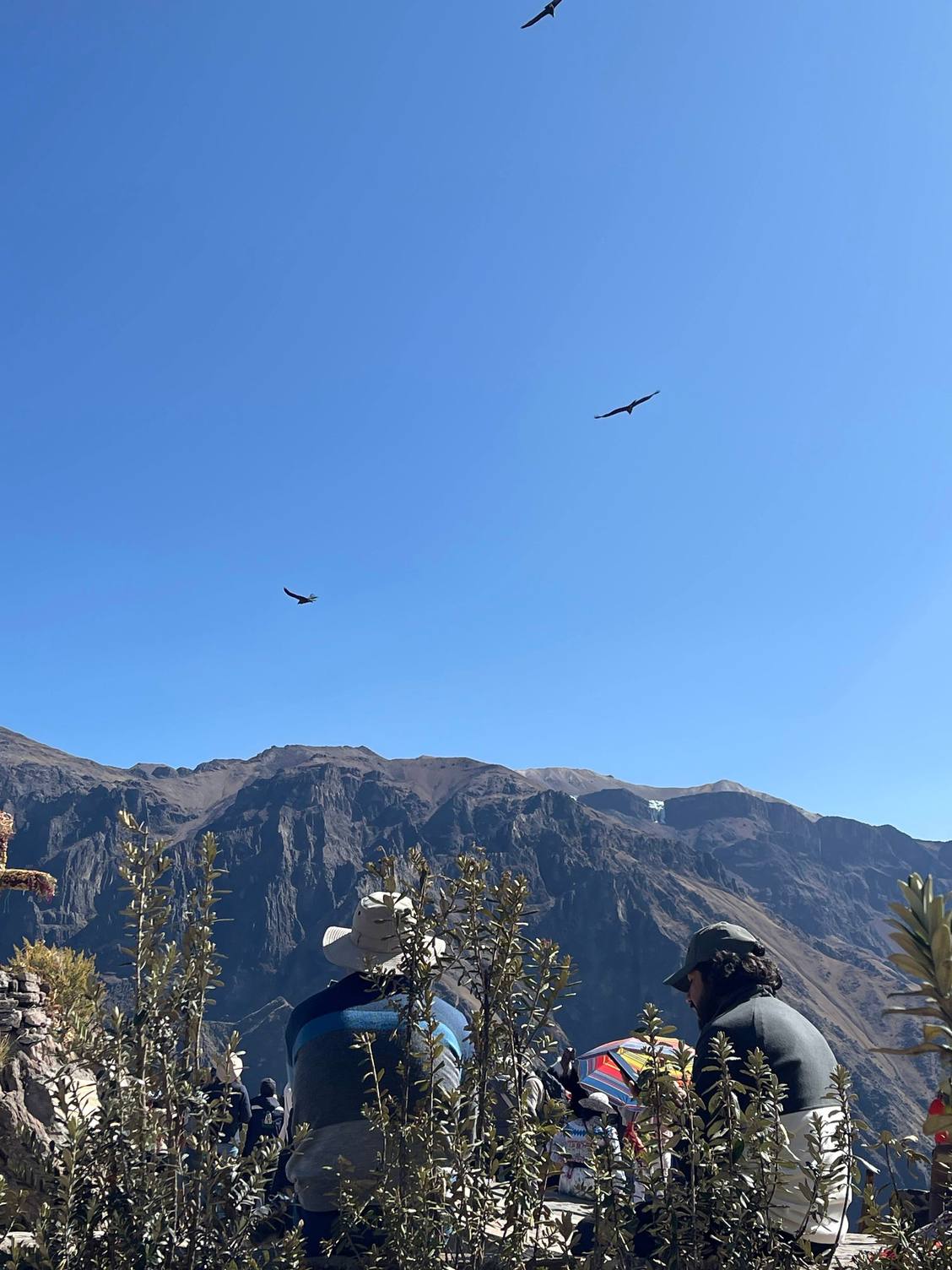
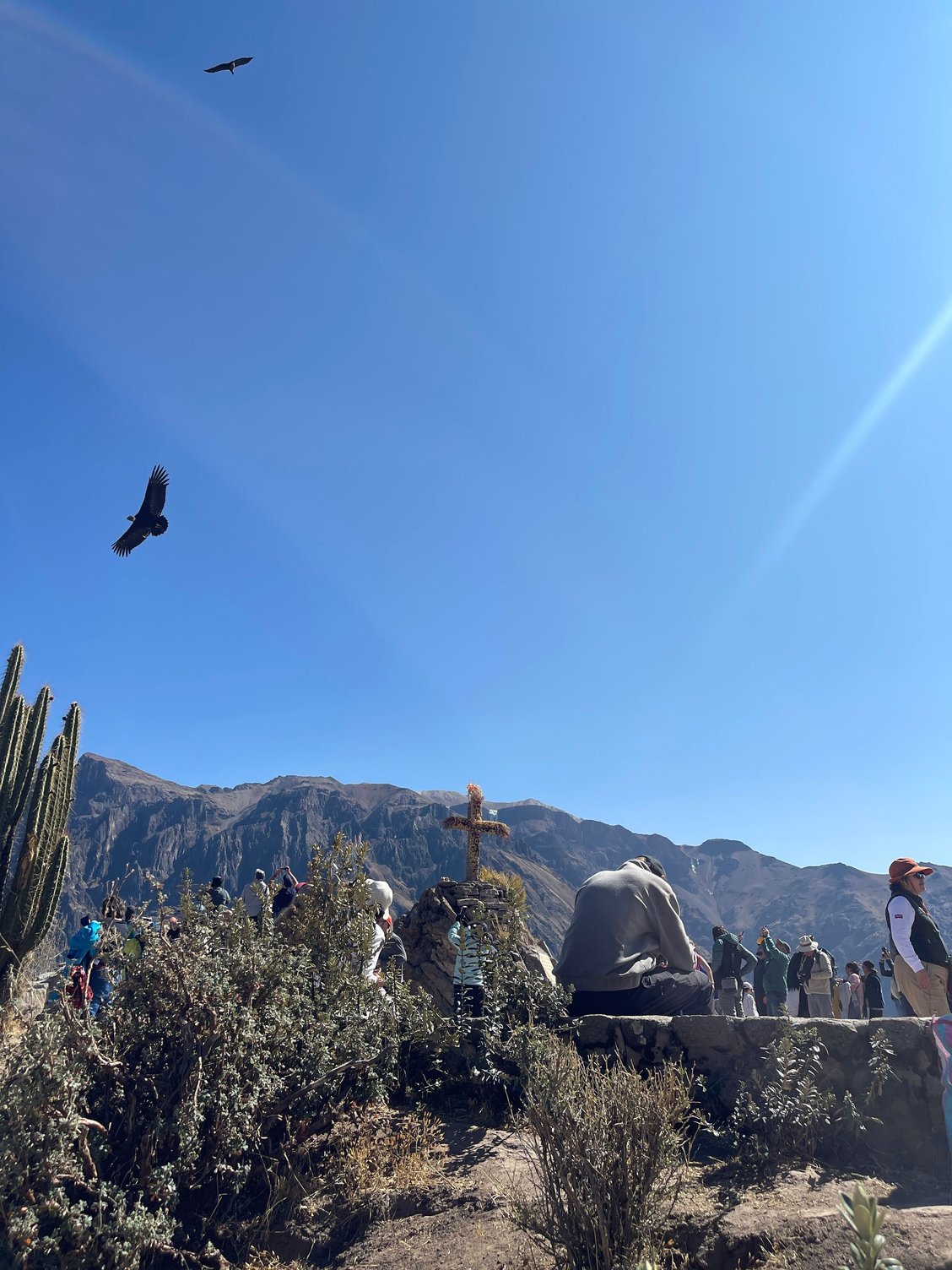
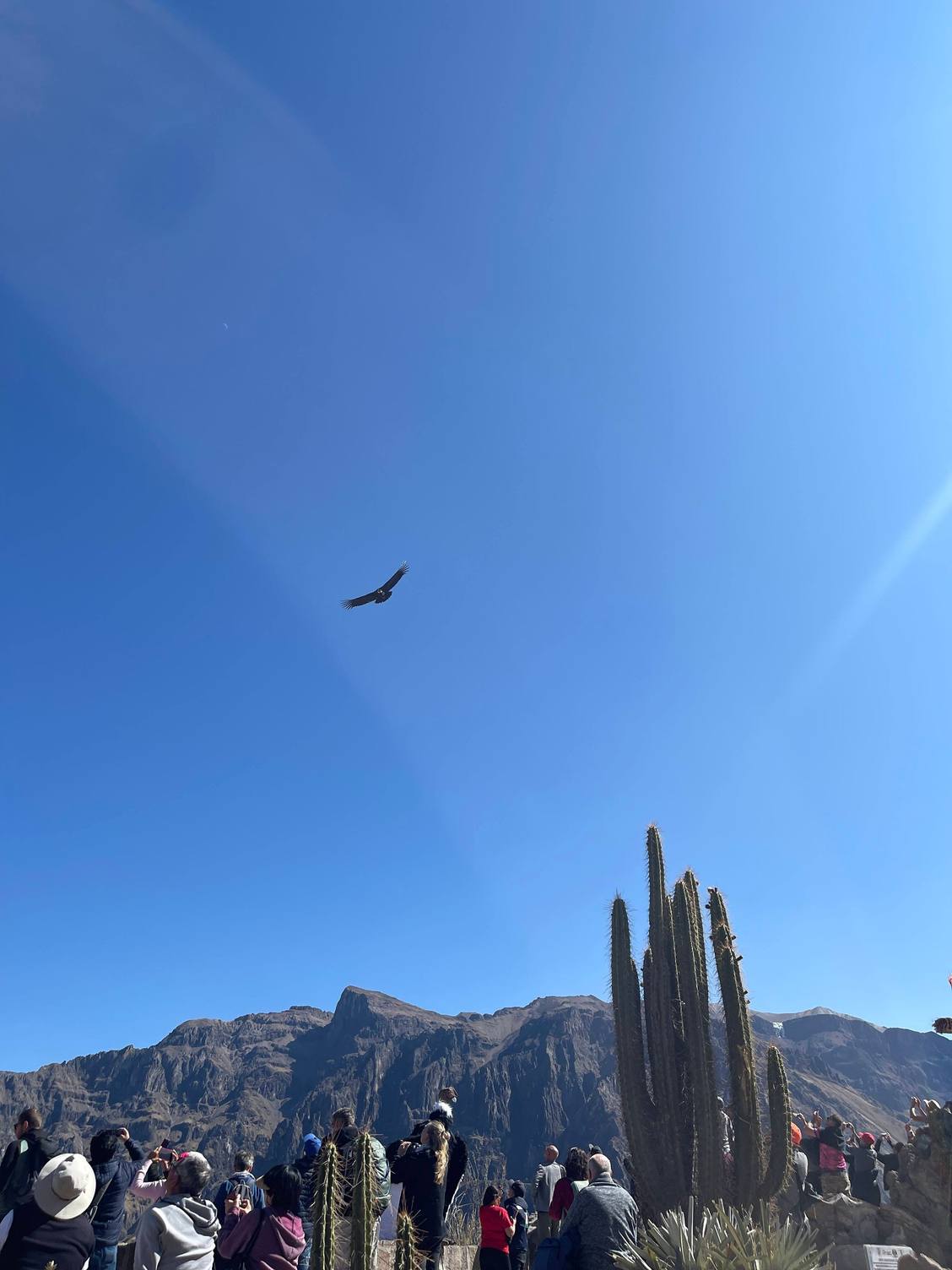
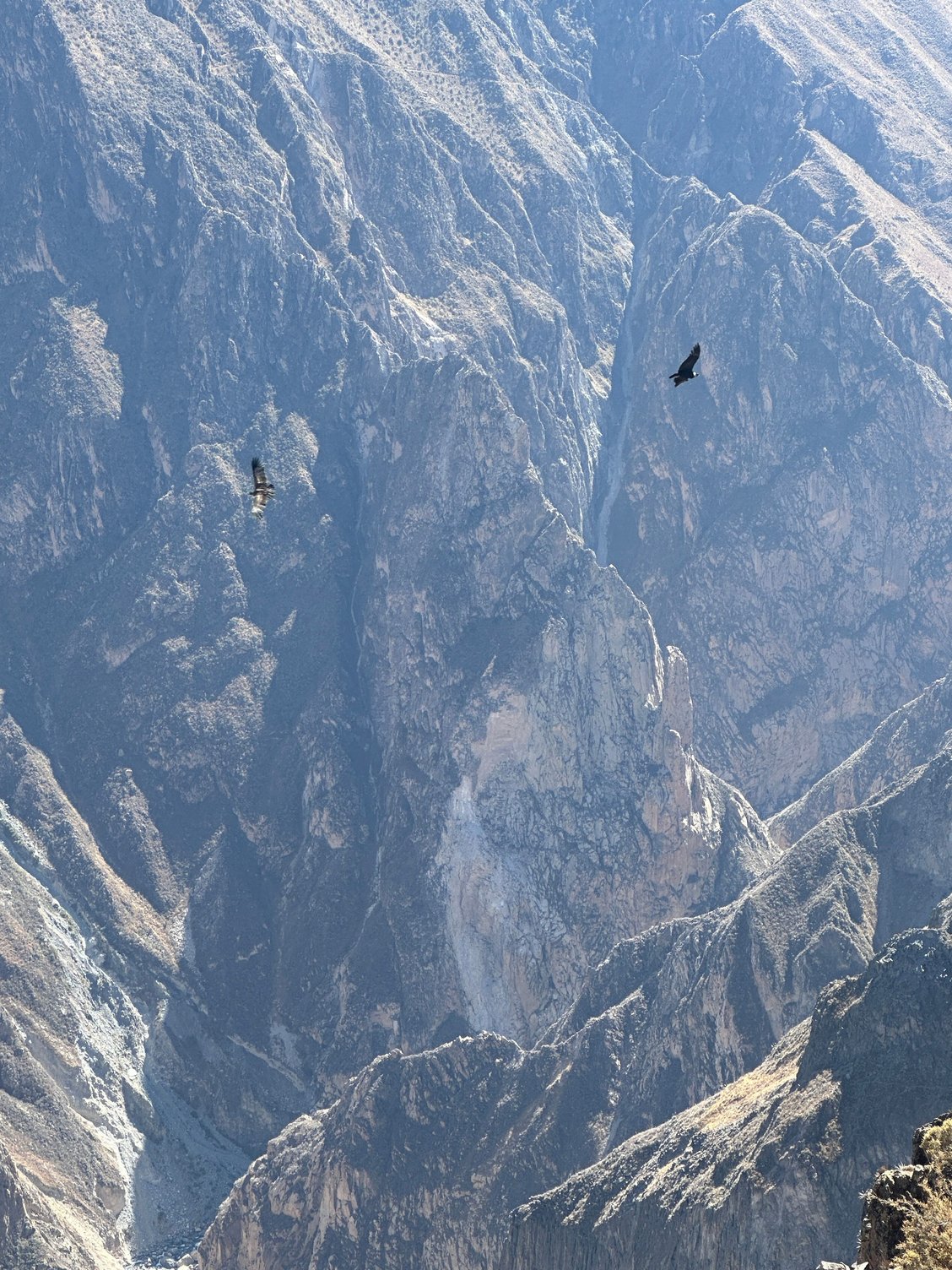
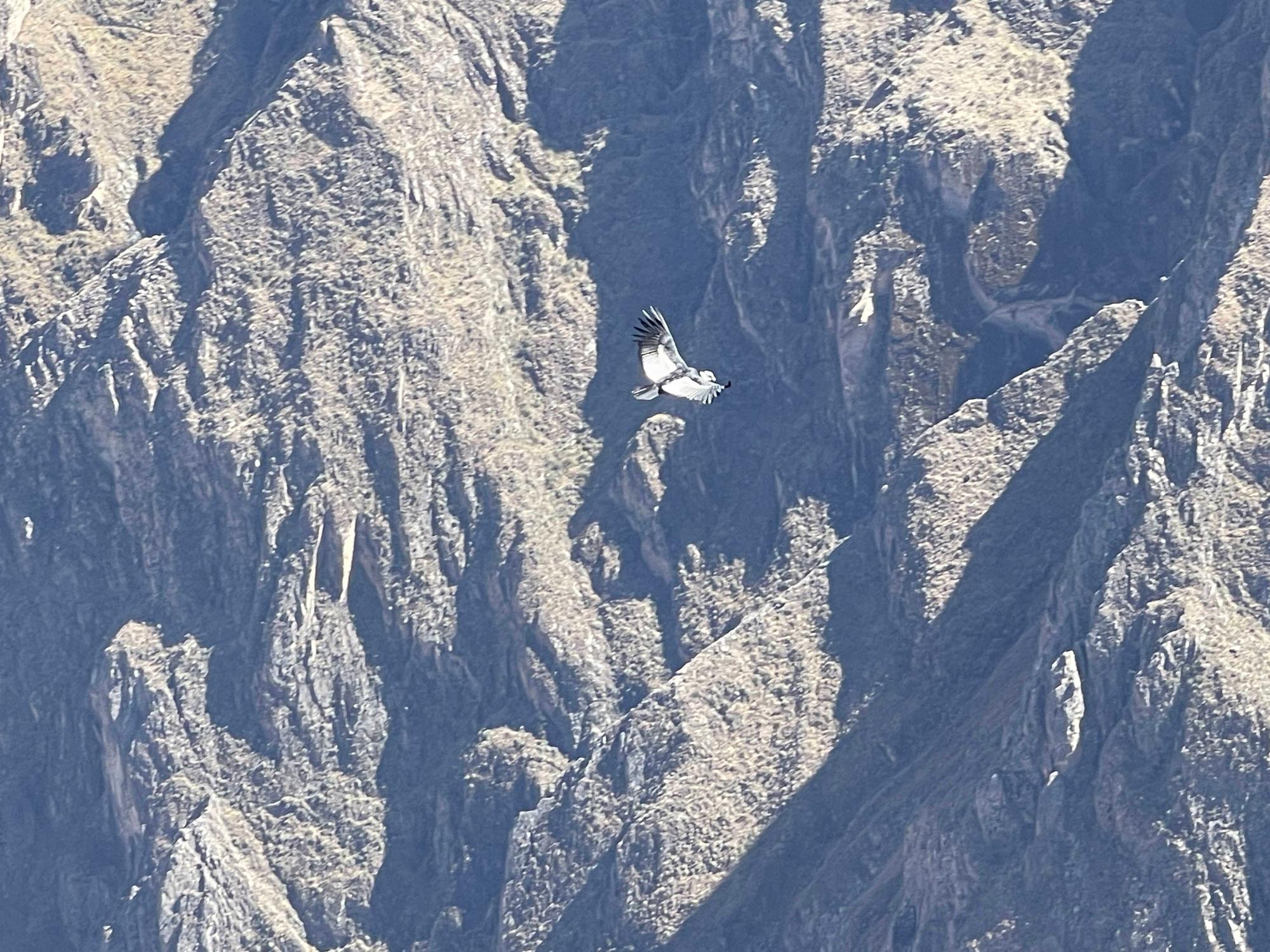
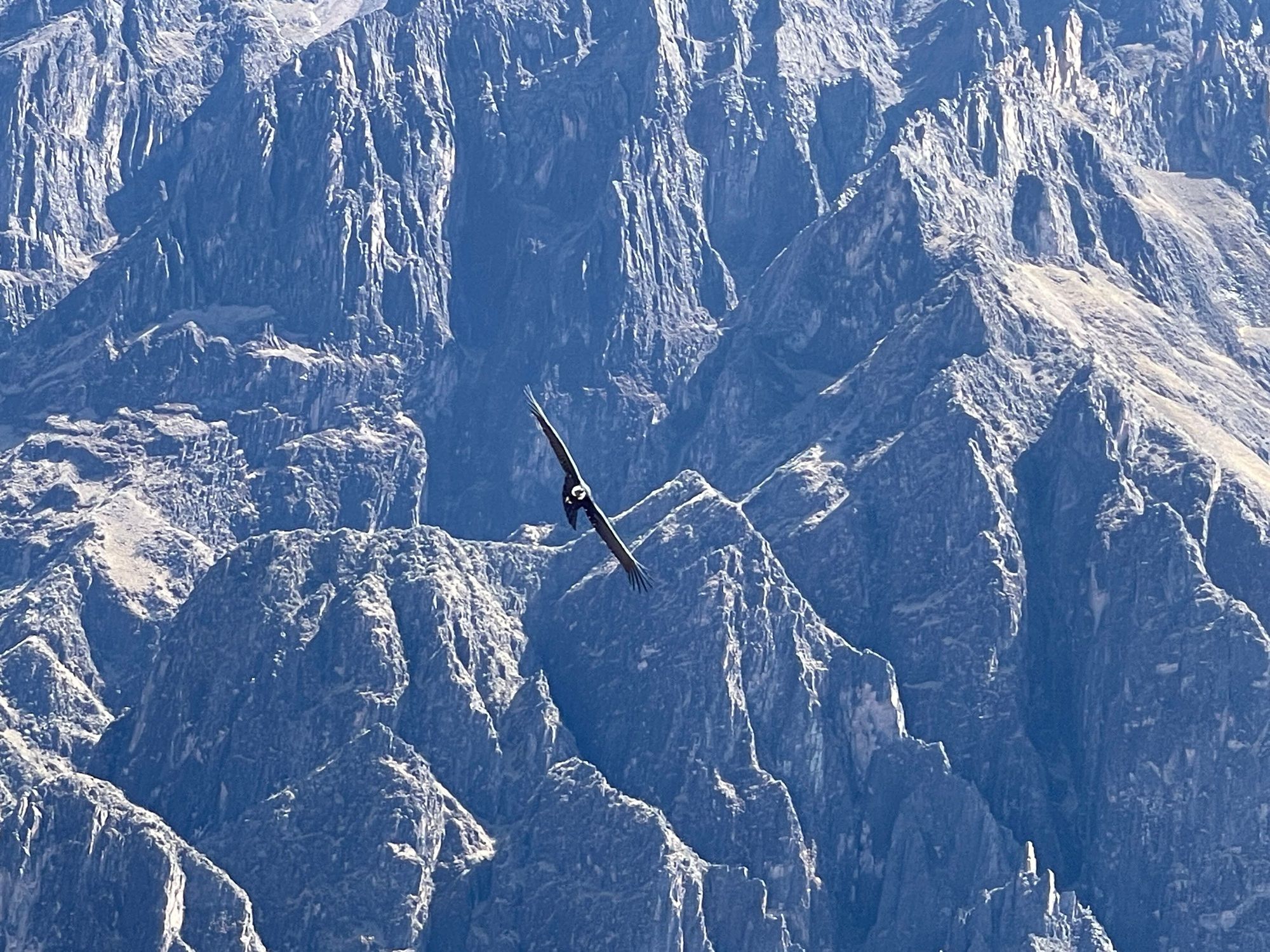
We were told to gather at a pick up point after an hour exploring the area. We gathered and our tour guide took us for a short one way trek along the rim of the canyon. It was easy walking, but we did feel the high altitude effect, just ran out of breath easily for the short trek. The bus picked us up at the end of the trail. It was rewarding and satisfying for us to see this part of the canyon.
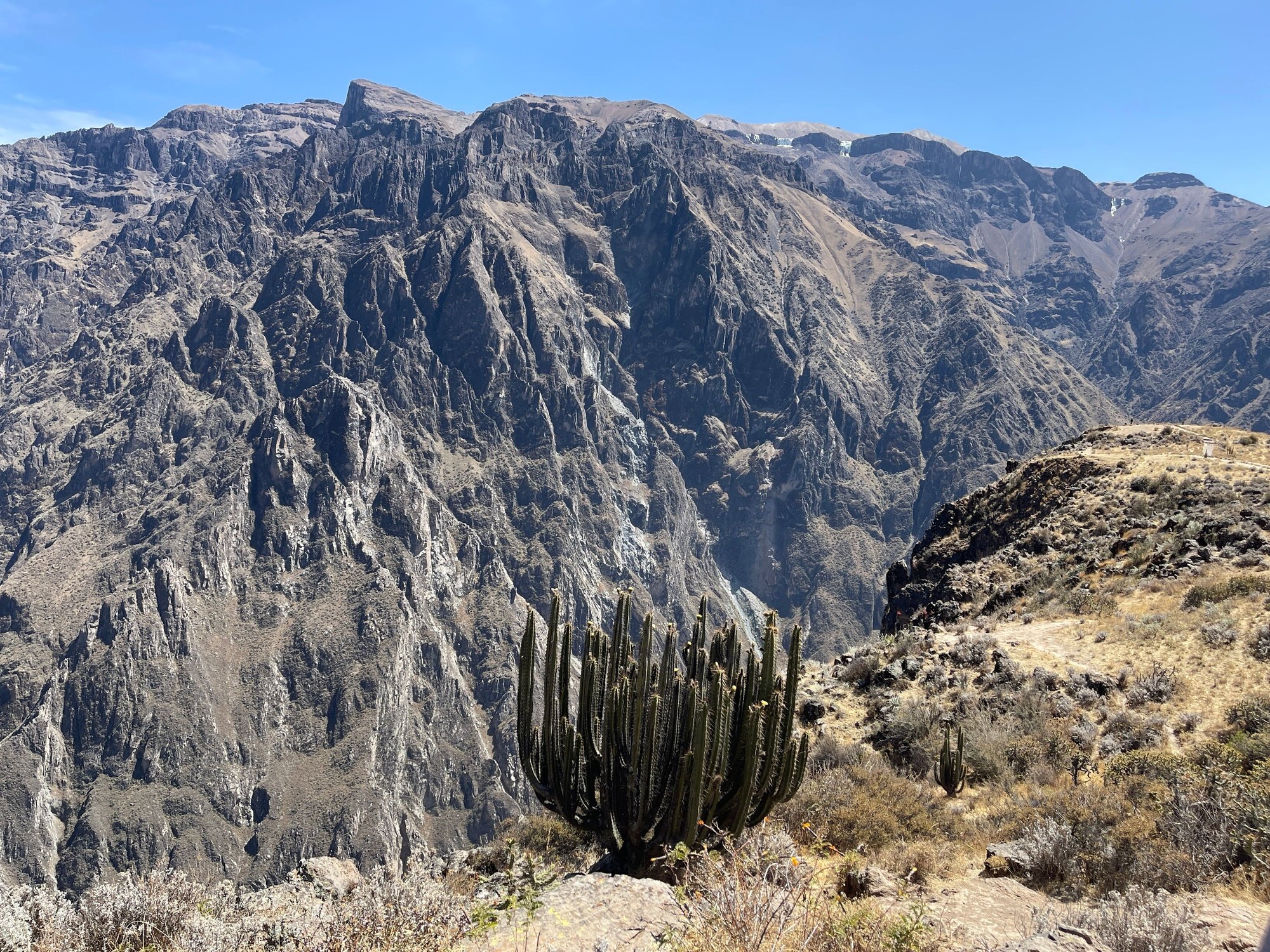
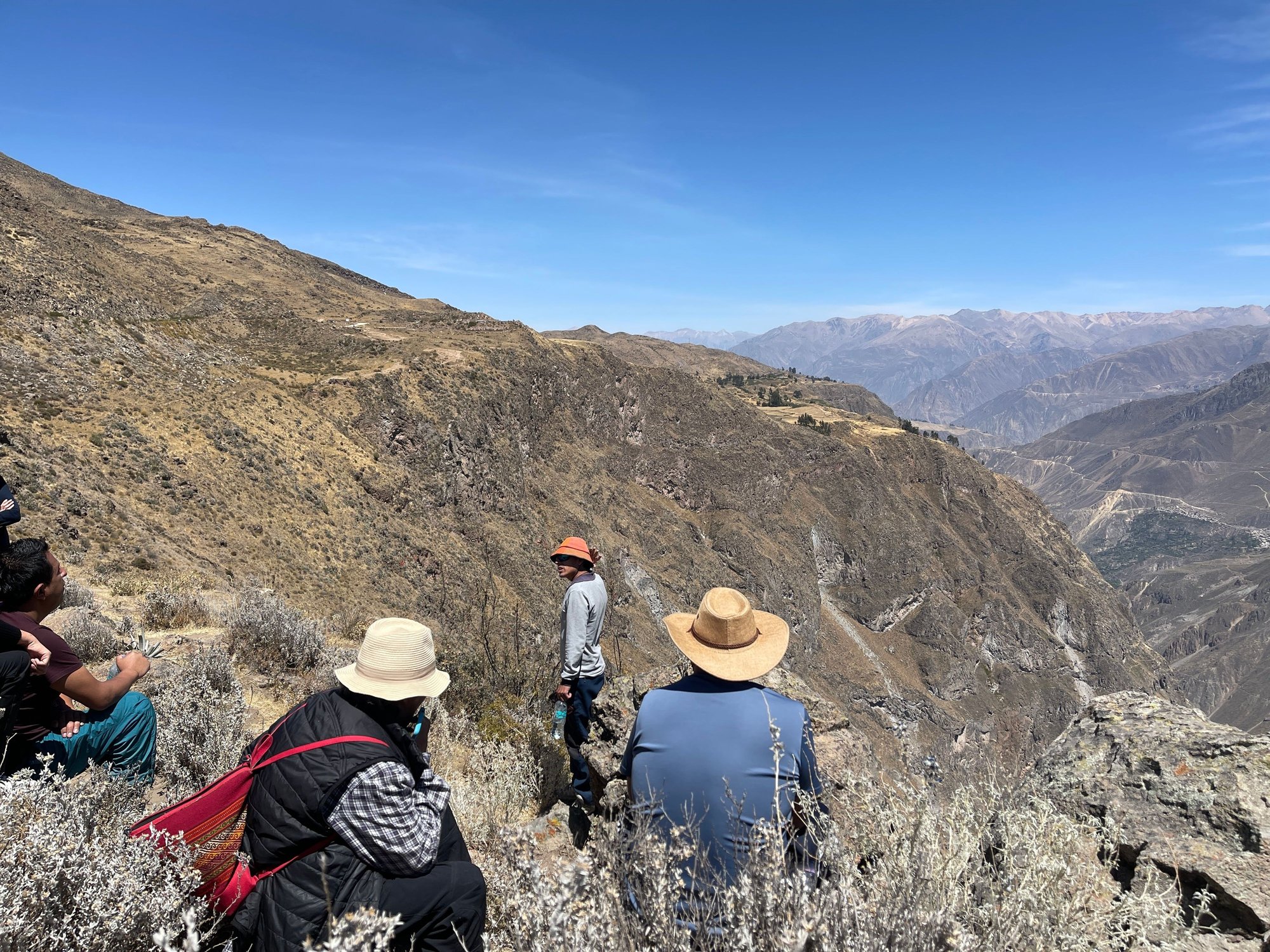
Our tour group
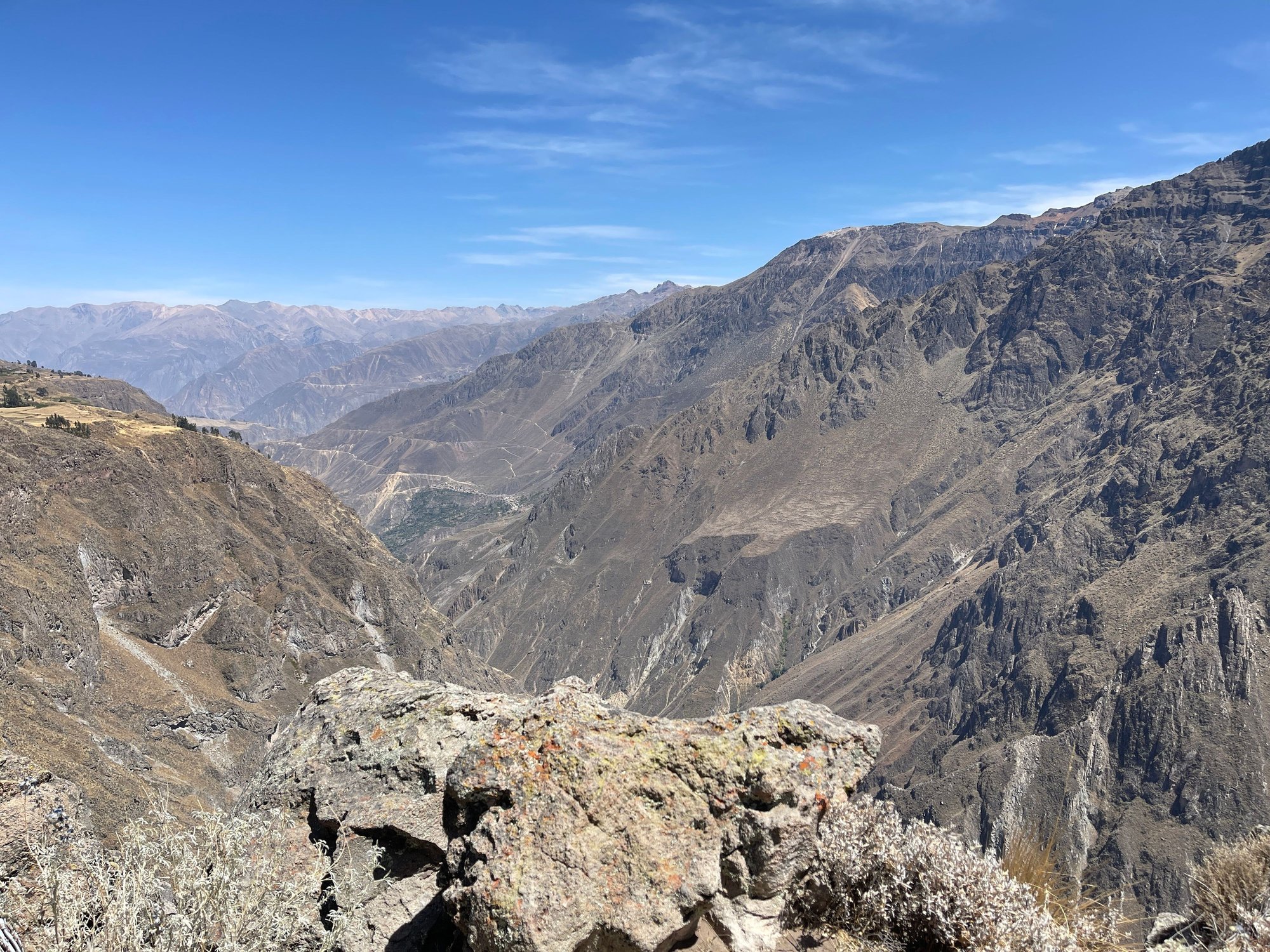
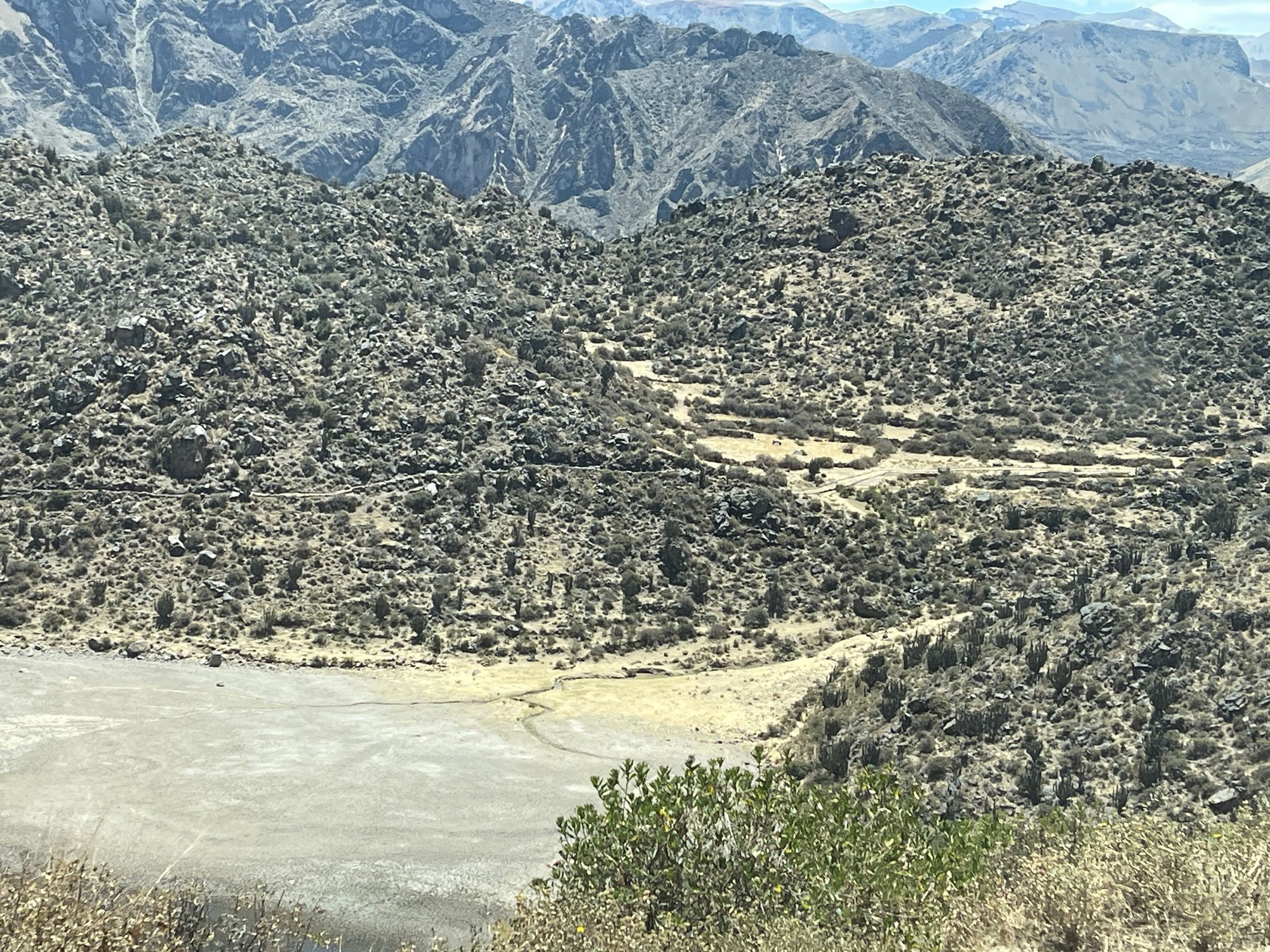
We left the Colca Canyon and were dropped off at the town center of Chivay to wait for another tour bus transferring us to Puno. We had lunch at Chivay, walked around the town square while waiting for the bus.
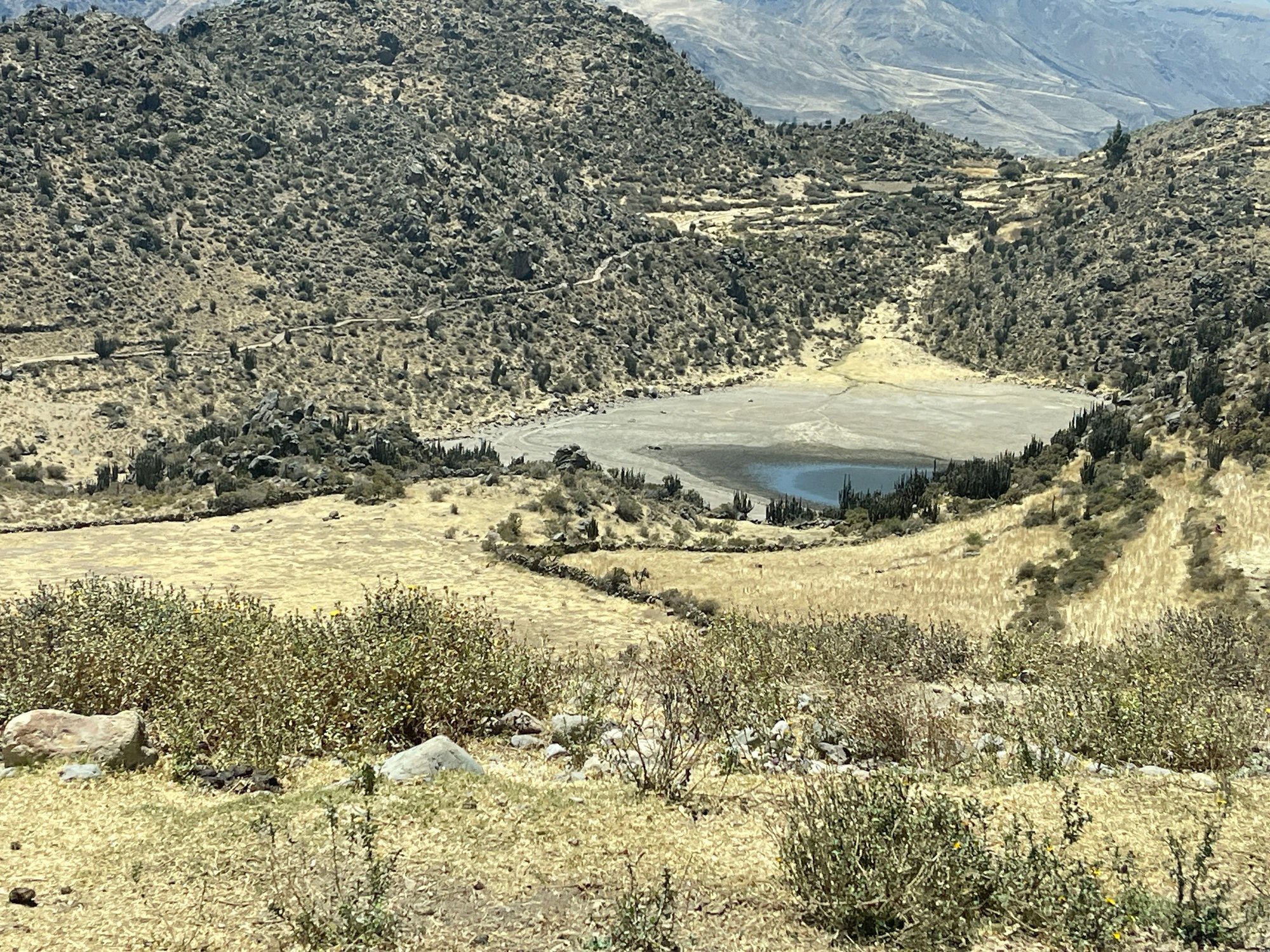
Scenery en route to Chivay
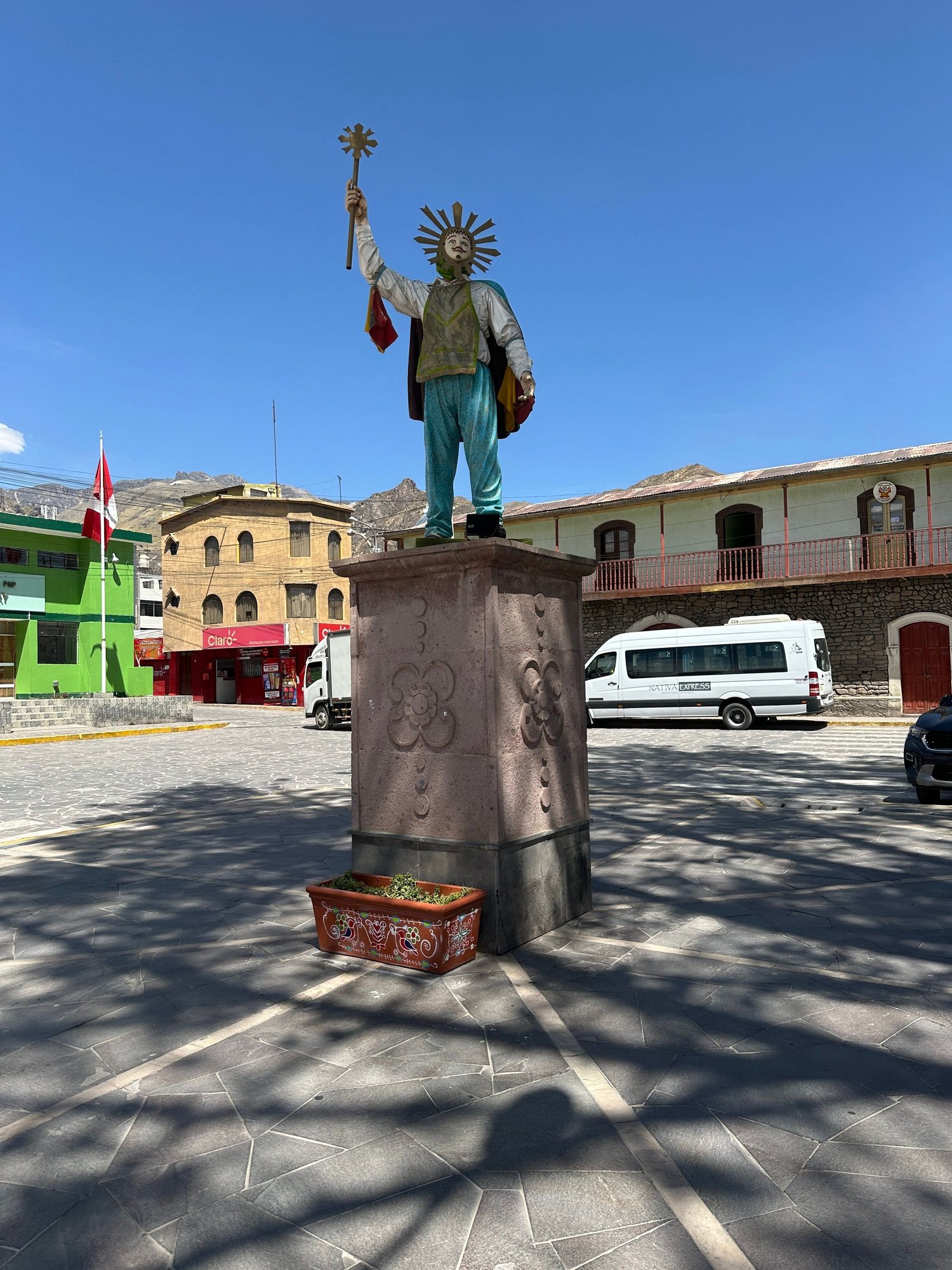
Chivay square
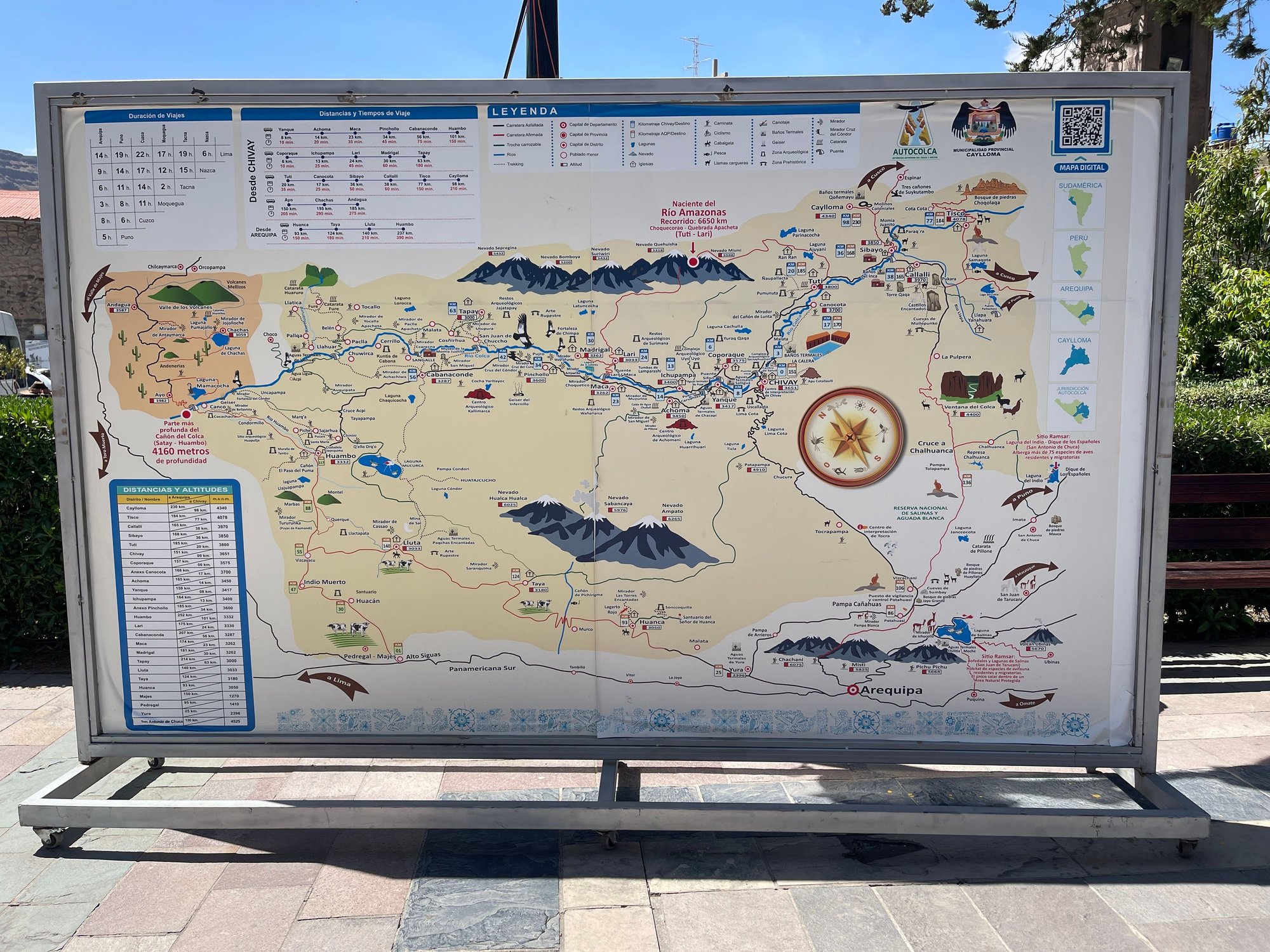
Eventually the bus arrived an hour late, and we were picked up and on the way to Puno. Then we were stuck in traffic due to road construction for an hour. By the time we reached Puno, it was already 8pm at night. We checked into our hotel, had our dinner in the nearby restaurant, and snuggled in for the night.
We had an early breakfast provided by the hotel before the bus trip from Chivay to the Colca Canyon. We were picked up by our guide and continued on our journey to Colca Canyon.
On the way, we visited the viewpoint of Mirador Achoma and the village Maca that still keep their traditions alive. There is a small pretty church in Maca- IglesiaSanta Ana, and this was also our toilet stop before Colca Canyon. The journey was indeed beautiful and breathtaking. At each stop, we had time to take pictures and check out the souvenir stands.
Beautiful landscape
Souvenirs stand and cute baby alpaca
Church of Maca
Maca village
Church of Maca
Upon arrival at the viewpoint of the Cruz Del Condor, we could see the extensive depth of the canyon, one of the deepest in the world. It is deeper than the Grand Canyon but a lot smaller in area covered. It is also at a high altitude of 12,000 ft to 13,000 ft, trekking to the canyon floor needs a lot more caution and preparation.
Beautiful vista
Colca Canyon
Canyon viewpoint
After giving us instructions, the guide dropped us off to explore on our own to find the best spot to view the flights of the mighty Andean Condor. We had a good time exploring the vicinity in search of the Andean Condor. We had good luck in searching for the flights, we saw quite a number of magnificent flights of the big birds.
We were told to gather at a pick up point after an hour exploring the area. We gathered and our tour guide took us for a short one way trek along the rim of the canyon. It was easy walking, but we did feel the high altitude effect, just ran out of breath easily for the short trek. The bus picked us up at the end of the trail. It was rewarding and satisfying for us to see this part of the canyon.
Our tour group
We left the Colca Canyon and were dropped off at the town center of Chivay to wait for another tour bus transferring us to Puno. We had lunch at Chivay, walked around the town square while waiting for the bus.
Scenery en route to Chivay
Chivay square
Eventually the bus arrived an hour late, and we were picked up and on the way to Puno. Then we were stuck in traffic due to road construction for an hour. By the time we reached Puno, it was already 8pm at night. We checked into our hotel, had our dinner in the nearby restaurant, and snuggled in for the night.
I've enjoyed looking through these recent installments, as much as I did your earlier ones, so for now just a few stray comments:
[1] Even your photos of cement plants are at least of high quality!
[2] I'm sure the Inca performance at your Chivay hotel was a fine one, though I rather suspect that the Incas themselves would have been puzzled by that electric guitar at far left!
[3] On the later Colca Canyon photo that shows what appears to be a stone monument on a large stone disc. either that is an extremely realistic statue of a condor, or it was nice to have one drop in on you like that!
Also, I'm wondering whether it might be a good idea to start a new 'thread" for the rest of your trip. This one is getting rather long to scroll through, though I suspect that most readers, like me, will enjoy doing so.
[1] Even your photos of cement plants are at least of high quality!
[2] I'm sure the Inca performance at your Chivay hotel was a fine one, though I rather suspect that the Incas themselves would have been puzzled by that electric guitar at far left!
[3] On the later Colca Canyon photo that shows what appears to be a stone monument on a large stone disc. either that is an extremely realistic statue of a condor, or it was nice to have one drop in on you like that!
Also, I'm wondering whether it might be a good idea to start a new 'thread" for the rest of your trip. This one is getting rather long to scroll through, though I suspect that most readers, like me, will enjoy doing so.
I think it's too confusing to start a new thread for the remainder of your report. It's best to continue on the same thread. All people have to do is click on the last page if they have been following along from the beginning; they don't need to scroll through from the beginning each time they read a new installment.
Day 12– We had booked Tierra Viva Puno Plaza hotel for two nights. It was situated near the Puno square. We also had pre-booked the Uros Taquile Islands Full-Day Tour with lunch for the day. It included a tour of the Uros and Taquile Islands in Lake Titicaca.
We were picked up at 7am and reached the pier around 7:30am. Our tour guide, Omar, was pleasant and friendly. He gave a lot of good information about the tour and spoke very good English.
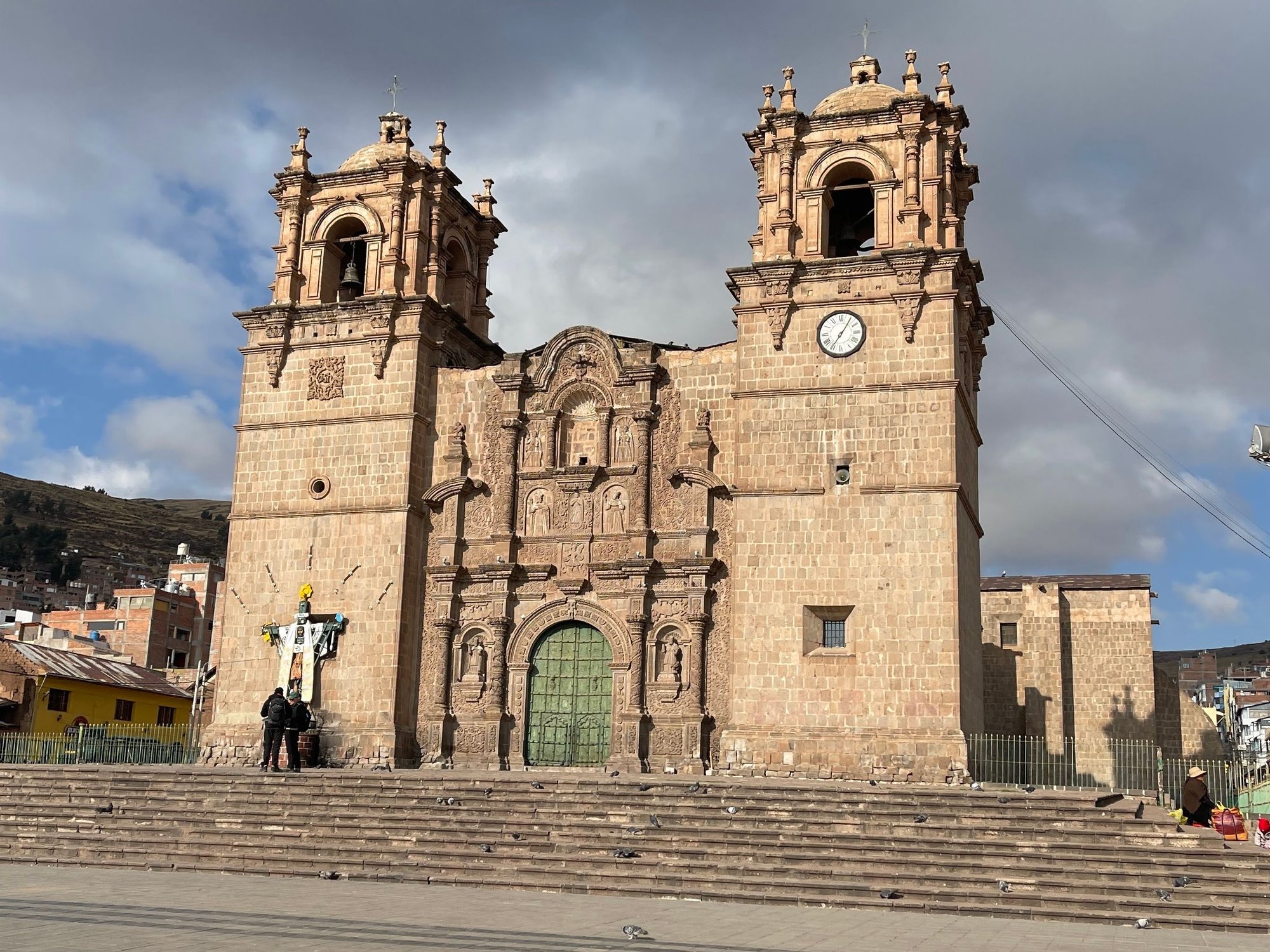
Puno Cathedral
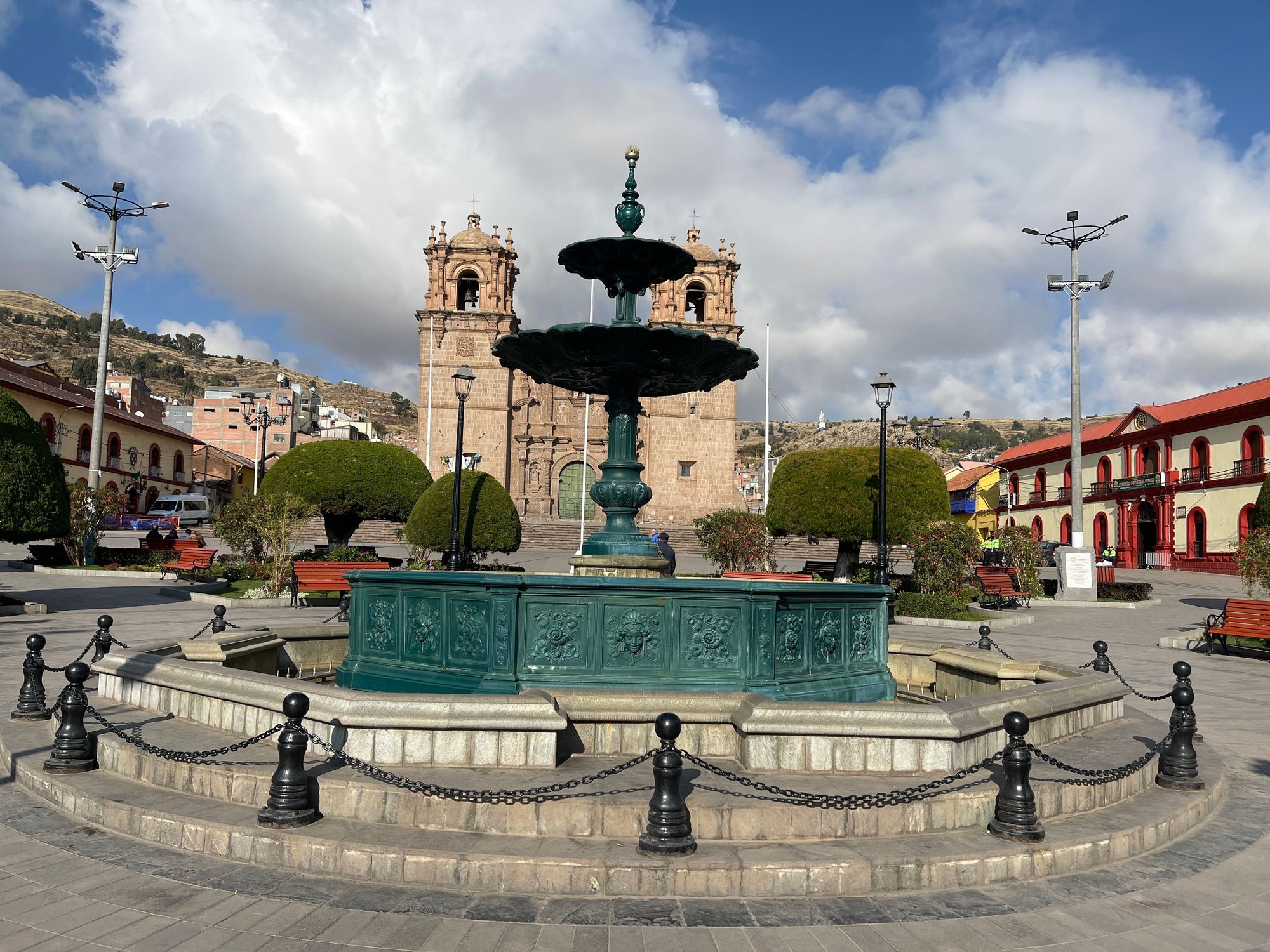
Plaza Mayor de Puno
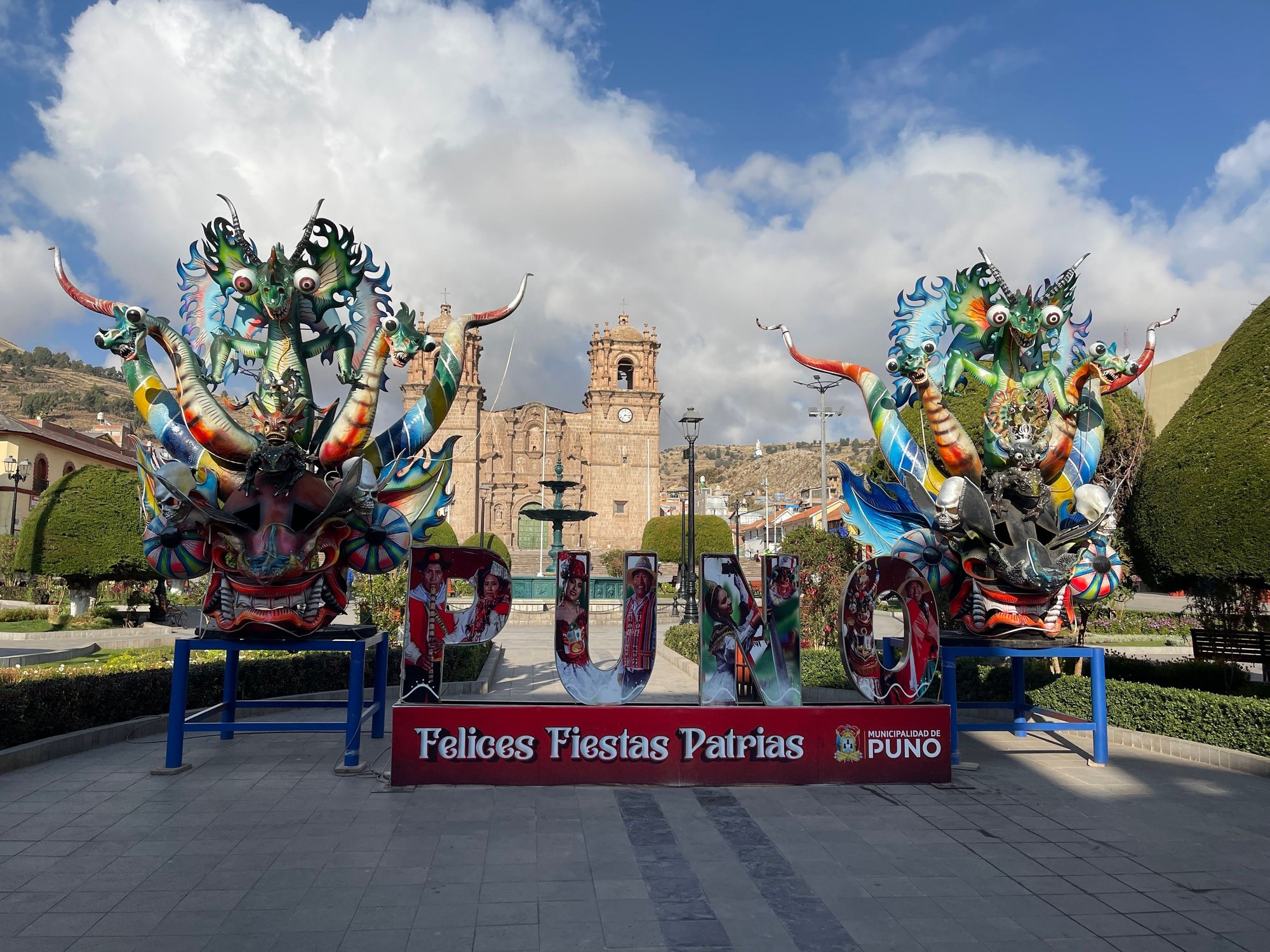
Plaza Mayor de Puno
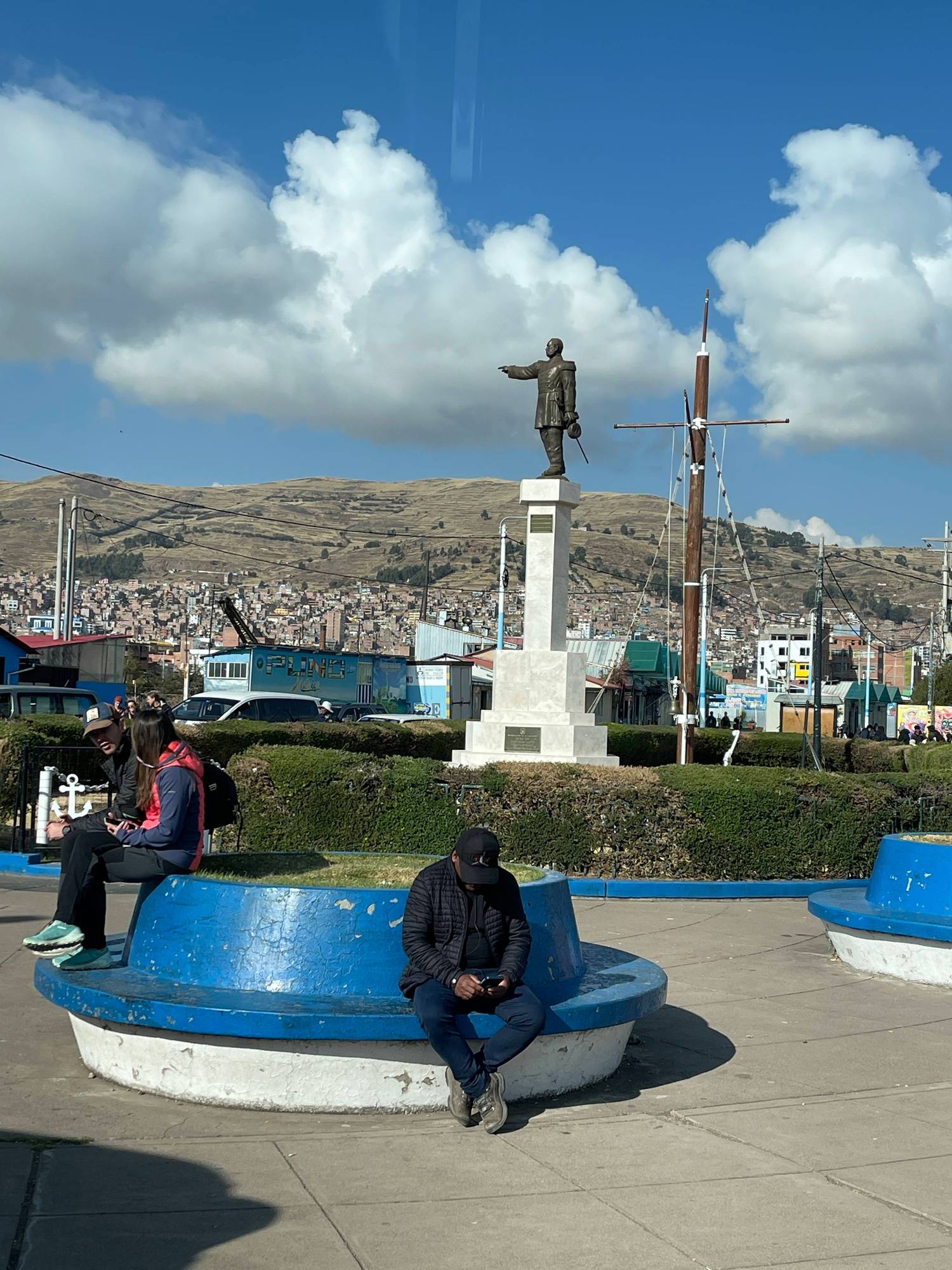
Puerto de Puno
The boat first sailed towards the floating islands of the Uros, which is the National Reserve of Lake Titicaca. It is one of the highest navigable lakes in the world.
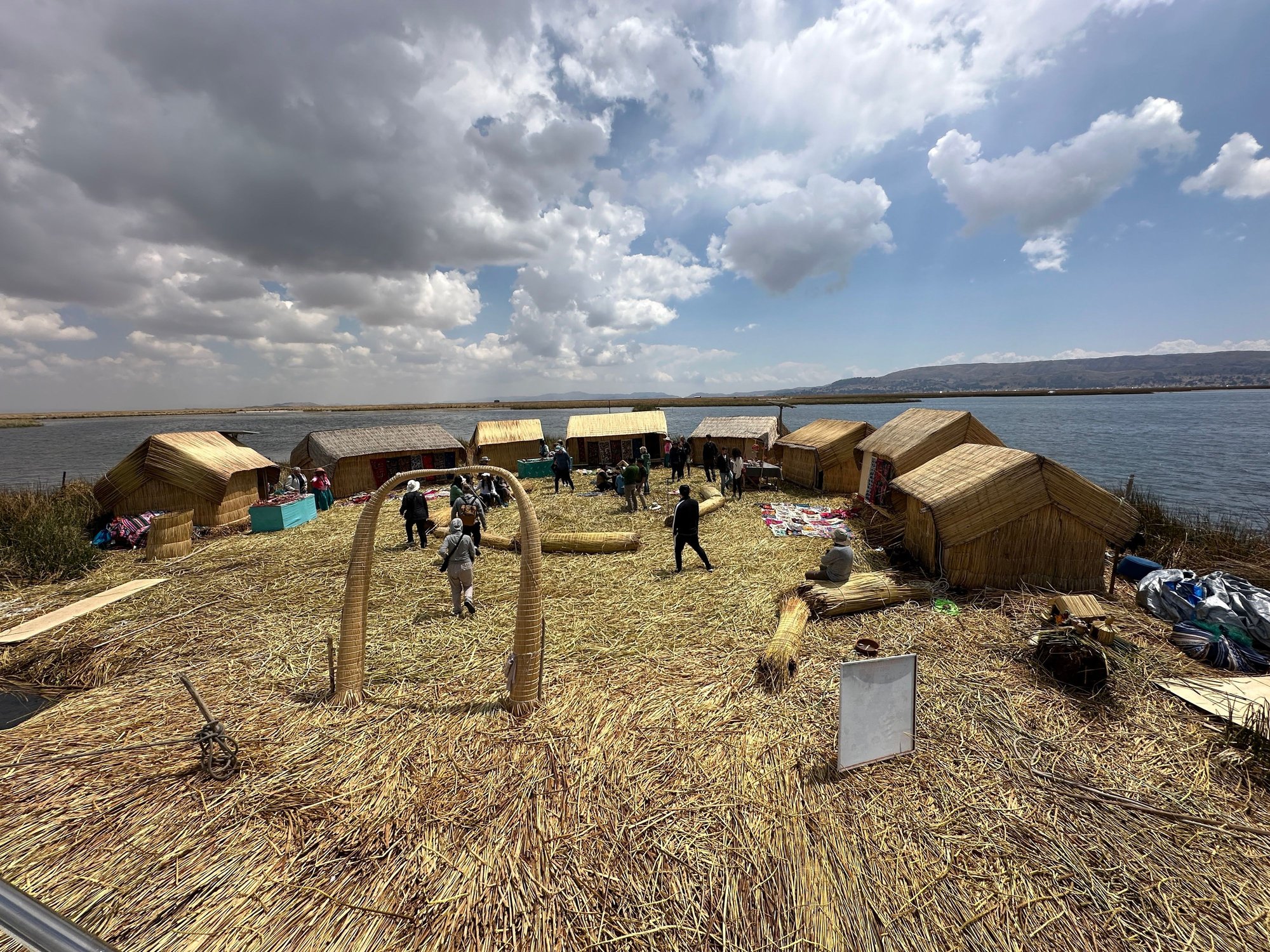
Upon arriving at the floating island, we learned about the life of Uros people, who still maintain their own culture and tradition in the Lake Titicaca region. We also learned about how they built the floating Islands using the Totora reeds growing in the lake.
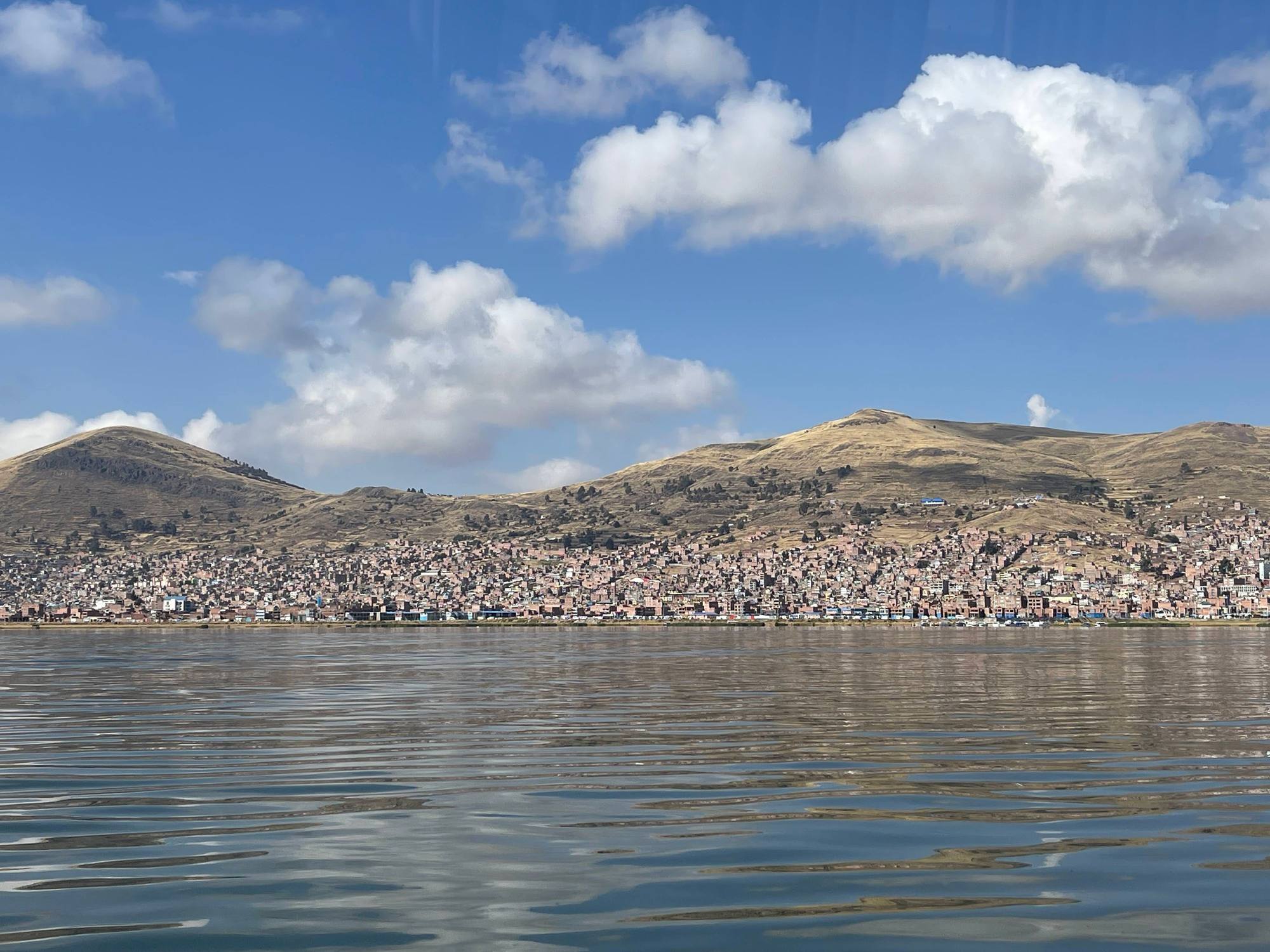
Puno city viewed from the boat ride
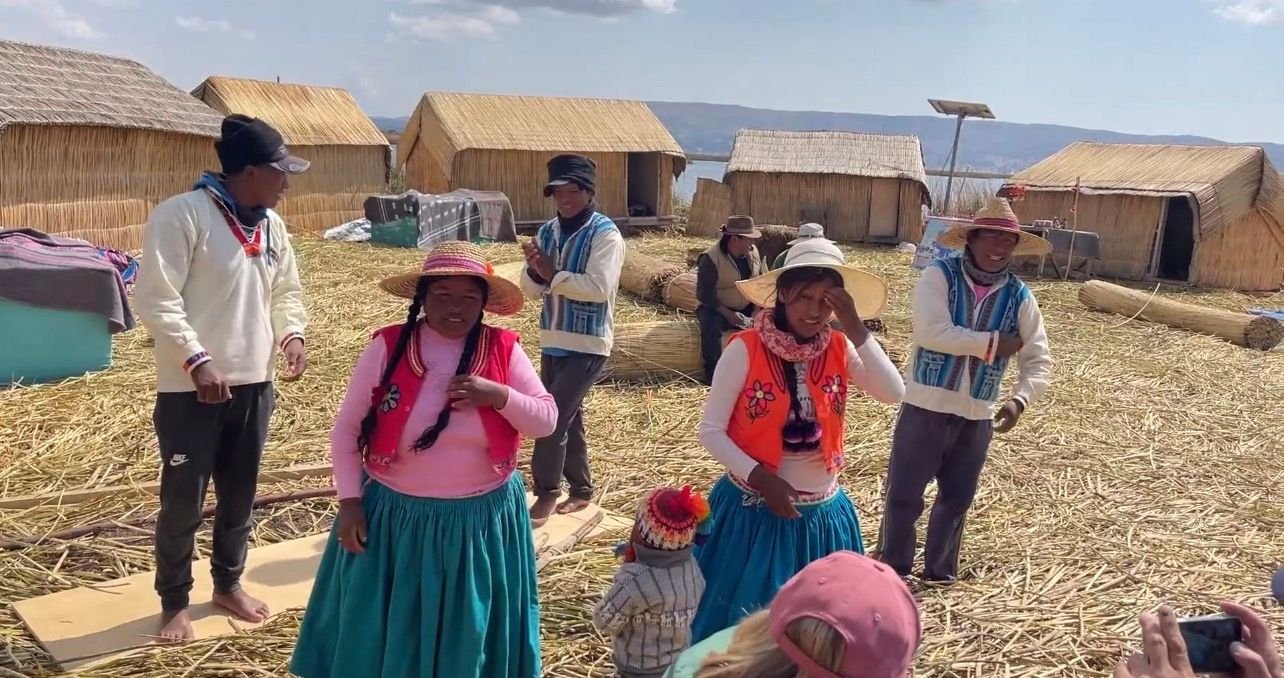
Welcomed by the Uros Island residents
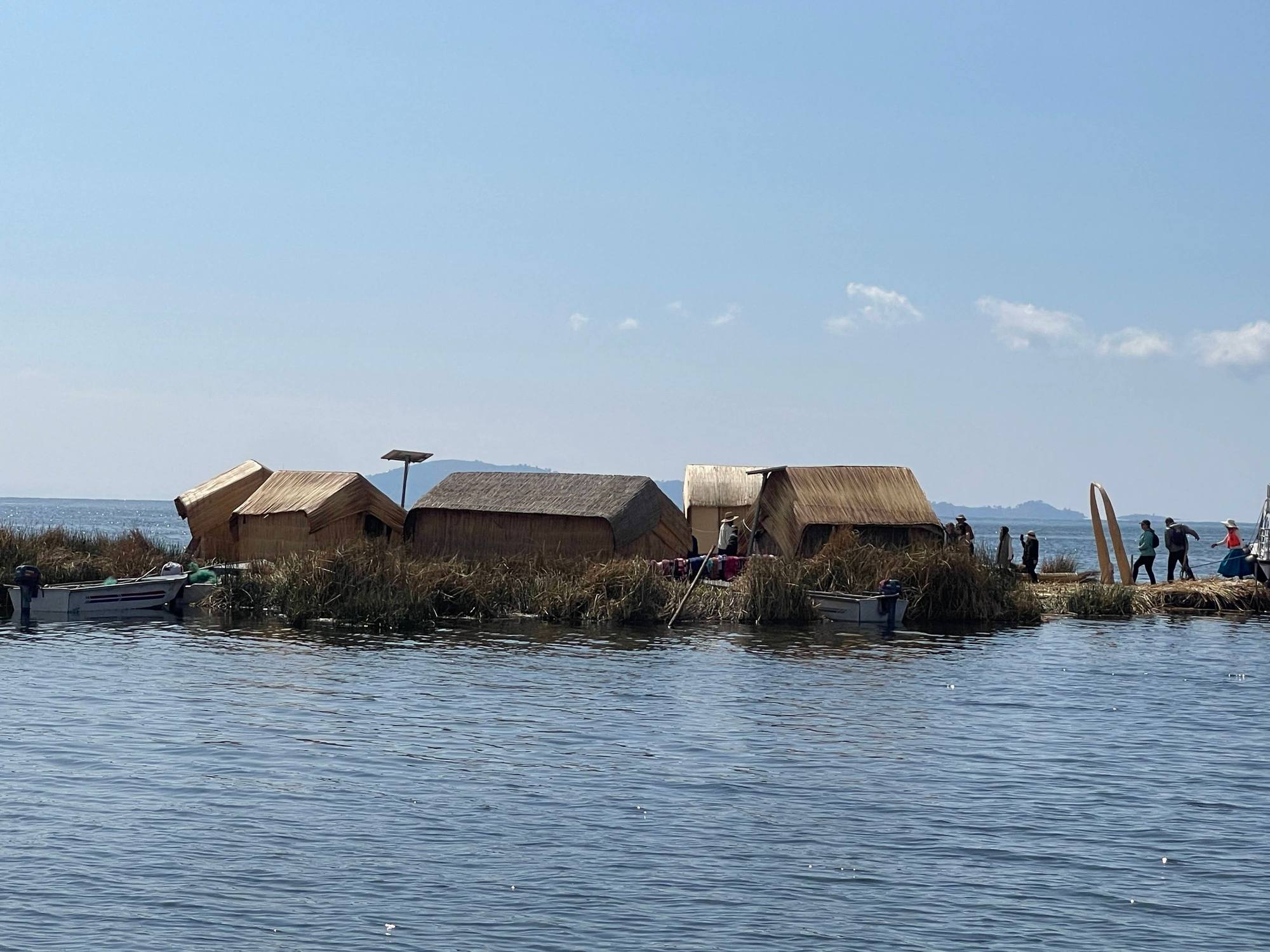
Reed house on the floating island
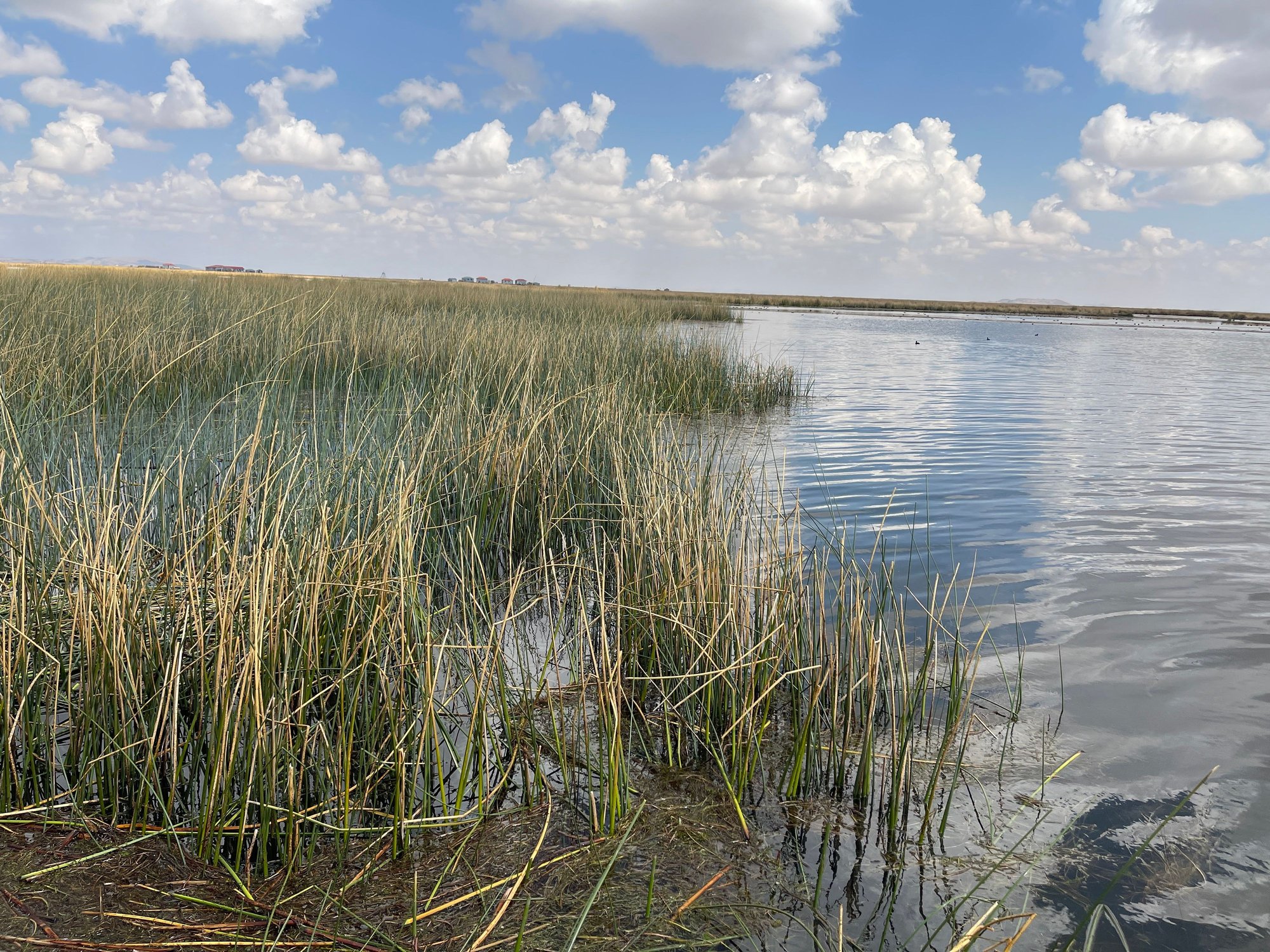
Reed plants grow in the water
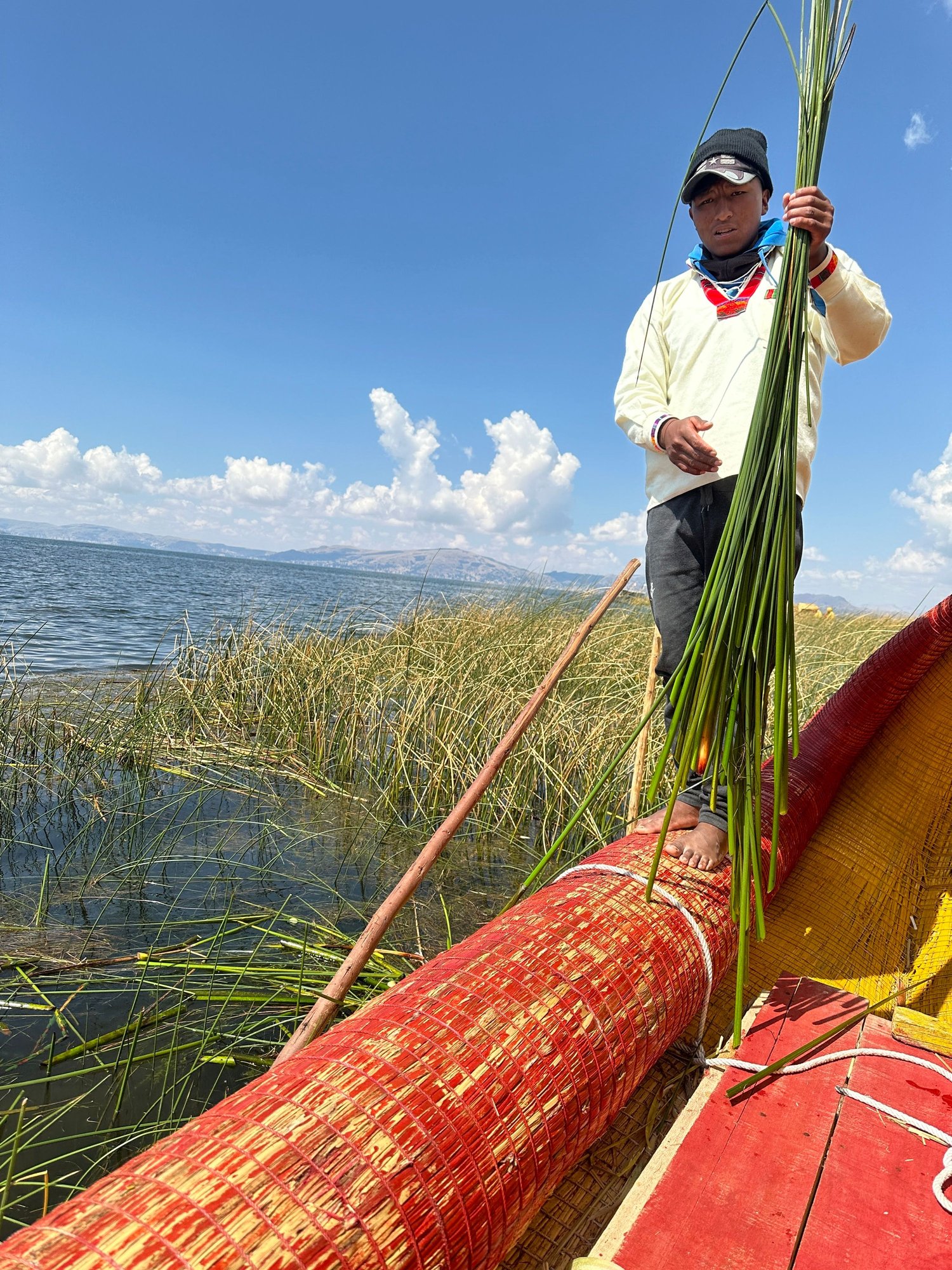
Demonstrating how he harvests the reeds
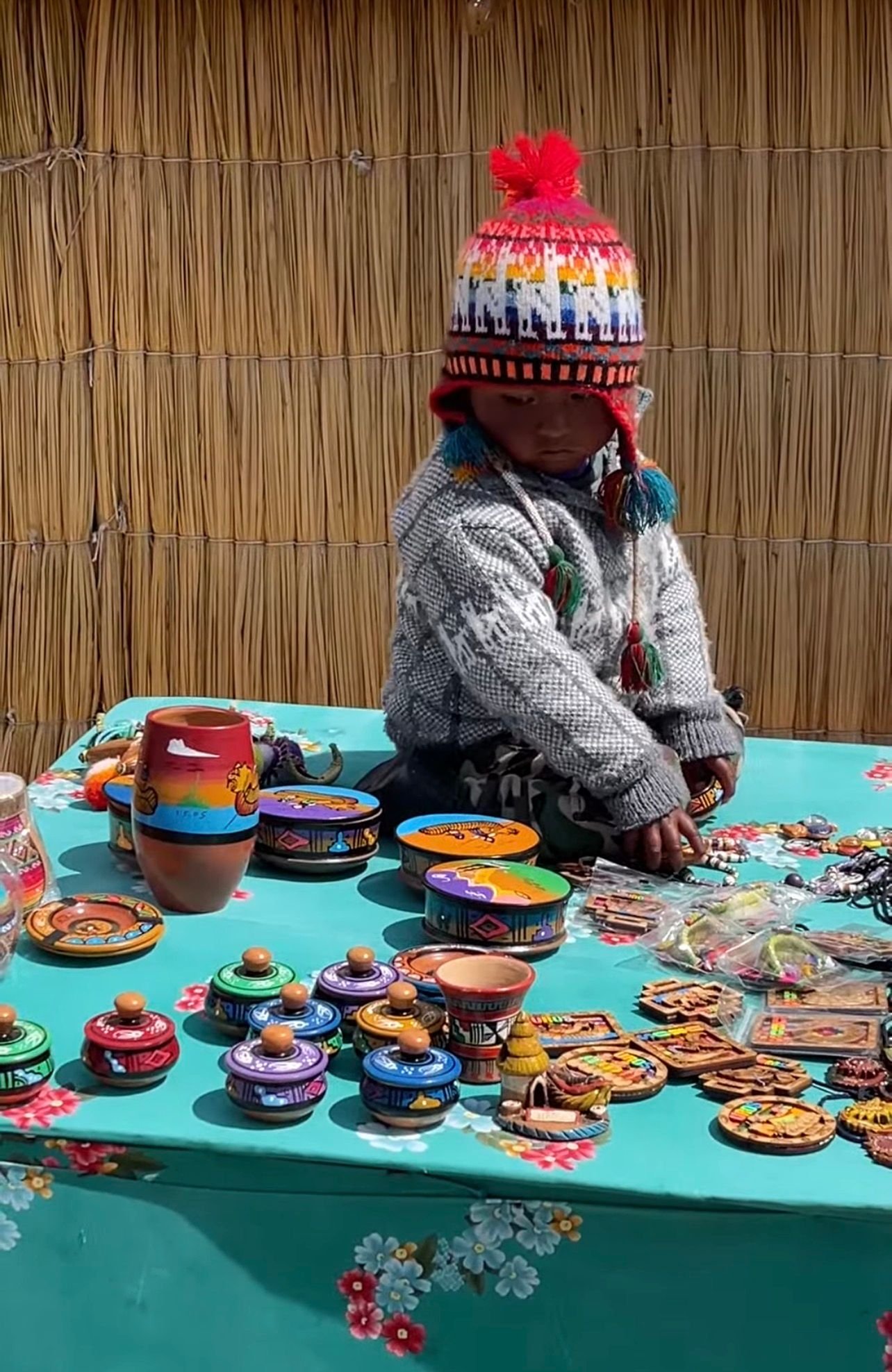
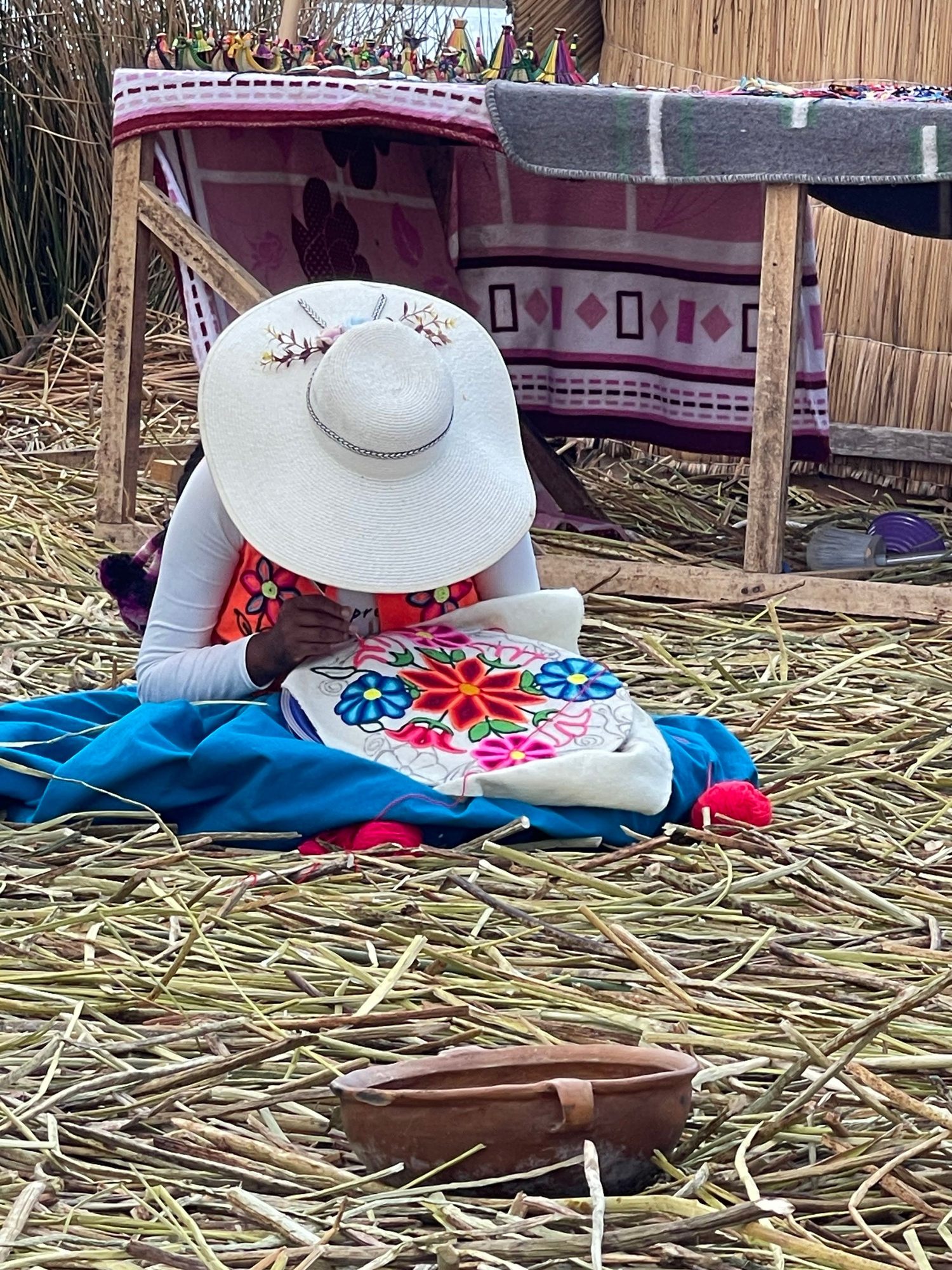
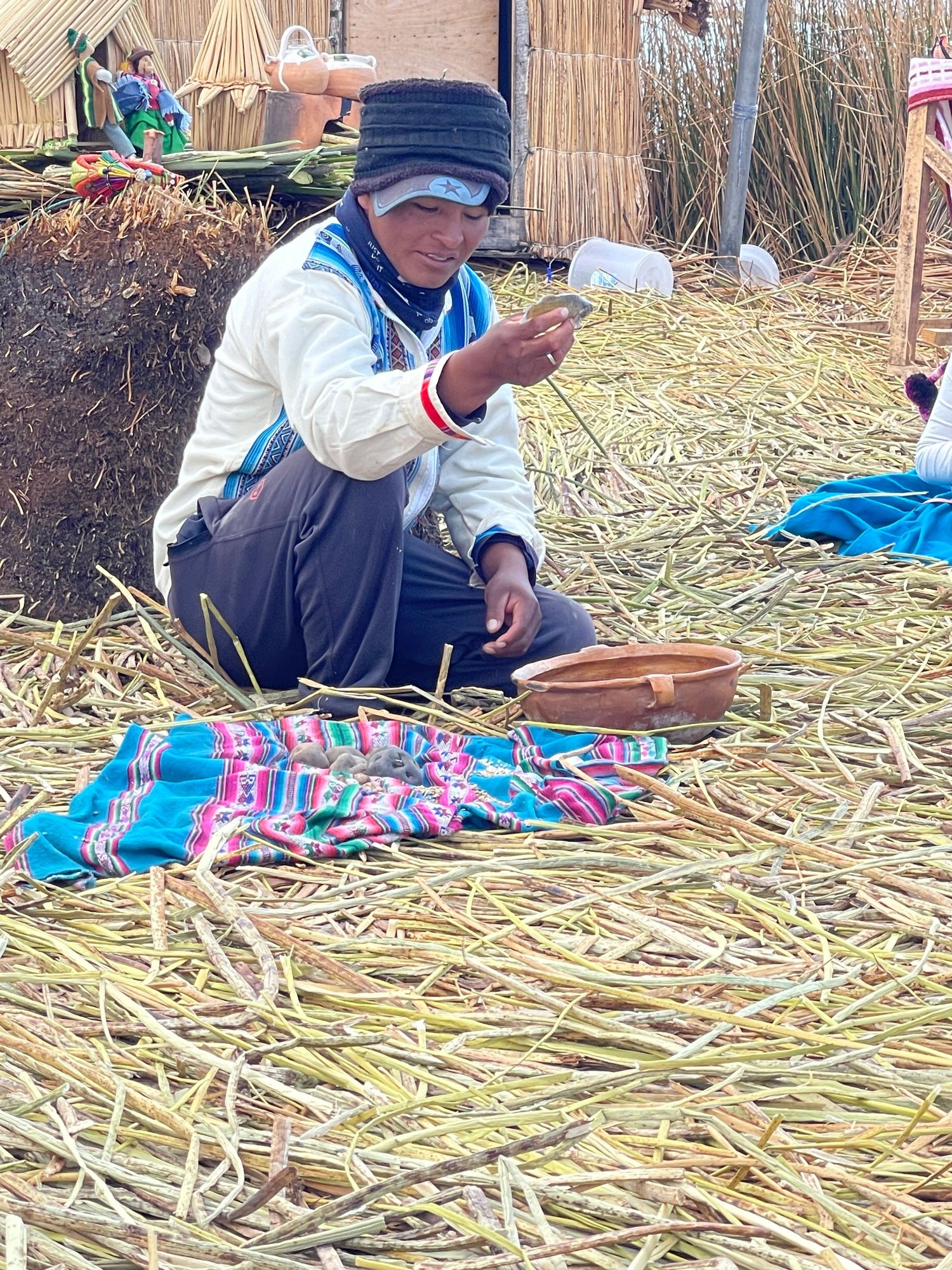
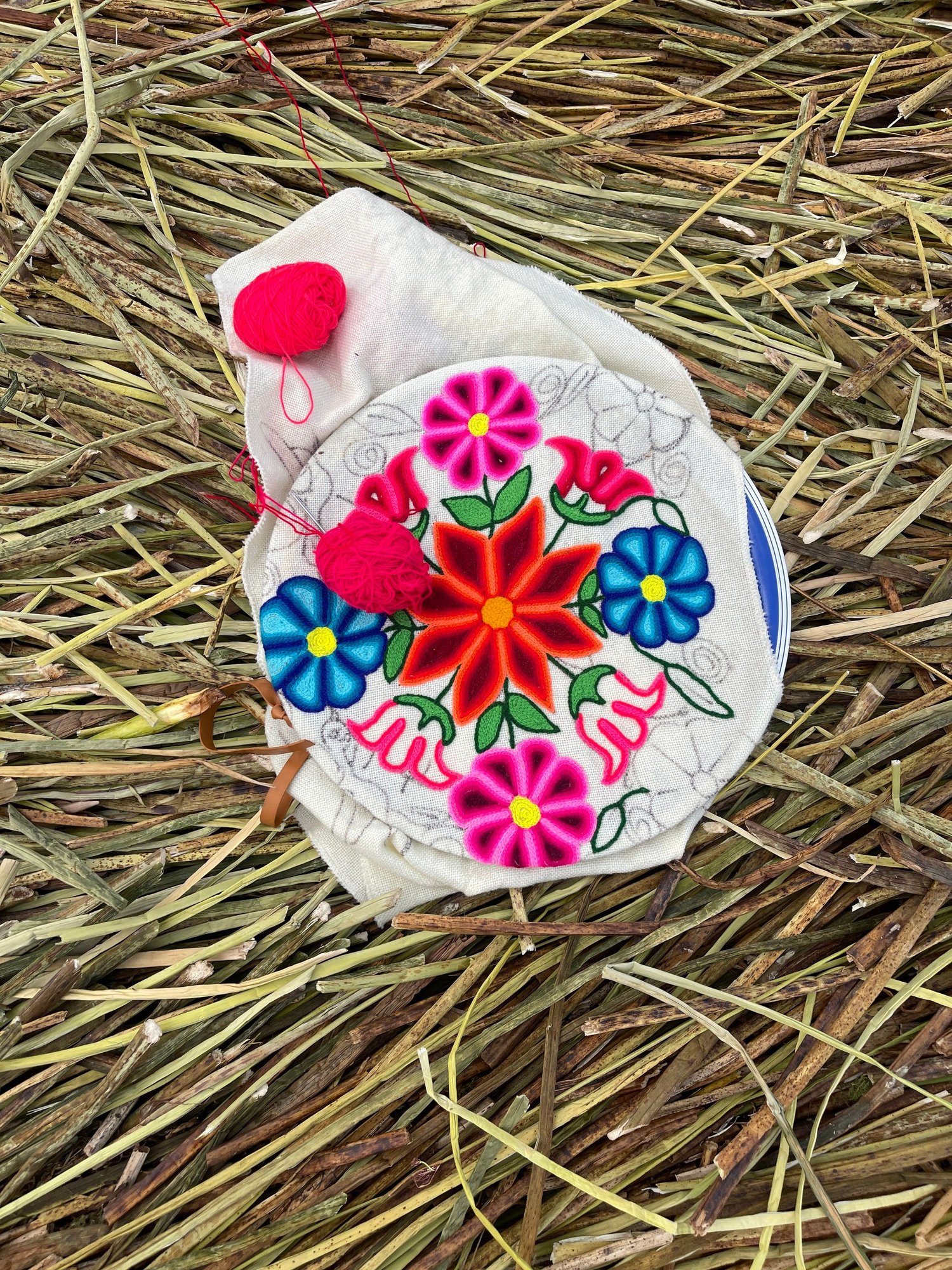
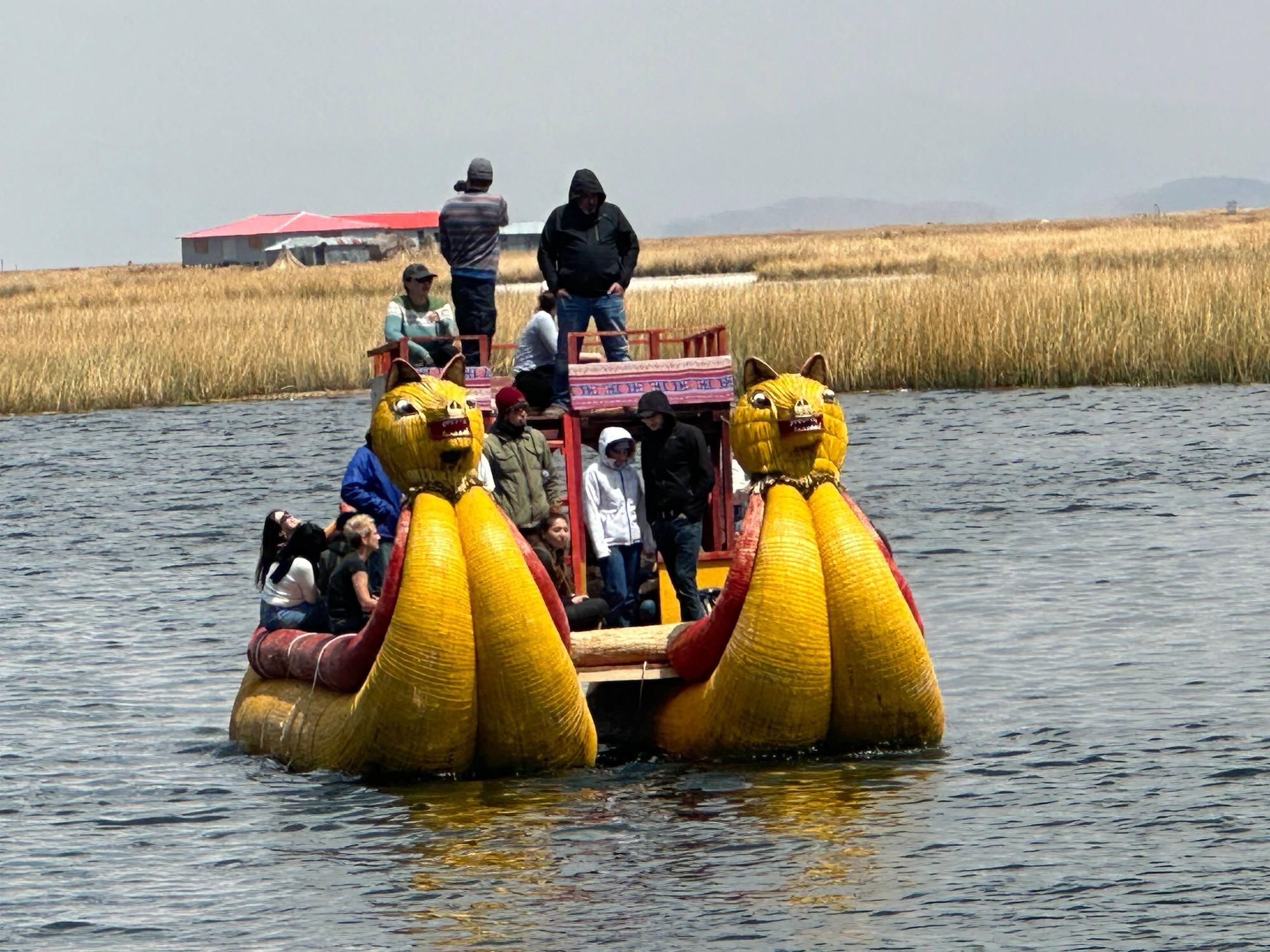
Reed boat for demonstration
The Uros islands are now a major tourist attraction in the area. The community is actually now adapted to tourist based income, and home now includes solar power and motorized powered boats.
We were among the earliest who arrived and finished this part of the Uros islands tour, by the time we left, there were more boats arriving for the tours.
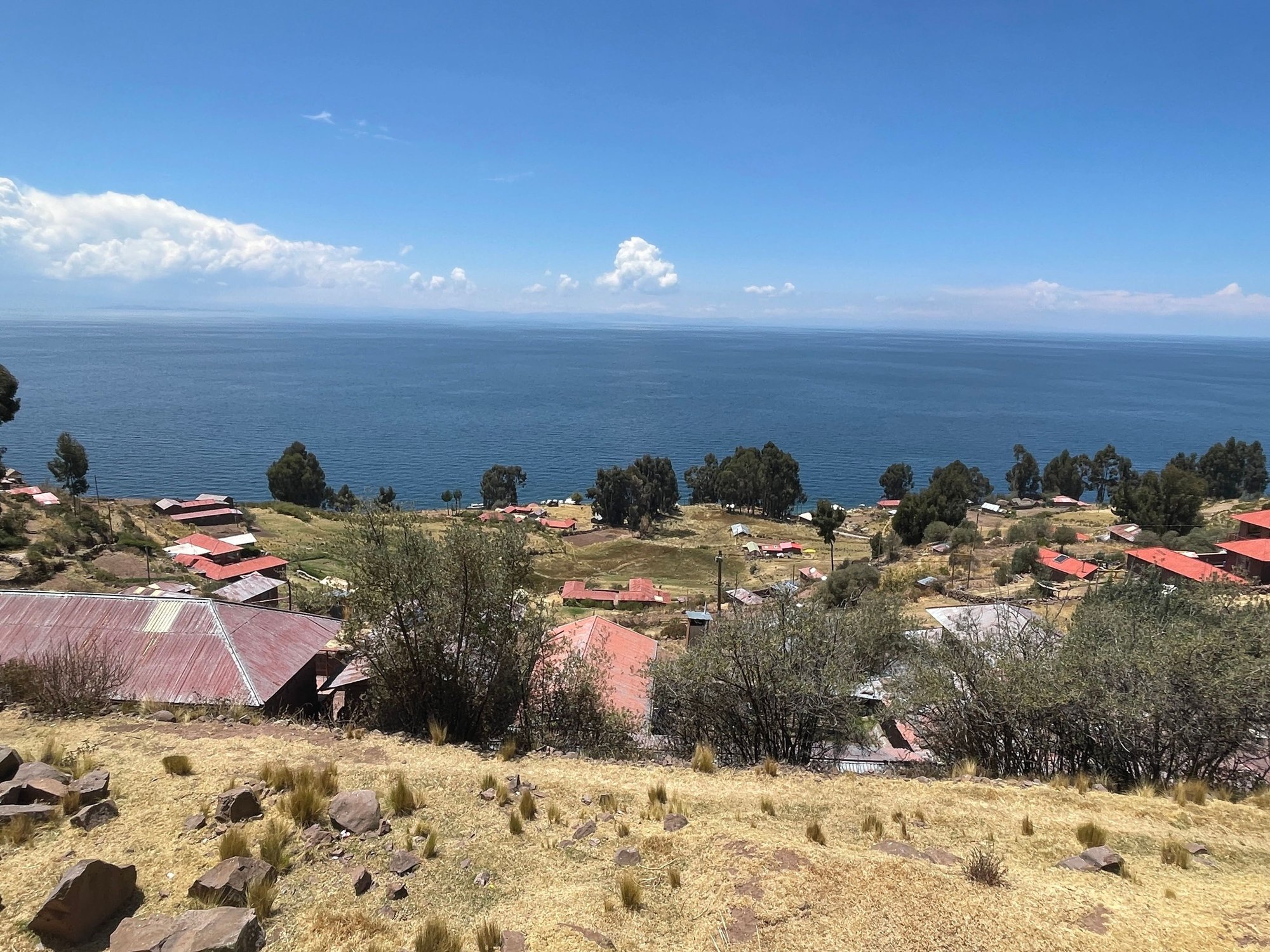
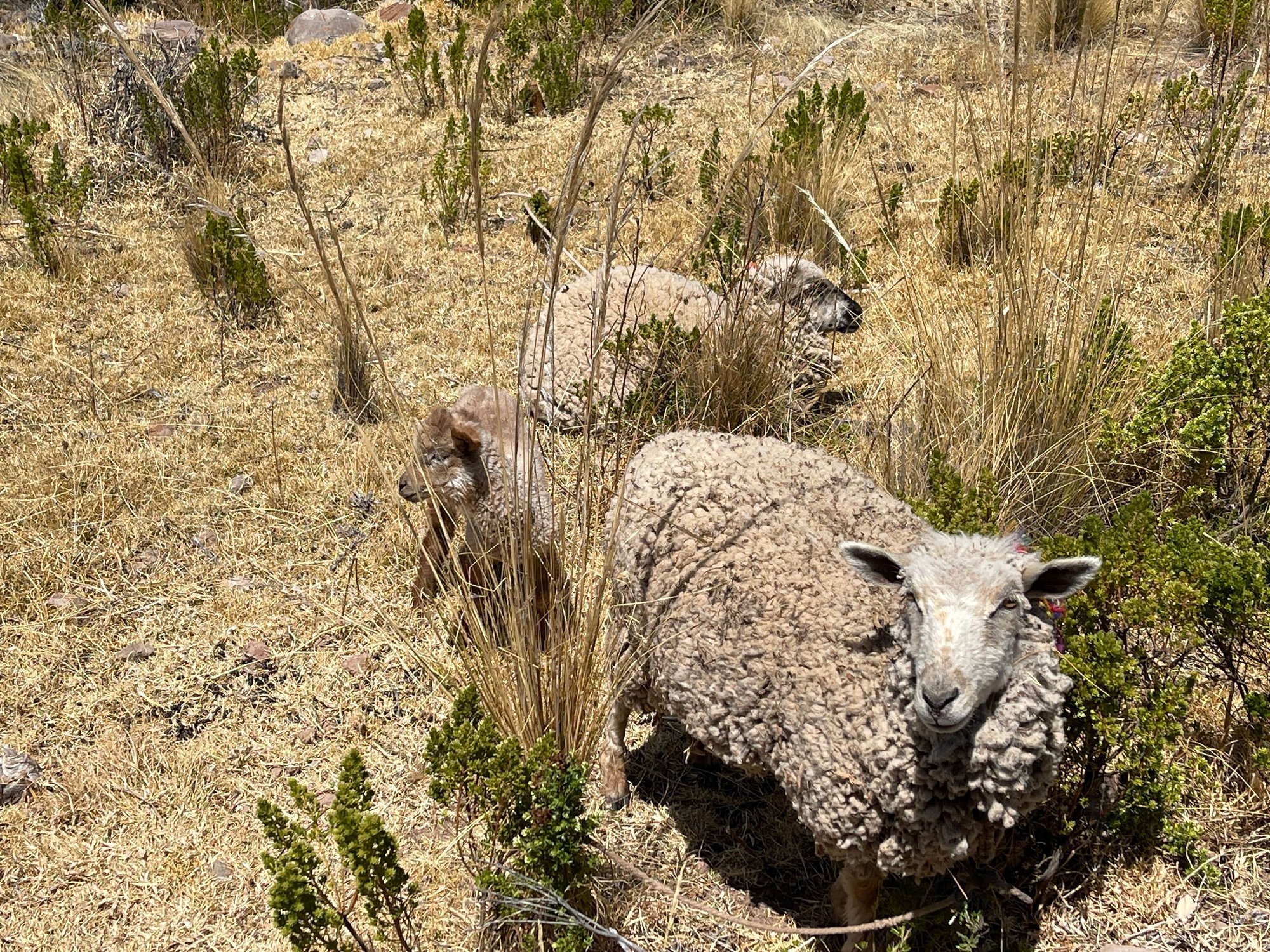
After the Uros Islands tour, we were sailing to Taquile island, known as the "island where men knit," Taquileans have a deep, ancient, and intricate textile art tradition. Today’s islanders (Inca and Aymara ), population around 2,200, continue the generations-old tradition of subsistence farming and fishing. They speak the language of Quechua and Aymara.
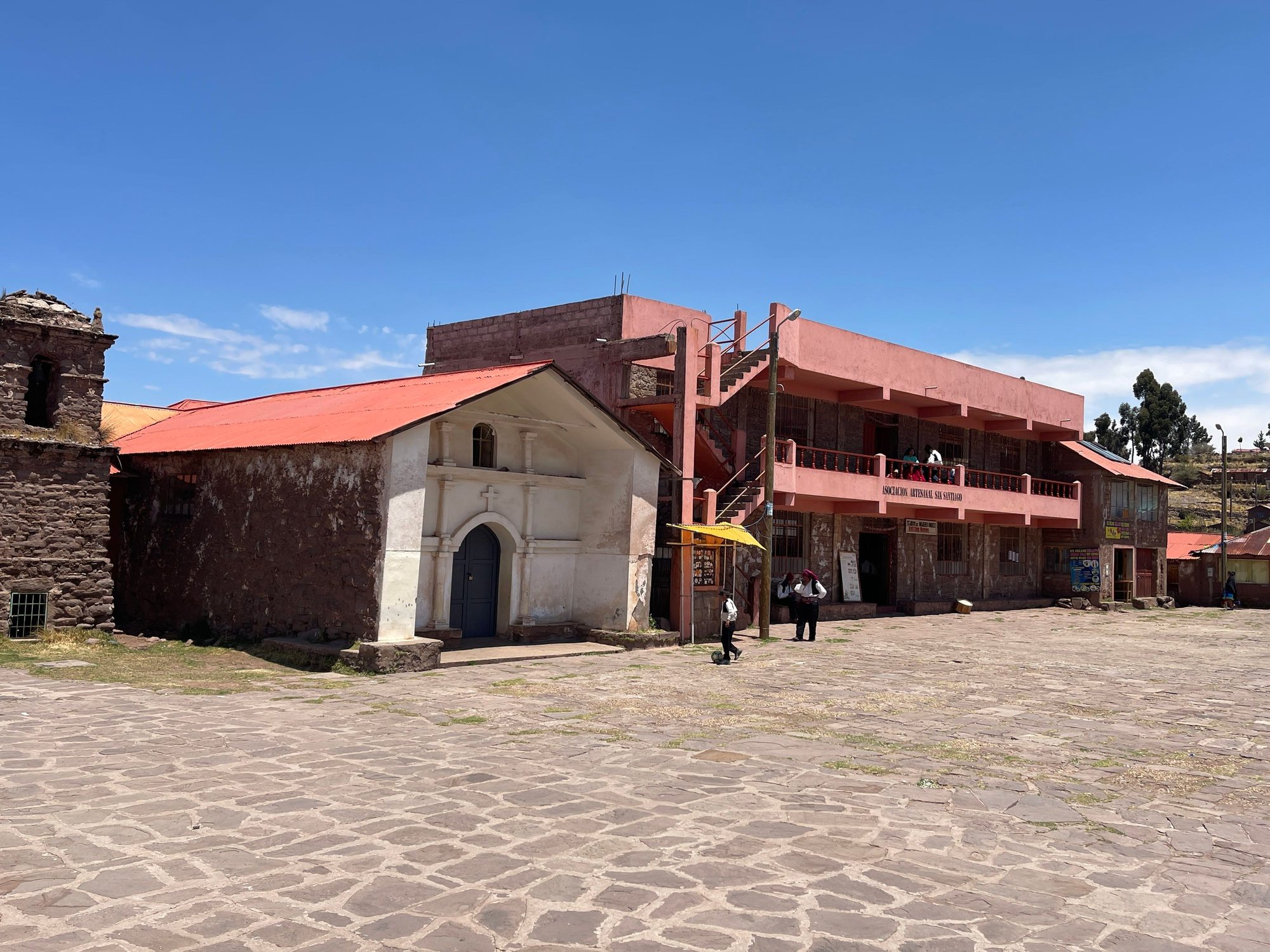
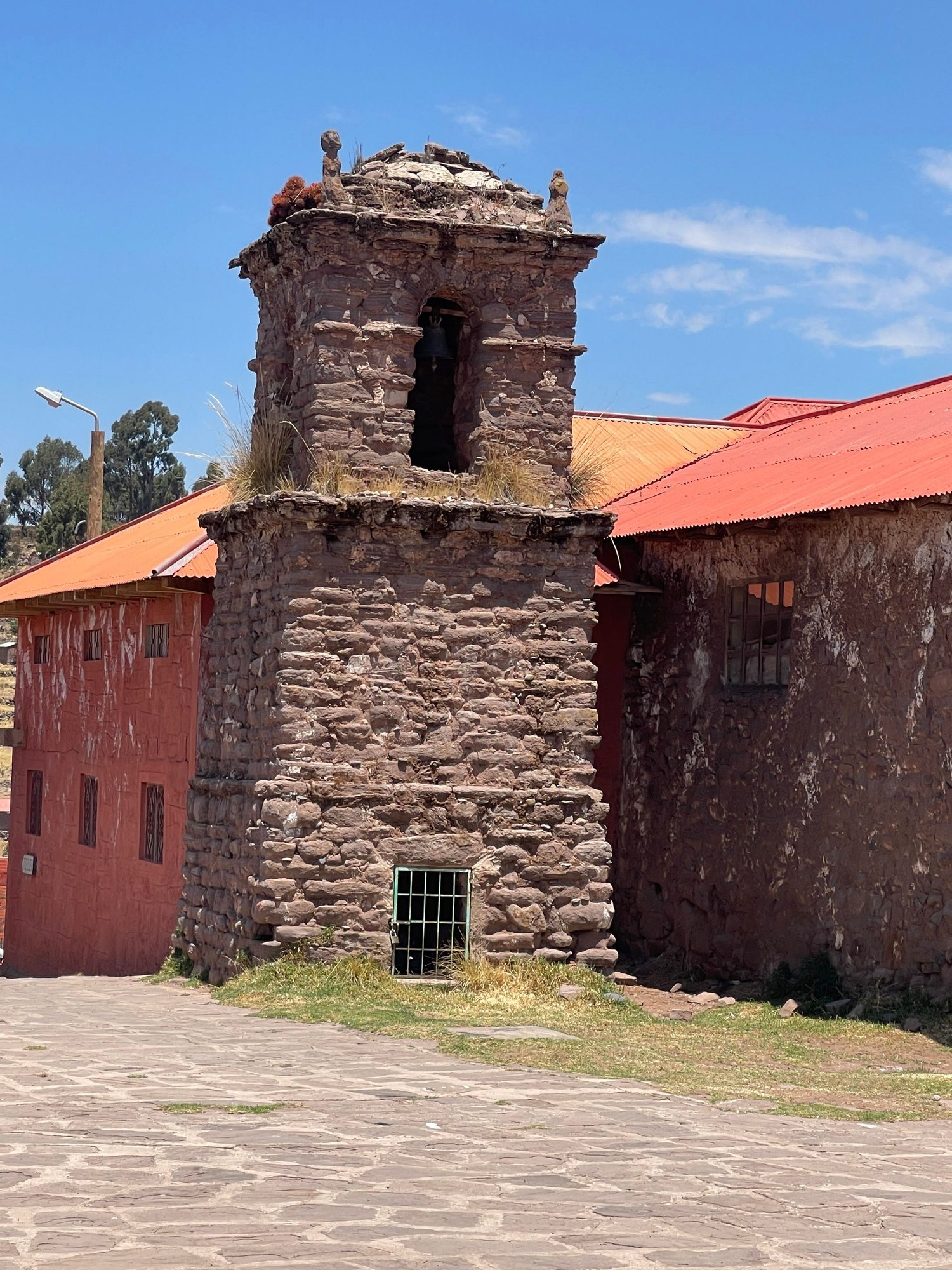
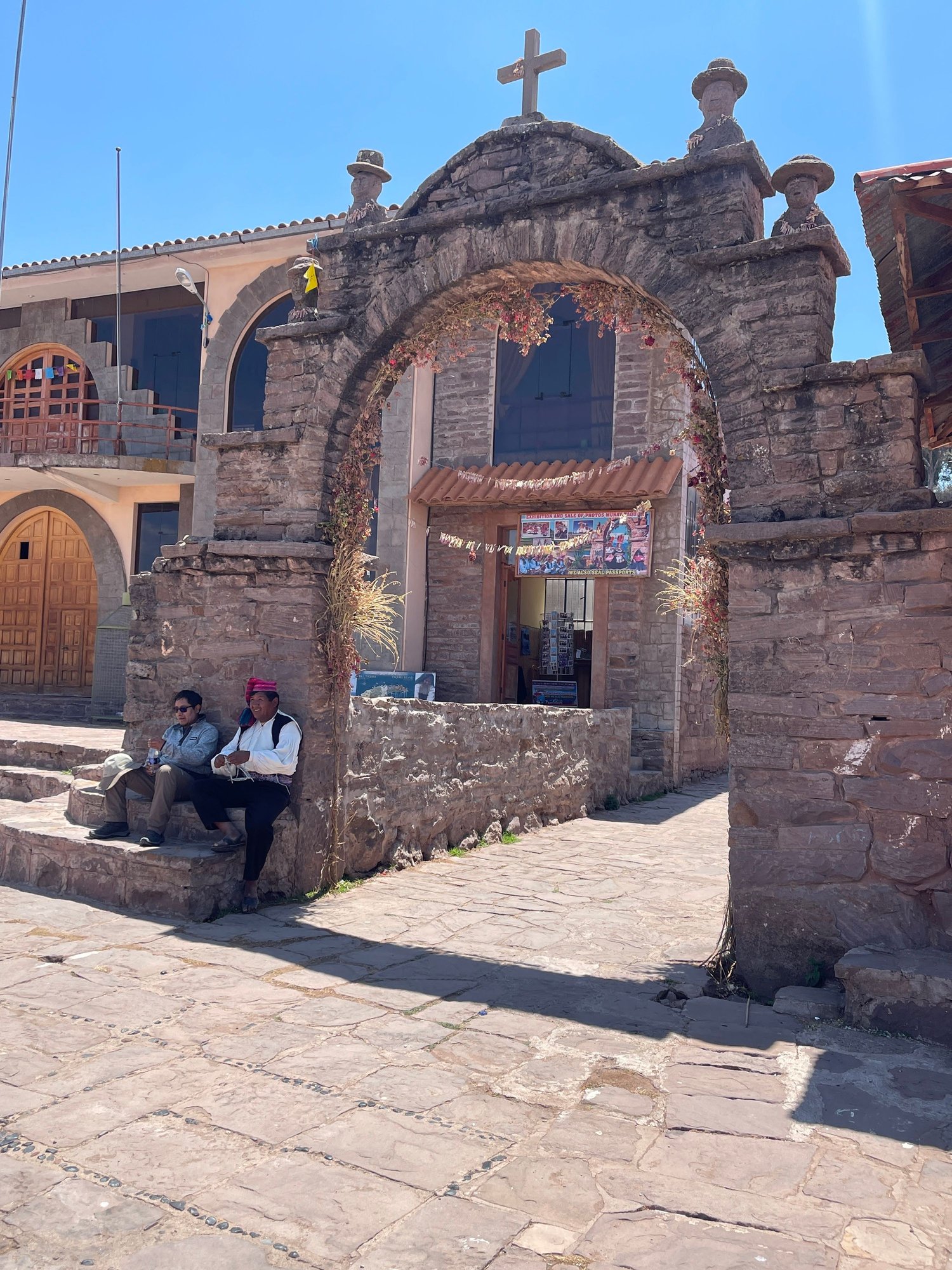
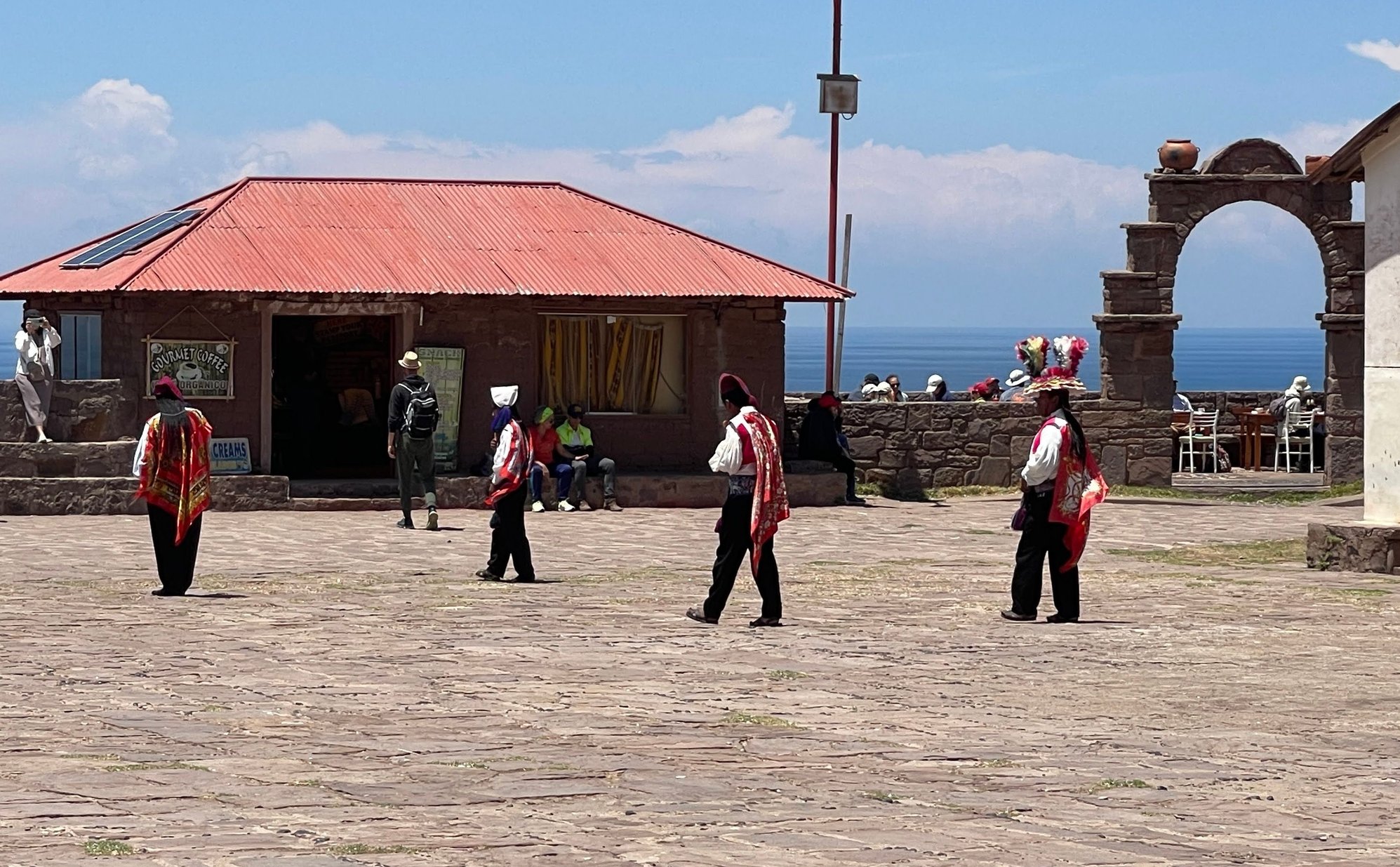
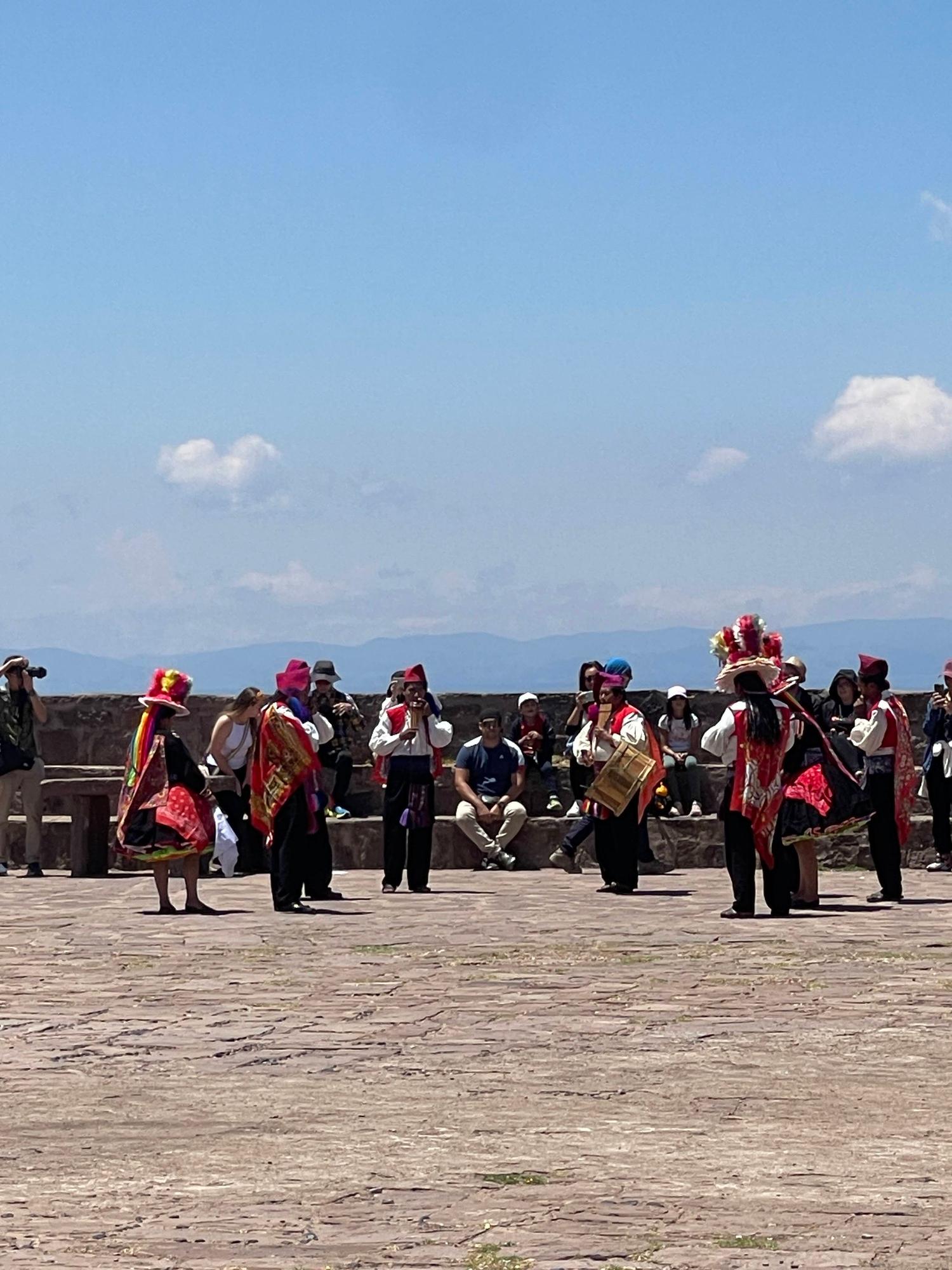
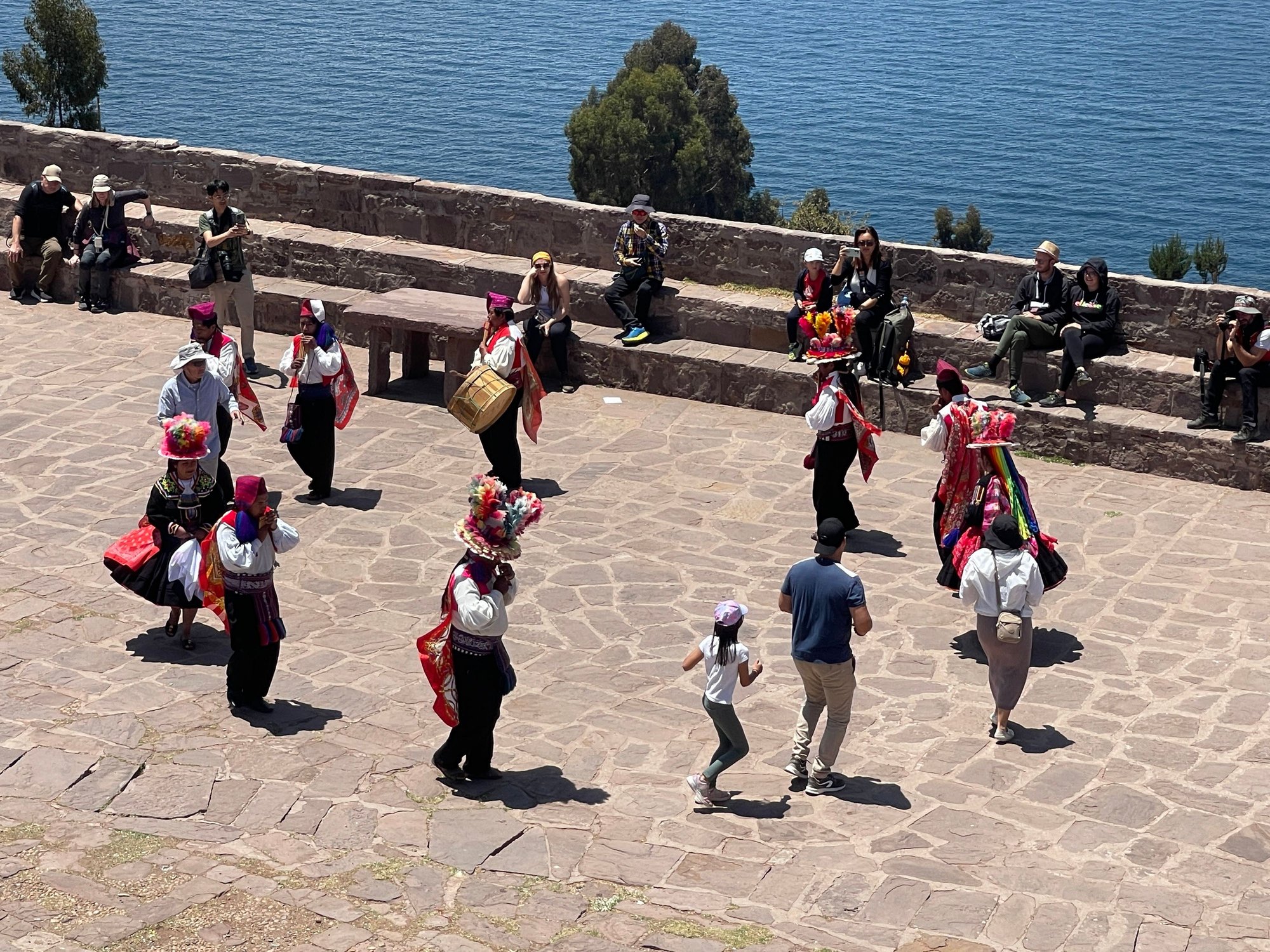
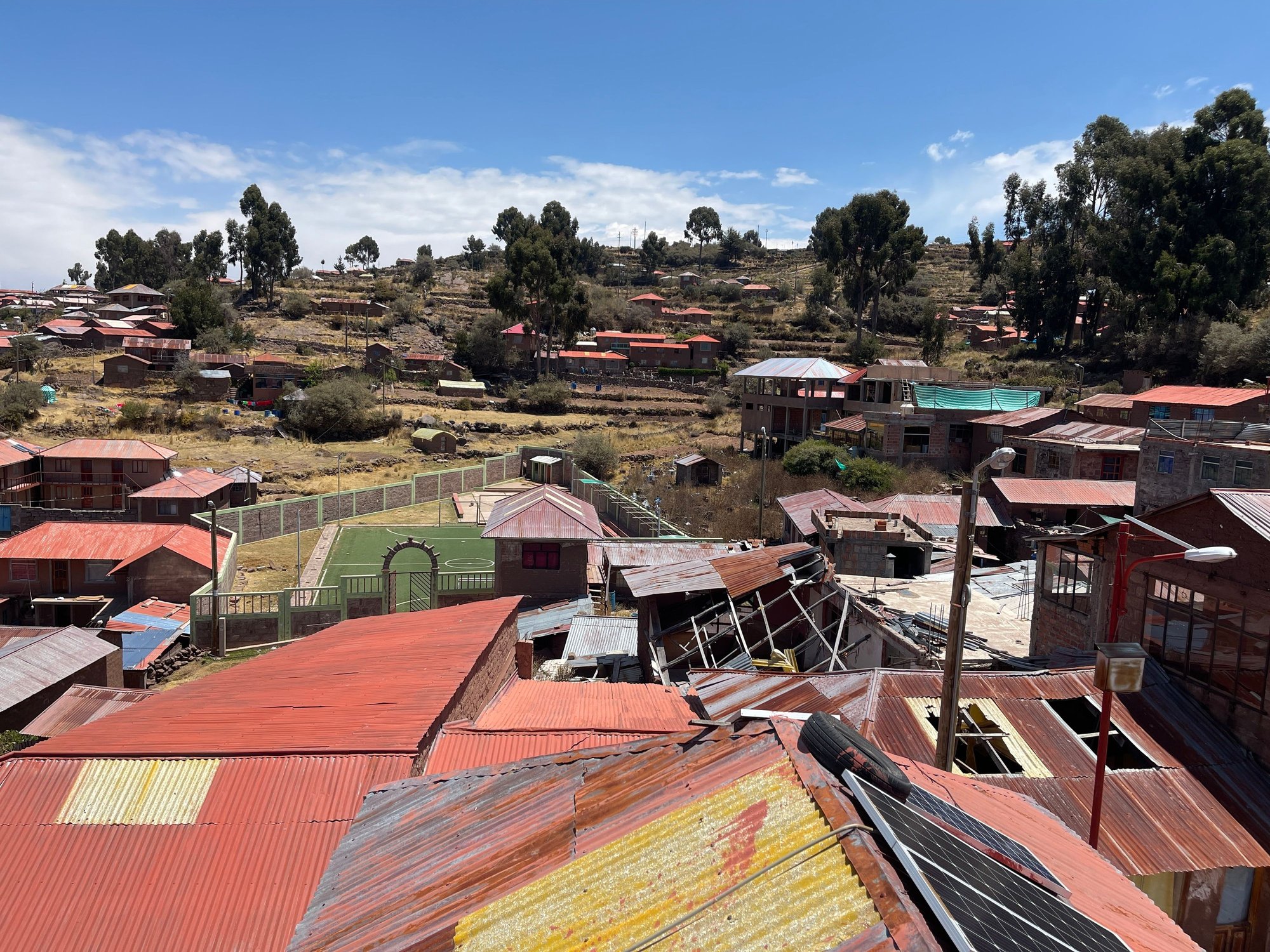
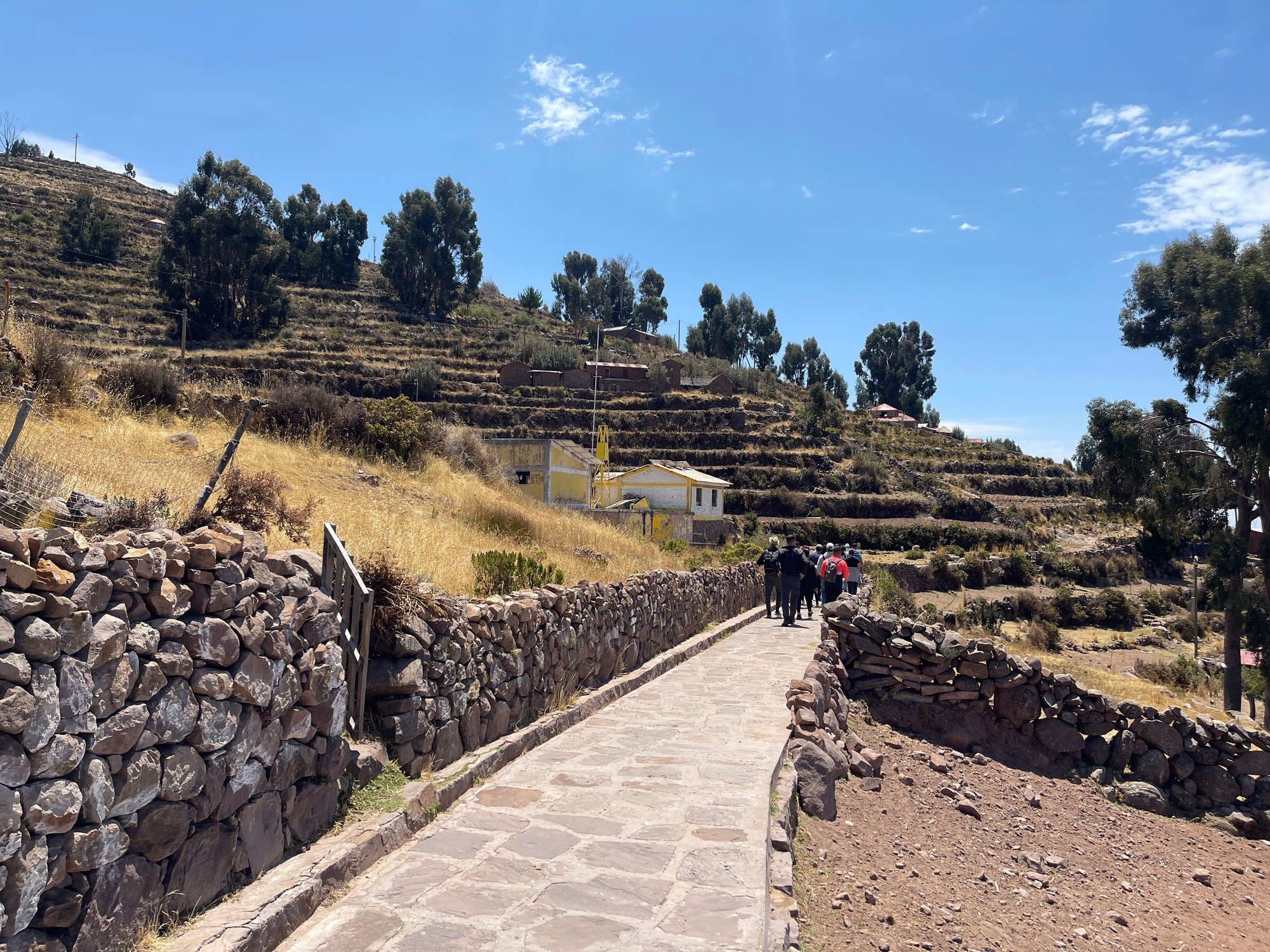
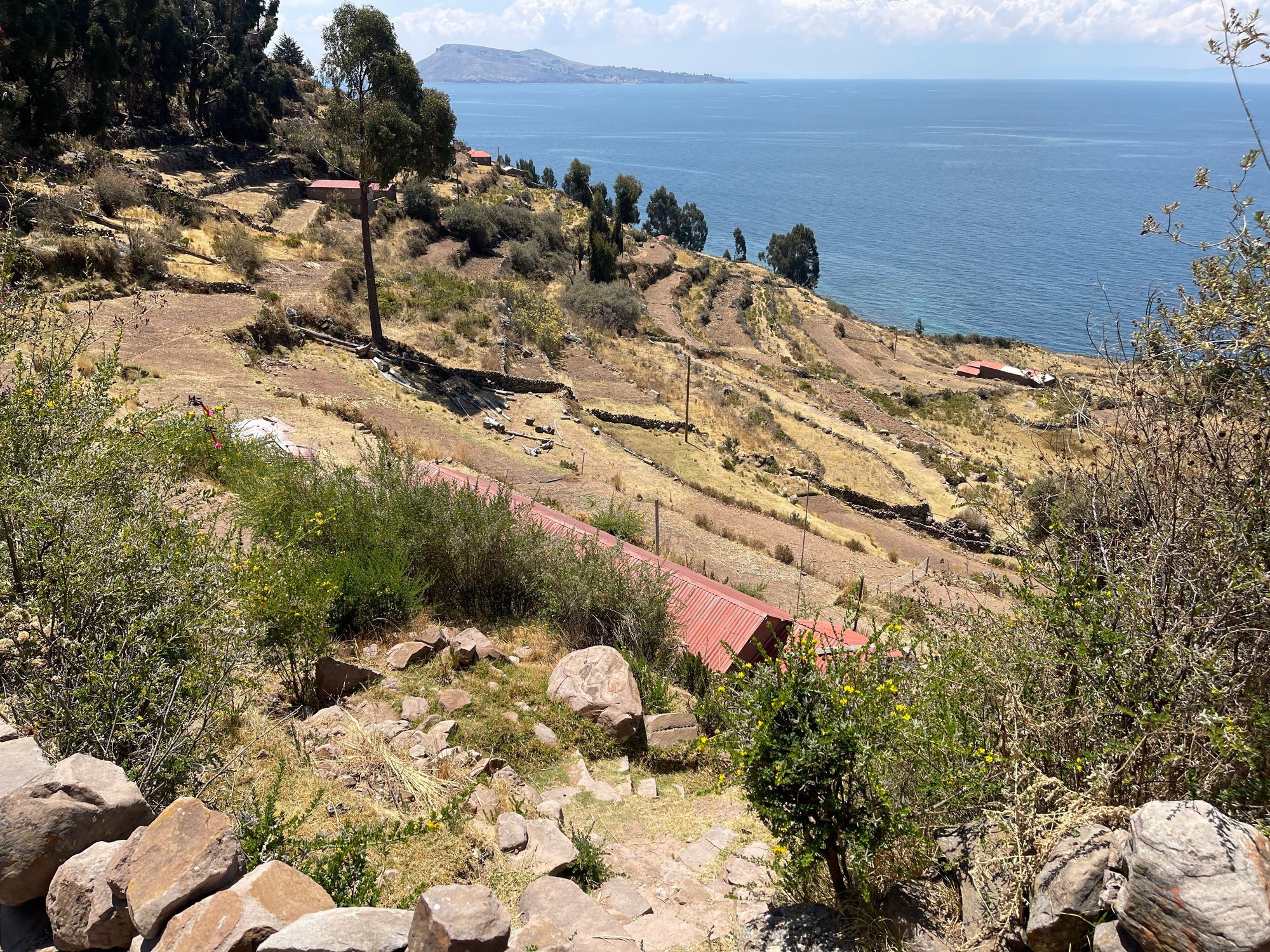
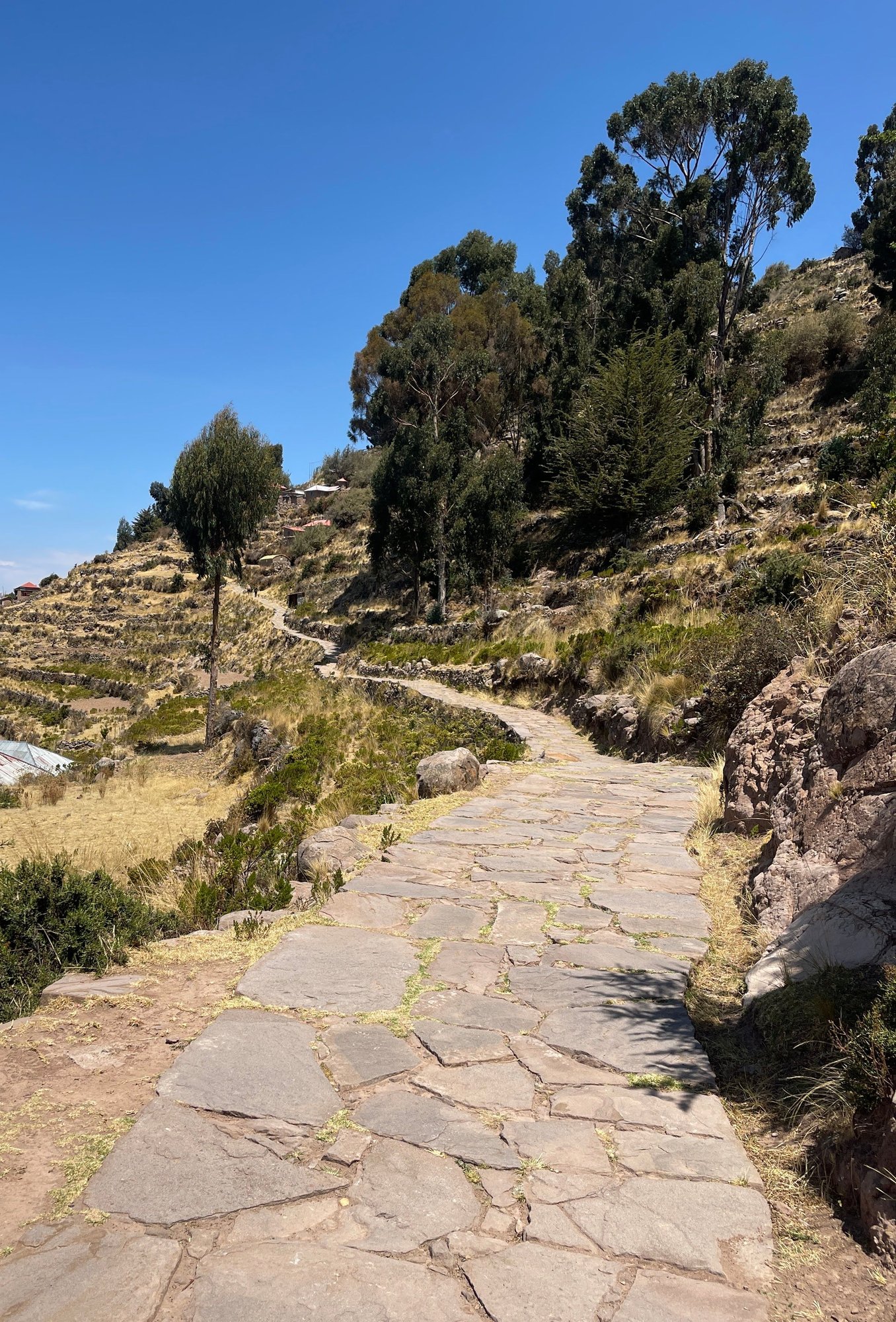
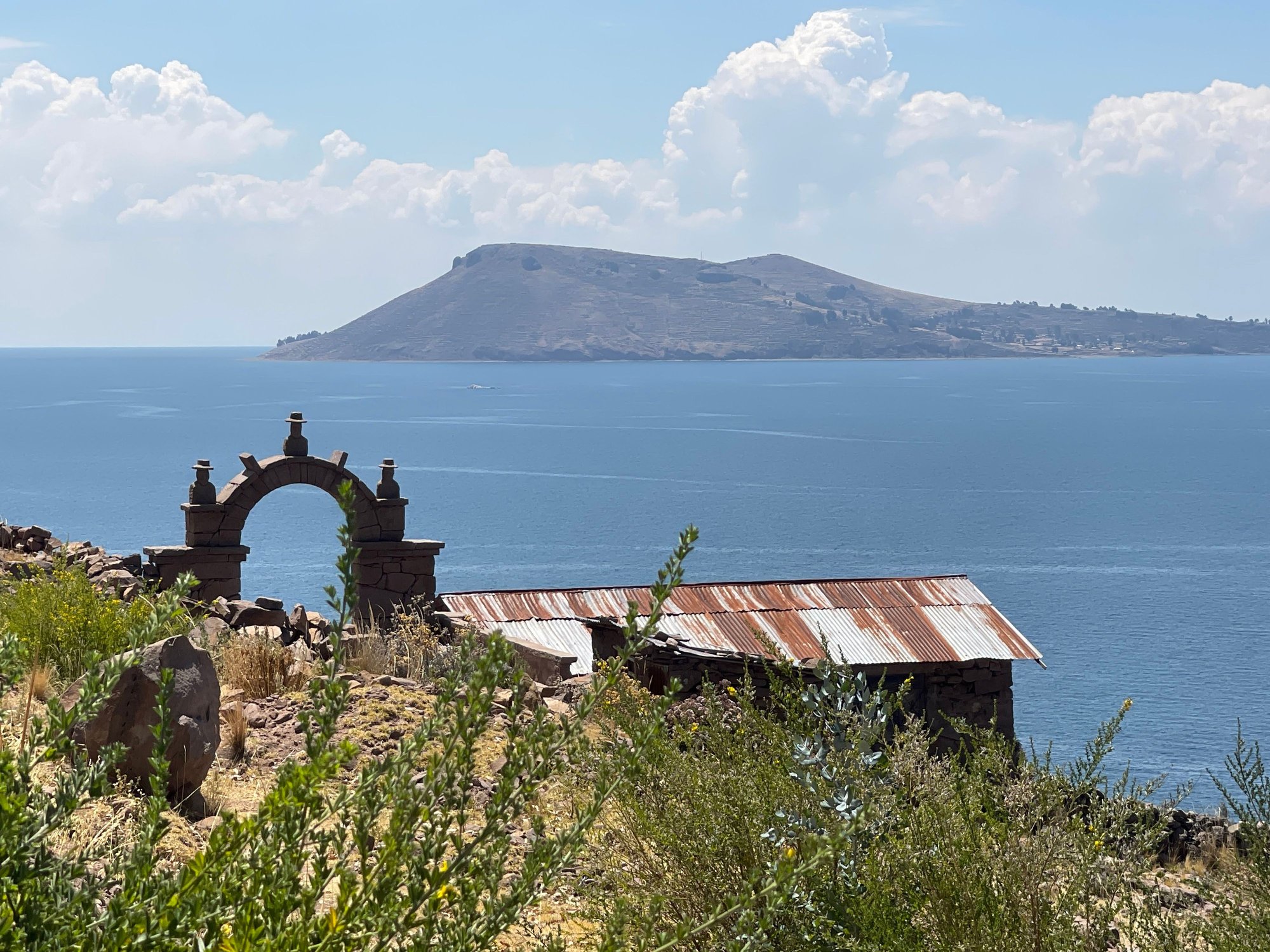
It was a beautiful day sailing on the boat. When we arrived at Taquile island, we could chose either stayed on the boat and travelled to the other end of the island, or followed the guide to hike from one end of the Taquile island to the other end and met with the rest of the group for our included lunch. We chose to follow the guide for the uphill hike. We passed through the island center square, along the way, the scenery was beautiful .The hike is about 1.5~2 miles, but with quite a steep inclines. We enjoyed the hike as well as the lunch served with the grilled trout. The quinoa soup was very delicious.
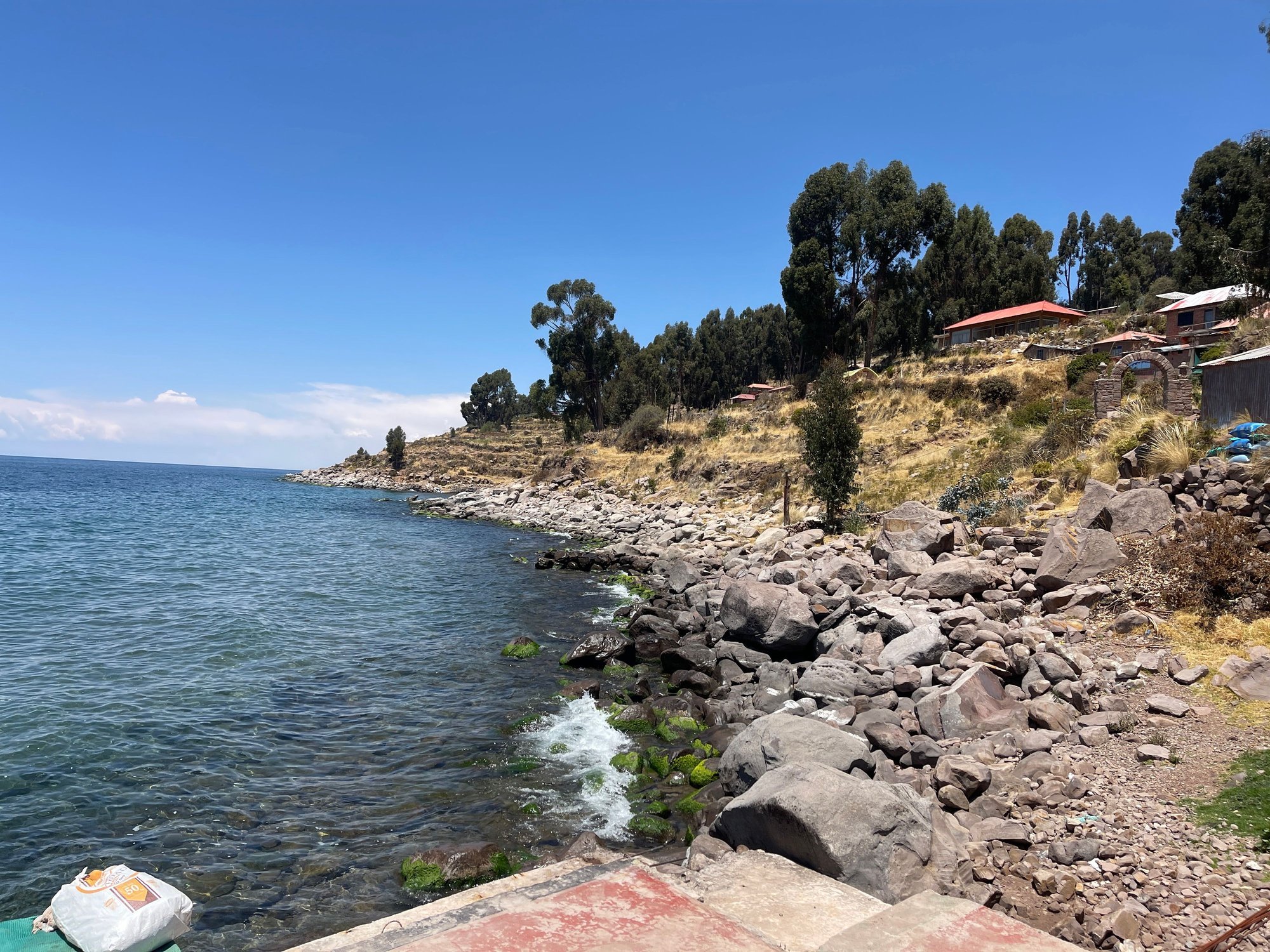
Arriving Taquile island
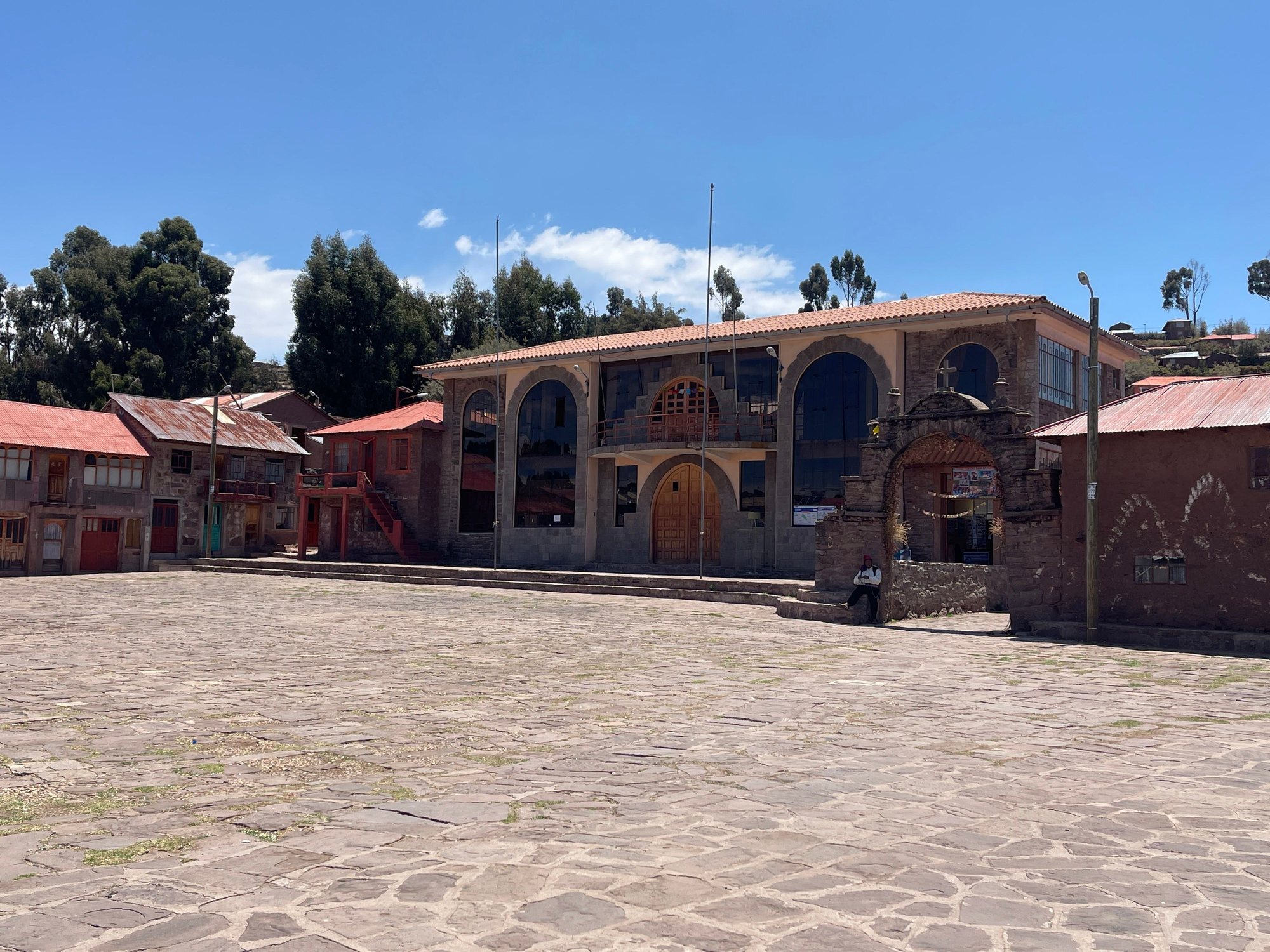
Plaza de Armas
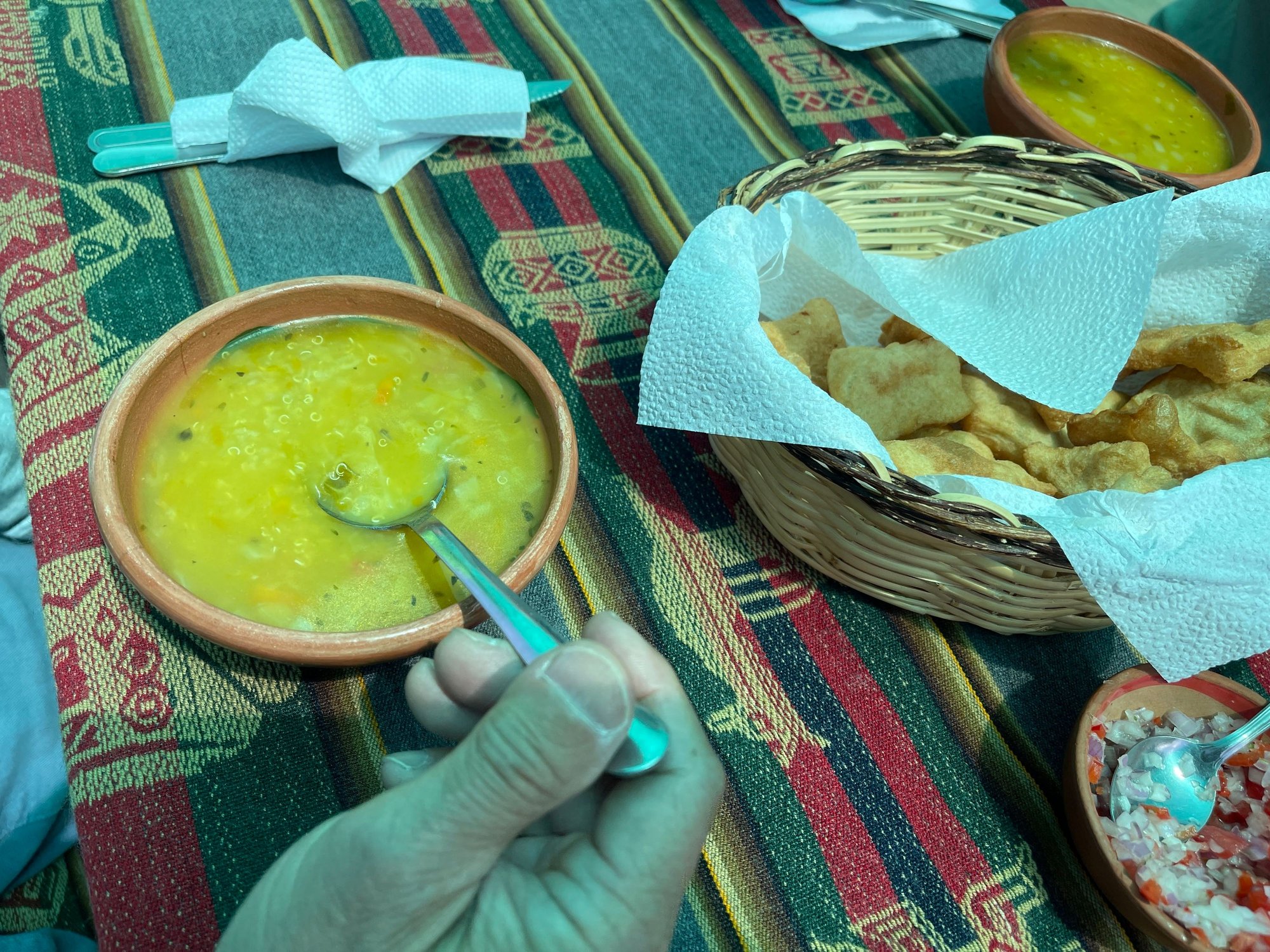
quinoa soup - delicious
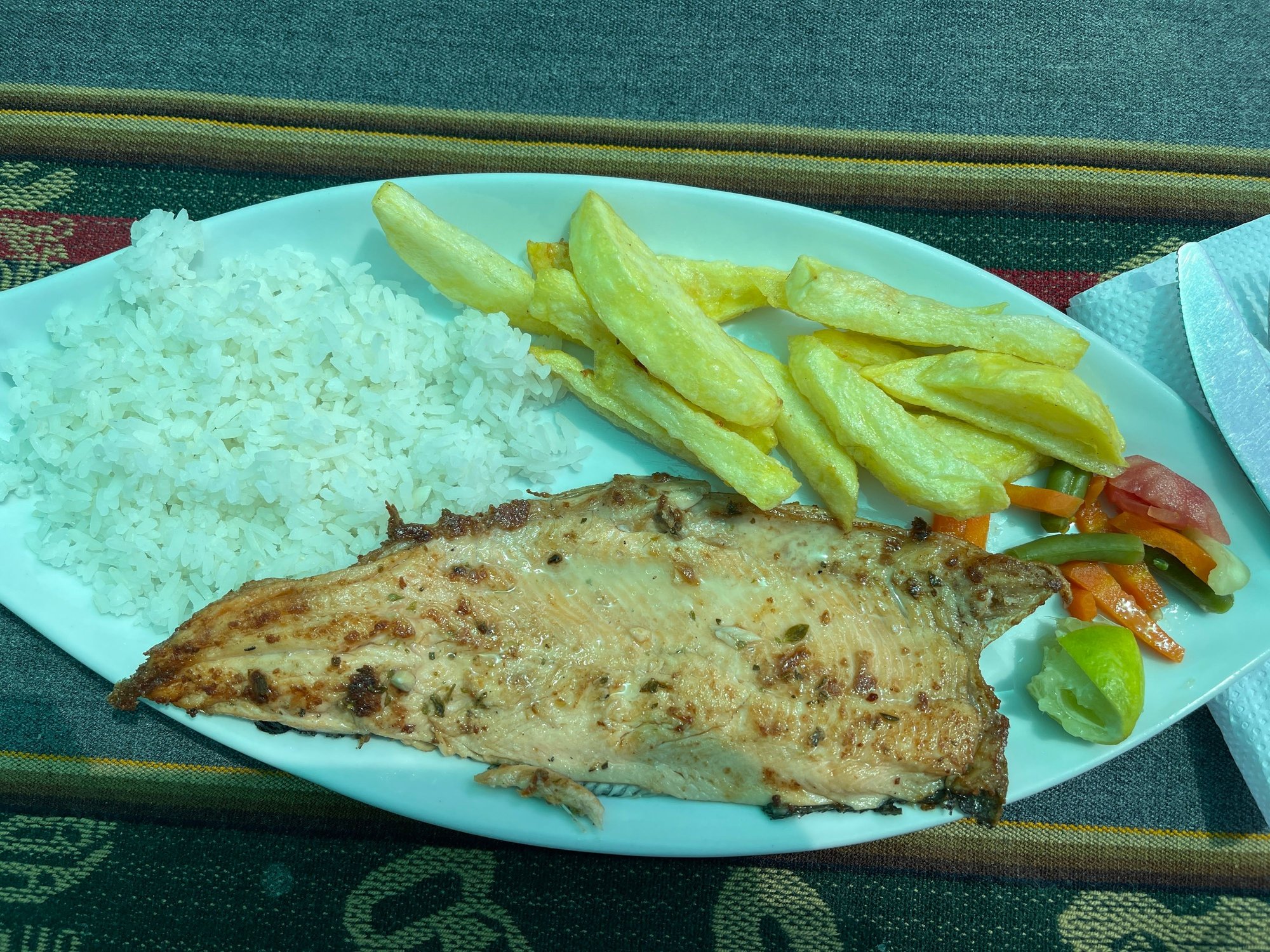
Grilled trout- yummy!
We were picked up at 7am and reached the pier around 7:30am. Our tour guide, Omar, was pleasant and friendly. He gave a lot of good information about the tour and spoke very good English.
Puno Cathedral
Plaza Mayor de Puno
Plaza Mayor de Puno
Puerto de Puno
The boat first sailed towards the floating islands of the Uros, which is the National Reserve of Lake Titicaca. It is one of the highest navigable lakes in the world.
Upon arriving at the floating island, we learned about the life of Uros people, who still maintain their own culture and tradition in the Lake Titicaca region. We also learned about how they built the floating Islands using the Totora reeds growing in the lake.
Puno city viewed from the boat ride
Welcomed by the Uros Island residents
Reed house on the floating island
Reed plants grow in the water
Demonstrating how he harvests the reeds
Reed boat for demonstration
The Uros islands are now a major tourist attraction in the area. The community is actually now adapted to tourist based income, and home now includes solar power and motorized powered boats.
We were among the earliest who arrived and finished this part of the Uros islands tour, by the time we left, there were more boats arriving for the tours.
After the Uros Islands tour, we were sailing to Taquile island, known as the "island where men knit," Taquileans have a deep, ancient, and intricate textile art tradition. Today’s islanders (Inca and Aymara ), population around 2,200, continue the generations-old tradition of subsistence farming and fishing. They speak the language of Quechua and Aymara.
It was a beautiful day sailing on the boat. When we arrived at Taquile island, we could chose either stayed on the boat and travelled to the other end of the island, or followed the guide to hike from one end of the Taquile island to the other end and met with the rest of the group for our included lunch. We chose to follow the guide for the uphill hike. We passed through the island center square, along the way, the scenery was beautiful .The hike is about 1.5~2 miles, but with quite a steep inclines. We enjoyed the hike as well as the lunch served with the grilled trout. The quinoa soup was very delicious.
Arriving Taquile island
Plaza de Armas
quinoa soup - delicious
Grilled trout- yummy!
After our lunch, we were shown the traditional weaving textile by women, the men knitted hats and others, the wool spinner , and their traditional way of making soap from grounding the leaves of a local plant called chuho, then extracting the juice and mixing with water to form the soapy foam for cleaning. It was such a cool demonstration and the atmosphere was friendly and cheerful. We did not take any pictures, so as to be respectful to the hosts. Between the two islands’ tours, we really enjoyed the later part of the tour on Taquile Island.
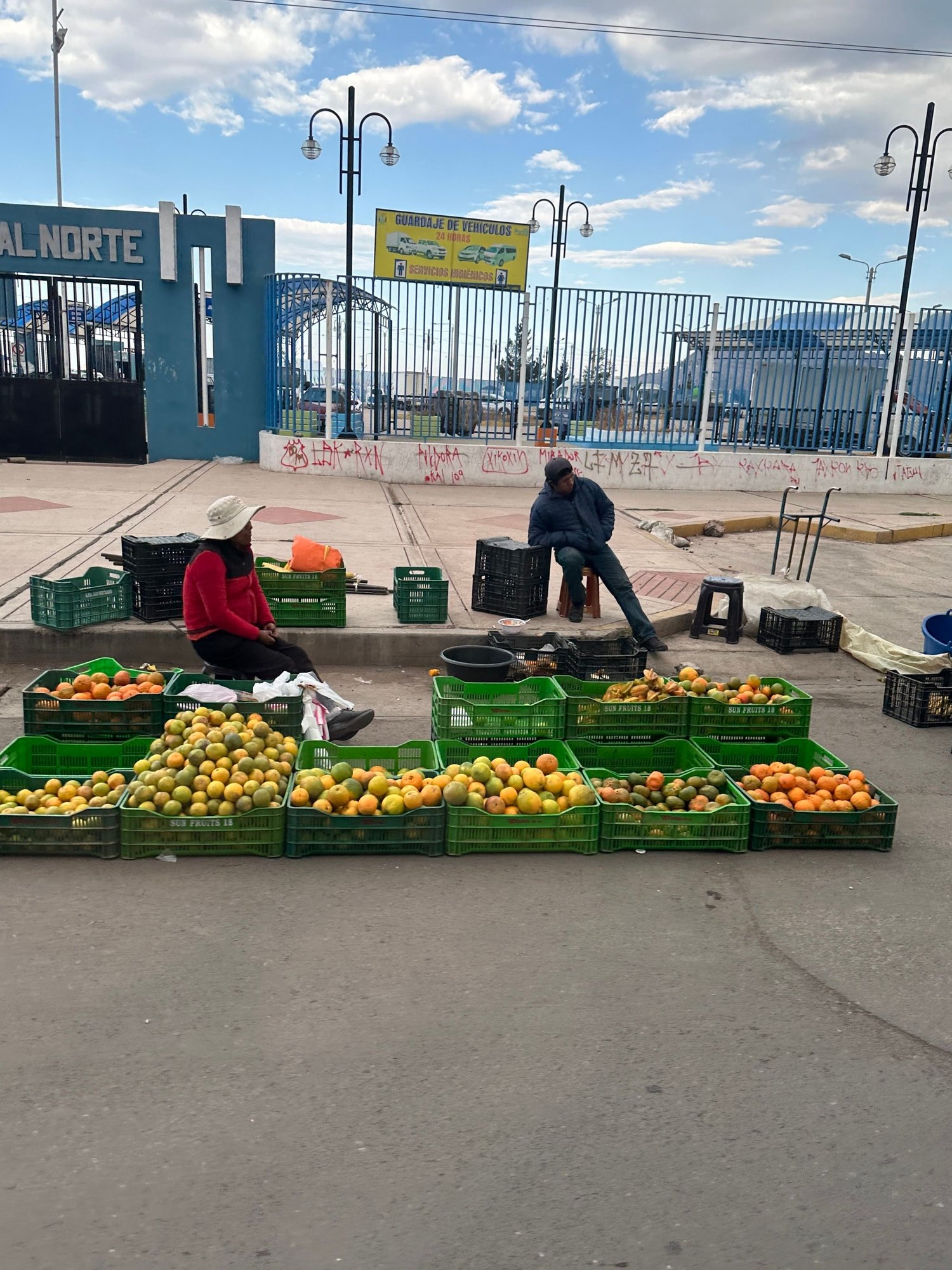
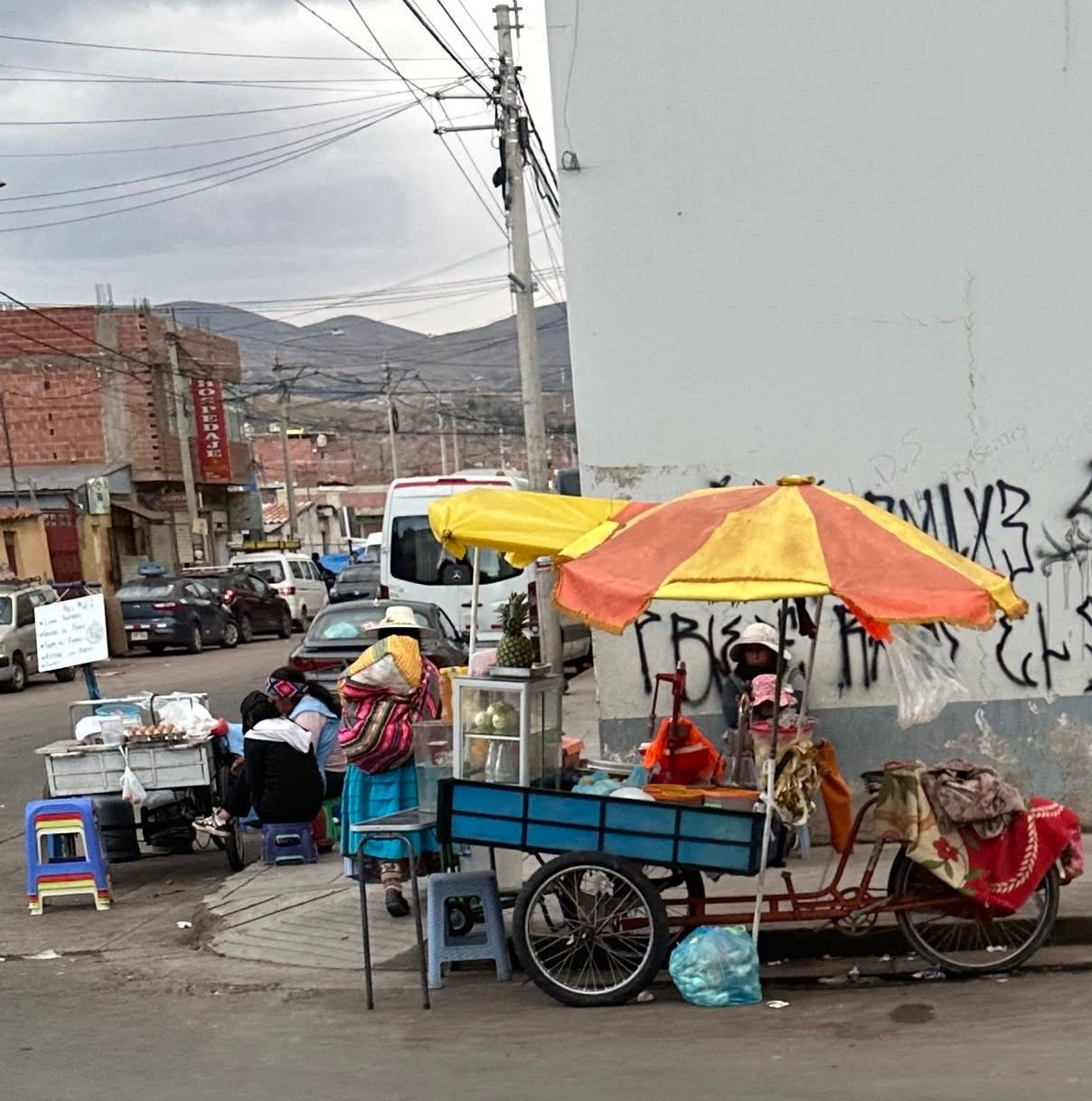
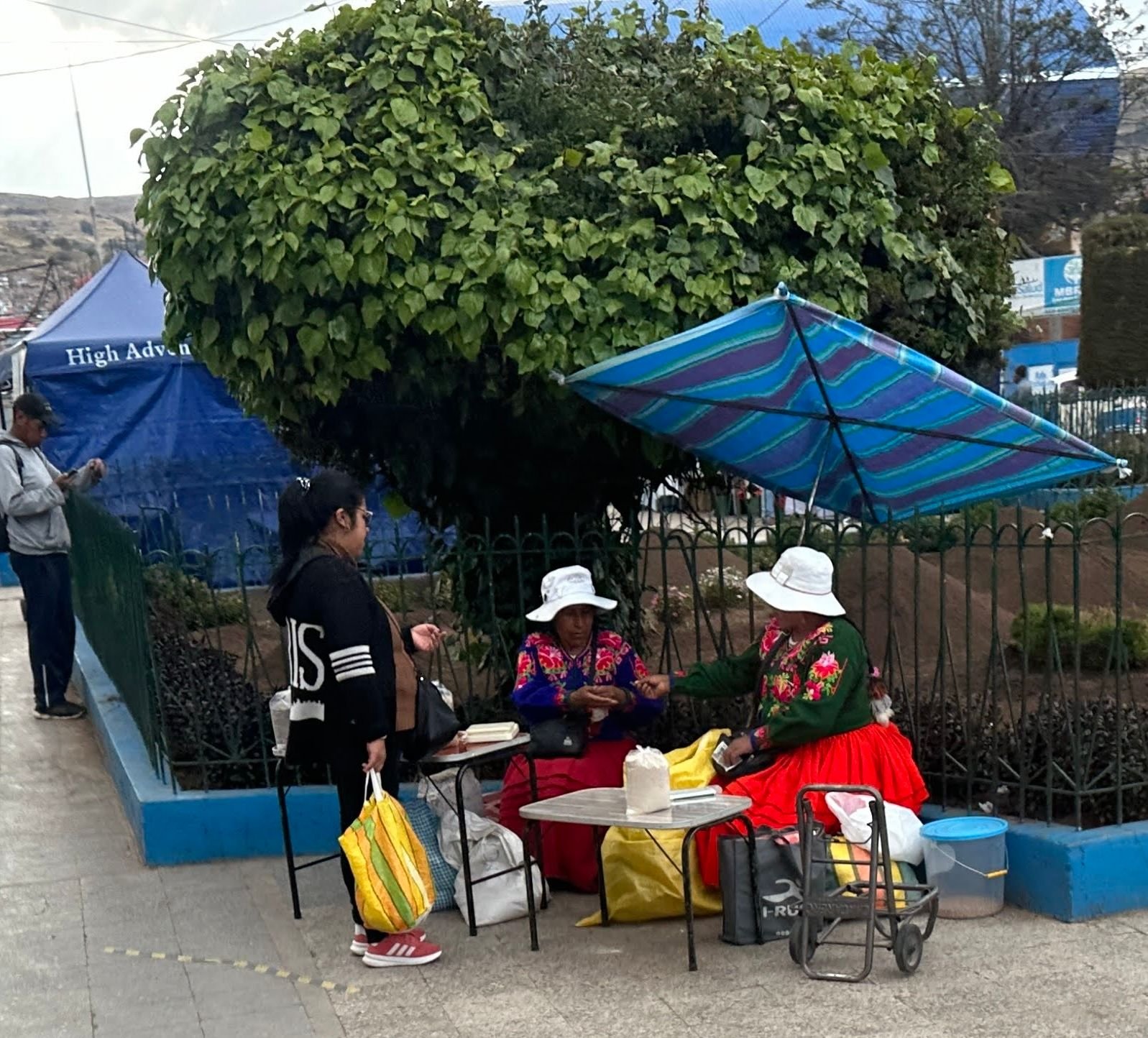
On our way back to Puno town center, I took a number of Puno’s street hawkers’ lives in town.
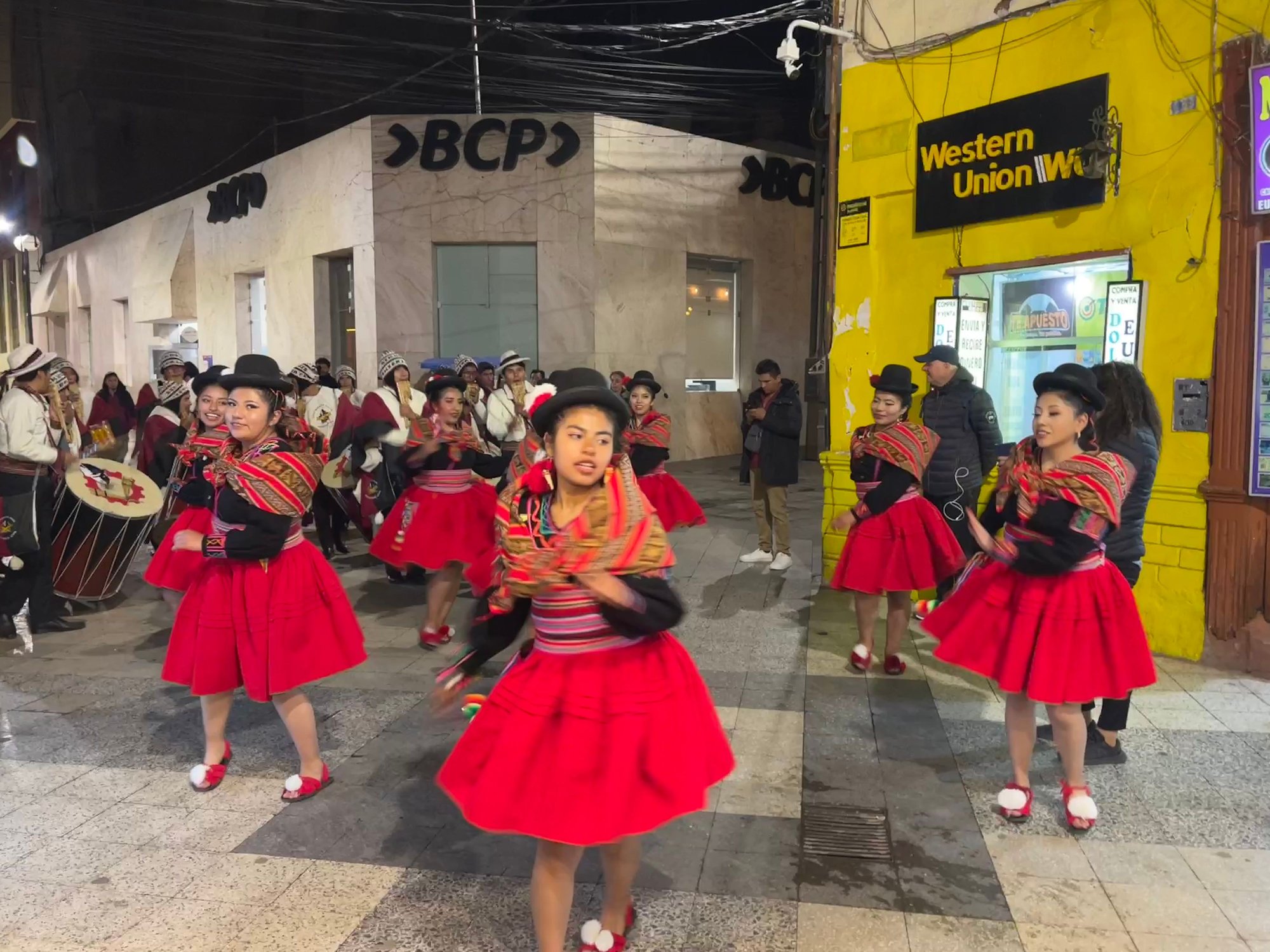
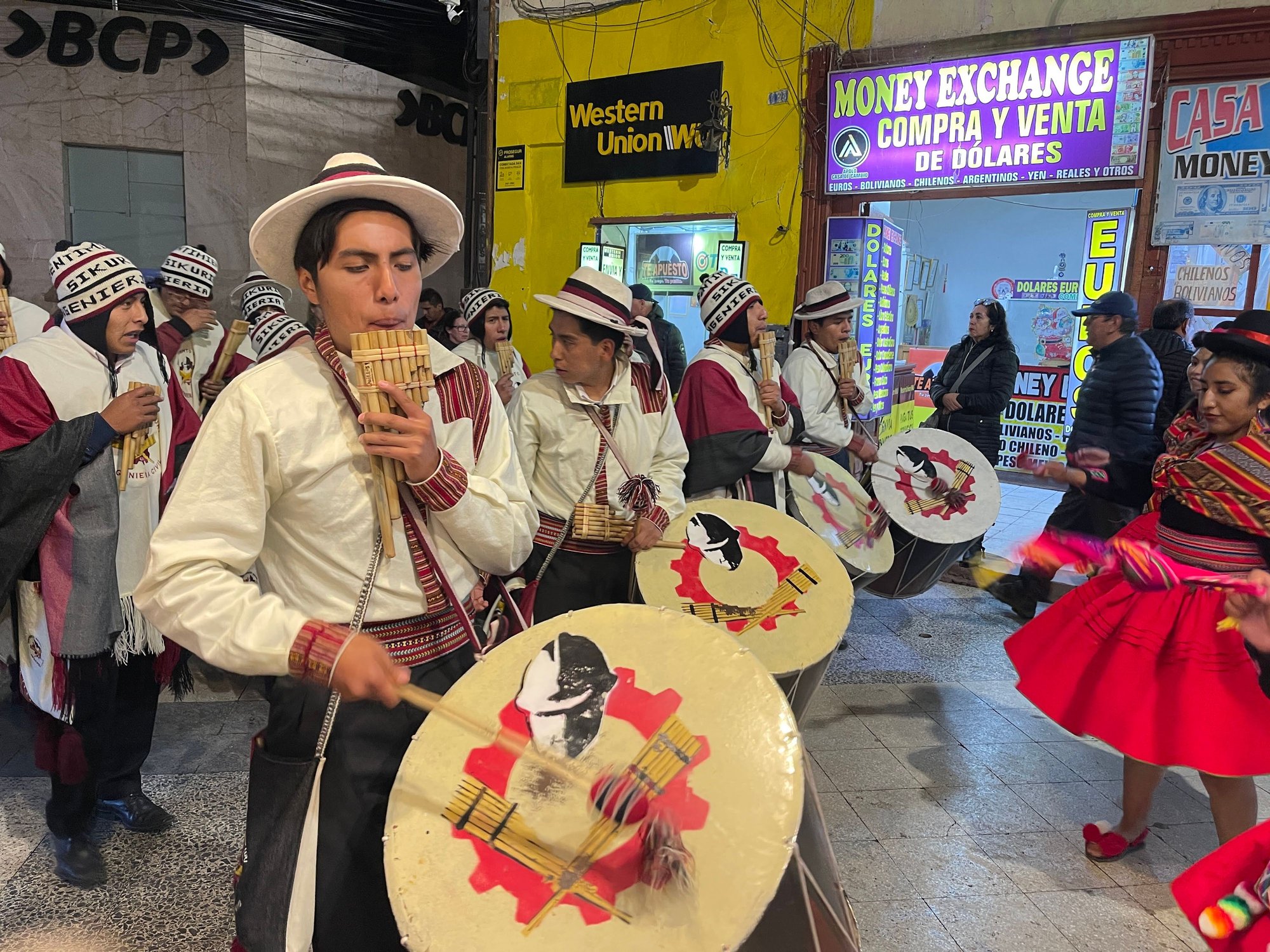
We also came across a parade at night in the town square.
We had only one full day in Puno for the two nights stay. We left for Cusco by bus the next day early in the morning.
On our way back to Puno town center, I took a number of Puno’s street hawkers’ lives in town.
We also came across a parade at night in the town square.
We had only one full day in Puno for the two nights stay. We left for Cusco by bus the next day early in the morning.
Day 13—Route of the Sun, from Puno to Cusco with Inka Express
We joined the Puno to Cusco tourist bus route tour with Inka Express. It is supposedly a scenic trip through the Andean countryside that includes 4 guided tour stops. One being the Inca’s biggest surviving structures at Raqchi and the other, the Church of Saint Peter the Apostle in Andahuaylillas, the Sistine Chapel of America.
We were picked up from the hotel and transferred to the main bus station of Puno. Upon arriving the bus station, we were instructed to line up for check in. There was a big crowd in the line with different tour groups.
There were at least 5 or 6 buses with the Inka Express signs on the bus. Most of the buses were modern and reasonably new, except for one which was noticeably old and of an older model. Unfortunately we were assigned to that bus. I was not very happy with that as it was a long journey from Puno to Cusco.
The guide on the bus was nice and spoke English. After checking everyone on the bus, we left Puno, and on our way to our first stop.
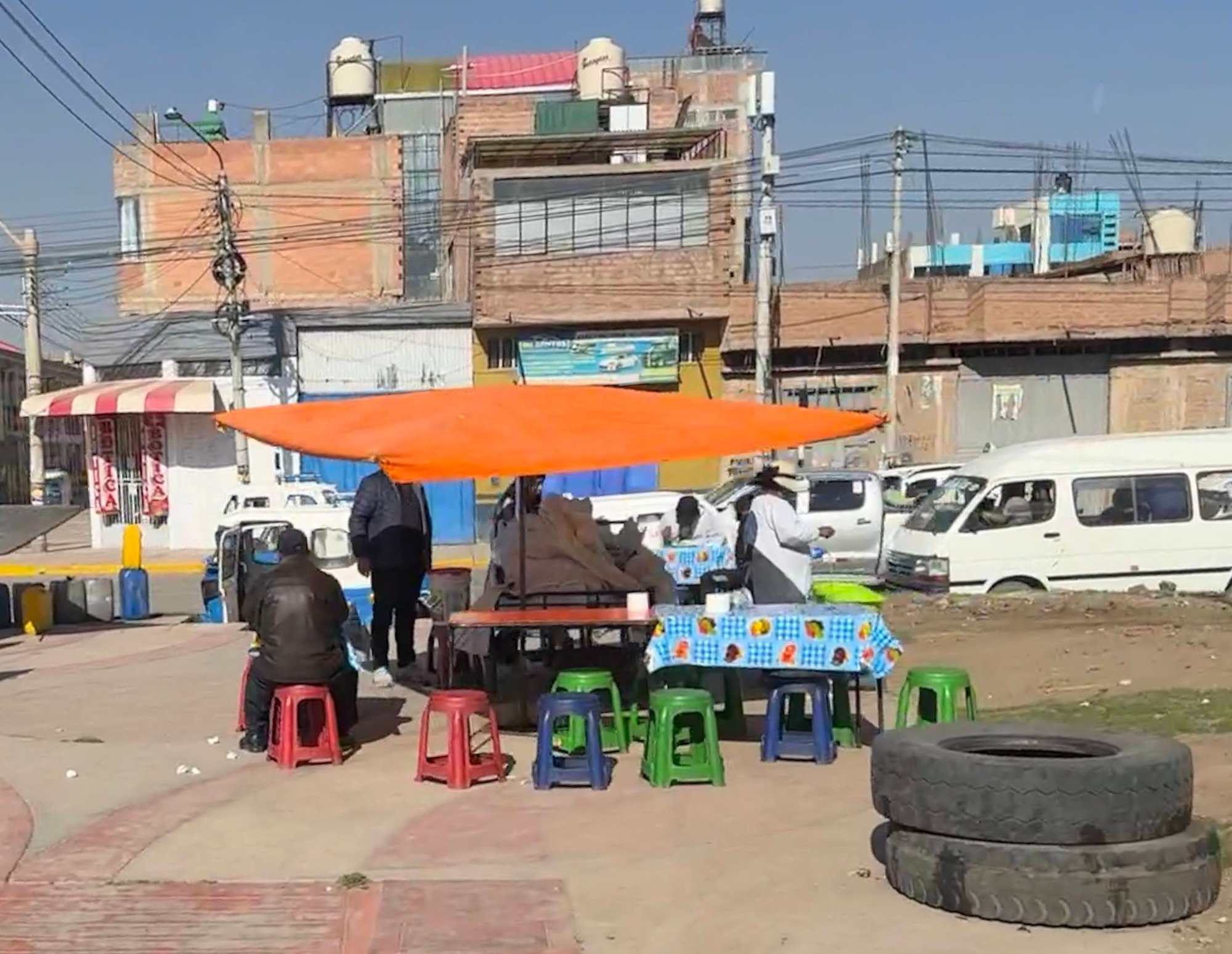
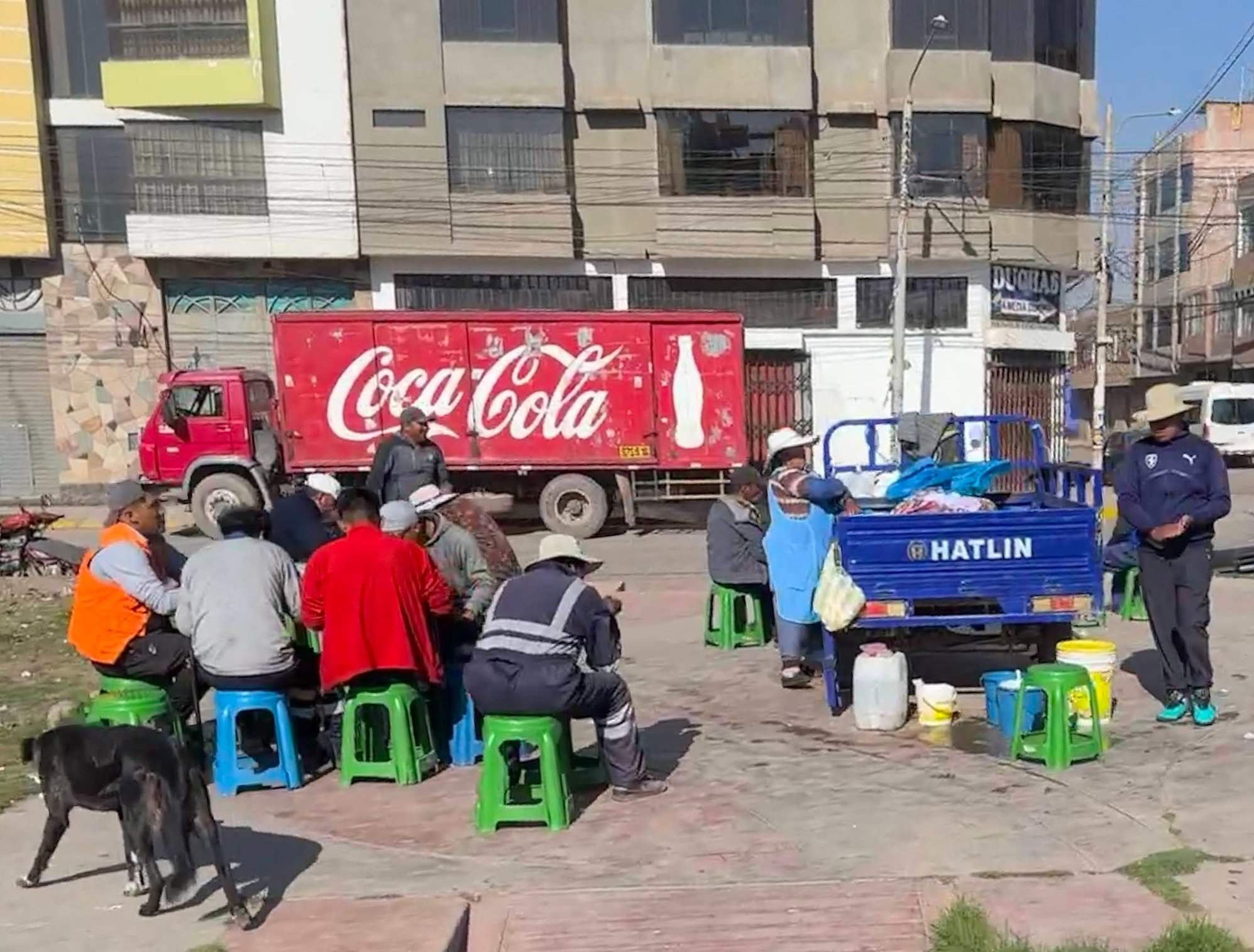
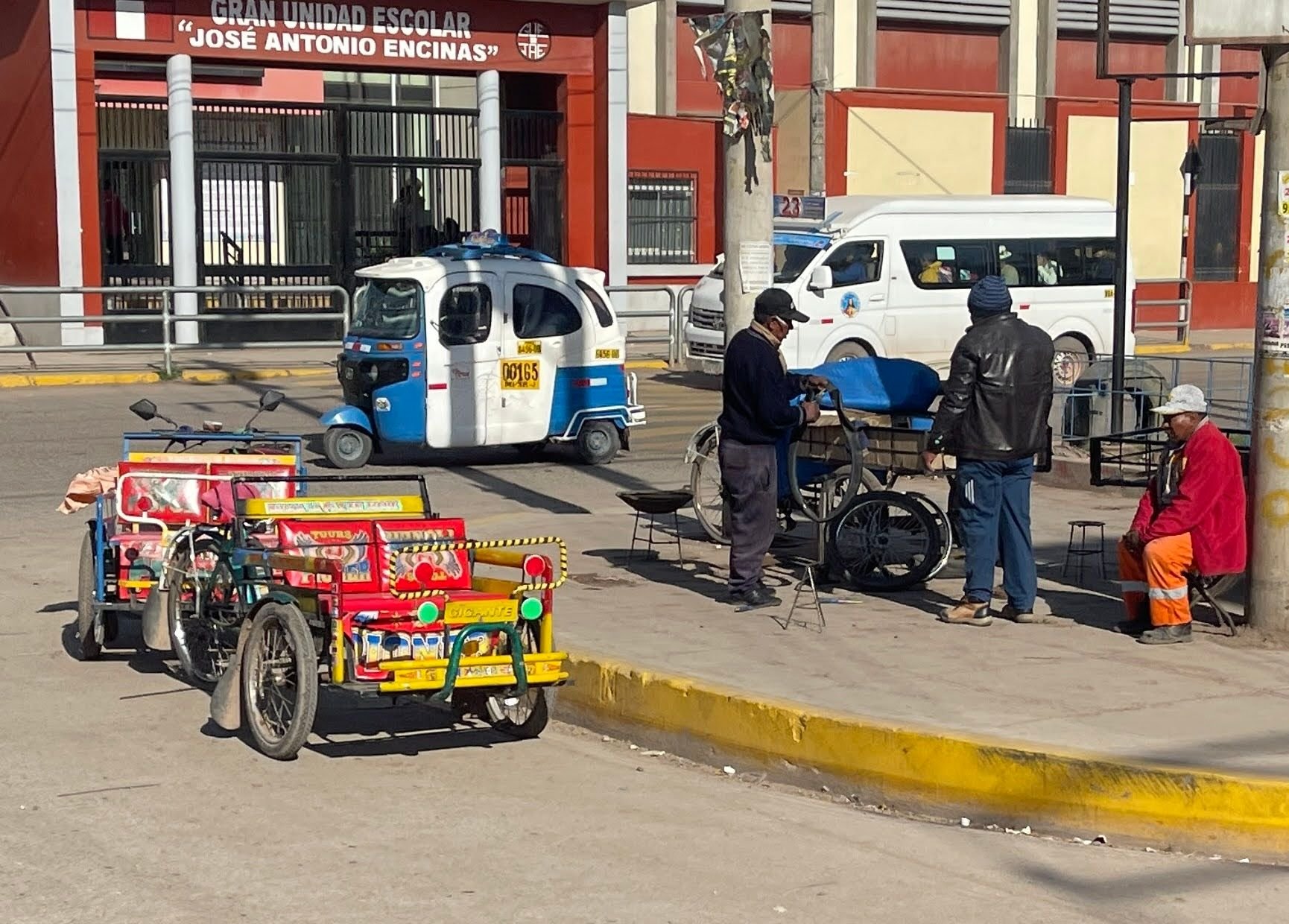
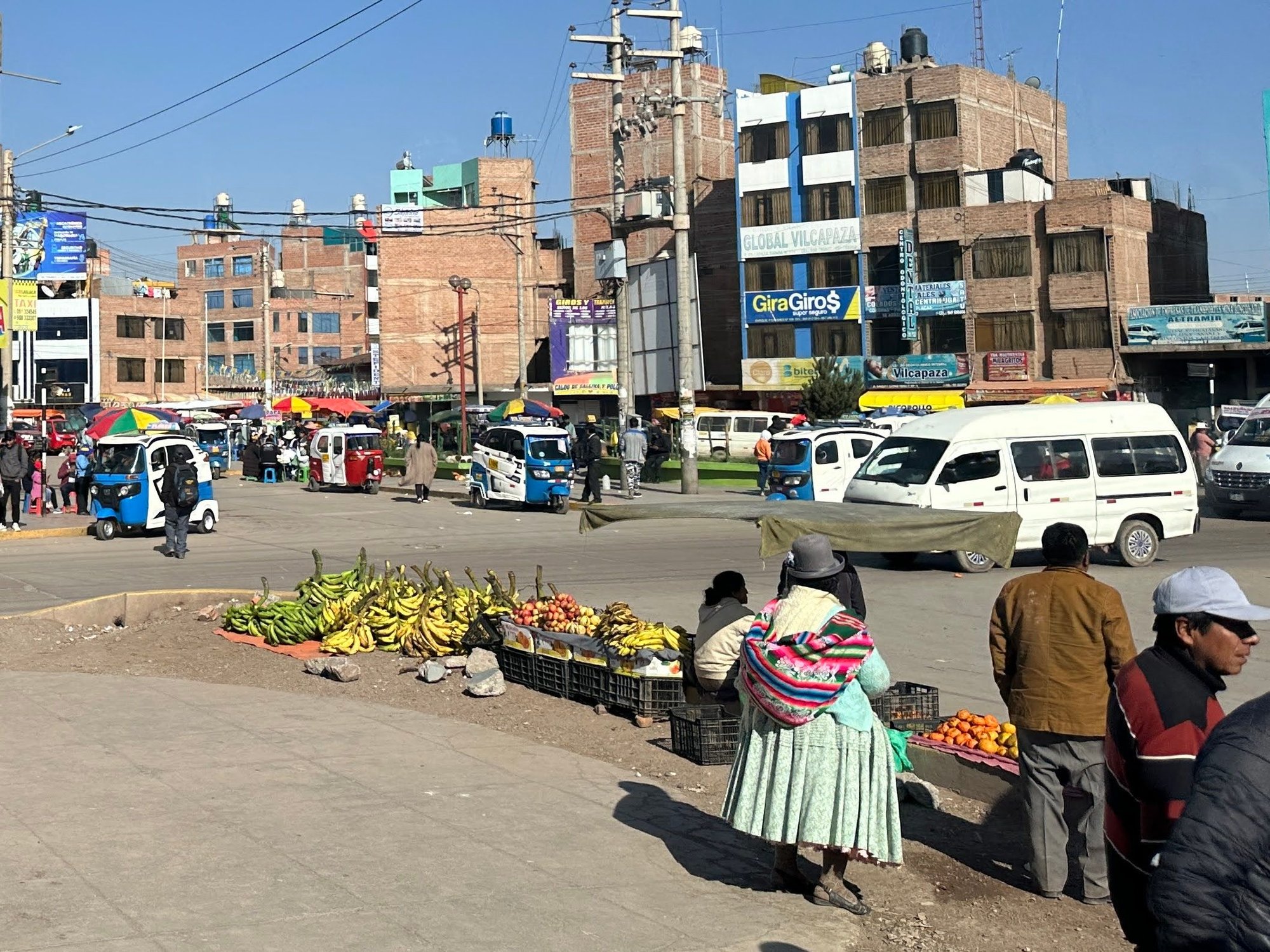
Along the way leaving Puno, I saw these road side peddlers in different places bustling with activities.
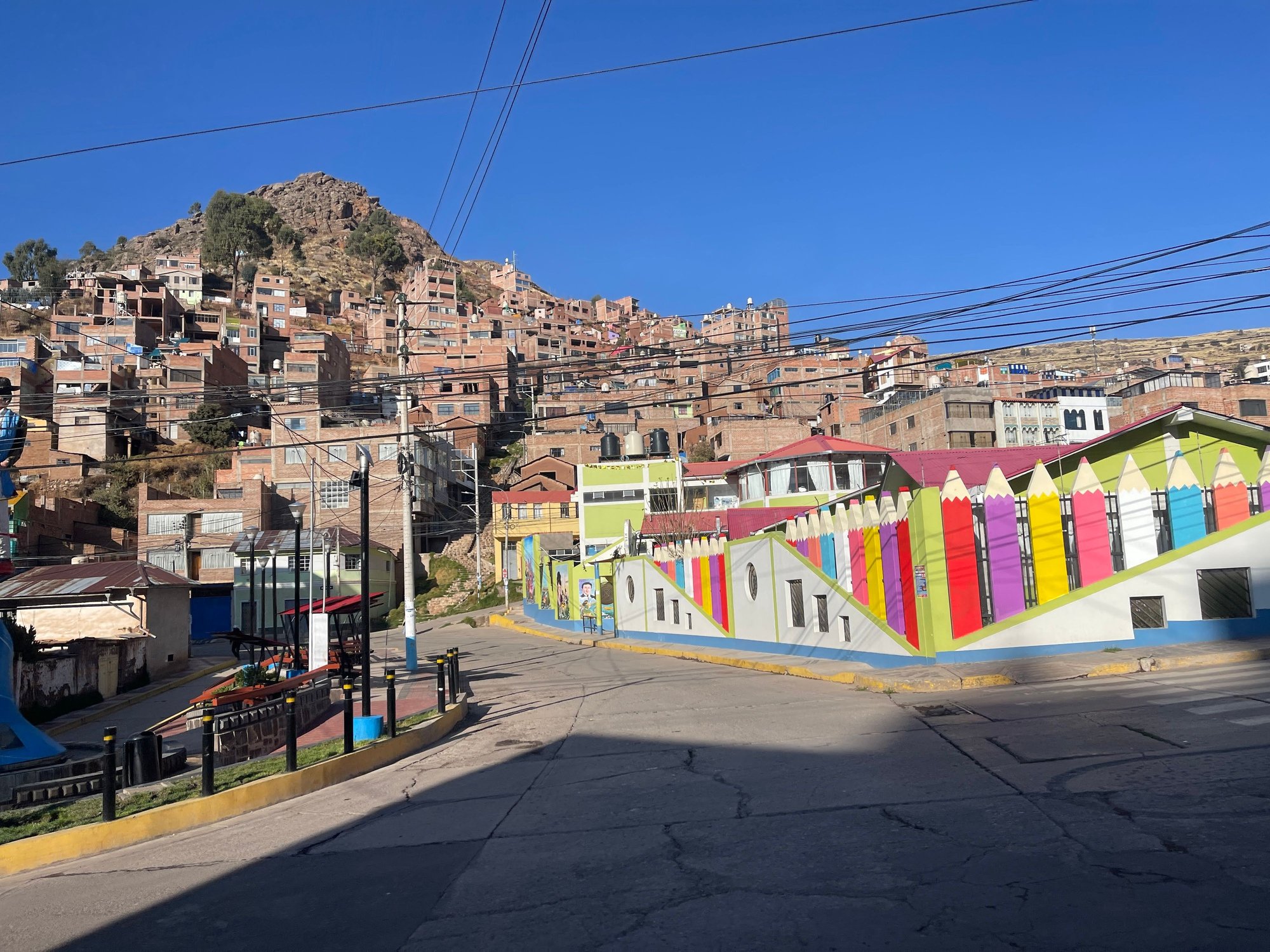
Leaving Puno
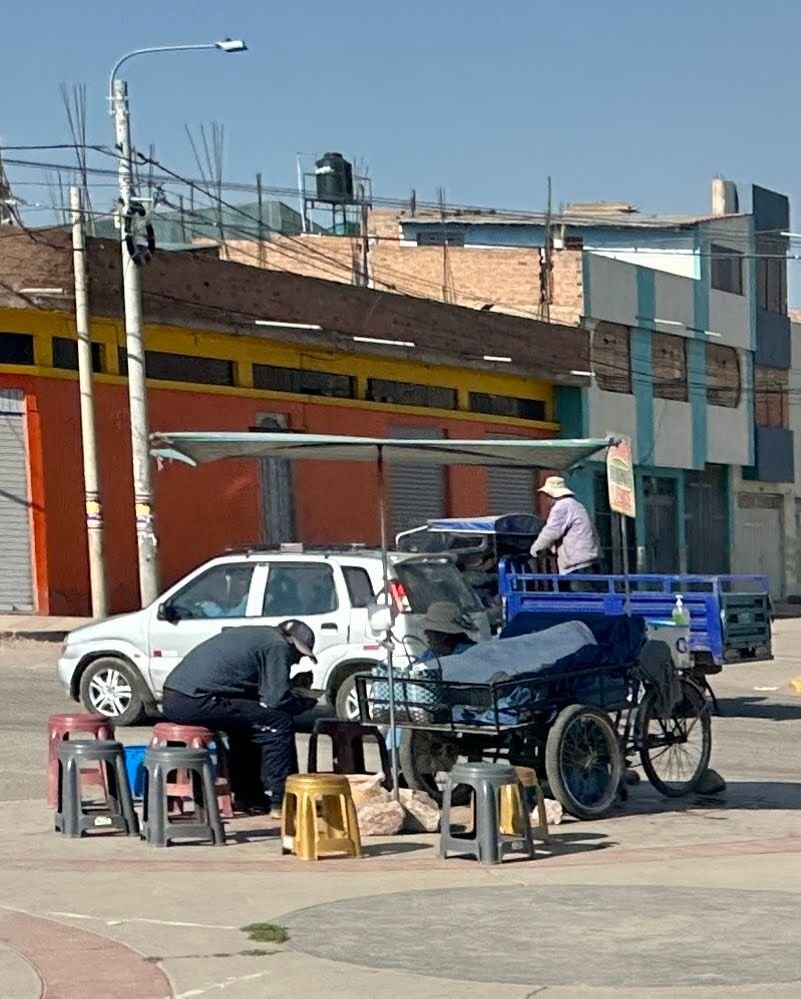
Road side peddlers
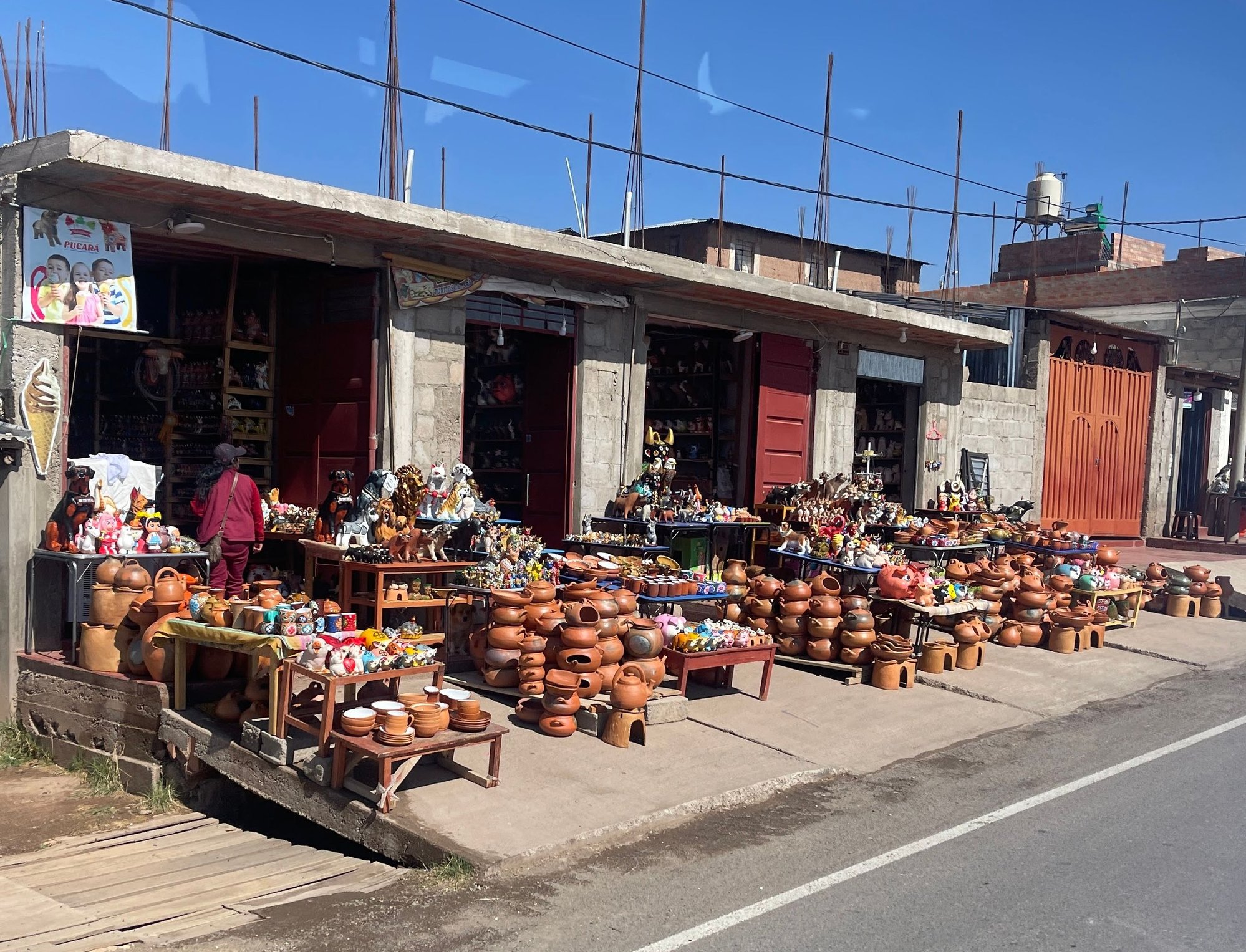
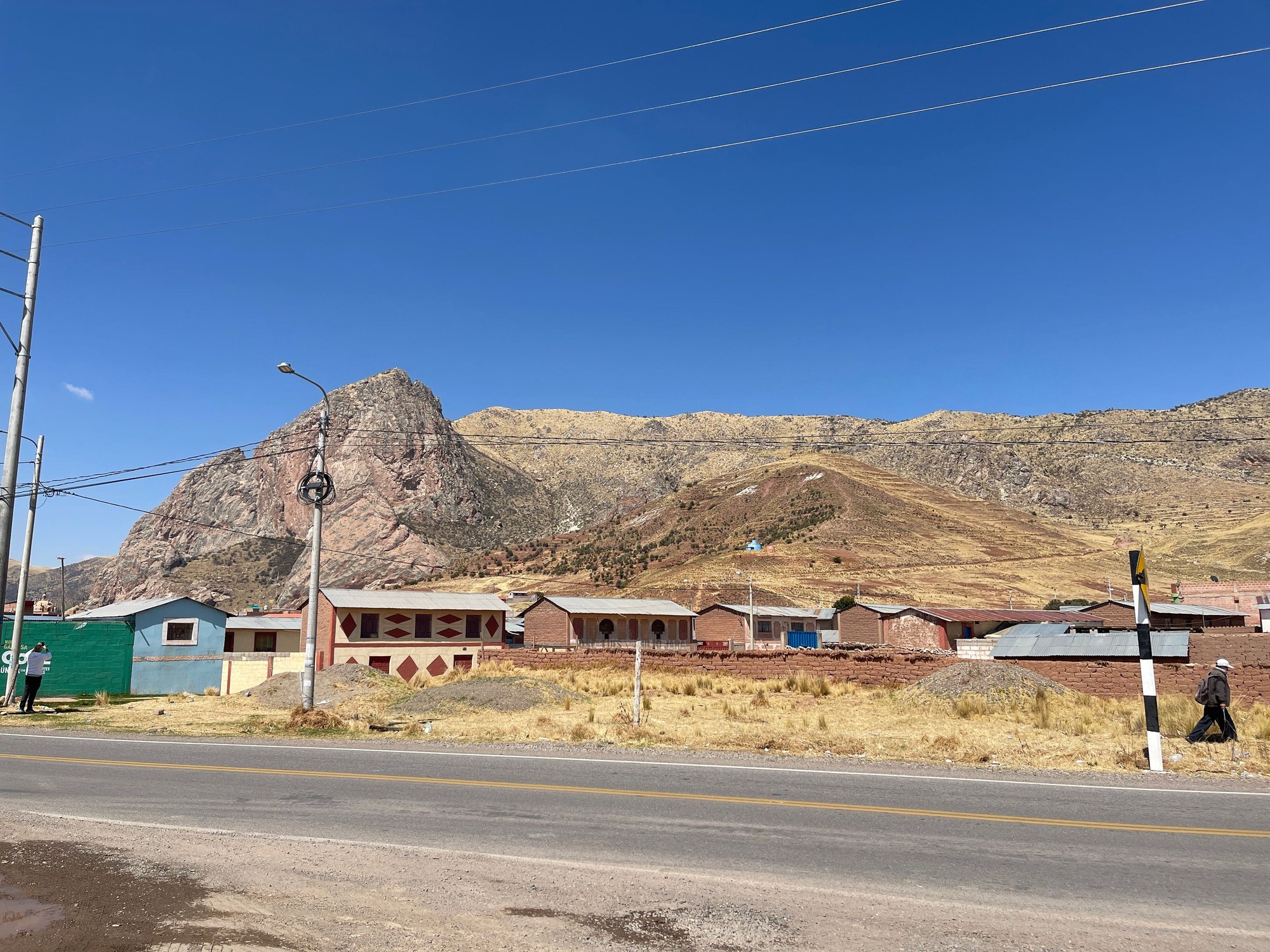
After 2 hours, we arrived at Pucará and stopped for our toilet break. After Pucará, we continued on to La Raya (La Raya), the watershed which splits the regions of Puno and Cusco. It was a beautiful scenic view point stop. We enjoyed an amazing view of the region with the Andes mountains that surround us.
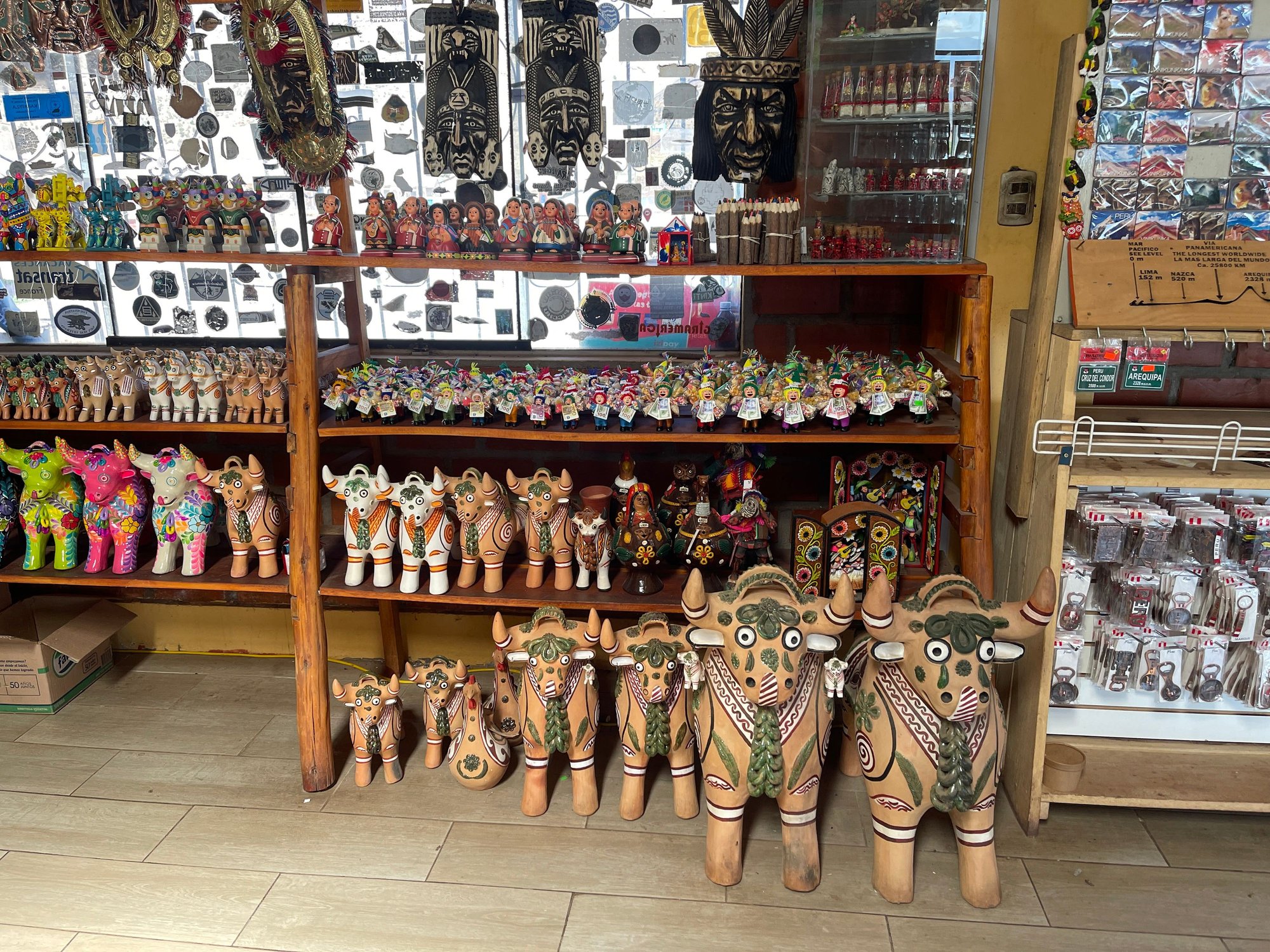
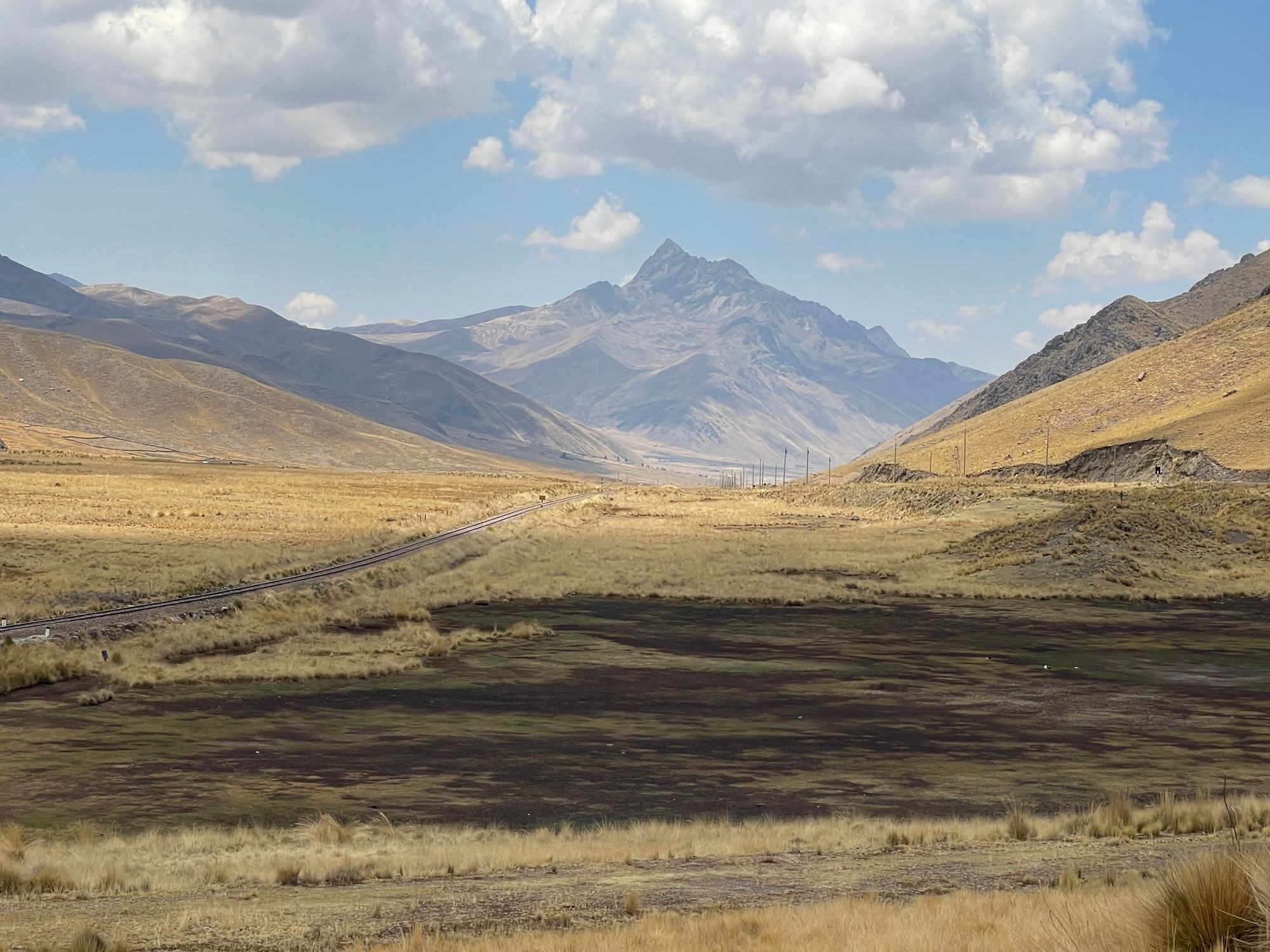
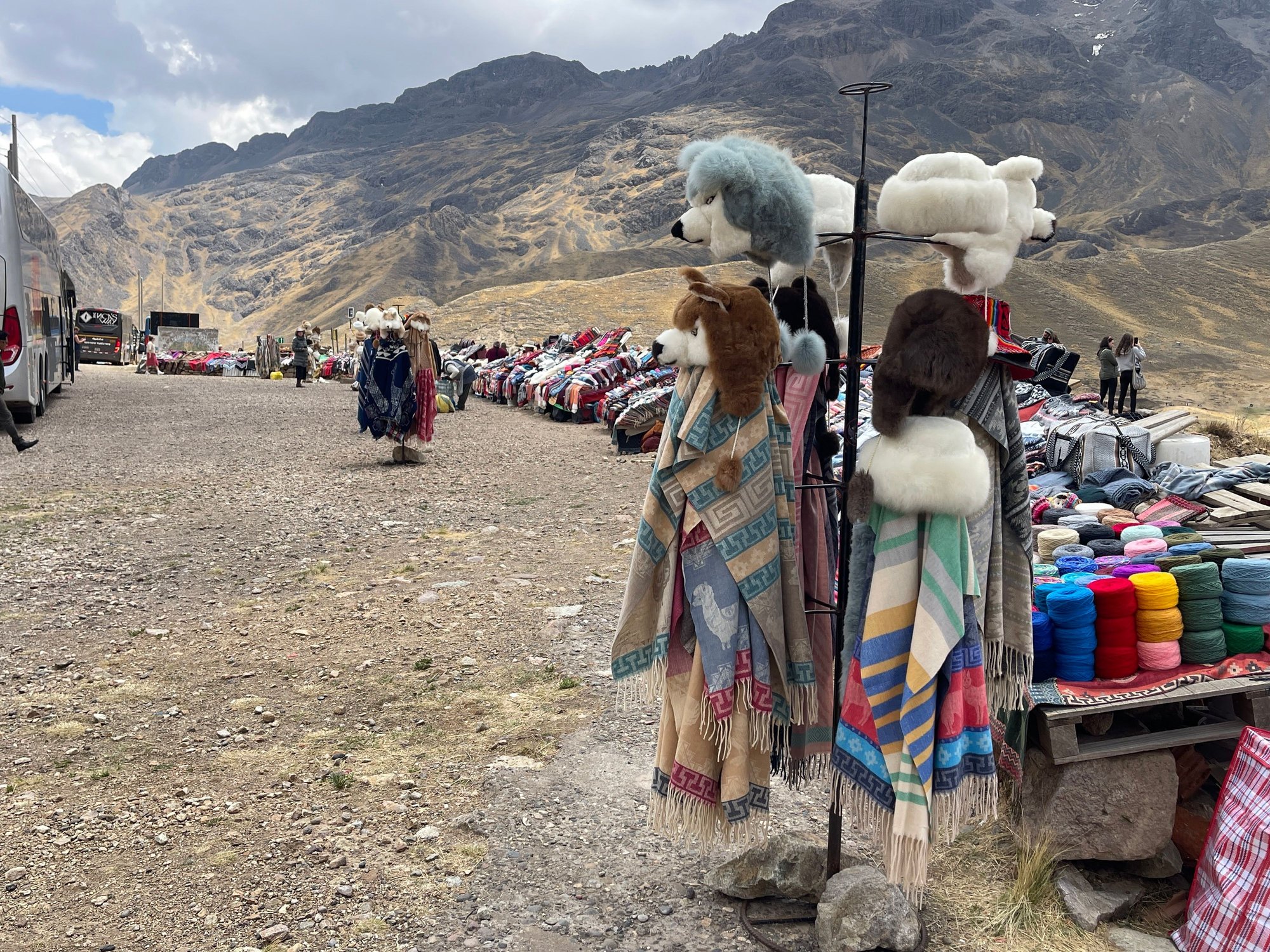
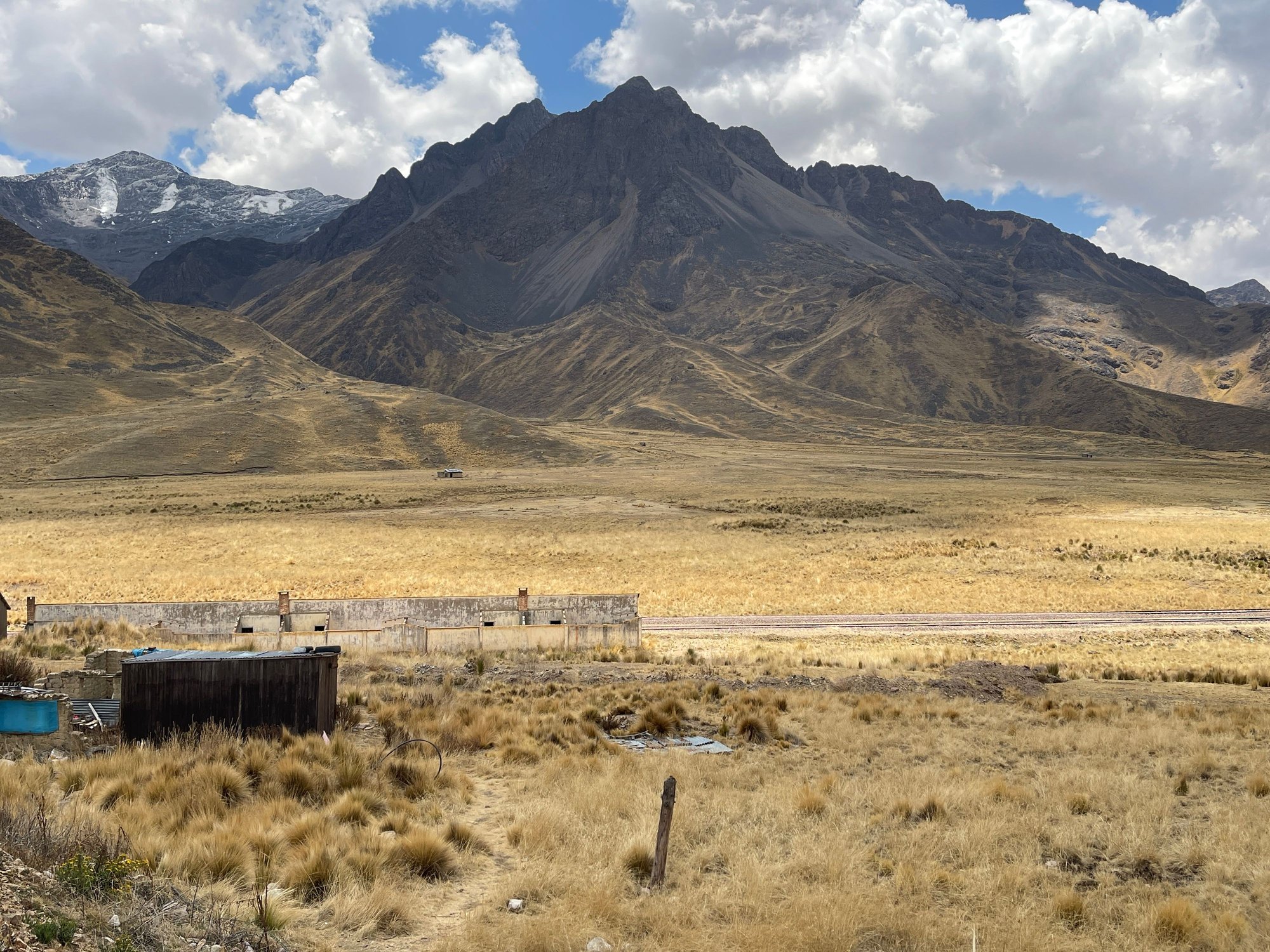
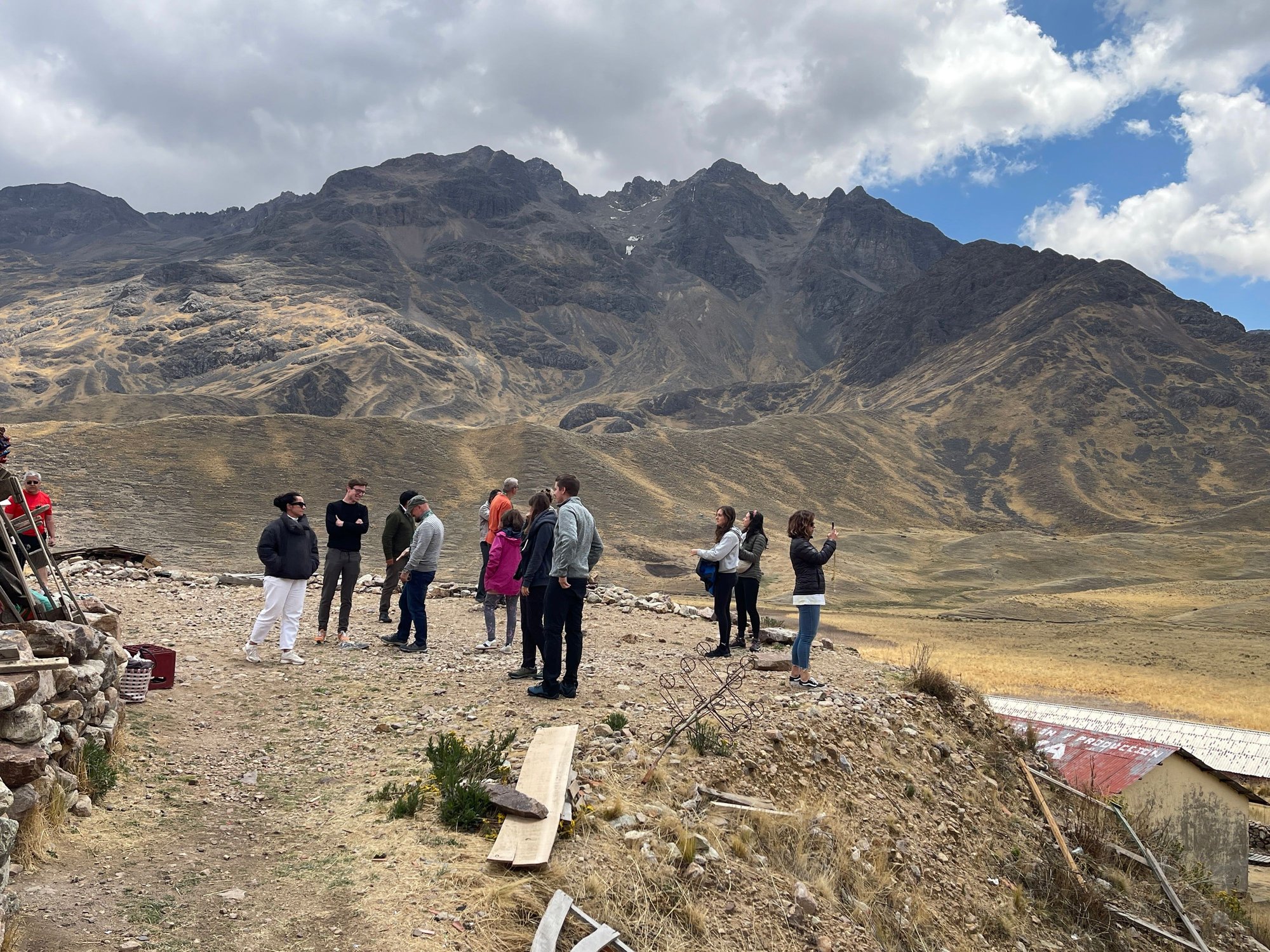
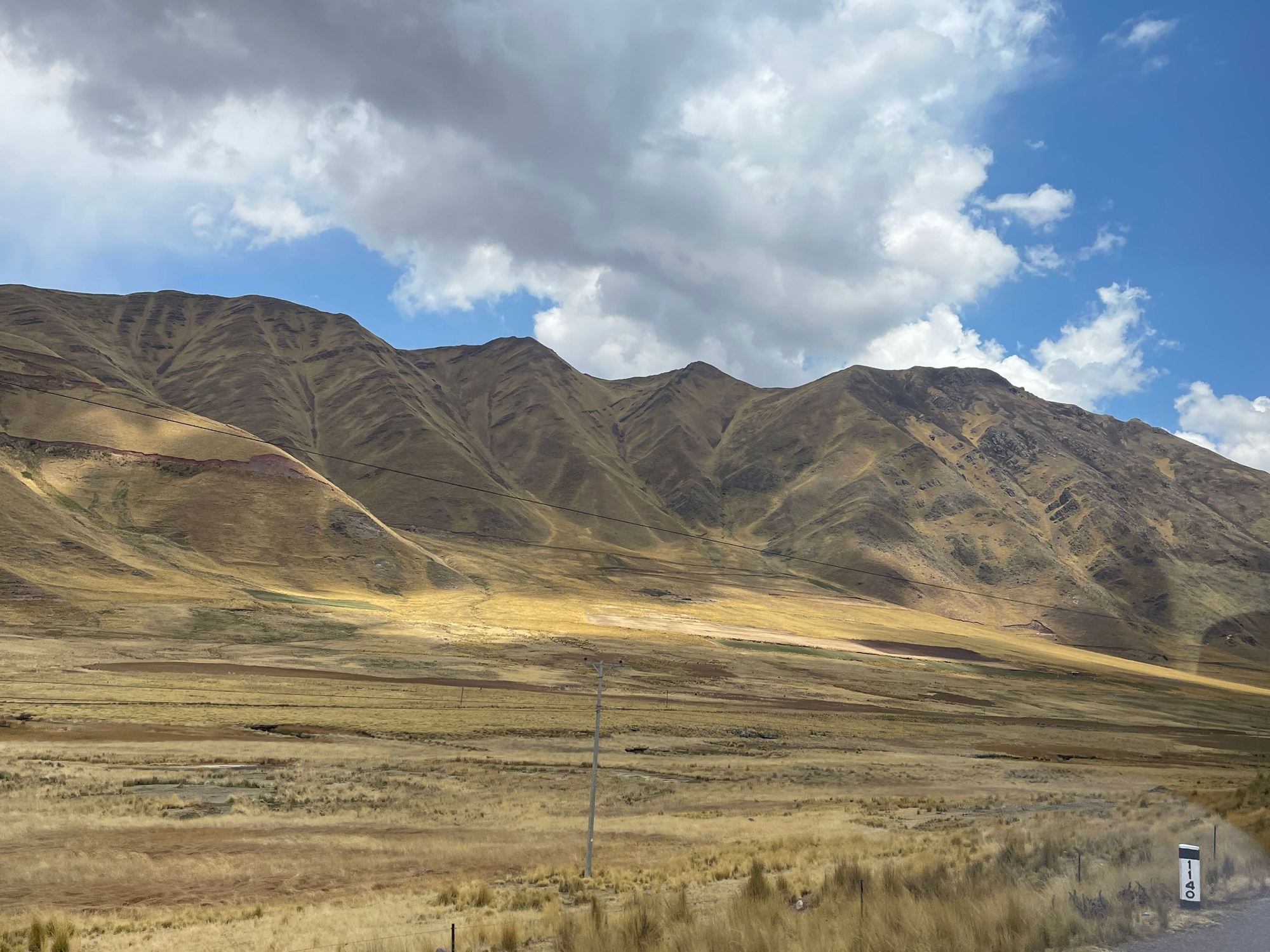
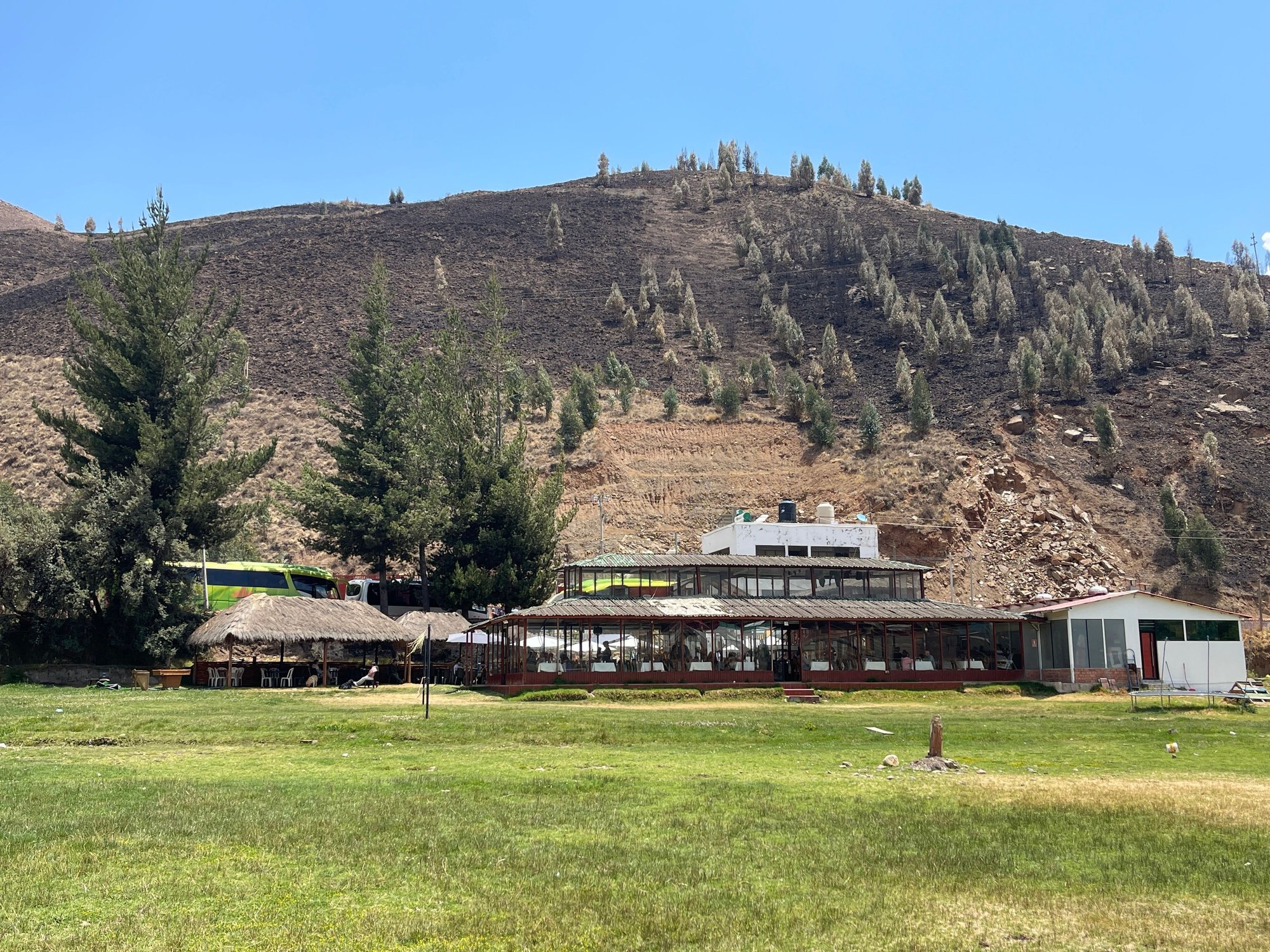
After a short break, we continued on our journey to Sicuani for our lunch at La Pascana Restaurant. The food was just alright, but the surrounding views were nice.
We continued to Raqchi after lunch. It is an archaeological site with a myriad of Inca ruins. We visited the Inca Temple of Wiracocha, the most important structure in the Raqchi complex and it is one of the biggest surviving Incan constructions. According to ancient writings, the temple was built by an Inca emperor in honor of the invisible Superior God of the Andean people. The impressive 12 meter high walls with the remaining ruins formed the impressive Temple of Wiracocha.
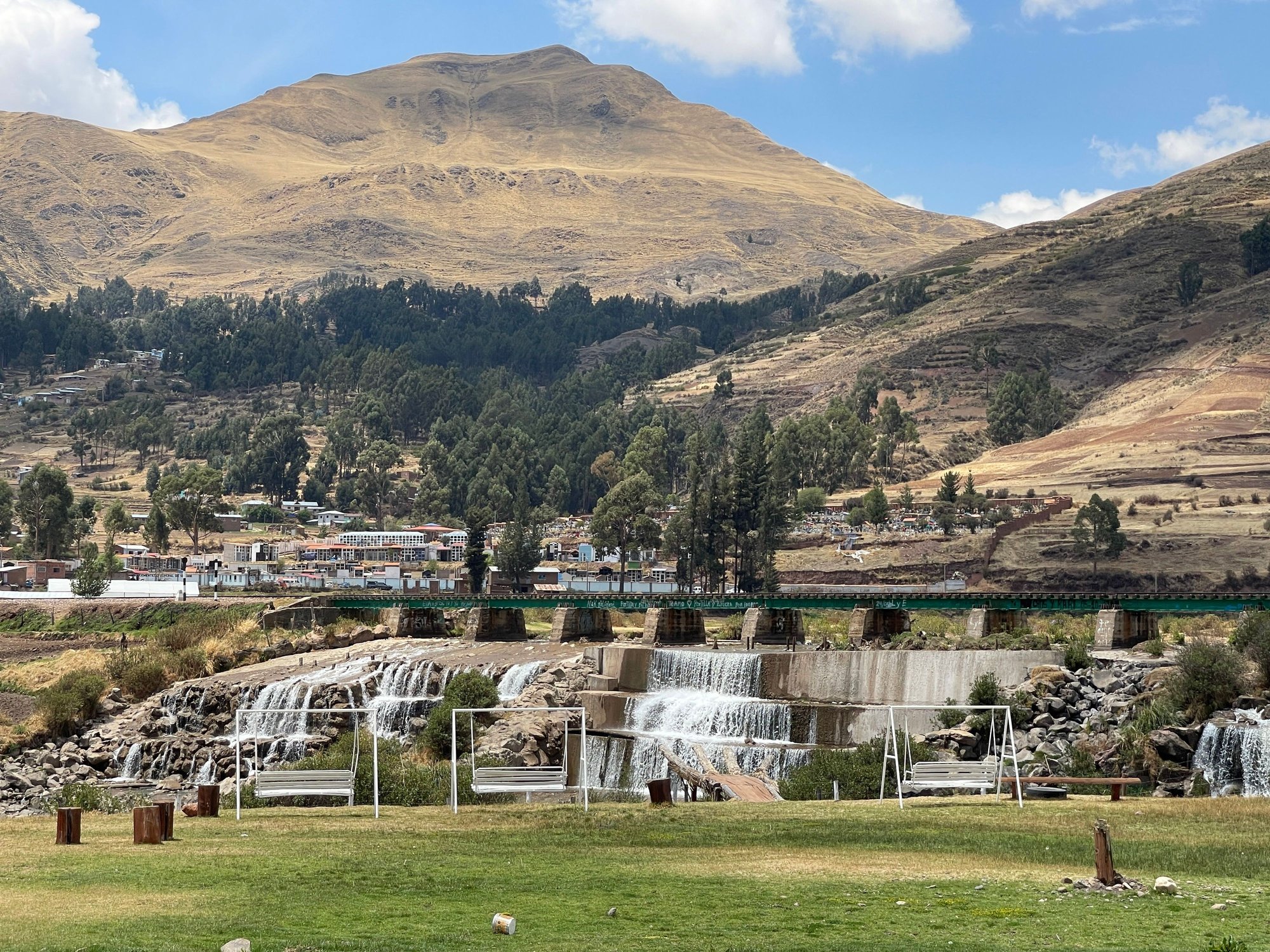
View from Lunch restaurant
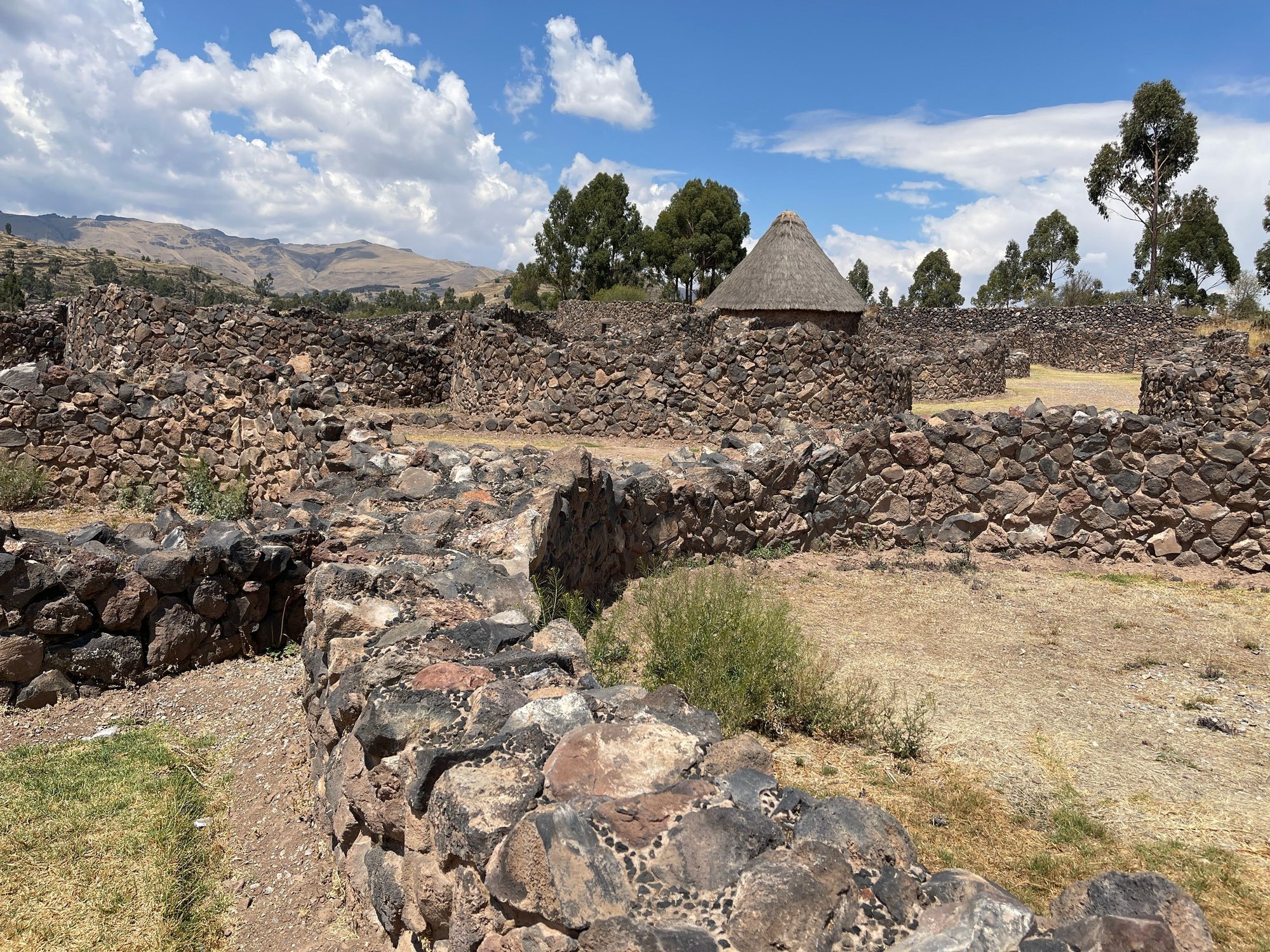
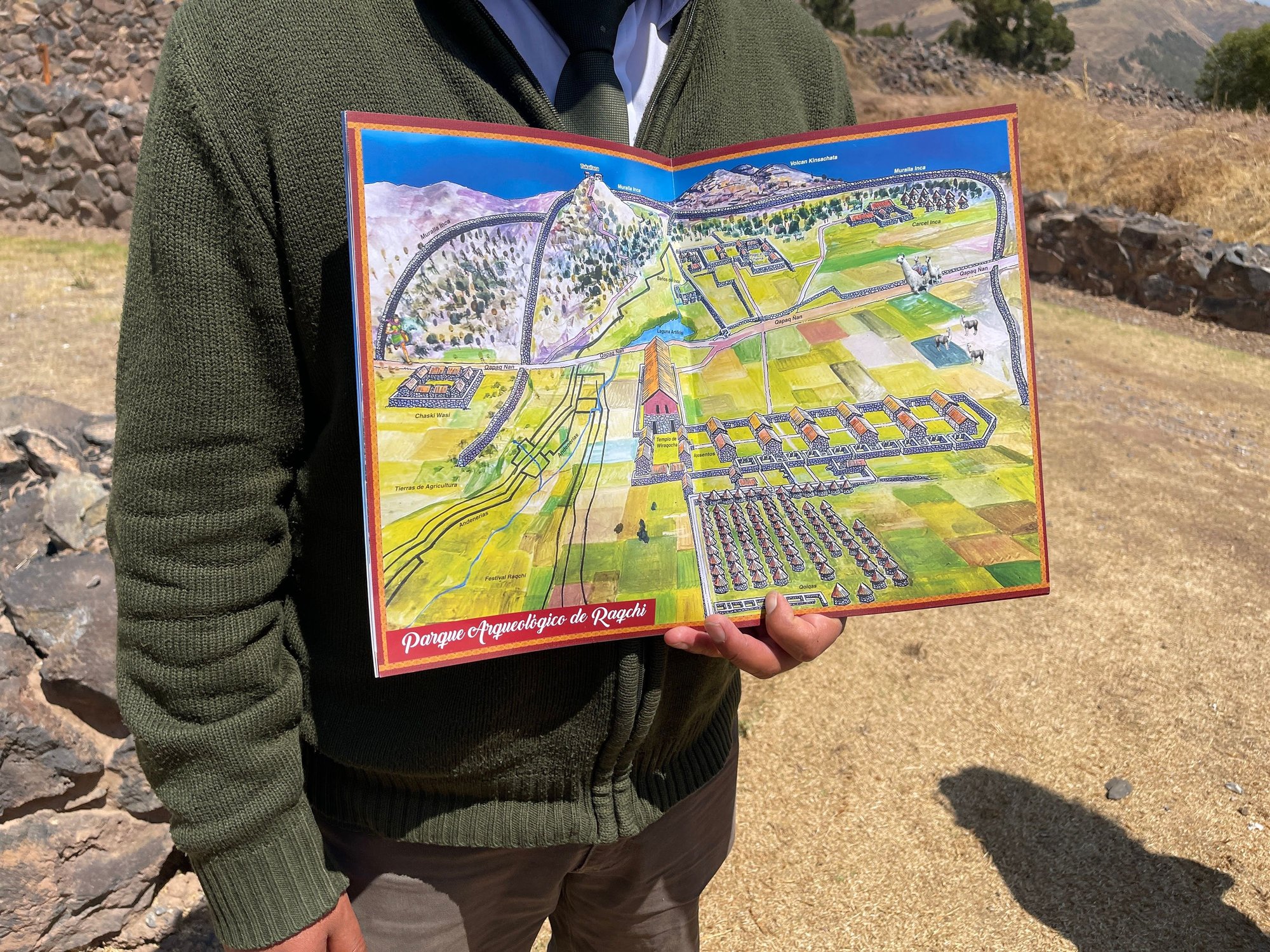
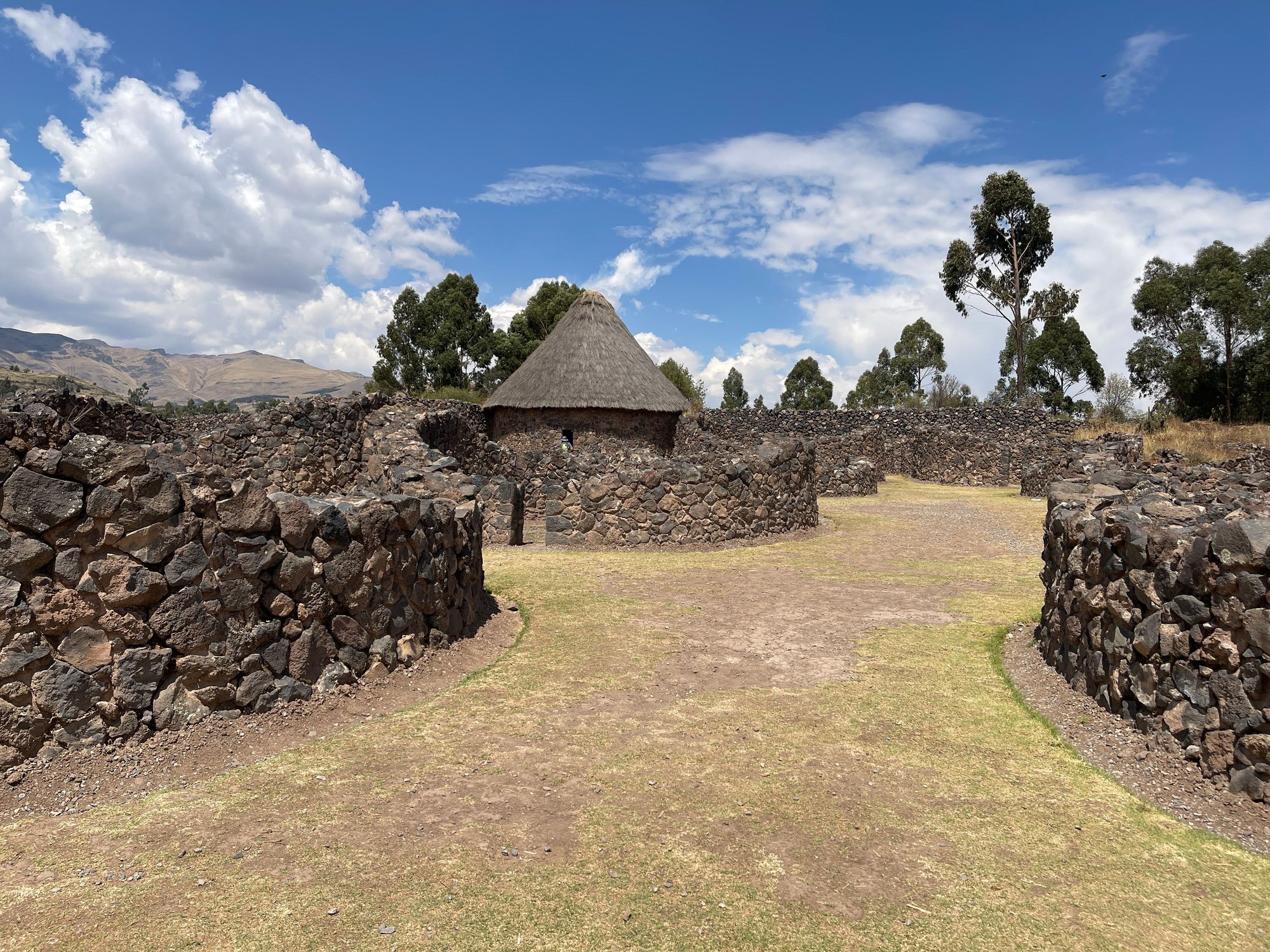
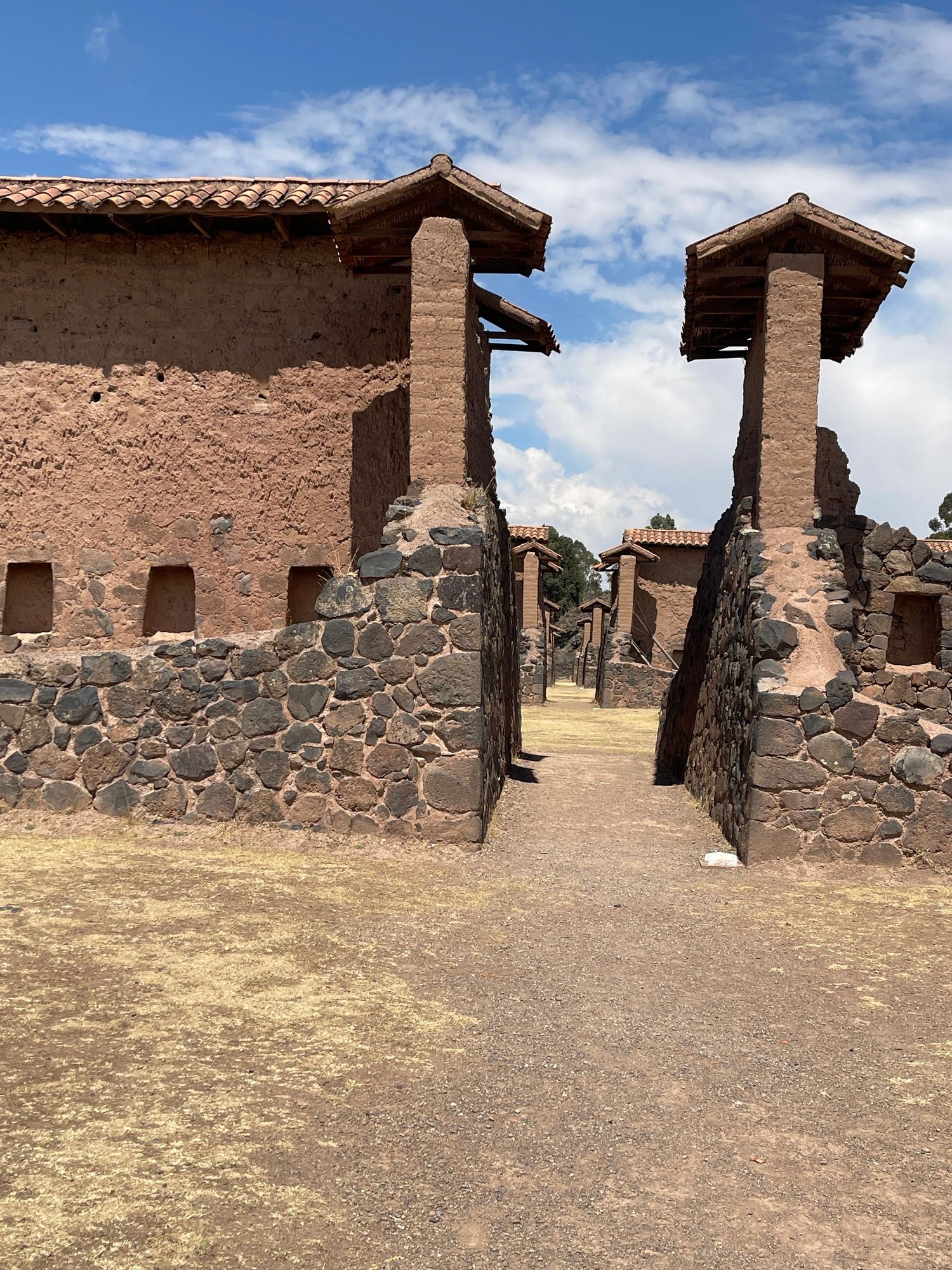
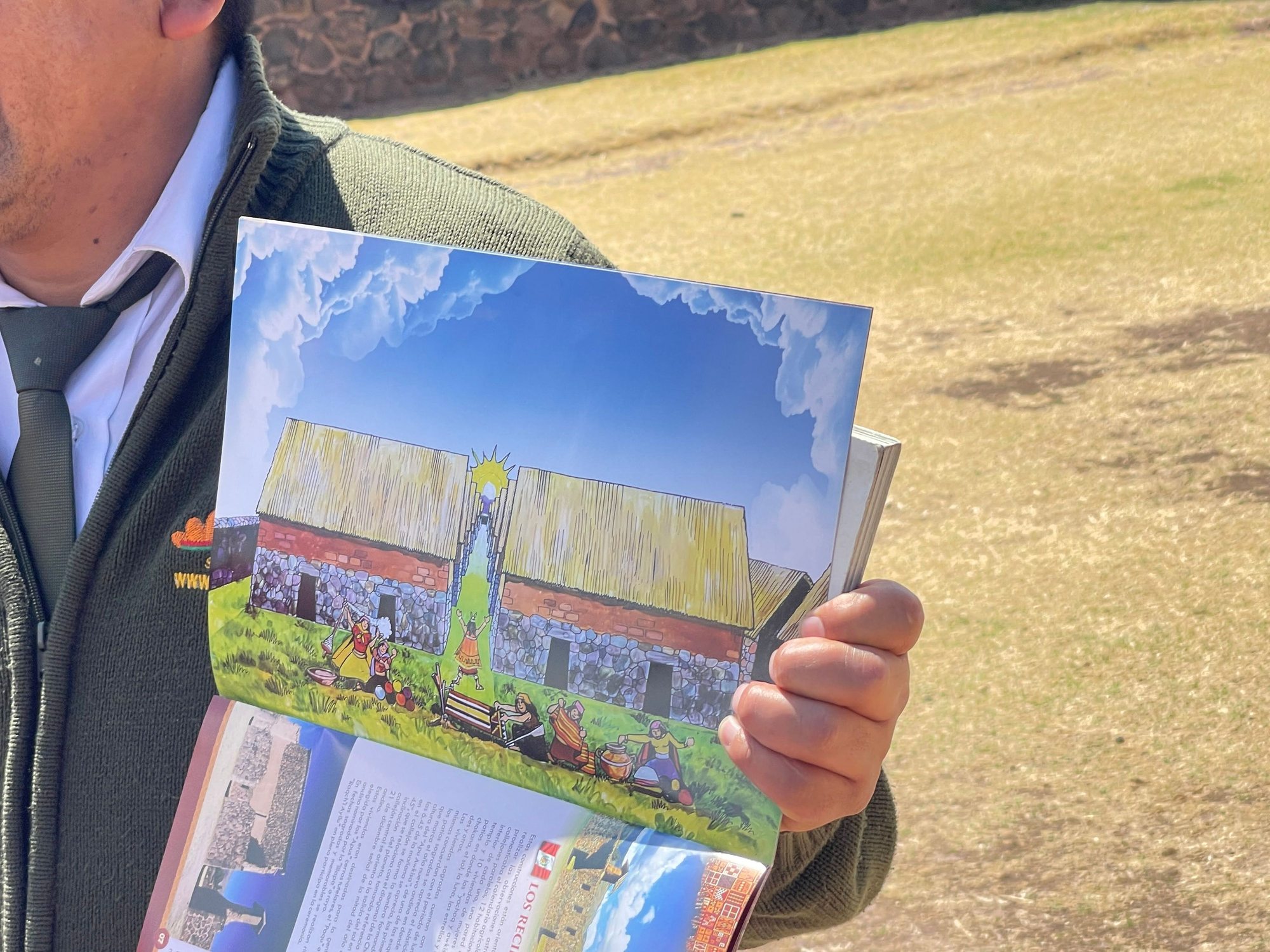
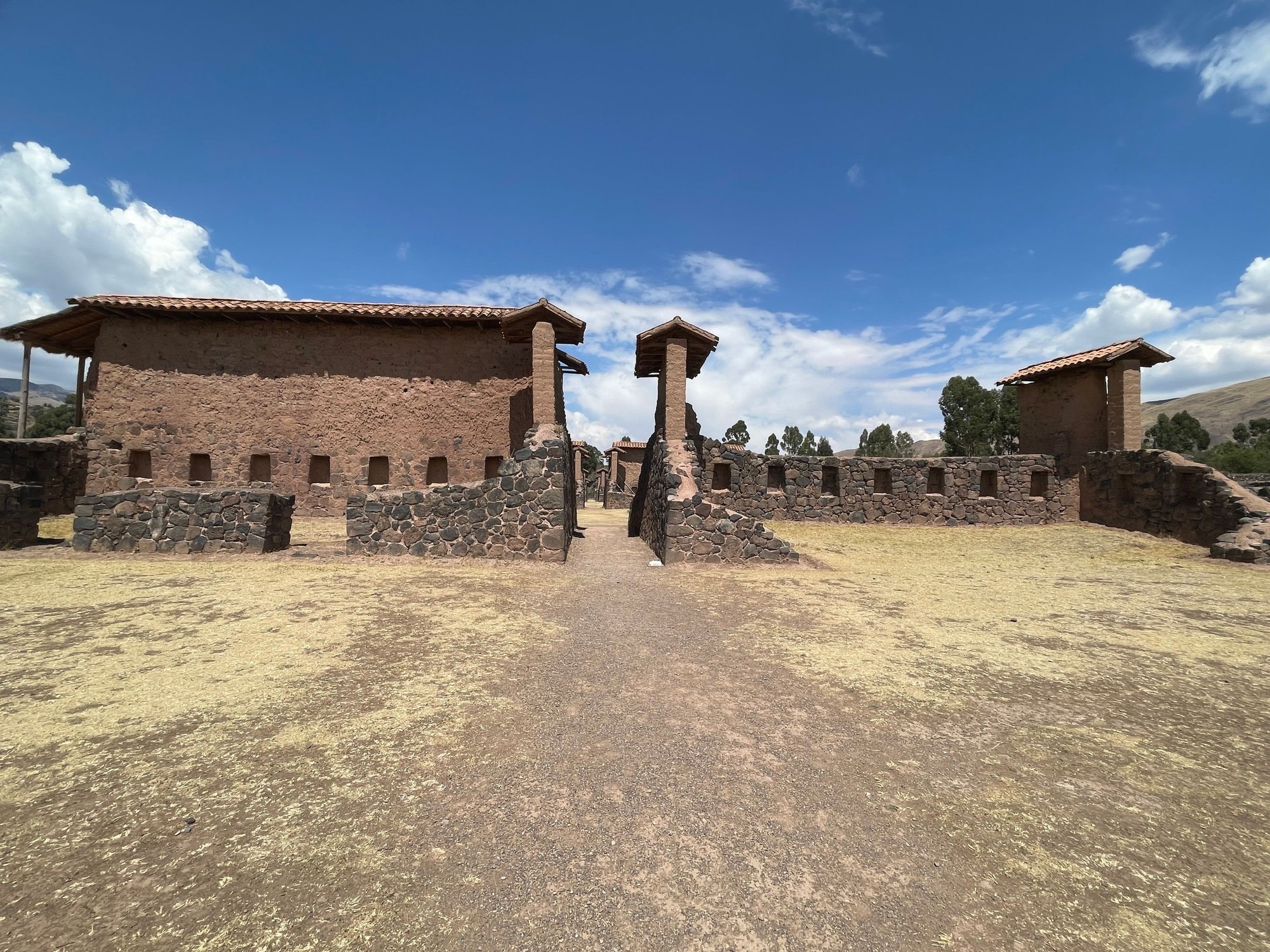
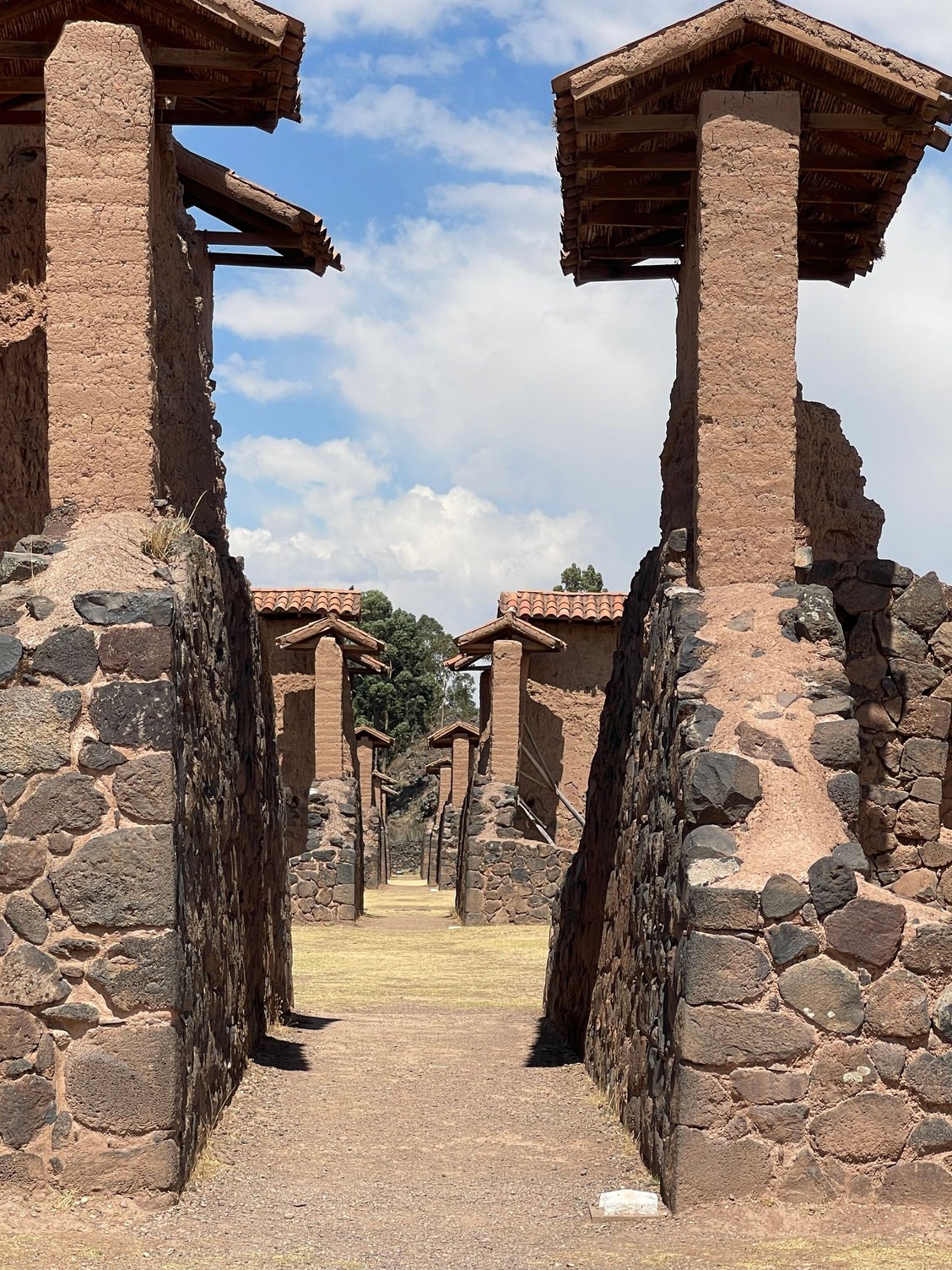
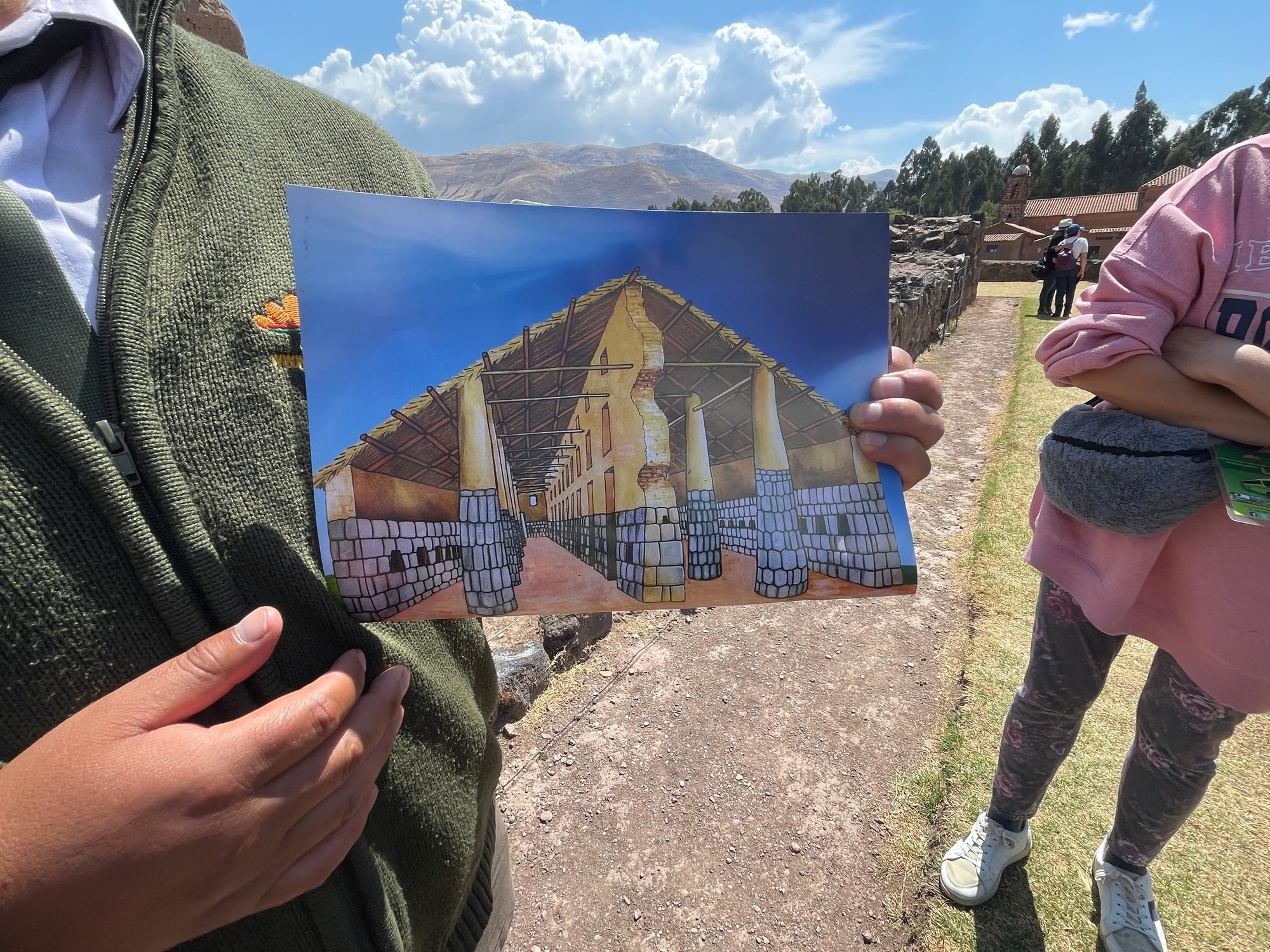
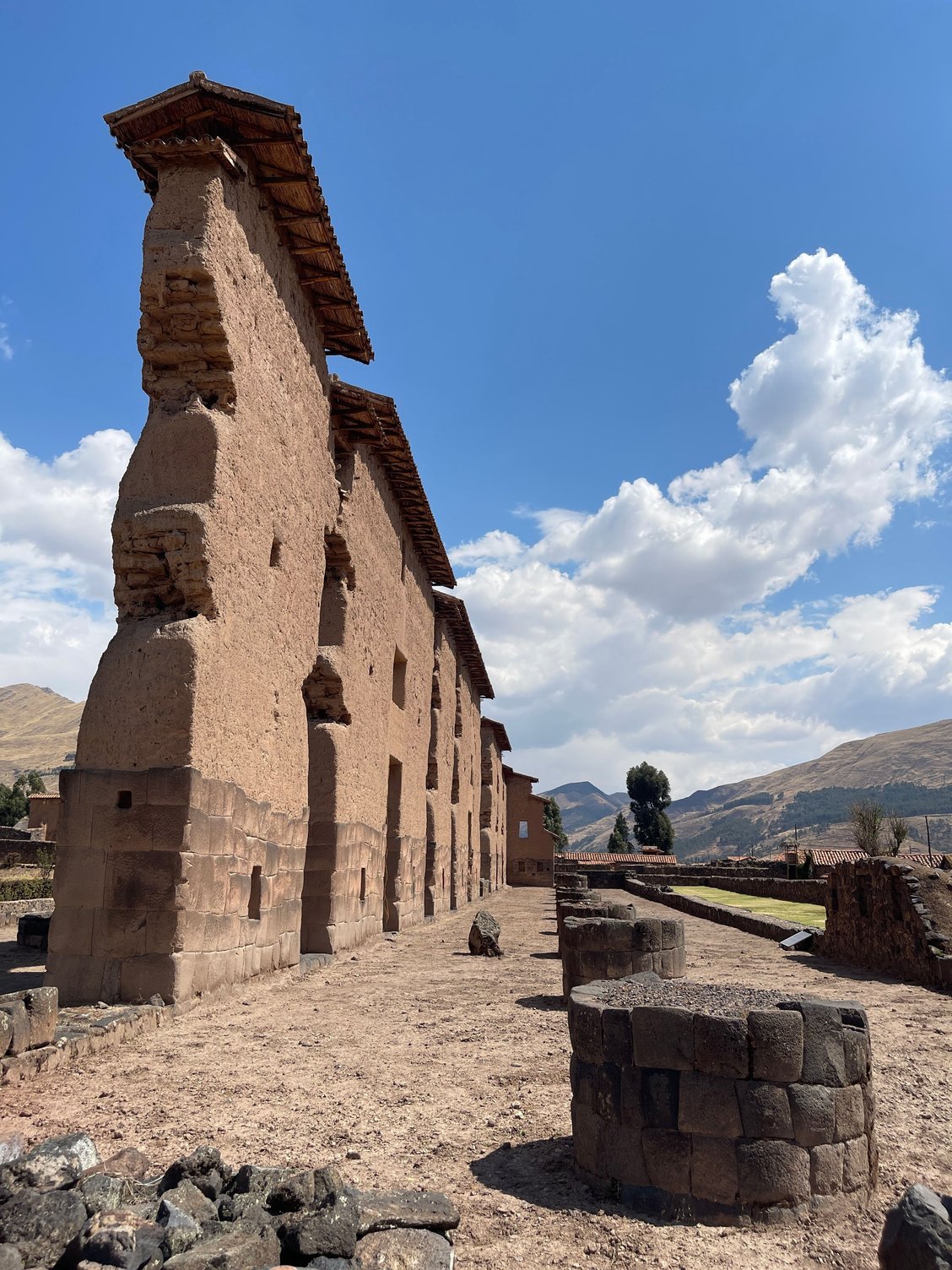
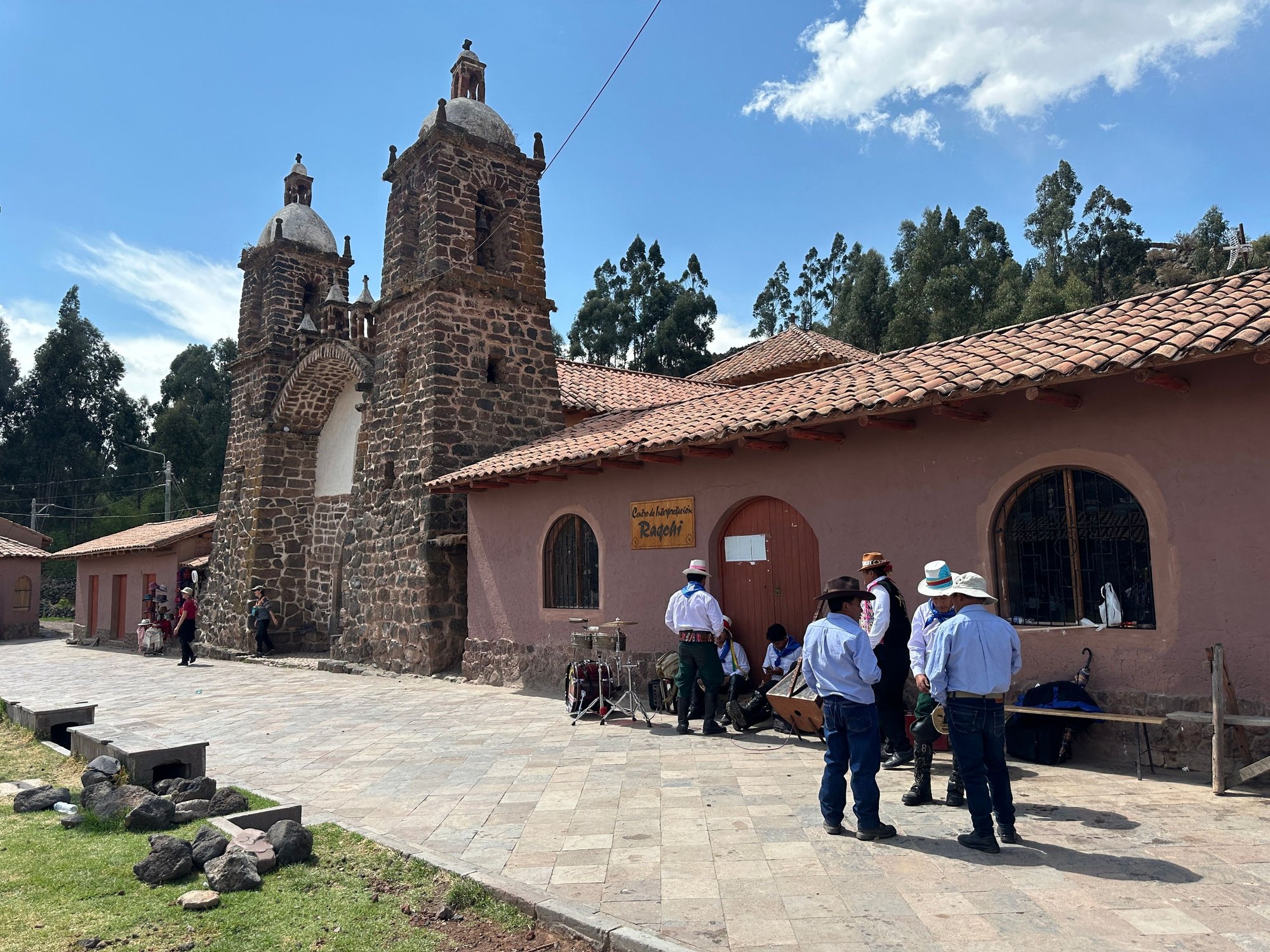
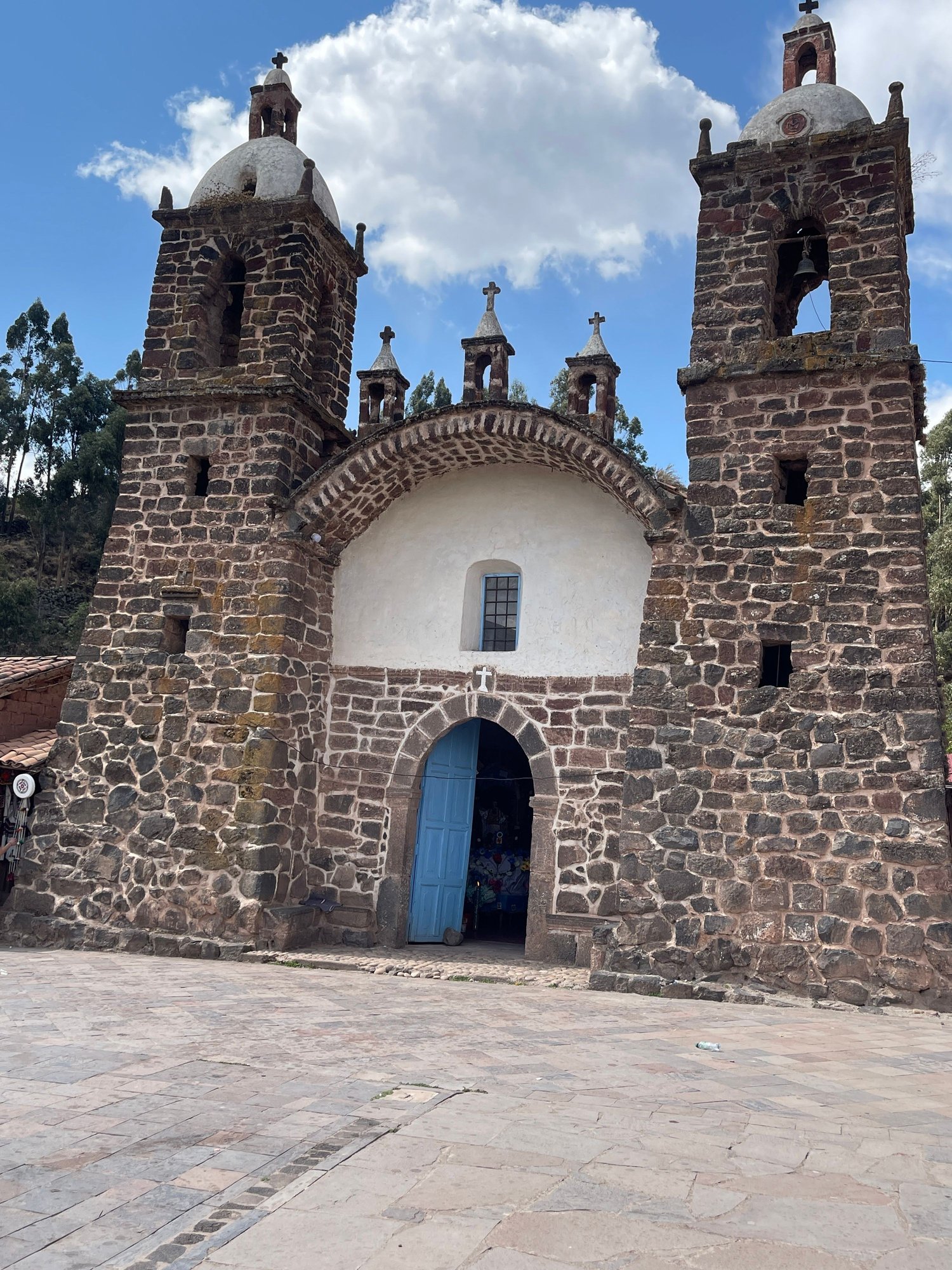
After the visit of the Inca Temple of Wiracocha, we continued on our journey. It was from here on, the old bus was giving trouble. Our old tour bus’s radiator was hot and giving out smokes when we were about 2 hours away from Cusco. It was quite a stressful situation seeing the bus driver trying to cool off the engine and the radiator. He poured so much water into the engine and radiator and only managed to move the bus a few km each time. We were worried that he might get burned, and also we might get stuck for a long time before reaching Cusco. The tour guide called the office for help, but we were still 2 hours away from Cusco. Everyone on the bus was staying calm as the bus inched slowly to the town of Huaru.
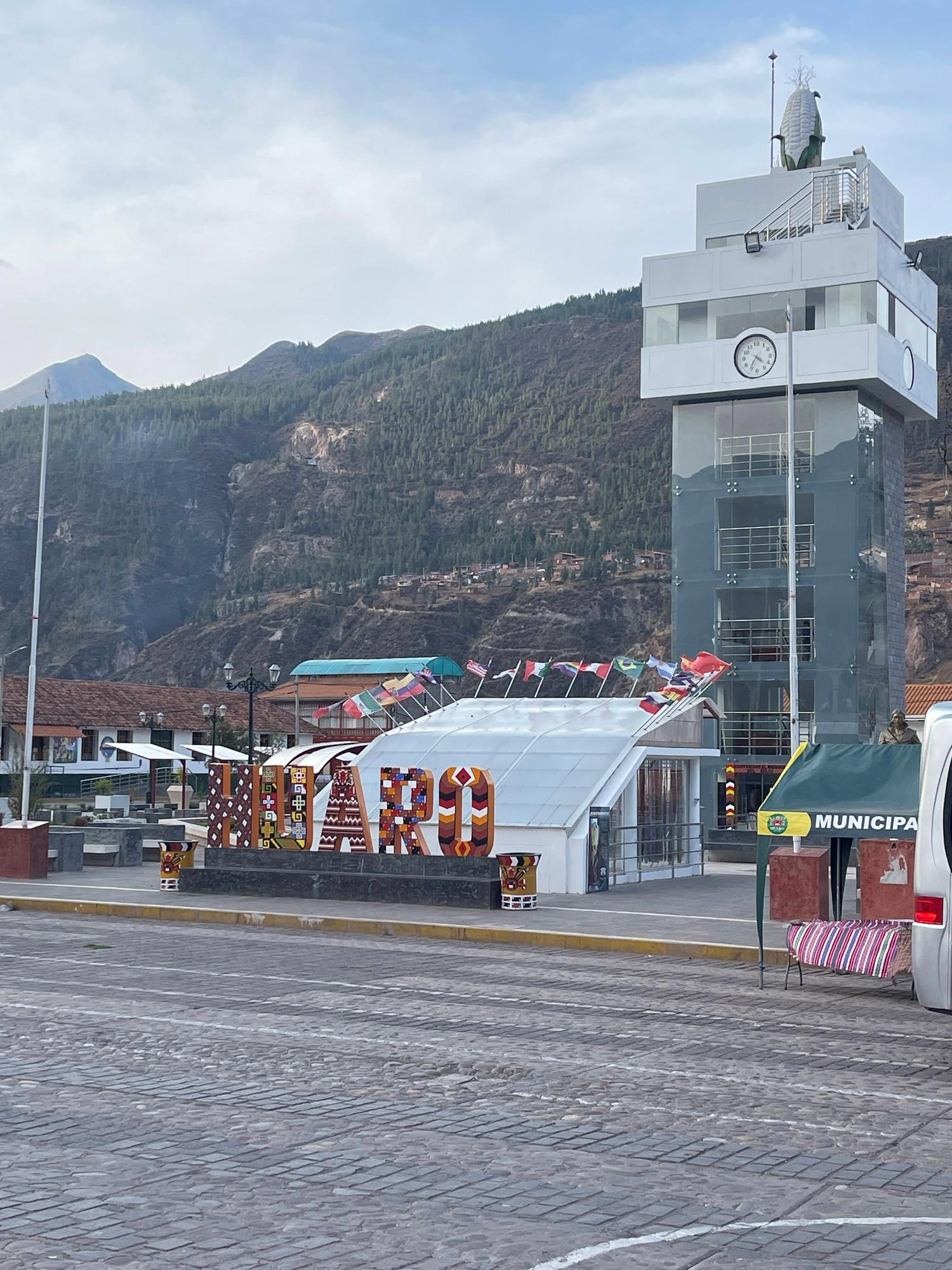
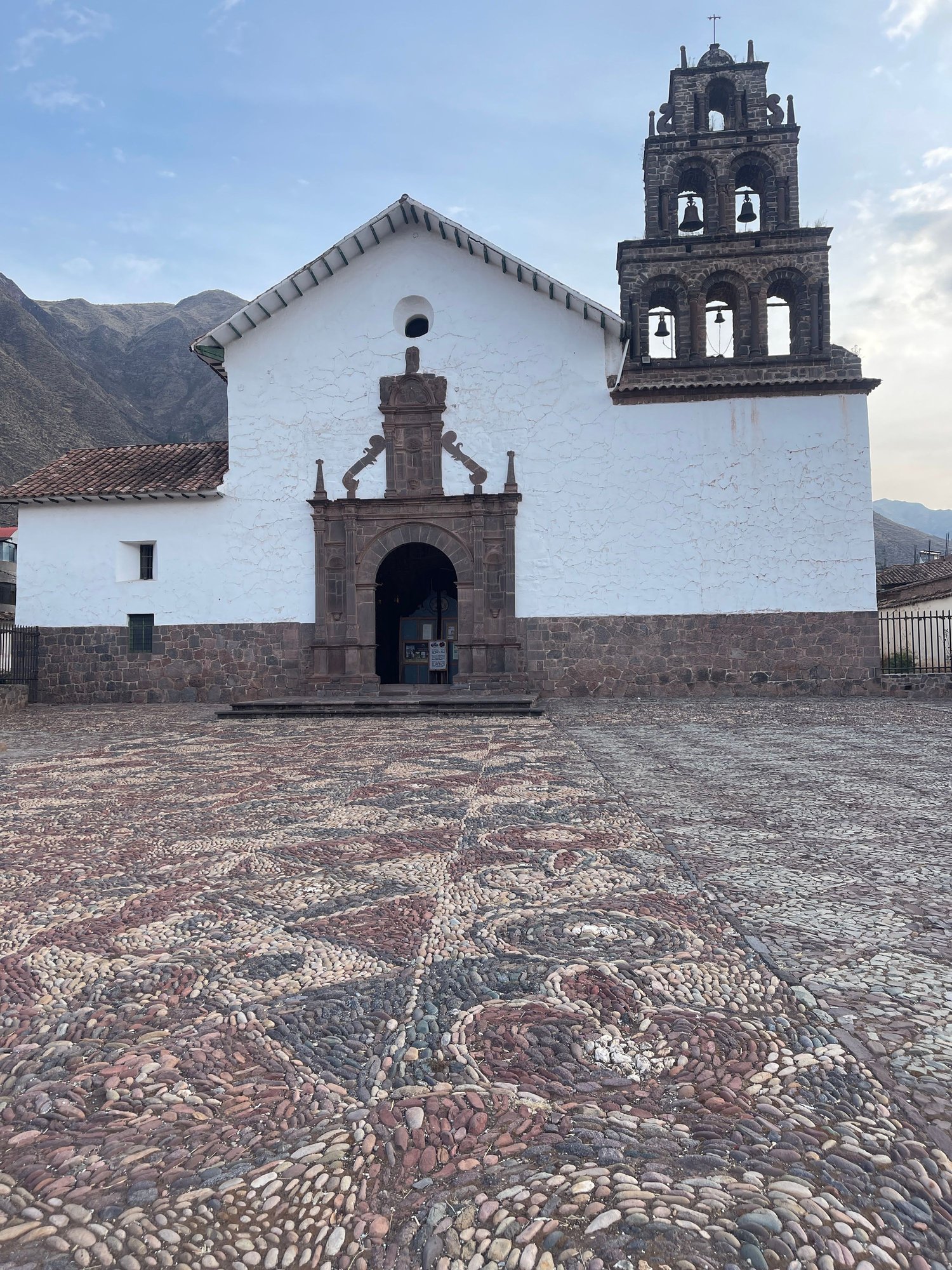
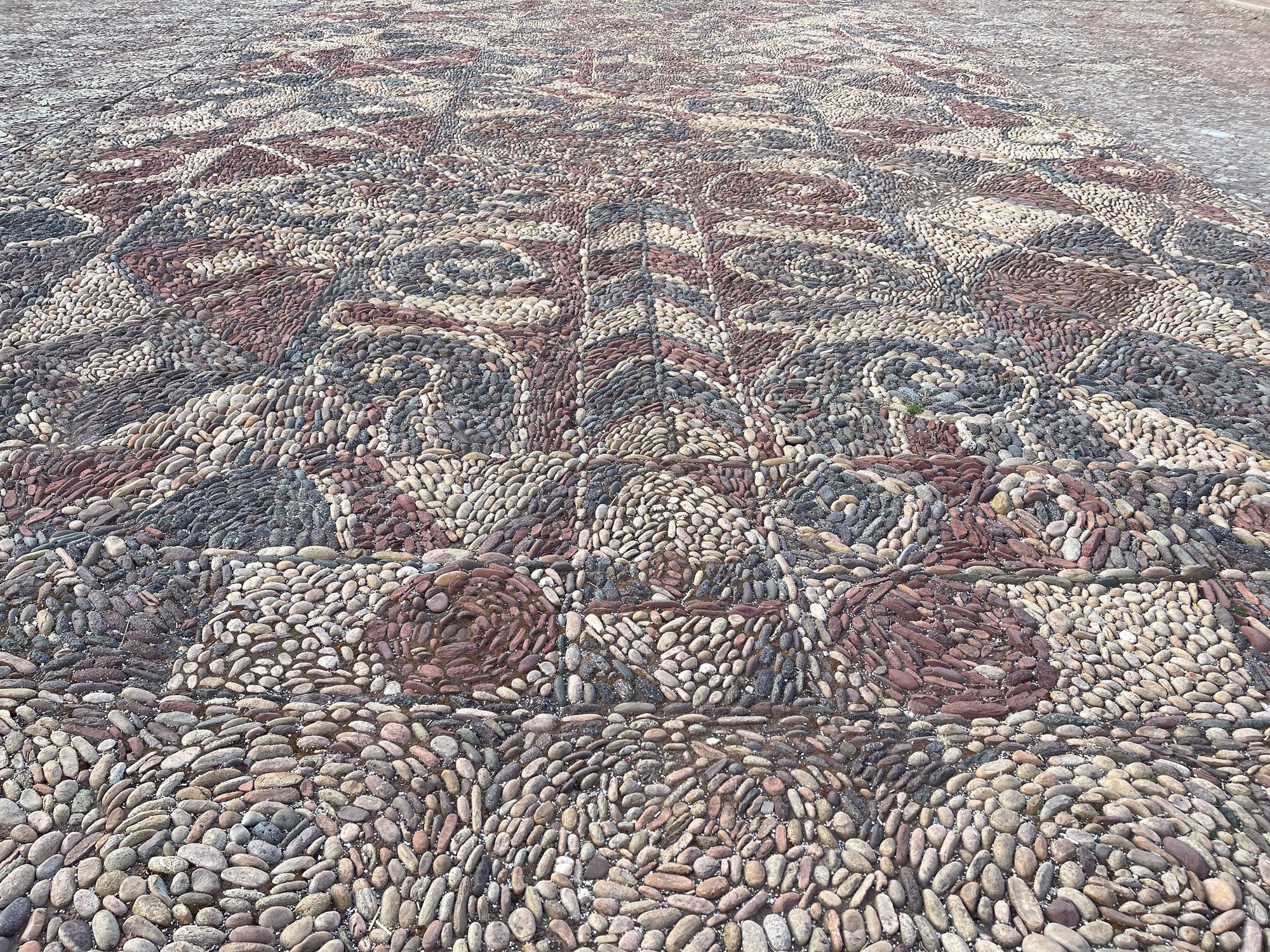
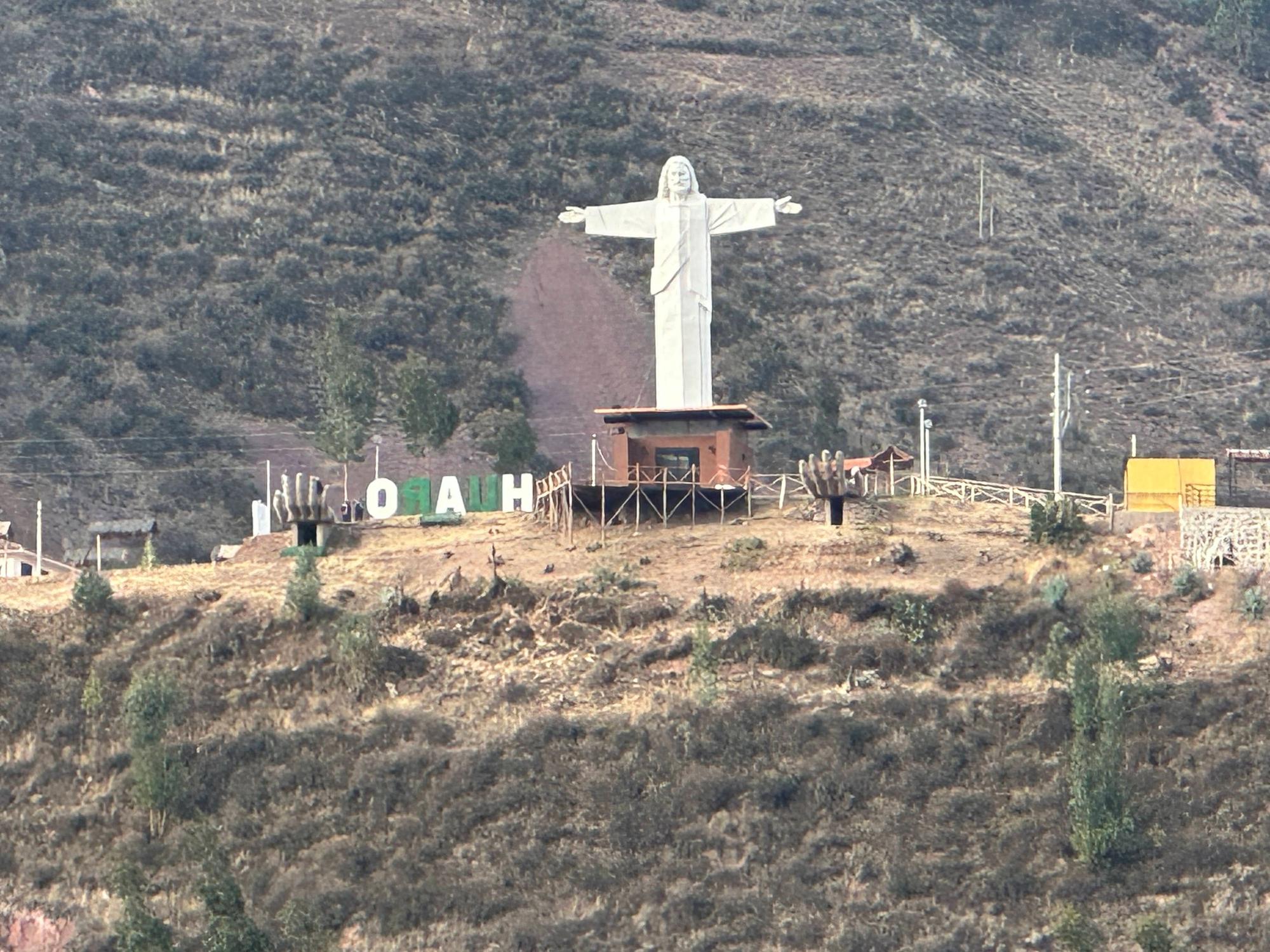
The guide told us the company in Cusco was sending another bus to pick us up for the rest of the journey. We waited for an hour there for the bus to come. In the meanwhile, we visited the Saint John Baptist church in Huaro town instead of the Saint Peter Apostle in Andahuaylillas. We were just relieved when the bus finally arrived and sent us off to Cusco.
We arrived at the Cusco bus terminal around 6pm and transferred to the hotel by a small van. After checking in the hotel, we went out for dinner, and back to the hotel, we snuggled in for the night after the long day of bus travel.
We joined the Puno to Cusco tourist bus route tour with Inka Express. It is supposedly a scenic trip through the Andean countryside that includes 4 guided tour stops. One being the Inca’s biggest surviving structures at Raqchi and the other, the Church of Saint Peter the Apostle in Andahuaylillas, the Sistine Chapel of America.
We were picked up from the hotel and transferred to the main bus station of Puno. Upon arriving the bus station, we were instructed to line up for check in. There was a big crowd in the line with different tour groups.
There were at least 5 or 6 buses with the Inka Express signs on the bus. Most of the buses were modern and reasonably new, except for one which was noticeably old and of an older model. Unfortunately we were assigned to that bus. I was not very happy with that as it was a long journey from Puno to Cusco.
The guide on the bus was nice and spoke English. After checking everyone on the bus, we left Puno, and on our way to our first stop.
Along the way leaving Puno, I saw these road side peddlers in different places bustling with activities.
Leaving Puno
Road side peddlers
After 2 hours, we arrived at Pucará and stopped for our toilet break. After Pucará, we continued on to La Raya (La Raya), the watershed which splits the regions of Puno and Cusco. It was a beautiful scenic view point stop. We enjoyed an amazing view of the region with the Andes mountains that surround us.
After a short break, we continued on our journey to Sicuani for our lunch at La Pascana Restaurant. The food was just alright, but the surrounding views were nice.
We continued to Raqchi after lunch. It is an archaeological site with a myriad of Inca ruins. We visited the Inca Temple of Wiracocha, the most important structure in the Raqchi complex and it is one of the biggest surviving Incan constructions. According to ancient writings, the temple was built by an Inca emperor in honor of the invisible Superior God of the Andean people. The impressive 12 meter high walls with the remaining ruins formed the impressive Temple of Wiracocha.
View from Lunch restaurant
After the visit of the Inca Temple of Wiracocha, we continued on our journey. It was from here on, the old bus was giving trouble. Our old tour bus’s radiator was hot and giving out smokes when we were about 2 hours away from Cusco. It was quite a stressful situation seeing the bus driver trying to cool off the engine and the radiator. He poured so much water into the engine and radiator and only managed to move the bus a few km each time. We were worried that he might get burned, and also we might get stuck for a long time before reaching Cusco. The tour guide called the office for help, but we were still 2 hours away from Cusco. Everyone on the bus was staying calm as the bus inched slowly to the town of Huaru.
The guide told us the company in Cusco was sending another bus to pick us up for the rest of the journey. We waited for an hour there for the bus to come. In the meanwhile, we visited the Saint John Baptist church in Huaro town instead of the Saint Peter Apostle in Andahuaylillas. We were just relieved when the bus finally arrived and sent us off to Cusco.
We arrived at the Cusco bus terminal around 6pm and transferred to the hotel by a small van. After checking in the hotel, we went out for dinner, and back to the hotel, we snuggled in for the night after the long day of bus travel.
Wow, what an excellent report. Makes me want to go back through my pics of Peru. Got them somewhere on a CD pre-smart phone days. We didn't spend as much time in Lima as you did. Makes me want to go back, but at our age long distance travel just isn't very practical any longer. 😢 We used Ancient Summit as a tour company, and Nina booked us a combination of small group tours and private drivers. https://ancientsummit.com/

