


Edinburgh Trip Report
 Jul 1st, 2025 | 08:05 AM
#1
Original Poster
Joined: Feb 2016
Posts: 388
Likes: 0
Edinburgh Trip Report
Day 1: Edinburgh: A dramatic departure
Our JetBlue flight from JFK to Edinburgh kicked off with a little drama. After finally boarding—First Class, Mosaic, Platinum, Extra Comfort, Regular Comfort, and finally hoi polloi —I'd just settled in to watch Mary Queen of Scots when the cabin turned into a sauna. I'm talking dripping-sweat hot. "Ladies and gentlemen, please gather your belongings and quickly exit the plane. We have a fuel leak."
Looking out at the tarmac in NYC's 103-degree heat wave, we watched fuel gushing onto the pavement while ground crew frantically mopped. Meanwhile, the first-class passengers were leisurely gathering their things, adjusting cardigans, sending texts—while those of us sweating in the back were thinking, For the love of God, is this going to be like the Titanic? (Though admittedly, ten minutes probably isn't enough time for a star-crossed love story to develop.) Once we completed our "emergency deplaning," we were at the mercy of a ticket agent with an indecipherable accent for updates. Everyone politely nodded along until someone finally broke and asked, "What did he say?" And that broke the ice with fellow passengers.
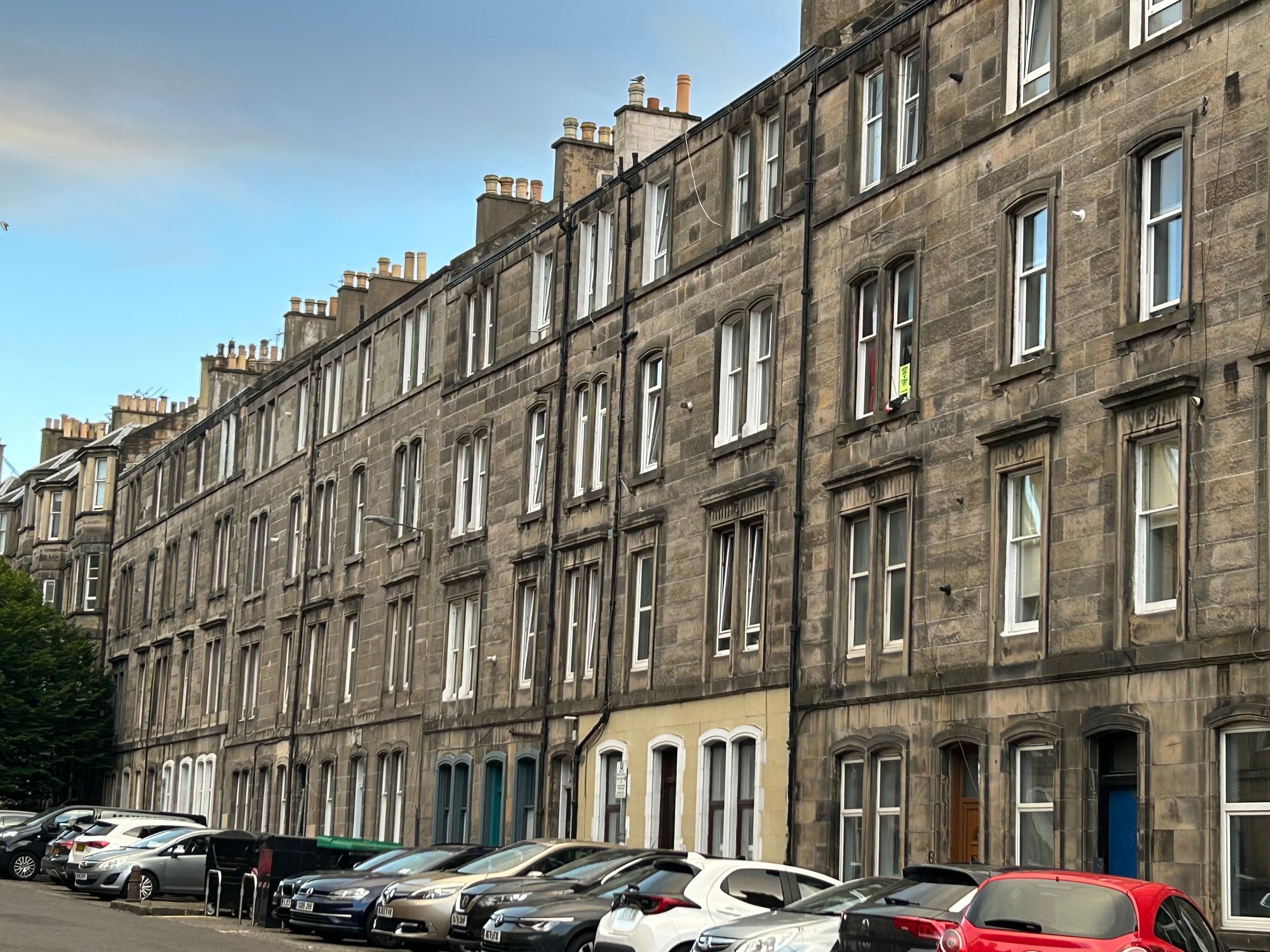
The silver lining? When we reboarded, it was beautiful breakdown of airplane social hierarchy with free-for-all boarding. Plus, our later arrival actually worked in our favor since our Airbnb wasn't ready until 4 PM and we would arrive now at 10:00. Our AirBnB host had suggestred for us to drop our bags at Café Renroc, but after our cab departed, we discovered the café had closed permanently. Two Americans who had been awake for 24 hours with luggage and five hours to kill, staring at a boarded-up storefront was a pathetic sight. Enter Scottish hospitality. A few people emerged from the boarded up café and immediately saw our predicament. Kris, the contractor working in the building, offered to store our bags behind the bar while he worked in the basement. "Really no problem at all," he insisted, then directed us to Brunswick Book Shop Cafe for coffee. Sitting outside with cappuccinos and Scottish porridge topped with fruit compote was exactly what we needed. Our AirBnB was in Leith and for us, we loved it. We did stay at the end of Leith closer to New Town rather than the waterfront. We were able to walk (we like to walk) to Old Town and return to our nice block in the evening.
After Scottish porridge we still had several hours to kill. We planned to walk along the Water of Leith Walkway but Google Maps had other ideas. Our wander allowed us to discovered that Leith is a great neighborhood filled with thrift stores, coffee shops, bookstores, and restaurants. After browsing some second-hand shops and taking a detour through the housing projects, we finally found the actual Water of Leith closer to the Firth of Forth. The riverside walk was lovely, complete with swans, ducks, and cormorants. We grabbed another coffee, picked up some chocolate for our bag-watching rescuer and headed to Airbnb.
After a rest, we decided to walk to Portobello beach, as Kris, the contractor and bag watcher had recommended the boardwalk. Google Maps took us on another round about way—across a highway and through condo complexes—but we made it to both the beach and the restaurant (The Espy) he'd suggested. Nothing fancy but we weren't looking for fine dining. At 9 PM, with the sky still bright, we strolled the boardwalk watching dog walkers on the beach and teenagers around campfires. Then jet lag hit like a wall. We grabbed a taxi home.
We ate well iln Edinburgh but we did not eat high end. I had a list of high end places from a friend but knew the friend I was travelling with would not really be into it and well, I was laid off so decided maybe I wasn't either.
Tomorrow: the Royal Mile, Gladstone's Land, Edinburgh Castle, and Pickleball with the locals
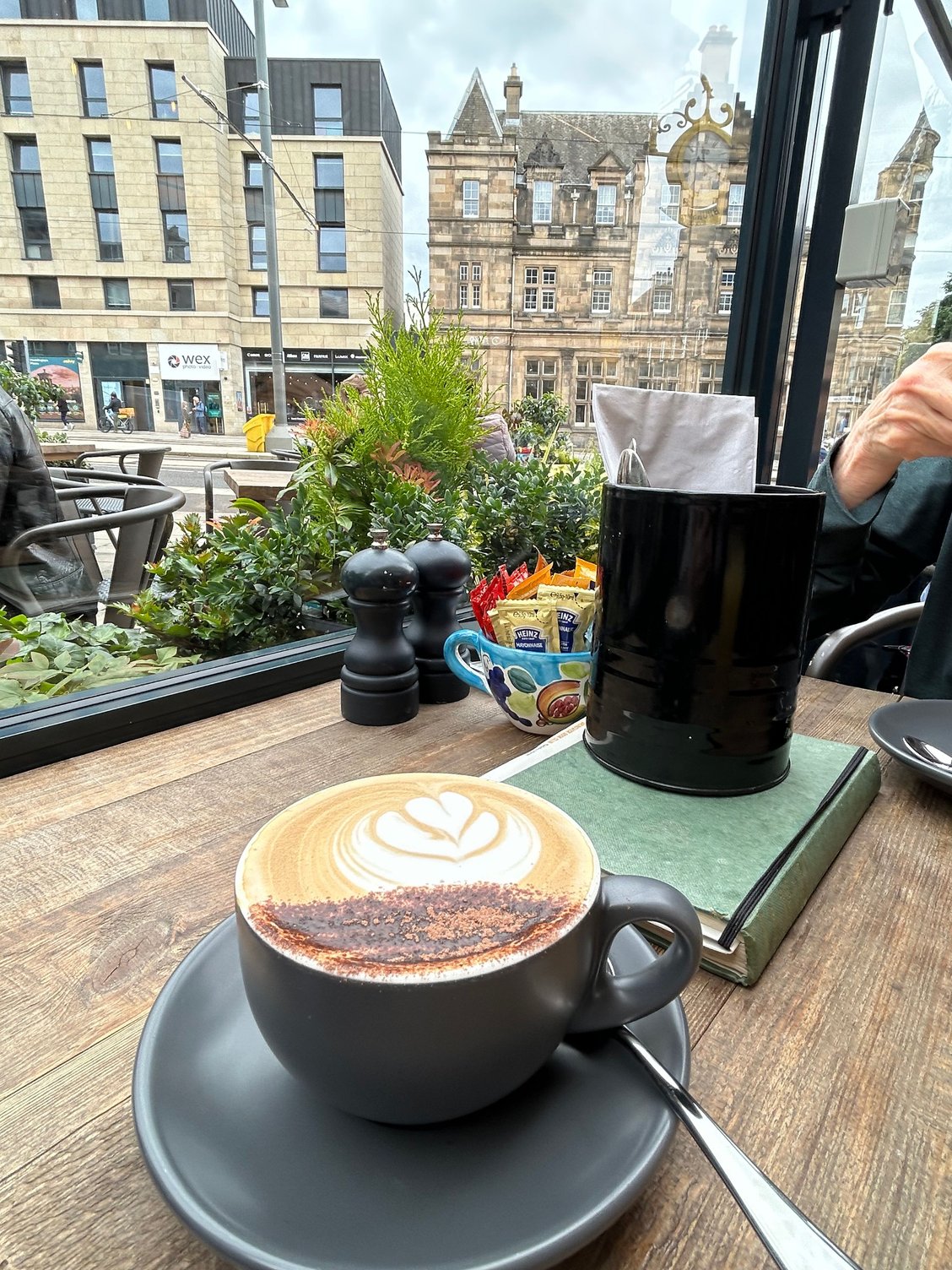
Cappuccino at Brunswick Book Shop
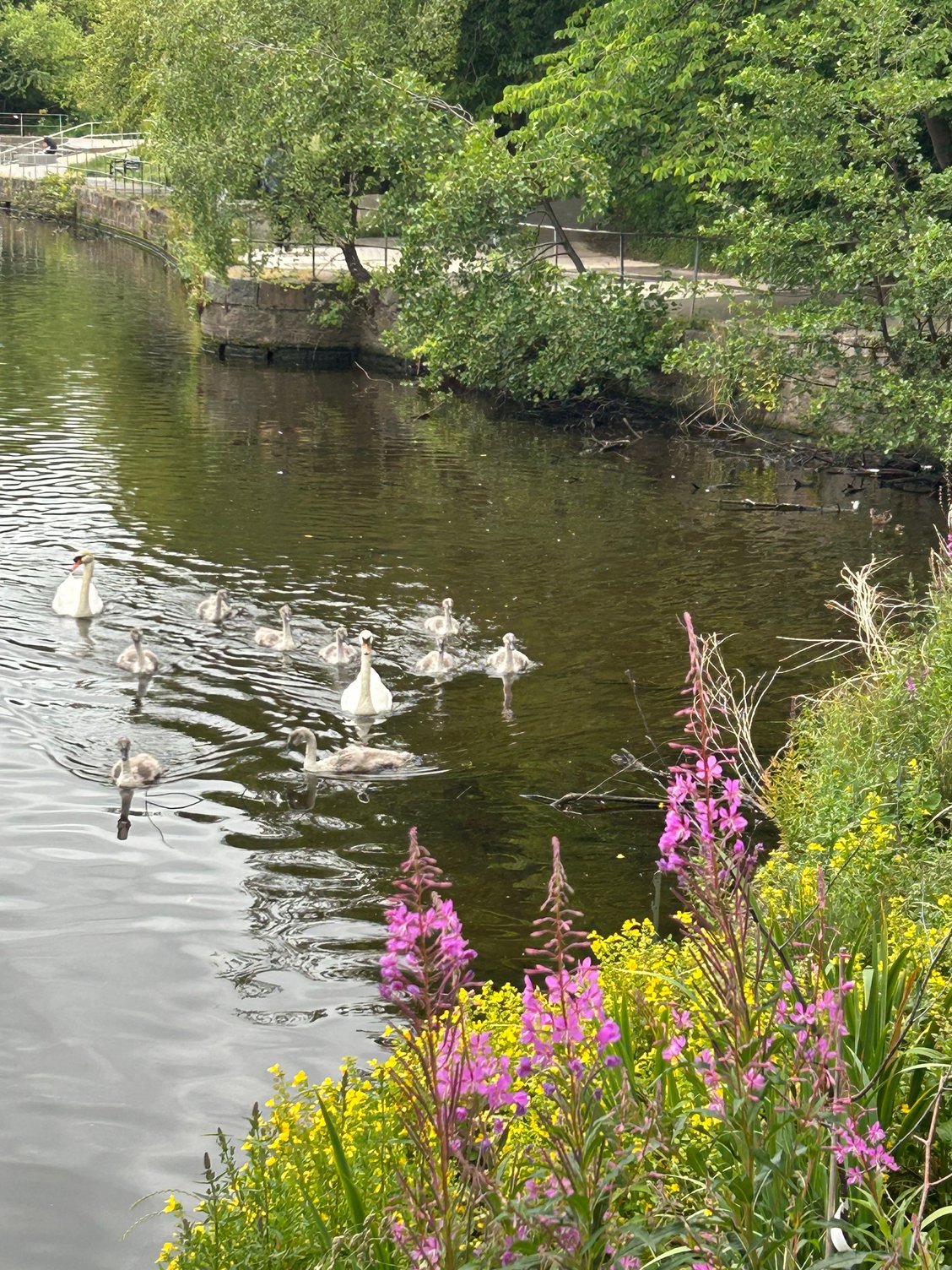
Walking along the Leith Waterway
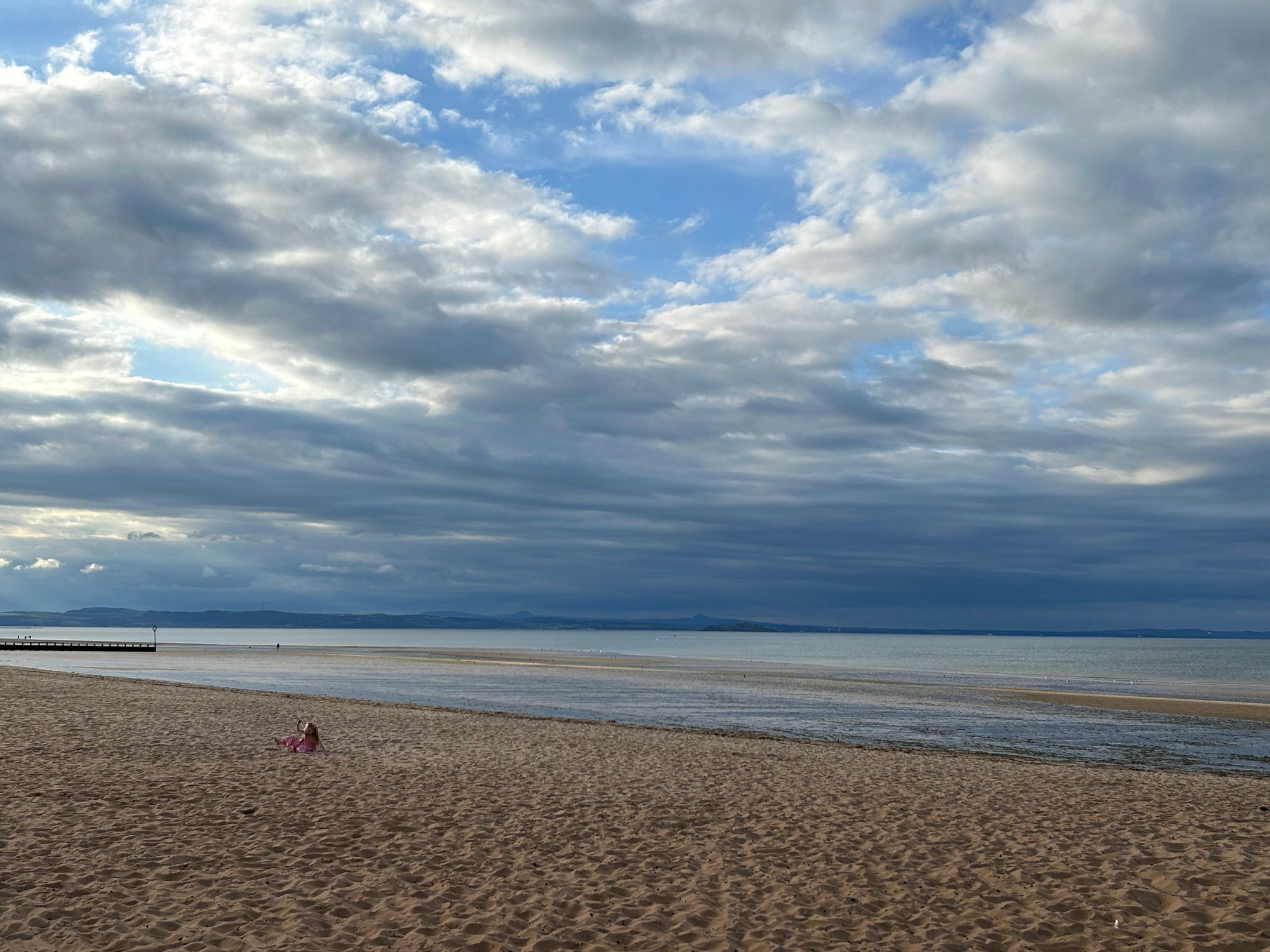
Evening on the beach at the boardwalk
Our JetBlue flight from JFK to Edinburgh kicked off with a little drama. After finally boarding—First Class, Mosaic, Platinum, Extra Comfort, Regular Comfort, and finally hoi polloi —I'd just settled in to watch Mary Queen of Scots when the cabin turned into a sauna. I'm talking dripping-sweat hot. "Ladies and gentlemen, please gather your belongings and quickly exit the plane. We have a fuel leak."
Looking out at the tarmac in NYC's 103-degree heat wave, we watched fuel gushing onto the pavement while ground crew frantically mopped. Meanwhile, the first-class passengers were leisurely gathering their things, adjusting cardigans, sending texts—while those of us sweating in the back were thinking, For the love of God, is this going to be like the Titanic? (Though admittedly, ten minutes probably isn't enough time for a star-crossed love story to develop.) Once we completed our "emergency deplaning," we were at the mercy of a ticket agent with an indecipherable accent for updates. Everyone politely nodded along until someone finally broke and asked, "What did he say?" And that broke the ice with fellow passengers.
The silver lining? When we reboarded, it was beautiful breakdown of airplane social hierarchy with free-for-all boarding. Plus, our later arrival actually worked in our favor since our Airbnb wasn't ready until 4 PM and we would arrive now at 10:00. Our AirBnB host had suggestred for us to drop our bags at Café Renroc, but after our cab departed, we discovered the café had closed permanently. Two Americans who had been awake for 24 hours with luggage and five hours to kill, staring at a boarded-up storefront was a pathetic sight. Enter Scottish hospitality. A few people emerged from the boarded up café and immediately saw our predicament. Kris, the contractor working in the building, offered to store our bags behind the bar while he worked in the basement. "Really no problem at all," he insisted, then directed us to Brunswick Book Shop Cafe for coffee. Sitting outside with cappuccinos and Scottish porridge topped with fruit compote was exactly what we needed. Our AirBnB was in Leith and for us, we loved it. We did stay at the end of Leith closer to New Town rather than the waterfront. We were able to walk (we like to walk) to Old Town and return to our nice block in the evening.
After Scottish porridge we still had several hours to kill. We planned to walk along the Water of Leith Walkway but Google Maps had other ideas. Our wander allowed us to discovered that Leith is a great neighborhood filled with thrift stores, coffee shops, bookstores, and restaurants. After browsing some second-hand shops and taking a detour through the housing projects, we finally found the actual Water of Leith closer to the Firth of Forth. The riverside walk was lovely, complete with swans, ducks, and cormorants. We grabbed another coffee, picked up some chocolate for our bag-watching rescuer and headed to Airbnb.
After a rest, we decided to walk to Portobello beach, as Kris, the contractor and bag watcher had recommended the boardwalk. Google Maps took us on another round about way—across a highway and through condo complexes—but we made it to both the beach and the restaurant (The Espy) he'd suggested. Nothing fancy but we weren't looking for fine dining. At 9 PM, with the sky still bright, we strolled the boardwalk watching dog walkers on the beach and teenagers around campfires. Then jet lag hit like a wall. We grabbed a taxi home.
We ate well iln Edinburgh but we did not eat high end. I had a list of high end places from a friend but knew the friend I was travelling with would not really be into it and well, I was laid off so decided maybe I wasn't either.
Tomorrow: the Royal Mile, Gladstone's Land, Edinburgh Castle, and Pickleball with the locals
Cappuccino at Brunswick Book Shop
Walking along the Leith Waterway
Evening on the beach at the boardwalk
Last edited by RubyTwins; Jul 1st, 2025 at 08:10 AM.


 Jul 3rd, 2025 | 11:31 AM
#5
Original Poster
Joined: Feb 2016
Posts: 388
Likes: 0
DAY 2We headed back to the Brunswick Book Club for breakfast, but sadly they didn't open until 10, so we found a small place called Word of Mouth Caféon Albert Street. With reservations for Edinburgh Castle at 3:00, we headed over to the Royal Mile, which was a complete tourist mob scene—a river of people and street performers flowing past tons of tartan-touting schlock shops. Tartan kilts, tartan plaids on scarves, gloves, purses, dog collars, key chains, and I think I even saw tartan thongs.
The real gem of our day was Gladstone's Land, a tenement built in 1550 and expanded in 1617 by a merchant who clearly had excellent taste in beautiful painted ceilings. This National Trust museum brings three eras to life through the stories of former residents: Mary Wilson who ran a boarding house in 1911, Elizabeth Pillans who had a dress shop for wealthy ladies around 1766, and John Riddoch and his wife Margaret Nobel, wealthy merchants in the 1630s (his servant Issobell Johnstone managed the tavern he ran in the cellar). Both wealthy and poor might live together in these tenements safely within the castle walls—passing each other in the hallways on the way to their own flats until New Town was built and the wealthy fled.
The docents there are a wealth of information, and we learned a lot about life in these three different eras. For instance, getting an expensive dress made was one of the few reasons a wealthier woman could ever leave her house in 18th century Edinburgh—so it became a social occasion where she could relax with tea and conversation with the proprietor. Or that John Riddoch was wealthy, yet he, his wife, and five kids all lived in one room while the second room served as both kitchen and sleeping quarters for three maids (plus a cat to keep away the mice and rats). He sold raisins, figs, ginger, sugar, cinnamon, and other spices in tiny quantities because of their expense—spices were more valuable than meat and considered luxury items for the rich. When Riddoch died in a shipwreck right off the coast of Leith, his wife simply vanished from history.
From there we decided it was time for tea and headed to Clarinda's. I'd never had a scone with cream and jam and decided it was so good I went for a second. Quaint place recommended by a friend (and turns out Trip Advisor too).
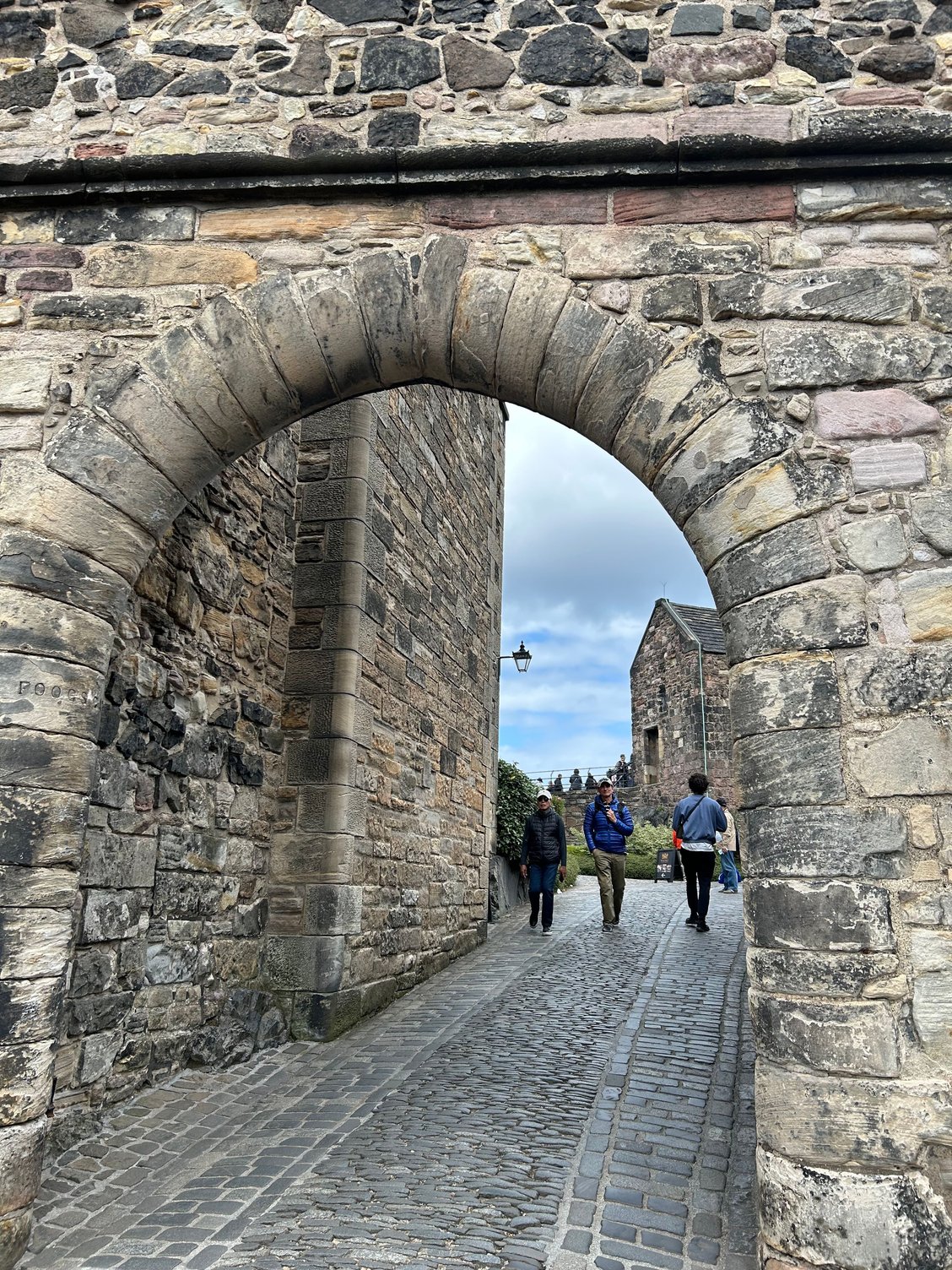
Back through the throngs of the Royal Mile to Edinburgh Castle. Well, this was a bit disappointing, to be frank. The royal rooms turned out to be an endless queue to glimpse a crown, some mediocre portraits, and the tiny chamber where Mary Queen of Scots gave birth to the future James I of England—before we were efficiently shuffled out. The prison sections proved more entertaining, housing former pirates (including Black Bart's crew, who made the mistake of retiring in Edinburgh) and prisoners of war. The conditions weren't nearly as horrific as advertised—honestly, the cells resembled well-lit NYC studio apartments. The wax figures recreating prison life were unintentionally hilarious, especially in the commissary scene that left us wondering about the curator's judgment. I wish I had booked Holyrood instead but turns out the royal family was there for most of the week.
I had plans to play pickleball that night with the group at Edinburgh Pickleball, but we grabbed some good Indian/Nepalese food first at Gautam's before I set off. Some good games, and I was humbled a bit by their consistent dinking.
Tomorrow we take a train to North Berwick because I was determined to see those Puffins
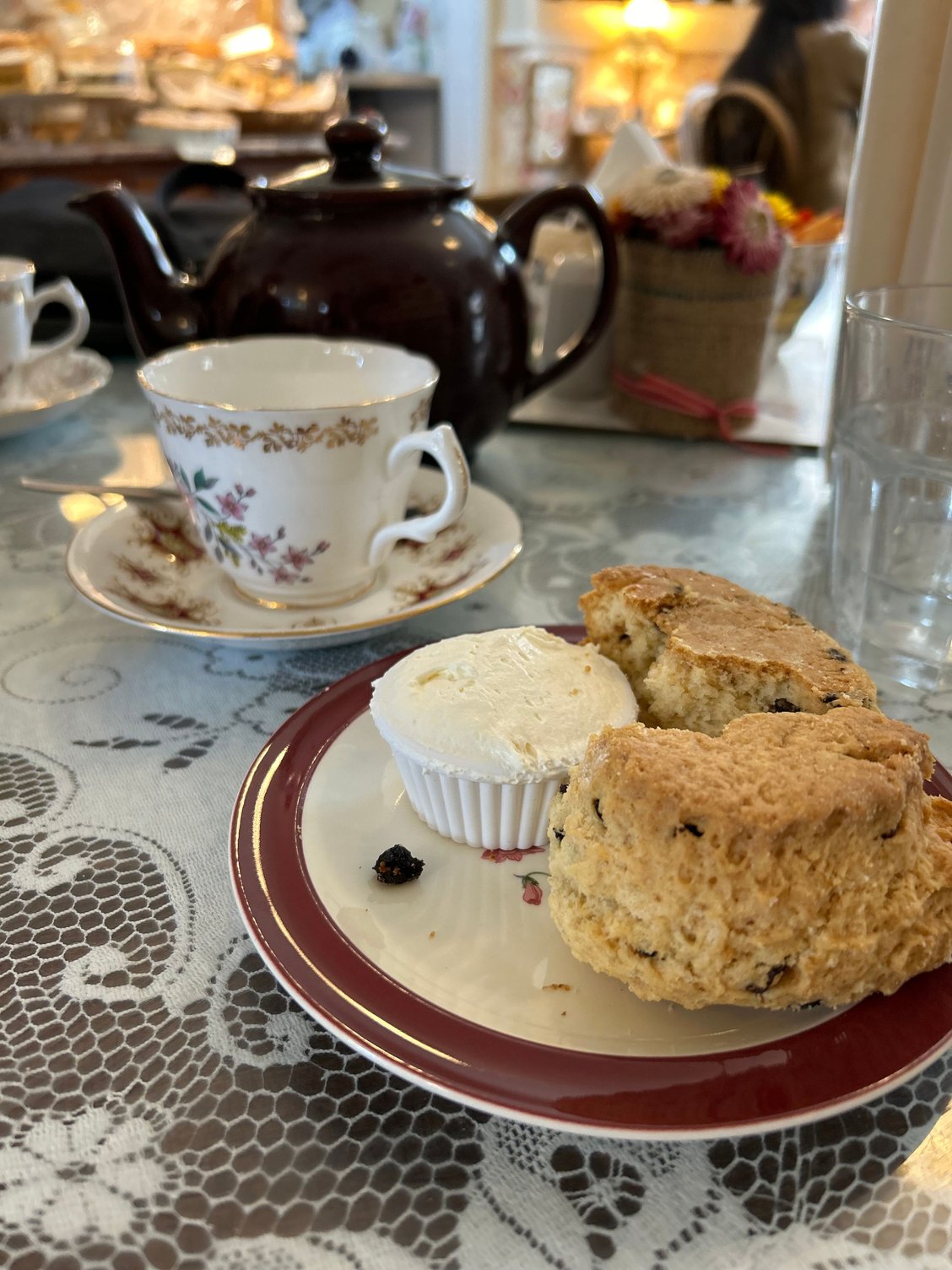
Claridge's Scone
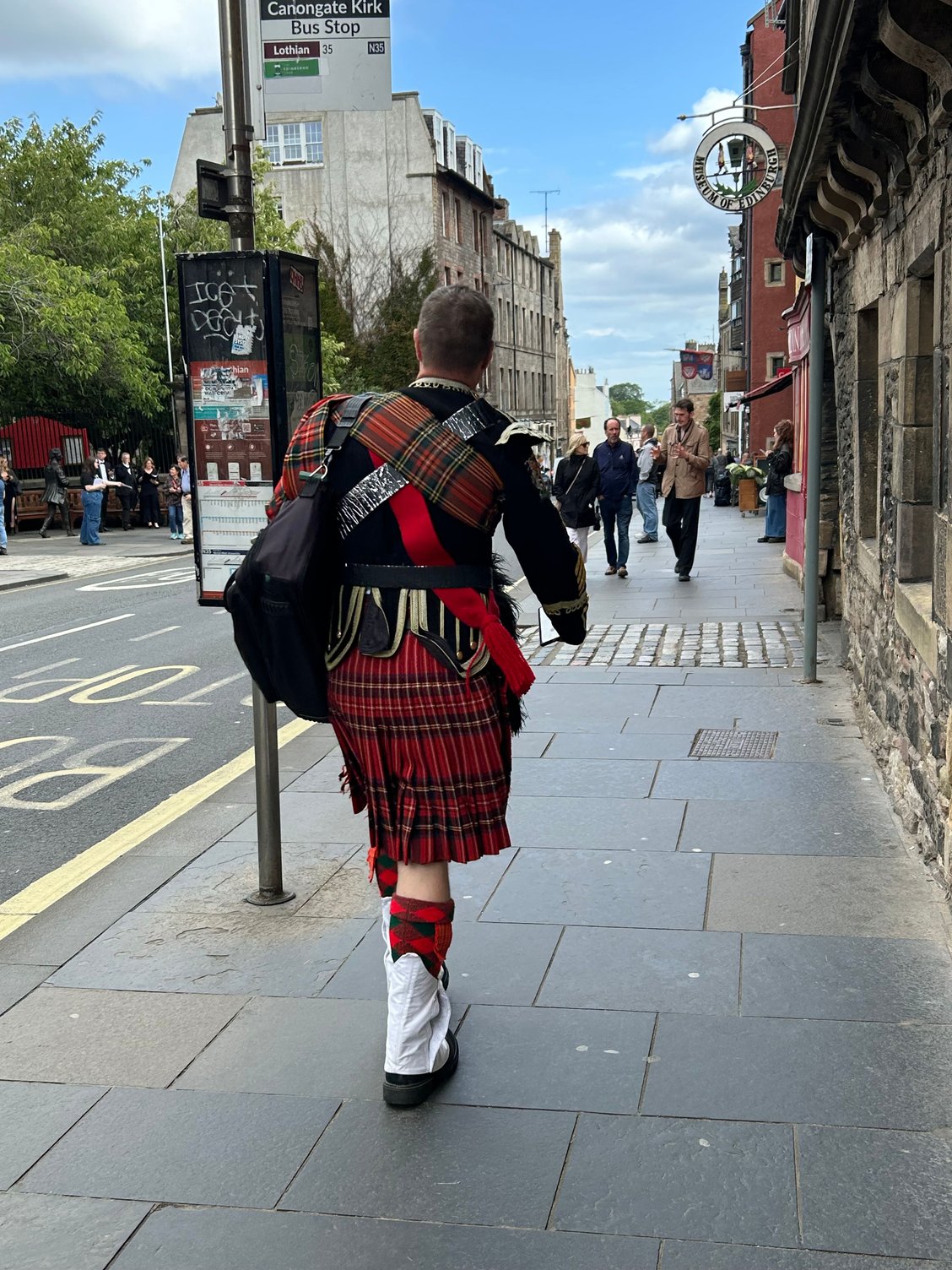
ubiquitous
The real gem of our day was Gladstone's Land, a tenement built in 1550 and expanded in 1617 by a merchant who clearly had excellent taste in beautiful painted ceilings. This National Trust museum brings three eras to life through the stories of former residents: Mary Wilson who ran a boarding house in 1911, Elizabeth Pillans who had a dress shop for wealthy ladies around 1766, and John Riddoch and his wife Margaret Nobel, wealthy merchants in the 1630s (his servant Issobell Johnstone managed the tavern he ran in the cellar). Both wealthy and poor might live together in these tenements safely within the castle walls—passing each other in the hallways on the way to their own flats until New Town was built and the wealthy fled.
The docents there are a wealth of information, and we learned a lot about life in these three different eras. For instance, getting an expensive dress made was one of the few reasons a wealthier woman could ever leave her house in 18th century Edinburgh—so it became a social occasion where she could relax with tea and conversation with the proprietor. Or that John Riddoch was wealthy, yet he, his wife, and five kids all lived in one room while the second room served as both kitchen and sleeping quarters for three maids (plus a cat to keep away the mice and rats). He sold raisins, figs, ginger, sugar, cinnamon, and other spices in tiny quantities because of their expense—spices were more valuable than meat and considered luxury items for the rich. When Riddoch died in a shipwreck right off the coast of Leith, his wife simply vanished from history.
From there we decided it was time for tea and headed to Clarinda's. I'd never had a scone with cream and jam and decided it was so good I went for a second. Quaint place recommended by a friend (and turns out Trip Advisor too).
Back through the throngs of the Royal Mile to Edinburgh Castle. Well, this was a bit disappointing, to be frank. The royal rooms turned out to be an endless queue to glimpse a crown, some mediocre portraits, and the tiny chamber where Mary Queen of Scots gave birth to the future James I of England—before we were efficiently shuffled out. The prison sections proved more entertaining, housing former pirates (including Black Bart's crew, who made the mistake of retiring in Edinburgh) and prisoners of war. The conditions weren't nearly as horrific as advertised—honestly, the cells resembled well-lit NYC studio apartments. The wax figures recreating prison life were unintentionally hilarious, especially in the commissary scene that left us wondering about the curator's judgment. I wish I had booked Holyrood instead but turns out the royal family was there for most of the week.
I had plans to play pickleball that night with the group at Edinburgh Pickleball, but we grabbed some good Indian/Nepalese food first at Gautam's before I set off. Some good games, and I was humbled a bit by their consistent dinking.
Tomorrow we take a train to North Berwick because I was determined to see those Puffins
Claridge's Scone
ubiquitous
Jul 3rd, 2025 | 04:15 PM
#7
Original Poster
Joined: Feb 2016
Posts: 388
Likes: 0
Day 3
The main plan for Day 3 after breakfast was a train to North Berwick, a seaside town, where we had booked a boat trip through the Scottish Seabird Center, a conservation center focused on Scotland's marine wildlife. As usual, the day started with rain—not pouring rain, but it seems ever-present in Scotland. On the way to the train station, we climbed Calton Hill for some panoramic views of the city. Robert Louis Stevenson called it
Alot of neoclassical structures up there. To be honest I was not clear why it is a UNESCO heritage site.
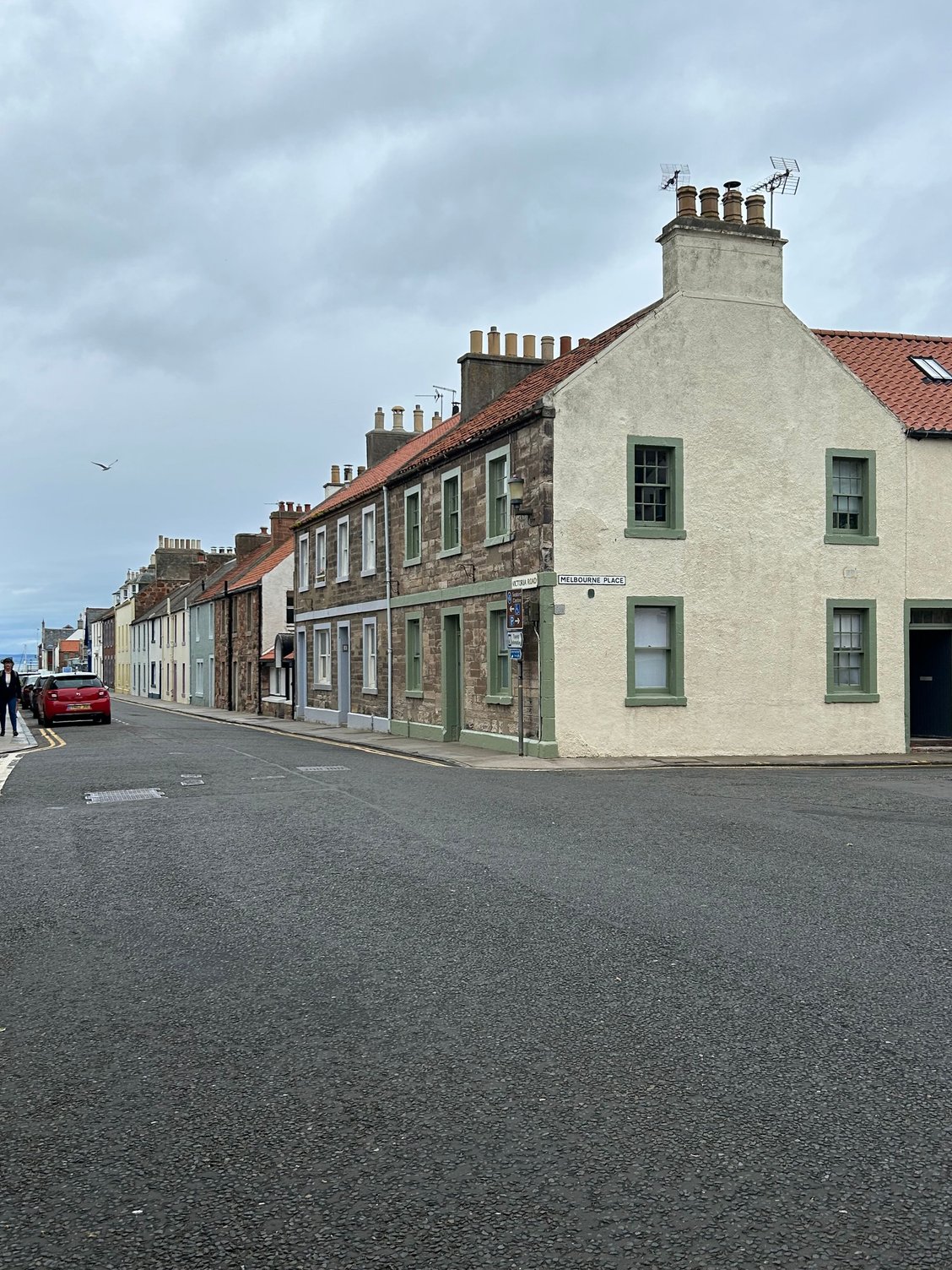
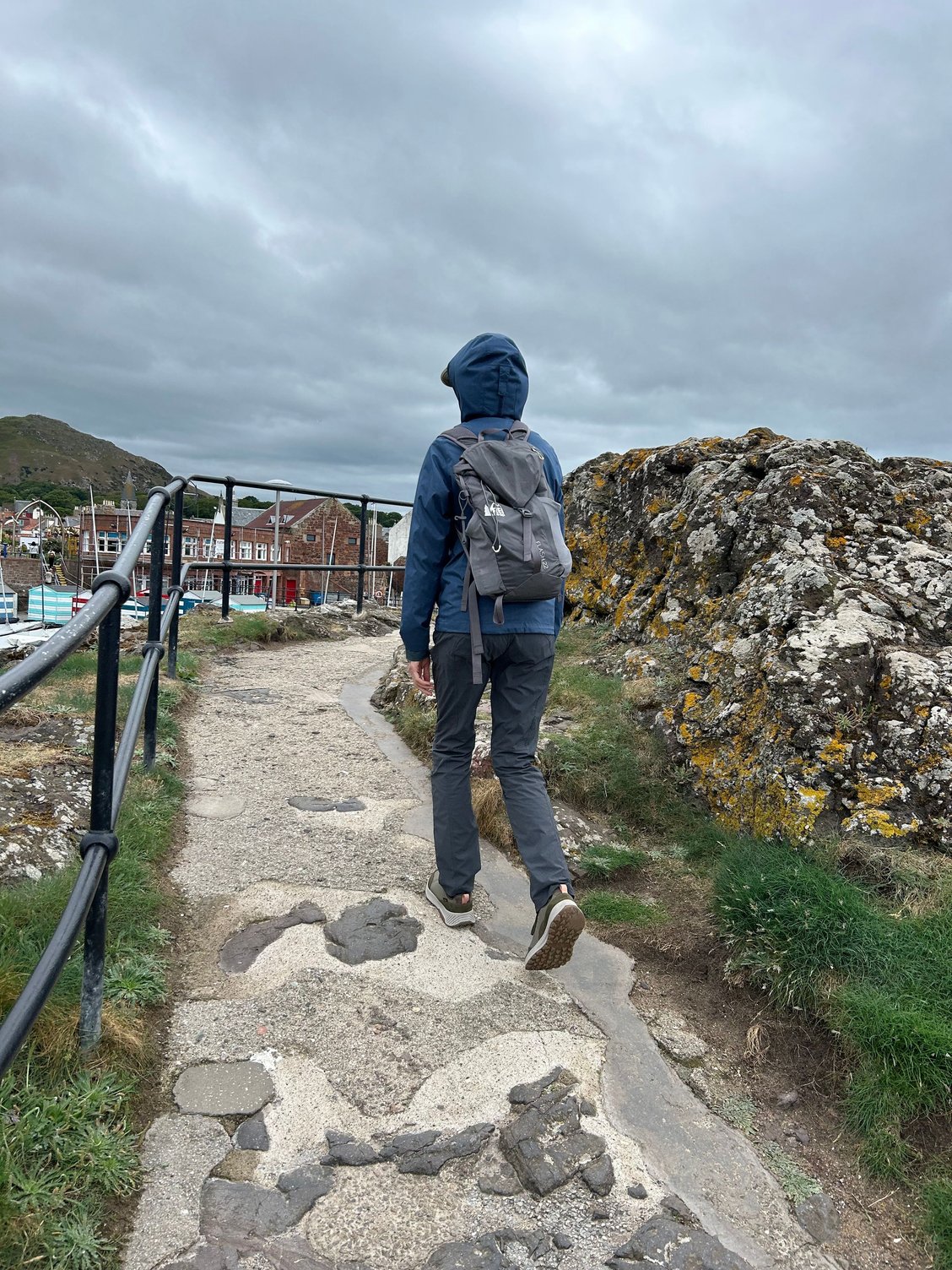
North Berwick is a short train ride from Waverley Station. I got our tickets on ScotRail—very easy. It's about a 10-minute walk to the harbor from the North Berwick train station. The town itself was apparentoly a fashionable vacation destination in the 19th century and must be pretty busy in summer. I noticed that Scotland has a lot of dogs: golden retrievers, doodles, and border collies everywhere. Since we were early, we walked along the beach, poked around town, climbed the rocks and then had a really good lunch (tuna and five bean salad) at No 12 Bistro.
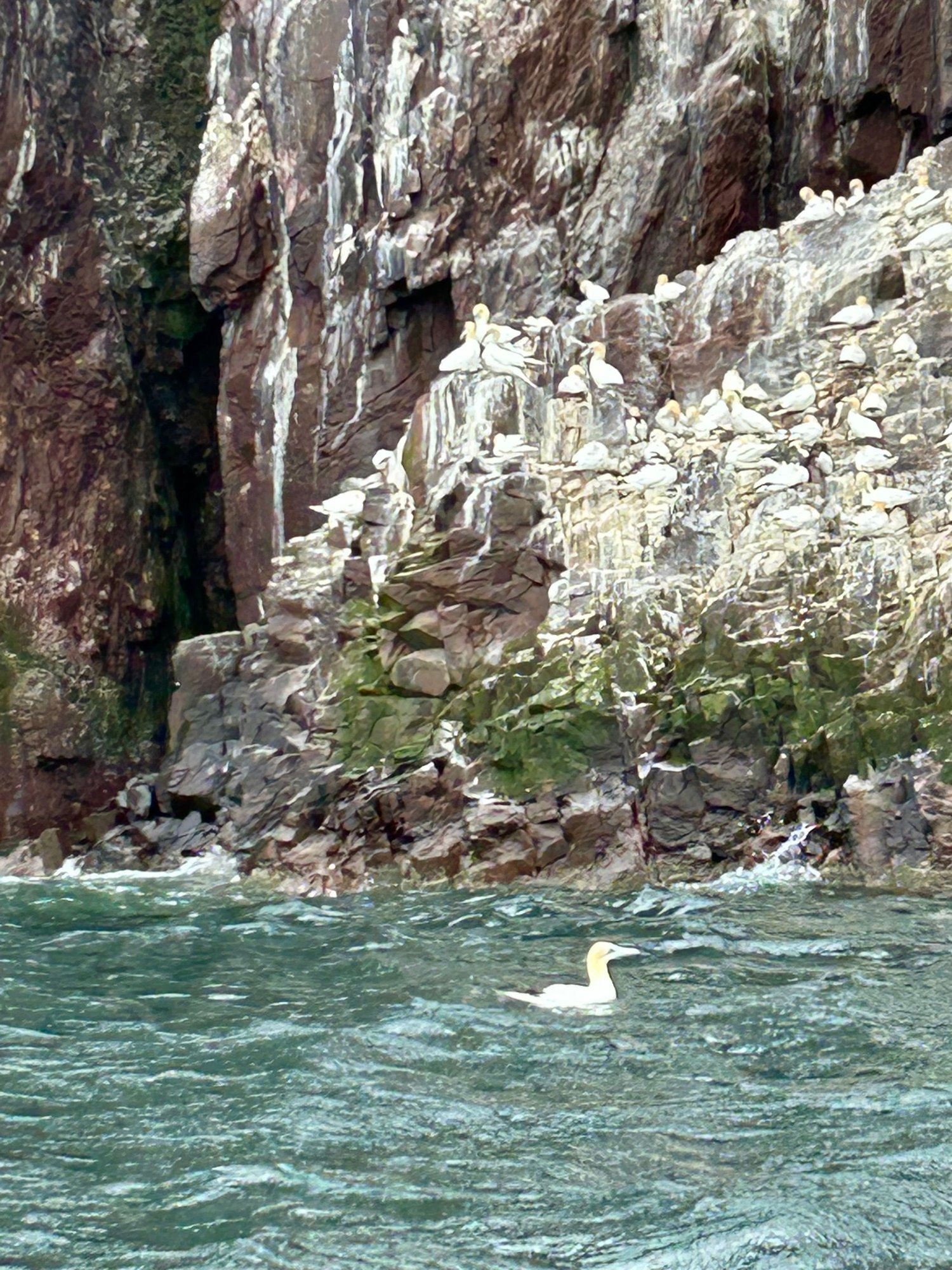
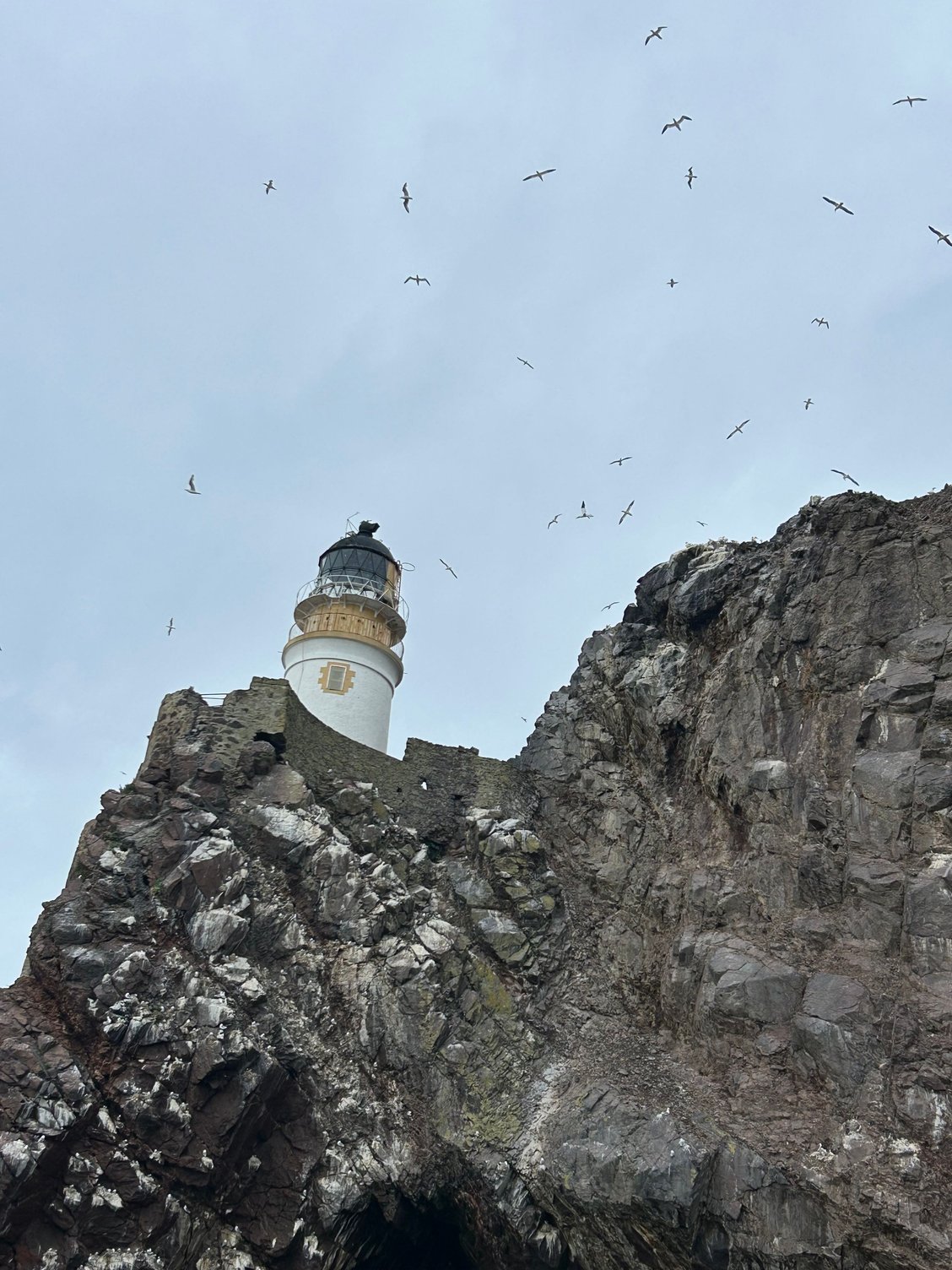
The boat ride was the three islands seabird safari to Lamb, Craighleith, and Bass Rock. We saw puffins, northern gannets, razorbills, black-headed gulls, arctic terns, sandwich terns, petrels, and seals. Bass Rock has the largest northern gannet colony in the world, and since it's breeding season, the small island was covered with close to 100,000 birds. It's quite a sight and reminiscent of Hitchcock's The Birds—the sky was full. These large birds mate for life. After raising one chick each season, they separate for the winter and return to each other in the spring. They dive to catch fish and can hit the water at 60 mph (but they have air sacs between their muscles and skin to help cushion that impact). Because they're close to the size of an albatross, they're not graceful when landing or taking off. When a gannet is on the rocks looking straight up, it's warning to its closely packed neighbors: Watch out, I'm about to take off and things might get ugly. When landing, there's no warning, so things can get chaotic in the neighborhood.
The puffins were over on Lamb Island, and many seagulls were eyeing the Puffin dens hoping to snatch a puffling. The puffins spend a lot of time floating in the water, even sleeping on the waves. When they dive for fish, their wings become flippers. I was really happy to see so many, as they were all I had hoped for. ALthough I will say binoculars were useless as being in an inflatable with waves made focusing impossible..
The boat ride was exhilarating out on the water on a rigid inflatable. The rain had stopped, the water wasn't very choppy, and overall it was just a wonderful experience out to these three islands. Yes, bring waterproof clothes, as they're not provided. The binoculars weren't so useful since the boat was bobbing up and down and it was tough to focus. With all that fresh air, we took the train back, walked to our Airbnb, and were pretty beat. We stayed in Leith and had Greek dinner around the corner. When I woke up at 3:45 am, it was bright outside and I had to shut the shades.
On the short train ride back there were some teens harassing the women. Not sure what was goign on but when they came to my friend and I to start up --well, they apparently had never met women from Brooklyn. They skulked away before I could hurl a few Brooklyn bombshells at them.
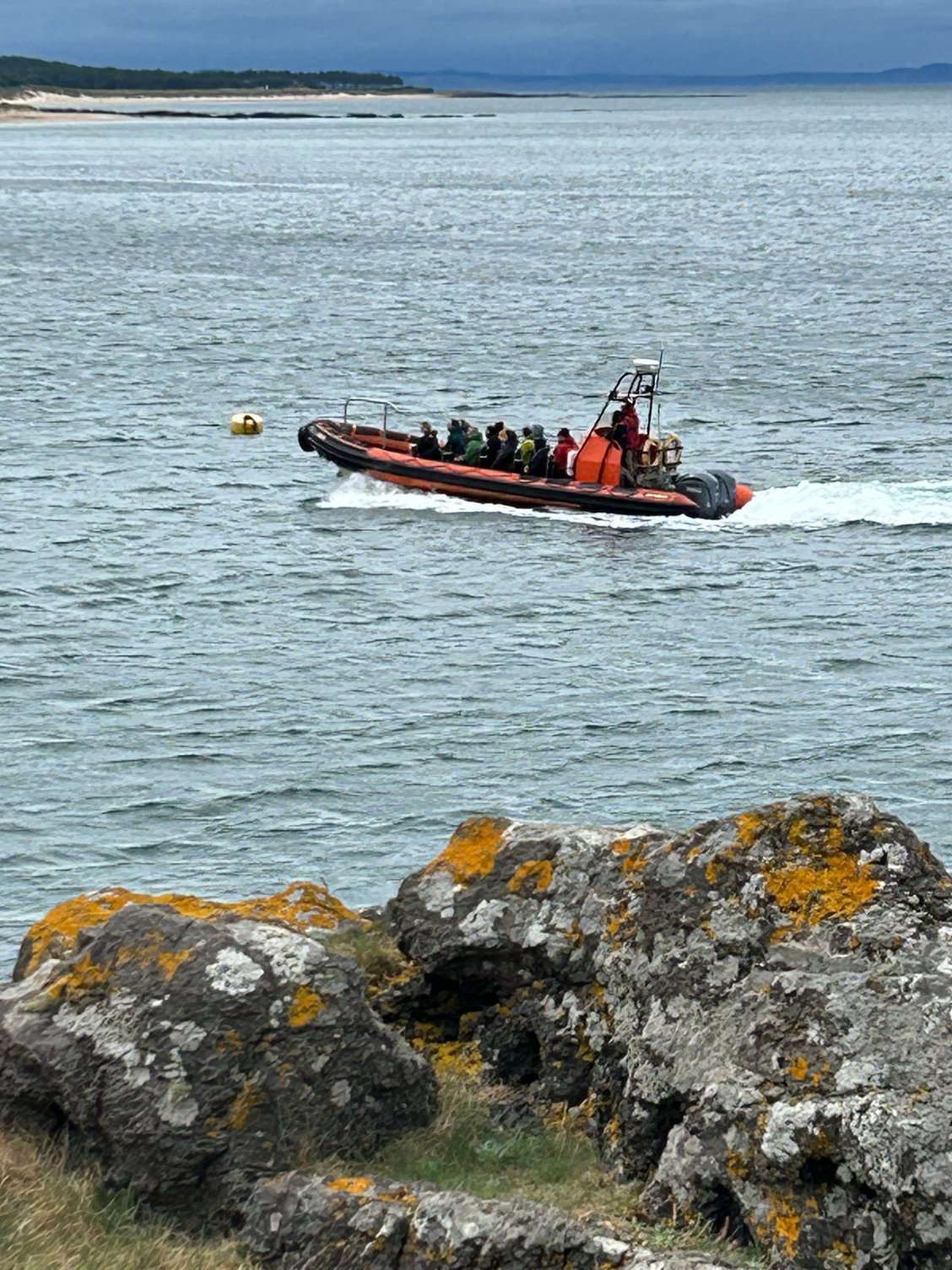
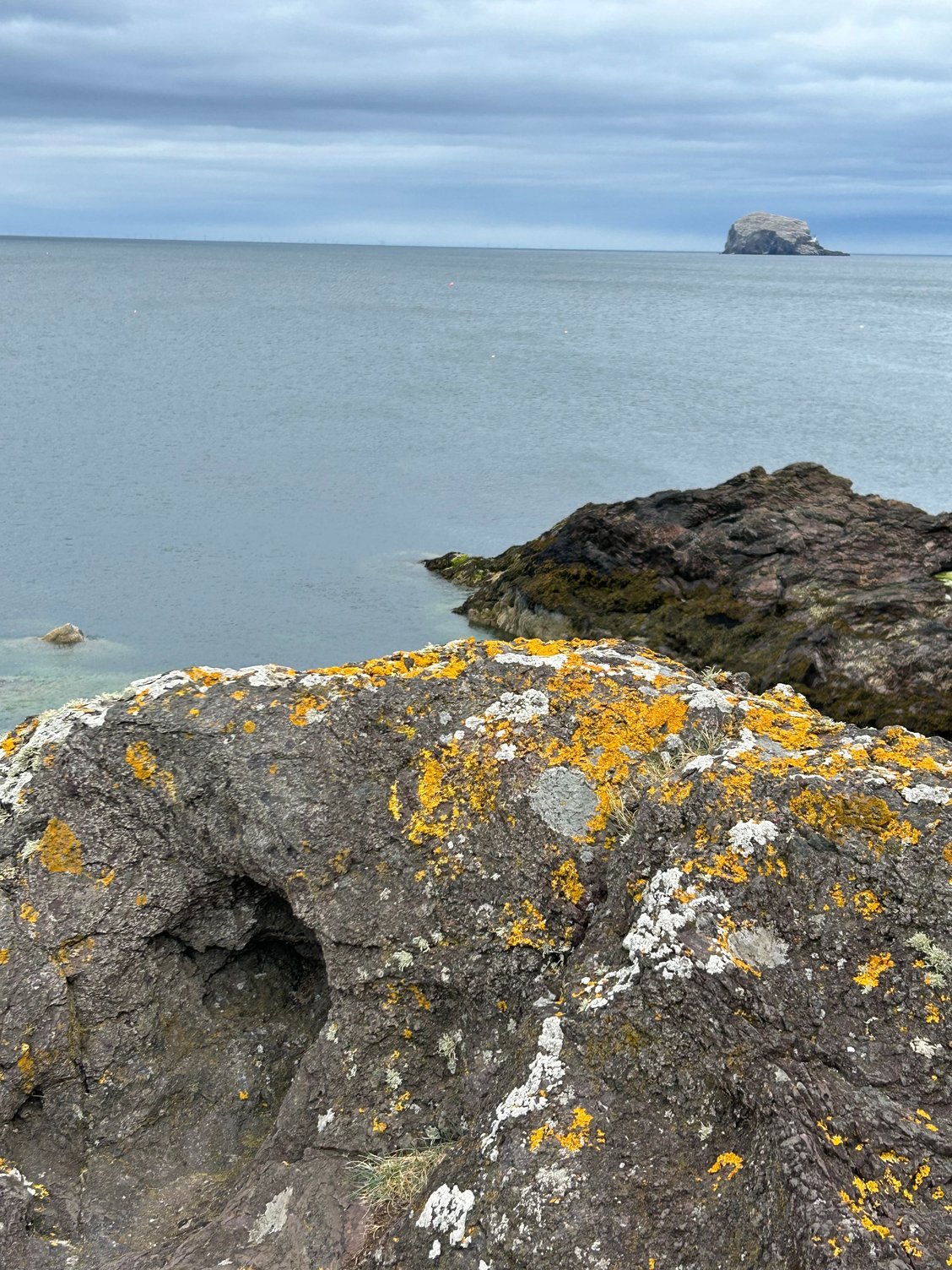
The main plan for Day 3 after breakfast was a train to North Berwick, a seaside town, where we had booked a boat trip through the Scottish Seabird Center, a conservation center focused on Scotland's marine wildlife. As usual, the day started with rain—not pouring rain, but it seems ever-present in Scotland. On the way to the train station, we climbed Calton Hill for some panoramic views of the city. Robert Louis Stevenson called it
Alot of neoclassical structures up there. To be honest I was not clear why it is a UNESCO heritage site.
North Berwick is a short train ride from Waverley Station. I got our tickets on ScotRail—very easy. It's about a 10-minute walk to the harbor from the North Berwick train station. The town itself was apparentoly a fashionable vacation destination in the 19th century and must be pretty busy in summer. I noticed that Scotland has a lot of dogs: golden retrievers, doodles, and border collies everywhere. Since we were early, we walked along the beach, poked around town, climbed the rocks and then had a really good lunch (tuna and five bean salad) at No 12 Bistro.
The boat ride was the three islands seabird safari to Lamb, Craighleith, and Bass Rock. We saw puffins, northern gannets, razorbills, black-headed gulls, arctic terns, sandwich terns, petrels, and seals. Bass Rock has the largest northern gannet colony in the world, and since it's breeding season, the small island was covered with close to 100,000 birds. It's quite a sight and reminiscent of Hitchcock's The Birds—the sky was full. These large birds mate for life. After raising one chick each season, they separate for the winter and return to each other in the spring. They dive to catch fish and can hit the water at 60 mph (but they have air sacs between their muscles and skin to help cushion that impact). Because they're close to the size of an albatross, they're not graceful when landing or taking off. When a gannet is on the rocks looking straight up, it's warning to its closely packed neighbors: Watch out, I'm about to take off and things might get ugly. When landing, there's no warning, so things can get chaotic in the neighborhood.
The puffins were over on Lamb Island, and many seagulls were eyeing the Puffin dens hoping to snatch a puffling. The puffins spend a lot of time floating in the water, even sleeping on the waves. When they dive for fish, their wings become flippers. I was really happy to see so many, as they were all I had hoped for. ALthough I will say binoculars were useless as being in an inflatable with waves made focusing impossible..
The boat ride was exhilarating out on the water on a rigid inflatable. The rain had stopped, the water wasn't very choppy, and overall it was just a wonderful experience out to these three islands. Yes, bring waterproof clothes, as they're not provided. The binoculars weren't so useful since the boat was bobbing up and down and it was tough to focus. With all that fresh air, we took the train back, walked to our Airbnb, and were pretty beat. We stayed in Leith and had Greek dinner around the corner. When I woke up at 3:45 am, it was bright outside and I had to shut the shades.
On the short train ride back there were some teens harassing the women. Not sure what was goign on but when they came to my friend and I to start up --well, they apparently had never met women from Brooklyn. They skulked away before I could hurl a few Brooklyn bombshells at them.
Trending Topics
Jul 4th, 2025 | 05:09 AM
#8
Original Poster
Joined: Feb 2016
Posts: 388
Likes: 0
Day 4
Another day, another porridge. But it's so good here with the fruit compote and syrup (I asked and it's simply made with half milk, half water and a little salt, plus fruit compote and syrup).
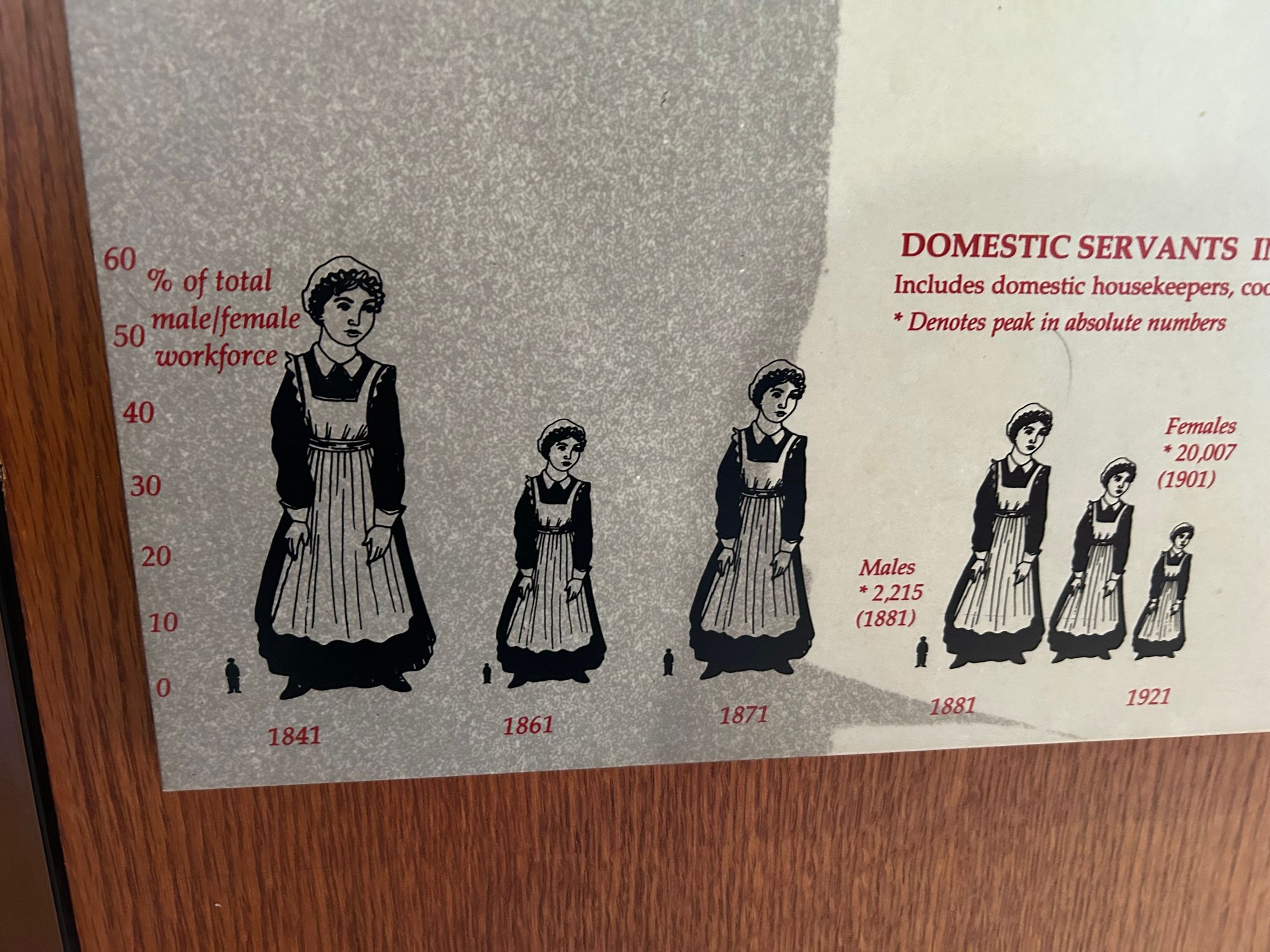
First up was the Georgian House in Charlotte Square, built in 1796 and bought for £1,800 by the Lamont family. This restored townhouse sat at the center of New Edinburgh and shows the life of both the wealthy homeowners and the servants who worked long hours to make their lives comfortable. It all starts with a short film which was, at times, quite amusing. We learned that John Lamont was in debt, as living in Edinburgh was very expensive—especially to maintain the lifestyle he wanted to launch his children into society.
John was the heir of the Ardlamont Estate, and his main income came from rents collected from his tenants. But he also inherited debt, adding to his extravagant lifestyle costs. He started selling off parcels of his estate for immediate cash, but the loss of rental income made his problems worse as he insisted on hosting lavish dinners and living beyond his means. He sold the house in 1815 for £3,000, moved to his country house in debt, and died the next year.
The docents were excellent, and we had lively conversations about US and Scottish politics as well as the house's workings. The dining room was set in the French style—all dishes for every course placed on the table at once, letting guests help themselves to nearby dishes. The goal of the artistic presentations was abundance to reflect the host's wealth and taste. After clearing, another course was placed on side tables called "dumb waiters," used to excuse servants who might overhear and sell interesting gossip. After the French Revolution, this gave way to service à la russe—individual place settings served course by course.
The kitchen downstairs was the most fascinating part. There were four cooking methods: griddling or toasting (often breakfast, near a window since it was smoky), roasting on an open fire, boiling, and baking. Before automated spit jacks, meat was roasted on spits turned by small dogs caged in turnspit wheels—running like hamsters—or by young servants assigned to turn the meat continuously. Drippings were caught below and immediately made into candles.
The hot, smoky kitchen required real skill to prepare the family's lavish meals. First, the cook had to be literate to manage accounts and read recipes. Kitchen maids worked hard starting at about 10 years old and needed to learn reading to advance. A large sugar cone—a luxury from the Caribbean where enslaved people grew and refined it—was displayed. Sugar's popularity with the wealthy brought increased tooth decay unseen in the working class. Unlike Tudor times when rotting teeth were fashionable, Georgians used tooth powders and mouth washes for white teeth. Spices were locked up with only the cook having the key, as was the wine cellar.
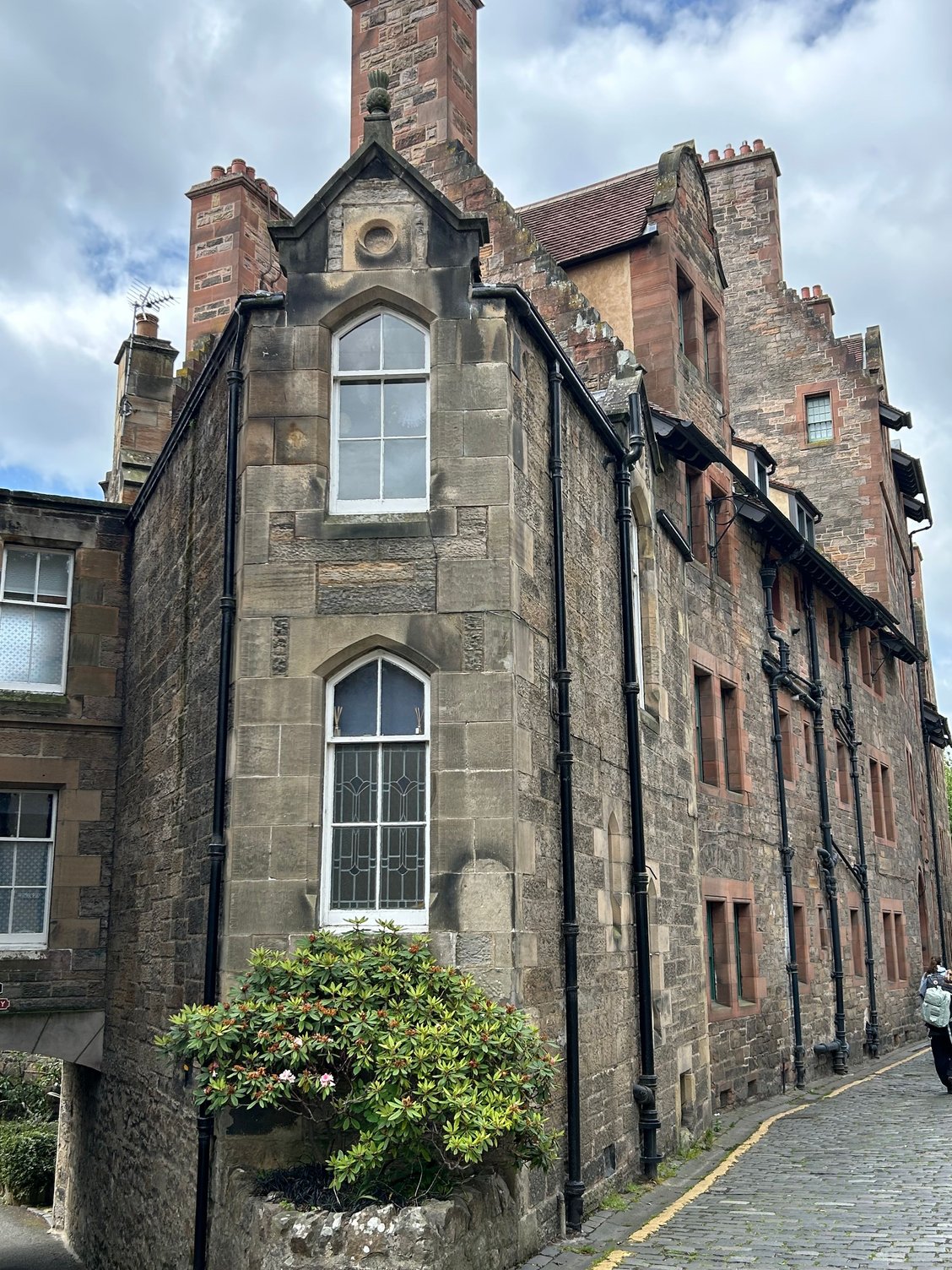
From there we took the Water of Leith Walkway to Dean Village—settled in the 12th century, making it one of Edinburgh's oldest settlements. Originally a milling community outside the castle walls, the river powered 11 grain mills feeding Edinburgh's growing population for over 800 years. Now it's a beautiful, very Instagram-worthy walking area, though the one coffee shop was extremely packed.
After getting very hangry and having ramen, we headed to the Royal Botanic Gardens, founded in 1670 by two Scottish doctors to grow medicinal plants. In 1820 the entire garden was relocated to its current location, even moving fully grown mature trees using a new machine invented by William McNab. It spans over 70 acres with themed gardens and almost 14,000 plant species. The grass is lush with many shades of green, and there are leaves of every shade and shape imaginable. Beyond beautiful walks, it was civilized to stop for tea and a pastry--we chose the quieter East Gate Coffee Bar. We also happened to spot Margaret Atwood strolling on this beautiful day.
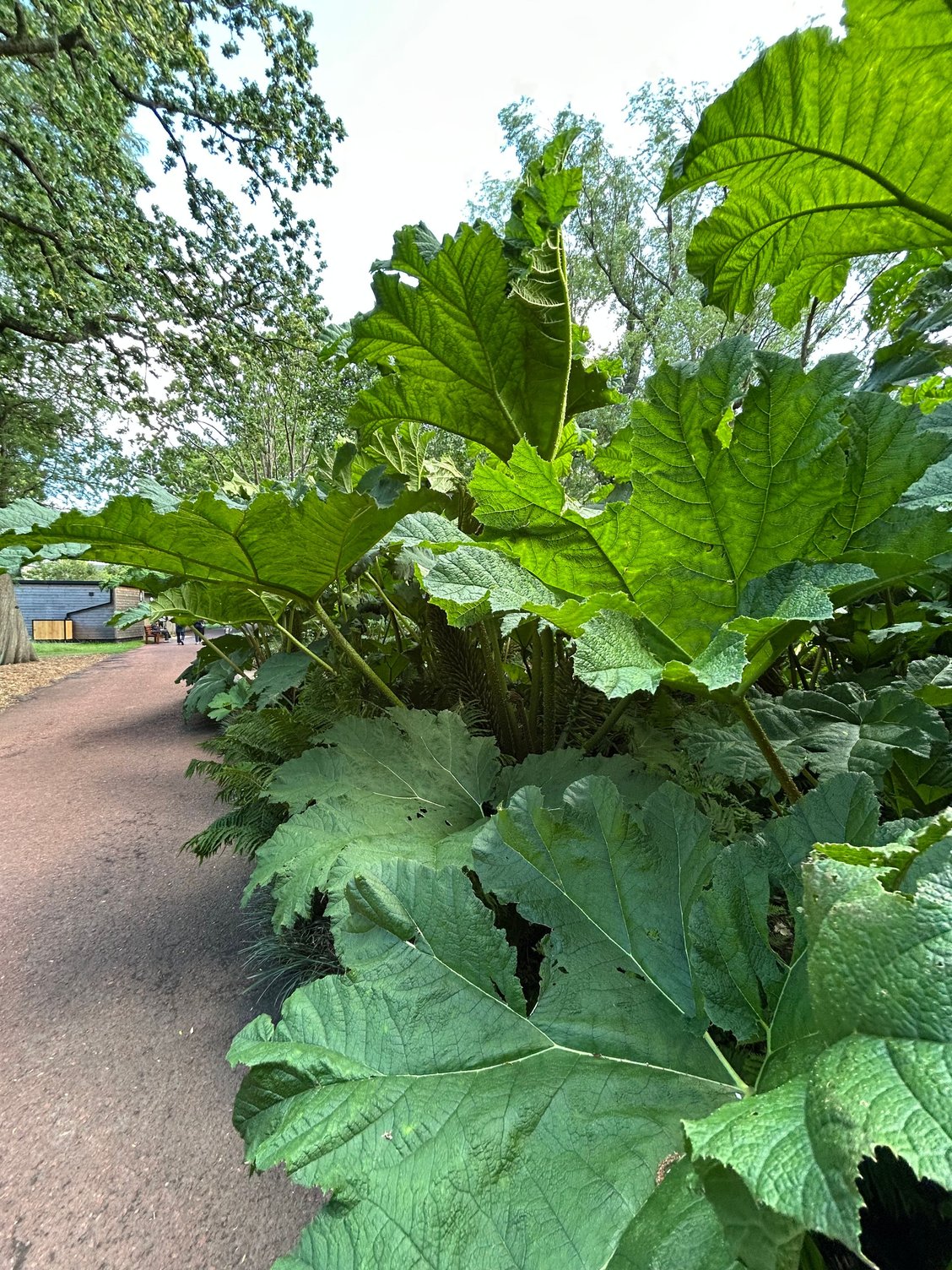
Royal Botanic Garden Lushness
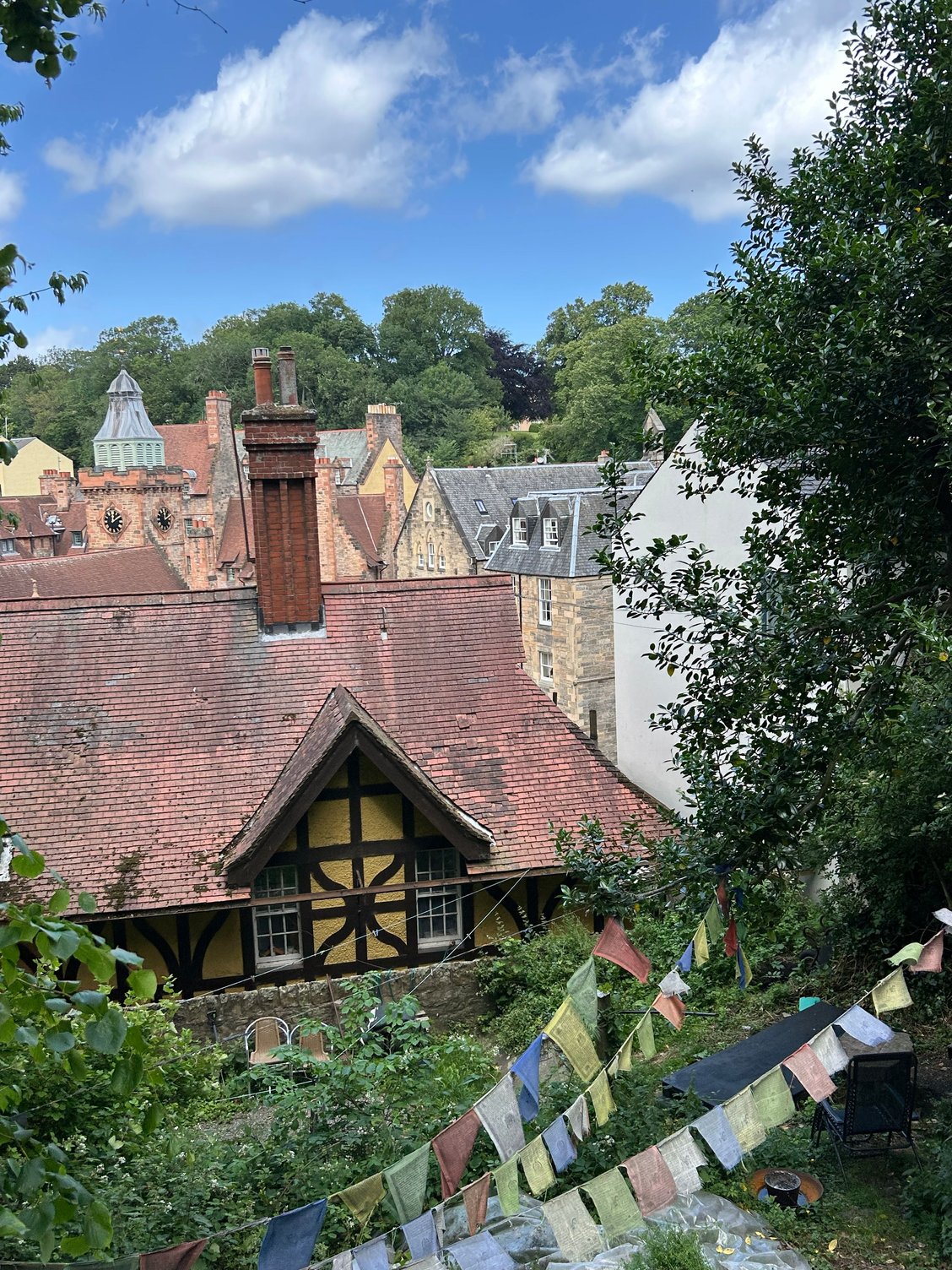
Dean Village
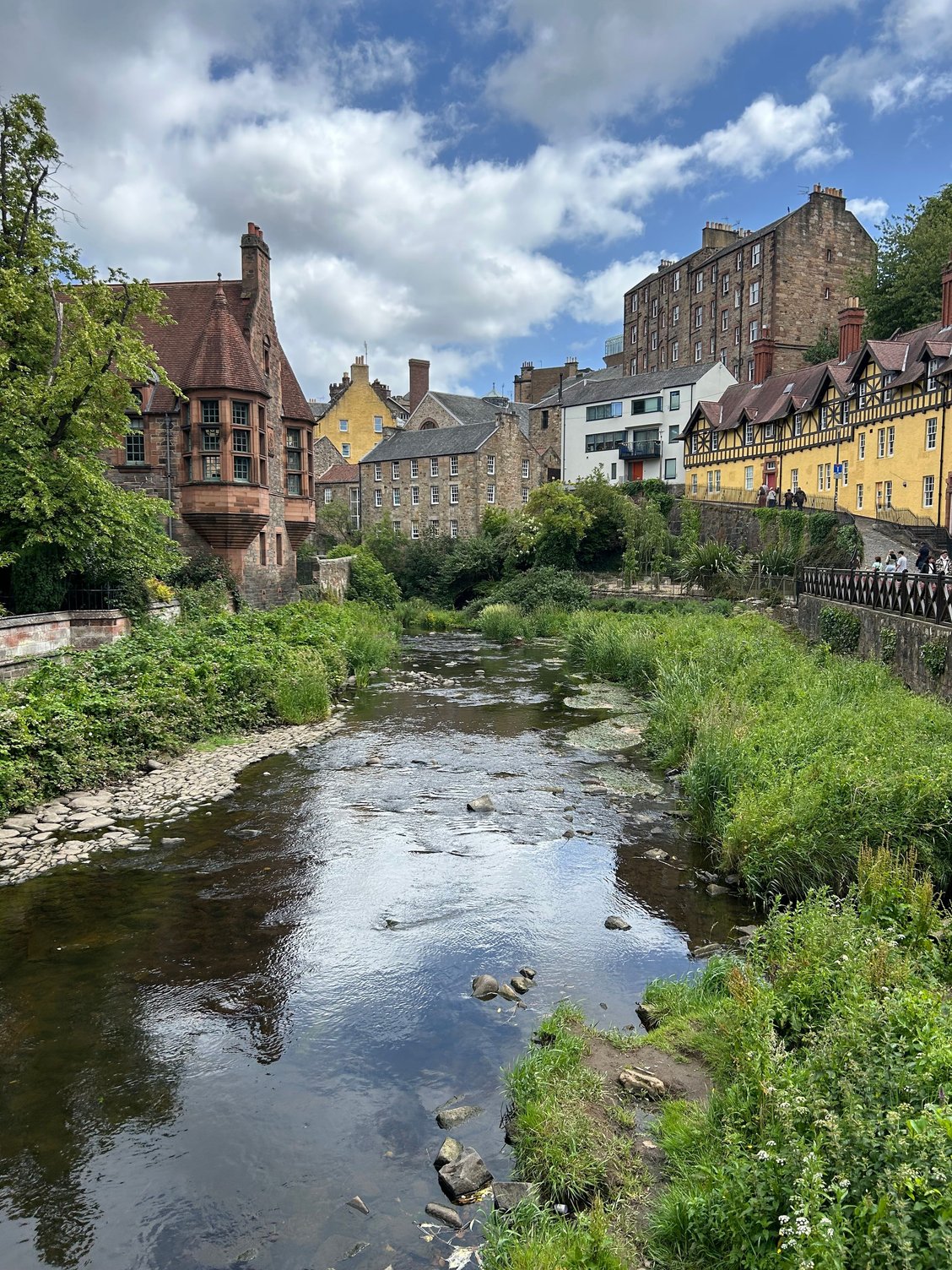
Dean Village Instagam moment
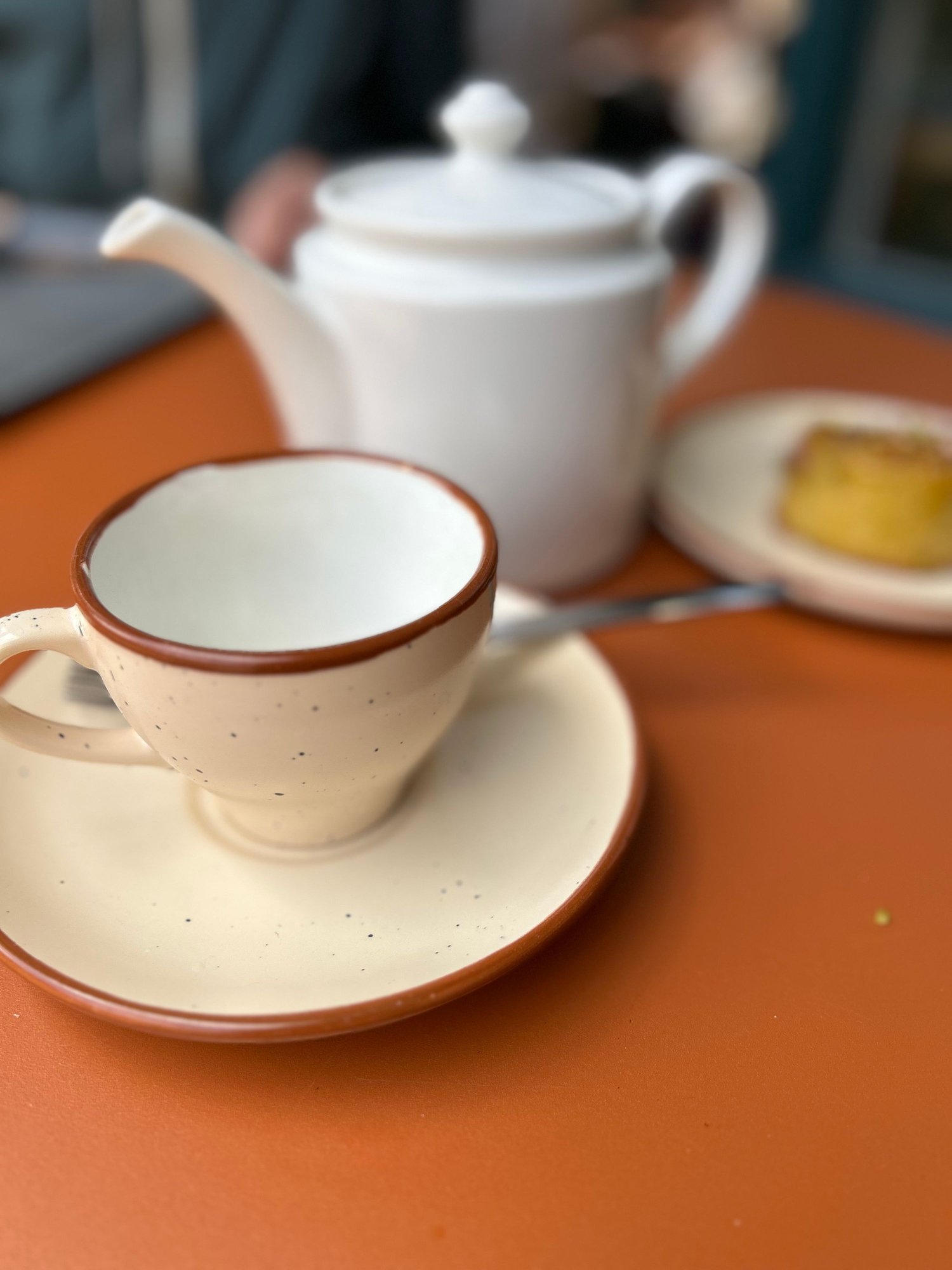
Tea in the gardens
Another day, another porridge. But it's so good here with the fruit compote and syrup (I asked and it's simply made with half milk, half water and a little salt, plus fruit compote and syrup).
First up was the Georgian House in Charlotte Square, built in 1796 and bought for £1,800 by the Lamont family. This restored townhouse sat at the center of New Edinburgh and shows the life of both the wealthy homeowners and the servants who worked long hours to make their lives comfortable. It all starts with a short film which was, at times, quite amusing. We learned that John Lamont was in debt, as living in Edinburgh was very expensive—especially to maintain the lifestyle he wanted to launch his children into society.
John was the heir of the Ardlamont Estate, and his main income came from rents collected from his tenants. But he also inherited debt, adding to his extravagant lifestyle costs. He started selling off parcels of his estate for immediate cash, but the loss of rental income made his problems worse as he insisted on hosting lavish dinners and living beyond his means. He sold the house in 1815 for £3,000, moved to his country house in debt, and died the next year.
The docents were excellent, and we had lively conversations about US and Scottish politics as well as the house's workings. The dining room was set in the French style—all dishes for every course placed on the table at once, letting guests help themselves to nearby dishes. The goal of the artistic presentations was abundance to reflect the host's wealth and taste. After clearing, another course was placed on side tables called "dumb waiters," used to excuse servants who might overhear and sell interesting gossip. After the French Revolution, this gave way to service à la russe—individual place settings served course by course.
The kitchen downstairs was the most fascinating part. There were four cooking methods: griddling or toasting (often breakfast, near a window since it was smoky), roasting on an open fire, boiling, and baking. Before automated spit jacks, meat was roasted on spits turned by small dogs caged in turnspit wheels—running like hamsters—or by young servants assigned to turn the meat continuously. Drippings were caught below and immediately made into candles.
The hot, smoky kitchen required real skill to prepare the family's lavish meals. First, the cook had to be literate to manage accounts and read recipes. Kitchen maids worked hard starting at about 10 years old and needed to learn reading to advance. A large sugar cone—a luxury from the Caribbean where enslaved people grew and refined it—was displayed. Sugar's popularity with the wealthy brought increased tooth decay unseen in the working class. Unlike Tudor times when rotting teeth were fashionable, Georgians used tooth powders and mouth washes for white teeth. Spices were locked up with only the cook having the key, as was the wine cellar.
From there we took the Water of Leith Walkway to Dean Village—settled in the 12th century, making it one of Edinburgh's oldest settlements. Originally a milling community outside the castle walls, the river powered 11 grain mills feeding Edinburgh's growing population for over 800 years. Now it's a beautiful, very Instagram-worthy walking area, though the one coffee shop was extremely packed.
After getting very hangry and having ramen, we headed to the Royal Botanic Gardens, founded in 1670 by two Scottish doctors to grow medicinal plants. In 1820 the entire garden was relocated to its current location, even moving fully grown mature trees using a new machine invented by William McNab. It spans over 70 acres with themed gardens and almost 14,000 plant species. The grass is lush with many shades of green, and there are leaves of every shade and shape imaginable. Beyond beautiful walks, it was civilized to stop for tea and a pastry--we chose the quieter East Gate Coffee Bar. We also happened to spot Margaret Atwood strolling on this beautiful day.
Royal Botanic Garden Lushness
Dean Village
Dean Village Instagam moment
Tea in the gardens
Last edited by RubyTwins; Jul 4th, 2025 at 05:14 AM.
 Jul 5th, 2025 | 01:00 PM
#13
Joined: Oct 2003
Posts: 6,795
Likes: 42
I have to say that I too have that Dean Village Instagram moment. My sister was sending me pictures of places I had to take pictures of when I had any free time when visiting Edinburgh. I had to mention this when seeing yours as it made me laugh. It's great you got saw puffins as they are high on my list to see as well.
Jul 5th, 2025 | 02:46 PM
#14
Original Poster
Joined: Feb 2016
Posts: 388
Likes: 0
Last Day
Day 5
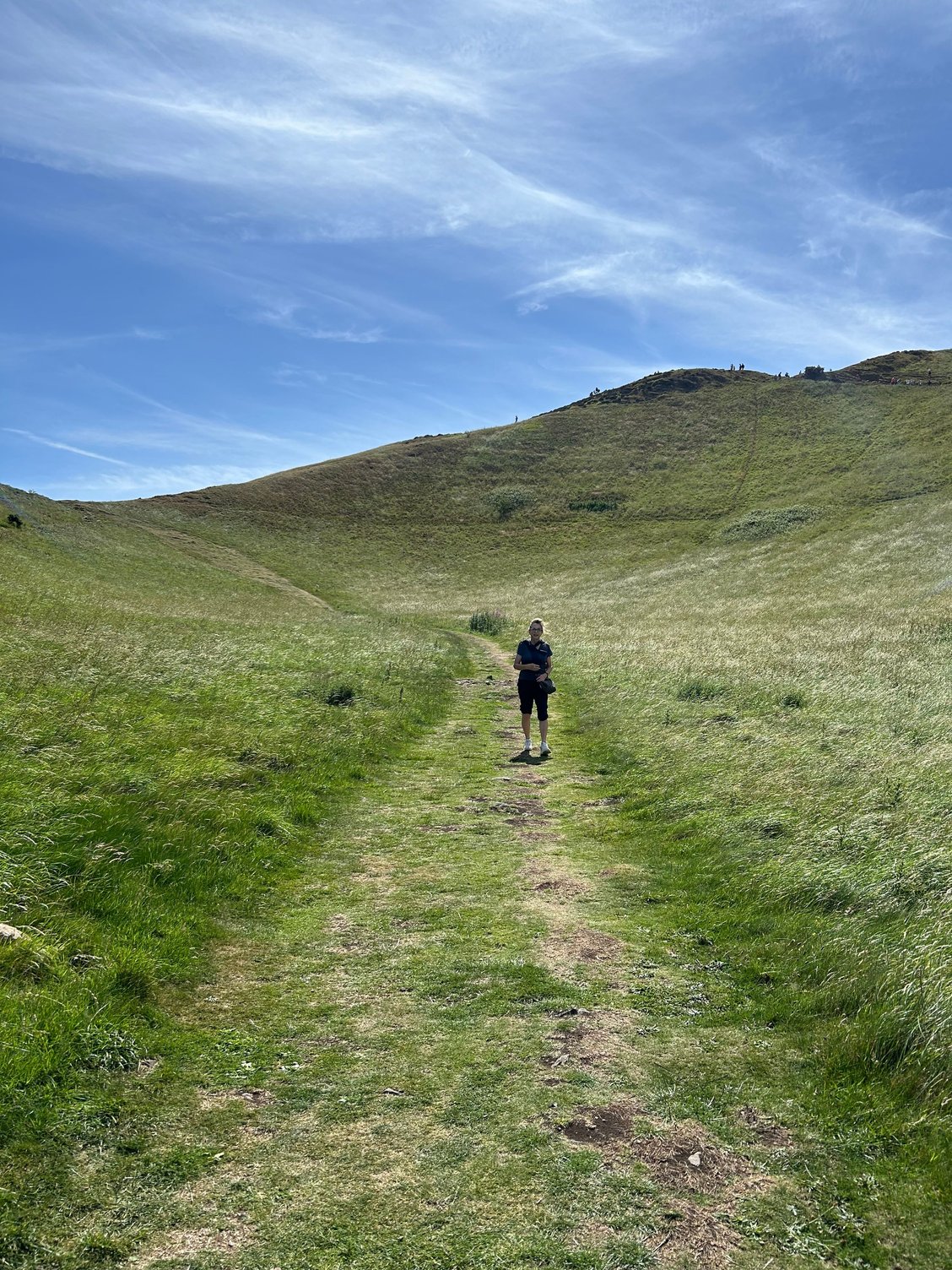
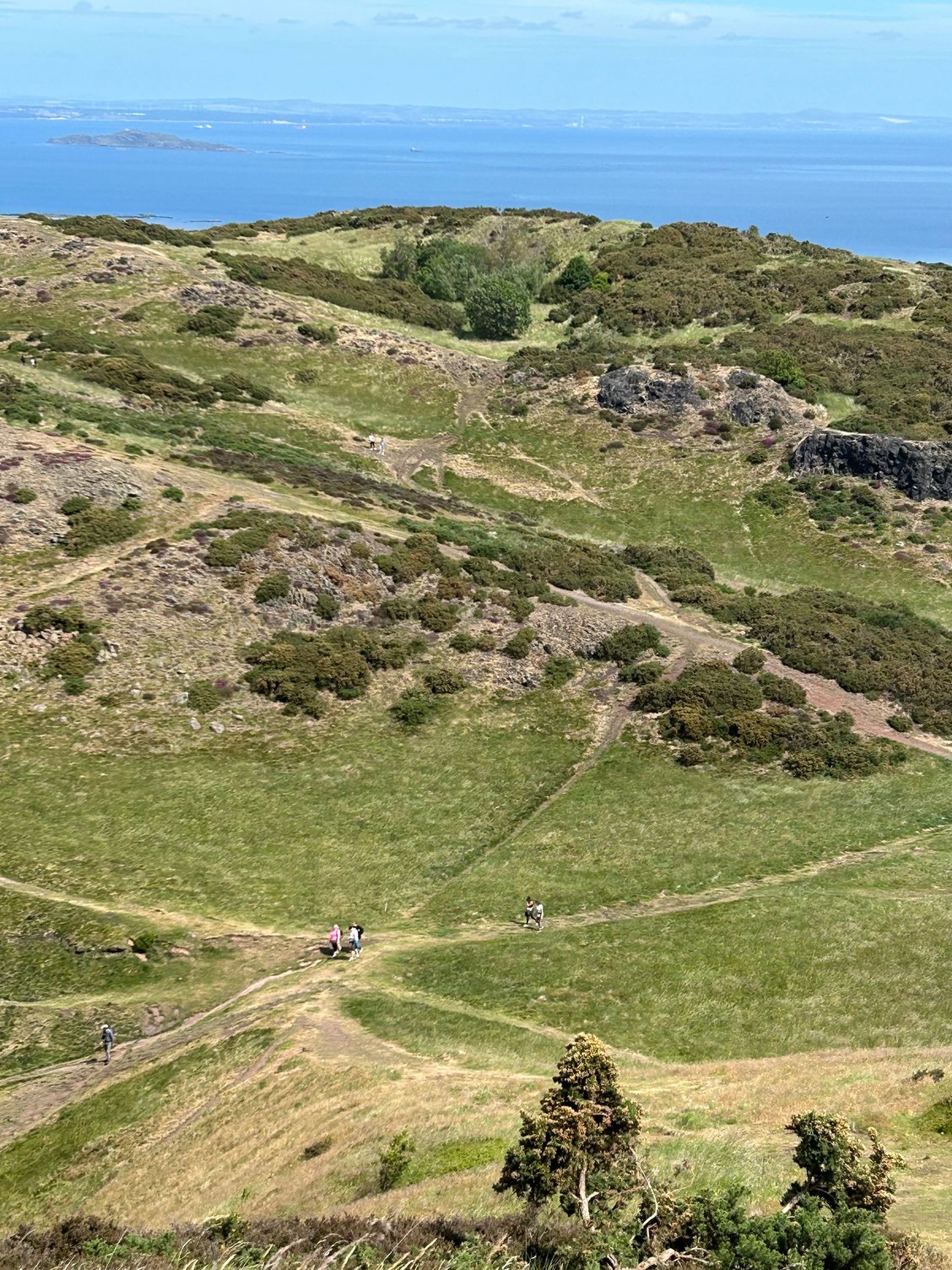
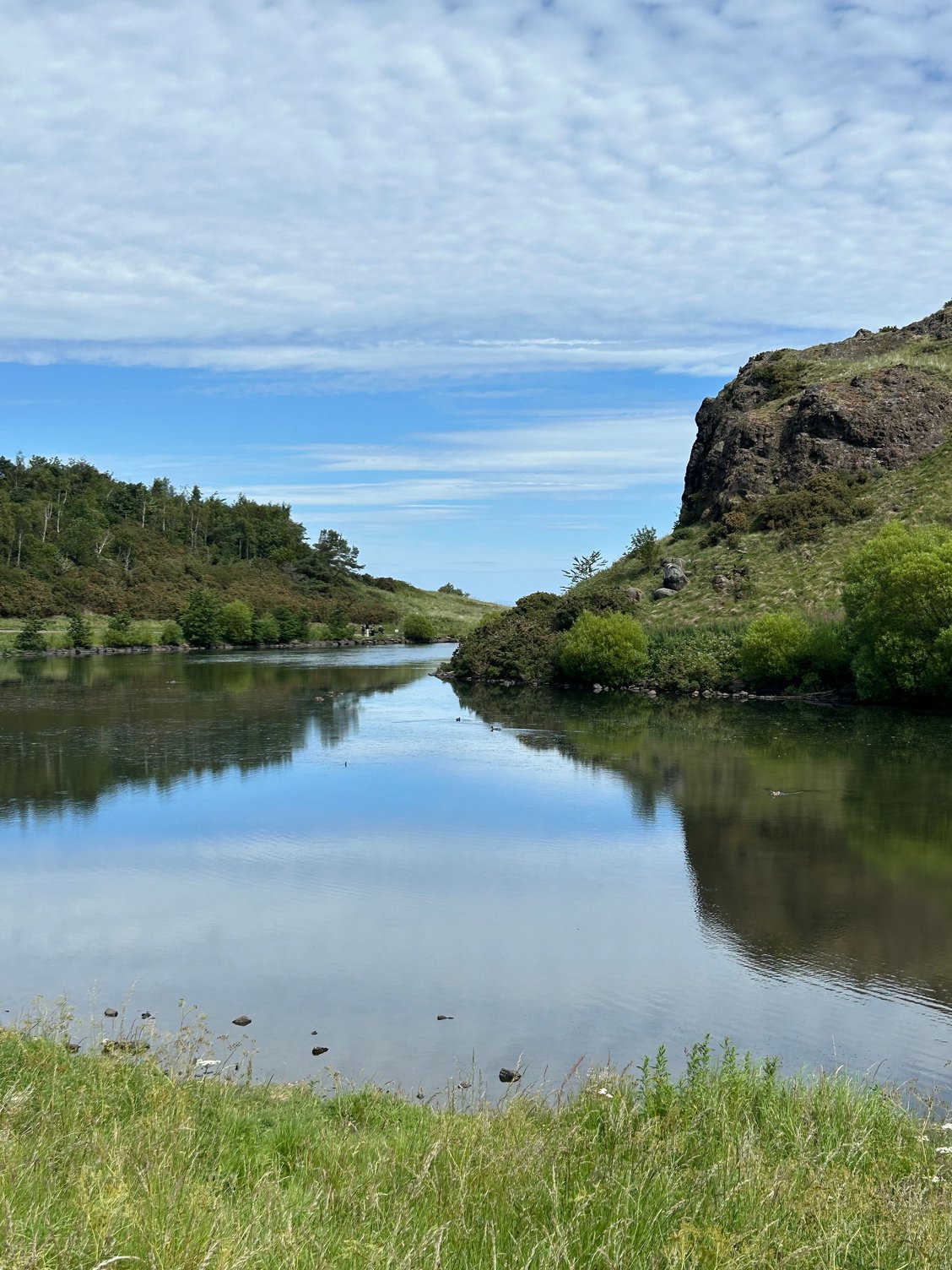
We got up early and headed to Holyrood Park one of Edinburgh's rare sunny days, so I left my rain hat behind. The park is called either King's Park or Queen's Park depending on the current monarch, which I found amusing. We decided to climb Arthur's Seat, an extinct volcano that offers the best views of the area. At over 650 acres, Holyrood Park is Edinburgh's largest green space and the closest we would get to the Scottish Highlands on this trip. The gravelly main path was crowded and unpleasant in the heat, but once we branched off onto the smaller trails, we had a peaceful walk with few other people.
I was still irritated about not being able to visit Holyrood Palace—I'm a bit obsessed with Mary Queen of Scots and felt disappointed that I had chosen Edinburgh Castle instead. Some royal event was happening there, which explained the locked gates and guards.
After extensive walking (up to Arthur's Seat, back down, around the park, then to The People's Story Museum, my feet were aching. Walking 7-9 miles daily was catching up with me. But I was eager to see this museum about Edinburgh's working people throughout history—their culture, crafts, and trades. Since I figured that in the 19th century I would have been a regular working person rather than royalty, I wanted to understand what that life would have been like. I can tell you, I would NOT have liked it at all. No wonder they took to the streets numerous times. The wealthy lived so well while the poor lived in misery. I recommend this museum (unless you're descended from the royal family, in which case you probably could have gotten past those locked gates at Holyrood Palace).
By this point, I was done. I was hungry, tired, and refused to walk back to our Airbnb for lunch. No more polite "sure, why not." I headed back to Claridge's for soup while my friend walked back to Leith for a sandwich. This gave me time to buy souvenirs: tea towels, Scotch, and shortbread. We had tacos for dinner, though I won't recommend the place—overpriced for what we got.
The next morning we took a pre-arranged cab to the airport (cheaper than Uber), and once again JetBlue managed to disappoint. While their entertainment is good, they seemed determined to create class warfare in the cabin. We all know that paying more gets you perks, but the subdivisions and constant reminders felt more over the top than usual. During the safety overview: "Please review the safety card in the seatback in front of you while we serve complimentary champagne to our Mosaic customers." Later: "The captain has turned off the seatbelt sign, and we'll now bring complimentary warm snacks to our Mint and Comfort Plus passengers."
Despite numerous empty seats, we were warned: "Ladies and gentlemen, you must remain in your assigned seats. Any movement could cause an imbalance of weight and be a safety risk to our flight." This drew laughter from the regular cheap seat passengers—as if we were flying a single-engine Cessna rather than an Airbus. I was seated next to a young couple with a one-year-old who cried throughout the flight. They were so cramped with the baby and all the gear that comes with traveling with a toddler. JetBlue could have earned praise by moving them to one of the empty rows, but apparently we had to worry about unbalancing the Airbus—as if this 15-pound baby would be the tipping point to disaster while passengers were shoving steamer trunks into overhead bins.
At meal time: "Ladies and gentlemen, we're beginning our meal service. For those in Mosaic, Mint, and Comfort Plus, we'll bring you a warm meal. For those in Basic Blue, Blue, and Blue Plus, you'll receive a cold meal afterward." Let's face it, warm or cold, airline food isn't great, but these constant reminders that we were in the cheap seats were grating (memories of the People's Story Museum). Even after I received a partially frozen wrap, the class distinctions continued. I eventually emailed JetBlue that their marketing seemed run by a consulting firm of 20 year olds who thought creating class divisions would make us pay more for better seats. Wrong. There are many reasons people don't pony up the extra cash. And yes, usually economic. Foregoing some comfort in order to spend money in the local economy. No reason to try to annoy your basic blue customers.
Edinburgh Highlights:
We got up early and headed to Holyrood Park one of Edinburgh's rare sunny days, so I left my rain hat behind. The park is called either King's Park or Queen's Park depending on the current monarch, which I found amusing. We decided to climb Arthur's Seat, an extinct volcano that offers the best views of the area. At over 650 acres, Holyrood Park is Edinburgh's largest green space and the closest we would get to the Scottish Highlands on this trip. The gravelly main path was crowded and unpleasant in the heat, but once we branched off onto the smaller trails, we had a peaceful walk with few other people.
I was still irritated about not being able to visit Holyrood Palace—I'm a bit obsessed with Mary Queen of Scots and felt disappointed that I had chosen Edinburgh Castle instead. Some royal event was happening there, which explained the locked gates and guards.
After extensive walking (up to Arthur's Seat, back down, around the park, then to The People's Story Museum, my feet were aching. Walking 7-9 miles daily was catching up with me. But I was eager to see this museum about Edinburgh's working people throughout history—their culture, crafts, and trades. Since I figured that in the 19th century I would have been a regular working person rather than royalty, I wanted to understand what that life would have been like. I can tell you, I would NOT have liked it at all. No wonder they took to the streets numerous times. The wealthy lived so well while the poor lived in misery. I recommend this museum (unless you're descended from the royal family, in which case you probably could have gotten past those locked gates at Holyrood Palace).
By this point, I was done. I was hungry, tired, and refused to walk back to our Airbnb for lunch. No more polite "sure, why not." I headed back to Claridge's for soup while my friend walked back to Leith for a sandwich. This gave me time to buy souvenirs: tea towels, Scotch, and shortbread. We had tacos for dinner, though I won't recommend the place—overpriced for what we got.
The next morning we took a pre-arranged cab to the airport (cheaper than Uber), and once again JetBlue managed to disappoint. While their entertainment is good, they seemed determined to create class warfare in the cabin. We all know that paying more gets you perks, but the subdivisions and constant reminders felt more over the top than usual. During the safety overview: "Please review the safety card in the seatback in front of you while we serve complimentary champagne to our Mosaic customers." Later: "The captain has turned off the seatbelt sign, and we'll now bring complimentary warm snacks to our Mint and Comfort Plus passengers."
Despite numerous empty seats, we were warned: "Ladies and gentlemen, you must remain in your assigned seats. Any movement could cause an imbalance of weight and be a safety risk to our flight." This drew laughter from the regular cheap seat passengers—as if we were flying a single-engine Cessna rather than an Airbus. I was seated next to a young couple with a one-year-old who cried throughout the flight. They were so cramped with the baby and all the gear that comes with traveling with a toddler. JetBlue could have earned praise by moving them to one of the empty rows, but apparently we had to worry about unbalancing the Airbus—as if this 15-pound baby would be the tipping point to disaster while passengers were shoving steamer trunks into overhead bins.
At meal time: "Ladies and gentlemen, we're beginning our meal service. For those in Mosaic, Mint, and Comfort Plus, we'll bring you a warm meal. For those in Basic Blue, Blue, and Blue Plus, you'll receive a cold meal afterward." Let's face it, warm or cold, airline food isn't great, but these constant reminders that we were in the cheap seats were grating (memories of the People's Story Museum). Even after I received a partially frozen wrap, the class distinctions continued. I eventually emailed JetBlue that their marketing seemed run by a consulting firm of 20 year olds who thought creating class divisions would make us pay more for better seats. Wrong. There are many reasons people don't pony up the extra cash. And yes, usually economic. Foregoing some comfort in order to spend money in the local economy. No reason to try to annoy your basic blue customers.
Edinburgh Highlights:
- Leith as a place to stay, especially for an Airbnb if you like to walk. I would hate staying in Old Town with its touristy restaurants and bars. Leith has a local feel with plenty of restaurants and bars.
- Gladstone's Land was great—few tourists and fascinating history of Edinburgh across several eras.
- Pickleball was a hit. People were friendly and it was fun meeting locals outside of pubs.
- The boat ride and day trip to the Scottish Seabird Center. I loved it and wish we had booked one more day trip, though I didn't want to spend all day on a bus looking at landscapes.
- Tea in the Royal Botanic Garden was lovely.
- The people of Edinburgh were wonderful.
- The Water of Leith provided beautiful walks.
Jul 5th, 2025 | 04:45 PM
#16
Original Poster
Joined: Feb 2016
Posts: 388
Likes: 0
I have to say that I too have that Dean Village Instagram moment. My sister was sending me pictures of places I had to take pictures of when I had any free time when visiting Edinburgh. I had to mention this when seeing yours as it made me laugh. It's great you got saw puffins as they are high on my list to see as well.
Jul 5th, 2025 | 04:48 PM
#17
Original Poster
Joined: Feb 2016
Posts: 388
Likes: 0
Jul 5th, 2025 | 04:50 PM
#18
Original Poster
Joined: Feb 2016
Posts: 388
Likes: 0
I was really most interested in Mary Queen of Scotts after having read about her and really the castle seemed more focused on military history. That is why I wished I had booked Holyrood BEFORE the royals showed up and it was locked down
Jul 5th, 2025 | 04:54 PM
#19
Original Poster
Joined: Feb 2016
Posts: 388
Likes: 0
Thank you. There is so much to see beyond Old Town. And I felt perfectly safe even when we walked through the projects. I am from Brooklyn so have a pretty good radar.... but also know never get cocky.
Jul 5th, 2025 | 11:04 PM
#20


Joined: Jul 2006
Posts: 30,787
Likes: 4
So sorry about the youths on the train
In the Palace did they talk about James 1's many assassination attempts. If not why not look them up. I learnt about them in history in one hilarious lesson one summer's afternoon when we were all falling asleep in the classroom. Amazing that he survived.
In the Palace did they talk about James 1's many assassination attempts. If not why not look them up. I learnt about them in history in one hilarious lesson one summer's afternoon when we were all falling asleep in the classroom. Amazing that he survived.

