


Ascending the Blue Dragon: Traversing Vietnam from South to North

 Apr 25th, 2025 | 11:21 AM
#22

Joined: Jan 2004
Posts: 3,618
Likes: 0
Enjoying your photos and narrative. We only went part way to the top at the Marble Mountains. It was the last stop in a long day from Hue to Hoi An, and by that point we were ready to get settled. The riverfront area of Hoi An was very crowded when we were there in January, too.
Apr 25th, 2025 | 04:13 PM
#23

Joined: Mar 2003
Posts: 6,173
Likes: 0
Just started reading your TR and am enjoying it very much. I didn't know Saigon is so modern. Love the photos of the Hoi An riverfront, market and architecture. We keep talking about visiting SE Asia; Vietnam is at the top of my list. Hope we make it there in the next few years.
I'm not sure what to say about the French themed castle and village. . . Interesting?
As an aside, and on a similar note, I read somewhere that China built a replica of Halstatt, Austria.
I'm not sure what to say about the French themed castle and village. . . Interesting?
As an aside, and on a similar note, I read somewhere that China built a replica of Halstatt, Austria.
 Apr 26th, 2025 | 07:04 AM
#24
Original Poster

Joined: Sep 2012
Posts: 3,517
Likes: 0
shelemm, thank you.
ms_go, i get it. This is why I so much enjoy reading the trip reports of others, as we're unable to see and do everything
KarenWoo, I do hope you and Ed get here someday. It is definitely moving up on our list of Asian favorites. As for the French village, I would definitely not go out of the way to visit, especially with more limited time.
Wandering Close to Home
Today we devoted ourselves to exploring Hoi An's Old Town. Built by traders from all over Vietnam, China, Japan, and elsewhere in the 16th and 17th centuries who bought and sold their wares in the bustling port city near the South China Sea coast, many of these homes, stores, temples, assembly halls, and gathering places still survive. However, most have even converted to restaurants, tailors, souvenir shops, and the like, as Hoi An's dominant industry in the 21st century is tourism.
Our touring of Hoi An began at the Precious Heritage Art Gallery and Museum. The art gallery and museum is owned and operated by French photographer, now Hoi An resident Rehahn, who became famous for a photo featured on National Geographic of a local woman. Housed here are over 200 of his photographs of local people. In the last decade or so, he's managed to photograph people from each of Vietnam's 54 recognized ethnicities. We viewed the lifelike portraits and admired the collection of ethnic costumes he's collected over the years.
We then wandered down Tran Phu Street, visiting the many sites that lined the way. First up was the Chaozhou Assembly Hall, the meeting place for immigrants and visitors to Hoi An from Chaozhou, a city in China's Guangdong province. We enjoyed touring the hall and its many traditional features, including home temples, ancestral altars, furniture, and art. Most rewarding of all was a conversation with the attendant at the hall. We shared stories about our families' common journeys out of China and our new lives in foreign lands. Even though our families originated from different parts of China, we chatted about shared customs, foods, languages, etc.
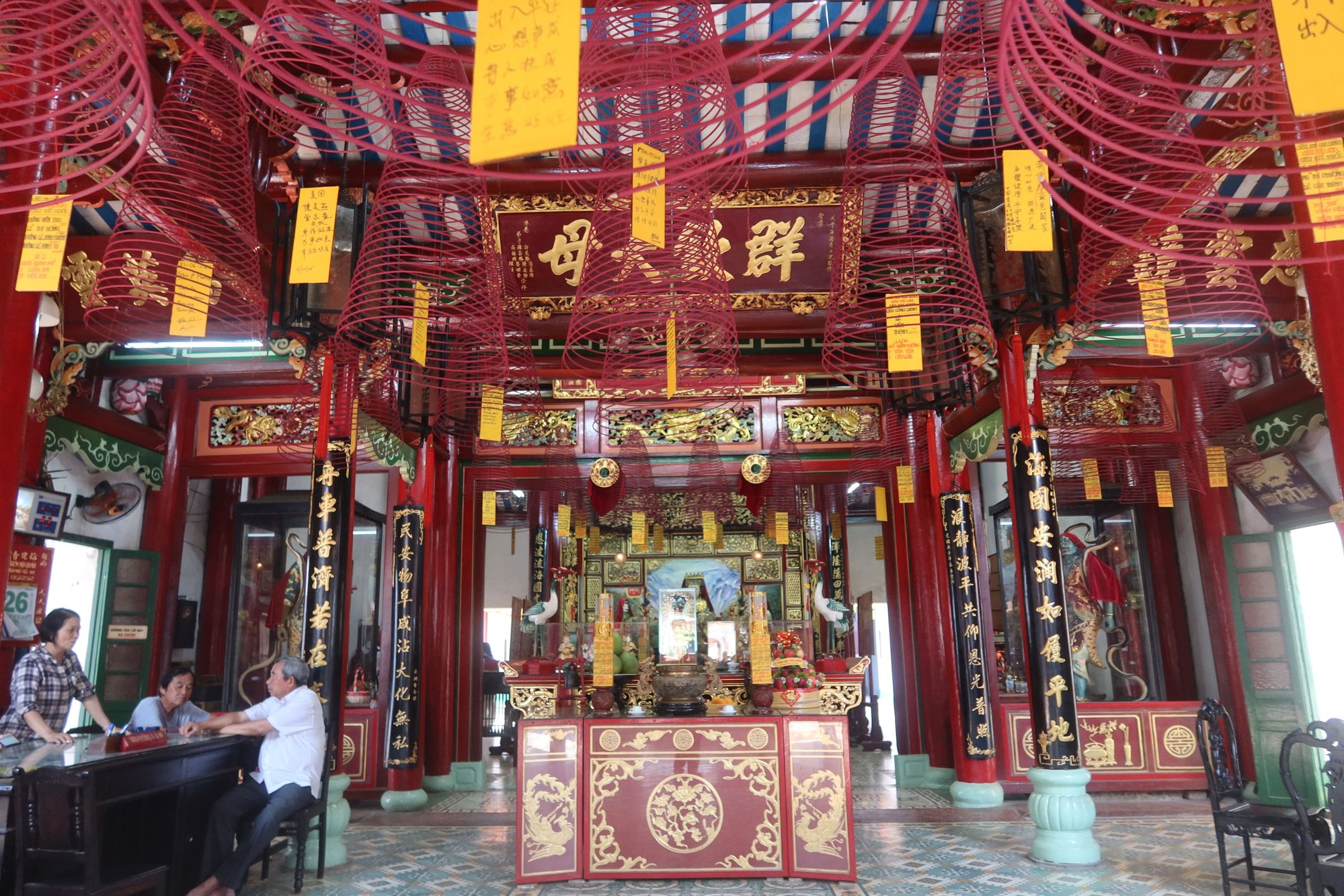
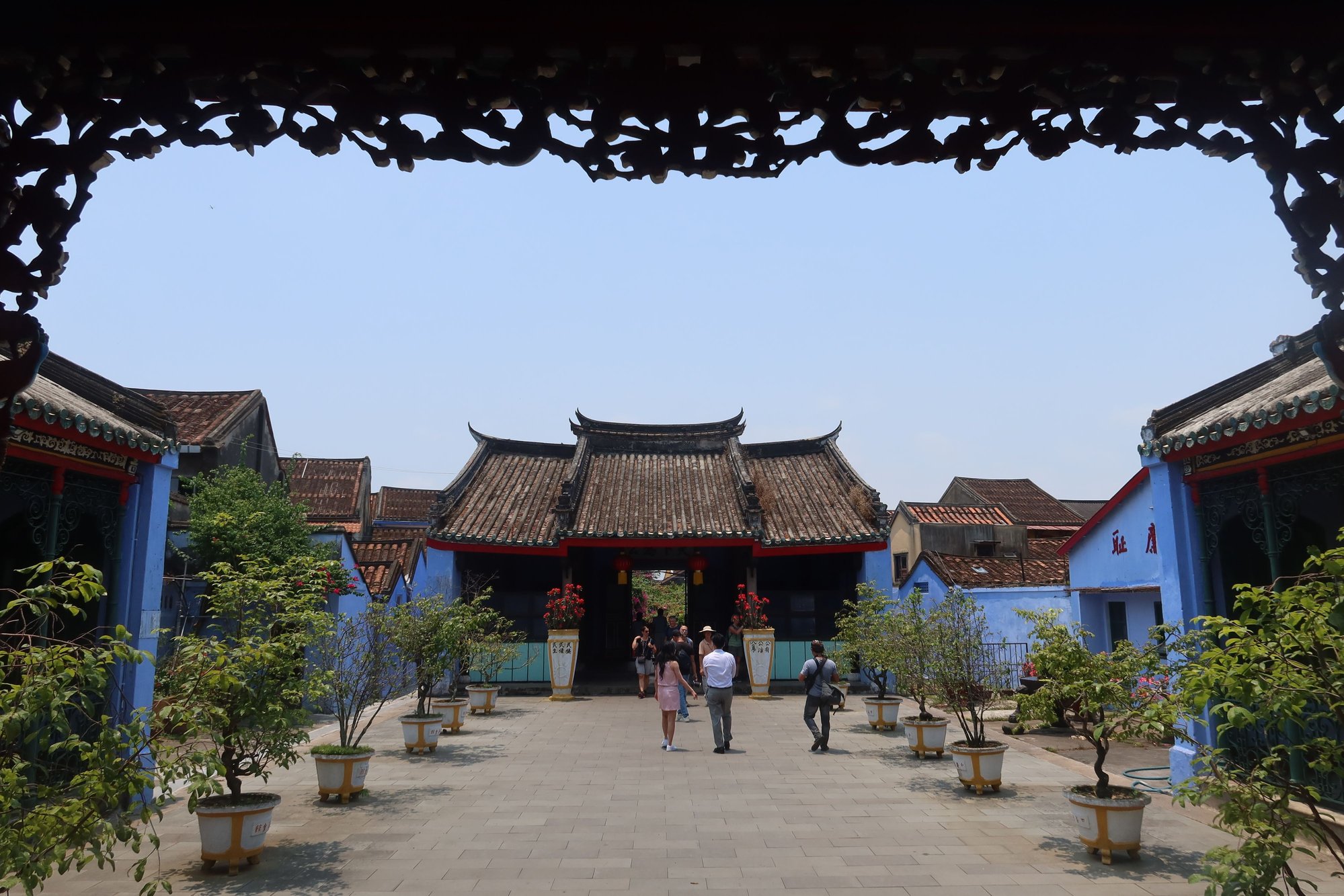
From here we continued along Tran Phu Street, passing an Assembly Hall for the Hainanese and Quan Cong Temple, built to worship a Daoist god, before reaching the Fujian Assembly Hall, the gathering place for our people. Considered by many to be the most beautiful building in Hoi An, the Fujian Assembly Hall was massive. We admired the ornate entrance gate as well as the temple itself, which is dedicated to Tien Hou among others. Some of the stories inscribed in tiled art, including about the maritime mythologies, were familiar to us as we learned it from our parents and grandparents growing up. We were filled with some level of pride touring the hall, knowing that people just like myself and my family overcame adversity and built successful lives overseas. Having never touch mainland Chinese soil, this may be the closest we ever get to our heritage.
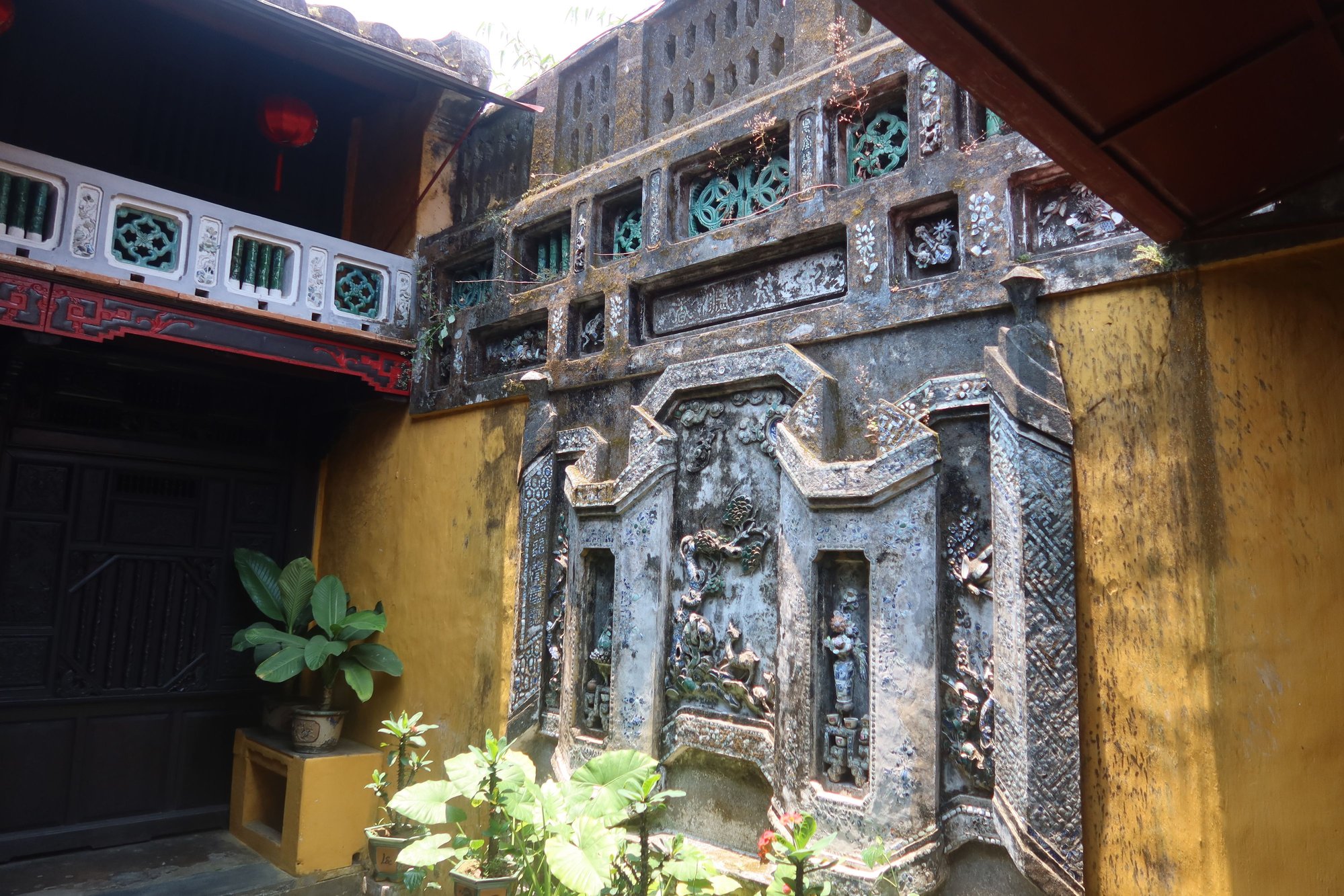
Further down the street we visited Quan Thang House, home to a former Chinese merchant who settled in Hoi An centuries ago. The house today is run by an elderly man and his daughter, who are the 6th and 7th generation descendants of the original resident. It was fund conversing with them in their native Cantonese, chatting about their lives in Vietnam as Chinese-Vietnamese, how tourism has taken over in Hoi An, and some of the stories handed down to them over generations. Once again, we felt closer to understanding who we are ourselves.
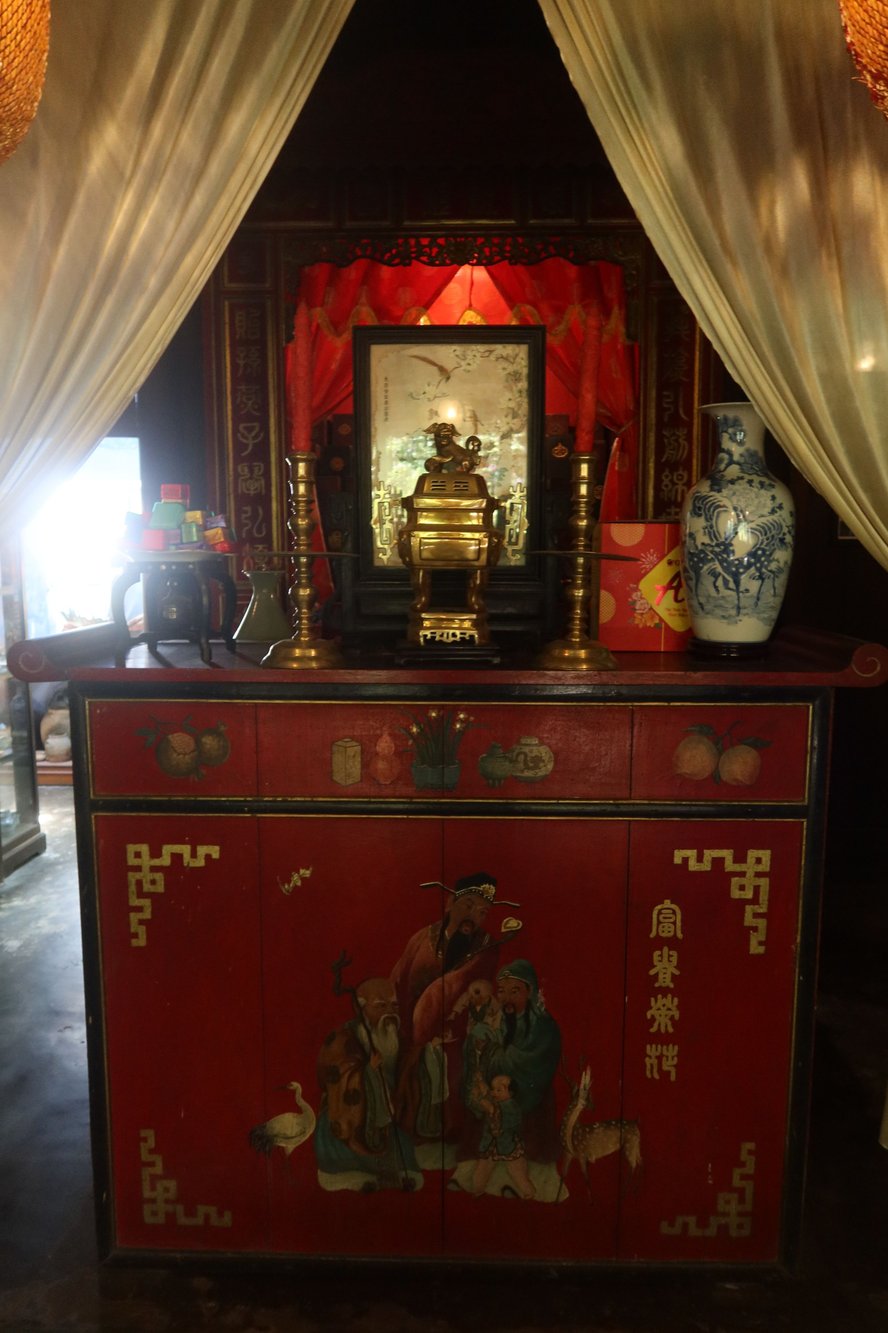
The joyful footsteps took us to Tran Family Chapel and Truong Family Chapel. Many Chinese, especially those from the south, such as Fujian and Guangdong provinces, practice ancestor worship in which we remember and pray to our ancestors for our needs in this life. Family chapels are common in mainland China as gathering places for descendants no matter how tenuous the connections may be. As both my grandmothers were Trans and my material grandfather was a Truong, we felt a closer connection to the places we were visiting. The ancestral altars were certainly familiar to us as it is set up the same way ours are in a small nook in our home.
We continued our journey to the Cantonese Assembly Hall. Aside from the Fujianese hall, this is the most ornate in Hoi An. Here we chatted with some tourists from Hong Kong and from Singapore, comparing notes from what we see and experience.
We crossed the Japanese Covered Bridge over to what was the Japanese district. Here we visited a home from the past as well as a communal home where multiple families lived together under one complex. We circled around to Nguyen Thai Hoc Street, visiting a few more sites including an excellent Museum of Folklore. We also took in a 30-minute performance of traditional music and dance next door.
What a day! It was not only interesting and rewarding, but deeply heartfelt and meaningful -- and totally unexpected.
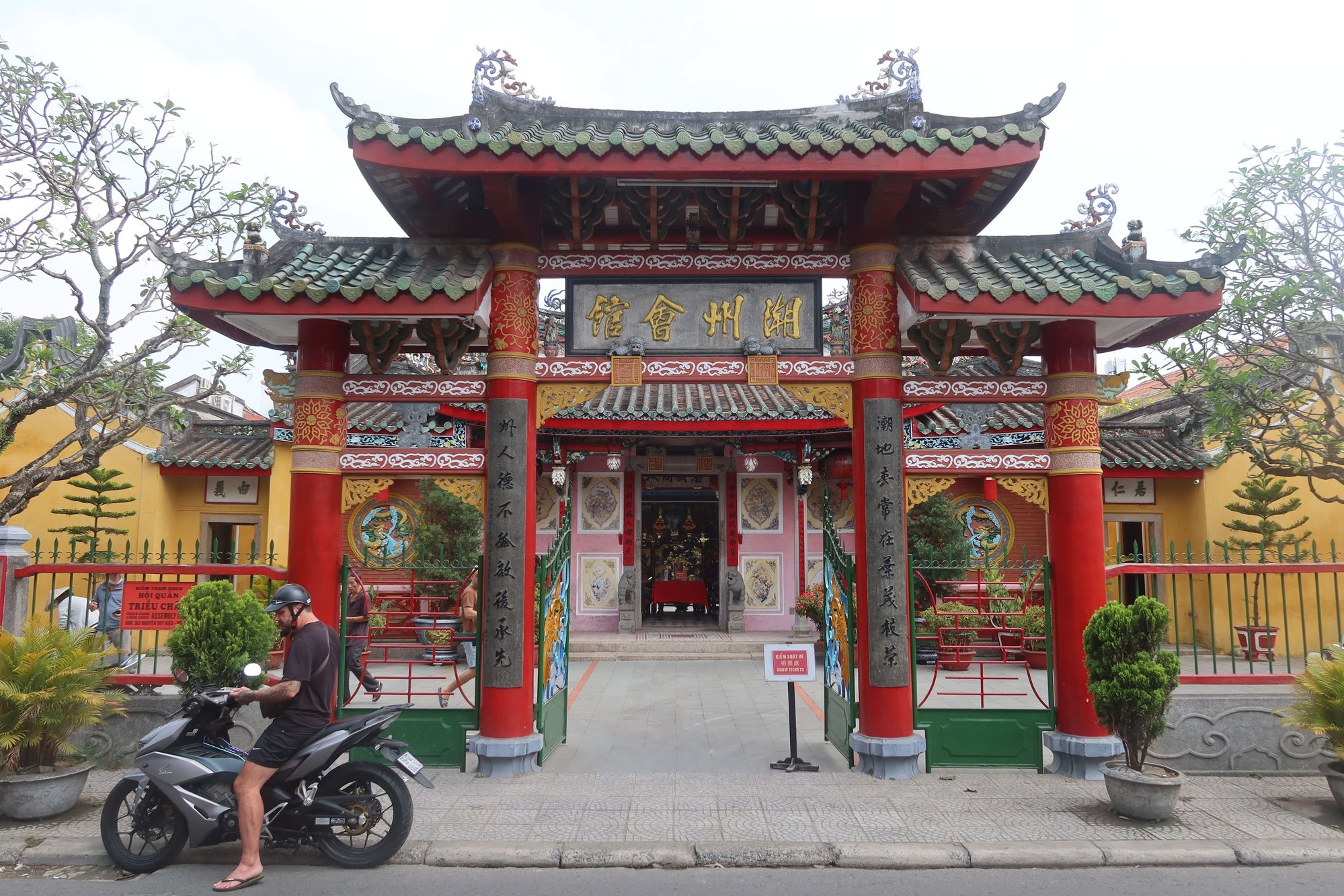
Chaozhou Assembly Hall Entrance Gate
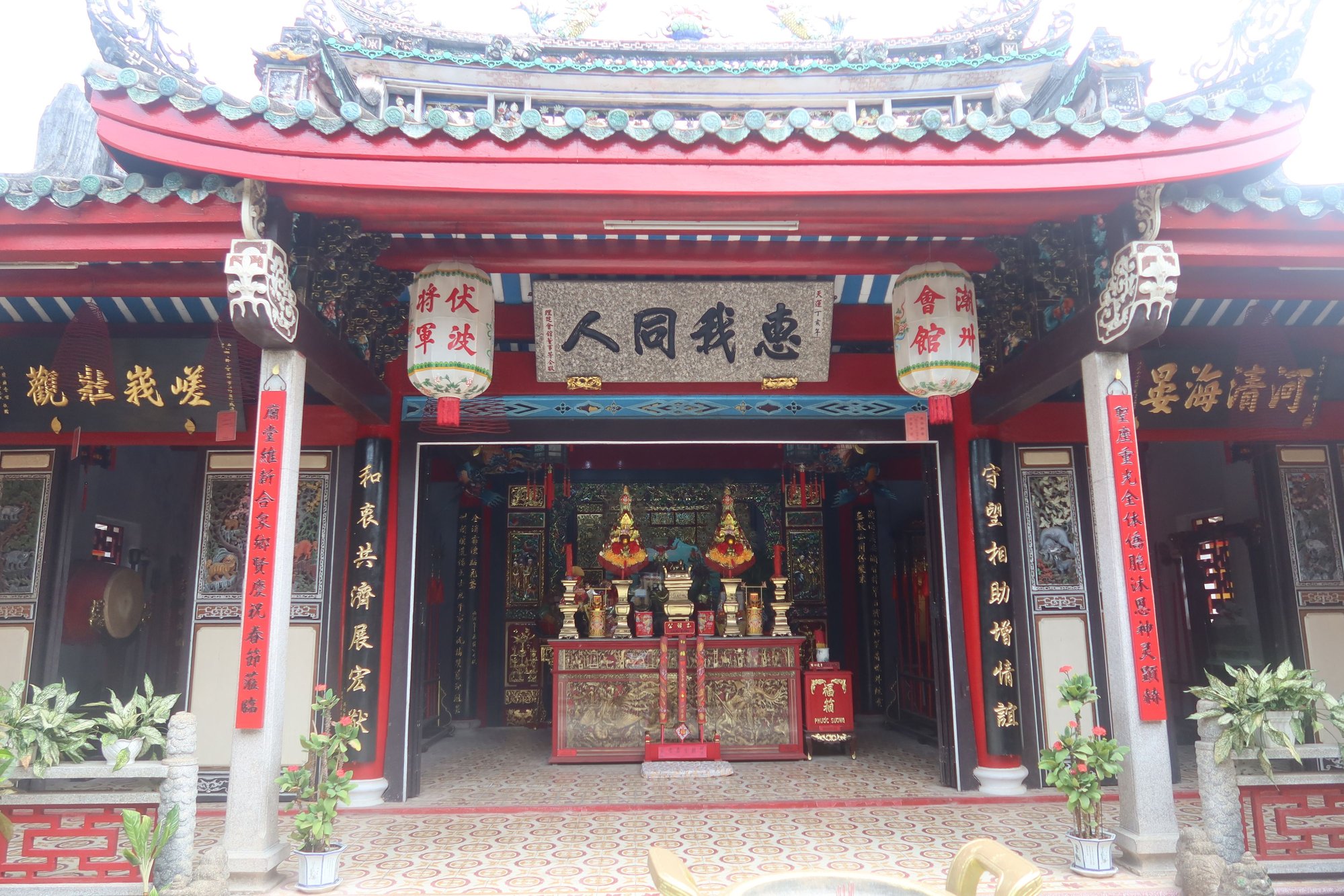
Chaozhou Assembly Hall Religious Altar
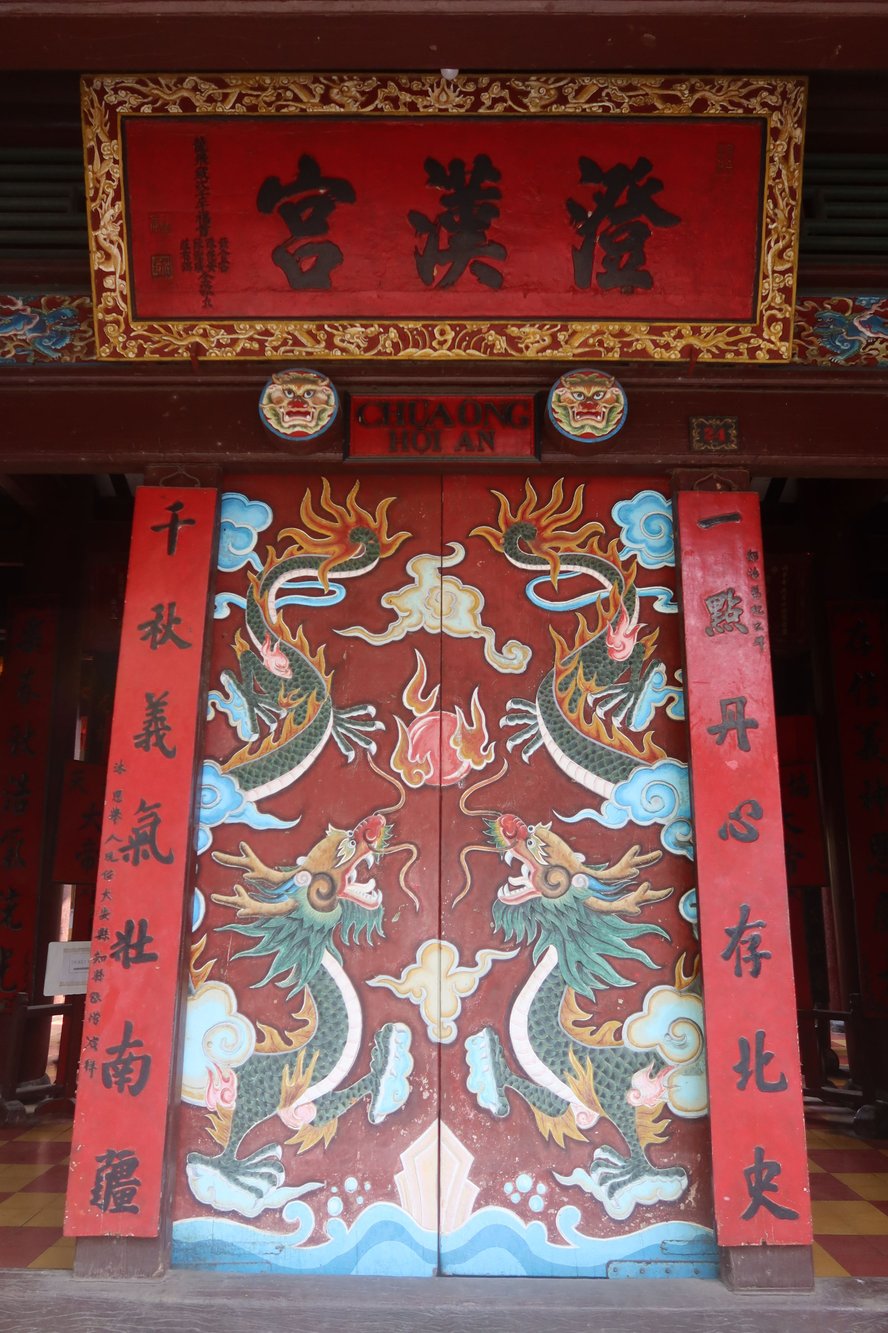
Quan Cong Temple Doors
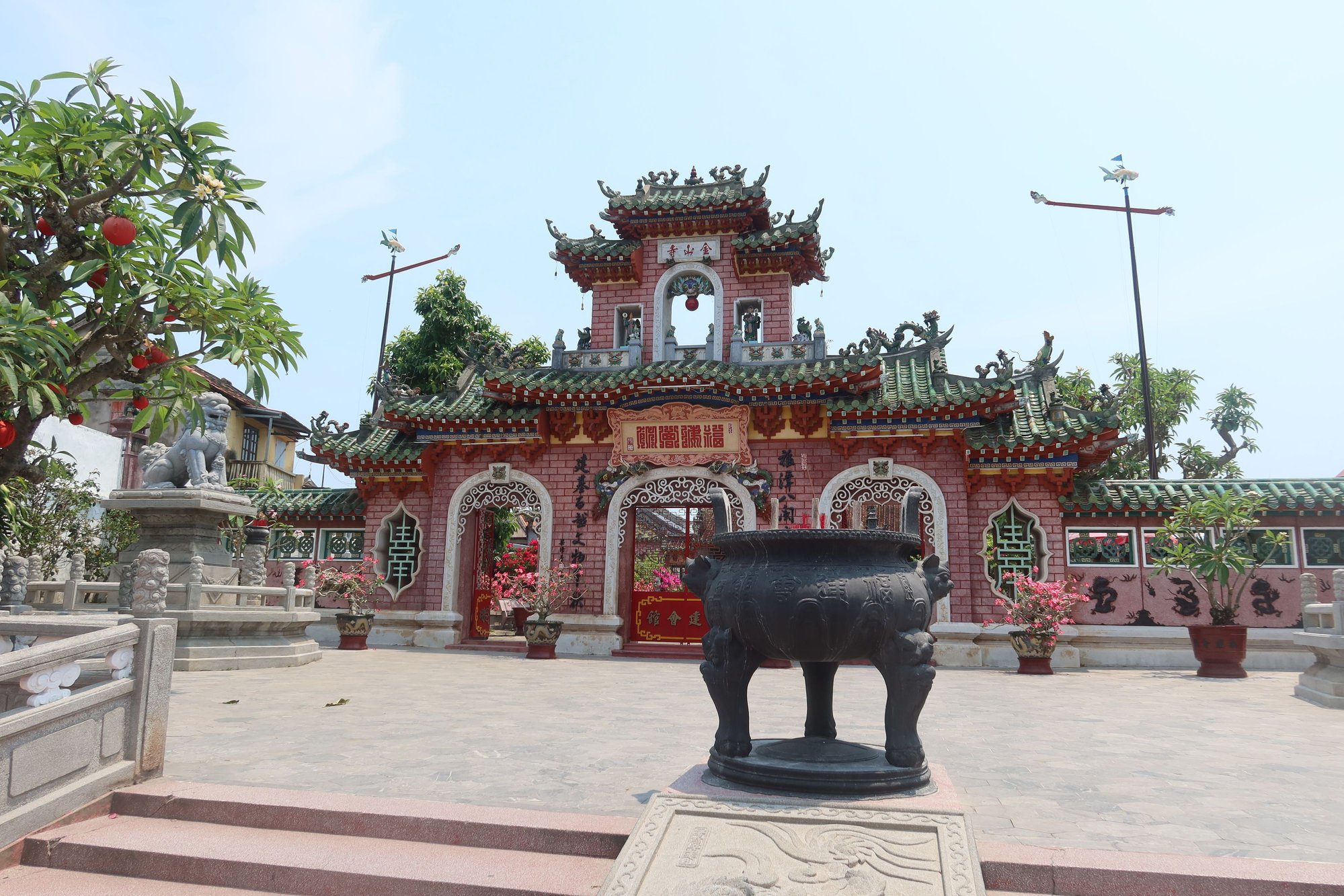
Fujianese Assembly Hall Entrance Gate
Fujianese Temple Altar

16th and 17th Century Fujianese Ship (in this case, it is to provide transportation for the departed)
Pan-Chinese Assembly Hall

Old Hoi An Home
Courtyard at Quan Thang House
Tran Family Altar
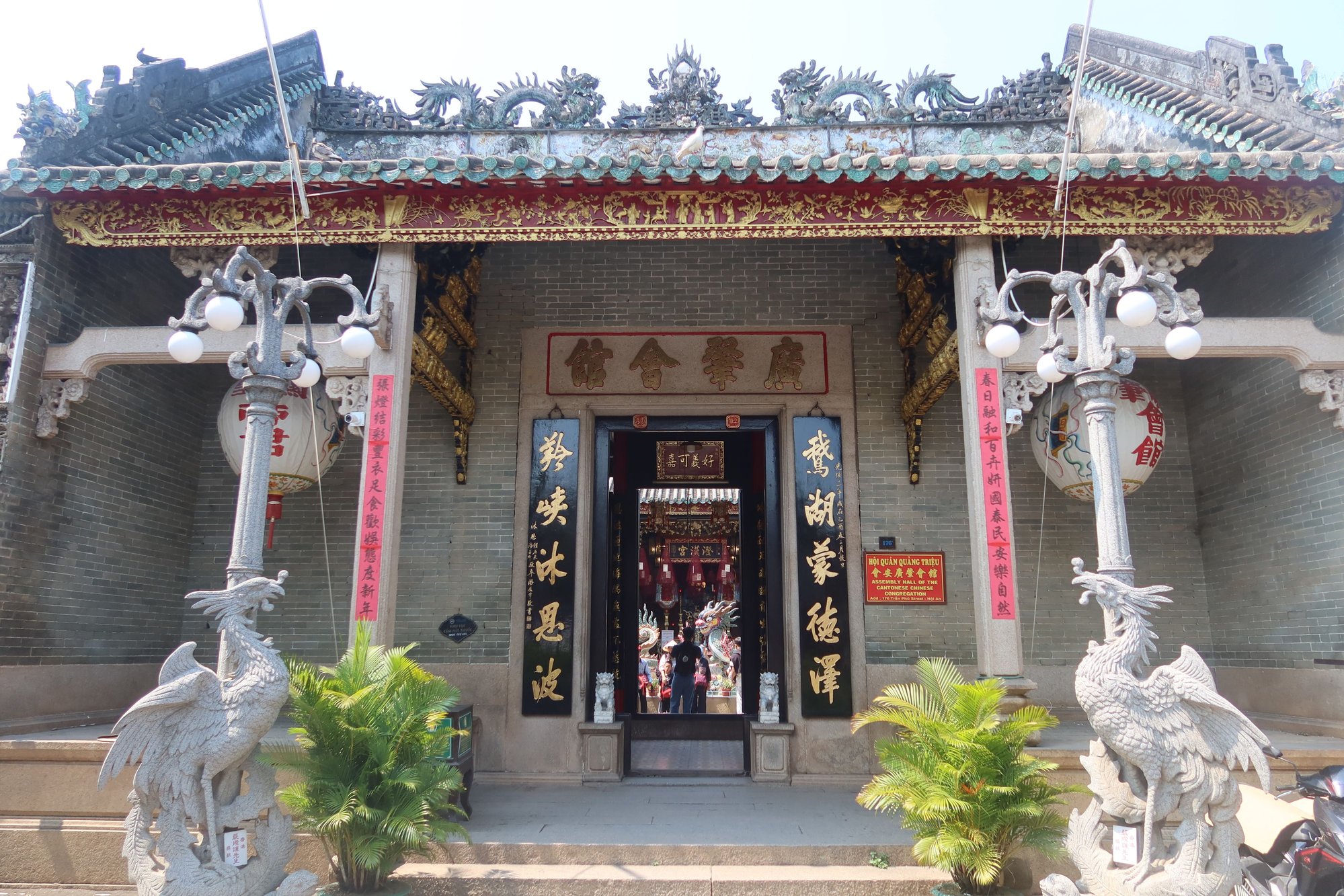
Cantonese Assembly Hall
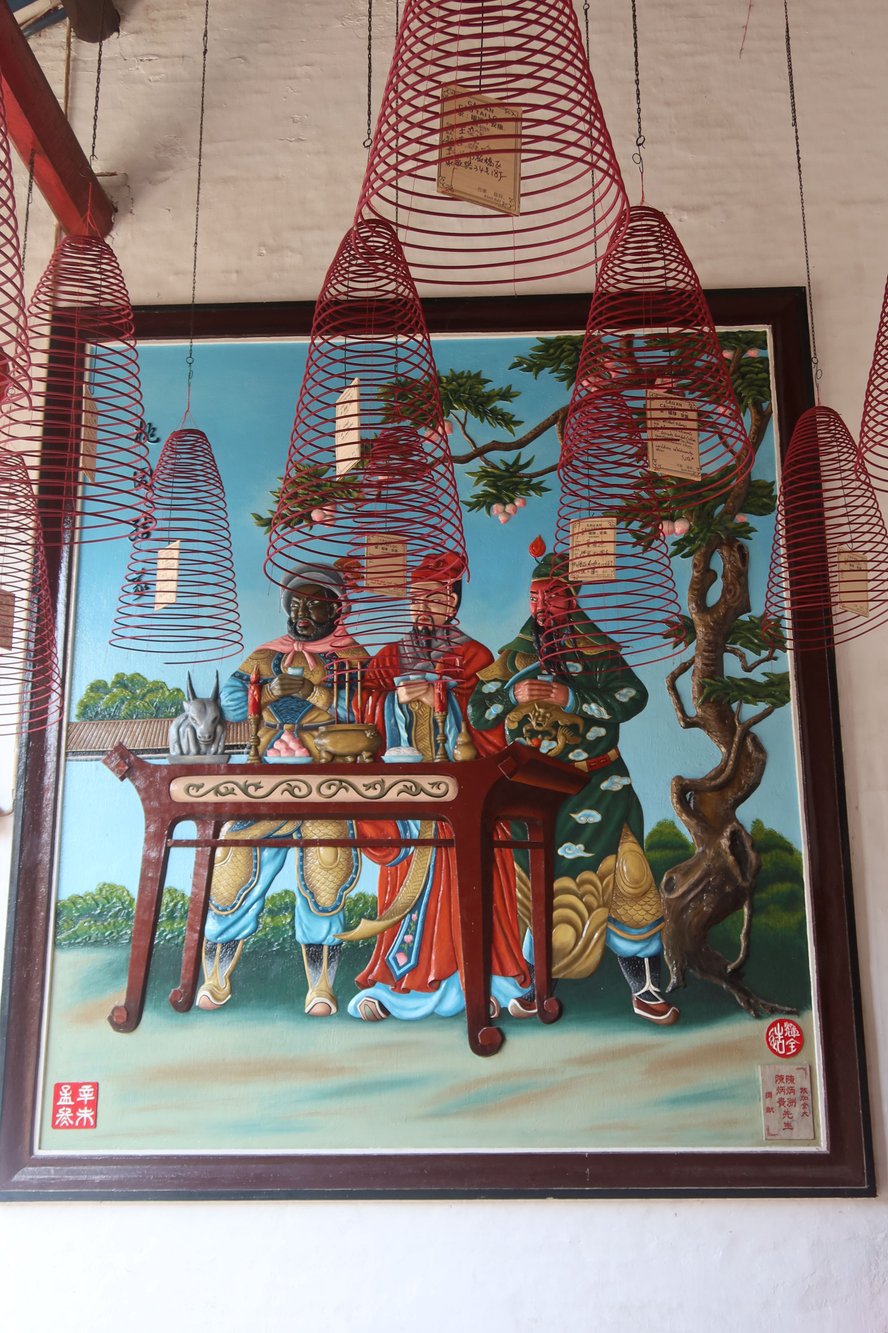
Artwork at Cantonese Assembly Hall
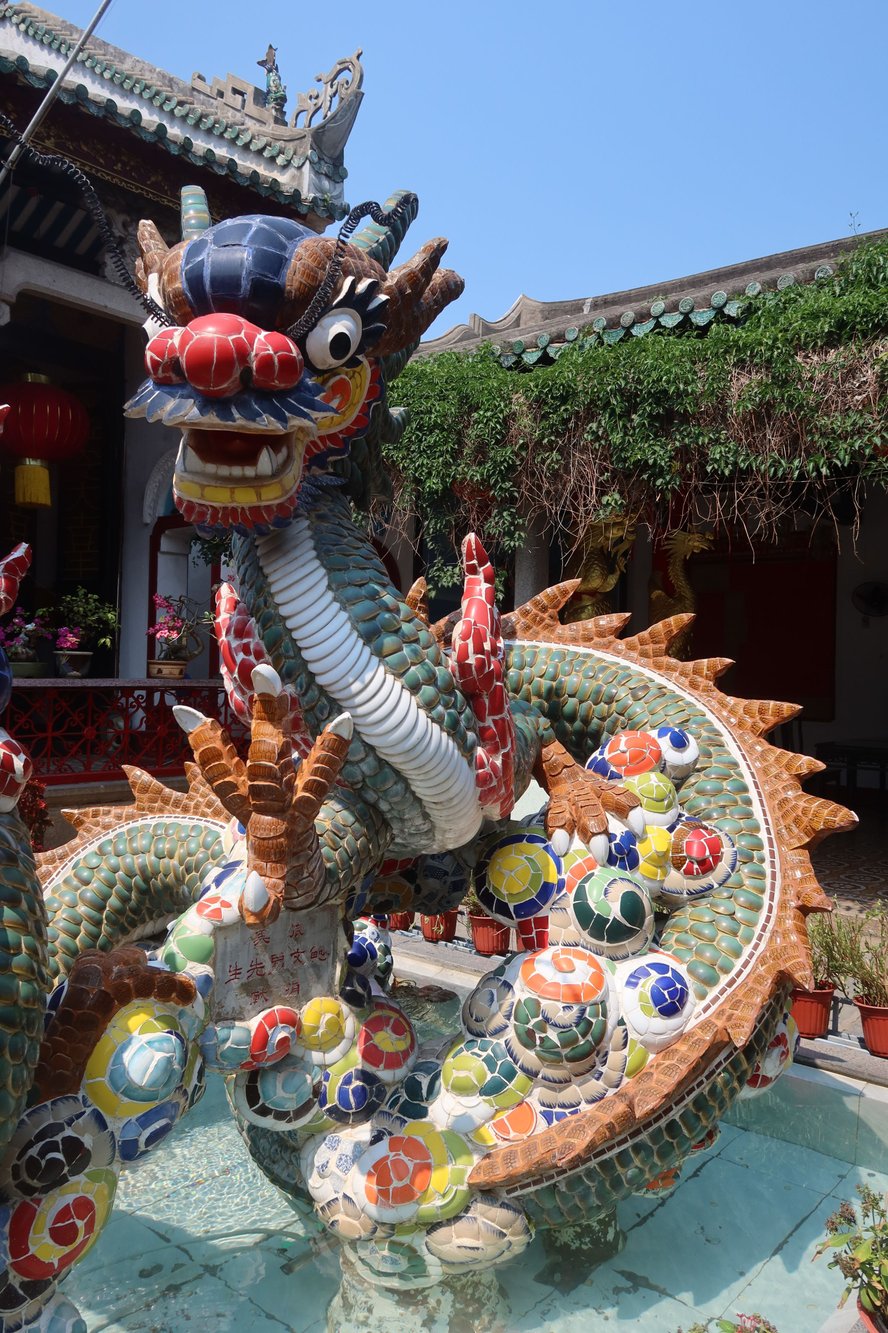
Dragon Sculpture at Cantonese Assembly Hall

Interior Balcony at Phung Hung House

Japanese Covered Bridge

Chinese-Vietnamese Song and Dance
ms_go, i get it. This is why I so much enjoy reading the trip reports of others, as we're unable to see and do everything
KarenWoo, I do hope you and Ed get here someday. It is definitely moving up on our list of Asian favorites. As for the French village, I would definitely not go out of the way to visit, especially with more limited time.
Wandering Close to Home
Today we devoted ourselves to exploring Hoi An's Old Town. Built by traders from all over Vietnam, China, Japan, and elsewhere in the 16th and 17th centuries who bought and sold their wares in the bustling port city near the South China Sea coast, many of these homes, stores, temples, assembly halls, and gathering places still survive. However, most have even converted to restaurants, tailors, souvenir shops, and the like, as Hoi An's dominant industry in the 21st century is tourism.
Our touring of Hoi An began at the Precious Heritage Art Gallery and Museum. The art gallery and museum is owned and operated by French photographer, now Hoi An resident Rehahn, who became famous for a photo featured on National Geographic of a local woman. Housed here are over 200 of his photographs of local people. In the last decade or so, he's managed to photograph people from each of Vietnam's 54 recognized ethnicities. We viewed the lifelike portraits and admired the collection of ethnic costumes he's collected over the years.
We then wandered down Tran Phu Street, visiting the many sites that lined the way. First up was the Chaozhou Assembly Hall, the meeting place for immigrants and visitors to Hoi An from Chaozhou, a city in China's Guangdong province. We enjoyed touring the hall and its many traditional features, including home temples, ancestral altars, furniture, and art. Most rewarding of all was a conversation with the attendant at the hall. We shared stories about our families' common journeys out of China and our new lives in foreign lands. Even though our families originated from different parts of China, we chatted about shared customs, foods, languages, etc.
From here we continued along Tran Phu Street, passing an Assembly Hall for the Hainanese and Quan Cong Temple, built to worship a Daoist god, before reaching the Fujian Assembly Hall, the gathering place for our people. Considered by many to be the most beautiful building in Hoi An, the Fujian Assembly Hall was massive. We admired the ornate entrance gate as well as the temple itself, which is dedicated to Tien Hou among others. Some of the stories inscribed in tiled art, including about the maritime mythologies, were familiar to us as we learned it from our parents and grandparents growing up. We were filled with some level of pride touring the hall, knowing that people just like myself and my family overcame adversity and built successful lives overseas. Having never touch mainland Chinese soil, this may be the closest we ever get to our heritage.
Further down the street we visited Quan Thang House, home to a former Chinese merchant who settled in Hoi An centuries ago. The house today is run by an elderly man and his daughter, who are the 6th and 7th generation descendants of the original resident. It was fund conversing with them in their native Cantonese, chatting about their lives in Vietnam as Chinese-Vietnamese, how tourism has taken over in Hoi An, and some of the stories handed down to them over generations. Once again, we felt closer to understanding who we are ourselves.
The joyful footsteps took us to Tran Family Chapel and Truong Family Chapel. Many Chinese, especially those from the south, such as Fujian and Guangdong provinces, practice ancestor worship in which we remember and pray to our ancestors for our needs in this life. Family chapels are common in mainland China as gathering places for descendants no matter how tenuous the connections may be. As both my grandmothers were Trans and my material grandfather was a Truong, we felt a closer connection to the places we were visiting. The ancestral altars were certainly familiar to us as it is set up the same way ours are in a small nook in our home.
We continued our journey to the Cantonese Assembly Hall. Aside from the Fujianese hall, this is the most ornate in Hoi An. Here we chatted with some tourists from Hong Kong and from Singapore, comparing notes from what we see and experience.
We crossed the Japanese Covered Bridge over to what was the Japanese district. Here we visited a home from the past as well as a communal home where multiple families lived together under one complex. We circled around to Nguyen Thai Hoc Street, visiting a few more sites including an excellent Museum of Folklore. We also took in a 30-minute performance of traditional music and dance next door.
What a day! It was not only interesting and rewarding, but deeply heartfelt and meaningful -- and totally unexpected.
Chaozhou Assembly Hall Entrance Gate
Chaozhou Assembly Hall Religious Altar
Quan Cong Temple Doors
Fujianese Assembly Hall Entrance Gate
Fujianese Temple Altar
16th and 17th Century Fujianese Ship (in this case, it is to provide transportation for the departed)
Pan-Chinese Assembly Hall
Old Hoi An Home
Courtyard at Quan Thang House
Tran Family Altar
Cantonese Assembly Hall
Artwork at Cantonese Assembly Hall
Dragon Sculpture at Cantonese Assembly Hall
Interior Balcony at Phung Hung House
Japanese Covered Bridge
Chinese-Vietnamese Song and Dance
Apr 27th, 2025 | 07:34 AM
#26
Original Poster
Joined: Sep 2012
Posts: 3,517
Likes: 0
shelemm, thank you. I truly enjoy the types of serendipitous moments and exchanges, but this one especially resonated with us given our shared stories. It's something we will always remember about our visit to Hoi An.
Stepping Back in Time
Today we took a morning excursion to My Son, one of the archaeological sites from the Champa Kingdom that called central and southern Vietnam home. The trip from Hoi An to My Son took about an hour. My Son, which means beautiful mountain in Vietnamese, has a collection of Hindu temples resembling the Khmer temples in neighboring Cambodia. My Son was a zoo this morning. There were about a dozen tour buses at the parking lot of the site, and the temple ruins were equally busy. There was one main grouping of temples, the B, C, D group, that was in relatively good condition, as well as the G group; however, it was hard to enjoy it given the number of people, the dealing umbrellas (we didn't carry), and the cacophony of English, French, Italian, and Cantonese narration going at the same time. The visit took about an hour and change. As we've had the fortune of visiting Angkor, we could and should have skipped the trip to My Son.
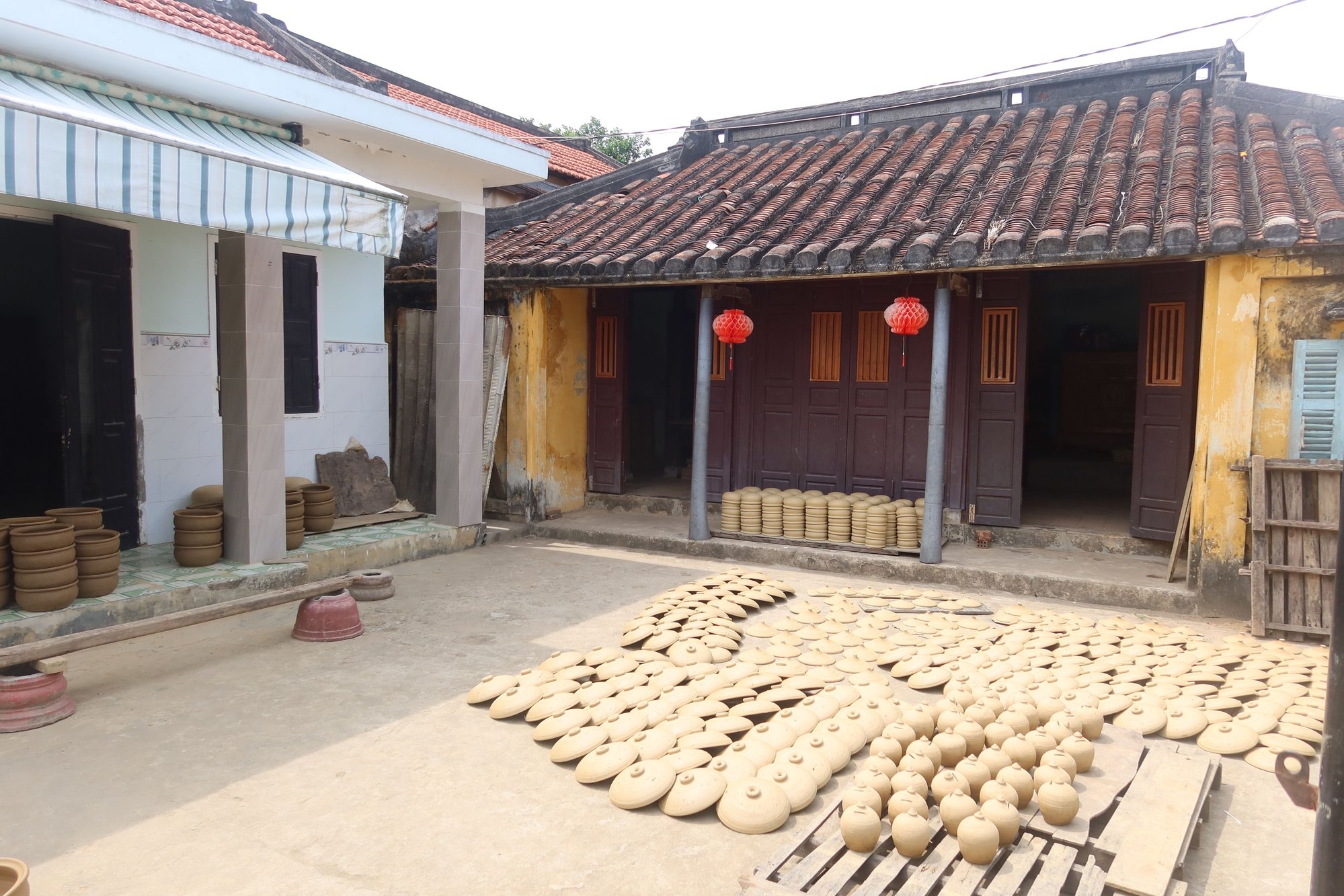
After My Son, we made our way back to Hoi An, stopping at Thanh Ha village for a look around its terra cotta industry. We visited a couple of ladies making pottery and walked by a couple of kilns, as well as yards with the finished products out for drying. There are numerous shops selling pottery and other terra cotta works. We also briefly toured the village museum displaying some of the larger pieces. From here, it was back to Hoi An and our hotel for some rest and relaxation before dinner and a show.
For our late lunch / early dinner, we chose Little Faifo in the Old Town, owned by our hotel. We ordered a selection of Vietnamese dishes to share, with favorites being a simmered chicken and ginger dish as well as tamarind prawns. From the Old Town, we hired a boat to take us upriver to Hoi An Memories for tonight's show.
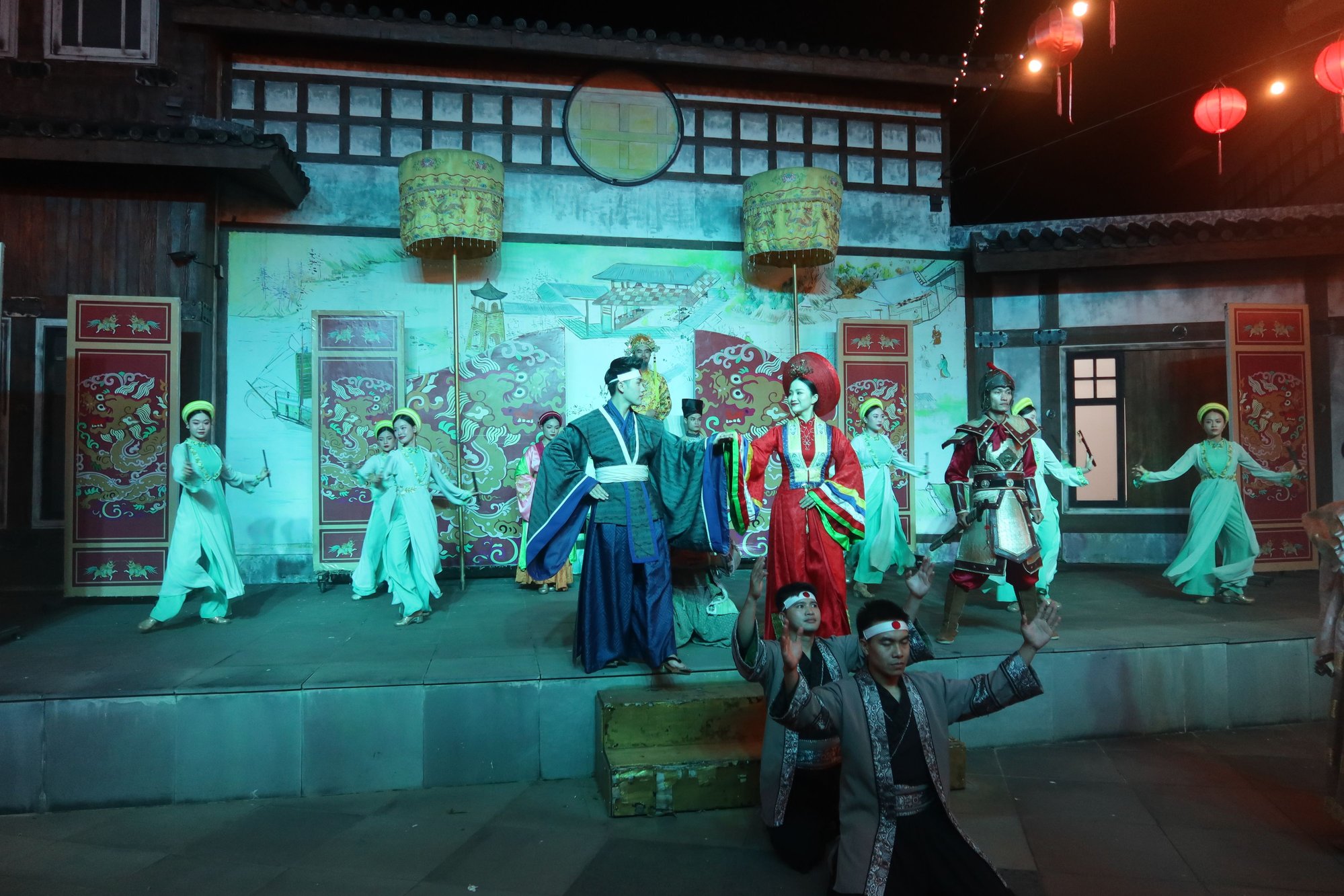
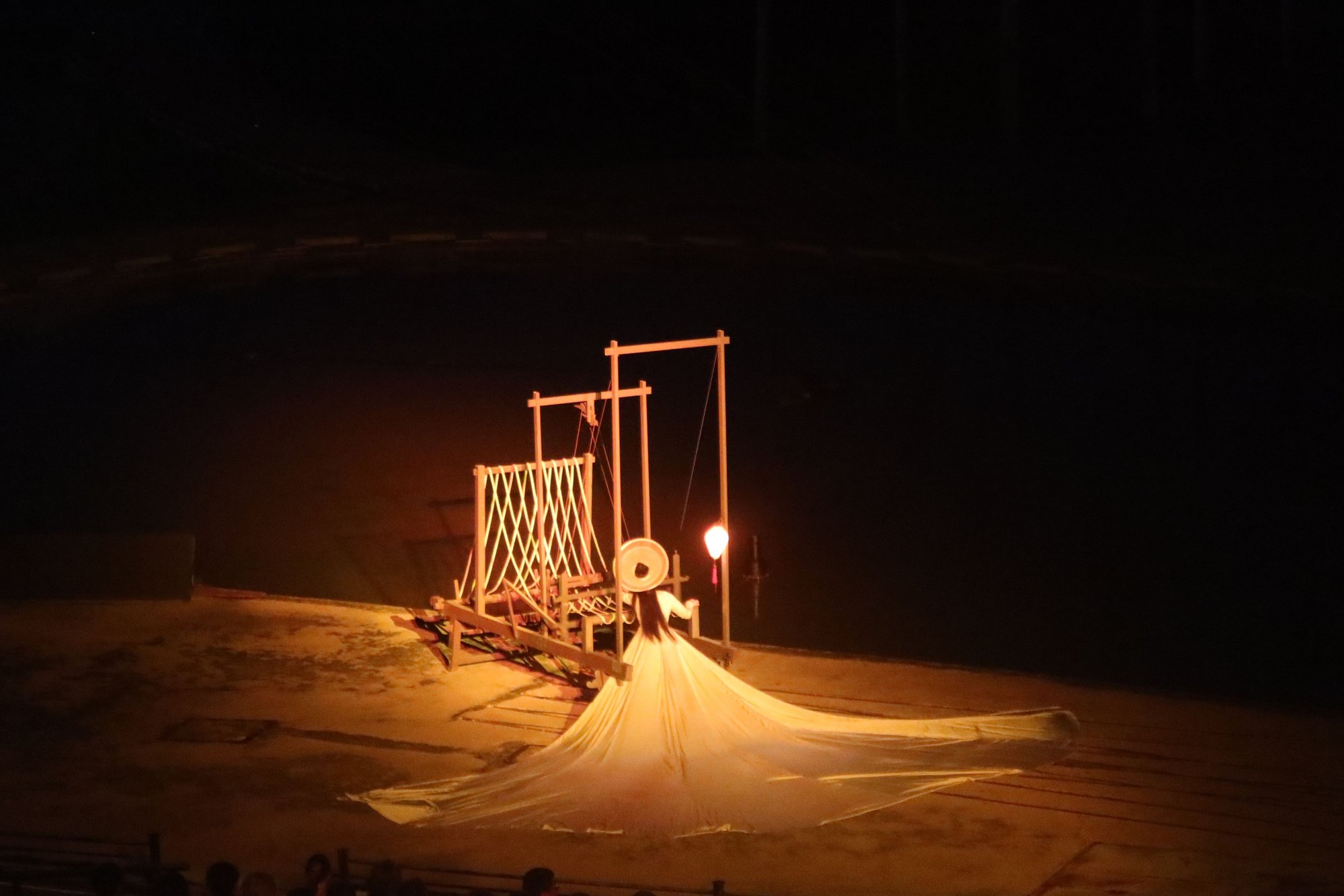
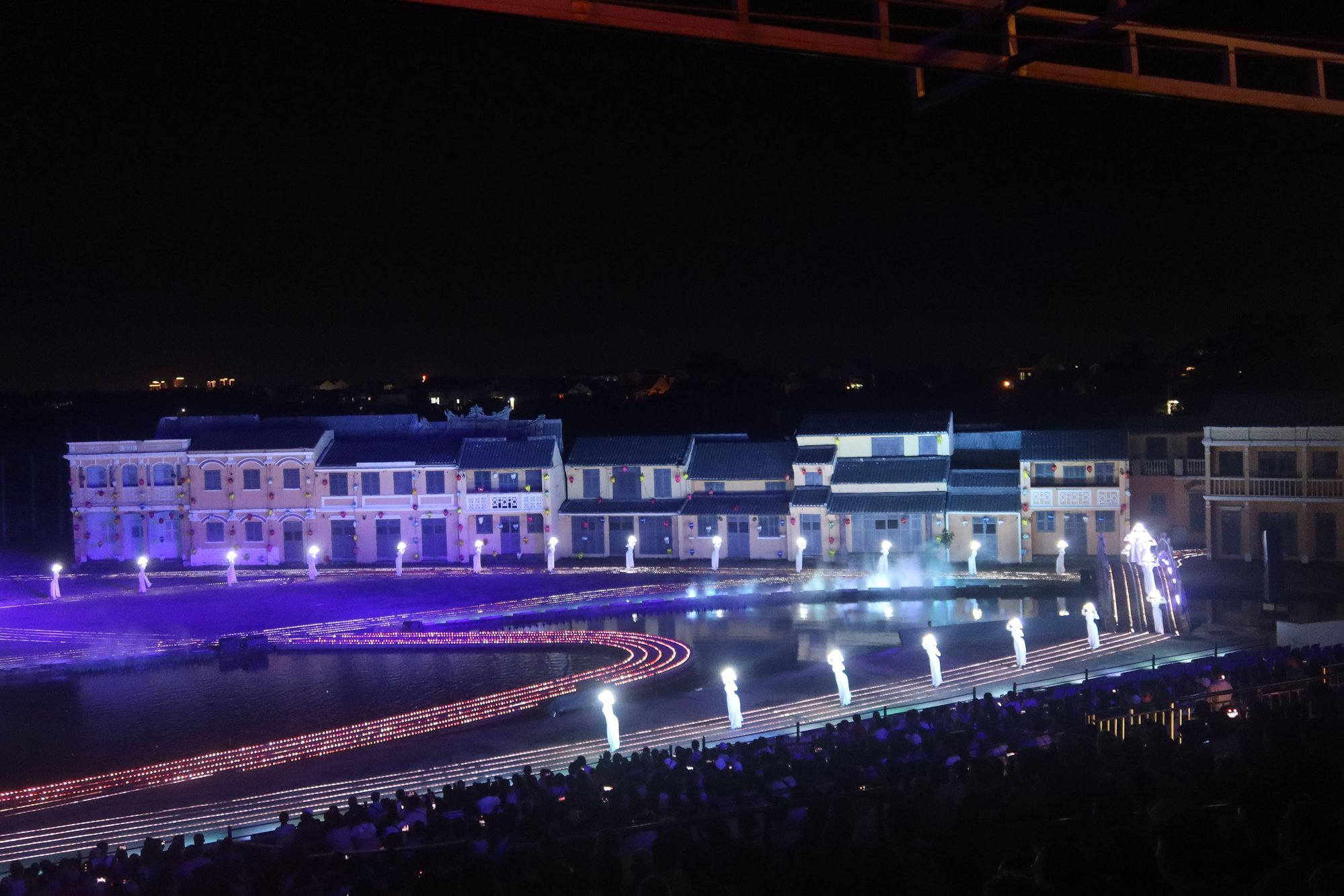
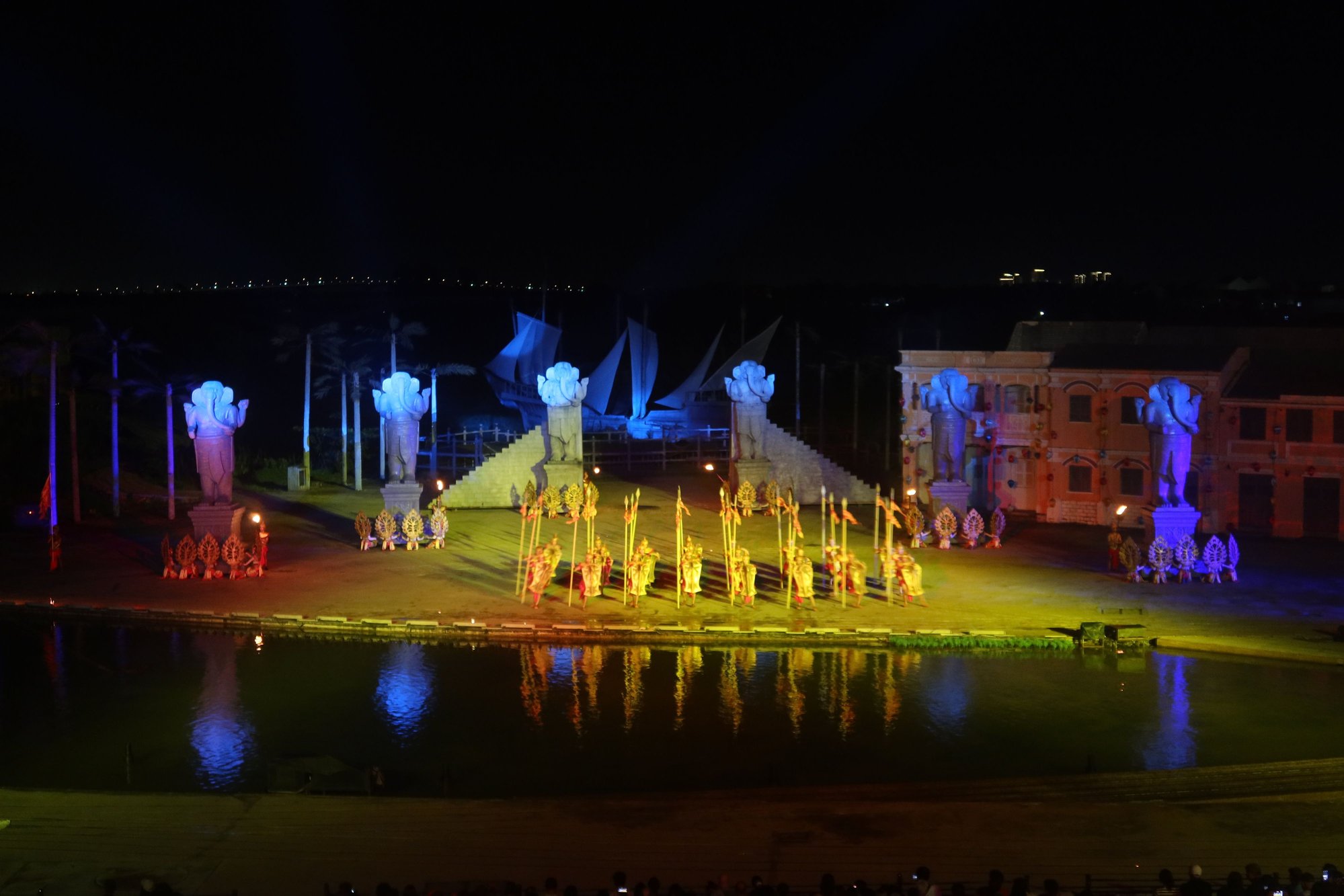
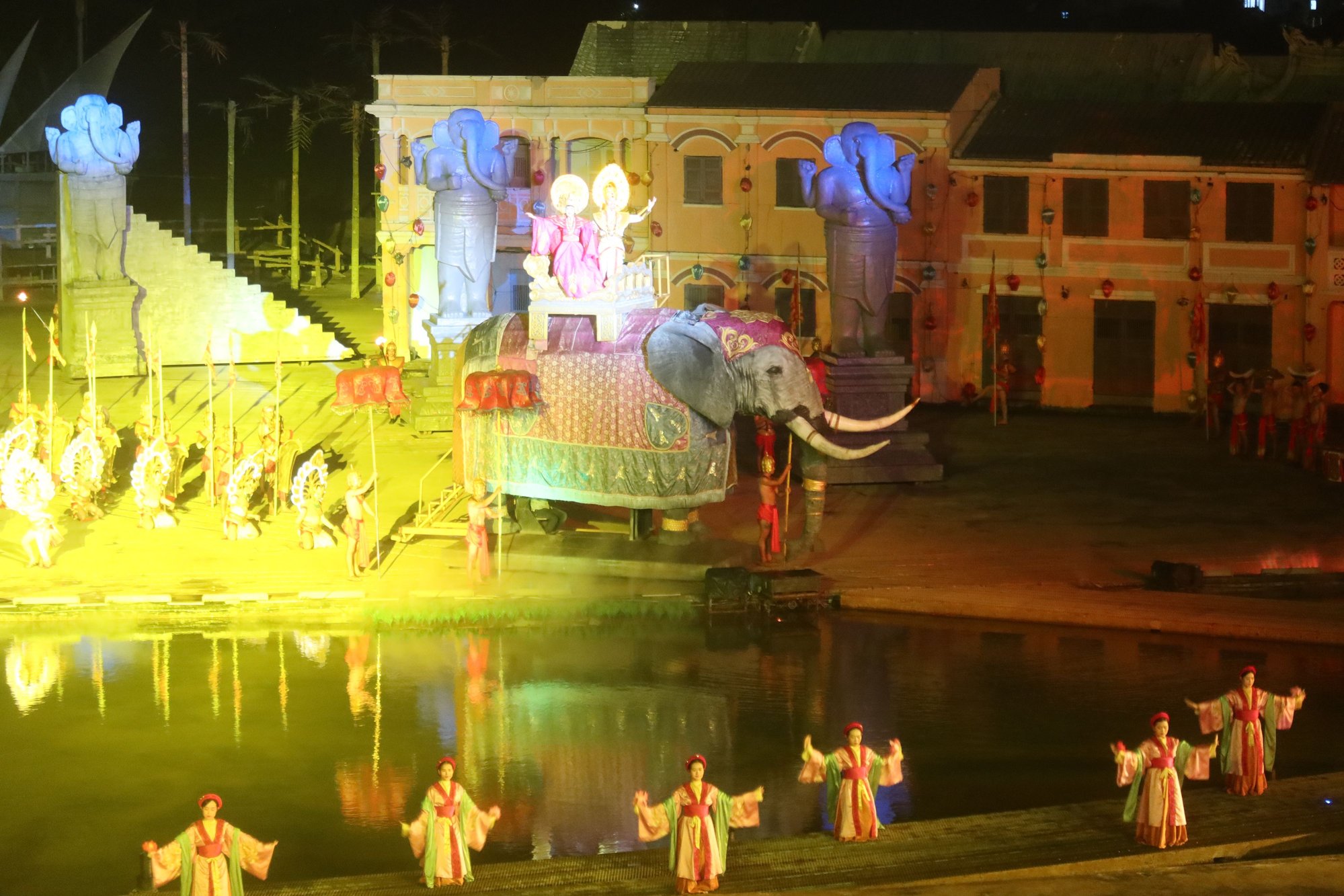
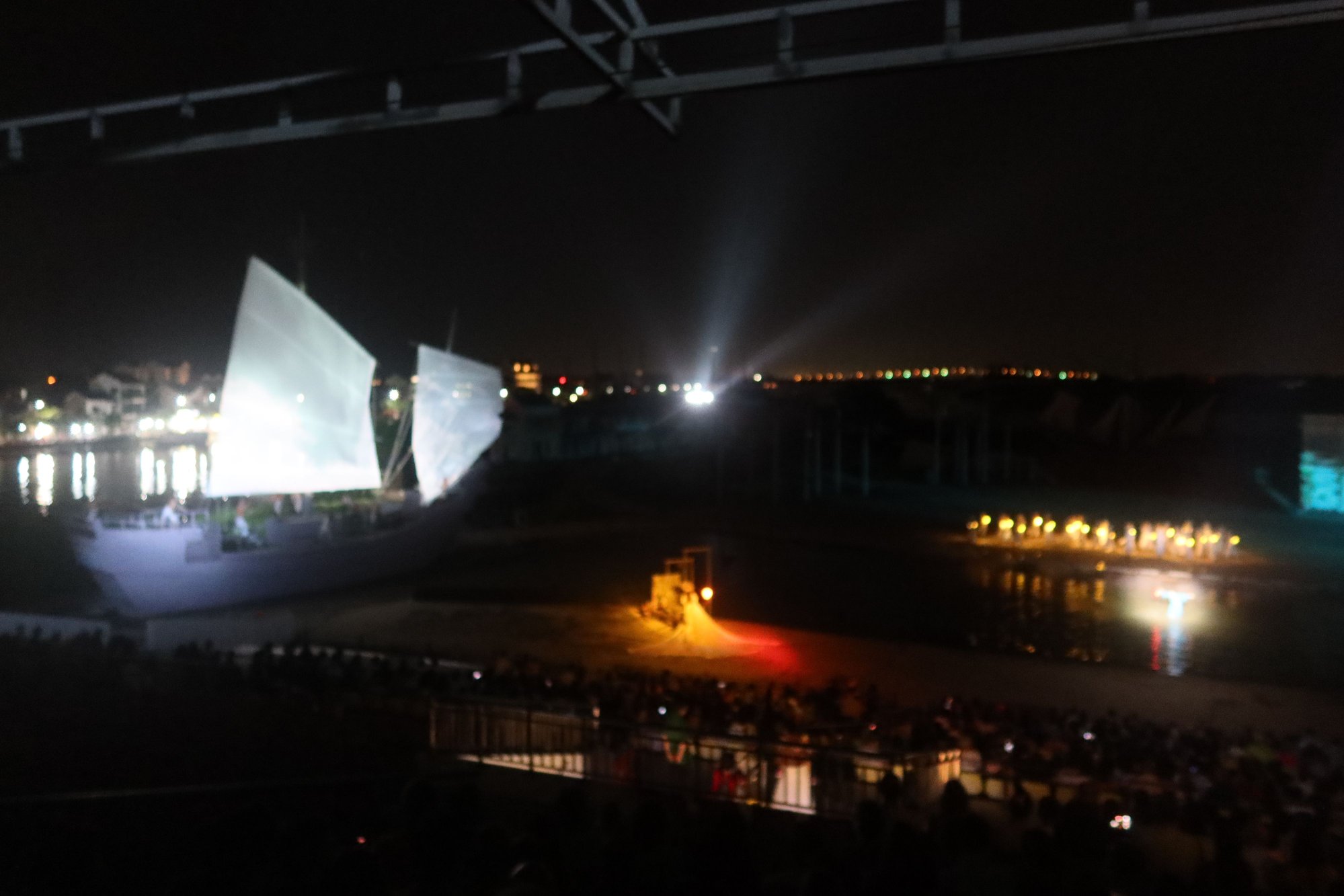
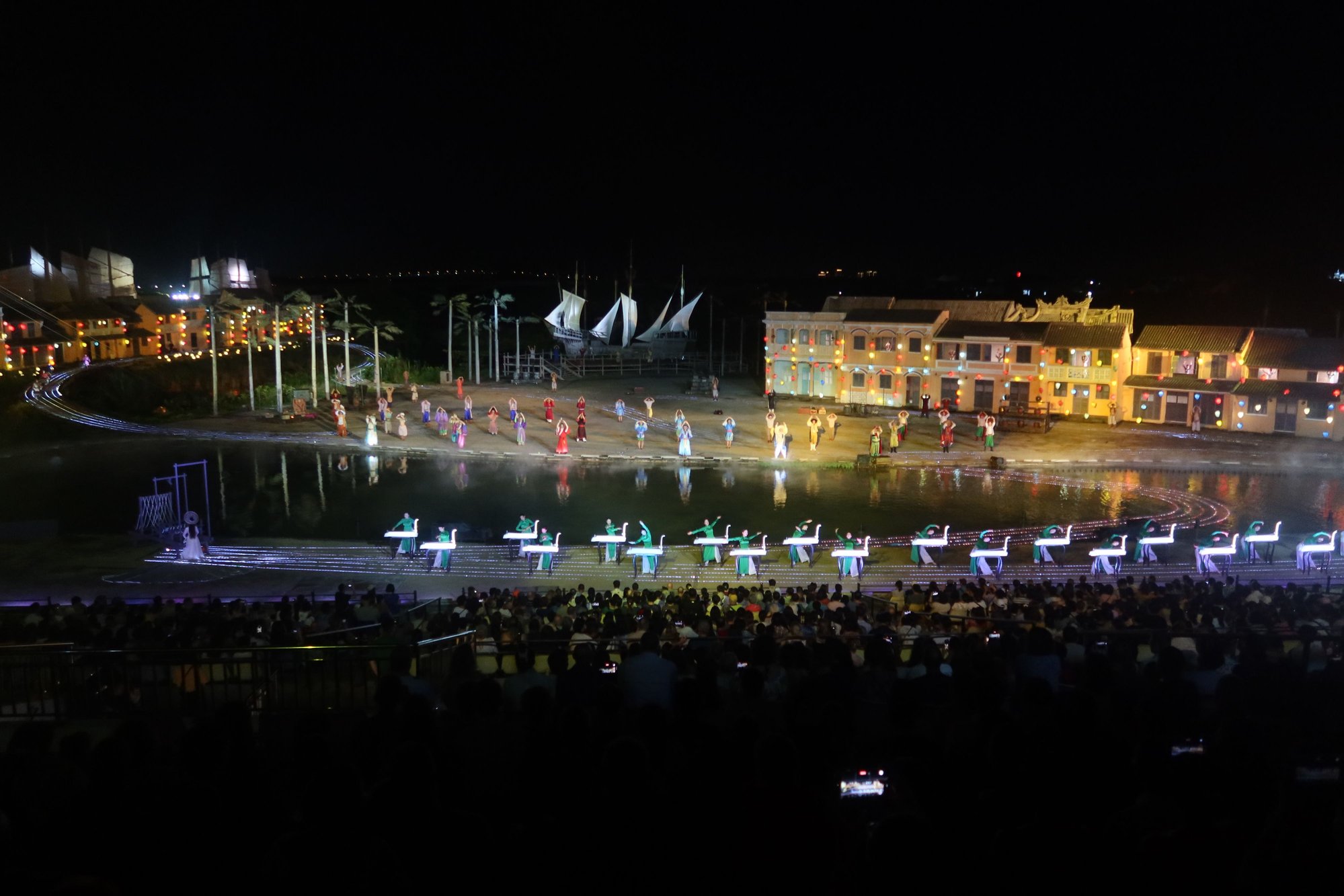
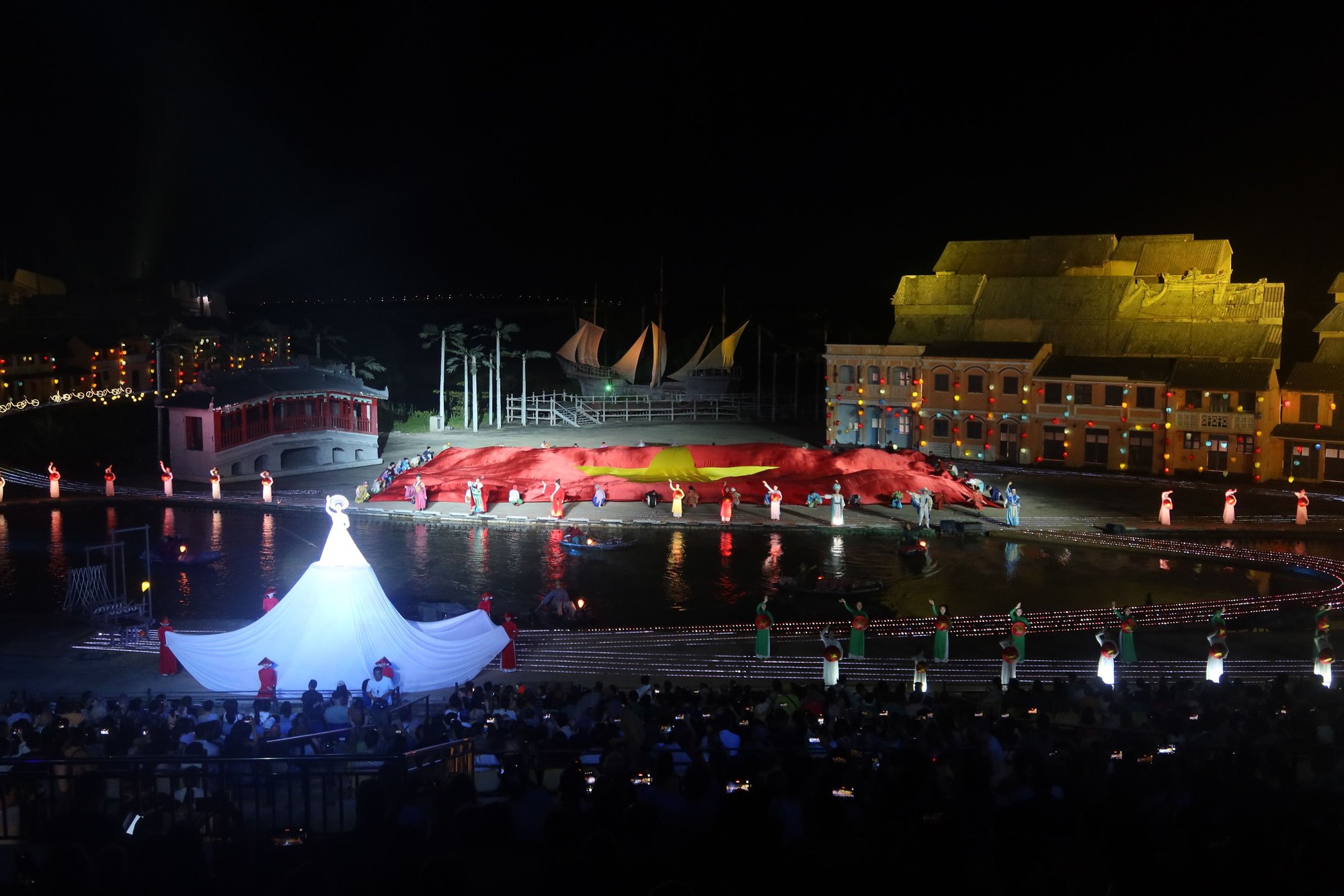
Located on a smaller island on the same river as Hoi An's Old Town, Hoi An Memories consists of a resort hotel and an entertainment complex. Within the entertainment complex are multiple shops, restaurants, and stalls selling street food. Hoi An Memories features an one-hour cultural show at 8:00 PM. However from roughly 5:00 PM to 7:00 PM are "minishows" or skits set throughout the complex, with themes from Vietnam, China, and Japan. We wandered around the grounds catching parts or all of the 5- to 10-minute shows and browsed some of the shops before it was time to take our seats for the main show. The main multimedia show retelling key moments of the history of Hoi An was spectacular. The songs and dancing were wonderful and the stage set, lighting, and costumes were among the best that we've experienced of such type of performance. Some of it was a bit hokey, yes, but it was nonetheless engaging and entertaining. It's something I would definitely recommend to others.

My Son
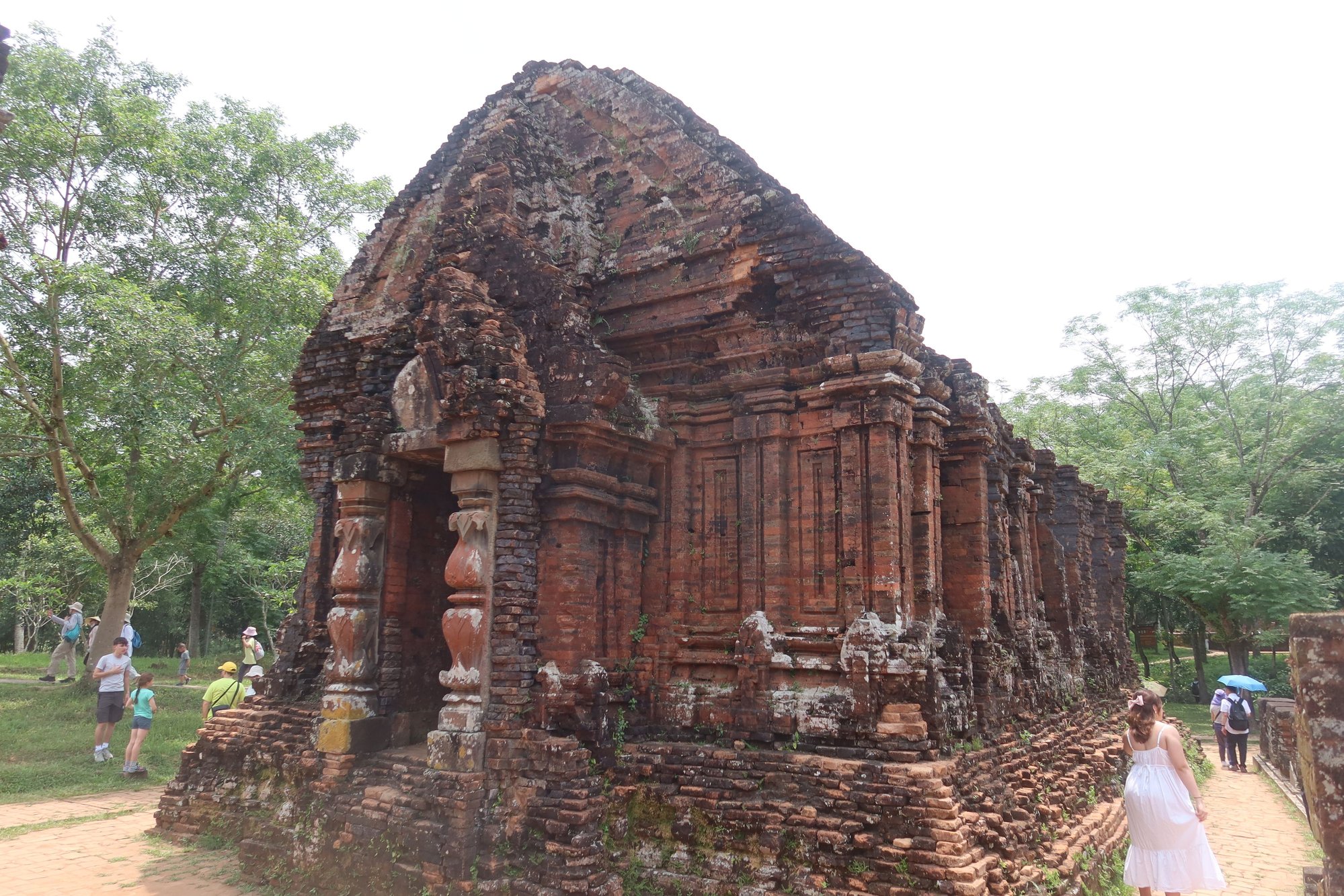
My Son

My Son

My Son

Thanh Ha Pottery Making
Thanh Ha Pottery Drying

Hoi An Memories "Minishow"

Hoi An Memories "Minishow"

Hoi An Memories "Minishow"
Hoi An Memories "Minishow"
Hoi An Memories Main Show
Hoi An Memories Main Show
Hoi An Memories Main Show
Hoi An Memories Main Show
Hoi An Memories Main Show
Hoi An Memories Main Show
Hoi An Memories Main Show
Stepping Back in Time
Today we took a morning excursion to My Son, one of the archaeological sites from the Champa Kingdom that called central and southern Vietnam home. The trip from Hoi An to My Son took about an hour. My Son, which means beautiful mountain in Vietnamese, has a collection of Hindu temples resembling the Khmer temples in neighboring Cambodia. My Son was a zoo this morning. There were about a dozen tour buses at the parking lot of the site, and the temple ruins were equally busy. There was one main grouping of temples, the B, C, D group, that was in relatively good condition, as well as the G group; however, it was hard to enjoy it given the number of people, the dealing umbrellas (we didn't carry), and the cacophony of English, French, Italian, and Cantonese narration going at the same time. The visit took about an hour and change. As we've had the fortune of visiting Angkor, we could and should have skipped the trip to My Son.
After My Son, we made our way back to Hoi An, stopping at Thanh Ha village for a look around its terra cotta industry. We visited a couple of ladies making pottery and walked by a couple of kilns, as well as yards with the finished products out for drying. There are numerous shops selling pottery and other terra cotta works. We also briefly toured the village museum displaying some of the larger pieces. From here, it was back to Hoi An and our hotel for some rest and relaxation before dinner and a show.
For our late lunch / early dinner, we chose Little Faifo in the Old Town, owned by our hotel. We ordered a selection of Vietnamese dishes to share, with favorites being a simmered chicken and ginger dish as well as tamarind prawns. From the Old Town, we hired a boat to take us upriver to Hoi An Memories for tonight's show.
Located on a smaller island on the same river as Hoi An's Old Town, Hoi An Memories consists of a resort hotel and an entertainment complex. Within the entertainment complex are multiple shops, restaurants, and stalls selling street food. Hoi An Memories features an one-hour cultural show at 8:00 PM. However from roughly 5:00 PM to 7:00 PM are "minishows" or skits set throughout the complex, with themes from Vietnam, China, and Japan. We wandered around the grounds catching parts or all of the 5- to 10-minute shows and browsed some of the shops before it was time to take our seats for the main show. The main multimedia show retelling key moments of the history of Hoi An was spectacular. The songs and dancing were wonderful and the stage set, lighting, and costumes were among the best that we've experienced of such type of performance. Some of it was a bit hokey, yes, but it was nonetheless engaging and entertaining. It's something I would definitely recommend to others.
My Son
My Son
My Son
My Son
Thanh Ha Pottery Making
Thanh Ha Pottery Drying
Hoi An Memories "Minishow"
Hoi An Memories "Minishow"
Hoi An Memories "Minishow"
Hoi An Memories "Minishow"
Hoi An Memories Main Show
Hoi An Memories Main Show
Hoi An Memories Main Show
Hoi An Memories Main Show
Hoi An Memories Main Show
Hoi An Memories Main Show
Hoi An Memories Main Show
Apr 27th, 2025 | 12:31 PM
#27
Joined: Jan 2004
Posts: 3,618
Likes: 0
Interesting to read about your time in Hoi An. We went to some of the same sites, but your personal exhanges must have made it so much more memorable.
We had a different experience at My Son. Since it was still rainy season when we were there, we waited until a couple of days before to commit, figuring it wouldn't have been pleasant in the pouring rain. We had our hotel book us on a small group "sunset" tour. We didn't get there until after 3 pm, so it was much less crowded. We lucked out with an excellent guide and golden hour on the structures with not many people around. I think our little group of 12 (quite eclectic with people from Iraq, Latvia, Wales, the Philippines, etc.) was the last to leave. I know a lot of it was destroyed in the war and has been rebuilt, but we enjoyed our visit there.
I expect you're off to Hue soon? The history there is fascinating!
We had a different experience at My Son. Since it was still rainy season when we were there, we waited until a couple of days before to commit, figuring it wouldn't have been pleasant in the pouring rain. We had our hotel book us on a small group "sunset" tour. We didn't get there until after 3 pm, so it was much less crowded. We lucked out with an excellent guide and golden hour on the structures with not many people around. I think our little group of 12 (quite eclectic with people from Iraq, Latvia, Wales, the Philippines, etc.) was the last to leave. I know a lot of it was destroyed in the war and has been rebuilt, but we enjoyed our visit there.
I expect you're off to Hue soon? The history there is fascinating!
Apr 27th, 2025 | 04:20 PM
#28
Original Poster
Joined: Sep 2012
Posts: 3,517
Likes: 0
ms_go, being at the temple ruins at golden hour must have been an experience. The guide makes a difference. We didn't have a very good guide for My Son. It seemed like he memorized his lines and did not know much English beyond it as he couldn't understand any of our questions.
You're right about Hoi An. I can appreciate the place evoking different feeling and emotions. For us, the conversations and the personal connections to the places we saw made a huge difference.
We're on the way to Hue as we speak (I'm typing this response on my phone in the car).
You're right about Hoi An. I can appreciate the place evoking different feeling and emotions. For us, the conversations and the personal connections to the places we saw made a huge difference.
We're on the way to Hue as we speak (I'm typing this response on my phone in the car).
Apr 28th, 2025 | 07:28 AM
#29
Original Poster
Joined: Sep 2012
Posts: 3,517
Likes: 0
Imperial Vietnam
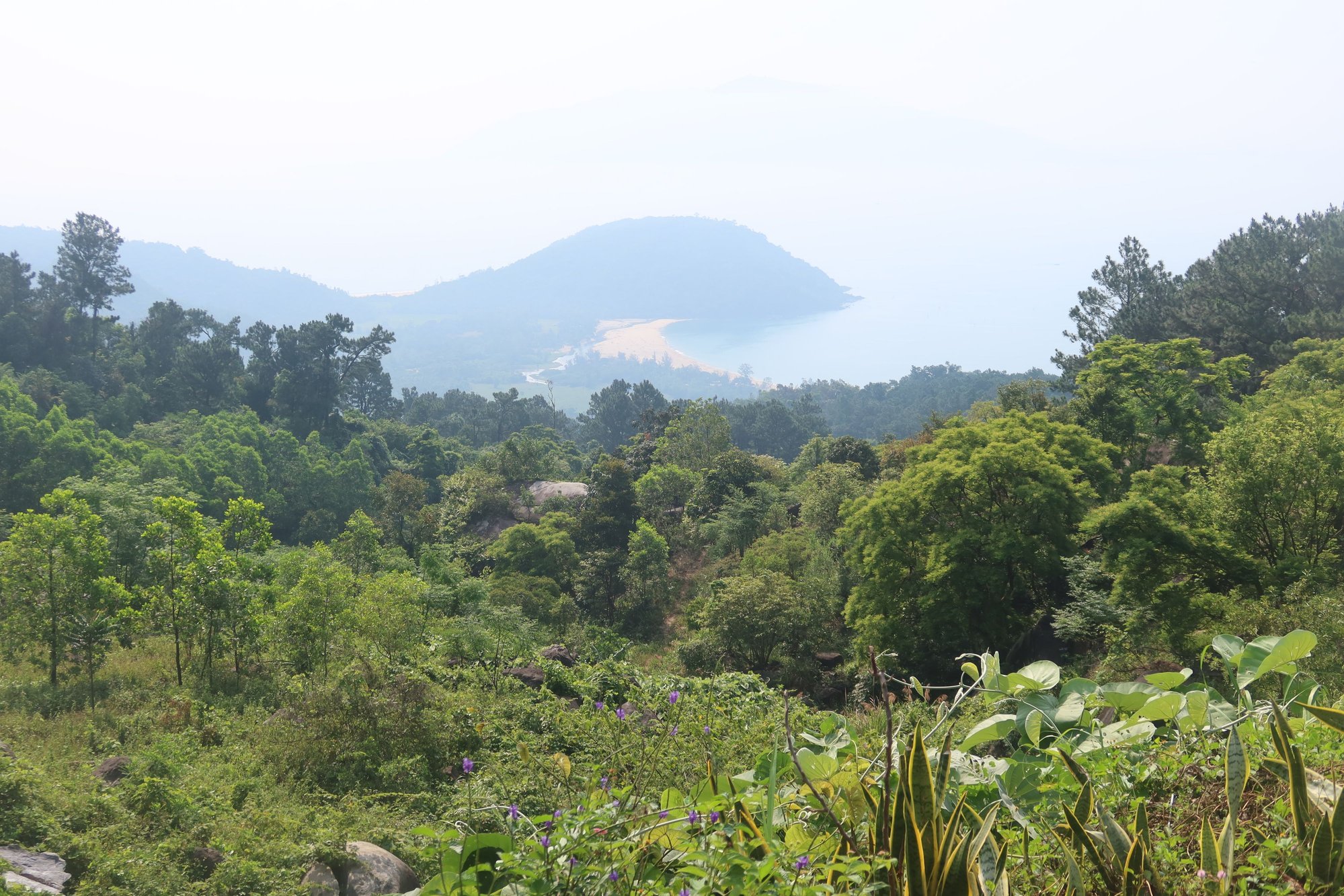
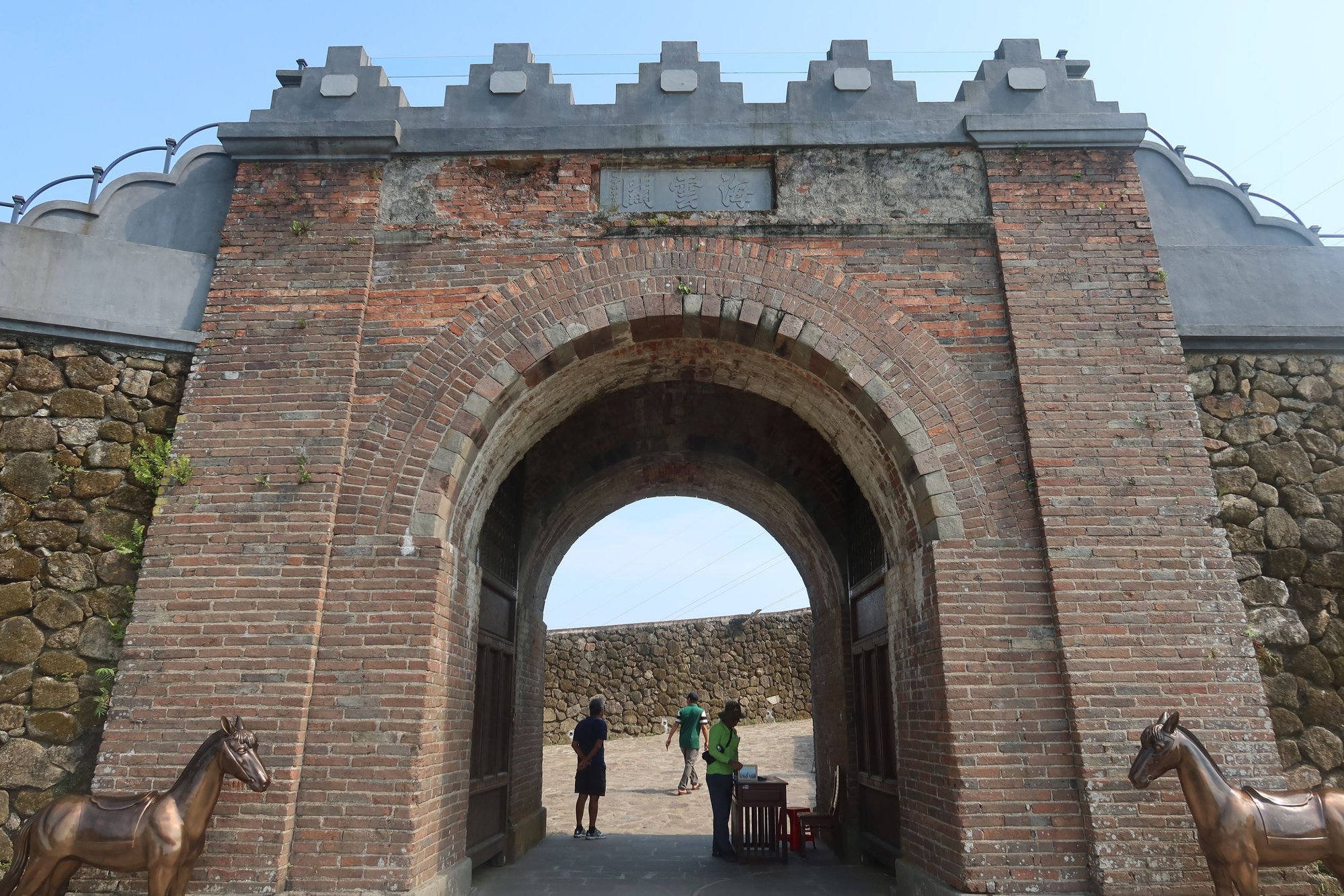
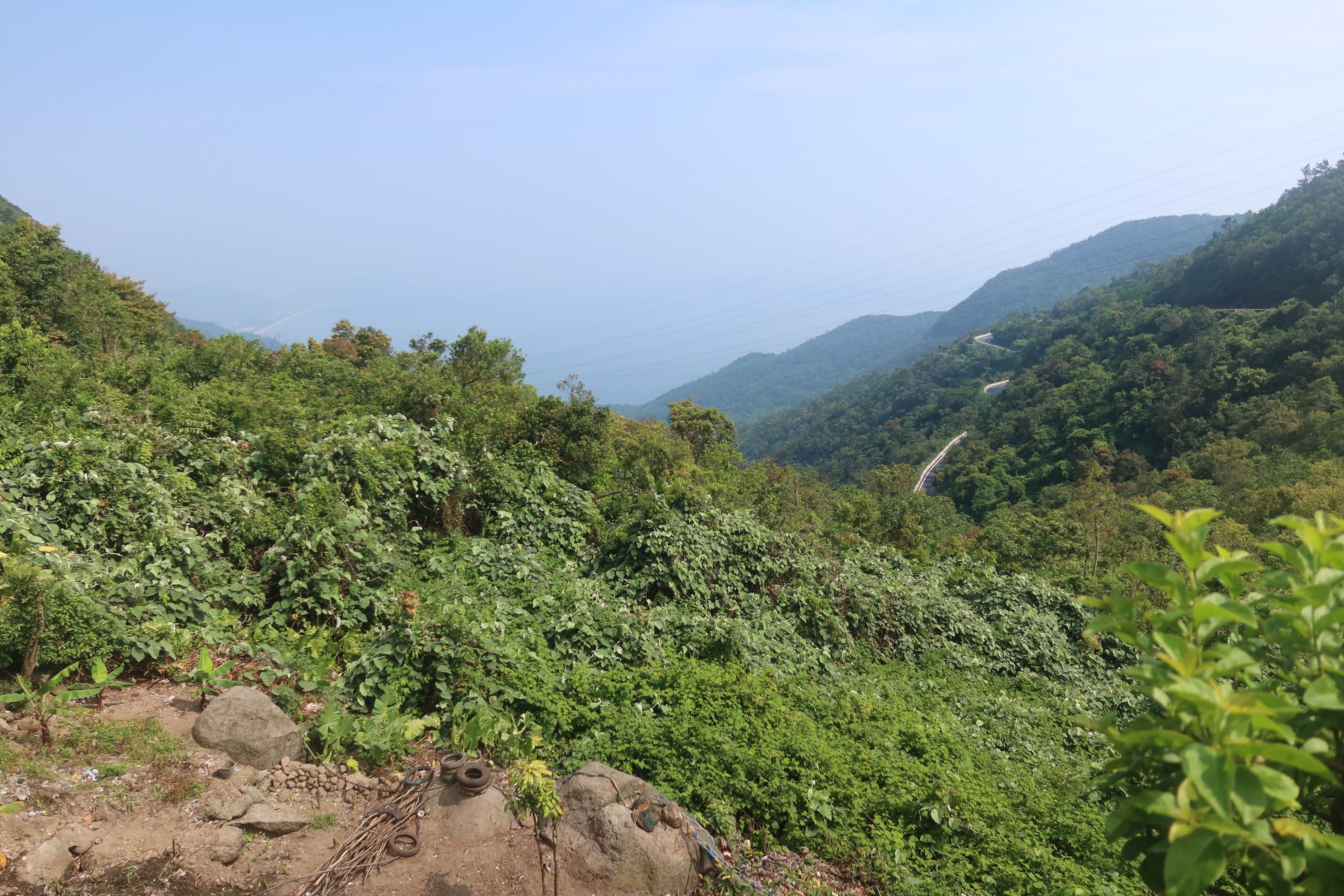
We hit the road at 7:00 AM this morning to continue our journey north. From Hoi An we drove through Danang and over the Hai Van Pass. Located between the imperial city of Hue to the north and the ports of Danang and Hoi An to the south, the Hai Van Pass sits at a strategic high point linking the political and economic heart of Vietnam during the 19th century. At the top of the pass is a fort constructed during the Nguyen Dynasty to prevent the French from advancing on Hue from the south. Today the fort offers beautiful views of the pass, the surrounding mountains, and the South China Sea below. Hai Van means Sea of Clouds in Vietnamese.
From Hai Van Pass it was onwards to Hue (pronounced Hoo'way). We arrived in the former imperial capital at just before 11:00 AM. We are staying at Azerai La Residence, the former home of the French colonial governor - a lovely hotel in the Asian grande-dame style. As relaxing and comfortable as our hotel was, Hue was calling.
We walked down Le Loi Avenue, passing by the Hoi Chi Minh Museum (closed on Mondays), the high school that Uncle Ho attended, and a monument built by one of the Nguyen emperors commemorating a battle. Further down is Le Cercle Sportif, a club for the French during the protectorate era, where we enjoyed a light lunch of spring rolls and pizzas by the river.
Our primary agenda for the afternoon was a visit to the Imperial City complex. Built during the reign of the Nguyen Dynasty in the early 1800s, the Vietnamese seat of imperial power (limited if not in name only, as Vietnam was already under French rule at the time) was significantly destroyed during the war in the 1960s and subsequently rebuilt. The "city" is home to several large public halls, residences, temples, gardens, etc., all surrounded by defensive walls and enclosed within a moat.
We entered via the built-to-inspire Noon Gate. Once inside, the passageway leads directly to the Palace of Supreme Harmony, where the emperor received his guests. The gold-and-yellow hall is made of wood and lacquered. Decorating the interior are dragon and phoenix motifs and poems written in classical Chinese. Leading away from the Palace of Supreme Harmony along the central axis are buildings designated for servant uses and a series of long corridors leading to the Kien Trung Pavilion, with a Vietnamese and Chinese exterior and European interior. From here we visited some of the eastern precincts, visiting the Royal and Reading Pavilions and strolling among its gardens. West of the central axis are a series of ancestral temples built to worship the former Nguyen kings (remember, ancestor worship is part of the religious belief system in Vietnam as it is throughout East Asia) and residents of the Queen Mother or Grandmother. From the northwest corner of the complex, we made our way around the complex walls and exited via the East Gate. Even though the imperial complex is a reconstruction with much of the original long gone, we felt as though we had a good taste of the history and culture of the place through photographs and artwork. To top it off, the low number of visitors meant we had much of the places to ourselves. All in all, we spent about three hours here and felt we did it justice.
In keeping with the imperial theme, we dined at Kim Long Fine Dining inside the Ancient Hue Garden Houses hotel. The restaurant specializes in some of the dishes enjoyed by the emperors of times past. As is being routine in Vietnamese restaurants, we chose to eat family style. Our favorites were the baby clams cooked with glass noodles, the pork ribs cooked in a tasty sauce, and the tamarind grilled fish. From the restaurant, we hailed a taxi cab via Grab, all for the grand sum of two dollars.
On the Way Up Hai Van Pass
Fort at Hai Van Pass
Lookout from Top of Hai Van Pass

Citadel, Imperial City Complex
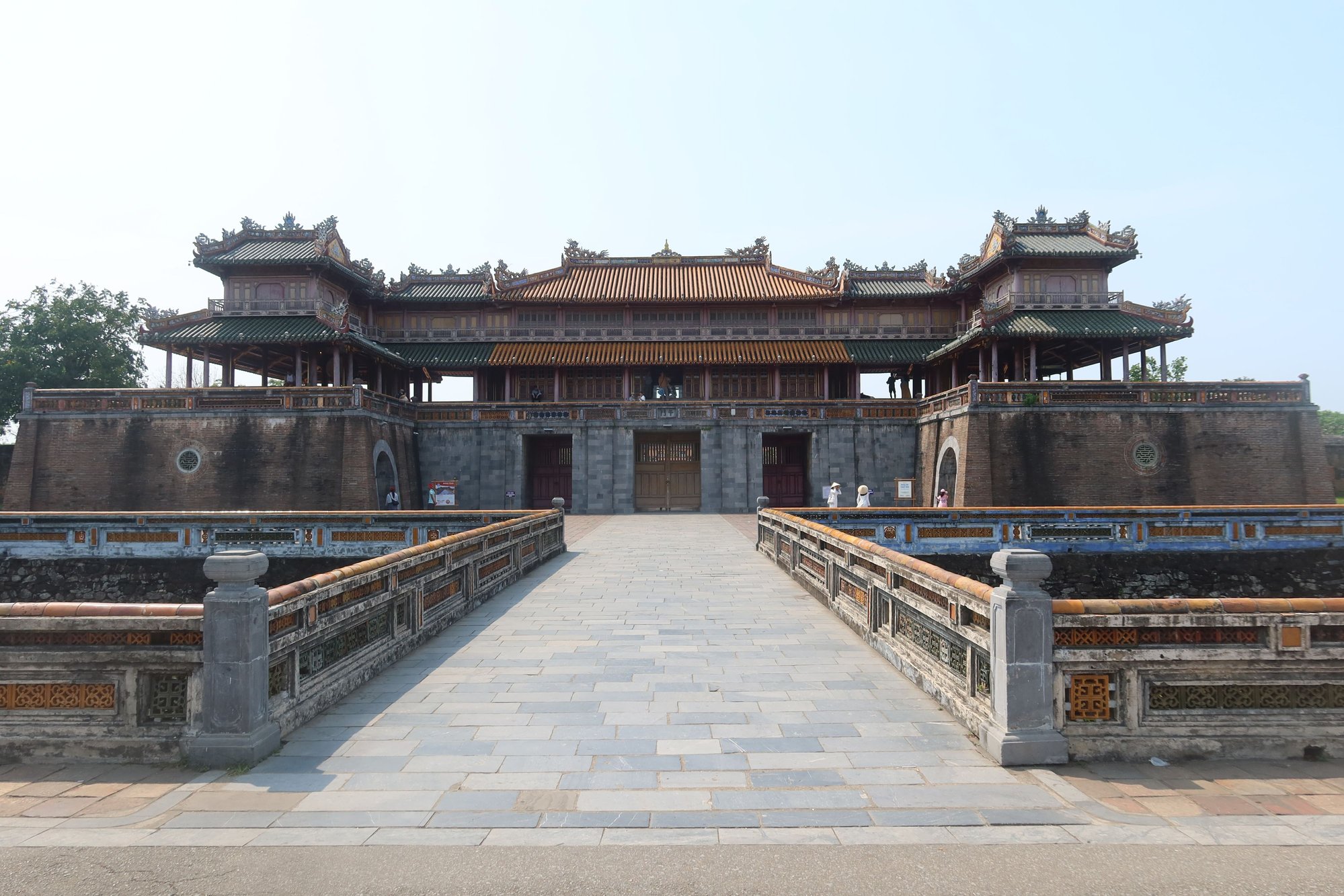
Noon Gate, Imperial City Complex
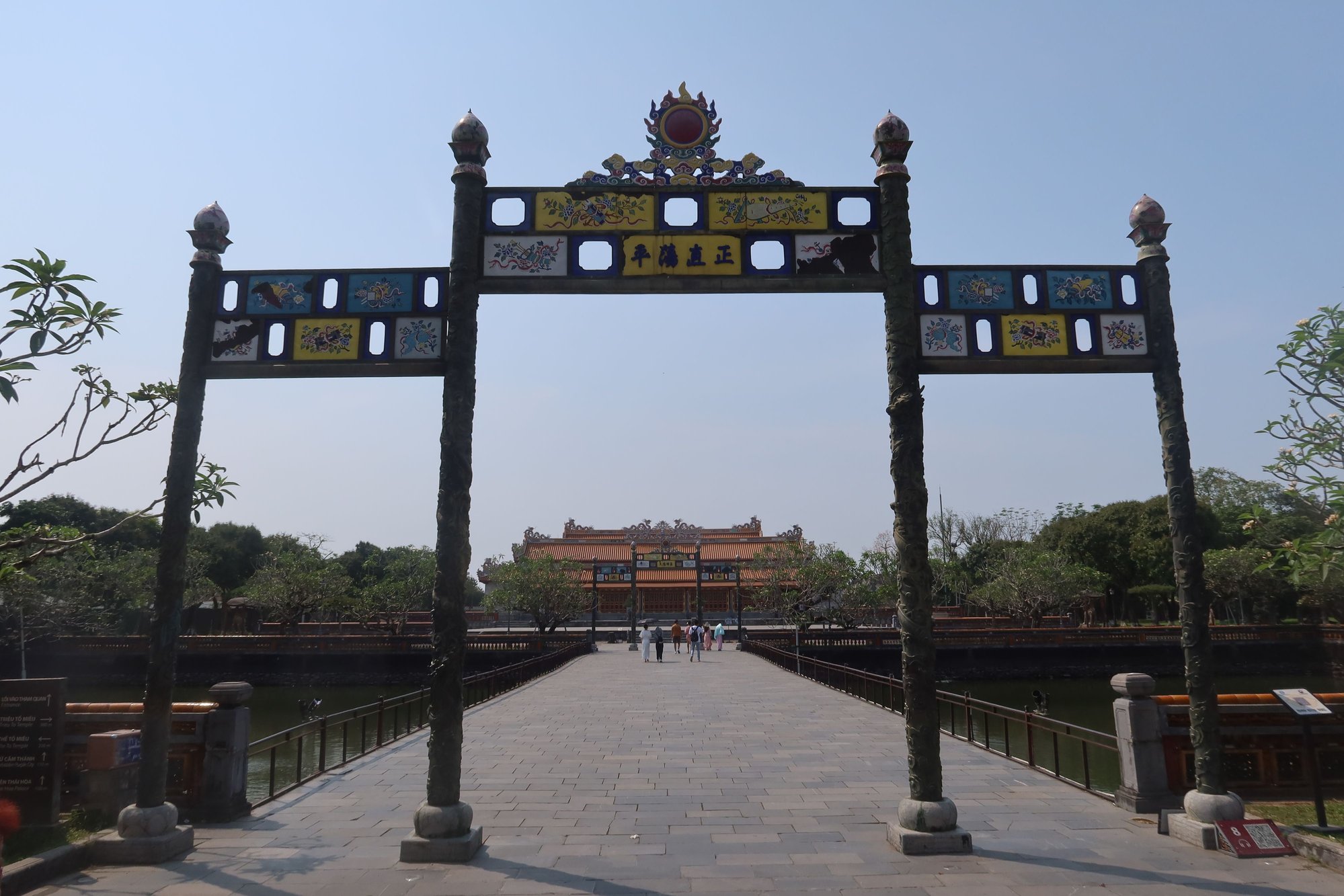
Palace of Supreme Harmony, Imperial City Complex
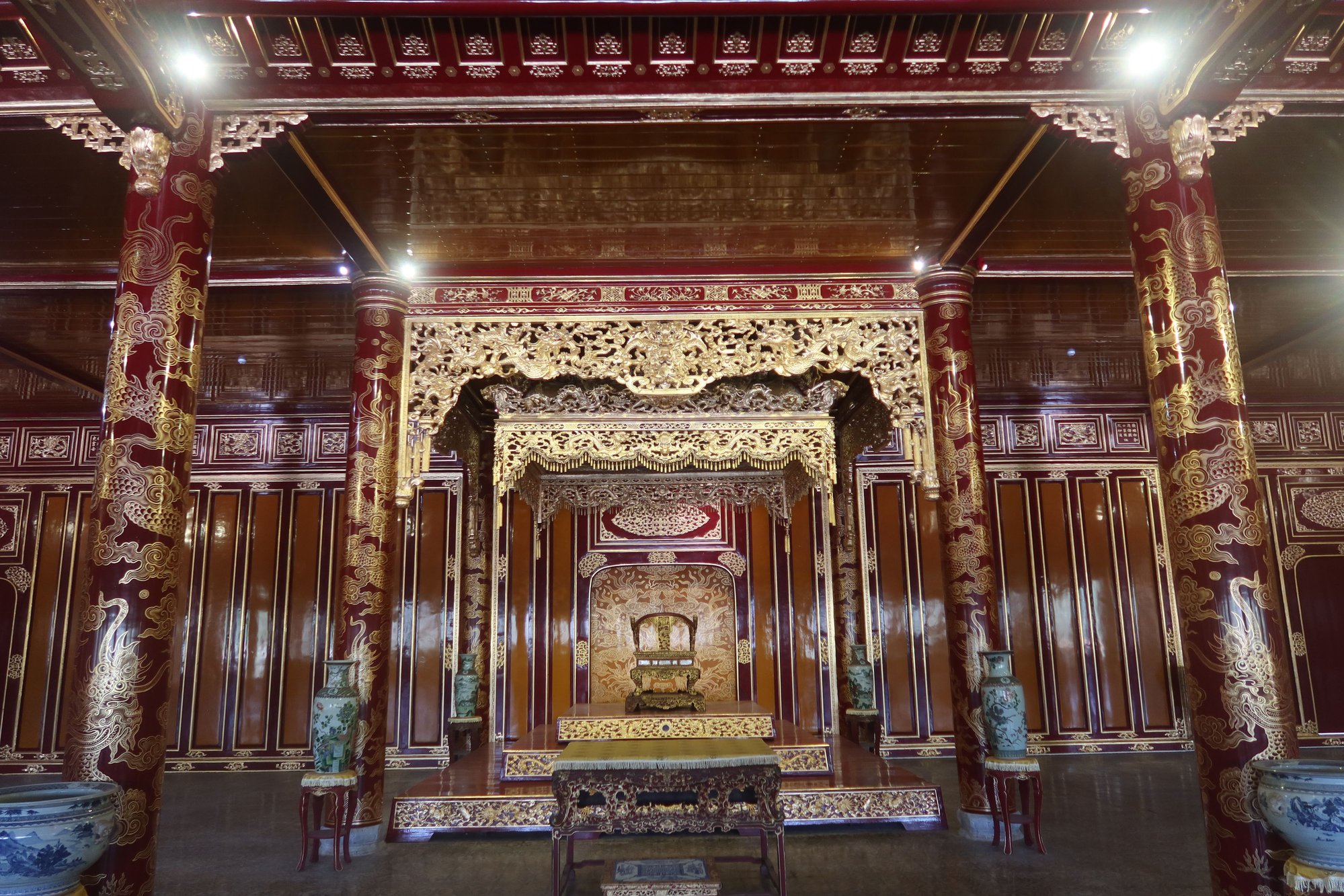
Throne inside Palace of Supreme Harmony, Imperial City Complex
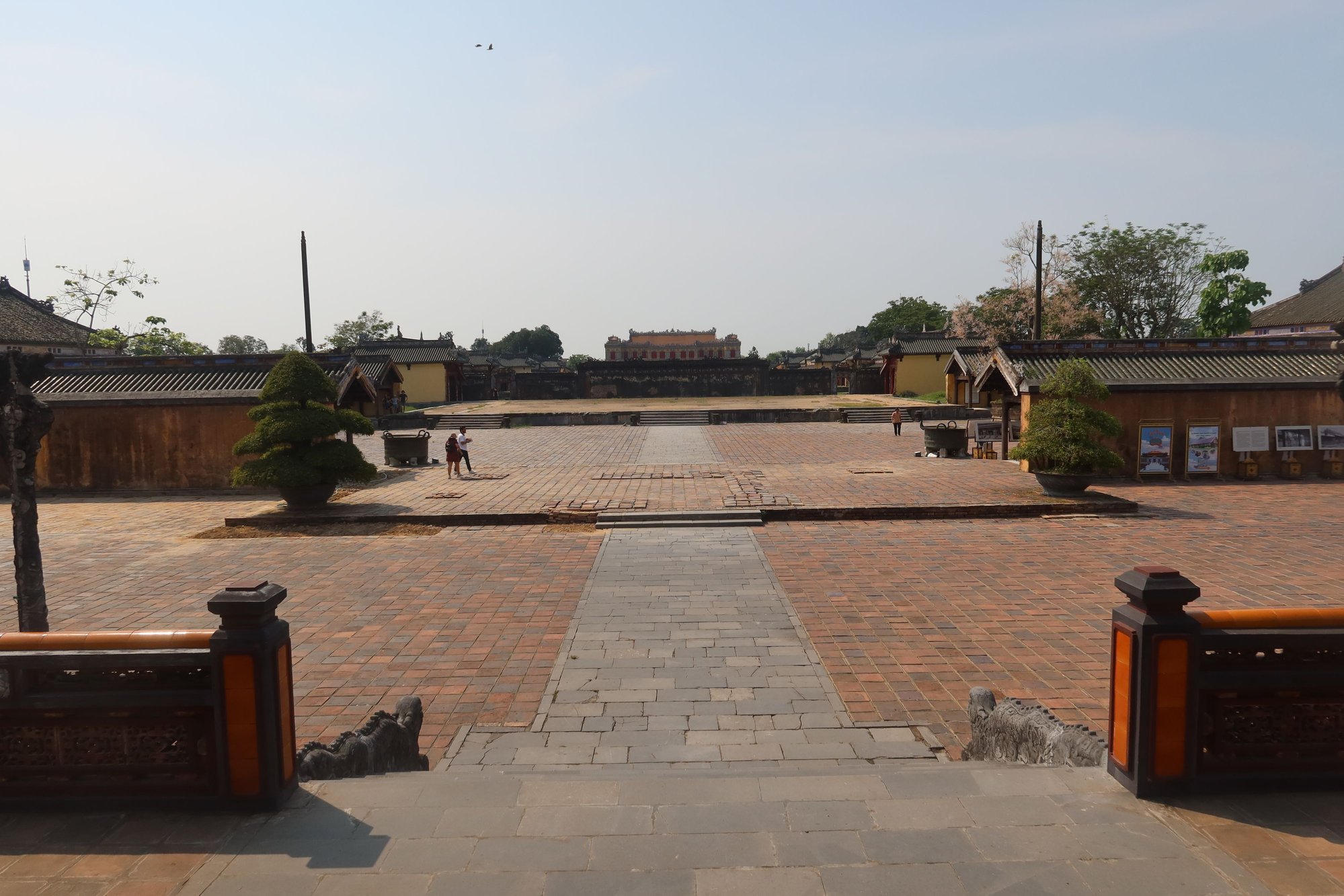
Central Axis, Imperial City Complex
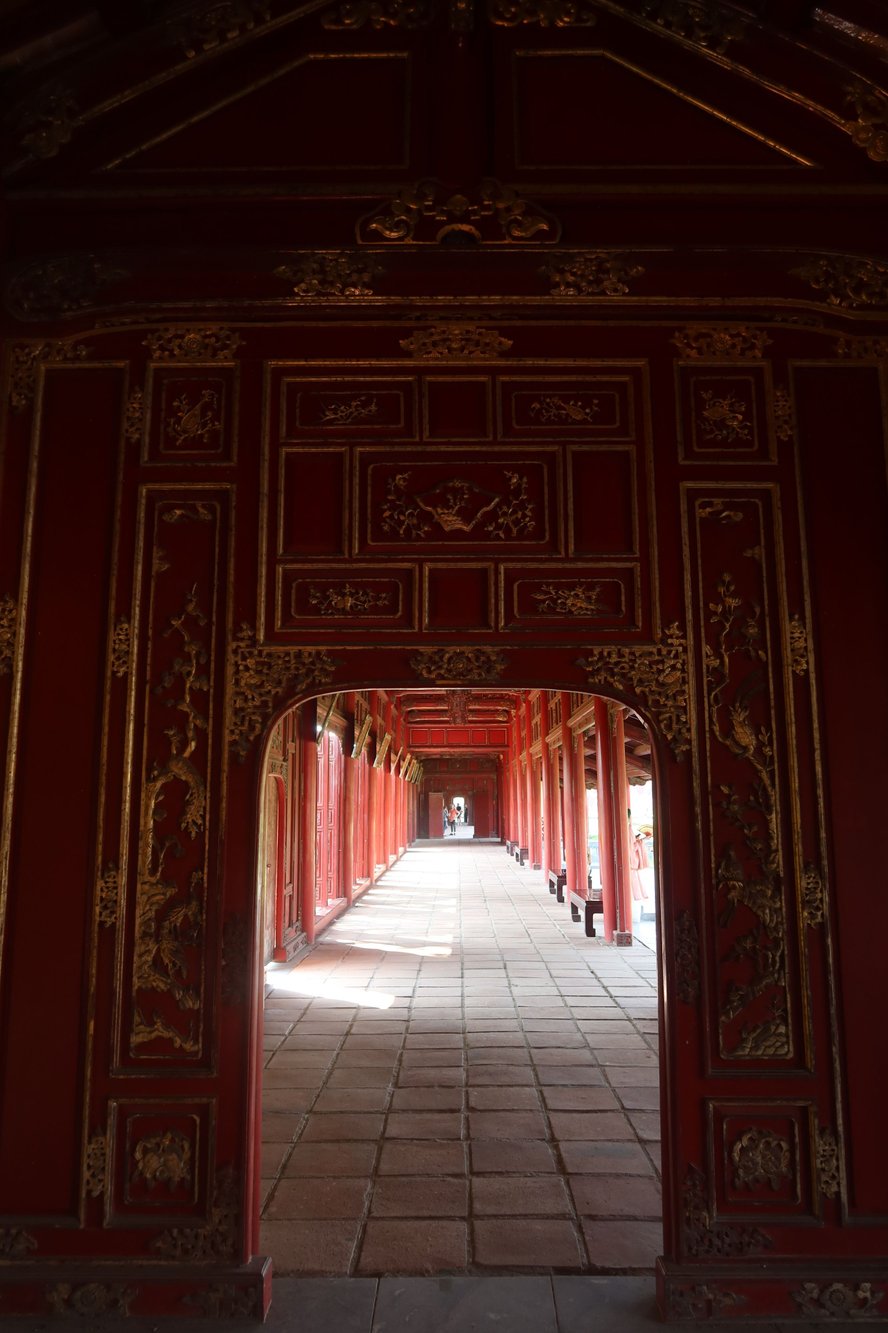
Corridor, Imperial City Complex
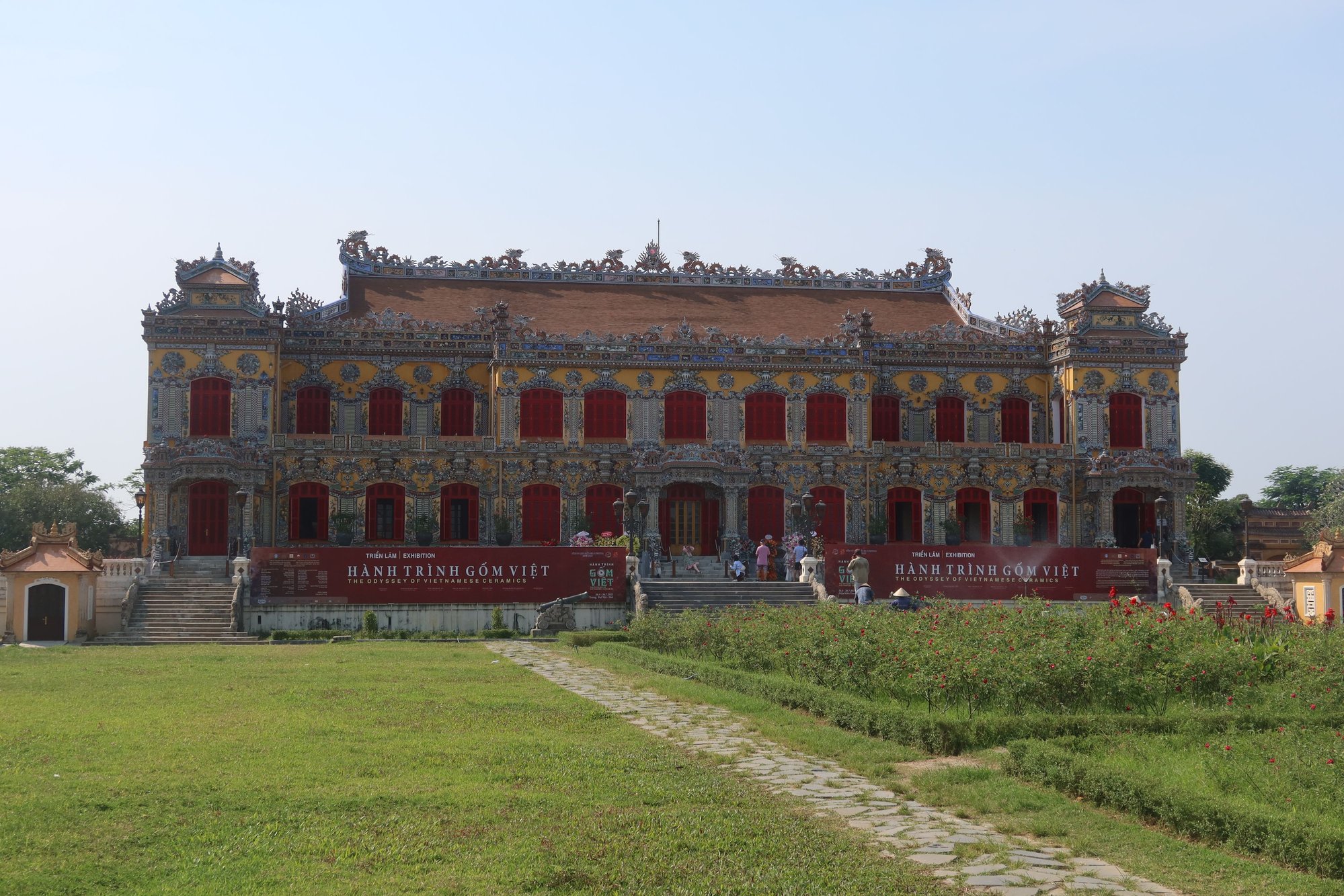
Kien Trung Pavilion, Imperial City Complex
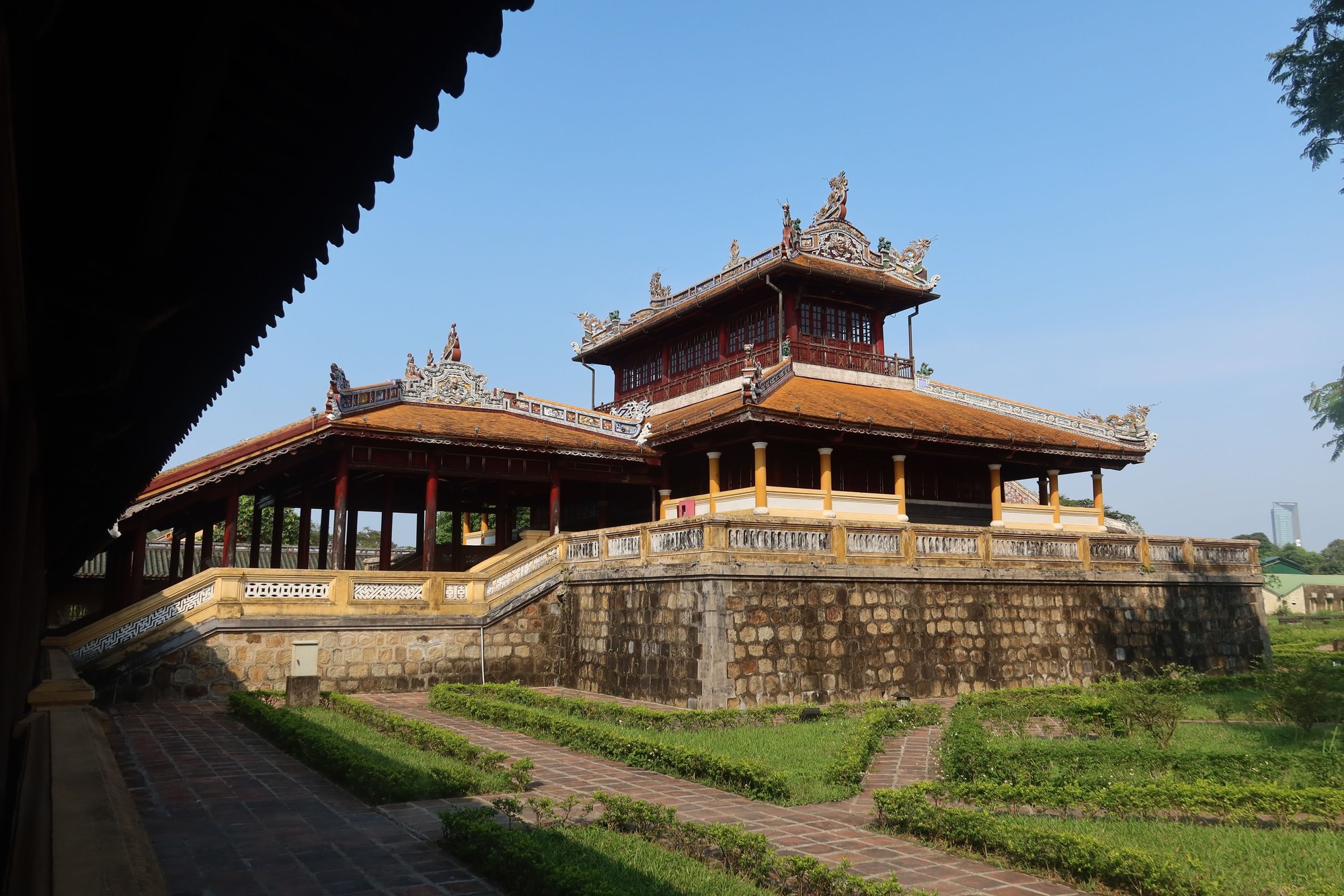
Royal Theater, Imperial City Complex
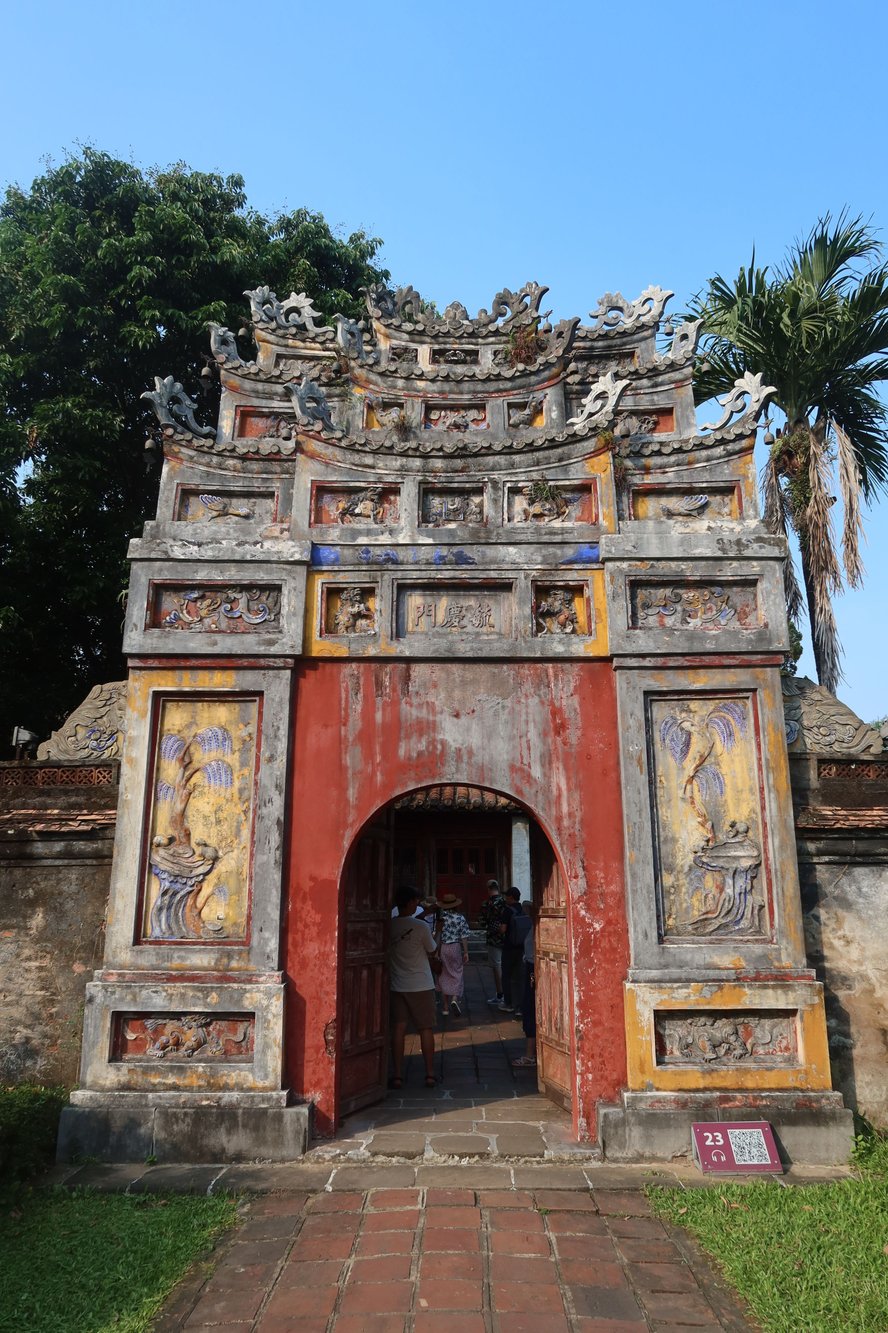
Gate, Imperial City Complex

Gate, Imperial City Complex
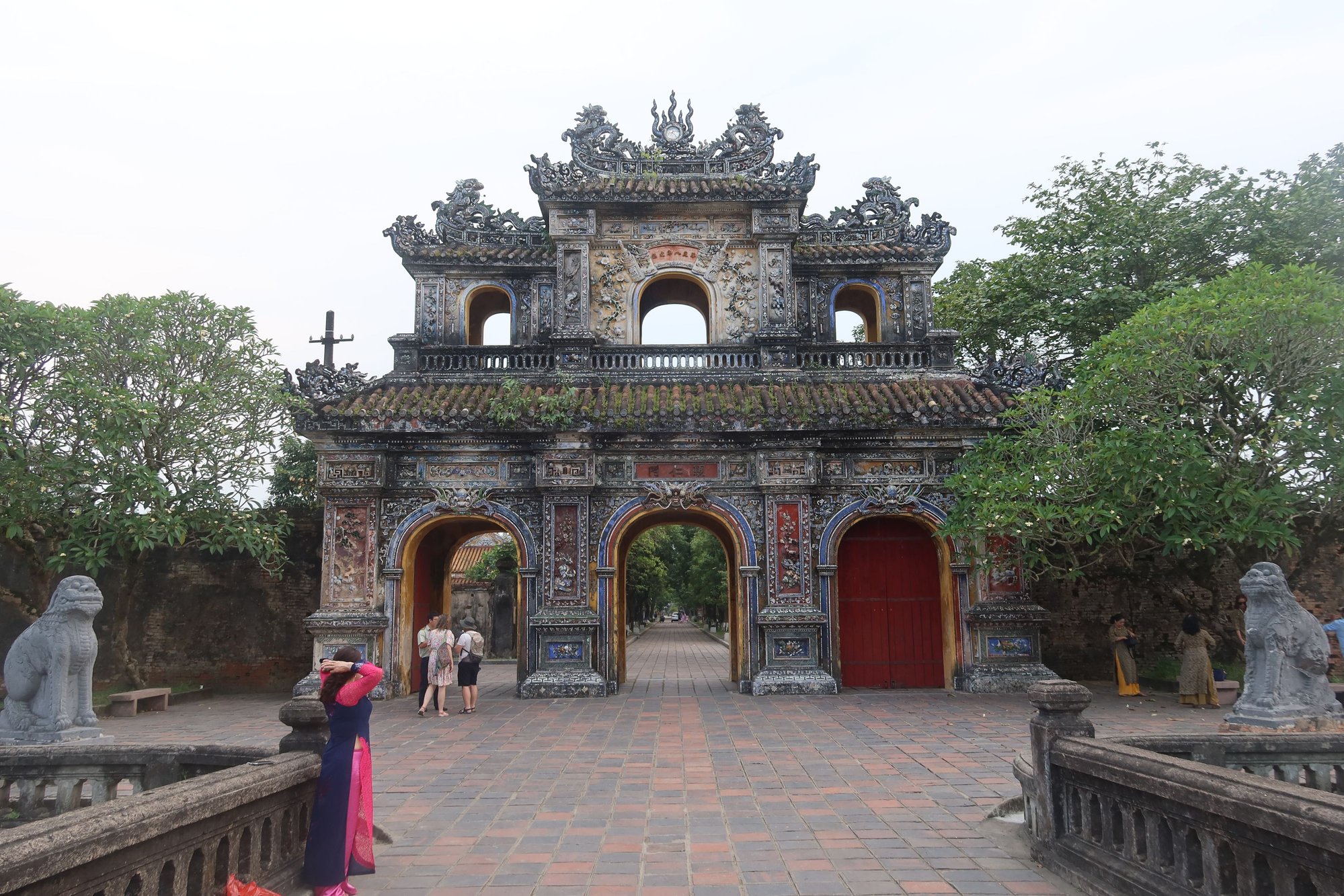
East Gate, Imperial City Complex
We hit the road at 7:00 AM this morning to continue our journey north. From Hoi An we drove through Danang and over the Hai Van Pass. Located between the imperial city of Hue to the north and the ports of Danang and Hoi An to the south, the Hai Van Pass sits at a strategic high point linking the political and economic heart of Vietnam during the 19th century. At the top of the pass is a fort constructed during the Nguyen Dynasty to prevent the French from advancing on Hue from the south. Today the fort offers beautiful views of the pass, the surrounding mountains, and the South China Sea below. Hai Van means Sea of Clouds in Vietnamese.
From Hai Van Pass it was onwards to Hue (pronounced Hoo'way). We arrived in the former imperial capital at just before 11:00 AM. We are staying at Azerai La Residence, the former home of the French colonial governor - a lovely hotel in the Asian grande-dame style. As relaxing and comfortable as our hotel was, Hue was calling.
We walked down Le Loi Avenue, passing by the Hoi Chi Minh Museum (closed on Mondays), the high school that Uncle Ho attended, and a monument built by one of the Nguyen emperors commemorating a battle. Further down is Le Cercle Sportif, a club for the French during the protectorate era, where we enjoyed a light lunch of spring rolls and pizzas by the river.
Our primary agenda for the afternoon was a visit to the Imperial City complex. Built during the reign of the Nguyen Dynasty in the early 1800s, the Vietnamese seat of imperial power (limited if not in name only, as Vietnam was already under French rule at the time) was significantly destroyed during the war in the 1960s and subsequently rebuilt. The "city" is home to several large public halls, residences, temples, gardens, etc., all surrounded by defensive walls and enclosed within a moat.
We entered via the built-to-inspire Noon Gate. Once inside, the passageway leads directly to the Palace of Supreme Harmony, where the emperor received his guests. The gold-and-yellow hall is made of wood and lacquered. Decorating the interior are dragon and phoenix motifs and poems written in classical Chinese. Leading away from the Palace of Supreme Harmony along the central axis are buildings designated for servant uses and a series of long corridors leading to the Kien Trung Pavilion, with a Vietnamese and Chinese exterior and European interior. From here we visited some of the eastern precincts, visiting the Royal and Reading Pavilions and strolling among its gardens. West of the central axis are a series of ancestral temples built to worship the former Nguyen kings (remember, ancestor worship is part of the religious belief system in Vietnam as it is throughout East Asia) and residents of the Queen Mother or Grandmother. From the northwest corner of the complex, we made our way around the complex walls and exited via the East Gate. Even though the imperial complex is a reconstruction with much of the original long gone, we felt as though we had a good taste of the history and culture of the place through photographs and artwork. To top it off, the low number of visitors meant we had much of the places to ourselves. All in all, we spent about three hours here and felt we did it justice.
In keeping with the imperial theme, we dined at Kim Long Fine Dining inside the Ancient Hue Garden Houses hotel. The restaurant specializes in some of the dishes enjoyed by the emperors of times past. As is being routine in Vietnamese restaurants, we chose to eat family style. Our favorites were the baby clams cooked with glass noodles, the pork ribs cooked in a tasty sauce, and the tamarind grilled fish. From the restaurant, we hailed a taxi cab via Grab, all for the grand sum of two dollars.
On the Way Up Hai Van Pass
Fort at Hai Van Pass
Lookout from Top of Hai Van Pass
Citadel, Imperial City Complex
Noon Gate, Imperial City Complex
Palace of Supreme Harmony, Imperial City Complex
Throne inside Palace of Supreme Harmony, Imperial City Complex
Central Axis, Imperial City Complex
Corridor, Imperial City Complex
Kien Trung Pavilion, Imperial City Complex
Royal Theater, Imperial City Complex
Gate, Imperial City Complex
Gate, Imperial City Complex
East Gate, Imperial City Complex
Apr 28th, 2025 | 01:16 PM
#30
Joined: Jan 2004
Posts: 3,618
Likes: 0
It was a little busier when we were at the Imperial City complex, but by no means crowded. We happened to visit on a day of remembrance marking the death of two of the kings. Some of the descendents were there, in traditional attire, for processions and ceremonies.
We almost stayed at Hue Ancient Garden Houses but changed late in the going because we were concerned it might be too isolated (Grab is inexpensive, but we love to get around on foot). Sounds like we missed a good restaurant!
We almost stayed at Hue Ancient Garden Houses but changed late in the going because we were concerned it might be too isolated (Grab is inexpensive, but we love to get around on foot). Sounds like we missed a good restaurant!
Apr 29th, 2025 | 08:47 AM
#31
Original Poster
Joined: Sep 2012
Posts: 3,517
Likes: 0
ms_go, I'm with you in terms of exploring on foot as it is our preference too. One of our favorite things to do when we arrive in a new city is to pick a neighborhood or section of town and just wander around, admire the architecture, browse some shops, and enjoy a drink or two at a cafe.
Hue Past and Present
The Nguyen Dynasty emperors and their families were buried in Hue and the surrounding area. This morning we hired a car with driver from our hotel to check out a handful of these royal mausoleums. Among a dozen or so options, after reading through guidebooks (Rough Guides and the older Lonely Planer versions were most helpful) and browsing pictures, we settled on Tu Duc, Ming Manh, and Khai Dinh.
We began our tour of the mausoleums at 8:00 AM, in order to beat the tour groups. Tu Duc Mausoleum was the largest of the three. The mausoleum consists of a series of temples, much of it was closed for reconstruction, tombs for the emperor and his family, and a couple of lakeside pavilions. Built in the style of the Imperial City complex with a mix of Vietnamese and Chinese elements, the temples featured ancestral altars to the emperor and members of his family. Motifs of phoenix and dragons are found throughout the site, as are different classical Chinese poems that speak to the emperor's qualities and philosophies. The mausoleum also incorporated Daoist principles with the layout of the burial sites. The incense offerings suggest that the emperor and his family continues to be worshipped to this day. This was a bit surprising to us given that the Communist Party is officially atheist and believes in its own supremacy. Tu Duc's mausoleum is massive and took us almost 90 minutes to tour.
About 15 minutes away by car is Ming Manh's mausoleum. Unlike Tu Duc's mausoleum, Ming Manh's final resting place is laid out on a central axis, similar to the layout of the Imperial City complex. Along the central axis are the entrance gate, the stele detailing the emperor's accomplishments (written in classical Chinese), the ancestral temple, and the tomb itself (closed to the public). On either side of the central axis are two lakes, as if the buildings were on small islands floating inside it.
The smallest of the three yet the most intricately-detailed or richly-decorated is Khai Dinh's mausoleum. Laid out on a central axis similar to Ming Manh's mausoleum, the Khai Dinh complex features an entrance gate, a walkway flanked by guardsmen and animals, a stele, and the ancestral temple and tomb. Unlike the other mausoleums, which were constructed of wood and lacquered as with the imperial complex, Khai Dinh's uses iron, steel, and concrete. Additionally the main temple was built in the European style with Vietnamese and Chinese ornamentation. The interior, featuring tilework all over, is exquisite. Having visited, we understand why some refer to it as the "Versailles" of the Nguyen mausoleums.
After four hours at the mausoleums, we went to Dan Nam Giao, where emperors past made offerings to their gods and ancestors. From here we visited An Dinh Palace, once the home of Emperor Khai Dinh when he was crown prince. Similar to his mausoleum, the home is built in the European style. The interior reminds us of some of the upper middle class homes from this era found in France.
For lunch, we dined at Y Thao Garden, a restaurant designed in the style of an imperial teahouse set within a garden. Serving Imperial Vietnamese cuisine, we enjoyed some absolutely divine pork on lemongrass skewers (thanks for the recommendation, ms_go), spring rolls, and bowls of bun bo Hue (rice noodle soup with beef, pork, and crab).
From here it was back to our hotel for a couple hours of resting. For our final activity in Hue, we booked a sunset cruise on the Perfume River with a visit to Thien Mu Pagoda. The genteel trip up the Perfume River from our hotel to the Pagoda offered us a good view of the riverscape as well as the life along and in it. It took about 30 minutes to reach the pagoda. Thien Mu Pagoda refers to the seven-story pagoda on the site although the pagoda is part of a larger Buddhist temple. We worshipped at the temple where the emperors worshipped and wandered its ground. After the visit, it was back on the ship for a sail back to the city center as the sun sets and the lights of the city come on.
For dinner, we were looking for something other than Vietnamese. Our hotel recommended La Carambole, a French bistro. A couple of us enjoyed our steak frites while the others dined on duck a l'orange and grilled sausages. After dinner, we strolled back to our hotel along the riverfront, enjoying some of the city lights and the gentle breeze coming from the water as well as some of the preparations for tomorrow evening's festivities.
Even though our time in Hue has been brief, we like the city very much. As a matter of fact, we are glad we braved the heat and humidity to come in April as our time in central Vietnam has been outstanding. Had we traveled in November, as was the other option, we would have passed over it.
Tomorrow is the 50th anniversary of liberation and reunification for the Vietnamese, and the celebrations have already begun. The mood across Hue is one of festivity.
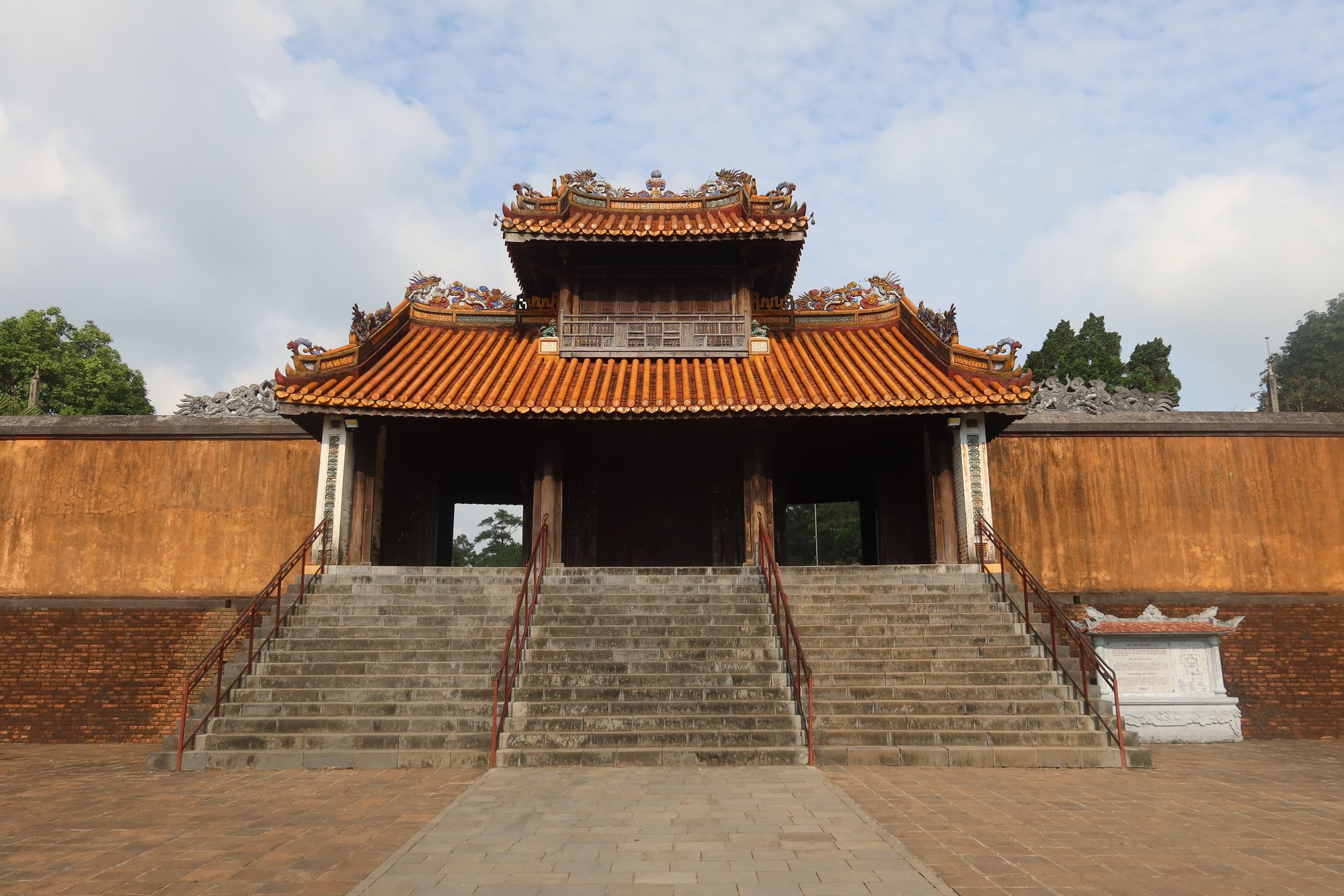
Entrance Gate to Ancestral Temple, Tu Duc Mausoleum
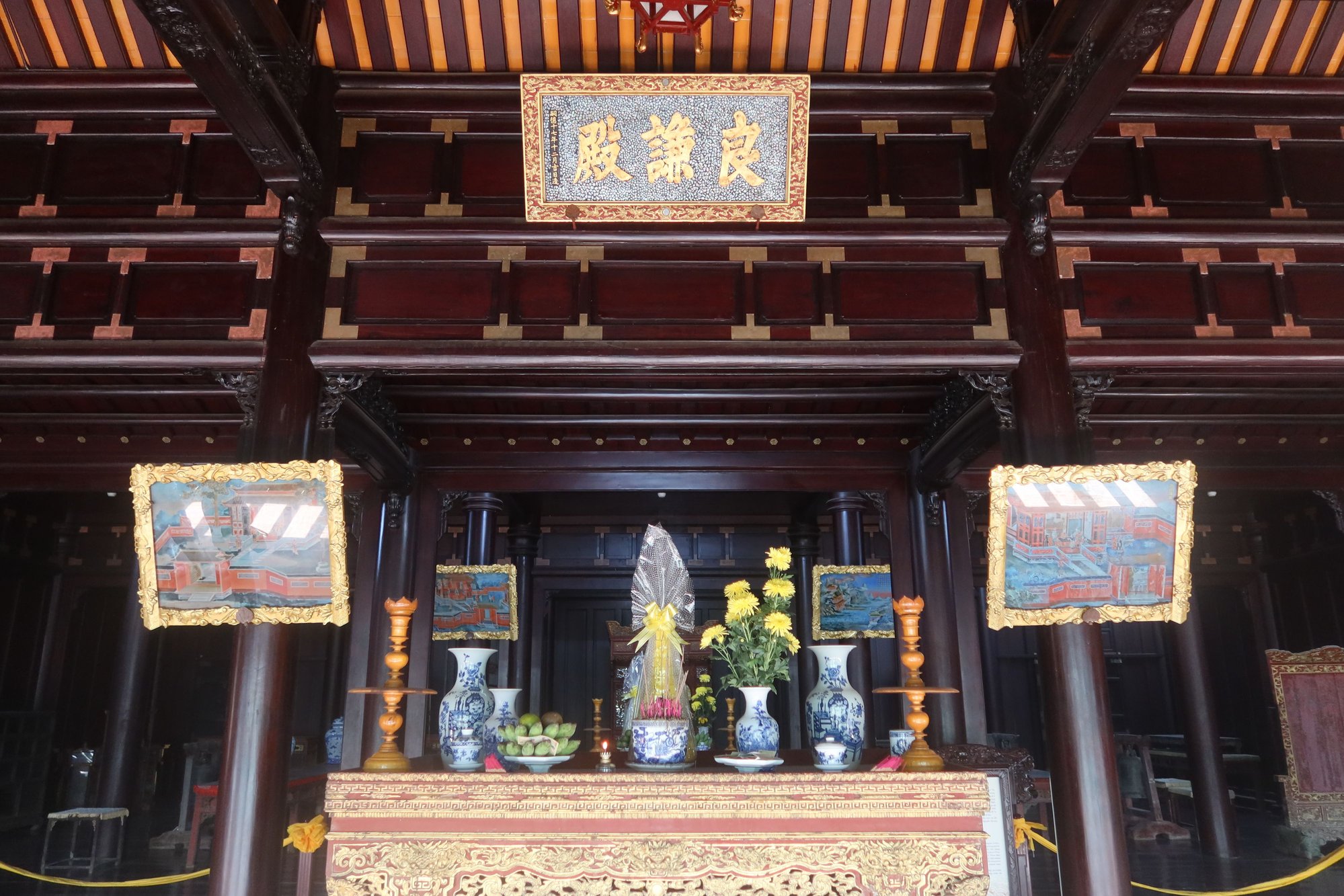
Ancestral Altar, Tu Duc Mausoleum
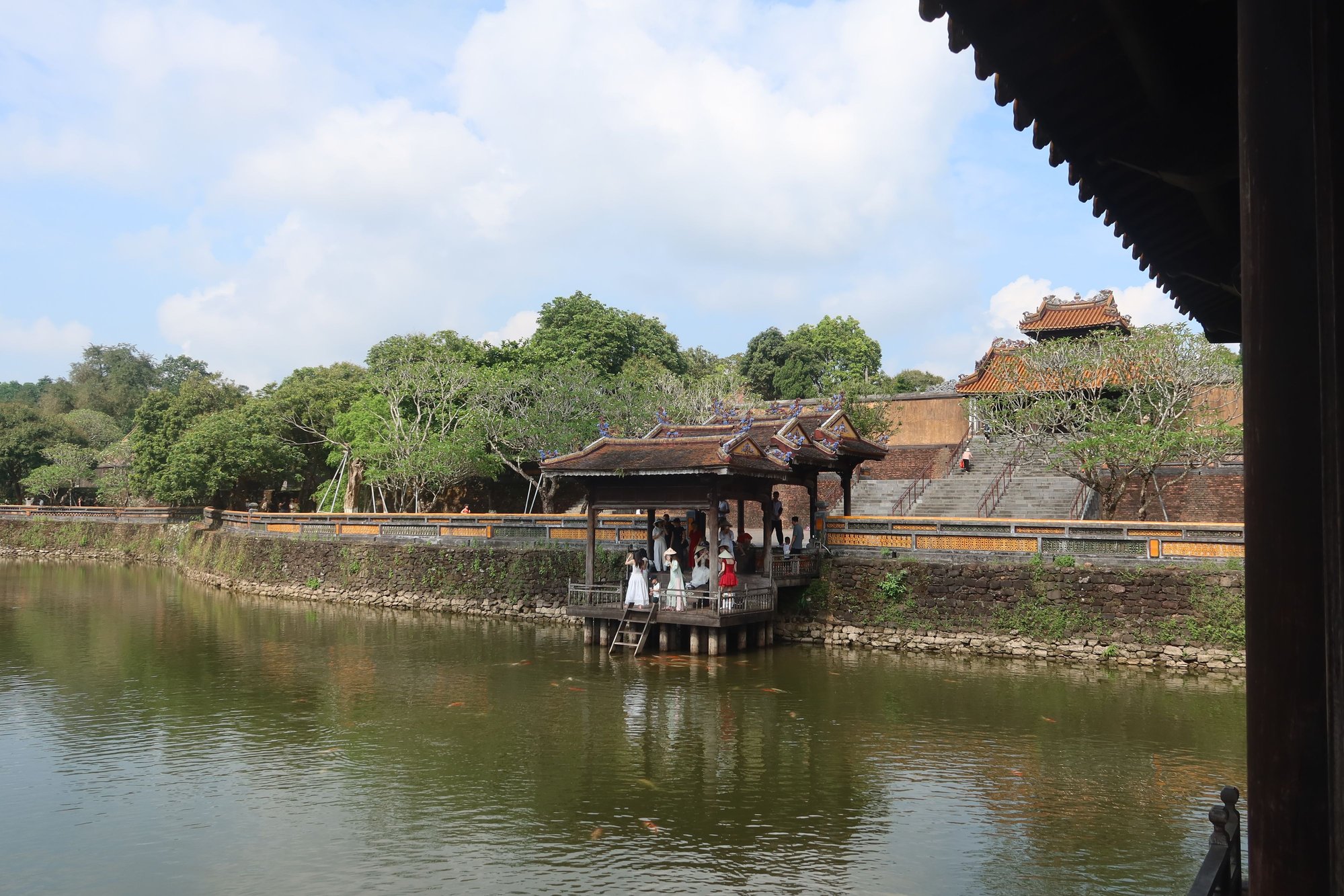
Lakeside Pavilion, Tu Duc Mausoleum
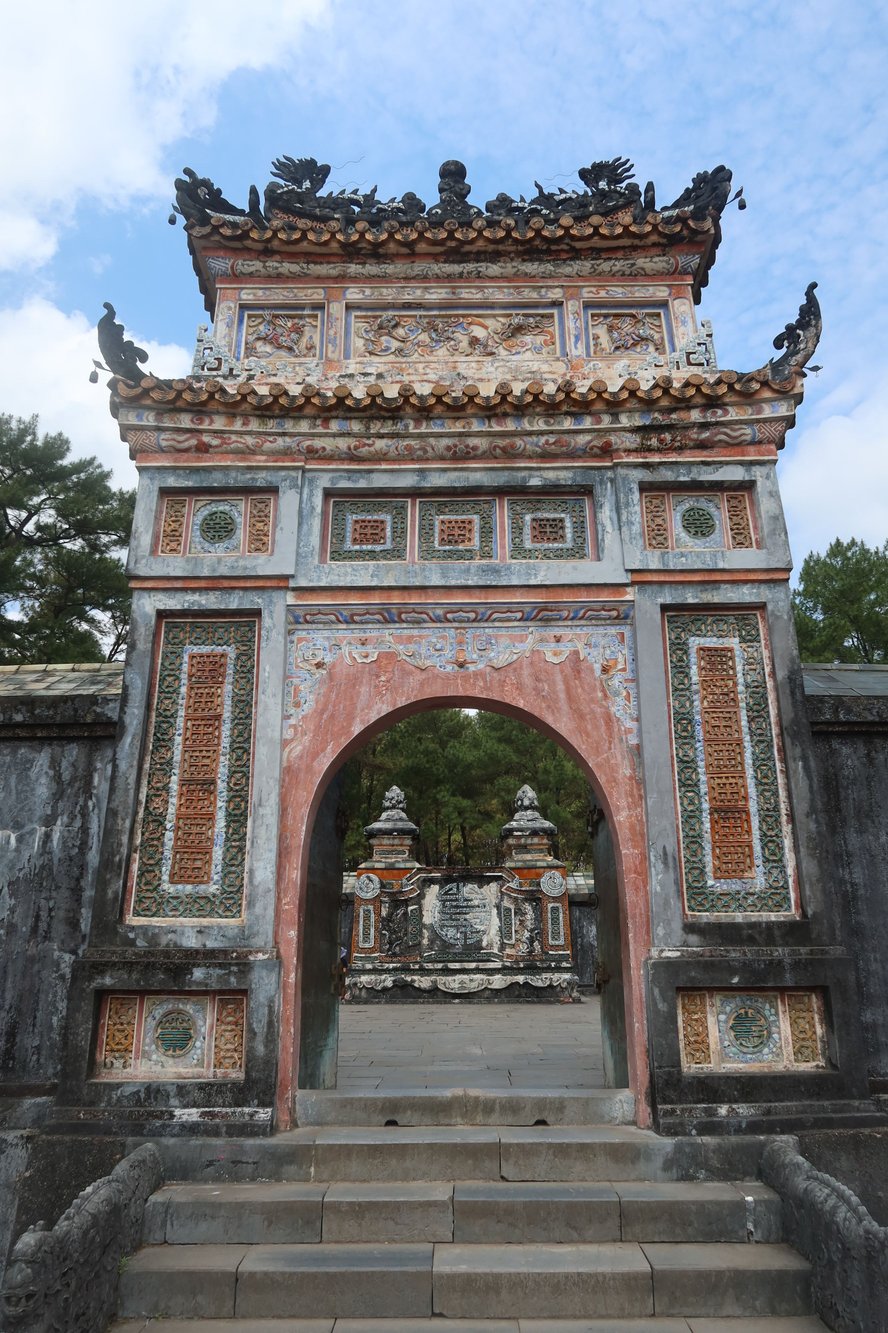
Entrance Gate to Tomb, Tu Duc Mausoleum
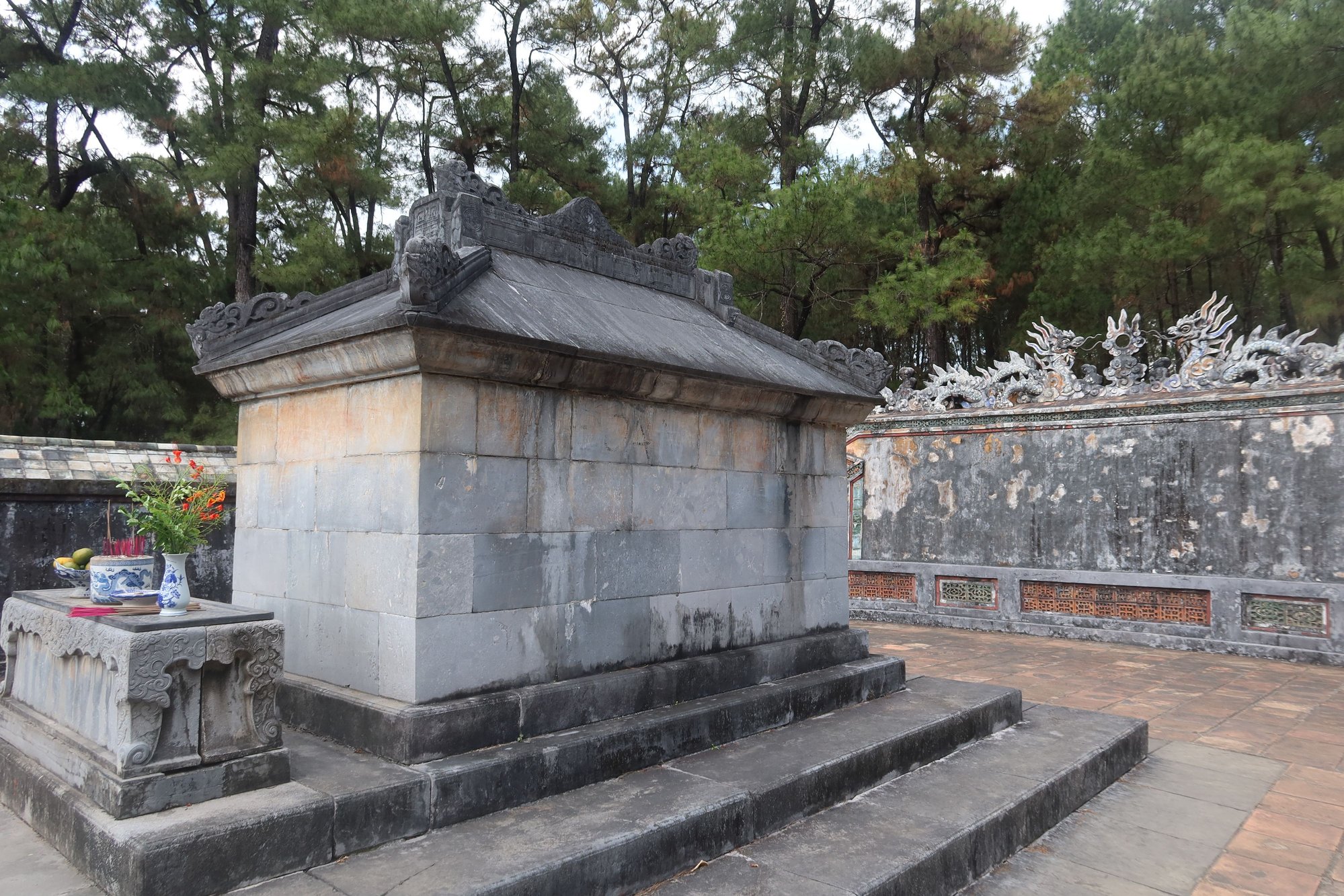
Tu Duc's Tomb
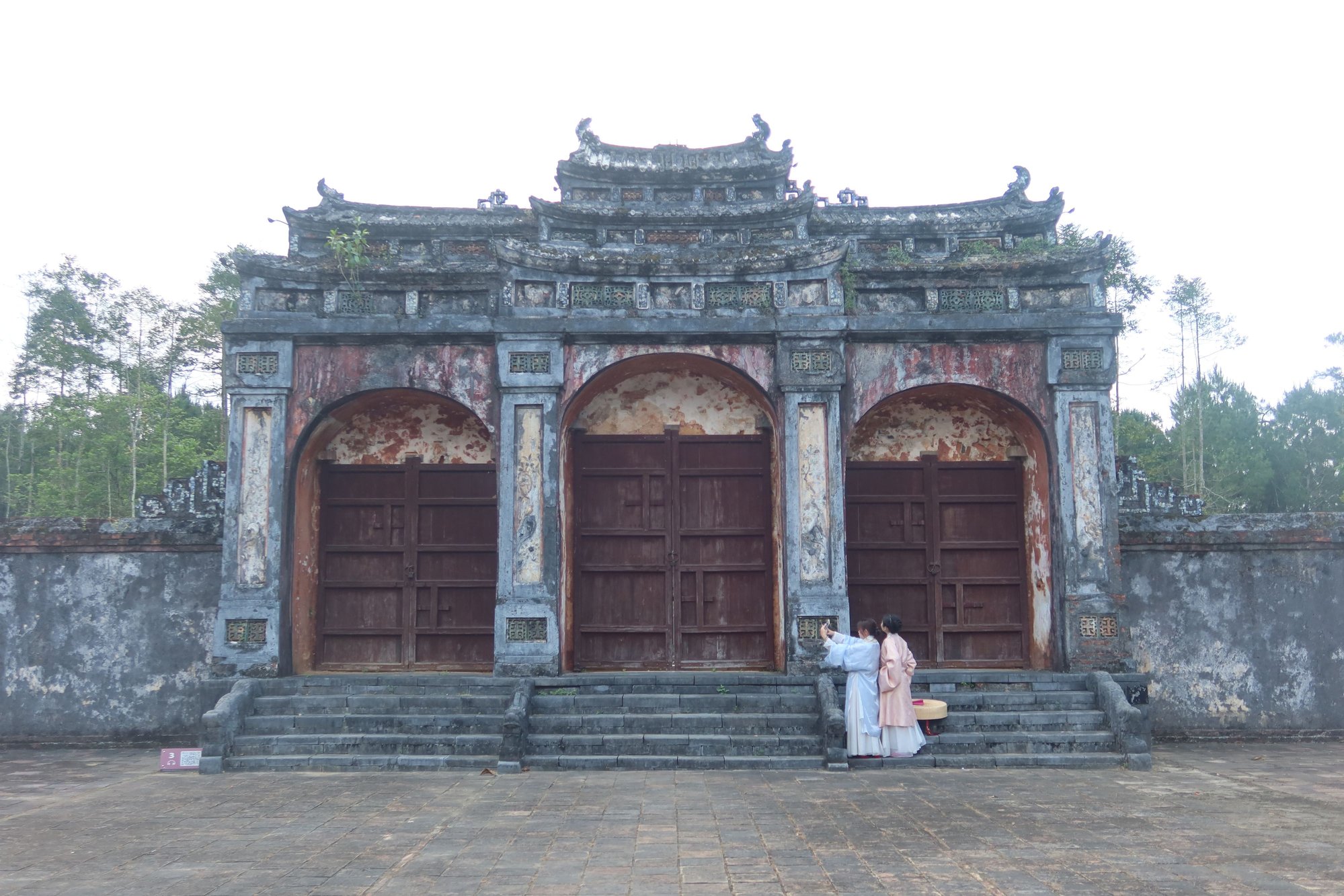
Entrance Gate, Ming Manh Mausoleum

Stele of Accomplishments, Ming Manh Mausoleum
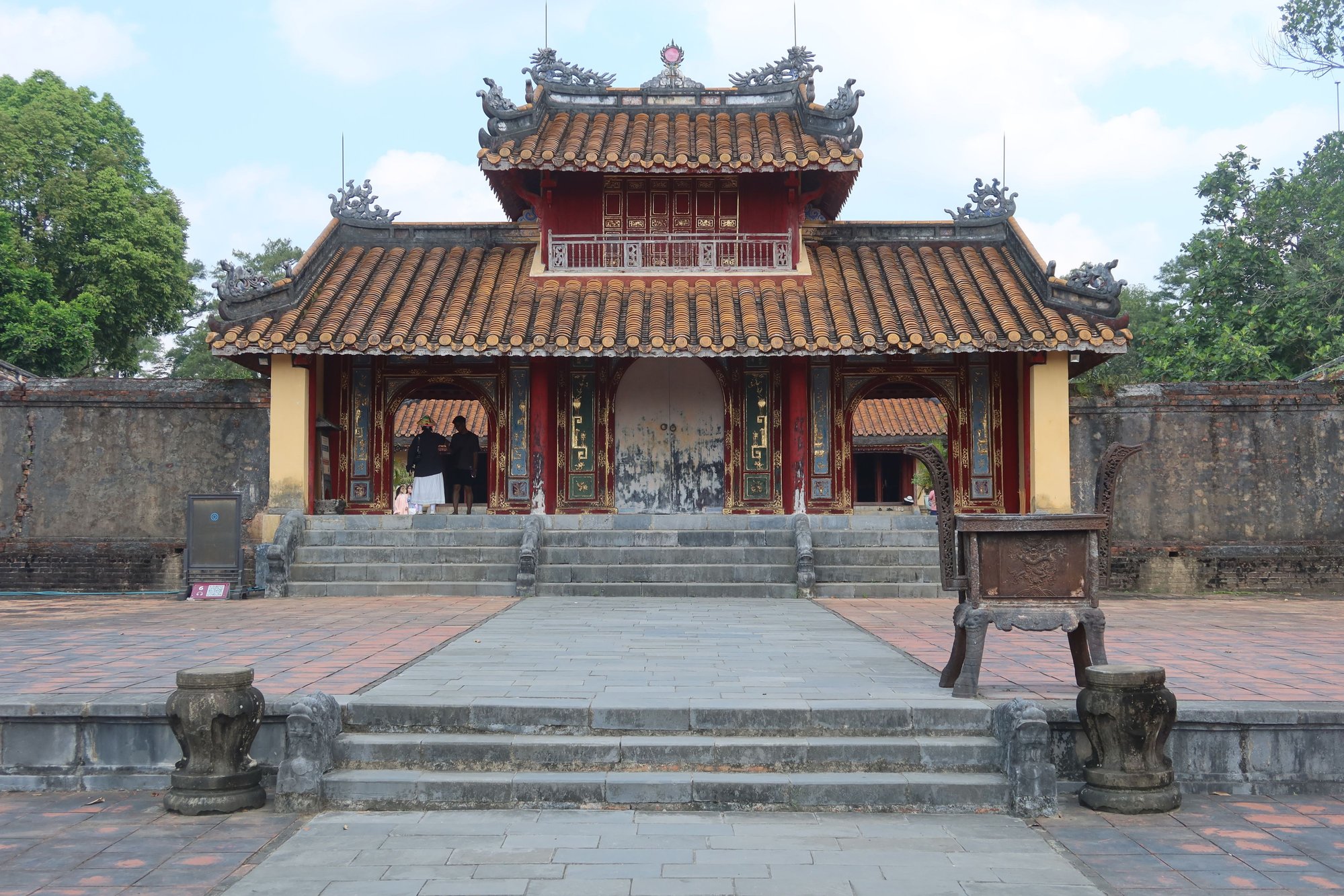
Ancestral Temple, Ming Manh Mausoleum
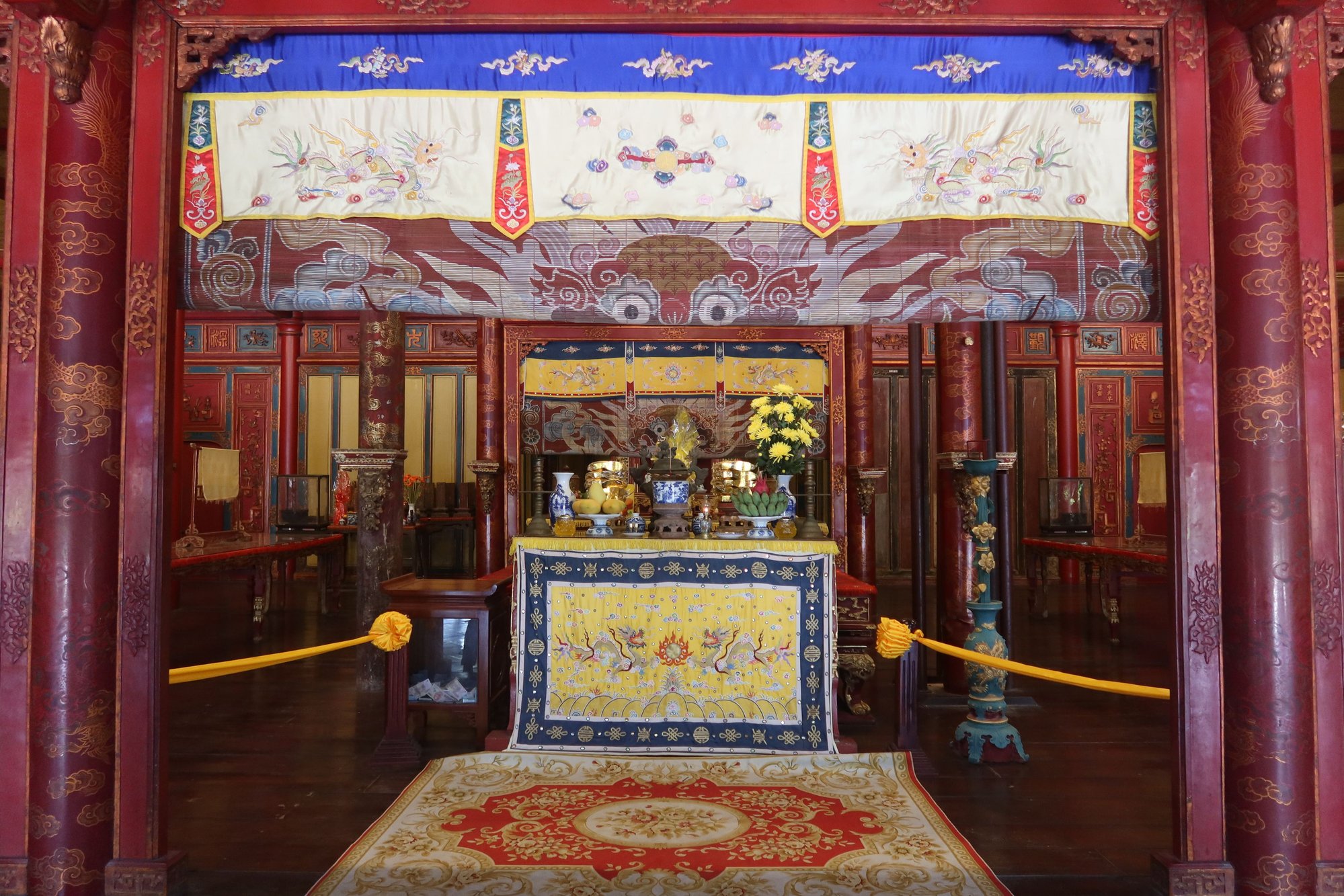
Ancestral Altar, Ming Manh Mausoleum

Entrance Gate, Khai Dinh Mausoleum
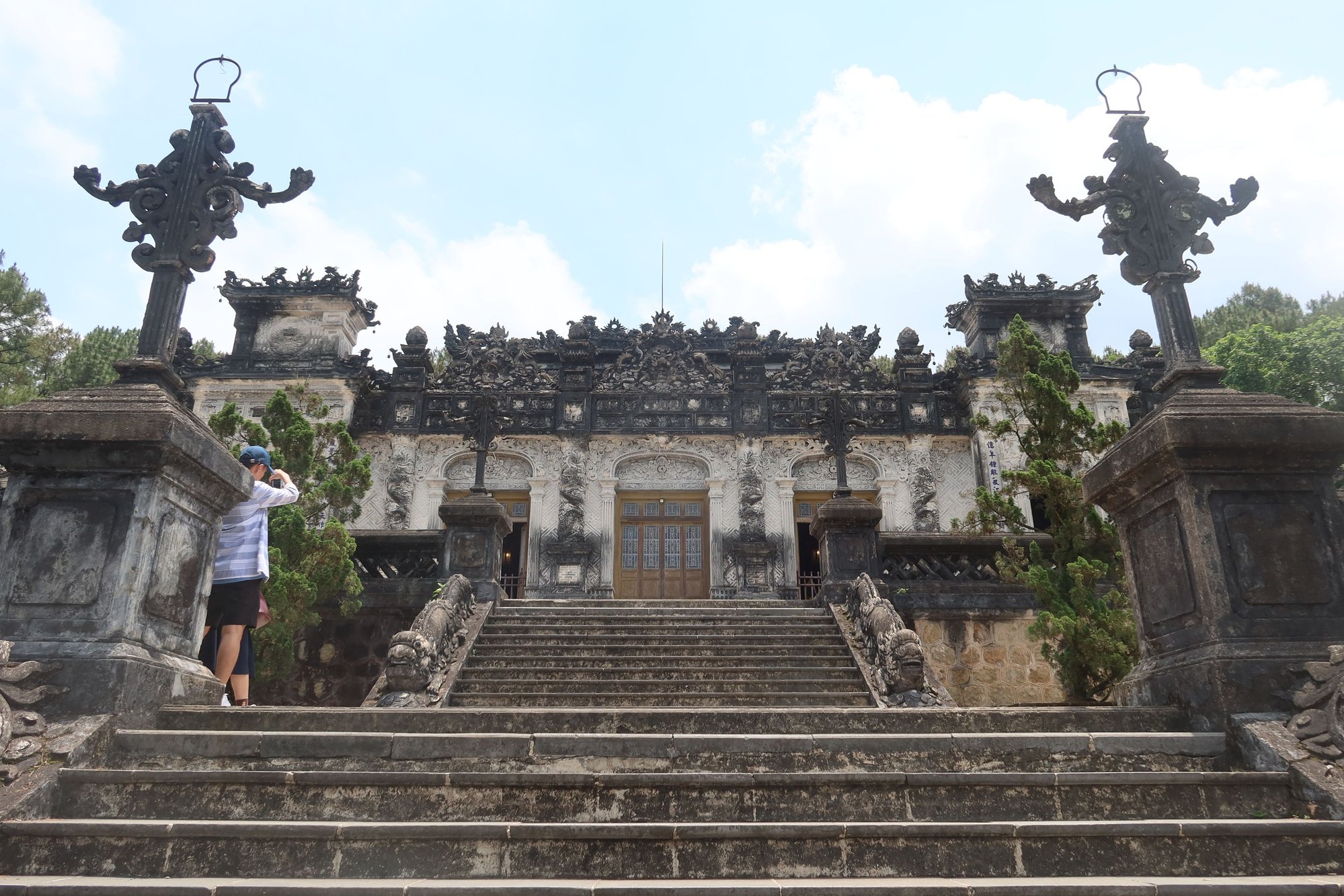
Main Temple and Tomb, Khai Dinh Mausoleum
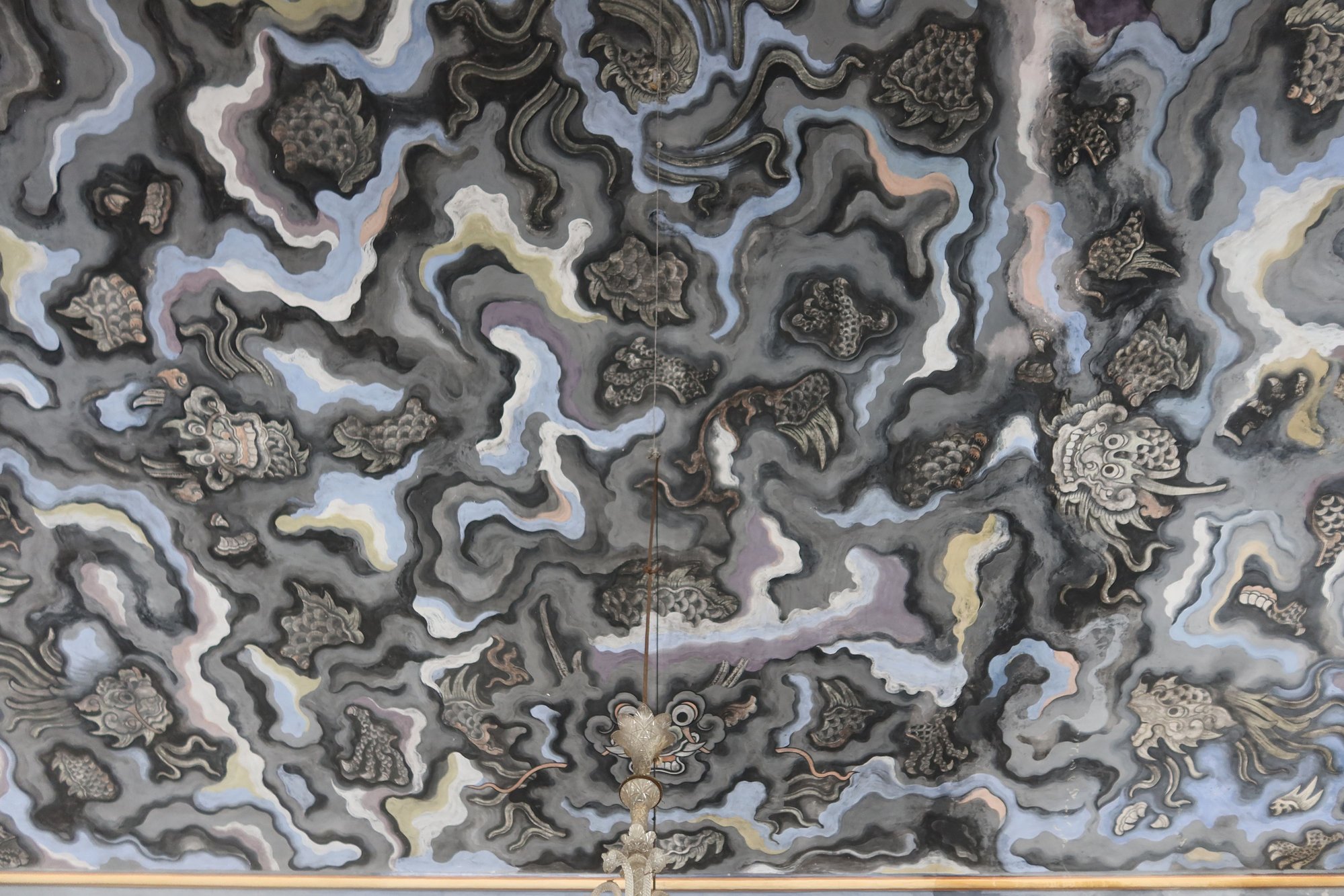
Ceiling, Khai Dinh Mausoleum

Artwork, Khai Dinh Mausoleum
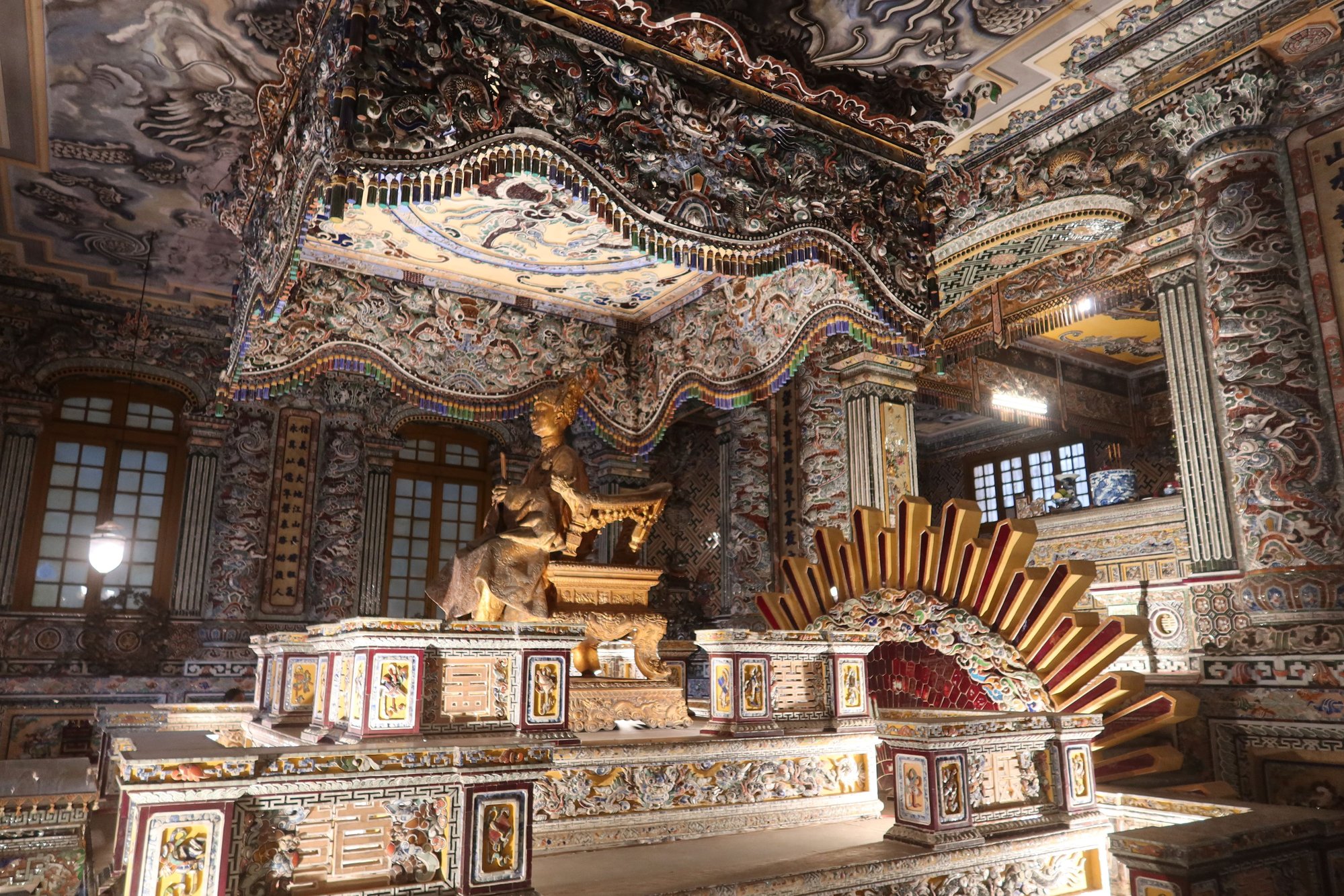
Altar, Khai Dinh Mausoleum
An Dinh Palace
Thien Mu Pagoda

Buddhist Altar, Thien Mu Pagoda
Perfume Riverscape
Perfume River at Sunset
Hue Past and Present
The Nguyen Dynasty emperors and their families were buried in Hue and the surrounding area. This morning we hired a car with driver from our hotel to check out a handful of these royal mausoleums. Among a dozen or so options, after reading through guidebooks (Rough Guides and the older Lonely Planer versions were most helpful) and browsing pictures, we settled on Tu Duc, Ming Manh, and Khai Dinh.
We began our tour of the mausoleums at 8:00 AM, in order to beat the tour groups. Tu Duc Mausoleum was the largest of the three. The mausoleum consists of a series of temples, much of it was closed for reconstruction, tombs for the emperor and his family, and a couple of lakeside pavilions. Built in the style of the Imperial City complex with a mix of Vietnamese and Chinese elements, the temples featured ancestral altars to the emperor and members of his family. Motifs of phoenix and dragons are found throughout the site, as are different classical Chinese poems that speak to the emperor's qualities and philosophies. The mausoleum also incorporated Daoist principles with the layout of the burial sites. The incense offerings suggest that the emperor and his family continues to be worshipped to this day. This was a bit surprising to us given that the Communist Party is officially atheist and believes in its own supremacy. Tu Duc's mausoleum is massive and took us almost 90 minutes to tour.
About 15 minutes away by car is Ming Manh's mausoleum. Unlike Tu Duc's mausoleum, Ming Manh's final resting place is laid out on a central axis, similar to the layout of the Imperial City complex. Along the central axis are the entrance gate, the stele detailing the emperor's accomplishments (written in classical Chinese), the ancestral temple, and the tomb itself (closed to the public). On either side of the central axis are two lakes, as if the buildings were on small islands floating inside it.
The smallest of the three yet the most intricately-detailed or richly-decorated is Khai Dinh's mausoleum. Laid out on a central axis similar to Ming Manh's mausoleum, the Khai Dinh complex features an entrance gate, a walkway flanked by guardsmen and animals, a stele, and the ancestral temple and tomb. Unlike the other mausoleums, which were constructed of wood and lacquered as with the imperial complex, Khai Dinh's uses iron, steel, and concrete. Additionally the main temple was built in the European style with Vietnamese and Chinese ornamentation. The interior, featuring tilework all over, is exquisite. Having visited, we understand why some refer to it as the "Versailles" of the Nguyen mausoleums.
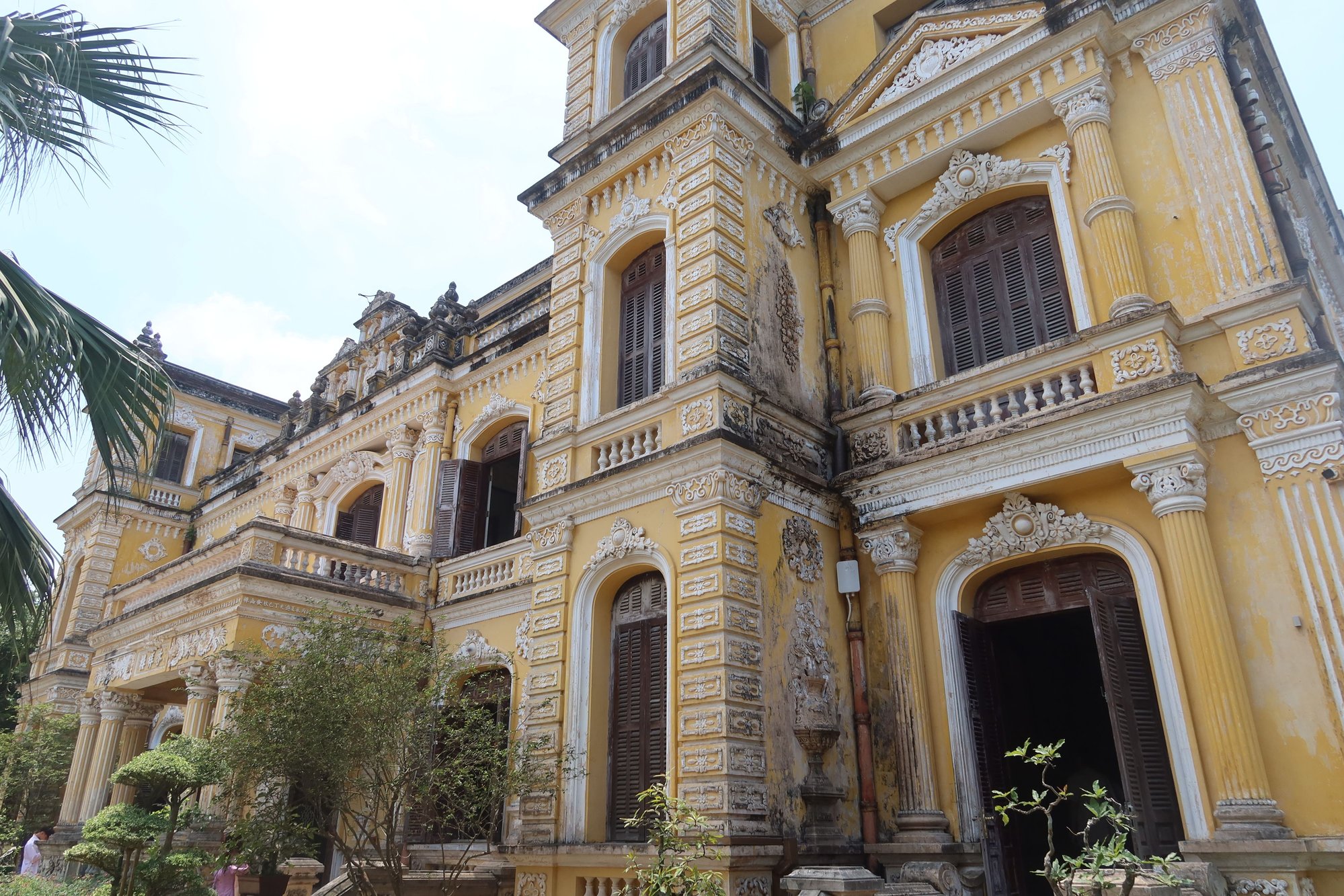
After four hours at the mausoleums, we went to Dan Nam Giao, where emperors past made offerings to their gods and ancestors. From here we visited An Dinh Palace, once the home of Emperor Khai Dinh when he was crown prince. Similar to his mausoleum, the home is built in the European style. The interior reminds us of some of the upper middle class homes from this era found in France.
For lunch, we dined at Y Thao Garden, a restaurant designed in the style of an imperial teahouse set within a garden. Serving Imperial Vietnamese cuisine, we enjoyed some absolutely divine pork on lemongrass skewers (thanks for the recommendation, ms_go), spring rolls, and bowls of bun bo Hue (rice noodle soup with beef, pork, and crab).
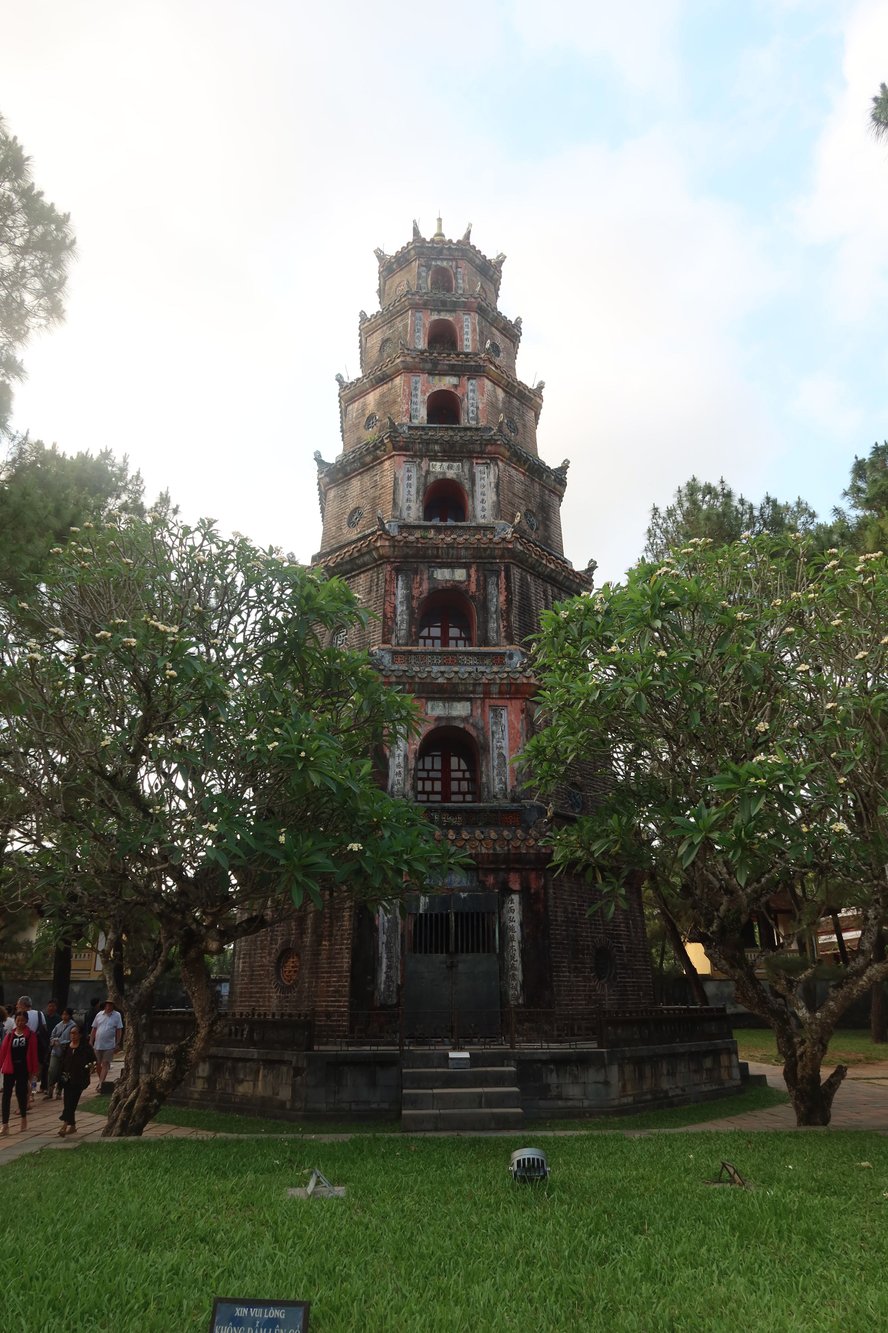
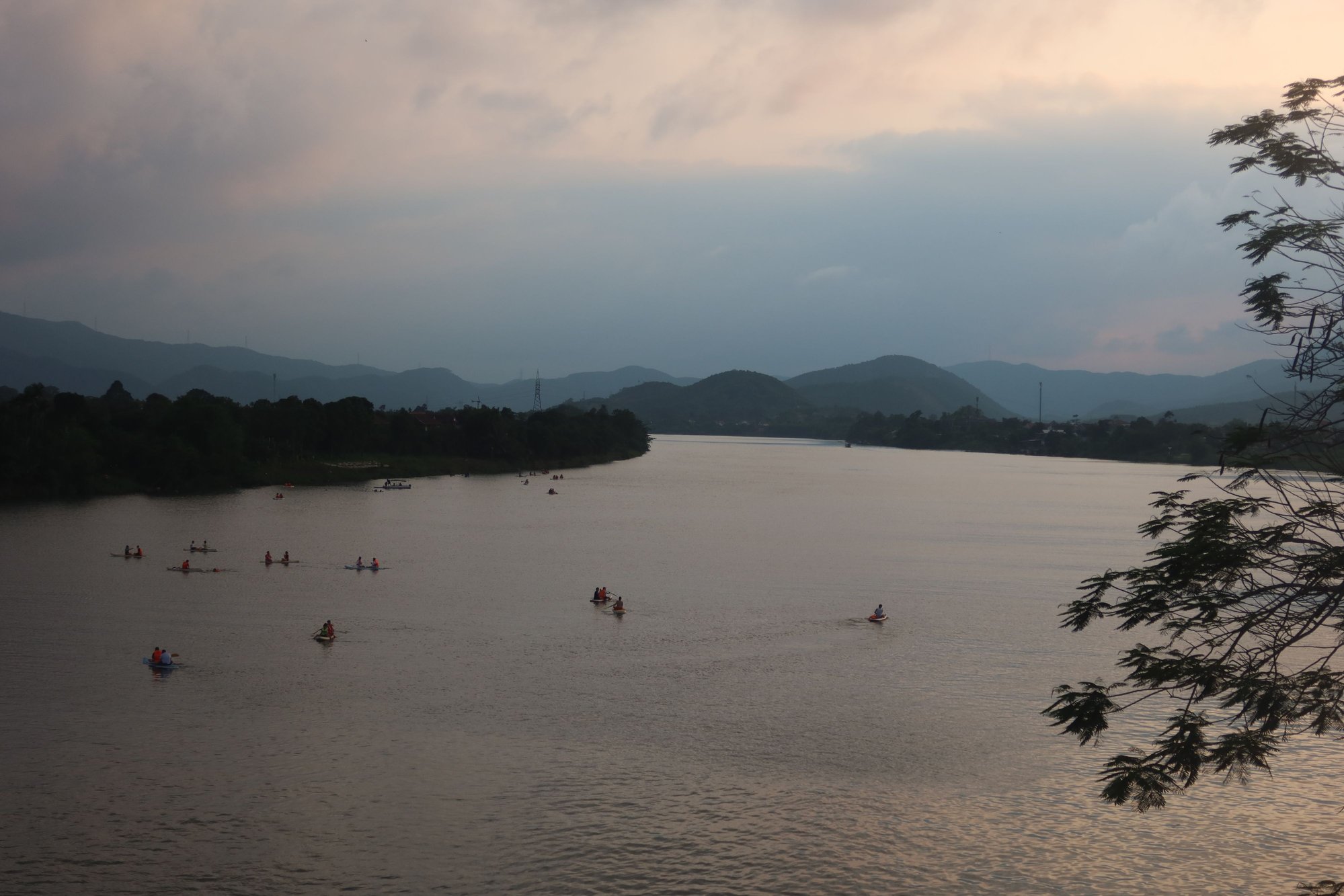
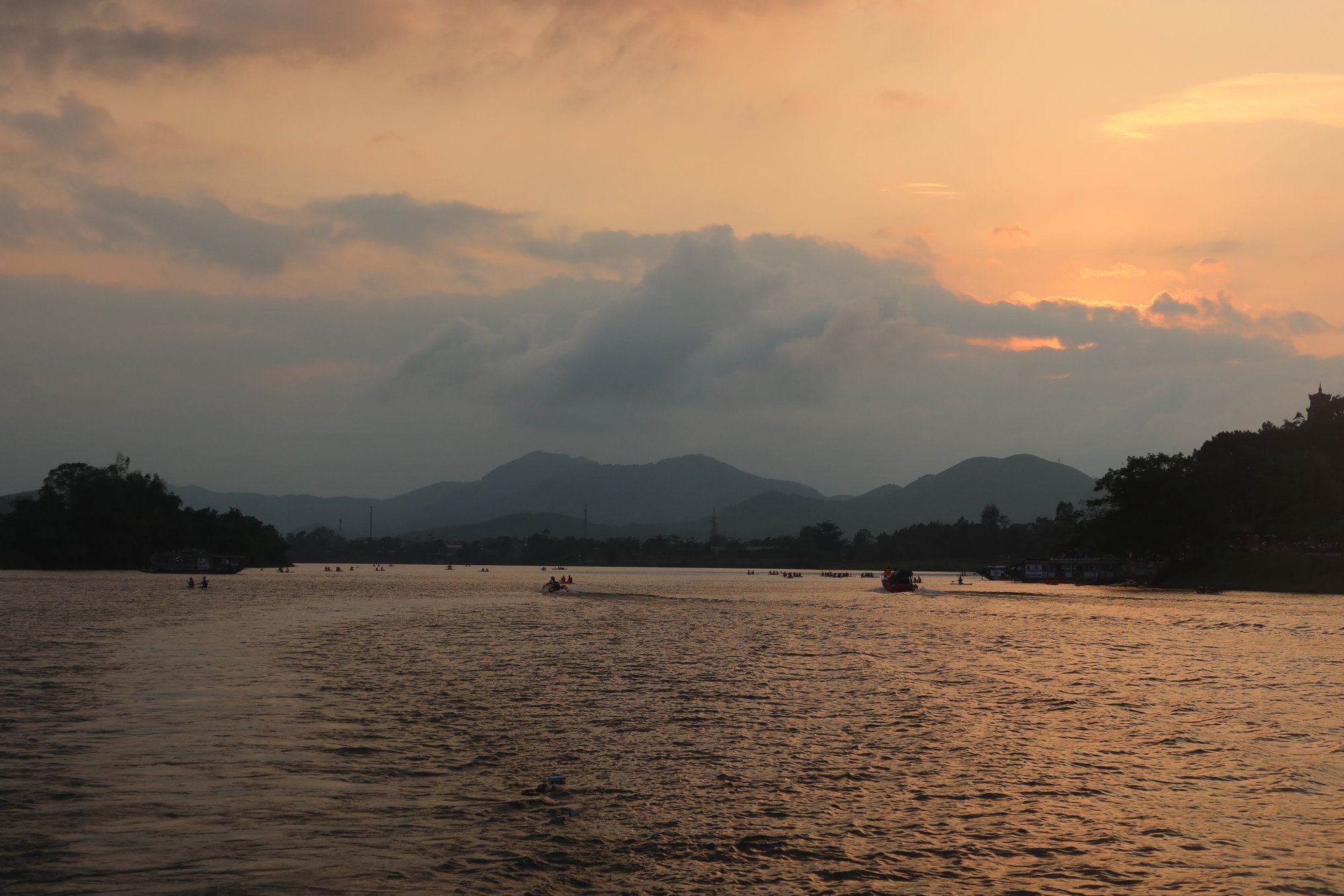
From here it was back to our hotel for a couple hours of resting. For our final activity in Hue, we booked a sunset cruise on the Perfume River with a visit to Thien Mu Pagoda. The genteel trip up the Perfume River from our hotel to the Pagoda offered us a good view of the riverscape as well as the life along and in it. It took about 30 minutes to reach the pagoda. Thien Mu Pagoda refers to the seven-story pagoda on the site although the pagoda is part of a larger Buddhist temple. We worshipped at the temple where the emperors worshipped and wandered its ground. After the visit, it was back on the ship for a sail back to the city center as the sun sets and the lights of the city come on.
For dinner, we were looking for something other than Vietnamese. Our hotel recommended La Carambole, a French bistro. A couple of us enjoyed our steak frites while the others dined on duck a l'orange and grilled sausages. After dinner, we strolled back to our hotel along the riverfront, enjoying some of the city lights and the gentle breeze coming from the water as well as some of the preparations for tomorrow evening's festivities.
Even though our time in Hue has been brief, we like the city very much. As a matter of fact, we are glad we braved the heat and humidity to come in April as our time in central Vietnam has been outstanding. Had we traveled in November, as was the other option, we would have passed over it.
Tomorrow is the 50th anniversary of liberation and reunification for the Vietnamese, and the celebrations have already begun. The mood across Hue is one of festivity.
Entrance Gate to Ancestral Temple, Tu Duc Mausoleum
Ancestral Altar, Tu Duc Mausoleum
Lakeside Pavilion, Tu Duc Mausoleum
Entrance Gate to Tomb, Tu Duc Mausoleum
Tu Duc's Tomb
Entrance Gate, Ming Manh Mausoleum
Stele of Accomplishments, Ming Manh Mausoleum
Ancestral Temple, Ming Manh Mausoleum
Ancestral Altar, Ming Manh Mausoleum
Entrance Gate, Khai Dinh Mausoleum
Main Temple and Tomb, Khai Dinh Mausoleum
Ceiling, Khai Dinh Mausoleum
Artwork, Khai Dinh Mausoleum
Altar, Khai Dinh Mausoleum
An Dinh Palace
Thien Mu Pagoda
Buddhist Altar, Thien Mu Pagoda
Perfume Riverscape
Perfume River at Sunset
Apr 29th, 2025 | 02:22 PM
#32
Joined: Jan 2004
Posts: 3,618
Likes: 0
I enjoyed following your time in Hue. We particularly liked Hue and its cuisine (but maybe not trying to cross certain streets!). We went to a couple of the same tombs and also took a private boat up to the Thien Mu Pagoda - but your sunset was better than ours.
Apr 30th, 2025 | 07:23 AM
#33
Original Poster
Joined: Sep 2012
Posts: 3,517
Likes: 0
ms_go, thank you. Hue was definitely a highlight out of several.
War and Peace
Today marks the 50th anniversary of the fall of Saigon and the reunification of Vietnam. It was on this day that we also travelled across the 17th parallel from what was South Vietnam to what was North Vietnam. To transport us from Hue to Phong Nha, our next destination, we hired the services of Van Ngoc Vu from Amman Tours, who specializes in tours of the demilitarized zone and the Vietnam War / American War in Vietnam in the 1960s and 1970s.
From Hue, we travelled north on National Highway 1, passing the towns of Quang Tri and Dong Ha before turning westward on colonial Route 9 towards to Laotian border. Our first stop on the tour was Khe Sanh, the site of a major U.S. military base and a major battle between U.S. and North Vietnamese forces in 1968. We visited what was the former base, now a museum. Vu provided us with color of what we were looking at as well as context for the geography of where some of the events of the war took place.
Leaving Khe Sanh, we traveled back east and then north again, towards the Ben Hai River located within the DMZ. Along the way, we pass mountains, valleys, and rivers. The scenery was peaceful and picturesque, masking that we were travelling through some of the most violent territory in recent history.
The demilitarized zone that separated North and South Vietnam ran for five miles on either side of the Ben Hai River. We stopped right on the demarcation line and visited the Hien Luong Bridge, later called the Freedom Bridge, that spanned across the frontier. As today was the 50th anniversary of reunification, there were locals and Vietnamese from throughout the country visiting. Many of the women were dressed in ao dais, the traditional garb, and parents and grandparents had their children and grandchildren in tow. We walked across the bridge from north to south and back. We also visited the museum right across the bridge that told the story of the war from the North Vietnamese perspective.
From there we entered what was then North Vietnam and drove towards to the sea, to the Vinh Moc Tunnels. Constructed by the North Vietnamese to shelter locals from American carpet bombing, the extensive network of tunnels housed more than 300 for about five years. Inside the tunnels were living quarters, kitchens, medical facilities, and munitions storage rooms. There were 13 openings to the tunnels, 7 on land and 6 that open to the sea, for ventiliation as well as to offer escape options. As today was a national holiday, there were loads of visitors at the site. Given the number of people touring the tunnels and today's weather, it was extremely hot and humid inside.
Vu provided excellent commentary throughout the day. Not only did we talk about the war, we discussed family life in Vietnam, history and culture, the local state of affairs, and what is going on around the world today, including back home. While somewhat cautious, Vu's openness about Vietnam was eye-opening. From these conversations and others we've had during our time in Vietnam, it seems that today's Vietnamese are well-informed about what is going on at home and abroad and there's a certain level of openness that I did not expect from a nominally Communist country. Whether it's Vu or some of the Grab drivers, hotel staff, or shopkeepers we've met along the way, they seem to be current on everything from the global economy to pop culture outside their homeland. And people readily identified what they considered official propaganda, whether or not they believed in it. In some ways, it seemed as though they were even better informed about American affairs than the average American. Also considering that the war ended only 50 years ago today, it's remarkable the amount of progress Vietnam has made since.
After visiting the tunnels, we continued deeper into the former North Vietnam, eventually reaching the town of Phong Nha, adjacent to Phong Nha - Ke Bang National Park, which we will be exploring tomorrow. Including sightseeing, we were on the road for 11 hours today.
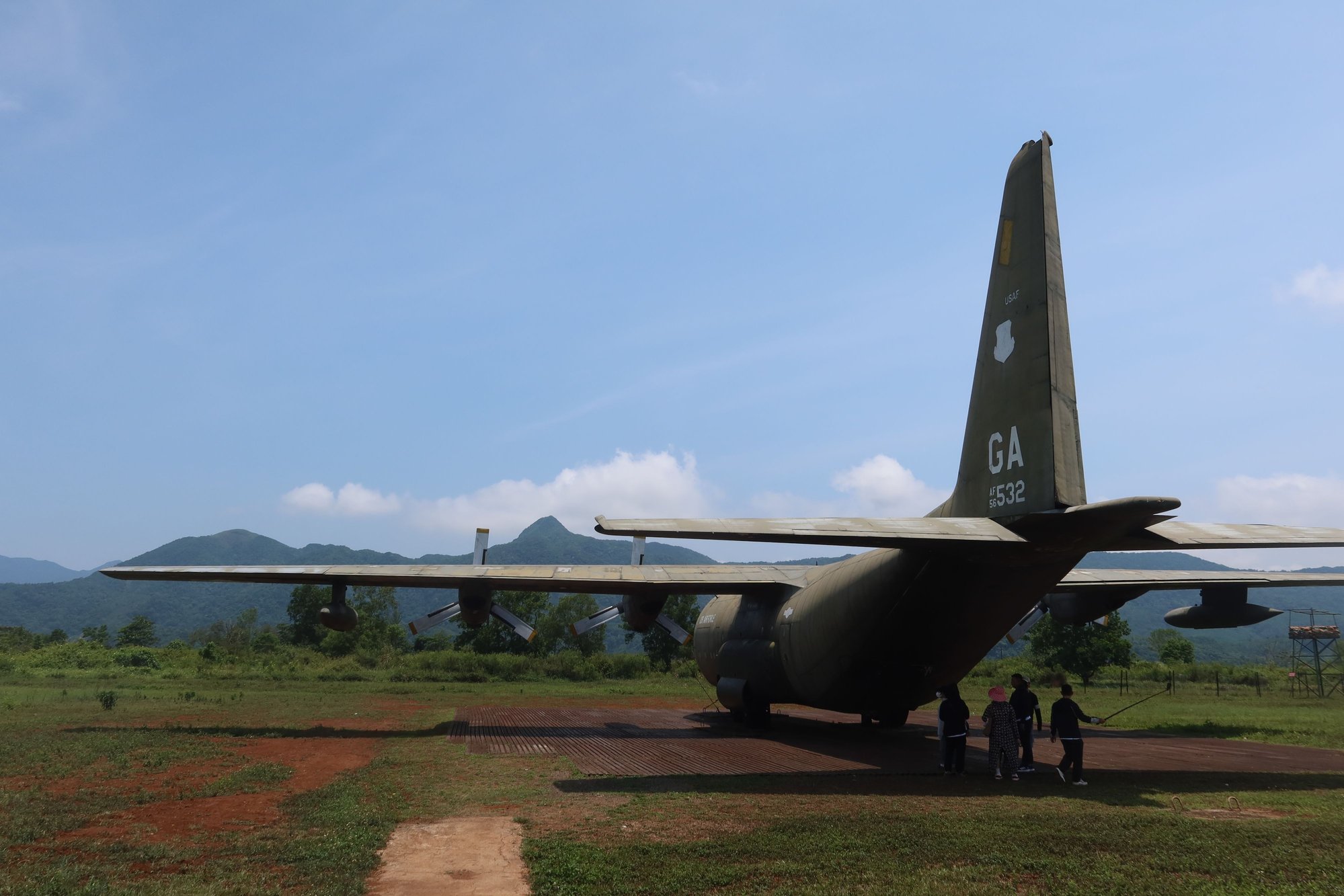
Airfield with Cargo Plane, Khe Sanh Base
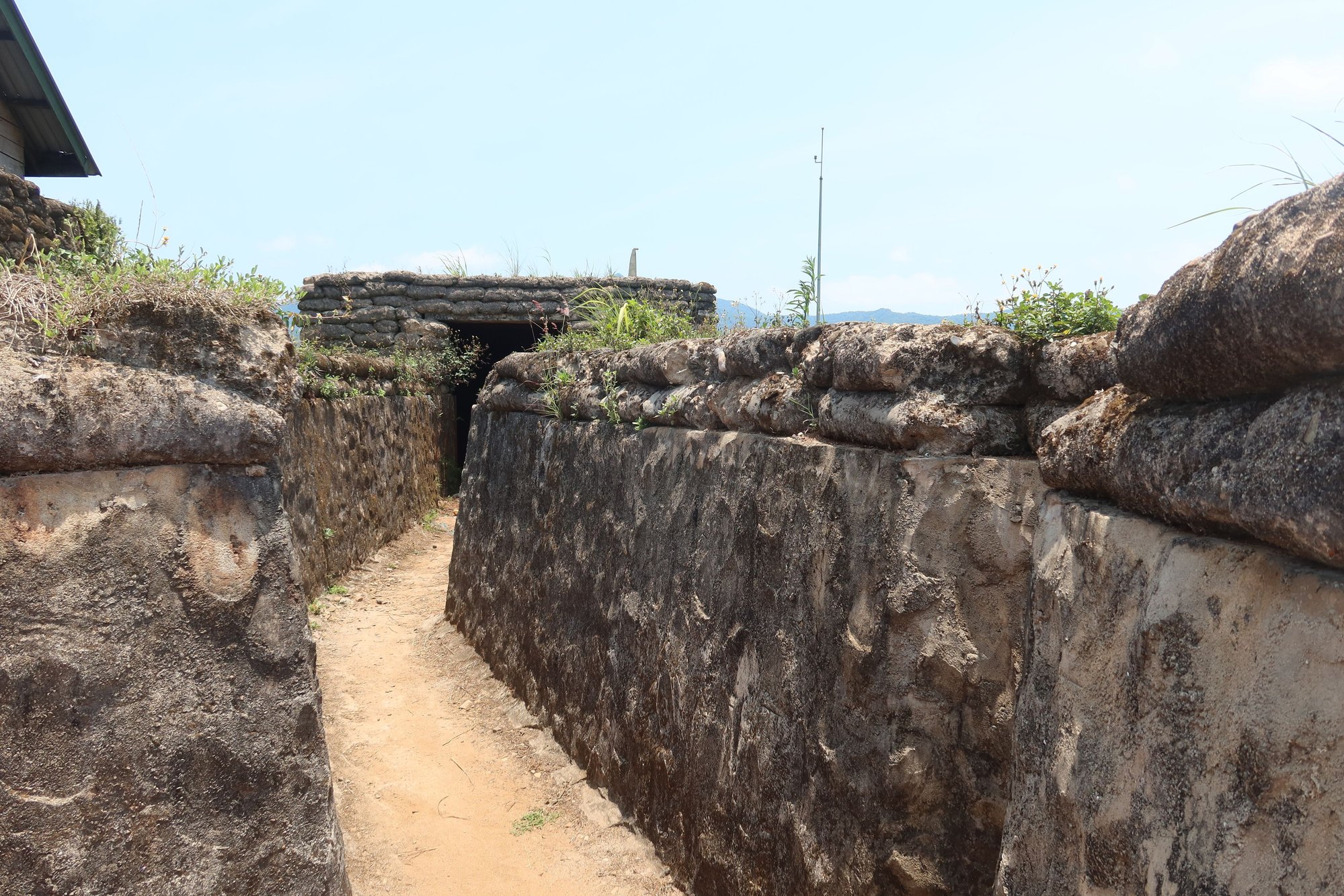
Trench, Khe Sanh Base

Freedom Bridge, DMZ
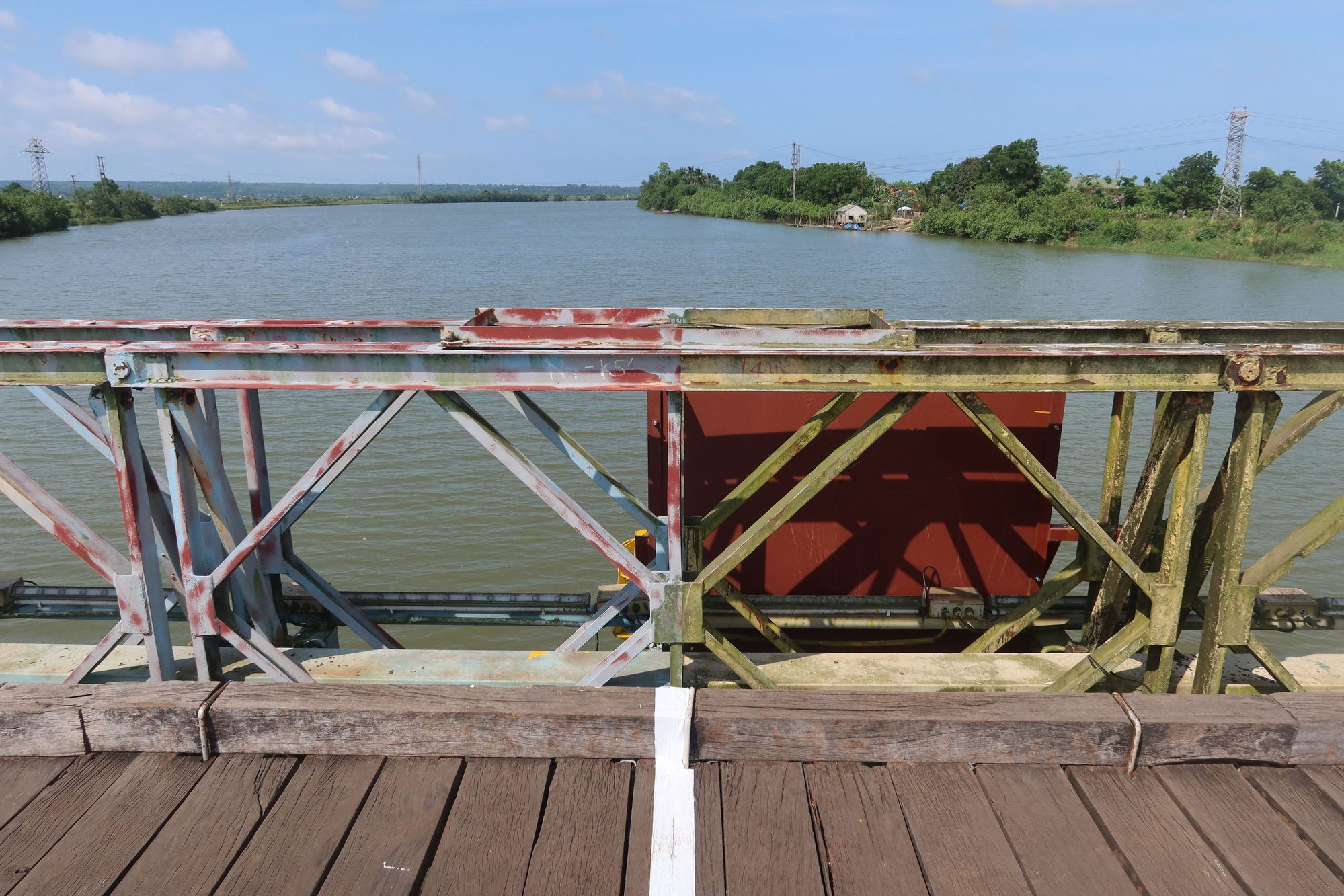
Demarcation Line on Freedom Bridge, DMZ
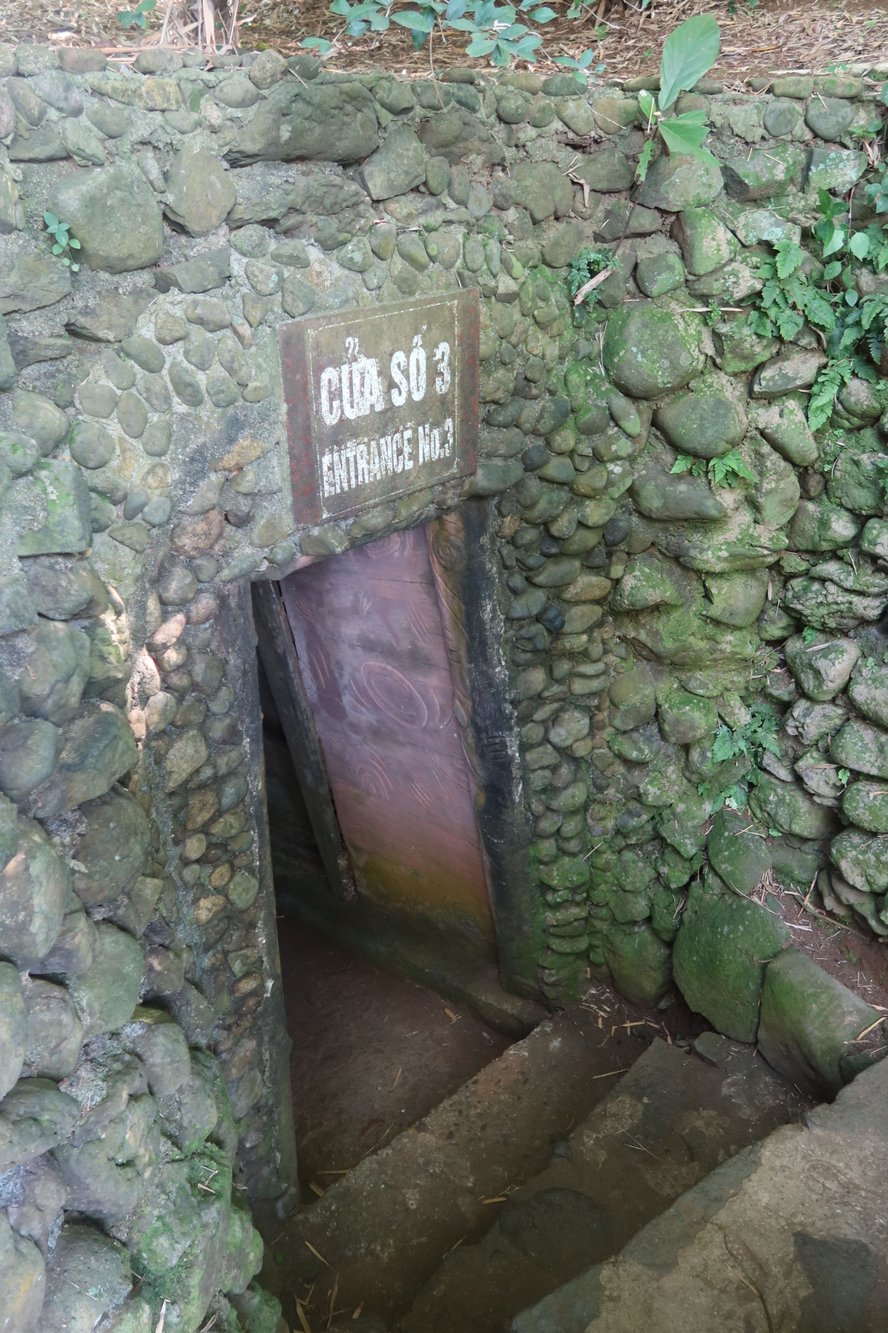
One of the Entrances to the Vinh Moc Tunnels

Living Space, Vinh Moc Tunnels
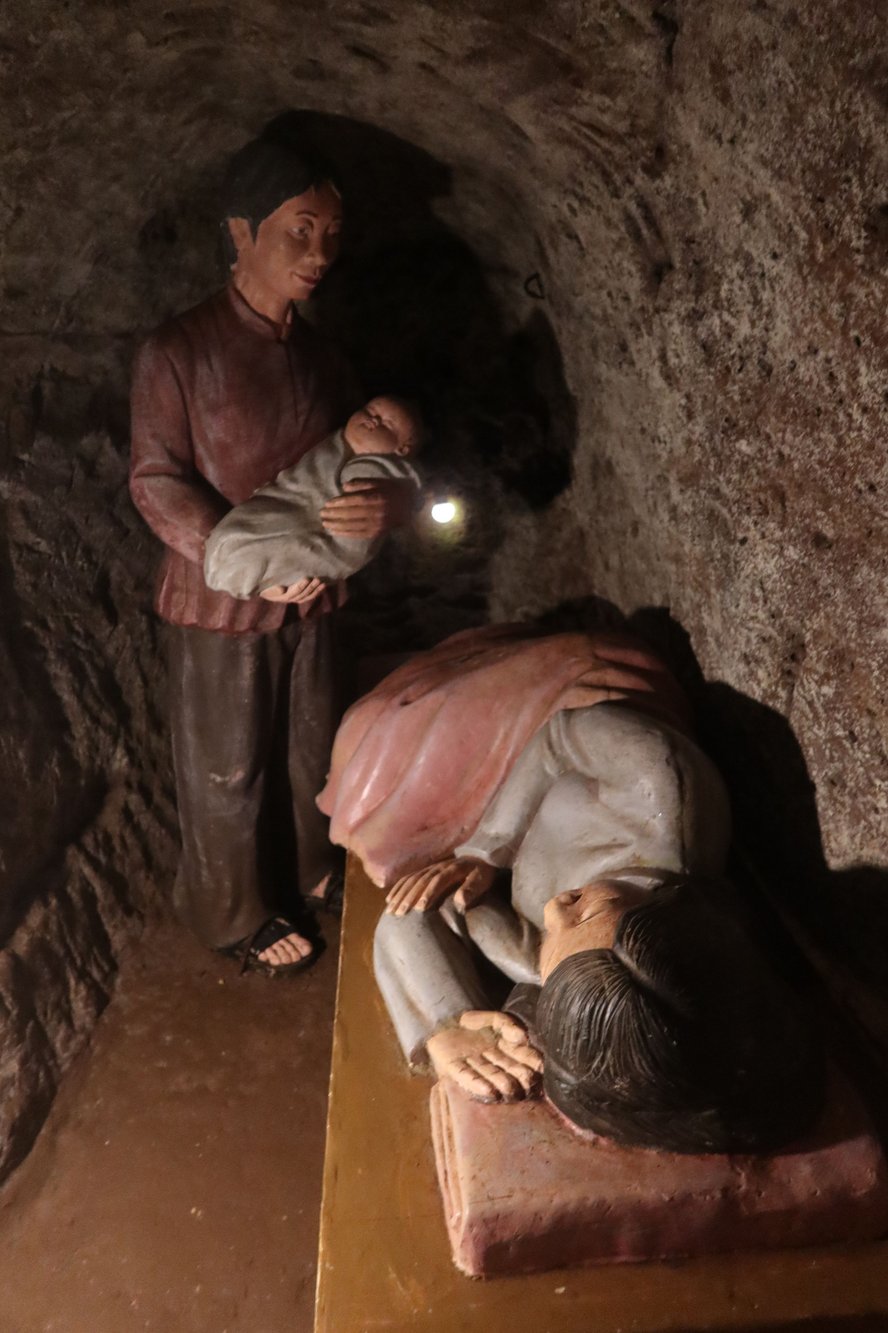
Maternity Ward, Vinh Moc Tunnels
War and Peace
Today marks the 50th anniversary of the fall of Saigon and the reunification of Vietnam. It was on this day that we also travelled across the 17th parallel from what was South Vietnam to what was North Vietnam. To transport us from Hue to Phong Nha, our next destination, we hired the services of Van Ngoc Vu from Amman Tours, who specializes in tours of the demilitarized zone and the Vietnam War / American War in Vietnam in the 1960s and 1970s.
From Hue, we travelled north on National Highway 1, passing the towns of Quang Tri and Dong Ha before turning westward on colonial Route 9 towards to Laotian border. Our first stop on the tour was Khe Sanh, the site of a major U.S. military base and a major battle between U.S. and North Vietnamese forces in 1968. We visited what was the former base, now a museum. Vu provided us with color of what we were looking at as well as context for the geography of where some of the events of the war took place.
Leaving Khe Sanh, we traveled back east and then north again, towards the Ben Hai River located within the DMZ. Along the way, we pass mountains, valleys, and rivers. The scenery was peaceful and picturesque, masking that we were travelling through some of the most violent territory in recent history.
The demilitarized zone that separated North and South Vietnam ran for five miles on either side of the Ben Hai River. We stopped right on the demarcation line and visited the Hien Luong Bridge, later called the Freedom Bridge, that spanned across the frontier. As today was the 50th anniversary of reunification, there were locals and Vietnamese from throughout the country visiting. Many of the women were dressed in ao dais, the traditional garb, and parents and grandparents had their children and grandchildren in tow. We walked across the bridge from north to south and back. We also visited the museum right across the bridge that told the story of the war from the North Vietnamese perspective.
From there we entered what was then North Vietnam and drove towards to the sea, to the Vinh Moc Tunnels. Constructed by the North Vietnamese to shelter locals from American carpet bombing, the extensive network of tunnels housed more than 300 for about five years. Inside the tunnels were living quarters, kitchens, medical facilities, and munitions storage rooms. There were 13 openings to the tunnels, 7 on land and 6 that open to the sea, for ventiliation as well as to offer escape options. As today was a national holiday, there were loads of visitors at the site. Given the number of people touring the tunnels and today's weather, it was extremely hot and humid inside.
Vu provided excellent commentary throughout the day. Not only did we talk about the war, we discussed family life in Vietnam, history and culture, the local state of affairs, and what is going on around the world today, including back home. While somewhat cautious, Vu's openness about Vietnam was eye-opening. From these conversations and others we've had during our time in Vietnam, it seems that today's Vietnamese are well-informed about what is going on at home and abroad and there's a certain level of openness that I did not expect from a nominally Communist country. Whether it's Vu or some of the Grab drivers, hotel staff, or shopkeepers we've met along the way, they seem to be current on everything from the global economy to pop culture outside their homeland. And people readily identified what they considered official propaganda, whether or not they believed in it. In some ways, it seemed as though they were even better informed about American affairs than the average American. Also considering that the war ended only 50 years ago today, it's remarkable the amount of progress Vietnam has made since.
After visiting the tunnels, we continued deeper into the former North Vietnam, eventually reaching the town of Phong Nha, adjacent to Phong Nha - Ke Bang National Park, which we will be exploring tomorrow. Including sightseeing, we were on the road for 11 hours today.
Airfield with Cargo Plane, Khe Sanh Base
Trench, Khe Sanh Base
Freedom Bridge, DMZ
Demarcation Line on Freedom Bridge, DMZ
One of the Entrances to the Vinh Moc Tunnels
Living Space, Vinh Moc Tunnels
Maternity Ward, Vinh Moc Tunnels
Apr 30th, 2025 | 07:51 AM
#34
Joined: Oct 2012
Posts: 2,245
Likes: 0
Loved the interior mausoleum photo. Stunning.
And I very much appreciate your commentary regarding the the transition across the 17th parallel. I can really feel this time period from your description. And those tunnels! Scary.
"as though they were even better informed about American affairs than the average American" Sad to say, I think that is often the case. They certainly have a different - often more sober- perspective.
And I very much appreciate your commentary regarding the the transition across the 17th parallel. I can really feel this time period from your description. And those tunnels! Scary.
"as though they were even better informed about American affairs than the average American" Sad to say, I think that is often the case. They certainly have a different - often more sober- perspective.
Apr 30th, 2025 | 08:28 AM
#35
Joined: Jan 2004
Posts: 3,618
Likes: 0
What an interesting day!
I agree with you about the depth and breadth of conversations. We spent several days with guides and had all sorts of interesting discussions on topics domestic and international. Who knew how popular pickleball has become in Vietnam! We were traveling there during the fires in the LA area, and multiple people said they were following that on the news and wanted to know if there were updates.
I agree with you about the depth and breadth of conversations. We spent several days with guides and had all sorts of interesting discussions on topics domestic and international. Who knew how popular pickleball has become in Vietnam! We were traveling there during the fires in the LA area, and multiple people said they were following that on the news and wanted to know if there were updates.
May 1st, 2025 | 06:15 AM
#36
Original Poster
Joined: Sep 2012
Posts: 3,517
Likes: 0
shelemm, thank you. I am glad some of my feelings and emotions are coming through. I try to give as much texture as I can to these reports.
ms_go, many of the Vietnamese I've spoken with seem quite well informed (I can point to at least three such conversations just today) and able to take information, pull it apart, and determine what motivations may be behind the information. It's something that we've encountered in our travels elsewhere too. Places that we often think of as closed information societies may not be as closed as we're led to believe. Makes me think about information consumption at home and what it would take to get Americans to think more critically than we are now.
A Spectacular Underworld
The village of Phong Nha is the gateway to Phong Nha - Ke Bang National Park, home to some of the largest caves in the world. Today we visited two of these caves: Paradise Cave and Phong Nha Cave.
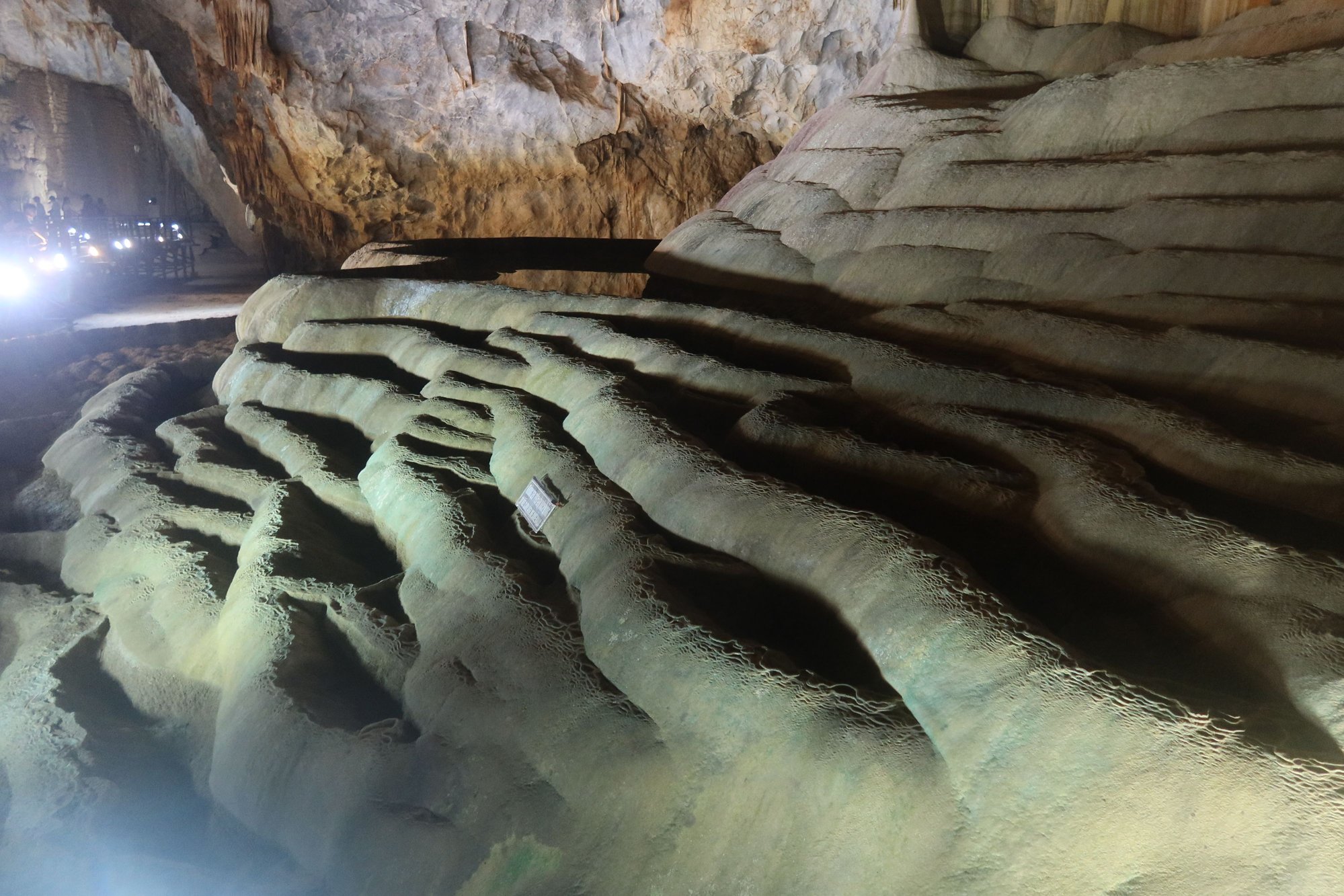
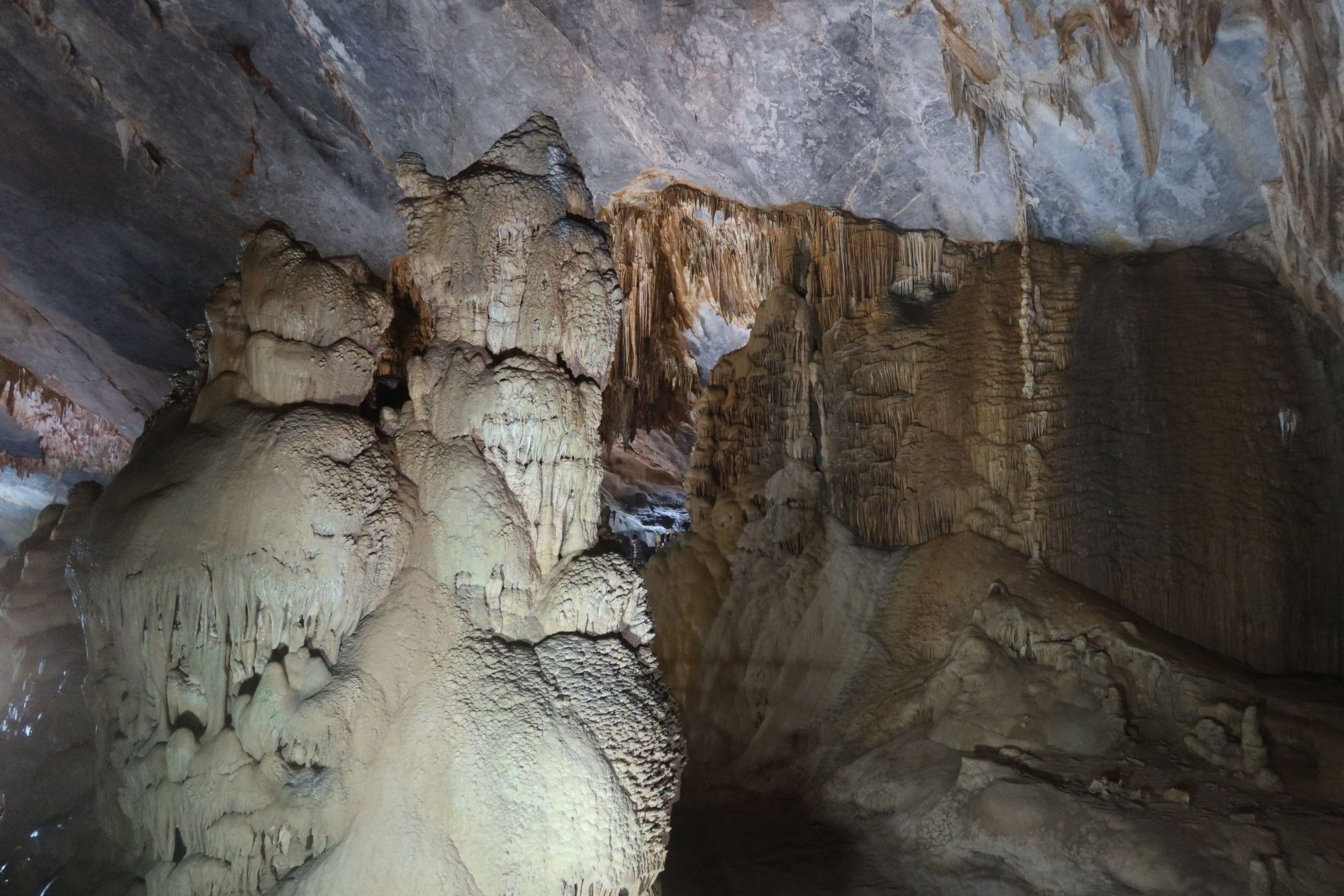
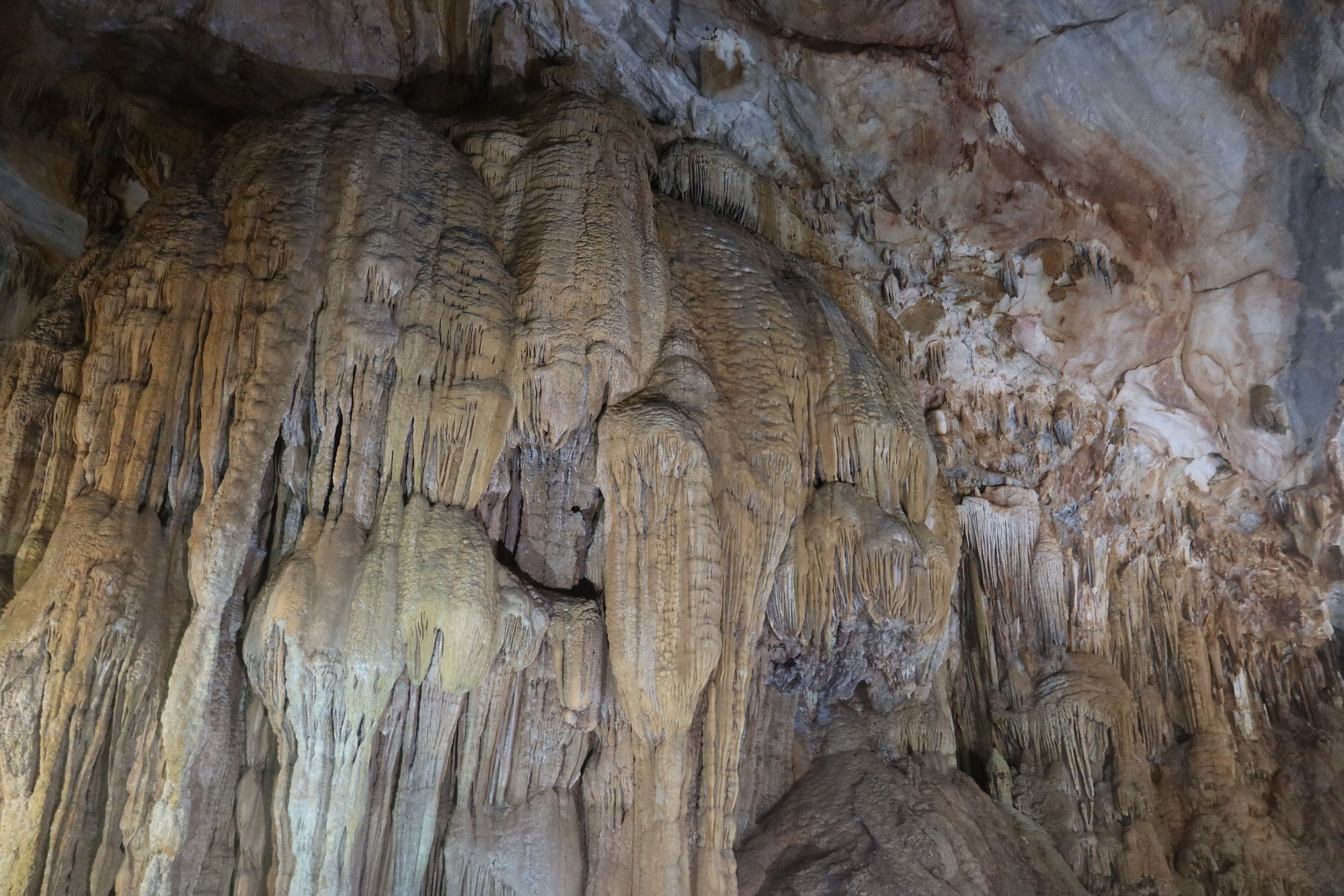
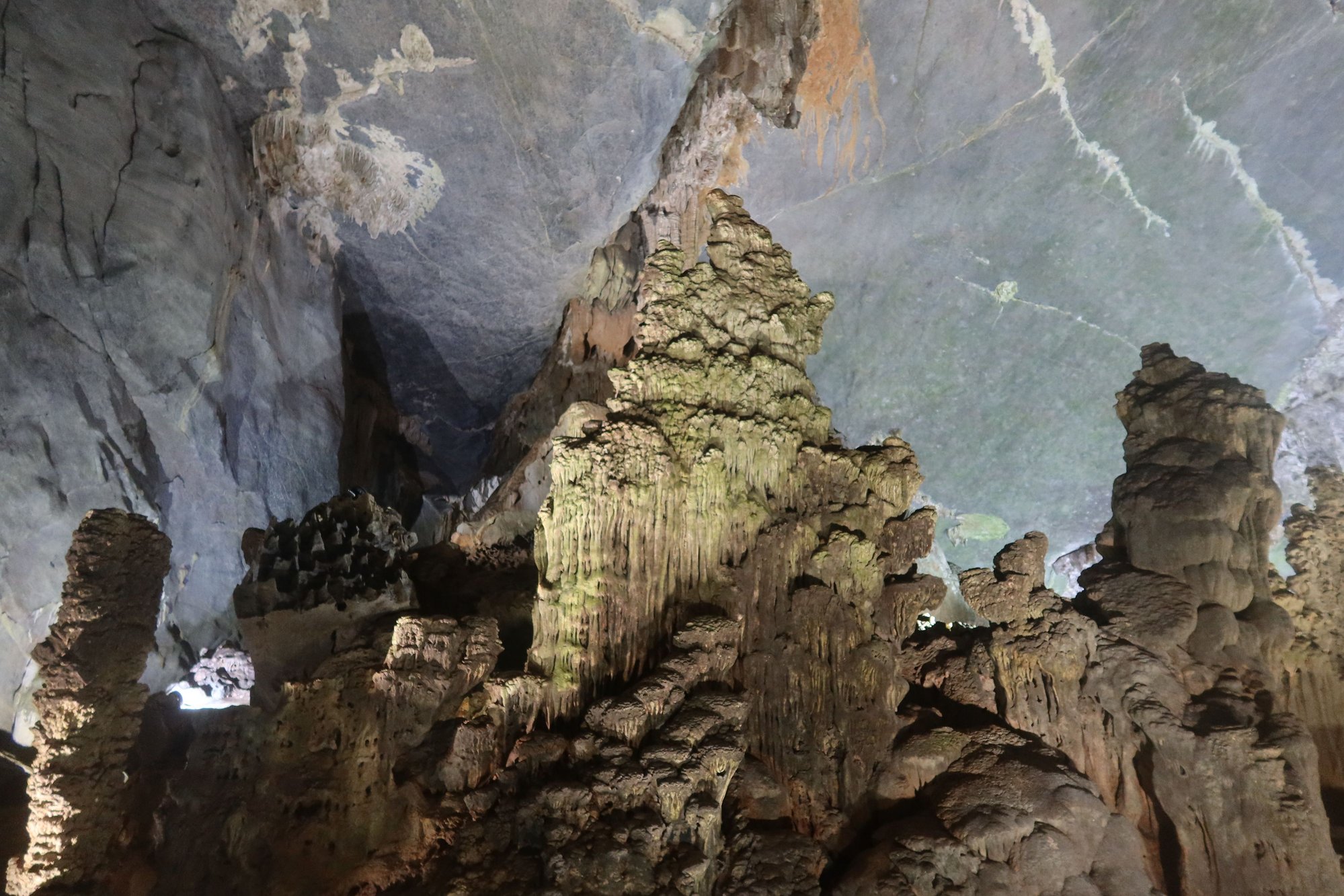
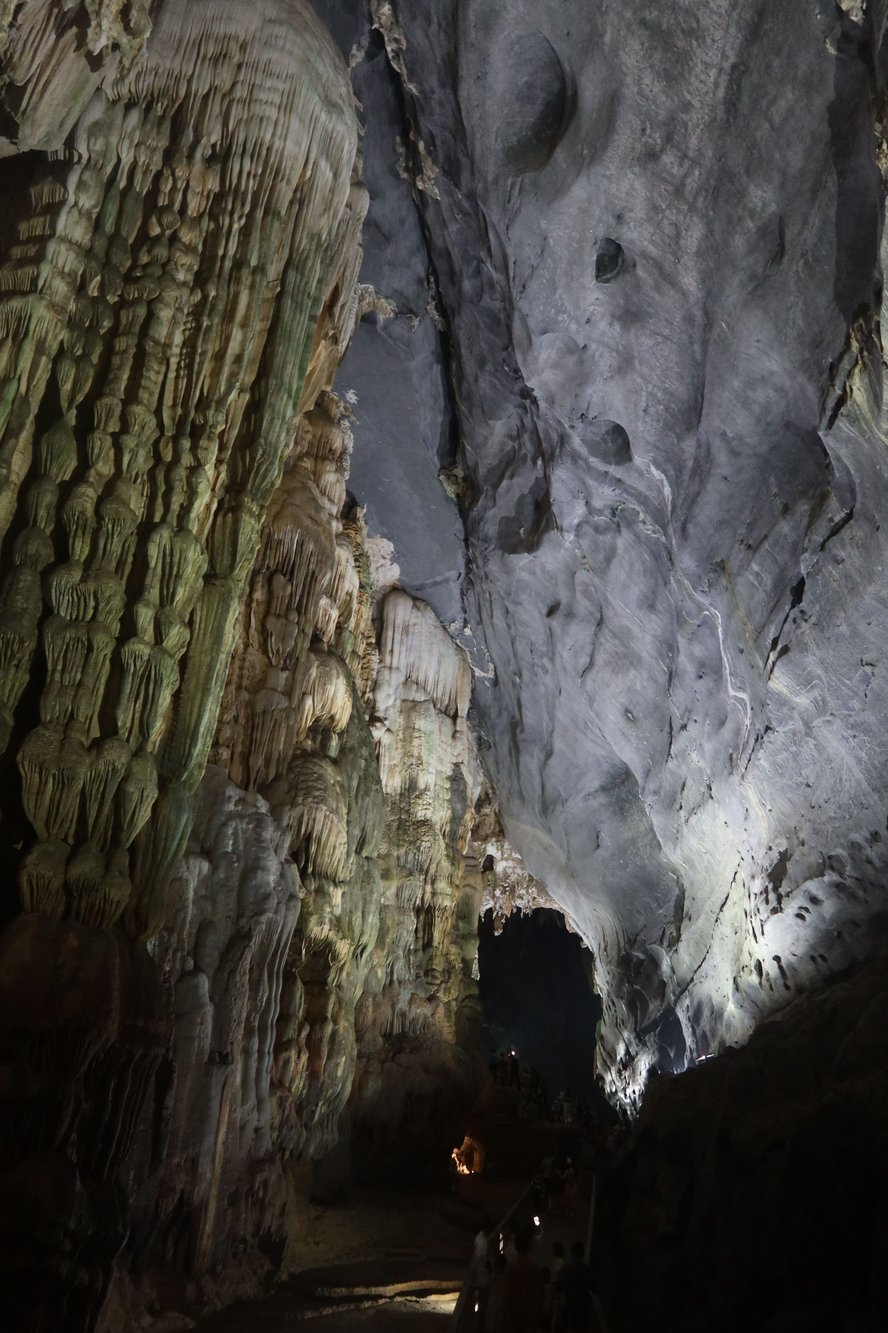
Paradise Cave is located about a half hour drive from the village. We headed out at 7:00 AM, to beat the tour bus crowds, which were especially numerous given the long weekend (yesterday was Liberation Day and today is May Day). Once we arrived at the ticket desk, we were driven in golf carts to the site entrance, from where it was an ascent on food to the cave entrance. At the cave entrance, we descended via 260 steps to the belly of the massive cave. Wow - what a place! The stalactites and the stalagmites. The different formations. The ceilings as high as some of the largest cathedrals in the world. Once inside the cave, we walked along a kilometer-long boardwalk, surveying Mother Nature's creation, just taking it all in. We spent a little more than an hour inside the cave, which was at least 20 to 25 degrees cooler than the outside temperature.
We left just before 10:00 AM, when thousands of other tourists seemed to descend on the cave at the same time. The tour buses were so backed up that it took us 20 minutes just to get out of the parking lot and back onto the main road. Insane. Thank goodness we went early.
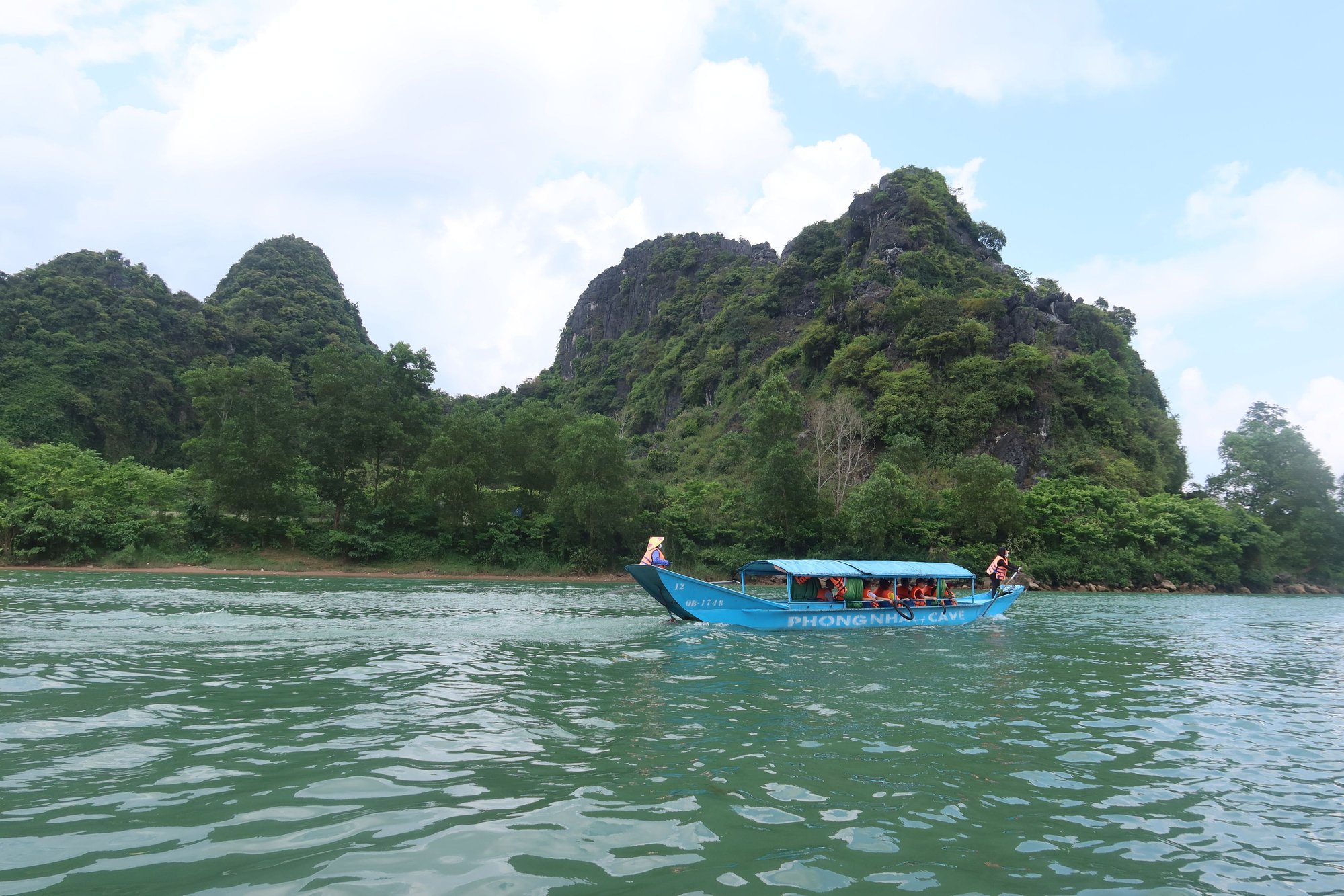
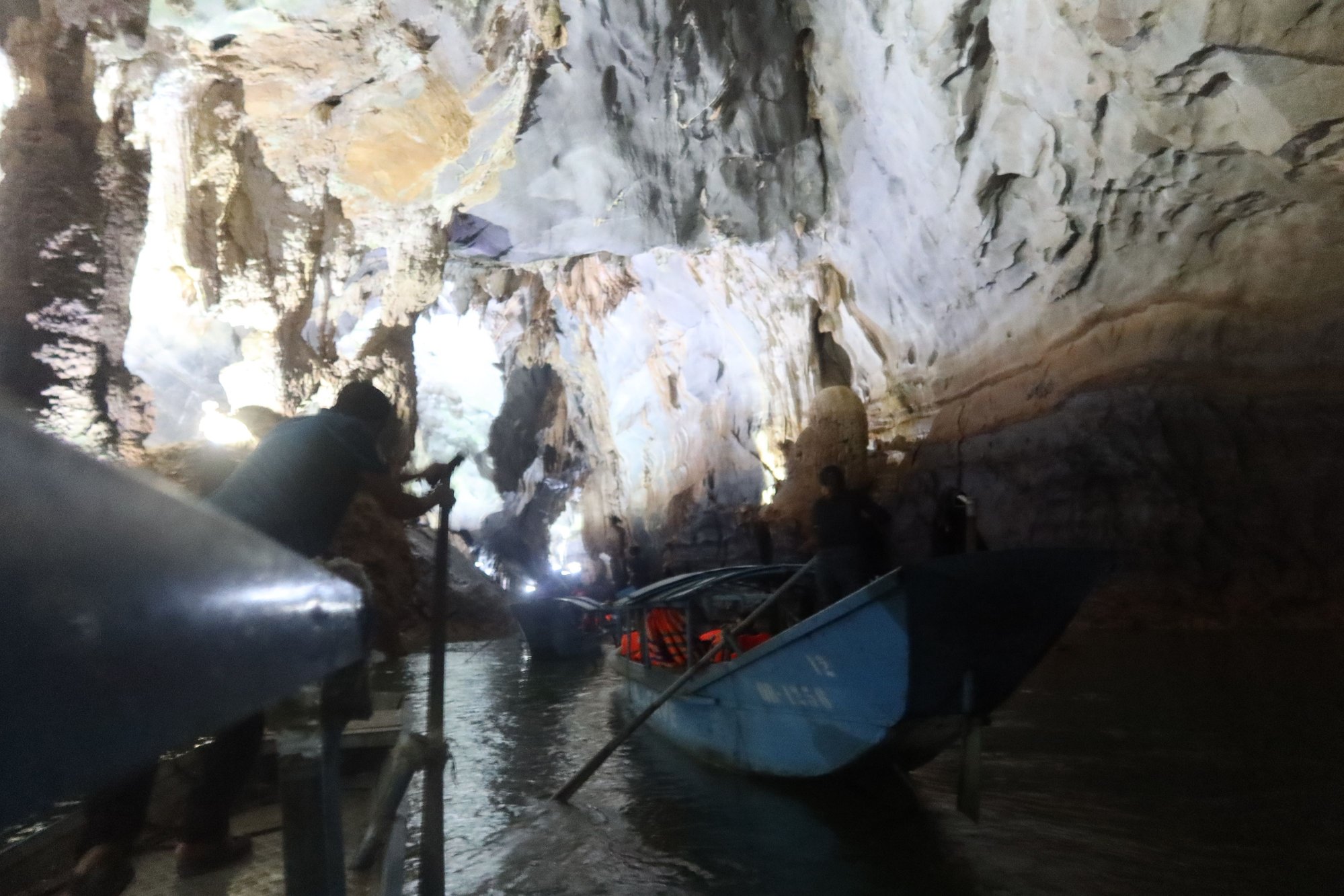
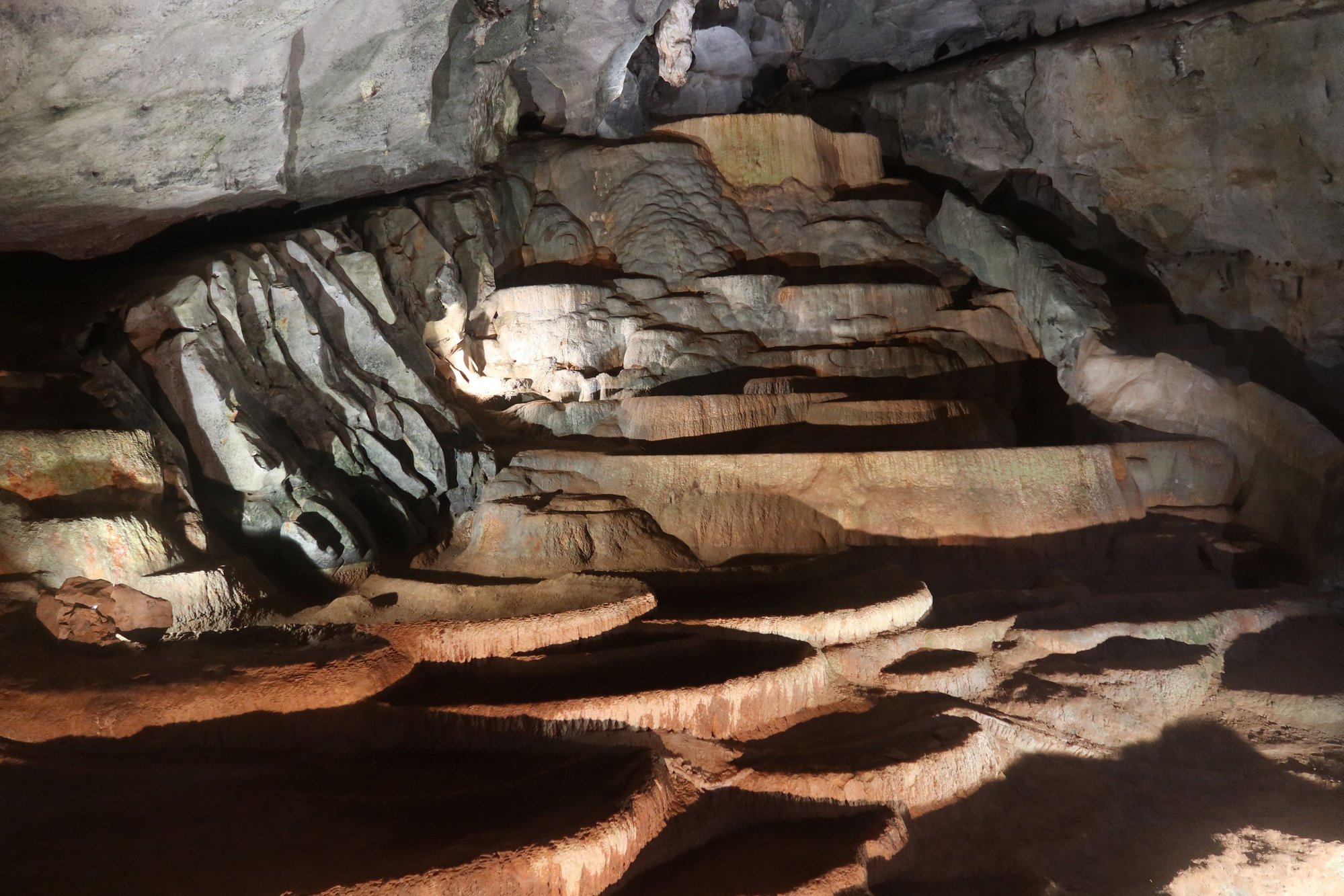
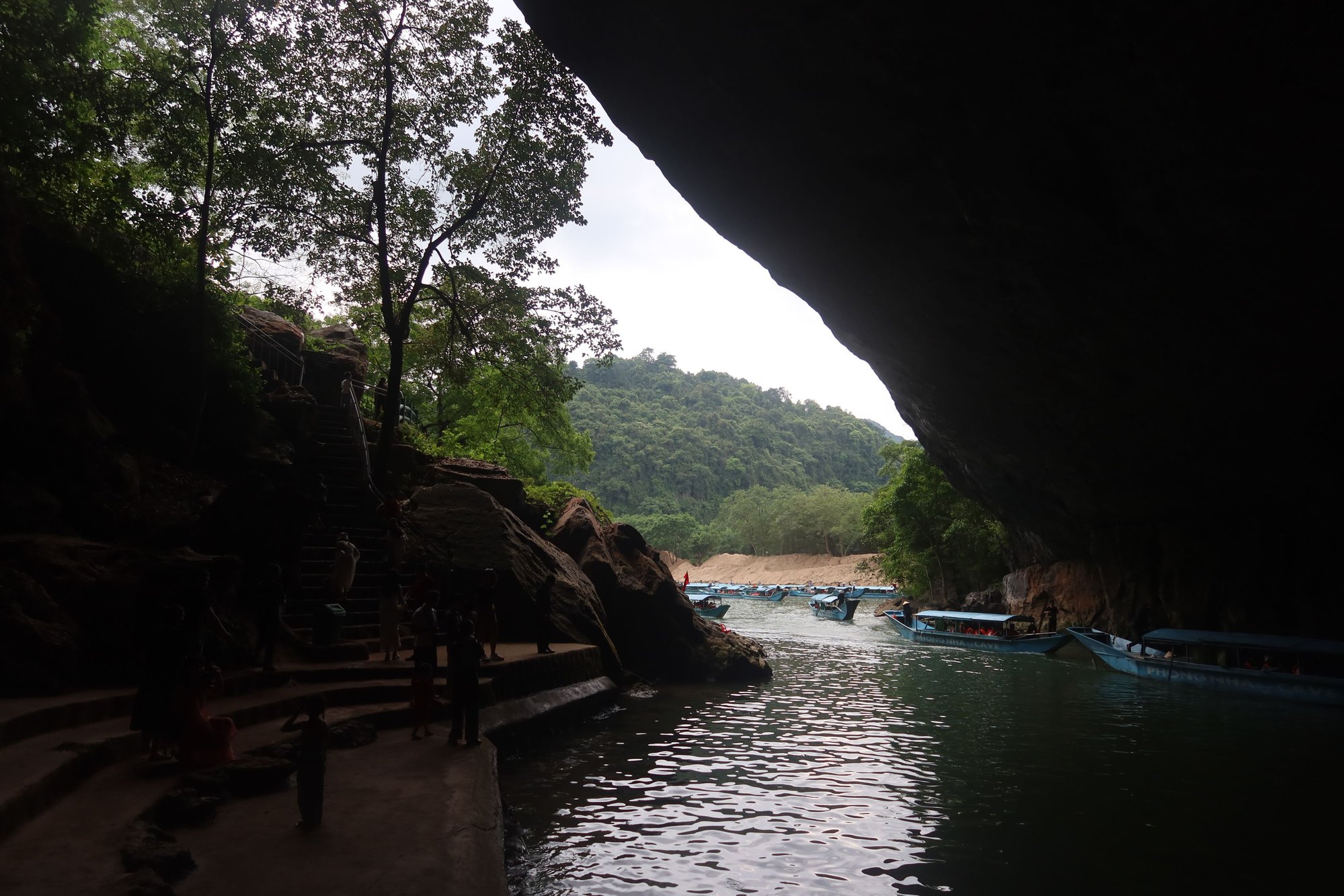
From Paradise Cave we drove back to the village to freshen up and enjoy an early lunch at our hotel. We visited Phong Nha Cave in the afternoon. Phong Nha Cave is reached by riverboat. After about an hour wait given the intense tourist crowds, we were on our way. There were eight on our boat including the four of us and our tour guide. We sailed about 30 minutes upriver to the entrance of the cave, passing picturesque lush green mountains. We sailed about one kilometer into the cave, enjoying the different limestone formations found inside the cave. We were on water inside the cave for about an hour, 15 minutes of it being stuck in a traffic jam given the number of boats near the cave entrance and another 15 minutes jostling among the boats to get off. From the boat landing, we made our way on foot inside the cave, oohing and awwing at nature's beauty all around us. Yes, it was very busy and at times quite crowded. Would we have preferred a quieter visit? Absolutely. Would we do it again if we knew about the level of crowds ahead of time? Yes. While less desirable, we found Phong Nha Cave to be rewarding and wouldn't have wanted to miss it. All in all, the visit took about 2.5 hours.
Phong Nha is not home to many hotels and restaurants. There are a few smaller hotels and multiple homestays. Visitors looking for more typical hotel options stay in Dong Hoi, about 45 minutes from Phong Nha. For us, it's about convenience. As such, we stayed in the village, at Victory Road Villas. Our penthouse apartment is huge. We have 3 bedrooms, 3 bathrooms, a living room, a kitchen, a media room, and a large balcony overlooking the river and mountains. We also ate all of our meals at our hotel, including a lunch and 2 dinners. The food is international in style although service is quite slow and the restaurant offered no bottled water.
Photos from Paradise Cave
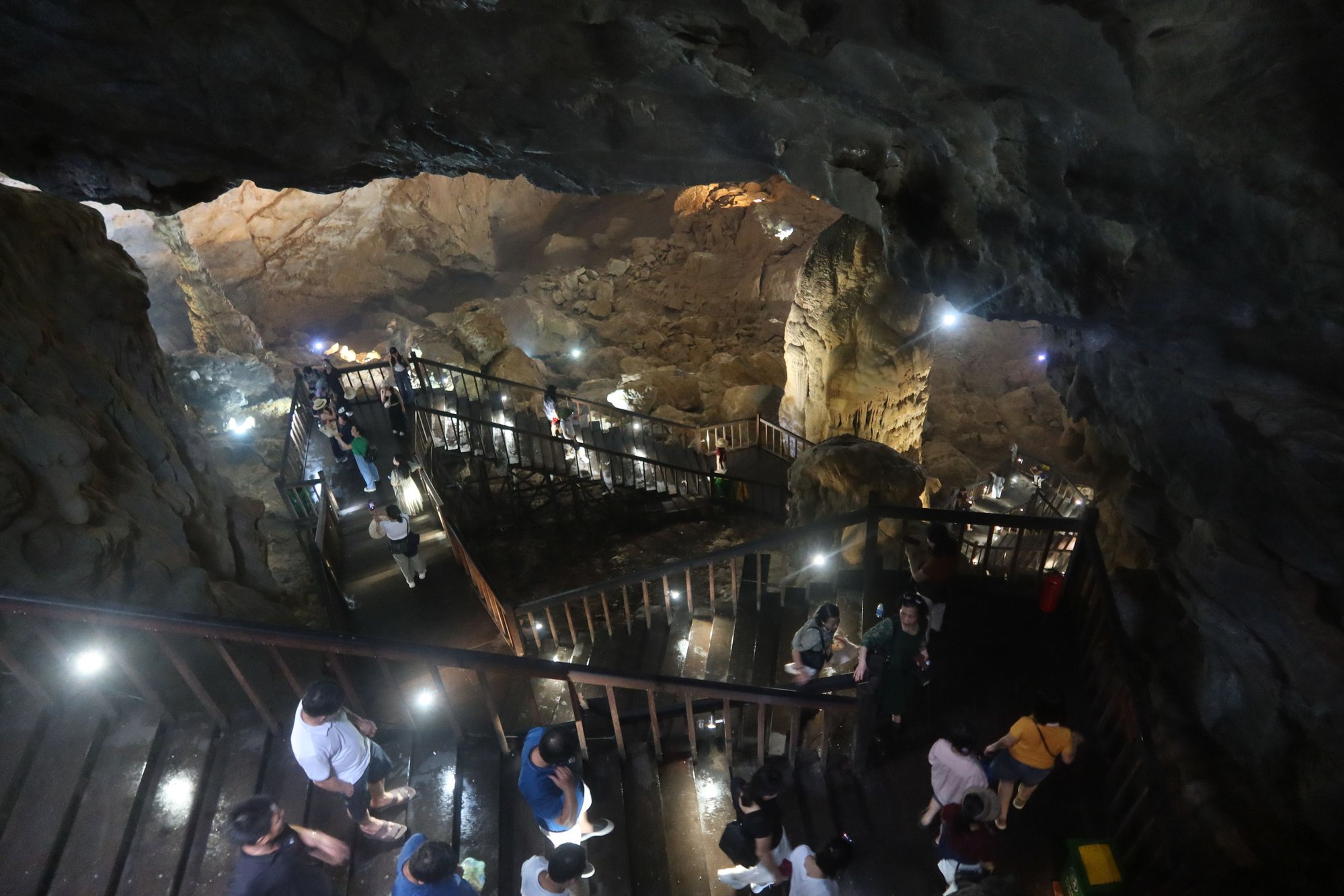
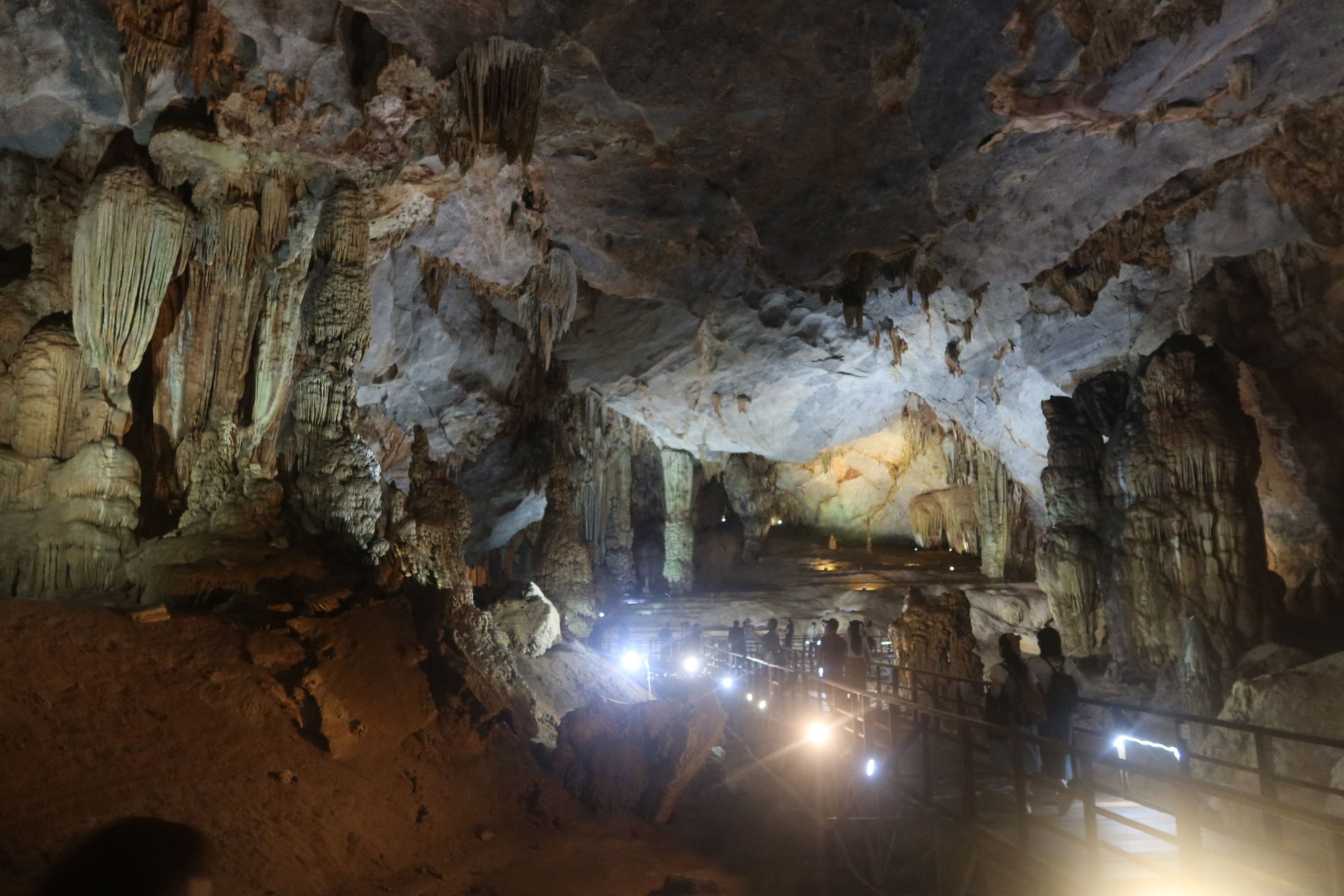
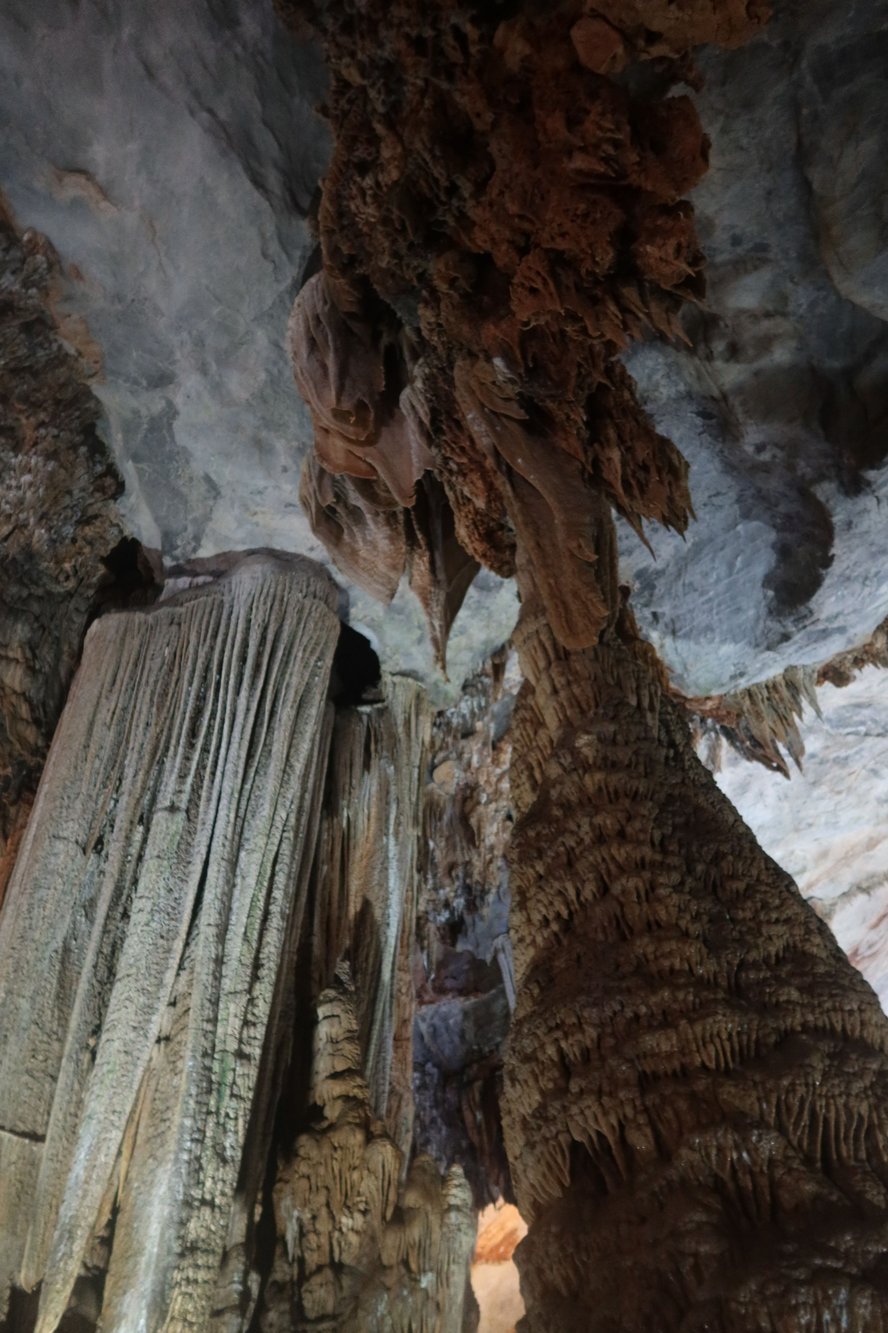


Photos from Phong Nha Cave and Surrounding Landscape



ms_go, many of the Vietnamese I've spoken with seem quite well informed (I can point to at least three such conversations just today) and able to take information, pull it apart, and determine what motivations may be behind the information. It's something that we've encountered in our travels elsewhere too. Places that we often think of as closed information societies may not be as closed as we're led to believe. Makes me think about information consumption at home and what it would take to get Americans to think more critically than we are now.
A Spectacular Underworld
The village of Phong Nha is the gateway to Phong Nha - Ke Bang National Park, home to some of the largest caves in the world. Today we visited two of these caves: Paradise Cave and Phong Nha Cave.
Paradise Cave is located about a half hour drive from the village. We headed out at 7:00 AM, to beat the tour bus crowds, which were especially numerous given the long weekend (yesterday was Liberation Day and today is May Day). Once we arrived at the ticket desk, we were driven in golf carts to the site entrance, from where it was an ascent on food to the cave entrance. At the cave entrance, we descended via 260 steps to the belly of the massive cave. Wow - what a place! The stalactites and the stalagmites. The different formations. The ceilings as high as some of the largest cathedrals in the world. Once inside the cave, we walked along a kilometer-long boardwalk, surveying Mother Nature's creation, just taking it all in. We spent a little more than an hour inside the cave, which was at least 20 to 25 degrees cooler than the outside temperature.
We left just before 10:00 AM, when thousands of other tourists seemed to descend on the cave at the same time. The tour buses were so backed up that it took us 20 minutes just to get out of the parking lot and back onto the main road. Insane. Thank goodness we went early.
From Paradise Cave we drove back to the village to freshen up and enjoy an early lunch at our hotel. We visited Phong Nha Cave in the afternoon. Phong Nha Cave is reached by riverboat. After about an hour wait given the intense tourist crowds, we were on our way. There were eight on our boat including the four of us and our tour guide. We sailed about 30 minutes upriver to the entrance of the cave, passing picturesque lush green mountains. We sailed about one kilometer into the cave, enjoying the different limestone formations found inside the cave. We were on water inside the cave for about an hour, 15 minutes of it being stuck in a traffic jam given the number of boats near the cave entrance and another 15 minutes jostling among the boats to get off. From the boat landing, we made our way on foot inside the cave, oohing and awwing at nature's beauty all around us. Yes, it was very busy and at times quite crowded. Would we have preferred a quieter visit? Absolutely. Would we do it again if we knew about the level of crowds ahead of time? Yes. While less desirable, we found Phong Nha Cave to be rewarding and wouldn't have wanted to miss it. All in all, the visit took about 2.5 hours.
Phong Nha is not home to many hotels and restaurants. There are a few smaller hotels and multiple homestays. Visitors looking for more typical hotel options stay in Dong Hoi, about 45 minutes from Phong Nha. For us, it's about convenience. As such, we stayed in the village, at Victory Road Villas. Our penthouse apartment is huge. We have 3 bedrooms, 3 bathrooms, a living room, a kitchen, a media room, and a large balcony overlooking the river and mountains. We also ate all of our meals at our hotel, including a lunch and 2 dinners. The food is international in style although service is quite slow and the restaurant offered no bottled water.
Photos from Paradise Cave
Photos from Phong Nha Cave and Surrounding Landscape
Last edited by tripplanner001; May 1st, 2025 at 06:19 AM.
May 1st, 2025 | 07:24 AM
#37
Joined: Mar 2003
Posts: 6,173
Likes: 0
Wow!!! You've written so much since I last checked. I love all the photos, especially An Dinh Palace, the Pagoda, Mausoelum, and Imperial City Complex.
We love to walk around neighborhoods, too, and explore and admire the architecture, street scenes, stop for a drink or a bite to eat, etc. That's one reason why we've never taken a HOHO bus.
I don't have time to read everything you wrote in depth right now. We are leaving for a 5-week trip to Italy tomorrow. But I will come back to your fascinating TR when we return.
Happy Travels!
We love to walk around neighborhoods, too, and explore and admire the architecture, street scenes, stop for a drink or a bite to eat, etc. That's one reason why we've never taken a HOHO bus.
I don't have time to read everything you wrote in depth right now. We are leaving for a 5-week trip to Italy tomorrow. But I will come back to your fascinating TR when we return.
Happy Travels!
May 1st, 2025 | 05:56 PM
#39
Joined: Jan 2004
Posts: 3,618
Likes: 0
Enjoyed your photos from the caves. We have not been to this area. We did take a long rowboat ride up a river to the Hương Temple complex, closer to Hanoi (way back in 2011).
May 1st, 2025 | 06:47 PM
#40
Original Poster
Joined: Sep 2012
Posts: 3,517
Likes: 0
ms_go, thank you. The caves were definitely a highlight on this trip of many highlights.
Today is largely a travel day. We’re currently on the road, travelling from Phong Nha to Tam Coc, in Ninh Binh province, a 7-hour drive.
Today is largely a travel day. We’re currently on the road, travelling from Phong Nha to Tam Coc, in Ninh Binh province, a 7-hour drive.

