Fodor's Expert Review Cape Point
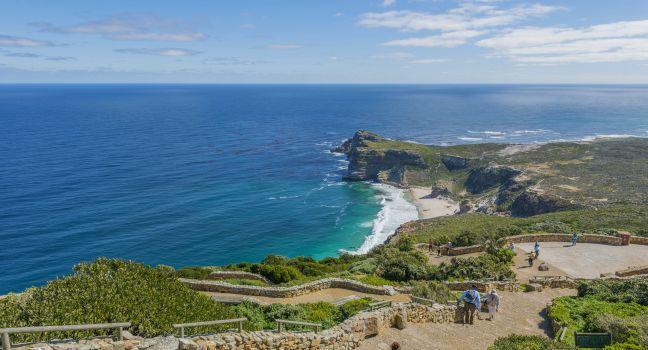
Cape Point is a dramatic knife's edge of rock that slices into the Atlantic. Looking out to sea from the viewing platform, you feel you're at the tip of Africa, even though that honor officially belongs to another dramatic point at Cape Agulhas, about 160 km (100 miles) to the southeast. From Cape Point the views of False Bay and the Hottentots Holland Mountains are astonishing. The walk up to the viewing platform and the old lighthouse is very steep; a funicular makes the run every three or four minutes. Take a jacket or sweater—the wind can be fierce. It took six years, from 1913 to 1919, to build the old lighthouse, 816 feet above the high-water mark. On a clear day the old lighthouse was a great navigational mark, but when the mists rolled in it was useless, so a new and much lower lighthouse (286 feet) was built at Dias Lookout Point. The newer, revolving lighthouse, the most powerful on the South African coast, emits a group of three flashes every 30 seconds. It has prevented... READ MORE
Cape Point is a dramatic knife's edge of rock that slices into the Atlantic. Looking out to sea from the viewing platform, you feel you're at the tip of Africa, even though that honor officially belongs to another dramatic point at Cape Agulhas, about 160 km (100 miles) to the southeast. From Cape Point the views of False Bay and the Hottentots Holland Mountains are astonishing. The walk up to the viewing platform and the old lighthouse is very steep; a funicular makes the run every three or four minutes. Take a jacket or sweater—the wind can be fierce. It took six years, from 1913 to 1919, to build the old lighthouse, 816 feet above the high-water mark. On a clear day the old lighthouse was a great navigational mark, but when the mists rolled in it was useless, so a new and much lower lighthouse (286 feet) was built at Dias Lookout Point. The newer, revolving lighthouse, the most powerful on the South African coast, emits a group of three flashes every 30 seconds. It has prevented a number of ships from ending up on Bellows or Albatross Rock below. You can't go into the lighthouses, but the views from their bases are spectacular.
Stark reminders of the ships that didn't make it are dotted around the Cape. You'll see their rusty remains on some of the beaches. One of the more famous wrecks is the Thomas T. Tucker, one of hundreds of Liberty Ships produced by the United States to enable the Allies to move vast amounts of supplies during World War II. It wasn't the German U-boats patrolling the coastline that did the ship in. Rather the fog closed in, and on her maiden voyage in 1942, it ended up on Olifantsbos Point. Fortunately, all on board were saved, but the wreck soon broke up in the rough seas that pound the coast.
The mast you see on the western slopes of Cape Point near the lighthouse belongs to the Global Atmosphere Watch Station (GAW). The South African Weather Bureau, together with the Fraunhofer Institute in Garmisch, Germany, maintains a research laboratory here to monitor long-term changes in the chemistry of the earth's atmosphere, which may impact climate. This is one of 20 GAWs throughout the world, chosen because the air at Cape Point is considered particularly pure most of the time.
During peak season (December–January), visit Cape Point as early in the day as possible to avoid being swamped by an armada of tour buses. There are a few shops and snack kiosks.
The best way to experience the park is to hike on one of the numerous walking trails (favorites include the boardwalk trail to Diaz Beach and the shipwreck trail) and/or enjoy a picnic and dip at the Bordjiesrif or Buffels Bay tidal pools, or on Platboom or Oliphantsbos beaches. A fantastic alternative is to stay overnight in the comfortable basic accommodations, booked through South African National Parks. Do not feed the indigenous resident chacma baboons, which are increasingly under threat.
Despite the peninsula's population being estimated at only 450 individuals, baboons continue to be shot for raiding homes and stealing food; baboon-feeding tourists are largely responsible for this serious situation, and you should always be wary of them; they can be dangerous if provoked or if they think you have food.
READ LESS