


“I like to think of Bill meeting the prince on Titicaca's shores and teaching him how local craftspeople are equal to any other.”
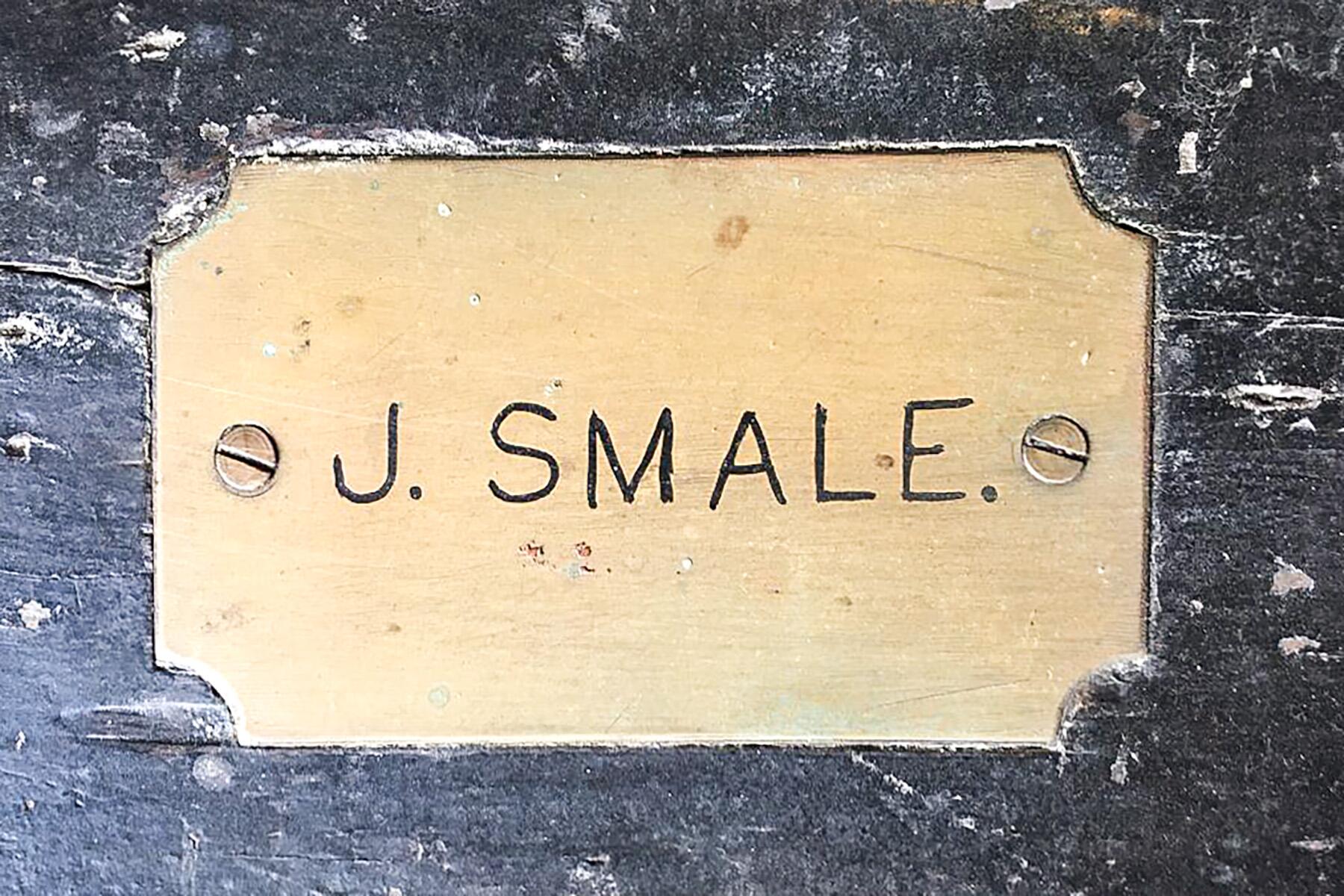
A young girl pulls toys from an old wooden chest with a lid carrying the simple plaque engraved: J. Smale. The chest once held tools belonging to Smale’s son Bill, the girl’s great-great-uncle. One day, she would follow Bill’s footsteps from the U.K. to Lake Titicaca. His journey was very different from hers, not least because he was transporting a 2,000-ton steamship. That young girl, Anna, grew up to be just as adventurous as her great-great-uncle.
“When my parents told me about Uncle Bill, I didn’t imagine that I’d one day be traveling through South America myself, trying to find his ship on Lake Titicaca,” Anna, my wife, told me one day.
We could only fully appreciate the size of Titicaca, and Bill’s undertaking, when we visited the lake ourselves–and went in search of Uncle Bill’s ship.

Retracing an Ancestor’s Footsteps to Peru
Bill worked for Earle’s Shipbuilding in Hull, England, which the Peruvian Corporation commissioned to build a craft that would ply the world’s highest navigable lake. Once completed, the S.S. Ollanta was dismantled, transported in pieces across oceans to the port of Mollendo, then carried by train to the lakeside city of Puno. Bill accompanied the cargo and, when he arrived at Puno, quickly employed locals to construct a slipway large enough to accommodate the Ollanta.
Recommended Fodor’s Video
Being one of Britain’s most accomplished engineers of the early 20th century, Bill and the local Peruvian crew swiftly reassembled the new steamer before the rest of the team had even arrived from England. On November 18, 1931, the S.S. Ollanta was launched on Lake Titicaca. Earlier that year, another person from Britain visited Puno: The Prince of Wales.
The Ollanta had 66 first-class and 20 second-class cabins; it’s certainly possible that it was this ship that Che Guevara described when he visited Puno in 1952 and saw a “boat which had been designed in England and built here; its lavishness clashed with the general poverty of the whole region.”
Anna and I approached Puno from the same direction as Guevara, albeit in a comfortable bus from Bolivia rather than atop a truck in freezing conditions.
“Most people probably don’t make a beeline for the docks when they arrive in Puno,” Anna said. “I was excited to see if the Ollanta was there. Sadly, no one in the nearby craft market had heard of it, or perhaps they didn’t understand what we were looking for.”

We walked along the quay, at one point entering an area we weren’t entirely sure we were allowed in.
“That turned out to be the right thing to do,” Anna recalls. “Just along the quay, there she was: the ship that Uncle Bill built almost 100 years ago.”
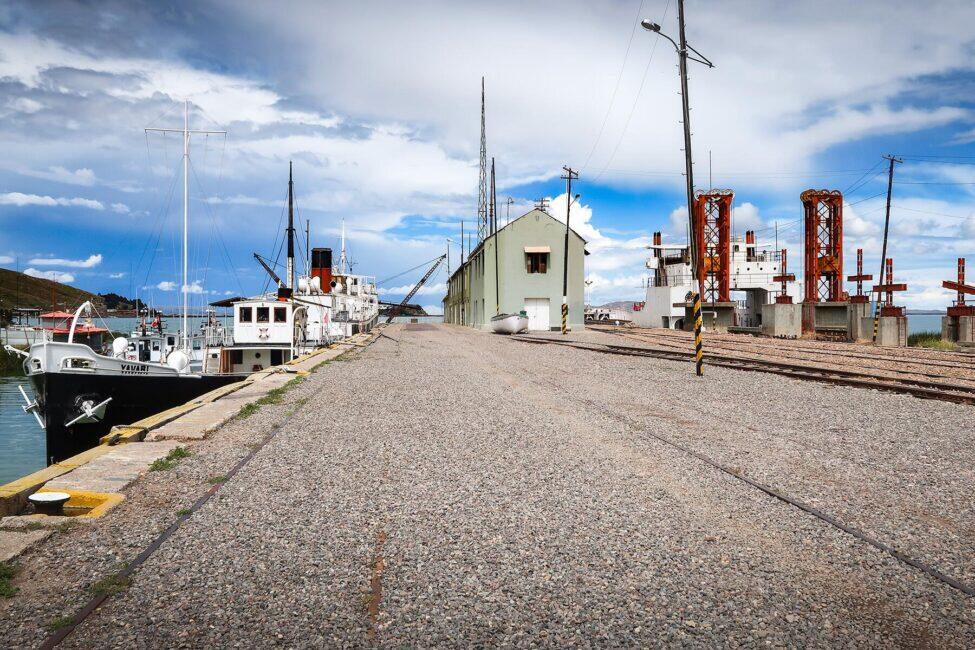
S.S. Ollanta floated regally beside an old corrugated-roof warehouse, her elegant black hull topped with gleaming white upper decks. Anna stood and admired the ship her ancestor had built. Unfortunately, there wasn’t anyone around to allow us on or near it. But this wasn’t the only old steamer in these docks.
Anna led me over to the Yavari, a ship built in London in the same “knock down” form as Ollanta, deconstructed, transported across oceans, and taken inland to Lake Titicaca. However, Yavari was built in 1862 when there was no rail from the coast to the lake. Each of the 2,766 puzzle pieces, therefore, could not weigh more than 400 pounds to ensure that mules could transport them. Just like Ollanta, the Yavari was reconstructed in Puno, then launched in 1870.
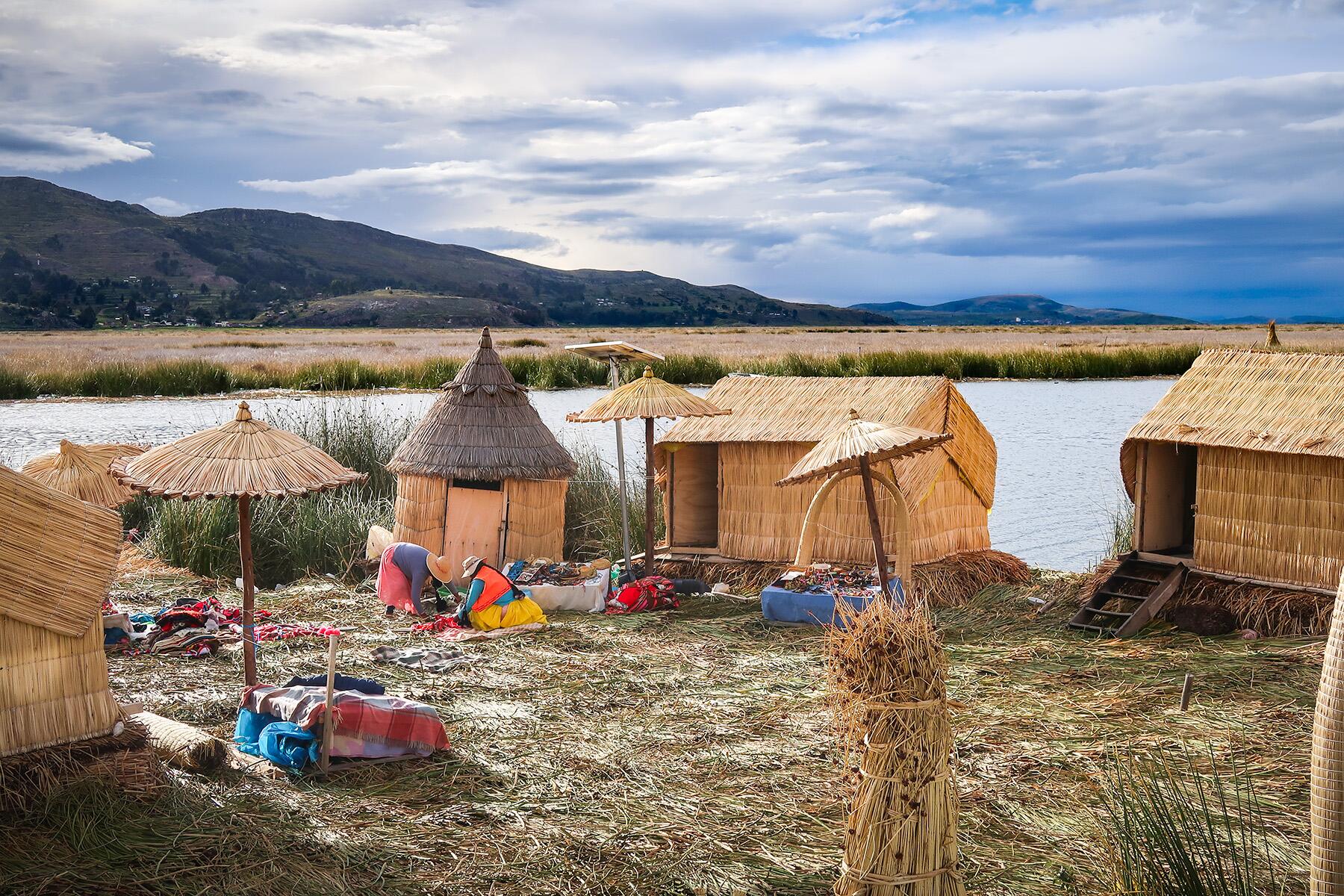
Scenes of reed islands are as timeless today as they were when Bill Smale added his metal craft to the lake. Close to where the grand old steamers are moored, tour boats depart for these islands. These trips take tourists into the villages of Uros and Taquile, where reeds provide thick floating platforms and a material for building houses.
Modern warehouses now stand where Earle’s Shipyard was once located in Hull. An old warehouse previously belonging to Yavari’s builders–the Thames Ironworks shipyard–is, however, still standing in East London but now neighbored by expensive high-rise apartment blocks. Thanks to the hard work of volunteers and specialists, both the Ollanta and Yavari are in considerably better condition than the places where they were constructed.
The person responsible for Yavari’s restoration is Meriel Larken. Mistakenly thinking that Yavari was built in her great grandfather’s shipyard, in 1982, Larken traveled to Puno from the U.K. and bought the decrepit ship from a Peruvian admiral. Except the Yavari was not entirely ruined; in fact, the 120-year-old hull was in remarkably good condition.
Nevertheless, it took Larken and a hardworking band of volunteers many years of restoration before work was completed over 20 years later. The ship is so well-restored that, as you explore the cabins, you can easily imagine sailing on it and hearing the old engines–once powered by llama dung–thrumming away.
There are hopes that the Yavari will become a museum, but, as of 2024, a new benefactor or management team is being sought to ensure that future. But if you visit the docks, you might also see the Yapura, the Yavari’s sister ship, which belongs to the Peruvian government and, until recently, operated as a coastguard vessel.
An Unanswered Question About Uncle Bill
Though we were able to see Uncle Bill’s ship, one persistent question continued to puzzle Anna: did her ancestor meet the Prince of Wales?
Trawling through archives, I found that Bill departed for South America on December 23rd, 1930, and it took him about a month to sail from Liverpool to Mollendo, Peru. Archive footage shows the Prince of Wales arriving in Callao, Peru, in February 1931, and newspaper clippings describe how he subsequently visited Lake Titicaca at a time when Bill, too, would have been there. Bill isn’t mentioned in any of these reports, and so that’s where this particular trail goes cold.
“I’m sure the prince would have been honored to meet Bill,” Anna tells me.
After more searching, the internet revealed another old document: a November 1932 manifest of passengers arriving in New York on board the SS Santa Maria. There, listed as having embarked in Mollendo in October of that year, is “William Smale,” now aged 33 and transferring on home to England.
Again, Anna would follow in Bill’s footsteps, traveling through Peru and sharing his indomitable and adventurous spirit. She would continue through Ecuador, then the Caribbean, and, just as her great-great-uncle had done almost a century before, transfer home via New York.