68 Best Sights in Washington, D.C., USA

Background Illustration for Sights

We've compiled the best of the best in Washington, D.C. - browse our top choices for the top things to see or do during your stay.

National Law Enforcement Officers Memorial

Penn Quarter
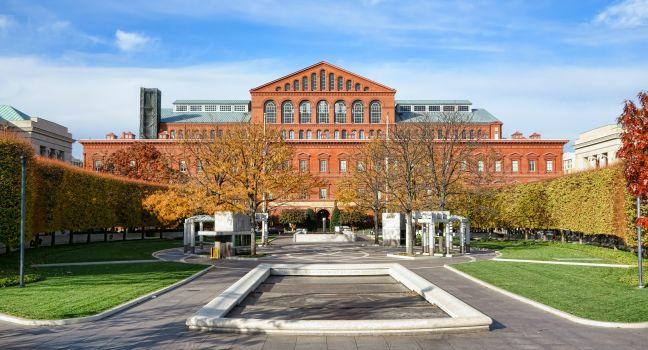
National Law Enforcement Officers Memorial esplanade in front of the National Building Museum building in the United States capital of Washington DC.
(c) Olivierl | Dreamstime.com

These 3-foot-high walls bear the names of more than 21,000 American police officers killed in the line of duty since 1791. On the third line of Panel 13W are the names of six officers killed by William Bonney, better known as Billy the Kid. J.D. Tippit, the Dallas policeman killed by Lee Harvey Oswald, is honored on the ninth line of Panel 63E. Other names include the 72 officers who died due to the events of 9/11. Directories here allow you to look up officers by name, date of death, state, and department. Call to arrange for a free tour. A National Law Enforcement Museum is in the works; until then, a small visitor center ( 400 7th St.) has a computer for looking up names, a display on the history of law enforcement, and a small gift shop.

Smithsonian Castle Information Center

The Mall
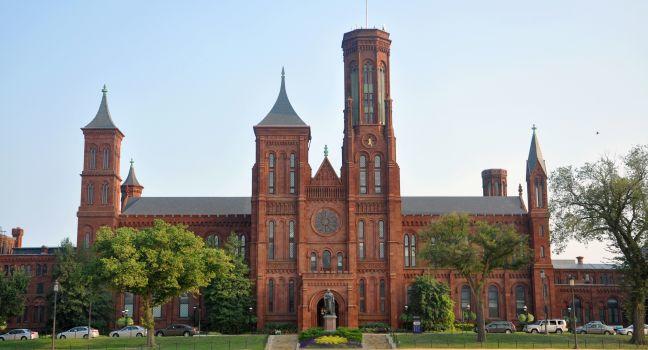
The front Victorian facade of the Smithsonian Castle in Washington, District of Columbia, USA.
Jiawangkun | Dreamstime.com

The original home of the Smithsonian Institution is an excellent first stop on the Mall to help you get your bearings and plan your exploration of the museums. Built of red sandstone, this Medieval Revival–style building, better known as the "Castle," was designed by James Renwick Jr., the architect of St. Patrick's Cathedral in New York City. Although British scientist and founder James Smithson never visited America, his will stipulated that, should his nephew, Henry James Hungerford, die without an heir, Smithson's entire fortune would go to the United States, "to found at Washington, under the name of the Smithsonian Institution, an establishment for the increase and diffusion of knowledge." The museums on the Mall are the Smithsonian's most visible example of this ideal, but the organization also sponsors traveling exhibitions and maintains research posts in the Chesapeake Bay area and the tropics of Panama.

A 10-minute video gives an overview of the museums and the National Zoo, and The Smithsonian Institution: America's Treasure Chest exhibition features objects representing all the museums, revealing the breadth and depth of the collections. James Smithson's crypt is in a small chapel-like room here. The Castle also has Views from the Tall Tower—an exhibit demonstrating how the Washington skyline has changed since 1863—a good café, brochures in several languages, and a museum store. Kids appreciate the historic carousel at the north entrance; at the south entrance, you'll find the beautifully manicured Haupt Garden and copper-domed kiosk called the S. Dillon Ripley Center, which houses the Discovery Theater (delightful and affordable live, family-oriented shows on selected weekday mornings—usually geared for kids 2–12—are held here).

1000 Jefferson Dr. SW, Washington, DC, 20560, USA
202-633–1000
Sight Details
Free

Something incorrect in this review?

The White House

Foggy Bottom
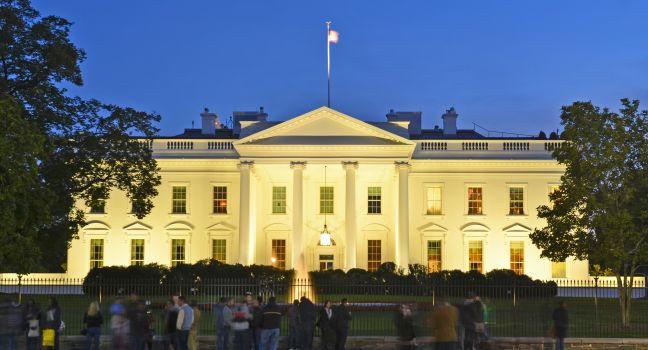
The White House - Washington DC, United States
(c) Orhan Cam | Dreamstime.com

America's most famous house was designed in 1792 by Irish architect James Hoban. It was known officially as the Executive Mansion until 1902, when President Theodore Roosevelt renamed it the White House, long its informal name. The house has undergone many structural changes: Andrew Jackson installed running water; James Garfield put in the first elevator; Harry Truman had the entire structure gutted and restored, adding a second-story porch to the south portico; and Richard Nixon installed a one-lane bowling alley in 1969.

To see the White House you need to contact your U.S. representative or senator (or embassy if you aren't a U.S. citizen). Requests can be made up to three months in advance (especially for spring, summer, or December tour requests) and no less than 21 days in advance. You'll be asked for the names, birth dates, and Social Security numbers of everyone in your group. On the morning of your tour, call the White House Visitors Office information line for any updates; tours are subject to last-minute cancellations. Arrive 15 minutes early. Your group will be asked to line up in alphabetical order. Everyone 18 years and older must present government-issued photo ID, and no purses, backpacks, or bags are allowed on the tour (and no storage lockers are provided so leave them in your hotel room). There are no public restrooms, and you're allowed to take photos only with a smartphone or small compact camera. The security process will probably last as long as the tour itself, 20–25 minutes.

The self-guided tour includes rooms on the ground floor (including the White House Family Theater), but the State Floor has the highlights. The East Room is the largest room in the White House, the site of ceremonies and press conferences; this is also where Theodore Roosevelt's children roller-skated and one of Abraham Lincoln's sons harnessed a pet goat to a chair and went for a ride. The portrait of George Washington that Dolley Madison saved from torch-carrying British soldiers in 1814 hangs in the room, and the White House Christmas tree stands here every winter. The only president to get married in the White House, Grover Cleveland, was wed in the Blue Room. Esther, the second daughter of President Cleveland and First Lady Frances, holds the distinction of being the only child born in the White House. The Red Room, decorated in early-19th-century American Empire style, has been a favorite of first ladies. Mary Todd Lincoln had her coffee and read the morning paper here. In 1961, First Lady Jacqueline Kennedy undertook an extensive restoration of the White House to preserve and showcase the historical and architectural significance of the home and its contents. The East Garden, which now bears her name, honors her contributions. Michelle Obama installed a vegetable-and-herb garden to promote healthy eating, as well as an apiary and pollinator garden for bees and other insects.

Your tour of the White House will be enhanced by visiting the White House Visitor Center at 1450 Pennsylvania Avenue NW, featuring displays, photos, and a 30-minute video about the White House.

1600 Pennsylvania Ave. NW, Washington, DC, 20006, USA
202-208–1631-White House Visitor Center
Sight Details
Free
Closed Sun. and Mon.
Must reserve in advance

Something incorrect in this review?

Recommended Fodor's Video

American Red Cross

Foggy Bottom

The national headquarters for the American Red Cross, a National Historic Landmark since 1965, is composed of three buildings. Guided tours show off the oldest, a Beaux Arts structure of blinding-white marble built in 1917 to commemorate women who cared for the wounded on both sides during the Civil War. Three stained glass windows designed by Louis Comfort Tiffany illustrate the values of the Red Cross: faith, hope, love, and charity. Other holdings you'll see on the 60-minute tour include an original N.C. Wyeth painting, sculptures, and artifacts that belonged to Clara Barton, the founder of the American Red Cross. Weather permitting, the tour includes a visit to the memorial garden. The management recommends booking your tour 2–3 weeks in advance. Reservations are required for the free tour, offered at 10 am and 2 pm on Wednesday and Friday; schedule via email at  [email protected].

430 17th St. NW, Washington, DC, 20006, USA
202-303–4233
Sight Details
Free
No tours Thurs. and Sat.–Tues.

Something incorrect in this review?

American Veterans Disabled for Life Memorial

Downtown

Located on a 2.4-acre tract adjacent to the National Mall and within full view of the U.S. Capitol, this memorial illustrates the journey of veterans with disabilities, from injury and healing to rediscovery of purpose. The plaza, with a star-shaped fountain and low triangular reflecting pool, features bronze sculptures, glass panels, and granite walls engraved with quotations from 18 veterans describing their experiences. With its single ceremonial flame, the fountain is the focal point, a powerful icon expressing water's healing, cleansing properties and the enlightenment, power, and eternal nature of fire. The needs of those with disabilities are front and center in the memorial's design. The low fountain can easily be surveyed by someone in a wheelchair, numerous benches in front of text panels, and hidden metal bars placed strategically to help visitors who need assistance to sit or stand. Designed by Michael Vergason Landscape Architects, of Alexandria, Virginia, the memorial is a fitting reminder of the cost of human conflict.

150 Washington Ave. SW, Washington, DC, 20024, USA
Sight Details
Free

Something incorrect in this review?

Anderson House

Dupont Circle

The palatial, Gilded Age Anderson House is the headquarters of the Society of the Cincinnati, the nation's oldest historical organization promoting knowledge and appreciation of America's independence. The society was founded by Revolutionary War veterans in 1783—George Washington was its first president general—and this has been its home since 1938. Guided tours of the first and second floors reveal the history of the society, the significance of the American Revolution, and the lives and collections of the home's first owners, Larz and Isabel Anderson. Built in 1905, the home was the Andersons' winter residence and retains much of its original contents—an eclectic mix of furniture, tapestries, paintings, sculpture, and Asian art. Larz, a U.S. diplomat from 1891 to 1913, and his wife, Isabel, an author and benefactress, assembled their collection as they traveled the world during diplomatic postings. Today, the house also features an exhibition gallery, open every day except Monday, and a research library that you can visit by appointment.

2118 Massachusetts Ave. NW, Washington, DC, 20008, USA
202-785–2040
Sight Details
Free
Closed Mon.; library visits by appointment only

Something incorrect in this review?

Art Museum of the Americas

Foggy Bottom

Located on 18th Street, just steps from the National Mall, the Art Museum of the Americas (AMA) is still considered by many a hidden gem. With its rotating exhibitions from prominent Latin American and Caribbean artists, there's always something new to experience at the museum. Take a break from the D.C. crowds and learn about the exhibitions, walk around the picturesque blue-tile corridor, and go for a walk along its serene garden. Admission is free.

201 18th St. NW, Washington, DC, 20006, USA
220-370–0149
Sight Details
Free
Closed Mon., federal holidays, and Good Friday

Something incorrect in this review?

Black Lives Matter Plaza

Foggy Bottom

After then-President Trump held up a Bible on June 1, 2020, for a photo op in front of historic St. John's Church, calling out the National Guard to waylay peaceful protestors for his safe passage, D.C. mayor Muriel Bowser had the words "Black Lives Matter" painted in yellow, 35-foot-long capital letters along a two-block-long section of 16th Street NW, in front of the church and within plain view of the White House several days after the incident. Since then, Black Lives Matter Plaza has become a community gathering spot featuring performances, yoga, and even weddings. In October 2021, it became a permanent installation.

16th St. NW between H and K Sts., Washington, DC, 20005, USA

Something incorrect in this review?

Constitution Gardens

The Mall

Many ideas were proposed to develop this 52-acre site near the Reflecting Pool and the Vietnam Veterans Memorial. Winding paths along tree groves and a 1-acre island on the lake pay tribute to the signers of the Declaration of Independence, with all of their 56 signatures carved into a low stone wall. This spot is charming in the fall, with vibrant red colors, and it's a quieter part of the Mall for picnics. You can get hot dogs, potato chips, candy bars, and soft drinks at the circular snack bar just west of the lake.

Constitution Ave., Washington, DC, 20024, USA
Sight Details
Free

Something incorrect in this review?

Daughters of the American Revolution (DAR) Museum

Foggy Bottom

The Beaux Arts Memorial Continental Hall, built in 1929 as the headquarters for the Daughters of the Revolution (DAR), is home to Washington, D.C.'s only decorative arts museum. The enormous collection encompasses furniture, textiles, quilts, silver, china, porcelain, stoneware, earthenware, glass, and other items made and used in the daily lives of Americans from the Colonial era through the early 20th century. Thirty-one period rooms reflect more than two centuries of American interiors, including a 1690s New England hall, an 1860s Texas bedroom, and a 1920s Ohio parlor. Two galleries feature changing exhibitions of decorative arts, and a study gallery allows researchers close access to the collection. Docent tours of the period rooms are available on weekdays, depending on docent availability. You can also take a self-guided tour. The museum also hosts special events for children and adults; check the website for details.

1776 D St. NW, Washington, DC, 20006, USA
202-628–1776
Sight Details
Free
Closed Sun.

Something incorrect in this review?

DC Alley Museum

Shaw

If you love street art, take a stroll along the DC Alley Museum, funded by the DC Commission on the Arts and Humanities Public Art Building Communities Program. Local artists take turns creating art in the many garages surrounding Blagden Alley in Shaw. The murals take on local issues, social justice, and women's rights. The museum is open-air, and you can go whenever you choose as there are no admission charges. You can find more details about the artists and the art on the website.

Decatur House

Foggy Bottom

Decatur House was built in 1818–19 on Lafayette Square, just across from the White House, for naval hero Stephen Decatur and his wife, Susan. Designed by Benjamin Henry Latrobe, the country's first professional architect, it's one of Washington's oldest surviving homes. But Decatur didn't have long to enjoy it, since he died tragically 14 months later, after a duel with Commodore James Barron. Wealthy hotel and tavern owner John Gadsby purchased the distinguished Federal-style house as a retirement home in 1836. The large two-story dependency was used as quarters for numerous enslaved individuals in his household—Washington's only extant slave quarters. Tours—offered Monday at 10:30 am and 1 pm—feature these historic quarters and the house's first and second floors, much of which represent the taste of a later owner, Marie Beale, beloved for her salons with ambassadors and politicians. The White House Historical Society operates one of its three retail shops here, and you'll find an excellent selection of White House history–themed products, including the annual Christmas ornament.

Franklin Delano Roosevelt Memorial

The Mall

This 7½-acre memorial to the 32nd president, on the west side of the Tidal Basin, includes waterfalls and reflecting pools, four outdoor gallery rooms—one for each of Roosevelt's presidential terms (1933 to 1945)—and 10 bronze sculptures. You can find some of Roosevelt's famous statements, including "The only thing we have to fear is fear itself," engraved on the granite megaliths connecting the galleries. A bronze statue of First Lady Eleanor Roosevelt stands in front of the United Nations symbol in the fourth room. She was a vocal spokesperson for human rights and one of the most influential women of her time. Considering Roosevelt's disability, this was the first memorial designed to be wheelchair-accessible, and several pillars include Braille lettering. The memorial was dedicated in 1997, but it wasn't until 2001 that a statue of a wheelchair-bound Roosevelt was added near the entrance after years of debate about whether to portray Roosevelt realistically or to honor his desire not to display his disability, as had been done throughout his presidency.

400 W. Basin Dr. SW, Washington, DC, 20024, USA
202-426–6841
Sight Details
Free

Something incorrect in this review?

Glover Archbold Park

Upper Northwest

Groves of beeches, tulip trees, and oaks flourish at this 183-acre park, part of the Rock Creek system, which begins just west of Georgetown and ends, nearly 2½ miles later, near Van Ness Street. Along the way, you'll experience a tree-shaded valley stream and possible bird sightings. And chances are, you'll have the trail mostly to yourself.

Kahlil Gibran Memorial Garden

Upper Northwest

In a town known for political combat, this tiny urban park is a wonderful place to find some peace. The shady park combines Western and Arab symbols and is perfect for contemplation. From the Massachusetts Avenue entrance, a stone walk bridges a flower-bedecked swale. Farther on are limestone benches engraved with sayings from Gibran. They curve around a star-shaped fountain and a bronze bust of the namesake Lebanese-born poet, who emigrated to the United States at the turn of the 20th century and remains one of the best-selling poets of all time. His best-known work, The Prophet, has sold more than 11 million copies and has been translated into more than 100 languages. The garden is near the grounds of the United States Naval Observatory and across from the British Embassy.

3100 block of Massachusetts Ave. NW, Washington, DC, 20008, USA
202-895–6000
Sight Details
Free

Something incorrect in this review?

Kenilworth Park and Aquatic Gardens

Anacostia

Exotic water lilies, lotuses, hyacinths, and other water-loving plants thrive in this 8-acre sanctuary of quiet ponds, protected wetlands, and marshy flats, listed on the National Register of Historic Places. The gardens' wetland animals include turtles, frogs, beavers, spring azure butterflies, and dozens of species of birds, which may be seen along the 1½-miles of walking trails. Watch out for the Lotus and Water Lily Festival in July.  Visit in July for the peak lily bloom; 9 am is the best time to see early morning blossoms.

There's a tiny, child-friendly museum in the visitor center. Dogs are welcome but must be on a leash. The nearest Metro stop is a 10-minute walk away, but there is ample free parking. Exit gates are locked promptly at 4.

1550 Anacostia Ave., Washington, DC, 20019, USA
202-692–6080
Sight Details
Free

Something incorrect in this review?

Mary McLeod Bethune Council House National Historic Site

Shaw

The site of the first headquarters for the National Council of Negro Women, the Mary McLeod Bethune Council House celebrates the life and legacy of Bethune, who founded the council and also served as president of the National Association of Colored Women. It was the council’s headquarters from 1943 to 1966, and Bethune herself lived here from 1943 to 1949. The archives of the history of African American women in the United States and Bethune’s legacy are housed here as well. After a lengthy construction project to update the archival research areas and to stabilize the physical foundations, the site reopened to the public in 2018.

1318 Vermont Ave. NW, Washington, DC, 20005, USA
202-426--5961
Sight Details
Closed Sun.--Wed.

Something incorrect in this review?

Meridian Hill Park

Adams Morgan

Landscape architect Horace Peaslee created Meridian Hill Park, a noncontiguous section of Rock Creek Park, after a 1917 study of the parks of Europe. As a result, it contains elements of gardens in France, Italy, and Switzerland. John Quincy Adams lived in a mansion here after his presidency, and the park later served as an encampment for Union soldiers during the Civil War. All 50 states are represented by a state tree or flower. Meridian Hill is unofficially known as Malcolm X Park in honor of the civil rights leader. Weekends bring a mix of pickup soccer games, yoga, joggers running the stairs, and a weekly (weather permitting) drum circle. A statue of Joan of Arc poised for battle on horseback stands above the terrace, and a statue of Dante is on a pedestal below. Cell-phone tours illuminate the history of the landmarks inside the park.

National Building Museum

Downtown

Architecture, design, landscaping, and urban planning are the themes of this museum, the nation's premier cultural organization devoted to the built environment. The open interior of the mammoth redbrick building is one of the city's great spaces and has been the site of many presidential inaugural balls. The eight central Corinthian columns are among the largest in the world, rising to a height of 75 feet. Although they resemble Siena marble, each comprises 70,000 bricks covered with plaster and painted. The long-term exhibition House and Home features a kaleidoscopic array of photographs, objects, models, and films that takes visitors on a tour of houses both surprising and familiar, through past and present, exploring American domestic life and residential architecture. The museum also offers a series of temporary hands-on exhibitions focusing on construction. Although geared towards children, people of all ages enjoy the experience.

401 F St. NW, Washington, DC, 20001, USA
202-272–2448
Sight Details
$10 adults, $7 children 3–17. Entrance to Great Hall, shop, and café free
Closed Tues. and Wed.
Advance tickets recommended

Something incorrect in this review?

National Museum of Asian Art

The Mall

Formerly known as the Freer/Sackler, the National Museum of Asian Art formally rebranded to its current name in 2019. The museum opened in 1923 as the Freer Gallery of Art to showcase the collection of American industrialist and donor Charles Lang Freer. The Arthur M. Sackler Gallery was built next door in 1987 after Sackler donated 1,000 objects and $4 million for a museum to house them. With its commitment to preserving Asian art, the museum counts more than 44,000 items in its permanent collection hailing from countries like China, Japan, and Korea, also expanding into Southwest and Southeast Asia. One of the most popular rooms is the Peacock Room, which has dazzled guests at the Freer Gallery of Art since 1923. Initially designed by artist James McNeill Whistler to showcase a Chinese blue-and-white porcelain collection, the room marries its avian motif with a striking use of color inspired by the arts of East Asia.

1050 Independence Ave. SW, Washington, DC, 20013-7012, USA
202-633–4880
Sight Details
Free

Something incorrect in this review?

Oak Hill Cemetery

Georgetown

Considered a best-kept secret of Washington, D.C.'s attractions, Oak Hill Cemetery functions as a public outdoor museum. Tucked away on R Street, away from the hustle and bustle of lower Georgetown, the cemetery is an idyllic space for nature and history lovers alike. Fans of George Saunders's best-selling novel Lincoln in the Bardo trek to this hillside corner of Georgetown near Rock Creek. Notable sights include a Gothic Revival chapel designed by James Renwick and the Carroll Family mausoleum, which, during the Civil War, briefly interred Abraham Lincoln's son Willie, who died in childhood from typhoid fever. In addition to visiting the places where notable figures reside, visitors will discover cenotaphs, sculptures, monuments, and inscriptions. Stop by the office for a free self-guided map.

Old Post Office Pavilion

The Mall

Although the building is now the Waldorf Astoria Washington, D.C., the Old Post Office Tower (within the hotel) is still open for public tours through the National Park Service. The building, a symbol of the modern American spirit when constructed in 1899, was the first government tower to have its own electric power plant. Now, tourists can see the 360-degree view from the top of the tower, the second-tallest building in D.C. Tours (from 9 am to 4 pm daily) are free, but tour guests must enter through a specified entrance for the general public.

Old Stone House

Georgetown

Washington's oldest surviving building, this fieldstone house in the heart of Georgetown, was built in 1765 by a cabinetmaker named Christopher Layman. A succession of occupants used the house as a residence and business place until 1953 when the National Park Service purchased it. Over the next seven years, it underwent an extensive restoration that has preserved the building's Revolutionary War–era architecture and design. The furnishings of several of the rooms reflect the times, with the simple, sturdy artifacts—plain tables, spinning wheels, and so forth—of 18th-century middle-class life. You can take a self-guided tour of the house and its lovely English-style gardens.

3051 M St. NW, Washington, DC, 20007, USA
202-895–6070
Sight Details
Free
Closed Tues.--Thurs.

Something incorrect in this review?

Ronald Reagan Building and International Trade Center

At more than 3 million square feet, this is the largest federal building in Washington and the only property dedicated to government and private entities. A blend of classical and modern architecture, the center welcomes over a million visitors annually and is officially the World Trade Center, Washington, D.C. The Ronald Reagan Building, which hosts special events throughout the year, is home to a permanent art collection—one that includes a section of the Berlin Wall—and the Woodrow Wilson Presidential Memorial Exhibit and Learning Center. It's also a popular place to get married, thanks to its fantastic views over the city. If you're hungry, pick up something from one of the 17 eateries in the spacious food court on the concourse level. In summer, check out Live!, a free concert series, performed daily (weekdays) from noon to 1:30. A farmers' market takes over the plaza on Friday from 11 pm to 3 pm from spring to fall.

1300 Pennsylvania Ave. NW, Washington, DC, 20004, USA
202-312–1300
Sight Details
Free

Something incorrect in this review?

Smithsonian American Art Museum

Downtown

From Childe Hassam's The South Ledges, Appledore to Nelson Shanks's The Four Justices, the Smithsonian American Art Museum features one of the world's largest collections of American art that spans more than four centuries. Over the past few decades, the museum has broadened its collection to include modern and contemporary art, too. Among the artists represented are Benny Andrews, José Campechi, Robert Indiana, Roy Lichtenstein, Isamu Noguchi, Robert Rauschenberg, Mickalene Thomas, and Charlie Willeto. The museum shares a National Historic Landmark building with the National Portrait Gallery.

On the first floor, you'll discover an enormous tinfoil altarpiece by James Hampton and more than 60 sculptures and paintings by Emery Blagdon that represent his thought-provoking and constantly changing Healing Machine. You can also experience American works from the 1930s, many created as part of New Deal programs. Highlights here include Marvin Beerbohm's Automotive Industry, Lily Furedi's Subway, and Edward Hopper's Ryder's House. Also on the first floor is the Direct Carving exhibit, which showcases artists who work directly on a piece of stone or wood.

Art from the Colonial period to the dawn of modernism is displayed throughout the galleries on the second floor. Discover masterpieces by Mary Cassatt, Frederick Carl Frieseke, Thomas Moran, Harriett Whitney Frishmuth, George Catlin, Albert Bierstadt, Winslow Homer, and John Singer Sargent, to name just a few.

The museum's third floor features modern and contemporary paintings and sculpture and the Watch This! gallery, where you can see a selection of works from the museum's media art and film collection. Highlights include Nam June Paik's billboard-size piece with 215 monitors showing video images from the Seoul Olympics, Korean folk rituals, and modern dance.

At any given time, many of the museum's holdings are in storage, but you can view more than 3,000 artworks in its Luce Foundation Center, a visible storage space on the third and fourth floors, where visitors can also watch the museum's conservators at work. Free docent-led tours of the museum are available every day at 12:30 and 2.

8th and G Sts. NW, Washington, DC, 20001, USA
202-633–7970
Sight Details
Free

Something incorrect in this review?

Smithsonian Anacostia Community Museum

Anacostia

A pioneer in the community museum movement, in a historically Black neighborhood in Southeast Washington, this museum examines the impact of contemporary social issues on urban communities, including environment, urban life, and encounters with other cultures. The engaging exhibitions employ video, art, crafts, and photography, along with dynamic public programs including musical performances, crafts workshops, and storytellers. The museum's striking facade features traditional African design elements: brickwork patterns evoke West African kente cloth, the concrete cylinders reference the stone towers of Zimbabwe, and diamond-patterned adornments resemble those found on the adobe houses of Mali. The museum is near the Kenilworth Aquatic Gardens. There's free on-site parking.

Smithsonian National Museum of African Art

The Mall

This unique underground building houses stunning galleries, a library, photographic archives, and educational facilities dedicated to collecting, conserving, and studying Africa's arts and culture from different perspectives. The rotating exhibits illuminate African visual arts, including sculpture, textiles, photography, archaeology, and modern art. Currents: Water in African Art showcases the power of art through pieces like intricately carved wooden masks and figures paying tribute to water spirits and deities. The museum's educational programs for children and adults include films with contemporary perspectives on African life, storytelling programs, and festivals, including Community Day. The hands-on workshops, such as traditional basket weaving, bring Africa's oral and cultural traditions to life. Workshops and demonstrations by African and African American artists offer a chance to meet and talk to practicing artists.

950 Independence Ave. SW, Washington, DC, 20560, USA
202-633–4600
Sight Details
Free

Something incorrect in this review?

Smithsonian National Museum of Natural History

The Mall

One of the world's great natural history museums offers 20 exhibition halls—including a fully renovated Dinosaur and Fossil Hall, filled with not only fossils, but also glittering gems, creepy-crawly insects, and other natural wonders. There are more than 145 million specimens in the collection. Marvel at the enormous African bush elephant, which greets you in the rotunda, and learn about elephant behavior and conservation efforts. Discover Q?rius, a state-of-the-art discovery space for all ages featuring 6,000 objects, on-site experts, and an array of digital tools that focus on the natural world. Walk among hundreds of live butterflies in the Butterfly Pavilion ($8 adults, $7 children/seniors). Check out giant millipedes and furry tarantulas in the O. Orkin Insect Zoo (don't miss the daily live tarantula feedings). See perfectly preserved giant squids, a jaw-dropping replica of a whale, and the ecosystem of a living coral reef in the Sant Ocean Hall. Watch as paleobiologists study some of the museum's collection of 46 million fossils, which includes the nation's T. rex found in Montana in 1988.

Constitution Ave. and 10th St. NW, Washington, DC, 20013, USA
202-633–1000
Sight Details
Free; Butterfly Pavilion $8 (free Tues.)
Must reserve for Butterfly Pavilion in advance

Something incorrect in this review?

Smithsonian National Postal Museum

Capitol Hill

The National Museum of Natural History has the Hope Diamond, but the National Postal Museum has the envelope wrapping used to mail the gem to the Smithsonian—part of a collection that consists of nearly 6 million postal and philatelic objects. Exhibits, underscoring the important part the mail has played in America's development, include horse-drawn mail coaches, a railroad mail car, airmail planes, and a collection of philatelic rarities. Learn about stamp collecting, and tour Systems at Work, an exhibit that demonstrates how mail has gone from the mailbox to its destination for the past 200 years and features a high-def film highlighting amazing technologies. The William H. Gross Stamp Gallery, the largest of its kind in the world, has an additional 20,000 objects never before on public display, showing how closely stamps have intertwined with American history. The museum is next to Union Station in the old Washington City Post Office, designed by Daniel Burnham and completed in 1914.

Spanish Steps

Dupont Circle
Named for the Spanish Steps in Rome, D.C.’s Spanish Steps aren’t quite as grand as their European counterparts, but they do provide a tranquil reprieve from the hustle and bustle of the city. Located next to Embassy Row, the steps offer a view of the Dupont Circle neighborhood. A lion-head fountain at the top is a good place to relax with a book or make a wish in the fountain with pennies. The steps are near the Woodrow Wilson House.
1725 22nd St. NW, Washington, DC, 20008, USA

Something incorrect in this review?