
286 Best Sights in New Mexico, USA

Background Illustration for Sights

We've compiled the best of the best in New Mexico - browse our top choices for the top things to see or do during your stay.

Museum of International Folk Art (MOIFA)
East Side and Canyon Road Fodor's Choice
Plaza at the International Folk Art Museum
Plaza at the International Folk Art Museum by Granger Meador

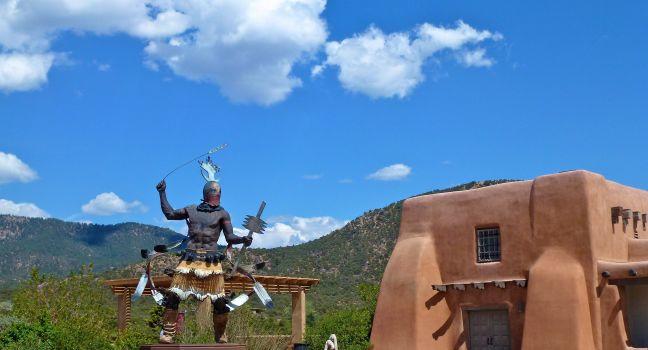
Located atop Museum Hill, this museum delights visitors of all ages with its permanent collection of more than 130,000 objects from about 100 countries. In the Girard Wing, you'll find thousands of amazingly inventive handmade objects such as a tin Madonna, a devil made from bread dough, dolls from around the world, and miniature village scenes. The Hispanic Heritage Wing rotates exhibitions of art from throughout Latin America, dating from New Mexico's Spanish-colonial period (1598–1821) to the present. The exhibits in the Neutrogena Wing rotate, showing subjects ranging from outsider art to the magnificent quilts of Gee's Bend. Lloyd's Treasure Chest, the wing's innovative basement section, provides a behind-the-scenes look at the museum's permanent collection and explores the question of what exactly constitutes folk art. The innovative Gallery of Conscience explores topics at the intersection of folk art and social justice. Each exhibition also includes educational activities for both kids and adults. Allow time to visit the outstanding gift shop and bookstore.

New Mexico History Museum

The Plaza Fodor's Choice
Main entrance to the New Mexico History Museum
New Mexico History Museum by

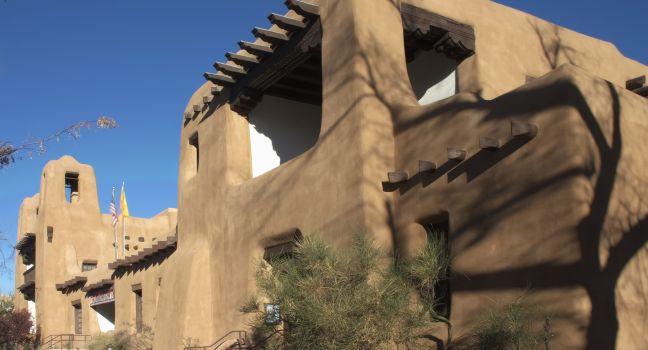
This impressive, modern museum anchors a campus that encompasses the Palace of the Governors, the Palace Print Shop & Bindery, the Fray Angélico Chávez History Library, and Photo Archives (an assemblage of more than 1 million images dating from the 1850s). Behind the palace on Lincoln Avenue, the museum thoroughly explores the early history of Indigenous people, Spanish colonization, the Mexican Period, and travel and commerce on the legendary Santa Fe Trail. Inside are changing and permanent exhibits. By appointment, visitors can tour the comprehensive Fray Angélico Chávez History Library and its rare maps, manuscripts, and photographs (more than 120,000 prints and negatives). The Palace Print Shop & Bindery, which prints books, pamphlets, and cards on antique presses, also hosts bookbinding demonstrations, lectures, and slide shows. The Palace of the Governors is a humble one-story neo-Pueblo adobe on the north side of the Plaza, and is the oldest public building in the United States. Its rooms contain period furnishings and exhibits illustrating the building's many functions over the past four centuries. Built at the same time as the Plaza, circa 1610, it was the seat of four regional governments—those of Spain, Mexico, the Confederacy, and the U.S. territory that preceded New Mexico's statehood, which was achieved in 1912. It served as the residence for 100 Spanish, Mexican, and American governors, including Governor Lew Wallace, who wrote his epic Ben Hur in its then drafty rooms, all the while complaining of the dust and mud that fell from its earthen ceiling.

Dozens of Native American vendors gather daily under the portal of the Palace of the Governors to sell pottery, jewelry, bread, and other goods. With few exceptions, the more than 500 artists and craftspeople registered to sell here are Pueblo or Navajo Indians. The merchandise for sale is required to meet strict standards. Prices tend to reflect the high quality of the merchandise but are often significantly less than what you'd pay in a shop. Please remember not to take photographs without permission.

New Mexico Museum of Art

The Plaza Fodor's Choice
Museum of Art in Santa Fe New Mexico with adobe style architecture.
(c) Kingjon | Dreamstime.com

Designed by Isaac Hamilton Rapp in 1917, this museum is one of Santa Fe's earliest Pueblo Revival structures, inspired by the adobe structures at Acoma Pueblo. Split-cedar latillas (branches set in a crosshatch pattern) and hand-hewn vigas form the ceilings. The 20,000-piece permanent collection, of which only a fraction is exhibited at any given time, emphasizes the work of regional and nationally renowned artists, including Georgia O'Keeffe; realist Robert Henri; the Cinco Pintores (five painters) of Santa Fe (including Fremont Ellis and Will Shuster, the creative mind behind Zozóbra); members of the Taos Society of Artists (Ernest L. Blumenschein, Bert G. Phillips, Joseph H. Sharp, and E. Irving Couse, among others); and the works of noted 20th-century photographers of the Southwest, including Laura Gilpin, Ansel Adams, and Dorothea Lange. Rotating exhibits are staged throughout the year. Many excellent examples of Spanish-colonial-style furniture are on display. Other highlights include an interior placita (small plaza) with fountains, WPA murals, and sculpture, and the St. Francis Auditorium, where concerts and lectures are often held.

107 W. Palace Ave., Santa Fe, NM, 87501, USA
505-476–5072
Sight Details
$12
Closed Nov.–Apr. and Mon.

Something incorrect in this review?

Recommended Fodor's Video

Taos Pueblo

Fodor's Choice
UNESCO World Heritage Site Taos Pueblo outside of Taos, New Mexico, continuously inhabited for over 1000 years.
photogal / Shutterstock

For nearly 1,000 years, the mud-and-straw adobe walls of Taos Pueblo have sheltered Tiwa-speaking Native Americans. A United Nations World Heritage Site, the multistory Pueblo is the largest of its kind. The pueblo's main buildings, a north house and a south house, are separated by the Rio Pueblo de Taos, a river that originates high in the mountains at the sacred Blue Lake, the primary source of Taos Pueblo’s drinking and irrigation water. These two structures are believed to have been built between 1000 and 1450. The mica-flecked adobe walls are maintained by continuously refinishing them with new plaster and clay washes. Some walls are several feet thick in places. The roofs of each of the five-story structures are supported by large timbers, or vigas, hauled down from the mountain forests, with smaller pieces of pine or aspen latillas placed between the vigas. To finish the roof, it is packed full of dirt.

Taos Pueblo has retained 95,000 acres of its original homeland. Forty-eight thousand acres of this was won back from the U.S. government through Taos Pueblo’s historic legal fight for the return of Blue Lake. Tribal custom allows no electricity or running water in the two houses of the ancient Pueblo, where varying members (roughly 150) of Taos Pueblo live full-time. An additional 1,900 or so live in homes outside of the ancient pueblo. The pueblo also has schools, cemeteries, a health center, farms and fields, buffalo pastures, powwow grounds, and many religious dwellings including traditional kivas and the Catholic Church of San Geronimo.

Although the population is predominantly Catholic, the people of Taos Pueblo also maintain their original religious traditions. The public is invited to certain ceremonial and social dances held throughout the year: highlights include the Feast of Santa Cruz (May 3); Taos Pueblo Pow Wow (mid-July); Santiago and Santa Ana Feast Days (July 25 and 26); San Geronimo Days (September 29 and 30); Procession of the Virgin Mary (December 24); and Deer Dance or Matachines Dance (December 25). While you're at the pueblo, respect all rules and customs, which are posted prominently. There are some restrictions on personal photography. Guided tours are available daily and are the best way to start your visit. Tours are led Taos Pueblo community members and provide insight into both the history and present-day life of the Pueblo.

516 Arts

Fodor's Choice

World-class contemporary art dominates the changing shows at this multilevel nonprofit that holds a special place in the New Mexico art scene. Visually compelling collaborations with an international set of museums and artists cross media boundaries, and often explore issues that are not only dear to the hearts and minds of this multicultural, environmentally diverse state, but resonate globally. The installations here are always top-notch, the works displayed are of the highest quality, the ideas—whether expressed in video, prints, sculpture, diodes, or paint—provocative.

516 Central Ave. SW, Albuquerque, NM, 87102, USA
505-242–1445
Sight Details
Free
Closed Sun. and Mon.

Something incorrect in this review?

ABQ BioPark

Fodor's Choice

The city's foremost outdoor draw, the BioPark comprises four distinct attractions: Aquarium, Botanic Garden, Zoo, and Tingley Beach. Verdant grounds are the setting for summer performances, the River of Lights brings crowds over the winter holidays, and exhibits like River Otters, Komodo Dragons, and the Sasebo Japanese Gardens have year-round appeal. The garden and aquarium are located together, just west of Old Town (admission gets you into both facilities) while the zoo is a short drive southeast, off 10th Street SW, and Tingley Beach (and its trout-stocked ponds) lies between. An electric shuttle connects them all.

2601 Central Ave. NW, Albuquerque, NM, 87104, USA
505-768–2000
Sight Details
Tingley Beach and grounds free; Aquarium and Botanic Garden $14.50; Zoo $14.50; combination ticket for all attractions $22

Something incorrect in this review?

Acoma Pueblo

Fodor's Choice

Atop a 367-foot mesa that rises abruptly from the valley floor, Acoma Pueblo's terraced, multistory, multiunit Sky City is like no other pueblo structure. It's one of the oldest continually inhabited spots in North America, with portions believed to be more than 1,500 years old. Captain Hernando de Alvarado, a member of Francisco Vásquez de Coronado's expedition of 1540, was the first European to see Acoma. He reported that he had "found a rock with a village on top, the strongest position ever seen in the world." The Spanish eventually conquered the Acoma people and brutally compelled them to build San Estéban del Rey, the immense adobe church that stands to this day. Native American laborers cut the massive vigas for the church's ceiling 30 mi away on Mt. Taylor and physically carried them back to the mesa.

About a dozen families live at the mesa-top pueblo full time, with most other Acomas living on Native American land nearby and returning only in summer and for celebrations, such as the feast day of St. Stephen (September 2), and Christmas mass (both are open to the public). Acoma's artisans are known for their thin-walled pottery, hand-painted with intricate black-and-white or polychrome geometrical patterns.

Once you park at the mesa base, plan to spend time in the superb Haak'u Museum at the Sky City Cultural Center. Changing exhibits explore traditional and contemporary arts, and are perfectly set in this modernist interpretation of traditional pueblo forms, with fine sandstone detailing and glass panels prepared to evoke historic mica windows. Visitation on the mesa top is by an hour-long guided tour; you're whisked by van up a steep road from behind the center and then led about the mesa community on foot (allow extra time if you choose to walk back down instead, via the ancient staircase carved into the side of the mesa). An Acoma guide will point out kivas, hornos, and unforgettable views toward their sacred sites of Enchanted Mesa and Mt. Taylor, and describe pueblo history in-depth, as well as direct you to artisan displays throughout the village. (Note: the terrain can be uneven; heeled shoes or flip-flops are not advised.) There's no electricity or running water in the village, but you can see cars parked outside many homes—one wonders what it must have been like to visit Acoma before the road was constructed in 1969. Open hours vary slightly, depending on the weather. Videotaping, sketching, and painting are prohibited, and a permit is required for still photography. Note that the pueblo prohibits photography of the church interior and exterior as well as the adjoining cemetery. As at all indigenous locales, ask permission before photographing residents or their artwork. Regroup back at Haak'u and browse the gallery gift shop and bookstore or enjoy blue-corn pancakes or a grilled chicken wrap with green-chile guacamole at the cozy Y'aak'a (Corn) Café. There is shuttle service available if you are staying at the Sky City Hotel/Casino (888/759–2489). Open hours are subject to tribal activities or weather conditions; it is best to check their online calendar or call ahead.

Acoma Pueblo, NM, 87034, USA
505-552–6604
Sight Details
Pueblo tour $12, Haak'u Museum $4
Apr.–Oct., museum daily 9–6, Pueblo tours daily 9–5 (last full tour leaves at 4); Nov.–Mar., museum daily 9–5, tours daily 8–4. The café closes 1 hr before the museum.

Something incorrect in this review?

Albuquerque Museum

Fodor's Choice

In a modern, light-filled space, the Albuquerque Museum serves up a brilliantly curated selection of contemporary art from the museum's own Southwestern artists–centric collections and world-class touring shows; it also presents illuminating shows with regionally topical themes. The must-see Common Ground galleries represent an important permanent collection of primarily 20th-century paintings, all by world-renowned artists with a New Mexico connection; a changing rotation of 19th- and 20th-century photographs from the museum's extensive local archive lines the museum's walkway halls. Other spaces dig even deeper into compelling aspects of Albuquerque and regional history.

The Sculpture Garden contains more than 50 contemporary works by an internationally known roster of artists that includes Basia Irland and Fritz Scholder; Nora Naranjo-Morse's spiral land-art piece resonates deeply in a place defined by water and land-rights issues. Visitors may pick up a self-guided Sculpture Garden map or come for the free (with admission) docent-led tours at 11 am Wednesday and Saturday (March through November); docent-led tours of the galleries, also free, are held daily at 2 pm, year-round.

2000 Mountain Rd. NW, Albuquerque, NM, 87104, USA
505-898–3915-Casa San Ysidro
Sight Details
$4, free Sun. 9–1 and 1st Wed. of each month; Casa San Ysidro tours $6 (by advance reservation only)
Closed Mon.

Something incorrect in this review?

Alkali Flat Trail

Fodor's Choice

The park's most ambitious trail is arguably its most rewarding, too, as it crosses an ancient lakebed now piled high with dunes, and once you're about a mile into it, it can feel as though you're on another planet, as you'll see almost nothing but white sand. Despite the name, it's actually an undulating 5-mile round-trip route over sometimes quite steep dunes. It's not the distance that makes it challenging but those hills, and that walking on dunes is slower going, and more taxing—especially in summer—than over conventional terrain. Along the way, you'll cross ridges and pinnacles, and see some of the biggest dunes in the park. Pack lots of water, hike with at least one buddy, and keep an eye out for the bright red trail markers—it can be easy to get disoriented if there's a lot of wind (common in spring), which can greatly reduce visibility. Difficult.

NM, USA

Something incorrect in this review?

Anderson Museum of Contemporary Art

Fodor's Choice

The Anderson Museum of Contemporary Art, which started as a personal collection evolving from founder late Don Anderson's patronage of artists, since the 1960s has become an important showcase of contemporary art. This 22,000-square-foot, salon-style museum exhibits sculpture, painting, print, and textiles, and it continues to evolve. Among the 500-plus pieces is an impressive collection of the dramatic, large-scale fiberglass sculptures by the late El Paso artist Luis Jiménez. The remarkable and competitive Roswell Artist-in-Residence program, whose participants' work feeds the ongoing collection, is operated by the museum's foundation and provides a home, studio, supplies and a stipend to participating artists.

409 E. College Blvd., Roswell, NM, 88201, USA
575-623–5600
Sight Details
Free
Weekdays 9–noon and 1–4, weekends 9–noon and 1–5

Something incorrect in this review?

Bandelier National Monument

Fodor's Choice

Seven centuries before the Declaration of Independence was signed, compact city-states existed in the Southwest. This 33,677-acre wilderness is home to a fascinating collection of preserved petroglyphs and cave dwellings of the Ancestral Puebloan people, relatives of today's Rio Grande Pueblo Indians, who thrived on wild game, corn, and beans. Suddenly, for reasons still undetermined, the settlements were abandoned.

Remnants of one of the most impressive examples of these dwellings can be seen at Frijoles Canyon. At the canyon's base, near a gurgling stream, the remains of cave dwellings, ancient ceremonial kivas, and other stone structures stretch out for more than a mile beneath the sheer walls of the canyon's tree-fringed rim. Along a paved, self-guided trail, steep wooden ladders and narrow doorways lead to a series of cave dwellings, one that contains a kiva large and tall enough to stand in. Named after author and ethnologist Adolph Bandelier (his novel The Delight Makers is set in Frijoles Canyon), it also contains backcountry wilderness, waterfalls, and wildlife. Some 70 miles of trails traverse the park; the short Pueblo Loop Trail is an easy, self-guided walk. Pick up the $2 trail guide at the visitor center to read about the numbered sites along this trek. A small museum in the visitor center interprets the area's prehistoric and contemporary Native American cultures, with displays of artifacts dating back to the 13th century.

Note that from mid-June to mid-October, visitors arriving by car between 9 am and 3 pm must park at the White Rock Visitor Center 10 miles east on NM 4 and take a free shuttle bus into the park. This sleek, eco-friendly visitor center also serves as a terrific resource for learning about local attractions. The modern, comfortable Hampton Inn & Suites Los Alamos is next door.

One section of the park, an Ancestral Puebloan ruin called Tsankawi (pronounced sank-ah-wee) lies 12 miles from the main section, on NM 4 just south of NM 502 (because it is part of Bandelier, you must pay the park admission to enter it). On the 1½-mile loop trail, you can see petroglyphs and south-facing cave dwellings, and there's a large, unexcavated pueblo ruin on top of the mesa.

The Big Room

Fodor's Choice

A relatively level (it has some steps and a short section that's a bit steep), paved pathway leads through these almost hallucinatory wonders of various formations and decorations. Exhibits and signage also provide a layman's lesson on how the cavern was carved (for even more details, rent an audio guide from the visitor center for $5).

Carlsbad Caverns National Park, NM, 88220, USA
877-444–6777-reservations
Sight Details
$15, plus $1 for reservations

Something incorrect in this review?

Blue Hole

Fodor's Choice

About 8,000 diving permits are issued per year for folks who strap on tanks and plunge into the 80-foot-deep artesian spring–fed pool at the Blue Hole, which is also open for public swimming during daylight hours (no fee). Cliff diving is great fun here, as is snorkeling and coming face to face with the many koi and goldfish that have been deposited here over the years. The onsite dive shop has tanks, air, weight belts, and a few other basics available to rent. Weekly dive permits are $20; annual permits are $50.

Bosque del Apache National Wildlife Refuge

Fodor's Choice

Hundreds of different types of birds, including snow geese, cranes, herons, and eagles, can be spotted from viewing platforms and directly through your car window at the popular Bosque del Apache National Wildlife Refuge. Besides serving as a rest stop for migrating birds, the Bosque del Apache also shelters mule deer, turkeys, quail, and other wildlife. Photo opportunities abound on the 12-mile auto loop tour; you can also hike through arid shrub land or bike through the refuge or take a van tour. October and November are the months the cottonwoods show their colors. In winter months, the refuge echoes with the haunting cries of whooping cranes flocking for the evening. Snow geese are so thick on lakes at times that shores are white with feathers washed ashore. Whether you're a bird-watcher or not, it is well worth bringing binoculars or a spotting scope to get some idea of how many varieties of birds land here (nearly 400 species have been spotted since 1940). The Festival of the Cranes () in mid-November draws thousands of people.

Branigan Cultural Center

Fodor's Choice

The Branigan Cultural Center, in a striking 1935 Pueblo Revival building embellished inside with murals by Tom Lea, offers compelling programs covering such topics as the 1942–1964 Bracero Program (a Mexican guest workers initiative), or a reflection on Frida Kahlo's later years through rarely seen photographs, along with rotating exhibits covering local history and culture. The city-run Branigan is a focal point—along with the Las Cruces Museum of Art next door—of the revitalized downtown.

Carlsbad Caverns Visitor Center

Fodor's Choice

Within this spacious, modern facility at the top of an escarpment, a 75-seat theater offers engrossing films and ranger programs about the different types of caves. Exhibits offer a primer on bats, geology, wildlife, and the early tribes and settlers who once lived in and passed through the area. There's also an excellent exhibit on Lechuguilla, the country's deepest limestone cave, which scientists began mapping in 1986 and have located some 150 miles (it's on the park's northern border and isn't open to the general public). Friendly rangers staff an information desk, where maps are distributed and cavern tickets are sold. There's also an extensive gift shop and bookstore, and a cafeteria-style restaurant.

Cathedral Basilica of St. Francis of Assisi

The Plaza Fodor's Choice

This iconic cathedral, a block east of the Plaza, is one of the rare significant departures from the city's nearly ubiquitous Pueblo architecture. Construction was begun in 1869 by Jean Baptiste Lamy, Santa Fe's first archbishop, who worked with French architects and Italian stonemasons. The Romanesque style was popular in Lamy's native home in southwest France. The cleric was sent by the Catholic Church to the Southwest to influence the religious practices of its native population and is buried in the crypt beneath the church's high altar. He was the inspiration behind Willa Cather's novel Death Comes for the Archbishop (1927). In 2005 Pope Benedict XVI declared St. Francis the "cradle of Catholicism" in the Southwestern United States, and upgraded the status of the building from mere cathedral to cathedral basilica—one of just 36 in the country.

A small adobe chapel on the northeast side of the cathedral, the remnant of an earlier church, embodies the Hispanic architectural influence absent from the cathedral itself. The chapel's Nuestra Señora de la Paz (Our Lady of Peace), popularly known as La Conquistadora, the oldest Madonna statue in the United States, accompanied Don Diego de Vargas on his reconquest of Santa Fe in 1692, a feat attributed to the statue's spiritual intervention. Each new season, the faithful adorn the statue with a new dress. Take a close look at the keystone in the main doorway arch: it has a Hebrew tetragrammaton on it. It's widely speculated that Bishop Lamy had this carved and placed to honor the Jewish merchants of Santa Fe who helped provide necessary funds for the construction of the church.

Chaco Culture National Historical Park

Fodor's Choice

The roads accessing Chaco Canyon, home to Chaco Culture National Historical Park, do a fine job of deterring exploration: they are mostly unpaved and can be very muddy and/or icy during inclement weather (particularly NM 57 from the south). The silver lining is that the roads leading in—and the lack of gas stations, food concessions, or hotels once you get off the highway—keep this archaeological treasure free from the overcrowding that can mar other national park visits: only about 85,000 people visit annually, compared with at least 10 times that number to Canyon de Chelly, which is 80 mi away as the crow flies.

Once past the rough roads you'll see one of the most amazingly well-preserved and fascinating ruin sites on the continent. The excavations here have uncovered what was once the administrative and economic core of a vast community—the locus of a system of over 400 mi of ancient roads that have been identified to date. While there is evidence that people lived in the canyon at least since 400 AD, the majority of these roads, and the buildings and dwellings that make up the canyon site, were constructed from 850 to 1250 AD. Several of the ancient structures—such as an immense Great Kiva, Casa Rinconada, or Pueblo Bonito—are simply astounding, if only for the extreme subtlety and detail of their precisely cut and chinked sandstone masonry. But there's still a shroud of mystery surrounding them. Did 5,000 people really once live here, as some archaeologists believe? Or was Chaco maintained solely as a ceremonial and trade center? The more that's learned about the prehistoric roadways and the outlying sites that they connect, or wondrous creations such as the Sun Dagger —an arrangement of stone slabs positioned to allow a spear of sunlight to pass through and bisect a pair of spiral petroglyphs precisely at each summer solstice—the more questions arise about the sophistication of the people that created them.

At the visitor center you can meander through a small museum on Chaco culture, peruse the bookstore, buy bottled water (but no food), and inquire about hiking permits. From here you can drive (or bike) along the 9-mi paved inner loop road to the various trailheads for the ruins; at each you can find a small box containing a detailed self-guided tour brochure (a 50¢ donation per map is requested). Many of the 13 ruins at Chaco require a significant hike, but a few of the most impressive are just a couple of hundred yards off the road. The stargazing here is spectacular: there is a small observatory and numerous telescopes, which are brought out for star parties from April through October; ask about the schedule at the front desk. Pueblo Bonito is the largest and most dramatic of the Chaco Canyon ruins, a massive semicircular "great house" that once stood four stories in places and held some 600 rooms (and 40 kivas). The park trail runs alongside its fine outer mortar-and-sandstone walls, up a hill that allows a great view over the entire canyon, and then right through the ruin and several rooms. It's the most substantial of the structures—the ritualistic and cultural center of a Chacoan culture that may once have comprised some 150 settlements.

USA
505-786–7014-x221
Sight Details
$8 per vehicle, good for 7 days
Park daily dawn–dusk; visitor center daily 8–5

Something incorrect in this review?

Colfax Tavern & Diner @ Cold Beer NM

Fodor's Choice

Also known as Cold Beer, New Mexico (which is painted in huge white letters on the exterior), this little red roadhouse on the way to Cimarron from Raton continues a tradition from the Prohibition era. Among the joint's trademarks are an ongoing card game, Shiner Bock (a beloved beer from Shiner, Texas) on tap, Saturday-night dances, and a winter Jeopardy! tournament. The colorful staff and crowd make you feel right at home, especially if you're wearing cowboy boots.

Colfax, NM, 87740, USA
575-376–2229
Sight Details
Closed Sun.--Thurs.

Something incorrect in this review?

Cumbres & Toltec Scenic Railroad

Fodor's Choice

In the lush and densely wooded town of Chama, nestled at the base of 10,000-foot Cumbre Pass, the railroad has played a vital role since the 1880s, when workers piled into town to construct the Denver & Rio Grande Railroad. You can get a sense of this history strolling along the town's main drag, Terrace Avenue, which has a handful of cute shops, cafés, and B&Bs, and by taking a ride on the historic Cumbres & Toltec Scenic Railroad, the nation's longest (and highest) narrow-gauge train excursion. Passengers are transported by handsomely restored, 1920s coal-driven steam engines and 19th-century parlor cars, passing over 10,200-foot Cumbres Pass and through the rugged San Juan Mountains. You chug over ancient trestles, around breathtaking bends, and high above the Los Pinos River—if the terrain looks at all familiar, you may have seen this railroad's "performance" in Indiana Jones and the Last Crusade. Midway through the trip you break for lunch and can switch to a waiting Colorado-based train to complete the 64 miles to Antonito, Colorado (from which you'll be shuttled back by bus), or return from this point on the same train. Themed dinner and sunset rides as well as kids'-oriented "Cinder Bear Express" excursions are offered throughout the season.

Dune Life Nature Trail

Fodor's Choice
Give yourself about an hour to complete this 1-mile self-guided loop trail that, while short, does climb over a couple of pretty tall dunes. This hike offers an interesting contrast with other parts of the park, as there's quite a lot of flora along it—you can really learn about the unusual plants that thrive in this harsh environment. Keep an eye out for the series of 14 interpretive signs that discuss the foxes, birds, reptiles, and other wildlife that live in the park. Easy–Moderate.

Dunes Drive

Fodor's Choice

This gorgeous drive through the heart of White Sands accesses virtually every part of the park that's accessible to visitors, including all of the trails and picnic areas. It's an 8-mile drive from the visitor center and entrance gate to the one-way loop at the end. The first 5 miles are paved, and as you make your way from the park entrance, the landscape becomes steadily more dominated by higher and whiter dunes, until you reach the final 3 miles, which are unpaved along smooth, hard-packed gypsum. This is where the experience starts to feel truly surreal, as it's easy to feel as though you're driving through a winter wonderland—the gypsum really does look like snow (which feels particularly odd if you're driving this route on a hot summer day). You'll come to the Primrose and Roadrunner picnic areas, on the right, as you enter the one-way loop portion of Dunes Drive, and you'll come to several larger parking areas that access some of the park's biggest dunes as the road curves back around at the Alkali Flat Trailhead. It takes only about 45 minutes to drive the entire route, round-trip, but you'll want to stop and explore the dunes on foot. Part of the fun is watching park visitors, especially kids, riding sleds down the dunes. Groups of friends and families also regularly come and set up tents and umbrellas on the dunes nearest the parking areas and bask in the sun all day. It's quite a sight. Do obey speed limits, which are 45 mph as you enter but drop to 15 mph along the unpaved loop in areas with lots of pedestrian traffic. It may look tempting to zip around, but the sand can get slippery, and the road curves in places, limiting visibility.

El Morro National Monument

Fodor's Choice

When you see the imposing 200-foot-high sandstone bluff that served as a rest stop for Indians, explorers, soldiers, and pioneers, you can understand how El Morro ("the Headland") got its name. The bluff is the famous Inscription Rock, where wayfarers stopped to partake of a waterhole at its base and left behind messages, signatures, and petroglyphs carved into the soft sandstone. The paved Inscription Trail makes a quick ½-mi round-trip from the visitor center and passes that historic water source and numerous inscriptions. Although El Morro is justly renowned for Inscription Rock, try to allow an extra 90 minutes or so to venture along the spectacular, moderately strenuous 2-mi (round-trip) Headland Trail, which meanders past the excavated edge of an extensive field of late-13th-century pueblo ruins, cuts along the precarious rim of a deep box canyon, and affords panoramic views across the Zuni Mountains and El Malpais. The monument's compact museum chronicles 700 years of human history in this region.

87321, USA
505-783–4226
Sight Details
$3 per person
Late May–early Sept., daily 9–7; early Sept.–early Nov., daily 9–6; early Nov.–late May, daily 9–5. Trails close 1 hr before monument; summer rains and winter ice and snow may close them altogether. Call ahead

Something incorrect in this review?

El Santuario de Chimayó

Fodor's Choice

This small, frontier, adobe church has a fantastically carved and painted reredos (altar screen) and is built on the site where, believers say, a mysterious light came from the ground on Good Friday in 1810 leading to the discovery of a large wooden crucifix beneath the earth. The chapel sits above a sacred pozito (a small hole), the dirt from which is believed to have miraculous healing properties. Dozens of abandoned crutches and braces placed in the anteroom—along with many notes, letters, and photos—testify to this. The Santuario draws a steady stream of worshippers year-round—Chimayó is considered the Lourdes of the Southwest. During Holy Week as many as 30,000 pilgrims come here. The shrine is is surrounded by small adobe shops selling every kind of religious curio imaginable and some very fine traditional Hispanic work from local artists. A smaller chapel, Santo Niño de Atocha, was built in 1857 and lies 200 yards away. As at the more famous Santuario, the dirt in this place of worship is said to have healing properties.

EVOKE Contemporary

Railyard District Fodor's Choice

In a striking, high-ceilinged space, EVOKE ranks among the more diverse contemporary galleries in town. It veers away from the standard Southwestern focus seen in many Santa Fe galleries and more toward modern pieces that evoke (wink, wink) conversation and personal reflection. Single artist and group exhibitions rotate through the schedule, featuring creatives from around the globe. Intriguing lectures on varied topics also draw crowds.

Farmers & Crafts Market of Las Cruces

Fodor's Choice

If you're in town on a Wednesday or Saturday, don't miss one of the Southwest's largest and most impressive farmers markets, where some 300 vendors sell produce, handcrafted items, baked goods, and even geodes and fossils along a lively seven-block stretch of the city's lively downtown. Mingle with the locals and enjoy the scene, which is open between 8:30 am and 1 pm.

Fort Union National Monument

Fodor's Choice

The ruins of New Mexico's largest American frontier-era fort sit on an empty windswept plain about a half-hour drive north of Las Vegas. It still echoes with the isolation surely felt by the soldiers stationed here between 1851 and 1890, when the fort was established to protect travelers and settlers along the Santa Fe Trail. It eventually became a military supply depot for the Southwest, but was eventually abandoned. The visitor center provides historical background about the fort and you can walk among the extensive ruins on your own or explore different parts of the grounds on a ranger tour (they're given throughout the year, but more often in the busier spring and fall seasons).

Full Moon Hikes

Fodor's Choice

Once a month from March through November, the park offers ranger-led full-moon hikes along the Dune Life Nature Trail. These nocturnal adventures are fun for the whole family and show the landscape in a fascinating, luminous perspective. Tickets are required and can be purchased online for $8. They are available exactly two months ahead and sell out almost immediately. 

Georgia O'Keeffe Home & Studio

Fodor's Choice

In 1945 Georgia O'Keeffe bought a large, dilapidated late-18th-century Spanish-colonial adobe compound just off the plaza in Abiquiú. Upon the 1946 death of her husband, photographer Alfred Stieglitz, she left New York City and began dividing her time permanently between this home, which figured prominently in many of her works, and one in nearby Ghost Ranch. The patio is featured in Black Patio Door (1955) and Patio with Cloud (1956). O'Keeffe died in 1986 at the age of 98 and left provisions in her will to ensure that the property's houses would never be public monuments.

Highly engaging 75- to 90-minute tours are available by advance reservation through Santa Fe's Georgia O'Keeffe Museum, which owns the house and operates the tours from early March through late November. Costs range from $60 for a standard tour to $200 for "Pita's Tour," which is led by Pita Lopez, who served as O'Keeffe's former secretary and companion and shares fascinating first-hand anecdotes about the artist. All of the tours focus on O’Keeffe’s distinctly modern decorating style, which drew on Indigenous and Spanish influences. Tours depart by shuttle bus from the welcome center beside the Abiquiu Inn. Book well ahead in summer, as these tours fill up quickly.

Georgia O'Keeffe Museum

The Plaza Fodor's Choice

One of many East Coast artists who visited New Mexico in the first half of the 20th century, Georgia O'Keeffe, today known as the "Mother of American Modernism," returned to live and paint in northern New Mexico for the last half of her life, eventually emerging as the demigoddess of Southwestern art. At this intimate museum dedicated to her work, you'll find how O'Keeffe's innovative view of the landscape is captured in From the Plains, inspired by her memory of the Texas plains, and in Jimson Weed, a study of one of her favorite plants; additional highlights include selections from O'Keeffe's early days as an illustrator, abstract pieces from her time in New York City, and iconic works featuring floating skulls, flowers, and bones. Special exhibitions with O'Keeffe's modernist peers, as well as contemporary artists, are on view throughout the year—many of these are exceptional, and just as interesting as the museum's permanent collection, which numbers some 3,000 works (although not all are on display as the museum is surprisingly small). The museum also manages a visitor center and tours of O'Keeffe's famous home and studio in Abiquiú, about an hour north of Santa Fe.