



If you’re looking for a romanticized version of baseball history, head to Dyersville, Iowa. That’s where you can tour the baseball diamond used in the movie Field of Dreams. (It’s actually lots of fun, especially for kids.) But if you want to discover the sport’s real history, take this driving tour from Boston’s Fenway Park to Chicago’s Wrigley Field. Besides the stadiums along the route—and there are a lot—we point you to some interesting landmarks where baseball history was made. This trip involves a minimum of 24 hours of driving, so you’re talking about a trip lasting a week or two. Feel free to use it as a jumping-off point for your own baseball fantasy trip.
Days 1 and 2: Boston
Start at one of baseball’s most beloved landmarks, Boston’s Fenway Park. Opened in 1912, it’s Major League Baseball’s most venerable ballfield still in use today. You’ll want to catch a game, but it’s also well worth taking a tour for a chance to take in the sweeping views from the roof deck overlooking right field.
Heading out of town, consider a brief side trip to Holliston, Massachusetts, one of several towns that claims to be the inspiration of Ernest L. Thayer’s immortal ode to baseball, “Casey at the Bat.” There’s an actual neighborhood called Mudville, and you can take a selfie with the “Welcome to Mudville” sign or the truly terrible statue of the fictional ballplayer.
Top Picks for You

Recommended Fodor’s Video

Day 3: Cooperstown, NY
It’s a little less than four hours west to Cooperstown, New York, home to the National Baseball Hall of Fame. This don’t-miss destination is jam-packed with memorabilia from the sport’s earliest days. One of the most interesting exhibits documents the challenges black players faced before and after Jackie Robinson was recognized as the first black player in the major leagues when he joined the Brooklyn Dodgers in 1947. (It also documents how a former slave named Moses Fleetwood Walker actually broke the color line in 1884.) If you’re in town in May, catch the annual Hall of Fame Classic at Doubleday Field, a handsome ballfield dating back to 1920.
Days 4 and 5: New York City
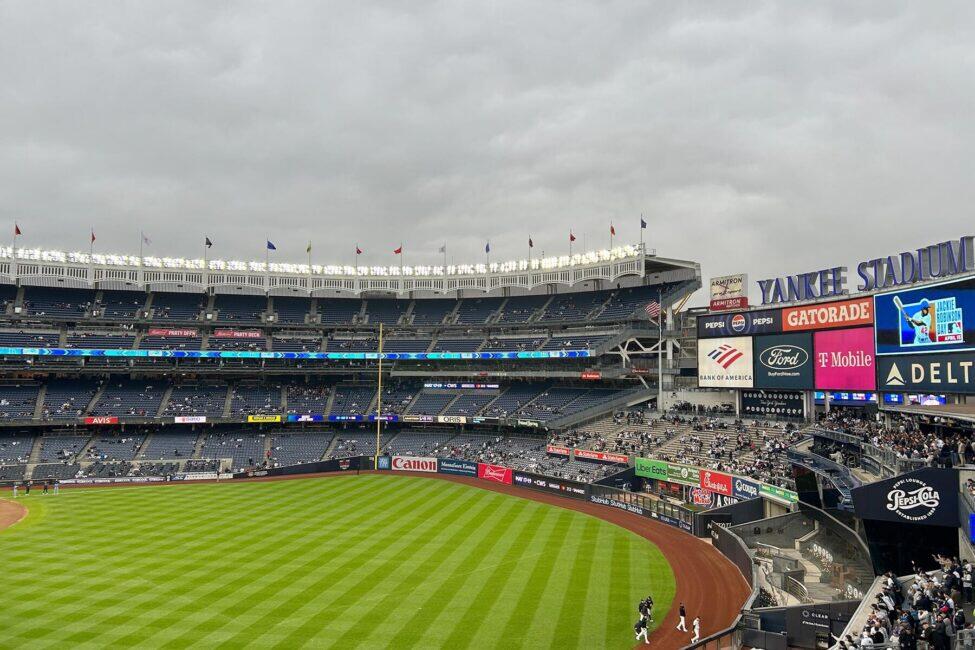
A four-hour drive south through the Hudson Valley takes you to New York City, home to two major league teams that spark a bitter rivalry between the hometown fans: the Yankees and the Mets. The Bronx Bombers play at Yankee Stadium, a 50,287-seat behemoth built in 2009. Although it doesn’t have the history of the original stadium built in 1923—where 74,200 fans streamed through the turnstiles to see Babe Ruth play on opening day—it’s still one of the most breathtaking ballparks to take in a game. Don’t miss Monument Park, which displays the retired numbers of the team’s greatest players.
The same year the Yankees moved to their new home, the Mets did the same. Shea Stadium was a classic, but Citi Field has plenty of fans who say the 41,922-seat stadium skillfully blends the old and the new. (And it has a Shake Shack in center field.) Jackie Robinson also gets a shoutout here, and the Jackie Robinson Rotunda is a must for those who love the history of the game.
At this point you have a choice: head directly west toward Pittsburgh, or continue south toward Philadelphia, Baltimore, and Washington, D.C. The latter is a slightly longer route, adding about two hours to your driving time, but takes in three more ballfields. (Tough choice, we know.)
Day 6: Paterson, NJ and Williamsport, PA
If you decide on the westerly route, make a stop in Paterson, New Jersey. Here is a little-known landmark: Hinchliffe Stadium, one of the last surviving stadiums that hosted Negro League baseball in the 1930s and 1940s. The Black Yankees played here, drawing crowds from all over the region. Declared a National Historic Landmark in 2013, the art deco stadium has been sadly neglected, but there are plans to return it to its former luster.
You also should consider a stop at Howard J. Lamade Stadium in Williamsport, Pennsylvania. Thousands of fresh-faced baseball players return here year after year for the Little League World Series. The stadium, built in 1959, holds 40,000 fans, and even more stake out a spot on the hill rising up beyond the outfield. Williamsport is also home to another “Casey at the Bat” statue, this one a little more dignified. Spend the night here.
Days 7 and 8: Philadelphia, PA
If you are headed south, your next stop is Philadelphia, home to the Phillies and Citizen Bank Park. On average there are more home runs here than at just about any other major league field, so you’re bound to see some action. And when a Phillies player knocks one out of the park, a replica of the Liberty Bell peals. (You don’t see that at every stadium.)

Day 9: Baltimore, MD
In Baltimore, Oriole Park at Camden Yards is one of the most beloved stadiums in the sport. Built in 1992, its style, a throwback to classic ballfields of the early 20th century, influenced architects for a generation. (When you see PNC Park in Pittsburgh, you’ll likely recognize echoes of this beauty.) Nearby is the Babe Ruth Birthplace and Museum, which pays tribute to the man who is still regarded as one of the best players in history.
Days 10 and 11: Washington, D.C.
The Washington Nationals play at Nationals Park, another retro-style stadium built in 2008. It was the first stadium built with eco-friendliness in mind, so it uses less power and encourages its fans to ride their bikes to the game. The quirkiest part of a game here is seeing the Presidents Race, featuring big-headed versions George Washington, Thomas Jefferson, Abraham Lincoln, and Teddy Roosevelt sprinting through the outfield.

Day 12: Pittsburgh, PA
At this point you’re going to Pittsburgh, home of PNC Park. The city skyline provides an excellent backdrop to the games. Unlike a lot of the rowdier stadiums, the home field of the Pittsburgh Pirates is somewhere to bring the whole family. Kids are even encouraged to run the bases after games on Sunday.
Before there was PNC Park, the Pirates played at Forbes Field, where one of baseball’s most fondly remembered plays took place. It was here that second baseman Bill Mazeroski hit a home run over the left-center outfield wall in Game 7 of the 1960 World Series, cementing a win over the Yankees. The stadium is long gone, but the Forbes Field Wall still stands on the campus of the University of Pittsburgh. Have your photo taken in front of the wall, still marked with the number 406 to show how far he sent the ball.
Day 13: Cleveland, Detroit, or Chicago
Heading west, you pass pretty close to Progressive Field in Cleveland (the biggest video screen in baseball) and Comerica Park in Detroit (with a Ferris wheel with cars shaped like baseballs); both downtown stadiums well worth a detour.
Day 14: Chicago
Power through another four to five hours to Chicago. Built in 1914 on the North Side of Chicago, Wrigley Field is still a classic. (Fans rank it right behind the hands-down favorite, Fenway Park.) You can feel the history—imagine Babe Ruth’s famous “called shot” during the 1932 World Series. And Wrigleyville is the perfect neighborhood for a hometown team.