95 Best Sights in British Columbia, Canada

Background Illustration for Sights

We've compiled the best of the best in British Columbia - browse our top choices for the top things to see or do during your stay.

Beacon Hill Park

Fodor's Choice

This 154-acre park links Downtown Victoria to the waterfront. Its rambling lawns overlook the Pacific Ocean, the Olympic Mountains, and the Strait of Juan de Fuca. Kite-fliers, hang gliders, and dog walkers are numerous. Take your photo at the Mile 0 marker of the Trans-Canada Highway, at the foot of Douglas Street. Beacon Hill includes ponds where you can feed ducks, cycling, jogging and walking paths, flowers and gardens, a cricket pitch, and a petting zoo (closed in winter). There's live music in the bandshell on summer evenings, and on Saturday nights in August the Victoria Film Festival screens free movies.
Granville Island Public Market

Granville Island Fodor's Choice

The dozens of stalls in this world-renowned market sell locally grown fruits and vegetables direct from the farm and beyond. Other stalls stock crafts, chocolates, artisanal cheeses, pastas, fish, meat, flowers, and exotic foods. On Thursday in the summer (July to October), farmers sell fruit and vegetables from trucks outside. At the north end of the market, you can pick up a snack, lunch, or coffee from one of the many prepared-food vendors. The Public Market Courtyard, on the waterside, has great views of the city and is also a good place to catch street entertainers. Be prepared to get roped into the action, if only to check the padlocks of an escape artist's gear. Weekends can get very busy.

Grizzly Bear Refuge

Fodor's Choice

Boo, an adult grizzly bear, has called this 20-acre forested area in the middle of the Kicking Horse Mountain Resort home since 2002. Although born in the wild, Boo's mother was poached when he was young, leaving him unable to live on his own. At this refuge center, you can see Boo going about his day, take an interpretive tour, or visit an interpretive center that provides more information on grizzlies in the wild.

Recommended Fodor's Video

Gulf of Georgia Cannery National Historic Site

Fodor's Choice

Located at the mouth of the Fraser River in the historic fishing village of Steveston, this cannery grew from a single salmon canning line in 1894 to British Columbia's biggest salmon cannery—with 2.5 million cans packed annually until the 1930s. Through the years, production was impacted by the landslide at Hells Gate, the onset of the Depression, and World War II, when much of its activities turned to canning herring for wartime consumption by troops and civilians. Designated a Federal Heritage site in 1987, the cannery now operates as a west coast fishing industry museum with ongoing interpretive programs and tours. You can check out the canning line, learn more about BC's fishing industry, and explore the heritage of the various ethnic groups who worked on-site. The Gulf of Georgia Cannery is a 35- to 40-minute drive from Downtown Vancouver. By public transit, take the Canada Line to Brighouse Station, then change to Bus 401, 402, or 407.

Lynn Canyon Park and Suspension Bridge

Fodor's Choice

With a steep canyon landscape, a temperate rainforest complete with waterfalls, and a suspension bridge (circa 1912) 50 meters (166½ feet) above raging Lynn Creek, this 617-acre park provides thrills to go with its scenic views. The park has many hiking trails, including a short walk to a popular swimming hole, and another trail leading to a double waterfall. Longer walks in the park link to trail networks in nearby Lynn Headwaters Regional Park and the Lower Seymour Conservation Reserve. The park's on-site Ecology Centre distributes trail maps, as well as information about the local flora and fauna. There's also a gift shop and a café. To get to the park, take the Lions Gate Bridge and Capilano Road, go east on Highway 1, take Exit 19, the Lynn Valley Road exit, and turn right on Peters Road. From Downtown Vancouver, you can take the SeaBus to Lonsdale Quay, then Bus 228 or 229 from the quay; both stop about a 15-minute walk from the park.

The suspension bridge here is shorter than the Capilano Suspension Bridge (47 meters/157 feet versus 137 meters/450 feet at Capilano) so the experience is less thrilling, but also less touristy—and it's free.

3663 Park Rd. at end of Peters Rd., Vancouver, BC, V7J 3G3, Canada
604-990–3755-Ecology Centre
Sight Details
Ecology Centre by donation, suspension bridge free

Something incorrect in this review?

Maquinna Marine Provincial Park

Fodor's Choice

Geothermal springs tumble down a waterfall and into a series of oceanside rock pools at idyllic Hot Springs Cove, accessible only by boat or air from Tofino. Here, day trips—which are offered by several Tofino outfitters—usually include a bit of whale-watching en route. Once you arrive at the park, there's a half-hour boardwalk trail through old-growth forest to the site. Another popular day trip is to Meares Island, where an easy 20-minute boardwalk trail leads to trees up to 1,600 years old.

Museum of Anthropology

Point Grey Fodor's Choice

Part of the University of British Columbia, the MOA has one of the world's leading collections of Northwest Coast First Nations art. The Great Hall has dramatic cedar poles, bentwood boxes, and canoes adorned with traditional Northwest Coast–painted designs. On clear days, the gallery's 15-meter-tall (50 foot) windows reveal a striking backdrop of mountains and sea. Another highlight is the work of the late Bill Reid, one of Canada's most respected Haida artists. In The Raven and the First Men (1980), carved in yellow cedar, he tells a Haida story of creation. Reid's gold-and-silver jewelry work is also on display, as are exquisite carvings of gold, silver, and argillite (a black shale found on Haida Gwaii, also known as the Queen Charlotte Islands) by other First Nations artists. The museum's visible storage section displays, in drawers and cases, contain thousands of examples of tools, textiles, masks, and other artifacts from around the world. The Koerner Ceramics Gallery contains 600 pieces from 15th- to 19th-century Europe. Behind the museum are two Haida houses, set on the cliff over the water. Free guided tours—given several times daily (call or check the website for times)—are immensely informative. The MOA also has an excellent book and fine art shop, as well as a café. To reach the museum by transit, take any UBC-bound bus from Granville Street Downtown to the university bus loop, a 15-minute walk, or connect to a shuttle that scoots around the campus and will drop you off opposite the MOA at the Rose Garden. Pay parking is available in the Rose Garden parking lot, across Marine Drive from the museum. If you're planning to visit several attractions at UBC, a UBC Attractions Pass will save you money.

Nk'Mip Desert Cultural Centre

Fodor's Choice
Run by the Osoyoos Indian Band, this well-designed museum—the name is pronounced "in-ka-meep"—has exhibits about the area's aboriginal community, the region's natural setting, and the animals that make their home in this desert environment. Don't miss "Sssnakes Alive!," a daily show featuring live rattlesnakes and other creatures native to the area. You can also walk to a reconstructed village that includes two pit houses, a tepee, and a sweat lodge. (Bring water, since there's little shade along the trails.) The center's exterior is a striking, environmentally friendly earth wall built of a mix of soil, water, a small amount of cement, and pigment.

PEAK 2 PEAK Gondola

Fodor's Choice

Located about two hours from Vancouver in Whistler, the longest and tallest gondola in the world when it opened, the PEAK 2 PEAK delivers jaw-dropping views as it travels 4.3 km (2.7 miles) from Whistler's Roundhouse to Blackcomb's Rendezvous Lodge, which sits at an elevation of 2,133 meters (7,000 feet). Two gondolas have a glass-floor viewing area that are worth the extra few minutes' wait; there's a separate lineup for these. A day pass may seem costly until you realize that you can ride PEAK 2 PEAK as many times as you wish, plus travel up and down both Whistler and Blackcomb on a fully enclosed gondola system, a 13.5 km (8.3 miles) loop forming the longest continuous lift system in the world. In summer, the ski runs and the rest of the mountainsides open up to 50 km (31 miles) of incredible hiking. Discounts are offered for multiple days.

Whistler Mountain, BC, V0N 1B4, Canada
800-766–0449
Sight Details
C$65
Closed weekdays mid-Sept.–mid-Oct.; closed mid-Oct.–mid-Nov. and mid-Apr.–mid-May

Something incorrect in this review?

Radium Hot Springs

Fodor's Choice

The first recorded visit to Radium Hot Springs was by Sir George Simpson, the governor of the Hudson Bay Company. Construction of cement bath pools and a bathhouse happened in 1914, but by 1922 the springs were expropriated and taken over by the park after it was formed in 1920. The subsequent U-shaped aquacourt that you see today was constructed between 1949 and 1951 and is claimed as the first major post-war building project in the western parks. Its construction helped the region gain international recognition as a spa destination and is the reason that the nearby village of Radium was constructed. The healing mineral-rich waters are still the main tourist attraction within the Kootenay National Park. Today there's a cooler swimming pool with a diving board and slides and a large hot pool for soaking. Although popular year-round, the hot springs are a truly magical experience when it's snowing. It's recommended that you bring a water bottle to stay hydrated, and swimsuits and towel rentals are available on-site.

Richmond Night Market

Fodor's Choice

Now a flagship summer event and an experience unmatched anywhere else in Canada, the bustling Richmond Night Market has grown to include more than 100 Asian street food stalls, 250 retail booths, carnival rides, children's amusement area, and family-friendly entertainment. Just steps from the Canada Line's Bridgeport Station beside the River Rock Casino, the market is open nightly Friday to Sunday and holiday Mondays from end of April through mid-October. For those driving, there are more than 1,000 free parking spots available.

Squamish Lil’wat Cultural Centre

Fodor's Choice

A collaborative project located on the shared territories of the Squamish Nation and Lil'wat Nation, this cultural center is designed to celebrate these two distinct Salish Nations. The concrete, cedar, and fir structure melds the longhouse concept of the coastal Squamish people with the traditional pit house of the interior Lil’wat people. Inside, carvings adorn the walls and displays of art, artifacts, and tools reveal the similarities and differences of the Nations. Try to catch one of the regularly scheduled guided tours offered on the hour, every hour, 10 am–4 pm. The on-site café, which serves contemporary food with a First Nations twist, is worth a visit itself.

Vancouver Aquarium

Stanley Park Fodor's Choice

Massive floor-to-ceiling windows let you get face-to-face with sea otters, sea lions, and harbor seals at this award-winning research and educational facility. In the Amazon Gallery, you walk through a rain forest populated with piranhas, caimans, and tropical birds. In summer, hundreds of free-flying butterflies add to the mix. The Tropic Zone is home to exotic freshwater and saltwater life, including clown fish, moray eels, and black-tip reef sharks. Other displays, many with hands-on features for kids, show the underwater life of coastal British Columbia and the Canadian Arctic. Dive shows (where divers swim with aquatic life, including sharks) are held daily. Be sure to check out the stingray touch pool, as well as the "4-D" film experience (it's a multisensory show that puts mist, smell, and wind into the 3-D equation). There's also a café and a gift shop. Be prepared for lines on weekends and school holidays. Reserve ahead for timed admission and savings.

VanDusen Botanical Garden

Fodor's Choice

An Elizabethan maze, a formal rose garden, a meditation garden, and a collection of Canadian heritage plants are among the many displays at this 55-acre site. The collections include flora from every continent and many rare and endangered species. The Phyllis Bentall Garden area features hybrid water lilies and carnivorous plants (a hit with kids). From mid-May to early June, the Laburnum Walk forms a canopy of gold. In August and September, the wildflower meadow is in bloom. The garden is also home to five lakes, a garden shop, a library, and The Garden Café (serving breakfast, lunch, and afternoon tea) and Shaughnessy Restaurant. Special events throughout the year include the spectacular Christmas-theme Festival of Lights every December. From Downtown, catch the Oak Bus 17 directly to the garden entrance. Alternatively, ride the Canada Line to Oakridge/41st Street, then take the UBC Bus 41 to Oak Street, and walk four blocks north to the garden. Queen Elizabeth Park is a 1-km (½-mile) walk away, along West 37th Avenue. Because this was once a golf course, pathways make this garden extremely wheelchair accessible.

Royal British Columbia Museum

Downtown
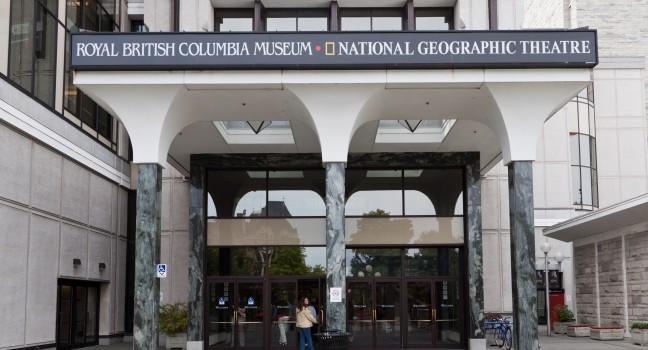
The facade of the Royal British Columbia Museum National Geographic theatre in Victoria, Vancouver Island, British Columbia, Canada.
Afagundes | Dreamstime.com

Currently undergoing extensive restoration, this excellent museum—one of Victoria's leading attractions—is a shadow of its former self. Original plans called for a C$789 million investment for both structural upgrades to the building as well as the preservation of the more than 7 million artifacts and 2.1 km of archival records. As might be expected, such hefty plans are controversial in light of housing affordability and other social issues. Still, hopes are high that a totally refurbished 23,000-square-meter facility will reopen in 2030. Until then, access is limited to some of its temporary exhibits; they are part of the traveling exhibits that are touring various community museums around the province.

The museum complex still offers several more interesting sights, beyond the expected gift shop and café. In front of the museum, at Government and Belleville streets, is the Netherlands Centennial Carillon. With 62 bells, it's the largest bell tower in Canada; the Westminster chimes ring out every hour, and free recitals are occasionally held on Sunday afternoon. The Native Plant Garden at the museum's entrance showcases 400 indigenous plant species. Behind the main building, bordering Douglas Street, are the grassy lawns of Thunderbird Park, home to 10 totem poles (carved replicas of originals that are preserved in the museum). One of the oldest houses in BC, Helmcken House (open late May–early Sept., daily noon–4) was built in 1852 for pioneer doctor and statesman John Sebastian Helmcken. Inside are displays of the family's belongings, including the doctor's medical tools. Behind it is St. Ann's School House, built in 1858. One of British Columbia's oldest schools, it is thought to be Victoria's oldest building still standing. Both buildings are part of the Royal British Columbia Museum.

675 Belleville St., Victoria, BC, V8W 1A1, Canada
250-356–7226
Sight Details
C$29.95; IMAX theater C$16

Something incorrect in this review?

Ambleside Park and Beach

Just off Marine Drive at the foot of 13th Street, this long stretch of sand is West Vancouver's most popular beach. There are tennis courts, volleyball nets, and a water park in the summer, as well as superb views of Stanley Park from all along the seawall. There's also a pitch and putt course and a huge off-leash area for dogs. Just west of the park, the historic Ferry Building is now a small art gallery. A half-hour walk west along the seawall path takes you to another beach at Dundarave. West Vancouver's Marine Drive continues west to several quiet little beaches, including (from east to west) West Bay, Sandy Cove, Caulfeild Park, and Kew Beach. Amenities: food and drink, parking, showers, and toilets. Best for: sunrises, swimming and walking.  

BC Sports Hall of Fame and Museum

Inside the BC Place Stadium complex, this museum celebrates the province's sports achievers in a series of historical displays. One gallery commemorates the 2010 Winter Olympics that were held in Vancouver; another honors the province's aboriginal athletes. You can test your sprinting, climbing, and throwing abilities in the high-tech participation gallery. As you leave the museum, the Terry Fox Memorial is to your left. Created by artist Douglas Coupland, this series of four statues, each larger than the next, was built in honor of Terry Fox (1958–81), a local student whose cross-Canada run—after he lost his leg to cancer—raised millions of dollars for cancer research. Although Fox succumbed to the disease before he could complete his "Marathon of Hope," a memorial fund-raising run is now held annually in cities across Canada and around the world.

Beaty Biodiversity Museum

If you can imagine a vast underground library, but instead of books, the stacks are filled with bones, fossils, and preserved lizards, then you can begin to imagine this modern museum on the UBC campus that exhibits more than 2 million specimens from the university’s natural history collections. The most striking attraction hangs in the entrance atrium: a 25-meter-long (82-foot-long) skeleton of a blue whale—the largest on view in Canada (the blue whale in New York’s American Museum of Natural History is 94 feet long). On the lower level, you’ll find animal skulls, taxidermied birds, and other creatures displayed through glass windows (many of which are at kids’ eye level). In the interactive Discovery Lab, you can play scientist yourself. You might compare the claws of different birds or examine animal poop under a microscope. There’s also a family space stocked with books, art supplies, and kid-size furniture. To find the museum from the university bus loop, walk west to the Main Mall and turn left; the museum is just south of University Boulevard. If you’re planning to visit several attractions at UBC, an Attractions Pass will save you money.

Blackcomb Gondola

Opened in December 2018, this 10-person, Doppelmayr lift carries 184 cable cars and transports 4,000 people per hour as it runs from the Upper Village to the Rendezvous Lodge on Blackcomb Mountain. The three consecutive gondola rides—Blackcomb, P2P, and Whistler Village Gondola—form a continuous lift system of 13.5 km (8 miles) and take 43 minutes of ride time to complete. It is the longest continuous lift system in the world.

Britannia Shipyards National Historic Site

Linked to Steveston's historic waterfront, this 8-acre (3.7-hectare) park offers a rare glimpse of life within a once-thriving mix of canneries, boatyards, residences, and stores. Britannia Heritage Shipyard dates back to 1885 and is the oldest remaining shipyard structure on the Fraser River. Weathered to a silver-gray color by a century of exposure, many of the buildings are the last examples of their type on the entire coast. Several buildings have been restored. These include Murakami House, once the three-room home of the 11-member Murakami family; boatworks buildings; shipyard residences; stilt houses; the last surviving Chinese bunkhouse on the west coast; and a board-and-batten First Nations House similar to traditional 19th-century Coast Salish longhouses. Year-round programs include the restoration of wooden boats. 

British Columbia Aviation Museum

Volunteers passionate about the history of flight have lovingly restored several dozen historic military and civilian airplanes, and even a 1910-era flying machine, at this museum near Victoria's International Airport. A 1957 Vickers Viscount, one of the world's first commercial turbo-prop airliners, a 1970s kit-built helicopter, and a model of Leonardo da Vinci's Ornithopter are among the many aircraft displayed in the museum's two hangars. Tours take about an hour.
1910 Norseman Rd., Sidney, BC, V8L 5V5, Canada
250-655–3300
Sight Details
C$15

Something incorrect in this review?

British Columbia Forest Discovery Centre

Kids adore riding the rails at the British Columbia Forest Discovery Centre, a 100-acre outdoor museum just north of Duncan. Pulled by a 1910 steam locomotive, a three-carriage train toots through the woods and over a trestle bridge across a lake, stopping at a picnic site and playground on the way. Forestry-related exhibits around the site include a 1930s-era logging camp, historic logging equipment, and indoor exhibits about the modern science of forestry. Interpretive trails through the forest lead to ancient trees, one dating back more than 500 years. During July and August, a gas locomotive runs every hour. In May, June, and September, the train may be replaced with a gas locomotive.

Burgoyne Bay Provincial Park

Easy hikes and a pretty pebble beach are the draws at this provincial park, at the end of a dirt road toward the southern end of the island.

Cadboro-Gyro Park

Saanich

A long, sandy, driftwood-strewn beach backed by a grassy park with plenty of picnic tables and shade trees draws families to this sheltered bay, accessible via the Scenic Marine Drive. Kids enjoy the sea creature structures in the play area (including a replica of the legendary "Cadborosaurus" sea serpent said to live in these waters). Hiking trails, a boat launch, and tennis courts keep adults busy; swimming is safe here, if you don't mind the cold (or the sea creature). Snacks can be had at nearby Cadboro Village. Amenities: parking (free); toilets. Best for: walking; sunrise.

Sinclair Rd., Victoria, BC, V8X 2W7, Canada
250-475–5522

Something incorrect in this review?

Campbell Point

Part of the Gulf Islands National Park Reserve, this waterfront area has walking trails and, at Bennett Bay, one of the island's most scenic beaches.

Canadian Pacific Railway Buildings

Built in 195354 and added to the Canadian Register of Historic Places in 2006, Field's International-style train station (not open to the public) is located next to the tracks at the foot of the Big Hill up to Kicking Horse Pass. Another historic Canadian Pacific Railway building, and the only pre-WW2 building remaining in Field, is the old stone and brick telegraph building built in 1931 at the base of the Field townsite. While it's no longer in operation and you can't go inside, it's a great spot to sit a spell and watch for one of the trains that pass through here 25 to 30 times a day.

Stephen Ave., Field, BC, Canada

Something incorrect in this review?

Capilano Suspension Bridge

At Vancouver's oldest tourist attraction (the original bridge was built in 1889), you can get a taste of rain-forest scenery, and test your mettle on the swaying, 137-meter (450-foot), cedar-plank suspension bridge that hangs 70 meters (230 feet) above the rushing Capilano River. Across the bridge is the Treetops Adventure, where you can walk along 198 meters (650 feet) of cable bridges suspended among the trees. If you're even braver, you can follow the Cliffwalk, a series of narrow cantilevered bridges and walkways hanging out over the edge of the canyon. Without crossing the bridge, you can enjoy the site's viewing decks, nature trails, and totem park, as well as history and forestry exhibits. There's also a massive gift shop in the original 1911 teahouse, and a restaurant. May through October, guides conduct free tours on themes related to history, nature, or ecology, while fiddle bands, and other entertainers keep things lively. In December, more than 1.5 million lights illuminate the canyon during the Canyon Lights winter celebration. Catch the attraction's free shuttle service from Canada Place; it also stops at hotels along Burrard and Robson Streets.

3735 Capilano Rd., North Vancouver, BC, V7R 4J1, Canada
877-985–7474
Sight Details
C$66; Parking: $8

Something incorrect in this review?

Chinatown Storytelling Centre

Chinatown Storytelling Centre, a cultural center on Pender Street, celebrates the Chinese-Canadian community's contributions to Vancouver and Canada with photos, artifacts, videos, and more. Highlights include a phone booth where you can dial a number to listen to personal stories in Cantonese and English, as well as the Yucho Chow photo studio, where you can take a free picture as a memento of your experience. There's also a fantastic gift shop, Foo Hung Curios, filled with stationery, candles, prints, and more.

Continental Divide Day Use Area

This day-use picnic area with accessible picnic tables and restrooms allows for the unique experience of standing on the dividing line between the Pacific and Atlantic watersheds. The trailhead for the Fireweed Loop trails is here, a ½-km (0.3-mile) and a 2-km (1-mile) loop trail with minimal elevation gain, where you can walk through a quiet forest and read the interpretive signs that tell the story of the region after the 1968 wildfire.

Kootenay National Park east entrance, off Hwy. 93, Kootenay National Park, BC, Canada
Sight Details
Free

Something incorrect in this review?

Cordova Bay

Saanich

Walkers, swimmers, and sunbathers flock to this long stretch of forest-backed sand, pebble, and driftwood beach, which is just north of Mount Douglas Park. There are several access points along Cordova Bay Road. The Beachhouse Restaurant, perched on the sand about midway along the beach (at 5109 Cordova Bay Road), serves take-out snacks plus casual lunches and dinners. Amenities: food and drink; toilets (May 1–October 30). Best for: swimming; walking.

Cordova Bay Rd., Victoria, BC, V8Y 2K1, Canada
250-475–5522

Something incorrect in this review?