
START

This Sub-Region of Italy Is Puglia’s Best-Kept Secret

With direct flights from the United States to Puglia launching in June 2025, it's never been a better time visit the region of Gargano.

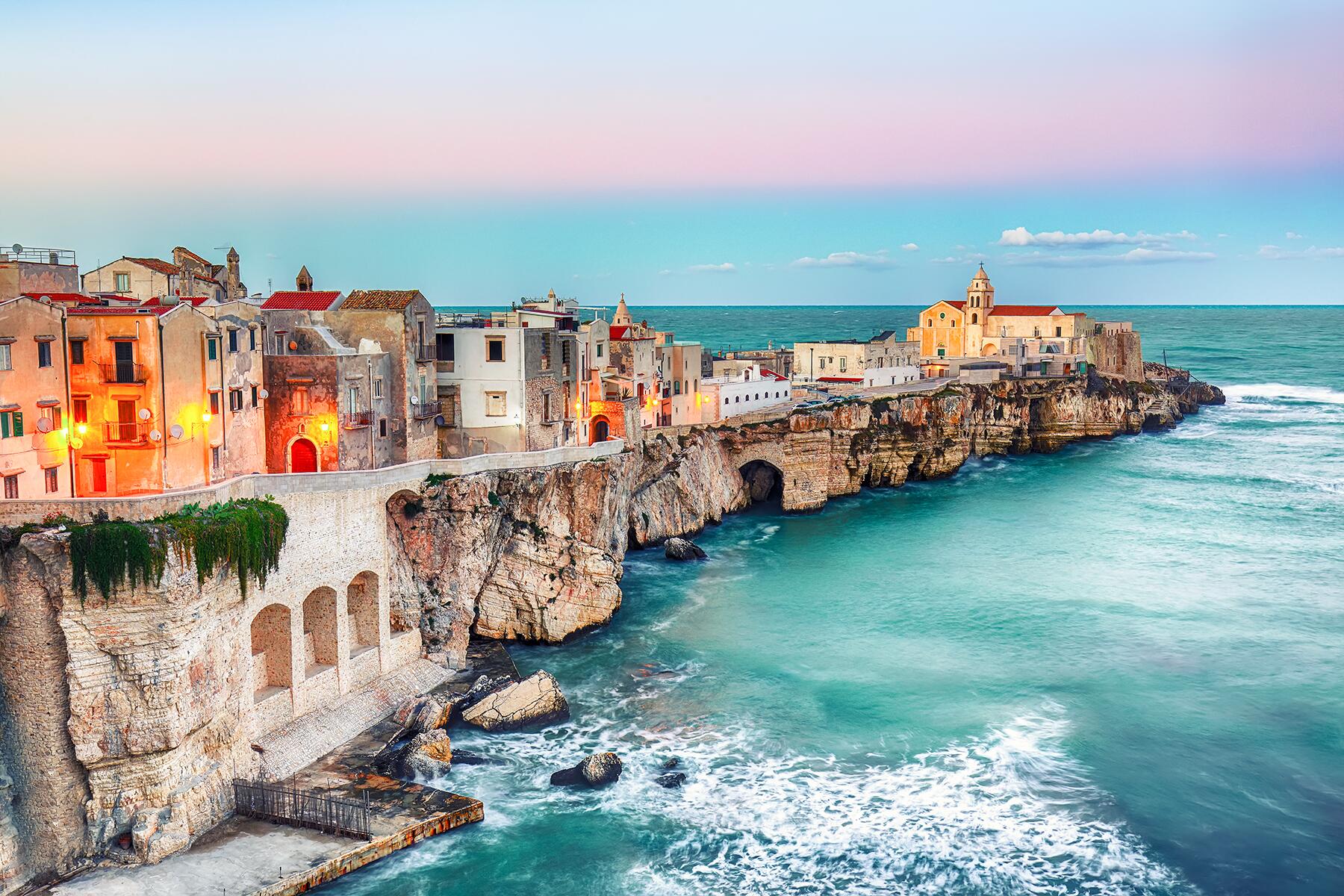
Driving the Litoranea del Gargano–the coastline of Gargano–that snakes along the “spur” of Italy’s boot, centuries-old fishing trabucchi are revealed, their wooden arms stretching over the sea. In Gargano, Puglia’s northern promontory, the whitewashed villages and idyllic beaches feel quintessentially Puglian, but inland, nearly 500 square miles of protected parkland hide ancient forests, karst caves, and medieval towns.

This region is also home to UNESCO-listed sanctuaries, an island archipelago, Puglia’s only mountain range, and DOP citrus, cheeses, and wines. With the Italian airline Neos Air launching the first direct U.S. flight to Puglia, from New York-JFK to Bari Karol Wojtyla Airport, in June 2025, there’s never been a better time to explore the rugged, lesser-traveled corner of Italy: Gargano.

And while in Gargano, these are the must-see sites, villages, and natural wonders.

1 OF 12

Vieste

Though Vieste is the largest coastal town on the Gargano Peninsula, it still holds the soul of a fishing village. Pizzomunno, Vieste’s iconic 85-foot-tall monolith, marks the site of a fisherman’s tragic tale. It’s said that after his lover was stolen by sirens, he turned to limestone—forever frozen by grief.

A perfect day might start with a pulpo (octopus) panini on the beach, followed by a boat tour of the grottos and Arco di San Felice. An aperitivo in Largo Seggio on Via Ripe while the moon rises over Chiesa di San Francesco is pure magic. Marina Piccola in the summertime comes alive with art installations and music festivals, while autumn is for cozying up in a trattoria over a pot of zuppa di mare.

2 OF 12

Foresta Umbra

Tucked deep in Gargano National Park, Foresta Umbra is part of the UNESCO-listed “Ancient and Primeval Beech Forests of the Carpathians and Other Regions of Europe.” It’s one of the last remnants of a vast forest that once stretched across Europe and parts of Asia.

Towering beech trees, some over 130 feet tall, create a canopy teeming with biodiversity. Over 60 miles of trails wind through the forest, where you can hike or bike, spotting deer, wild boar, and various bird species along the way. Foresta Umbra offers a rare glimpse into Europe’s natural heritage and a peaceful retreat in Puglia’s wild beauty.

3 OF 12

Peschici

Wander through the narrow, steep streets of this coastal village, where the scent of fresh frutti di mare drifts through the air, trailed by curious alley cats. Peschici’s white-and-blue palette—reflected in its buildings, wrought-iron balconies, and shuttered windows—along with olive-wood artisan shops and bougainvillea-draped restaurants, perfectly captures the Mediterranean spirit of the Gargano Peninsula.

In the centro storico, the 10th-century Peschici Castle, once home to monks from the Tremiti Abbey, offers a panoramic lookout over turquoise waters. Just above, lovers fasten padlocks to Peschici’s lucchetti d’amore (love-lock bridge). A short drive away, chic trabucco restaurants offer the rare experience of dining over the Adriatic, suspended between land and sea. Like Vieste, Peschici boasts a variety of sandy beaches, many with camping hookups for nature-loving travelers.

4 OF 12

Tremiti Islands

Legend has it that Italy’s Tremiti Islands were formed by the mythological hero Diomedes, who hurled massive stones into the Adriatic Sea. Just off Gargano’s northern coast, this five-island archipelago has been a protected marine reserve since 1989. Its emerald ombre waters draw divers and snorkelers, while nature trails wind through the various islands with flora and fauna, leading to historical landmarks. The largest island, San Domino, offers the majority of accommodations, while San Nicola, home to the 11th-century Abbey of San Nicola, offers a more tranquil ambiance. Ferries from towns like Vieste and Rodi Garganico run seasonally.

5 OF 12

Rodi Garganico

Sundays are for cappuccinos and pistachio cream cornetti (croissants) in the palm-lined square of Rodi Garganico—a relaxed beach town in northern Gargano. Known for its citrus groves, Rodi is famous for producing some of Italy’s most fragrant oranges and lemons, including Limone Femminello del Gargano, Italy’s oldest lemon variety. This citrus legacy is carried on the breeze.

Sun-bleached fishing boats bob beside mega-yachts in the harbor, while the historic center’s whitewashed walls feature poetic prose painted in blue. Visit the Sanctuary of Madonna della Libera or time your trip for the Sagra delle Arance, a lively festival celebrating the town’s citrus heritage.

6 OF 12

Vico del Gargano

Tucked away in the Gargano National Park, Vico del Gargano is known as the “Village of Love.” With ivy-clad stone houses and winding alleyways, it feels like the backdrop of a medieval love story, and in a sense, it is, thanks to its patronage of Saint Valentine. Stroll down the Vicolo del Bacio, the “Alley of the Kiss,” so narrow that couples must press close as they pass.

Beyond its romantic charm, Vico boasts historical sites like the 12th-century castle and ancient city walls. Vico is also a top citrus producer, particularly the fragrant arance del Gargano. Each February, the town hosts a vibrant celebration of love and citrus, with heart-shaped decorations and local festivals honoring its heritage.

7 OF 12

Vignanotica Bay

Accessible via a scenic trail from an olive grove carpark, Vignanotica Beach is one of the most picturesque pebbled coves on the Gargano Peninsula. Set against towering limestone cliffs, this spiaggia libera (free beach) rewards those who make the trek with its natural beauty. For those seeking liberation, the northernmost section is a designated naturist area. Several beachside lidos serve up spritzes and patatine (chips), adding to the relaxed, laid-back atmosphere. Offshore, boats glide past, with tour groups admiring the dramatic rock formations.

8 OF 12

The Great Lakes of Gargano

Lago di Lesina and Lago di Varano are tranquil coastal lagoons, separated from the Adriatic by narrow strips of land. Flamingos wade gracefully through the shallows, their pink reflections shimmering, while fishermen in traditional wooden boats, called “sandali,” continue time-honored fishing practices. Known for their salicornia, or “sea asparagus,” as well as mussels and eels, the lagoons are an integral part of local cuisine. Unlike the lively beach towns, spending time at the lakes can feel more relaxing, with pastel hues filling the sky at sunset. It’s the perfect place for a quiet lakeside meal with family or a leisurely stroll.

9 OF 12

Monte Sant’Angelo

Perched high in the Gargano National Park, this town has been a pilgrimage site for over a thousand years. It’s known for its role along the ancient Cammino di San Michele (Way of Saint Michael), a spiritual trail that stretches across Europe and leads to the Holy Land.

At its heart is the UNESCO-listed Sanctuary of Monte Sant’Angelo, a breathtaking church carved directly into the rock, dedicated to the Archangel Michael. From there, the medieval streets wind through the town, each turn offering breathtaking views of the surrounding mountains and the Adriatic Sea in the distance.

10 OF 12

San Giovanni Rotondo

San Giovanni Rotondo draws millions of visitors each year because of its connection with the legacy of Saint Padre Pio. The Sanctuary of Saint Pio, designed by architect Renzo Piano, is a real architectural marvel. Its sweeping curves stand out against the rugged mountains around it. While you’re there, visit Padre Pio’s tomb, wander through his old convent, and stop by the chapel where he prayed. Whether you’re drawn to the town for its religious significance or just to soak in the peaceful vibe, the mix of history, spirituality, and natural beauty is truly special.

11 OF 12

Castello di Manfredonia

Standing tall at the southern tip of Gargano, the Castello di Manfredonia has been keeping watch since the 13th century. Built by Frederick II, the castle has seen its fair share of battles, shifts in power, and centuries of history. Inside, the National Archaeological Museum houses ancient artifacts from both local and faraway cultures. But it’s the views from the ramparts that really hit home. You’re reminded that this fortress was built for one reason—to protect the coast from whatever came its way. Insider tip: while in Manfredonia, get a scoop of gelato at Tommasino!

12 OF 12

Abbey of Saint Mary of Pulsano

For centuries, hermits seeking refuge in the cliffs of Gargano carved out lives of solitude, high above the Gulf of Manfredonia. The Abbey of Saint Mary of Pulsano dates back to the 6th century and was revived by Benedictine monks in the Middle Ages. Scattered around it are 24 ancient hermitages, hidden among craggy rocks. Recognized as a “Luogo del Cuore” (Place of the Heart) by FAI, Italy’s National Trust in 2012, this sanctuary invites visitors to explore its stone courtyards, step inside the centuries-old church, and glimpse the tiny cells where monks once lived—all while soaking in panoramic views of the Gulf of Manfredonia.