63 Best Sights in Brussels, Belgium

Background Illustration for Sights

We've compiled the best of the best in Brussels - browse our top choices for the top things to see or do during your stay.

Place du Grand Sablon
Upper Town
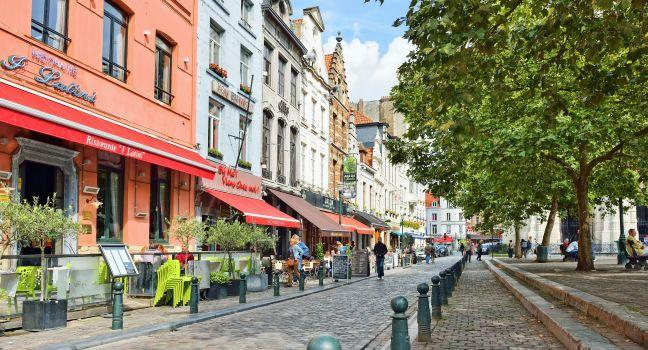
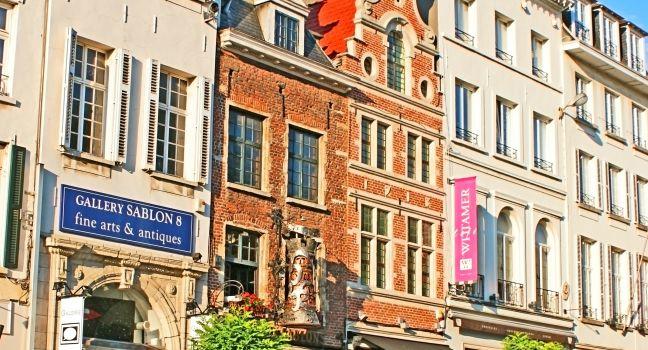
BRUSSELS, BELGIUM - JUNE 29, 2010: Place du Grand Sablon boasts antique stores, boutiques, hotels, restaurants, auction houses,  pastry shops and Belgian chocolatiers, on June 29 in Brussels.
eFesenko / Shutterstock

Once nothing more than a sandy hill, "Sand Square" is now an elegant place, surrounded by numerous restaurants, cafés, and antiques shops, some in intriguing alleys and arcades. For a little tranquility, pop into the beautiful Église Notre Dame du Sablon at the eastern end of the square, a flamboyant Gothic church founded in 1304. It's one of Brussels’s most beautiful, and at night its stained-glass windows are illuminated from within to magical effect. Opposite the Grand Sablon, you'll find the tiny garden of place du Petit Sablon. This is surrounded by a wrought-iron fence, topped by 48 small bronze statues representing the city’s guilds. Toward the rear of the garden, you'll find a fountain dedicated to the counts Egmont and Homes, who protested the introduction of the Spanish Inquisition by Philip II and were beheaded for their trouble.
Pl. du Grand Sablon, Brussels, 1000, Belgium

Something incorrect in this review?

Centre Belge de la Bande Dessinée

Lower Town Fodor's Choice
Brussels Belgian Center of Comic Strip Art
Chad Bontrager / Shutterstock

It fell to the land of Tintin to create a fitting museum for the ninth art. While comics have historically struggled for artistic recognition, they have been taken seriously in Belgium for decades. In the Comics Art Museum, they are wedded to another strongly Belgian art form: Art Nouveau. Based in an elegant 1903 Victor Horta–designed building, the museum is long on the history of the genre, if a little short on kid-friendly interaction. The collection includes more than 400 original plates and 25,000 cartoon works. A library and brasserie are added incentives, but best of all is the bookshop, which sells a comprehensive collection of graphic novels and comic books, albeit largely in French or Dutch. Keep an eye out for the comic-strip murals that dot the city; walking maps showing the location of each one can be found at the tourist information office.

Grand Place

Lower Town Fodor's Choice
BRUSSELS, BELGIUM-SEPTEMBER 1: Thousands of tourists were attracted to Grand Place by Belgian Beer Weekend started on September 1, 2012 in Brussels. This is public event dedicated to Belgian beer;
skyfish / Shutterstock

This jewelry box of a square is arguably Europe's most ornate and theatrical. It's also a vital part of the city—everyone passes through at some point. At night, the burnished facades of the guild houses look especially dramatic. Try to make it here for the Ommegang, a historical pageant re-creating Emperor Charles V's reception in the city in 1549 (in June and July), or for the famed Carpet of Flowers, which fills the square with color for four days in mid-August on even-numbered years. Dominating the square is the magnificent Gothic-era Hôtel de Ville (Town Hall). Work began on it in 1402, and it's nearly 300 years older than the surrounding guild houses. Be sure to tilt your gaze to the belfry, which is topped by a bronze statue of St. Michael (patron saint of the city) crushing the devil beneath his feet.

Recommended Fodor's Video

Atomium

Laeken Fodor's Choice

Like a giant, shiny child's toy rising up out of a forest, the Atomium was created in 1958 as part of the World's Fair of Brussels. It's shaped like an atom, with an elevator taking you up the central axis where walkways link to the protruding spheres by escalators. One sphere contains a permanent exhibition about the building's history; the others are set aside for temporary displays on design and architecture. Audio guides in English are available and there are great views from the top sphere, known as the Panorama. Tickets include access to the neighboring Design Museum Brussels.

Coudenberg/Musée BELvue

Upper Town Fodor's Choice

Under the place Royale lie the remains of the palace of Charles V. Known as Coudenberg, it was first constructed in the 11th century and upgraded over hundreds of years in line with the power and prestige of Brussels's successive rulers. However, it was destroyed by a great fire in 1731 and was never rebuilt. Parts of it, and one or two of the streets that surrounded the original building, have since been excavated. Access is through the Musée BELvue, which is worth seeing in its own right and showcases Belgium’s history of democracy and its royal family.

Pl. des Palais 7, Brussels, 1000, Belgium
02-500–4554
Sight Details
€18 combo ticket
Coudenberg closed Mon.

Something incorrect in this review?

Kasteel van Beersel

Fodor's Choice

Beersel Castle floats on the waters of its moat like some medieval bath toy. It's a wonderful sight and one of the country's best-preserved châteaux. It was built around 1420, though fell foul of the 1489 rebellion against the rule of the Holy Roman Emperor Maximilian I and was subsequently rebuilt. Its moat, drawbridge, and battlements are some of the finest examples of medieval architecture in Belgium. It has been undergoing renovations since the early 2000s; now visitors can explore freely.

Lotsestraat 65, Beersel, 1650, Belgium
02-359--1636
Sight Details
€5
Closed Mon. and Dec.--Feb.

Something incorrect in this review?

Kasteel van Gaasbeek

Fodor's Choice

Originally built in 1240, Gaasbeek has had numerous makeovers, though its current Romantic look hails from its last remodeling by the Marchioness Arconati Visconti in the 19th century. She refurbished the castle as a museum to stash her vast collection of mainly 17th- and 18th-century artworks and furniture, before gifting it all to the state in 1921 to run. This includes the odd bizarre find, including the last will and testament of the artist Peter Paul Rubens. Having undergone a three-year renovation, the museum and castle finally reopened in 2023, and it's worth arriving for the first Friday of the month when late-night opening means you can wander the Gallery Hall until 10 pm. The gardens only open between May and October but are well worth a visit; look out especially for the early Baroque walled French garden, which has a staircase affording fine views of the castle. The museum closes over winter, but the rest of the park grounds are open to visitors and picnickers year-round.

Les Marolles

Lower Town Fodor's Choice

If the Grand Place stands for old money, the Marolles neighborhood stands for old—and current—poverty. Times are changing, but the area still has some raffish charm. This was once home to the workers who produced the luxury goods for which Brussels was once famous. As that industry faded, immigrants, mostly from North Africa and Turkey, made homes here. The hugely popular daily Vieux Marché (flea market) at the place du Jeu de Balle sells clothing, bric-a-brac, plain junk, and the occasional gem. Trendy shops are found on the surrounding Rue Haute and Rue Blaes.  Keep in mind that despite improvements, this area can be pretty sketchy at night.

Manneken Pis

Lower Town Fodor's Choice

Despite drawing sightseers for centuries, the minuscule statue of the peeing boy may leave you underwhelmed. The first mention of the Manneken dates from 1377, and he's said to symbolize what Belgians think of the authorities. The "original" version was commissioned from noted sculptor Jerome Duquesnoy in 1619 to replace the old stone one, though what is on display now is a copy. This earlier version was once seized by French soldiers, and to quell local unrest caused by this act, King Louis XV of France presented the Manneken Pis with a gold-embroidered suit, thus starting a bizarre trend. The statue now has more than 1,000 costumes (the safe-sex outfit is truly remarkable!) for ceremonial occasions, and it even has its own personal dresser. 

You can see a selection of the statue's many outfits at the GardeRobe Manneken Pis museum at nearby 19 Rue du Chêne.

Musée des Instruments de Musique (MIM)

Upper Town Fodor's Choice

This four-story building is almost as impressive as the museum it houses. Built in 1899, architect Paul Saintenoy didn't hold back. Its elaborate facade twists its glass and iron into a symphony of Art Nouveau. Inside, it's no less fascinating. If you've ever wanted to know what a gamelan or Tibetan temple bell sounds like, here's your chance. In addition to seeing more than 2,000 instruments, you can listen to most of them via headphones. Head to the rooftop café for fantastic views of the city; also look out for MIM's regular lunchtime concerts—some are even free.

Rue Montagne de la Cour 2, Brussels, 1000, Belgium
02-545–0130
Sight Details
€15
Closed Mon.
Tickets for concerts can't be booked

Something incorrect in this review?

Musée Fin-de-Siècle

Upper Town Fodor's Choice

The collection focuses on an era (1868–1914) when European art stopped gazing all moist-eyed at history and instead turned its attention to the world around it. The museum charts this changing of the guard, beginning with the rebellion against academic tradition and the dominant themes of Romanticism that gave rise to the birth of Realism, through to the freer style of the Impressionists, and all the way up to World War I. Belgian painters featured include Guillaume Vogel and the powerful imagery of Symbolist Léon Spillaert, who runs the gamut from Impressionist-style beaches to brooding self-portraits and Gothic-infused horror. Elsewhere, work by masters such as Paul Gauguin, Auguste Rodin, and Emile Galle place the collection and the art scene of the period at the center of a burgeoning international movement. A powerful reminder of a time when Brussels was one of the great creative capitals.

Rue de la Régence 3, Brussels, Belgium
02-508–3211
Sight Details
€10, combo ticket €15 (includes entry to Magritte and Oldmasters museums)
Closed Mon.

Something incorrect in this review?

Musée Horta

Saint-Gilles Fodor's Choice

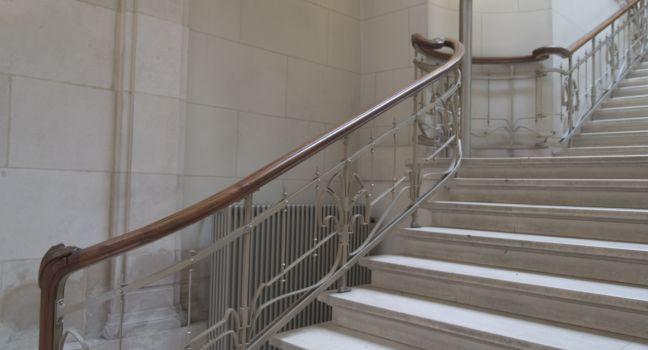
The house where Victor Horta (1861–1947), one of the major forces in Art Nouveau design, lived and worked until 1919 is the best place to see how he thought. Inspired by the direction of the turn-of-the-20th-century British Arts and Crafts movement, he amplified its designs into an entire architectural scheme, shaping iron and steel into fluid, organic curves. Horta had a hand in every aspect of its design, from the door hinges to the wall treatments.

Musée Magritte

Upper Town Fodor's Choice

After years of sharing display space in the neighboring museum complex on Rue de la Régence, Surrealist genius René Magritte (1898–1967) finally got his own, much-deserved space. The collection starts on level three, tracing Magritte's life and work chronologically. The artist's mother committed suicide when he was 13; certainly, her profession as a milliner is difficult to separate from his later obsession with hats. The museum expands key moments through letters, sculptures, films, and, of course, some 200 paintings, including the haunting The Domain of Arnheim.

Entrance at pl. Royale 1; buy tickets at rue de la Régence 3, Brussels, B1000, Belgium
02-508–3211
Sight Details
€10, combo ticket €15 (includes entry to Oldmasters and Fin-de-Siècle museums)
Closed Mon.

Something incorrect in this review?

Musée Royal de l’Afrique Centrale

Fodor's Choice

Any trip to Brussels should include a visit here, if only to understand Belgium's difficult relationship with its own past. Much of the museum's collection came at an incalculable cost, rooted in the brutal colonial rule of Belgium's King Leopold II. Indeed, continuing controversy over whether a number of its artifacts should be returned to the region from which they were taken continues to bubble. For visitors, however, this remains must-see. Even the building itself is a relic from the colonial era, built for the King's 1897 Exposition trumpeting the wealth he tore from the Congo Free State (1885–1908). Much work has gone into "decolonizing" the building and museum in time for its major reopening in 2018, with considerably less emphasis now placed on Western "explorers" and stuffed wildlife. The modern version focuses more on Congolese voices and the several million people estimated to have died as a result of Belgium’s colonial rule (1908–62) of a region 76 times its own size.

Palais Royal

Upper Town Fodor's Choice
The Belgium Royal Family vacations in the Chateau de Laeken, so it's become a tradition during the summer months (late July--early September) to open up the official residence, otherwise known as the Palais Royal, to visitors. The palace was erected on the site of the former Palace of the Dukes of Brabant (aka Coudenburg), which was burned down in 1731, and the underground excavation of which you can still tour. The existing building was begun in 1820, but redesigned in the early 19th century by the extravagant Leopold II to fit a more glamorous Louis XII style. Today, it holds a remarkable collection of tapestries, art, and antiques from all over the world; pay special attention to the Congo-inspired mirror room, the ceiling of which is encrusted with more than a million jewel beetle carapaces. And best of all, it's free.

Palais Royale

Upper Town Fodor's Choice

The Belgium Royal Family lives in the Château de Laeken these days, and it's become a tradition to open up their inner-city residence to visitors during summer. The building was erected on the site of the former Palace of the Dukes of Brabant (aka Coudenburg), which burned down in 1731—you can still tour its underground excavation next door. Work on the existing palace was begun in 1820 but redesigned in a more garish neoclassical style in the early 19th century by Leopold II. The Mirror Room, which was commissioned by the king to evoke the Congo, is a chilling reminder of where the funds came from to furnish his largesse. The room's ceiling was later covered in the pearlescent carapaces of 1.5 million jewel beetles as part of a remarkable artwork created in 2002. Today, the palace holds a remarkable collection of tapestries, art, and antiques from all over the world.

Parc du Cinquantenaire

Cinquantenaire Fodor's Choice

The most picturesque park in the city is a joy in summer when its shaded grassy lawns and paths fill with joggers, picnickers, dance troupes, and even climbers practicing on its walls. It is home to a number of museums as well as the capital's take on the Arc de Triomphe: the triumphalist Arcade du Cinquantenaire, which was commissioned by King Leopold II to mark Belgium's 50th anniversary in 1880—it was only finished in 1905, just in time for the 75th celebrations. Pay special attention to the park's northwest corner, where you'll find the Great Mosque. This was originally built as an Arabic-style folly for a national exhibition in 1880 but was gifted to King Faisal ibn Abd al-Aziz of Saudi Arabia to use as a place of worship in 1967, and has remained a mosque ever since. Near to it you'll also find the Pavillon des Passions Humaines, a small temple that was one of Victor Horta's earlier designs in the city. It houses a remarkable public sculpture by Jef Lambeauf, depicting a mass of writhing naked bodies, which caused a public outcry when it was unveiled in 1898. It has been sealed up ever since, but you can now join guided group tours (in English and French; €12) on every last Sunday of the month to see it; book at the Musée Art & Histoire. Parts of the park may be inaccessible as extensive renovations continue in the lead-up to Belgium's 200th anniversary celebrations in 2030.

Plantentuin Meise

Fodor's Choice

Belgium's national botanic garden is a sprawling site that takes up most of the southern fringes of Meise. It wraps the old estate of Kasteel van Bouchou, which, despite being utterly destroyed during the French Revolution, was later rebuilt and now houses a museum all about the grounds. Beyond its moat lies an English-style garden filled with exotic plants from around the world, but the pièce de résistance here is the Plant Palace, the largest greenhouse in Belgium and one of the biggest in Europe. It is a vast biome of 35 hothouses filled with huge water-lily pads and tropical wonders. Other sights, such as the much smaller, mid-19th-century Balat Greenhouse, which was originally intended for a zoo, are just as fascinating for those interested. In addition, you'll find medieval, medicinal, and rose gardens, rhododendron woods, trails, art, an apiary, and some 18,000 plant species. Visit any time, though spring is naturally the most colorful season.

Sint-Pieterskerk

Fodor's Choice

This magnificent Gothic church was originally built in AD 986, though the current version dates to the 15th century. It has survived countless wars, most notably in 1914 when fire collapsed its roof, and then again in 1944 when the northern transept was bombed. Inside, the church is filled with art of the late medieval era. Among the finest pieces is the 15th-century Last Supper triptych by Leuven-based Flemish Primitive artist Dieric Bouts, still hanging in its original place in the chapel. You can explore this and other artworks through an AR tour that tells the story of the church.

Grote Markt 1, Leuven, 3000, Belgium
016-272--959-tour
Sight Details
€12 HoloLens tour; €5 tablet tour
Closed Wed. Oct.–Mar.

Something incorrect in this review?

Théâtre Royal de Toone

Lower Town Fodor's Choice

This marionette theater troupe has been going for eight generations, performing plays in the old Brusseleir dialect with hefty doses of local humor and innuendo. It's suitable for kids, though, and even if your French isn't up to scratch, there's fun to be had just looking around. Plays last two hours (including intermission) and are held on Thursday, Friday, and Saturday (twice). These range from "puppet" Hamlet and Faust to The Passion, with tickets sold just before each show. Alternatively, many people come just for the quirky downstairs bar, Toone (Tuesday–Sunday, noon–midnight), which is locally famous in its own right and is scattered with marionettes and memorabilia.

Train World

Schaerbeek Fodor's Choice

In 1835, Belgium established the first steam passenger railway on mainland Europe—it connected Brussels and Mechelen—and it was one of the first to establish a national railway network. Train World pays full homage to this illustrious history. Located in the hangars of Belgium's oldest functioning station, Schaerbeek, it contains 20 full-size locomotives, many of which you can clamber aboard and explore.

Universiteitsbibliotheek

Fodor's Choice

Leuven's original Flemish-Renaissance library was set up in the old Cloth Hall on Naamsestraat in 1636. But after the university was disbanded during the French Revolutionary Wars, its collection was ushered away to Paris. Though destroyed in 1940 by British-German artillery fire, it was rebuilt post-war to the same design; today, visitors can climb the 300 steps to the top of the tower where a carillon of 63 bells, weighing 35 tons, rings out across the square.

Monseigneur Ladeuzeplein 21, Leuven, 3000, Belgium
016-324--660
Sight Details
€8 tower and audio guide; last climb is at 5 pm
Reservations required

Something incorrect in this review?

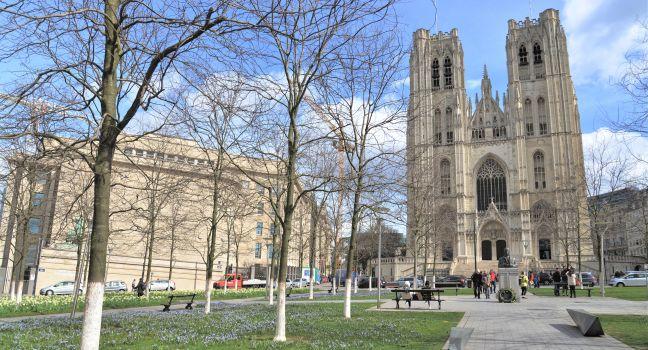
Cathédrale St-Michel et Ste-Gudula

Upper Town
Brussels, Belgium - March 30, 2015: Tourists are walking around and sitting in front of Cathedral of St. Michael and St. Gudula, Brussels, Belgium.
Niradj | Dreamstime.com

All of Belgium's royal weddings take place in this fine cathedral, with its twin Gothic towers and Baroque chapels. One namesake, St-Michel, is recognized as the patron saint of Brussels, typically pictured slaying a dragon (Satan), but mention Ste-Gudule and most people will draw a blank. Very little is known about this daughter of a 7th-century Carolingian nobleman, but her relics have been preserved here for the past 1,000 years. Construction of the cathedral began in 1226 and continued through the 15th century; chapels were added in the 16th and 17th centuries. Free guided tours take place on Saturdays (2 pm).

Pl. Sainte-Gudule, Brussels, 1000, Belgium
02-229--2490
Sight Details
Crypt: €4; archaeological site: €2
Treasury closed Sun., Mon., and Fri.
Booking required for tours

Something incorrect in this review?

Place Sainte-Catherine

Lower Town
BRUSSELS, BELGIUM-AUGUST 29, 2014: Place Saint Catherine, which was built on place of the old port. This square is a favorite place for tourists searching Belgian sea food restaurants.
skyfish / Shutterstock

If you find the Grand Place overrun by tourists, head to Place Sainte-Catherine, whose markets are a favorite among locals, who come to shop for necessities (Thursday–Saturday 7–5; Wednesday organic market 7:30–3). At night, it often has a mobile bar, while the square's fishmonger serves great seafood ( see Restaurants).

Soaring over this scene is the Church of Sainte-Catherine, a rather grand Baroque church with a magnificent rose window. On the outside wall of the church is, bizarrely, the only remaining historical public urinal in Brussels, which dates from 1873 and is still in use. The church also overlooks the neighboring Vismet (fish market). A canal used to run through here, when the Port of Brussels extended deep into the city, and this was the site of a fish market up until 1955. It's now reduced to a couple of elongated ponds lined by seafood restaurants—some good, many of them overpriced.

From there, head along Rue de Peuplier to find the Church of St John the Baptist at the Beguinage, a magnificent 17th-century Flemish Baroque church that was once surrounded by a vast community of beguines, a lay religious movement of unmarried Christian women who devoted their lives to God but never took the orders of a nun. Their beguinage once spanned more than 1,000 houses, across 7 hectares, and the surrounding streets here are often colonized by filmmakers seeking a taste of old Brussels.

Pl. Sainte-Catherine, Brussels, 1000, Belgium

Something incorrect in this review?

Autoworld

Cinquantenaire

A vast collection of vintage automobiles sits in what was originally planned (in the early 1900s) to be a grand exhibition hall. As time rolled on, hosting such fairs proved impractical due to how built-up the area became. These days, the hall makes the perfect showcase, its curved steel-and-glass roof giving the impression of a huge Art Deco garage. Exhibits range from Model T Fords to '50s Americana vehicles.

Parc du Cinquantenaire, Brussels, 1000, Belgium
02-736--4165
Sight Details
€15

Something incorrect in this review?

Brussels Sewer Museum

Lower Town

Beyond the museum, the real appeal here is the audio-guided descent into the sewers themselves, where you'll find the River Senne. The city's main waterway had become increasingly polluted and problematic (frequently flooding) by the end of the 19th century and had to be covered over. Redevelopment projects are starting to reveal small stretches of the old river across the city, but this is a rare chance to glimpse, hear about, and yes, smell a little-seen part of Brussels's history, buried since 1871.

Porte d'Anderlecht, Brussels, 1000, Belgium
02-279--4383
Sight Details
€10
Closed Mon.

Something incorrect in this review?

CENTRALE for Contemporary Art

Lower Town

With the excellent MIMA gallery having shut its door at the start of 2025, it's left to CENTRALE to fly the flag for contemporary art museums in the capital. Set in a former power station built at the turn of the 20th century, its bold shows are never less than daring, and the setting is impressive in itself. Each year, it also shows the work of four hand-picked artists from Brussels and beyond in its nearby offshoot gallery space, Centrale/Vitrine.

Pl. Sainte-Catherine 45, Brussels, 1000, Belgium
02-279--6452
Sight Details
€10
Closed Mon. and Tues.

Something incorrect in this review?

Charlier Museum

Schaerbeek

This museum was originally an artist’s home. Sculptor Guillaume Charlier and his friend Henri Van Cutsem were avid art collectors and asked Victor Horta to convert two houses into one to contain their treasures. It’s an eclectic mix, with piles of decorative objects from the 18th to 20th centuries, an impressive collection of Belgian art, and Charlier’s own realistic works vying for attention.

Av. des Arts 16, Brussels, 1210, Belgium
02-217--8161
Sight Details
€6
Closed weekends
Reservation required

Something incorrect in this review?

European Union Quarter

Cinquantenaire

The European Union was born in the embers of World War II, as an antidote to the nationalism that had swept Europe and caused such chaos. Its parliament shifts monthly between Strasbourg (France) and Brussels, where it occupies the Paul-Henri Spaak building. Hour-long audio-guide tours of Parliament and the Hemicycle, the debating chamber where plenary sessions are held, are available on weekdays (book online). The nearby Parliamentarium visitor center is more accessible and attempts to break down just how the EU works.

Greenhouses of Laeken

Laeken

Laeken is where you'll find the Royal Greenhouses, a glorious mid-19th-century mesh of steel and glass set within the grounds of the summer palace, where the Belgian royal family spends most of their time. It's only open to visitors for three weeks every spring (between April and May), but it's worth catching. The height of its winter garden, designed by Alphonse Balat, made it possible to plant palm trees for the first time in Belgium; the originals still stand here.

Av. du Parc Royal, Brussels, 1020, Belgium
02-551--2020
Sight Details
Free
Closed June–Mar.

Something incorrect in this review?