365 Best Sights in Vietnam

Background Illustration for Sights

We've compiled the best of the best in Vietnam - browse our top choices for the top things to see or do during your stay.

Cat Ba National Park

Fodor's Choice
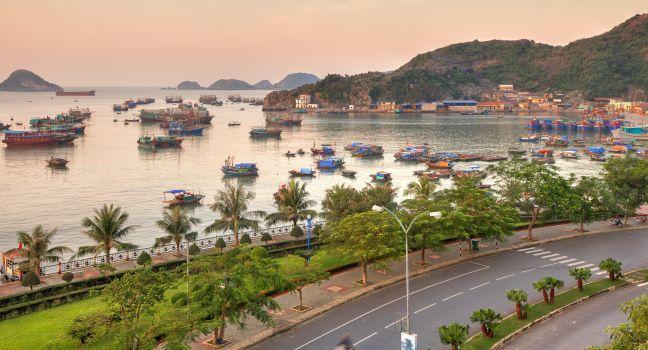
Traditional blue wooden fishing boats in the ocean, Cat Ba island, Halong Bay, Vietnam.
Serditova | Dreamstime.com

Home to 32 species of mammals, including the endangered white-headed langur monkey, which lives among the jungle terrain and freshwater lakes, Cat Ba National Park (entrance 80,000d) covers about 263 square km (101 square miles) of Cat Ba Island. Within its tropical rain forest are 78 species of birds and 20 species of reptiles. In addition to impressive beaches and mangroves, within its boundaries are two historical caves once used as clinics during the Vietnam War. Signs outside the park offer four hiking routes; 1, 2, 3, and 4, the Cang Viet Hai Trail. Active travelers can tackle this demanding (yet rewarding) 18-km (11-mile) trail across the park if they arrive before 10 am. For a striking vista of the surrounding scenery, the view from the park's observation tower is hard to beat. Be warned, though, the climb-up metal ladders and cliffs are not for the faint of heart. The park is about 30 minutes from Cat Ba Town.

Trung Trang, Cat Ba Island, Vietnam
0225-368–8981
Sight Details
80,000d

Something incorrect in this review?

The Citadel

Fodor's Choice
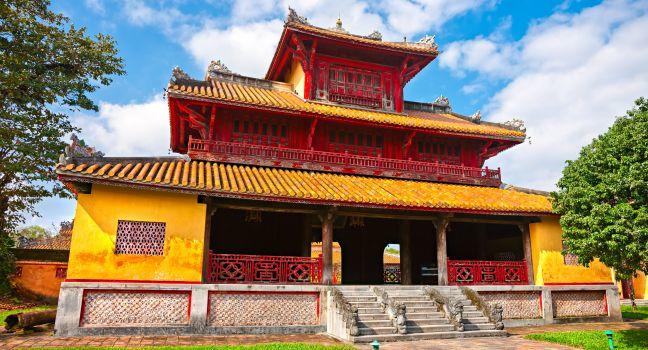
Entrance of Citadel, Hue, Vietnam. Unesco World Heritage Site.
Luciano Mortula / Shutterstock

If there is only one sight you visit in Hue, make sure this is it. Constructed in 1805 under the rule of Emperor Gia Long, this fortress is sheltered by an outer wall spanning 10 km (6 miles). The wall’s design was inspired by the work of Sébastien Le Prestre, a renowned French military engineer of the 17th century. Marking its entry are the Nine Holy Cannons and a flag that stands 170 feet high, the tallest in the country. Inside the sprawling complex are the Imperial City, Imperial Academy, and the Secret Institute paying tribute to the past. On the main gate of the Imperial City, bullet holes on the stone entrances leave traces of a battle during the American (Vietnam) War. Inside the Imperial City, something of an eyesore are the scaffoldings of sections still being restored from the severe damage caused during the 1947 and 1968 battles.

North Bank, Hue, Vietnam
Sight Details
Free

Something incorrect in this review?

Ao Dai Museum

District 9 Fodor's Choice

Honoring Vietnam's national dress, this private museum is set on stunningly picturesque grounds that are a very long way from downtown. Once you pay the admission fee, a guide will take you to the two beautiful wooden exhibition houses, which showcase ao dais from the 17th century to the modern day. Smaller kids will like feeding the fish and playing ao dai quoits (and generally letting off steam on the verdant lawns if they're all city-ed out). This place is—amazingly—still off the tourist radar.

Recommended Fodor's Video

Ba Vi National Park

Fodor's Choice

Magnificent and (especially on one of the frequent foggy days) moody, Ba Vi offers a convenient natural refuge from the bustle of Hanoi. The national park is dominated by the triple-peaked Ba Vi Mountain, once a French hill station. The reserve around the mountain, meanwhile, boasts plentiful plant and bird life and is ideal for hiking. The most popular walk in the area is the climb to the mountain's summit, which is a strenuous ascent up 1,320 steps through the trees. A temple dedicated to Ho Chi Minh sits at the mountain's summit. Due to its proximity to the capital, Ba Vi is one of Vietnam's most visited protected areas and numbers can be high on weekends and during holiday periods.

Bac Ha Market

Fodor's Choice

Without a doubt Bac Ha's biggest draw, the Sunday market here retains its authenticity despite a growing influx of tourists. Market day sees local hill-tribe people (most noticeably the colorfully dressed Flower H'mong) flock from the surrounding mountains to trade their wares. Handicrafts are available for tourists, but this remains a mostly local affair with goods ranging from livestock to herbs.

An Bang Beach

Fodor's Choice

The locals' favorite beach, An Bang is one of the few remaining public beaches on the long Hoi An–Danang coastline. Locals flock here for sunrise swimming and sunset family picnics, leaving this lovely stretch of beach almost deserted during the day. The beach offers stunning views of the neighboring Marble Mountains, Danang Bay, and the Cham Islands. A good selection of often-hip restaurants borders the clean, sandy beach, offering free use of beach loungers and umbrellas if you buy food or drinks. Competition is fierce and staff can be pushy. Development has been slow but steady, with only a few homestays and holiday cottages, but new resorts at both ends of the beach are set to change this over the next few years. Amenities: food and drink; showers. Best for: swimming; sunsets; families; surfing; walking.

D. Hai Ba Trung, An Bang, Vietnam

Something incorrect in this review?

Binh Thuy Ancient House

Fodor's Choice

One of the few remaining examples of 19th-century residences in the Mekong Delta, the ancient house is managed by a sixth generation descendent of the Duong family. The photogenic French colonial exterior has canary walls, blue shutters, and ornate trim, while the interior is filled with a blend of French-Vietnamese decorative art and antiques. The house briefly appeared in the 1992 film The Lover, based on the autobiographical novel of the same name by French author Marguerite Duras, as the ancestral home of her Chinese lover Huynh Thuy Le; his actual home still exists in Sa Dec but at the time of filming it was being used as a government office. Binh Thuy Ancient House is a 10-minute taxi ride from most hotels, and it's worth visiting Binh Thuy Temple, an ornate structure that predates Binh Thuy Ancient House, along the way.

144 Bui Huu Nghia, Binh Thuy, Vietnam
Sight Details
20,000d; 50,000d to take photos

Something incorrect in this review?

Cat Co Cove

Fodor's Choice

The island's beaches are among the best in North Vietnam and the three stretches of sand at Cat Co Cove are justifiably popular with Vietnamese tourists and other sun-worshippers. Of the three beaches, the one at Cat Co 2 is the prettiest with limestone cliffs backing golden sand. Here, you will find Cat Ba Beach Resort, one of the island's more luxurious lodgings. The other two beaches are less crowded, but there tends to be more debris and trash in the water. Cat Co is an easy 15-minute walk from Cat Ba Town. Amenities: food and drink; parking; toilets. Best for: swimming; sunset.

Cat Ba Town, Vietnam

Something incorrect in this review?

Cat Tien Bear Sanctuary, Free the Bears

Fodor's Choice

Run by wildlife rescue and conservation organization Free the Bears, Cat Tien Bear Sanctuary is home to over 45 Asiatic black bears (known as moon bears) and sun bears who can no longer be returned to the wild. The majority of their moon bears were rescued from the exotic pet trade or horrific bile farms, where their bile was extracted for traditional medicine. You can learn more through their half-day "Bear Care Tour," which includes a tour of the facilities, helping to prepare enrichment treats, and time observing these unique animals in a beautiful location within the park. Longer volunteer programs are also available. The sanctuary is not open for drop-in visits.

Cat Tien National Park, Tan Phu, Vietnam
Sight Details
Bear Care Tour 8 am--11 am, $50 or 1,100,000d per person
Reservations essential

Something incorrect in this review?

Central Post Office

District 1 Fodor's Choice

Be sure to go inside to check out the huge map of old Indochina in this classic French-colonial building, designed by French architect Alfred Foulhoux (and not Gustave Eiffel as some sources claim) and completed in 1891. In addition to the usual mail services, there are phones, fax machines, and a small gift shop.

Cham Islands

Fodor's Choice

The Hoi An coast is flanked by eight small, coral-fringed islands featuring beautiful seascapes, deserted white sandy beaches, and some of the best microdiving sites in central Vietnam. Despite their beauty, the islands have never been developed for tourism, and it wasn’t until their 2009 designation as a World Biosphere Reserve by UNESCO that anyone took any interest. Those that did were dive companies, limiting visitors to just a couple of dives. From April to September, daily junk and speedboat services run the 18-km (11-mile) route between Cua Dai dock and Hon Lau Island, where you can arrange a homestay or camp on two of the main island beaches—though few visitors do, which makes it one of the most tranquil respites from the touristy beaches of Hoi An and also one of the most beautiful places to watch the sunset from your own private beach. Activities available include snorkeling, diving, swimming, camping, fishing, and trekking.

Local tour offices and hotels can arrange island tours. For camping, visit Cham Island Diving Center (Tran Hung Dao Street) or the Hoi An Diving Centre (Tran Hung Dao Street) in Hoi An.

Hoi An, Vietnam
Sight Details
90,000d per person

Something incorrect in this review?

Cu Chi Tunnels

Cu Chi District Fodor's Choice

A 250-km (155-mile) underground network of field hospitals, command posts, living quarters, eating quarters, and traps, the Cu Chi Tunnels illustrate the Vietcong's ingenuity in the face of overwhelming odds.

Work on the tunnels began in 1948 to combat the French and continued into the '70s. The extensive underground network made it possible for the Vietcong in the '60s not only to withstand blanket bombings and to communicate with other distant Vietcong enclaves but to command a sizable rural area that was in dangerous proximity (a mere 35 km [22 miles]) to Saigon. After the South Vietnam President Ngo Dinh Diem regime's ill-fated "strategic hamlet program" of 1963, disenchanted peasants who refused to move fled to Cu Chi to avoid the aerial bombardments. In fact, the stunning Tet Offensive of 1968 was masterminded and launched from the Cu Chi Tunnels nerve center, with weapons crafted by an enthusiastic assembly line of Vietcong-controlled Cu Chi villagers. Despite extensive ground operations and sophisticated chemical warfare—and even after declaring the area a free-fire zone—American troops were incapable of controlling the area. In the late 1960s B-52 bombing reduced the area to a wasteland, but the Vietnamese Communists and the National Liberation Front managed to hang on.

There are two Cu Chi Tunnel tourist areas, which both have tunnels that have been expanded to accommodate tourists of all sizes. These larger tunnels are still claustrophobically small, however, and could be much too snug for some. Most guided tours go to Ben Dinh, where the firing range (M16 bullets are $1.60 each, AK47 bullets are $1.20 each) is right next to the souvenir shop.

Ben Duoc is a much prettier site and is usually less crowded than Ben Dinh, with the added advantage of having its firing range farther away from the tunnel area. What makes Ben Duoc the more pleasant site is the on-site temple and restaurant: Ben Duoc Temple of Martyr Memorial is surrounded by lush green gardens, while the Dia Dao Restaurant is a nice location for lunch.

The ticket price includes an official guide, who will show you the tunnels, air vents, and living quarters. They will also explain the re-created booby traps, the mechanized mannequins making bombs and traps, and the real-life people making sandals from tires.

Both sites are owned by the government and visiting both is not recommended, as the displays are the same.

Phu Hiep Hamlet, Ho Chi Minh City, Vietnam
028-3794–8830-administration
Sight Details
125,000d for either site

Something incorrect in this review?

Cuc Phuong National Park

Fodor's Choice

Established in 1962 by President Ho Chi Minh, Cuc Phuong National Park is Vietnam's oldest national park. Cuc Phuong consists of 220 square km (85 square miles) of heavily forested subtropical lowlands sheltering 97 mammal species, including nine species of civet, a kind of barking deer called the muntjac, as well as the extremely rare Delacour's langur. Approximately 336 bird species and 76 types of reptiles and amphibians live here as well, along with nearly 2,000 species of flora.

The Endangered Primate Rescue Center, which can be visited with staff accompaniment, focuses its rescue efforts on channels of illegal trade, then tries to establish populations in captivity. Although Cuc Phuong's habitat would seem to be the perfect place to see Vietnam's wildlife in full splendor, mammal- and bird-watching are sadly not particularly successful pastimes in the park. Despite Cuc Phuong's status as a protected preserve, the primary forest habitat has been heavily denuded during the past few decades, and officials believe the park's wildlife numbers are dwindling due to increased hunting and high tourism pressures, which have led to the creation of in-park facilities, hiking trails, and paved roads.

Despite the misfortunes of northern Vietnam's animals, Cuc Phuong is quite beautiful. In April, it's particularly lovely with swarms of butterflies. Dozens of miles of trails lead to such highlights as cascading Giao Thuy waterfall, a 1,000-year-old tree, and Con Moong Cave—the "cave of early man"—where evidence of prehistoric humans has been discovered. Longer hikes lead to some Muong villages. Many trails are well marked, but exploring this thick forest would be foolish without a guide. Be sure to bring lots of mosquito repellent, especially if you plan to stay the night.

Dak Lak Museum

Fodor's Choice

Featuring striking architecture that references the shape of traditional Rong houses, this relatively modern museum is a must for those exploring the Central Highlands as it introduces the over 49 ethnic groups who live in the province, focusing on the history and culture of the Ede, Jarai, and Mnong. The two other exhibits are on biodiversity and Dak Lak history. The exhibits, signed in Vietnamese, English, French, and Ede, are informative and well presented.

Dinh Co Temple

Fodor's Choice

Le Thi Hong Thuy, a 16-year-old girl, washed up on Long Hai Beach nearly 200 years ago and the locals buried her on Co Son Hill. According to legend, her ghost began visiting seafarers and warning them of impending bad weather, and she is now regarded as a goddess who protects the local fishing fleet. This temple is dedicated to her, and every year, on the 10th, 11th, and 12th days of the second lunar month, the it hosts the Dinh Co Festival, which includes a colorful parade and boat races, and attracts thousands of people from surrounding regions. The views of Long Hai Beach and beyond from the temple terraces are magnificent.

Off Rd. 6, Long Hai, Vietnam

Something incorrect in this review?

FITO Museum

District 10 Fodor's Choice

The outside of this museum showcasing the history of traditional Vietnamese medicine might be plain, but inside it's a fabulous carved wooden wonderland, with the interior of an authentic antique house on the third floor and a re-created Cham-style gazebo on the rooftop. Displays, enhanced by audiovisuals and drawing on nearly 3,000 items in the collection, range from Stone Age pots to 3rd-century coins (for coin-rubbing therapy), ancient texts, bronze kettles, and a range of cutting, chopping, and storing utensils. The concluding part of the introductory film (subtitled in English) and the shop at the exit are a reminder that this is a private museum, set up by Fito Pharma. It's well worth a visit for the insight into traditional Vietnamese daily life through the ages.

Goddess of Mercy & Linh Ung Pagoda

Fodor's Choice

Vietnam’s largest Goddess of Mercy statue dominates Danang's coastal skyline in a similar way to Christ the Redeemer in Rio de Janeiro; on a clear day you can see her silhouette from coastal Hoi An, 40 km (25 miles) away. The 17-story, 67-meter (220 feet) "Lady Buddha" statue stands on Son Tra Peninsula in the grounds of Linh Ung Pagoda, one of the most significant destinations for Buddhists in the area. The views from here are stunning. Equally charming is the journey along the winding coastal road leading to the peak of Son Tra, nicknamed "Monkey Mountain" by U.S. troops stationed there during the war, due to the mischievous monkeys that hang out in the jungle cliffs. The best way to get here is to hire a car and driver (or a motorbike for more experienced riders). The whole trip should take no more than a couple of hours, but it's well worth making a day of it and incorporating a seafood lunch and swim in one of the secluded coves below, followed by a stop off at Bai Tien, a small fishing port town littered with crumbling French military remains including pillboxes, a lighthouse, and a small graveyard—the final resting point for many French soldiers defeated by the Vietnamese during their short-lived occupation of Danang during the first Indochine war.

Hang Duong Cemetery

Con Son Fodor's Choice

The graves of more than 2,000 former prisoners (now considered war martyrs), who died during the 113 years Con Dao was used as a prison, are contained in this cemetery. The vast site, which covers nearly 2 square km (¾ square miles), contains victory monuments as well as marked, unmarked, and communal graves. For the longest time, Vietnamese pilgrims visited at midnight, bringing flowers, fruit, roast chickens, and paper offering to the grave of national heroine Vo Thi Sau, who was executed in 1952 at age 19. The cemetery now closes at 10 pm, but you can still witness pilgrims praying to Vo Thi Sau for special favors, such as money and improved social standing. It's a very atmospheric ritual and no one seems to mind visitors attending and taking (discreet) photographs. Cemetery attendants are on site to ensure proper conduct.

Nguyen Anh Ninh, Con Dao Islands, Vietnam
Sight Details
Free

Something incorrect in this review?

Hang Ma Street

Hoan Kiem District Fodor's Choice

Here you can find delicate paper replicas of material possessions made to be burned in tribute to one's ancestors. Expect traditional offerings, like paper money and gold (currency of the afterlife), but also modern objects, such as replica iPhones, laptops, air-conditioning units, and karaoke machines. Hang Ma is also where Hanoians go to buy decorations, so it routinely erupts in the colors of the approaching holiday: red and gold before Tet; orange and black before halloween; and red and green before Christmas.

Hang Ma St., Hanoi, Vietnam

Something incorrect in this review?

Hanoi Opera House

Hoan Kiem District Fodor's Choice

One of colonial Hanoi's most iconic edifices, the Hanoi Opera House was built by the French in the first decade of the 20th century as an Indochinese twin to Paris's largest opera house. Today it hosts traditional and modern performances by Vietnamese and international musicians and dancers. Public tours are not offered—only ticket-holding guests can enjoy the ornate architecture inside. There's a small ticket office between the columns on the right.

Heritage House

Hoan Kiem District Fodor's Choice

On the southern edge of the Old Quarter's Street of Rattan stands a Chinese-style house built at the end of the 19th century. A rich dark-wood facade fronts a sparsely decorated interior. Exquisitely carved chairs, bureaus, and tea tables decorate the second floor, where a balcony overlooks a courtyard festooned with Chinese lanterns. A Chinese family that sold traditional medicines on the ground floor originally occupied this house until they resettled in 1954 in southern Vietnam, along with many other Chinese living in the Old Quarter. It's hard to imagine that from 1954 until 1999, when a cooperative venture between the local government and a group of architects from Toulouse, France, turned the house into a museum, five families shared this small space.

87 Ma May St., Hanoi, Vietnam
Sight Details
10,000d

Something incorrect in this review?

Ho Chi Minh Mausoleum

Ba Dinh District Fodor's Choice

Ho Chi Minh may have opposed the idea of being preserved and displayed in state after his death, but his wishes to be cremated were ignored for this Vietnamese interpretation of Lenin's mausoleum. The structure's choice of location on Ba Dinh Square was a natural one—it was here where Ho declared the founding of the Democratic Republic of Vietnam in 1945. Visits to the mausoleum are expected to be quiet and respectful—skirts and shorts are forbidden, as is photography. Checking and claiming bags at the entrance can be slow, so pack lightly if possible. Lines can wind up to 2 km (a mile) long, so be prepared to wait. Hours are limited to 8 am–11 am, so arrive before 10 am to ensure entry. Keep in mind that the mausoleum is regularly closed for maintenance and there's no surefire way to find out if it's open. Try asking your hotel receptionist or at the Ho Chi Minh Museum.

Ba Dinh Sq., Hanoi, Vietnam
Sight Details
Closed to public Mon. and Fri.; call ahead to confirm hours

Something incorrect in this review?

Ho Chi Minh Museum

Ba Dinh District Fodor's Choice

With English commentary on the propagandistic and occasionally bizarre exhibits, this museum is a must-see on the Uncle Ho circuit. A collection of manifestos, military orders, correspondence, and photographs from the Communist Party's early days to the present are mixed with historical exhibits covering Vietnam's revolutionary history, the fight against fascism, Ho's revolutionary world movement, and Vietnam's struggle against imperialism.

19 Ngoc Ha St. (also accessible from Chua Mot Cot St.), Hanoi, Vietnam
024-3845--5435
Sight Details
40,000d
Closed Mon., Fri., and lunchtime (noon--2 pm)

Something incorrect in this review?

Ho Chi Minh Trail Museum

Fodor's Choice

The elaborate network of paths of the Ho Chi Minh Trail was used by North Vietnam to transport supplies to Vietcong strongholds in South Vietnam during the Vietnam War. The Ho Chi Minh Trail Museum (Bao Tang Duong Mon Ho Chi Minh) provides color on the trail, one of the war's most riveting symbols of dedication and perseverance. Renovated in 2017, the museum is decidedly more modern. Displays are heavy on photojournalism from the period. There's also an extensive collection of captured American ordnance and military equipment as well as personal artifacts such as helmets, IDs, and uniforms. This museum lies some distance outside of Hanoi's Old Quarter and can be hard to find, so it's best if you hire a taxi or car and driver.

Yen Nghia, Ha Dong, Hanoi, Vietnam
096-3357--0022
Sight Details
20,000d
Closed Sun. and lunchtime

Something incorrect in this review?

Ho Chi Minh's Stilt House

Ba Dinh District Fodor's Choice

Just beyond Ho Chi Minh's Mausoleum is the modest wooden home where the revolutionary leader chose to live during his reign, from 1954 until his death in 1969. The parklike setting offers a glimpse into the humble existence of this former ruler. Well-manicured gardens lead to a small pond where Ho Chi Minh used to clap his hands to beckon the fish for feeding time. A simple clap is enough to make these carp go wild in anticipation. Bordering the pond is the simple residence on stilts where Ho Chi Minh lived. Several rooms and his three classic cars are sectioned off for viewing. To get here, you must buy tickets next to the opulent Presidential Palace at the site's entrance. The palace can only be viewed from the exterior; it now operates as a government building. The bomb shelter to the right of Ho Chi Minh's home is also closed to the public.

1 Ngoc Ha, Hanoi, Vietnam
Sight Details
40,000d
Closed lunchtime (11 am--1:30 pm)

Something incorrect in this review?

Hoa Lo Prison

Hoan Kiem District Fodor's Choice

Originally built by French colonizers to house Vietnamese political prisoners, Hoa Lo prison later held American prisoners of war and was called the "Hanoi Hilton," a name given in sarcasm because the conditions were actually miserable. In the 1990s more than half of the prison was demolished; the gatehouse was converted into a museum that highlights the cruelty of the occupying French but whitewashes prisoner treatment during the American War, as the Vietnam War is known locally.

Hoan Kiem Lake

Hoan Kiem District Fodor's Choice

This lake is linked to the legend of Emperor Le Loi, who is believed to have received a magical sword from the gods, which he in turn used to repel Chinese invaders. Afterward a giant turtle reclaimed the sword for the gods from Le Loi as he boated on Hoan Kiem Lake, which derives its name ("returned sword") from the story. The sword-lifting turtle is commemorated by the lake's distinctive Turtle Tower. Ngoc Son Temple on the island at the lake's north end is a tribute to Vietnam's defeat of Mongolian forces in the 13th century. The temple can be reached by way of a wooden bridge painted red. History aside, the slender park surrounding the lake serves as an important part of daily life for locals in the Old Quarter and is a pleasant place for people-watching, especially at dawn, or taking a break from exploring the city. Bordering the water are benches, small cafés, and a 30-minute walking trail that loops the lake.

Hospital Cave

Fodor's Choice

One of the most intriguing sights on Cat Ba Island, Hospital Cave served as a bomb-proof medical facility during the American War. It also provided well-hidden refuge for Vietcong leaders and fighters during the conflict. Like Cu Chi Tunnels in the south and Vinh Moc Tunnels near Dong Ha, Hospital Cave is a prime example of the Communists' engineering ingenuity. Built between 1963 and 1965, the three-story facility is a labyrinth of dim chambers. Guides operate from outside the cave, which is around 10 km (6 miles) north of Cat Ba Town and will show you around the 17 rooms and point out notable features such as the old operating theater and a natural cavern that was used as a movie theater.

Cat Ba Town, Vietnam
Sight Details
40,000d

Something incorrect in this review?

Huynh Thuy Le Ancient House

Fodor's Choice

This house is famous for being the family home of Huynh Thuy Le, upon whom French author Marguerite Duras based the title character of The Lover, a 1984 autobiographical novel about a schoolgirl's love affair with an older Chinese man, the son of a wealthy business magnate. The house, built in 1895, was later used as a government building (which meant the 1992 film The Lover was actually shot at Binh Thuy ancient house in Can Tho). It's been restored reasonably faithfully, and maintains the beautiful blend of Chinese, Vietnamese, and French architecture and decoration. Photos of the real family and from the film adds some storytelling, but otherwise, there are no informational signs.

255A Nguyen Hue, Sa Dec, Vietnam
0277-377–3937
Sight Details
40,000d

Something incorrect in this review?

Japanese Covered Bridge

Fodor's Choice

On the west end of Tran Phu, Hoi An's most celebrated icon was built in 1593 by Japanese merchants to connect the Japanese quarter with the Chinese neighborhood on the other side of the river. This unique symbol has been rebuilt several times since, but still retains the original ornate roofing, arched frame, and small temple housed inside. Legends surround the functions of the bridge, the most popular being that it was built to disable a disaster-causing dragon, with the small altar inside dedicated to the worship of Bac De Tran Vu, a northern god in charge of wind and rain. The pair of spirit dogs on the east side of the bridge are thought to be protective deities, placed on altar stones to exorcise bad omens. If you look closely you'll notice they are different sizes: a boy and a girl. Some say the monkeys here represent Japanese emperors. What is not widely known is that the monkeys are copies carved by the carpenters of Kim Bong Village; the original pair were swept away during a flood and washed up beyond repair 20 years later.

West end of Tran Phu St., Hoi An, Vietnam
Sight Details
Included in the 120,000d Old Town ticket

Something incorrect in this review?