60 Best Sights in Cape Town, South Africa

Background Illustration for Sights

Cape Town has grown as a city in a way that few others in the world have. Take a good look at the street names. Strand and Waterkant streets (meaning "beach" and "waterside," respectively) are now far from the sea. However, when they were named, they were right on the beach. An enormous program of dumping rubble into the ocean extended the city by a good few square miles (thanks to the Dutch obsession with reclaiming land from the sea). Almost all the city on the seaward side of Strand and Waterkant is part of the reclaimed area of the city known as the Foreshore. If you look at old paintings of the city, you will see that originally waves lapped at the very walls of the castle, now more than half a mile from the ocean.

Table Mountain

Fodor's Choice

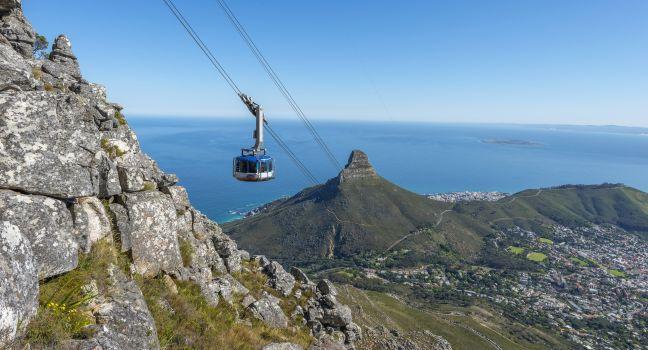
Rising sharply to 1,086 meters (3,563 feet) and looming above the city center, flat-topped Table Mountain truly is one of the world's most beautiful and impressive natural wonders. Not only is it a sight to behold, but the top affords scintillating views stretching to distant horizons; it's said to be visible to sailors 65 km (40 miles) out to sea. Hiking to the summit’s wilderness via one of the trails, such as the popular stairway-like Plattekloof Gorge, up its rugged slopes requires two to three hours, depending on your fitness level, or you can zip to the top in 10 minutes with the cable car. Thrill seekers can abseil down a section of the mountain ( abseilafrica.co.za).

Apart from the stunning views from its summit, there's a world of unusual fynbos vegetation at the top and an atmosphere that's slightly surreal. If you hike up, be sure to take at least 2 liters (½ gallon) of water per person with you and exercise caution; it may be in the middle of a city, but it is a genuine wilderness. Many paths that look like good routes down the mountain end in treacherous cliffs. And, apart from the weather which can turn in an instant, you need to be mindful of the possibility of muggings and chances of losing your way. Hiking alone is never recommended, and engaging the services of a hiking or mountain guide is a great way to go beyond the obvious trails and also learn about the mountain's flora and fauna. However you choose to do the climb, wear sturdy shoes or hiking boots; always take warm clothes, including a windbreaker or fleece; take a mobile phone; and let someone know of your plans.  Do not underestimate this mountain: every year local and foreign visitors get lost, some falling off ledges, with fatal consequences.
Kirstenbosch National Botanical Garden

Fodor's Choice
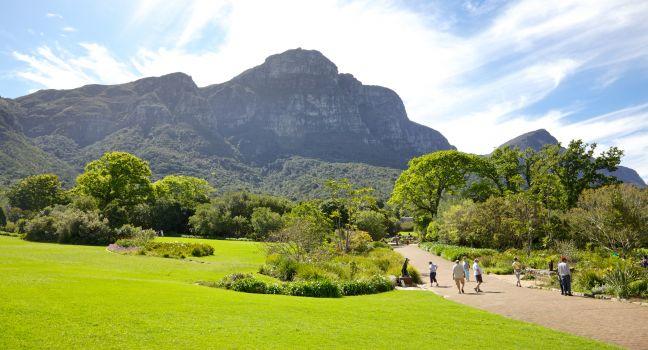
KIRSTENBOSCH, SOUTH AFRICA - SEPTEMBER 29: Visitors relaxing in Kirstenbosch National Botanical Garden on September 29, 2009. Kirstenbosch celebrated its centenary in July 2013.; Shutterstock ID 147156743; Project/Title: Top 100 Cape Town; Downloader: Fodo
David Steele / Shutterstock

Spectacular in every season, this renowned botanical garden was established in 1913, and was the first in the world to conserve and showcase a country's indigenous flora. With its magnificent setting extending up the eastern slopes of Table Mountain and overlooking the city and distant Hottentots Holland Mountains, these gardens are truly a national treasure. In addition to thousands of out-of-town visitors, Capetonians flock here on weekends to laze on the grassy lawns, picnicking and reading while children run riot. Walking trails meander through the plantings, and there's emphasis on the fynbos biome—the hardy, thin-leaved plants that proliferate in the Cape—so you will find plenty of proteas, ericas, and restios (reeds). Highlights include the Tree Canopy Walkway (aka "Boomslang," a large cycad garden), the Bird Bath (a beautiful stone pool built around a crystal clear spring), the fragrance garden (which is wheelchair-friendly and has a tapping rail), and the Sculpture Garden. Free 90-minute guided tours take place daily except Sunday. Those with difficulty walking can enjoy a comprehensive tour lasting one hour (R70, hourly 9–3) in seven-person (excluding the driver) golf carts. Concerts featuring top South African artists—from classical music to township jazz to indie rock—are held on summer Sundays at 5 and everyone rocks up with blankets and picnic hampers (arrive early to get a good spot), and the Galileo Outdoor Cinema ( thegalileo.co.za) screens movies on select weekday evenings an hour after sunset. The visitor center houses a restaurant, bookstore, and coffee shop. Several trails take you to the top of Table Mountain, from which point you can hike all the way to the cable car station.

Two Oceans Aquarium

Fodor's Choice
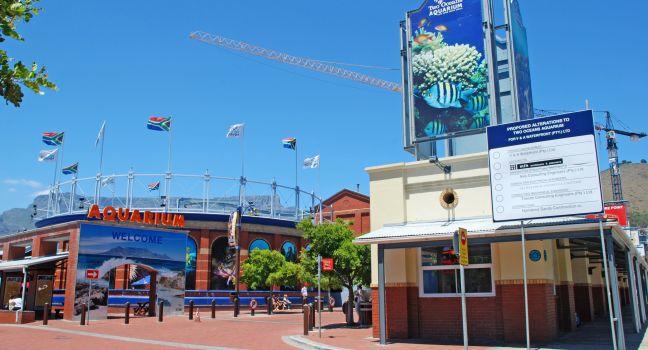
CAPE TOWN, SOUTH AFRICA - DECEMBER 30, 2007: Cityscape with The Two Oceans Aquarium located at the Victoria & Alfred Waterfront in Cape Town, Western Cape, South Africa. ; Shutterstock ID 216711187; Project/Title: Top 100 Cape Town; Downloader: Fodor's
InnaFelker / Shutterstock

This aquarium is widely considered one of the finest in the world. Stunning displays reveal the regional marine life of the warmer Indian Ocean and the icy Atlantic. It's a hands-on place, with a touch pool for children, opportunities to interact with penguins, and (for certified divers only) to dive in the vast, five-story ocean exhibit with shoals of fish, huge turtles, and stingrays. There's the shark exhibit, where you might share the water with large ragged-tooth sharks (Carcharias taurus) and enjoy a legal adrenaline rush (for an additional fee, of course). If you don't fancy getting wet, you can still watch daily feedings in either the ocean, penguin, or shark exhibits. But there's more to the aquarium than just snapping jaws. Look for the absolutely enchanting jellyfish display gallery, which looks like something from another universe, seek out the endangered Knysna seahorses, and don't miss the alien-like spider crabs.

If you really want a one-of-a-kind experience, book the "Penguin Experience" where you'll get to meet several of the aquarium's rockhoppers, all of which have either been rescued or were born at the facility. Rockhoppers aren't native to South Africa, but when they get stranded or injured here, they are rescued by aquarium conservationists who nurse them back to health. You learn about their personalities, photograph them up close, and then accompany them as they return to their beach-like enclosure within the aquarium just in time for feeding time. It may be one of the loveliest moments you ever get with human-habituated wild animals. It's for two people at a time, lasts about 45 minutes, costs R890 per person, and must be pre-booked.

Recommended Fodor's Video

Bakoven Beach

Bakoven Fodor's Choice

Bakoven's boulder-ensconced beaches—two separate coves in a tucked away little residential area—are quite tiny, but somehow everyone manages to squeeze in, provided they find parking. Somehow the water seems slightly more manageable here, even if it's just as cold as anywhere else; the views of the mountains, and the accompanying sense of being adrift from reality somehow motivate everyone to get in the water. The large rocky outcrops are the perfect perches to witness some of the most incredible sunsets on the planet; when the sun's rays hit the water it turns to molten lava and is absolute balm for the soul. Parking is limited, so take the MyCiTi bus, grab an Uber, walk from Camps Bay, or get here early to get a parking spot. There are no amenities, but Bootleggers coffee shop on Victoria Road is nearby, and it has bathrooms. Amenities: none. Best for: sunset; swimming.

Beta Rd., Cape Town, South Africa

Something incorrect in this review?

Blouberg Beach

Blouberg Fodor's Choice

A half-hour drive north of Cape Town, this is the beach from which all those iconic "sea with Table Mountain" postcards are shot. Blouberg is divided into two parts: Big Bay, which hosts surfing and windsurfing contests, and Little Bay, better suited to sunbathers, rock-pool explorers, and families. It can be windy here, which is great for kite flying and kite surfing. Kite surfing has become extremely popular along this side of Table Bay, and adrenaline junkies blow off work to come here and ride the waves. For safety, swim in front of the lifeguard club. Amenities: food and drink; lifeguards; parking; water sports. Best for: surfing; walking; windsurfing.

2 Marine Drive, Blouberg, Cape Town, 7441, South Africa

Something incorrect in this review?

Clifton Beach

Clifton Fodor's Choice

Almost always wind-free, these fantastic white-sand beaches—known as First, Second, Third, and Fourth Beaches—are naturally divided by huge granite outcroppings and voluptuous boulders. Fourth Beach is popular with families and teens, whereas the others support a strong social and singles scene. Dogs are technically allowed only on First Beach. Swimming is reasonably safe, although the undertow is strong and the water can be characterized as freezing for much of the year. Lifeguards are on duty on weekends and in peak season. Fairly steep staircases provide access to all four beaches, but once you arrive, you will find vendors with drinks, ice cream, and beach loungers for rent in summer. Amenities: food and drink; lifeguards; parking (fee); showers; toilets. Best for: partiers; sunset; surfing; walking. Parking is a nightmare in season; instead, take an Uber or the MyCiTi bus, which has stops here.

Off Victoria Rd., Cape Town, 8005, South Africa

Something incorrect in this review?

Desmond & Leah Tutu Legacy Foundation

Zonnebloem Fodor's Choice

The foundation highlights the life and accomplishments of South Africa’s famous cleric and his equally impressive wife, Leah, while continuing their message of courage, freedom, and equality. The exhibits are well-organized and present personal objects, including a set of Tutu's purple vestments, photos, quotes, and informative videos in an accessible way. The Truth to Power: Desmond Tutu & the Churches exhibit explores the multifaceted life of the cleric, humanitarian, activist, and Nobel Peace winner, while the 90 Voices HERstory exhibit celebrates the legacy and contributions of Mrs. Leah Tutu with the stories of 90 women who were all part of South Africa’s struggle for freedom. Programs and lectures are ongoing.

11 Buitenkant St., Cape Town, 8001, South Africa
021-552–7524
Sight Details
R100
Closed Sun. and Mon.

Something incorrect in this review?

Iziko Bo-Kaap Museum

Bo-Kaap Fodor's Choice

Most guided tours of the Malay quarter include a visit to this 18th-century home, which originally belonged to well-known Turkish scholar and prominent local Muslim leader, Abu Bakr Effendi. The museum showcases local Islamic heritage and culture, with highlights including “Who Built Cape Town?,” “Mapping Bo-Kaap: History, memories and spaces,” and the documentary “Viewing Bo-Kaap.”

Norval Foundation

Tokai Fodor's Choice

This strikingly modern, well-structured space has a huge exhibition gallery, gigantic walls, and proper lighting, all of which make it a pleasure to visit and take in what are usually the best exhibitions you'll see in Cape Town. Curation is exceptional, with descriptive information panels and no expense spared to showcase the depth of an artist's work, or to bring innovative and eye-opening new work to the public's attention. Unlike Zeitz MOCAA where the focus is often on conceptual work lacking emotional gravitas, here you will feel the soul of the artists speaking to you. There is also a beautiful garden that showcases a permanent collection of phenomenal large-scale sculptures, plus there are beautiful views of the mountain, and a children's playground, a research library, and a destination restaurant.

Zeitz Museum of Contemporary Art Africa

Fodor's Choice

Opened in 2017, Zeitz MOCAA is the first major museum dedicated to contemporary art from Africa and its diaspora. Inhabiting the massively renovated historic Grain Silo in what is now called the Silo District of the V&A Waterfront, the museum itself is a work of art, reimagined by British designer Thomas Heatherwick. In many ways, the building itself is the reason to visit; from the outside it's enchanting, while inside you get a sense of the strangeness of the transformation from one sort of building into another. Inside, it's worth staring up and then slowly exploring the levels, using the elevator and the spiral stairway to seek out different perspectives. The exhibits change fairly regularly and are a mixed bag, although it must be said that since the pandemic, the emphasis has turned altogether to more serious and conceptual work with fewer displays of emotionally engaging artworks than the museum kicked off with. Still, you never know what might be on the walls when you're in town, and there are always new things to discover, even if the white-wall exhibition spaces themselves are less interesting than the architectural framework that holds them all together. There's also a fabulous art-centric souvenir store on the ground floor, and in the basement, there are children's workshops that may be worth investigating if you have children in tow.

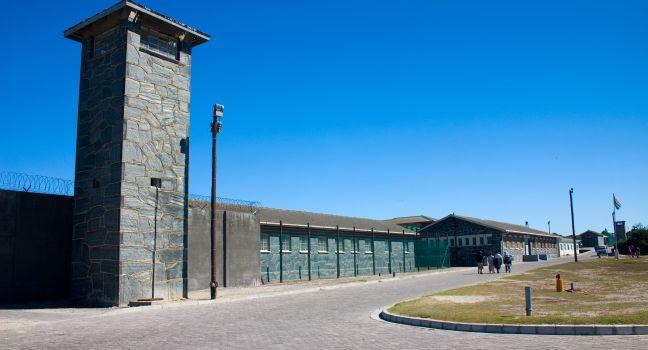
Robben Island

Robben Island Prison where Nelson Mandela was held captive; Shutterstock ID 32118451; Project/Title: Top 100 Cape Town; Downloader: Fodor's Travel
Darrenp / Shutterstock

Made famous by its most illustrious prisoner, Nelson Mandela, this island, whose name is Dutch for "seals," has a long and sad history. At various times a prison, leper colony, mental institution, and military base, it is finally filling a positive, enlightening, and empowering role in its latest incarnation as a museum.

Declared a World Heritage site on December 1, 1997, Robben Island has become a symbol of the triumph of the human spirit. In 1997 around 90,000 people made the pilgrimage; in 2006 more than 300,000 crossed the water to see where some of the most prominent struggle leaders in South Africa spent decades of their lives. A visit to the island is a sobering experience, and not to everyone's taste. The approximately four-hour tour begins at the Nelson Mandela Gateway, and starts with a boat ride from the embarkation center where changing exhibits display historic photos of prisoners and prison life. The 45-minute journey can get bumpy, and if you're prone to seasickness, do take precautions. Remember to watch Table Mountain receding in the distance and imagine what it must have been like to have just received a 20-year prison sentence. Boats leave three or four times a day, depending on season and weather.

Tours are organized by the Robben Island Museum (other operators that advertise Robben Island tours only take visitors on a boat trip around the island). Many of the guides are former political prisoners, and during the two-hour tour, they will take you through the prison where you will see the cells where Mandela and other leaders were imprisoned. The tour also takes you to the lime quarry, Robert Sobukwe's place of confinement, and the leper church.

Around 50,000 people tour the island each year, most of them over December and January. Due to high demand for tickets, if you plan to visit at this time, reserve online at least three weeks in advance. Bring sunglasses and a hat in summer. You are advised to tip your guide only if you feel that the tour has been informative.

Nelson Mandela Gateway, Cape Town, 8002, South Africa
021-413–4200
Sight Details
R600, children R310

Something incorrect in this review?

Table Mountain Aerial Cableway

Table Mountain National Park
Cape Town's Table Mountain, Lions head & Twelve Apostles are popular hiking destinations for both locals and tourists all year round.; Shutterstock ID 228074830; Project/Title: Top 100 Cape Town; Downloader: Fodor's Travel
Soft Focus Photography / Shutterstock

The easiest way to reach the summit is by cable car, which affords fantastic views from start to finish; even its mechanics are thrilling to observe. Today’s high-tech rotating cars have a snazzy, round design and are capable of traveling at up to 10 meters (33 feet) per second and carrying up to 65 passengers (or 8,500 kg/18,740 pounds). The cars have been through multiple iterations—those installed for the cableway’s opening in 1929 carried only 25 people, and it was only in the 1960s that metal, rectangular capsules replaced the original wooden cars. Models of the different kinds of cars used are displayed near the lower cable station from where the two large, wheelchair-friendly revolving cars depart regularly; take an Uber or the MyCiTi bus to get to the station.

To avoid disappointment, check ahead for exact operating times, as they vary from month to month according to season, daylight hours, and weather. In the ever-expanding peak season (December–April), if you arrive at 10 am without tickets, you could wait for an hour, so book online beforehand; there is a queue-skipping ticket option for R995 round-trip, or R650 one way. Several tour operators also include a trip up the mountain in their schedules. Lines to purchase tickets for the cable car can be crazy in peak/high season, so book online to speed things up.

The cable car stops operating in strong wind conditions (common in summer), so be sure to factor in that possibility, especially if relying on it to get back down after a tiring hike up, and take note of the last one down's time (changes but can be as early as 4 pm).

5821 Tafelberg Rd., Cape Town, 8001, South Africa
021-424–0015
Sight Details
From R370 return, R280 one way

Something incorrect in this review?

Adderley Street

Cape Town Central

Originally named Heerengracht after a canal that once ran the length of the avenue, this street has always been Cape Town's principal thoroughfare. There are a couple of historical buildings dating to the early 1900s including the Adderley Street Flower Market (one of the city's oldest markets, located in Trafalgar Place between Strand and Darling streets), but it's evolved into a heavily congested and primarily commercial stretch full of office blocks, large franchise stores, regular traffic chaos, and the vast concourse of the city's main railway terminal. What sidewalks exist are packed with street vendors selling everything from fruits and vegetables to cell phone covers and tea towels, serving people going to and from work. Stay on your toes and keep valuables safe and it can be a place to feel the bustling pulse of everyday Cape Town. 

Adderley St., Cape Town, 8000, South Africa

Something incorrect in this review?

Buitenverwachting

Constantia

Once part of Dutch governor Simon van der Stel's original Constantia farm, Buitenverwachting (meaning "beyond expectation" and roughly pronounced "Bait-in-fur-VAGH-ting") enjoys an unimaginably bucolic setting—it's almost impossible to believe you are 20-or-so minutes from the city center. An oak-lined avenue leads past fields of horses and cows and over a small stream until passing the Cape Dutch homestead and eventually arriving at the small modern cellar. Acres of vines spread up hillsides flanked by more towering oaks and the rocky crags of Constantiaberg Mountain. Buitenverwachting's wines are as impressive as the views; a big seller is its flagship red, "Christine," a Bordeaux-style blend of mostly Cabernet Franc and Merlot. Tastings (five wines for R100) happen in the historic cellar and there are cheeses and charcuterie available to nibble on as you sip. Extremely popular here are picnics taken on the lawns under 250-year-old trees with chickens running around; Harvest platters are R480 and can be shared between two people. The entire property is open for on-foot exploration, a great way to take in the vineyards while admiring the mountains in front of you.

37 Klein Constantia Rd., Cape Town, 7848, South Africa
021-794–5190
Sight Details
R100 wine tasting
Closed Sun.

Something incorrect in this review?

Camps Bay Beach

Camps Bay

The spectacular western edge of Table Mountain, known as the Twelve Apostles, provides the backdrop for this long, sandy beach that slopes gently to the very cold water from a grassy verge. Playing Frisbee or volleyball is very popular on this beach, as are early-morning cold-water plunges. The surf is powerful, but sunbathers can cool off in the tidal pool on the west end of the beach. Be warned that the wind can blow hard here—or not at all. Dauntingly busy in summer, Camps Bay's super-popular bar-and-restaurant strip lies yards away across Victoria Road, and is a mix of trendy, overpriced establishments, die-hard old-school hangouts, and a fair share of sidewalk souvenir sellers. The strip is alternately a refreshment break for groups of cyclists; a watering hole for movie stars, models, and the wannabe rich and famous; and a tourist trap. As such, it tends toward the pretentious on weekends. Amenities: food and drink; parking (fee); showers. Best for: partiers; surfing; walking.

Victoria Rd., Cape Town, 8040, South Africa

Something incorrect in this review?

Cape Town Diamond Museum

V&A Waterfront

This small museum attached to the Shimansky boutique tells the fascinating history of the little stones that played such a big role in South Africa's history. The tour (25–40 minutes) covers a time line of 3 billion years, mostly focusing on how the local industry developed in the 19th and early 20th centuries, and ending in a showroom where polishers are busy "brillianteering" stones that are unsurprisingly available for purchase.

Cape Town Holocaust & Genocide Centre

Gardens

The center is both a memorial to the 6 million Jews and other victims who were killed during the Holocaust and an education center whose aim is to create a caring and just society in which human rights and diversity are valued. The permanent exhibit is excellent and very moving. A multimedia display, comprising photo panels, text, film footage, and music, creates a chilling reminder of the dangers of prejudice, racism, and discrimination. The center is next to the South African Jewish Museum.

88 Hatfield St., Cape Town, 8001, South Africa
021-462–5553
Sight Details
R100
Closed Sat. and Jewish holidays

Something incorrect in this review?

Cape Town Science Centre

Observatory

This is a non-profit science center that's part of a wide range of non-classroom initiatives aiming at improving the understanding of science in the country. While the building may look a little rundown from the outside, this science center is full of cool things to see and do and is a huge hit with children. 

370B Main Rd., Cape Town, South Africa
021-300–3200
Sight Details
R80

Something incorrect in this review?

Castle of Good Hope

Cape Town Central

This squat fortress is the oldest still-standing colonial building in South Africa. Built between 1665 and 1676 by the Dutch East India Company (VOC) to replace an earthen fort constructed in 1652 by Jan van Riebeeck, the Dutch commander who settled Cape Town. Its pentagonal plan, with a diamond-shaped bastion at each corner, is typical of the Old Netherlands defensive system adopted in the early 1600s. The design enabled covering fire for every portion of the castle. As an added protection, the whole fortification was surrounded by a moat—back in the day, the sea nearly washed up against its walls. The castle served as both the VOC headquarters and the official governor's residence and still houses the regional headquarters of the National Defence Force. Despite the bellicose origins of the castle, shots have never been fired from its ramparts, except ceremonially.

You can wander around on your own, or join one of the informative guided tours at no extra cost. There are three museums to explore, and you can witness the so-called "Key Ceremony" (10 am and noon, weekdays only) and see a small cannon being fired (10 am, 11 am, and noon, Monday–Saturday).

Castle St. at Darling St., Cape Town, 8000, South Africa
021-461–4673
Sight Details
R50

Something incorrect in this review?

Church Square

Cape Town Central

Church Square bore witness to much of Cape Town's dark history. An inconspicuous concrete plaque along Spin Street's median is all that's left of the Slave Tree, an enormous Canadian pine under which slaves were reportedly auctioned off. A section of the tree is on display at the District Six Museum.

Spin St., Cape Town, 8001, South Africa

Something incorrect in this review?

Church Street Galleries & Arcade

Cape Town Central

The center of Cape Town's art and antiques business, this pleasant block of Church Street is a pedestrian mall filled with art galleries, antiques dealers, small cafés, and a few excellent boutiques. Among the art galleries worth visiting are AVA (35 Church St.), World Art (54 Church St.), and The Cape Gallery (60 Church St.). A daily antiques and flea market is also held here.

Note that Church Street is (somewhat confusingly) not located directly off of Church Square and Groote Kerk (the church for which the street is named), but across Adderley Street.

Church St., Cape Town, 8000, South Africa

Something incorrect in this review?

City Bowl Market

Gardens

Experience real Cape Town local life every Thursday from 5 to 8 in this rented church hall space. With fresh produce, a wide variety of really good food, craft beers and wines, and even clothes and jewelry on sale, this is a vibey City Bowl social gathering.

14 Hope St., Cape Town, South Africa
073-270–8043
Sight Details
Closed Fri.–Wed.

Something incorrect in this review?

City Hall

Cape Town Central

From a balcony in this building overlooking Darling Street, Nelson Mandela gave his historic speech upon his release from prison in 1990. This Edwardian building opened in 1905 and after an extensive refurbishment (completed in 2022), it remains a commanding presence overlooking the Grand Parade. What was the seat of local administration is now home to the Cape Town Philharmonic Orchestra (the acoustics in the main hall are phenomenal) and a traffic department. Some of the building's stone was imported from Bath, England, and the clock is a scaled-down replica of Big Ben.

Darling St., Cape Town, 8000, South Africa
021-444–0407
Sight Details
Free

Something incorrect in this review?

The Company's Garden

Cape Town Central

In the heart of the city, this is a great place to seek relief from a sweltering summer day if the beach is packed. These lush, landscaped gardens are all that remain of a 43-acre tract laid out by Jan van Riebeeck in April 1652 to supply fresh vegetables to ships on their way to the Dutch East Indies. By 1700 free burghers (Dutch-speaking colonists no longer indebted to the Dutch East India Company, aka VOC) were cultivating plenty of crops on their own land, and in time the VOC vegetable patch was transformed into a botanic garden. It remains a calm haven, surrounded by museums, art galleries, the country's oldest cathedral, and Parliament, and is graced by fountains, exotic trees, rose gardens, and a pleasant little tea shop (careful, though, there's also a large café which is not so pleasant). At the bottom of the gardens, close to Government Avenue, look for an old well that once provided water for the town's residents and the garden. The old water pump, engraved with the maker's name and the date 1842, has been overtaken by an oak tree and now juts out of the tree's trunk some 6 feet above the ground. A huge statue of the colonist Cecil Rhodes, the Cape's prime minister in the late 19th century, looms over the path that runs through the center of the gardens. He points to the north, and an inscription reads, "Your hinterland is there," a reference to his dream of extending the British Empire from the Cape to Cairo. A self-guided walking brochure with detailed historical information about the gardens and nearby sights is available at the shop adjacent to the small but informative visitor center.

Between Government Ave. and Queen Victoria St., Cape Town, 8000, South Africa
021444–3196-444–3196
Sight Details
Free
Visitor center closed weekends

Something incorrect in this review?

Constantia Glen

Constantia

Yet another award-winning wine estate, this one enjoys sweeping views of the Constantia wine route just below the Constantia Nek roundabout. A huge "tasting room" spread across four different areas, including a beautiful covered veranda, glassed-in conservatory space, and cozy lounge space, offers wine tastings with a small menu of delicious light fare, cheese platters, and the like.

Constantia Main Rd., Cape Town, 7800, South Africa
021-795–5639
Sight Details
Wine tasting from R155 per person

Something incorrect in this review?

Delaire Graff Estate

This has to be one of the most spectacular settings of any winery in the country. Sit on the terrace of the tasting room or restaurant and look past a screen of pin oaks to the valley below and the majestic crags of the Groot Drakenstein and Simonsberg Mountains. It's an ideal place to stop for lunch, and you'll need at least three hours to do your meal and the wines justice. The flagship Delaire Graff Restaurant champions local ingredients, while ultra-high-end Hoseki melds seasonal South African produce with contemporary Japanese flavors. Although the Botmaskop Red Blend is the farm's flagship wine, do try the Cabernet Franc Rosé, a lovely take on a varietal that usually gets added to the Bordeaux Blend. The Coastal Cuvée Sauvignon Blanc is exceptional and has won numerous awards.

Helshoogte Pass Rd., between Stellenbosch and Franschhoek, Stellenbosch, 7602, South Africa
021-885–8160
Sight Details
Tastings from R125

Something incorrect in this review?

District Six Museum

Zonnebloem

Housed in the Buitenkant Methodist Church, this small museum preserves the memory of one of Cape Town's most vibrant multicultural neighborhoods and of the district's destruction in one of the cruelest acts of the apartheid-era Nationalist government. District Six was proclaimed a white area in 1966, and existing residents were evicted from their homes, which were razed to make way for a white suburb. The people were forced to resettle in bleak outlying areas on the Cape Flats, and by the 1970s all the buildings here, except churches and mosques, had been demolished. Huge controversy accompanied the proposed redevelopment of the area, and while there have been stop-start ventures in recent years, so far only a small housing component, Zonnebloem, and the campus of the Cape Technikon have been built, leaving much of the ground still bare—a grim reminder of the past. The museum consists of street signs, photographs, life stories of the people who lived there, and a huge map, where former residents can identify the sites of their homes and record their names. This map is being used to help sort out land claims. You can arrange in advance for a two-hour walking tour of the district with a former resident for a nominal fee.

25A Buitenkant St., Cape Town, 8001, South Africa
021-466–7200
Sight Details
Self-guided visit R60; tour with former resident/guide R75
Closed Sun.

Something incorrect in this review?

Grand Parade

Cape Town Central

Once a military parade ground, this old public square is now a parking lot where traders (many informal) sell things like sweets, cheap sunglasses, and fish-and-chips—with a statue of Edward VII serving as a parking attendant and seagull resting post. It was here that more than 100,000 of Nelson Mandela's supporters gathered on February 11, 1990, when, after 27 years in prison, he addressed an adoring crowd from the balcony at City Hall.

Darling, Lower Plein, and Buitenkant Sts., Cape Town, 8000, South Africa

Something incorrect in this review?

Greek Orthodox Cathedral of St George

Woodstock

Though it's not as well-known as the St George's on Wale Street, this unassuming Greek Orthodox cathedral is a sight to behold. Painted all white on the outside, it's easy to miss, but once you enter, the flood of bright colors, light-blue domed ceilings, and hand-painted murals on the walls are breathtaking. Built in 1904, but painted in the 1990s by Father Nikolai (the serving priest), it's a must-see. Call ahead to arrange a viewing, or attend the Sunday service; it's in Greek, but the deacons and choir chant beautifully.

75 Mountain Rd., Cape Town, 7915, South Africa
021-433–2374-Hellenic Community of Cape Town HQ

Something incorrect in this review?

Green Point Park

Green Point
A sprawling patch of green (some of it naturally wild) wedged between Green Point, Mouille Point, and Sea Point, this public park is situated on what was known as Green Point Common until it was redeveloped ahead of the 2010 FIFA World Cup. There are lawns for picnicking or sunning, gardens to explore with a labyrinth and a vast assortment of fynbos plants, play areas for children, a tea garden, and ponds and water features that attract lots of birds; it's also a convenient walkable shortcut route between Green Point’s “Fan Walk” pathway and Mouille Point’s seaside promenade—you can also cycle through it, and there are bikes for hire, too. 
1 Fritz Sonnenberg Rd., Cape Town, 8051, South Africa
021-417--0111
Sight Details
Free

Something incorrect in this review?