



When you step beyond your comfort zone, personal safety becomes paramount. Here are tips to feel safer abroad.
Travel, to say it plainly, is risky. At home, we’re generally cocooned in the familiar—familiar routines, familiar people, familiar places. There’s safety in familiarity because we can assess situational risks based on past experiences, and many of us don’t take personal security into much consideration once we’ve set the house alarm.
That all changes when we travel, particularly outside the country. Sure, there’s risk involved with domestic travel, but a lot of the familiarity markers are the same. Your health insurance works the same. Emergency numbers are the same. Laws are more-or-less the same, with minor state-to-state variations.
When traveling abroad, the unfamiliar compounds. Different languages, different cultures, different emergency services, different safety standards apply outside the country. Depending on the destination, the threats may range from minor annoyances (pickpocketers and scammers) to major safety and security issues (terrorist events and kidnappings).
Top Picks for You


Recommended Fodor’s Video
Here are a few tips on maintaining personal security abroad.
First, Do Some Groundwork
A map app is your friend when traveling abroad. Before you depart, do some reconnaissance about the area you’ll be staying in. Check the address of your accommodations and find the nearest transit stop, the nearest services like convenience stores, and the nearest police station. Also, check the route to the nearest U.S. Embassy or consular office. Having even a vague recollection of where these are located is helpful in an emergency.
It’s also worth registering your visit with the U.S. State Department’s Smart Traveler Enrollment Program (STEP). This will provide the nearest consular office with your contact information and dates of stay should they need to contact you in an emergency, like if there’s a natural disaster. In the early days of the COVID-19 pandemic, many travelers were made aware of special repatriation flights because they were in touch with a nearby consular office.
Check the state department’s Consular Information Sheets for the latest information on threats and annoyances facing travelers, like whether there are any planned strikes, political demonstrations, or market increases in crime in certain areas.
It’s also helpful to memorize the local emergency number. The vast majority of the world uses 911, 112, or 999 as their emergency number; it’s just a matter of figuring out which applies to your destination. It may also be helpful to memorize certain keywords: “police,” “fire,” and “help” in the local language if the destination isn’t English-speaking.
Situational Awareness
At home, that sense of familiarity makes detecting potential threats easier. You know what your neighborhood and the places you regularly haunt look and feel like, and you know when something’s off. Step off an overnight flight in a foreign capital, and it’s all, well, foreign, and it will be for your entire trip unless you’re planning an extended stay.
Because of that, you’ll need to make adjustments. If you’re a headphone streetwalker, don’t do it. You’ll need to maintain alertness to your surroundings. It’s also helpful to check a map app for a walking route and partially memorize it so you don’t spend your entire walk checking your screen and ignoring your environment.
On transit and in crowds, maintain awareness of where your wallet, phone, and bags are, particularly if you start to get jostled. Be wary of bumps and unwelcome touching. Bags are a particular target for theft, so walk with your bags away from the street (drive-by purse snatching on mopeds aren’t uncommon), and make sure doors are locked, windows are closed, or you have your bags secure when riding in taxis or rideshares.
Hotel Security
Upon arriving in a hotel or other place of lodging, do some quick recon work again. You probably don’t need to go full James Bond and exhaustively check the room for bugs, but at minimum, check the room phone works (the front desk is your lifeline in the event of an emergency), make sure there’s more than one locking mechanism on the door (a deadbolt or chain in addition to the door lock), and check the exit routes (in most countries they’re posted on the inside of hotel room doors).
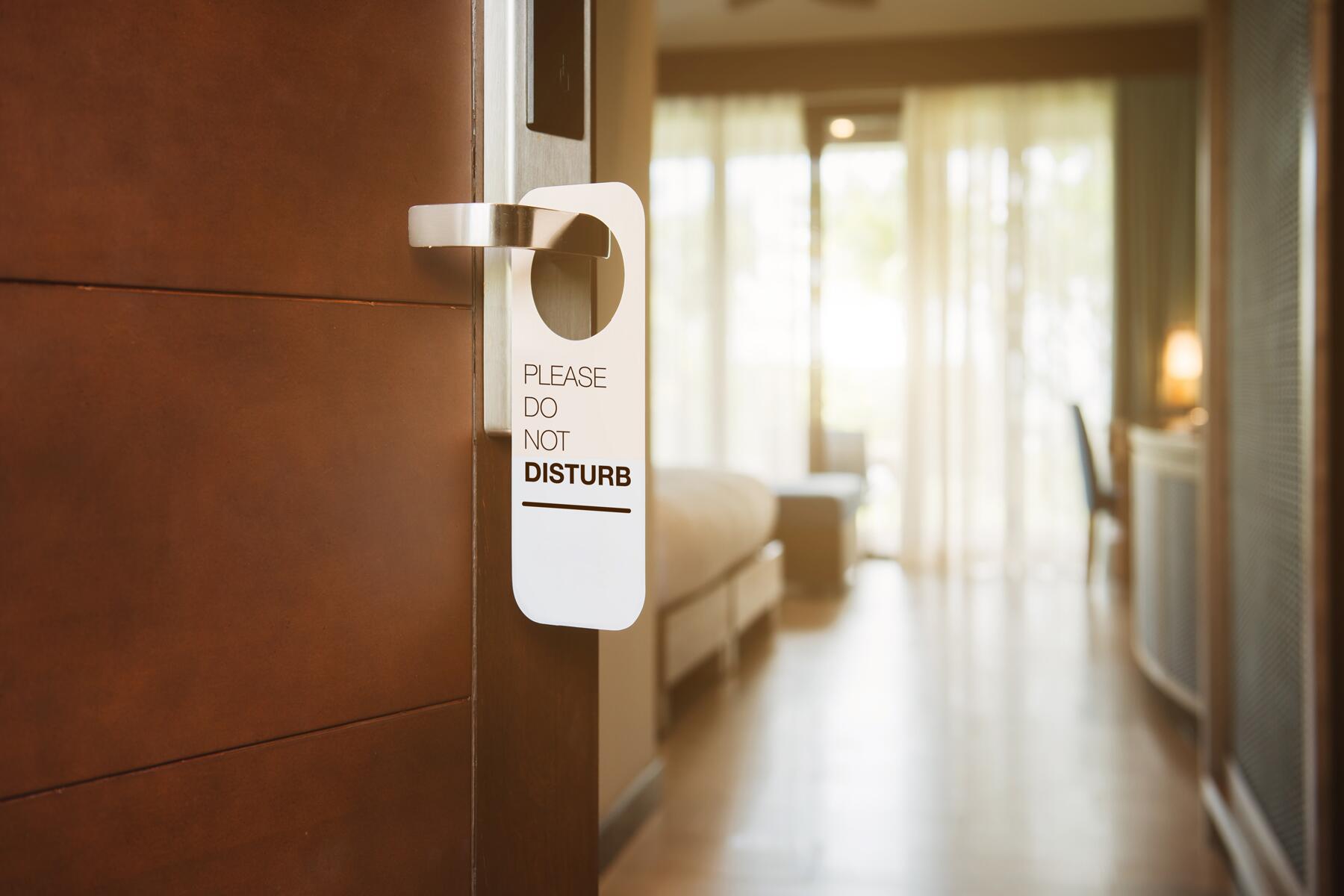
There’s some advice out there that advises deliberately catching the “Do Not Disturb” sign in the door so that if it’s not caught when you return, you’ll know the door has been opened. Bad actors, however, can easily replicate this scenario after entering your room. A better option is to tear a small square of paper from the memo pad or stationery in the room and fold it into a square about the size of your pinkie nail, then wedge it into the jamb of the closed door after leaving so that it’s just barely visible. Anybody who opens the door is unlikely to notice it, but if it’s not visible upon your return, you can tell your room has been entered.
The Bottom Line
Travel security is ultimately a game of maintaining perspective that you’re outside your comfort zone. Make a few adjustments to your habits just because the unfamiliarity of travel makes it harder to identify potential annoyances or threats, and your travels will be safe, productive, and enjoyable.