
START

The World’s 10 Greatest Open-Air Museums

Visiting a museum doesn’t mean you have to sacrifice a beautiful day. Here’s how to enjoy a museum AND good weather.

Despite the fine works on show, museums of any sort can be tiresome affairs. Heavy crowds, stale interiors, and no natural light can sometimes make even the savviest of culture vultures cry out for some fresh air.

Open-air museums aren’t a new concept, but because they’re not typically located in big city centers (due to their size and requirements), travelers often overlook them. Yet there are some fascinating examples of how being open to the elements can breathe new life into the concept. So, now that we’re firming in summer, here are a few examples of the world’s greatest open-air museums.

1 OF 10

Den Gamle By

WHERE: Denmark

Open-air museums with a historical bent often showcase a distant past – the sort you might see in period dramas or Dickens stories. And while Den Gamle By does a fine job of that, it’s the rare focus on a more recent past that truly sets this museum apart from others.

Set in the botanical gardens of Denmark’s second-largest city, Aarhus, Den Gamle By opened in 1914. From half-timbered Medieval buildings to the handsome 19th-century townhouses of Danish icon Hans Christian Anderson’s era, it does a masterful rendition of recreating the last 500 years of the country’s history.

But the real joy here is the sections showcasing life within living memory, including an electronics business stocking chunky 1970s TVs and hi-fis, evocative retro apartments, and a gaudy yellow and blue Blockbuster video store.


2 OF 10

Storm King Art Center

WHERE: New York

For anyone exhausted by the pace of life in NYC, this 500-acre site one hour north of Manhattan in New York State should be just the tonic.

Founded in 1960 by art patron Ralph E. Ogden as a museum for Hudson River School paintings, the Storm King Art Center soon became a major sculpture venue with works from some of the 20th century’s finest artists. But this is no breezy sculpture garden. At 500 acres, it’s a huge cinematic site on rolling hills that requires a good half or full day to appreciate.

So, with grand and curious works from the likes of Alexander Calder, Zhang Huan, and Sol LeWitt, there’s plenty here to admire. Just remember to bring your walking boots.

3 OF 10

Black Country Living Museum

WHERE: England

A painstakingly recreated industrial landscape in the heart of the Midlands, the Black Country Living Museum is a vast open-air museum allowing visitors to step back in time and immerse themselves in local life at the turn of the 20th century.

Spanning 26 acres, its streets are lined with faithfully recreated shops and houses complete with heritage vehicles and quirky local characters in period dress who’ll explain their bygone lives. So enjoy fish and chips in a 1930s chip shop, drink an ale at a spit-n-sawdust public house, or step inside a dusty vintage car garage.

In fact, the environment here is so realistic that its rustic docks were used to film the canal scenes for the popular TV crime drama Peaky Blinders.

4 OF 10

Hakone Open Air Museum

WHERE: Japan

Opened in 1969 in Kanagawa Prefecture between Tokyo and Mt Fuji, Hakone Open Air Museum was Japan’s first open-air museum. And very much in keeping with Japanese ambiance, the aim was to create a harmonic balance of nature and art by exhibiting unique sculptures within its grounds alongside charming views of the surrounding valley and mountains.

From a stunning stained-glass tower by Gabriel Loire to a hall containing 300 works by Pablo Picasso, there are over 1,000 pieces of a staggering variety here, all flanked by soaring forested hillsides (making for some fabulous photo opportunities).

5 OF 10

Skansen

WHERE: Sweden

As historic as Den Gamle By is, it’s actually a fellow Scandinavian country that holds the title of the world’s oldest open-air museum.

Opened in Stockholm in October 1891, Skansen showcases the traditional Swedish way of life before the onset of the Industrial Revolution. Attracting over 1 million visitors each year, the 75-acre site is a romantic recreation of a 19th-century town where you’ll find craftsmen in traditional dress, including tanners, shoemakers, silversmiths, bakers, and glassblowers.

And uniquely for a history museum, Skansen also doubles up as a zoo that hosts Nordic wildlife, rare breeds, pets, and exotic creatures (a nice addition for families with bored children).

6 OF 10

Berlin East Side Gallery

WHERE: Germany

Cutting across Berlin for 26 miles and piercing the city in two, the Berlin Wall was once a physical manifestation of inhumanity and an ugly symbol of the Cold War. But with its joyous tearing down in 1989, an opportunity arose.

In 1990, 106 artists from Berlin and around the world used the wall’s eastern side as a vast blank canvas to convey colorful messages of hope for a more free world.

Running alongside the Spree River on Mühlenstraße, this is now the East Side Gallery and it’s the world’s largest open-air mural collection and art gallery. These days, it’s hard to imagine that one of the world’s most iconic cities was divided so solemnly and this is a reminder of that macabre past. But its enduring message of optimism is inspiring for any era.

7 OF 10

Portsmouth Historic Dockyard

WHERE: England

With the immaculately restored HMS Victory as its centerpiece, you’ll be hard-pressed to find an open-air maritime museum anywhere in the world as vast and fascinating as Portsmouth Historic Dockyard. Serving as Lord Nelson’s flagship at the Battle of Trafalgar in 1805, Victory is a majestic slice of 18th-century engineering, but it’s not the only marvel on show here.

Completed in 1860, the enormous HMS Warrior was the world’s first iron-hulled warship, while HMS M.33 is one of the last surviving British First World War ships still in existence and was built under the express orders of Winston Churchill.

Finish this waltz through time at the Mary Rose Museum, where the 500-year-old remains of Henry VIII’s flagship rest under a low light. After sinking in battle against a French fleet in 1545, she was raised in 1982 and is an awe-inspiring window into the Tudor world.

8 OF 10

Gibbs Farm

WHERE: New Zealand

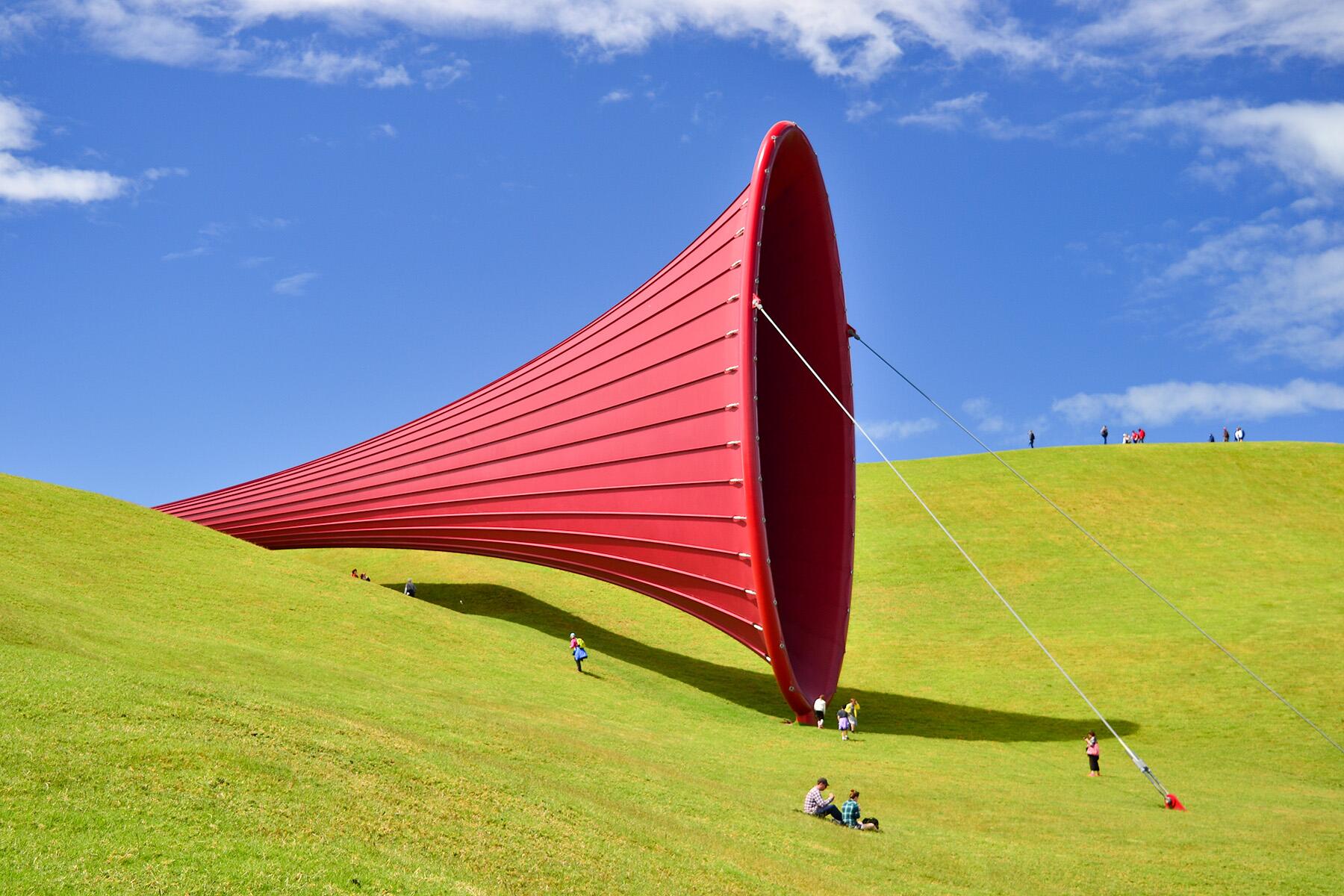
Despite its name, this is no ordinary farm. Flanking the shimmering waters of Kaipara Harbour 29 miles north of Auckland, the pastoral land was bought by businessman Alan Gibbs in 1991, who then set about packing the place with towering abstract sculptures on his 1000-acre plot.

Much of the artwork is commissioned, meaning Gibbs Farm’s spectacular landscape can blend neatly with the art. Neil Dawson’s cartoonish wave-like “Horizons” is a good example of this and looks particularly captivating on Gibbs’ undulating hillsides. Less than an hour’s drive from Auckland, it’s a bizarre and beautiful day out. 

9 OF 10

Ballenberg

WHERE: Switzerland

There are some pretty spots on this list, but none are quite as picturesque as Ballenberg in Switzerland. Set in the verdant hills above Lake Brienz, Ballenberg open-air museum hosts 100 rural houses and farm buildings from almost every corner of Switzerland. Ballenberg’s half-timbered houses, stables, barns, storehouses, and farm animals showcase everyday life in the Swiss hills and valleys as the centuries turned.

But really, it’s the sublime Alpine backdrop that makes this such a splendid visit. The snowy mountain peaks, slanting meadows, and lush forest surrounding Ballenburg almost make you want to settle down and begin toiling on the farm. Almost.

10 OF 10

Tarot Garden

WHERE: Italy

Prepare to get weird. Inspired by Antoni Gaudí´s Parc Güell in Barcelona, the Tarot Garden in the Tuscan village of Garavicchio is the vision of French-American artist Niki de Saint Phalle. Opened in 1998, the Tarot Garden (Giardino dei Tarocchi in Italian) is a large sculpture garden containing 22 remarkable sculptures based on the Major Arcana of tarot cards. Colorful, strange, and always compelling, some of the sculptures reach up to 15 meters high and are constructed of steel and concrete while covered with mirrors, glass, and intricate ceramics.

Saint Phalle died in 2002, but her sculpture garden lives on in all its weird and wonderful glory.