



Skip the crowds and high prices. These 10 popular destinations are best visited during shoulder season for better weather, fewer tourists, and lower costs.
Who loves crowds, stifling-hot weather, and high prices when traveling? Um, nobody?
The new hip time to book a trip is the “shoulder season,” loosely defined as spring and fall. With kids in school and the promise of milder weather, not to mention flowers in bloom or autumnal foliage at its peak, this translates to fewer crowds and lower travel costs.
What’s not to love? It’s one thing to pay a premium for a premium experience, but traveling to these hot spots during the summer months is anything but.
Here are 10 destinations you should really visit during shoulder season—and why.
Top Picks for You




Venice
WHERE: Italy
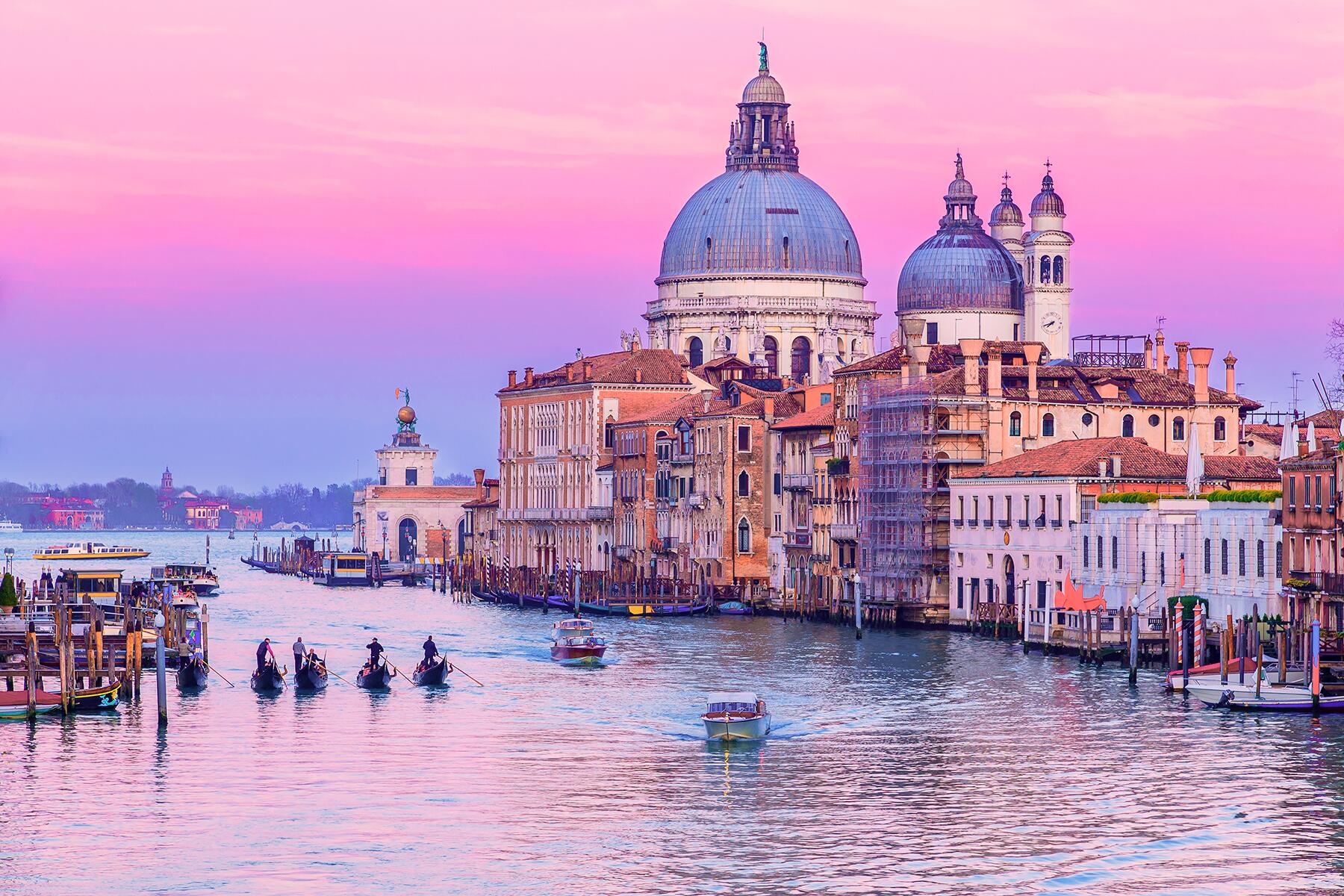
Veneto’s capital city is home to just under 50,000 people—yet receives 20 million tourists each year. Because transportation is through a sea of canals, this creates even more congestion. “The Floating City” simply wasn’t designed to accommodate this many people. Last summer, to help reduce overcrowding, Venice charged day visitors over the age of 14 a daily access fee (between 5 and 10 euros) to the city’s historic center. In the spring and fall, you’re less likely to wait for a gondola ride, you can be seated outside at a café, and the outdoor temperature hovers between the low 50s and mid 70s Fahrenheit. (Remember, Italy doesn’t rely on air conditioning as in North America, making the summers sweltering.) Plus, during the fall, it’s the winery harvest and opera season resumes at La Fenice Theatre.
Reykjavik
WHERE: Iceland
The Icelandic capital city is most popular during summer (for 24 hours of sunlight) and the winter months (when the skies put on a Northern Lights show). But early spring and late fall are also times to view the Northern Lights, and the weather isn’t frigid at all, especially if you wear layers. And what better time to soak in Blue Lagoon or Sky Lagoon? As one of the most expensive cities in which to live and travel, hotel rates drop slightly during these months, including at one of the most luxurious properties, the Reykjavik Edition, running $400 per night, as opposed to $600 in June. Car rentals are easier to come by when it’s not high season, and so are lower airfares.
Recommended Fodor’s Video
Orlando
WHERE: Florida
When school’s out, theme-park travel is in, with Orlando a top choice for families. But if you can squeeze in a trip during shoulder season, the weather’s still warm—and, you might argue, not sweltering. According to the WDW Prep School blogger, the entire month of September is among the best times to visit Disney World, as is early May before Memorial Day. Just be sure to pack an umbrella for those quickie rain showers and, in September, lock in trip insurance in the rare case of a hurricane. Bonus: during late August and all of September, adults can sip and taste through EPCOT at the EPCOT International Food and Wine Festival without elbowing through way through, which is not the case in October and November.
Hawaii
As this state—which consists of well-traveled islands like Maui, Oahu, the Big Island, and Kauai—is popular with families, especially from the West Coast, as the flight is about the same as trekking to Florida, summer is a highly trafficked season. That’s because it’s when schools are out for long stretches of time. (After all, you need at least a week to travel to The Aloha State, given the long flights, especially if you plan to visit more than one island.) As long as you avoid Spring Break (late March through early April), expect shorter lines at car-rental places, cheaper flights, and fewer people at the resort pool during shoulder season. Early springtime in Hawaii means lush, green landscapes; and if you can get to Kona on the Big Island between September and December, you might see harvesting in action at a local coffee farm. January is humpback whale season, another reason to visit, although also the wettest season (cue green landscapes, however).
Tokyo
WHERE: Japan
Just like Hawaii, this is a long-haul flight, and so it’s not a long-weekend destination during the school year for families who want to celebrate long days of sunlight. But you didn’t go to Tokyo to sunbathe, right? There are sushi bars, fish markets, museums, temples, and gardens—all accessible year-round. To experience peak fall foliage, plan a trip in November and, of course, during the narrow window of cherry-blossom viewing (late March through early April), the city transforms into a pink wonderland. Train cars will be less packed, too, which is important because this is the most efficient way to properly explore Tokyo’s neighborhoods.
Grand Canyon National Park
WHERE: Arizona
In many parts of the U.S., a national park’s only—or best—season is during summer. That’s not the case at the world’s largest canyon. If you can squeeze in a visit to Arizona’s Grand Canyon National Park between March and May, that’s when wildflowers are in bloom, and after Labor Day there aren’t any crowds and, if you can wait until late September, that’s when the North Rim experiences its fall color, before closing for the season in November, then reopening in May. South Rim’s leaves change in October, another great time to visit this national park.
Paris
WHERE: France
Any metropolitan city in the Northern Hemisphere is fantastic in spring, with winter in the rearview mirror, and flowers poking out of the soil at last. This includes Paris. (The same goes for autumn, when a stroll along the Seine is anchored by fall foliage.) Sipping espresso at an outdoor café is still en vogue, as well as comfortable, and, if not, then it’s a great excuse to emulate French fashion with a lightweight scarf tied around your neck. The City of Light’s parks and gardens are in full bloom, particularly in late spring, and hotel rates aren’t sky-high. But most importantly, you won’t be surrounded by as many tourists, which means you can better experience what it’s like to live like a Parisian.
New York City
WHERE: New York
With the exception of August, when many New Yorkers vacation near the ocean, summertime in Manhattan can feel congested. It’s also hot, given the amount of concrete, and it can really smell on garage day. (Are you getting the point?) Skip summer altogether in favor of spring or fall, and you’re rewarded with hotels that are a fraction of the cost. For instance, the High Line Hotel in hip Chelsea runs just $259 per night in early March but $781 in mid-July, according to Expedia data in January. You can also more easily snag tickets to Broadway shows when not competing with thousands of other tourists. Warmer months that are still mild are also great for those long, epic strolls that people crave in New York City, but that would be uncomfortable during the summer.
Santorini
WHERE: Greece
On many travelers’ bucket lists are witnessing a sunset in Santorini. But if you talk to anyone who’s checked that off in a summer month (particularly July and August), they probably had to endure this intimate moment within a crowd. While winter in Santorini isn’t as blissful as the summer months, with temperatures averaging in the 40s and 60s Fahrenheit, and swimming in the ocean just isn’t possible, that doesn’t mean summer is the only season to visit. In April, May, September, and October, you can expect it to be—at its lowest—high 50s and spike as high as the high-70s. And, of course, the sunset never goes away. It’s there every day.
The Bahamas
WHERE: The Caribbean
The threat of hurricanes applies not just to the Bahamas but to any Caribbean island. Not only could your trip be cancelled during the summer months (the peak of hurricane season, which also extends into early fall), but you might get stuck there, along with other frustrated travelers, for several nights. That turns the promise of paradise into the pits. Avoid that dilemma altogether by visiting the Bahamas—home to 700 islands, including the most populated: New Providence, with the capital city of Nassau—in the spring, whether it’s to swim with the famed island pigs, tour rum distilleries, or relax on the beaches.
The Internet, and so many "look at me" apps have ruined travel for those
of us who truly enjoy absorbing the culture ~