



- ⁄
- Travel News
- ⁄
- Bites
From roadside grills to grand dining rooms, these are the foods that justify the flight.
These are meals you remember because of where you were when you ate them. The pierogi you had in a Krakow park on a sunny afternoon. The Schweinhaxe that is devoured during Oktoberfest in Munich. The pasta that is relished with new friends on a waterfront terrace in Italy. The sancocho chicken broth (and hangover cure) enjoyed in Panama.
A single dish, eaten in the place where it first came into being, can reveal more about a culture than hours of observation. Food is rarely neutral; it reflects habits, hierarchies, and history. To encounter such dishes in their rightful place is to see what a society prioritizes and how it actually feeds itself. And some dishes just don’t taste the same unless you’re right there, breathing the air, hearing the noise, and soaking up the vibe. So, hop on a plane and nourish your curiosity in these 10 places around the world.




Pamplona
WHERE: Buenos Aires, Argentina
Though its name nods to Spain, Pamplona was born on the grills of Uruguay. It is a deeply delicious, deboned piece of meat, most often chicken, butterflied and gently pounded until thin, then rolled around a filling of cheese, ham, sweet peppers, sometimes olives, and occasionally bacon. It is tied with care, like a parcel you very much want to open, and cooked slowly on a parrilla (grill), where heat and smoke do their work. Pamplona crossed the river and the border, becoming beloved in Argentina too, and the place to get your hands on it in Buenos Aires is at El Pobre Luis, a steakhouse in the Belgrano neighborhood (you can’t miss the bright red façade). Here, the Pamplona arrives fragrant with herbs and the oozy cheese threatening to escape its confines at the slightest provocation.
Moqueca de Camarão
WHERE: Bahia, Brazil
Moqueca de camarão is a mouthwatering shrimp stew. It is glossy, fragrant, and the orange-yellow color of a late afternoon sun. Plump shrimp sit in a sauce of tomatoes softened by coconut milk, onion, lime juice, and bell peppers, and the star ingredient is dendê (palm oil), which has an aroma that announces itself long before the spoon reaches your lips. It is served with plain rice, which soaks up the sauce. Pronounced as moh-que-kah, this dish originates from Brazil’s coast. In Salvador de Bahia, the capital of the state of Bahia, it graces the menus of restaurants like Ó Paí Ó Restaurante, Casa de Teresa, and the culinary school-cum-restaurant SENAC located opposite the famed balcony seen in Michael Jackson’s “They Don’t Care About Us” music video.
Recommended Fodor’s Video
Smørrebrød
WHERE: Copenhagen, Denmark
No visit to Copenhagen feels complete without sitting down to smørrebrød, an open-faced sandwich built on dense, sour rugbrød, the dark rye bread Danes have eaten for more than a thousand years. Historians trace the word smørrebrød back to the early 18th century, when farmers packed buttered rye and leftovers from the night before for sustenance in the fields. By the late 19th century, smørrebrød had migrated from lunch pails to Copenhagen dining rooms, evolving along the way. As Denmark prospered, the toppings multiplied. Fish, meats, eggs, herbs, sauces, crunch, softness, acidity, richness. This dish is taken so seriously that for a time, a Copenhagen hospitality school offered a three-year professional training to become a smørrebrødsjomfru, a smørrebrød specialist. Get your bread, fat, flavoring, and topping-filled smørrebrød at Told & Snaps, Restaurant Palægade, or Schønnemann, which has been open since 1877.
Pizza Napolitana
WHERE: Naples, Italy
You know it’s serious business when UNESCO is involved. In 2017, Neapolitan ‘Pizzaiuolo,’ the traditional craft of preparing and baking pizza in Naples, combining precise technique, wood-fired ovens, and generational knowledge, was inscribed onto the Representative List of the Intangible Cultural Heritage of Humanity. The European Union also granted Pizza Napolitana the designation of Traditional Specialty Guaranteed (TSG) in 2010. You may, of course, tuck into a Neopolitan-style pizza anywhere in the world, but only in Naples can you eat it at the source. Starita, Sorbillo, Pizzeria di Matteo, and Antica Pizzeria da Michele all serve up history and hot, scrumptious slices.
Biltong
WHERE: South Africa
Biltong may look like beef jerky at a glance, but that comparison does it a small injustice. Biltong is thicker, softer at the center, and far more nuanced. Long before refrigeration or even permanent settlement, southern Africa’s early hunter-gatherers learned to preserve meat by slicing it into strips and hanging it in the dry heat. The climate did the work for them, creating food that could endure. When European settlers arrived, they adopted these techniques, adding what they had brought with them, such as salt, vinegar, coriander, and pepper. From the Dutch word bil, meaning hindquarter, and tong, meaning strip, beef is the most common base for biltong, though it is also made from kudu, ostrich, or wildebeest. Biltong is a beloved snack and delicacy throughout South Africa and also neighboring Namibia.
Afternoon Tea
WHERE: London, England
Anna Maria Russell, the seventh Duchess of Bedford and a close confidante of Queen Victoria, found the long, languorous stretch between luncheon and a fashionably late dinner quite unbearable. So, she ordered tea, bread, butter, and a little cake to be brought to her room. What started as a private solution to a rumbling stomach quickly became a social performance. Friends were invited, gowns were changed into, gloves buttoned, and by the 1880s, afternoon tea had cemented itself as a ceremony of elegance among high society, served between four and five in the drawing room, all silver pots and delicate bone China.
Today it’s a classy affair with slim cut-crust sandwiches, scones with clotted cream and preserves, alongside pastries, cakes, and, naturally, tea. Submit to its theater at Fortnum & Mason, Harrods, or one of London’s grand hotels such as The Ritz, Claridge’s, the Savoy, The Dorchester, Raffles London at the OWO, or Rosewood London. Raising your pinky finger is not required.
Moules-Frites
WHERE: Brussels, Belgium
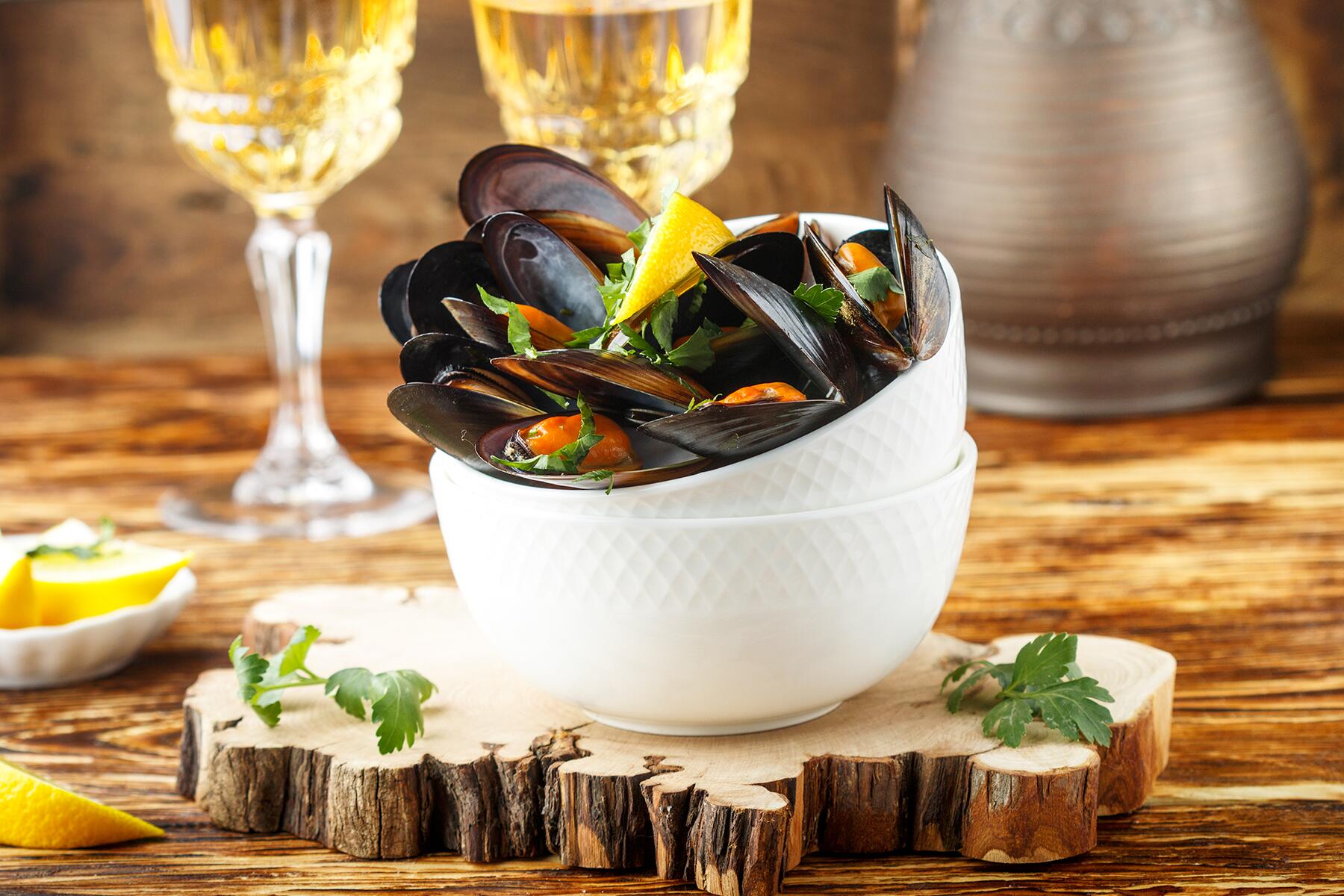
Mussels in Brussels may rhyme like a joke, but in Belgium’s capital, it is a seriously tasty meal. When you order moules-frites, it arrives not as a dainty portion but as a generous, almost theatrical mound: a steaming pot of mussels with the shells slightly yawning open to reveal glistening flesh, alongside a bowl of golden fries that are dipped in the mussel sauce or the accompanying mayonnaise. Of the endless variations, moules au vin blanc (mussels cooked in white wine) is the most elegant. The proper way to eat the mussels is to remove the first one from its shell with a fork and then repurpose the empty shells as tweezers to pluck the rest. Get your serving at La Belle Maraîchère, Le Zinneke, L’Ancien Bruxelles, La Roue d’Or near the Grand Place, or Aux Armes de Bruxelles, a classic since 1921.
Pad See Ew
WHERE: Bangkok, Thailand
Pad Thai may be Thailand’s most famous export, but to stop there would be like eating only croissants in Paris. In Bangkok, when you want another zingy noodle creation, order Pad See Ew. This is a dish of wide, flat rice noodles (sen yai), glossy and languorous, wok-tossed over ferocious heat with soy sauces until they blister and char at the edges. That slight scorch gives Pad See Ew its caramelized depth. Egg is added, Chinese broccoli provides light bitterness, and there’s usually chicken, pork, beef, or tofu tucked in for substance. The dish has Chinese roots; it is a cousin of Cantonese chow fun and Malaysia’s char kway teow. When wandering around Bangkok’s Khao San Road or Soi Rambuttri, you’ll find many a street stall serving it in versions that range from politely peppered to unapologetically fiery.
Jerk Chicken
WHERE: Jamaica
Jerk is not a sauce or a seasoning but a method of preparing meat, most often chicken or pork, after marinating. The meat is slow cooked over fire until it is smoky, tender, and tantalizing. Its origins trace back to the Taíno people, Jamaica’s Indigenous inhabitants, whose techniques of preserving and cooking meat were later adopted and transformed by the Maroons, enslaved Africans who escaped British plantations and fled into the island’s mountains. There, they seasoned wild game with native spices and cooked it in underground, smokeless pits that wouldn’t give away their locations. In contemporary Jamaica, jerk is everywhere. You’ll fortuitously find it at roadside jerk centers, beach shacks, festivals, and family gatherings, with the inviting aroma curling around neighborhoods.
Raw Herring
WHERE: Netherlands
Travel to the Netherlands and get your hands (literally) on raw herring, which some call the “Dutch sushi.” There is so much affection, pride, and ceremony around it. Traditionally, the head is removed, but the tail remains, and the ritual is that you lift the full fish by the tail, tilt your head back, and lower it into your mouth in one smooth motion. Its most prized incarnation is Hollandse Nieuwe, the first catch of the season, available from early June. When the season opens, the first barrel is auctioned for charity in Scheveningen, making the seaside enclave in The Hague an ideal place to try it straight from the North Sea. Chopped onions are available as a garnish, and you can have your herring sliced into pieces instead but never ask for mayonnaise and guard it closely. The seagulls, like the Dutch themselves, know exactly how lekker (delicious) it is.