



Take a historical tour of the five boroughs through the pages of ‘Fresh Fly Fabulous: 50 Years of Hip Hop Style.’
There’s something gigantic and statement-making about Alicia Keys’ and Jay-Z’s 2009 duet, “Empire State of Mind.” The convergence of rap and power ballad makes sweet music as an ode to the city: “Concrete jungle where dreams are made of/There’s nothing you can’t do/Now you’re in New York/These streets will make you feel brand new/The lights will inspire you.” The lyrics take listeners on a journey with specific locations and even an address mentioned, like 560 State Street (Jay-Z’s old stash spot).
But the one address not in the song that many consider important in the hip-hop universe—where fans of the music genre make pilgrimages—stands at 1520 Sedgwick Avenue in The Bronx. Fifty years ago, DJ Kool Herc and his sister, Cindy, threw a party in their apartment building, and little did they know the ground-breaking importance of that brief celebration. Historians credit this moment and location as having a seismic effect on both the music and the fashion worlds. And like Jay-Z rapped in “Empire State of Mind” 36 years later: “Sh*t I made the Yankee hat more famous than a Yankee can.”
He knew of that impact, emphasizing the marriage between hip-hop and fashion.
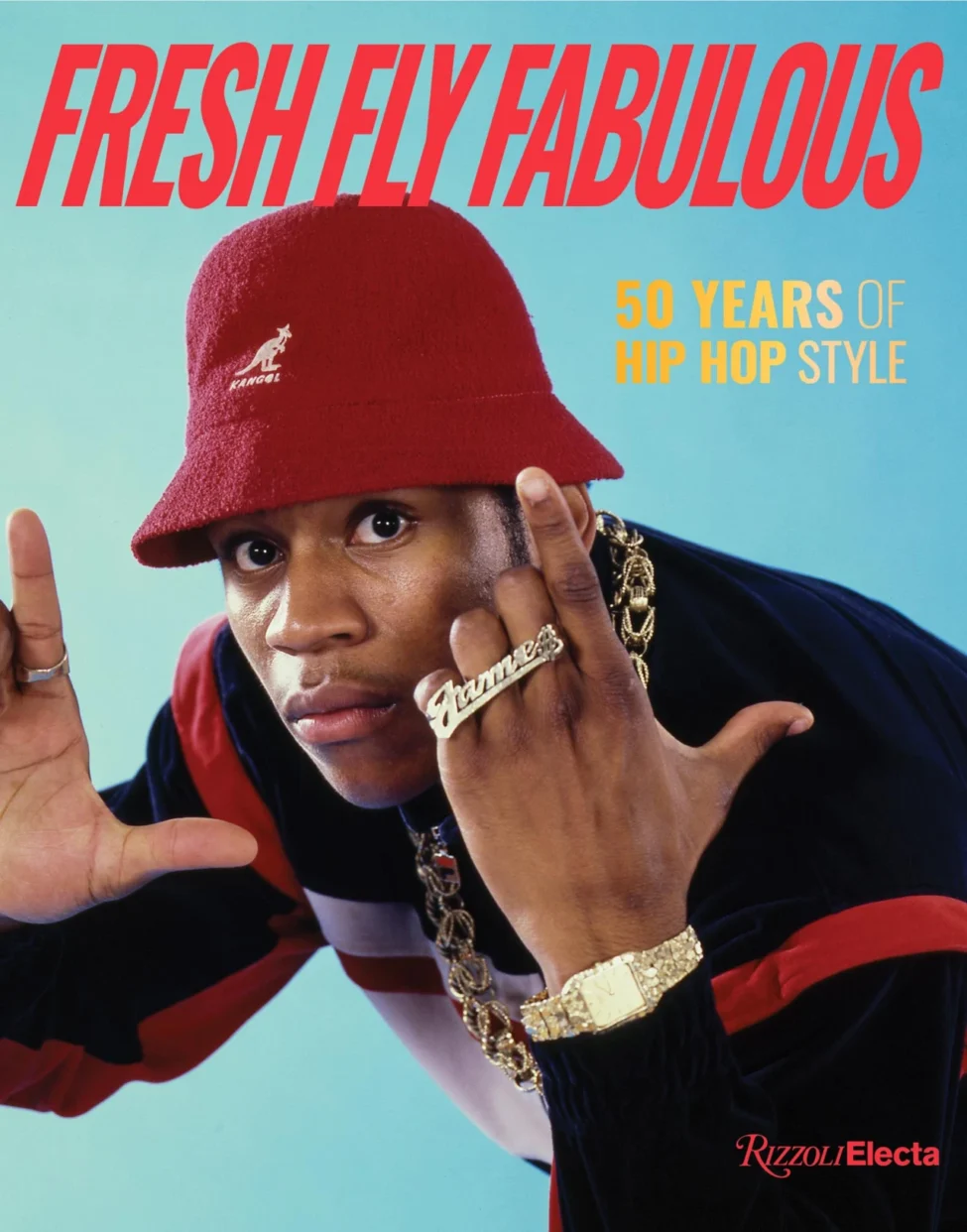
To capture the last five decades of hip hop’s influence on style, both Elizabeth Way and Elena Romero, with a foreword by Slick Rick, authored Fresh Fly Fabulous: 50 Years of Hip Hop Style. The tome—released in February to accompany an exhibition of the same name at The Museum of FIT—takes a deep dive into the clothing, accessories, and sneakers that shaped the look of hip-hop alongside photography from the likes of Jamel Shabazz and Janette Beckman. Each page reveals wardrobe highlights, the people who wore them, and the designers behind the hip-hop style. Of course, the city that never sleeps emerges as one of the key players in making all of this possible.


Recommended Fodor’s Video
The state of the Big Apple back in the ’70s gave rise to hip-hop. Way, associate curator at The Museum of the Fashion Institute of Technology and author of “Black Designers in American Fashion,” tells Fodor’s: “The conditions of New York City during the 1970s were pretty negative, especially for people of color—discrimination, unemployment, urban redlining—but young people took those circumstances and the unique cultural mix of the city and created something that spoke to their lifestyles.”
She adds, “New York is the American fashion capital, and Black and Brown communities in New York had, and have, a specific attention to their style—all these factors led to New York as the birthplace of hip hop and hip hop style.”
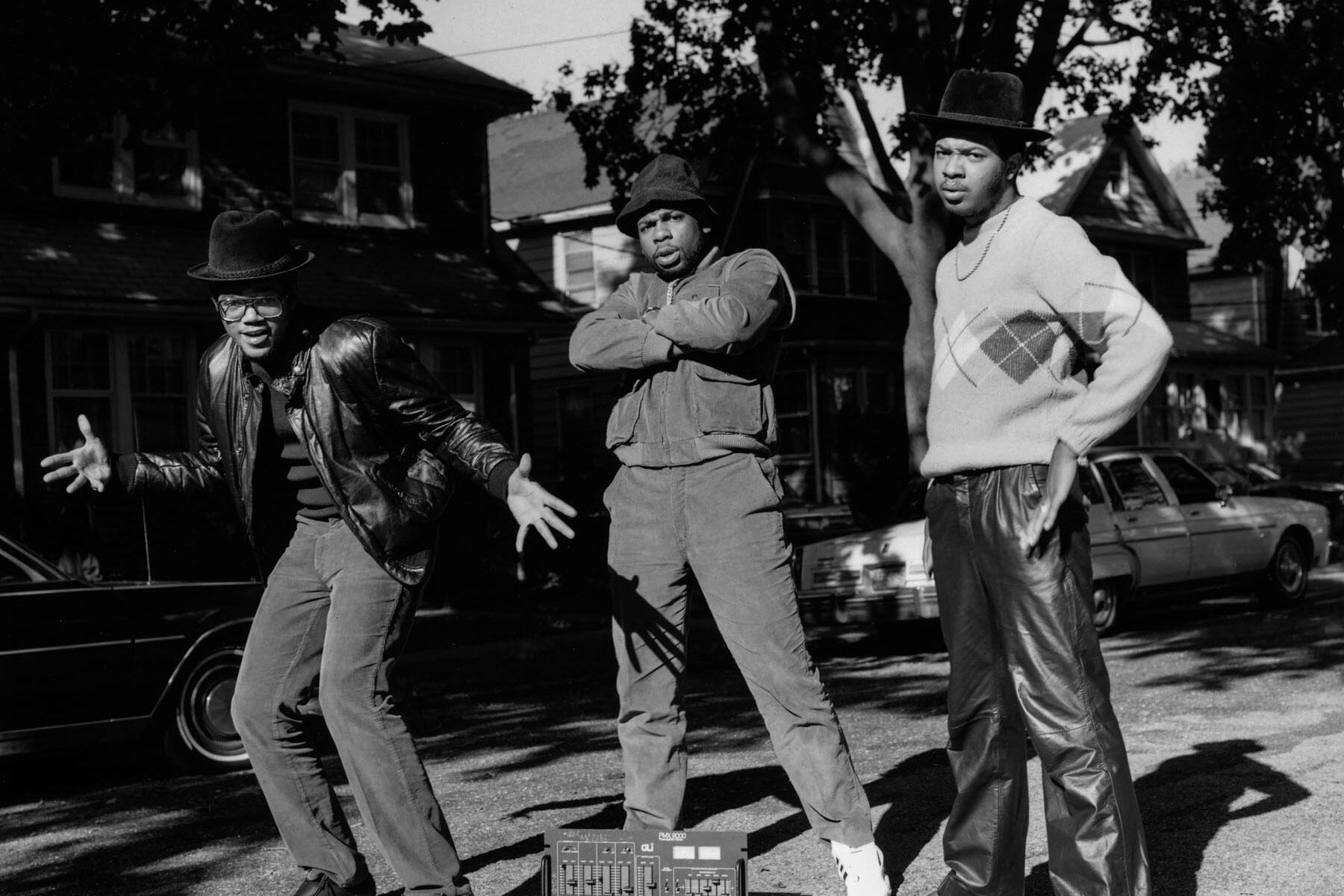
In every borough, hip-hop fans can visit landmarks and neighborhoods where trademark styles came to fruition. Hollis, Queens, will forever be associated with Run DMC and their three-stripe Adidas tracksuits and sneakers. In fact, a mural on 205th Street in South Hollis is dedicated to Jam Master Jay with a pair of Adidas sneakers (with no laces) next to his turntables. Wu-Tang Clan hails from Staten Island, and a district of this borough is named after them at the corner of Vanderbilt Avenue and Targee Street. Wu Wear, after all, became one of the first labels connecting rappers with fashion. And at 226 St. James Place between Gates Avenue and Fulton Street in Brooklyn is the childhood home of Notorious BIG—known for his understated “cozy luxury” with touches of bling: the journalist who penned this homage to Biggie made the claim, “Biggie Smalls predicted how we’d all be dressing today.”
Where exactly did people find the purveyors of hip-hop style if they wanted to look like their favorite hip-hop artists? According to Romero, assistant professor at FIT, hip-hop style connoisseurs visited specific places ranging from shopping centers to streets with specialized retailers. Sometimes these places existed for photo opportunities and backdrops for Polaroids, pre-dating TikTok and Instagram documentation.
“Queens guys enjoyed shopping at the Colosseum Mall. Brooklyn peeps shopped at Caesar’s Bay Bazaar and in Downtown Brooklyn in Albee Square Mall off of Dekalb Avenue. Harlem had tailored shops like AJ Lesters, Leighton’s and Orrie’s, and of course, custom tailor Dapper Dan.”
Romero adds, “For outerwear purchases, many people were drawn to Delancey Street in downtown Manhattan known for haggling with shopkeepers for the best price. In the Bronx, everyone shopped at…Frank’s Sporting Goods on Tremont Avenue for sneakers. The Deuce on 42nd Street became a cultural epicenter where you saw x-rated movie theaters, low-level drug dealers, chain snatchers, and got your picture taken with a spray-painted backdrop.”
And as for today, Dapper Dan’s Harlem boutique, Harlem Haberdashery, and downtown locations like the Supreme store and designer retailers in SoHo (South of Houston in Manhattan) provide hip-hop wares of all kinds.
But bringing it back to the music, when asked about the songs they think about when hip hop and fashion come together, Romero and Way could agree on Slick Rick and Doug E. Fresh of the Get Fresh Crew’s “La Di Da Di.” According to the Wall Street Journal a few years ago, this track has become “one of music’s most sampled songs.” Romero also listed “My Adidas” by Run DMC, “Wu Wear: The Garment Renaissance” by RZA featuring Method Man and Cappadonna, and A$AP Rocky’s “Fashion Killa.” In Chapter Three of “Fresh Fly Fabulous,” Romero details “Name Droppin’: The Storytelling of Hip Hop Through Fashion Lyrics.”
The 212, 718, 646, and 917 have all produced sound and sartorial visuals connected to hip-hop. Is there possibly another city that has offered so much in the last 50 years? Going back to “Empire State of Mind,” these lyrics arguably capture it best: “Street lights, big dreams, all lookin’ pretty/No place in the world that could compare.”