


I need to understand how the location of a hotel impacts the Biennale experience in Venice? AS a senior I understand it is not a large city but I am also not going to want to walk forever to reach the exhibits. My choices so far are Hotel Bucintoro, Saturnia , and Hotel Columbino and Hotel Dona Palace.
Will it make a difference which hotel I choose or will the vaporetto be just as convenient from anyone I select? Thank for any insight about this new adventure I am planning.
Will it make a difference which hotel I choose or will the vaporetto be just as convenient from anyone I select? Thank for any insight about this new adventure I am planning.
I have attended the Biennale Arte 5x--I'm not a senior, but I prefer to stay in Castello nearish Arsenale. Of the hotels you list, the Bucintoro is most convenient for Biennale, IMO. Arsenale is right there, and if you don't feel like walking, it's a short vaporetto ride to Giardini.
Remember, though, that there are collateral exhibitions all over the city. Example, one cold night last month I trekked all the way back to Chiesa di Santa Maria delle Penitenti in the further reaches of Cannaregio to see the Estonian pavilion--and it was marvelous.
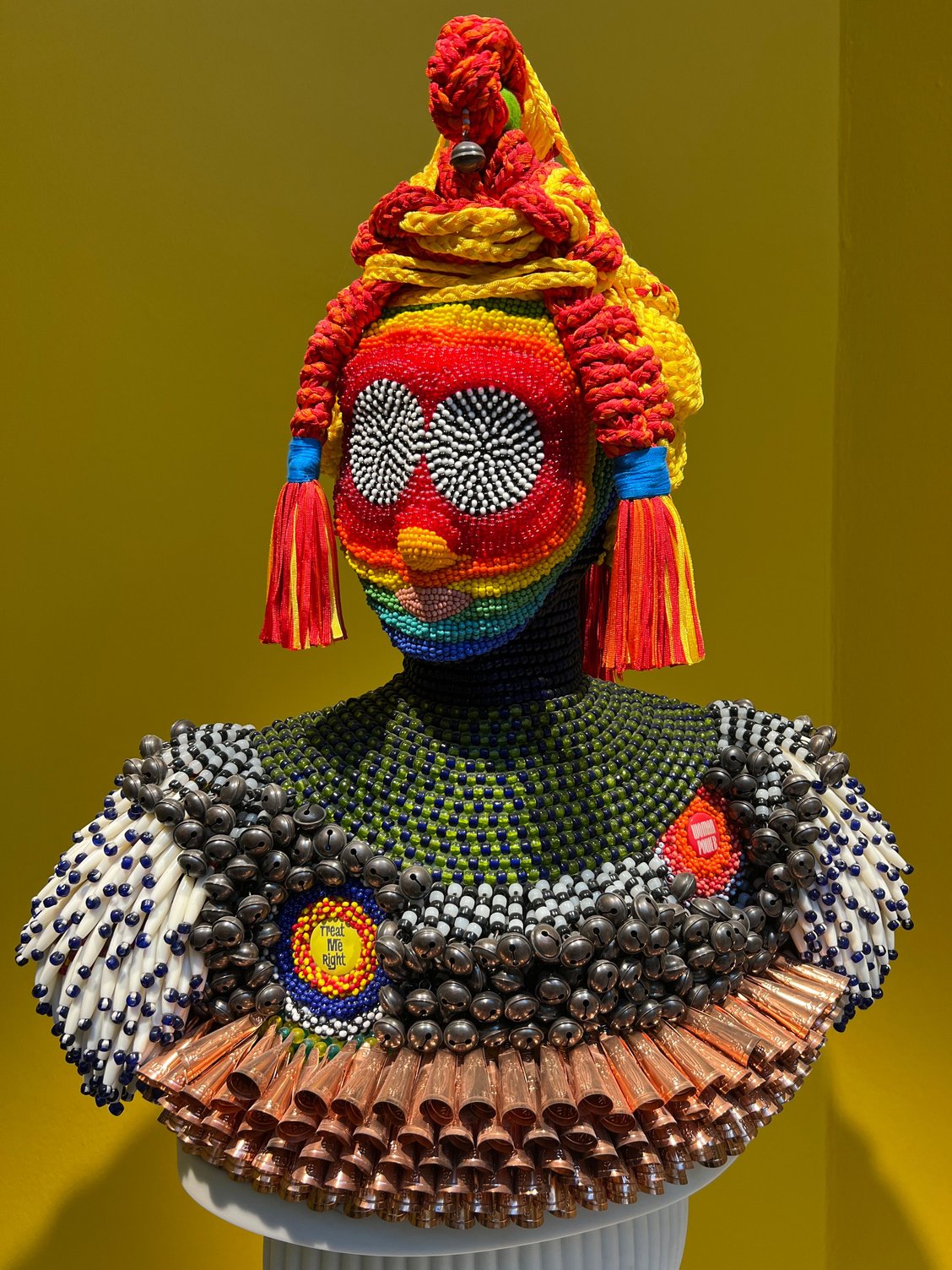
Jeffrey Gibson, American Pavilion, 2024 Biennale Arte
Remember, though, that there are collateral exhibitions all over the city. Example, one cold night last month I trekked all the way back to Chiesa di Santa Maria delle Penitenti in the further reaches of Cannaregio to see the Estonian pavilion--and it was marvelous.
Jeffrey Gibson, American Pavilion, 2024 Biennale Arte

Get the app Chebateo for planning vaporetto trips around Venice. As Leely says, besides the Giardini and Arsenale, there are collateral exhibits scattered all over Venice, so you would do well to buy a vaporetto pass for all your time in Venice.
You would need to allow a handful of days to do the Biennale justice. Also the Querini Stampalia Foundation is really worth a visit, I think my favourite venue in Venice.
You would need to allow a handful of days to do the Biennale justice. Also the Querini Stampalia Foundation is really worth a visit, I think my favourite venue in Venice.
Venice
2015
Arts Biennale.
The Arts Biennale can be confusing. Arrangements of things that are termed “an installation”. A Chinese artist making a sound commentary on Chinese consumerism, by way of pharmaceutical capsules, about half a metre high, carefully arranged.
Performance arts, like our friend Phil participating in the reading of Das Kapital, session by session. Phil says it’s about to get boring, as economic theory and tables can make for pretty pedestrian reading.
There was a little performance piece on Sunday night, at the north end of Fond. di Madonna, at the bridge across the Rio di Santa Maria Maggiore. A most spirited performance, ghetto blaster cranked up to full noise, half a dozen folk on percussion, mainly aluminium saucepan lids and a couple of steel woks for bass notes, bashing them on the cast iron railings of the bridge. Not exactly your Quadri Stagioni, but a pleasing change.
So the melody was being carried on the bridge, and the continuo provided by the guys in the Pensieri, bashing on the bars and louvres with whatever implements came to hand. A prison micro riot, or a performance piece. Who knows? I can’t find reference to this performance in my Biennale guide, but maybe it is more an impromptu kind of thing.
We moved house yesterday, from the apartment near to Piazzle Roma to the place we have for the next month. Moving was no big deal, three bridges and a ten minute walk. But at the same time, the move has put us in a different part of Venice, even though it was only a short walk. There is a different feel, a little supermarket that is really good, a small metal working shop at our front door, grinders, power hack saw, press, and I like the smell of hot metal as we walk past. We are completely off the tourist trail, just west of the Palazzo Ariani on Fondamenta Briati.
Interesting. In Melbourne, if I moved house to a place ten minutes away, there would be almost no difference. But in Venice there is a big difference, and that says something of the parochial nature of Venice that still obtains.
Querini Stampalia Foundation today, a Biennale exhibition looking at the interface between Venice, tourists and workers. There was one touching exhibit. A brick, with the footprint of a youth in it, another brick with the footprint of a dog in it.
Boy starts work in a brickyard in 1740. His dog comes along. Boy chases dog away, treads on brick, leaves footprint in wet brick. Works at brickyard all his life, dies aged about forty, is survived by his mother, who also works in the brickyard.
That brick is the only thing that survives from that worker, the only tangible evidence that he ever existed.
Reminds me of the last line from the Hemingway story, “The Old Man at the Bridge”. “That, and the fact that cats could look after themselves, was all the luck that old man was ever going to have.”
The Quereni Stampalia is still my favourite building in all of Venice.
2015
Arts Biennale.
The Arts Biennale can be confusing. Arrangements of things that are termed “an installation”. A Chinese artist making a sound commentary on Chinese consumerism, by way of pharmaceutical capsules, about half a metre high, carefully arranged.
Performance arts, like our friend Phil participating in the reading of Das Kapital, session by session. Phil says it’s about to get boring, as economic theory and tables can make for pretty pedestrian reading.
There was a little performance piece on Sunday night, at the north end of Fond. di Madonna, at the bridge across the Rio di Santa Maria Maggiore. A most spirited performance, ghetto blaster cranked up to full noise, half a dozen folk on percussion, mainly aluminium saucepan lids and a couple of steel woks for bass notes, bashing them on the cast iron railings of the bridge. Not exactly your Quadri Stagioni, but a pleasing change.
So the melody was being carried on the bridge, and the continuo provided by the guys in the Pensieri, bashing on the bars and louvres with whatever implements came to hand. A prison micro riot, or a performance piece. Who knows? I can’t find reference to this performance in my Biennale guide, but maybe it is more an impromptu kind of thing.
We moved house yesterday, from the apartment near to Piazzle Roma to the place we have for the next month. Moving was no big deal, three bridges and a ten minute walk. But at the same time, the move has put us in a different part of Venice, even though it was only a short walk. There is a different feel, a little supermarket that is really good, a small metal working shop at our front door, grinders, power hack saw, press, and I like the smell of hot metal as we walk past. We are completely off the tourist trail, just west of the Palazzo Ariani on Fondamenta Briati.
Interesting. In Melbourne, if I moved house to a place ten minutes away, there would be almost no difference. But in Venice there is a big difference, and that says something of the parochial nature of Venice that still obtains.
Querini Stampalia Foundation today, a Biennale exhibition looking at the interface between Venice, tourists and workers. There was one touching exhibit. A brick, with the footprint of a youth in it, another brick with the footprint of a dog in it.
Boy starts work in a brickyard in 1740. His dog comes along. Boy chases dog away, treads on brick, leaves footprint in wet brick. Works at brickyard all his life, dies aged about forty, is survived by his mother, who also works in the brickyard.
That brick is the only thing that survives from that worker, the only tangible evidence that he ever existed.
Reminds me of the last line from the Hemingway story, “The Old Man at the Bridge”. “That, and the fact that cats could look after themselves, was all the luck that old man was ever going to have.”
The Quereni Stampalia is still my favourite building in all of Venice.
I should apologise. I am something of a Venice tragic. A book you might get is Secret Venice by Jonglez. It explores all the little details that mostly pass without you seeing them. That book invites one to explore all over Venice, an invitation that I have happily accepted.
You need the hard copy, the Kindle version does not work so well. I bought my copy at the Guggenheim.
You need the hard copy, the Kindle version does not work so well. I bought my copy at the Guggenheim.

