15 Best Sights in Manayunk, Germantown, and Chestnut Hill, Philadelphia

Background Illustration for Sights

We've compiled the best of the best in Manayunk, Germantown, and Chestnut Hill - browse our top choices for the top things to see or do during your stay.

Wissahickon Valley Park (Valley Green)
Chestnut Hill Fodor's Choice
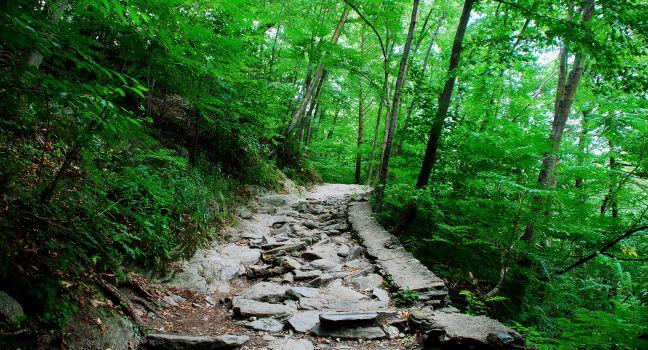
Wissahickon Park, Philadelphia, Pa
DSC_7800 by Jared Rubinsky

There are many great sections of Fairmount Park, but the 1,800 acres around Valley Green known as Wissahickon Valley Park may be the most stunning. Miles and miles of trails running along and above the river lead to covered bridges, a statue of a Lenape chief (rife with inaccuracies but created with good intentions), caves used by a 17th-century free-love cult, large boulders that drip water, and mallards quacking for bread bits. Forbidden Drive, on which cars are forbidden, runs from Northwestern Avenue (the westernmost part of Chestnut Hill) all the way to Lincoln Drive, where it connects to a bike and walking path that leads one way to Historic Rittenhouse Town (where you can also park and enter) and the other way to Manayunk and Kelly Drive, with additional bike/walking paths that take you to the city or out along the Schuylkill to Valley Forge. There are also many miles of surprisingly difficult mountain-bike trails. The Valley Green Inn is a very attractive restaurant with decent food at Forbidden Drive and Valley Green Road. Other recommended spots to hike to include Hudson and Andorra Meadows, Thomas Mill Covered Bridge, and Toleration Statue.
Valley Green Rd., Philadelphia, PA, 19118, USA
215-247–0417
Sight Details
Free

Something incorrect in this review?

Schuylkill River Trail (Manayunk Tow Path)

Manayunk Fodor's Choice

This very popular bike and pedestrian trail follows the river to Valley Forge National Park (and well beyond) or, in the other direction, to the Philadelphia Art Museum and beyond. It's easy biking, and while you can go for miles, you'll want a hybrid or mountain bike because not all of it is paved.

Cliveden

Germantown
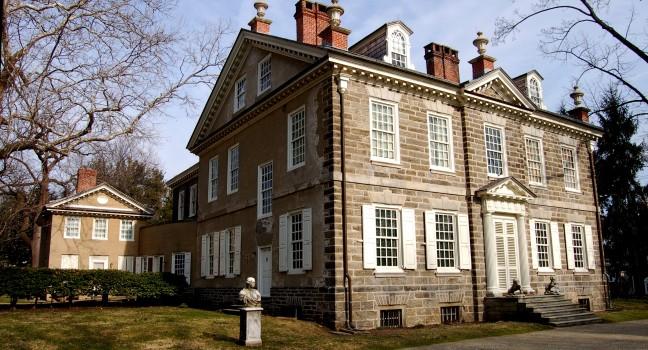
The Chew House, also known as Cliveden, in the Germantown section of Philadelphia, PA.  Americans soldiers fought from inside of the house during the Battle of Germantown in the Revolutionary War
Daniel M. Silva / Shutterstock

The grounds take up an entire block, and they are free to walk around. Cliveden's (rhymes with lived in) unique history, impressive architecture, and the guides who spin a good yarn combine to make the site perhaps the best visiting experience of the historic Germantown homes. The elaborate country house was built in 1767 by Benjamin Chew (1722–1810), a Quaker and chief justice of the colonies, and something of a fence-straddler during the Revolution. Cliveden was at the center of the Battle of Germantown, occupied by British troops, and the walls still bear the marks of American cannon fire. An elaborate reenactment of the Battle of Germantown is held here annually on the first Saturday in October. Cliveden excels at its robust programming, which is year-round, and much of which explores the experiences of slaves, servants, and workers at Cliveden, and larger themes of Northern slavery and slaveholders, like the Chew family, who owned plantations in the South. The house, on 6 acres, can be seen on a 45-minute guided tours. Off-season tours can be arranged by calling.

6401 Germantown Ave., Philadelphia, PA, 19144, USA
215-848–1777
Sight Details
$15
Closed Mon.–Wed. and Dec.–Apr.; tours on the hr, last tour at 3 pm

Something incorrect in this review?

Recommended Fodor's Video

Grumblethorpe

Germantown
Grumblethorpe Tenant House, Germantown, Pennsylvania
Smallbones [Public Domain], via Wikimedia Commons

The blood of General James Agnew, who died after being struck by musket balls during the Battle of Germantown, stains the floor in the parlor of this Georgian house—and no one has bothered to clean it up yet! Built by Philadelphia merchant and wine importer John Wister in 1744, Grumblethorpe is one of Germantown's leading examples of early-18th-century Pennsylvania-German architecture. The Wister family lived here for 160 years, and during the Revolution a teenage Sally Wister kept a diary that has become an important historical source for what that time was like. On display are period furnishings and family mementos, but the best part of the house is the large garden. Wisteria, the flowering vine, is named after Charles Wister (John's grandson), who was an avid botanist and amateur scientist, and there is plenty of it in the garden. There are also an enormous hundred-year-old rosebush, a peony alley, a two-story arbor with climbing clematis and a grapevine working its way across its base, and tulips in season.

Tours are offered May–October, on the second Saturday of the month; additional tours can be scheduled.

5267 Germantown Ave., Philadelphia, PA, 19144, USA
215-843–4820
Sight Details
$10
Closed Nov.–Apr.

Something incorrect in this review?

The Colored Girls Museum

Germantown

Looking for something other than colonial history? This museum was created to tell the herstory of Black girls through personal objects used and cherished in everyday life. Established in 2015, the unique museum embraces the value of intimate spaces and the experiences of Black girls and their home life, with the aim to also be a research facility, exhibition space, gathering place, and think tank. The space hosts special exhibitions, and currently only Saturday tours are available via online reservation.

4613 Newhall St., Philadelphia, PA, 19144, USA
267-630–4438
Sight Details
$20
Closed weekdays

Something incorrect in this review?

Ebenezer Maxwell Mansion

Germantown

Philadelphia's only mid-19th-century house-museum is a Victorian Gothic extravaganza of elongated windows and arches that are used to illustrate the way Victorian social mores were reflected through its decoration. The downstairs highlights the Rococo Revival (circa 1860), the upstairs is fashioned after the Renaissance Revival (1880s), and the difference is striking, especially the art deco–like wall details you may not associate with the time. Throughout the year there are a number of special teas and holiday-themed events, and occasionally music and period-appropriate theater productions. Sign up online for tours (noon, 1 pm, and 2 pm) that are available Thursday through Sunday.

200 W. Tulpehocken St., Philadelphia, PA, 19144, USA
215-438–1861
Sight Details
$12
Closed Sun.–Thurs.
Reservations required

Something incorrect in this review?

Historic Rittenhouse Town

Germantown

North America's first paper mill was built here in 1690 by Mennonite minister William Rittenhouse. Over the next 150 years, 10 generations of his family lived on the site and operated the mill. His most famous offspring, born in 1732, was David Rittenhouse, astronomer, statesman, and first president of the U.S. Mint. You can stroll anytime through this National Historic District that consists of 30 picturesque acres along the Wissahickon and seven outbuildings—this is worth doing, as it is also an entryway to Wissahickon Valley Park. Public tours (summer only) are offered intermittently—private tours can be arranged by phone. By the parking lot is the PAPERTrail Bike Cafe ( papertrailbikecafe.com), a tiny coffee and bike repair shop, where you can grab a coffee and snack and sit at picnic benches on the historic grounds.

206 Lincoln Dr., Philadelphia, PA, 19144, USA
215-438–5711
Sight Details
Grounds are free, tours are $15

Something incorrect in this review?

Johnson House

Germantown

After bringing visitors through the hidden back entrance of this 1768 home, guides retrace the experience of slaves who found a haven here when the Johnson House was a key station on the Underground Railroad. They weave the story of the Johnson family, Quakers who worked to abolish slavery, with that of Harriet Tubman, who was sheltered here with runaway slaves and later guided them to freedom. Visitors see hiding places, including the third-floor attic hatch that runaways used to hide on the roof when the sheriff came by, learn Underground Railroad code words, and view slavery artifacts, such as ankle shackles and collars. It is the stories contained within the home that are the most captivating, as opposed to the house itself. In 1777 the house was in the line of fire during the Battle of Germantown; the shutters still show the impact of the musket rounds. In the early 1900s it was saved from demolition when it became a women's club, along with what is now the Mennonite church behind it. 

Friday and Saturday tours are offered year-round by online appointment only.

6306 Germantown Ave., Philadelphia, PA, 19144, USA
215-438–1768
Sight Details
$15
Closed Sun.–Thurs.

Something incorrect in this review?

Manayunk Bridge Trail

Manayunk

An old train trestle was revamped into a pedestrian- and bike-only bridge, now with lighting for night walkers, with pleasant views of Manayunk and the Schuylkill River Valley. It connects to the Cynwyd Heritage trail, an easy 2-mile “rail trail" for biking, jogging, and walking that leads past Laurel Hill Cemetery West and ends at Cynwyd Station. You can also connect to a trail that takes you to the Ironworks at Pencoyd Landing, where there are two restaurants, a beer garden of sorts, a Residence Inn by Marriott, and a different crossing back to Manayunk.

Corner of Dupont and High Sts., Philadelphia, PA, 19127, USA

Something incorrect in this review?

Manayunk Welcome Center

Manayunk

Just off Main Street, the welcome center is a recent addition, run and staffed by the Manayunk Development Corporation. It's a good spot to get oriented, ask questions, look at some historical photos, and buy MNYK (Manayunk) T-shirts.

106 Grape St., Philadelphia, PA, 19127, USA
215-482--9865

Something incorrect in this review?

Morris Arboretum

Chestnut Hill

One of the country's best arboretums, more than 3,500 trees and shrubs from around the world inhabit this 92-acre arboretum that's based on Victorian-era garden and landscape design, with romantic winding paths, a hidden grotto, a fernery, a koi pond, and natural woodland. The highlights are the spectacular rose garden, the swan pond, and "Out on a Limb," a 50-foot-high canopy where you can commune with the birds—and gleeful children. Large modern sculptures, some of which are spectacular, are sprinkled throughout the property, with outdoor sculptural exhibits during the year such as October's Scarecrow Walk. Twice annually, the popular Garden Railway exhibit features an elaborate model railroad surrounded by miniature replicas of historic Philadelphia landmarks. You'll want to drive, as the entrance is a good hike from the top of Chestnut Hill. Various tours, workshops, and events are happening year-round.

100 E. Northwestern Ave., Philadelphia, PA, 19118, USA
215-247–5777
Sight Details
$22

Something incorrect in this review?

The Schuylkill Center

Roxborough

In what is technically Roxborough but feels very removed from the dense row houses, visitors can explore more than 355 acres of woods and trails in what is part nature center, part education center, and part art exhibition and performance location (usually in connection with nature). Trails are free and open dusk till dawn every day, while most events and workshops have a fee. There is also access via a trail that connects to the Schuylkill River Trail.

Stenton

Germantown

James Logan may not be a household name, but he was a seminal figure in pre-Revolutionary America. Equal parts visionary, opportunist, and rogue, he was secretary to William Penn and managed the daily affairs of the colony. Logan, who went on to hold almost every important public office in the colonies, designed this 1730 Georgian manor himself and named it for his father's birthplace in Scotland. He used it to entertain local luminaries and Native American tribal delegates. It was also where he kept one of the area's first libraries, at a time when books were looked upon with suspicion. British General Howe claimed Stenton for his headquarters during the Battle of Germantown. The Stenton mansion is a well-curated, stately affair filled with family and period pieces; the site also includes a kitchen wing, barn, and Colonial-style garden. Starting on the hour at 1 pm, 2 pm, and 3 pm, the guided 45-minute tour interprets the life of three generations of the Logan family and the life of the region from the 1720s through the American Revolution. Stenton has one of the best interiors of any of the Germantown homes.  Tours are offered April to late December, Tuesday–Saturday, noon–4.

4601 18th St., Philadelphia, PA, 19140, USA
215-329–7312
Sight Details
$8
Closed Jan.–Mar. and Sun. and Mon.

Something incorrect in this review?

Woodmere Art Museum

Chestnut Hill

On the far side of Chestnut Hill, on the slope leading toward the suburbs, this Philly artist–centric museum focuses on 19th- and 20th-century eastern Pennsylvania art. The permanent collection features mid-1900s woodcuts and a number of 19th-century Pennsylvania landscapes. The largely contemporary special exhibitions are often very engaging, along with live jazz and classical music, movie nights, and workshops. There's a popular, if overpriced, haystack maze each October outside.

9201 Germantown Ave., Philadelphia, PA, 19118, USA
215-247–0476
Sight Details
$10
Closed Mon. and Tues.

Something incorrect in this review?

Wyck

Germantown

Between the 1690s and 1973, Wyck sheltered nine generations of the Wistar-Haines family. Their accumulated furnishings are on display, along with ceramics, children's needlework, dolls, and artifacts generally contemporary with the mid-1800s. On one side is the oldest rose garden in the United States, dating to the 1820s, which blooms in May, as well as a magnolia tree from that time. Out back are a large lawn, where you can picnic, and a vegetable garden—the land has been continuously farmed since 1690, and during the summer it hosts many kid-friendly garden-related events as well as workshops. Known as the oldest house in Germantown, Wyck was used as a British field hospital after the Battle of Germantown. Walk-in tours are offered April–November, Thursday–Saturday, noon–4 pm, and the grounds are open for wandering Tuesday–Friday 10 am–4 pm. Off-season and specialty tours are available by appointment.

6026 Germantown Ave., Philadelphia, PA, 19144, USA
215-848–1690
Sight Details
$5
Closed Dec.–Mar.

Something incorrect in this review?

Not finding what you're looking for?

We've got a few suggestions for nearby spots.
Parkway Museum District and Fairmount Park

Laurel Hill Cemetery3.3 miles away

3822 Ridge Ave., Philadelphia, Pennsylvania, 19132, USA
We recommend 28 Sights in Parkway Museum District and Fairmount Park
Parkway Museum District and Fairmount Park

Historic Strawberry Mansion3.9 miles away

2450 Strawberry Mansion Dr., Philadelphia, Pennsylvania, 19132, USA
We recommend 28 Sights in Parkway Museum District and Fairmount Park
Parkway Museum District and Fairmount Park

Laurel Hill Mansion4 miles away

3487 Edgley Dr., Philadelphia, Pennsylvania, 19121, USA
We recommend 28 Sights in Parkway Museum District and Fairmount Park
Parkway Museum District and Fairmount Park

Woodford Mansion4.1 miles away

3400 W. Dauphin St., Philadelphia, Pennsylvania, 19132, USA
We recommend 28 Sights in Parkway Museum District and Fairmount Park
Parkway Museum District and Fairmount Park

Belmont Plateau4.1 miles away

2000 Belmont Mansion Dr., Philadelphia, Pennsylvania, 19131, USA
We recommend 28 Sights in Parkway Museum District and Fairmount Park