11 Best Sights in Kailua-Kona, Big Island

Background Illustration for Sights

We've compiled the best of the best in Kailua-Kona - browse our top choices for the top things to see or do during your stay.

Captain James Cook Monument
Fodor's Choice
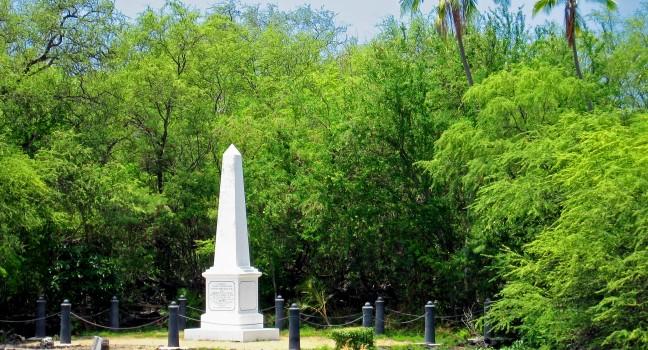
Captain Cook's Monument, Big Island, Hawaii
Captain Cook's Monument by

On February 14, 1779, famed English explorer Captain James Cook was killed here during an apparent misunderstanding with local residents, and this 27-foot-high obelisk marks the spot where he died. He had chosen Kealakekua Bay as a landing place in November 1778. Arriving during the celebration of Makahiki, the harvest season, Cook was welcomed at first. Some Hawaiians saw him as an incarnation of the god Lono. Cook's party sailed away in February 1779, but a freak storm forced his damaged ship back to Kealakekua Bay. Believing that no god could be thwarted by a mere rainstorm, the Hawaiians were not so welcoming this time. The theft of a longboat brought Cook and an armed party ashore to reclaim it. Shots were fired, daggers and spears were thrown, and Cook fell, mortally wounded. 

A trail leading to the site is accessible from the top of Napoopoo Road, but caution is advised. The very strenuous trail gains an elevation of about 1,500 feet and is recommended for advanced hikers only.
Captain Cook, HI, 96704, USA

Something incorrect in this review?

Hulihee Palace

Fodor's Choice
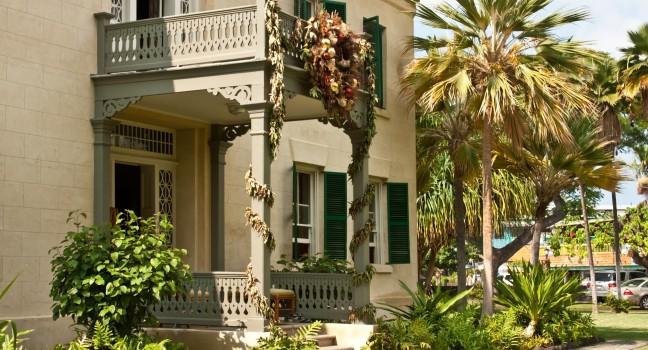
Hulihe'e Palace in Kailua on Hawaii's Big Island
(c) Cecoffman | Dreamstime.com

On the National Register of Historic Places, this lovely two-story oceanfront home, surrounded by jewel-green grass and elegant coconut palms and fronted by an elaborate wrought-iron gate, is one of only three royal palaces in America (the other two are in Honolulu). The royal residence was built by Governor John Adams Kuakini in 1838, a year after he completed Mokuaikaua Church. During the 1880s, it served as King David Kalakaua's summer palace.

Built of lava rock and coral lime mortar, it features vintage koa furniture, weaving, European crystal chandeliers, giant four-poster beds, royal portraits, tapa cloth, feather work, and Hawaiian quilts. After the overthrow of the Hawaiian monarchy in 1893, the property fell into disrepair. Set to be torn down for a hotel, it was rescued in 1920 by the Daughters of Hawaii, a nonprofit organization dedicated to preserving the culture and royal heritage of the Islands. The organization oversees and operates the site to this day; visitors see it on a guided tour.

Kealakekua Bay State Historical Park

Fodor's Choice
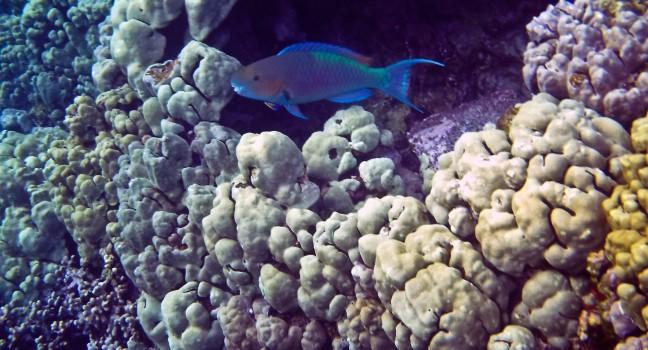
A parrotfish navigates the coral in Hawaii's Kealakekua Bay.
(c) Cecoffman | Dreamstime.com

One of the most beautiful spots in the state, this underwater marine reserve has dramatic cliffs that surround super deep, crystal clear, turquoise water chock-full of stunning coral pinnacles and tropical fish. The federally protected dolphins that frequent the sanctuary should not be disturbed, as they use the bay to sleep and escape predators. There's very little sand at west-facing Napoopoo Beach, but this is a nice place to enter the water and swim (when the water is calm) as it's well protected from currents. There are no lifeguards, but there are bathrooms, a pavilion, shower, and limited parking. The Captain James Cook Monument, marking where the explorer died, is at the northern edge of the bay. Stay at least 300 feet from the shoreline along the cliffs, which have become unstable during recent earthquakes. A limited number of tour operators offer snorkeling and kayaking tours nearby.

Recommended Fodor's Video

Mokuaikaua Church

Fodor's Choice
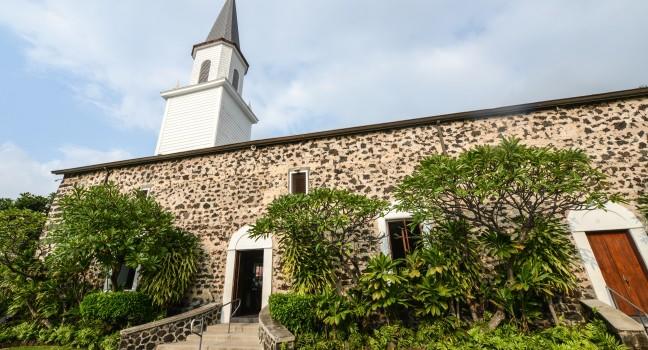
Mokuaikaua Church in Kona is the oldest Christian church in the Hawaiian Islands.
(c) Demerzel21 | Dreamstime.com

Site of the first Christian church in the Hawaiian Islands, this solid lava-rock structure, completed in 1837, is mortared with burned lime, coral, and kukui (candlenut) oil and topped by an impressive 112-foot steeple. The ceiling and interior were crafted of timbers harvested from a forest on Hualalai and are held together with wooden pegs, not nails. Inside, behind a panel of gleaming koa wood, rests a model of the brig Thaddeus as well as a koa-wood table crafted by Henry Boshard, pastor for 43 years. The sanctuary is still undergoing renovations, but if you attend Sunday services, they are glad to give you a tour.

Napoopoo Beach

Fodor's Choice
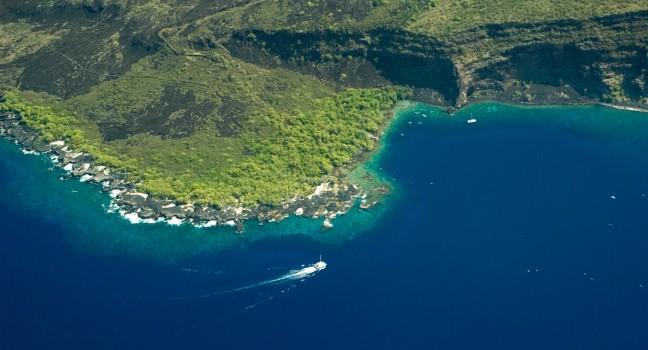
Kealakekua Bay, Big Island aerial shot, Hawaii.
Vlad Turchenko / Shutterstock

Gorgeous and undeveloped, this area in the state historical park offers extraordinary vistas and protected swimming. The shoreline is rocky, but the area is surrounded by high green cliffs, creating calm conditions for superb swimming, snorkeling, and diving (beware of jellyfish). Protected Hawaiian spinner dolphins come to rest and escape predators during the day. Captain James Cook first landed in Hawaii here in 1778, but a year later he was killed in a skirmish with Hawaiians, now marked by a monument on the bay's north end. Rocky but walkable trails lead to Hikiau Heiau, a sacred place for the Hawaiian people. Please proceed respectfully and do not walk on it or enter it. Parking is very limited. Be aware of the off-limits area (in case of rockfalls) marked by orange buoys. Amenities: parking (no fee); showers; toilets. Best for: snorkeling; swimming.

Napoopoo Rd. off Hwy. 11, just south of mile marker 111, Captain Cook, HI, 96750, USA
808-961–9544
Sight Details
Free

Something incorrect in this review?

Puuhonua O Honaunau National Historical Park

Fodor's Choice
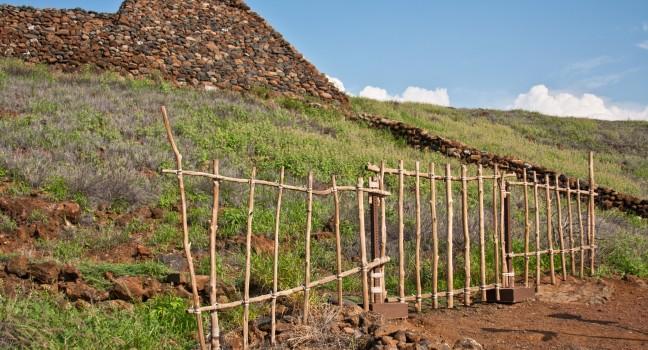
Pu'ukohola Heiau National Historic Site on Hawaii's Big Island.
(c) Cecoffman | Dreamstime.com

This breathtaking, 420-acre National Historical Park has the best preserved puuhonua (place of refuge) in the state, and an aura of ancient sacredness and serenity still imbues the place. Providing a safe haven for noncombatants, kapu (taboo) breakers, defeated warriors, and others, the puuhonua offered protection and redemption for anyone who could reach its boundaries, by land or sea. The oceanfront, 960-foot stone wall built more than 400 years ago still stands and is one of the park's most prominent features. A number of ceremonial temples, including the restored Hale o Keawe Heiau (circa 1700), have served as royal burial chambers. Bring a picnic to the oceanfront park, where there are tables and bathrooms. The 2¼-mile, 1871 Trail takes you past incredible lava features and historic sites. This treasure of a park is a must-see for every visitor to the Big Island.

Greenwell Farms

Fodor's Choice

Depending on the season, the 20-minute walking tour of this working farm takes in various stages of coffee production, including a look at the 100-year-old coffee trees. The Greenwell family played a significant role in the cultivation of the first commercial coffee in the Kona area (as well as the first grocery store). No reservations are required, unless you are booking for a private party, which does have a cost. You can also book a master brewing class.

Holualoa

Fodor's Choice

Hugging the hillside above the Kona Coast, the tiny, artsy village of Holualoa might contain more artists per square foot than any other town in Hawaii. Painters, woodworkers, jewelers, gourd makers, silk screeners, photographers, and potters work in their studios in back and sell their wares up front. Look for frequent town-wide events such as art strolls and block parties (the annual Christmas light stroll is a favorite) and relax with a cup of coffee in one of the cafés or galleries. Formerly the exclusive domain of coffee plantations, Holualoa still boasts quite a few coffee farms offering free tours and inviting cups of Kona. The town is 3 miles up winding Hualalai Road from Kailua-Kona.

Kamakahonu and Ahuena Heiau

Fodor's Choice

In the early 1800s, King Kamehameha the Great built a large royal compound at Kamakahonu, the bay fronting what is now the Courtyard King Kamehameha's Kona Beach Hotel; today it is one of the most revered and historically significant sites in all of Hawaii. Kamakahonu, meaning "eye of the turtle," was named for a prominent turtle-shaped rock there, covered in cement when the hotel and pier were built. The Ahuena Heiau, an impressive heiau (temple), was dedicated to Lono, the Hawaiian god of peace and prosperity. It was also used as a seat of government. The compound features a scaled-down replica of the temple and is a National Historic Landmark. You can't go inside the heiau, but you can view it from the beach or directly next door at the hotel's luau grounds.

Kamakahonu Beach

Fodor's Choice

This beach is where King Kamehameha spent his final days—the replica of the Ahuena Heiau sits on a platform across from the sand. Adjacent to Kailua Pier, the scenic crescent of white sand is one of the few beaches in downtown Kailua-Kona. The water here is almost always calm and the beach clean, making this a perfect spot for kids. For adults, it's a great place for swimming, stand-up paddleboarding (SUP), watching outrigger teams practice, or enjoying a lazy beach day, but it can get crowded on weekends. Snorkeling can be good north of the beach, and snorkeling, SUP, and kayaking equipment can be rented nearby. There's lots of grass and shade. Amenities: food and drink; showers; toilets; water sports. Best for: snorkeling; swimming.

75-5660 Palani Rd., Kailua-Kona, HI, 96740, USA
Sight Details
Free

Something incorrect in this review?

Kona Coffee Living History Farm

Fodor's Choice

On the National Register of Historic Places, this perfectly preserved farm was completely restored by the Kona Historical Society. It includes a 1913 farmhouse first homesteaded by the Uchida family and is surrounded by coffee trees, a Japanese bathhouse, a kuriba (coffee-processing mill), and a hoshidana (traditional drying platform). Caretakers still grow, harvest, roast, and sell the coffee exactly as they did more than 100 years ago. All admission proceeds directly help the nonprofit's educational efforts.  Call ahead to confirm hours, as they have been limited and varied.