


Dr. Bunny McFadden
122 Best Sights in San Francisco, California

We've compiled the best of the best in San Francisco - browse our top choices for the top things to see or do during your stay.
Transamerica Pyramid
It's neither owned by Transamerica nor, to some building experts, is it even a pyramid, but this 48-floor, 853-foot-tall pyramid-obelisk is the most photographed of the city's high-rises. Excoriated in the design stages as "the world's largest architectural folly," the icon was quickly hailed as a masterpiece when it opened in 1972. Today it's probably the city's most recognized structure after the Golden Gate Bridge, and it's the second-tallest in the city after the Salesforce Tower. You can't go up the pyramid (apparently there is now a bar on the 48th floor), but the best views and photo-ops are of the building itself anyway. After the real estate developer SHVO purchased the building in 2020, the legendary skyscraper architect Norman Foster led a renovation of the pyramid that was completed in 2024 (and unveiled with a new official name, the Transamerica Pyramid Center). Most of the building is still for private offices, but the public can visit a lobby coffee shop, a ground floor art gallery, and Café Sebastian located just steps from the building but still within the one-block large complex. A fragrant redwood grove along the east side of the building, with benches and a rotating outdoor art exhibit, is a placid downtown oasis in which to unwind.
Twin Peaks
Recommended Fodor's Video
Vallejo Steps
Polk drew up the plans for the nearby Polk-Williams House ( Taylor and Vallejo Sts.) and lived in one of its finer sections, and he was responsible for 1034–1036 Vallejo, across the street. He also laid out the Vallejo Steps themselves, which climb the steep ridge across Taylor Street from the Flag House. The precipitous walk up to Ina Coolbrith Park and beyond is possibly the most pleasurable thing to do while on Russian Hill. If the walk up the steps will be too taxing, park at the top by heading east on Vallejo from Jones and enjoy the scene from there.
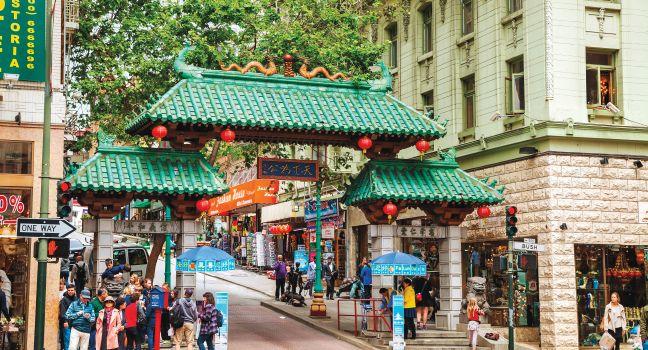
Chinatown Gate
Japanese Tea Garden
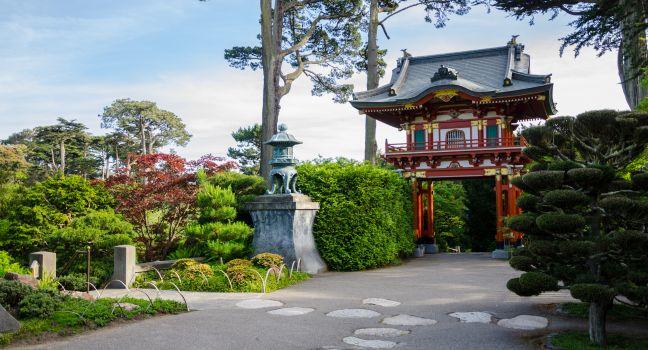
As you amble through the manicured landscape, past Japanese sculptures and perfect miniature pagodas and over ponds of carp, you may feel transported to a more peaceful plane, especially after sampling a cup of meditative Japanese green tea. Or maybe the shrieks of kids clambering over the almost vertical "humpback" bridges will keep you firmly in the here and now. Either way, this garden is one of those tourist spots that's truly worth a stop (a half hour will do). And at 5 acres, it's large enough that you'll always be able to find a bit of serenity, even when the tour buses drop by. The garden is especially lovely in March and April, when the cherry blossoms are in bloom.
Pier 39
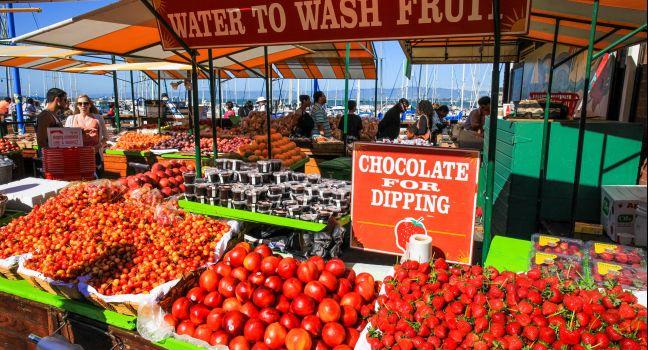
The city's most popular waterfront attraction draws millions of visitors each year, who come to browse through its shops and concessions hawking every conceivable form of souvenir. The pier can be quite crowded, and the numerous street performers may leave you feeling more harassed than entertained. Arriving early in the morning ensures you a front-row view of the sea lions that bask here, but be aware that most stores don't open until 9:30 or 10 (later in winter).
Follow the sound of barking to the northwest side of the pier to view the sea lions flopping about the floating docks. Pier 39's biggest celebrities reside here pretty much year-round (though the population is generally lowest in early summer), enjoying the nearby food in the bay and the ability to easily rotate between sleeping on the docks and going for a swim.
At the Aquarium of the Bay ( www.aquariumofthebay.org), guests of all ages enjoy strolling through a space surrounded on three sides by water that is filled with local San Francisco Bay marine life, from the orange garibaldi (the state marine fish) to sharks. Aquatic animals from elsewhere in the Northern California watershed also make an appearance, including white sturgeon and river otters.
Wave Organ

Conceived by environmental artist Peter Richards and fashioned by master stonecutter George Gonzales, this unusual wave-activated acoustic sculpture at the entrance of a harbor gives off subtle harmonic sounds produced by seawater as it passes through 25 tubes. The sound is loudest at high tide. The granite and marble used for walkways, benches, and alcoves that are part of the piece were salvaged from a gold rush–era cemetery.
Yerba Buena Gardens
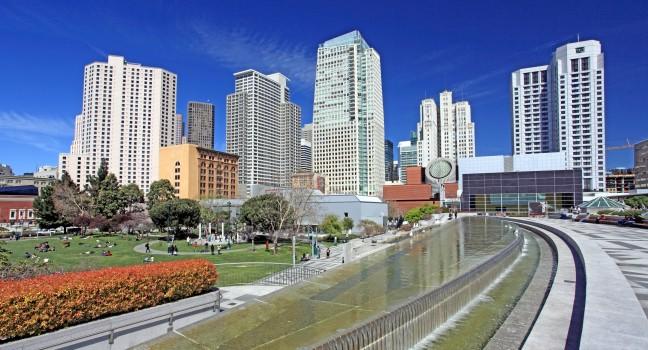
The gardens are liveliest during the week and during the Yerba Buena Gardens Festival, from May through October (ybgfestival.org), with free performances.
Atop the Moscone Center perch a few lures for kids. The historic 1906 Looff carousel ( $5; $3 with museum admission) twirls daily 10–5. The carousel is attached to the Children's Creativity Museum ( creativity.org), an interactive arts-and-technology center ( $20) geared to children ages 3–12. Outside in the children's garden, kids adore the slides, including a 25-foot tube slide, at the play circle. Also part of the complex are an ice-skating rink and a bowling alley.
16th Avenue Tiled Steps
Aquatic Park
This urban beach, surrounded by Fort Mason, Ghirardelli Square, and Fisherman's Wharf, is a quarter-mile-long strip of sand. The gentle waters near shore are shallow, safe for kids to swim or wade, and fairly clean. Locals come out for quick dips in the frigid water. Members of the Dolphin Club and the South End Rowing Club come every morning for a swim, and a large and raucous crowd braves the cold on New Year's Day. Amenities: showers; toilets. Best for: sunset; walking.
Atherton House
The somewhat quirky design of this Victorian-era house incorporates Queen Anne, Stick-Eastlake, and other architectural elements. Many claim the house—now apartments—is haunted by the ghosts of its 19th-century residents, who (supposedly) regularly whisper, glow, and generally cause a mild fuss. It's not open to the public.
Balmy Alley
Mission District artists have transformed the walls of their neighborhood with paintings, and Balmy Alley is one of the best-executed examples. Many murals adorn the one-block alley, with newer ones continually filling in the blank spaces. In 1971, artists began teaming with local children to create a space to promote peace in Central America, community spirit, and (later) AIDS awareness; since then dozens of muralists have added their vibrant works. The alley's longtime popularity has grown exponentially thanks to its Instagram appeal. Once you're done at Balmy Alley, head a couple blocks west on 24th Street to another prominent alley of murals on Cypress Street (also between 24th and 25th Streets). Be alert here: the 25th Street end of the alley adjoins a somewhat dangerous area.
Beach Chalet
Hugging the park's western border, this 1925 Willis Polk–designed structure houses gorgeous Depression-era murals by Lucien Labaudt of familiar San Francisco scenes, while verses by local poets adorn niches here and there. Stop by the ground-floor Golden Gate Park Visitor Center to see the murals and gift shop, then consider indulging in a microbrew upstairs, ideally at sunset. The restaurant here, renovated in 2021 and with a refreshed menu that includes more seafood, is open for lunch and dinner. The ocean views are spectacular.
The Beat Museum
"Museum" might be a stretch for this tiny storefront that's half bookstore, half memorabilia collection. You can see the 1949 Hudson from the movie version of On the Road and the shirt Neal Cassady wore while driving Ken Kesey's Merry Prankster bus, "Further." There are also manuscripts, letters, and early editions by Jack Kerouac, Allen Ginsberg, and Lawrence Ferlinghetti. But the true treasure here is the passionate and well-informed staff, which often includes the museum's founder, Jerry Cimino: your short visit may turn into an hours-long trip through the Beat era. Excellent walking tours go beyond the museum to take in favorite Beat watering holes and hangouts in North Beach.
Broadway Estates
Broadway uptown, unlike its garish North Beach stretch, has plenty of prestigious addresses. The three-story palace at 2222 Broadway, which has an intricately filigreed doorway, was built by Comstock silver-mine heir James Clair Flood and later donated to a religious order. The Convent of the Sacred Heart purchased the Grant House at 2220 Broadway. These two buildings, along with a Flood property at 2120 Broadway, are used as private school buildings today. A gold-mine heir, William Bowers Bourn II, commissioned Willis Polk to build the nearby brick mansion at 2550 Webster Street. Two blocks away, movie fans will surely recognize the "Mrs. Doubtfire" apartment at Broadway and Steiner ( 2640 Steiner St.). It's the home where Robin Williams donned his disguise as a lovable British nanny in the beloved 1993 comedy.
Buena Vista Park
The reward for the steep climb to get here is this eucalyptus-filled space with great city views. Dog walkers and homeless folks make good use of the park, and the playground at the top is popular with kids and adults alike. Be sure to scan the stone rain gutters lining many of the walkways for inscribed names and dates; these are the remains of gravestones left unclaimed when the city closed the Laurel Hill cemetery around 1940. A pit stop includes a portable toilet and disposal for used needles and condoms; definitely avoid the park after dark, when these items are left behind.
Cable Car Museum
One of the city's best free offerings, this museum is an absolute must for kids and compelling for adults, too. You can even ride a cable car here—all three lines stop between Russian Hill and Nob Hill. The facility, which is inside the city's last remaining cable-car barn, takes the top off the system to show you how it all works. Eternally humming and squealing, the massive powerhouse cable wheels steal the show. You can also climb aboard a vintage car and take the grip, let the kids ring a cable-car bell, and check out vintage gear dating from 1873.
Cartoon Art Museum
Snoopy, Wonder Woman, Batman, and other colorful cartoon icons greet you at the Cartoon Art Museum, established with an endowment from the late cartoonist-icon Charles M. Schulz. The museum's strength is its changing exhibits, which have highlighted subjects such as emerging artists, "Sunday Funnies" comic strips (which supposedly may have started in the San Francisco Examiner in the late 1800s), and artwork that highlights the landmarks of San Francisco. Serious fans of cartoons—especially those on the quirky underground side—will likely enjoy the exhibits; those with a casual interest may be bored. The store here carries cool titles to add to your collection.
Cathedral of Saint Mary of the Assumption
This striking cathedral stands out with its sweeping contemporary design. Italian architects Pietro Belluschi and Pier Luigi Nervi intended to create a spectacular cathedral that reflects both the Catholic faith and modern technology. It was controversial when it opened in 1971, yet now is applauded for its grand, curving roof that rises to a height of 190 feet, with sections that form a cross highlighted with intricate stained-glass work. The cathedral is open daily for visitors other than during Mass, and it usually has docents on duty in the late morning hours. Most locals know the cathedral as Our Lady of Maytag for its resemblance to a washing machine agitator.
Chinese Culture Center
Chiefly a place for the community to gather for calligraphy and tai chi workshops, the center operates a gallery with interesting temporary exhibits by Chinese and Chinese American artists. Excellent political, historical, and food-focused private walking tours of Chinatown depart from the gallery.
Clarion Alley
Inspired by the work in Balmy Alley, a new generation of muralists began creating a fresh alley-cum-gallery here in 1992, offering a quick but dense glimpse at the Mission's contemporary art scene. The works by the loosely connected artists of the Clarion Alley Mural Project (CAMP) represent a broad range of styles and imagery, such as an exuberant, flowery exhortation to Tax the Rich, several colorful and powerful messages about hot-button political topics, and poignant murals honoring the legacies of George Floyd and Prince.
Coit Tower
You can ride the elevator to the top of the tower to enjoy the 360-degree view of the Bay Bridge and the Golden Gate Bridge; due north is Alcatraz Island. Most visitors saunter past the 27 fabulous Depression-era murals inside the tower that depict California's economic and political life, but take the time to appreciate the first New Deal art project, supported by taxpayer money. It's also possible to walk up and down to the tower (if you're in shape): a highlight is the descent toward the Embarcadero via the Filbert Steps, a series of stairways that are a shaded green oasis in the middle of the city.
Coleman House
The Coleman House is an impressive twin-turret, 7,000-square-foot Queen Anne mansion that was built for a Gold Rush mining and lumber baron. Don't miss the large, brilliant-purple stained-glass window on the house's north side. The house is not open to the public.
Collis P. Huntington Park
The elegant park west of the Pacific Union Club and east of Grace Cathedral occupies the site of a mansion owned by railroad baron Collis P. Huntington. He died in 1900, the mansion was destroyed in the 1906 fire, and in 1915 his widow—by then married to Huntington's nephew—donated the land to the city. The Huntingtons' neighbors, the Crockers, once owned the Fountain of the Tortoises, based on the original in Rome's Piazza Mattei. The benches around the fountain offer a welcome break after climbing Nob Hill.
Crane Cove Park
Creativity Explored
Joyous creativity pervades the workshops of this art-education center and gallery for developmentally disabled adults. Several dozen adults work at the center each day—guided by a staff of working artists—painting, working in the darkroom, producing videos, and crafting prints, textiles, and ceramics. Drop by to see the artists at work and pick up a unique San Francisco masterpiece. The art produced here is striking, and some of it is for sale.
Crissy Field
One of the most popular places for San Franciscans to get fresh air is this stretch of restored marshland along the sand of the bay, part of the Golden Gate National Recreation Area. Kids on bikes, folks walking dogs, and joggers share the paved path along the shore, often winding up at the Warming Hut, a combination café and fun gift store at its end, for a hot chocolate in the shadow of the Golden Gate Bridge. Midway along the Golden Gate Promenade that winds along the shore is the Greater Farallones National Marine Sanctuary Visitor Center, where kids can get a close-up view of small sea creatures and learn about the rich ecosystem offshore. Alongside the main green of Crissy Field, several renovated airplane hangars and warehouses are now home to the likes of rock-climbing gyms, an air trampoline park, and a craft brewery (the latter is not open to the public). The Quartermaster Reach Marsh by Crissy Field was reclaimed as wetland ecosystem in 2020 and is an excellent area to see some of the local bird population.
de Young Museum
It seems that everyone in town has a strong opinion about the de Young museum: some adore its striking copper facade, while others just hope that the green patina of age will mellow the effect. Most maligned is the 144-foot tower, but the view from its ninth-story observation room, ringed by floor-to-ceiling windows and free to the public, is worth a trip here by itself. The building almost overshadows the de Young's respected collection of American, African, and Oceanic art. The museum also plays host to major international exhibitions; there's often an extra admission charge for these. The annual Bouquets to Art in June is a fanciful tribute to the museum's collection by notable Bay Area floral designers.
Dutch Windmill
It may not pump water anymore, but this carefully restored windmill, built in 1903 to irrigate Golden Gate Park, continues to enchant visitors. The Queen Wilhelmina Tulip Garden here is a welcoming respite, particularly lovely during its February and March bloom. On the south side of the park at Lincoln Way and the Great Highway is the Murphy Windmill, the largest in the world when it was completed in 1908; swing by for an interesting comparison.


