



Fodor's Essential Costa Rica
Whether you want to surf in Manuel Antonio, zip-line through the Monteverde Cloud Forest,...
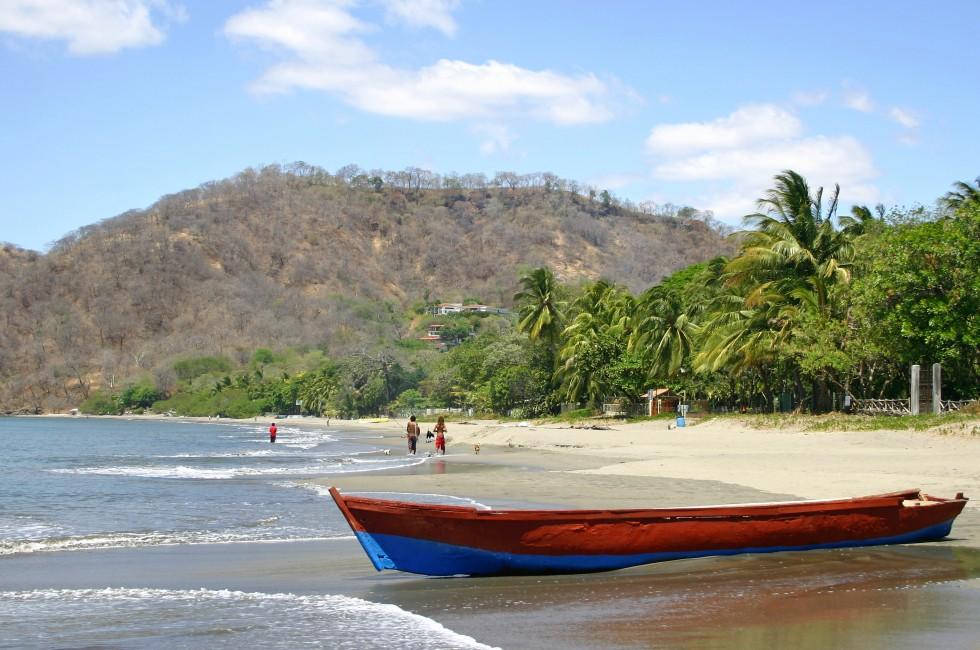
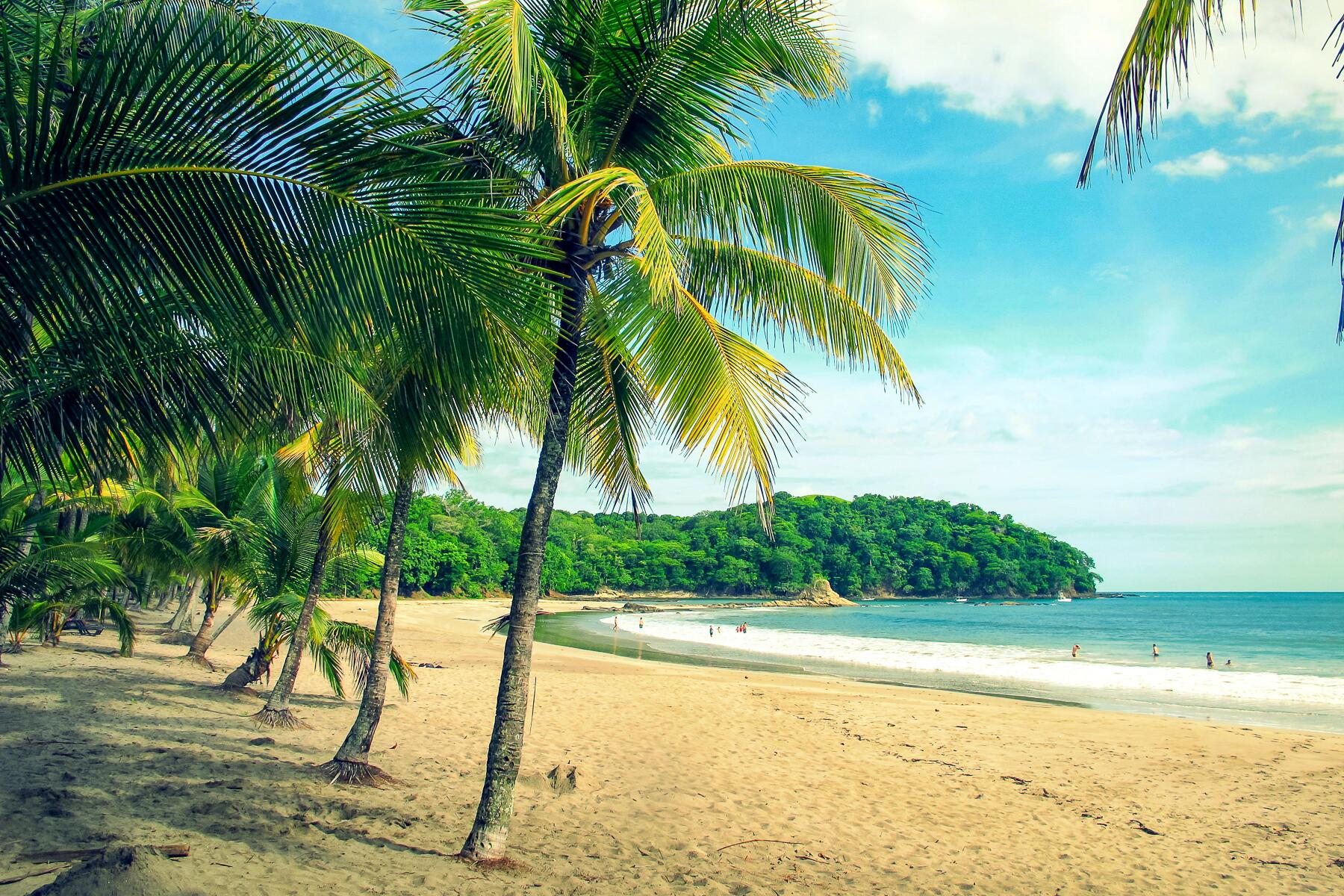
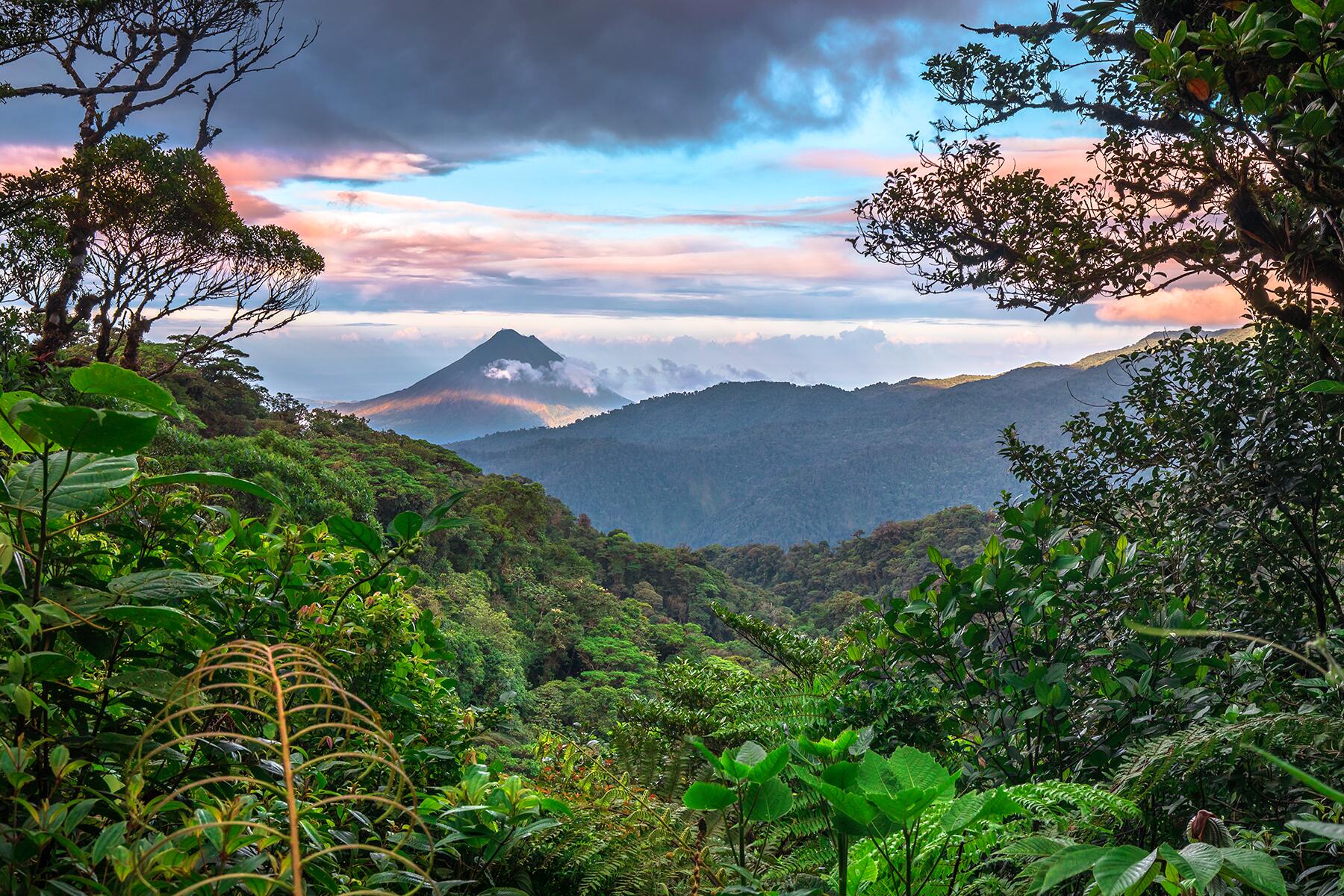
Costa Rica has it all: nowhere else can you gaze upon a volcano while soaking in a hot spring one day, hike deep into a rain forest the next, and end your trip learning to surf at a luxurious seaside resort. Miles of pristine beaches on the Pacific and Caribbean coasts, fabulous national parks with plentiful opportunities for wildlife viewing, and world-renowned eco-lodges have made this one of the hottest destinations around. The welcoming people of Costa Rica, and their mellow pura vida lifestyle, add warmth to every visit.
Fodor's Essential Costa Rica
Whether you want to surf in Manuel Antonio, zip-line through the Monteverde Cloud Forest,...

Find a Hotel
Top Destinations
Top Destinations

Guanacaste and the Nicoya Peninsula
Reliably sunny, dry weather brings planeloads of sun-starved Northerners to the North Pacific area of Costa Rica every winter, and a windswept coastline makes Guanacaste...

The Osa Peninsula and the South Pacific
Visitors go south to heed the call of the wild. The jewels in the South Pacific crown are the idyllic Golfo Dulce and the wild...

Central Valley
San José sits in an almost-mile-high mountain valley ringed by volcanoes whose ash has fertilized the soil and turned the region into Costa Rica's historic...

Tortuguero and the Caribbean Coast
The tourist brochures tout the country's Caribbean coast as "the other Costa Rica." Everything about this part of Costa Rica seems different: different culture, different...

San Jose
San José is the center of all that is Costa Rica, and to Ticos in the countryside at least, it glitters every bit as much...

Manuel Antonio and the Central Pacific Coast
The Central Pacific region of Costa Rica is a long swath of gorgeous land, encompassing sublime coastline dotted with national parks and palm-lined beaches, and...

Arenal, Monteverde, and the Northern Lowlands
The vast expanse that locals call the Zona Norte (Northern Zone) packs in a larger variety of activities than any other part of the country...

Puerto Viejo de Talamanca
This muddy, colorful little town is one of the hottest spots on the international budget-travel circuit, and swarms with backpackers, surfers, and New Agers. For...

Monteverde Cloud Forest and Santa Elena
Monteverde is a rain forest, but you won't be in the tropics—rather in the cool, gray, misty world of the cloud forest. Almost 900 species...

Arenal and La Fortuna
As they say, "Location, location, location." Who would think that a small town sitting at the foot of massive Arenal Volcano would attract visitors from...

Nosara
One of the last beach communities for people who want to get away from it all, Nosara's attractions are the wild stretches of side-by-side beaches...

Tamarindo
Once a funky beach town full of surfers and local fishermen, Tamarindo is now a pricey, hyped-up hive of commercial development and real estate speculation...

Manuel Antonio
You need merely reach the top of the forested ridge on which many of Manuel Antonio's hotels are perched to understand why it is one...

Jaco
Its proximity to San José has made Jacó the most developed beach town in Costa Rica. Nature lovers and solitude seekers may want to skip...
Dominical
Sleepy fishing village–turned–surfer town, Dominical has undergone a lively makeover, with a paved beach road, new restaurants and shops, a farmers' market on Friday morning...
Ballena National Marine Park
Named for the whales (ballenas, in Spanish) that seasonally migrate here, this park protects marine life in miles of ocean, as well as 10 km...

Samara
Sámara has miles of palm-shaded beach, safe swimming water, and an abundance of budget accommodations and seafront restaurants, making it especially popular with budget travelers...

Puerto Jimenez
You might not guess it from the rickety bicycles and ancient pickup trucks parked on the main street, but Puerto Jiménez is the largest town...
Escazu
Costa Rica's wealthiest community and the Central Valley's most prestigious address, Escazú (pronounced es-cah-SOO) nevertheless mixes glamour with tradition, BMWs with oxcarts, trendy malls with...
Cahuita
Dusty Cahuita (pronounced cah-WEE-tah), its main street flanked by wooden-slat cabins, is a backpackers' vacation town—a hippie hangout where you can be immersed in Afro-Caribbean...

Malpais and Santa Teresa
Once frequented mostly by diehard surfers in search of some of the country's largest waves and by naturalists en route to the nearby Cabo Blanco...
Alajuela
Because of its proximity to the international airport (5–10 minutes away), many travelers spend their first or last night in or near Alajuela (pronounced ah-lah-WHAY-lah)...
Heredia
The lively city of Heredia, capital of the important coffee province of the same name, contains a couple of the country's best-preserved colonial structures, along...

Playas del Coco
Noisy, colorful, and interesting, Playas del Coco has the best souvenir shopping, the most dive shops, and the liveliest nightlife and barhopping on this part...
Tortuguero
Some compare these dense layers of green set off by brilliantly colored flowers—a vision doubled by the jungle's reflection in mirror-smooth canals—to the Amazon. That's...
Puerto Viejo de Sarapiqui
One of Costa Rica's lesser-known eco-destinations has been developing a growing selection of nature-themed activities in recent years. In the 19th century, Puerto Viejo de...
Turrialba
The well-to-do agricultural center of Turrialba is a bustling town, with a youthful vibe from the nearby university, a colorful open-air market, and a tree-shaded...

Montezuma
Beautifully positioned on a sandy bay, Montezuma is hemmed in by a precipitous wooded shoreline that has prevented the overdevelopment that has affected so many...
Quepos
This hot and dusty town is the gateway to Manuel Antonio, and also serves as the area's hub for banks, supermarkets, and other services. Because...
San Isidro de El General
Although San Isidro de El General has no major attractions, the bustling market town is a good place to have lunch, get cash at one...

Rincon de la Vieja National Park
Wildlife, rivers, waterfalls, and mud baths are just the tip of the volcano when it comes to the natural wonders of Rincón de la Vieja...
The Orosi Valley
If you have a day to spend near San José, this idyllic valley makes a classic day trip, passing through coffee plantations shaded by poró...

Liberia
Once a dusty cattle-market town, Liberia has galloped toward modernization, becoming the commercial, as well as the administrative, capital of Guanacaste. There are still a...
Santa Ana
Santa Ana's tranquil town center, with its rugged stone church, has changed little through the years, even though condos and shopping malls now spread out...
San Vito
Except for the tropical greenery, the rolling hills around the bustling hilltop town of San Vito could be mistaken for a Tuscan landscape. The town...

Playa Hermosa
Beautiful Playa Hermosa, once a laid-back fishing community, has grown exponentially with condominiums and villas covering the scrubby hills overlooking the wide, curved beach. Warm...
Cartago
Although most of its structures from the colonial era are gone, Cartago still has some attractive restored buildings, most of them erected after the devastating...
Playa Grande
Down the (long, paved) road from Tamarindo, but only five minutes by boat across a tidal estuary, lies beautiful, pristine Playa Grande. By day, it's...

Limon
The vibrant Afro-Caribbean culture of one of Costa Rica's most important ports (population 65,000) is the first sign of life for seafaring visitors to Costa...
Puntarenas
This town is not on the Nicoya Peninsula, but rather on Costa Rica's mainland. It is best known as a cruise-ship port and launching pad...

Playa Flamingo
One of the first northern beaches to experience overdevelopment—a fact immortalized in the concrete towers that straggle up the hill above the bay—Flamingo still has...
Playa Potrero
A typical small town with a school, church, and supermarket arranged around a soccer field, Potrero is not very scenic. The main attraction is the...
Playa Avellanas
Traditionally a far cry from its northern neighbor's boom of real estate development, Avellanas has seen Tamarindo escapees slowly encroaching on it for years, building...
Brasilito and Playa Conchal
A small, scruffy fishing village just 1 km (½ mile) north of Playa Conchal, Brasilito has a jumble of houses huddled around its main square...

Palo Verde National Park
Definitely not most people’s idea of a lush, tropical jungle, Palo Verde National Park’s deciduous forest is hot, but also very dry and an ideal...
Playa Zancudo
Life here is laid-back and casual, centering on walking the beach, fishing, kayaking, paddleboarding, swimming, and hanging out at the local bars and restaurants. Zancudo...
Bahia Salinas
The large windswept bay at the very top of Costa Rica's Pacific coast is the second-windiest area in the country, after Lake Arenal, making it...
Drake Bay
This is castaway country, a real tropical adventure, with plenty of hiking and some rough but thrilling boat rides to get here. The rugged coast...
Papagayo Peninsula
The Papagayo Peninsula, a crooked finger of land cradling the west side of Bahía Culebra (Snake Bay), enjoys guaranteed sun from January to April, making...
Sarchi
Tranquil Sarchí is Costa Rica's premier center for crafts and carpentry. People drive here from all over the country to shop for furniture, and tour...

Poas Volcano National Park
Arenal may be Costa Rica's most famous volcano, but you can peer right into the crater here at Poás—from the vantage point of an observation...
San Gerardo de Dota
Cloud forests, invigorating mountain air, well-maintained hiking trails, and excellent bird-watching make San Gerardo de Dota one of Costa Rica's premier nature destinations. The tiny...
Atenas
By the time you get this far west in the Central Valley, you’re likely headed for Costa Rica’s famed Central Pacific beaches, but the countryside...
Ciudad Quesada (San Carlos)
Highway signs point you to "Ciudad Quesada," but this friendly hub city is simply "San Carlos" in local parlance. The lively mountain market town–provincial capital...
Playa Negra
Surfer culture is apparent here in the wave of beach-shack surfer camps along the road that leads to the rocky strand of beach. But Playa...
Nuevo Arenal
Much of the original town of Arenal, at one of the lowest points near Lake Arenal, was destroyed by the volcano's 1968 eruption, and the...
San Antonio de Belen
San Antonio de Belén has little to offer visitors but its rural charm and proximity to the international airport. The latter led developers to build...
Nicoya
Once a quaint provincial town, Guanacaste's former colonial capital is now a bustling, modernized shopping center, thanks to the bridge over the Río Tempisque that...

Playa Ocotal
Just a few minutes south of Playas del Coco, this beach couldn’t be more different than its rapidly developing neighbor. Quiet and serene, there is...
Playa Pavones
Surfing is the main draw here, especially from April to September when the waves are most reliable. But the dramatic scenery, looking across the Golfo...
Playa Hermosa
On the other side of the rocky ridge that forms the southern edge of Playa Jacó is Playa Hermosa, a swath of dark-gray sand and...
San Gerardo de Rivas
Chirripó National Park is the main reason to venture to San Gerardo de Rivas, but if you aren't up for the physically challenging adventure of...
Cabo Matapalo
The southern tip of the Osa Peninsula, where virgin rain forest meets the sea at a rocky point, retains the kind of natural beauty that...

Gandoca-Manzanillo National Wildlife Refuge
The boundaries of the southern Caribbean coast’s preeminent wildlife refuge aren’t well defined. You’ll pass in and out of the forested reserve as you drive...
Golfito
...
Tilaran
22 km (14 miles, 45 mins) southwest of Nuevo Arenal, 62 km (38 miles, 1½ hrs) west of La Fortuna. A windmill farm in the...
Tarcoles
Crocodile boat tours on the Río Tárcoles are this small town's claim to fame. You don't actually have to drive to Tárcoles to do the...
Grecia
The quiet farming community of Grecia—the name means "Greece" in Spanish—is reputed to be Costa Rica's cleanest town, and some enthusiastic civic boosters extend that...
Playa Langosta
A chic bedroom community of Tamarindo, just five minutes away by car, Playa Langosta is tranquil and elegant. It has not totally escaped development, but...
San Ramon
San Ramón hides its real attractions in the countryside to the north, on the road to La Fortuna, where comfortable lodges offer access to private...
Guapiles
The hub towns of Guápiles and Guácimo aren't destinations in their own right, but rather the nucleus for a few on-the-way-to-the-Caribbean activities. Guápiles, one of...
Santo Domingo
Between Heredia and San José, the pretty town of Santo Domingo de Heredia, established in the early 19th century, has wide streets and fine examples...

Playa Carrillo
With its long, reef-protected crescent beach backed by an elegant line of swaying coconut palms and sheltering cliffs, Playa Carrillo (interchangeably called Puerto Carrillo) is...
Curu National Wildlife Refuge
With miles of trails through forest and mangrove swamp, this uncrowded private refuge is most famous for its pristine beach, perfectly sited for swimming, snorkeling...
Playa Herradura
Just north of bustling Jacó, this small beach town, named for its horseshoe-shape bay, is made up of hotels, a golf course, and a marina...
Zona de Los Santos
Empalme, at Km 51 of the Pan-American Highway, marks the turnoff for Santa María de Dota, the first of the picturesque coffee-growing towns, named after...
Caño Negro National Wildlife Refuge
If you're seeking a national park experience without the crowds, Caño Negro should be on your list; its excellent birding and wildlife viewing still have...

Santa Rosa National Park
Santa Rosa National Park blends forest and pristine beaches overlooking the famed surf spot Witch’s Rock. North of Liberia, the park is less frequented than...
La Cruz
North of Santa Rosa National Park on the west side of the highway is the turnoff to La Cruz, a scruffy, bustling little town. Noteworthy...
Esterillos Este
Just 20 minutes southeast of Jacó, Playa Esterillos is divided into three sections; Este (East), Central, and Oeste (West). While Esterillos Oeste and Central are...
Playa Junquillal
Seekers of oceanfront tranquility need look no further than Junquillal (pronounced hoon-key-YALL), a beach town as far away from the crowd as you can get...
Punta Islita
Punta Islita is named for a tiny tuft of land that becomes an island at high tide. It's synonymous in Costa Rica with Hotel Punta...
Siquirres
Siquirres anchors a fertile banana- and pineapple-growing region, and marks the transition point between the agricultural lowlands and the tropical, palm-laden coast. The odd name...
Punta Leona
Past Tárcoles, the first sizable beach town of the Central Pacific coast is Playa Herradura. In between, the road passes tiny Playa La Pita, then...
Carara National Park
In the wilderness of Carara National Park and surroundings, you might encounter white-faced capuchin monkeys in the trees or crocodiles lounging on a riverbank. The...
Carate
Carate is literally the end of the road. The volcanic black-sand beach stretches for more than 3 km (2 miles), with dramatically high surf that's...
Playa Tambor Area
Much of the vast Bahía Ballena shoreline is taken up by a massive all-inclusive hotel and an adjoining private residential development and golf course. But...

Isla Tortuga
Soft white sand and casually leaning palms fringe this island of tropical dry forest off the southern coast of the Nicoya Peninsula. Sounds heavenly? It...
Playa Bejuco
Serious surfers wanting to escape the crowds at Jacó and Playa Hermosa, or anyone simply seeking to stray from the beaten path, need drive only...
Crossing into Panama via Sixaola
A few tour operators in Cahuita and Puerto Viejo de Talamanca can set you up with shuttle transportation to Bocas del Toro. They also offer...
Playa Bahia Junquillal
This 2½-km (1½-mile), tree-fringed beach is as close as you can get to a white-sand beach in this part of Guanacaste. Not to be confused...

Cahuita National Park
A perfect, white-sand beach with palm trees lining its edge sits just outside downtown Cahuita and will be your first glimpse of Cahuita National Park...
Braulio Carrillo National Park
One of Central America’s largest tracts of primary cloud forest looms just north of the San José metro area. The primary highway to the Caribbean...
Barra Honda National Park
You can’t miss this park’s massive peak, once thought to be a volcano. Within that mountain, however, is an intricate network of caves to be...
Corcovado National Park
The crown jewel of the country’s national park system, Corcovado is the ultimate in off-the-grid adventure. The only way to see it is on foot...
Cabo Blanco Absolute Nature Preserve
True to its name, this reserve at the southernmost tip of the Nicoya Peninsula is absolutely natural, and very hot. Challenging hiking trails lead through...
Chirripo National Park
Chirripó National Park is the ultimate challenge for serious local and visiting hikers. But the rewards are worth it—from the visitors’ hut, you can summit...
Playa Pan de Azucar
Playa Pan de Azúcar literally means "Sugar Bread Beach," though most locals call it simply Playa Azúcar (Sugar Beach). With only two built-up properties, the...
Irazu Volcano
Costa Rica’s highest volcano perches on Central America’s "continental divide," offering splendid views of the Caribbean and Pacific coasts from the summit—assuming the skies are...
Volcan Arenal National Park
...
Crossing into Nicaragua at Peñas Blancas
Costa Rica and Nicaragua share a busy border crossing at Peñas Blancas, 18 km (11 miles) north of La Cruz along a paved highway. Rental...
Barra del Colorado
...
San Jose
San José is the center of all that is Costa Rica, and to Ticos in the countryside at least, it glitters every bit as much...
Puerto Viejo de Talamanca
This muddy, colorful little town is one of the hottest spots on the international budget-travel circuit, and swarms with backpackers, surfers, and New Agers. For...
Monteverde Cloud Forest and Santa Elena
Monteverde is a rain forest, but you won't be in the tropics—rather in the cool, gray, misty world of the cloud forest. Almost 900 species...
Arenal and La Fortuna
As they say, "Location, location, location." Who would think that a small town sitting at the foot of massive Arenal Volcano would attract visitors from...
Nosara
One of the last beach communities for people who want to get away from it all, Nosara's attractions are the wild stretches of side-by-side beaches...
Manuel Antonio
You need merely reach the top of the forested ridge on which many of Manuel Antonio's hotels are perched to understand why it is one...
Tamarindo
Once a funky beach town full of surfers and local fishermen, Tamarindo is now a pricey, hyped-up hive of commercial development and real estate speculation...
Jaco
Its proximity to San José has made Jacó the most developed beach town in Costa Rica. Nature lovers and solitude seekers may want to skip...
Dominical
Sleepy fishing village–turned–surfer town, Dominical has undergone a lively makeover, with a paved beach road, new restaurants and shops, a farmers' market on Friday morning...
Samara
Sámara has miles of palm-shaded beach, safe swimming water, and an abundance of budget accommodations and seafront restaurants, making it especially popular with budget travelers...
Escazu
Costa Rica's wealthiest community and the Central Valley's most prestigious address, Escazú (pronounced es-cah-SOO) nevertheless mixes glamour with tradition, BMWs with oxcarts, trendy malls with...
Puerto Jimenez
You might not guess it from the rickety bicycles and ancient pickup trucks parked on the main street, but Puerto Jiménez is the largest town...
Malpais and Santa Teresa
Once frequented mostly by diehard surfers in search of some of the country's largest waves and by naturalists en route to the nearby Cabo Blanco...
Cahuita
Dusty Cahuita (pronounced cah-WEE-tah), its main street flanked by wooden-slat cabins, is a backpackers' vacation town—a hippie hangout where you can be immersed in Afro-Caribbean...
Alajuela
Because of its proximity to the international airport (5–10 minutes away), many travelers spend their first or last night in or near Alajuela (pronounced ah-lah-WHAY-lah)...
Heredia
The lively city of Heredia, capital of the important coffee province of the same name, contains a couple of the country's best-preserved colonial structures, along...
Playas del Coco
Noisy, colorful, and interesting, Playas del Coco has the best souvenir shopping, the most dive shops, and the liveliest nightlife and barhopping on this part...
Puerto Viejo de Sarapiqui
One of Costa Rica's lesser-known eco-destinations has been developing a growing selection of nature-themed activities in recent years. In the 19th century, Puerto Viejo de...
Turrialba
The well-to-do agricultural center of Turrialba is a bustling town, with a youthful vibe from the nearby university, a colorful open-air market, and a tree-shaded...
Montezuma
Beautifully positioned on a sandy bay, Montezuma is hemmed in by a precipitous wooded shoreline that has prevented the overdevelopment that has affected so many...
Quepos
This hot and dusty town is the gateway to Manuel Antonio, and also serves as the area's hub for banks, supermarkets, and other services. Because...
San Isidro de El General
Although San Isidro de El General has no major attractions, the bustling market town is a good place to have lunch, get cash at one...
Santa Ana
Santa Ana's tranquil town center, with its rugged stone church, has changed little through the years, even though condos and shopping malls now spread out...
Liberia
Once a dusty cattle-market town, Liberia has galloped toward modernization, becoming the commercial, as well as the administrative, capital of Guanacaste. There are still a...
San Vito
Except for the tropical greenery, the rolling hills around the bustling hilltop town of San Vito could be mistaken for a Tuscan landscape. The town...
Playa Hermosa
Beautiful Playa Hermosa, once a laid-back fishing community, has grown exponentially with condominiums and villas covering the scrubby hills overlooking the wide, curved beach. Warm...
Playa Grande
Down the (long, paved) road from Tamarindo, but only five minutes by boat across a tidal estuary, lies beautiful, pristine Playa Grande. By day, it's...
Cartago
Although most of its structures from the colonial era are gone, Cartago still has some attractive restored buildings, most of them erected after the devastating...
Limon
The vibrant Afro-Caribbean culture of one of Costa Rica's most important ports (population 65,000) is the first sign of life for seafaring visitors to Costa...
Puntarenas
This town is not on the Nicoya Peninsula, but rather on Costa Rica's mainland. It is best known as a cruise-ship port and launching pad...
Playa Flamingo
One of the first northern beaches to experience overdevelopment—a fact immortalized in the concrete towers that straggle up the hill above the bay—Flamingo still has...
Playa Potrero
A typical small town with a school, church, and supermarket arranged around a soccer field, Potrero is not very scenic. The main attraction is the...
Brasilito and Playa Conchal
A small, scruffy fishing village just 1 km (½ mile) north of Playa Conchal, Brasilito has a jumble of houses huddled around its main square...
Playa Avellanas
Traditionally a far cry from its northern neighbor's boom of real estate development, Avellanas has seen Tamarindo escapees slowly encroaching on it for years, building...
Playa Zancudo
Life here is laid-back and casual, centering on walking the beach, fishing, kayaking, paddleboarding, swimming, and hanging out at the local bars and restaurants. Zancudo...
Palo Verde National Park
Definitely not most people’s idea of a lush, tropical jungle, Palo Verde National Park’s deciduous forest is hot, but also very dry and an ideal...
Drake Bay
This is castaway country, a real tropical adventure, with plenty of hiking and some rough but thrilling boat rides to get here. The rugged coast...
Atenas
By the time you get this far west in the Central Valley, you’re likely headed for Costa Rica’s famed Central Pacific beaches, but the countryside...
Sarchi
Tranquil Sarchí is Costa Rica's premier center for crafts and carpentry. People drive here from all over the country to shop for furniture, and tour...
San Gerardo de Dota
Cloud forests, invigorating mountain air, well-maintained hiking trails, and excellent bird-watching make San Gerardo de Dota one of Costa Rica's premier nature destinations. The tiny...
Playa Ocotal
Just a few minutes south of Playas del Coco, this beach couldn’t be more different than its rapidly developing neighbor. Quiet and serene, there is...
Nuevo Arenal
Much of the original town of Arenal, at one of the lowest points near Lake Arenal, was destroyed by the volcano's 1968 eruption, and the...
Playa Hermosa
On the other side of the rocky ridge that forms the southern edge of Playa Jacó is Playa Hermosa, a swath of dark-gray sand and...
Playa Pavones
Surfing is the main draw here, especially from April to September when the waves are most reliable. But the dramatic scenery, looking across the Golfo...
Ciudad Quesada (San Carlos)
Highway signs point you to "Ciudad Quesada," but this friendly hub city is simply "San Carlos" in local parlance. The lively mountain market town–provincial capital...
Playa Negra
Surfer culture is apparent here in the wave of beach-shack surfer camps along the road that leads to the rocky strand of beach. But Playa...
San Gerardo de Rivas
Chirripó National Park is the main reason to venture to San Gerardo de Rivas, but if you aren't up for the physically challenging adventure of...
San Antonio de Belen
San Antonio de Belén has little to offer visitors but its rural charm and proximity to the international airport. The latter led developers to build...
Tarcoles
Crocodile boat tours on the Río Tárcoles are this small town's claim to fame. You don't actually have to drive to Tárcoles to do the...
Cabo Matapalo
The southern tip of the Osa Peninsula, where virgin rain forest meets the sea at a rocky point, retains the kind of natural beauty that...
Golfito
...
Tilaran
22 km (14 miles, 45 mins) southwest of Nuevo Arenal, 62 km (38 miles, 1½ hrs) west of La Fortuna. A windmill farm in the...
Playa Langosta
A chic bedroom community of Tamarindo, just five minutes away by car, Playa Langosta is tranquil and elegant. It has not totally escaped development, but...
San Ramon
San Ramón hides its real attractions in the countryside to the north, on the road to La Fortuna, where comfortable lodges offer access to private...
Guapiles
The hub towns of Guápiles and Guácimo aren't destinations in their own right, but rather the nucleus for a few on-the-way-to-the-Caribbean activities. Guápiles, one of...
Santo Domingo
Between Heredia and San José, the pretty town of Santo Domingo de Heredia, established in the early 19th century, has wide streets and fine examples...
Grecia
The quiet farming community of Grecia—the name means "Greece" in Spanish—is reputed to be Costa Rica's cleanest town, and some enthusiastic civic boosters extend that...
Playa Herradura
Just north of bustling Jacó, this small beach town, named for its horseshoe-shape bay, is made up of hotels, a golf course, and a marina...
Playa Carrillo
With its long, reef-protected crescent beach backed by an elegant line of swaying coconut palms and sheltering cliffs, Playa Carrillo (interchangeably called Puerto Carrillo) is...
Esterillos Este
Just 20 minutes southeast of Jacó, Playa Esterillos is divided into three sections; Este (East), Central, and Oeste (West). While Esterillos Oeste and Central are...
La Cruz
North of Santa Rosa National Park on the west side of the highway is the turnoff to La Cruz, a scruffy, bustling little town. Noteworthy...
Siquirres
Siquirres anchors a fertile banana- and pineapple-growing region, and marks the transition point between the agricultural lowlands and the tropical, palm-laden coast. The odd name...
Punta Leona
Past Tárcoles, the first sizable beach town of the Central Pacific coast is Playa Herradura. In between, the road passes tiny Playa La Pita, then...
Playa Junquillal
Seekers of oceanfront tranquility need look no further than Junquillal (pronounced hoon-key-YALL), a beach town as far away from the crowd as you can get...
Punta Islita
Punta Islita is named for a tiny tuft of land that becomes an island at high tide. It's synonymous in Costa Rica with Hotel Punta...
Playa Tambor Area
Much of the vast Bahía Ballena shoreline is taken up by a massive all-inclusive hotel and an adjoining private residential development and golf course. But...
Playa Bejuco
Serious surfers wanting to escape the crowds at Jacó and Playa Hermosa, or anyone simply seeking to stray from the beaten path, need drive only...
Carate
Carate is literally the end of the road. The volcanic black-sand beach stretches for more than 3 km (2 miles), with dramatically high surf that's...
Playa Bahia Junquillal
This 2½-km (1½-mile), tree-fringed beach is as close as you can get to a white-sand beach in this part of Guanacaste. Not to be confused...
Playa Pan de Azucar
Playa Pan de Azúcar literally means "Sugar Bread Beach," though most locals call it simply Playa Azúcar (Sugar Beach). With only two built-up properties, the...
Irazu Volcano
Costa Rica’s highest volcano perches on Central America’s "continental divide," offering splendid views of the Caribbean and Pacific coasts from the summit—assuming the skies are...
Barra del Colorado
...
Guanacaste and the Nicoya Peninsula
Reliably sunny, dry weather brings planeloads of sun-starved Northerners to the North Pacific area of Costa Rica every winter, and a windswept coastline makes Guanacaste...
The Osa Peninsula and the South Pacific
Visitors go south to heed the call of the wild. The jewels in the South Pacific crown are the idyllic Golfo Dulce and the wild...
Central Valley
San José sits in an almost-mile-high mountain valley ringed by volcanoes whose ash has fertilized the soil and turned the region into Costa Rica's historic...
Tortuguero and the Caribbean Coast
The tourist brochures tout the country's Caribbean coast as "the other Costa Rica." Everything about this part of Costa Rica seems different: different culture, different...
Manuel Antonio and the Central Pacific Coast
The Central Pacific region of Costa Rica is a long swath of gorgeous land, encompassing sublime coastline dotted with national parks and palm-lined beaches, and...
Arenal, Monteverde, and the Northern Lowlands
The vast expanse that locals call the Zona Norte (Northern Zone) packs in a larger variety of activities than any other part of the country...
Tortuguero
Some compare these dense layers of green set off by brilliantly colored flowers—a vision doubled by the jungle's reflection in mirror-smooth canals—to the Amazon. That's...
The Orosi Valley
If you have a day to spend near San José, this idyllic valley makes a classic day trip, passing through coffee plantations shaded by poró...
Bahia Salinas
The large windswept bay at the very top of Costa Rica's Pacific coast is the second-windiest area in the country, after Lake Arenal, making it...
Papagayo Peninsula
The Papagayo Peninsula, a crooked finger of land cradling the west side of Bahía Culebra (Snake Bay), enjoys guaranteed sun from January to April, making...
Nicoya
Once a quaint provincial town, Guanacaste's former colonial capital is now a bustling, modernized shopping center, thanks to the bridge over the Río Tempisque that...
Zona de Los Santos
Empalme, at Km 51 of the Pan-American Highway, marks the turnoff for Santa María de Dota, the first of the picturesque coffee-growing towns, named after...
Ballena National Marine Park
Named for the whales (ballenas, in Spanish) that seasonally migrate here, this park protects marine life in miles of ocean, as well as 10 km...
Rincon de la Vieja National Park
Wildlife, rivers, waterfalls, and mud baths are just the tip of the volcano when it comes to the natural wonders of Rincón de la Vieja...
Poas Volcano National Park
Arenal may be Costa Rica's most famous volcano, but you can peer right into the crater here at Poás—from the vantage point of an observation...
Gandoca-Manzanillo National Wildlife Refuge
The boundaries of the southern Caribbean coast’s preeminent wildlife refuge aren’t well defined. You’ll pass in and out of the forested reserve as you drive...
Curu National Wildlife Refuge
With miles of trails through forest and mangrove swamp, this uncrowded private refuge is most famous for its pristine beach, perfectly sited for swimming, snorkeling...
Santa Rosa National Park
Santa Rosa National Park blends forest and pristine beaches overlooking the famed surf spot Witch’s Rock. North of Liberia, the park is less frequented than...
Caño Negro National Wildlife Refuge
If you're seeking a national park experience without the crowds, Caño Negro should be on your list; its excellent birding and wildlife viewing still have...
Carara National Park
In the wilderness of Carara National Park and surroundings, you might encounter white-faced capuchin monkeys in the trees or crocodiles lounging on a riverbank. The...
Cahuita National Park
A perfect, white-sand beach with palm trees lining its edge sits just outside downtown Cahuita and will be your first glimpse of Cahuita National Park...
Braulio Carrillo National Park
One of Central America’s largest tracts of primary cloud forest looms just north of the San José metro area. The primary highway to the Caribbean...
Corcovado National Park
The crown jewel of the country’s national park system, Corcovado is the ultimate in off-the-grid adventure. The only way to see it is on foot...
Chirripo National Park
Chirripó National Park is the ultimate challenge for serious local and visiting hikers. But the rewards are worth it—from the visitors’ hut, you can summit...
Cabo Blanco Absolute Nature Preserve
True to its name, this reserve at the southernmost tip of the Nicoya Peninsula is absolutely natural, and very hot. Challenging hiking trails lead through...
Barra Honda National Park
You can’t miss this park’s massive peak, once thought to be a volcano. Within that mountain, however, is an intricate network of caves to be...
Volcan Arenal National Park
...
All Destinations
Expand All Collapse All
Guanacaste and the Nicoya Peninsula
- Bahia Salinas
- Barra Honda National Park
- Brasilito and Playa Conchal
- Cabo Blanco Absolute Nature Preserve
- Crossing into Nicaragua at Peñas Blancas
- Curu National Wildlife Refuge
- Isla Tortuga
- La Cruz
- Liberia
- Malpais and Santa Teresa
- Montezuma
- Nicoya
- Nosara
- Palo Verde National Park
- Papagayo Peninsula
- Playa Avellanas
- Playa Bahia Junquillal
- Playa Carrillo
- Playa Flamingo
- Playa Grande
- Playa Hermosa
- Playa Junquillal
- Playa Langosta
- Playa Negra
- Playa Ocotal
- Playa Pan de Azucar
- Playa Potrero
- Playas del Coco
- Playa Tambor Area
- Punta Islita
- Puntarenas
- Rincon de la Vieja National Park
- Samara
- Santa Rosa National Park
- Tamarindo
Guanacaste and the Nicoya Peninsula
- Bahia Salinas
- Barra Honda National Park
- Brasilito and Playa Conchal
- Cabo Blanco Absolute Nature Preserve
- Crossing into Nicaragua at Peñas Blancas
- Curu National Wildlife Refuge
- Isla Tortuga
- La Cruz
- Liberia
- Malpais and Santa Teresa
- Montezuma
- Nicoya
- Nosara
- Palo Verde National Park
- Papagayo Peninsula
- Playa Avellanas
- Playa Bahia Junquillal
- Playa Carrillo
- Playa Flamingo
- Playa Grande
- Playa Hermosa
- Playa Junquillal
- Playa Langosta
- Playa Negra
- Playa Ocotal
- Playa Pan de Azucar
- Playa Potrero
- Playas del Coco
- Playa Tambor Area
- Punta Islita
- Puntarenas
- Rincon de la Vieja National Park
- Samara
- Santa Rosa National Park
- Tamarindo
Guanacaste and the Nicoya Peninsula
- Bahia Salinas
- Barra Honda National Park
- Brasilito and Playa Conchal
- Cabo Blanco Absolute Nature Preserve
- Crossing into Nicaragua at Peñas Blancas
- Curu National Wildlife Refuge
- Isla Tortuga
- La Cruz
- Liberia
- Malpais and Santa Teresa
- Montezuma
- Nicoya
- Nosara
- Palo Verde National Park
- Papagayo Peninsula
- Playa Avellanas
- Playa Bahia Junquillal
- Playa Carrillo
- Playa Flamingo
- Playa Grande
- Playa Hermosa
- Playa Junquillal
- Playa Langosta
- Playa Negra
- Playa Ocotal
- Playa Pan de Azucar
- Playa Potrero
- Playas del Coco
- Playa Tambor Area
- Punta Islita
- Puntarenas
- Rincon de la Vieja National Park
- Samara
- Santa Rosa National Park
- Tamarindo
Top Experiences
Top Experiences
Recent Forum Posts
Recent Forum Posts
-
D
What food can we take to Costa Rica?
Donna2152 started Jan 5, 2024 |Last reply Jan 13, 2024 View Post 10 replies 2644 views View Post -
M
Costa Rica - 10 Days - Advice Please!
Mboschert8562 started Jul 31, 2023 |Last reply Aug 4, 2023 View Post 11 replies 3610 views View Post -
B
8 to 9 day tours of Costa Rica
Barminski started Feb 17, 2024 |Last reply Apr 4, 2024 View Post 10 replies 1089 views View Post -
A
10 days Costa Rica August
Allergickid started Mar 22, 2024 |Last reply Mar 29, 2024 View Post 10 replies 700 views View Post
Guidebooks
Guidebooks
Our worldwide travel correspondents bring you the best and most up-to-date coverage of over 7,500 global destinations.
Shop NowFodor's Essential Costa Rica
Whether you want to surf in Manuel Antonio, zip-line through the Monteverde Cloud Forest,...


