

Fodor's Expert Review Via Giulia
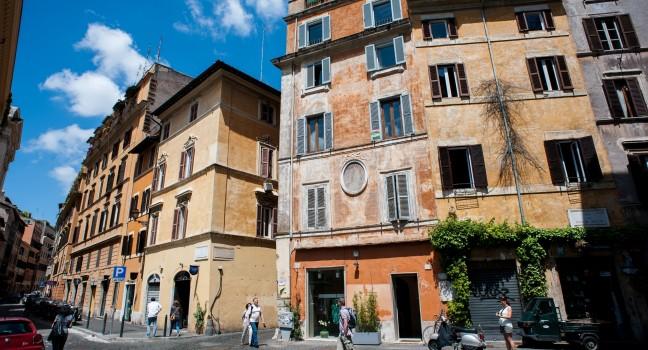
Straight as a die and still something of a Renaissance-era diorama, Via Giulia was the first street in Rome since ancient times to be deliberately planned. It was named for Pope Julius II (of Sistine Chapel fame), who commissioned it in the early 1500s as part of a scheme to open up a grandiose approach to St. Peter's Basilica. Although the pope's plans were only partially completed, Via Giulia became an important thoroughfare in Renaissance Rome. It's still, after more than four centuries, the address of choice for Roman aristocrats, despite a recent, controversial addition: a large parking lot along one side of the street (creating it meant steamrolling through ancient and medieval ruins underneath).
A stroll around and along Via Giulia reveals elegant palaces and churches, including one, San Eligio, on the little side street Via di Sant'Eligio, that was designed by Raphael himself. Note also the Palazzo Sacchetti (... READ MORE
Straight as a die and still something of a Renaissance-era diorama, Via Giulia was the first street in Rome since ancient times to be deliberately planned. It was named for Pope Julius II (of Sistine Chapel fame), who commissioned it in the early 1500s as part of a scheme to open up a grandiose approach to St. Peter's Basilica. Although the pope's plans were only partially completed, Via Giulia became an important thoroughfare in Renaissance Rome. It's still, after more than four centuries, the address of choice for Roman aristocrats, despite a recent, controversial addition: a large parking lot along one side of the street (creating it meant steamrolling through ancient and medieval ruins underneath).
A stroll around and along Via Giulia reveals elegant palaces and churches, including one, San Eligio, on the little side street Via di Sant'Eligio, that was designed by Raphael himself. Note also the Palazzo Sacchetti ( Via Giulia 66), with an imposing stone portal and an interior containing some of Rome's grandest staterooms; it remains, after 300 years, the private quarters of the Marchesi Sacchetti. The forbidding brick building that housed the Carceri Nuove (New Prison Via Giulia 52), Rome's prison for more than two centuries, now contains the offices of the Direzione Nazionale Antimafia. Near the bridge that arches over Via Giulia's southern end is the church of Santa Maria dell'Orazione e Morte (Holy Mary of Prayer and Death), with stone skulls on its door. These are a symbol of a confraternity that was charged with burying the bodies of the unidentified dead found in the city streets.
Designed by Borromini and home, since 1927, to the Hungarian Academy, the Palazzo Falconieri ( Via Giulia 1 06/68896700) has Borromini-designed salons and loggia that are sporadically open as part of guided tours; call for information. The falcon statues atop its belvedere are best viewed from around the block, along the Tiber embankment. Remnant of a master plan by Michelangelo, the arch over the street was meant to link massive Palazzo Farnese, on the east side of Via Giulia, with the building across the street and a bridge to the Villa Farnesina, directly across the river. Finally, on the right and rather green with age, dribbles that star of many a postcard, the Fontana del Mascherone.
READ LESS