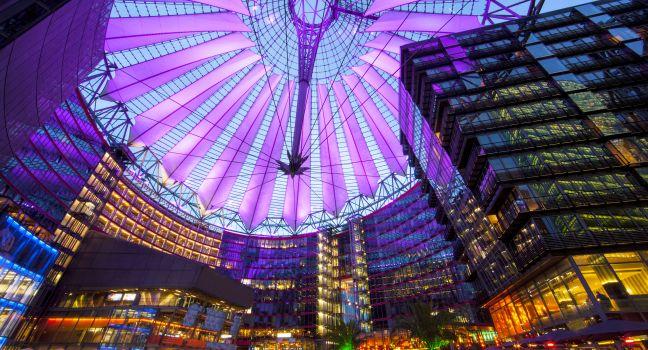
This glass-and-steel construction wraps around a spectacular circular forum. Topping it off is a tentlike structure meant to emulate Mount Fuji. The architectural jewel, designed by German-American architect Helmut Jahn, is one of the most stunning public spaces of Berlin's new center, filled with restaurants, cafés, movie theaters, and apartments. A faint reminder of glorious days gone by is the old Kaisersaal (Emperor's Hall), held within a very modern glass enclosure, and today a pricey restaurant. The hall originally stood 50 yards away in the Grand Hotel Esplanade (built in 1907) but was moved here lock, stock, and barrel. Red-carpet glamour returns every February with the Berlinale Film Festival, which has screenings at the commercial cinema within the center.
Within the center the Filmmuseum Berlin (Potsdamer Str. 2, Tiergarten. 030/300-9030. www.filmmuseum-berlin.de. EUR 6. Tues., Wed., and Fri.-Sun. 10-6, Thurs. 10-8) presents the groundbreaking history of German moviemaking with eye-catching displays. The texts are also in English, and there's an audio guide as well. Memorabilia includes personal belongings of Marlene Dietrich and plans and costumes for fantasy and science-fiction films.
A must-see when traveling with children is the Legoland Discovery Center (Potsdamer Str. 4, Tiergarten. 030/301-0400. www.legoland.de. EUR 14.50. Daily 10-5), the Danish toy company's only indoor park. Children can build their very own towers while their parents live out their urban development dreams, even testing if the miniature construction would survive an earthquake. In a special section, Berlin's landmarks are presented in a breathtaking miniature world made up of thousands of tiny Lego bricks.
Visit the Travel Talk forums for help on planning your trip